
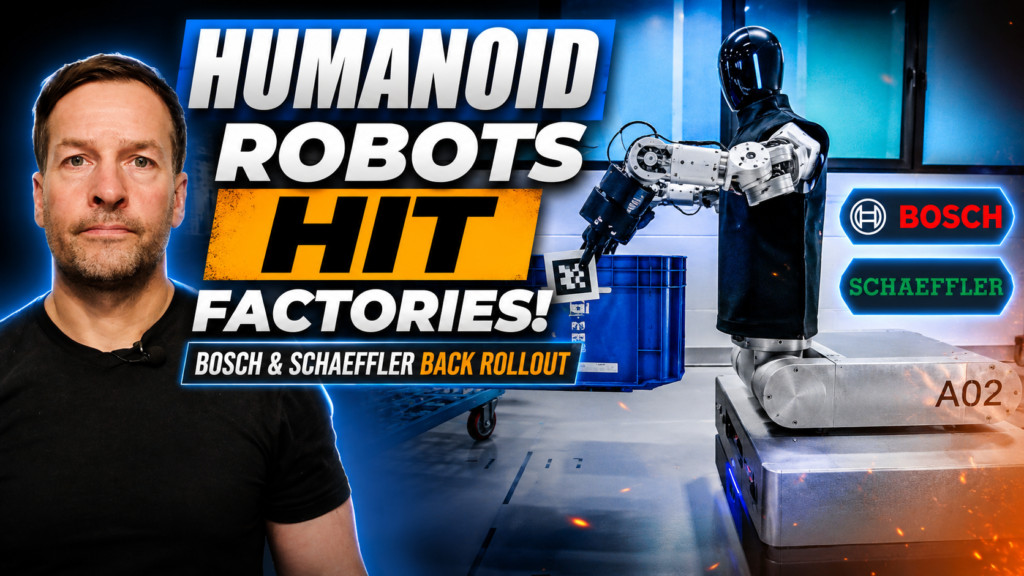
The Rise of Humanoid Robots: How AI Robots Are Moving From Science Fiction Into the Workplace
Introduction: Humanoid Robots Are No Longer Just a Future Prediction
Humanoid robots have been part of science fiction for decades. For years, they appeared in films, research labs, technology exhibitions, and viral demonstration videos. They could walk, wave, carry objects, open doors, or perform carefully prepared tasks in controlled environments. But for most businesses, humanoid robots still felt distant, experimental, and impractical.
That is beginning to change.
The robotics industry is entering a new phase where humanoid robots are being discussed not only as impressive technology, but as potential tools for real workplaces. Manufacturing, logistics, retail, healthcare, hospitality, security, events, and industrial environments are all starting to ask the same question: could humanoid robots become part of the future workforce?
The answer is not simple. Humanoid robots are not about to replace every human worker overnight. The technology still has limitations, costs remain high, and real-world deployment is much more difficult than a polished demonstration video suggests. However, the direction of travel is clear. AI robots are becoming more capable, investors are taking robotics seriously, and businesses are under growing pressure to solve labour shortages, improve productivity, reduce risk, and automate repetitive work.
Humanoid robots matter because they are designed for a world built around humans. Unlike traditional industrial robots that usually require specially designed work cells, cages, fixtures, or controlled environments, humanoid robots are intended to move through existing spaces, use existing tools, and interact with environments originally designed for people.
That is what makes them so interesting.
If the next generation of robots can operate safely and effectively in human environments, the future of robotics could move much faster than many businesses expect.
The Current State of Robotics
The robotics industry today is far broader than most people realise. When many people hear the word “robot”, they either imagine a humanoid machine from science fiction or a large robot arm welding cars in a factory. In reality, robotics technology now covers a wide range of systems.
Industrial robot arms are used in manufacturing, automotive production, electronics, packaging, welding, painting, palletising, and assembly. Collaborative robots, often called cobots, are designed to work more safely near people and are increasingly used by smaller manufacturers. Autonomous mobile robots, or AMRs, move goods around warehouses, hospitals, factories, and logistics centres. Service robots are used in hospitality, cleaning, delivery, events, reception, education, and customer engagement. Inspection robots can monitor industrial sites, energy facilities, construction projects, and hazardous environments.
This wider robotics ecosystem is important because humanoid robots are not appearing in isolation. They are emerging from decades of progress in sensors, motors, batteries, artificial intelligence, machine vision, navigation, safety systems, cloud computing, edge computing, and automation software.
Robotics adoption has already been growing for years, especially in industries where efficiency, safety, labour availability, and consistency are critical. What is changing now is the type of robot being considered. Businesses are no longer only asking how to automate a single repetitive task. They are beginning to ask how robots can become flexible workers within existing environments.
This is where humanoid robots enter the conversation.
Why Humanoid Robots Are Different
Traditional automation works extremely well when the environment is controlled and the task is repeatable. A robot arm can be incredibly fast, accurate, and reliable when it is programmed to perform a specific movement again and again. An AMR can move goods efficiently through a mapped warehouse. A cleaning robot can follow planned routes across a floor.
Humanoid robots are different because they are being designed for flexibility.
A humanoid robot has a body shape that roughly resembles a human. It may have legs, arms, hands, a torso, cameras or sensors positioned like eyes, and the ability to interact with objects in ways similar to people. This does not mean humanoid robots need to look exactly human. In fact, many of the most useful humanoid robots may look clearly mechanical. The important point is that their form allows them to operate in human-designed spaces.
Stairs, doorways, tools, shelves, handles, workstations, vehicles, corridors, and factory layouts have all been designed around human bodies. A robot with a human-like structure could, in theory, use those same environments without requiring every site to be redesigned from scratch.
That is a major advantage.
Instead of building a new automated production line, a company could eventually deploy a humanoid robot into an existing process. Instead of redesigning a warehouse around fixed automation, a humanoid robot could potentially perform tasks within the current layout. Instead of creating a special machine for every individual task, a humanoid robot could be trained or programmed to handle multiple activities.
This is the promise. The challenge is making it reliable, safe, affordable, and commercially useful.
Why Businesses Are Taking AI Robots More Seriously
The rise of AI robots is not happening by accident. Several business pressures are pushing companies to explore robotics and automation more seriously.
One of the biggest drivers is labour shortage. Many industries are struggling to recruit and retain workers for repetitive, physically demanding, dangerous, or low-margin roles. Warehousing, logistics, manufacturing, agriculture, care, hospitality, security, and facilities management all face different versions of this problem.
Another driver is productivity. Businesses are under pressure to do more with less. Costs are rising, customers expect faster service, supply chains are more complex, and competition is increasing. Robots can help companies improve consistency, extend operating hours, reduce downtime, and support human teams.
Safety is also a major factor. Robots can be used in environments that are hazardous, uncomfortable, or physically demanding for people. Inspection robots can enter dangerous industrial areas. Mobile robots can reduce manual handling. Humanoid robots may eventually assist with tasks involving heavy lifting, repetitive movement, or exposure to risk.
Then there is the acceleration of artificial intelligence. AI has changed how businesses think about software, data, customer service, content, design, coding, research, and decision-making. The next stage is physical AI: artificial intelligence connected to machines that can move, sense, manipulate, and act in the real world.
That is why robotics is becoming one of the most important technology sectors to watch.
AI without robotics mostly lives on screens. Robotics brings AI into the physical world.
The Key Technologies Driving Humanoid Robots
Humanoid robots are only possible because several technologies are improving at the same time.
Artificial Intelligence
AI allows robots to understand instructions, recognise objects, interpret environments, and adapt to different situations. Large language models have made human-machine interaction much more natural, while advances in computer vision help robots identify objects, people, pathways, tools, and obstacles.
For humanoid robots, AI is especially important because the real world is unpredictable. A factory, warehouse, shop floor, event space, or hospital is not as neat as a simulation. Objects move. People walk past. Lighting changes. Tasks vary. A useful humanoid robot needs to interpret what is happening and respond appropriately.
Machine Vision and Sensors
Robots need to see and sense the world around them. Cameras, depth sensors, LiDAR, force sensors, tactile sensors, microphones, and inertial measurement systems can all help robots understand their surroundings.
For humanoid robots, sensing is critical for balance, navigation, manipulation, and safety. A robot working near people must know where people are, what they are doing, and how to avoid creating risk.
Actuators and Mobility
Humanoid robots need advanced motors and actuators to move smoothly and safely. Walking, balancing, bending, lifting, reaching, and manipulating objects all require precise control.
This is one of the hardest areas of humanoid robotics. Moving like a human is extremely complex. People make balance and motion look easy, but the human body is an extraordinary machine. Replicating even part of that ability in a robot requires advanced mechanical design, control systems, and energy efficiency.
Batteries and Power Systems
A robot is only useful if it can operate for a practical amount of time. Battery technology is therefore a major factor in humanoid robot development. Businesses will need robots that can work for meaningful shifts, recharge efficiently, and justify their operating costs.
Power management will become a key part of the commercial success of humanoid robots.
Cloud, Edge Computing, and Connectivity
Some robot intelligence may run locally on the robot, while other capabilities may connect to cloud-based systems. Edge computing allows robots to process information quickly nearby, which is important for safety and responsiveness.
Connectivity also allows robots to receive updates, share data, integrate with business systems, and be monitored remotely.
Simulation and Training
Robots can be trained in simulated environments before being deployed in the real world. This can speed up development, reduce risk, and allow companies to test thousands of scenarios virtually.
For humanoid robots, simulation will be essential because real-world training can be expensive, slow, and risky.
Real-World Applications for Humanoid Robots
The most important question is not whether humanoid robots are impressive. The real question is where they can create value.
Manufacturing
Manufacturing is one of the most obvious areas for humanoid robot adoption. Factories already use robots, but many tasks are still performed manually because they are difficult to automate with traditional systems.
Humanoid robots could support machine tending, material movement, quality checks, tool handling, basic assembly, parts transport, inspection, and repetitive support tasks. They may be especially useful in brownfield sites where redesigning the entire factory is too expensive.
The key will be identifying tasks that are simple enough for early deployment but valuable enough to justify investment.
Warehousing and Logistics
Warehouses already use AMRs, conveyors, sorting systems, robotic arms, and automated storage systems. Humanoid robots could add a flexible layer to this automation ecosystem.
They could potentially pick items, move totes, load carts, handle packages, assist with stock checks, or support human workers during peak periods. However, warehouses are demanding environments, so reliability and speed will be essential.
Retail
Retail could eventually use humanoid robots for shelf scanning, stock movement, customer guidance, cleaning support, security patrols, and promotional engagement. Robots in retail need to be safe, approachable, and useful without becoming a gimmick.
The best retail robots will not simply attract attention. They will solve operational problems.
Healthcare and Care Environments
Healthcare has major staffing pressures, and robots could support non-clinical tasks such as delivery, guidance, logistics, cleaning, monitoring, and patient engagement. Humanoid robots may have a role in environments where human-like interaction is valuable, although care applications require great sensitivity, safety, and trust.
Robots should support healthcare workers, not replace human compassion.
Hospitality and Events
Robots are already being used in events, exhibitions, hotels, restaurants, and brand activations. In these environments, robots can attract attention, guide guests, deliver messages, create memorable experiences, and help brands stand out.
Humanoid robots could become powerful tools for engagement, especially when combined with AI conversation, movement, and interactive content.
Security and Inspection
Inspection robots are already being used in industrial and commercial environments. Humanoid robots could eventually support site patrols, visual checks, access monitoring, hazard detection, and reporting.
However, in many inspection applications, wheeled, tracked, quadruped, or drone-based robots may be more practical than humanoids. The future is not one robot shape for every job. It is about selecting the right robot for the right environment.
The Business Opportunity in Robotics
For businesses, the rise of robots creates both opportunity and risk.
The opportunity is clear. Companies that adopt robotics effectively can improve productivity, reduce repetitive work, support staff, increase consistency, generate data, improve safety, and create new customer experiences.
The risk is that many companies will approach robotics in the wrong way.
A common mistake is starting with the robot rather than the problem. Businesses see an impressive robot and ask, “Where can we use this?” A better question is, “What problem are we trying to solve, and is robotics the right solution?”
Robotics consulting becomes valuable because successful adoption requires more than buying hardware. Companies need to understand their processes, workflows, people, data, safety requirements, integration points, maintenance needs, training requirements, and return on investment.
Robots are not magic. They are tools. Like any tool, they work best when matched to the right job.
The businesses that succeed with robotics will be the ones that build a clear automation strategy. They will identify realistic use cases, test carefully, measure results, involve staff early, and scale gradually.
Why Many Companies Are Unprepared for Robotics
Many businesses are interested in robotics, but far fewer are prepared for it.
Robotics adoption often exposes weaknesses inside an organisation. Poor processes, messy workflows, inconsistent data, unclear responsibilities, and lack of technical ownership can all make robot deployment harder.
For example, a company may want a robot to automate a warehouse task, but the warehouse layout may change constantly. A manufacturer may want a robot to support production, but the process may not be standardised. A retailer may want a customer-facing robot, but may not have a clear plan for content, maintenance, staff training, or customer experience.
Robots thrive in environments where tasks are understood, processes are repeatable, and success can be measured.
This does not mean every business needs to become a robotics expert. It means businesses need guidance. They need help identifying where robots make sense and where they do not.
One of the most important roles in the future of robotics will be the bridge between robot manufacturers and real-world business users.
Robotics Startups and Investment
The robotics startup ecosystem is growing rapidly. Investors are increasingly interested in companies building humanoid robots, warehouse robots, surgical robots, agricultural robots, inspection robots, defence robots, service robots, and AI-powered automation platforms.
This investment is being driven by the belief that robotics could become one of the next major technology markets. Software has transformed the digital world. Robotics has the potential to transform the physical world.
However, robotics startups face difficult challenges. Hardware is expensive. Development cycles are long. Real-world testing is difficult. Safety standards matter. Manufacturing at scale is hard. Support and maintenance cannot be ignored.
Unlike pure software startups, robotics companies must solve both digital and physical problems.
This makes the robotics industry challenging, but also potentially very valuable. The companies that succeed will not just build impressive machines. They will build reliable solutions for real problems.
Humanoid Robots and the Future of Work
The future of work will not be a simple story of humans versus robots. It will be more complex.
Robots will replace some tasks. They will change some jobs. They will create new jobs. They will support some workers and challenge others. The impact will vary by industry, country, regulation, cost, and technology maturity.
In many cases, humanoid robots will first be used for tasks that are repetitive, dull, dirty, dangerous, or difficult to staff. They may support people rather than replace them directly. A factory worker may supervise multiple robots. A warehouse team may use robots to reduce walking and lifting. An event organiser may use robots to create engagement. A security team may use robots for routine patrols.
Over time, as robots become more capable, businesses will redesign roles around human-robot collaboration.
This is why companies should start learning now. The businesses that wait until robots are fully mainstream may find themselves behind competitors who have already tested, adapted, and built internal knowledge.
The Role of Robotics Consulting
Robotics consulting will become increasingly important as more businesses explore automation.
A robotics consultant helps companies understand what is possible, what is realistic, and what is worth pursuing. This can include robot sourcing, feasibility studies, supplier evaluation, automation strategy, use case development, pilot planning, integration support, commercial advice, and market insight.
For companies new to robotics, this guidance can prevent expensive mistakes. Not every robot is suitable for every environment. Not every task should be automated. Not every supplier will be the right fit.
A good robotics consulting process starts with understanding the business problem. It then identifies where robotics could create measurable value. From there, companies can explore available robot technologies, run pilots, compare options, and build a roadmap.
This is especially important with humanoid robots because the market is still developing. There will be hype, exaggeration, and unrealistic expectations. Businesses need a practical view of what humanoid robots can do today, what they may do tomorrow, and what is still years away.
RoboPhil Perspective: Helping Businesses Understand Robotics
Philip English, known as RoboPhil, works across the robotics industry through Robot Center, Robots of London, and Robot Philosophy.
This work covers robot consultancy, robot sourcing, robot hire for events, robotics insights, automation strategy, product launches, and support for companies exploring robotics adoption. RoboPhil works with robot manufacturers, automation companies, businesses adopting robotics, event agencies, and organisations looking to understand how robots can create real value.
The advantage of working across different parts of the robotics ecosystem is perspective. A robot in a factory has different requirements from a robot at an exhibition. A robot for engagement has different success measures from a robot for inspection. A robotics manufacturer launching in a new market has different challenges from a business trying to automate a process for the first time.
This practical experience is important because robotics is not just about technology. It is about people, environments, operations, sales, support, safety, and business value.
RoboPhil’s role is to help make robotics easier to understand and easier to apply.
Challenges Slowing Humanoid Robot Adoption
Despite the excitement, there are still major challenges slowing the adoption of humanoid robots.
Cost is one of the biggest barriers. Early humanoid robots are likely to be expensive, especially when compared with human labour or more specialised automation tools. For businesses, the investment must make commercial sense.
Reliability is another major challenge. A robot that works in a demonstration is not the same as a robot that works every day in a busy workplace. Businesses need uptime, support, maintenance, spare parts, updates, and clear accountability.
Safety is critical. Humanoid robots may operate near people, carry objects, move through shared spaces, and interact with equipment. This creates serious safety requirements.
Task capability is also a limitation. Many human tasks involve judgement, dexterity, common sense, adaptation, and subtle communication. These are difficult for robots.
Integration is another challenge. Robots need to fit into existing systems, workflows, buildings, teams, and management structures.
Finally, there is trust. People need to trust that robots are safe, useful, and not simply being introduced as a gimmick or threat.
These challenges do not mean humanoid robots will fail. They mean adoption will be gradual, practical, and use-case driven.
What the Future of Robotics Looks Like
The future of robotics will not be dominated by one type of robot. Instead, businesses will use different robots for different tasks.
Robot arms will continue to dominate many manufacturing applications. Cobots will support flexible automation. AMRs will keep growing in logistics and healthcare. Inspection robots will expand across industrial sites. Service robots will appear in hospitality, events, and public environments. Humanoid robots will develop as flexible platforms for human-designed spaces.
The most powerful robotics strategies will combine hardware, software, AI, data, and human expertise.
AI robots will become more conversational, more adaptable, and more connected to business systems. Robots will generate data that helps companies understand operations better. Automation will move from isolated machines to connected ecosystems.
The companies that benefit most will not necessarily be the ones that buy the most robots. They will be the ones that understand how to integrate robots into their business model.
How Businesses Should Prepare for Robotics
Businesses do not need to wait until humanoid robots are perfect before preparing for robotics. There are practical steps companies can take now.
First, identify repetitive, time-consuming, dangerous, or difficult-to-staff tasks. These are often the best starting points for automation.
Second, map existing workflows. Robotics works best when processes are clearly understood.
Third, involve staff early. Workers often understand operational problems better than anyone else. Their insight can help identify realistic robot use cases.
Fourth, start small. A pilot project can teach a business far more than a large theoretical strategy.
Fifth, measure results. Robotics adoption should be based on evidence, not hype.
Sixth, get expert advice. The robotics market is complex, and choosing the wrong robot can waste time and money.
The businesses that prepare now will be better positioned as robotics technology improves.
The Bigger Picture: Robotics as a Business Revolution
Robotics is not just another technology trend. It has the potential to reshape how physical work is done.
The internet transformed communication. Smartphones transformed access to information. Cloud computing transformed software. Artificial intelligence is transforming knowledge work. Robotics could transform the physical economy.
Factories, warehouses, farms, hospitals, hotels, shops, offices, event spaces, construction sites, and homes could all be affected.
This does not mean every business will become fully automated. It means robots will become part of the business toolkit. Just as companies now use websites, software, cloud platforms, and AI tools, many will eventually use robots.
The future of robotics will be practical, commercial, and increasingly normal.
Humanoid robots are only one part of that story, but they are a very important part because they capture the imagination and point toward a future where machines can work more naturally in human environments.
Conclusion: Humanoid Robots Are a Signal of What Comes Next
Humanoid robots are not just about building machines that look like people. They are about creating robots that can operate in a world designed for people.
That is why the rise of humanoid robots matters.
The robotics industry is moving from isolated automation toward flexible, intelligent, real-world systems. AI robots are improving. Businesses are exploring automation more seriously. Robotics startups are attracting investment. Major industries are looking for new ways to solve labour shortages, improve productivity, and prepare for the future.
There will be hype. There will be failures. Some robots will not live up to their promises. Some companies will adopt too early, while others will wait too long.
But the overall direction is clear.
Robots are becoming more capable, more intelligent, and more relevant to business.
The companies that start learning now will have an advantage. They will understand the technology, the use cases, the limitations, and the opportunities before robotics becomes mainstream.
The future of robotics is not a distant idea. It is already beginning.
Robotics Consulting, Robot Sourcing, and Automation Strategy
If your business is exploring robotics, AI robots, humanoid robots, automation, robot sourcing, or robotics industry opportunities, RoboPhil can help you understand what is possible and what is practical.
Whether you are a business looking to adopt robots, a robot manufacturer entering the market, an event agency looking for robot engagement, or a company exploring automation strategy, the right guidance can save time, reduce risk, and uncover new opportunities.
Robot Center
https://robotcenter.co.uk/
Robots of London
https://robotsoflondon.co.uk/
Robot Philosophy
https://robophil.com/
Business enquiries
sales@robotcenter.co.uk