Author: Philip English

  • Amazon AWS Robotics solutions Demo

    Amazon AWS Robotics: How Cloud Robotics Is Transforming the Future of Automation

    Introduction

    For years, the conversation around robotics has focused on hardware — the machines themselves. From humanoid robots to warehouse automation systems, the spotlight has always been on what robots can physically do.

    But something fundamental is shifting.

    At CES 2026, Amazon’s AWS robotics solutions revealed a deeper layer of the robotics revolution — one that is less visible but far more powerful. The future of robotics is no longer just about machines. It’s about the infrastructure that powers them.

    Cloud robotics, driven by platforms like Amazon Web Services (AWS), is redefining how robots are built, deployed, and scaled. And for businesses, this shift could be even more transformative than the robots themselves.

    The Current State of Robotics

    The robotics industry is evolving rapidly. AI robots are becoming more capable, more adaptable, and more accessible across industries. From logistics and manufacturing to hospitality and healthcare, robots are moving from experimental deployments into real-world operations.

    However, many companies still approach robotics as a standalone investment. They buy a robot, integrate it into a process, and expect immediate results.

    This traditional model has limitations.

    Robots often require complex programming, ongoing maintenance, and significant upfront costs. More importantly, they operate in isolation — with limited ability to learn, adapt, or improve beyond their initial setup.

    This is where cloud robotics changes the equation.

    What Is Cloud Robotics?

    Cloud robotics refers to the integration of robots with cloud computing platforms, allowing them to access shared data, advanced processing power, and continuous updates.

    Instead of relying solely on onboard computing, robots can connect to the cloud to:

    • Process complex data using AI and machine learning
    • Share information with other robots
    • Receive real-time updates and improvements
    • Scale operations across multiple locations

    Amazon AWS is one of the leading platforms enabling this shift. By providing infrastructure for robotics developers and businesses, AWS is positioning itself as a backbone for the next generation of AI robots.

    Why AWS Robotics Matters

    Amazon’s approach to robotics is strategic.

    Rather than focusing solely on building robots, AWS provides the tools and infrastructure that allow others to build and scale robotics solutions.

    This includes:

    • Machine learning tools for AI robots
    • Simulation environments for testing robotics systems
    • Data management and analytics platforms
    • Connectivity solutions for real-time robot communication

    The result is a powerful ecosystem where robotics companies can innovate faster and deploy solutions at scale.

    For businesses, this means robotics is no longer limited to large enterprises with significant resources. Smaller companies can now access advanced robotics technology through cloud-based platforms.

    Key Technologies Driving Cloud Robotics

    Artificial Intelligence and Machine Learning

    AI is at the core of modern robotics. Cloud platforms like AWS allow robots to process vast amounts of data, enabling smarter decision-making and more adaptive behaviour.

    AI robots can recognise objects, navigate complex environments, and even interact with humans more naturally.

    Edge Computing and Connectivity

    While cloud computing provides processing power, edge computing ensures that robots can operate in real time.

    By combining edge and cloud technologies, robots can make immediate decisions locally while still benefiting from cloud-based intelligence.

    Digital Twins and Simulation

    One of the most powerful tools in cloud robotics is simulation.

    Developers can create digital twins of robots and environments, allowing them to test and refine systems before deploying them in the real world. This reduces risk and accelerates innovation.

    Data Sharing and Continuous Learning

    Cloud-connected robots can share data across fleets.

    This means that when one robot learns something new, that knowledge can be distributed to others. Over time, this creates a network of increasingly intelligent machines.

    Real-World Applications of AWS Robotics

    Logistics and Warehousing

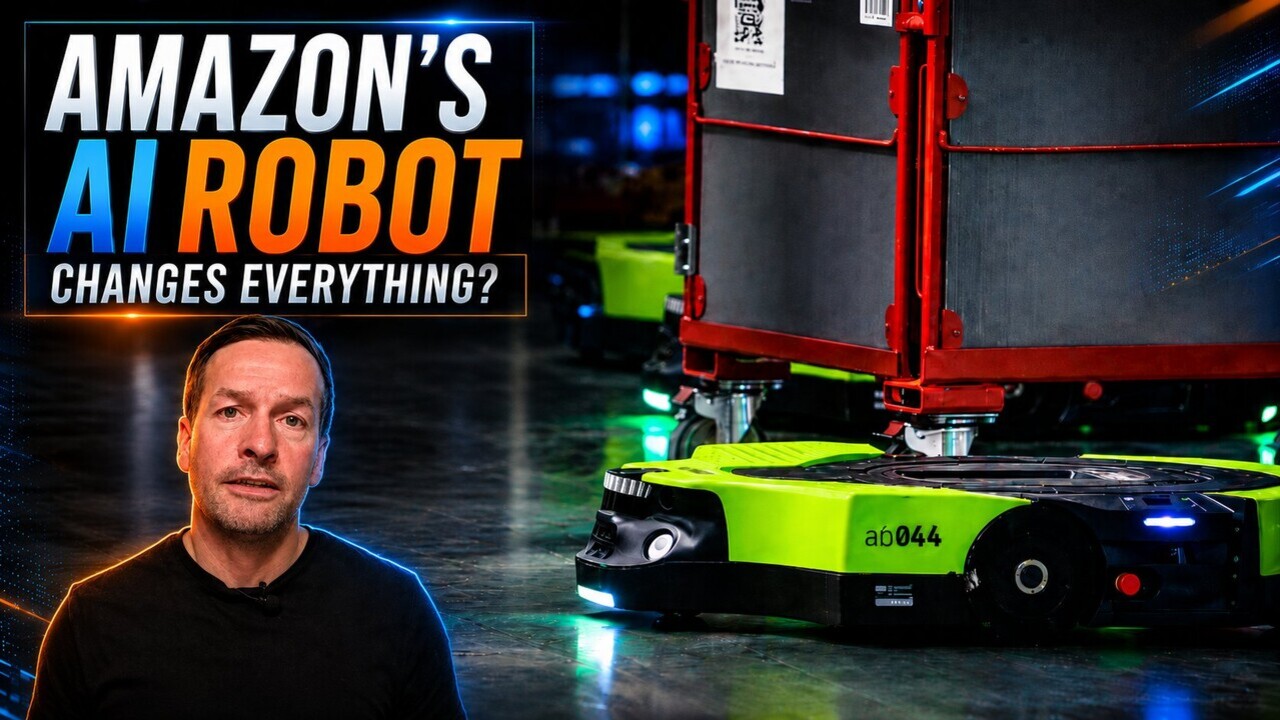
    Amazon itself is a prime example of robotics in action.

    By combining physical robots with cloud-based systems, warehouses can optimise routes, manage inventory, and improve efficiency at scale.

    Service Robots

    Service robots in hospitality, retail, and events are becoming more intelligent through cloud integration.

    They can update menus, adapt to customer preferences, and improve interactions based on data collected across multiple deployments.

    Inspection and Security Robots

    Inspection robots used in industries such as energy and infrastructure can leverage cloud data to identify patterns and predict issues before they occur.

    Security robots can analyse real-time data to detect anomalies and respond more effectively.

    Humanoid Robots

    While still emerging, humanoid robots stand to benefit significantly from cloud robotics.

    These robots require advanced AI and continuous learning to operate effectively in human environments. Cloud infrastructure enables this level of intelligence.

    Why Businesses Are Investing in Robotics Now

    The business case for robotics is becoming clearer.

    Labour shortages, rising costs, and the need for efficiency are driving companies to explore automation. But the real opportunity lies in scalability.

    Cloud robotics allows businesses to:

    • Deploy robots across multiple locations
    • Update systems remotely
    • Reduce operational complexity
    • Improve performance over time

    This transforms robotics from a one-time investment into a dynamic, evolving system.

    Challenges Slowing Adoption

    Despite the opportunities, there are still barriers to widespread adoption.

    Integration Complexity

    Many businesses struggle to integrate robots into existing processes. Without the right strategy, robotics projects can fail to deliver value.

    Cost Perception

    While cloud robotics reduces some costs, there is still a perception that robotics is expensive and complex.

    Skills Gap

    There is a shortage of professionals with the expertise to implement and manage robotics systems.

    Security and Data Concerns

    As robots become more connected, concerns around data security and privacy increase.

    These challenges highlight the need for expert guidance in robotics consulting.

    The Robotics Industry Shift: Platforms Over Products

    One of the most significant trends in the robotics industry is the shift from products to platforms.

    In the past, success was defined by building the best robot.

    In the future, success will be defined by controlling the ecosystem.

    Companies like Amazon are positioning themselves as platform providers, enabling others to build on top of their infrastructure.

    This creates network effects, where the value of the platform increases as more users and developers join.

    For robotics startups, this presents both an opportunity and a challenge. They can leverage platforms like AWS to accelerate development, but they must also differentiate themselves within a growing ecosystem.

    The Business Opportunity in Robotics Consulting

    As robotics becomes more complex, the need for guidance increases.

    Businesses are no longer just buying robots. They are navigating an entire ecosystem of hardware, software, and cloud infrastructure.

    This is where robotics consulting plays a critical role.

    Consultants help businesses:

    • Identify where robots can add value
    • Select the right robotics solutions
    • Integrate systems effectively
    • Scale operations over time

    The demand for robotics consulting is set to grow alongside the industry itself.

    The RoboPhil Perspective

    Philip English, known as RoboPhil, works at the intersection of robotics, automation, and real-world business applications.

    Through Robot Center, Robots of London, and Robot Philosophy, he supports companies across multiple areas of the robotics industry.

    This includes:

    • Helping businesses explore robotics adoption
    • Deploying robots for events and customer engagement
    • Advising robotics companies on go-to-market strategies
    • Providing insights into the evolving robotics landscape

    From hands-on experience, one thing is clear: the companies that succeed with robotics are not just those with access to technology, but those with the right strategy.

    Understanding how cloud robotics fits into the bigger picture is becoming essential.

    What the Future of Robotics Looks Like

    The next phase of robotics will be defined by connectivity, intelligence, and scalability.

    AI robots will become more capable, but more importantly, they will become part of larger systems.

    Cloud robotics will enable:

    • Faster innovation cycles
    • Global deployment of robotics solutions
    • Continuous improvement through data
    • Integration with other technologies such as IoT and AI

    Humanoid robots will likely play a role in this future, but the real transformation will happen behind the scenes.

    The infrastructure powering robots will become as important as the robots themselves.

    Conclusion

    Amazon’s AWS robotics strategy highlights a critical shift in the robotics industry.

    The future of robotics is not just about building better machines. It’s about building smarter systems.

    Cloud robotics is unlocking new possibilities for AI robots, enabling businesses to scale automation in ways that were previously impossible.

    For companies willing to embrace this change, the opportunities are significant.

    But success will require more than just technology. It will require understanding, strategy, and the ability to adapt.

    Call to Action

    If you are exploring robotics, automation, or AI robots for your business, now is the time to act.

    Whether you are looking to deploy robots, understand the robotics industry, or develop an automation strategy, expert guidance can make the difference.

    Robotics services and partners:

    Robot Center
    https://robotcenter.co.uk/

    Robots of London
    https://robotsoflondon.co.uk/

    Robot Philosophy
    https://robophil.com/

    Business enquiries
    sales@robotcenter.co.uk

  • HL Company

    HL Company at CES 2026: What It Reveals About the Future of Robotics and Real-World Deployment

    Introduction

    The robotics industry is entering a new phase.

    For years, robots have captured attention through impressive demonstrations, futuristic concepts, and bold promises about the future of automation. But in 2026, the conversation is shifting—from what robots could do, to what they are actually doing in real-world environments.

    At Consumer Electronics Show 2026 (CES 2026), one company that stood out in this transition was HL Company.

    While many exhibitors focused on spectacle, HL Company presented something more important: robotics designed for deployment. Not just innovation for the sake of attention, but robots that could realistically be integrated into businesses today.

    This distinction matters more than ever.

    As industries face increasing pressure to improve efficiency, reduce costs, and enhance customer experience, robotics is moving from a future consideration to a present-day solution. The companies that understand this shift—and act on it—will define the next decade of automation.


    The Current State of Robotics

    The robotics industry has evolved significantly over the past decade.

    Initially dominated by industrial robots in manufacturing, the sector has expanded into service robotics, AI robots, and autonomous systems that operate in dynamic, human-centric environments. Today, robots are being used in:

    • Retail stores for customer engagement
    • Hotels and restaurants for service delivery
    • Warehouses for logistics and fulfilment
    • Security and inspection for monitoring and safety
    • Events and exhibitions for interaction and branding

    This expansion is driven by advancements in robotics technology, including artificial intelligence, computer vision, and autonomous navigation.

    However, despite these technological breakthroughs, a major gap remains.

    Many robots are still built for demonstration rather than deployment.

    This is where the industry is beginning to split.

    On one side, there are companies building highly advanced robots that generate excitement but struggle to find practical applications. On the other, there are companies focused on creating robots that businesses can actually use.

    HL Company appears to be positioning itself firmly in the second category.


    Why Businesses Are Investing in Robots

    The growing interest in robotics is not just about innovation—it’s about necessity.

    Businesses across multiple industries are facing challenges that robotics can directly address:

    Labour Shortages

    Many sectors, particularly hospitality, logistics, and retail, are experiencing ongoing labour shortages. Robots offer a way to fill operational gaps without relying solely on human resources.

    Rising Costs

    Wages, training, and operational overheads continue to increase. Automation provides a scalable way to manage costs while maintaining service levels.

    Customer Experience

    Modern consumers expect fast, consistent, and engaging experiences. Robots can enhance customer interaction while delivering reliable service.

    Data and Intelligence

    AI robots can collect and process data in real time, providing valuable insights that help businesses optimise operations.

    These factors are accelerating the adoption of robotics across industries.

    But adoption is not just about having access to robots—it’s about having access to the right robots.


    HL Company’s Position in the Robotics Industry

    HL Company’s presence at CES 2026 highlights an important shift in the robotics industry.

    Rather than focusing purely on technological capability, the company appears to be prioritising usability and deployment.

    This is a critical distinction.

    The future of robotics will not be determined by which company builds the most advanced robot. It will be determined by which company builds robots that businesses can easily integrate into their operations.

    HL Company’s approach suggests an understanding of this reality.

    Their robots are not just designed to impress—they are designed to function within real-world environments. This includes considerations such as:

    • Ease of integration
    • Reliability in daily use
    • User-friendly interfaces
    • Practical applications across industries

    This focus aligns with the broader trend in robotics: moving from innovation to implementation.


    Key Technologies Driving Modern Robotics

    The progress seen in companies like HL Company is made possible by several key technological advancements.

    Artificial Intelligence

    AI is at the core of modern robotics. It enables robots to understand their environment, make decisions, and interact with humans in more natural ways.

    Autonomous Navigation

    Robots are now capable of navigating complex environments without human intervention. This is essential for applications in retail, hospitality, and logistics.

    Computer Vision

    Advanced vision systems allow robots to recognise objects, people, and obstacles, improving both safety and functionality.

    Cloud Connectivity

    Robots can now connect to cloud platforms, enabling remote management, updates, and data analysis.

    Human-Robot Interaction

    Improvements in interfaces, speech recognition, and design are making robots more accessible and engaging for users.

    These technologies are transforming robots from static machines into dynamic, intelligent systems.


    Real-World Applications of Service Robots

    The true measure of success in robotics is not innovation—it’s adoption.

    Service robots are already being deployed in a variety of real-world applications:

    Retail

    Robots are used for customer engagement, product promotion, and in-store navigation.

    Hospitality

    Hotels and restaurants are using robots for food delivery, guest interaction, and operational support.

    Events and Exhibitions

    Interactive robots are being used to attract attention, engage audiences, and enhance brand experiences.

    Security and Inspection

    Autonomous robots are monitoring environments, detecting anomalies, and improving safety.

    Logistics

    Robots are streamlining warehouse operations, improving efficiency, and reducing manual labour.

    These applications demonstrate the growing role of robotics in everyday business operations.


    Challenges Slowing Robotics Adoption

    Despite the progress, several challenges continue to slow the widespread adoption of robotics.

    Integration Complexity

    Many businesses lack the expertise required to integrate robots into their existing systems.

    Cost Perception

    While robotics can deliver long-term savings, the upfront investment can be a barrier for some organisations.

    Lack of Understanding

    There is still a gap in understanding what robots can realistically do and how they can be used effectively.

    Overhyped Expectations

    The gap between expectations and reality can lead to disappointment when robots fail to deliver on exaggerated claims.

    Operational Readiness

    Not all businesses are prepared to adapt their processes to accommodate robotics.

    These challenges highlight the importance of robotics consulting and strategic implementation.


    Industry Insight: The Shift from Innovation to Deployment

    The robotics industry is undergoing a fundamental shift.

    For years, success was measured by technological advancement.

    Now, it is measured by deployment.

    This shift is redefining the competitive landscape.

    Companies that focus on real-world applications, scalability, and usability are gaining an advantage over those focused purely on innovation.

    HL Company’s presence at CES 2026 reflects this trend.

    It signals a move towards practical robotics—solutions that can be adopted, scaled, and integrated into everyday business operations.

    This is where the real value in robotics lies.


    Business Perspective: Where the Opportunities Are

    For businesses, the opportunity in robotics is significant.

    But it requires a strategic approach.

    The key is not to adopt robotics for the sake of innovation, but to identify specific use cases where robots can deliver measurable value.

    This includes:

    • Reducing operational costs
    • Improving efficiency
    • Enhancing customer experience
    • Increasing scalability

    Companies that take a targeted approach to robotics adoption will see the greatest return on investment.

    This is also where robotics consulting becomes critical.

    Understanding which robots to use, how to deploy them, and how to integrate them into existing operations is essential for success.


    The RoboPhil Perspective

    From a practical standpoint, robotics is no longer theoretical.

    Philip English, known as RoboPhil, works across Robot Center, Robots of London, and Robot Philosophy, helping businesses move from curiosity to implementation.

    This includes:

    • Advising companies on robotics strategy
    • Supplying and deploying robots in real environments
    • Supporting events with interactive robotics experiences
    • Helping organisations understand where robotics creates real value

    One of the key insights from working in the field is this:

    The biggest challenge is not technology—it’s adoption.

    Many businesses are interested in robotics, but few know where to start.

    Bridging that gap is where the opportunity lies.


    What the Future of Robotics Looks Like

    The future of robotics will not be defined by singular breakthroughs.

    It will be defined by widespread adoption.

    Over the next decade, we can expect to see:

    • Increased deployment of service robots across industries
    • Growth in AI-powered robotics solutions
    • Expansion of robotics startups focused on real-world applications
    • Greater investment in robotics infrastructure
    • The emergence of humanoid robots in specific use cases

    Robots will become a standard layer in business operations, much like software is today.

    They will not replace humans entirely, but they will transform how work is done.

    The companies that embrace this shift early will gain a significant competitive advantage.


    Conclusion

    HL Company’s presence at CES 2026 is a reflection of where the robotics industry is heading.

    Away from hype.

    Towards deployment.

    The future of robotics is not about what robots can do.

    It’s about what they are actually doing in real-world environments.

    As businesses continue to explore automation, the focus will shift towards practical, scalable, and commercially viable solutions.

    This is where the next phase of the robotics industry will be defined.


    Call to Action

    If you are exploring how robotics can be applied in your business, now is the time to move from idea to implementation.

    Robotics services and partners:

    Robot Center
    https://robotcenter.co.uk/

    Robots of London
    https://robotsoflondon.co.uk/

    Robot Philosophy
    https://robophil.com/

    Business enquiries
    sales@robotcenter.co.uk

  • Autovoltek Overview

    Autovoltek Overview

    Why Robotics Is the Next Major Business Revolution

    Robotics is no longer a concept confined to science fiction. It’s a rapidly growing industry that’s already reshaping the way businesses operate and how society functions at large. From humanoid robots to AI-driven automation, robotics is transforming industries and offering new opportunities that didn’t exist just a decade ago. But what does the future of robotics hold, and why is it essential for businesses to embrace it now?

    In this article, we’ll dive into the rise of robotics in business, explore the technologies driving this revolution, and discuss how businesses can prepare for a future where robots are a critical part of their operations.


    The Current State of Robotics

    Robotics has evolved significantly in recent years. The first robots were primarily used in manufacturing, primarily performing repetitive tasks that were labor-intensive and time-consuming for humans. Today, robotics has expanded far beyond assembly lines and factory floors. Robots are now integral to industries like healthcare, logistics, customer service, and even entertainment. From surgical robots that assist in complex medical procedures to autonomous drones delivering packages, robotics is making its mark across sectors.

    Humanoid robots—robots designed to resemble and interact with humans—are becoming more advanced. In fact, AI-powered humanoid robots are no longer a futuristic fantasy. They are already being deployed in industries such as retail, hospitality, and customer service, where they assist customers, handle transactions, and provide information. The rise of AI robots is creating new opportunities for businesses to automate tasks previously handled by human workers, which leads to significant cost savings and increased efficiency.

    As robotics technology continues to advance, it’s clear that the boundaries of what robots can do will continue to expand. The line between human workers and robots is becoming increasingly blurred, and businesses are starting to realize the potential benefits that robots bring, from enhanced productivity to improved safety and customer experiences.


    Why Businesses Are Investing in Robots

    The shift towards robotics in business is driven by a combination of factors. Businesses are increasingly recognizing the value of automation and the role robotics can play in improving efficiency, reducing costs, and enhancing overall performance. Here are a few reasons why robotics is becoming an integral part of business strategy:

    1. Cost Efficiency

    One of the biggest drivers behind the rise of robotics in business is cost efficiency. Robots can work 24/7 without breaks, and they don’t require benefits, sick days, or holidays. This makes them a long-term cost-effective solution for businesses looking to reduce labor costs and improve their bottom line.

    In industries like manufacturing and logistics, robots can perform repetitive tasks faster and more accurately than humans, leading to significant productivity gains. In some cases, robots can perform tasks that would be dangerous for humans, such as working with hazardous materials or in extreme environments.

    2. Enhanced Productivity

    Robots are built to perform specific tasks with precision and speed, leading to higher productivity. In manufacturing, for instance, robots can work at speeds that far exceed human capabilities, increasing output while reducing errors. Similarly, in logistics, robots can streamline processes such as sorting, packing, and delivery, allowing businesses to operate at a faster pace and handle larger volumes of work.

    3. Improved Customer Experience

    Humanoid robots and AI-powered systems are also making waves in customer-facing industries. Robots like Pepper, designed by SoftBank Robotics, are being deployed in retail, hotels, and airports to assist customers. These robots can answer questions, provide directions, and even entertain, offering a unique and engaging customer experience. As consumers increasingly expect faster, more personalized service, robots are helping businesses meet these demands.


    Key Technologies Driving Robotics

    Several key technologies are driving the rapid advancement of robotics. These innovations are making robots smarter, more adaptable, and capable of performing an ever-growing range of tasks. Let’s take a closer look at some of the technologies pushing robotics to the forefront of business operations.

    1. Artificial Intelligence (AI)

    AI is the backbone of modern robotics. It enables robots to process information, learn from experiences, and make decisions autonomously. AI-powered robots can perform complex tasks, adapt to new environments, and even interact with humans in a more natural and intuitive way. As AI technology continues to improve, robots will become even more capable of handling sophisticated tasks across a wide range of industries.

    2. Machine Learning (ML)

    Machine learning, a subset of AI, allows robots to learn from data and experiences, improving their performance over time. In industries like logistics, robots equipped with machine learning can optimize their routes for faster deliveries. In healthcare, machine learning helps robots analyze patient data, detect patterns, and make more accurate diagnoses. The more data these robots gather, the better they become at performing their designated tasks.

    3. Sensors and Vision Systems

    Sensors and vision systems are critical to the function of many robots. These technologies allow robots to perceive and understand their environment, helping them navigate complex spaces and interact with objects and humans. For example, in warehouse automation, robots equipped with vision systems can identify and sort items without human intervention, significantly improving efficiency.

    4. Robotic Process Automation (RPA)

    While not strictly robots in the physical sense, RPA is playing an increasingly important role in the business world. RPA uses software to automate repetitive, rule-based tasks, such as data entry and invoice processing. RPA systems can perform these tasks much faster and more accurately than humans, reducing the risk of errors and freeing up employees to focus on higher-value activities.


    Real-World Applications of Robots

    The applications of robotics in business are vast, and they’re being used in a variety of industries to solve complex problems and improve operational efficiency. Here are some key examples of how robots are already transforming business practices:

    1. Manufacturing

    Robots have been a staple in manufacturing for decades. From welding to assembly, robots are used to perform tasks that require precision and consistency. However, with the advent of collaborative robots (cobots), robots are now working alongside human workers, handling dangerous or monotonous tasks while leaving more complex activities to humans. This synergy between humans and robots is improving productivity and reducing the risk of injury.

    2. Healthcare

    In healthcare, robots are making a significant impact. Surgical robots, such as the da Vinci Surgical System, enable surgeons to perform minimally invasive procedures with greater precision. Meanwhile, robots like TUG and Xenex are being used in hospitals to transport medications, linens, and other supplies, freeing up hospital staff to focus on patient care.

    3. Retail and Hospitality

    In retail and hospitality, robots are enhancing customer experiences. From concierge robots that assist guests at hotels to robots that greet customers and offer product recommendations in stores, businesses are finding creative ways to incorporate robots into their operations. These robots not only enhance customer service but also reduce labor costs.

    4. Logistics and Delivery

    Autonomous robots and drones are revolutionizing logistics and delivery services. Companies like Amazon and FedEx are using robots to automate tasks such as picking and packing orders, while drones are being explored for last-mile delivery. These advancements are allowing businesses to deliver products faster, more efficiently, and with fewer human resources.


    Challenges Slowing Adoption

    Despite the numerous benefits of robotics, many businesses face challenges when adopting robotic technologies. Some of the key hurdles include:

    1. Cost of Implementation

    While robots can save businesses money in the long term, the upfront cost of purchasing and implementing robotics systems can be high. For smaller companies, this can be a significant barrier to entry.

    2. Workforce Transition

    As robots take over more tasks, businesses must address the impact on their workforce. Reskilling and upskilling employees will be crucial in ensuring they remain relevant in a world where robots are becoming more prevalent. Companies must invest in training programs to help workers transition into new roles that complement robotic technology.

    3. Technology Integration

    Integrating robotics into existing business systems can be complex and time-consuming. Ensuring that robots work seamlessly with other automation tools, AI systems, and software platforms is essential for realizing the full potential of robotics in business.


    What the Future of Robotics Looks Like

    The future of robotics is incredibly exciting. As technology continues to advance, robots will become more autonomous, intelligent, and adaptable. Here are a few trends we can expect to see in the near future:

    1. Robots in Every Industry

    Robots will become a common sight across all industries, from healthcare to retail, manufacturing, and logistics. As robots become more affordable and capable, businesses will increasingly adopt them to improve productivity and enhance customer experiences.

    2. AI-Powered Robots

    AI-powered robots will become smarter and more autonomous, capable of performing increasingly complex tasks without human intervention. These robots will be able to adapt to new environments and learn from experience, making them more effective and efficient over time.

    3. Collaboration Between Humans and Robots

    The future of robotics isn’t about robots replacing humans—it’s about humans and robots working together. Collaborative robots (cobots) will become more common, performing tasks that complement human workers and allowing businesses to take advantage of the strengths of both robots and humans.


    RoboPhil Perspective

    As a robotics consultant, I work closely with businesses to help them understand the potential of robotics and automation and guide them through the implementation process. At Robot Center, we assist with sourcing the right robots for specific business needs, while Robots of London provides robot rental services for events. Through Robot Philosophy, we offer strategic insights and consulting services for businesses looking to integrate robotics into their operations.

    Robotics is revolutionizing the way businesses operate, and it’s essential for companies to stay ahead of the curve. Whether you’re looking to automate your processes, enhance customer experiences, or implement cutting-edge AI-driven robots, the future of robotics holds incredible opportunities.


    Conclusion

    The future of robotics is bright, and businesses that embrace automation today will be the leaders of tomorrow. With advancements in AI, machine learning, and robotics technology, robots are poised to transform every industry, improving productivity, reducing costs, and creating new opportunities for innovation.

    As the robotics industry continues to grow, now is the time for businesses to explore how robotics can play a role in their operations. If you’re ready to integrate robotics into your business, contact RoboPhil for expert consulting and support in navigating this exciting and transformative industry.


    Call to Action

    Looking to integrate robotics into your business? Contact RoboPhil for robotics consulting, industry insights, and expert guidance. Let us help you take advantage of the robotics revolution.


    Robotics services and partners:

    Robot Center
    https://robotcenter.co.uk/

    Robots of London (robot hire for events)
    https://robotsoflondon.co.uk/

    Robot Philosophy – robotics insights and consulting
    https://robophil.com/

    Business enquiries
    sales@robotcenter.co.uk

  • Polymath Robotics Overview

    Polymath Robotics Overview

    Polymath Robotics at CES 2026: The Software Powering the Future of Robotics

    At CES 2026, the spotlight was once again on robots.

    From humanoid robots walking the show floor to AI-powered machines performing complex tasks, the event made one thing clear: robotics is accelerating faster than ever.

    But beneath the surface of impressive hardware demos, a more important shift is taking place.

    It’s no longer just about building better robots.

    It’s about building smarter ones.

    In an interview at CES 2026, Polymath Robotics revealed a critical piece of the puzzle that many businesses and even robotics companies are still overlooking — the intelligence layer that enables robots to operate effectively in the real world.

    This is where the future of robotics is being shaped.


    The Current State of Robotics in 2026

    The robotics industry has reached a pivotal moment.

    Over the past decade, advances in hardware, sensors, and mechanical design have made robots more capable, durable, and affordable. Robots can now navigate warehouses, assist in hospitality, perform inspections, and even interact with humans in controlled environments.

    However, despite this progress, widespread adoption of robotics across industries remains slower than expected.

    Why?

    Because most robots still struggle outside of structured environments.

    Factories and warehouses have been the natural home for automation because they are predictable. But the real world — construction sites, farms, public spaces — is far more chaotic.

    This is where traditional robotics systems begin to break down.

    And this is exactly the challenge companies like Polymath Robotics are solving.


    Polymath Robotics: A Different Approach

    Polymath Robotics is not a typical robotics company.

    They are not focused on manufacturing robot hardware.

    Instead, they are focused on something arguably more important — the software that allows robots to function intelligently in complex, unpredictable environments.

    During the CES 2026 interview, one thing became clear:

    Polymath is building the “brain” for robots.

    Their platform enables robots to interpret their surroundings, make decisions, and execute tasks in real-world conditions — not just controlled demos.

    This distinction is critical.

    Because the future of robotics will not be defined solely by the machines themselves, but by the intelligence that powers them.


    Why the Intelligence Layer Matters

    The biggest misconception in the robotics industry is that hardware is the main barrier to adoption.

    It isn’t.

    The real challenge is autonomy.

    For a robot to be useful in a business setting, it must be able to:

    • Navigate dynamic environments
    • Handle unexpected obstacles
    • Adapt to changing conditions
    • Perform tasks without constant human intervention

    This is incredibly difficult.

    And this is where AI robots come into play.

    Polymath Robotics is developing systems that allow robots to operate more like humans — interpreting situations and making decisions on the fly.

    This is the difference between a robot that works in a lab… and a robot that works in the real world.


    From Demo to Deployment: The Missing Link in Automation

    One of the most striking insights from CES 2026 is how many robotics companies are still focused on demonstration rather than deployment.

    It’s relatively easy to build a robot that performs well in a controlled environment.

    It’s much harder to deploy that robot in a real business setting.

    Businesses don’t need robots that impress.

    They need robots that deliver.

    This is where Polymath Robotics is positioning itself.

    By focusing on real-world usability, they are addressing the biggest gap in the robotics industry — the transition from prototype to practical application.

    And this is what will ultimately unlock large-scale automation.


    Real-World Applications of Polymath Robotics

    The implications of this technology are significant across multiple industries.

    Construction

    Construction sites are unpredictable and constantly changing.

    Robots operating in this environment must adapt in real time.

    Polymath’s software could enable robots to navigate these challenges, perform tasks, and improve efficiency without requiring constant reprogramming.

    Agriculture

    Farming environments vary daily based on weather, terrain, and crop conditions.

    AI robots powered by intelligent software could automate tasks such as harvesting, monitoring, and maintenance.

    Logistics and Warehousing

    While warehouses are already automated to some extent, there is still a need for more flexible systems that can adapt to changing layouts and demands.

    Polymath’s approach could make robotics more scalable and easier to deploy across different facilities.

    Industrial and Inspection Robotics

    Inspection robots often operate in complex environments where conditions are unpredictable.

    Smarter AI systems allow these robots to function more reliably, improving safety and reducing human risk.


    The Rise of AI Robots and Software-Defined Robotics

    A major theme at CES 2026 is the shift toward software-defined robotics.

    This means the value is increasingly moving away from hardware and toward software platforms.

    Similar to how smartphones evolved, the hardware becomes standardised, while the software becomes the differentiator.

    This has several implications:

    • Faster innovation cycles
    • Lower barriers to entry
    • More scalable solutions
    • Greater interoperability between systems

    Polymath Robotics is positioning itself at the centre of this shift.

    By creating a flexible intelligence layer, they enable multiple robot platforms to benefit from advanced AI capabilities.

    This could fundamentally reshape the robotics industry.


    Challenges Slowing Robotics Adoption

    Despite the progress, several challenges still exist.

    Integration Complexity

    Businesses often struggle to integrate robots into existing workflows.

    High Initial Costs

    While costs are decreasing, robotics investment still requires careful planning.

    Skills Gap

    There is a lack of expertise in deploying and managing robotic systems.

    Reliability Concerns

    Businesses need assurance that robots will perform consistently in real-world conditions.

    Polymath Robotics is addressing one of the most critical issues — reliability in unpredictable environments.

    And solving this could unlock the next wave of adoption.


    The Business Opportunity in Robotics

    For businesses, the opportunity is clear.

    Robotics is no longer a future concept — it is a competitive advantage.

    Companies that successfully integrate robots into their operations can:

    • Increase efficiency
    • Reduce costs
    • Improve safety
    • Scale operations more effectively

    However, the key is not just adopting robots.

    It’s adopting the right robotics strategy.

    This includes selecting the right technology, integrating it effectively, and ensuring it delivers measurable value.

    This is where robotics consulting becomes essential.


    The RoboPhil Perspective

    From working across Robot Center, Robots of London, and Robot Philosophy, I’ve seen firsthand how businesses approach robotics.

    Most companies are interested in robots.

    Very few know where to start.

    The common mistake is focusing too much on the robot itself.

    Instead, the focus should be on the outcome.

    What problem are you solving?

    What task are you automating?

    What value are you creating?

    Polymath Robotics highlights an important shift — the success of robotics is increasingly dependent on software and intelligence.

    For businesses exploring automation, this is a critical insight.

    The future is not just about buying robots.

    It’s about deploying systems that actually work.


    What the Future of Robotics Looks Like

    Looking ahead, the robotics industry is entering a new phase.

    We are moving from hardware-driven innovation to intelligence-driven innovation.

    In the next 5–10 years, we can expect:

    • More adaptable AI robots
    • Faster deployment of automation systems
    • Increased use of robotics across industries
    • Growth in robotics startups focused on software
    • Greater demand for robotics consulting and integration

    Humanoid robots will continue to evolve, but the real transformation will happen behind the scenes — in the intelligence that powers all robots.

    Companies like Polymath Robotics are leading this transition.


    Conclusion

    CES 2026 made one thing clear.

    The future of robotics is not just about machines.

    It’s about intelligence.

    Polymath Robotics represents a new wave of companies focused on solving the hardest problem in robotics — making robots work in the real world.

    As AI robots become more capable, and automation becomes more accessible, the businesses that understand this shift will be the ones that succeed.

    The robotics industry is evolving rapidly.

    And the next phase will be defined by those who control the intelligence layer.


    Work With RoboPhil

    If you are exploring robotics, automation, or AI robots in your business, now is the time to act.

    Whether you are looking for robotics consulting, robot sourcing, or strategic guidance, RoboPhil can help you navigate the rapidly evolving robotics industry.

    Robot Center
    https://robotcenter.co.uk/

    Robots of London
    https://robotsoflondon.co.uk/

    Robot Philosophy
    https://robophil.com/

    Business enquiries
    sales@robotcenter.co.uk


     https://www.youtube.com/watch?v=JPPjtPtAY8shttps://www.youtube.com/shorts/3XDMXEGgqDM

  • Maple Advanced Robotics (MARI) winning an award with doosan at CES 2026

    Maple Advanced Robotics (MARI) winning an award with doosan at CES 2026

    Maple Advanced Robotics and Doosan at CES 2026: A Turning Point for AI Robotics and Automation

    Introduction

    Every year, CES showcases the latest innovations in technology, but occasionally a moment stands out that signals a deeper shift in an entire industry.

    At CES 2026, that moment came when Maple Advanced Robotics (MARI) won an award alongside Doosan Robotics.

    This wasn’t just another robotics demonstration or incremental upgrade. It was a clear indication that AI robots are entering a new phase—one where intelligence, adaptability, and real-world usability converge.

    For businesses, entrepreneurs, and investors watching the robotics industry, this is more than news. It’s a signal of what’s coming next in automation—and how quickly companies will need to adapt.


    The Current State of Robotics

    The robotics industry has evolved rapidly over the past decade.

    What started as rigid, pre-programmed machines in controlled environments has now expanded into intelligent systems capable of operating in dynamic, unpredictable settings. Traditional industrial robots, once confined to automotive assembly lines, are now being joined by collaborative robots (cobots), service robots, and increasingly sophisticated AI robots.

    Today, robotics technology is defined by three major trends:

    • Increased intelligence through AI and machine learning
    • Greater flexibility in deployment
    • Expansion into non-industrial environments

    Companies are no longer just investing in robots for efficiency. They are investing in robotics as a strategic advantage.

    And this is where Maple Advanced Robotics’ CES recognition becomes important.


    Why the MARI and Doosan Win Matters

    The collaboration between Maple Advanced Robotics and Doosan Robotics represents a powerful combination of software intelligence and hardware capability.

    Doosan has established itself as a global leader in collaborative robot arms—systems designed to work safely alongside humans. Maple Advanced Robotics, on the other hand, is focused on intelligent control systems that enable robots to perform complex tasks with minimal programming.

    Together, they are solving one of the biggest challenges in robotics:

    Making robots easier to deploy and more adaptable to real-world tasks.

    Historically, deploying robots has required significant expertise, time, and cost. Systems needed to be carefully programmed, calibrated, and maintained.

    Now, with AI-driven robotics systems, we are seeing a shift toward:

    • Faster deployment
    • Reduced need for specialist programming
    • Greater autonomy in operation

    This is critical for businesses that want to adopt automation without building large in-house robotics teams.


    Key Technologies Driving This Shift

    The success of AI robots like those demonstrated by MARI and Doosan is underpinned by several key technological advancements.

    AI and Machine Learning

    Modern robots are no longer limited to fixed instructions.

    AI allows robots to interpret data, learn from their environment, and make decisions in real time. This is particularly important in environments where variability is high—such as logistics, retail, or service industries.

    Computer Vision

    Computer vision enables robots to “see” and understand their surroundings.

    This allows for:

    • Object recognition
    • Quality inspection
    • Navigation in dynamic environments

    For example, a robot can identify different items on a production line without needing each one to be precisely positioned.

    No-Code and Low-Code Robotics

    One of the most significant developments in robotics technology is the move toward no-code or low-code interfaces.

    This allows non-experts to program and deploy robots using intuitive visual tools rather than complex coding.

    This is a major step toward mass adoption.

    Collaborative Robotics (Cobots)

    Cobots are designed to work safely alongside humans.

    This opens up new possibilities for automation in environments that were previously unsuitable for traditional robots, such as:

    • Small and medium-sized businesses
    • Warehouses
    • Retail environments
    • Events and customer-facing roles

    Real-World Applications of AI Robots

    The impact of these technologies is already being felt across multiple industries.

    Manufacturing

    Manufacturing remains the largest market for robotics.

    AI robots are now being used for:

    • Assembly
    • Inspection
    • Packaging
    • Material handling

    The difference is that these systems are becoming more flexible, allowing manufacturers to adapt quickly to changing product lines.

    Logistics and Warehousing

    Automation in logistics is accelerating rapidly.

    Robots are being deployed for:

    • Picking and packing
    • Sorting
    • Inventory management

    With AI integration, these systems can optimize workflows and improve efficiency in real time.

    Retail and Customer Experience

    Service robots are beginning to transform customer-facing environments.

    From digital signage robots to interactive assistants, businesses are using robots to:

    • Engage customers
    • Provide information
    • Enhance brand experiences

    Events and Marketing

    Robots are increasingly being used at events to create memorable experiences.

    They attract attention, generate engagement, and provide a unique way for brands to stand out.

    This is an area where adoption is growing quickly.


    Challenges Slowing Adoption

    Despite rapid progress, several challenges remain.

    Awareness and Understanding

    One of the biggest barriers is not technology—it’s awareness.

    Many businesses still don’t fully understand what robots can do or how they can be implemented.

    Cost Perception

    While the cost of robotics is decreasing, there is still a perception that robots are expensive and complex.

    In reality, the return on investment can be significant when deployed correctly.

    Integration

    Integrating robots into existing workflows can be challenging.

    It requires:

    • Process redesign
    • Staff training
    • Ongoing support

    This is where robotics consulting becomes essential.


    Industry Insight: A Market Accelerating

    The robotics industry is entering a new phase of growth.

    Investment in robotics startups is increasing, particularly in areas such as:

    • AI-driven robotics
    • Autonomous systems
    • Humanoid robots

    We are also seeing increased collaboration between hardware manufacturers and software companies, as demonstrated by the MARI and Doosan partnership.

    This convergence is accelerating innovation.

    At the same time, global trends such as labor shortages and rising operational costs are driving demand for automation.

    Businesses are no longer asking if they should adopt robotics.

    They are asking how quickly they can do it.


    The Business Case for Robotics

    For businesses, the case for robotics is becoming clearer.

    Efficiency and Productivity

    Robots can operate continuously, reducing downtime and increasing output.

    Consistency and Quality

    Automation reduces variability, leading to more consistent results.

    Competitive Advantage

    Early adopters of robotics can differentiate themselves in their markets.

    Scalability

    Robotics allows businesses to scale operations without a proportional increase in labor costs.


    The RoboPhil Perspective

    From my perspective as Philip English (RoboPhil), working across Robot Center, Robots of London, and Robot Philosophy, the shift we are seeing now is significant.

    Over the past few years, I’ve worked with:

    • Businesses exploring robotics adoption
    • Events using robots for engagement
    • Companies launching robotics products in the UK

    What’s changing is the mindset.

    Businesses are moving from curiosity to action.

    They are starting to see robots not as futuristic concepts, but as practical tools that can deliver real value today.

    The challenge is knowing where to start.

    This is where robotics consulting plays a crucial role—helping companies identify opportunities, select the right technologies, and implement solutions effectively.


    What the Future of Robotics Looks Like

    Looking ahead, the future of robotics is defined by several key trends.

    Increased Autonomy

    Robots will become more independent, requiring less human intervention.

    Expansion into New Industries

    We will see robotics adoption expand into sectors such as:

    • Healthcare
    • Hospitality
    • Construction
    • Agriculture

    Rise of Humanoid Robots

    Humanoid robots are gaining attention and investment.

    While still in early stages, they have the potential to transform industries that rely heavily on human labor.

    Integration with AI Ecosystems

    Robots will become part of broader AI ecosystems, connected to data platforms, cloud systems, and other technologies.


    Conclusion

    The award won by Maple Advanced Robotics and Doosan at CES 2026 is more than a recognition of innovation.

    It is a signal of a broader transformation in the robotics industry.

    AI robots are becoming more intelligent, more accessible, and more practical for real-world applications.

    For businesses, the message is clear:

    The future of robotics is not something to watch from a distance.

    It is something to engage with now.

    Those who understand and adopt these technologies early will be better positioned to compete in an increasingly automated world.


    Call to Action

    If you are exploring how robotics could work in your business, now is the time to act.

    Whether you are looking for robotics consulting, robot sourcing, or automation strategy, RoboPhil works with companies to identify opportunities and implement real solutions.

    Robotics services and partners:

    Robot Center
    https://robotcenter.co.uk/

    Robots of London
    https://robotsoflondon.co.uk/

    Robot Philosophy
    https://robophil.com/

    Business enquiries
    sales@robotcenter.co.uk


     https://www.youtube.com/watch?v=WTkX7yOGQSwhttps://www.youtube.com/shorts/BMVNzBeDQ1s

  • Oshkosh Corporation & Pratt Miller at CES 2026

    Oshkosh Corporation & Pratt Miller at CES 2026

    Autonomous Robot Vehicles: How AI Robots Are Transforming the Future of Transport and Industry

    Introduction

    The robotics industry is entering a new phase.

    For years, robots have been confined to controlled environments like factories and warehouses. But that is changing fast. Autonomous robot vehicles—powered by AI, advanced sensors, and real-time decision-making—are now moving into the real world.

    From military logistics to industrial transport, AI robots are beginning to operate in environments that were once considered too complex or unpredictable.

    This shift matters.

    Because when robots leave structured environments and enter dynamic, real-world conditions, the impact of automation increases dramatically. Entire industries—from logistics and construction to defence and infrastructure—are now facing a future where machines can operate independently.

    The question is no longer whether this will happen.

    It’s how fast.


    The Current State of Robotics in Transport

    Robotics technology has evolved significantly over the past decade.

    Autonomous vehicles have long been a focus within the broader robotics industry, particularly in passenger transport. However, the real breakthrough is now happening in industrial and commercial vehicles.

    AI robots are being developed to handle:

    • Heavy-duty logistics
    • Military transport
    • Construction site operations
    • Warehouse movement
    • Last-mile delivery

    Unlike consumer vehicles, these machines are designed for high-risk, high-value environments where efficiency and safety are critical.

    Companies like Oshkosh Corporation and Pratt Miller are demonstrating that robotics is no longer theoretical. Their autonomous robot vehicles showcased at global events like CES 2026 highlight how robotics technology is becoming practical, deployable, and scalable.

    This is robotics stepping into the real world.


    Why Businesses Are Investing in Autonomous Robots

    There is a clear reason why businesses are accelerating investment in AI robots.

    It comes down to three factors: efficiency, safety, and capability.

    Efficiency

    Automation reduces reliance on human labour for repetitive or time-intensive tasks. Autonomous robot vehicles can operate continuously, without fatigue, downtime, or variability in performance.

    This is particularly valuable in logistics, where time and consistency directly impact profitability.

    Safety

    Many industries involve dangerous environments—construction sites, military zones, hazardous material handling.

    Robots can operate in these conditions without risking human lives.

    This is one of the strongest drivers behind the adoption of robotics in sectors like defence and infrastructure.

    Capability

    Perhaps the most overlooked advantage is capability.

    AI robots can process data, analyse environments, and make decisions in real time. This allows them to perform tasks that are difficult or impossible for humans, particularly in complex or data-rich environments.

    This is where the future of robotics becomes truly transformative.


    Key Technologies Driving Autonomous Robotics

    The rise of autonomous robot vehicles is being powered by several key advancements in robotics technology.

    Artificial Intelligence and Machine Learning

    AI is at the core of modern robotics.

    It enables robots to:

    • Interpret sensor data
    • Recognise patterns
    • Make decisions
    • Adapt to changing environments

    Machine learning allows these systems to improve over time, making them more efficient and reliable.

    Sensor Fusion

    Autonomous robots rely on multiple sensors, including:

    • LiDAR
    • Cameras
    • Radar
    • GPS

    Sensor fusion combines data from these sources to create a comprehensive understanding of the environment.

    This is essential for navigation, obstacle avoidance, and real-time decision-making.

    Edge Computing

    Processing data locally—on the robot itself—is critical.

    Edge computing allows AI robots to make instant decisions without relying on cloud connectivity. This is particularly important in remote or high-risk environments.

    Advanced Robotics Engineering

    Mechanical design, durability, and adaptability are also key.

    Autonomous robot vehicles must operate in challenging conditions, from rough terrain to extreme weather.

    This requires robust engineering combined with intelligent software systems.


    Real-World Applications of Autonomous Robot Vehicles

    The applications for autonomous robotics are expanding rapidly.

    Military and Defence

    Autonomous vehicles are being developed for:

    • Supply transport
    • Reconnaissance
    • Tactical support

    These robots reduce risk to personnel while increasing operational efficiency.

    Logistics and Supply Chain

    In logistics, autonomous robots are already transforming operations.

    From warehouse robots to autonomous delivery vehicles, the goal is clear: faster, more efficient movement of goods.

    Autonomous trucks and industrial vehicles are the next step.

    Construction and Infrastructure

    Construction sites are complex, dynamic environments.

    AI robots can assist with:

    • Material transport
    • Site monitoring
    • Hazard detection

    This improves both safety and productivity.

    Industrial Operations

    Factories are evolving beyond static automation.

    Mobile robots and autonomous vehicles are enabling more flexible, responsive manufacturing environments.


    Challenges Slowing Adoption

    Despite rapid progress, there are still challenges to overcome.

    Regulation and Compliance

    Autonomous systems must meet strict regulatory standards.

    This can slow deployment, particularly in public or urban environments.

    Trust and Perception

    Businesses and individuals must trust robots to operate safely.

    This requires proven reliability and clear demonstration of value.

    Integration with Existing Systems

    Many organisations are not yet structured to integrate robotics effectively.

    This creates a gap between technological capability and real-world adoption.

    Cost and ROI

    While costs are decreasing, robotics still requires upfront investment.

    Businesses need clear ROI to justify adoption.


    The Robotics Industry Shift

    What we are seeing is not just technological advancement—it’s an industry shift.

    Robotics is moving from:

    • Controlled environments → Dynamic environments
    • Assisted automation → Full autonomy
    • Human-operated systems → AI-driven decision-making

    This shift is creating new opportunities across the robotics industry.

    Startups are emerging with specialised solutions.

    Investors are increasing funding in AI robotics.

    Established companies are integrating robotics into their core strategies.

    The future of robotics is no longer niche.

    It is becoming foundational.


    Business Perspective: The Opportunity for Companies

    For businesses, this presents both a challenge and an opportunity.

    Early Adoption Advantage

    Companies that adopt robotics early can:

    • Increase efficiency
    • Reduce costs
    • Gain competitive advantage

    New Business Models

    Robotics enables entirely new ways of operating.

    From autonomous logistics networks to robot-as-a-service (RaaS), the possibilities are expanding.

    Strategic Integration

    The key is not just adopting robots, but integrating them effectively.

    This requires:

    • Understanding use cases
    • Selecting the right technology
    • Implementing and optimising systems

    This is where robotics consulting becomes critical.


    The Role of Robotics Consulting

    As robotics technology advances, the complexity of adoption increases.

    Businesses need guidance to:

    • Identify opportunities for automation
    • Select the right AI robots
    • Implement systems effectively
    • Maximise return on investment

    Robotics consulting bridges the gap between technology and application.

    It ensures that companies do not just adopt robots—but use them strategically.


    The RoboPhil Perspective

    Philip English, known as RoboPhil, operates at the intersection of robotics technology and real-world business application.

    Through:

    • Robot Center
    • Robots of London
    • Robot Philosophy

    He works with companies exploring robotics adoption, sourcing the right robots, and deploying them effectively.

    From live events showcasing robots to consulting with businesses on automation strategy, RoboPhil provides practical insight into how robotics can deliver real value.

    This hands-on experience highlights a key truth:

    Robotics is not just about technology.

    It’s about implementation.

    And the companies that understand this will lead the next phase of automation.


    What the Future of Robotics Looks Like

    The trajectory is clear.

    Autonomous robots will become increasingly common across industries.

    We will see:

    • AI robots operating in real-world environments
    • Autonomous vehicles integrated into logistics networks
    • Humanoid robots entering service roles
    • Increased collaboration between humans and machines

    The pace of change will accelerate.

    What feels advanced today will become standard within the next decade.

    And as robotics technology continues to evolve, the line between human capability and machine capability will continue to blur.


    Conclusion

    Autonomous robot vehicles represent a major step forward in the evolution of robotics.

    They are not just improving efficiency—they are redefining what is possible.

    As AI robots move into real-world environments, the impact of automation will expand across industries.

    Businesses that recognise this shift early will be best positioned to benefit.

    The future of robotics is not coming.

    It is already here.


    Work With RoboPhil

    If you are exploring robotics, automation, or AI robots for your business, now is the time to act.

    Whether you are looking for:

    • Robotics consulting
    • Robot sourcing
    • Automation strategy
    • Industry insights

    RoboPhil works with companies to turn robotics into real-world results.

    Robot Center
    https://robotcenter.co.uk/

    Robots of London
    https://robotsoflondon.co.uk/

    Robot Philosophy
    https://robophil.com/

    Business enquiries
    sales@robotcenter.co.uk


     https://www.youtube.com/watch?v=IpaWxjWdF-Ahttps://www.youtube.com/watch?v=XHOmBV4js_E

  • Bucket Robotics – Is Changing Automation Fast! – CES 2026

    Bucket Robotics – Is Changing Automation Fast! – CES 2026

    Bucket Robotics – Is Changing Automation Fast! – CES 2026

    The Rise of Robotics Startups: How AI Robots Are Reshaping Automation

    Introduction

    The robotics industry is entering a new phase — and it’s being driven by startups.

    For years, robotics was dominated by large industrial players building complex systems for manufacturing and logistics. But today, a new wave of robotics startups is emerging, focused on AI robots, real-world automation, and rapid deployment.

    These companies are not just building impressive machines. They are solving specific problems, faster than ever before.

    And that shift is changing everything.

    From service robots to AI-driven automation systems, startups are redefining what robots can do, how quickly they can be deployed, and how accessible they are to businesses of all sizes.

    For business leaders, entrepreneurs, and investors, this moment represents both a challenge and a major opportunity.


    The Current State of Robotics

    The global robotics industry has grown significantly over the past decade, driven by advances in artificial intelligence, machine learning, sensors, and computing power.

    Industrial robots have long been used in manufacturing, particularly in automotive production. However, the landscape is expanding rapidly beyond factories.

    Today, we are seeing:

    • Service robots in hospitality and retail
    • Autonomous robots in logistics and warehousing
    • Inspection robots in energy and infrastructure
    • AI robots in customer service and engagement

    What’s different now is the speed of innovation.

    Robotics technology is no longer confined to large, slow-moving organisations. Startups are entering the market with focused solutions, shorter development cycles, and a clear understanding of real-world applications.

    This has created a more dynamic and competitive robotics ecosystem.


    Why Businesses Are Investing in Robots

    Businesses are no longer asking if they should adopt robotics — they are asking where robots fit into their operations.

    Several key factors are driving this shift.

    Labour Challenges

    Across multiple industries, there is increasing pressure due to labour shortages, rising costs, and high staff turnover.

    Robots offer a consistent, scalable alternative for repetitive or physically demanding tasks.

    Efficiency and Productivity

    Automation allows businesses to operate more efficiently, reduce errors, and increase output.

    AI robots, in particular, can learn, adapt, and improve over time, making them valuable assets rather than static tools.

    Customer Experience

    In sectors such as retail, hospitality, and events, robots are being used to enhance customer engagement.

    They attract attention, create memorable experiences, and provide a modern, innovative brand image.

    Competitive Advantage

    Companies that adopt robotics early often gain a significant edge.

    They can operate faster, reduce operational costs, and position themselves as leaders in innovation.


    The Startup Advantage in Robotics

    One of the most significant changes in the robotics industry is the rise of startups.

    Unlike traditional robotics companies, startups tend to focus on solving a single problem exceptionally well.

    This focus gives them several advantages.

    Speed

    Startups move quickly.

    They can develop, test, and deploy robotics solutions in a fraction of the time it takes larger organisations.

    Flexibility

    They are not tied to legacy systems or processes.

    This allows them to adapt to market needs and pivot when necessary.

    Innovation

    Startups often experiment with new technologies, business models, and applications.

    They are more willing to take risks, which leads to breakthrough innovations.

    Real-World Focus

    Many robotics startups are built around practical use cases.

    Instead of building general-purpose robots, they focus on specific tasks such as delivery, inspection, or customer interaction.

    This makes their solutions more relevant and easier to adopt.


    Key Technologies Driving Robotics Forward

    The rapid growth of robotics startups is being enabled by several key technologies.

    Artificial Intelligence

    AI is at the core of modern robotics.

    AI robots can process data, make decisions, and improve performance over time.

    This allows robots to operate in more complex and dynamic environments.

    Computer Vision

    Robots can now “see” and interpret their surroundings using cameras and advanced algorithms.

    This is critical for navigation, object recognition, and interaction with humans.

    Sensors and Hardware

    Advances in sensors, motors, and materials have made robots more capable and more affordable.

    This has lowered the barrier to entry for startups.

    Cloud Computing and Connectivity

    Robots can now connect to cloud systems, enabling real-time data processing, updates, and remote management.

    This creates opportunities for scalable robotics solutions.


    Real-World Applications of AI Robots

    Robotics is no longer theoretical. It is being deployed across multiple industries today.

    Retail and Hospitality

    Service robots are being used to greet customers, deliver items, and provide information.

    They enhance the customer experience while reducing the workload on staff.

    Events and Marketing

    Robots are becoming a powerful tool for engagement at events.

    They attract attention, interact with attendees, and create memorable brand experiences.

    Logistics and Warehousing

    Autonomous robots are transforming how goods are stored, picked, and transported.

    They increase efficiency and reduce reliance on manual labour.

    Inspection and Security

    Robots are being used to monitor environments, inspect infrastructure, and enhance security operations.

    They can operate in dangerous or hard-to-reach areas.


    Challenges Slowing Robotics Adoption

    Despite the rapid progress, there are still challenges that businesses must consider.

    Cost and ROI

    While robotics is becoming more affordable, the initial investment can still be significant.

    Businesses need to clearly understand the return on investment.

    Integration

    Integrating robots into existing systems and processes can be complex.

    It requires planning, expertise, and ongoing support.

    Perception and Trust

    There is still hesitation around robots replacing jobs or interacting with customers.

    Businesses must manage this transition carefully.

    Skills and Knowledge

    Many organisations lack the internal expertise to implement robotics effectively.

    This is where robotics consulting becomes increasingly important.


    The Role of Robotics Consulting

    As the robotics industry grows, so does the need for guidance.

    Robotics consulting helps businesses:

    • Identify where robots can be used effectively
    • Select the right robotics technology
    • Integrate robots into existing operations
    • Train teams and optimise performance

    Without this expertise, companies risk investing in the wrong solutions or failing to achieve the desired outcomes.

    This is a critical part of the robotics ecosystem.


    The RoboPhil Perspective

    Philip English, known as RoboPhil, works at the intersection of robotics technology and real-world business application.

    Through Robot Center, Robots of London, and Robot Philosophy, he works directly with companies exploring robotics adoption.

    This includes:

    • Helping businesses identify opportunities for automation
    • Sourcing and deploying robots for commercial use
    • Supporting events with interactive and engaging robots
    • Advising robotics companies on market entry and growth

    From working with startups to large organisations, one clear trend is emerging:

    The companies that succeed with robotics are the ones that move from curiosity to action.

    They do not wait for perfect solutions. They start, learn, and scale.


    What the Future of Robotics Looks Like

    The future of robotics will be defined by accessibility, scalability, and intelligence.

    We can expect to see:

    • More specialised robots solving specific business problems
    • Increased use of AI robots in everyday environments
    • Growth in humanoid robots designed to interact with people
    • Faster adoption across industries beyond manufacturing
    • A surge in robotics startups competing and innovating

    The gap between science fiction and reality is closing rapidly.

    Robots are no longer a distant concept. They are becoming a normal part of how businesses operate.


    Conclusion

    The rise of robotics startups marks a significant shift in the industry.

    Innovation is accelerating. Barriers are falling. And the opportunities are expanding.

    For businesses, the question is no longer whether robotics will have an impact — it is how quickly they can adapt.

    Those who understand the potential of AI robots, automation, and robotics technology will be in a strong position to lead.

    Those who wait may find themselves trying to catch up.

    The future of robotics is not coming.

    It is already here.


    Work with RoboPhil

    If you are exploring robotics for your business, looking to source robots, or want expert insight into the robotics industry, now is the time to act.

    Robotics services and partners:

    Robot Center
    https://robotcenter.co.uk/

    Robots of London
    https://robotsoflondon.co.uk/

    Robot Philosophy
    https://robophil.com/

    Business enquiries
    sales@robotcenter.co.uk


     https://www.youtube.com/watch?v=-zdaD7HgCRQhttps://www.youtube.com/shorts/jrJkBwp22q0

  • Neolix AI Delivery Robot – Interview at CES 2026

    Neolix AI Delivery Robot – Interview at CES 2026

    Neolix AI Delivery Robot

    Most people still think robot delivery is a futuristic concept.

    It isn’t.

    At CES 2026, I had the opportunity to speak with the team behind Neolix, a company building autonomous delivery robots that are already operating in real environments. Not controlled demos. Not lab experiments. Real-world deployment.

    And that changes everything.

    Because once robots move from concept to commercial reality, adoption accelerates fast.


    The Problem Robots Are Solving

    To understand why companies like Neolix matter, you need to understand one key challenge in logistics:

    The last mile.

    The last mile is the final step in the delivery process — getting a package from a local depot to the customer’s door.

    It is also the most expensive part of the entire logistics chain.

    Why?

    Because it is fragmented, unpredictable, and heavily dependent on human labour.

    Drivers deal with traffic, parking, failed deliveries, inefficient routes, and rising labour costs. Multiply that across thousands or millions of deliveries, and the cost becomes enormous.

    This is where robotics becomes not just interesting — but essential.


    Enter the Neolix Delivery Robot

    Neolix is building autonomous delivery vehicles designed specifically for last-mile logistics.

    These aren’t humanoid robots walking down the street with packages.

    They are purpose-built delivery robots — small autonomous vehicles that can navigate urban environments.

    They use a combination of:

    • AI-based navigation

    • Sensors and cameras

    • Obstacle detection systems

    • Route optimisation software

    The result is a robot that can move through real environments, make decisions, and complete deliveries without a human driver.

    That’s a big shift.

    Because autonomy at this level means scalability.


    Why This Matters for Business

    From a business perspective, this is where things get serious.

    A delivery robot offers several advantages:

    1. Lower Operating Costs
    No driver salaries, reduced insurance costs, and optimised routing.

    2. Increased Efficiency
    Robots don’t need breaks, shifts, or time off.

    3. Scalability
    Once a fleet is deployed, it can be scaled much faster than hiring and training human drivers.

    4. Consistency
    Robots perform tasks the same way every time.

    5. Data-Driven Optimisation
    Every movement can be tracked, analysed, and improved.

    This is why logistics companies are paying close attention.

    Because this isn’t just automation.

    It’s infrastructure transformation.


    From Demo to Deployment

    One of the biggest shifts I’ve seen in robotics over the past few years is the move from:

    “Look what this robot can do”
    to
    “Here’s where this robot is already working.”

    That’s a critical transition.

    At CES, there are always impressive demos.

    But what stood out with Neolix was simple:

    They are already deploying.

    That puts them ahead of a huge number of robotics companies still stuck in prototype mode.

    And in robotics, deployment is everything.


    The Bigger Robotics Trend

    Neolix is part of a much larger trend.

    Robots are moving out of controlled environments and into the real world.

    We are seeing this across multiple sectors:

    • Delivery robots in logistics

    • Inspection robots in industrial environments

    • Security robots patrolling sites

    • Service robots interacting with customers

    • Humanoid robots entering pilot programmes

    The common thread is this:

    Robots are no longer experiments. They are becoming tools.

    And tools get adopted quickly when they solve real problems.


    What I’m Seeing in the Market

    Working across Robot Center and Robots of London, I get to see both sides of the robotics industry.

    On one side, you have the manufacturers building increasingly capable robots.

    On the other side, you have businesses trying to understand how to use them.

    There is still a gap.

    Many companies are curious about robotics.

    Few are operationally ready for it.

    They don’t have:

    • The internal processes

    • The technical understanding

    • The integration strategy

    That’s where the opportunity is.

    Because the companies that figure this out early will have a significant advantage.


    Robotics Is Not Just Replacement

    A common narrative is that robots replace humans.

    That’s too simplistic.

    What’s actually happening is more interesting.

    Robots are redefining workflows.

    In delivery, for example, it’s not just about removing the driver.

    It’s about redesigning the entire delivery system around autonomous capability.

    That includes:

    • New routing strategies

    • New depot structures

    • New customer interaction models

    • New service expectations

    This is why robotics adoption isn’t just a technology decision.

    It’s a business transformation decision.


    The Role of AI in Robotics

    AI is what makes all of this possible.

    Without AI, a robot is just a machine.

    With AI, it becomes:

    • Adaptive

    • Responsive

    • Capable of decision-making

    Neolix robots rely on AI to:

    • Navigate complex environments

    • Detect obstacles

    • Make real-time decisions

    • Optimise routes

    As AI continues to improve, so will the capability of robots.

    And that will accelerate adoption even further.


    What Happens Next

    Over the next 5–10 years, we’re likely to see:

    • More cities trialling delivery robots

    • Logistics companies deploying robot fleets

    • Regulations evolving to support autonomous delivery

    • Increased investment into robotics startups

    • Integration between robots and smart city infrastructure

    What feels novel today will become normal.

    Just like we’ve seen with smartphones, electric vehicles, and e-commerce.


    The Competitive Advantage

    Here’s the key point most businesses are missing:

    Robotics is not just a cost-saving tool.

    It’s a competitive advantage.

    Companies that adopt robotics early can:

    • Deliver faster

    • Operate more efficiently

    • Scale more effectively

    • Offer new services

    And once that advantage is established, it’s hard for competitors to catch up.


    Final Thoughts

    Seeing Neolix at CES reinforced something I’ve been saying for a while:

    The robotics shift is already happening.

    Not in theory.

    Not in the future.

    Right now.

    The question is no longer:

    “Will robots be part of business?”

    It’s:

    “Who will adopt them first — and who will be left behind?”


    What Do You Think?

    Would you trust a robot to deliver your package?

    How soon do you think delivery robots will become normal in your city?


    Sponsored by

    Robot Center
    https://robotcenter.co.uk/

    Robots of London (robot rentals for events)
    https://robotsoflondon.co.uk/

    Robot Philosophy – robotics insights and consulting
    https://robophil.com/

    Business enquiries
    sales@robotcenter.co.uk

     https://www.youtube.com/watch?v=bQwxaxetoTkhttps://www.youtube.com/shorts/LX06xRwXxAc

  • TechForce Robotics Interview at CES 2026 – Service Robots Transforming Hospitality & Healthcare

    TechForce Robotics Interview at CES 2026 – Service Robots Transforming Hospitality & Healthcare

    TechForce Robotics Interview at CES 2026 – Service Robots Transforming Hospitality & Healthcare

    Service Robots in the Real World: How Companies Like TechForce Robotics Are Transforming Hospitality and Healthcare

    For years, robots were seen as futuristic machines destined for laboratories, factories, or science fiction films. When people imagined robots in everyday life, they often pictured humanoid robots walking through cities or android assistants replacing entire workforces.

    But the real robotics revolution is unfolding in a much more practical way.

    Across hotels, hospitals, airports, and venues, service robots are quietly taking on repetitive tasks that keep operations running smoothly. These robots are not designed to replace humans entirely. Instead, they are built to support staff, reduce workload, and improve efficiency in environments where operational demands are high.

    At CES 2026 in Las Vegas, one company demonstrating this shift was TechForce Robotics. Their focus is clear: deploying autonomous service robots that help operational teams perform physically demanding transport work such as moving linens, delivering supplies, and managing logistical tasks in busy environments.

    The emergence of companies like TechForce Robotics signals something important about the future of automation. The next phase of robotics adoption is not about spectacle. It is about practical robots solving real operational problems in the physical world.

    The Evolution of Service Robots

    The robotics industry has evolved dramatically over the past decade.

    Early robotics deployments were primarily focused on industrial automation. Manufacturing plants and warehouses were the first to adopt robotics at scale because their environments were controlled, structured, and predictable. Industrial robots could operate behind safety cages performing repetitive tasks like welding, assembly, and packaging.

    However, advances in sensors, artificial intelligence, and autonomous navigation have opened the door to a new generation of robots capable of operating in dynamic environments.

    Service robots represent this next stage of robotics technology.

    Unlike industrial robots, service robots operate in places where people work, move, and interact. These environments are unpredictable, which means robots must be capable of navigating crowds, avoiding obstacles, and performing tasks without constant human supervision.

    Recent advances in AI-powered perception systems, lidar sensors, mapping software, and edge computing have made this possible.

    As a result, service robots are now appearing in places such as:

    Hotels
    Hospitals
    Airports
    Shopping centres
    Universities
    Conference venues
    Large office buildings

    Instead of replacing staff, these robots typically handle repetitive logistical work that can slow down operations.

    This is where the real value of robotics begins to emerge.

    Why Hospitality and Healthcare Are Ideal for Robots

    Two of the industries seeing the most interest in service robots today are hospitality and healthcare.

    Both sectors share a common challenge: operational workload.

    Hotels and hospitals rely heavily on logistical support tasks. These tasks include moving supplies, transporting equipment, delivering items between departments, and managing operational flows behind the scenes.

    These tasks are essential but rarely considered high-value work.

    They are also physically demanding.

    Staff in these environments often spend significant amounts of time walking long distances moving items from one location to another.

    In large hospitals, for example, nurses and operational staff can spend hours per day transporting supplies, medications, linens, or waste.

    Similarly, in hotels and resorts, staff frequently move laundry, housekeeping supplies, and room service items across large properties.

    This is where service robots provide an immediate benefit.

    Autonomous transport robots can move these items continuously throughout the day, reducing the physical burden on staff and allowing human workers to focus on tasks that require judgment, care, and customer interaction.

    In healthcare environments especially, this can have a significant impact.

    If nurses spend less time performing logistical work, they can spend more time with patients.

    From a business perspective, the efficiency gains can be substantial.

    The Rise of Robotics-as-a-Service

    One of the most important developments accelerating the adoption of robots is the rise of Robotics-as-a-Service (RaaS).

    Traditionally, robotics required companies to make large capital investments in hardware, integration, and specialist technical expertise. This made robotics accessible mainly to large corporations with dedicated engineering teams.

    But the robotics industry is evolving toward a different model.

    Instead of purchasing robots outright, companies can now subscribe to robotic solutions.

    This model works similarly to software subscriptions.

    The robotics provider manages the entire deployment process, including:

    Robot installation
    Facility mapping
    Navigation configuration
    Monitoring and diagnostics
    Maintenance and support
    Software updates

    This dramatically lowers the barrier to entry for automation.

    Businesses do not need robotics engineers or internal robotics expertise. They simply integrate robots into their operations as a managed service.

    Companies like TechForce Robotics are helping drive this shift.

    By offering fully managed autonomous service robots, they allow organisations to adopt automation without taking on the complexity traditionally associated with robotics technology.

    This subscription-based approach could play a major role in accelerating the global adoption of robots.

    Key Technologies Powering Modern Service Robots

    Behind the scenes, several key technologies are enabling the rapid growth of service robots.

    Autonomous Navigation

    Modern service robots rely on advanced navigation systems that allow them to move safely through complex environments.

    These systems often combine lidar sensors, cameras, and simultaneous localisation and mapping (SLAM) algorithms.

    The robot builds a detailed map of the environment and continuously updates its understanding of where it is within that space.

    This allows robots to move autonomously without requiring fixed infrastructure.

    Artificial Intelligence and Machine Vision

    AI systems allow robots to recognise obstacles, understand environments, and make navigation decisions in real time.

    Machine vision systems can identify people, objects, and pathways, ensuring safe operation even in crowded environments.

    Fleet Management Platforms

    Many robotic deployments involve multiple robots working together.

    Fleet management software allows operators to monitor robot activity, schedule tasks, track performance, and optimise operations across large facilities.

    This software layer is increasingly important in the robotics ecosystem.

    Cloud Connectivity

    Robots are becoming part of broader digital infrastructure.

    Cloud connectivity allows robotics companies to monitor systems remotely, deploy updates, and gather operational data that improves robot performance over time.

    Together, these technologies are turning robots into intelligent operational tools rather than isolated machines.

    Real-World Applications of Service Robots

    The applications for service robots are expanding rapidly.

    In hospitality environments, robots can perform tasks such as:

    Delivering supplies to hotel rooms
    Transporting laundry between floors
    Moving housekeeping equipment
    Delivering beverages or room service items
    Supporting back-of-house logistics

    In healthcare environments, robots can assist with:

    Transporting medications
    Moving sterile supplies
    Delivering linens
    Handling waste logistics
    Supporting hospital supply chains

    In airports and large venues, robots can transport equipment, assist with logistics, and support facility operations.

    These deployments often begin with simple tasks.

    But once organisations become comfortable with robots operating in their environment, additional automation opportunities often follow.

    The Human Side of Robotics

    One of the most common misconceptions about robotics is that robots are designed primarily to replace human workers.

    In reality, many of today’s service robots are designed to support staff rather than eliminate jobs.

    In industries like healthcare and hospitality, labour shortages and high workload levels are ongoing challenges.

    Robots can help alleviate these pressures.

    Instead of spending hours performing repetitive transport tasks, human workers can focus on roles that require empathy, creativity, and decision-making.

    In many cases, robots improve working conditions rather than replace workers.

    This collaborative model of human-robot interaction is likely to define the future of robotics adoption.

    Challenges Slowing Adoption

    Despite the progress in robotics technology, several challenges still influence adoption rates.

    Cost Perception

    Even though Robotics-as-a-Service models reduce upfront investment, many organisations still perceive robotics as expensive or experimental.

    Education and real-world demonstrations are helping to overcome this perception.

    Operational Integration

    Deploying robots into complex environments requires careful planning.

    Facilities must ensure pathways are suitable for robots, workflows are adapted, and staff are trained to work alongside robotic systems.

    Cultural Resistance

    Perhaps the biggest challenge is mindset.

    Some organisations are hesitant to adopt robotics because they view automation as disruptive.

    But as robots become more common in operational environments, this resistance is likely to diminish.

    The RoboPhil Perspective

    From the perspective of Philip English, also known as RoboPhil, the robotics industry is entering a fascinating phase.

    Through work across Robot Center, Robots of London, and Robot Philosophy, RoboPhil collaborates with robot manufacturers, automation companies, and businesses exploring robotics adoption.

    This work includes consulting on robotics strategy, sourcing robotic technologies, and helping organisations understand where robots can add real operational value.

    One key observation is that robotics adoption rarely starts with dramatic transformations.

    Instead, it usually begins with a simple use case.

    A single robot solving a practical operational problem.

    Once businesses see the impact of that first deployment, their perspective on automation changes.

    Robots move from being perceived as futuristic technology to becoming useful operational tools.

    What the Future of Service Robots Looks Like

    Looking ahead, the growth of service robots is likely to accelerate.

    Several trends will shape the future of robotics over the next decade.

    First, robots will become more intelligent and adaptable.

    Advances in AI will allow robots to handle increasingly complex environments.

    Second, the robotics ecosystem will expand.

    More robotics startups are entering the market, bringing new designs and capabilities.

    Third, integration with broader automation systems will increase.

    Robots will connect with building management systems, logistics platforms, and AI software to create fully automated operational environments.

    Finally, public familiarity with robots will grow.

    As people encounter robots in hotels, airports, hospitals, and events, the technology will gradually become normalised.

    This cultural shift may be just as important as technological progress.

    Conclusion: The Quiet Robotics Revolution

    The future of robotics will not arrive all at once.

    Instead, it will unfold gradually as robots become integrated into everyday environments.

    Companies like TechForce Robotics are demonstrating what this future looks like.

    Not dramatic humanoid robots replacing entire workforces, but practical autonomous machines supporting operational teams and improving efficiency.

    In hospitality, healthcare, and many other industries, service robots are already proving their value.

    The question is no longer whether robots will become part of everyday operations.

    It is how quickly businesses will adapt.

    Explore Robotics with RoboPhil

    If your organisation is exploring robotics, automation, or AI robots, RoboPhil works with companies to help identify practical opportunities for robotics adoption.

    Robotics services and partners:

    Robot Center
    https://robotcenter.co.uk/

    Robots of London
    https://robotsoflondon.co.uk/

    Robot Philosophy
    https://robophil.com/

    Business enquiries
    sales@robotcenter.co.uk


     https://www.youtube.com/watch?v=AyNGa_eAWDIhttps://www.youtube.com/shorts/_e4_3GcPrFE

  • Robotis Overview – IREX Japan 2025 World’s Biggest Robotics Exhibition Tour

    Robotis Overview – IREX Japan 2025 World’s Biggest Robotics Exhibition Tour

    Robotis Overview – IREX Japan 2025 World’s Biggest Robotics Exhibition Tour

    Robotis at IREX Japan 2025 – The Hardware Powering the Humanoid Acceleration Era

    The global robotics industry has entered a decisive phase.

    Humanoids are no longer confined to research laboratories, viral demo videos, or speculative investor decks. They are moving steadily toward commercial reality. And if you want to understand where this transition is truly happening, you have to look beyond the finished robots — and focus on the hardware infrastructure that makes them possible.

    That is exactly why the presence of Robotis at the International Robot Exhibition (IREX) 2025 in Tokyo matters so much.

    While many exhibitors showcased impressive humanoid demonstrations, Robotis demonstrated something arguably more important: the foundational components that power the next generation of intelligent machines.

    This article explores what we saw at IREX Japan 2025, why Robotis is strategically significant, and what this means for businesses, startups, and investors entering the humanoid robotics era.


    IREX Japan – Where Robotics Futures Are Previewed

    IREX is widely recognised as the largest robotics exhibition in the world. Held at Tokyo Big Sight, it gathers:

    • Industrial automation leaders

    • AI robotics innovators

    • Humanoid robot manufacturers

    • Component suppliers

    • Research institutions

    • Venture investors

    If you want to see robotics three to five years before it reaches mainstream markets, IREX is where you go.

    In 2025, the atmosphere was notably different from previous years. There was less emphasis on novelty and more emphasis on commercial readiness.

    Humanoids are no longer being built just to prove they can walk.

    They are being engineered to work.


    Why Robotis Matters More Than You Think

    When people think about robotics, they often think about the finished product:

    • A humanoid robot serving drinks

    • A warehouse robot moving pallets

    • A robotic arm assembling electronics

    But behind every robot is a stack of core technologies:

    • Actuators

    • Control systems

    • Firmware

    • Modular mechanical structures

    • Communication protocols

    This is where Robotis operates.

    Robotis is best known globally for its DYNAMIXEL smart actuators, modular robotic platforms, and OpenManipulator robotic arms. Their technology is deeply embedded in research labs, robotics startups, and emerging humanoid companies worldwide.

    If you are building a humanoid robot prototype today, there is a strong probability you are either using Robotis hardware or benchmarking against it.

    That is strategic positioning.


    DYNAMIXEL – The Quiet Power Behind Motion

    At IREX 2025, DYNAMIXEL actuator systems were front and centre.

    Why?

    Because in humanoid robotics, motion control is everything.

    A humanoid robot is essentially a system of coordinated actuators. The quality of its movement, stability, and responsiveness is determined by:

    • Torque density

    • Feedback precision

    • Latency

    • Heat management

    • Power efficiency

    DYNAMIXEL actuators integrate motors, drivers, controllers, and feedback sensors into compact smart units. This reduces complexity for robotics developers and accelerates prototyping.

    In 2025, we’re seeing:

    • Higher torque-to-weight ratios

    • Improved positional accuracy

    • Better thermal management

    • Faster communication protocols

    This is critical for humanoids attempting real-world tasks such as lifting, manipulation, and dynamic walking.

    In short: better actuators mean more capable humanoids.


    Modular Robotics – Accelerating Innovation

    One of Robotis’ greatest strengths is modularity.

    Instead of forcing robotics developers to design everything from scratch, Robotis provides modular building blocks that can be rapidly assembled, tested, and iterated.

    This approach has several advantages:

    1. Faster Prototyping

    Startups can move from concept to working demo in months instead of years.

    2. Lower Capital Risk

    Developers can test commercial viability before investing heavily in custom manufacturing.

    3. Educational Ecosystem Growth

    Universities and research labs worldwide train engineers using Robotis platforms — meaning the next generation of roboticists is already familiar with their systems.

    This creates ecosystem lock-in.

    And ecosystem positioning is far more powerful than simply selling products.


    The OpenManipulator Strategy

    Robotis’ OpenManipulator robotic arm systems continue to serve as accessible entry points for robotics experimentation.

    At IREX 2025, we saw improved integration with:

    • ROS2

    • AI computer vision systems

    • Edge AI processing

    • Reinforcement learning frameworks

    This reflects a broader industry shift: robotics hardware must now be AI-ready by default.

    In previous cycles, hardware and AI were separate innovation tracks.

    In 2025, they are converging.


    The Humanoid Acceleration Phase

    The biggest takeaway from IREX Japan 2025 was not a single robot.

    It was momentum.

    Across the exhibition floor, we saw:

    • Increased actuator density in humanoids

    • Better balance control algorithms

    • Improved battery efficiency

    • More practical demonstration tasks

    • Clearer commercial use cases

    Humanoids are shifting from research projects to revenue experiments.

    And this is where companies like Robotis play a foundational role.

    They are not necessarily the headline brand on stage.

    But they are often the hardware supplier behind the scenes.


    Infrastructure Companies Often Win

    In technology cycles, infrastructure companies frequently outperform end-product manufacturers.

    Think about:

    • Semiconductor suppliers in the smartphone boom

    • Cloud providers in the SaaS explosion

    • GPU manufacturers in the AI revolution

    Robotis occupies a similar strategic layer in robotics.

    By providing core motion infrastructure and modular systems, they benefit from growth across multiple robotics companies — rather than relying on a single finished robot product.

    This reduces exposure to consumer adoption risk.

    It is a powerful position.


    What This Means for Businesses

    If you are a business leader watching robotics evolve, here are three key takeaways:

    1. Robotics Is Becoming Component-Driven

    Understanding component suppliers is as important as understanding finished robots.

    2. The Barrier to Entry Is Falling

    Modular systems are enabling faster experimentation and deployment.

    3. Humanoids Are Entering Commercial Testing

    Not widespread deployment yet — but meaningful commercial trials are underway.

    Businesses that begin exploring robotics integration now will be significantly better positioned than those who wait for mass adoption headlines.


    What This Means for Startups

    For robotics startups, the message is clear:

    You no longer need to build everything from zero.

    Leverage modular ecosystems.
    Focus on application differentiation.
    Move fast.

    Speed now matters more than perfection.


    What This Means for Investors

    Investors should be watching:

    • Actuator density improvements

    • AI-hardware integration

    • Battery breakthroughs

    • Ecosystem adoption metrics

    The humanoid space is capital-intensive. But the supporting infrastructure layer — like actuators and modular robotics systems — offers exposure to multiple downstream winners.


    The Bigger Question: Who Owns the Stack?

    In 2025, robotics is no longer just about mechanical engineering.

    It is about owning layers of the stack:

    • Hardware

    • Firmware

    • Control systems

    • AI integration

    • Application software

    Robotis has positioned itself strongly in the motion control and modular hardware layer.

    The companies that win the humanoid era will either control multiple layers — or integrate seamlessly across them.


    The Transition from Demo to Deployment

    The most exciting aspect of IREX 2025 was the seriousness.

    Fewer gimmicks.
    More practical demonstrations.
    Clearer commercial conversations.

    Humanoids are still early.
    But they are no longer hypothetical.

    The industry has shifted from “Can we build this?”
    To “How do we scale this?”

    That is a profound transition.


    Final Thoughts

    Robotis at IREX Japan 2025 was not about spectacle.

    It was about infrastructure.

    In technology revolutions, infrastructure is often underestimated — until it becomes indispensable.

    If you want to understand where robotics is heading over the next five years, pay attention to:

    • Actuator performance

    • Modular system adoption

    • AI-ready hardware platforms

    • Ecosystem growth

    The humanoid acceleration era has begun.

    And companies like Robotis are quietly powering it from underneath.

    The robots may take centre stage.

    But the actuators make them move.


    If you’re exploring robotics implementation, commercial deployment, or strategic positioning in this rapidly evolving landscape, now is the time to move — not watch.

    The future of robotics will not belong to the curious.

    It will belong to the prepared.

    https://www.youtube.com/watch?v=IdY20fkZufkhttps://www.youtube.com/shorts/r9xM7VAB_cU