
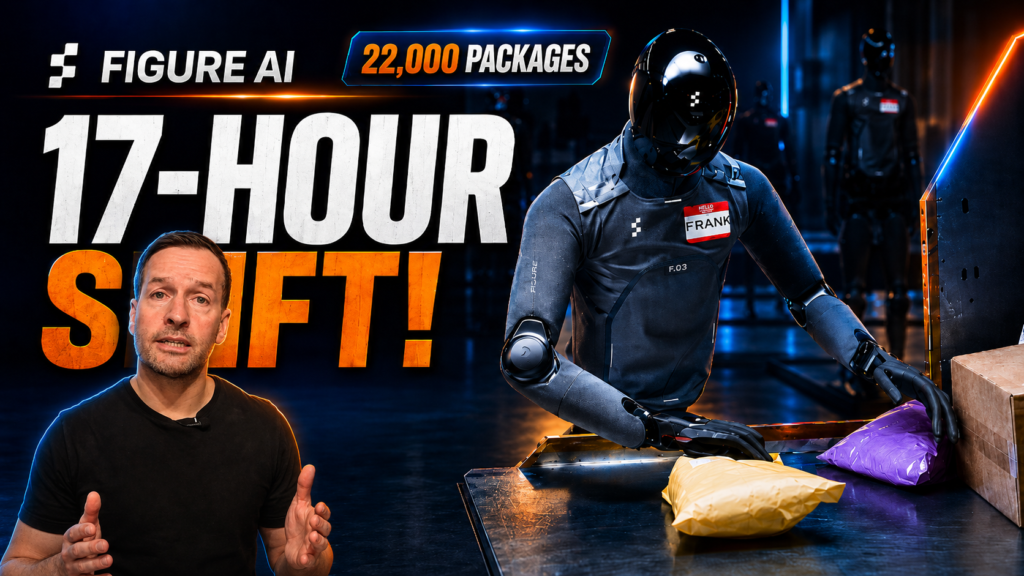
Figure AI’s 17-Hour Robot Shift: What 22,000 Sorted Packages Means for the Future of Humanoid Robots
Humanoid robots have been promised for decades.
We have seen robots walk, wave, dance, fall over, stand back up, pour drinks, carry boxes, fold clothes, and occasionally look like they are one software update away from becoming a useful colleague.
But the real question has always been simple:
Can humanoid robots actually work?
Not in a short demo.
Not in a polished marketing video.
Not in a laboratory with perfect lighting and a carefully arranged table.
Can they work for hours, doing repetitive physical tasks, inside the kind of environment where real businesses make money?
That is why Figure AI’s recent demonstration matters.
The company reportedly showed its Helix 02 humanoid robots working for more than 17 hours in a warehouse-style package sorting task, handling over 22,000 packages. The robots scanned barcodes, picked up boxes, turned them into position, moved them through the workflow, and swapped roles when batteries ran low.
On the surface, that may sound less exciting than a humanoid robot doing a backflip.
But for the robotics industry, warehouse operators, manufacturers, logistics firms, investors, and business leaders, this is far more important.
Because the future of humanoid robots will not be built on party tricks.
It will be built on endurance, reliability, repeatable work, commercial value, and solving real operational problems.
Why Figure AI’s Package Sorting Demo Matters
The reason this demonstration is important is not just the number of packages.
It is the type of task.
Package sorting is repetitive, physical, structured, measurable, and commercially relevant. It is exactly the sort of job that businesses already spend time, money, and labor trying to optimize.
In logistics and warehouse operations, small improvements can have a major financial impact. Faster sorting, fewer mistakes, reduced downtime, and better labor allocation can all improve performance across the business.
For years, automation has been used in warehouses through conveyors, robotic arms, autonomous mobile robots, barcode scanners, sorting machines, and warehouse management systems. These technologies already play a major role in modern logistics.
But humanoid robots introduce a different possibility.
Instead of redesigning the entire warehouse around a fixed automation system, a humanoid robot could potentially operate in spaces designed for humans.
That is the big idea.
Humanoid robots are not attractive to businesses because they look like people. They are attractive because the world is already built around human movement, human reach, human tools, human workstations, and human workflows.
If a robot can use the same spaces, handle the same objects, and perform similar physical tasks, then automation could become more flexible.
That flexibility is one of the biggest opportunities in the future of robotics.
From Robot Demonstrations to Real Robot Work
The robotics industry has no shortage of impressive demonstrations.
We have seen humanoid robots dance in formation, carry boxes, walk across rough terrain, use tools, perform kitchen tasks, and interact with humans.
These demos are valuable because they show progress.
But business buyers are not only interested in what a robot can do once.
They want to know what the robot can do every day.
A warehouse manager does not need a robot that can pick up one box in perfect conditions. They need a robot that can work through a shift, deal with variation, recover from errors, avoid damaging goods, operate safely around people, and justify its cost.
That is why long-duration robot demonstrations matter.
A 17-hour run suggests endurance.
Sorting 22,000 packages suggests volume.
Role-swapping when batteries run low suggests workflow continuity.
These are the details that move humanoid robots from science-fiction entertainment toward commercial robotics.
Of course, there is still an important distinction to make.
A company-run demonstration is not the same as an independent real-world deployment inside a customer operation. Businesses should be interested, but they should also remain practical.
The next stage is proving that humanoid robots can perform reliably outside controlled demonstrations, in real warehouses, with real variation, real pressure, real safety requirements, real return-on-investment expectations, and real operational complexity.
That is where the true test begins.
What Is Helix 02 and Why Is It Important?
Figure AI’s robots are powered by Helix 02, the company’s AI system for controlling humanoid robot behavior.
At a simple level, Helix 02 is designed to help the robot understand what it sees, control its body, and complete physical tasks.
The key point is whole-body control.
A humanoid robot is not just a robotic arm on wheels. It has legs, arms, hands, cameras, sensors, joints, balance systems, and a body that must move together.
When a humanoid robot reaches for a box, it is not simply moving one hand. It needs to position its body, maintain balance, judge distance, grip the object, lift it, turn it, and place it correctly.
That requires coordination.
Humans do this naturally. We rarely think about how much physical intelligence is involved in picking something up and moving it.
For robots, this is extremely difficult.
That is why AI robotics and Physical AI are becoming so important.
Physical AI refers to artificial intelligence operating in the real world through machines that move, sense, interact, and perform useful tasks. It is not just AI on a screen producing text, images, or data. It is AI connected to motors, sensors, grippers, cameras, wheels, arms, and legs.
Humanoid robots are one of the most visible examples of Physical AI.
They represent the shift from digital intelligence to embodied intelligence.
And that shift could transform automation.
Why Warehouses Are a Natural First Market for Humanoid Robots
Warehouses are one of the most logical early markets for humanoid robots.
There are several reasons for this.
First, warehouses contain repetitive physical tasks.
Robots are well suited to repetitive work when the environment is structured enough and the task can be clearly measured.
Second, labor shortages and high staff turnover are common challenges in logistics and warehouse operations.
Many businesses struggle to recruit and retain workers for physically demanding, repetitive, or shift-based roles.
Third, the value of automation is easy to calculate.
If a robot can sort packages, move goods, support picking operations, scan items, or assist with loading and unloading, businesses can compare the cost of the robot against labor costs, productivity gains, error reduction, uptime improvements, and operational flexibility.
Fourth, warehouses already use technology.
Many logistics companies are familiar with automation systems, warehouse management software, robotics technology, barcode scanning, automated guided vehicles, and autonomous mobile robots.
This means the operational mindset is already moving toward automation.
Humanoid robots could become part of this wider automation ecosystem.
They may not replace every worker. They may not replace every existing automation system. But they could fill gaps between human labor and fixed automation.
That is where the opportunity becomes commercially interesting.
The Commercial Value of Humanoid Robots
The business case for humanoid robots will not be based on novelty.
It will be based on value.
For companies exploring robotics adoption, the key question is not “Is the robot impressive?”
The key question is “Does the robot solve a problem?”
In a warehouse or manufacturing environment, a humanoid robot could potentially help with:
Package sorting
Goods movement
Machine tending
Loading and unloading
Inspection tasks
Inventory handling
Repetitive picking tasks
Basic assembly support
Scanning and verification
Workstation assistance
Cleaning and maintenance support
The value comes from using robots where they improve the operation.
That could mean reducing labor pressure, extending operating hours, improving consistency, reducing injury risk, increasing throughput, or allowing human workers to focus on higher-value activities.
For small and medium-sized businesses, humanoid robots may eventually offer a more flexible alternative to expensive fixed automation.
For large companies, they may become part of a broader automation strategy that includes AI, robotics, data systems, and human teams working together.
The most successful businesses will not simply buy robots because robots are exciting.
They will redesign workflows around what robots can do well.
Why Boring Robot Jobs Are the Big Opportunity
The most commercially valuable robot jobs are often the least glamorous.
That may sound disappointing, but it is true.
The future of robotics is not only about humanoid robots walking through homes like science-fiction assistants. It is also about robots doing repetitive, tiring, dull, and physically demanding tasks that businesses need completed every day.
Package sorting is a perfect example.
It is not glamorous.
It is not cinematic.
But it is useful.
And useful is where the money is.
The robotics industry often captures public attention with dramatic demonstrations, but real adoption usually starts with practical applications.
A robot that can move packages reliably may be more commercially important than a robot that can perform an impressive stunt.
A robot that can clean floors, deliver goods, inspect equipment, monitor sites, or support warehouse staff may create more value than a robot designed only to impress audiences.
This is one of the most important lessons for businesses exploring robotics.
Do not start by asking, “What is the most futuristic robot we can buy?”
Start by asking, “What repetitive problem do we have that a robot could solve?”
That is where robotics consulting becomes valuable.
Humanoid Robots and the Future of Work
Whenever humanoid robots are discussed, the conversation quickly turns to jobs.
Will robots replace workers?
Will humans lose roles to automation?
Will businesses use robots to reduce labor costs?
These are reasonable questions.
The honest answer is that robotics will change work, but the change will not happen evenly across every industry or every job.
Some tasks will be automated.
Some roles will be redesigned.
Some workers will manage, support, train, repair, or supervise robots.
Some businesses will use robots to fill labor gaps rather than directly replace existing staff.
The future of work will likely involve more collaboration between humans and robots.
In warehouses, for example, robots may handle repetitive movement while people manage exceptions, quality control, supervision, maintenance, customer requirements, and decision-making.
In manufacturing, robots may support assembly, inspection, material handling, and machine tending.
In healthcare, robots may assist with delivery, logistics, cleaning, and support tasks.
In retail, robots may help with inventory, customer engagement, stock movement, or security.
The point is not that every workplace will suddenly be filled with humanoid robots.
The point is that businesses will increasingly need to understand how robotics fits into their workforce strategy.
That includes training, safety, job design, change management, and return on investment.
AI Robots Are Changing the Automation Conversation
Traditional automation is often rule-based.
A machine performs a defined task in a controlled environment. It does the same thing repeatedly, very efficiently, as long as the conditions are right.
AI robots are different.
They are designed to perceive, adapt, learn, and respond to variation.
That does not mean they are magic. It does not mean they can do everything. But it does mean they can potentially handle a wider range of tasks than older automation systems.
This is why AI robotics is attracting so much investment.
The combination of artificial intelligence, computer vision, sensors, robotics hardware, simulation, and real-world training is accelerating progress.
Humanoid robots are benefiting from advances in:
Machine learning
Computer vision
Natural language processing
Motion planning
Sensor fusion
Battery technology
Robotic hands
Actuators
Edge computing
Simulation training
Cloud robotics
Autonomous systems
Together, these technologies are making robots more capable.
But the challenge is not just making robots smarter.
It is making them commercially useful.
That means reliable performance, safe operation, easy deployment, manageable cost, and clear business value.
The Robotics Startup Race Is Accelerating
Figure AI is not alone in the humanoid robot race.
The robotics industry is becoming increasingly competitive, with companies developing humanoid robots, warehouse robots, service robots, delivery robots, inspection robots, cleaning robots, agricultural robots, healthcare robots, and industrial automation systems.
Humanoid robotics has become one of the most visible areas of robotics investment.
Investors are interested because the potential market is enormous.
If humanoid robots can perform useful work across warehouses, factories, retail environments, hospitals, care facilities, hotels, events, and homes, the commercial opportunity could be huge.
But the path will not be simple.
Robotics startups face major challenges.
Hardware is expensive. Deployment is difficult. Safety is critical. Customers need support. Real-world environments are unpredictable. Maintenance matters. Sales cycles can be long. And unlike pure software, physical robots have to operate in the messy, complicated world of people, objects, buildings, weather, floors, doors, and unexpected events.
This is why the robotics industry requires more than clever technology.
It requires manufacturing capability, service infrastructure, customer education, deployment expertise, training, support, and strong partnerships.
The companies that win in robotics will not only build impressive robots.
They will build useful robot businesses.
What Businesses Should Learn from Figure AI’s Demo
The most important lesson for businesses is not that every company should rush to buy humanoid robots tomorrow.
The lesson is that robotics is moving quickly, and businesses need to start preparing now.
Preparation does not always mean purchasing a robot immediately.
It may mean mapping workflows.
It may mean identifying repetitive tasks.
It may mean understanding where labor shortages exist.
It may mean calculating the cost of downtime.
It may mean exploring robotics as a service.
It may mean speaking to robotics consultants.
It may mean running a small pilot.
It may mean training teams to understand automation.
It may mean reviewing safety and operational processes.
Businesses that wait until humanoid robots are fully mainstream may find themselves behind competitors that started learning earlier.
The companies that benefit most from robotics will be the ones that understand their processes deeply.
Robots do not fix broken workflows by magic.
In many cases, robotics adoption works best when businesses first improve the process, then deploy technology.
A robot placed into a chaotic workflow may simply automate the chaos.
A robot placed into a well-designed workflow can create real value.
The Role of Robotics Consulting
As robots become more capable, businesses will need guidance.
The robotics industry is complex. There are many types of robots, many vendors, many use cases, and many levels of maturity.
A business exploring automation may not know whether it needs a humanoid robot, a cobot, an autonomous mobile robot, a fixed industrial robot, a cleaning robot, a delivery robot, an inspection robot, or a custom automation system.
This is where robotics consulting becomes important.
A robotics consultant can help businesses understand:
Which tasks are suitable for robots
Which robot types fit the business case
What return on investment may look like
How to assess suppliers
How to run a pilot project
How to prepare staff
How to manage safety requirements
How to integrate robots into workflows
How to avoid expensive mistakes
How to build a long-term automation strategy
The aim is not to sell the most futuristic machine.
The aim is to find the right robot for the right job at the right time.
For many companies, the first robotics project should be simple, measurable, and practical.
Success builds confidence.
Confidence leads to wider adoption.
Humanoid Robots vs Traditional Automation
One question businesses will increasingly ask is whether they need humanoid robots or traditional automation.
The answer depends on the task.
Traditional automation is often better for high-volume, highly repetitive, structured tasks. Conveyor systems, robotic arms, automated storage systems, and dedicated industrial machinery can be extremely efficient when the process is stable.
Humanoid robots may be more useful where flexibility is required.
If the task involves human-designed spaces, varied objects, different workflows, or the need to move between workstations, humanoid robots could eventually provide value.
However, humanoid robots are not automatically the best solution.
In many cases, a wheeled robot, robotic arm, or fixed automation system may be cheaper, safer, faster, and easier to deploy.
This is why businesses should avoid becoming obsessed with the shape of the robot.
The best robot is the one that solves the problem.
A humanoid robot may be perfect for some future applications.
But for other applications, a simpler robot may deliver better return on investment.
The future of robotics will include many robot forms.
Humanoid robots will be one part of a much larger robotics ecosystem.
What This Means for Investors
For investors, Figure AI’s demonstration highlights the growing seriousness of humanoid robotics.
The sector is no longer only about research labs and speculative concepts. It is moving toward measurable work demonstrations, commercial pilots, and potential enterprise deployment.
However, investors should remain careful.
Robotics companies can generate enormous excitement, but the path to revenue can be difficult.
Key questions for robotics investment include:
Can the robot perform reliably in real environments?
Is the cost low enough for commercial adoption?
Can the company manufacture at scale?
Is there a service and maintenance model?
Does the company have strong customer demand?
Is the use case clear and repeatable?
How long is the sales cycle?
What is the competitive advantage?
Can the robot improve over time through data?
The winners in robotics will likely combine strong technology with strong business execution.
The hype around humanoid robots is understandable, but commercial proof will matter more than public excitement.
The companies that can move from demonstration to deployment will define the next phase of the robotics industry.
What This Means for Robotics Manufacturers
For robotics manufacturers, the message is clear.
Customers want proof.
They want to see robots doing useful work.
They want measurable results, not just impressive videos.
They want to understand uptime, safety, deployment time, support, maintenance, training, and business value.
Figure AI’s package sorting demonstration is powerful because it focuses on measurable work. The number of packages, the duration of the shift, and the workflow are all commercially meaningful.
Robotics manufacturers should take note.
The most effective marketing in robotics is not just showing that a robot looks advanced.
It is showing that the robot solves a real problem.
For robot companies launching products, this means demonstrations should be designed around customer pain points.
Show the robot doing work that buyers recognize.
Show how it fits into a process.
Show how it reduces friction.
Show why the business case makes sense.
That is how robotics moves from curiosity to adoption.
The Event and Media Opportunity for Robotics
There is also a wider media and marketing lesson.
Robots attract attention.
Humanoid robots especially capture public imagination.
For events, exhibitions, product launches, trade shows, and brand activations, robots can create powerful engagement.
This is where robotics overlaps with marketing.
A robot can draw a crowd, start conversations, demonstrate innovation, and create memorable content.
But the most effective robot marketing is not just about novelty. It is about connecting the robot to a clear business story.
A humanoid robot sorting packages tells a story about the future of work.
A service robot at an event tells a story about customer engagement.
An inspection robot tells a story about safety and efficiency.
A robot arm serving coffee tells a story about automation becoming visible and accessible.
As robotics becomes more mainstream, companies will use robots not only for operations but also for communication, branding, education, and public engagement.
The RoboPhil Perspective
Philip English, known as RoboPhil, works across the robotics industry through Robot Center, Robots of London, and Robot Philosophy.
This gives him a practical perspective on robotics adoption.
Robot Center focuses on robotics consulting, commercial robots, industrial robots, robotics deployment, Physical AI, and helping businesses understand how to buy and use robots effectively.
Robots of London focuses on robot hire, robot rental, event robotics, exhibition robots, and using robots to create engagement at events and brand experiences.
Robot Philosophy focuses on robotics insights, robot advice, robotics strategy, robot recruitment, and helping the market understand where robotics is heading.
From this perspective, Figure AI’s 17-hour package sorting demonstration is important because it reflects a wider shift.
Robotics is becoming less about isolated machines and more about business transformation.
Companies are no longer asking only whether robots are possible.
They are asking how robots fit into their operations, workforce, marketing, investment strategy, and future growth.
That is the real opportunity.
Challenges Still Slowing Humanoid Robot Adoption
Despite the excitement, several challenges remain.
The first is reliability.
A robot that works in a demo must prove it can work consistently in real environments.
The second is cost.
Humanoid robots need to deliver a return on investment that makes sense for businesses.
The third is safety.
Robots operating near humans must be carefully designed, tested, deployed, and monitored.
The fourth is integration.
A robot needs to fit into existing workflows, software systems, physical spaces, and staff routines.
The fifth is maintenance.
Businesses need to know who repairs the robot, how quickly issues are resolved, and what downtime costs.
The sixth is trust.
Workers, managers, customers, and regulators need confidence that robots are safe, useful, and manageable.
The seventh is task suitability.
Not every job is ready for automation. Not every environment is suitable for humanoid robots. Not every company needs the same solution.
These challenges are not reasons to ignore robotics.
They are reasons to approach robotics intelligently.
The Future of Humanoid Robots in Business
The future of humanoid robots will likely unfold in stages.
The first stage is demonstration.
This is where companies prove that humanoid robots can perform useful tasks.
The second stage is pilot deployment.
This is where businesses test robots in limited real-world environments.
The third stage is operational integration.
This is where robots become part of daily workflows in warehouses, factories, logistics centers, retail environments, healthcare facilities, and other commercial settings.
The fourth stage is scale.
This is where humanoid robots become common enough that businesses begin redesigning processes around them.
We are still early.
But the direction is clear.
Robots are becoming more capable.
AI is improving.
Businesses are under pressure to increase productivity.
Labor markets remain challenging in many sectors.
Automation is becoming more flexible.
And the cost of robotics technology is likely to improve over time.
Humanoid robots may not arrive everywhere at once, but they are becoming harder to dismiss.
Why Business Leaders Should Pay Attention Now
Business leaders do not need to become robotics engineers.
But they do need to understand the direction of travel.
Robotics will increasingly affect manufacturing, logistics, retail, healthcare, hospitality, agriculture, construction, security, events, and many other industries.
The companies that start learning now will be better positioned to make smart decisions later.
This means asking practical questions.
Where are we experiencing labor pressure?
Which tasks are repetitive and measurable?
Which jobs are physically demanding?
Where do errors cost us money?
Where could automation improve safety?
Where could robots support staff rather than replace them?
Which suppliers are credible?
What data do we need before making a decision?
What would a small robot pilot look like?
These questions help businesses move from hype to strategy.
And strategy is what turns robotics from an exciting idea into a business advantage.
Conclusion: Humanoid Robots Are Moving Toward Real Work
Figure AI’s reported 17-hour robot shift and 22,000-package sorting demonstration is not the final proof that humanoid robots are ready for every warehouse.
But it is a strong signal.
It shows that humanoid robots are moving toward the kind of repetitive, physical, commercially relevant work that businesses actually need.
That matters.
The future of robotics will not be defined only by the most dramatic robot demo.
It will be defined by robots that can work safely, reliably, and profitably in the real world.
For warehouses, manufacturers, logistics companies, retailers, healthcare providers, event agencies, robotics startups, investors, and business leaders, the message is clear.
Robotics is becoming more practical.
AI robots are becoming more capable.
Automation is becoming more flexible.
Humanoid robots are moving from science fiction toward business reality.
The companies that understand this shift early will have an advantage.
They will be better prepared to adopt robotics, redesign work, support their teams, improve productivity, and compete in a more automated economy.
The future of robotics is not just coming.
It is clocking in.
And this time, it may work longer than a human shift.
Work With RoboPhil
If your business is exploring robotics, automation, AI robots, humanoid robots, robot sourcing, robotics consulting, or robotics industry strategy, RoboPhil can help you understand the opportunities and avoid the common mistakes.
Whether you are looking to deploy robots in a business, source commercial robots, understand the future of robotics, launch a robotics product, or use robots for events and engagement, the right advice can make the difference between a clever demo and a successful deployment.
Robot Center
https://robotcenter.co.uk/
Robots of London
https://robotsoflondon.co.uk/
Robot Philosophy
https://robophil.com/
Business enquiries
sales@robotcenter.co.uk