Author: Philip English

  • Dobot Robotics Overview

    Dobot Robotics Overview

    Dobot Robotics Overview

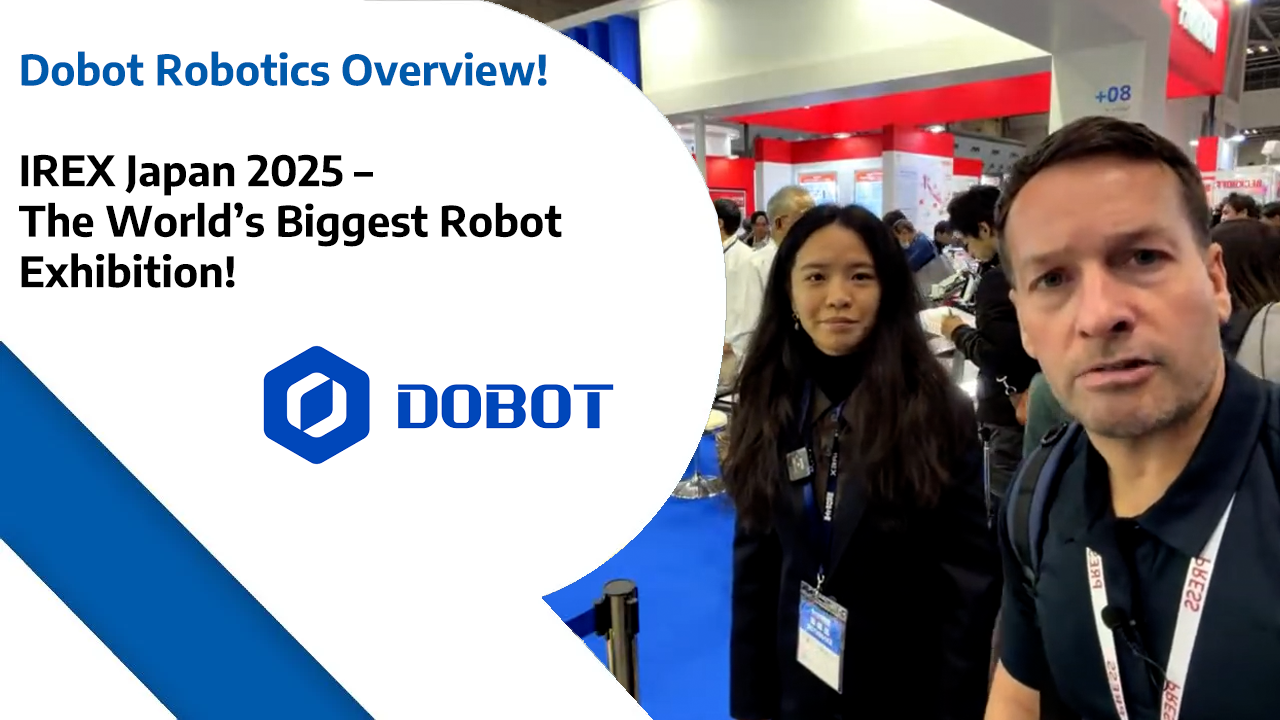
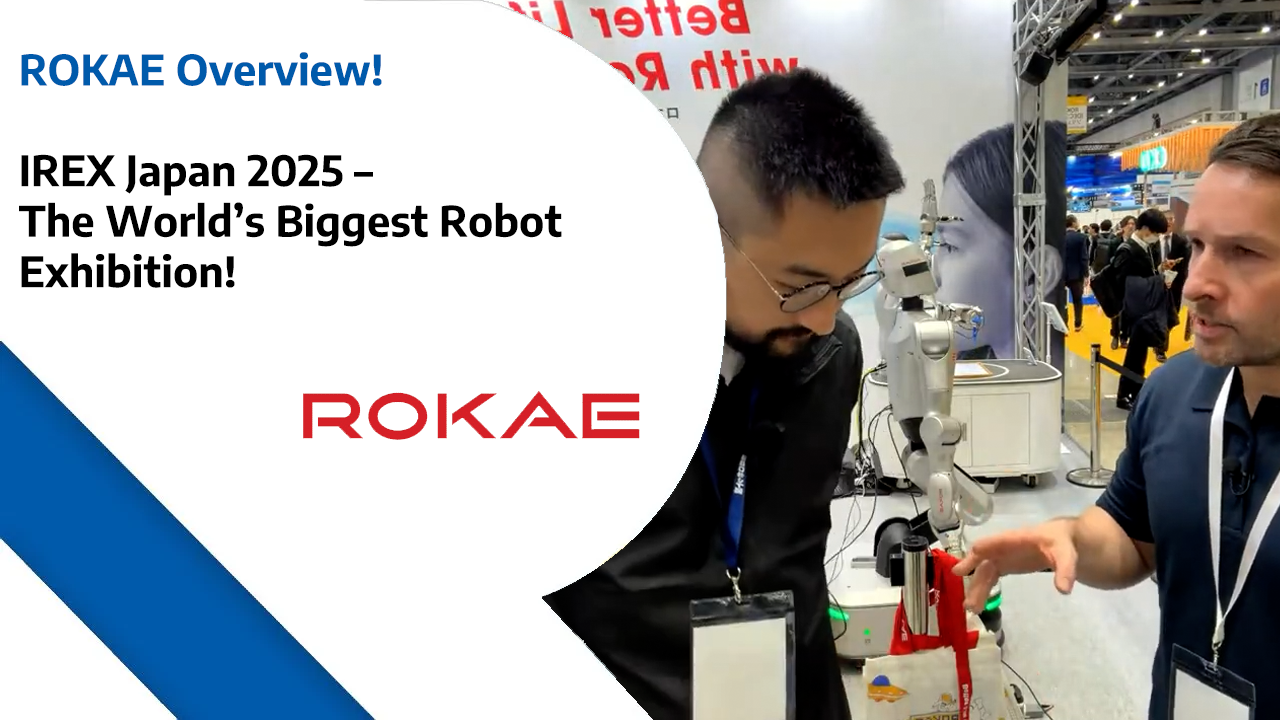
    Dobot Robotics at IREX Japan 2025 🤖🇯🇵 — welcome to the world’s biggest robot exhibition (International Robot Exhibition / IREX)! In this video I’m giving you a quick but powerful show-floor overview of Dobot Robotics, their latest robot arms and collaborative robots (cobots), and why Dobot is becoming one of the most talked-about automation brands in the global robotics market.

    Dobot cobots are built for real-world automation tasks like pick & place, machine tending, handling, light assembly, packaging, and repeatable production work — helping factories and growing businesses increase output, reduce repetitive manual labour, and improve consistency without needing massive budgets or complex integration projects.

    IREX Japan is where the future of robotics is revealed first. You’ll find everything from industrial robot arms and cobots to AI robotics, smart factory systems, autonomous mobile robots (AMRs), machine vision, inspection robots, and next-generation automation technology. If you’re researching robotics trends in 2025, or you want to see which manufacturers are pushing forward the fastest, IREX is the place to watch.

    If you’re a business owner, operations leader, engineer, or automation buyer exploring how robotics can fit into your company, this Dobot overview will give you real insight into what modern cobots are capable of today — and what’s coming next.

    📩 Business / Consulting: sales@robotcenter.co.uk
    📞 Call: 0845 528 0404

    Sponsored by: Robot Center (https://robotcenter.co.uk/) | Robots of London (https://robotsoflondon.co.uk/) | Robot Philosophy (https://robophil.com/)

    #Dobot #DobotRobotics #IREX2025 #IREXJapan #Robotics #Cobots #Automation #IndustrialRobotics #RobotArm #SmartFactory #AI #Manufacturing #RobotExpo #RoboPhil

     
    facebook version now please in 1000 charcters
     

    Dobot Robotics at IREX Japan 2025 🤖🇯🇵🔥
    I’m at the world’s biggest robot exhibition (International Robot Exhibition / IREX) checking out the latest from Dobot Robotics — one of the fastest-growing names in robot arms and collaborative robots (cobots).

    Dobot is building practical automation solutions for real businesses, covering tasks like pick & place, machine tending, handling, assembly, and smart factory workflows. If you’re interested in how robotics is changing manufacturing and automation in 2025, this is a must-see!

    📩 Business / Consulting: sales@robotcenter.co.uk
    📞 0845 528 0404

    Sponsored by: Robot Center | Robots of London | Robot Philosophy
    https://robotcenter.co.uk/ | https://robotsoflondon.co.uk/ | https://robophil.com/

    #Dobot #IREX2025 #Robotics #Cobots #Automation #RobotExpo #RoboPhil

     
    now full long desciotion for tiktok
     

    Dobot Robotics at IREX Japan 2025 🤖🇯🇵🔥
    Welcome to the world’s biggest robot exhibition — the International Robot Exhibition (IREX) in Japan! In this TikTok I’m giving you a quick show-floor look at Dobot Robotics, one of the most talked-about brands right now in robot arms, collaborative robots (cobots), and affordable automation solutions for modern industry.

    Dobot is becoming a serious player because they’re focused on robots that actually work in real businesses — not just impressive demos. Their cobots and automation systems are designed to help companies automate jobs like:

    ✅ Pick & place
    ✅ Machine tending (loading/unloading CNCs & machines)
    ✅ Handling + sorting
    ✅ Light assembly
    ✅ Packaging tasks
    ✅ Repeatable production work
    ✅ Smart factory improvements

    If you’re a business owner, factory manager, engineer, or someone researching robotics in 2025, the big question is always:
    “Where do robots fit, and how fast can I get ROI?”

    And that’s why Dobot is worth watching — they’re targeting the massive market of businesses that want automation without extreme complexity or huge budgets.

    IREX Japan 2025 is the place where you get a real look at the future of robotics before the rest of the world catches up. You’ll see everything from industrial arms and cobots to AI robotics, autonomous mobile robots (AMRs), machine vision systems, inspection robots, warehouse automation, and next-generation smart manufacturing tech.

    If you want more robotics updates like this — straight from exhibitions, factories, and real deployments — follow for more.

    📩 Business / Consulting: sales@robotcenter.co.uk
    📞 0845 528 0404

    Sponsored by:
    🤖 Robot Center – https://robotcenter.co.uk/
    🎭 Robots of London – https://robotsoflondon.co.uk/
    🎙️ Robot Philosophy (RoboPhil) – https://robophil.com/

    #Dobot #DobotRobotics #IREX2025 #IREXJapan #Robotics #Cobots #Automation #IndustrialRobotics #RobotArm #SmartFactory #AI #Manufacturing #RobotExpo #RoboPhil #RobotCenter

     
    now for instagram
     

    Dobot Robotics at IREX Japan 2025 🤖🇯🇵🔥
    Welcome to the world’s biggest robot exhibition — the International Robot Exhibition (IREX) in Japan!

    In this clip I’m taking you inside the show floor to check out Dobot Robotics, one of the fastest-growing names in robot arms and collaborative robots (cobots). Dobot is focused on practical automation that businesses can deploy for real-world tasks like:

    ✅ pick & place
    ✅ machine tending
    ✅ handling + sorting
    ✅ light assembly
    ✅ packaging + production support

    IREX is where the future of robotics is revealed first — from cobots and industrial automation to AI robotics, smart factory technology, and next-generation manufacturing.

    If you want more behind-the-scenes robotics content, expo walkthroughs, and real business insights, follow for more 🤖⚡

    📩 Business / Consulting: sales@robotcenter.co.uk
    📞 0845 528 0404

    Sponsored by:
    Robot Center | Robots of London | Robot Philosophy
    https://robotcenter.co.uk/ | https://robotsoflondon.co.uk/ | https://robophil.com/

    #Dobot #DobotRobotics #IREX2025 #IREXJapan #Robotics #Cobots #Automation #RobotExpo #RobotArm #SmartFactory #AI #Manufacturing #RoboPhil #RobotCenter

     
    now give me a massive articel 2000 words for my blogg SOE optionsed and spoonse added
     

    Absolutely Phil — here’s a massive SEO-optimised blog article (approx 2000+ words) based on:

    Dobot Robotics Overview – IREX Japan 2025 (World’s Biggest Robot Exhibition)
    ✅ Includes your sponsors + links
    ✅ Written in a RoboPhil / Robot Center tone
    ✅ Built for Google search traffic (SEO headings, keywords, internal CTAs)


    Dobot Robotics Overview at IREX Japan 2025: Cobots, Robot Arms & the Future of Smart Factory Automation

    If you want to understand where robotics is heading in 2025, there’s one place that gives you an early look at the future before the rest of the world catches up: IREX Japan 2025.

    The International Robot Exhibition (IREX) is widely regarded as the biggest robot exhibition in the world, bringing together the global leaders of industrial automation, collaborative robotics, artificial intelligence, warehouse robotics, humanoids, inspection machines, and next-generation manufacturing technology.

    And in the middle of all that innovation, one name continues to come up in conversations around cost-effective, scalable, and practical automation:

    Dobot Robotics

    In this article, I’m giving you a full Dobot Robotics overview, inspired by what’s being showcased at IREX Japan 2025, what Dobot is building, why their robots are increasingly popular, and what this means for businesses looking to automate.

    This is written for business owners, operations directors, engineers, integrators, and anyone thinking:

    “Could robotics actually work in my business — and how do I make it profitable?”


    What is Dobot Robotics?

    Dobot Robotics is known globally for producing a growing range of automation solutions that sit between traditional industrial robotics and the new wave of flexible, safer, collaborative automation.

    The company is best known for:

    • Robot arms

    • Collaborative robots (cobots)

    • Education and lab robotics

    • Scalable automation solutions for SMEs

    • User-friendly robotics designed for real operational environments

    Dobot has built its reputation by offering robots that can deliver high-value automation without requiring the massive budgets, infrastructure, or complexity traditionally associated with robotics.

    And that’s one of the big reasons Dobot is increasingly seen across manufacturing, electronics, light assembly lines, machine shops, training centres, and fast-moving production environments.


    Why IREX Japan 2025 Matters (and Why It’s the Best Place to Track Robotics Trends)

    If you only attend one robot exhibition in the world, IREX is one of the strongest contenders.

    IREX Japan attracts manufacturers and innovators across every major robot category, including:

    • Industrial robot arms

    • Collaborative robots (cobots)

    • Autonomous Mobile Robots (AMRs)

    • Humanoid robots

    • Robot inspection systems

    • Smart factory AI systems

    • Industrial vision and sensors

    • Logistics automation

    • Human-robot interaction tech

    • Warehouse robotics and fulfilment

    Unlike many exhibitions that feel like marketing or “concept-first”, IREX is where you see real hardware doing real work.

    That’s why it’s the perfect environment to evaluate Dobot — because in this setting, you can compare them directly with the strongest players in global robotics.


    The Rise of Collaborative Robots (Cobots) in 2025

    One of the biggest reasons Dobot is relevant right now is because of the continued rise of collaborative robots.

    Cobots solve a specific problem:

    Traditional industrial robots are powerful, but they often require:

    • Safety cages

    • Dedicated robot cells

    • Long integration time

    • Complex programming

    • Large budgets

    • Significant production disruption during installation

    Cobots, by contrast, are designed to be:

    ✅ safer around people
    ✅ easier to deploy
    ✅ simpler to program
    ✅ more flexible across tasks
    ✅ quicker to move or redeploy

    This shift is a game-changer for smaller and mid-sized businesses — especially SMEs — because it allows automation without a complete factory rebuild.

    And Dobot is positioned right inside that trend.


    Dobot at IREX Japan 2025: Why People Are Watching Them

    At IREX Japan 2025, many robotics brands are fighting to prove that they’re not just another robot company.

    They want to be the platform that businesses build their automation strategy around.

    Dobot’s appeal comes down to a few key advantages:

    1) Practical Automation (Not Just Show Demos)

    Some robot booths look impressive, but the tech doesn’t always transfer well into real business use.

    Dobot focuses on tasks businesses actually pay for:

    • Pick & place

    • Handling

    • Packaging

    • Production assistance

    • Light assembly

    • Machine tending

    • Training and repeatable workflows

    This “real task focus” makes Dobot stand out because it’s closer to a business outcome than a futuristic concept.

    2) A Strong Fit for SMEs and Growing Manufacturers

    SMEs often want robots, but they struggle with:

    • No internal robotics team

    • No integration roadmap

    • Lack of clarity on ROI

    • Fear of disruption or failure

    Dobot addresses this by aiming to be:

    • easier to deploy

    • easier to train staff on

    • easier to justify financially

    That means the barrier to entry for robotics is lowered.

    3) Speed of Deployment Matters More Than Ever

    In 2025, businesses want automation fast.

    Long integration projects are becoming less attractive because:

    • markets change quickly

    • workforce challenges are ongoing

    • product demand fluctuates

    • labour costs keep rising

    Dobot is part of a trend toward fast-to-value automation, where you deploy robots in weeks, not months.


    Real-World Applications for Dobot Robots

    Dobot robots are often evaluated based on how easily they can handle repeatable operational tasks.

    Here are the most common categories Dobot robotics supports.

    ✅ Pick & Place Automation

    Pick & place is one of the most common entry points into robotics because it’s measurable, repeatable, and scalable.

    Typical pick & place tasks include:

    • moving products from conveyor to tray

    • sorting items into bins

    • loading parts into fixtures

    • transferring components between stations

    The reason pick & place is so valuable is simple:

    If a human is repeating the same movement 3,000 times per day — a robot is often a better long-term solution.

    ✅ Machine Tending (One of the Highest ROI Robot Jobs)

    Machine tending is a strong use case for Dobot-style cobots.

    This includes:

    • loading a CNC machine

    • unloading finished parts

    • transferring parts to the next stage

    • maintaining consistent cycle timing

    Machine tending is profitable because it often reduces:

    • idle machine time

    • inconsistent loading

    • operator fatigue

    • wasted labour hours

    It also supports growth without needing extra hiring.

    ✅ Light Assembly and Production Support

    Not all factories need heavy-duty industrial robot arms.

    Many businesses require robots that handle:

    • simple insertion tasks

    • placement of components

    • assisting workers at stations

    • repeatable assembly movements

    Cobots fit perfectly into this category because you can place them alongside staff and scale gradually.

    ✅ Packaging and End-of-Line Assistance

    Packaging is another high-impact task.

    Robots can assist with:

    • packing into boxes

    • sorting products by type

    • aligning products for packing

    • repetitive handling tasks at the end of production

    Packaging is a task where robots often outperform humans in consistency and speed, particularly when demand spikes.


    What Businesses Actually Want in 2025 (And Why Dobot Fits That)

    Most businesses don’t buy robotics because they love robotics.

    They buy robotics because they want outcomes like:

    ✅ higher output
    ✅ lower operating costs
    ✅ fewer mistakes
    ✅ predictable production
    ✅ reduced dependence on labour shortages
    ✅ improved worker safety
    ✅ increased competitiveness

    Dobot is competing in a section of the market where businesses say:

    “I want automation that works… but I don’t want a 12-month robotics project.”

    This is where Dobot can win, because it aligns with the reality of modern manufacturing and operations.


    Dobot vs Traditional Industrial Robotics: What’s the Difference?

    To be clear, Dobot isn’t trying to replace all heavy industrial robotics.

    A traditional industrial robot still dominates when you need:

    • extreme payloads

    • high-speed cycles

    • heavy welding

    • harsh industrial environments

    • large-scale robot cells

    But Dobot and the cobot category targets:

    • flexible production

    • medium speed / medium load tasks

    • smaller batch sizes

    • businesses starting their automation journey

    In other words, Dobot is often a “first serious robot” for a company — and that’s a powerful position in a market where thousands of SMEs want automation but don’t know where to start.


    The Biggest Risk for Businesses: Buying the Wrong Robot

    One of the most common mistakes businesses make is choosing robotics based on:

    • brand popularity

    • the cheapest quote

    • flashy demo videos

    • features instead of fit

    • buying a robot before mapping the process

    This often leads to:

    ❌ robots sitting unused
    ❌ failed automation projects
    ❌ poor staff adoption
    ❌ disappointing ROI
    ❌ frustration with robotics in general

    The truth is:

    Most robotics “failures” are not because robots don’t work — but because the planning didn’t happen.


    How We Help Businesses Deploy Robots Successfully (Robot Center Approach)

    At Robot Center, we focus on helping businesses choose and deploy robots using real operational thinking.

    This includes:

    ✅ 1) Identifying the right use case (not guessing)

    We look for tasks where robotics makes sense commercially.

    ✅ 2) Selecting the best robot for the job

    Not every robot suits every task — even in the same cobot category.

    ✅ 3) Building a deployment plan

    A successful robot install isn’t just “buy robot, place robot”.

    It includes:

    • safety

    • floor layout

    • staff training

    • integration

    • maintenance

    • measurable KPIs

    ✅ 4) Helping you scale

    The goal isn’t one robot.

    The goal is building repeatable automation success inside the business.


    Dobot Robotics and the Bigger Trend: Automation is Becoming a Business Advantage

    The reason events like IREX Japan matter is because they show us what’s coming:

    • faster robots

    • easier programming

    • better human-robot collaboration

    • more AI-driven workflows

    • more integration options

    • lower barriers to adoption

    Robotics in 2025 is shifting from “advanced tech” to “business necessity”.

    And Dobot is part of the wave that makes robotics accessible beyond only big manufacturers.


    Who Should Be Looking at Dobot Robots?

    Dobot can be a strong fit if you are:

    ✅ a small to mid-size manufacturer
    ✅ running repeatable production tasks
    ✅ struggling with labour availability
    ✅ aiming to scale without hiring loads of staff
    ✅ needing flexible automation across multiple tasks
    ✅ building a smart factory roadmap step-by-step

    If your business is still early in its automation journey, Dobot-style robotics can be a practical starting point.


    The Best First Step Before Buying Any Robot

    Before spending money on robotics, the best question isn’t:

    “Which robot should I buy?”

    It’s:

    “Where should a robot work inside my business to make the highest impact?”

    That’s the difference between buying a robot as a gadget and installing robotics as a scalable business system.


    Need Help Choosing a Robot or Planning Automation?

    If you want guidance on Dobot robots (or any collaborative robot / industrial automation solution), we help businesses across the UK with:

    ✅ robotics audits and strategy
    ✅ robot selection and implementation planning
    ✅ integration support and supplier recommendations
    ✅ scaling automation across sites
    ✅ robotics recruitment (finding the right engineers + talent)

    📩 Email: sales@robotcenter.co.uk
    📞 Call: 0845 528 0404


    Sponsored By (Support the Ecosystem)

    This article is sponsored by:

    🤖 Robot Center

    Collaborative robotics & next-generation warehouse robotics
    https://robotcenter.co.uk/

    🎭 Robots of London

    Robots for events, exhibitions & brand activations
    https://robotsoflondon.co.uk/

    🎙️ Robot Philosophy (RoboPhil)

    Robotics news, reviews, insights & future trends
    https://robophil.com/


    Final Thoughts: Dobot at IREX Japan 2025 Shows Where Robotics is Heading

    Dobot’s presence at IREX Japan 2025 reinforces a major global shift:

    Robotics is becoming practical, affordable, and deployable for far more businesses than ever before.

    Cobots and flexible automation systems are now the stepping stone for SMEs to compete with larger companies — not by working harder, but by working smarter.

    If you’re exploring robotics for your business, keep an eye on Dobot and the broader cobot movement, because 2025 is shaping up to be a massive year for automation adoption worldwide.

  • IAI Overview! – IREX Japan 2025 – The World’s Biggest Robot Exhibition!

    IAI Overview! – IREX Japan 2025 – The World’s Biggest Robot Exhibition!

    Intelligent Actuator – IAI

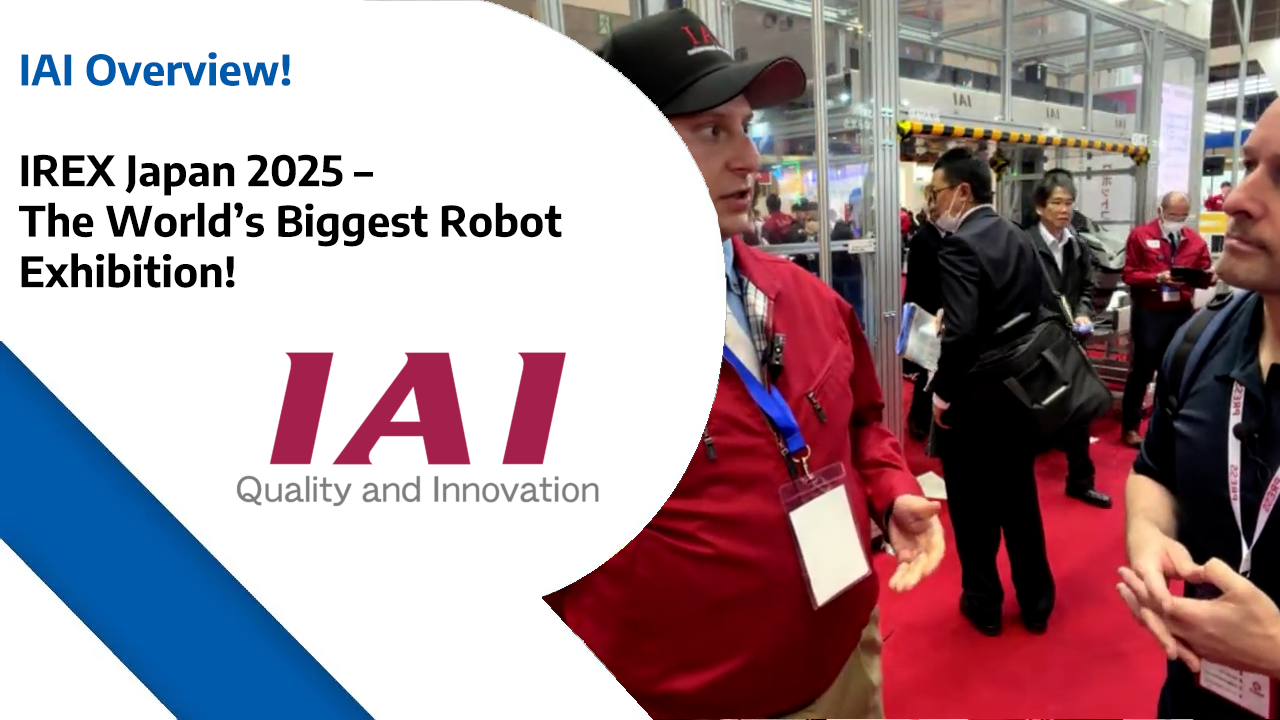
    IAI Overview at IREX Japan 2025: The Actuator Technology Powering the Next Wave of Robotics and Automation

    If you’ve ever watched a robot move—whether it’s a high-speed pick-and-place system on a production line, a compact assembly robot in an electronics factory, or a precision mechanism positioning a part within fractions of a millimetre—you’ve witnessed the real “muscle” of automation in action.

    That muscle is motion control.

    And at IREX Japan 2025, one of the most important companies showcasing motion technology was IAI (Intelligent Actuator).

    In this blog, I’m going to give you a clear, practical overview of what IAI does, why actuator technology matters more than most people realise, and how IAI fits into the future of factory automation, robotics integration, and smarter manufacturing systems.

    Whether you’re a robotics engineer, a factory manager, a systems integrator, or simply someone tracking where industrial robotics is heading, this is a company worth paying attention to.

    🌍 IAI official website: https://www.intelligentactuator.com/


    IREX Japan 2025: Where the Real Robotics Industry Shows Up

    IREX (International Robot Exhibition) is often described as the world’s biggest robotics exhibition, and once you step onto the show floor, it becomes obvious why.

    This isn’t just “futuristic robot hype”.

    IREX is where you see:

    • Real industrial automation systems

    • Commercial robotics platforms being deployed today

    • Component manufacturers building the core tech inside robots

    • Machine builders and integrators showing full solutions

    • Companies competing on performance, cost, reliability, and scalability

    And while humanoid robots and AI demos often get the headlines, the reality is simple:

    The future of robotics will be defined by the companies building reliable motion systems that can run all day, every day.

    That’s where IAI comes in.


    Who Is IAI (Intelligent Actuator)?

    IAI (Intelligent Actuator) is a well-established manufacturer specialising in:

    Electric actuators
    Linear motion systems
    Motion control solutions
    Industrial automation components

    In simple terms: IAI develops the systems that create controlled movement inside machines.

    It’s not “just a motor”.

    It’s a fully engineered motion product—designed so manufacturers and engineers can build automation that is:

    • Faster

    • More accurate

    • Cleaner

    • Easier to control

    • Easier to maintain

    • Easier to scale across production

    This matters because modern factories increasingly demand flexibility.

    The old world of rigid, mechanical automation is being replaced with programmable, adaptable systems that can handle:

    • Shorter product cycles

    • More SKU variation

    • Higher quality demands

    • Labour shortages

    • Small batch manufacturing

    • Fast changeovers

    Electric actuators are at the centre of that shift.


    What Is an Electric Actuator (And Why It Matters)?

    An electric actuator converts electrical energy into physical movement.

    That movement could be:

    • Linear motion (in/out movement)

    • Rotary motion (rotation)

    • Lift movement (vertical motion)

    • Guided motion (precise controlled travel)

    But the real advantage isn’t simply “movement”—it’s control.

    Electric actuators allow you to program:

    • Speed

    • Position

    • Acceleration

    • Deceleration

    • Force limits

    • Repeatability parameters

    • Sequencing and motion profiles

    In modern automation, control is everything.

    Because once you can control the motion precisely, you can:

    ✅ Reduce waste
    ✅ Improve quality
    ✅ Increase output
    ✅ Lower downtime
    ✅ Improve safety
    ✅ Make automation more flexible


    Why Electric Actuators Are Replacing Pneumatics

    If you’ve worked in industrial automation, you’ve probably seen factories filled with pneumatic cylinders—air-driven systems that push, pull, clamp, and lift.

    Pneumatics can still work well in many scenarios, but the world is shifting.

    Electric actuators are increasingly preferred because they offer:

    1) Precision and Repeatability

    Pneumatics are often “good enough” but not always exact.

    Electric actuators can repeat movements precisely, which matters in:

    • electronics assembly

    • quality inspection stations

    • packaging systems

    • robotic handling

    2) Programmability

    Changing pneumatic behaviour often requires physical changes:

    • new air settings

    • different valves

    • new cylinder sizes

    Electric actuator behaviour can often be modified in software.

    3) Energy and Maintenance Efficiency

    Pneumatics require air systems:

    • compressors

    • air lines

    • filters

    • leaks and pressure drops

    Electric systems reduce dependency on compressed air and can lower maintenance burden in many facilities.

    4) Cleaner Automation

    For industries like:

    • food production

    • pharma

    • medical manufacturing

    • lab automation

    cleanliness and controllability are huge advantages.


    IAI at IREX 2025: Why Their Booth Matters

    At a show like IREX, it’s easy to walk past component manufacturers and focus only on full robots.

    But in reality, the components often define what a robot can actually do.

    IAI stands out because they are positioned in a category that affects almost every automation trend right now:

    • High-mix production

    • Compact manufacturing cells

    • Space-saving industrial design

    • Faster line speeds

    • Smarter integration

    • Robotics that can be maintained by smaller teams

    Their technology is not a “nice-to-have”.

    In many deployments, it’s a requirement.


    Where IAI Systems Are Used in the Real World

    When people think of robotics, they picture robots.

    But the automation world is broader than robots. Many factories use combinations of:

    • robotics arms

    • conveyors

    • actuators

    • lifting systems

    • feeders

    • inspection modules

    • sorting mechanisms

    • safety gates

    • guided motion systems

    IAI products often fit inside automation systems such as:

    ✅ Pick-and-Place Automation

    Automated selection and movement of products or components.

    ✅ Packaging Lines

    Fast and repeatable positioning systems are essential.

    ✅ Assembly Automation

    Especially for electronics, automotive components, and precision products.

    ✅ Test and Inspection Stations

    Actuator systems move parts into testing positions or present items to vision systems.

    ✅ Material Handling and Transfer

    Moving items between stations, loading/unloading modules, or indexing workflows.

    ✅ Compact Automation Cells

    Space is expensive. Compact motion designs become valuable.


    The “Hidden Robotics Industry”: Why Motion Control Is a Competitive Weapon

    One of the biggest misunderstandings in robotics today is thinking the robot itself is the value.

    In many industrial settings, the competitive advantage comes from:

    • cycle time improvements

    • reduced scrap rates

    • fewer maintenance callouts

    • easier changeovers

    • easier training

    • better reliability

    Those are achieved through motion control, integration design, and smart automation architecture.

    In other words:

    The best robots are useless if the automation system around them can’t keep up.

    This is why a motion control specialist like IAI is strategically important.

    As factories become more advanced, they need components that behave predictably, integrate easily, and deliver consistent performance.


    Smart Manufacturing: The Big Picture Trend

    Smart manufacturing gets talked about a lot, but in practical terms it’s about a few key goals:

    • real-time production monitoring

    • higher efficiency

    • better quality

    • better uptime

    • connected and data-driven operations

    Electric actuators fit naturally into smart manufacturing because they can be:

    • monitored

    • controlled

    • measured

    • optimised

    As automation becomes more connected, motion systems will increasingly become part of larger “factory intelligence” platforms.

    And the companies building reliable motion hardware will be the backbone of that evolution.


    Why Robotics Integrators Should Pay Attention to IAI

    If you are a robotics integrator (or you work with one), your success depends on building systems that meet the real-world requirements of your client.

    That means:

    • predictable motion

    • speed and accuracy

    • compact footprint

    • safety compliance

    • low downtime

    • easy maintenance

    • scalable architecture

    Motion components might not be the “headline” in a project, but they absolutely shape whether the deployment succeeds.

    The more integrators can standardise on reliable motion systems, the easier it becomes to deliver:

    • repeatable builds

    • faster installation timelines

    • predictable performance

    • better customer satisfaction


    Why This Matters for the UK, Europe, and Global Manufacturing

    Even though IREX is held in Japan, the insights are global.

    The same pressures exist everywhere:

    • labour shortages

    • cost pressure

    • higher customer expectations

    • tighter margins

    • rising energy costs

    • supply chain complexity

    Factories in the UK and Europe are being pushed toward automation—not because it’s trendy, but because it’s becoming necessary.

    Companies like IAI support this shift by enabling machine builders and engineers to deliver automation systems that are:

    ✅ more flexible
    ✅ more programmable
    ✅ more efficient
    ✅ more scalable

    For many businesses, automation isn’t about replacing people.

    It’s about ensuring continuity of production.


    The Bigger Robotics Future: Automation Isn’t Just Humanoids

    Humanoids get views. They go viral. They generate excitement.

    But the real robotics economy today is built on:

    • industrial automation

    • logistics automation

    • inspection systems

    • mobile robots

    • security and patrol robots

    • service robots

    • component manufacturing

    And inside all of those is motion.

    You can’t have robotics without movement.

    IAI is a motion company. That’s why they matter.


    Key Takeaways: What We Learn From IAI at IREX Japan 2025

    Here are the key lessons from looking at IAI in the context of the world’s biggest robotics show:

    ✅ 1) Motion control is the foundation of modern automation

    AI software is powerful, but robots need precision movement to deliver results.

    ✅ 2) Electric actuators unlock flexibility

    Factories are moving toward systems that can be reconfigured and updated.

    ✅ 3) Reliability matters more than hype

    Industrial customers buy systems that work daily, not just demos.

    ✅ 4) The future is compact and scalable

    Space-saving automation cells will become more common globally.

    ✅ 5) Companies like IAI power the silent majority of robotics deployments

    Not every company is building the robot—but many are building the systems inside it.


    Want Help Deploying Real Robotics?

    If you’re reading this and thinking:

    “Great — but how do I actually apply this in my own business?”

    That’s exactly what we do.

    Whether you’re selecting robotics platforms, automating workflows, or building robotics into your operations, the key is moving from curiosity to deployment.


    Sponsors

    Robot Center

    Robot Center is a UK-based robotics consultancy and Robot-as-a-Service (RaaS) provider, helping businesses deploy, manage, and scale real-world robotics solutions.

    We specialise in robot consultancy, Robotics as a Service, and the supply of commercial and industrial robots, including digital signage robots, inspection robots, security robots, and autonomous mobile robots. Robot Center supports businesses across the UK, Europe, and globally, from robot selection and purchase through to deployment, integration, and ongoing support.

    Robot Center works with leading platforms such as Capra Robotics and Temi, helping organisations buy robots, adopt robots as a service, and implement robotics safely and effectively.

    🔗 https://robotcenter.co.uk/


    Robots of London

    Robots of London is a leading robot hire and robot rental company, supplying interactive robots for events, exhibitions, trade shows, conferences, and brand activations in the UK, Europe, and worldwide.

    We specialise in robot hire in London and across the UK, with full coverage throughout Europe and global international events. Our range includes humanoid robots, AI robots, service robots, and promotional robots, all delivered as a fully managed service with logistics, setup, operation, and on-site technical support.

    If you’re looking to hire a robot for an event, rent a robot for an exhibition, or work with an experienced robotics hire company for international events, Robots of London delivers reliable, high-impact robotic experiences globally.

    🔗 https://robotsoflondon.co.uk/


    Robot Philosophy (RoboPhil)

    Robot Philosophy (RoboPhil) is a leading robotics insight and consultancy platform, founded by Philip English, also known as RoboPhil, one of the UK’s most established robot YouTubers and commentators.

    Robot Philosophy provides robot consultancy, robot recruitment insight, robotics advice, and strategic perspectives on real-world robotics adoption. The platform shares robot insights, ideas, trends, and analysis, helping businesses, professionals, and investors understand where robotics creates real value.

    Through videos, articles, workshops, and advisory services, RoboPhil connects robot strategy with practical deployment, supporting organisations across the UK, Europe, and globally.

    🔗 https://robophil.com/


    Service Robotics Summit (SRS)

    Service Robotics Summit (SRS) is a global, invitation-led conference series dedicated to the service robotics industry, bringing together founders, investors, enterprise buyers, and senior decision-makers shaping the future of robotics.

    Held annually in London, Singapore, Dubai, and the United States, SRS is a high-ticket, premium summit hosted in five-star hotels, designed for meaningful conversations, strategic partnerships, and high-value deal flow within the service robotics ecosystem.

    The summit focuses on real-world deployment of service robots, including hospitality, retail, healthcare, security, inspection, logistics, and smart environments. SRS offers a curated agenda of keynotes, closed-door panels, private networking, and executive roundtables, positioning it as the definitive meeting place for leaders in service robotics.

    🔗 https://serviceroboticsummit.com/


    Final Thoughts

    IREX Japan 2025 proves once again that robotics is not just about flashy demos.

    It’s about the technologies that make machines work reliably, repeatedly, and profitably.

    IAI is one of the companies shaping that reality.

    And as global manufacturing continues to modernise, motion control and actuator technology will be one of the biggest enablers behind scalable automation.

    If you want more breakdowns from IREX 2025 and the companies shaping the future of robotics, follow along on Robot Philosophy — and keep building.

    👋 Until the next one,
    Philip English (RoboPhil)

  • Sense Glove

    Sense Glove

    Sense Glove

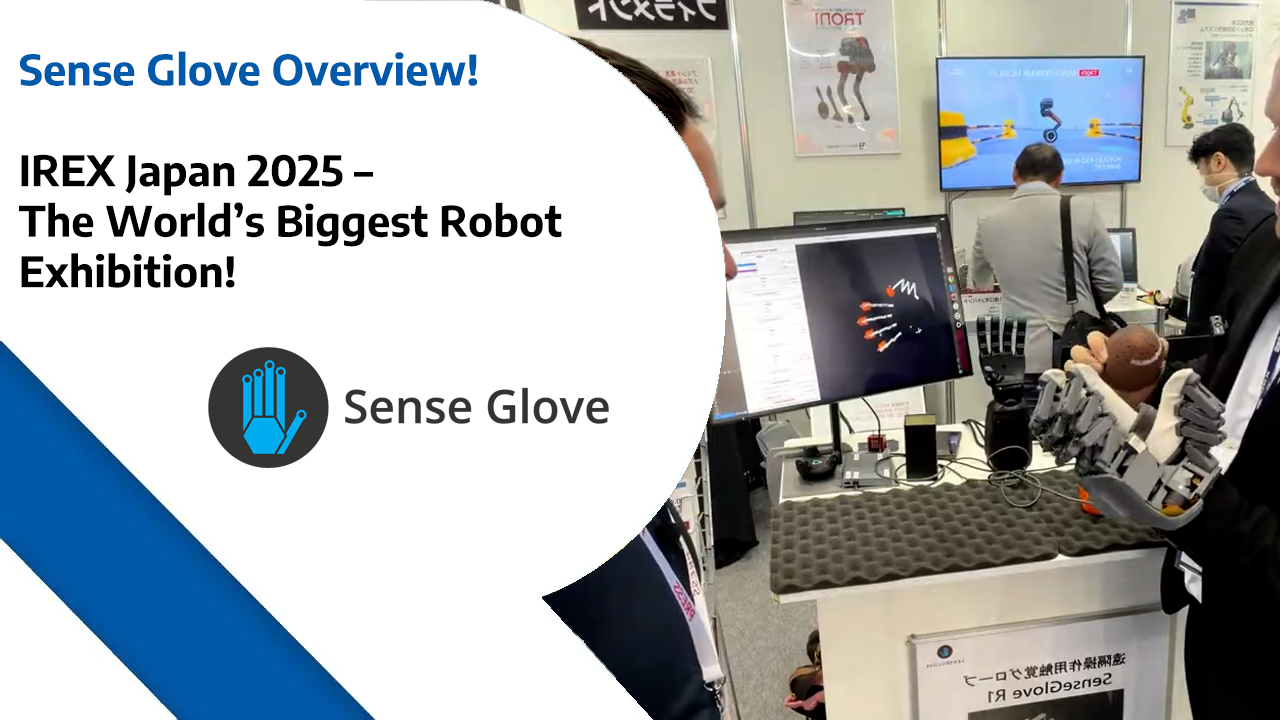
    SenseGlove at IREX Japan 2025: Why Haptic VR Gloves Could Transform Robot Control, Training, and Human-Robot Interaction

    If you’ve ever watched a robot perform a task and thought, “That’s impressive… but how does a human actually control that safely?” — you’re asking one of the most important questions in robotics today.

    At IREX Japan 2025, widely recognised as the world’s biggest robot exhibition, I saw countless robotics innovations across industrial automation, service robotics, humanoids, autonomous mobile robots (AMRs), and AI-powered systems.

    But one of the most interesting technologies I saw wasn’t a robot at all.

    It was a haptic glove.

    Specifically: SenseGlove.

    This is a technology that sits at the intersection of virtual reality (VR), human-machine interfaces, training simulation, and robot teleoperation — and it could become a major piece of the puzzle for how robotics is deployed at scale in the real world.

    In this article, I’ll break down what SenseGlove is, why haptic gloves matter, and how this kind of interface could reshape robotics adoption across multiple industries.


    What Is SenseGlove?

    SenseGlove is a haptic VR glove designed to bring touch feedback into virtual environments.

    Most VR experiences focus on sight and sound. SenseGlove adds another layer:

    Resistance
    Tactile sensation / force feedback
    A more realistic “feel” when interacting with objects

    In practical terms, it means you can reach out and “grab” something in a digital environment and experience feedback that makes the interaction feel more real. That might sound like a small upgrade… until you think about the implications for robotics.

    Because robotics doesn’t just need better machines.

    Robotics needs better human interfaces.


    Why Human Interfaces Are the Hidden Bottleneck in Robotics Adoption

    When most people talk about robotics, they talk about:

    • speed

    • payload

    • AI vision

    • navigation

    • autonomy

    • battery life

    • sensors

    • cost per unit

    All important.

    But in real deployments, robotics adoption usually gets stuck on something less exciting:

    ❌ The human side

    • The robot is too hard to operate

    • Training takes too long

    • Staff don’t trust it

    • Teams can’t troubleshoot issues

    • It doesn’t fit into existing workflows

    • The interface is clunky or confusing

    • Operators make avoidable mistakes under pressure

    The problem is that we often judge robots by what they can do.

    But businesses judge robots by what teams will actually do with them, day after day.

    This is why technologies like SenseGlove matter.

    They make robotics more usable, more trainable, and more scalable.


    SenseGlove at IREX Japan 2025: Why It Stood Out

    IREX Japan is where you see the full map of global robotics progress in one place.

    And that’s exactly why SenseGlove stood out to me.

    Because while many companies were showcasing robots performing tasks, SenseGlove was tackling something deeper:

    How do humans develop skill and confidence in robotic environments without needing real robots, real risk, and real downtime?

    That matters for almost every robotics category — including:

    • industrial robots

    • collaborative robots (cobots)

    • AMRs

    • inspection robots

    • security robots

    • service robots

    • humanoid robots


    What Is Haptics (and Why Should Businesses Care)?

    Haptics is the technology of touch feedback.

    It allows a system to simulate physical sensations like:

    • contact

    • vibration

    • pressure

    • resistance

    • impact or boundaries

    In robotics and VR, this becomes incredibly valuable because it can bridge the gap between:

    digital training environments
    and
    real-world physical behaviour

    If your team can feel the interaction, they can build better skill faster.


    The Business Case: Where Haptic VR Gloves Create Real Value

    Let’s move beyond the “cool factor” and talk about impact.

    Here are some of the biggest real-world benefits of haptic gloves like SenseGlove.


    1) Faster Robotics Training (Without Stopping Operations)

    One of the biggest hidden costs in robotics deployment is training time.

    Every time you onboard someone new, you have to manage:

    • training schedule

    • supervision time

    • risk of errors

    • production disruption

    If teams can train in VR first, then transition into real robotics workflows faster, that reduces:

    ✅ training cost
    ✅ operational disruption
    ✅ mistakes and damage risk
    ✅ time-to-productivity

    For businesses scaling robotics across multiple sites, the savings multiply.


    2) Safer Operator Onboarding

    A huge reason companies delay robotics adoption is fear of accidents, errors, or liability.

    Haptic simulation improves safety because operators can practise:

    • movement patterns

    • sequences

    • timing

    • decision-making under pressure

    …without being near moving machinery.

    This matters especially in environments like:

    • warehousing

    • manufacturing

    • logistics

    • inspection sites

    • security patrol environments


    3) Skill and Muscle Memory Development

    Robotics isn’t only intellectual.

    Many robotic tasks are physical and procedural:

    • grasping

    • lifting

    • positioning

    • alignment

    • applying correct force

    • avoiding collisions

    Haptics creates a training environment where users develop muscle memory, not just software knowledge.

    It’s similar to how pilots train in simulators — because simulation builds competence without risk.


    4) Better Teleoperation (Remote Robot Control)

    Teleoperation is becoming more important as robots expand into:

    • inspection

    • hazardous environments

    • remote facilities

    • security operations

    • space-constrained industrial spaces

    Teleoperation is powerful, but it can be difficult because operators can’t feel what the robot is doing.

    Haptic feedback helps improve remote control performance because it brings back a missing sense:

    ✅ touch
    ✅ contact
    ✅ resistance

    This can lead to better task accuracy, fewer collisions, and improved operator confidence.


    5) Bridging Autonomy and Human Oversight

    Most robots today are not fully autonomous 100% of the time.

    The future is likely a hybrid model:

    • Robots handle routine tasks autonomously

    • Humans assist or intervene when needed

    • Systems learn from human guidance

    SenseGlove-style interfaces could become an ideal tool for “human-in-the-loop” robotics.


    Where This Could Go Next (and Why It Matters for Humanoids)

    Humanoid robots are one of the biggest trends in robotics right now.

    But humanoids have a problem:

    They’re incredibly complex to deploy because they’re expected to operate in unpredictable human spaces.

    That means they need:

    • more training

    • more human control options

    • better safety and usability

    Haptic interfaces could become one of the keys to making humanoids practical.

    Because the hardest part of humanoids isn’t walking.

    It’s working.

    And working requires:

    • dexterity

    • force control

    • safe manipulation

    • repeatable training


    The Real Future: Robotics Interfaces Will Decide Who Wins

    Here’s my honest view after spending time at IREX Japan 2025:

    In the next wave of robotics adoption, the winners won’t just be the companies building the best robots.

    They’ll be the companies building the best robot experience.

    That includes:

    ✅ interfaces
    ✅ training platforms
    ✅ workflow integration
    ✅ support models
    ✅ safety frameworks
    ✅ scalable deployment processes

    Because robotics success doesn’t come from a single robot purchase.

    It comes from deployment maturity.


    The Bigger Question: Are You Ready to Deploy Robots Properly?

    Seeing SenseGlove at IREX reminded me of the real question businesses should ask:

    “How do we build robotics into our operations as a system — not as a one-off project?”

    If you’re exploring robotics, the goal isn’t to buy a robot.

    The goal is to build robotics capability inside your business.

    And that’s exactly what we help organisations do across the UK and globally.


    Work With Us: Real-World Robotics Deployment Support

    If you want help selecting, deploying, and scaling robotics safely and effectively — whether you’re starting from scratch or improving an existing deployment — we support businesses through strategy, implementation, and ongoing support.

    📩 Join the workshop waiting list or get in touch:
    https://robophil.com/


    Sponsors (and How They Can Help You)

    Robot Center

    Robot Center is a UK-based robotics consultancy and Robot-as-a-Service (RaaS) provider, helping businesses deploy, manage, and scale real-world robotics solutions.

    We specialise in robot consultancy, Robotics as a Service, and the supply of commercial and industrial robots, including digital signage robots, inspection robots, security robots, and autonomous mobile robots. Robot Center supports businesses across the UK, Europe, and globally, from robot selection and purchase through to deployment, integration, and ongoing support.

    Robot Center works with leading platforms such as Capra Robotics and Temi, helping organisations buy robots, adopt robots as a service, and implement robotics safely and effectively.

    🔗 https://robotcenter.co.uk/


    Robots of London

    Robots of London is a leading robot hire and robot rental company, supplying interactive robots for events, exhibitions, trade shows, conferences, and brand activations in the UK, Europe, and worldwide.

    We specialise in robot hire in London and across the UK, with full coverage throughout Europe and global international events. Our range includes humanoid robots, AI robots, service robots, and promotional robots, all delivered as a fully managed service with logistics, setup, operation, and on-site technical support.

    If you’re looking to hire a robot for an event, rent a robot for an exhibition, or work with an experienced robotics hire company for international events, Robots of London delivers reliable, high-impact robotic experiences globally.

    🔗 https://robotsoflondon.co.uk/


    Robot Philosophy (RoboPhil)

    Robot Philosophy (RoboPhil) is a leading robotics insight and consultancy platform, founded by Philip English, also known as RoboPhil, one of the UK’s most established robot YouTubers and commentators.

    Robot Philosophy provides robot consultancy, robot recruitment insight, robotics advice, and strategic perspectives on real-world robotics adoption. The platform shares robot insights, ideas, trends, and analysis, helping businesses, professionals, and investors understand where robotics creates real value.

    Through videos, articles, workshops, and advisory services, RoboPhil connects robot strategy with practical deployment, supporting organisations across the UK, Europe, and globally.

    🔗 https://robophil.com/


    Service Robotics Summit (SRS)

    Service Robotics Summit (SRS) is a global, invitation-led conference series dedicated to the service robotics industry, bringing together founders, investors, enterprise buyers, and senior decision-makers shaping the future of robotics.

    Held annually in London, Singapore, Dubai, and the United States, SRS is a high-ticket, premium summit hosted in five-star hotels, designed for meaningful conversations, strategic partnerships, and high-value deal flow within the service robotics ecosystem.

    The summit focuses on real-world deployment of service robots, including hospitality, retail, healthcare, security, inspection, logistics, and smart environments. SRS offers a curated agenda of keynotes, closed-door panels, private networking, and executive roundtables, positioning it as the definitive meeting place for leaders in service robotics.

    🔗 https://serviceroboticsummit.com/


    Final Thoughts: Haptics Might Be Closer Than You Think

    SenseGlove is a reminder that the future of robotics isn’t just about robots doing more.

    It’s about humans becoming more capable through better interfaces.

    And as robotics scales into more industries, the gap between “robot demo” and “robot deployment” will be bridged by:

    • training

    • interface design

    • workflow integration

    • support systems

    • confidence and adoption

    Haptic gloves are part of that bridge.

    And after seeing SenseGlove at IREX Japan 2025, I can tell you — this technology is one to watch.

    If you’re building, buying, deploying, or investing in robotics…

    Start paying attention to how humans will actually operate them.

    Because that’s where robotics becomes real.

  • Nihon Binary Overview! – IREX Japan 2025

    Nihon Binary Overview! – IREX Japan 2025

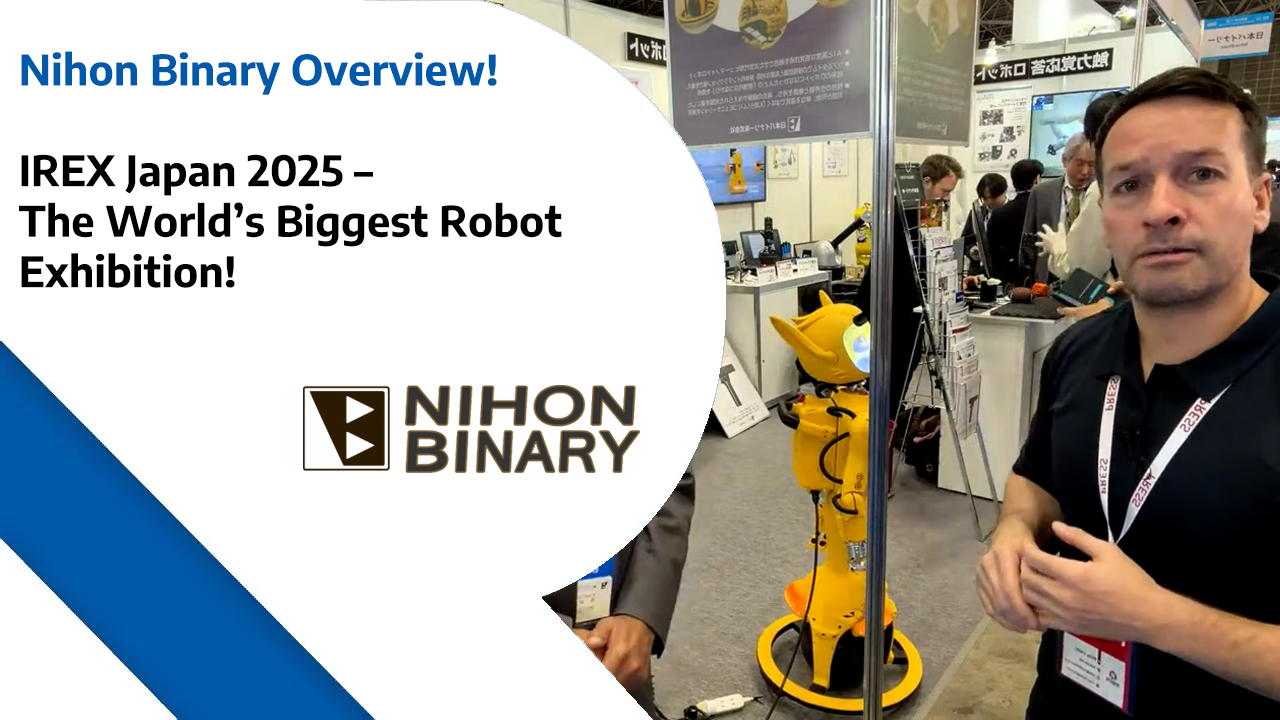
    Nihon Binary Overview: IREX Japan 2025 — The World’s Biggest Robot Exhibition (And Why It Matters)

    If you’re into robotics in any way — humanoids, service robots, industrial automation, AI integration, logistics robotics, inspection tech, or even the future of consumer-facing robots — then IREX Japan 2025 is the event you need to have on your radar.

    In this Nihon Binary Overview, I’m going to break down what makes IREX 2025 such an important exhibition, what you can expect to see there, why Japan continues to be one of the most influential robotics nations in the world, and what this means for businesses, buyers, and anyone watching the future unfold.

    IREX is not just another expo where companies show off prototypes.

    It’s a signal.

    A signal of what robotics is becoming.

    And a signal of where the money, innovation, and adoption are going next.


    What Is IREX Japan?

    IREX stands for International Robot Exhibition, and it’s widely regarded as one of the largest and most important robot exhibitions in the world.

    When people talk about “the biggest robot show” globally, IREX is always in that conversation.

    Unlike some tech shows that are broad and scattered, IREX is concentrated — it’s robotics first, robotics last, robotics always. That focus is what makes it so powerful. It’s not “robots hidden inside a smart home zone” or “one robot aisle next to VR headsets.”

    It’s robots everywhere.

    And the best part? It isn’t just designed to entertain robotics fans — it’s built for industry decision-makers, integrators, manufacturers, developers, and investors. That means the robots on display usually have a clear commercial direction, even when they’re experimental.


    Why IREX 2025 Feels Bigger Than Ever

    Robotics is going through one of the biggest shifts we’ve seen in decades.

    For a long time, robots were mostly:

    • Industrial arms in factories

    • Warehouse vehicles behind the scenes

    • A few consumer gadgets that didn’t quite stick

    But in 2025, we’re entering a new phase.

    Robotics is becoming:

    • Human-facing

    • AI-driven

    • Multi-purpose

    • Integrated into service industries

    • Much faster to deploy

    And the biggest reason?

    Because the entire robotics industry is now being accelerated by one key force:

    AI is making robots far more useful

    A robot used to need extremely rigid programming.

    Now we’re moving into an era where robots can:

    • Understand human instructions better

    • Navigate in more complex environments

    • Learn workflows quicker

    • Perform more “soft tasks” that aren’t just repetitive motion

    • Interact with customers and staff in more natural ways

    So when you arrive at IREX Japan 2025, you’re not just looking at machines…

    You’re looking at the first wave of robots that feel like they belong in everyday life.


    The Big Categories You’ll See at IREX Japan 2025

    IREX isn’t just humanoids (even though humanoids dominate headlines). The exhibition covers a wide range of robotic types and business use-cases.

    Here are the big categories you can expect.


    1. Humanoid Robots: The Big Attention Magnet

    Humanoids are everywhere in the media right now — and yes, IREX 2025 will absolutely include them.

    Humanoid robots are exciting because they offer something the world has wanted for years:

    Robots that can operate inside human environments without rebuilding everything.

    Factories were built around industrial robots.

    Warehouses were built around warehouse robotics.

    But the majority of the world — hotels, offices, retail stores, hospitals, airports — was built for humans.

    Humanoids promise a future where robots can:

    • Walk through human doors

    • Use human tools

    • Navigate human spaces

    • Perform human-like tasks

    • Work alongside human teams without the environment changing too much

    But the truth is: humanoids are still early.

    At IREX, you’ll see a mix of:

    ✅ full humanoid platforms
    ✅ upper-body humanoids
    ✅ research-focused robots
    ✅ robots that look humanoid but specialise in a narrow function

    And that’s important.

    Because the real humanoid story isn’t “the robot that does everything.”

    It’s “the robot that does something valuable enough to justify the cost.


    2. Service Robots: The Robots You’ll Actually See in Public First

    If humanoids are the future everyone dreams about…

    Service robots are the robots we’re deploying today.

    Service robots at IREX are usually designed for:

    • Hospitality

    • Retail & shopping centres

    • Events and exhibitions

    • Corporate reception areas

    • Healthcare support

    • Education and engagement

    They typically include:

    • Mobile bases with mapping and obstacle avoidance

    • Screens for interaction and digital signage

    • Voice / chatbot features

    • Fleet management and remote monitoring

    • Optional delivery trays or compartments

    These are some of the most commercially proven robots because they’re not trying to do everything.

    They’re built around specific customer value such as:

    • guiding visitors

    • engaging crowds

    • advertising products

    • supporting staff workflows

    • giving customers information instantly

    From a business standpoint, these robots are a great example of where robotics meets marketing, customer experience, and operational support.


    3. Industrial Robots: Still the Backbone of Robotics

    Industrial robotics remains the biggest established market.

    Even though humanoids and service robots are grabbing attention, industrial robotics is still where the most volume and reliability exists.

    At IREX Japan 2025, expect to see:

    • robotic arms

    • cobots (collaborative robots)

    • automated welding and machining systems

    • end-of-arm tooling innovations

    • vision systems and quality inspection

    • robot safety tech

    • full cell and line automation displays

    Industrial robotics is becoming more accessible, too.

    With:

    • simpler programming

    • better vision tools

    • improved safety functions

    • smarter integrations

    • lower barriers for SMEs

    We’re no longer in the era where only huge car plants can afford robots.

    Robotics is becoming normal for smaller manufacturers.


    4. Warehouse and Logistics Robotics: The Quiet Revolution

    This is one of the strongest growth areas in robotics right now.

    The reason warehouse robotics is exploding is simple:

    • labour is expensive

    • labour shortages are real

    • customers demand faster delivery

    • warehouses need higher throughput

    So at IREX, expect to see:

    • AMRs (Autonomous Mobile Robots)

    • AGVs (Automated Guided Vehicles)

    • goods-to-person systems

    • automated storage systems

    • pallet and tote movers

    • robot pick assist

    • smart warehouse navigation

    This is where robotics produces ROI quickly, because the savings are measurable.


    5. Inspection, Security, and Outdoor Robotics

    Outdoor robotics is the category most people underestimate.

    But inspection robotics is becoming a massive industry because businesses are realising the cost of downtime and the risk of manual inspection.

    You’ll likely see robots designed for:

    • industrial site patrol

    • plant inspection

    • security monitoring

    • perimeter checks

    • oil & gas and utilities environments

    • remote monitoring with cameras and sensors

    These robots often integrate:

    • thermal cameras

    • gas detection

    • mapping and autonomy

    • rugged mobility

    • cloud reporting and analytics

    These machines aren’t “cute robots.”

    They’re mission robots.

    They are designed to save money, prevent accidents, reduce risk, and improve uptime.


    Why Japan Continues to Matter in Robotics

    Japan has always had a unique relationship with robotics.

    Not just industrial.

    Culturally.

    Historically, Japan embraced robots earlier than most countries — not only as machines, but as part of a future society.

    This matters because adoption is often psychological as much as technical.

    Countries that accept robots faster become the testing ground for new robotics business models.

    Japan also faces the demographic reality that pushes robotics forward:

    • ageing population

    • labour shortages

    • demand for care support

    • need for productivity improvements

    So while the rest of the world debates the future…

    Japan is building it.

    And IREX is where that becomes visible.


    What IREX 2025 Means for UK and European Business

    Here’s the big question:

    Why should anyone in the UK, Europe, or the US care about a robot expo in Japan?

    Because IREX is one of the best indicators of what’s coming next in commercial robotics.

    Robotics adoption typically follows a pattern:

    1. Japan launches early prototypes and adoption

    2. Wider Asia commercialises faster

    3. Europe and the US adapt into their industries

    4. UK businesses begin implementing through integrators and niche use-cases

    5. The robotics market matures and becomes “normal”

    If you’re running a business, the best time to understand robotics is before you “need” it.

    Because when you need it, your competitors are already ahead.


    The Real Point of a Robot Exhibition: It’s Not the Robots

    Here’s a key insight:

    At exhibitions like IREX, the most valuable thing isn’t always the robot.

    It’s the direction.

    The patterns.

    The way companies are packaging robots.

    The way they’re pitching solutions.

    The way AI is being integrated.

    And most importantly…

    The way robots are moving from “hardware products” to “service platforms.”

    Robots are increasingly becoming:

    • subscription models

    • managed services

    • leased solutions

    • robotics-as-a-service (RaaS)

    • scalable fleets with remote support

    That changes everything.

    Because it lowers the barrier to entry for businesses.

    You don’t need to buy a £50,000 robot outright.

    You can deploy it in a service model and justify it from operating budget, not capital expenditure.

    That’s how robotics spreads.


    Where Robotics Is Going After IREX 2025

    Based on what’s happening right now in the industry, here are the biggest trends that IREX 2025 will reinforce.

    ✅ Trend 1: AI-First Robotics

    Robots are becoming less about mechanical capability and more about intelligence and usability.

    ✅ Trend 2: Multi-Robot Systems

    Fleets of robots working together will become more common, especially in logistics and service environments.

    ✅ Trend 3: Better Human-Robot Interaction

    Speech, chat interfaces, gesture recognition, and better UI will make robots easier for staff to use.

    ✅ Trend 4: Fast Deployment and Remote Support

    Robotics companies will win by making robots easy to deploy, maintain, and support remotely.

    ✅ Trend 5: Robotics for SMEs

    More accessible robots, better financing, and improved usability means small businesses are entering the robotics economy.


    The Nihon Binary Takeaway: Watch What Japan Builds

    For anyone following robotics seriously, Japan isn’t just “another region.”

    It’s one of the best windows into what robotics becomes when:

    • engineering culture supports long-term innovation

    • industry has strong automation needs

    • public acceptance of robots is higher

    • robotics is treated as essential infrastructure

    That’s why IREX Japan 2025 matters.

    Even if you never attend.

    Even if you never buy a Japanese robot.

    It shows the shape of what’s coming.


    How Businesses Should Think About Robots (The Quick Strategy)

    Robots should never be purchased just because they look impressive.

    A robot should be deployed when it solves a real problem:

    • reduces cost

    • increases throughput

    • improves customer experience

    • reduces errors

    • boosts marketing impact

    • strengthens operations

    • improves safety

    • fills labour gaps

    This is why your approach needs to be structured.

    And why robotics consultancy is becoming essential.


    Want Help Choosing the Right Robots for Your Business?

    If you’re a business owner or decision-maker, robotics can feel overwhelming because there are now thousands of companies, models, and approaches.

    The best move isn’t guessing.

    It’s doing a robotics audit.

    That’s where we can help.


    Sponsors

    ✅ Robot Center — Collaborative & Warehouse Robotics Solutions

    Robot Center helps businesses select and deploy robotics solutions that improve productivity and operational performance — from collaborative robots (cobots) to next-generation warehouse automation.

    Website: https://robotcenter.co.uk/


    ✅ Robots of London — Robots for Events, Exhibitions & Brand Activations

    Robots of London provides high-impact robots for events, brand activations, and exhibitions — helping companies create unforgettable visitor experiences while generating leads and attention.

    Website: https://robotsoflondon.co.uk/


    ✅ Robot Philosophy (RoboPhil) — Robotics News, Reviews & Workshops

    Robot Philosophy, hosted by Philip English (RoboPhil), delivers robotics news, reviews, event coverage, and industry workshops to help businesses and professionals understand the real future of robots.

    Website: https://robophil.com/


    Final Thoughts: IREX Is the Robotics World on Fast Forward

    IREX Japan 2025 isn’t just another robot show.

    It’s one of the clearest snapshots of the future you can get.

    And that future is not “robots replacing humans.”

    The real future is:

    robots increasing human capability, filling labour gaps, and making businesses faster, smarter, and more efficient.

    So whether you’re watching IREX for humanoids, service robots, warehouse automation, or inspection tech…

    You’re watching the beginning of the next era.

    And it’s arriving faster than most businesses realise.

  • Standard Robot Overview! – IREX Japan 2025 – The World’s Biggest Robot Exhibition!

    Standard Robot Overview! – IREX Japan 2025 – The World’s Biggest Robot Exhibition!

    Standard Robot Overview – IREX Japan 2025

    What the World’s Biggest Robot Exhibition Tells Us About Real-World Robotics

    IREX Japan 2025 once again confirmed its position as the world’s most important robotics exhibition. While many tech events focus on speculative futures or headline-grabbing prototypes, IREX remains grounded in something far more valuable: robots that are actually being deployed.

    This year’s exhibition wasn’t about wild humanoid concepts or moon-shot ideas. Instead, it showcased something more telling — maturity. Across halls filled with manufacturers, system integrators, and enterprise buyers, a clear theme emerged:

    Robotics is moving from experimentation to infrastructure.

    In this article, I’ll break down what a “standard robot” now looks like in 2025, based on what manufacturers are confident enough to present to the most serious robotics audience in the world.


    Why IREX Japan Still Sets the Global Benchmark

    Unlike many Western tech shows, IREX Japan is not designed for spectacle. It exists for one reason: deployment.

    The exhibitors at IREX are typically:

    • Selling into live contracts

    • Supporting robots already operating at scale

    • Answerable to industrial buyers, not hype cycles

    That makes IREX uniquely valuable for anyone trying to understand where robotics is actually ready, not just theoretically possible.

    What you see at IREX tends to appear in real facilities within 12–36 months — often sooner.


    The “Standard Robot” in 2025: What That Actually Means

    A decade ago, the word “robot” still implied novelty. In 2025, the robots shown at IREX share a very different set of priorities.

    1. Reliability Over Novelty

    The most common robots on the show floor were not radical designs. They were:

    • Rugged

    • Predictable

    • Conservative in form

    • Designed for long operating hours

    This reflects a major shift in buyer expectations. Organisations are no longer asking “What’s possible?”
    They’re asking “What will still work in year three?”


    2. Service Robots Designed for Boring Consistency

    Service robots at IREX 2025 were clearly built for:

    • Hospitality

    • Retail

    • Healthcare

    • Commercial buildings

    • Public environments

    But the emphasis wasn’t on personality or gimmicks. Instead, it was on:

    • Navigation reliability

    • Human-robot interaction safety

    • Simple interfaces

    • Easy fleet management

    This is where platforms like Temi continue to succeed — not because they’re flashy, but because they’re dependable.

    In service robotics, boring is good.


    3. Inspection Robots Are No Longer Experimental

    Inspection robots were one of the strongest categories at IREX Japan 2025.

    These robots are now:

    • Actively deployed in energy, utilities, and infrastructure

    • Designed for outdoor and semi-structured environments

    • Focused on autonomy, data capture, and uptime

    A clear example of this shift can be seen in platforms such as Capra Robotics, which reflect the growing demand for inspection robots that can operate where people shouldn’t or don’t want to.

    Inspection robotics has crossed the line from “pilot project” to standard operational tool.


    4. Security Robots Are Becoming Part of the Estate

    Security robots at IREX were no longer positioned as replacements for guards, but as:

    • Patrol multipliers

    • Data collection platforms

    • Presence and deterrence systems

    They are increasingly being sold as part of wider security ecosystems, integrated with cameras, access control, and monitoring software.

    Again, the theme was clear:
    Not disruption — augmentation.


    5. AMRs Have Moved Past the Pilot Phase

    Autonomous Mobile Robots (AMRs) were everywhere at IREX 2025.

    But unlike previous years, the conversation was no longer about:

    • “Can they navigate?”

    • “Will people accept them?”

    Instead, the focus was on:

    • Fleet coordination

    • Charging strategies

    • Maintenance cycles

    • Integration into existing workflows

    AMRs are now assumed, not questioned.


    The Quiet Shift: Robots as Infrastructure

    Perhaps the most important takeaway from IREX Japan 2025 is this:

    Robots are no longer special projects. They are becoming infrastructure.

    This mirrors what happened with:

    • IT systems

    • Cloud computing

    • Access control

    • CCTV

    Once technologies stop being exciting, they start being useful.

    That’s exactly where robotics is heading.


    What This Means for Businesses Right Now

    If you’re a business leader, the implications are significant.

    The question is no longer:

    • “Should we look at robots?”

    It’s now:

    • “Where should robots already be working for us?”

    This is why robotics consultancy and structured deployment has become essential.


    The Role of Robotics Consultancy and RaaS

    As robots become infrastructure, organisations need:

    • Better selection processes

    • Safer deployment frameworks

    • Clear ROI models

    • Ongoing support

    This is where companies like Robot Center play a critical role.

    Robot Center supports organisations with:

    • Robotics consultancy

    • Robot-as-a-Service (RaaS)

    • Commercial and industrial robot supply

    • Deployment, integration, and long-term support

    Rather than selling robots as products, the focus is on outcomes.

    🔗 https://robotcenter.co.uk/


    Robots as a Service: Why Ownership Is Changing

    One of the clearest trends reflected at IREX is the move away from outright robot ownership.

    RaaS models allow organisations to:

    • Reduce upfront capital expenditure

    • Scale fleets flexibly

    • Include maintenance and upgrades

    • Align robots with operational budgets

    This model mirrors what happened in IT — and it’s accelerating adoption across SMEs and enterprises alike.


    Events, Exhibitions, and Public-Facing Robots

    While IREX focuses on deployment, public perception still matters.

    This is where robot hire and rental continues to play an important role.

    Companies like Robots of London help brands and organisations:

    • Introduce robotics safely

    • Engage audiences

    • Build familiarity and trust

    • Test real-world interactions

    Robots at events are no longer novelties — they’re education tools.

    🔗 https://robotsoflondon.co.uk/


    The Strategic Layer: Understanding Where Robots Create Value

    Technology alone does not create impact.

    Understanding where and why robots should be deployed requires strategic thinking — something that’s often missing in early adoption phases.

    This is the focus of Robot Philosophy, founded by Philip English (RoboPhil).

    Robot Philosophy connects:

    • Robotics insight

    • Practical deployment experience

    • Business strategy

    • Real-world ROI

    Through content, workshops, and advisory services, it helps organisations move beyond experimentation into intentional adoption.

    🔗 https://robophil.com/


    Why Industry Leaders Are Going Deeper, Not Wider

    As robotics matures, leaders are no longer trying to “do everything with robots.”

    Instead, they are:

    • Going deeper into specific use cases

    • Standardising platforms

    • Building long-term vendor relationships

    • Creating internal robotics capability

    This is reflected in invitation-only forums like the Service Robotics Summit.

    SRS brings together:

    • Founders

    • Investors

    • Enterprise buyers

    • Senior decision-makers

    The focus is not marketing — it’s deal flow, partnerships, and deployment strategy.

    🔗 https://serviceroboticsummit.com/


    Final Thoughts: Why “Standard” Matters More Than Spectacular

    IREX Japan 2025 didn’t show us a sci-fi future.

    It showed us something more important:
    A workable present.

    The robots that matter now are:

    • Reliable

    • Understated

    • Integrated

    • Supported

    And that’s a very good sign.

    If robotics is becoming boring, it’s because it’s becoming useful — and that’s when real value is created.


    Want to Go Deeper?

    🎓 Join the robotics workshop waiting list or get in touch:
    👉 https://robophil.com/


    Sponsors & Partners

  • Aspina Overview! – IREX Japan 2025 – The World’s Biggest Robot Exhibition!

    Aspina Overview! – IREX Japan 2025 – The World’s Biggest Robot Exhibition!

    Aspina at IREX Japan 2025: Inside the World’s Biggest Robot Exhibition

    IREX Japan 2025 once again confirmed why Japan remains the global epicentre of robotics. Held in Tokyo, IREX is officially the largest robotics exhibition in the world, bringing together industrial robot manufacturers, service robot innovators, component suppliers, system integrators, and enterprise buyers from across the globe.

    Among the hundreds of exhibitors, Aspina stood out—not through flashy humanoids or AI demos, but through something far more critical to real-world robotics success: precision motion, reliability, and engineering fundamentals.

    This article explores:

    • Why IREX Japan matters globally

    • Aspina’s role in the robotics ecosystem

    • Why robot components matter more than most people realise

    • What this means for real-world robot deployment

    • How businesses should think about robotics beyond the hype


    Why IREX Japan Is the Most Important Robotics Event in the World

    IREX Japan is not a concept show—it is where robots that actually work are revealed.

    Unlike many Western exhibitions that focus heavily on future concepts, IREX prioritises:

    • Engineering depth

    • Reliability

    • Deployment readiness

    • Long-term operation

    Japan’s ageing population and labour shortages mean robotics is not optional—it’s essential. As a result, the technology on display at IREX is designed to survive real environments, not just look impressive on a stand.


    Aspina: Powering Robots from the Inside Out

    Aspina does not build complete robots. Instead, they specialise in the motion systems and components that determine whether a robot succeeds or fails in deployment.

    Aspina technologies support:

    • Precision motors

    • Motion control systems

    • Mechatronic solutions

    • High-reliability drive components

    These systems directly impact:

    • Accuracy

    • Smoothness of movement

    • Energy efficiency

    • Safety

    • Longevity

    In short, Aspina builds the muscles and nervous system of robots—even if the end user never sees their logo.


    Why Motion Systems Are the Hidden Foundation of Robotics

    Robotics conversations often focus on:

    • AI

    • Vision systems

    • Interfaces

    • Humanoid design

    But in real deployments, robots live or die by:

    • Mechanical reliability

    • Motion consistency

    • Heat management

    • Wear resistance

    A robot with excellent AI but poor motion control will:

    • Drift off course

    • Fail safety checks

    • Require constant maintenance

    • Lose commercial viability

    Aspina’s presence at IREX highlights a key truth:

    Robotics is as much about mechanical discipline as it is about intelligence.


    Aspina Across Industrial, Service, and Mobile Robotics

    Industrial Robotics

    Aspina components support robotic arms, assembly systems, and smart manufacturing environments where precision and uptime are critical.

    Service Robotics

    In hospitality, healthcare, and retail, robots must be quiet, smooth, safe, and reliable around people—areas where motion quality matters enormously.

    Autonomous Mobile Robots (AMRs)

    AMRs depend on efficient motors and consistent torque delivery. Poor motion systems lead to navigation errors and battery drain—two major causes of deployment failure.


    From Exhibition to Deployment: Where Robotics Often Breaks Down

    Many robots look impressive at exhibitions but fail in real-world use. The difference is rarely AI—it’s engineering fundamentals.

    This is where Robot Center plays a critical role.

    🤖 Sponsor: Robot Center

    Robot Center is a UK-based robotics consultancy and Robot-as-a-Service (RaaS) provider, helping businesses deploy, manage, and scale real-world robotics solutions.

    They specialise in:

    • Robot consultancy

    • Robotics as a Service

    • Commercial and industrial robots

    • Digital signage robots

    • Inspection robots

    • Security robots

    • Autonomous mobile robots

    Robot Center works with leading platforms such as Capra Robotics and Temi, supporting organisations across the UK, Europe, and globally.

    🔗 https://robotcenter.co.uk/


    Robotics Beyond Factories: Events, Exhibitions, and Public Spaces

    Robotics is no longer confined to factories and warehouses. Robots are increasingly used for engagement, marketing, and customer experience.

    🎤 Sponsor: Robots of London

    Robots of London is a leading robot hire and robot rental company, supplying interactive robots for:

    • Events

    • Exhibitions

    • Trade shows

    • Conferences

    • Brand activations

    Their fleet includes humanoid robots, AI robots, and service robots, all delivered as a fully managed service with logistics, setup, operation, and technical support.

    Robots of London operates across the UK, Europe, and globally.

    🔗 https://robotsoflondon.co.uk/


    Connecting Insight, Strategy, and Real Deployment

    Understanding robotics requires separating hype from reality—something that exhibitions like IREX make possible.

    🧠 Sponsor: Robot Philosophy (RoboPhil)

    Robot Philosophy, founded by Philip English (RoboPhil), provides:

    • Robotics insight and analysis

    • Consultancy and advisory services

    • Robot recruitment perspective

    • Real-world deployment strategy

    Through videos, articles, workshops, and advisory work, RoboPhil connects robotics ambition with practical execution.

    🔗 https://robophil.com/


    Where Industry Leaders Actually Meet

    Exhibitions show technology. Summits close deals.

    🌍 Sponsor: Service Robotics Summit (SRS)

    Service Robotics Summit is a premium, invitation-only conference series for the service robotics industry.

    Held in London, Singapore, Dubai, and the USA, SRS brings together:

    • Founders

    • Investors

    • Enterprise buyers

    • Senior decision-makers

    Focused on hospitality, retail, healthcare, security, inspection, logistics, and smart environments, SRS is where real partnerships and deployments are formed.

    🔗 https://serviceroboticsummit.com/


    What IREX Japan 2025 Teaches Us About the Future of Robotics

    The biggest lesson from Aspina and IREX Japan is simple:

    Robotics success is built, not marketed.

    As the industry matures:

    • Reliability beats novelty

    • Components matter as much as software

    • Deployment experience outweighs demos

    Companies like Aspina, and ecosystems supported by Robot Center, Robots of London, Robot Philosophy, and Service Robotics Summit, are shaping robotics into infrastructure—not spectacle.


    Final Thoughts: Why Aspina Matters

    Aspina represents the quiet backbone of robotics—precision engineering, long-term reliability, and systems designed to work for years, not minutes.

    At IREX Japan 2025, Aspina reminded the industry that:

    • Robots are only as good as their components

    • Engineering discipline wins long-term

    • Real-world deployment is the true test

    And that is exactly where robotics is heading next.

  • Paxini Overview! – IREX Japan 2025 – The World’s Biggest Robot Exhibition!

    Paxini Overview! – IREX Japan 2025 – The World’s Biggest Robot Exhibition!

    Paxini Overview at IREX Japan 2025

    Inside the World’s Biggest Robot Exhibition — and What It Really Tells Us About the Future of Robotics

    The IREX Japan (International Robot Exhibition) is not just another tech show. It is the single most important reality check in global robotics.

    Held in Tokyo, IREX is where the robotics industry stops talking in abstracts and starts answering uncomfortable but essential questions:
    Can this robot be deployed? Can it be supported? Can it scale? And most importantly — does it create real value?

    In 2025, those questions feel more urgent than ever.

    This year, among the thousands of robots on display, Paxini stood out — not because it was the loudest, flashiest, or most theatrical, but because it represents a category of robotics that is quietly becoming the most important: robots designed to move from exhibition floors into real operational environments.

    This article breaks down Paxini, the wider context of IREX Japan 2025, and what this moment tells us about where robotics is genuinely heading — beyond hype, headlines, and investor decks.


    Why IREX Japan Matters More Than Any Other Robot Exhibition

    There are many robotics events around the world. Few of them matter.

    IREX is different because it is not designed for marketing — it is designed for buyers, integrators, engineers, and operators. The show floor reflects Japan’s deeply practical relationship with robotics: robots are not novelties here; they are tools.

    At IREX 2025, you could clearly see three categories of robots:

    1. Operational Robots – Already deployed, revenue-generating, and serviceable

    2. Transitional Robots – Strong prototypes, close to real deployment

    3. Concept & Vision Robots – Impressive, inspiring, but years away

    The danger for businesses is confusing category three with category one.

    This is where exhibitions like IREX become invaluable. When you strip away slick marketing videos and stage demos, the truth becomes visible very quickly:
    • Does it run all day?
    • Can it recover from errors?
    • Is there a support model?
    • Is the business case credible?

    Paxini belongs firmly in the conversation about real-world readiness, which is why it deserves attention.


    Paxini at IREX Japan 2025: A Practical Overview

    Paxini is not trying to reinvent robotics overnight. Instead, it represents something far more interesting: incremental realism.

    At IREX 2025, Paxini was positioned as a robot intended for structured environments where reliability, predictability, and integration matter more than spectacle. That alone separates it from a large portion of robots that struggle to move beyond demonstrations.

    What immediately stood out was not a single feature, but the design philosophy:

    • Clear use-case focus

    • Emphasis on stability and repeatability

    • Design choices that favour deployment over experimentation

    This is important because most robot failures do not come from poor AI — they come from poor assumptions about environments, users, and long-term operation.

    Paxini appears to have been developed with a strong awareness of those realities.


    From “Cool Robot” to “Useful Robot”

    One of the biggest shifts visible at IREX Japan 2025 is the industry’s slow but necessary move away from “cool robots” toward “useful robots.”

    For years, robotics has been driven by:

    • What looks impressive on video

    • What raises funding

    • What grabs media attention

    But businesses don’t buy robots for entertainment. They buy them to:

    • Reduce friction

    • Improve consistency

    • Increase coverage

    • Solve labour gaps

    • Lower long-term costs

    Paxini sits within this more mature conversation.

    Rather than asking “What can this robot theoretically do?”, the better question — and the one Paxini invites — is:
    “Where does this robot make sense today?”

    That is the right question.


    The Deployment Gap: Where Most Robots Fail

    Across my work in robotics consultancy, I see the same pattern repeatedly:

    1. A robot performs well at an exhibition

    2. A pilot project begins

    3. Real environments introduce complexity

    4. Support, training, and integration are underestimated

    5. The robot quietly disappears

    This is the deployment gap, and it is where most robotics investments fail.

    What makes robots like Paxini interesting is not perfection — no robot is perfect — but an apparent understanding of this gap. Robots that acknowledge the realities of deployment are far more likely to survive beyond pilots.

    At IREX 2025, the robots that attracted the most serious attention were not necessarily the most advanced — they were the most honest.


    Why Japan Sets the Tone for Global Robotics

    Japan’s influence on robotics is not about dominance; it’s about discipline.

    Japanese buyers are famously demanding when it comes to:

    • Reliability

    • Maintenance

    • Safety

    • Lifecycle support

    A robot that performs well in Japan has already passed a level of scrutiny that many markets never apply.

    That’s why IREX is such a powerful filter. Robots that survive here tend to travel well globally. Robots that fail here often struggle elsewhere once real-world conditions appear.

    Seeing Paxini positioned confidently at IREX suggests ambition — but more importantly, intent to be taken seriously.


    The Bigger Picture: Robotics Is Growing Up

    IREX Japan 2025 made one thing very clear: robotics is maturing.

    We are moving away from:

    • Single-unit hero robots

    • Overpromised AI capabilities

    • One-off pilots

    And toward:

    • Fleet thinking

    • Service models

    • Support ecosystems

    • Long-term ROI

    This shift is uncomfortable for parts of the industry — but essential.

    Robots like Paxini sit in the middle of this transition, where success will be defined less by features and more by fit.


    Sponsors & Partners

    Robot Center

    Robot Center is a UK-based robotics consultancy and Robot-as-a-Service (RaaS) provider helping organisations deploy, manage, and scale real-world robotics solutions.

    The company specialises in:

    • Robot consultancy

    • Robotics as a Service

    • Commercial and industrial robot supply

    Including:

    • Digital signage robots

    • Inspection robots

    • Security robots

    • Autonomous mobile robots

    Robot Center supports businesses across the UK, Europe, and globally — from early robot selection and purchase through to deployment, integration, training, and long-term support.

    Robot Center works with leading robotics platforms such as Capra Robotics and Temi, helping organisations adopt robots safely, effectively, and at scale.

    🔗 https://robotcenter.co.uk/


    Robots of London

    Robots of London is a leading robot hire and robot rental company, supplying interactive robots for:

    • Events

    • Exhibitions

    • Trade shows

    • Conferences

    • Brand activations

    Operating across London, the UK, Europe, and globally, Robots of London delivers:

    • Humanoid robots

    • AI robots

    • Service robots

    • Promotional robots

    All provided as a fully managed service including logistics, setup, operation, and on-site technical support.

    For brands and organisations looking to create high-impact robotic experiences anywhere in the world, Robots of London delivers reliability at scale.

    🔗 https://robotsoflondon.co.uk/


    Robot Philosophy (RoboPhil)

    Robot Philosophy, founded by Philip English, is a robotics insight and consultancy platform focused on real-world robotics adoption.

    The platform provides:

    • Robotics insight and analysis

    • Consultancy and advisory services

    • Recruitment insight

    • Strategic guidance

    Through videos, articles, workshops, and advisory engagements, RoboPhil helps businesses, professionals, and investors understand where robotics genuinely creates value — and where it doesn’t.

    🔗 https://robophil.com/


    Service Robotics Summit (SRS)

    Service Robotics Summit (SRS) is a global, invitation-only conference series dedicated to the service robotics industry.

    Held in:

    • London

    • Singapore

    • Dubai

    • United States

    SRS brings together founders, investors, enterprise buyers, and senior decision-makers for high-level discussions, strategic partnerships, and deal flow.

    The summit focuses on real-world service robot deployment across:

    • Hospitality

    • Retail

    • Healthcare

    • Security

    • Inspection

    • Logistics

    • Smart environments

    Positioned as a premium, five-star event series, SRS has become the definitive meeting place for leaders shaping the future of service robotics.

    🔗 https://serviceroboticsummit.com/


    Final Thoughts: What Paxini Represents

    Paxini is not a symbol of robotics’ distant future — it is a signal of robotics’ present reality.

    At IREX Japan 2025, the message was clear:
    The robots that will win are not the ones that impress the fastest — but the ones that integrate, endure, and deliver.

    That is where the real future of robotics is being built.

  • ROKAE Overview! – IREX Japan 2025 – The World’s Biggest Robot Exhibition!

    ROKAE Overview! – IREX Japan 2025 – The World’s Biggest Robot Exhibition!

    ROKAE at IREX Japan 2025: What the World’s Largest Robot Exhibition Reveals About the Future of Robotics

    Every two years, the global robotics industry converges on one place to see where the future is really heading. That place is IREX Japan, and in 2025, the message coming out of Tokyo is louder and clearer than ever: robotics is no longer emerging — it is accelerating.

    As the world’s largest robotics exhibition, IREX Japan is not about hype or distant concepts. It is where robots that will actually be deployed in factories, warehouses, hospitals, hotels, and public spaces are unveiled, tested, and compared. Walking the halls of IREX 2025, it becomes obvious that the competitive landscape of robotics is shifting rapidly.

    One manufacturer that perfectly illustrates this shift is ROKAE.


    IREX Japan 2025: The Global Benchmark for Robotics

    IREX Japan remains the definitive benchmark for the robotics industry. Unlike many technology expos that focus heavily on software or speculative AI, IREX is rooted in physical deployment. Industrial robots, service robots, humanoids, autonomous mobile robots, inspection platforms, and security robots are all demonstrated in working configurations.

    What makes IREX unique is the diversity of attendees. You are not just seeing robot manufacturers; you are seeing factory owners, system integrators, logistics operators, government representatives, investors, and enterprise buyers — all actively evaluating what will be installed over the next five to ten years.

    In 2025, several macro-trends stand out:

    • Robotics adoption is moving from pilots to scale
    • Price-performance ratios are improving dramatically
    • New global manufacturers are challenging traditional incumbents
    • Service models are becoming as important as hardware
    • Deployment expertise is now a key differentiator

    ROKAE sits directly at the intersection of these trends.


    ROKAE: A New Generation of Industrial Robot Manufacturers

    At IREX Japan 2025, ROKAE’s presence reflects a broader shift in industrial robotics. Historically, the market has been dominated by a small number of Japanese and European manufacturers. While those brands remain strong, the dominance is no longer unchallenged.

    ROKAE represents a new generation of industrial robot companies focused on:

    • Competitive pricing without sacrificing capability
    • Strong mechanical performance and reliability
    • Fast iteration cycles
    • Clear application focus
    • Global market ambition

    At the show, ROKAE demonstrated industrial robot arms designed for real production environments — not controlled lab demos. The emphasis was on payload, repeatability, speed, and integration potential with modern manufacturing systems.

    This matters because industrial buyers today are under pressure. Labour shortages, rising costs, and global competition are forcing manufacturers to automate faster and more efficiently than ever before. The ability to deploy capable robots at scale — without excessive cost or complexity — is becoming a decisive factor.


    From Robot Purchase to Robot Deployment

    One of the most important takeaways from IREX 2025 is that buying a robot is no longer the hardest part. The real challenge lies in deployment, integration, and long-term operation.

    This is where many robotics projects succeed or fail.

    Factories and businesses often underestimate:
    • Integration complexity
    • Workflow redesign
    • Staff training
    • Maintenance and uptime planning
    • Safety and compliance
    • Long-term ROI measurement

    As a result, the role of robotics consultancy and service-led deployment is growing rapidly.


    Sponsor Spotlight: Robot Center

    Robot Center sits directly in this critical gap between robot capability and real-world success.

    Robot Center is a UK-based robotics consultancy and Robot-as-a-Service (RaaS) provider helping businesses deploy, manage, and scale real-world robotics solutions. Rather than focusing purely on hardware sales, Robot Center supports the full robotics lifecycle — from identifying where robots make sense, through to deployment, integration, and ongoing support.

    Their expertise spans:
    • Commercial robots
    • Industrial robots
    • Digital signage robots
    • Inspection robots
    • Security robots
    • Autonomous mobile robots (AMRs)

    Robot Center works with leading robotics platforms such as Capra Robotics and Temi, supporting businesses across the UK, Europe, and globally.

    As exhibitions like IREX demonstrate, the winners in robotics will not be those who simply buy robots — but those who deploy them well.

    🔗 https://robotcenter.co.uk/


    Robotics Beyond the Factory Floor

    While IREX is famous for industrial automation, service robotics continues to grow rapidly. Robots are no longer confined to factories; they are increasingly visible in public, commercial, and customer-facing environments.

    This expansion creates a new challenge: robots must now perform reliably in unpredictable human spaces.


    Sponsor Spotlight: Robots of London

    Robots of London operates at the front line of public-facing robotics.

    As a leading robot hire and robot rental company, Robots of London supplies interactive robots for:
    • Events
    • Exhibitions
    • Trade shows
    • Conferences
    • Brand activations

    Operating across the UK, Europe, and globally, Robots of London delivers humanoid robots, AI robots, service robots, and promotional robots as a fully managed service. This includes logistics, setup, operation, and on-site technical support — a critical requirement when robots are deployed in live environments.

    Public deployment highlights a key truth reinforced at IREX: robots must be reliable, safe, and supported. Without professional deployment and management, even the most impressive robot can fail commercially.

    🔗 https://robotsoflondon.co.uk/


    Strategy, Insight, and Robotics Literacy

    As robotics adoption accelerates, there is also a growing need for strategic clarity. Businesses, investors, and professionals are increasingly asking not just what robots can do — but where they create real value.


    Sponsor Spotlight: Robot Philosophy (RoboPhil)

    Robot Philosophy, founded by Philip English, exists to address this exact challenge.

    Robot Philosophy provides robotics insight, consultancy, recruitment perspective, and strategic analysis focused on real-world deployment. Through content, workshops, and advisory services, RoboPhil helps organisations understand:
    • Where robotics makes commercial sense
    • How to avoid common deployment mistakes
    • How robotics fits into wider business strategy

    As IREX 2025 shows, robotics is no longer a niche technical subject. It is becoming a core business capability.

    🔗 https://robophil.com/


    The Role of Industry-Led Events

    Beyond exhibitions, the robotics ecosystem increasingly relies on high-quality, industry-led forums where meaningful conversations can happen away from the noise of trade shows.


    Sponsor Spotlight: Service Robotics Summit (SRS)

    Service Robotics Summit is a global, invitation-only conference series dedicated to the service robotics industry.

    Held annually in London, Singapore, Dubai, and the United States, SRS brings together founders, investors, enterprise buyers, and senior decision-makers shaping the future of robotics. Hosted in five-star venues, the summit focuses on:
    • Real-world service robot deployment
    • Strategic partnerships
    • Investment and scaling
    • High-value deal flow

    With curated keynotes, closed-door panels, and executive roundtables, SRS has become a definitive meeting place for leaders serious about deploying robots at scale.

    🔗 https://serviceroboticsummit.com/


    Final Thoughts: What IREX 2025 Really Tells Us

    IREX Japan 2025 reinforces a simple truth: robotics has entered a decisive phase.

    The technology works. The hardware is improving rapidly. The costs are coming down. The applications are proven. The remaining differentiator is execution.

    Manufacturers like ROKAE demonstrate how fast the competitive landscape is evolving. Consultancies, deployment specialists, hire companies, and strategic platforms demonstrate that robotics success is no longer about machines alone — but about systems, services, and strategy.

    The future of robotics will belong to those who understand not just how robots move — but how they create value.

    And IREX Japan remains the place where that future becomes visible first.

  • Sinfonia Engineering Overview!- IREX Japan 2025 – The World’s Biggest Robot Exhibition!

    Sinfonia Engineering Overview!- IREX Japan 2025 – The World’s Biggest Robot Exhibition!

    Sinfonia Engineering at IREX Japan 2025 – AUMA and the Shift to Real-World Robotics

    The International Robot Exhibition (IREX) in Tokyo is widely recognised as the largest and most important robotics exhibition in the world. Held every two years, IREX is where robotics moves beyond concept videos and pilot projects and into real, operational environments.

    At IREX Japan 2025, one of the most interesting companies from a deployment and business perspective was Sinfonia Engineering. Rather than focusing on spectacle or humanoid theatrics, Sinfonia presented a calm, engineering-led vision of autonomy through its autonomous mobile robot, AUMA.

    Sinfonia Engineering is a long-established Japanese engineering company with decades of experience in precision motion control, power electronics, and automated transport systems. This industrial background is critical. As robotics adoption matures, buyers increasingly prioritise reliability, safety, uptime, and long-term support over novelty.

    AUMA reflects this philosophy clearly. Designed for indoor commercial and industrial environments, AUMA focuses on stable autonomous navigation, predictable movement, and robust build quality. It is well suited to applications such as commercial buildings, healthcare facilities, logistics environments, and large public spaces.

    At IREX, AUMA was shown operating confidently in busy exhibition conditions. This was not a controlled demo, but a real test of navigation, obstacle avoidance, and system stability. The message was clear: AUMA is built for long-term, fleet-scale deployment rather than short-term pilots.

    As organisations move from experimentation to execution, robots engineered for real-world reliability will define the next phase of robotics adoption. Sinfonia Engineering’s AUMA is a strong example of that shift.


    Sponsors

    Robot Center
    Robot Center is a UK-based robotics consultancy and Robot-as-a-Service (RaaS) provider, helping organisations deploy, manage, and scale real-world robotics solutions. Robot Center supports customers across the UK, Europe, and globally, from robot selection and purchase through to deployment, integration, and ongoing support.
    🔗 https://robotcenter.co.uk/

    Robots of London
    Robots of London is a leading robot hire and rental company supplying interactive robots for events, exhibitions, conferences, and brand activations worldwide. Services include logistics, setup, operation, and on-site technical support.
    🔗 https://robotsoflondon.co.uk/

    Robot Philosophy (RoboPhil)
    Founded by Philip English, Robot Philosophy provides robotics insight, consultancy, and strategic analysis focused on real-world robotics adoption.
    🔗 https://robophil.com/

    Service Robotics Summit
    Service Robotics Summit is a global, invitation-led conference series bringing together founders, investors, and enterprise buyers shaping the future of service robotics.
    🔗 https://serviceroboticsummit.com/

  • Youibot Overview!- IREX Japan 2025 – The World’s Biggest Robot Exhibition!

    Youibot Overview!- IREX Japan 2025 – The World’s Biggest Robot Exhibition!

    Youibot at IREX Japan 2025: What Real Autonomous Mobile Robotics Looks Like

    IREX Japan is widely recognised as the world’s largest and most influential robotics exhibition. Held every two years in Tokyo, it is where the global robotics industry comes not to speculate about the future, but to demonstrate what is already working at scale. At IREX Japan 2025, one of the platforms drawing serious attention was Youibot, a company firmly focused on real-world autonomous mobile robotics.

    Unlike exhibitions driven by concept robots or future visions, IREX is dominated by deployable systems. Factories, logistics operators, infrastructure owners, and system integrators attend IREX to evaluate solutions that can be integrated into existing operations. Within this environment, Youibot’s presence made sense.


    Who Is Youibot?

    Youibot is a robotics company specialising in autonomous mobile robots (AMRs) designed for industrial and semi-industrial environments. Their robots are built to operate reliably in factories, warehouses, cleanrooms, and complex facilities, where navigation, repeatability, and safety are critical.

    Rather than focusing on a single vertical, Youibot positions its robots as flexible mobile platforms capable of supporting multiple applications, including:

    • Industrial inspection

    • Internal logistics and material movement

    • Data collection and monitoring

    • Autonomous movement across structured and semi-structured environments

    This flexibility is increasingly important as businesses seek robotic solutions that can adapt over time rather than being locked into a single task.


    What Stood Out at IREX Japan 2025

    At IREX 2025, Youibot demonstrated robots that were clearly designed for deployment rather than demonstration. The emphasis was on stability, navigation accuracy, and operational reliability — qualities that matter far more than theatrical features when robots are expected to run day after day.

    Key observations included:

    • Robust autonomous navigation suitable for industrial layouts

    • Platforms designed to integrate sensors, payloads, and inspection equipment

    • A clear focus on safety and operational predictability

    • Practical form factors aligned with factory and warehouse workflows

    This reflects a broader shift across the robotics industry: customers are no longer asking if robots can work, but how quickly they can be deployed and how reliably they perform.


    Why IREX Matters for Understanding Robotics

    IREX Japan is often misunderstood by those who have never attended. It is not a consumer technology show, and it is not designed for spectacle. It is an industrial exhibition attended by buyers, engineers, and decision-makers responsible for real budgets and real operations.

    That’s why platforms like Youibot matter in this context. They represent the maturation of autonomous mobile robotics, where value is created through consistency, integration, and long-term support rather than novelty.

    For businesses exploring robotics adoption, IREX provides a clear signal: the focus has shifted from experimentation to scalable deployment.


    Where Youibot Fits in the Market

    Youibot sits within a growing segment of robotics companies addressing the gap between traditional automation and flexible, mobile autonomy. As labour shortages increase globally and facilities become more complex, AMRs are becoming a practical necessity rather than a “nice to have.”

    Use cases such as inspection, internal logistics, and autonomous data collection are particularly well-suited to mobile platforms like Youibot’s. When combined with Robotics-as-a-Service (RaaS) or phased deployment models, these robots become accessible even to organisations without in-house robotics expertise.


    Final Thoughts

    Youibot’s presence at IREX Japan 2025 reinforces an important reality: the future of robotics is already here — and it’s practical. Autonomous mobile robots are no longer experimental tools reserved for innovation labs. They are operational assets designed to deliver measurable value.

    For organisations evaluating robotics, the key takeaway from IREX and from platforms like Youibot is simple: focus on deployability, support, and long-term integration. That is where real ROI is found.


    Partners & Sponsors

    Robot Center
    Robot Center is a UK-based robotics consultancy and Robot-as-a-Service provider, helping organisations select, deploy, and scale real-world robotics solutions across industrial and commercial environments.
    🔗 https://robotcenter.co.uk/

    Robots of London
    Robots of London is a leading robot hire and rental company supplying humanoid, AI, and service robots for events, exhibitions, and international brand activations.
    🔗 https://robotsoflondon.co.uk/

    Robot Philosophy (RoboPhil)
    Robot Philosophy is a robotics insight and consultancy platform founded by Philip English (RoboPhil), connecting robotics strategy with real-world deployment and business value.
    🔗 https://robophil.com/

    Service Robotics Summit (SRS)
    Service Robotics Summit is a global, invitation-only conference series bringing together leaders shaping the future of service robotics across multiple industries.
    🔗 https://serviceroboticsummit.com/