Author: Philip English

  • Retail & Public-Facing Robots

    Retail & Public-Facing Robots


    Retail & Public-Facing Robots: A Strategic Imperative for Modern Business

    In today’s fast-moving marketplace, the consumer experience is elevated more than ever before. The rise of digital commerce has conditioned shoppers to expect speed, convenience, and novelty—and this extends into the physical world of stores, venues, and public spaces. One of the most transformative technologies helping businesses meet these expectations is the deployment of retail and public-facing robots.

    In this article we’ll explore:

    1. What retail & public-facing robots are, and how they’re being used.

    2. The business case for investing in them—what’s in it for you.

    3. The key categories (what robots do in public/retail).

    4. Practical considerations, challenges and readiness criteria.

    5. Why consultancy and recruitment support are vital if you’re serious about adoption.

    6. A call to action to partner with us for your robot strategy.


    1. What Are Retail & Public-Facing Robots?

    “Retail & public-facing robots” refers to robotic systems deployed in spaces where they interact, assist, guide or entertain members of the public or customers, not just in back‐office or manufacturing settings. These robots sit on the showroom floor, greet customers, offer assistance, manage inventory, patrol public areas, clean floors, or promote brands.

    Recent industry commentary confirms this shift. For instance, an article titled “Robots in Retail” explains how humanoid and service robots are transitioning from back‐of‐house automation into actual customer-facing roles (in stores, hospitality, financial services) and will increasingly be visible in retail environments. The Robin Report+2Automate+2

    Another review notes that while classic robotics were focused on factories, the “service robot” segment in the retail domain emphasises tasks that support human-centred environments, including cleaning, delivery, guidance and customer interaction. MarketsandMarkets+2PMC+2

    In short: this is not just about machines stacking shelves—it’s about machines stepping into the store, into the customer journey, into the public space.
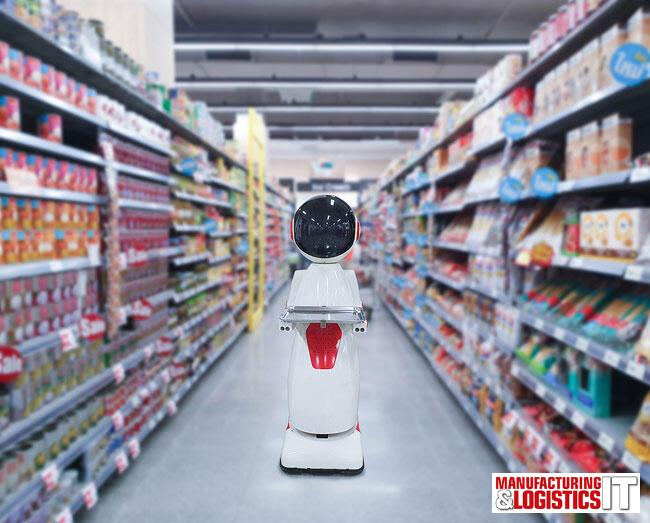
    https://www.logisticsit.com/assets/components/phpthumbof/cache/bigstock-Innovative-Shopping-Robots-In--460898777.f8290fc406e870737a2130326f3c4f5a.jpg
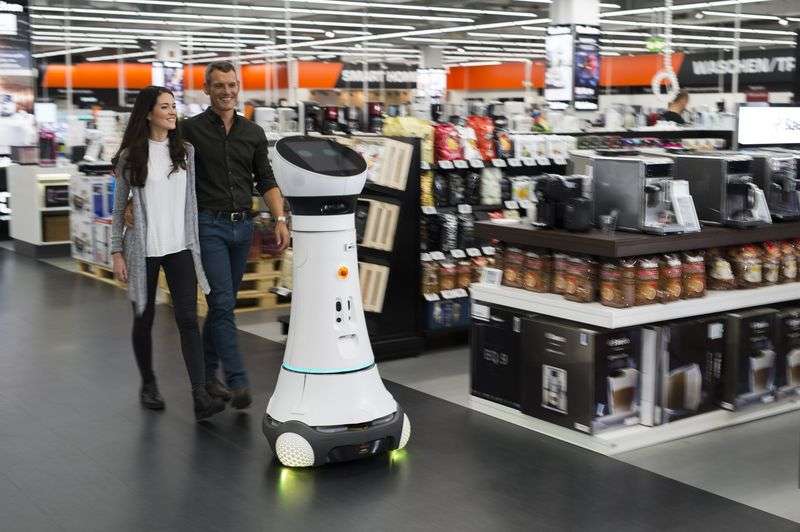
    https://scx1.b-cdn.net/csz/news/800a/2016/roboticstore.jpg
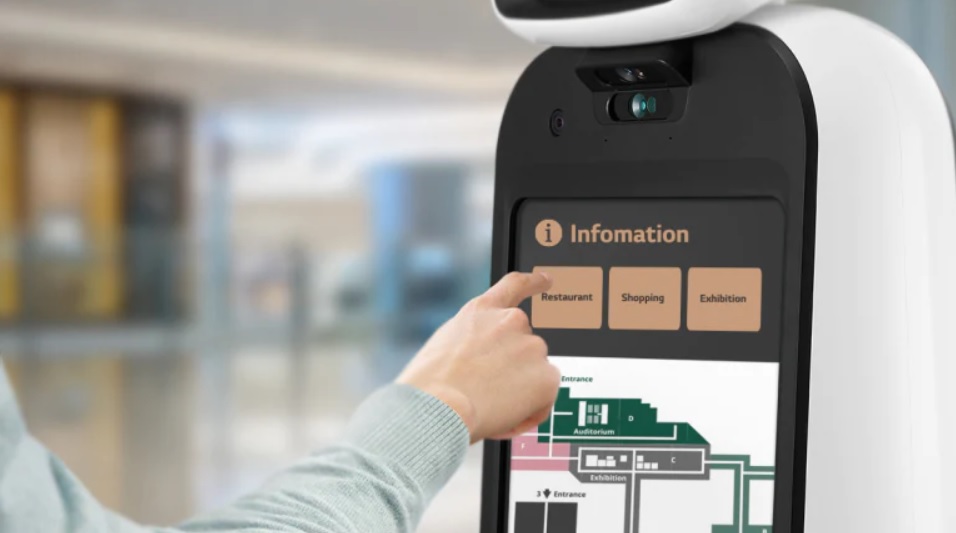
    https://3dwayfinder.com/wp-content/uploads/2022/06/LG-CLOi-guidebot.jpg

    2. The Business Case: Why Your SME Can’t Afford to Ignore This

    Here’s the core business argument:

    • Differentiation & brand experience: In an age when e-commerce offers convenience, your physical space must offer an experience. Robots in a store create a “wow” moment, an innovation anchor that can boost foot-traffic, dwell time and brand perception. One article noted that many retailers see “this train is not stopping any time soon” when it comes to customer-facing robots. The Robin Report+1

    • Operational efficiency: Robots aren’t just about front-of-house dazzle. They can take over repetitive, low-value tasks (shelf scanning, cleaning, guidance, simple repeat tasks), freeing your human staff to focus on high-value service and engagement. For example, one review cited robots doing inventory scanning, restocking, basket collection in retail stores. TechInformed+1

    • Data & insight: Customer-facing robots, especially when integrated with sensors and AI, can gather data about shopper behaviour, movement flows, inventory gaps, and engagement patterns. That insight can feed back into merchandising, layout and staffing decisions. Indeed, research on service robots in retail indicates that the back-end of deployment includes sensing, vision, mapping and analytics. arXiv+1

    • ROI potential: The cost of robots is coming down, and the model of Robotics-as-a-Service (RaaS) is making deployment more flexible. The article from A3 states that instead of capital heavy investment, the RaaS model allows businesses to pay for outcomes (e.g. guest reception, in-store assistance) rather than hardware ownership. Automate

    From an SME standpoint, that means you don’t have to wait for the enterprise budget cycle— you can pilot, test, scale. But you do have to act, or risk being left behind while more agile competitors claim the innovation badge.


    3. Key Categories: What These Robots Actually Do

    Here are some of the primary roles that retail & public-facing robots are serving today:

    a) Customer engagement & wayfinding

    Robots that greet visitors, guide them to departments/products, provide FAQs, answer simple queries. As one integration company puts it: “Wayfinding robots help shoppers with directions and FAQs.” robotlab.com

    b) Inventory, restocking, shelf – “behind-front-of-house” but visible

    Robots that roam the store checking for out-of-stock items, price mismatches, shelf compliance. One article: “inventory bots … confirm pricing and identify out-of-stock goods.” knightoptical.com+1

    c) Cleaning, delivery, transport within store or venue

    Robots that autonomously clean floors, deliver items from back stock to front, transport baskets/trolleys, or deliver customer orders in large venues. For example: “Cleaning robots play a crucial role in maintaining a pristine environment…” robotlab.com

    d) Security, monitoring & surveillance in public spaces

    Though overlapping with “public-facing,” some deployments involve robots patrolling malls, public venues, airports, deterring theft, or mapping footfall. For example, the company Knightscope, Inc. builds robots for monitoring in malls and parking lots. Wikipedia

    e) Brand activation, novelty & marketing

    Robots used as interactive brand ambassadors, in store openings, events, or experiential settings. For example, studies show that a robot serving in a bakery as a product recommender increased sales. arXiv

    f) Hybrid roles in venue or public-facing settings

    More advanced robots that combine greeting, wayfinding, cleaning, or inventory assistance in one unit. As noted: robots that “interpret customer emotions … provide tailored shopping advice.” The Robin Report


    4. Practical Considerations, Challenges & Readiness Criteria

    Deploying public-facing robots is exciting—but not without its pitfalls. Here’s what to watch and plan for.

    Readiness Checklist

    • Business case clarity: What exactly will the robot(s) do? Is it engagement, guidance, inventory, cleaning? Have you measured current cost, time or customer pain?

    • Environment fit: Retail or public spaces vary hugely in layout, lighting, foot-traffic, human-robot interaction potential. Are your store layouts conducive to robot mobility, visibility, charging?

    • Integration & data: A robot is not a standalone gimmick—it needs to integrate with your back-end (inventory systems, analytics, staff workflow). arXiv

    • Customer experience & social acceptance: Robots in front of customers must behave in ways that are intuitive, friendly and non-intrusive. Missteps impact brand perception.

    • Cost vs ROI timeline: Up-front cost (or RaaS contract), maintenance, support, software updates—must be compared against savings, lift in sales, customer metrics. The Robin Report+1

    • Staffing & workflow implications: Robots will shift tasks between machines and people—not replace them entirely in many cases. You’ll need to redesign roles, train staff, re-map processes.

    • Safety, reliability & privacy: Public spaces bring risk: collisions, malfunction, data capture issues, customer push-back. Social robotics research underlines the need for robust human-robot interaction design. arXiv

    Common Challenges

    • Scaling beyond pilot: Many deployments remain pilot projects because scaling across multiple stores, chains or venues brings complexity. For example: “the journey towards widespread adoption … will remain challenging.” The Robin Report

    • Demonstrating tangible ROI: One pain-point cited: While technology is ready, the economics (and proof) lag—retailers are waiting for tangible benefit. The Robin Report

    • Human-robot interaction fatigue: Novelty may drive early engagement, but sustained benefit needs meaningful robotic behaviour, not just a gimmick. Research in a bakery setting found that the robot inside store recommending products increased sales, whereas the one just at entrance did not. arXiv

    • Maintenance, support and lifecycle costs: Much like IT, robotics deployments require upkeep, software updates, downtime management—often underestimated.

    • Customer perception and brand fit: Does “robot in my store” enhance or distract? Does it align with brand values?

    • Data and ethics: Robots with sensors gathering video/audio/data may raise privacy concerns.


    5. Why Your Business Should Use Specialist Consultancy & Recruitment Support

    If you’re reading this and thinking, “Yes, I should consider deploying robots in my store or venue,” then two things become critical: strategy and talent.

    Why Consultancy Matters

    • Tailored strategy: A ‘generic’ robot won’t magically work. You need a roadmap: what task, what ROI, what full-stack integration. Our consultancy (via Robot Philosophy) helps you answer these questions and build your roadmap.

    • Vendor selection & system design: The robot market is fragmenting. Which robot is right for your customer journey? What sensor suite, what connectivity, what data integration? We help you wade through that.

    • Change management: Deployment isn’t plug-and-play. You need to adjust staff roles, workflows, customer messaging, signage and more. We support you in the organisational change.

    • Proof-of-concept design and measurement: We assist in designing pilots, defining KPIs (sales uplift, customer dwell time, staff redeployment), and tracking results.

    • Scaling plan: After pilot success, how do you scale across multiple sites? We help build the playbook for rollout.

    Why Recruitment Matters

    • New skill-sets: Operating, maintaining and working alongside robots means you’ll need talent with robotics knowledge, data/analytics capability, integration experience and customer service mindset.

    • Hybrid roles: Staff who understand both customer experience and robot-augmented service will be the difference. We can help you recruit for these hybrid roles.

    • Future-proofing: As robots across the store become more widespread, your talent base must be prepared to manage fleet operations, service contracts, uptime, analytics and continuous improvement. We support you in building this talent pipeline.

    In short: deploying public-facing robots is not just a technology rollout—it’s a business transformation. That’s why you need both the right strategy and the right team.


    6. Call to Action: Let’s Talk

    If your business is ready to explore how retail & public-facing robots can elevate your customer experience, drive operational efficiency, and future-proof your offering, we invite you to reach out.

    • Email: info@robophil.com
    • Phone: 0845 528 0404

    We will work with you to:

    • Assess your current state and readiness for robotics.

    • Define the business case, tasks and customer journey where robots bring value.

    • Provide consultancy to select the right robot(s), integration path and rollout plan.

    • Recruit the talent you need to succeed.

    • Support you through pilot to scale.


    Sponsored by:

    • Robot Center (https://robotcenter.co.uk/) – Your hub for buying robots, robotics consultancy, and expert support in robotics deployment.

    • Robots of London (https://robotsoflondon.co.uk/) – Specialists in robot hire, robot rental, event robots and lead generation for robotics businesses.

    • Robot Philosophy (https://robophil.com/) – Offering robot consultancy and robot recruitment; led by Philip English (aka RoboPhil) – your go-to robot influencer, trainer, consultant and strategist.


    Final Thoughts

    Retail & public-facing robots represent a powerful opportunity for any forward-looking business. They bridge innovation, efficiency, customer experience and brand differentiation. But the reward goes to the businesses that treat robot deployment not as a gadget, but as a strategic transformation—integrated, measured, staffed and scaled.

    If that describes you, then let’s work together. Reach out, schedule your call, and make sure you’re not playing catch-up while others claim the robot edge in retail and public experience.


    https://www.youtube.com/watch?v=I14kFkJIEKc
     

    https://www.youtube.com/shorts/9ebyq_iIJW8

  • $1,370 Humanoid Robot From China Shocks the World – Meet Bumi – The Future of Affordable Robots

    $1,370 Humanoid Robot From China Shocks the World – Meet Bumi – The Future of Affordable Robots

    $1,370 Humanoid Robot From China Shocks the World – Meet Bumi – The Future of Affordable Robots

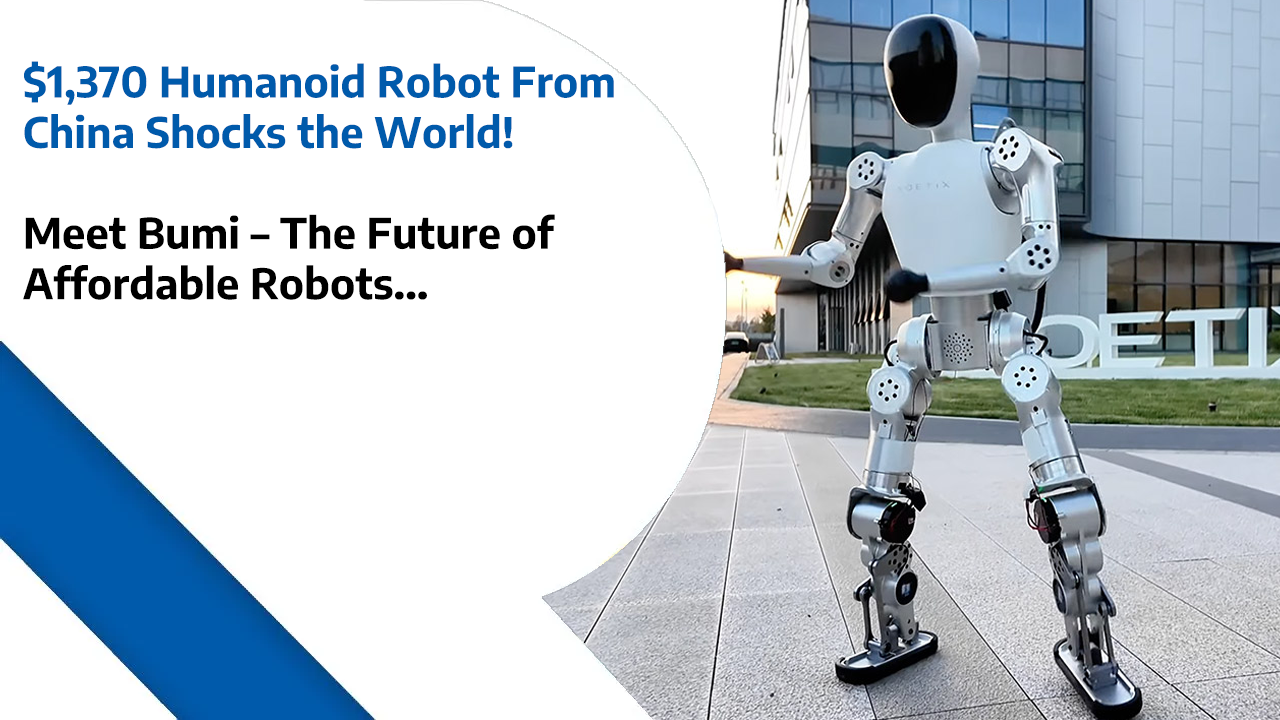
    Right — this is not science fiction, and it’s not a toy. Meet Bumi, the world’s cheapest humanoid robot — straight out of China — priced at just $1,370. Yes, a real humanoid robot for about the same price as a new iPhone.

    It’s made by Noetix Robotics, a Beijing-based startup that’s turning heads in the robotics world. Bumi stands 3.1 feet tall, weighs 26 pounds, and walks, balances, and even dances — all for less than what most people spend on their laptop.

    Now, Bumi isn’t trying to compete with giants like Tesla’s Optimus or Boston Dynamics’ Atlas — those cost hundreds of thousands, even millions. Instead, it’s targeting schools, hobbyists, and anyone curious about robotics. It’s powered by a 48-volt battery, runs for about two hours, and even supports drag-and-drop programming and voice interaction.

    So why should you, sitting in the U.S., care?
    Because this marks a turning point. Affordable humanoids mean you — educators, students, entrepreneurs — can finally get hands-on with real bipedal robots. Imagine using one to teach coding, test AI applications, or build your own robot startup before the industry goes mainstream.

    Think of it as getting your first computer in the 1980s… except this one walks around and dances when it’s bored.

    Noetix has already proven itself — their previous model ran in a humanoid half-marathon in China. Now, with Bumi launching this winter, they’re opening preorders between November 11th and December 12th, right in time for the shopping season.

    This isn’t just another gadget. It’s a sign that robotics is finally reaching living rooms, classrooms, and small businesses.

    And that’s your robot news update for today!. If you’re curious about how robotics can transform your business, head over to Robot Philosophy website to join the waiting list, or to speak with the team about robotics.

    Don’t forget to subscribe so you stay in the loop with all the latest updates.

    I’m RoboPhil from Robot Philosophy — thanks for watching, and I’ll see you next time!


    Join the workshop waiting list or get in touch at: https://robophil.com/


    Sponsors:-


    Robot Center: – https://robotcenter.co.uk/ – Buy Robot, Robot Buy, Robot consultancy, Robotics Consultancy, Inspection Robots, Security Robots,


    Robots of London: – https://robotsoflondon.co.uk/ – Robot Hire, Robot Rental, Rent Robot, Hire Robot, Robot Events, Robotics Hire, Hire Robotics, Rent Robotics, Robotics Rent, for exhibitions, shows, Events, Robot hire in the UK, Robot hire in Europe


    Robot Philosophy: – https://robophil.com/ – Robot Consultancy, Robot Recruitment, Robot Advice, Robot Insights, Robot Ideas. RoboPhil, also known as Philip English, is a leading Robot YouTuber, Robot Influencer, Robot Trainer, Robot Consultant, and Robot Streamer, Robotics Streamer, Robotics YouTuber, Robotics Influencer, Robotics Consultant, Robotics Trainer 

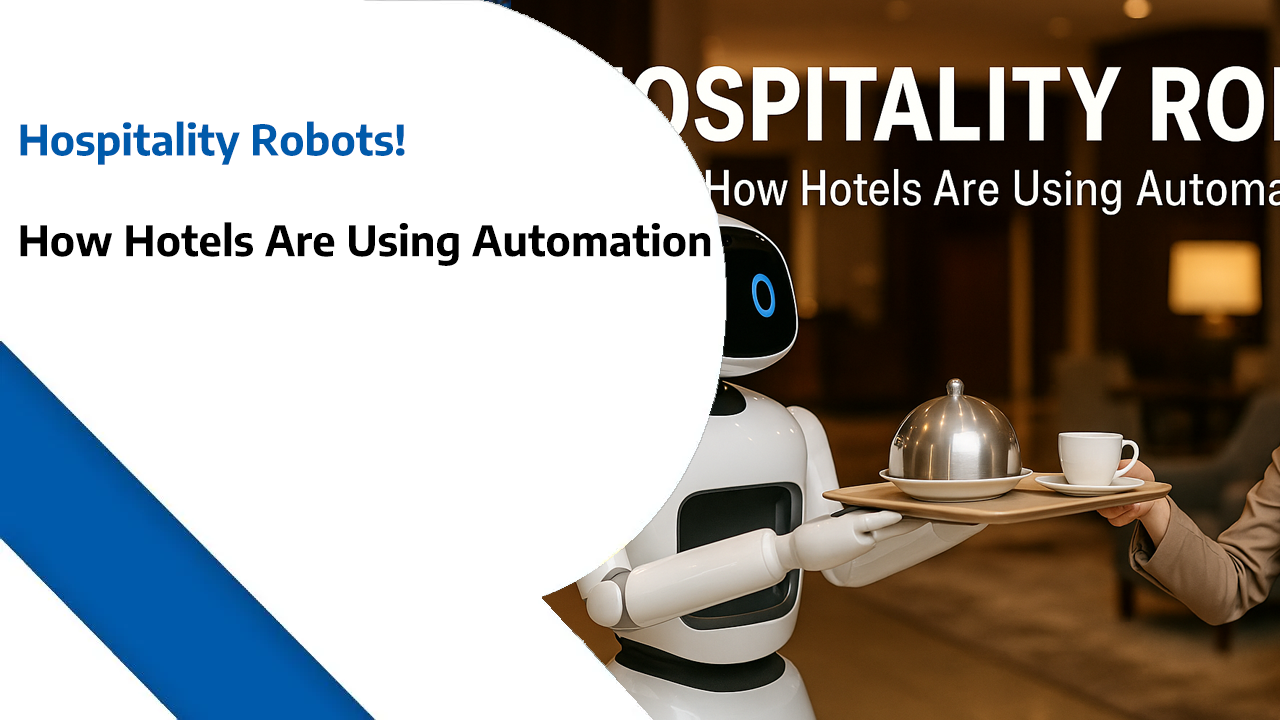
  • Hospitality Robots – How Hotels Are Using Automation

    Hospitality Robots – How Hotels Are Using Automation

    Hospitality Robots: How Hotels Are Using Automation to Transform Guest Experiences

    The hospitality industry is undergoing a remarkable transformation. As hotels worldwide grapple with labour shortages, rising operational costs, and evolving guest expectations, robotics and automation have emerged as game-changing solutions. From check-in kiosks to room service delivery robots, the integration of robotic technology is reshaping how hotels operate and how guests experience their stays.

    The Rise of Robotics in Hospitality

    The adoption of robots in hotels isn’t just a futuristic novelty—it’s a practical response to real-world challenges. The COVID-19 pandemic accelerated this trend dramatically, as properties sought contactless solutions to maintain service standards while ensuring guest and staff safety. However, the benefits extend far beyond pandemic protocols.

    Today’s hospitality robots serve multiple functions: they enhance operational efficiency, reduce labour costs, provide consistent service quality, and often delight guests with their novelty. More importantly, they free up human staff to focus on high-value interactions that require empathy, problem-solving, and personalised attention—areas where humans still excel.

    Types of Robots Revolutionising Hotels

    Delivery and Service Robots

    Perhaps the most visible robots in modern hotels are autonomous delivery units that navigate corridors to bring amenities, meals, and supplies directly to guest rooms. These robots use sophisticated navigation systems including LIDAR, cameras, and sensors to map hotel layouts, avoid obstacles, and even summon lifts.

    Leading examples include robots like Relay by Savioke, which has completed millions of deliveries across hundreds of hotels globally. These machines can carry up to 30 pounds of cargo, navigate autonomously to guest rooms, and politely announce their arrival. They’re particularly valuable for delivering late-night amenities, extra towels, or room service items without requiring staff to make individual trips.

    The efficiency gains are substantial. A single robot can make dozens of deliveries per day, operating 24/7 without breaks. This allows hotel staff to remain at their primary stations—concierge desks, front offices, or housekeeping hubs—while the robot handles time-consuming delivery tasks.

    Reception and Check-In Robots

    Front desk operations have also been transformed by robotic assistants. Humanoid and semi-humanoid robots now greet guests, process check-ins, provide information about hotel amenities, and answer frequently asked questions in multiple languages.

    The Henn-na Hotel in Japan made headlines as one of the first hotels staffed almost entirely by robots, including dinosaur-shaped reception robots and a robotic arm that manages the luggage storage. While this property eventually scaled back some robotic applications, it demonstrated the possibilities and limitations of automation in guest-facing roles.

    More commonly, hotels deploy robots as supplements to human staff rather than replacements. These robots handle routine check-ins and information queries, allowing human staff to devote more time to complex requests, guest relations, and situations requiring emotional intelligence.

    Cleaning and Disinfection Robots

    Hygiene has always been paramount in hospitality, but heightened awareness around cleanliness has made cleaning robots particularly valuable. Autonomous vacuum robots maintain carpets in public areas, while UV-C disinfection robots sanitise rooms and high-touch surfaces using ultraviolet light to eliminate pathogens.

    These robots ensure consistent, thorough cleaning beyond what human staff might achieve manually, particularly in hard-to-reach areas. They operate during off-peak hours, minimising disruption to guests while maintaining immaculate standards throughout the property.

    Concierge and Information Robots

    Interactive robots stationed in hotel lobbies serve as multilingual concierges, providing recommendations for local attractions, booking restaurant reservations, and offering entertainment suggestions. Equipped with artificial intelligence and natural language processing, these robots can engage in relatively sophisticated conversations with guests.

    Some models feature touchscreen displays that show maps, images of nearby attractions, and promotional content. They collect data on guest preferences and common queries, helping hotel management better understand their clientele and refine their services.

    Kitchen and Food Preparation Robots

    Behind the scenes, some hotels employ robots in their kitchens. These range from automated coffee makers and cocktail-mixing robots to sophisticated cooking robots that can prepare multiple dishes with precise consistency.

    Robotic kitchen assistants ensure consistent quality, reduce food waste through precise portioning, and can operate during peak periods to support human chefs. While they won’t replace the creativity and skill of experienced culinary professionals, they excel at repetitive tasks and can maintain production during staff shortages.

    Real-World Implementations: Success Stories

    The Yotel Chain

    Yotel hotels have embraced automation extensively, featuring a robotic luggage storage system called Yobot. This robotic arm retrieves and stores guest luggage in a secure storage matrix, providing both functionality and theatrical flair. The system has become a signature feature that enhances the brand’s tech-forward identity.

    M Social Singapore

    This property deploys multiple Relay robots named “Aura” that deliver items to guest rooms around the clock. The robots have become so popular with guests that they’ve essentially become brand ambassadors, with visitors specifically requesting robot deliveries even when human service would be faster.

    Aloft Hotels

    The Aloft Cupertino was one of the first mainstream hotels to trial the Relay robot system. Following successful pilot programmes, the parent company Marriott has expanded robotic deployments across multiple properties, particularly for delivering amenities and supporting room service operations.

    The Business Case for Hotel Robotics

    Labour Cost Reduction

    With hospitality wages rising and labour shortages persisting in many markets, robots offer compelling economics. While initial investment costs can be substantial—ranging from £15,000 to £100,000 or more depending on the robot type—the long-term savings often justify the expenditure.

    A delivery robot, for instance, might replace the equivalent of one or two full-time staff positions, paying for itself within two to three years while operating for many more years thereafter.

    Operational Efficiency

    Robots don’t call in sick, take holidays, or require training on standard tasks. They maintain consistent performance regardless of time of day or workload volume. This reliability enables hotels to maintain service standards even during peak periods or when experiencing staff shortages.

    Moreover, robots generate valuable operational data. Hotels can track delivery times, peak demand periods, and service bottlenecks, using these insights to optimise staffing schedules and operational workflows.

    Enhanced Guest Experience

    Contrary to concerns that robots might depersonalise hospitality, many guests find robotic services novel and entertaining. Particularly among younger demographics, interacting with robots enhances the overall stay experience rather than detracting from it.

    Robots also provide consistent, immediate service for routine requests, reducing wait times and ensuring guests receive standard amenities quickly. This reliability allows human staff to excel in areas where personal touch matters most—handling complaints, providing local expertise, or creating memorable moments through genuine human connection.

    Competitive Differentiation

    In a crowded hospitality market, robotic innovations provide distinctive talking points that generate publicity and social media engagement. Hotels with robots often enjoy enhanced media coverage, positive reviews mentioning the technology, and increased bookings from tech-curious guests.

    Implementation Challenges and Considerations

    Technical Infrastructure

    Successful robot deployment requires adequate technical infrastructure. Hotels must ensure strong Wi-Fi coverage throughout the property, install necessary sensors or beacon systems, and potentially modify lift systems to allow robot access. Older properties with narrow corridors, uneven floors, or complex layouts may face integration challenges.

    Staff Training and Change Management

    Introducing robots affects hotel staff significantly. Comprehensive training helps staff understand how to work alongside robots, troubleshoot common issues, and maintain appropriate human oversight. Addressing concerns about job security through transparent communication and repositioning robot deployment as a tool to enhance rather than replace human roles is crucial for successful adoption.

    Guest Reception Variability

    While many guests embrace robotic services, others prefer traditional human interaction. Hotels must balance automation with human touchpoints, ensuring guests can easily opt for human service when desired. Cultural differences also affect reception—guests from some regions may find robots more acceptable than others.

    Maintenance and Support

    Robots require ongoing maintenance, software updates, and technical support. Hotels should establish clear service agreements with suppliers, maintain spare parts inventory where appropriate, and ensure staff members are trained to handle basic troubleshooting. Downtime can be costly, both financially and in terms of guest satisfaction.

    Return on Investment Timeline

    While robots offer long-term savings, the initial investment can be substantial. Hotels should carefully model ROI timelines, considering factors including purchase or lease costs, maintenance expenses, integration costs, and expected lifespan. In some cases, leasing or rental arrangements may provide better financial flexibility than outright purchase.

    The Future of Hospitality Robotics

    The trajectory for hotel robotics points toward increased sophistication, broader adoption, and tighter integration with other hotel systems. Several trends are emerging:

    Advanced AI and Personalisation

    Future hospitality robots will leverage more advanced artificial intelligence to recognise returning guests, remember preferences, and provide increasingly personalised recommendations. Integration with hotel CRM systems will enable robots to greet guests by name and proactively offer services based on past behaviour.

    Multi-Functional Robots

    Rather than single-purpose machines, next-generation robots will likely perform multiple functions. A robot might handle deliveries, provide information, and assist with cleaning tasks, improving ROI and reducing the number of different systems hotels must manage.

    Emotional Intelligence

    Developers are working on robots with better emotional intelligence—the ability to recognise guest moods, adjust communication styles accordingly, and escalate to human staff when situations require empathy or complex problem-solving.

    Sustainability Integration

    As hotels increasingly prioritise sustainability, robots will play roles in monitoring energy usage, optimising resource allocation, and reducing waste. Cleaning robots might use environmentally friendly cleaning solutions more efficiently, while delivery robots reduce the carbon footprint of multiple staff trips throughout large properties.

    Collaboration with Human Staff

    The future of hospitality isn’t robots replacing humans but rather sophisticated human-robot collaboration. Technology will handle routine, repetitive tasks while human staff focus on relationship building, creative problem-solving, and creating memorable guest experiences that drive loyalty and premium pricing.

    Selecting the Right Robotics Strategy for Your Property

    Not every hotel needs the same robotic solution, and successful implementation requires careful planning tailored to your specific property, guest demographics, and operational needs.

    Assessment Phase

    Begin by conducting a thorough assessment of your operational pain points. Which tasks consume disproportionate staff time? Where are service bottlenecks? Which repetitive tasks could be automated without diminishing service quality? Engage staff at all levels in this assessment—frontline employees often have the clearest insight into operational inefficiencies.

    Guest Profile Analysis

    Consider your typical guest demographics. Business hotels serving tech-savvy executives might find greater acceptance for robotic services than heritage properties catering to guests seeking traditional hospitality. Conduct surveys or focus groups to gauge guest receptiveness before major investments.

    Phased Implementation

    Rather than comprehensive robot deployment, consider phased approaches. Pilot programmes with a single robot type allow you to assess performance, guest reaction, and ROI before scaling up. This approach also gives staff time to adapt and provides valuable learnings that inform subsequent deployments.

    Integration Planning

    Ensure any robotic system integrates seamlessly with your existing property management system, point-of-sale systems, and communication platforms. Siloed systems create inefficiencies and limit the value robots can provide.

    Getting Expert Guidance: Why Robot Consultancy Matters

    Navigating the complex landscape of hospitality robotics requires specialised expertise. The wrong choice can result in wasted investment, operational disruption, and guest dissatisfaction. This is where professional robot consultancy services become invaluable.

    Expert consultants bring deep knowledge of available technologies, implementation best practices, and industry-specific applications. They can assess your property’s unique requirements, recommend appropriate solutions, manage vendor relationships, and oversee implementation to ensure smooth deployment.

    Moreover, the robotics landscape evolves rapidly. Consultants maintain current knowledge of emerging technologies, pricing trends, and performance data across multiple implementations—insights that would be difficult for individual hotels to develop independently.

    Robot Recruitment: Finding the Right Technical Talent

    Beyond selecting and implementing robotic systems, hotels need staff capable of managing, maintaining, and optimising these technologies. Robot recruitment services specialise in identifying candidates with the technical skills, hospitality understanding, and problem-solving abilities needed to support robotic operations.

    These specialised recruitment services understand the unique intersection of hospitality and robotics, sourcing candidates who can bridge technical expertise with customer service excellence. Whether you need robotics technicians, AI specialists, or operational managers with automation experience, expert recruitment services streamline the hiring process and improve candidate quality.

    Taking the Next Step: Expert Support for Your Robotics Journey

    If you’re considering robotics for your hospitality property, professional guidance can dramatically improve outcomes and ROI. Whether you’re exploring initial possibilities, ready to implement specific solutions, or seeking to optimise existing robotic systems, expert consultancy and recruitment services provide the support you need.

    For comprehensive robot consultancy services and specialist robot recruitment, contact our team today:

    Email: info@robophil.com
    Phone: 0845 528 0404

    Book a consultation call to discuss your specific requirements, explore suitable robotic solutions, and develop a strategic implementation roadmap tailored to your property’s unique needs. Our experts will help you navigate technology selection, implementation planning, staff training, and ongoing optimisation to ensure your robotics investment delivers maximum value.


    Article Sponsors

    This article is proudly sponsored by three leaders in the robotics industry:

    Robot Center

    Website: https://robotcenter.co.uk/

    Your comprehensive destination for robot purchasing and expert robotics consultancy. Robot Center provides end-to-end support for businesses exploring robotic solutions, from initial consultation through to purchase and implementation. Whether you’re buying your first robot or expanding an existing automation programme, their team delivers the expertise and product range to match your requirements.

    Robots of London

    Website: https://robotsoflondon.co.uk/

    The premier provider of robot hire and rental services in the UK. Robots of London offers flexible rental solutions for events, temporary deployments, and pilot programmes. Whether you need robots for a corporate event, trade show, or want to trial robotic services before committing to purchase, their extensive inventory and professional support ensure successful deployments.

    Robot Philosophy (RoboPhil)

    Website: https://robophil.com/

    Led by Philip English, a renowned Robot YouTuber, Influencer, Trainer, and Consultant, Robot Philosophy delivers cutting-edge robot consultancy and specialist robot recruitment services. RoboPhil provides strategic advice, practical insights, and innovative ideas that help businesses successfully integrate robotics into their operations. As a leading voice in the robotics community through YouTube content, live streaming, and professional training, RoboPhil bridges the gap between robotic possibilities and practical business implementation.


    Conclusion: Embracing the Robotic Revolution in Hospitality

    The integration of robotics in hospitality represents not a replacement of human service but an evolution of it. By automating routine tasks, hotels free their most valuable asset—their people—to focus on what they do best: creating memorable experiences, solving complex problems, and building genuine connections with guests.

    The hotels that will thrive in the coming years are those that thoughtfully integrate robotic technologies while maintaining the human touch that defines exceptional hospitality. The technology exists today to transform operations, enhance efficiency, and delight guests. The question is no longer whether to adopt robotics, but how to do so strategically and effectively.

    With proper planning, expert guidance, and the right technology partners, your property can join the hospitality revolution—delivering exceptional service more efficiently while positioning your hotel at the forefront of industry innovation.

    Ready to explore how robotics can transform your hotel operations?

    Contact our expert team today to book your consultation:

    Email: info@robophil.com
    Phone: 0845 528 0404

    Let’s discuss how automation can elevate your guest experience and operational efficiency.


    https://www.youtube.com/watch?v=2Vn4fvNsEck


    https://www.youtube.com/shorts/TRMX38SZudk

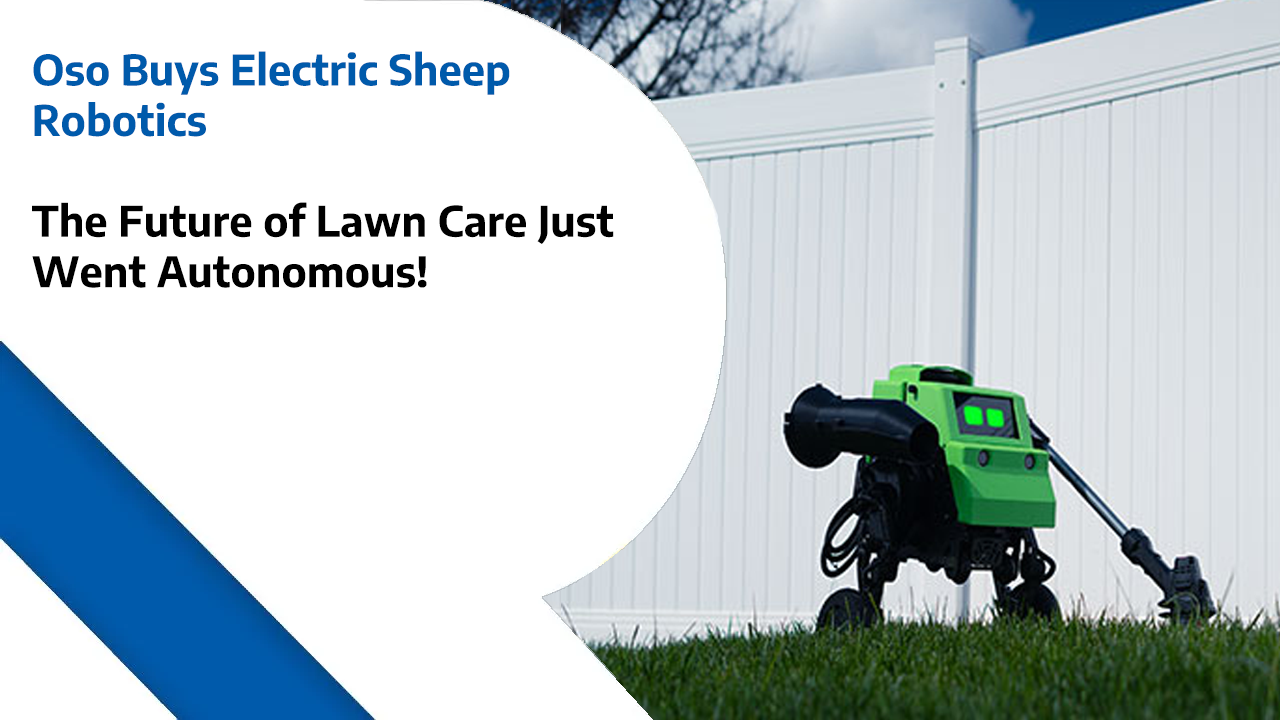
  • Oso Buys Electric Sheep Robotics – The Future of Lawn Care Just Went Autonomous!

    Oso Buys Electric Sheep Robotics – The Future of Lawn Care Just Went Autonomous!

    Oso Buys Electric Sheep Robotics – The Future of Lawn Care Just Went Autonomous!

    Right then — today we’re looking at a major move in the world of robotics and green tech: Oso Electric Equipment has just acquired Electric Sheep Robotics, the company famous for its AI-powered autonomous mowing robots.

    Now, before you picture a herd of robots grazing your backyard — let’s talk about what this actually means for the future of outdoor work across America.

    Oso makes cutting-edge electric powertrain systems, and Electric Sheep brings the AI and machine learning brains.
    Together, they’re creating fully autonomous, zero-emission outdoor power equipment built for serious commercial jobs — think golf courses, corporate campuses, public parks, even urban environments where GPS signals struggle.

    They’ve already deployed systems in California and Texas, and this merger means we’ll soon see smarter, cleaner, and quieter outdoor machines right across the U.S.

    For you — whether you run a landscaping business or manage large properties — this could mean:

    • Less labor cost and more consistency.
    • Greener operations with zero exhaust fumes.
    • Smarter machines that can learn, plan, and adapt to complex terrains.

    In short — less mowing, more managing.

    And don’t worry — these robots won’t start giving you attitude about your lawn ornaments… at least not yet.

    But seriously, we’re looking at a future where outdoor maintenance is automated, sustainable, and scalable — and the same AI that trims your lawns today could one day help build habitats on Mars.

    This merger between Oso and Electric Sheep isn’t just a business deal — it’s a glimpse into how AI, electrification, and robotics are reshaping how we work outdoors.

    If you want cleaner, quieter, smarter tools that literally work while you sleep — this is the beginning.


    And that’s your robot news update for today!. If you’re curious about how robotics can transform your business, head over to Robot Philosophy website to join the waiting list, or to speak with the team about robotics.

    Don’t forget to subscribe so you stay in the loop with all the latest updates.

    I’m RoboPhil from Robot Philosophy — thanks for watching, and I’ll see you next time!

    Join the workshop waiting list or get in touch at: https://robophil.com/


    Sponsors:-


    Robot Center: – https://robotcenter.co.uk/ – Buy Robot, Robot Buy, Robot consultancy, Robotics Consultancy, Inspection Robots, Security Robots,


    Robots of London: – https://robotsoflondon.co.uk/ – Robot Hire, Robot Rental, Rent Robot, Hire Robot, Robot Events, Robotics Hire, Hire Robotics, Rent Robotics, Robotics Rent, for exhibitions, shows, Events, Robot hire in the UK, Robot hire in Europe


    Robot Philosophy: – https://robophil.com/ – Robot Consultancy, Robot Recruitment, Robot Advice, Robot Insights, Robot Ideas. RoboPhil, also known as Philip English, is a leading Robot YouTuber, Robot Influencer, Robot Trainer, Robot Consultant, and Robot Streamer, Robotics Streamer, Robotics YouTuber, Robotics Influencer, Robotics Consultant, Robotics Trainer 


  • Education Robots – Teaching the Teachers First

    Education Robots – Teaching the Teachers First

    Education Robots – Teaching the Teachers First

    Sponsored by

    Robot Centerhttps://robotcenter.co.uk/Buy Robot, Robot Buy, Robot Consultancy, Robotics Consultancy
    Robots of Londonhttps://robotsoflondon.co.uk/Robot Hire, Robot Rental, Rent Robot, Hire Robot, Robot Events
    Robot Philosophyhttps://robophil.com/Robot Consultancy, Robot Recruitment, Robot Advice, Robot Insights, Robot Ideas


    Introduction: The Classroom of the Future Begins with the Teachers

    When people picture robots in education, they often imagine humanoid assistants guiding students through lessons, or autonomous tablets rolling between desks to answer questions. The vision is futuristic — but the reality begins somewhere else entirely: with the teachers.

    The truth is, the success of educational robots doesn’t depend on how advanced the technology is, but how effectively it’s used. And that means teaching the teachers first.

    Across the UK and beyond, education is standing at a crossroads. Schools, colleges, and universities are under pressure to prepare students for an increasingly automated world — one filled with artificial intelligence, data, and robotics. Yet most educators have had little exposure to these technologies themselves.

    That’s where robot consultancy and robot training come in — bridging the gap between technology and teaching, so educators can confidently lead the next generation into the robotic age.


    Why Robots Are Entering the Classroom

    The role of robots in education is expanding rapidly. From early learning environments to university labs, robots are being used to:

    • Teach coding and computational thinking through tangible, interactive experiences.

    • Support students with special needs by providing predictable, patient, and personalised assistance.

    • Encourage STEM engagement through curiosity-driven learning.

    • Act as digital teaching assistants, automating repetitive tasks like attendance and quiz administration.

    • Enhance remote or hybrid learning by offering mobility and social presence.

    But these innovations only reach their full potential when teachers know how to use them strategically — not just as a novelty, but as an integrated part of pedagogy.

    That’s the challenge: technology is advancing faster than most institutions can train their staff.


    The Gap Between Technology and Training

    Robots are entering classrooms faster than teachers can adapt. Many educators find themselves standing in front of a new robot, still sealed in its box, unsure of what it can do or how to fit it into their curriculum.

    This is not the teacher’s fault. Most teacher training programs were designed before robotics was mainstream. Even today, many PGCEs and educational degrees barely touch on automation or AI.

    Without training and ongoing support, teachers risk feeling overwhelmed, undervalued, or worse — replaced by technology they don’t fully understand.

    The goal should never be to replace teachers. The goal should be to empower them.

    That’s why the first step in any educational robotics rollout should be teaching the teachers — equipping them with the confidence, understanding, and creativity to make robots work for them, not instead of them.


    Teaching the Teachers: Building Confidence, Creativity, and Connection

    Before a robot ever meets a student, it should meet a teacher who knows what it’s capable of.
    This is the philosophy behind Robot Philosophyhttps://robophil.com/ – where RoboPhil (Philip English), a leading UK Robot Consultant, YouTuber, and Trainer, focuses on helping educators understand, implement, and adapt to robotics.

    Through interactive workshops and consultancy sessions, we guide educators through three key stages:

    1. Awareness – Understanding what types of robots are available and how they can be applied in different educational settings.

    2. Application – Learning how to use specific robots in practical teaching scenarios, from coding lessons to classroom management.

    3. Amplification – Integrating robotics data and feedback to enhance student outcomes and engagement over time.

    This approach ensures that teachers feel inspired rather than intimidated — and that the school gets a long-term return on its robotics investment.


    From Toys to Tools: How Robots Reinvent Learning

    Educational robots come in all shapes and sizes. Some are designed for play-based learning, while others serve as professional teaching aids. The distinction between “toy” and “tool” depends entirely on how they’re used.

    For example:

    • A small coding robot like Sphero or Ozobot becomes a tool for teaching logic, teamwork, and problem-solving.

    • A humanoid robot like Pepper or Temi becomes a tool for language learning, communication, and social-emotional development.

    • A digital signage robot from Robots of London becomes a mobile information assistant, guiding students around campus or displaying event content.

    The technology is only half the equation. The other half is strategy — how it’s deployed, measured, and improved over time.

    That’s why robot consultancy matters. It turns random innovation into structured transformation.


    The Role of Robot Consultancy in Education

    At Robot Philosophy and Robot Center, our consultancy model helps schools, colleges, and universities take a structured, results-driven approach to robotics.

    We start with a Robot Audit, identifying areas where automation and robotics could enhance teaching, engagement, or efficiency. Then we move through a series of stages to build capability:

    1. Assess – We evaluate your environment, existing resources, and goals.

    2. Select – We recommend the most suitable robots and technologies.

    3. Train – We teach your staff how to use and adapt the robots effectively.

    4. Support – We offer ongoing maintenance, updates, and professional development.

    This process ensures institutions don’t waste money on technology that gathers dust. Instead, they invest in systems that enhance both teaching and learning.

    If you’re an educational leader, start by booking a Robot Consultancy Call with us at
    📧 info@robophil.com | ☎️ 0845 528 0404


    Case Study: Robots of London – Robots in Action

    At Robots of Londonhttps://robotsoflondon.co.uk/ – we’ve deployed robots across the UK for both education and events. From Pepper robots greeting visitors to Temi robots leading campus tours, we’ve seen first-hand how powerful human-robot interaction can be when educators are properly trained.

    Schools that rent or trial robots for events often come back to us for longer-term consultancy. Why? Because once teachers see the engagement robots generate, they want to know how to make it permanent.

    Hiring a robot is a great first step. But turning it into an ongoing teaching asset requires training and strategy — that’s where Robot Philosophy steps in.


    Robot Recruitment: The Next Step for Educational Innovation

    As robotics becomes a permanent part of education, institutions need people with the right mix of technical and teaching skills. That’s creating a new category of jobs — robot educators, robotics coordinators, and AI teaching assistants.

    Finding the right talent can be difficult. Many educators know pedagogy but not programming. Many technicians know robotics but not teaching.

    That’s why Robot Philosophy now offers a Robot Recruitment Service — connecting schools and universities with professionals who understand both sides.

    Whether you need a robotics program manager, technical trainer, or STEM education specialist, we can help you find the perfect fit.

    If you’re an educator looking to transition into robotics — or a school ready to hire someone who can bridge that gap — email us at info@robophil.com or call 0845 528 0404 to discuss how we can help.


    Why Teachers Need to Lead the Way

    If robots are the future of learning, then teachers are the architects of that future.

    Automation should never replace the teacher’s emotional intelligence, intuition, and human touch. Instead, it should enhance their ability to inspire, personalise, and connect.

    By understanding robotics, teachers gain:

    • Confidence in using technology effectively.

    • Creativity to design new forms of learning.

    • Control over how technology shapes their classrooms.

    The alternative is letting the technology lead — and that’s where problems arise.

    By teaching teachers first, we build a foundation of understanding that trickles down to students, parents, and the wider education system.


    Overcoming Common Challenges in Education Robotics

    Even the most enthusiastic schools face challenges when adopting robots. The most common include:

    1. Budget Concerns – Many assume robotics is too expensive, but with rental and pilot programs through Robots of London, schools can test before they invest.

    2. Technical Barriers – Teachers often fear they lack the skills to manage robots. That’s why training is central to our consultancy model.

    3. Curriculum Integration – It’s not about adding new subjects, but enriching existing ones with robotics-driven experiences.

    4. Maintenance and Updates – Robots are evolving quickly, so it’s crucial to have a long-term partner for upgrades and servicing, like Robot Center.

    5. Cultural Resistance – Some educators worry robots will replace human jobs. The truth is, they create new opportunities — for both teachers and students.

    These challenges are manageable — but only with a structured approach and ongoing support.


    How We Help Educational Institutions Succeed

    At Robot Philosophy, we don’t just sell technology — we deliver transformation.
    Our services include:

    • Robot Consultancy for Education – Strategic planning, audits, and implementation support.

    • Robot Training for Teachers – Hands-on learning that builds confidence and creativity.

    • Robot Recruitment Services – Matching schools with robotics professionals.

    • Robot Demonstrations & Events – Through Robots of London, we provide interactive experiences that inspire both students and staff.

    • Sales and Maintenance Support – Via Robot Center, we ensure you get the best hardware, software, and aftercare in the UK.

    Each branch of our ecosystem works together — consultancy, training, recruitment, and events — to make educational robotics not just accessible, but sustainable.


    Building a Robotic Literacy Culture

    In the same way digital literacy became a core skill in the 2000s, robotic literacy will define the next generation of learners.
    That means understanding how robots work, how they think, and how they can assist humans.

    But this literacy can’t begin with students alone. It must start with teachers, administrators, and decision-makers.

    When teachers are confident, students thrive. When institutions plan strategically, technology amplifies learning rather than distracting from it.

    Our goal at Robot Philosophy is to build that culture — one classroom, one teacher, one robot at a time.


    The Human Side of the Machine

    There’s a poetic irony in teaching robots to teach.
    It forces us to ask: what makes a great teacher? Empathy. Patience. Adaptability. Curiosity.

    Those are human traits — and they’re exactly what we must teach our robots to support.

    Robotics isn’t about removing the human element from education. It’s about scaling the human element — giving teachers more time for meaningful interaction, while automation handles the repetitive and administrative tasks.

    By teaching the teachers first, we ensure that the human always stays at the heart of learning.


    Conclusion: The Future of Education Is Human + Machine

    The classroom of tomorrow won’t be defined by how many robots it has, but by how well those robots are used.
    And that begins with empowered educators — teachers who see robots not as replacements, but as collaborators.

    Teaching the teachers first is the smartest investment any school can make. It ensures the technology serves a purpose, the lessons have impact, and the next generation grows up ready for an automated world.

    If you’re ready to explore robotics in your school, college, or university — whether through consultancy, training, or recruitment — reach out today.

    📧 info@robophil.com
    ☎️ 0845 528 0404

    Let’s build the classrooms of the future — by teaching the teachers first.


    Article Sponsors

    Robot Centerhttps://robotcenter.co.uk/
    Buy Robot | Robot Buy | Robot Consultancy | Robotics Consultancy

    Robots of Londonhttps://robotsoflondon.co.uk/
    Robot Hire | Robot Rental | Rent Robot | Hire Robot | Robot Events

    Robot Philosophyhttps://robophil.com/
    Robot Consultancy | Robot Recruitment | Robot Advice | Robot Insights | Robot Ideas


    https://www.youtube.com/watch?v=_hjXf0ZSRL0


    https://www.youtube.com/shorts/Hf7smm_Z8eg

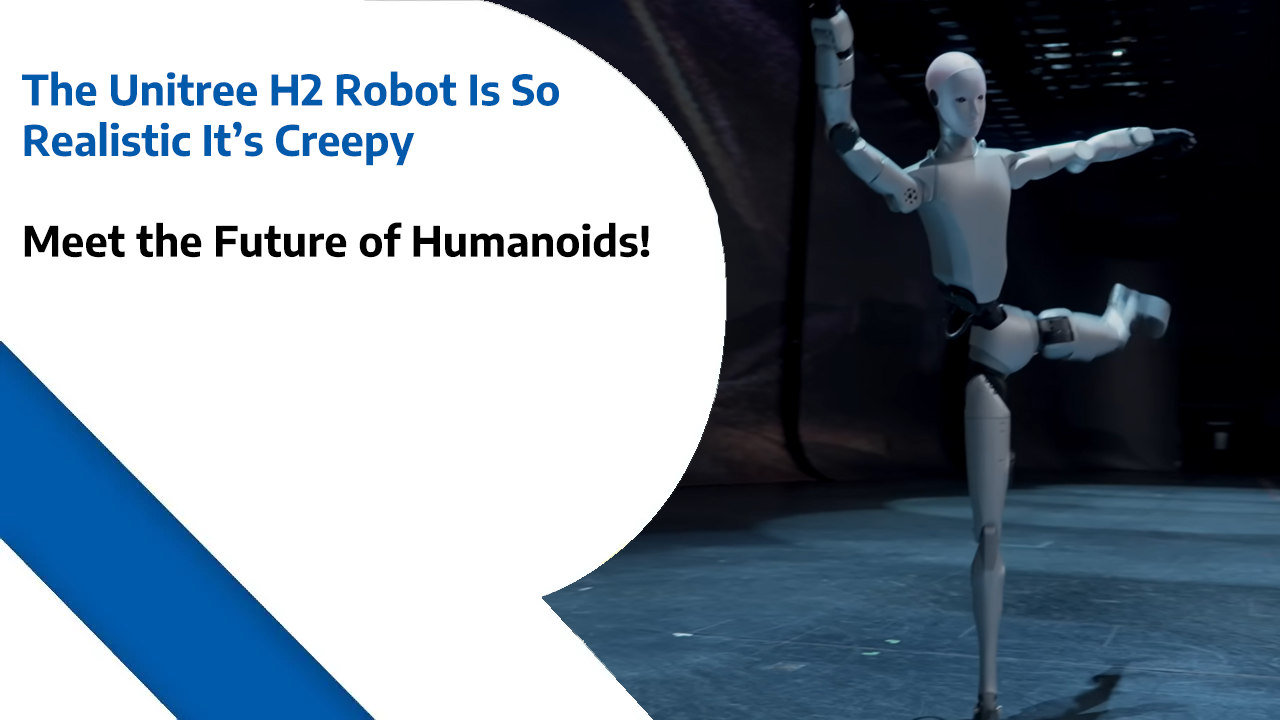
  • The Unitree H2 Robot Is So Realistic It’s Creepy – Meet the Future of Humanoids

    The Unitree H2 Robot Is So Realistic It’s Creepy – Meet the Future of Humanoids

    The Unitree H2 Robot Is So Realistic It’s Creepy – Meet the Future of Humanoids

    Today we’re looking at one of the most lifelike robots ever built. Meet Unitree’s new humanoid, the H2 ‘Destiny Awakening’ — and yes, it really does move like a human.

    This robot stands 5 foot 11, weighs about 154 pounds — roughly the size of an adult man — but it moves with a smoothness that’s hard to believe. In its debut video, the H2 poses, spins, and even shows off karate moves that would make Bruce Lee proud. Some people thought the footage was AI-generated… but it’s 100 percent real.

    Built by Unitree Robotics in China, the H2 follows the company’s earlier models — the H1, which once claimed the title of the world’s fastest humanoid, and the smaller G1, famous for its acrobatic side flips. This new H2 seems to combine the speed of the H1 with even more balance and control.

    Under the hood, we’re looking at around 27 degrees of freedom, powerful torque — 120 newton-meters in the arms and up to 360 in the legs — and advanced sensors, including 3D lidar and 360-degree depth sensing. That’s what gives it those eerily human-like motions.

    So how does this benefit you? Well, technologies like this are shaping the next generation of industrial, inspection, and service robots. Think robots that can safely help in warehouses, construction sites, or even your home someday. The smoother the motion, the more practical and reliable they become.

    The Unitree H2 ‘Destiny Awakening’ shows just how close we’re getting to humanoid robots that can truly work alongside people.

    And that’s your robot news update for today!. If you’re curious about how robotics can transform your business, head over to Robot Philosophy website to join the waiting list, or to speak with the team about robotics.

    Don’t forget to subscribe so you stay in the loop with all the latest updates.

    I’m RoboPhil from Robot Philosophy — thanks for watching, and I’ll see you next time!

    Join the workshop waiting list or get in touch at: https://robophil.com/


    Sponsors:-


    Robot Center: – https://robotcenter.co.uk/ – Buy Robot, Robot Buy, Robot consultancy, Robotics Consultancy, Inspection Robots, Security Robots,


    Robots of London: – https://robotsoflondon.co.uk/ – Robot Hire, Robot Rental, Rent Robot, Hire Robot, Robot Events, Robotics Hire, Hire Robotics, Rent Robotics, Robotics Rent, for exhibitions, shows, Events, Robot hire in the UK, Robot hire in Europe


    Robot Philosophy: – https://robophil.com/ – Robot Consultancy, Robot Recruitment, Robot Advice, Robot Insights, Robot Ideas. RoboPhil, also known as Philip English, is a leading Robot YouTuber, Robot Influencer, Robot Trainer, Robot Consultant, and Robot Streamer, Robotics Streamer, Robotics YouTuber, Robotics Influencer, Robotics Consultant, Robotics Trainer 


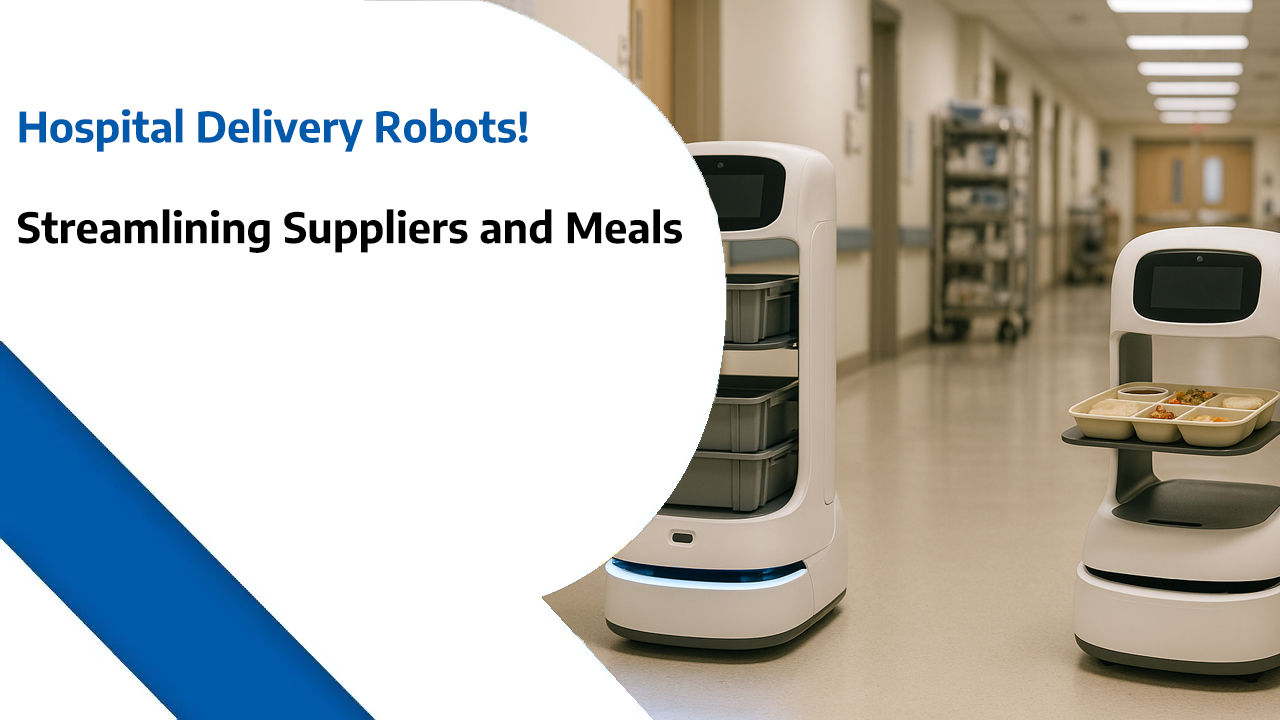
  • Hospital Delivery Robots – Streamlining Suppliers and Meals

    Hospital Delivery Robots – Streamlining Suppliers and Meals

    Hospital Delivery Robots – Streamlining Suppliers and Meals

    Revolutionizing Healthcare Logistics Through Autonomous Technology

    In the fast-paced environment of modern healthcare facilities, efficiency isn’t just about convenience—it’s about saving lives. Every minute that clinical staff spend on non-medical tasks is time taken away from patient care. Enter hospital delivery robots: autonomous systems that are transforming how medical supplies, meals, medications, and linens move through healthcare facilities. These tireless mechanical workers are not replacing human staff but rather empowering them to focus on what matters most—caring for patients.

    The Hidden Cost of Manual Hospital Logistics

    Before we dive into the solutions, let’s understand the problem. Traditional hospital logistics are surprisingly labor-intensive and costly. Studies show that nurses spend up to 30% of their shift time on non-clinical activities, including fetching supplies, delivering specimens to laboratories, and coordinating meal deliveries. In a typical 500-bed hospital, staff may walk the equivalent of several marathons daily just moving items from one department to another.

    This inefficiency creates several cascading problems:

    • Staff Burnout: Healthcare workers are already stretched thin. Adding logistical burdens increases fatigue and job dissatisfaction.
    • Delayed Care: When a nurse must leave a patient’s bedside to retrieve supplies, care is interrupted.
    • Infection Control Risks: More human traffic means more opportunities for pathogen transmission between departments.
    • Operational Costs: Labor costs continue to rise, making manual delivery systems increasingly expensive.
    • Supply Chain Inefficiencies: Without automated tracking, hospitals struggle with inventory management, leading to both shortages and waste.

    How Hospital Delivery Robots Work

    Modern hospital delivery robots are sophisticated autonomous mobile robots (AMRs) equipped with advanced navigation systems, sensors, and artificial intelligence. Unlike their industrial cousins that follow magnetic strips or wires, these robots use SLAM (Simultaneous Localization and Mapping) technology to navigate complex hospital environments dynamically.

    Key Technologies Powering Hospital Robots

    Navigation Systems: Using LIDAR sensors, cameras, and ultrasonic sensors, delivery robots create real-time 3D maps of their environment. They can detect obstacles, predict human movement patterns, and plan optimal routes through busy corridors.

    Elevator Integration: Perhaps one of the most impressive features is seamless elevator operation. Robots communicate directly with elevator systems via WiFi or cloud connections, calling lifts and selecting floors without human intervention. They can even coordinate with multiple robots to prevent bottlenecks.

    Security Features: Hospital robots typically include secure compartments with electronic locks, ensuring medications and sensitive materials reach only authorized recipients. Some models incorporate temperature-controlled sections for preserving meal quality and medication integrity.

    User Interfaces: Staff interact with robots through intuitive touchscreens, mobile apps, or integration with existing hospital management systems. Tasks can be scheduled or dispatched on-demand with just a few taps.

    Safety Systems: Multiple redundant safety mechanisms ensure robots never endanger patients or staff. Emergency stop buttons, collision avoidance algorithms, and gentle navigation speeds make them safe companions in busy hospital corridors.

    Transforming Hospital Supply Chains

    One of the most immediate applications of delivery robots is in streamlining supply chain operations. Traditional hospital supply management involves complex choreography: central supply rooms, floor-level sub-stores, nursing stations, and patient care areas all need constant restocking.

    Automated Pharmacy Deliveries

    Medication delivery is perhaps the most critical application. Hospital robots can transport medications from the central pharmacy to nursing stations or even directly to automated dispensing cabinets on patient floors. This creates several advantages:

    • Enhanced Safety: Closed, secure compartments reduce medication handling and potential errors. Chain-of-custody tracking provides complete audit trails.
    • Faster Response: STAT medication orders reach nurses within minutes rather than requiring pharmacy staff to pause other duties for urgent deliveries.
    • Regulatory Compliance: Automated tracking helps hospitals meet stringent medication management requirements, generating reports automatically.
    • Controlled Substance Security: Special locked compartments with access logging provide the security required for controlled medications.

    Laboratory Specimen Transport

    Time-sensitive laboratory specimens benefit enormously from robotic delivery. Blood samples, tissue biopsies, and other specimens can degrade or yield inaccurate results if not processed promptly. Robots provide:

    • Consistent Transit Times: Scheduled and on-demand pickups ensure specimens reach laboratories quickly and predictably.
    • Temperature Control: Refrigerated compartments maintain specimen integrity during transport.
    • Contamination Prevention: Enclosed transport reduces exposure risks for staff handling potentially infectious materials.
    • 24/7 Operation: Robots work around the clock, ensuring night shift staff receive the same responsive service as day shift.

    Linen and Waste Management

    Clean linen delivery and soiled linen removal are constant hospital needs. Robots excel at these repetitive tasks, operating on regular schedules to ensure departments never run short of clean supplies while removing waste efficiently. This reduces the burden on environmental services staff and minimizes unpleasant hallway encounters with soiled linen carts.

    Revolutionizing Hospital Meal Service

    Hospital food service presents unique logistical challenges. Meals must be delivered at specific times, maintain appropriate temperatures, accommodate diverse dietary restrictions, and arrive efficiently to hundreds of patients across multiple floors. Traditional meal carts require significant staff time and often result in lukewarm food by the time patients on the last delivery route receive their trays.

    The Robot-Powered Meal Solution

    Delivery robots are transforming hospital nutrition services in several ways:

    Temperature Preservation: Advanced robots include separate hot and cold compartments, ensuring main courses arrive hot while desserts and salads remain chilled. Some models maintain multiple temperature zones simultaneously, preserving meal quality regardless of delivery route length.

    Flexible Scheduling: Rather than large batch deliveries, robots can make multiple trips throughout meal periods, ensuring fresher food and accommodating patients who may be in procedures during initial meal times.

    Special Dietary Needs: Robots can be programmed with patient dietary restrictions and meal modifications, reducing delivery errors. Integration with hospital nutrition systems ensures the right meal reaches the right patient.

    Room Service Models: Some hospitals use robots to support “room service” meal programs, where patients order meals when hungry rather than adhering to rigid schedules. Robots respond to orders within minutes, dramatically improving patient satisfaction.

    Tray Collection: Often overlooked, efficient meal tray collection is as important as delivery. Robots can make return trips to collect trays, preventing clutter in patient rooms and hallways.

    Patient Experience Benefits

    The impact on patient satisfaction is measurable. Food quality and temperature consistently rank among top patient complaints in hospitals. When meals arrive hot, on time, and accurately prepared, satisfaction scores improve significantly. Moreover, the novelty of robotic delivery often delights patients and provides a welcome distraction in an otherwise stressful environment.

    Real-World Implementation Success Stories

    Hospitals worldwide are reporting impressive results from robot deployments:

    Major Medical Center – United States: After deploying a fleet of six delivery robots, this 800-bed facility reported nursing staff saved an average of 90 minutes per shift on logistical tasks. Over one year, the robots completed more than 50,000 deliveries with a 99.7% success rate. The hospital calculated a return on investment within 18 months through labor cost savings alone.

    Metropolitan Hospital – Europe: A 400-bed hospital focused its robot implementation on pharmacy deliveries. Medication delivery times dropped from an average of 23 minutes to just 8 minutes. More importantly, medication administration timing compliance improved by 35%, meaning patients received their medications closer to prescribed times.

    Regional Healthcare System – Asia: This multi-facility system deployed robots across five hospitals for meal delivery. Patient satisfaction scores for food service jumped from 3.2 to 4.6 out of 5. The system also reduced food waste by 18% due to more efficient delivery timing and better temperature control.

    Overcoming Implementation Challenges

    While the benefits are compelling, successful robot implementation requires careful planning and realistic expectations.

    Infrastructure Considerations

    Not all hospitals are immediately robot-ready. Successful deployment requires:

    Network Infrastructure: Robust WiFi coverage throughout the facility is essential. Dead zones will create navigation problems and reduce efficiency.

    Elevator Compatibility: Older elevator systems may require upgrades to enable robot integration. Budget for potential elevator control system updates.

    Pathway Planning: While robots navigate autonomously, identifying primary routes during the planning phase helps optimize traffic flow. Consider corridor width, door types, and typical congestion patterns.

    Charging Infrastructure: Robots need designated charging stations in convenient locations. Many robots autonomously return to charge during low-demand periods, but facilities must allocate space for charging docks.

    Staff Training and Change Management

    Technology alone doesn’t create successful implementations—people do. Healthcare workers may initially feel uncertain about working alongside robots. Effective change management includes:

    Early Involvement: Include frontline staff in the selection and planning process. Nurses, pharmacy techs, and food service workers who will use robots daily should help define workflows.

    Comprehensive Training: Provide hands-on training sessions where staff practice task assignments, troubleshooting, and emergency procedures. Make training engaging and pressure-free.

    Phased Rollouts: Start with one department or use case, demonstrate success, then expand. Early wins build organizational confidence.

    Ongoing Support: Designate robot champions—enthusiastic staff members who can help colleagues adapt and troubleshoot minor issues.

    Clear Communication: Be honest about what robots will and won’t do. They’re tools to enhance human work, not replacements for valued team members.

    Integration with Existing Systems

    Maximum value comes from seamless integration with hospital information systems:

    • Electronic Health Records (EHR): Linking robots to the EHR enables automatic task generation based on orders and schedules.
    • Pharmacy Management Systems: Direct integration allows automatic robot dispatch when prescriptions are filled.
    • Nutrition Services Software: Meal orders can automatically generate robot delivery tasks.
    • Supply Chain Management: Inventory systems can trigger automatic restocking runs when supplies reach reorder thresholds.

    The Financial Case for Hospital Delivery Robots

    Healthcare administrators naturally scrutinize capital expenditures carefully. Robot investments typically range from £50,000 to £150,000 per unit, depending on capabilities and features. For fleet deployments, this represents significant upfront costs. However, the financial analysis strongly favors automation:

    Direct Cost Savings

    Labor Efficiency: In the UK, healthcare assistant positions cost approximately £20,000-£25,000 annually including benefits. If each robot saves the equivalent of 0.5 FTE (full-time equivalent) through efficiency gains, a single robot saves £10,000-£12,500 yearly. With multiple robots across a facility, savings multiply quickly.

    Reduced Overtime: By handling routine deliveries, robots help keep staff workloads manageable, reducing costly overtime and agency staffing needs.

    Lower Injury Rates: Manual materials handling contributes to workplace injuries. Fewer injuries mean reduced workers’ compensation costs and less staff time lost to injury.

    Indirect Benefits

    Improved Patient Throughput: When clinical staff spend more time on patient care and less on logistics, patient flow improves. Better throughput means higher revenue without additional bed capacity.

    Enhanced Satisfaction Scores: In many healthcare systems, reimbursement increasingly ties to patient satisfaction metrics. Improvements in service quality directly impact revenue.

    Staff Retention: Reducing non-clinical burden improves job satisfaction, which helps retain experienced staff. Replacing a nurse costs an estimated £30,000 in recruitment and training expenses.

    Supply Chain Optimization: Better tracking and more efficient delivery reduce inventory carrying costs and minimize waste from expired supplies.

    Return on Investment Timeline

    Most hospitals achieve positive ROI within 2-3 years, with some high-volume facilities reaching break-even in 18 months. As robots typically have 7-10 year operational lifespans, the long-term financial case is compelling.

    Future Developments in Hospital Robotics

    The technology continues evolving rapidly. Emerging developments include:

    AI-Powered Predictive Routing: Machine learning algorithms will analyze hospital activity patterns to proactively position robots where demand is likely, reducing response times further.

    Enhanced Payload Capacity: Next-generation robots will handle heavier loads and larger compartments, expanding their utility for equipment transport and bulk supply delivery.

    Outdoor Navigation: Some facilities have multiple buildings or campuses. Emerging robots can navigate outdoor pathways, enabling inter-building deliveries without human escorts.

    Collaborative Robot Fleets: Rather than individual robots working independently, future systems will coordinate multiple units as intelligent fleets, optimizing hospital-wide logistics dynamically.

    Patient Interaction Features: Some experimental robots include telepresence capabilities, allowing doctors to “virtually” check on patients or enabling patients to communicate needs via robot interfaces.

    Disinfection Integration: Combining delivery capabilities with UV-C disinfection systems, robots could sanitize areas during return journeys, serving dual purposes.

    Selecting the Right Robot Partner

    Not all hospital delivery robots are created equal. When evaluating options, consider:

    Proven Healthcare Experience: Look for vendors with extensive hospital deployment experience. Healthcare environments differ dramatically from warehouses or hotels—choose specialists.

    Comprehensive Support: Implementation support, staff training, maintenance services, and responsive technical support are as important as the hardware itself.

    Integration Capabilities: Ensure the robot system can integrate with your existing hospital information systems seamlessly.

    Safety Certifications: Verify appropriate medical device certifications and compliance with healthcare facility requirements.

    Scalability: Your needs will grow. Choose systems that allow easy fleet expansion and feature upgrades.

    Local Service Availability: Quick response to technical issues is crucial in hospitals. Ensure service technicians can reach your facility promptly.

    Why Expert Consultation Matters

    Implementing hospital delivery robots successfully requires more than purchasing equipment—it demands strategic planning, workflow redesign, and organizational change management. This is where expert consultation becomes invaluable.

    Professional robot consultants bring:

    • Unbiased Technology Assessment: Independent experts help you evaluate options based on your specific needs rather than vendor sales pitches.
    • Workflow Optimization: Consultants identify which processes will benefit most from automation and design optimal implementation approaches.
    • ROI Modeling: Detailed financial analysis helps justify investments and set realistic expectations.
    • Project Management: Experienced consultants navigate the complex implementation process, coordinating between hospital departments, IT teams, and vendors.
    • Staff Training Programs: Consultants develop customized training that addresses your facility’s unique workflows and staff concerns.
    • Performance Monitoring: Post-implementation support ensures you achieve projected benefits and continuously optimize robot utilization.

    Finding the Right Robotics Talent

    As hospitals adopt more automation, they need staff members who can manage, maintain, and optimize robotic systems. However, finding professionals with both healthcare knowledge and robotics expertise is challenging. Specialized robot recruitment services help healthcare facilities:

    • Access Specialized Talent Pools: Recruiters focused on robotics maintain networks of qualified professionals with relevant healthcare automation experience.
    • Reduce Hiring Risk: Specialized recruiters understand the unique competencies required and screen candidates effectively.
    • Speed Time-to-Hire: Established candidate pipelines mean faster placement of critical positions.
    • Navigate Salary Expectations: Robotics professionals command premium compensation. Specialist recruiters provide market intelligence for competitive offers.

    Whether you need a robotics coordinator, automation engineer, or implementation project manager, specialized recruitment services streamline the process of building your hospital robotics team.

    Take the Next Step Toward Hospital Automation

    Hospital delivery robots represent a proven, practical solution for improving healthcare operational efficiency while enhancing both staff satisfaction and patient experience. The technology has matured beyond early adopter status—thousands of hospitals worldwide now rely on robotic delivery systems as essential infrastructure.

    If your facility is considering delivery robots, or you want to optimize an existing deployment, expert guidance ensures successful implementation and maximum return on investment.

    Ready to explore how hospital delivery robots can transform your facility?

    Contact our robot consulting and recruitment specialists:

    📧 Email: info@robophil.com
    📞 Phone: 0845 528 0404

    Book a consultation to discuss your specific needs, receive customized recommendations, and develop a strategic roadmap for successful robot implementation. Our team brings extensive experience across hospital environments and can help you navigate every stage from initial assessment through deployment and beyond.


    About This Article’s Sponsors

    This article is proudly sponsored by three leading organizations in the UK robotics industry:

    Robot Center

    Website: https://robotcenter.co.uk/

    Robot Center is your comprehensive resource for robot acquisition and strategic robotics consultancy. Whether you’re looking to buy robots, need expert guidance on robot selection, or require comprehensive robotics consultancy services, Robot Center provides the expertise and solutions to match your organizational needs. Their team helps healthcare facilities navigate the complex landscape of automation technology, ensuring you invest in solutions that deliver measurable results.

    Robots of London

    Website: https://robotsoflondon.co.uk/

    Robots of London specializes in robot hire and rental services, making cutting-edge robotics accessible for events, trials, and temporary deployments. If you want to experience hospital delivery robots before committing to purchase, or need robots for a specific event or pilot program, Robots of London offers flexible rental options. Their robot hire services allow healthcare facilities to demonstrate technology to stakeholders, conduct proof-of-concept studies, and build organizational confidence before making capital investments.

    Robot Philosophy (RoboPhil)

    Website: https://robophil.com/

    Robot Philosophy, led by Philip English (RoboPhil), provides specialized robot consultancy and robot recruitment services alongside valuable robot advice, robot insights, and robot ideas. As a leading Robot YouTuber, Robot Influencer, Robot Trainer, Robot Consultant, Robot Streamer, Robotics Streamer, Robotics YouTuber, Robotics Influencer, Robotics Consultant, and Robotics Trainer, Philip English brings unique expertise to healthcare automation projects.

    RoboPhil’s consulting services help hospitals develop comprehensive automation strategies, while their recruitment services connect facilities with talented professionals who can manage and optimize robotic systems. Their combination of practical implementation experience, technical knowledge, and industry connections makes them an invaluable partner for healthcare organizations embarking on automation journeys.


    The future of hospital logistics is autonomous, efficient, and focused on what matters most—exceptional patient care. Let robots handle the miles of corridors while your staff focuses on the human touch that makes healthcare meaningful.


    https://www.youtube.com/watch?v=lU2IqwTrJP4


    https://www.youtube.com/shorts/Aj78JdzAbBo

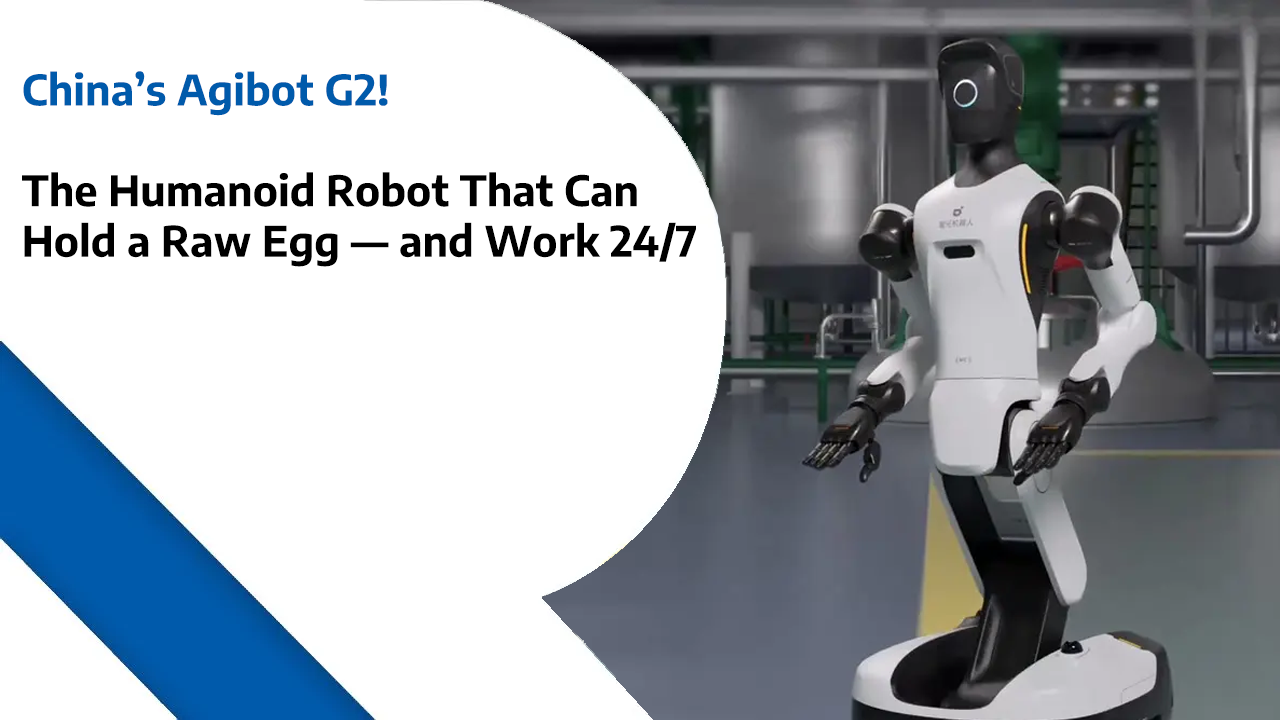
  • China’s Agibot G2 – The Humanoid Robot That Can Hold a Raw Egg — and Work 24/7

    China’s Agibot G2 – The Humanoid Robot That Can Hold a Raw Egg — and Work 24/7

    China’s Agibot G2 – The Humanoid Robot That Can Hold a Raw Egg — and Work 24/7

    Today, we’re talking about a robot so advanced, it can handle a raw egg without breaking it — which, frankly, is more than I can do before coffee. Meet the Agibot G2, China’s new humanoid robot designed for real industrial work, not just YouTube views.

    The G2 is packed with high-performance actuators, sensors for full 360-degree obstacle avoidance, and a flexible three-degree-of-freedom waist. Translation: it moves a lot like us — bending, twisting, and side-swaying with precision.

    But the real star is its cross-shaped wrist arm, a world-first design that uses precision torque sensors to detect touch and adjust instantly. That’s why it can hold a raw egg — or a delicate electronic component — without crushing it.

    Now, why should you care? Well, if you’re in manufacturing, logistics, or tech, this could be a game-changer. The G2 runs 24/7, thanks to hot-swappable dual batteries and autonomous charging. It’s like hiring someone who never takes a lunch break — and never calls in sick.

    Its onboard AI is also next-level. Using Agibot’s large models GO-1 and GE-1, the G2 understands commands, plans tasks, and even “rehearses” actions virtually before executing them in the real world. Backed by the NVIDIA Jetson Thor T5000 platform, it processes data in under 10 milliseconds — lightning-fast decision-making on the factory floor.

    So for business owners, this means higher efficiency and lower risk. For robotics fans, it’s a glimpse into the future of embodied AI — robots that don’t just move, but understand.

    In short, Agibot’s G2 isn’t just a new humanoid — it’s the next evolution in smart automation.


    And that’s your robot news update for today!. If you’re curious about how robotics can transform your business, head over to Robot Philosophy website to join the waiting list, or to speak with the team about robotics.

    Don’t forget to subscribe so you stay in the loop with all the latest updates.

    I’m RoboPhil from Robot Philosophy — thanks for watching, and I’ll see you next time!

    Join the workshop waiting list or get in touch at: https://robophil.com/


    Sponsors:-


    Robot Center: – https://robotcenter.co.uk/ – Buy Robot, Robot Buy, Robot consultancy, Robotics Consultancy, Inspection Robots, Security Robots,


    Robots of London: – https://robotsoflondon.co.uk/ – Robot Hire, Robot Rental, Rent Robot, Hire Robot, Robot Events, Robotics Hire, Hire Robotics, Rent Robotics, Robotics Rent, for exhibitions, shows, Events, Robot hire in the UK, Robot hire in Europe


    Robot Philosophy: – https://robophil.com/ – Robot Consultancy, Robot Recruitment, Robot Advice, Robot Insights, Robot Ideas. RoboPhil, also known as Philip English, is a leading Robot YouTuber, Robot Influencer, Robot Trainer, Robot Consultant, and Robot Streamer, Robotics Streamer, Robotics YouTuber, Robotics Influencer, Robotics Consultant, Robotics Trainer 


  • World’s First All-Weather Humanoid Robot – Deep Robotics DR02 Can Work in the Rain!

    World’s First All-Weather Humanoid Robot – Deep Robotics DR02 Can Work in the Rain!

    World’s First All-Weather Humanoid Robot – Deep Robotics DR02 Can Work in the Rain!


    Imagine a humanoid robot that doesn’t shut down the moment it rains. Meet the Deep Robotics DR02 — the world’s first all-weather humanoid robot with an IP66 rating.

    That means it’s completely sealed against dust and can handle powerful water jets — yes, it can literally work through a downpour. Deep Robotics, based in Hangzhou, China, has built this thing to thrive where most robots would short-circuit.

    The DR02 is 5 foot 9 (175 cm), the size of an average adult, with a 10 kg arm payload — strong enough to handle tools, parts, and small equipment. Its operating range? From -4°F to 131°F. That’s everything from a freezing warehouse to a scorching workshop.

    It walks at a natural 1.5 m/s, can sprint up to 4 m/s, climb stairs, and manage slopes — perfect for factories, patrol routes, and outdoor work.

    Under the hood, it’s powered by a 275 TOPS computing unit and loaded with LiDAR, depth cameras, and wide-angle vision, giving it real-time awareness of its surroundings. And thanks to its modular design, you can swap an arm or leg in hours, not days — minimizing downtime and maintenance costs.

    So why should you care? Because this marks the next big leap in industrial robotics. Whether you work in security, manufacturing, or logistics, robots like the DR02 mean operations can continue safely and efficiently in conditions that would challenge humans.

    And if you’re just a tech fan, it’s proof that humanoid robots aren’t just lab experiments anymore — they’re stepping out into the real world.

    The Deep Robotics DR02 isn’t just a milestone — it’s a preview of what’s next for industry automation.

    And that’s your robot news update for today!. If you’re curious about how robotics can transform your business, head over to Robot Philosophy website to join the waiting list, or to speak with the team directly about robotics.

    Don’t forget to subscribe so you stay in the loop with all the latest updates.

    I’m RoboPhil from Robot Philosophy — thanks for watching, and I’ll see you next time!


    Join the workshop waiting list or get in touch at: https://robophil.com/


    Sponsors:-


    Robot Center: – https://robotcenter.co.uk/ – Buy Robot, Robot Buy, Robot consultancy, Robotics Consultancy, Inspection Robots, Security Robots,


    Robots of London: – https://robotsoflondon.co.uk/ – Robot Hire, Robot Rental, Rent Robot, Hire Robot, Robot Events, Robotics Hire, Hire Robotics, Rent Robotics, Robotics Rent, for exhibitions, shows, Events, Robot hire in the UK, Robot hire in Europe


    Robot Philosophy: – https://robophil.com/ – Robot Consultancy, Robot Recruitment, Robot Advice, Robot Insights, Robot Ideas. RoboPhil, also known as Philip English, is a leading Robot YouTuber, Robot Influencer, Robot Trainer, Robot Consultant, and Robot Streamer, Robotics Streamer, Robotics YouTuber, Robotics Influencer, Robotics Consultant, Robotics Trainer 

  • Unitree G1 Kungfu Kid V6.0 Review – Real-Time Martial Arts Robot 2025

    Unitree G1 Kungfu Kid V6.0 Review – Real-Time Martial Arts Robot 2025

    Unitree G1 Kungfu Kid V6.0 Review – Real-Time Martial Arts Robot 2025

    Meet the Unitree G1 — also known as the Kungfu Kid V6.0 — a humanoid robot that’s just shown off some seriously impressive martial arts skills. It may not be a household robot yet, but it definitely knows its kung fu.

    This is more than a flashy demo — it’s a glimpse into how far humanoid robots have come in balance, precision, and control. And that progress will shape future robots for education, research, and industry.”

    The G1 stands about 5 feet 5 inches tall and features 31 degrees of freedom, excluding the hands. It uses a full-body sensor system to stay balanced and high-performance actuators that let it move with remarkable fluidity — and yes, all of this footage is recorded in real time, no visual effects.

    Compared to earlier versions from early 2025, this new iteration shows much more confident and natural movement. The G1 now performs complex routines, fast somersaults, and far sharper spin kicks. Back in April, it even appeared in a boxing match, and since then, its motion precision has clearly taken a leap forward.

    Here’s the surprising part — this humanoid robot isn’t just for elite labs. The base Unitree G1 is priced around $16,000 USD, making it accessible to universities, research groups, and robotics enthusiasts. That’s a serious step toward making humanoid robotics hands-on and affordable.

    For anyone in robotics, AI, or engineering, the G1 offers an incredible testing ground for motion control and machine learning. Advances like these could lead to safer industrial robots, more agile assistive machines, and yes — maybe even a few that can tidy up after a workout.

    The Unitree G1 might not be cleaning your house just yet, but it’s certainly mastered the art of movement.

    And that’s your robot news update for today!. If you’re curious about how robotics can transform your business, head over to Robot Philosophy website to join the waiting list, or to speak with the team directly about robotics.

    Don’t forget to subscribe so you stay in the loop with all the latest updates.

    I’m RoboPhil from Robot Philosophy — thanks for watching, and I’ll see you next time!

    Robot Center: – https://robotcenter.co.uk/ – Buy Robot, Robot Buy, Robot consultancy, Robotics Consultancy, Inspection Robots, Security Robots,


    Robots of London: – https://robotsoflondon.co.uk/ – Robot Hire, Robot Rental, Rent Robot, Hire Robot, Robot Events, Robotics Hire, Hire Robotics, Rent Robotics, Robotics Rent, for exhibitions, shows, Events, Robot hire in the UK, Robot hire in Europe


    Robot Philosophy: – https://robophil.com/ – Robot Consultancy, Robot Recruitment, Robot Advice, Robot Insights, Robot Ideas. RoboPhil, also known as Philip English, is a leading Robot YouTuber, Robot Influencer, Robot Trainer, Robot Consultant, and Robot Streamer, Robotics Streamer, Robotics YouTuber, Robotics Influencer, Robotics Consultant, Robotics Trainer