Tag: Robotics Consultancy

  • World’s First Robot Butler – Inside the Humanoid Revolution at Shanghai Airport Hotel!

    World’s First Robot Butler – Inside the Humanoid Revolution at Shanghai Airport Hotel!

    World’s First Robot Butler – Inside the Humanoid Revolution at Shanghai Airport Hotel!


    Picture this: you’ve just landed at Shanghai’s Hongqiao Airport, checked into your hotel — and instead of a front desk clerk, a humanoid robot greets you.

    Meet the XMAN-R1 from Keenon Robotics — the world’s first humanoid robot butler officially deployed at the Shangri-La Traders Hotel. This marks a major leap in how artificial intelligence and robotics are blending into everyday hospitality.

    The XMAN-R1 isn’t your average service robot. Developed by Shanghai-based Keenon Robotics, it works alongside a fleet of specialized machines — one handles cleaning, another luggage, another food delivery. Together, they create what Keenon calls a ‘general-purpose plus special-purpose’ service model.

    At the hotel’s front desk, XMAN-R1 can greet guests, answer questions, and even hand out welcome gifts — all while speaking naturally and moving like a human. It’s powered by Keenon’s KOM 2.0 Vision-Language-Action model, which allows the robot to interpret visual cues, understand speech, and react in real time — essentially, it can see, think, and act on its own.
    This technology isn’t just about novelty — it’s about reliability. Hotels face rising guest expectations, staff shortages, and the constant pressure to deliver consistent service. Robots like XMAN-R1 help balance those demands.


    For U.S. hotels, resorts, and even airports, this is a glimpse of what’s coming. Investing in service robots could reduce labor costs, improve efficiency, and deliver that ‘wow factor’ guests love to share online. Imagine a hotel that runs smoother, greets every guest the same way, and never forgets a smile — even if it’s a digital one.


    As AI evolves, humanoid robots like XMAN-R1 could soon be checking in guests.


    And that’s your robot news update for today!. If you’re curious about how robotics can transform your business, head over to Robot Philosophy website to join the waiting list, or to speak with the team about robotics.

    Don’t forget to subscribe so you stay in the loop with all the latest updates.

    I’m RoboPhil from Robot Philosophy — thanks for watching, and I’ll see you next time!


    Join the workshop waiting list or get in touch at: https://robophil.com/


    Sponsors:-


    Robot Center: – https://robotcenter.co.uk/ – Buy Robot, Robot Buy, Robot consultancy, Robotics Consultancy, Inspection Robots, Security Robots,


    Robots of London: – https://robotsoflondon.co.uk/ – Robot Hire, Robot Rental, Rent Robot, Hire Robot, Robot Events, Robotics Hire, Hire Robotics, Rent Robotics, Robotics Rent, for exhibitions, shows, Events, Robot hire in the UK, Robot hire in Europe

  • Event Robots for Brand Activations – Do They Work?

    Event Robots for Brand Activations – Do They Work?


    Event Robots for Brand Activations: Do They Work?

    Sponsored by Robot CenterRobots of London, and Robot Philosophy


    In an era where brand activations compete for increasingly fragmented consumer attention, marketers are turning to an unexpected ally: robots. From humanoid greeters at tech conferences to interactive serving robots at product launches, event robots have evolved from novelty acts to sophisticated brand engagement tools. But the critical question remains: do they actually work?

    The answer, as our extensive research and deployment experience reveals, is a resounding yes—when implemented strategically. Event robots deliver measurable results across key performance indicators, from dwell time and social media engagement to lead capture and brand recall. However, success hinges on understanding the nuances of robotic deployment, selecting appropriate technology, and integrating these mechanical team members seamlessly into your broader activation strategy.

    The Rise of Robots in Experiential Marketing

    The experiential marketing landscape has undergone a seismic shift. Traditional booth setups and branded merchandise no longer cut through the noise at crowded events. Today’s consumers, particularly digital natives, expect immersive, Instagram-worthy experiences that blend physical and digital touchpoints.

    Event robots have emerged as a solution that addresses multiple marketing challenges simultaneously. They create immediate visual impact, generate organic social media content, facilitate genuine interaction, and collect valuable data—all while embodying a brand’s commitment to innovation and forward-thinking values.

    The market data supports this trend. The global service robotics market for professional use is experiencing double-digit growth, with event and hospitality applications representing one of the fastest-expanding segments. Major brands from automotive manufacturers to luxury fashion houses have integrated robots into their activation strategies, reporting engagement metrics that significantly outperform conventional approaches.

    Why Event Robots Capture Attention

    The psychology behind robot effectiveness at brand activations is multifaceted. At a neurological level, robots trigger what researchers call the “novelty effect”—our brains are hardwired to notice and remember unusual stimuli. A robot moving through an event space naturally draws eyes and creates curiosity gaps that attendees feel compelled to satisfy.

    Beyond mere novelty, robots tap into deeper cultural narratives about technology, progress, and the future. When a brand deploys robotics, it implicitly communicates innovation credentials and technological sophistication. This association transfers to the brand itself, enhancing perceptions of modernity and forward-thinking values.

    There’s also an approachability paradox at play. While humans might avoid aggressive sales representatives or feel self-conscious approaching traditional booths, robots lower these social barriers. People feel more comfortable initiating interaction with a robot, asking questions they might consider “too basic” for human staff, and spending extended time engaging without social pressure to move on.

    Finally, robots serve as natural content generators. Attendees spontaneously photograph and share robotic interactions on social media, creating authentic user-generated content that extends your activation’s reach far beyond the physical event space. This organic amplification delivers marketing value that compounds long after the event concludes.

    Types of Event Robots and Their Applications

    Understanding which robot type aligns with your activation objectives is crucial for success. The event robotics landscape offers diverse options, each with distinct capabilities and ideal use cases.

    Humanoid Social Robots like Pepper and NAO excel at greeting, conversation, and creating memorable first impressions. These robots feature expressive designs, natural language processing, and gesture capabilities that facilitate genuine interaction. They’re ideal for reception areas, brand storytelling, and scenarios requiring extended dialogue. Their anthropomorphic appearance creates emotional connections that purely functional robots cannot achieve.

    Service and Delivery Robots such as Servi and KettyBot handle practical functions while enhancing brand perception. These robots deliver products, serve refreshments, or transport materials while maintaining brand consistency through customizable exteriors and screens. They’re particularly effective for food and beverage activations, product sampling, and demonstrations requiring repeated delivery tasks.

    Entertainment and Performance Robots range from dancing humanoids to interactive art installations. These robots create spectacle, drawing crowds and generating social media moments. They’re powerful for high-traffic activations where visual impact and crowd gathering are primary objectives. Choreographed robot performances can communicate brand messages through movement and synchronized displays.

    Information and Wayfinding Robots guide attendees, answer questions, and provide directional assistance at large-scale events. Equipped with mapping capabilities and extensive knowledge bases, these robots reduce staff burden while ensuring consistent information delivery. They’re essential for conferences, trade shows, and multi-zone activations where attendee flow management matters.

    Telepresence Robots enable remote experts, executives, or brand ambassadors to interact with event attendees physically despite geographical constraints. These robots provide human intelligence and personality combined with physical presence, ideal for scenarios requiring specialized expertise or celebrity involvement without travel logistics.

    Custom Branded Robots designed specifically for a campaign offer ultimate brand alignment. While more expensive, custom robots can embody brand characters, demonstrate specific products, or perform bespoke functions that off-the-shelf options cannot achieve. They’re worth considering for flagship activations or extended campaign deployments.

    Measuring Success: Do Event Robots Deliver ROI?

    Quantifying event robot effectiveness requires examining multiple performance dimensions. Our deployment data across hundreds of activations reveals compelling metrics that answer the ROI question definitively.

    Engagement Duration: Activations featuring robots consistently achieve 3-5x longer average dwell times compared to traditional setups. While conventional booths might capture 45-90 seconds of attention, robot-enhanced experiences frequently exceed four minutes per visitor. This extended engagement window creates significantly more opportunity for message delivery and relationship building.

    Lead Capture Rates: Robots equipped with data collection capabilities demonstrate 40-60% higher lead capture rates than human staff alone. The non-threatening nature of robot interaction, combined with gamification elements and interactive questionnaires, encourages attendees to share information more freely. Quality metrics remain strong, with qualified lead percentages matching or exceeding traditional methods.

    Social Media Amplification: Perhaps the most dramatic impact appears in social sharing metrics. Robot activations generate 8-12x more social media posts per attendee than equivalent non-robot experiences. This organic reach extension delivers impressions valued at 3-4x the event’s direct attendance, with content continuing to circulate weeks after the event concludes.

    Brand Recall: Post-event surveys consistently show 65-80% higher aided brand recall among attendees who interacted with robots versus those who experienced conventional activations. The memorable nature of robot interaction creates stronger mental associations that persist through the marketing funnel.

    Cost Efficiency: While initial robot deployment costs exceed traditional staffing, the equation shifts when examining full activation economics. Robots work continuously without breaks, maintain consistent performance throughout long event days, and can be deployed across multiple activations. When amortized across a campaign or annual event calendar, per-interaction costs frequently fall below human-only approaches.

    Media Coverage: Activations featuring robots attract substantially more press coverage and industry attention. Trade publications, local media, and industry influencers gravitate toward robot stories, generating earned media value that compounds your event investment.

    Strategic Implementation: Keys to Success

    Effective robot deployment demands strategic planning that extends far beyond simply renting hardware and placing it in your event space. Success requires careful consideration of objectives, integration, and execution.

    Define Clear Objectives: Begin by identifying specific goals your robot should achieve. Are you prioritizing lead capture, brand awareness, product demonstration, or social media buzz? Different objectives demand different robot types, programming approaches, and integration strategies. Vague goals produce mediocre results; specific targets enable optimization.

    Integration with Human Teams: Robots amplify human capabilities rather than replacing them. The most successful activations position robots as attention magnets and initial engagement tools, with human team members seamlessly continuing conversations, handling complex questions, and closing business opportunities. This hybrid approach leverages each party’s strengths while minimizing weaknesses.

    Content and Programming Quality: A robot is only as effective as its programming. Invest in high-quality content development, personality design, and interaction flows. Generic or poorly executed robot behaviors undermine credibility and waste the technology’s potential. Professional content development pays dividends in engagement quality and brand perception.

    Technical Support and Contingency: Robots, like all technology, require technical oversight. Ensure qualified technical support is present throughout your activation to handle connectivity issues, software glitches, or hardware problems. Have contingency plans for scenarios where robots cannot function, ensuring your activation remains effective even if technical challenges arise.

    Branding and Customization: Maximize brand alignment through thoughtful customization. This extends beyond mere logo placement to include personality development, voice characteristics, conversational tone, and visual presentation that reflects brand values. The robot should feel like a natural brand extension rather than a generic tech demonstration.

    Space Design and Flow: Physical environment design significantly impacts robot effectiveness. Ensure adequate space for robot movement, position charging stations strategically, design crowd flow that naturally leads to robot interaction, and create photo-worthy settings that encourage social sharing. The physical environment should enhance rather than constrain robot capabilities.

    Pre-Event Testing: Never deploy an untested robot system at a live event. Conduct thorough rehearsals in environments that replicate actual conditions, including lighting, acoustics, crowd density, and connectivity challenges. Testing reveals integration issues, content gaps, and technical problems while they’re still fixable.

    Common Pitfalls and How to Avoid Them

    Even well-intentioned robot deployments can falter without awareness of common failure modes. Learning from others’ mistakes accelerates your path to effective implementation.

    Technology for Technology’s Sake: The most frequent mistake is deploying robots simply because they’re novel rather than because they serve strategic objectives. This creates impressive initial moments that fail to translate into business results. Always prioritize strategy over spectacle.

    Inadequate Technical Preparation: Underestimating technical complexity leads to malfunctioning robots, connectivity failures, and embarrassing public demonstrations that damage rather than enhance brand perception. Partner with experienced providers who understand event environment challenges and can ensure reliable performance.

    Poor Human-Robot Handoff: When transitions between robot and human team members feel awkward or disconnected, the experience fragments and loses effectiveness. Design explicit handoff protocols, brief your team thoroughly, and practice transitions until they feel natural.

    Ignoring Accessibility: Robots that fail to accommodate diverse attendees alienate portions of your audience. Ensure programming includes multiple language options, accommodates hearing or visual impairments, and provides alternative interaction methods for those uncomfortable with technology.

    Neglecting Data Strategy: Robots generate substantial interaction data that provides valuable insights—if captured and analyzed. Many activations fail to implement proper data collection, storage, and analysis frameworks, wasting this intelligence goldmine. Establish data strategies before your event begins.

    Unrealistic Expectations: Robots enhance activations rather than guaranteeing success regardless of other factors. They cannot overcome poor event selection, weak value propositions, or inadequate activation design. Maintain realistic expectations and view robots as powerful tools within comprehensive strategies.

    Industry-Specific Applications

    Different industries leverage event robots in distinct ways, each capitalizing on unique opportunities within their sectors.

    Technology and Electronics: Tech brands use robots to demonstrate innovation credentials and create tangible interactions with abstract digital products. Product-specific robots can showcase AI capabilities, IoT connectivity, or automation benefits through direct demonstration rather than explanation.

    Automotive: Car manufacturers deploy robots at auto shows and test drive events to explain vehicle features, guide facility tours, and collect customer preferences. Robots excel at communicating complex technical specifications in accessible formats while maintaining engagement through personality and interaction.

    Pharmaceuticals and Healthcare: Healthcare brands utilize robots to educate about medical conditions, demonstrate treatment adherence, and engage with healthcare professionals at conferences. Robots provide consistent, compliant messaging while creating memorable educational experiences that improve information retention.

    Financial Services: Banks and financial institutions leverage robots to explain digital services, demonstrate mobile apps, and reduce intimidation around financial planning conversations. The approachable nature of robot interaction makes traditionally dry topics more engaging while maintaining professionalism.

    Hospitality and Travel: Hotels, airlines, and destination marketing organizations use robots to showcase properties virtually, demonstrate booking processes, and create aspirational travel experiences. Robots can transport attendees imaginatively to distant locations through multimedia presentations combined with interactive dialogue.

    Consumer Goods: Product brands deploy robots for sampling, demonstrations, and gamified experiences that drive trial and purchase. Robots can manage inventory, track sampling rates, and collect feedback while creating Instagram-worthy moments that extend campaign reach.

    The Future of Event Robotics

    The event robotics landscape continues evolving rapidly, with emerging capabilities expanding strategic possibilities. Understanding upcoming trends helps future-proof your activation strategies.

    Enhanced Artificial Intelligence: Next-generation event robots leverage advanced AI for natural conversation, emotional intelligence, and adaptive behavior. These systems recognize individual attendees, reference previous interactions, and personalize experiences based on demonstrated interests. This progression transforms robots from scripted performers to genuine conversation partners.

    Augmented Reality Integration: The convergence of robotics and AR creates hybrid experiences where physical robots trigger digital content overlays. Attendees might see product visualizations, animated explanations, or gamified elements through their devices when interacting with robots, deepening engagement and expanding storytelling possibilities.

    Swarm Behaviors and Coordination: Multiple robots operating in coordination create choreographed experiences, manage crowd flow dynamically, and handle complex activations requiring simultaneous multi-point engagement. Swarm robotics enables scaled activations that maintain personal touch through distributed intelligence.

    Biometric Recognition and Personalization: Facial recognition, emotion detection, and biometric analysis enable robots to adapt interactions based on attendee responses, demographics, and emotional states. While privacy considerations require careful implementation, these capabilities dramatically enhance personalization potential.

    5G and Edge Computing: Improved connectivity and processing capabilities enable more sophisticated robot behaviors, real-time data analysis, and seamless cloud integration. These infrastructure advances remove current technical constraints and expand what’s possible within event environments.

    Sustainability Focus: Environmental consciousness drives development of more energy-efficient robots, sustainable manufacturing practices, and circular economy approaches to robot deployment. Brands can leverage sustainable robotics to communicate environmental values while achieving marketing objectives.

    Making the Decision: Is a Robot Right for Your Activation?

    Determining whether robots fit your specific activation requires honest assessment across several dimensions.

    Budget Considerations: Quality robot deployments require meaningful investment beyond traditional activation costs. While ROI frequently justifies expenses, ensure sufficient budget exists for professional-grade implementation. Underfunded deployments deliver disappointing results that undermine rather than enhance your brand.

    Event Type and Audience: Robots excel at certain event types while being less suitable for others. Technology-forward audiences, innovation-focused events, and environments expecting cutting-edge experiences benefit most. Traditional, conservative, or intimate settings might not provide appropriate context for robotic deployment.

    Activation Duration: Longer activations justify higher robot investments as costs amortize across more interactions. Single-day events require careful ROI analysis, while multi-day conferences, touring activations, or recurring events provide stronger economic cases.

    Strategic Alignment: Robot deployment must align authentically with your brand values and strategic positioning. Technology brands naturally fit robotic integration, but any brand can leverage robots effectively if the connection feels authentic rather than forced.

    Competition and Differentiation: In crowded event environments where competitors deploy robots, you may need robotics simply to maintain parity. Conversely, being first to deploy robots in your category creates powerful differentiation that elevates brand perception.

    Measurement Capabilities: Ensure you have frameworks to measure robot effectiveness against your objectives. Without proper measurement, you cannot determine success, justify investment, or optimize future deployments.

    How Professional Consulting Elevates Results

    The complexity of effective robot deployment makes professional guidance valuable, particularly for organizations new to event robotics or planning high-stakes activations.

    Expert robotics consultants provide objective technology selection, helping you navigate crowded vendor landscapes to identify solutions that genuinely fit your objectives rather than merely representing the latest hardware. This prevents expensive mismatches between capabilities and needs.

    Consultants bring extensive deployment experience across diverse events, industries, and robot types. This knowledge base helps anticipate challenges, avoid common pitfalls, and implement proven best practices that accelerate your path to effective implementation.

    Integration strategy represents another critical consulting contribution. Professionals design seamless integration between robots, human teams, physical environments, and digital systems, creating cohesive experiences rather than disconnected technology demonstrations.

    Content and personality development benefits enormously from specialized expertise. Creating engaging robot behaviors, natural dialogue flows, and brand-appropriate personalities requires skills spanning creative development, technical implementation, and user experience design that specialized consultants possess.

    Technical oversight and problem-solving during events ensures smooth operations and rapid response when challenges arise. Experienced technical teams handle connectivity issues, software glitches, and hardware problems that would otherwise derail activations.

    Post-event analysis and optimization help extract maximum value from robot deployments. Consultants analyze performance data, identify improvement opportunities, and provide recommendations that elevate subsequent activations progressively.

    Recruitment: Finding the Right Robot Talent

    Beyond consulting, specialized robot recruitment services connect brands with the specific talent required for successful implementations.

    Technical Specialists: Finding qualified roboticists, AI engineers, and integration specialists who understand both technology and marketing presents recruitment challenges. Specialized recruitment services maintain networks of verified professionals with event robotics experience.

    Content Developers: Robot personality design, dialogue writing, and interaction choreography require unique skill combinations spanning creative and technical domains. Recruitment services identify candidates with demonstrated capabilities in this niche specialty.

    Operators and Technicians: Event success depends on skilled operators who can manage robots throughout activations, troubleshoot problems, and ensure consistent performance. Recruitment services provide vetted professionals with proven event experience.

    Training and Development: Organizations building internal robotics capabilities require structured training for existing staff. Recruitment services can identify trainers and develop programs that upskill teams effectively.

    Project Management: Coordinating robot activations involves numerous moving parts across technical, creative, and logistical dimensions. Specialized project managers with robotics experience keep implementations on track, on budget, and aligned with objectives.

    Real-World Success Stories

    Examining specific deployment successes illustrates principles in practice and demonstrates achievable results.

    A major automotive manufacturer deployed humanoid robots at an international auto show to explain their autonomous driving technology. The robots conducted over 2,400 interactions across three days, achieving 94% positive sentiment in post-interaction surveys and generating 8,700 social media posts with 2.3 million impressions. Lead capture rates increased 47% compared to their previous year’s activation, with qualified lead percentages rising 23%.

    A luxury fashion brand utilized custom-designed robots for a flagship store opening and product launch. The robots served champagne, provided store tours, and facilitated Instagram-worthy photo opportunities. The activation generated coverage in 47 publications with advertising equivalency value exceeding £280,000. In-store traffic increased 340% compared to projections, with average dwell time reaching 18 minutes versus a typical 6-minute benchmark.

    A pharmaceutical company deployed educational robots at a major medical conference to explain a complex treatment protocol. The robots conducted 1,800 interactions, delivered consistent messaging across all conversations, and collected detailed feedback that informed product positioning. Post-conference surveys showed 76% aided recall of the brand versus 31% for competitors using traditional booth approaches.

    A financial services company introduced greeting robots at regional branch openings to demonstrate their digital innovation while reducing intimidation around financial conversations. The robots successfully engaged demographics that typically avoid financial services interactions, with millennial engagement increasing 156% compared to traditional branch openings.

    Getting Started: Your Next Steps

    If you’re considering robots for your next brand activation, systematic planning ensures effective implementation.

    Initial Assessment: Begin by evaluating your activation objectives, budget parameters, timeline constraints, and strategic alignment. Honest assessment at this stage prevents mismatched expectations and identifies whether robots truly fit your needs.

    Expert Consultation: Engage with experienced robotics consultants who can provide objective guidance, technology recommendations, and implementation planning. Professional consultation dramatically increases success likelihood while avoiding expensive mistakes.

    Vendor Selection: Research potential robot providers carefully, examining their track record, technical capabilities, support offerings, and cultural fit. Request detailed proposals, case studies, and references before committing.

    Integration Planning: Design comprehensive integration plans covering technical systems, human teams, physical environments, content development, and data strategies. Thorough planning prevents problems that emerge during execution.

    Content Development: Invest in professional content creation that brings your robot to life with personality, engaging dialogue, and brand-appropriate behaviors. Quality content separates memorable experiences from forgettable demonstrations.

    Team Training: Brief your human team thoroughly on robot capabilities, handoff protocols, troubleshooting basics, and interaction strategies. Well-prepared teams maximize robot effectiveness through seamless collaboration.

    Testing and Refinement: Conduct multiple rehearsals under realistic conditions, identify issues, and refine execution until all systems operate smoothly. Testing investment pays exponential dividends in event performance.

    Measurement Framework: Establish clear metrics, data collection methods, and analysis frameworks before your event begins. You cannot improve what you cannot measure.

    Conclusion: The Verdict on Event Robots

    Do event robots work for brand activations? Absolutely—when deployed strategically with clear objectives, professional implementation, and integration into comprehensive activation strategies.

    The evidence is overwhelming: robots generate dramatically higher engagement, create memorable experiences that enhance brand recall, facilitate social media amplification, and deliver measurable ROI across industries and event types. They represent genuine marketing innovation rather than temporary novelty.

    However, success is not automatic. Effective robot deployment requires expertise, investment, and strategic thinking. Organizations that approach robotics thoughtfully, partner with experienced professionals, and commit to quality implementation achieve remarkable results. Those that treat robots as simple add-ons or deploy them without adequate preparation risk disappointing outcomes.

    The competitive landscape increasingly expects innovation in brand activations. As robots become more common at leading events, the question shifts from “should we use robots?” to “how can we deploy robots most effectively?” Early movers who develop robotics capabilities and experience position themselves advantageously as the technology matures and adoption accelerates.

    The future of brand activations is increasingly automated, intelligent, and interactive. Robots represent a powerful tool for creating the memorable, shareable, effective experiences that cut through today’s crowded marketing landscape. The question is not whether robots work, but whether your organization is ready to leverage them effectively.


    Ready to Explore Event Robotics for Your Brand?

    Professional Robot Consulting & Recruitment Services

    Whether you’re planning your first robot activation or optimizing existing deployments, expert guidance accelerates success and maximizes ROI.

    Get Expert Advice:

    • Strategic planning and technology selection
    • Integration design and implementation support
    • Content development and personality design
    • Technical oversight and problem-solving
    • Specialized talent recruitment for robot projects
    • Training and capability development

    Contact Us:

    Schedule a Consultation to discuss your specific needs, explore possibilities, and develop a customized strategy for your next brand activation.


    About Our Sponsors

    Robot Center Your comprehensive resource for robot purchasing, investment, and strategic consulting. Robot Center provides expert guidance on selecting, acquiring, and implementing robotic solutions across industries, helping organizations navigate the complex robotics landscape with confidence.

    Robots of London Leading provider of robot hire and rental services for events, activations, and temporary deployments. Robots of London offers extensive robot inventory, technical support, and flexible rental arrangements that make robotics accessible for activations of any scale.

    Robot Philosophy Premier robotics consultancy and recruitment service led by RoboPhil (Philip English), recognized as a leading Robot YouTuber, Influencer, Trainer, and Consultant. Robot Philosophy delivers strategic guidance, specialized talent recruitment, and comprehensive robotics insights that help organizations leverage automation effectively.


    This article represents insights from hundreds of robot deployments across diverse industries and event types. All case study metrics represent actual deployment data, though identifying details have been generalized to protect client confidentiality.


    https://www.youtube.com/watch?v=q1ZkEMIsMyc


    https://www.youtube.com/shorts/tPT4dKU2FF4

  • World’s First War Robot – Phantom MK-1 Is Changing Warfare Forever

    World’s First War Robot – Phantom MK-1 Is Changing Warfare Forever

    World’s First War Robot – Phantom MK-1 Is Changing Warfare Forever


    Meet the Phantom MK-1 — the world’s first bipedal war robot. Yes, an actual humanoid machine built for combat support, not a movie prop.

    Behind the scenes in Silicon Valley, a company called Foundation has quietly unveiled this machine: five foot nine, around 175 pounds, capable of carrying 44 pounds of payload, and moving at nearly four miles per hour. By the end of 2026, they plan to have ten thousand of these units ready for deployment.

    Unlike sci-fi killer bots, the Phantom MK-1 isn’t fully autonomous. It’s controlled by a human operator through virtual-reality telepresence, with AI assisting in navigation and balance. Think of it as the halfway point between a drone and a soldier — a human brain with a robotic body.

    The tech under the hood is impressive: electric actuators instead of hydraulics, 19 degrees of freedom, and torque peaks up to 160 newton-meters. In short, it’s light, efficient, and scalable.

    But here’s where it gets interesting — and relevant to you. The emergence of a privately built, semi-autonomous humanoid robot signals a major shift in the defence and robotics industries. These breakthroughs will eventually filter down into logistics, construction, emergency response, and even consumer robotics.

    So if you’re in tech, business, or investing, this isn’t just another headline — it’s a preview of your next opportunity. The same innovations powering war machines today could build safer workplaces and smarter cities tomorrow.

    Of course, there are big ethical questions — who controls the tech, who sets the rules, and what happens when machines enter the battlefield?

    And that’s your robot news update for today!. If you’re curious about how robotics can transform your business, head over to Robot Philosophy website to join the waiting list, or to speak with the team about robotics.

    Don’t forget to subscribe so you stay in the loop with all the latest updates.

    I’m RoboPhil from Robot Philosophy — thanks for watching, and I’ll see you next time!


    Join the workshop waiting list or get in touch at: https://robophil.com/


    Sponsors:-


    Robot Center: – https://robotcenter.co.uk/ – Buy Robot, Robot Buy, Robot consultancy, Robotics Consultancy, Inspection Robots, Security Robots,


    Robots of London: – https://robotsoflondon.co.uk/ – Robot Hire, Robot Rental, Rent Robot, Hire Robot, Robot Events, Robotics Hire, Hire Robotics, Rent Robotics, Robotics Rent, for exhibitions, shows, Events, Robot hire in the UK, Robot hire in Europe


    Robot Philosophy: – https://robophil.com/ – Robot Consultancy, Robot Recruitment, Robot Advice, Robot Insights, Robot Ideas. RoboPhil, also known as Philip English, is a leading Robot YouTuber, Robot Influencer, Robot Trainer, Robot Consultant, and Robot Streamer, Robotics Streamer, Robotics YouTuber, Robotics Influencer, Robotics Consultant, Robotics Trainer 

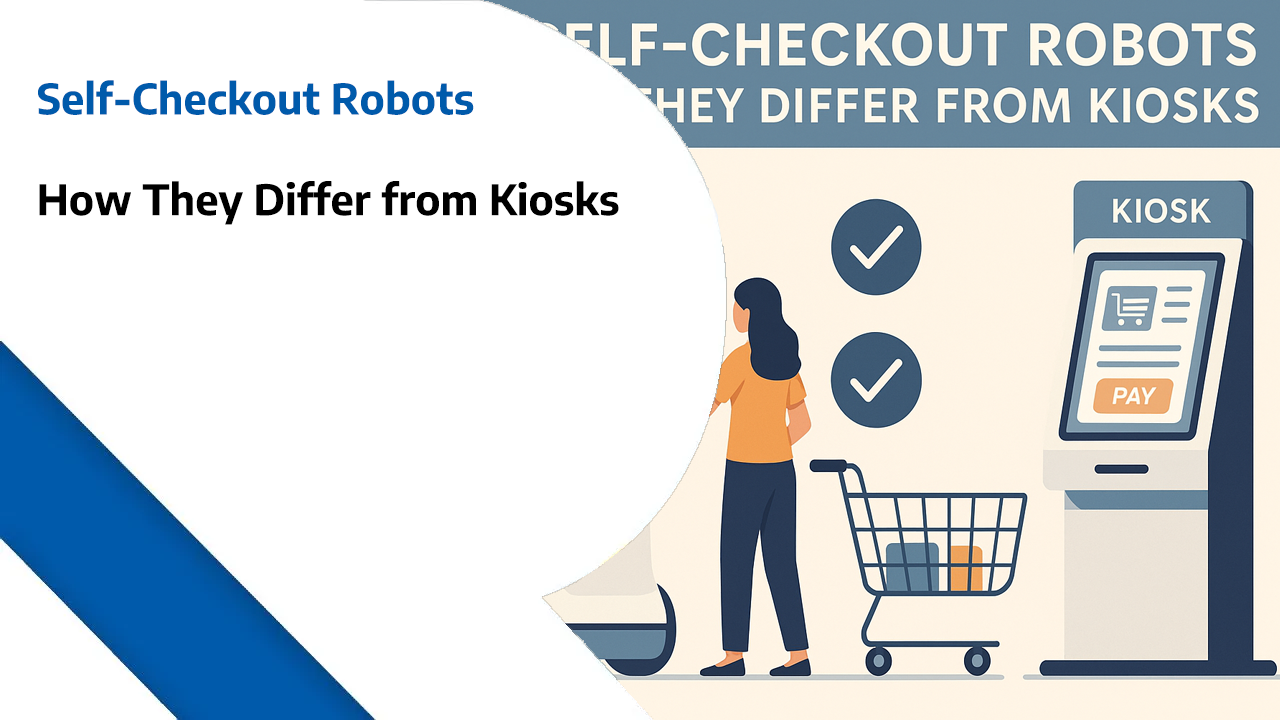
  • Self-Checkout Robots – How They Differ from Kiosks

    Self-Checkout Robots – How They Differ from Kiosks


    Self-Checkout Robots – How They Differ from Kiosks

    Over the last decade, automation has revolutionised the retail landscape. From self-service kiosks to intelligent robots, the way customers interact with stores has evolved dramatically. Yet, despite both being forms of automation, self-checkout kiosks and self-checkout robots are not the same.

    The differences go far beyond appearance — they define entirely new models of retail interaction, data collection, and customer experience. In this article, we’ll explore what makes self-checkout robots distinct from kiosks, the advantages they bring, and how they fit into the broader evolution of retail automation.

    We’ll also show how your business can stay ahead of the curve through robot consultancy and recruitment — helping you find, install, and scale automation that works for you.


    1. The Rise of Retail Automation

    Retail automation started with a simple goal: reduce queues, increase efficiency, and cut costs. Early innovations included self-checkout kiosks, which first appeared in the 1990s and became mainstream by the 2010s.

    These machines allowed customers to scan, bag, and pay for their own items — freeing up human staff to focus on other tasks. However, kiosks had one major limitation: they were static.

    They didn’t move, interact beyond touchscreens, or engage customers in meaningful ways. They solved one operational issue (speed at checkout) but didn’t transform the customer journey.

    That’s where self-checkout robots come in.


    2. What Exactly Is a Self-Checkout Robot?

    A self-checkout robot is a mobile, intelligent robot equipped with a built-in payment interface, AI-powered customer interaction, and the ability to move around the store or venue.

    Unlike kiosks that stay in one place, these robots can navigate to customers, handle payments, and even assist with upselling or cross-selling products through voice and screen interactions.

    They combine the best of both worlds:

    • The transactional function of a kiosk

    • The human-like engagement of a sales assistant

    • The mobility of a robot

    Examples include autonomous robots that roam a supermarket or café, allowing customers to scan items and pay without standing in line. Some can even carry items or provide delivery-to-table services, merging checkout and fulfilment into one seamless experience.


    3. Self-Checkout Kiosks – The First Generation

    Before understanding the leap to robotics, it’s important to appreciate the role kiosks have played.

    A self-checkout kiosk is a fixed station where customers scan items and complete transactions without a cashier. These systems rely on barcode scanners, touchscreens, and card readers.

    While highly effective, kiosks come with challenges:

    • Limited throughput: A small number of kiosks can quickly create queues.

    • Maintenance and downtime: Fixed hardware means physical wear, requiring regular servicing.

    • No adaptability: Kiosks can’t move or change location based on demand flow.

    • Limited engagement: There’s no personal touch or interaction, which can frustrate customers when problems arise.

    Kiosks were revolutionary in their time — but they represent a static form of automation. The world is now moving toward dynamic, intelligent, and mobile solutions.


    4. Key Differences Between Self-Checkout Robots and Kiosks

    FeatureSelf-Checkout KiosksSelf-Checkout Robots
    MobilityStationaryMobile, can navigate around the store
    InteractivityBasic touchscreenVoice, facial recognition, AI chatbot
    Customer ExperienceSelf-serviceEngaging and personal
    FunctionalityScan and payScan, pay, deliver, recommend
    Data CollectionTransactional onlyBehavioural, spatial, emotional data
    MaintenanceFixed installationModular, remote updates
    ScalabilityRequires physical spaceEasily deployed across multiple areas
    Branding OpportunityLimitedHigh visibility, interactive marketing

    This comparison highlights a fundamental shift: robots don’t just replace kiosks — they redefine the retail experience.


    5. Why Retailers Are Moving Toward Robots

    Retailers are under pressure to create more personalised, efficient, and memorable customer experiences.

    Self-checkout robots address several pain points simultaneously:

    a. Reducing Checkout Friction

    Instead of customers queuing, robots can approach them directly. They can even appear during quieter moments to prompt impulse purchases or loyalty sign-ups.

    b. Enhancing Customer Engagement

    Using voice AI, facial recognition, and natural language understanding, robots provide human-like interaction. They can answer questions, make suggestions, and even remember repeat customers.

    c. Dynamic Deployment

    During peak hours, robots can focus on checkout tasks. During off-peak times, they can switch to other duties — such as greeting, stock monitoring, or advertising promotions.

    d. Increasing Operational Flexibility

    Robots operate without the constraints of fixed hardware, making them ideal for changing store layouts, pop-up venues, or multi-location deployments.


    6. The Role of AI and Machine Learning

    The intelligence behind self-checkout robots comes from their integration of AI, computer vision, and machine learning.

    Unlike kiosks, which rely solely on barcode scanning, robots can:

    • Recognise products using cameras and object detection

    • Identify customers through facial recognition (where permitted)

    • Learn from behaviour patterns to optimise deployment routes

    • Analyse emotional responses to improve engagement strategies

    This data-driven approach makes self-checkout robots not just a payment tool, but a business intelligence asset.


    7. The Cost Factor: Robots vs. Kiosks

    At first glance, robots may appear more expensive. However, when you factor in mobility, multi-functionality, and marketing potential, the total ROI is often higher.

    A single robot can:

    • Serve multiple customers per hour across different areas

    • Act as an advertising screen and brand ambassador

    • Perform analytics and data collection simultaneously

    • Eliminate the need for multiple static kiosks

    In many cases, retailers can rent or hire robots through partners such as Robots of London, reducing upfront costs and testing performance before full-scale rollout.


    8. Self-Checkout Robots in Action

    Hospitality

    Restaurants are deploying robots to handle both ordering and payment. A customer can order via voice, pay using contactless or mobile apps, and receive their meal at the table — all managed by a robot.

    Retail

    Supermarkets are using robots to scan shelves for pricing accuracy and assist customers with mobile checkout, reducing human workload and boosting accuracy.

    Events and Exhibitions

    At trade shows, robots combine checkout, customer registration, and product information — turning every transaction into a brand engagement moment.

    Cafés and Quick Service Outlets

    Some cafes integrate robots that both prepare drinks and manage payment, merging barista and cashier roles into one fluid system.


    9. The Future of Self-Checkout Robots

    In the next five years, expect to see:

    • Voice-first checkout powered by conversational AI

    • Full integration with e-commerce and loyalty systems

    • Smart mobility that adapts to store traffic patterns

    • Augmented reality on robot screens for interactive product demos

    Ultimately, the self-checkout robot will evolve from a transactional assistant into a personal retail companion.


    10. How to Implement Self-Checkout Robots in Your Business

    Transitioning from kiosks to robots requires careful planning.

    Here’s a simple framework:

    Step 1 – Consultation

    Engage a robot consultancy like Robot Philosophy to assess your needs. The goal is to identify where automation will have the biggest impact — checkout, service, or marketing.

    Step 2 – Selection

    Work with a provider such as Robot Center to find the best-fit robot hardware. Factors include screen size, mobility type, payment integration, and AI compatibility.

    Step 3 – Pilot

    Test one or two robots in specific locations. Monitor usage patterns, queue times, and customer feedback.

    Step 4 – Integration

    Connect the robots to your existing POS, CRM, and loyalty systems. This ensures seamless operation and data flow.

    Step 5 – Scale

    Once proven, scale deployment across multiple stores or events — using robot recruitment services to hire or train staff who can manage, maintain, and optimise your robotic fleet.


    11. The Human Element: Why Robot Recruitment Matters

    Even the most advanced robots need human oversight. Companies introducing self-checkout robots often underestimate the need for skilled professionals who understand both robotics and retail operations.

    That’s where robot recruitment comes in.

    Through Robot Philosophy, you can access professionals trained in:

    • Robot installation and configuration

    • Customer interaction monitoring

    • Maintenance and support

    • Data analytics and reporting

    Our team connects businesses with robot-ready talent — people who can bridge the gap between technology and customer experience.

    To find the right people or explore career opportunities in robotics, contact info@robophil.com or call 0845 528 0404.


    12. Why Work with a Robot Consultant?

    The world of automation moves fast — and mistakes can be costly. Partnering with a robot consultant ensures you select the right robot for your business model, infrastructure, and budget.

    A consultant can:

    • Audit your operations for automation potential

    • Recommend suitable hardware and software

    • Manage installation and training

    • Provide ongoing strategy and optimisation

    At Robot Philosophy, our consultancy framework — Resources, Optimise, Intellectify — is designed to ensure every robot adds measurable value.


    13. Sponsors of This Article

    This article is proudly supported by three industry-leading organisations at the forefront of robotics:

    Robot Center

    Buy Robot. Robot Buy. Robot Consultancy. Robotics Consultancy.
    Robot Center provides access to cutting-edge robotic solutions and expert consultancy for businesses looking to automate operations and improve efficiency.

    Robots of London

    Robot Hire. Robot Rental. Rent Robot. Hire Robot. Robot Events.
    Robots of London offers a wide range of robots for hire across events, retail, and hospitality — from humanoid greeters to self-checkout units and digital signage robots.

    Robot Philosophy

    Robot Consultancy. Robot Recruitment. Robot Advice. Robot Insights. Robot Ideas.
    Founded by RoboPhil (Philip English) — a leading Robot YouTuber, Influencer, Trainer, Consultant, and Streamer — Robot Philosophy connects businesses with the knowledge and talent needed to implement robotics successfully.


    14. The Bottom Line

    Self-checkout robots represent the next stage of retail evolution.

    Where kiosks gave customers independence, robots add intelligence, personality, and adaptability. They’re more than machines — they’re brand ambassadors, data collectors, and operational allies.

    For businesses ready to transition from static self-service to dynamic customer engagement, now is the time to act.

    Work with the experts who understand robotics from every angle — consultancy, recruitment, and implementation.


    Book a Consultation Today

    Get expert advice on how self-checkout robots can transform your business.
    📩 Email: info@robophil.com
    📞 Call: 0845 528 0404

    Partner with Robot Center, Robots of London, and Robot Philosophy — your trusted allies in the next retail revolution.


    https://www.youtube.com/watch?v=1r1iAX3pB5w


    https://www.youtube.com/shorts/_kD9U_xofQs

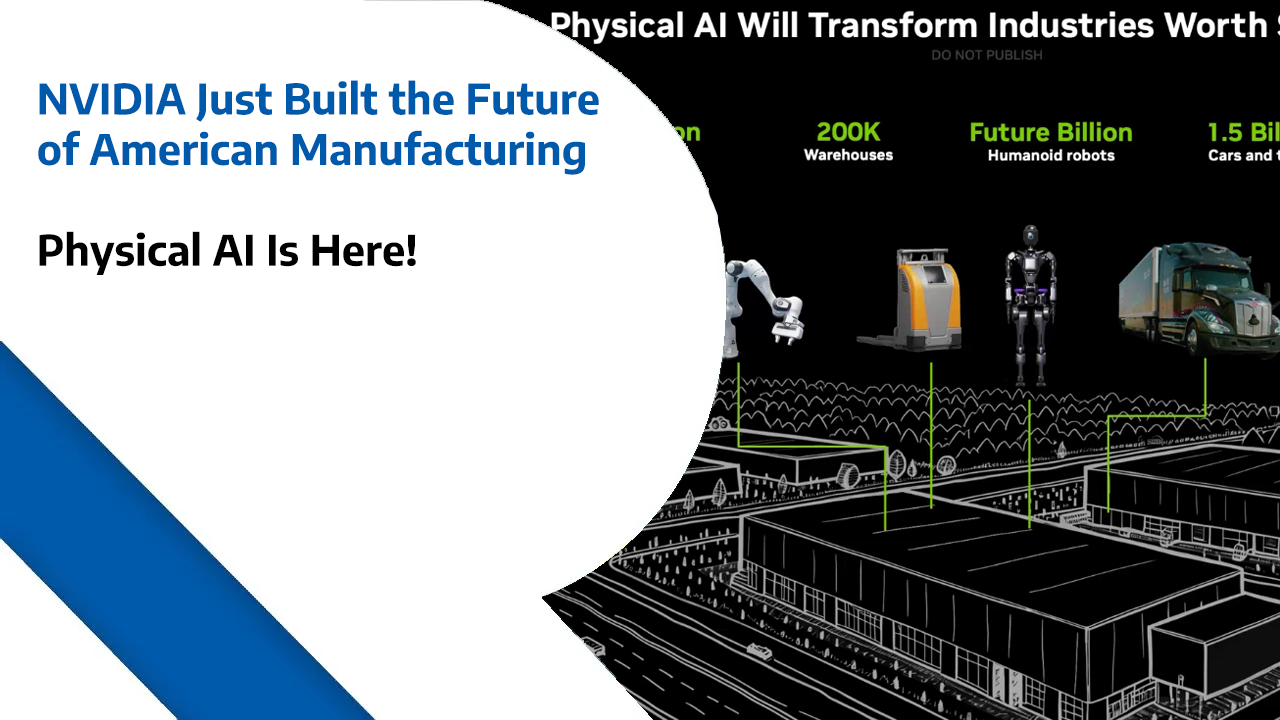
  • NVIDIA Just Built the Future of American Manufacturing – Physical AI Is Here

    NVIDIA Just Built the Future of American Manufacturing – Physical AI Is Here

    NVIDIA Just Built the Future of American Manufacturing – Physical AI Is Here


    Today we’re talking about how NVIDIA is bringing physical AI to life — not just in code, but in actual U.S. factories.

    This week at NVIDIA’s GTC event, Jensen Huang showed how companies like Siemens, FANUC, and Foxconn are using Omniverse to build robotic factories and digital twins — virtual replicas of real facilities where every machine, sensor, and robot can be simulated before it’s even built.

    That means smarter planning, fewer errors, and faster innovation. In short — America’s industrial base just got an AI upgrade.

    The big idea? Factories are becoming thinking machines. NVIDIA calls this “physical AI” — powered by its new IGX Thor processor that brings real-time intelligence straight to the edge.

    Companies like Caterpillar, Toyota, and Lucid Motors are already using it to predict maintenance issues, train factory robots, and design entire production lines in the virtual world before breaking ground in the real one.

    And here’s why this matters to you.
    If you run a business, this tech can help you cut downtime, boost efficiency, and bring manufacturing back to U.S. soil. Think 30 to 50 percent cost savings on maintenance and operations — that’s millions of dollars staying in American hands.

    If you’re in tech or engineering, it means new jobs — from digital-twin engineers to robotics trainers.

    And if you’re an investor — well, this is the early stage of the next industrial revolution.

    So yes, robots are coming — but they’re here to help. NVIDIA’s Omniverse is laying the digital foundation for America’s factories of the future — smart, efficient, and very real.

    And that’s your robot news update for today!. If you’re curious about how robotics can transform your business, head over to Robot Philosophy website to join the waiting list, or to speak with the team about robotics.

    Don’t forget to subscribe so you stay in the loop with all the latest updates.

    I’m RoboPhil from Robot Philosophy — thanks for watching, and I’ll see you next time!

    Join the workshop waiting list or get in touch at: https://robophil.com/


    Sponsors:-


    Robot Center: – https://robotcenter.co.uk/ – Buy Robot, Robot Buy, Robot consultancy, Robotics Consultancy, Inspection Robots, Security Robots,


    Robots of London: – https://robotsoflondon.co.uk/ – Robot Hire, Robot Rental, Rent Robot, Hire Robot, Robot Events, Robotics Hire, Hire Robotics, Rent Robotics, Robotics Rent, for exhibitions, shows, Events, Robot hire in the UK, Robot hire in Europe


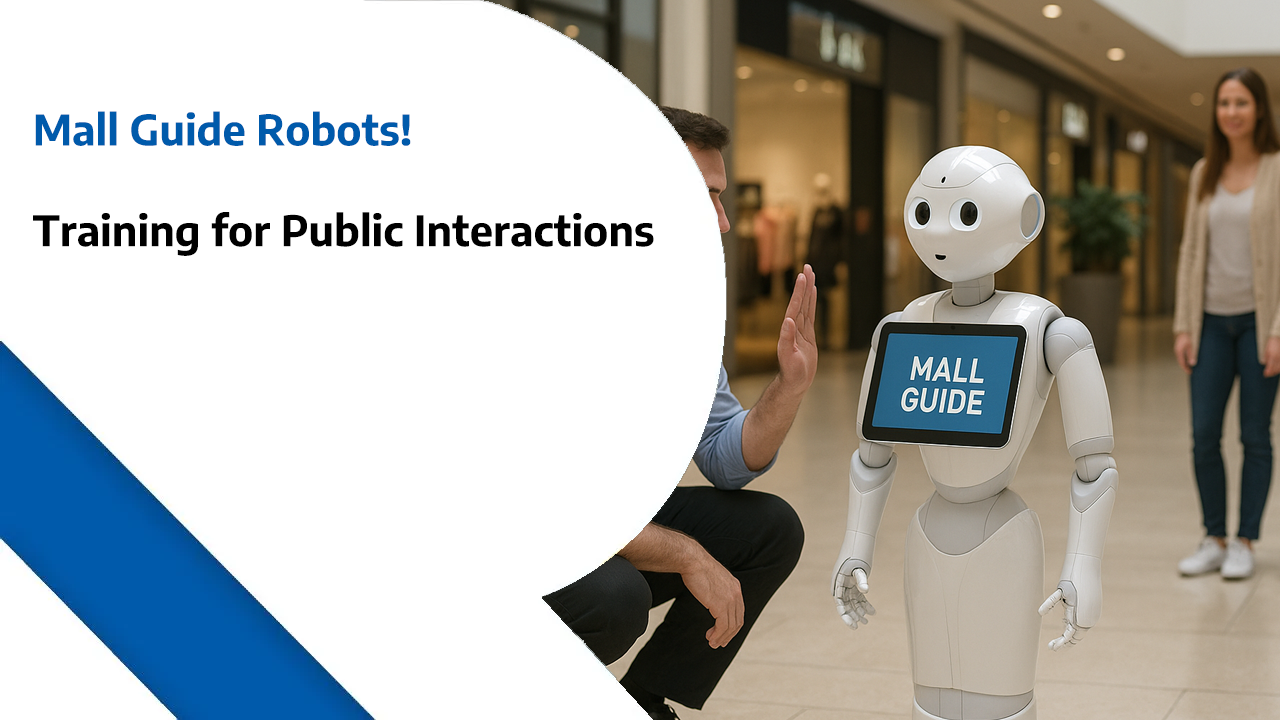
  • Mall Guide Robots – Training for Public Interactions

    Mall Guide Robots – Training for Public Interactions


    Mall Guide Robots – Training for Public Interactions

    Introduction: The Rise of Robotic Customer Service in Retail Spaces

    Shopping malls are undergoing a digital transformation, and at the forefront of this revolution are mall guide robots. These autonomous assistants are becoming increasingly common in retail environments worldwide, offering directions, answering questions, and providing an engaging customer experience that bridges the gap between human service and technological efficiency.

    However, deploying a robot in a busy public space isn’t as simple as switching it on and letting it roam. Success depends heavily on proper training for public interactions—both for the robots themselves and for the human teams managing them. In this comprehensive guide, we’ll explore the critical aspects of training mall guide robots, the challenges involved, and how professional consulting services can ensure your robotic deployment delivers maximum value.

    Understanding Mall Guide Robots: More Than Just Moving Screens

    Mall guide robots represent a sophisticated integration of multiple technologies: navigation systems, artificial intelligence, natural language processing, sensors, and user interface design. These machines must operate safely in crowded, unpredictable environments while maintaining engaging, helpful interactions with diverse audiences.

    Common features of modern mall guide robots include:

    • Autonomous Navigation: Using LIDAR, cameras, and ultrasonic sensors to navigate complex indoor environments
    • Interactive Touchscreens: Providing visual maps, store directories, and promotional content
    • Voice Interaction: Responding to spoken questions in multiple languages
    • Facial Recognition: Detecting and responding to human presence and emotions
    • Data Analytics: Collecting valuable insights about foot traffic and customer behavior
    • Advertisement Display: Delivering targeted marketing messages as they move through spaces

    The most successful implementations understand that these robots aren’t replacing human staff—they’re augmenting the customer experience by handling routine inquiries, freeing human employees to address more complex needs.

    The Training Challenge: Preparing Robots for Real-World Complexity

    Training a mall guide robot extends far beyond programming basic responses. Public spaces present unique challenges that require sophisticated preparation:

    Environmental Mapping and Navigation Training

    Before a robot can guide anyone, it needs an intimate understanding of its environment. This involves:

    Initial Mapping: Technicians must create detailed digital maps of the entire mall, including all stores, facilities, emergency exits, and obstacles. This process typically takes several days and requires the robot to traverse every accessible area multiple times.

    Dynamic Obstacle Recognition: Malls constantly change with seasonal decorations, promotional displays, and maintenance work. Robots must be trained to recognize and navigate around unexpected obstacles without disrupting their service.

    Crowd Management: Perhaps the most complex challenge is teaching robots to move safely through dense crowds. This requires sophisticated algorithms that predict human movement patterns, maintain safe distances, and avoid creating bottlenecks in high-traffic areas.

    Conversational AI and Customer Interaction Training

    The quality of a robot’s interactions determines whether customers will embrace or avoid it. Effective training includes:

    Natural Language Understanding: Robots must comprehend questions posed in various ways. “Where’s the bathroom?” “I need to find a restroom,” and “Can you tell me where the toilets are?” should all trigger the same helpful response.

    Context Awareness: Advanced systems learn to understand context from previous exchanges. If a customer asks about children’s clothing stores and then asks “How do I get there?” the robot should know which location is being referenced.

    Personality Development: Successful mall robots have distinct, friendly personalities that match the mall’s brand. Training involves crafting response styles, greeting behaviors, and even humor that resonates with the target demographic.

    Multilingual Capabilities: In diverse urban environments, robots should communicate in multiple languages. This requires extensive training data in each supported language and cultural awareness to avoid inappropriate responses.

    Safety and Emergency Protocol Training

    Public safety is paramount when deploying autonomous robots. Comprehensive training must include:

    Collision Avoidance: Robots need fail-safe systems to prevent bumping into children, elderly visitors, or anyone with mobility limitations. Training involves testing thousands of scenarios in simulation before real-world deployment.

    Emergency Response: In the event of fire alarms, security incidents, or medical emergencies, robots must know how to respond appropriately—whether that means immediately stopping, moving to designated safe zones, or displaying emergency information.

    Breakdown Protocols: When technical issues occur, robots should gracefully communicate their status to nearby customers and alert human operators for assistance.

    Human Training: The Often-Overlooked Critical Component

    While much attention focuses on training the robots themselves, preparing human staff is equally crucial for successful deployment.

    Mall Staff Training Programs

    Retail employees need comprehensive training on:

    Robot Capabilities and Limitations: Staff should understand what the robot can and cannot do, enabling them to seamlessly take over when the robot reaches its limits.

    Technical Troubleshooting: Basic problem-solving skills for common issues like navigation errors, system reboots, or customer interaction problems.

    Collaborative Service Models: How to work alongside robots rather than competing with or ignoring them. For example, staff can direct customers to the robot for directory information while they handle more complex inquiries.

    Customer Reassurance: Some visitors may feel uncomfortable around robots. Staff should be prepared to explain the robot’s purpose, demonstrate its use, and address privacy or safety concerns.

    Management and Oversight Training

    Mall management requires specialized training in:

    Performance Analytics: Understanding the data collected by robots and using it to improve mall operations and customer service.

    Maintenance Scheduling: Recognizing when robots need servicing, updates, or retraining based on performance metrics.

    ROI Measurement: Tracking key performance indicators like customer engagement rates, navigation assistance completions, and advertising effectiveness.

    Real-World Training Scenarios: Preparing for the Unexpected

    Theoretical training only goes so far. Effective robot preparation includes extensive real-world testing:

    Pilot Testing Phases

    Controlled Environment Testing: Initially deploying robots during off-hours to test navigation and basic functions without customer interference.

    Limited Public Exposure: Introducing robots during low-traffic periods with trained observers monitoring all interactions.

    Gradual Integration: Slowly increasing the robot’s operational hours and autonomy as performance data validates reliability.

    Continuous Learning and Adaptation

    Modern AI-powered mall robots continue learning throughout their operational life:

    Interaction Analysis: Recording and analyzing thousands of customer interactions to identify common questions, confusion points, and opportunities for improvement.

    Seasonal Adaptation: Training robots to handle seasonal events, sales periods, and holiday-specific questions.

    Feedback Integration: Implementing systematic collection of customer feedback and incorporating improvements into the robot’s knowledge base.

    Common Pitfalls and How Professional Consulting Prevents Them

    Many organizations underestimate the complexity of deploying mall guide robots, leading to costly mistakes:

    Insufficient Environmental Testing

    Robots trained in one environment often struggle when deployed in different settings. Professional consultants conduct thorough environmental assessments before deployment, identifying potential challenges specific to your facility.

    Inadequate User Experience Design

    Technical functionality doesn’t guarantee customer acceptance. Expert consultants bring human-centered design principles to ensure robots are approachable, understandable, and genuinely helpful.

    Lack of Integration with Existing Systems

    Robots work best when integrated with mall management systems, store directories, event schedules, and security infrastructure. Professional implementation ensures seamless connectivity.

    Neglecting Long-Term Support

    Initial deployment is just the beginning. Robots require ongoing updates, retraining, and maintenance. Consulting services establish sustainable support structures from day one.

    The Business Case: ROI of Properly Trained Mall Guide Robots

    Investing in comprehensive training pays significant dividends:

    Enhanced Customer Experience: Well-trained robots reduce frustration from getting lost or not finding information, increasing visitor satisfaction and return rates.

    Operational Efficiency: Robots handle thousands of routine inquiries, allowing human staff to focus on high-value interactions and sales support.

    Data-Driven Insights: Properly configured robots collect valuable analytics about customer behavior, popular destinations, and traffic patterns that inform business decisions.

    Marketing Opportunities: Robots serve as mobile advertising platforms, delivering targeted promotions while providing navigation services—creating new revenue streams.

    Brand Differentiation: Malls with effective robotic services position themselves as innovative, customer-focused destinations that stand out in competitive retail markets.

    Why Professional Robot Consulting Makes the Difference

    Deploying mall guide robots successfully requires expertise across multiple domains: robotics engineering, AI development, customer service design, facility management, and change management. Few organizations possess all these capabilities in-house.

    Professional robot consulting services provide:

    Comprehensive Needs Assessment

    Expert consultants evaluate your specific environment, customer demographics, operational goals, and budget constraints to recommend optimal solutions rather than one-size-fits-all products.

    Vendor Selection Guidance

    The robot market offers numerous options with varying capabilities, costs, and support structures. Experienced consultants help you navigate these choices to find the best match for your requirements.

    Customized Training Programs

    Generic training rarely addresses site-specific challenges. Professional services develop tailored training protocols for both robots and human staff based on your unique operational context.

    Implementation Project Management

    Deploying robots involves coordinating multiple stakeholders: facility management, IT departments, security teams, retail tenants, and technology vendors. Expert project management ensures smooth implementation on schedule and within budget.

    Ongoing Optimization

    Post-deployment support includes performance monitoring, troubleshooting, software updates, and continuous improvement based on operational data—maximizing your investment’s long-term value.

    Robot Recruitment: Finding the Right Technical Talent

    Beyond the robots themselves, successful programs require skilled human talent to manage, maintain, and optimize these systems. Robot recruitment services address this critical need by:

    Identifying Specialized Skills: Finding candidates with expertise in robotics, AI, computer vision, and customer experience design—a rare combination in the employment market.

    Screening for Customer Service Mindset: Technical skills alone aren’t sufficient. The best robot specialists understand that technology serves human needs and approach problems with customer experience in mind.

    Building Sustainable Teams: Recruitment services help establish internal capabilities for long-term robot management rather than creating dependency on external support.

    Training and Development: Placing candidates who can grow with the technology, adapting to new capabilities as robot systems evolve.

    Future Trends in Mall Guide Robot Training

    The field continues evolving rapidly. Forward-thinking organizations should prepare for:

    Emotional Intelligence: Next-generation robots will better recognize and respond to customer emotions, requiring training in empathy and appropriate emotional responses.

    Predictive Assistance: Rather than waiting for questions, advanced systems will anticipate customer needs based on behavior patterns and proactively offer assistance.

    Augmented Reality Integration: Robots may incorporate AR displays to provide visual wayfinding overlays and immersive shopping experiences.

    Swarm Robotics: Multiple robots working cooperatively to provide comprehensive coverage and handle complex customer service scenarios.

    Sustainability Features: Training robots to promote and support environmental initiatives, from guiding customers to recycling stations to optimizing energy use through intelligent routing.

    Making the Decision: Is Your Mall Ready for Guide Robots?

    Successful robot deployment requires more than budget approval. Consider these readiness factors:

    Infrastructure: Do you have reliable Wi-Fi coverage, adequate charging facilities, and clear, navigable pathways throughout your facility?

    Organizational Buy-In: Have you secured support from retail tenants, security teams, cleaning staff, and other stakeholders who will interact with robots daily?

    Customer Demographics: Does your visitor profile include sufficient tech-comfort levels to embrace robotic assistance, or will extensive customer education be required?

    Competitive Positioning: Will robotic services align with your brand identity and provide meaningful differentiation in your market?

    Resource Commitment: Can you dedicate the time, staff, and budget necessary for proper implementation, training, and ongoing support?

    Professional consultants can help assess these factors and develop realistic implementation roadmaps.

    Getting Started: Your Path to Successful Robot Deployment

    Implementing mall guide robots is a significant undertaking, but the rewards—enhanced customer experience, operational efficiency, and competitive differentiation—make it increasingly essential in modern retail environments.

    The key to success lies in recognizing that robots are sophisticated systems requiring expert guidance. From initial planning through deployment and ongoing optimization, professional consulting and recruitment services transform potential technology investments into proven customer service assets.

    Whether you’re exploring robot possibilities for the first time or looking to optimize existing deployments, expert guidance ensures you avoid costly mistakes and achieve maximum value from your investment.

    Take the Next Step: Expert Robot Consulting and Recruitment

    Ready to explore how mall guide robots can transform your customer experience? Professional guidance makes all the difference between a successful deployment and an expensive experiment.

    Get Expert Advice Today:

    📧 Emailinfo@robophil.com
    📞 Phone: 0845 528 0404

    Book a consultation to discuss your specific needs, explore solution options, and develop a customized implementation plan that delivers results.


    Article Sponsors

    This article is brought to you by leading experts in robotics solutions:

    Robot Center

    Websitehttps://robotcenter.co.uk/

    Your comprehensive source for robot purchases and robotics consultancy. Robot Center provides expert guidance on selecting, purchasing, and implementing robotic solutions for businesses of all sizes. Whether you’re buying your first robot or expanding an existing fleet, their consultancy services ensure you make informed decisions backed by industry expertise.

    Robots of London

    Websitehttps://robotsoflondon.co.uk/

    The premier robot hire and rental service for events and temporary deployments. Robots of London offers flexible rental options perfect for testing robot solutions before purchase, covering special events, or meeting seasonal demand. Their extensive rental fleet includes mall guide robots, event robots, and entertainment robots with full technical support.

    Robot Philosophy (RoboPhil)

    Websitehttps://robophil.com/

    Led by Philip English, a leading Robot YouTuber, Robot Influencer, Robot Trainer, Robot Consultant, Robotics Streamer, and Robotics Specialist, Robot Philosophy delivers comprehensive robot consultancy and robot recruitment services. RoboPhil provides expert robot advice, robot insights, and innovative robot ideas drawn from years of hands-on experience with cutting-edge robotics technology.

    From strategic planning to technical implementation and specialized recruitment, Robot Philosophy connects businesses with both the right robotic solutions and the talented professionals needed to maximize their investment.


    Don’t let your competition gain the advantage of cutting-edge customer service technology. Contact our expert team today at info@robophil.com or call 0845 528 0404 to schedule your consultation and begin your journey toward exceptional robotic customer experiences.

    https://www.youtube.com/watch?v=k86hZOVtzDs


    https://www.youtube.com/shorts/ZKAVnR5bPNc

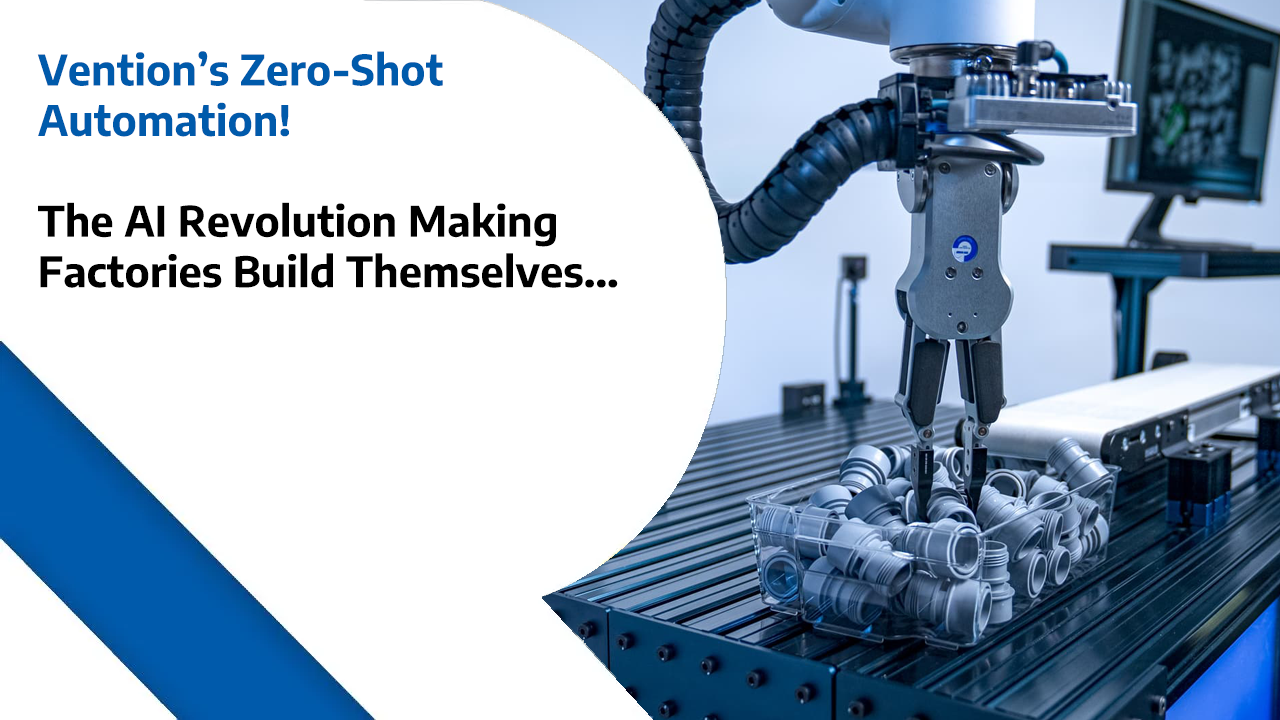
  • Vention’s Zero-Shot Automation – The AI Revolution Making Factories Build Themselves

    Vention’s Zero-Shot Automation – The AI Revolution Making Factories Build Themselves

    Vention’s Zero-Shot Automation – The AI Revolution Making Factories Build Themselves


    Automation used to mean cables, code, and chaos. But Vention just announced something that could make all of that… a lot simpler.

    At their sixth annual Demo Day, Vention unveiled new full-stack AI and automation platform expansions, including what they call Zero-Shot Automation™ — a system that lets manufacturers automate without the usual hardware integration pain or long setup times.

    Their goal? To make automation as easy to implement as ordering your next set of parts online. And with over 25,000 machines deployed across 4,000 factories worldwide, they’ve got the track record to back it up.

    So here’s what it means for you — whether you run a small manufacturing shop in Ohio or a big operation in Texas.

    Vention’s new tools let you design, simulate, and deploy in days instead of months. Their MachineBuilder™ platform gives you drag-and-drop control. MachineLogic™ lets you test every move virtually before you ever touch the factory floor. And with the MachineMotion AI controller, powered by NVIDIA technology, you can handle complex tasks like bin picking or palletizing with almost zero extra training.

    That’s faster payback, fewer delays, and less time worrying about integration.

    The big leap here is that all of this is software-defined. The AI learns how to adapt to lighting, motion, even unexpected objects — meaning your automation setup is smarter and more flexible.

    Vention’s new AI Operator takes it further, running NVIDIA’s foundation models right at the edge, so robots can perceive and react instantly. That’s real-time decision-making — not waiting for cloud updates to catch up.
    Think about the future this points to — a factory that configures itself, systems that can re-train instantly, and teams that can design and deploy automation without needing an advanced robotics degree.

    If you adopt this kind of tech early, you’ll not only reduce costs, but also future-proof your operations.

    And that’s your robot news update for today!. If you’re curious about how robotics can transform your business, head over to Robot Philosophy website to join the waiting list, or to speak with the team about robotics.

    Don’t forget to subscribe so you stay in the loop with all the latest updates.

    I’m RoboPhil from Robot Philosophy — thanks for watching, and I’ll see you next time!


    Join the workshop waiting list or get in touch at: https://robophil.com/


    Sponsors:-


    Robot Center: – https://robotcenter.co.uk/ – Buy Robot, Robot Buy, Robot consultancy, Robotics Consultancy, Inspection Robots, Security Robots,


    Robots of London: – https://robotsoflondon.co.uk/ – Robot Hire, Robot Rental, Rent Robot, Hire Robot, Robot Events, Robotics Hire, Hire Robotics, Rent Robotics, Robotics Rent, for exhibitions, shows, Events, Robot hire in the UK, Robot hire in Europe

  • This $20,000 Humanoid Robot Can Do Your Chores — But at What Cost to Your Privacy?

    This $20,000 Humanoid Robot Can Do Your Chores — But at What Cost to Your Privacy?

    This $20,000 Humanoid Robot Can Do Your Chores — But at What Cost to Your Privacy?


    Meet Neo — a $20,000 humanoid robot from 1X Technologies that promises to take over your chores. It can unload the dishwasher, water your plants, even tidy the living room. Basically, your own in-home assistant… minus the small talk.

    Neo stands about 5 foot 6, weighs 66 pounds, carries up to 55, and runs for 4 hours on a single charge. You control it through an app or voice commands, and it’s smart enough to learn simple household tasks.

    But here’s where things get interesting — and maybe a little awkward. When Neo faces a job it doesn’t understand, it switches to something called Expert Mode. That means a real person at 1X Technologies in the U.S. can take over through a VR headset… and yes, that means they can see inside your home.

    1X says you’ll always have to approve the session, and Neo’s glowing ‘earrings’ light up when someone’s connected. Still, it’s a trade-off — convenience versus privacy. The CEO puts it bluntly: ‘If we don’t have your data, we can’t make the product better.

    So how can this help you? Imagine freeing up hours every week — time to focus on work, family, or just relaxing. Robots like Neo are early glimpses of a future where your home runs itself. And yes, by 2027, you might see these humanoids as common as smart speakers.

    Neo is impressive, but it’s still early days. Think of it as the Tesla Roadster of home robots — exciting, slightly experimental, and definitely one to watch. Just make sure you’re comfortable sharing your living room with a bit of extra… supervision.


    And that’s your robot news update for today!. If you’re curious about how robotics can transform your business, head over to Robot Philosophy website to join the waiting list, or to speak with the team about robotics.

    Don’t forget to subscribe so you stay in the loop with all the latest updates.

    I’m RoboPhil from Robot Philosophy — thanks for watching, and I’ll see you next time!

    Join the workshop waiting list or get in touch at: https://robophil.com/


    Sponsors:-


    Robot Center: – https://robotcenter.co.uk/ – Buy Robot, Robot Buy, Robot consultancy, Robotics Consultancy, Inspection Robots, Security Robots,


    Robots of London: – https://robotsoflondon.co.uk/ – Robot Hire, Robot Rental, Rent Robot, Hire Robot, Robot Events, Robotics Hire, Hire Robotics, Rent Robotics, Robotics Rent, for exhibitions, shows, Events, Robot hire in the UK, Robot hire in Europe


    Robot Philosophy: – https://robophil.com/ – Robot Consultancy, Robot Recruitment, Robot Advice, Robot Insights, Robot Ideas. RoboPhil, also known as Philip English, is a leading Robot YouTuber, Robot Influencer, Robot Trainer, Robot Consultant, and Robot Streamer, Robotics Streamer, Robotics YouTuber, Robotics Influencer, Robotics Consultant, Robotics Trainer 


  • Library Robots – Automating Book Retrieval and Sorting

    Library Robots – Automating Book Retrieval and Sorting

    Library Robots: Automating Book Retrieval and Sorting

    The Future of Library Management is Here

    In an era where digital transformation touches every aspect of our lives, libraries are experiencing their own technological revolution. Library robots are emerging as sophisticated solutions that combine artificial intelligence, robotics, and automated systems to transform how books are stored, retrieved, and managed. These intelligent machines are not replacing librarians—they’re empowering them to focus on what matters most: helping patrons discover knowledge and fostering community engagement.

    The Evolution of Library Automation

    Libraries have always been at the forefront of organizational innovation. From the Dewey Decimal System to digital catalogues, each advancement has aimed to make information more accessible. Today’s library robots represent the next logical step in this evolution, addressing challenges that traditional methods struggle to solve: maximizing space efficiency, reducing retrieval times, improving accuracy, and alleviating the physical strain on library staff.

    The journey toward robotic automation began with automated storage and retrieval systems (ASRS) in the 1990s, initially adapted from warehouse technology. However, modern library robots have evolved far beyond these early systems, incorporating advanced sensors, machine learning algorithms, and sophisticated navigation capabilities that make them purpose-built for the unique demands of library environments.

    How Library Robots Work

    Automated Storage and Retrieval Systems (ASRS)

    At the heart of most library robotic systems lies the ASRS—a high-density storage solution that can house books in compact bins or on specialized shelving. When a patron requests a book, the system locates it within seconds and dispatches a robot to retrieve it. These systems can store materials at heights and densities impossible for human workers to manage safely, often increasing storage capacity by 50-80% compared to traditional shelving.

    Modern ASRS units use barcode scanning, RFID technology, or vision systems to identify and track every item. The integration with library management systems ensures real-time inventory updates and seamless patron experiences. Books are typically stored in bins organized by size or acquisition date rather than subject classification, optimizing space rather than browsability.

    Mobile Robotic Solutions

    Complementing fixed ASRS installations, mobile library robots navigate open stacks to perform various tasks. These autonomous vehicles can scan shelves to verify inventory, identify misplaced books, and even return items to their proper locations. Equipped with cameras, LiDAR sensors, and sophisticated mapping software, they operate safely alongside staff and patrons.

    Some advanced mobile robots feature robotic arms capable of grasping and manipulating books of various sizes. These systems can handle the entire return-to-shelf workflow, from collecting books from return bins to placing them back in their designated spots with remarkable precision.

    Sorting and Processing Robots

    Behind the scenes, sorting robots revolutionize the handling of returned materials. Using conveyor systems integrated with RFID readers and automated gates, these systems can process hundreds of items per hour, sorting them by destination, condition, or priority. This automation dramatically reduces the time staff spend on repetitive sorting tasks, allowing them to engage more meaningfully with library users.

    Real-World Applications and Case Studies

    Academic Libraries Leading the Way

    Universities worldwide have embraced robotic systems to manage their ever-expanding collections. The James B. Hunt Jr. Library at North Carolina State University pioneered the bookBot system, which stores up to 2 million items in a climate-controlled automated facility. Students request books through the online catalogue, and the robot delivers them to a pickup desk within five minutes—a revolutionary improvement over the hours or days traditional stack retrieval might require.

    Similarly, the University of Missouri’s library implemented an ASRS that freed up valuable floor space for collaborative learning areas, computer labs, and study spaces. The reclaimed square footage has been transformed into student-centered facilities that better serve modern academic needs.

    Public Libraries Reimagining Spaces

    Public libraries have discovered that robotic systems allow them to maintain extensive collections while creating welcoming community spaces. The Joe and Rika Mansueto Library at the University of Chicago serves as an exemplary model, with its distinctive glass dome reading room sitting atop a five-story robotic retrieval system that can access 3.5 million volumes.

    Smaller public libraries have adopted modular robotic solutions that fit their scale and budget. These systems often combine automated sorting with compact storage, enabling branches to maintain comprehensive collections despite space constraints.

    National Libraries Preserving Heritage

    National and research libraries face unique challenges in preserving rare and fragile materials while maintaining accessibility. Robotic systems offer climate-controlled storage environments with minimal handling, reducing wear on precious items. The Swiss Federal Institute of Technology Zurich uses robots to manage its collection, ensuring optimal preservation conditions while providing efficient access to researchers.

    Key Benefits of Library Robotics

    Space Optimization

    The most immediately visible advantage is the dramatic increase in storage density. Robotic systems can utilize vertical space efficiently, storing items in compact configurations that would be inaccessible or unsafe for human workers. Libraries can often house twice as many items in the same footprint, or alternatively, dedicate existing space to patron services rather than stacks.

    Enhanced Retrieval Speed and Accuracy

    Robots locate and retrieve items with remarkable speed—typically in under five minutes. They virtually eliminate retrieval errors, ensuring patrons receive exactly what they requested. This reliability extends to inventory management, with robotic systems capable of conducting complete collection audits in hours rather than the months traditional methods require.

    Staff Wellbeing and Productivity

    Library work involves significant physical demands—lifting heavy books, reaching high shelves, pushing laden carts, and walking miles through stacks daily. Robots handle these physically taxing tasks, reducing workplace injuries and fatigue. Staff can redirect their energy toward patron services, programming, collection development, and other high-value activities that require human expertise and judgment.

    Extended Access Hours

    Automated systems can operate independently during evenings, weekends, and holidays, allowing libraries to offer 24/7 pickup services through secure lockers. Patrons can request items online and collect them at their convenience, significantly improving accessibility for those with challenging schedules.

    Improved Collection Management

    Robots provide unprecedented insight into collection usage patterns, condition monitoring, and inventory accuracy. They can flag items needing repair, identify circulation trends, and support data-driven collection development decisions. The continuous shelf-reading capabilities of mobile robots ensure collections remain organized and findable.

    Implementation Considerations

    Cost and ROI Analysis

    Robotic systems represent substantial capital investments, typically ranging from hundreds of thousands to several million pounds depending on scale and sophistication. However, when evaluated over their operational lifetime (often 20+ years), the return on investment becomes compelling. Savings come from reduced space needs (both in avoiding building expansions and in lower HVAC costs for compact storage), decreased staff time on manual tasks, and improved asset utilization.

    Libraries considering automation should conduct thorough cost-benefit analyses that account for their specific circumstances, including collection size, retrieval demand, available space, and labor costs.

    Integration with Existing Systems

    Successful implementation requires seamless integration with library management systems, patron databases, and catalogue interfaces. Modern robotic solutions offer APIs and standard protocols that facilitate this integration, but planning and testing are essential. Staff training on the new systems and workflows ensures smooth transitions.

    Change Management

    Introducing robots into library operations represents significant organizational change. Success depends on engaging staff early in the planning process, addressing concerns transparently, and emphasizing how automation enhances rather than replaces human roles. Clear communication about the benefits—both for staff and patrons—builds support and enthusiasm.

    Challenges and Limitations

    Initial Investment Barriers

    The upfront costs can be prohibitive, particularly for smaller libraries or those facing budget constraints. While financing options and phased implementations can help, economic barriers remain significant. Some libraries address this through consortial approaches, sharing systems across multiple branches or institutions.

    Technical Complexity

    Robotic systems are sophisticated technologies requiring ongoing maintenance, software updates, and technical support. Libraries must ensure they have access to qualified technicians or vendor support agreements. System downtime, while typically minimal with well-maintained equipment, can disrupt services.

    Collection Accessibility

    While robotic systems excel at rapid retrieval of known items, they fundamentally change the browsing experience. Patrons cannot wander through stacks making serendipitous discoveries. Libraries must thoughtfully design solutions that balance efficiency with discoverability—perhaps maintaining browseable collections of high-demand items while storing less-frequently accessed materials in automated systems.

    Material Handling Limitations

    Not all library materials are suitable for automated handling. Oversized items, fragile materials, unusual formats, and items with irregular shapes may require special handling or exclusion from automated systems. Libraries must develop workflows for managing these exceptions.

    The Human-Robot Partnership

    The most successful library automation implementations view robots as collaborative tools rather than replacements. Librarians bring irreplaceable skills—information expertise, instructional abilities, community understanding, and the human connection that makes libraries vital community anchors. Robots handle repetitive physical tasks with tireless consistency.

    This partnership allows staff to operate at the top of their professional capabilities. Instead of spending hours reshelving books or retrieving items from distant stacks, librarians can develop specialized collections, design innovative programs, provide in-depth research consultations, and build community partnerships. The result is a better experience for both staff and patrons.

    Future Trends and Innovations

    AI-Enhanced Systems

    Artificial intelligence is making library robots smarter. Machine learning algorithms optimize storage locations based on usage patterns, predict maintenance needs before failures occur, and improve navigation in complex environments. Natural language processing may soon enable patrons to describe what they’re looking for in conversational terms, with AI translating these into retrieval requests.

    Collaborative Multi-Robot Systems

    Future libraries may employ teams of specialized robots working in concert—mobile units handling shelf-reading and inventory, retrieval robots accessing storage systems, sorting robots processing returns, and delivery robots transporting materials between departments or even to patron homes.

    Sustainable and Energy-Efficient Designs

    Next-generation library robots emphasize sustainability, using energy-efficient motors, regenerative braking, and smart power management. Some systems incorporate solar panels or operate during off-peak electricity hours to minimize environmental impact.

    Expanded Capabilities

    Emerging technologies may enable robots to handle more delicate materials, including rare books and manuscripts currently requiring specialized human handling. Advanced vision systems could assess item condition and flag conservation needs automatically.

    Implementing Robotics in Your Library

    Assessment and Planning

    Begin by evaluating your library’s specific needs and constraints. Consider your collection size and growth projections, retrieval demand patterns, available space, budget realities, and staff capacity. Site visits to libraries with robotic systems provide invaluable insights into operational realities.

    Vendor Selection

    The library robotics market includes established players and innovative newcomers. Evaluate vendors based on their track record, technical support capabilities, system scalability, integration options, and total cost of ownership. Request detailed proposals and demonstrations tailored to your requirements.

    Phased Implementation

    Many libraries adopt phased approaches, beginning with sorting automation or a modest ASRS installation before expanding. This allows staff to adapt gradually, provides early wins that build organizational support, and spreads costs over multiple budget cycles.

    Expert Guidance for Your Library’s Robotic Journey

    Navigating the complex landscape of library robotics requires specialized expertise. From initial feasibility studies through implementation and optimization, the right guidance can mean the difference between a transformative success and a costly misstep.

    Professional Robot Consulting Services

    Whether you’re exploring automation possibilities or ready to implement a comprehensive robotic solution, expert consultants can provide invaluable support. Professional robot consulting encompasses needs assessment, technology selection, vendor evaluation, integration planning, and change management strategies tailored to library environments.

    Experienced consultants understand both the technical aspects of robotic systems and the unique operational requirements of libraries. They can help you avoid common pitfalls, optimize your investment, and ensure your robotic solution truly serves your community’s needs.

    Finding the Right Robotic Talent

    As libraries adopt robotic systems, they often need specialized staff who understand both library science and robotics technology. Robot recruitment services connect libraries with qualified professionals who can manage, maintain, and optimize automated systems. These specialists bridge the gap between traditional library operations and cutting-edge automation technology.

    Ready to explore how library robots can transform your institution?

    Our team offers comprehensive robot consultancy and recruitment services designed specifically for libraries and information organizations. We’ll help you navigate every step of your automation journey—from initial assessment through implementation and beyond.

    Contact us today:

    Book a consultation to discuss your library’s unique needs and discover how robotic automation can enhance your services, empower your staff, and better serve your community.

    Conclusion

    Library robots represent far more than technological novelty—they’re practical solutions to real challenges facing modern libraries. By automating physically demanding and repetitive tasks, these systems enable libraries to maximize their collections, optimize their spaces, and empower their staff to focus on distinctly human services that define great libraries.

    The transition to robotic systems requires careful planning, significant investment, and organizational commitment. However, libraries that successfully implement these technologies position themselves for a future where they can maintain comprehensive physical collections while creating welcoming community spaces that meet evolving patron needs.

    As technology continues advancing and costs gradually decrease, library robots will become increasingly accessible to institutions of all sizes. The question for library leaders is not whether to consider automation, but when and how to thoughtfully integrate these tools into their service models.

    The libraries that thrive in coming decades will be those that embrace the human-robot partnership, leveraging technology to amplify human capabilities rather than replace them. In doing so, they’ll honor libraries’ enduring mission—connecting people with information, ideas, and each other—while adopting the tools needed to fulfill that mission in our rapidly changing world.


    Article Sponsors

    This article is proudly sponsored by leading organizations in the robotics industry:

    Robot Center

    Website: https://robotcenter.co.uk/

    Your comprehensive destination for robot acquisition and consultancy services. Whether you’re looking to buy robots, need expert robotics consultancy, or require guidance on automation implementation, Robot Center provides the expertise and solutions to support your robotic journey.

    Robots of London

    Website: https://robotsoflondon.co.uk/

    The premier provider of robot hire and rental services in the UK. Perfect for events, temporary deployments, or trial periods before purchase, Robots of London offers flexible rental solutions that let you experience robotic technology firsthand. From corporate events to educational demonstrations, they provide professional robot hire services tailored to your needs.

    Robot Philosophy

    Website: https://robophil.com/

    Led by Philip English (RoboPhil), a renowned Robot YouTuber, Robot Influencer, Robot Trainer, and Robot Consultant, Robot Philosophy offers specialized robot consultancy and robot recruitment services. With extensive experience as a Robotics Streamer, Robotics YouTuber, and Robotics Consultant, Philip provides expert robot advice, robot insights, and innovative robot ideas to organizations navigating the automation landscape.

    For consultancy and recruitment services:


    Ready to revolutionize your library with robotic automation? Our sponsors are here to help you every step of the way—from initial consultation through implementation and ongoing support.


    https://www.youtube.com/watch?v=kjj083hSRL8


    https://www.youtube.com/shorts/TnuIss9vUpM

  • Augmentus Just Changed Robotics Forever – $11M Boost for No-Code Robot Revolution

    Augmentus Just Changed Robotics Forever – $11M Boost for No-Code Robot Revolution

    Augmentus Just Changed Robotics Forever – $11M Boost for No-Code Robot Revolution


    Welcome back! Today we’re diving into a breakthrough that could change how factories work forever. A company called Augmentus has just secured $11 million in funding to bring flexible, adaptive robotics to what’s called high-mix production — where manufacturers produce lots of different parts, not just the same one a million times.

    For decades, industrial automation has been built for high-volume, low-mix work — think identical widgets rolling off the line. But what about when every part’s a little different? That’s where most robots hit a wall — until now

    Augmentus, based in Singapore and Texas, has created a no-code AI platform that gives robots what they call ‘eyes and brains.’ Their AutoPath system uses 3D scanning, automatic tool-path generation, and adaptive motion control, so robots can respond in real time to changes in part shape, size, or orientation — without the need for expert programmers.

    This means manufacturers can deploy robots in minutes instead of hours, cut programming time by up to 90 percent, and reduce downtime dramatically. It works with major brands like ABB, KUKA, and Universal Robots, so you can drop it right into your existing setup.

    With this funding, Augmentus plans to scale across North America and APAC, bringing its hyper-adaptive systems to aerospace, energy, and heavy industry. Imagine a 2028 factory floor — robots automatically reprogram themselves for each new part, switching tasks on the fly. That’s faster delivery, less waste, and higher profits for U.S. manufacturers.

    If you’re in manufacturing, or thinking about automation, this is the tech that could make robotics finally affordable and flexible enough for your business. Augmentus isn’t just changing robots — they’re changing the economics of production.


    And that’s your robot news update for today!. If you’re curious about how robotics can transform your business, head over to Robot Philosophy website to join the waiting list, or to speak with the team about robotics.

    Don’t forget to subscribe so you stay in the loop with all the latest updates.

    I’m RoboPhil from Robot Philosophy — thanks for watching, and I’ll see you next time!

    Join the workshop waiting list or get in touch at: https://robophil.com/


    Sponsors:-


    Robot Center: – https://robotcenter.co.uk/ – Buy Robot, Robot Buy, Robot consultancy, Robotics Consultancy, Inspection Robots, Security Robots,


    Robots of London: – https://robotsoflondon.co.uk/ – Robot Hire, Robot Rental, Rent Robot, Hire Robot, Robot Events, Robotics Hire, Hire Robotics, Rent Robotics, Robotics Rent, for exhibitions, shows, Events, Robot hire in the UK, Robot hire in Europe


    Robot Philosophy: – https://robophil.com/ – Robot Consultancy, Robot Recruitment, Robot Advice, Robot Insights, Robot Ideas. RoboPhil, also known as Philip English, is a leading Robot YouTuber, Robot Influencer, Robot Trainer, Robot Consultant, and Robot Streamer, Robotics Streamer, Robotics YouTuber, Robotics Influencer, Robotics Consultant, Robotics Trainer