
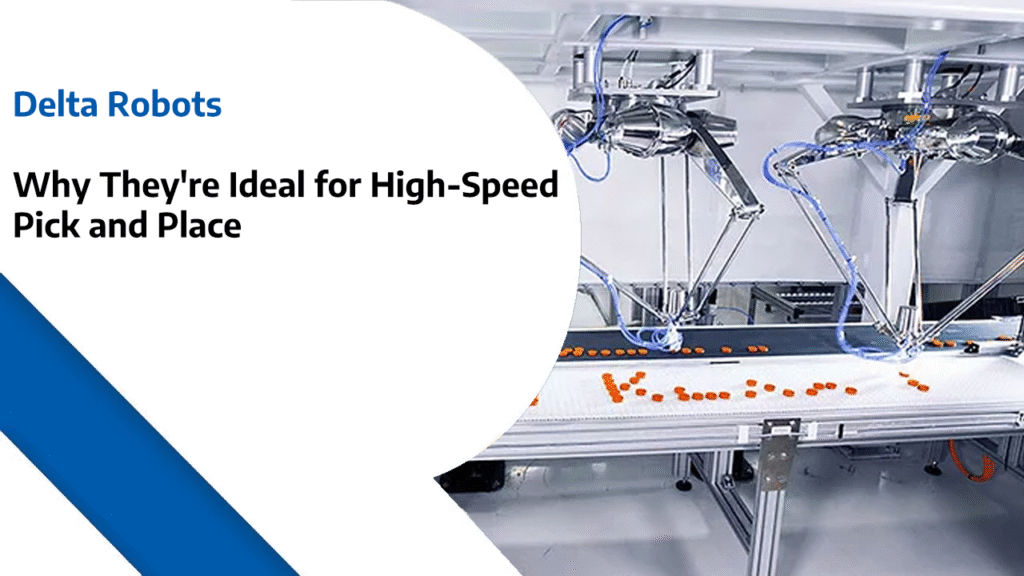
Delta Robots: Why They’re Ideal for High-Speed Pick and Place Operations
Sponsored by: Robot Center, Robots of London, and Robot Philosophy
In the rapidly evolving landscape of industrial automation, delta robots have emerged as the undisputed champions of high-speed pick and place operations. These remarkable machines, with their distinctive spider-like appearance and lightning-fast movements, are revolutionizing manufacturing processes across industries worldwide. From pharmaceutical packaging to food processing, electronics assembly to logistics operations, delta robots are proving that when speed, precision, and reliability matter most, there’s simply no substitute for their unique design and capabilities.
Understanding Delta Robot Architecture
Delta robots, also known as parallel robots or spider robots, feature a unique three-arm parallel kinematic structure that sets them apart from traditional articulated robotic arms. Named after their triangular or delta-shaped platform, these robots consist of three lightweight arms connected to a central moving platform through universal joints. This parallel configuration allows all three motors to work simultaneously, distributing the load and enabling the extraordinary speeds that delta robots are famous for.
The genius of the delta robot design lies in its mathematical foundation. Developed by Professor Reymond Clavel at the École Polytechnique Fédérale de Lausanne (EPFL) in the 1980s, the delta robot’s parallel kinematic structure eliminates the cumulative positioning errors common in serial kinematic robots. Each arm operates independently while working in perfect harmony with the others, creating a system where precision is maintained even at extreme speeds.
The lightweight carbon fiber or aluminum arms, combined with the parallel drive system, minimize inertia and allow for rapid acceleration and deceleration. Unlike traditional six-axis robots that must move each joint sequentially, delta robots can achieve complex three-dimensional movements through the coordinated motion of their three arms, making them incredibly efficient for rapid positioning tasks.
The Speed Advantage: Unmatched Performance Metrics
When it comes to raw speed, delta robots are in a class of their own. Modern delta robots can achieve cycle times as low as 0.3 seconds per pick and place operation, with some specialized models reaching even faster speeds. These robots can operate at accelerations of up to 15G and achieve tip speeds exceeding 10 meters per second, performance levels that would be impossible with traditional articulated arm robots.
The speed advantage becomes even more pronounced when considering the robot’s duty cycle. While traditional robots may need cooling periods or suffer from wear-related slowdowns during extended operation, delta robots maintain consistent high-speed performance throughout their operational cycles. This consistency translates directly into higher throughput and improved production efficiency.
The parallel kinematic structure also provides exceptional dynamic performance. The three-arm configuration distributes mechanical stress evenly, reducing wear on individual components and allowing for sustained high-speed operation. This design inherently provides better dynamic stability, meaning the robot can maintain precision even while operating at maximum speed, a crucial factor in high-volume production environments.
Precision Engineering: Accuracy at Lightning Speed
Speed without precision is meaningless in industrial applications, and delta robots excel in both areas simultaneously. The parallel kinematic design provides inherent accuracy advantages, with typical positioning repeatability of ±0.1mm or better. This level of precision is maintained even during high-speed operations, making delta robots ideal for applications requiring both speed and accuracy.
The mathematical precision of the delta robot’s kinematics ensures that positioning errors don’t accumulate as they would in serial kinematic systems. Each point in the robot’s workspace can be reached through multiple kinematic solutions, allowing the control system to optimize for speed, accuracy, or energy efficiency depending on the application requirements.
Modern delta robots incorporate advanced sensor feedback systems, including high-resolution encoders and sometimes vision systems, to maintain exceptional accuracy throughout the workspace. The closed-loop control systems continuously monitor and adjust positioning, ensuring that the robot maintains its precision specifications even after millions of operational cycles.
Workspace Characteristics and Design Optimization
The delta robot’s workspace is uniquely suited to pick and place operations. The workspace forms an inverted cone or dome shape beneath the robot’s base, with the largest working area at the bottom and tapering toward the top. This configuration is ideal for applications where parts need to be picked from conveyor belts or bins below the robot and placed into packaging or assembly fixtures.
The workspace design offers several advantages for pick and place applications. The robot can reach every point within its workspace with the same level of speed and precision, unlike articulated arms where performance varies significantly based on arm configuration. This consistency makes process planning more straightforward and ensures uniform cycle times regardless of pick and place locations within the workspace.
The overhead mounting configuration common with delta robots also maximizes floor space utilization. With the robot mounted above the work area, valuable floor space remains available for conveyors, packaging equipment, and operator access. This three-dimensional approach to workspace utilization is particularly valuable in high-density manufacturing environments where floor space is at a premium.
Applications Across Industries
Delta robots have found applications across virtually every industry where high-speed pick and place operations are required. In the pharmaceutical industry, these robots excel at high-speed packaging of tablets, capsules, and medical devices into blister packs or bottles. The combination of speed and precision is crucial for meeting the stringent quality requirements and high volume demands of pharmaceutical manufacturing.
Food and beverage applications represent another major market for delta robots. From sorting and packaging confectionery to handling delicate baked goods, delta robots provide the gentle yet rapid handling required in food processing. Their ability to work in washdown environments and comply with food safety standards makes them ideal for these applications.
Electronics manufacturing has embraced delta robots for component placement, PCB handling, and small parts assembly. The precision and speed capabilities align perfectly with the miniaturization trends in electronics, where components continue to get smaller and production volumes continue to increase.
In the automotive industry, delta robots handle small components and perform rapid assembly operations. From sorting fasteners to placing electrical components, these robots contribute to the lean manufacturing principles that drive modern automotive production.
Comparing Delta Robots to Traditional Automation Solutions
When compared to traditional six-axis articulated robots, delta robots offer several distinct advantages for pick and place applications. The speed advantage is perhaps the most obvious, with delta robots typically achieving 3-5 times faster cycle times than comparable articulated arms for similar tasks.
The parallel kinematic structure also provides better stiffness and accuracy characteristics. While articulated arms can suffer from accumulated positioning errors and compliance issues when fully extended, delta robots maintain consistent performance throughout their workspace. This characteristic makes them particularly suitable for precision applications where dimensional accuracy is critical.
Energy efficiency represents another significant advantage. The lightweight moving components and efficient parallel drive system result in lower energy consumption compared to traditional robots. This efficiency translates into lower operating costs and reduced environmental impact, important considerations in modern manufacturing operations.
Maintenance requirements also tend to be lower for delta robots. The simpler mechanical structure with fewer wearing components typically results in longer service intervals and reduced maintenance costs. The parallel configuration also means that partial failures don’t necessarily require complete system shutdown, providing better overall system availability.
However, delta robots do have limitations compared to traditional robots. The workspace is more constrained, and the robots typically offer only three or four degrees of freedom compared to the six degrees of freedom available with articulated arms. For applications requiring complex part orientations or extensive reach, traditional robots may be more suitable.
Advanced Control Systems and Integration
Modern delta robots incorporate sophisticated control systems that maximize their performance capabilities. Advanced trajectory planning algorithms optimize robot movements to minimize cycle time while maintaining precision and reducing mechanical stress. These systems can adapt to changing operational requirements in real-time, optimizing performance based on current production demands.
Vision integration has become increasingly important in delta robot applications. High-speed cameras and advanced image processing enable robots to identify, locate, and orient parts in real-time, dramatically expanding their application possibilities. Vision-guided delta robots can handle randomly oriented parts, perform quality inspections during handling, and adapt to variations in part presentation.
Force control capabilities are also being integrated into advanced delta robot systems. These systems can detect and respond to contact forces, enabling gentle handling of delicate parts or adaptive responses to variations in part geometry. Force feedback is particularly valuable in applications involving food products, electronic components, or other fragile items.
Integration with factory automation systems has become increasingly seamless. Modern delta robots communicate with upstream and downstream equipment, production planning systems, and quality management systems to optimize overall production efficiency. This integration capability makes delta robots valuable components in Industry 4.0 manufacturing environments.
Future Developments and Emerging Technologies
The future of delta robotics promises even more impressive capabilities. Advances in materials science are enabling lighter, stronger robot structures that can achieve even higher speeds and accelerations. Carbon fiber components and advanced alloys are pushing the boundaries of what’s possible in terms of speed and precision.
Artificial intelligence and machine learning are being integrated into delta robot control systems, enabling adaptive learning and continuous performance optimization. These systems can learn from operational data to optimize trajectories, predict maintenance needs, and adapt to changing production requirements automatically.
Collaborative safety features are being developed to enable delta robots to work more closely with human operators. Advanced sensor systems and safety-rated control architectures are making it possible to deploy delta robots in applications where human-robot collaboration is beneficial.
Miniaturization trends are also driving the development of smaller, more precise delta robots for applications involving tiny components or limited workspace constraints. These micro-delta robots maintain the speed and precision characteristics of their larger counterparts while operating in workspaces measured in cubic centimeters rather than cubic meters.
Economic Impact and ROI Considerations
The economic benefits of delta robots in high-speed pick and place applications are compelling. The dramatic increase in throughput capability directly translates to improved production capacity and reduced labor costs. Many operations see payback periods of less than 18 months, with some high-volume applications achieving payback in under a year.
The consistency and reliability of delta robots also contribute to improved product quality and reduced waste. The precise positioning and gentle handling capabilities minimize product damage and ensure consistent placement accuracy, reducing defects and rework costs.
Energy efficiency improvements, while sometimes overlooked, can provide significant cost savings in high-volume operations. The reduced energy consumption of delta robots compared to traditional automation solutions contributes to lower operating costs and improved sustainability metrics.
Reduced floor space requirements also translate to economic benefits. The overhead mounting configuration of delta robots maximizes utilization of expensive manufacturing floor space, enabling higher production density and improved facility efficiency.
Implementation Considerations and Best Practices
Successful delta robot implementation requires careful consideration of application requirements and system design. Workspace analysis is critical to ensure that the robot’s operating envelope aligns with the application needs. The inverted cone workspace must accommodate all required pick and place locations while maintaining optimal speed and precision characteristics.
End-effector selection is particularly important for delta robot applications. The lightweight, rapid movements of delta robots place unique requirements on gripping systems. Vacuum grippers, magnetic grippers, and specialized mechanical grippers must be designed to handle the high accelerations while maintaining secure part retention.
Integration planning should consider the entire production system, not just the robot itself. Upstream part presentation systems, conveyor synchronization, and downstream handling equipment must all be coordinated to maximize system performance. The high speed of delta robots can create bottlenecks in surrounding equipment if not properly planned.
Safety considerations are paramount, particularly given the high speeds involved. Proper guarding, emergency stop systems, and operator training are essential for safe operation. The rapid movements of delta robots require special attention to safety system design to ensure adequate protection for operators and maintenance personnel.
Expert Consultation and Implementation Services
Implementing delta robotics successfully requires expertise in multiple domains, from mechanical design and controls engineering to application analysis and system integration. The complexity of modern automated systems demands specialized knowledge to ensure optimal performance and return on investment.
Professional robotics consulting services can provide valuable guidance throughout the implementation process. From initial feasibility analysis and application assessment to detailed system design and commissioning support, experienced consultants can help navigate the complexities of delta robot implementation.
Robot recruitment services are equally important for organizations looking to build internal capabilities in robotics and automation. Finding qualified personnel with experience in delta robotics, control systems, and automation integration can be challenging in today’s competitive job market. Specialized recruitment services can help identify and attract the talent needed to support advanced robotics initiatives.
For organizations considering delta robot implementation, professional consultation can help identify optimal applications, specify appropriate equipment, and develop implementation strategies that maximize return on investment. The rapidly evolving landscape of robotics technology makes expert guidance increasingly valuable for staying current with best practices and emerging capabilities.
Conclusion: The Future is Fast
Delta robots represent the pinnacle of high-speed pick and place automation technology. Their unique parallel kinematic design, exceptional speed capabilities, and maintained precision make them indispensable tools for modern manufacturing operations. As production demands continue to increase and product life cycles continue to shorten, the ability to rapidly and accurately handle parts and products becomes increasingly critical to competitive success.
The versatility of delta robots across industries, from pharmaceuticals and food processing to electronics and automotive manufacturing, demonstrates their broad applicability and robust value proposition. The combination of high speed, precision, reliability, and economic efficiency makes delta robots an compelling choice for organizations seeking to optimize their pick and place operations.
As technology continues to advance, delta robots will undoubtedly become even more capable, more intelligent, and more integrated into comprehensive manufacturing systems. Organizations that embrace these technologies today will be better positioned to compete in tomorrow’s increasingly automated manufacturing landscape.
The investment in delta robotics represents more than just equipment acquisition; it represents a commitment to operational excellence, competitive advantage, and future readiness. For organizations ready to take their pick and place operations to the next level, delta robots offer a proven path to achieving world-class performance.
About Our Sponsors
Robot Center (robotcenter.co.uk) is your premier destination for robot acquisition and robotics consultancy services. Whether you’re looking to buy robots or seeking expert robotics consultancy, Robot Center provides comprehensive solutions to meet your automation needs.
Robots of London (robotsoflondon.co.uk) specializes in robot hire and robot rental services. From temporary installations to event demonstrations, their flexible robot rental solutions make advanced robotics accessible for any timeline or budget.
Robot Philosophy (robophil.com) offers comprehensive robot consultancy and robot recruitment services. Led by Philip English (RoboPhil), a leading robot YouTuber, robot influencer, and robotics consultant, Robot Philosophy provides expert robot advice, insights, and innovative ideas to guide your automation journey.
Ready to explore delta robotics for your operation?
Contact our expert team today:
- Email: info@robophil.com
- Phone: 0845 528 0404
- Book a consultation call to discuss your specific requirements and discover how delta robots can transform your pick and place operations.
Our experienced consultants can help you evaluate applications, specify equipment, and develop implementation strategies that maximize your return on investment. Don’t let your competition gain the speed advantage – contact us today to get started with delta robotics.
https://www.youtube.com/watch?v=snswFsEFvpU
Delta Robots: Why They’re Ideal for High-Speed Pick and Place Operations
Sponsored by: Robot Center, Robots of London, and Robot Philosophy
In the rapidly evolving landscape of industrial automation, delta robots have emerged as the undisputed champions of high-speed pick and place operations. These remarkable machines, with their distinctive spider-like appearance and lightning-fast movements, are revolutionizing manufacturing processes across industries worldwide. From pharmaceutical packaging to food processing, electronics assembly to logistics operations, delta robots are proving that when speed, precision, and reliability matter most, there’s simply no substitute for their unique design and capabilities.
Understanding Delta Robot Architecture
Delta robots, also known as parallel robots or spider robots, feature a unique three-arm parallel kinematic structure that sets them apart from traditional articulated robotic arms. Named after their triangular or delta-shaped platform, these robots consist of three lightweight arms connected to a central moving platform through universal joints. This parallel configuration allows all three motors to work simultaneously, distributing the load and enabling the extraordinary speeds that delta robots are famous for.
The genius of the delta robot design lies in its mathematical foundation. Developed by Professor Reymond Clavel at the École Polytechnique Fédérale de Lausanne (EPFL) in the 1980s, the delta robot’s parallel kinematic structure eliminates the cumulative positioning errors common in serial kinematic robots. Each arm operates independently while working in perfect harmony with the others, creating a system where precision is maintained even at extreme speeds.
The lightweight carbon fiber or aluminum arms, combined with the parallel drive system, minimize inertia and allow for rapid acceleration and deceleration. Unlike traditional six-axis robots that must move each joint sequentially, delta robots can achieve complex three-dimensional movements through the coordinated motion of their three arms, making them incredibly efficient for rapid positioning tasks.
The Speed Advantage: Unmatched Performance Metrics
When it comes to raw speed, delta robots are in a class of their own. Modern delta robots can achieve cycle times as low as 0.3 seconds per pick and place operation, with some specialized models reaching even faster speeds. These robots can operate at accelerations of up to 15G and achieve tip speeds exceeding 10 meters per second, performance levels that would be impossible with traditional articulated arm robots.
The speed advantage becomes even more pronounced when considering the robot’s duty cycle. While traditional robots may need cooling periods or suffer from wear-related slowdowns during extended operation, delta robots maintain consistent high-speed performance throughout their operational cycles. This consistency translates directly into higher throughput and improved production efficiency.
The parallel kinematic structure also provides exceptional dynamic performance. The three-arm configuration distributes mechanical stress evenly, reducing wear on individual components and allowing for sustained high-speed operation. This design inherently provides better dynamic stability, meaning the robot can maintain precision even while operating at maximum speed, a crucial factor in high-volume production environments.
Precision Engineering: Accuracy at Lightning Speed
Speed without precision is meaningless in industrial applications, and delta robots excel in both areas simultaneously. The parallel kinematic design provides inherent accuracy advantages, with typical positioning repeatability of ±0.1mm or better. This level of precision is maintained even during high-speed operations, making delta robots ideal for applications requiring both speed and accuracy.
The mathematical precision of the delta robot’s kinematics ensures that positioning errors don’t accumulate as they would in serial kinematic systems. Each point in the robot’s workspace can be reached through multiple kinematic solutions, allowing the control system to optimize for speed, accuracy, or energy efficiency depending on the application requirements.
Modern delta robots incorporate advanced sensor feedback systems, including high-resolution encoders and sometimes vision systems, to maintain exceptional accuracy throughout the workspace. The closed-loop control systems continuously monitor and adjust positioning, ensuring that the robot maintains its precision specifications even after millions of operational cycles.
Workspace Characteristics and Design Optimization
The delta robot’s workspace is uniquely suited to pick and place operations. The workspace forms an inverted cone or dome shape beneath the robot’s base, with the largest working area at the bottom and tapering toward the top. This configuration is ideal for applications where parts need to be picked from conveyor belts or bins below the robot and placed into packaging or assembly fixtures.
The workspace design offers several advantages for pick and place applications. The robot can reach every point within its workspace with the same level of speed and precision, unlike articulated arms where performance varies significantly based on arm configuration. This consistency makes process planning more straightforward and ensures uniform cycle times regardless of pick and place locations within the workspace.
The overhead mounting configuration common with delta robots also maximizes floor space utilization. With the robot mounted above the work area, valuable floor space remains available for conveyors, packaging equipment, and operator access. This three-dimensional approach to workspace utilization is particularly valuable in high-density manufacturing environments where floor space is at a premium.
Applications Across Industries
Delta robots have found applications across virtually every industry where high-speed pick and place operations are required. In the pharmaceutical industry, these robots excel at high-speed packaging of tablets, capsules, and medical devices into blister packs or bottles. The combination of speed and precision is crucial for meeting the stringent quality requirements and high volume demands of pharmaceutical manufacturing.
Food and beverage applications represent another major market for delta robots. From sorting and packaging confectionery to handling delicate baked goods, delta robots provide the gentle yet rapid handling required in food processing. Their ability to work in washdown environments and comply with food safety standards makes them ideal for these applications.
Electronics manufacturing has embraced delta robots for component placement, PCB handling, and small parts assembly. The precision and speed capabilities align perfectly with the miniaturization trends in electronics, where components continue to get smaller and production volumes continue to increase.
In the automotive industry, delta robots handle small components and perform rapid assembly operations. From sorting fasteners to placing electrical components, these robots contribute to the lean manufacturing principles that drive modern automotive production.
Comparing Delta Robots to Traditional Automation Solutions
When compared to traditional six-axis articulated robots, delta robots offer several distinct advantages for pick and place applications. The speed advantage is perhaps the most obvious, with delta robots typically achieving 3-5 times faster cycle times than comparable articulated arms for similar tasks.
The parallel kinematic structure also provides better stiffness and accuracy characteristics. While articulated arms can suffer from accumulated positioning errors and compliance issues when fully extended, delta robots maintain consistent performance throughout their workspace. This characteristic makes them particularly suitable for precision applications where dimensional accuracy is critical.
Energy efficiency represents another significant advantage. The lightweight moving components and efficient parallel drive system result in lower energy consumption compared to traditional robots. This efficiency translates into lower operating costs and reduced environmental impact, important considerations in modern manufacturing operations.
Maintenance requirements also tend to be lower for delta robots. The simpler mechanical structure with fewer wearing components typically results in longer service intervals and reduced maintenance costs. The parallel configuration also means that partial failures don’t necessarily require complete system shutdown, providing better overall system availability.
However, delta robots do have limitations compared to traditional robots. The workspace is more constrained, and the robots typically offer only three or four degrees of freedom compared to the six degrees of freedom available with articulated arms. For applications requiring complex part orientations or extensive reach, traditional robots may be more suitable.
Advanced Control Systems and Integration
Modern delta robots incorporate sophisticated control systems that maximize their performance capabilities. Advanced trajectory planning algorithms optimize robot movements to minimize cycle time while maintaining precision and reducing mechanical stress. These systems can adapt to changing operational requirements in real-time, optimizing performance based on current production demands.
Vision integration has become increasingly important in delta robot applications. High-speed cameras and advanced image processing enable robots to identify, locate, and orient parts in real-time, dramatically expanding their application possibilities. Vision-guided delta robots can handle randomly oriented parts, perform quality inspections during handling, and adapt to variations in part presentation.
Force control capabilities are also being integrated into advanced delta robot systems. These systems can detect and respond to contact forces, enabling gentle handling of delicate parts or adaptive responses to variations in part geometry. Force feedback is particularly valuable in applications involving food products, electronic components, or other fragile items.
Integration with factory automation systems has become increasingly seamless. Modern delta robots communicate with upstream and downstream equipment, production planning systems, and quality management systems to optimize overall production efficiency. This integration capability makes delta robots valuable components in Industry 4.0 manufacturing environments.
Future Developments and Emerging Technologies
The future of delta robotics promises even more impressive capabilities. Advances in materials science are enabling lighter, stronger robot structures that can achieve even higher speeds and accelerations. Carbon fiber components and advanced alloys are pushing the boundaries of what’s possible in terms of speed and precision.
Artificial intelligence and machine learning are being integrated into delta robot control systems, enabling adaptive learning and continuous performance optimization. These systems can learn from operational data to optimize trajectories, predict maintenance needs, and adapt to changing production requirements automatically.
Collaborative safety features are being developed to enable delta robots to work more closely with human operators. Advanced sensor systems and safety-rated control architectures are making it possible to deploy delta robots in applications where human-robot collaboration is beneficial.
Miniaturization trends are also driving the development of smaller, more precise delta robots for applications involving tiny components or limited workspace constraints. These micro-delta robots maintain the speed and precision characteristics of their larger counterparts while operating in workspaces measured in cubic centimeters rather than cubic meters.
Economic Impact and ROI Considerations
The economic benefits of delta robots in high-speed pick and place applications are compelling. The dramatic increase in throughput capability directly translates to improved production capacity and reduced labor costs. Many operations see payback periods of less than 18 months, with some high-volume applications achieving payback in under a year.
The consistency and reliability of delta robots also contribute to improved product quality and reduced waste. The precise positioning and gentle handling capabilities minimize product damage and ensure consistent placement accuracy, reducing defects and rework costs.
Energy efficiency improvements, while sometimes overlooked, can provide significant cost savings in high-volume operations. The reduced energy consumption of delta robots compared to traditional automation solutions contributes to lower operating costs and improved sustainability metrics.
Reduced floor space requirements also translate to economic benefits. The overhead mounting configuration of delta robots maximizes utilization of expensive manufacturing floor space, enabling higher production density and improved facility efficiency.
Implementation Considerations and Best Practices
Successful delta robot implementation requires careful consideration of application requirements and system design. Workspace analysis is critical to ensure that the robot’s operating envelope aligns with the application needs. The inverted cone workspace must accommodate all required pick and place locations while maintaining optimal speed and precision characteristics.
End-effector selection is particularly important for delta robot applications. The lightweight, rapid movements of delta robots place unique requirements on gripping systems. Vacuum grippers, magnetic grippers, and specialized mechanical grippers must be designed to handle the high accelerations while maintaining secure part retention.
Integration planning should consider the entire production system, not just the robot itself. Upstream part presentation systems, conveyor synchronization, and downstream handling equipment must all be coordinated to maximize system performance. The high speed of delta robots can create bottlenecks in surrounding equipment if not properly planned.
Safety considerations are paramount, particularly given the high speeds involved. Proper guarding, emergency stop systems, and operator training are essential for safe operation. The rapid movements of delta robots require special attention to safety system design to ensure adequate protection for operators and maintenance personnel.
Expert Consultation and Implementation Services
Implementing delta robotics successfully requires expertise in multiple domains, from mechanical design and controls engineering to application analysis and system integration. The complexity of modern automated systems demands specialized knowledge to ensure optimal performance and return on investment.
Professional robotics consulting services can provide valuable guidance throughout the implementation process. From initial feasibility analysis and application assessment to detailed system design and commissioning support, experienced consultants can help navigate the complexities of delta robot implementation.
Robot recruitment services are equally important for organizations looking to build internal capabilities in robotics and automation. Finding qualified personnel with experience in delta robotics, control systems, and automation integration can be challenging in today’s competitive job market. Specialized recruitment services can help identify and attract the talent needed to support advanced robotics initiatives.
For organizations considering delta robot implementation, professional consultation can help identify optimal applications, specify appropriate equipment, and develop implementation strategies that maximize return on investment. The rapidly evolving landscape of robotics technology makes expert guidance increasingly valuable for staying current with best practices and emerging capabilities.
Conclusion: The Future is Fast
Delta robots represent the pinnacle of high-speed pick and place automation technology. Their unique parallel kinematic design, exceptional speed capabilities, and maintained precision make them indispensable tools for modern manufacturing operations. As production demands continue to increase and product life cycles continue to shorten, the ability to rapidly and accurately handle parts and products becomes increasingly critical to competitive success.
The versatility of delta robots across industries, from pharmaceuticals and food processing to electronics and automotive manufacturing, demonstrates their broad applicability and robust value proposition. The combination of high speed, precision, reliability, and economic efficiency makes delta robots an compelling choice for organizations seeking to optimize their pick and place operations.
As technology continues to advance, delta robots will undoubtedly become even more capable, more intelligent, and more integrated into comprehensive manufacturing systems. Organizations that embrace these technologies today will be better positioned to compete in tomorrow’s increasingly automated manufacturing landscape.
The investment in delta robotics represents more than just equipment acquisition; it represents a commitment to operational excellence, competitive advantage, and future readiness. For organizations ready to take their pick and place operations to the next level, delta robots offer a proven path to achieving world-class performance.
About Our Sponsors
Robot Center (robotcenter.co.uk) is your premier destination for robot acquisition and robotics consultancy services. Whether you’re looking to buy robots or seeking expert robotics consultancy, Robot Center provides comprehensive solutions to meet your automation needs.
Robots of London (robotsoflondon.co.uk) specializes in robot hire and robot rental services. From temporary installations to event demonstrations, their flexible robot rental solutions make advanced robotics accessible for any timeline or budget.
Robot Philosophy (robophil.com) offers comprehensive robot consultancy and robot recruitment services. Led by Philip English (RoboPhil), a leading robot YouTuber, robot influencer, and robotics consultant, Robot Philosophy provides expert robot advice, insights, and innovative ideas to guide your automation journey.
Ready to explore delta robotics for your operation?
Contact our expert team today:
- Email: info@robophil.com
- Phone: 0845 528 0404
- Book a consultation call to discuss your specific requirements and discover how delta robots can transform your pick and place operations.
Our experienced consultants can help you evaluate applications, specify equipment, and develop implementation strategies that maximize your return on investment. Don’t let your competition gain the speed advantage – contact us today to get started with delta robotics.