Category: Interview

  • Indus four Interview with Arthur Keeling

    Indus four Interview with Arthur Keeling

    Hi guys Philip English this from philipenglish.com. Welcome to the Robot Optimized Podcast where we talk about everything robotics related. For our next episode, we have Indus Four led by Co-founder Arthur Keeling who will talk about their leading technology solutions.

    Philip English: 
    Hi guys. Um, my name is Philip English and I am a robotics enthusiasts report on the latest business application of robotics. And my, uh, my mission is to get you robot optimized as a support industry, infrastructure and innovation, uh, today, uh, we’ve got, um, Arthur Keeling from, uh, Indus four and, um, Indus four really, um, relooking to redefine how organizations access and control automation, uh, to solve their problems. Um, so Arthur, hello. Hello, must be here. Nice to meet you. Thank you for your time. Um, so I think the first thing that we wanted to go through is this really just a, uh, a bit of a, um, uh, an explanation about yourself and the company, if that’s okay. Just to give us like an overview.

    Arthur Keeling: 
    Um, so of course, um, well Indus Four was founded just before the, uh, first lockdowns of COVID and we had set out to deliver automation for people by tackling problems that they hadn’t normally associated, that could be automated. So by offering solutions that can help them tackle challenges that they maybe didn’t think they could automate. And over the last 12 months, obviously the world has changed beyond recognition. But what that has led for us is we’ve become the sort of go-to of automating tasks that people thought they couldn’t automate. And that has led to a loss of work with pharmaceutical companies, uh, the NHS, um, but also food producers we’ve been speaking to. And these were jobs, which they didn’t previously think they even wanted to automate, but events overtaking them and we’ve been helping, uh, deliver sometimes prototypes, sometimes working solutions. And so helping provide those tools for them to automate solutions that traditionally they may not have wanted to approach five years ago.

    Philip English: 
    Wow. So, so for, so because of the pandemic it’s made, so those, um, that those End users think a little bit more about how they can do their normal manufacturing and processing, and then we’ll see that, then they’ve come to you to say, okay, look, we do need to think about this. Like we’ve never done it before, and we need some, some smarts and creative services solutions to actually get it, get it, get it working.

    Arthur Keeling: 
    Absolutely. So we’ve brought together a team and our team has made officer AI vision specialists, and then we’ve got mechanical engineers, electrical engineers. So by having that broad skills team, and by being located next to the Bristol robotics lab, it gives us the access to huge amounts of knowledge. And by being able to pool resources like that, we’re able to tap into, you know, researchers from the universities in Bristol, but also we’ve got our own offices next to it. And that’s some collaboration helps us tackle a lot of those challenges. And it’s been tasks that traditionally people weren’t, they weren’t a problem before, but they are now whether it be because of having to distance staff, they’re having to automate a process or it’s because there was a job they didn’t do before all of this. And they’re now having to do, and they’ve discovered that needs automating because it’s very burdensome taking time, or quite often we find it so valuable staff doing mundane work suddenly, and they’re having to find a way of freeing up their bodied staff, whether it be doctors or people working in pathology departments and things like that.

    Philip English: 
    Right. I see. I see. So, so the business is only about a year old or two years,

    Arthur Keeling: 
    Just over a year old now, just over a year.

    Philip English: 
    And, and then, and in the history of the business, so you from sort of the Bristol robotics lab, um, like background or if you, yeah,

    Arthur Keeling: 
    So I, I was at university here in bristol as well, um, which is how I’ve kind of associated with it and have worked with various projects with other companies before starting this with 3d printing technologies, um, have worked with some drones before, and that’s a combination of projects we’ve worked on, enabled us to bring together that team that is now delivering what we are able to do. And it’s offering those services to people who need towards those tasks. And it’s that sort of broad range of skills that we will learn. So over quite a few years, uh, got a team of 10 now delivering these, and then we’re able to serve, use external. So people for other areas to help support that.

    Philip English: 
    Right. And I suppose the, the problems that, that, that you’re solving is going to be a complete mixture. I know, sense that’s some of the interviews. Um, we, we, we see a lot of the, um, uh, the, uh, the vendors sort of focusing on one particular problem, but it sounds like obviously you you’re, you’re more of a, of a speak to the customer, get an understanding of what, of, what they need to do, and then realize what, what their overall problems are and then come back to solve them. Is it, I suppose the question is, is it it, are you finding the same sort of problems that you’re solving or are they completely different for every customer?

    Arthur Keeling: 
    No, actually not. It’s a really good point. We are tackling problems, which often end up having mass market appeal. Okay. So we’re finding, we’re not working on a one-off project when we’re working on a project, we often then analyze what else is available out there. And then we realized that they are not the only person who has that problem, and those are the problems we’ve been focused on. So we’re able to help offer it to other people beyond the, um, by using our sort of platform that we’re developing, we’re able to scale those benefits for other people, not just as one-off products. And that’s something that we do really importantly, when we’re working with customers, we look beyond just that case as well. So we’re always looking, you know, one, two and five years down the road of how we can bring those benefits and not just in the immediate shorter.

    Philip English: 
    Right. And then, so do you end up supplying the customer with like a finished product solution or finished products, software? Is that, is it, is that how it works?

    Arthur Keeling: 
    So the combination of the two, um, we have our own platform that we’ve developed as well to help support our hardware roll outs. Um, and we’re looking at how we could partner with other or manufacturers to offer our platform as a standalone product, but also continuing to show what’s possible using our software with our hardware solutions at the moment. And that’s where we’ve been deploying them with some pharmaceutical companies and within the NHS at the moment, supporting some of the work they’re doing. And we’ve been using those as the case studies and the proof points of what is possible with a new way of trying to handle different parts of automation. And these are often highly trained individuals who multiple PhDs and their knowledge and power is incredible, but they’re not robot experts and it’s about making it accessible for them. And so that’s how we’ve tried some gear and it deliver these tools,

    Philip English: 
    Deliver the tool. And it’s yours. It’s your software system? INX is that the one I was doing a bit of research and I was on your Western, on your website system. I, I next was that something completely different?

    Arthur Keeling: 
    That was, uh, one of our earlier prototypes of our system. Um, and it’s a bit that’s version one and we’ve sort of, we’re evolving as we go. And that’s been a really key learning point for us is as we’ve been working on a number of projects over the last year with a range of different customers, that’s of learning and that learning is going into the platform to improve it. And we’re working with companies manufacturers of off the shelf components in Germany, in the UK, and by being able to work with them, we’re able to bring the benefits of our platform to them as well.

    Philip English: 
    Right. Okay. That’s really, really interesting. That’s really interesting. So see, so it’s obviously solving the customer’s problems you see have having a look at the solutions. I mean, it’s, it’s, um, I suppose what, what’s the bigger picture then? I suppose if you’ve got your own platform, is it to obviously grow the platform and obviously, uh, be, have the ability to integrate with lots of different vendors? Is that, is that what you’re saying?

    Arthur Keeling: 
    Okay. Well much, much like yourself. So you, as a robot, enthusiastic, we, our team or increase of enthusiastic about machine, vision, robotics, and getting automation out there. And it’s about getting it to two more people. And I think in the next 15 years, we’re going to see the automation and digitalization of manufacturing processes that are going to do wall office has come before us already. And I think it’s going to be a really exciting time to see what happens now. And that’s where we’re trying to enable more people to benefit from that change, whether that be control, just simple sensors that you’re putting into a shop to help you control the temperature and reduce your energy output for environmental reasons, or you’re controlling a check-in sheds to improve the climates in it, or you’re using a robotic arm for pack and place at the end of, uh, the latest first sickle farming installation somewhere. It’s about trying to enable a platform to that more and more people access them as we see. So more and more people trying to embrace better ways of working.

    Philip English: 
    Wow. Yeah, no, it sounds like you guys have got some great projects there. I mean, I suppose I’m like, I quite like the idea is obviously like you work on a solution and then now you can see how you can take that to the mass market. I mean, would you, um, w w w I’ve seen people do that before and, and they, they would normally almost brand it and create their own company or, you know, and an AP and other companies spin off of your company. Is that something you guys sort of see in the future?

    Arthur Keeling: 
    Um, that’s not how we operate at the moment. Um, and by pooling our resources and developing these products, it means that we are able to deliver the best value for money as well for people. So by rather than spinning everything off, we’re able to keep knowledge and skills contained within the company so that we can take learning from different projects. Cause we often find there is crossover between some of these, and then we don’t get any trips or spells with, uh, different companies having competition over each other. And by bringing it together and having that sort of collaboration between all the projects within our company enables us to take learning from areas. You wouldn’t have thought you could have taken a lesson or anything like that from, and you pick up all sorts of great insights, but that’s also one of the benefits of being based somewhere where you’ve got access to people like the bristol, robotics lab, you have conversations with people and yeah, those are the moments that you can really help you fix that problem. Or how are we going to get us certain things you move in a certain way. And that is something I think we’re all looking forward to once we can get back into the office, being able to have those design and engineering meetings. Aren’t I I’m much more challenging when they’re done like this at the moment

    Philip English: 
    Or on the, on the virtual arena. Yes, indeed. Okay. Um, I suppose the, the, the other question that I had was, um, it more in regards to, um, I suppose, like opportunities to work with you guys. So if I was, if you have a customer saying far more or in a hospital, was it, what, what, what, what’s the best way to work with you? Is it, is it, is it to literally say, Oh, look, here’s some videos, here’s some pictures. This is what we need to do. Like, can you guys have a go at creating like a system for us? Is that, is that, is that how you guys work or yeah.

    Arthur Keeling: 
    Yeah, absolutely. I mean, we’ve been often we’re approached by people and they come to us saying, this is my problem, and this is the challenge I’m looking to solve. And they, then we sort of evaluate it internally and see what we can do. Um, and that’s normally just a consultation with them and a conversation where we can scope it out. We’ve had a project this year that we had our first meeting on the 11th of January for pound. We are already sort of rolling out the products in the coming weeks, um, for them. So that’s something as well that, where I was bringing that severe speed and agility within our team as well. Um, but that’s sometimes why we’ve also partnered a larger organization. So larger organizations have blips walls make tasks, and they’ve come to us saying, yeah, you’ve got that speed and agility. We’re looking for we’ll work with the on project. So we’ve had that combination of individuals coming with photos and problems. I’d like to solve all the way to larger company saying we’re looking to partner with an agile automation company to help us fix problems.

    Philip English: 
    Right. Right. Are you guys do some amazing stuff? Uh, yeah. So what would be the next steps in getting in contact you, you know, um, and what sort of industries would be the best sort of marks for getting in contact with you guys?

    Arthur Keeling: 
    . Um, well, at the moment we’ve got a really strong focus in the medical sector and we’re working really closely with a large number of doctors and pharmaceutical companies. So if you are in the medical sector, we’d love to hear from you. Um, we’ve got a number of products we’re developing in this space at the moment, uh, ranging from primary care all the way to sort of their pathology departments. And we’d be really interested to hear from you to see if we could also bring these products to help benefit you, but also maybe improve them and get your feedback and thoughts on them as possible. It’d be fantastic to talk.

    Philip English: 
    Right. Fantastic. I said, well, yeah. So, nthat sounds very exciting. And I think, I think what we’ll do then guys is we have a concept with us, Arthur, the next sort of three to six months and just see some of these that the projects that the guys are working on, but it sounds like some very, very like exciting stuff and yeah, and very, very much thanks for your time today. I very much appreciate it.

    Arthur Keeling: 
    Okay. Well, thank you so much for having me here and look forward to touching base in maybe a couple of months, time and updating I’ve gone away. We’ve got two little projects.

    Philip English: 
    Fantastic. Thank you, sir.

    Arthur Keeling: 
    Brilliant. Thank you very much for your time. Really appreciate it.

    Robot Optimised Podcast #3 – Arthur Keeling of Indus Four

    Indus Four : https://www.indusfour.com/

    Philip English: https://philipenglish.com/

    Sponsor: Robot Center : http://www.robotcenter.co.uk

    Youtube:- https://www.youtube.com/watch?v=9BjcCt0kWII&ab_channel=PhilipEnglish
  • Extend Robotics interview with Dr. Chang Liu

    Extend Robotics interview with Dr. Chang Liu

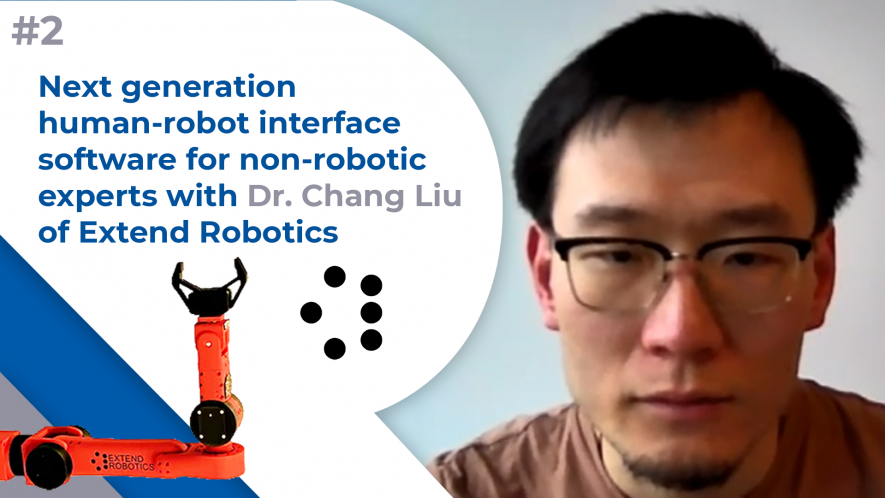
    Hi guys Philip English this from philipenglish.com. Welcome to the Robot Optimized Podcast where we talk about everything robotics related. For our next episode, we have Extend Robotics led by CEO Chang Liu who will talk about their leading technology on robotic arms.

    Philip English: 
    You guys, uh, it’s uh, Philip English. Um, I am a robotics enthusiast, uh, reporting on the latest business and application of robotics. Um, my mission is to get you a robot optimized and, uh, to support industry innovation and infrastructure for the next era. Uh, today, uh, we’ve got Chang, uh, from extend robotics, uh, so extends, um, they build, uh, affordable robotic arms, um, which can be remotely controlled anywhere. And I think their, their, their, their main vision is to sort of extend human capability. So you, haven’t got to be there physically. You, you, you, you can use robots to do the tasks. Um, so hi, Chang. Welcome. Cool. Thank you, sir. Um, so I suppose that the first thing that we want to know is it’s really just like a, um, a quick explanation about yourself and the company. Is it, is it all right if you give us a, uh, a very quick overview?

    Dr. Chang Liu: 
    Yeah, sure. Uh, so I’m Chang, I’m the CEO of Extend Robotics. Uh, so in one word, uh, in one sentence, uh, an example box we would build, um, highly, scalable, um, extent. Uh, we’ll go highly scalable. Uh, teleoperation robotic long two, and now anyone to, uh, intuitively operates remotely from anywhere. And, uh, I really like myself is, um, I, I kind of started from like a robotic recess back where I was, uh, I did my PhD and, um, uh, actually, uh, on our style, how we can automate, uh, robots. Um, I was also the head of robotics. Uh, so during this process really like, uh, all too many plans and the industry partners, uh, trying to figure out what’s their, what’s their need in terms of using the robot in real world scenarios. I’m kind of getting very excited and recent years seeing this, this, uh, uh, boom, uh, um, role of, uh, being used in real application. Uh, other needs like this, there’s a few writing for us a lot, like, uh, digital digitization automation, the trends, and the enabling technologies that allow like, uh, um, intuitive operations such as the VR, uh, um, the class artist. Um, yeah, but I also see as a base, uh, challenge there, uh, that’s really this, this, uh, this bottleneck of motor robotics that has this complaint of the limitation of operating and complex scenarios, while you actually would require physical operations to certain costs, but that’s beyond the cognitive ability, say, uh, the robots say taking pictures and deliberate, uh, robots. And, uh, really what we want to do to do is back. You find a way, but a new way to, to make complex operations, uh, many relation tasks saves our cost cheaper. Yeah.

    Philip English: 
    Fantastic. No, that’s, that’s a great overview. Thanks Chang. So we’ll see, like, you’ve come from a, uh, robotic, um, like academic backgrounds, you know, you’ve seen that the, the, the, the, the problems that the industry has is, and now you’ve created oversee, uh, this company and this solution. And I suppose the main problems, I suppose you can go through if you went through health care. And then I, the first thing I think about is, you know, you, you, you, you may have people like in hospital beds or care homes where you can, uh, assist them like remotely, uh, industry has lots and lots of different types of, uh, of applications to do with manufacturing and distribution, um, general services. So restaurants and, and things like that, especially because of COVID right, right. At the moment. So I can see, um, the, the problems that, that, that people will ha would have. And then I suppose, on the agricultural side as well, with the, with the getting more and more difficult to find workers, um, the, the, the, the problem is there that we need to like address, and I suppose the solution for fit for you. I mean, I was reading into, um, you’ve got something called AMA S is that, is that part of the solution?

    Dr. Chang Liu: 
    Yeah. Yeah. So the AMS, uh, is short for, the amass mechanic assistance system, which is literally a special VR game that connects to a real role to allow people to leverage the intuitiveness and the immersive VR to operate the robots more easily. Um, so we believe that’s, that’s kind of the new way that people could go for it, the robots. Yeah.

    Philip English: 
    And then, and this is connected to the clouds and that, and obviously that, that’s where the link is. So is that, is that a server on the cloud that, that, that, that all the information lead links to, or how, how, how does it work? How does the communication work?

    Dr. Chang Liu: 
    Yeah, I mean, the system with the mining is a, uh, it’s a network ready, uh, system. So the robots connects to obviously the network, uh, the AMS software connects to connect to the same network on them. They communicate or over imagine this network in as, as, um, it’s flexible. So it could be wifi could be, uh, 4g, uh, or even the 5g is not, well, I would say a CEO, we are a partnership with a few, um, 5g test that, to actually trial how 5g could improve our service. Uh, Thomas was giving , but, uh, but yeah, but the system with a lot of network ready, so some that couldn’t connect to any, uh, networks. Uh, we also worked on integrating the out of the website is to the, to the system. So, uh, slowly you can actually have a remote server that actually allows you to choose province like, uh, Marshall, uh, uh, like VPNs you to communicate over the internet. So that’s, that’s allowed people to work remotely. So because initially use the BI interface to, to operate the robots or the internet. So you don’t have to be in the same, same location. There’s a little

    Philip English: 
    Perfect. Yeah. Well, I suppose that, that’s the main thing. Like you want the security around it, so if anyone’s going to be logging onto the robots, you want to make sure that they’re secure. Um, I did go through a few of your videos. So I saw you at the robot restaurant up in Milton keyeds. Um, is there a robot ties here? Uh, sorry, robot taser. I think Mark and Joe I’m like, Oh, that, that at that place. So I’ve been there, it’s quite a, it’s quite a good place to get to if you’re going to the UK. But, um, so as those, the sort of testing is that, is that a good example of, uh, how you would use it?

    Dr. Chang Liu: 
    Yeah, I would say as a, as a concept demonstration and a technology showcase, uh, our system, uh, we’re still exploring the business, uh, business case behind it, but, uh, but I would say this is a great showcase of what you kind of do as example. And, uh, so we basically did a bit of quick set up in there. Um, so we kind of use it a little bit hard to see what kind of beer, uh, following the quality of that. That was cool. It closed down a lockdown. Uh, actually that was one though only like one day before the, uh, meltdown second lockdown. So we were kind of lucky. Uh, we managed to do it a demonstration. Uh, yeah, but, but it was the, it was quite simple demo, but actually is not designed to do one particular task. Uh, but it’s, it will be, it’s designed to do a general, uh, system floor, uh, random, different costs, um, depending on how people want to use it. So one day it could be useful, um, for bartending one day it could be used or Shanna’s, or, uh, or it could be an independent roles. Um, anything you want to do to fix this flexibility, you, you attend from the AMS. Uh, human interface, that’s literally the role of the human. They still controlling the robots, uh, but in a more intuitive way.

    Philip English: 
    Yeah. Yeah. And that, I love the flexibility as well. So obviously like you can, you can use it for multiple tasks. And I suppose, especially in, in, in, in, in restaurants, like we’ve seen, um, a few robot projects where they’re looking to automate the, the restaurant, but obviously the robot can’t do everything. So you would need still someone to, to, to log on and do that piece of work. And, and the thing that, that gets my attention it’s maybe even at the home as well. Um, cause we’ll see if you have a, if you’re making a meal at home and he wants some, someone to, to get you to give you a hands, then obviously you can have a service where someone can log on and actually start to start to make the food for you, especially if it’s an elderly person as well. Who’s struggling. Um, so that’s interesting. Yeah. I mean, I was going to ask, um, so what’s the sort of, um, so the main reason is obviously to get these robots out, to make it a lot easier to, to do tasks without having to be there. So like what’s the bigger picture then? Like where do you see your, your yourself going?

    Dr. Chang Liu: 
    Well, the system is general S uh, remote timely solution was, uh, was a low cost advantage on the intuitive interface. Uh, and what we believe is, is the, the problem is so applicable to a wide range of industries. Uh, so random from, uh, utilities, uh, utility industries where you want to do a special images, uh, maybe like nuclear industry say you want to, uh, decomission, the nuclear, uh, facilities, uh, house care. You want to go onto it, we’ll take care of the patients, uh, where you, uh, even, even there was, there was a highly, um, uh, dangerous virus uh, uh, or yeah, uh, the agriculture industry where you house, um, uh, like the local local, um, what do you call out the shortage of laborers and local areas? So you can utilize, um, the labor that’s outside the SIS local area, uh, quickly, and also like, um, uh, public service, uh, hospitality industry, as you want to, uh, have a remote walking solution for your, um, Walkers, uh, there was also could be usable space even.

    Dr. Chang Liu: 
    So those are wide renders industries. Uh, what believes the key market would be around utility industry. That’s where we see the most desire from the customer. Uh, but, but, uh, sometimes it needs a more complete solution, not what we tend to, uh, at the moment offering. Uh, yeah, but, uh, that’s what we are looking at us. And, uh, we, we’re also looking at, uh, uh, public service industries that may have a, um, easier cost philosophy would do at the beginning. But, um, but yeah, but we see the shot market is seeing, um, house, uh, they probably had this, um, the, the key market is the utility, the utility industry.

    Philip English: 
    My sense. Yeah, it makes sense. Like I also saw the video about the, uh, the, uh, the first, um, birthday party sort of like CA COVID birthday pie. So that was very impressive.

    Dr. Chang Liu: 
    That was the, our early prototype, uh, uh, that was basically that was done, uh, or 50 miles away, apart from the mobile apps to the operator. So I was controlling the robot from Redding and then robot itself is in central London. Uh, that’s what we’re suppose to be miles away. Um, we were able to operate the roll-ups, uh, over the internet, um, that that’s shown us to be quite, quite bombastic. Yeah.

    Philip English: 
    And then I, I suppose a quick, quick question, I thought, well, if he were operating like 500 miles away, would you have to have to make sure that the internet connection is it’s obviously stable and secure and powerful, you know, so he doesn’t cut, cut, cut out. So he’s, that’s quite a main thing.

    Dr. Chang Liu: 
    Yeah. Um, I said that the network capability will help us, is it just like a 5g, uh, improves to improve latency and the family than the robustness? Uh, the system can operate, uh, in restricted, uh, by the way, is, um, on being safe, even the, even this network breaks out. So worst case scenario, you lose control and the robot stays there, uh, safely. Um, and, uh, yeah, so, and actually our, um, point like our beta beta streaming pipeline, uh, where we’re also like a patent pending analysis, a lot of information was in a low bottle. Um, so we are walking on a flat and popping off on the streaming algorithms, um, that will basically forms our, uh, one of our USP to achieve people, have such systems, uh, and, uh, in a more realistic scenario, especially within a constrained network. Yeah.

    Philip English: 
    Right. Perfect. Perfect. And then, um, I suppose the only other question I have was around, um, sort of, uh, you, is the company going through like a, um, like an investment sort of scheme where obviously you, you have investors on board and every step that you go up, um, and then you get more investment and you grow and grow. Is that, is that the path that, that, that, that the company is on?

    Dr. Chang Liu: 
    Yeah. Uh, we are, uh, yeah, so we are already say start up, uh, we have been raising, uh, investments from, uh, breed books, uh, Wales, we’re still looking for Southern investments, uh, someone interested, uh, with a more detail conversation around that.

    Philip English: 
    That’s fine. Thanks very much. Well, um, yeah, I think that’s it for my questions. I mean, I suppose the next, um, so sort of steps is, so if we wanted to purchase a unit, I fix a start up, but, uh, can we, can we purchase a unit now or are we still a bit too early?

    Dr. Chang Liu: 
    Uh, well, yeah, so, uh, our strategy is that, uh, were walking honestly, antiquated solution was hardware software. Uh, our, our goal is to provide, uh, fully integrated solution, um, uh, by the, by the beginning of, uh, 2022, yeah. Uh, we are currently, uh, just, just all just started to offer the software alone solutions. So we’re demonstrating the way we help, how people could, uh, in to phase out softball with a third party, lower arm. Uh, so someone we want any have a, um, and also one arm, uh, they got come to us and a wait time we can discuss the way we could just say is out so far, which would have robot arm, uh, the way our software architecture is it’s a loss interface, robotic operating system. So anyone arm that support robotic operating system kind of actually, uh, integrate with our AMS software very easily. Um, yeah, so we also have not now, and, uh, we’re actually really looking forward to, um, everyone who has an interest on though we can, uh, we can walk out with solutions together, or we can to stop, uh, have a trial of our current system.

    Philip English: 
    Right. And then, and then the, the, the, the actual hardware, is that a 3d , a 3d printed piece, or is that something that you’re going to get mass manufactured?

    Dr. Chang Liu: 
    Yeah, colored form five is 3d printed, uh, robot arms. Uh, we have a lot of experience all in the, how to we, uh, make sure to business 3d prints, uh, Makes salary requirements. Um, we are, we optimizing particular small elements of, um, the, the system to make sure the core, the core functionality, um, is not compromised. So it will be optimized as 3d printing, uh, solutions, arms. Um, yeah.

    Philip English: 
    Okay, perfect. Perfect. Okay. Yeah, no, I think that’s been a great, like overview Chang, so like many thanks fit fee for your time. I mean, if people want to get in contact with you, like what’s the best way,

    Dr. Chang Liu: 
    Uh, based onto our website for, uh, and www dot extend robotics dot com, um, uh, maybe a little, a little messages, or you can just simply, you know, me, uh, chang.liu@extendrobotics.com. Yeah.

    Philip English: 
    Right. Perfect. Thanks Chang. And what we’ll do is we’ll put all the links, uh, in the, in, in, in the bottom of the interview as well, so. Perfect. Cool. Well, thanks Chang. Thanks for your time today. It’s very much appreciate it. Thank you, sir.

    Dr. Chang Liu: 
    Okay, cool. Awesome. Take care. Bye-bye.

    Robot Optimised Podcast #2 – Dr. Chang Liu of Extend Robotics

    Extend robotics: https://www.extendrobotics.com/

    Philip English: https://philipenglish.com/

    Sponsor: Robot Center : http://www.robotcenter.co.uk

    Youtube:- https://www.youtube.com/watch?v=de2B3nS5VBg&ab_channel=PhilipEnglish

  • Fizyr Interview, with Herbert ten Have

    Fizyr Interview, with Herbert ten Have

    Hi guys Philip English this from philipenglish.com. Welcome to the Robot Optimized Podcast where we talk about everything robotics related. For our first episode, we have Fizyr led by Herbert Ten Have who will talk about their leading technology on picking up objects.

    Philip English: 
    Hi guys, my name Philip English, and, uh, I’m a Ross’s enthusiasts report on the latest business and applications of robotics and automation. Uh, my mission is to get you robot optimized, uh, to support industry infrastructure and innovation for the next era. Uh, today, uh, we have Herbert, uh, Ten Have from Fizyr. Who’s going to give us an overview of fizyr, and then we’re going to fire a few questions at him and just to see how the business runs and what solutions that he has. And so hi there Herbert

    Herbert ten Have: 
    Afternoon,

    Herbert ten Have: 

    Philip English: 
    Afternoon. And so I suppose to start with, could you give us like an overview, um, of, of yourself and your company?

    Herbert ten Have: 
    Sure. I’m 57, still alive. You can breathe and you can do all kinds of active stuff. Um, I run a company called Pfizer, which is a spinoff of the university by a professor. He had an academic view of the world and having robots do all kinds of jobs and they put a brilliant team together. And so now we also have a business plan and we are in quite good operation. A few years ago. We won the Amazon picking challenge, post stowing and picking. And that’s the moment we stopped doing robotics. No more robots.

    Herbert ten Have: 
    Okay. Okay. So you’ve moved from the hardware to the software side.

    Herbert ten Have: 
    The brain, Actually what we do is like self-driving cars. We translate the image, what the camera sees into, where the robot should move. And that’s why also our name, new name fizyr means scope. We look, so we look through where it should be grasp as well as we’re looking at future new applications and new technology.

    Philip English: Wow. Okay. And fizyr means scope

    Herbert ten Have: 
    Dutch in Dutch and German and Danish. It’s telescope,

    Philip English: 
    It’s sort of the same. And then I know, we’ll see, I saw the bit about, um, you won the Amazon awards and that, that was because of your deep learning capability of the software.

    Herbert ten Have: 
    Correct. Wow. So,

    Philip English: 
    Um, how big is your team then? Um, from like a size wise,

    Herbert ten Have: 
    24 currently.

    Philip English: 
    I see. And then we’ll see. So you’ve come from a university background. Um, so I guess, you know, you’ve got, um, uh, quite like an academic, uh, source of inspiration there, which is something that’s really interesting. I mean, so what, what’s the main problem that fizyr is solving.

    Herbert ten Have: 
    Okay, good question. So let’s take a partial fulfillment, like example, every time you drop it, it will, the robot will see a different envelope. It will always be different or they’ll take their style. They will always be different. So there is no way you can program it to program a robot. How will, how will it look like? Because it will always be different. So the only way to sort of recognize it and classify it is to generalize to teach it to generalize. Like we, humans can, I could get a one year old, can see that this is a box and can grasp it. And so what we’ve done, we trained the neural network with a lot of images, so a supervised learning. So we teach them, this is an envelope, this is a box, et cetera, and millions of images. And at some point it became good at doing the same thing as humans, understanding that this is a box, a bottle or two per cylinder, et cetera. And to pick it from a bulk of unknown partials.

    Philip English: 
    Right. I see. So obviously the main problem is that there’s from a normal vision system, it’s hard for it to distinguish the way one item ends and another one starts. So, so within, within your software, it’s obviously got a lot of deep, deep learning tools that actually does that distinction. Um, and I suppose the main problem for the customers is that if they can’t find where the product is, they can’t get a robot to pick it up and then they can’t move into an automation type of process to speed up the process plan. Correct. Okay. That makes sense. And then, so in regards to the actual camera system, then, I mean, is it, is it one type of camera or is it, is there any camera that you can use and you put for your software on top or

    Herbert ten Have: 
    Yeah, now we are hardware agnostic or both on the sensor of the camera side, as well as on the robot and the end effector the gripper. But having said that we mostly use RGB depth data. RGB is being what we see right now and the depth images is to do triangulation. So we need to know what’s the distance. So for that, you need a depth camera, which is a stereo camera, uh, with, uh, in the middle is structured light, like a flashlight with different ways of structuring it. And based on that, uh, that camera will create a point cloud from which you can derive the distance and to see how it’s positioned. So for instance, take this box, uh, this time you would hear instruction to simulate it, to factor them, uh, in this case you have two sites, but we will see maximum, see three sites of each parcel. So we will find those places where to grasp with the robot to simulate the, uh, the item.

    Philip English: 
    Right. I see. I see. So that’s the mechanics of how it works and, um, I suppose, would it, um, could you, if you had two cameras or three cameras or four cameras with, does that add on and make it more and more, um, of a product that the products you can see or was it just one camera and that’s all you need

    Herbert ten Have: 
    As always, it depends. The key thing is the camera should see it. If the camera cannot see it, then, uh, the algorithm, the neural network cannot it. So the good exercise is normally when we want to pick something, we look into the bin and we can find what we want, but we are flexible with our eyes and we can move that. So assume you have the camera above, then you just look at the screen, can you see it in the screen? And then we can train a neural network to pick it as well. So we’ve had many applications that the neural network was much better than human beings. So for us, it was too hard, but the neural network was more faster, accurate, and more robust.

    Philip English: 
    And would it make sense? I mean, it’s just an example there, we’ll see if a camera is that I only got one position and w w would it help to have maybe a system where the camera was almost moving to some degree to help like pick, pick it up?

    Herbert ten Have: 
    Not necessarily in most cases we, um, we picked, let’s say from a pellet or from a bin or from a conveyor, and as long as it’s feasible for that camera, and then the robot can move there as well, because what you can see in the camera, then the mobile can move at the same direction as well, because it’s free. There is no, there is no other objects in between.

    Philip English: 
    Perfect. And then, so to give us some examples, I mean, like where have you installed this type of technology?

    Herbert ten Have: 
    Okay. One of the nice thing, and we’ll show you in a, in an image is picking the corners of towels and that’s really hard. So towels are in bulk white and white, for instance, and you have soft corners like when it’s, uh, it’s it’s bended, but you also have the heart corner of, of, of a, of a towel. And what the algorithm does is finds the corners of towel and then big, and then feeds it into a folding machine. And then the towel is folded. So that’s something that has been operation for a few years. So we started doing that, and now we are mostly in logistics, in e-commerce it’s item picking. So picking unknown items, which you order online, as well as when the item is being packaged into a bag or a box, we have to pick the partials also from bulk for, let’s say, DHL ups, federal express, et cetera. And, um, we do also track on loading and the pelletizing, which is mostly also boxes, let’s say,

    Philip English: 
    Well, and for the truck on, on loading then. So the idea is obviously the back of the trunk pulls out. Um, then I suppose a bit of a challenge, a question like where, like, where would you put the camera? Does the camera sort of drop, drop down to the back of the truck? So it sees in and then pop pops up again.

    Herbert ten Have: 
    Uh, first of all, we don’t build a machine. We only are the brains that translate the image into, with what they do is they have a camera on the device that goes into the truck. So there is a robot picking each of the items and putting it on a retractable conveyor. So the items, the boxes or bags are simulated from bulk, from unknown. And I will show you the image as well, and then put on a conveyor and then it’s being handled the, in the warehouse. Right.

    Philip English: 
    That makes sense. Yeah. Cause I understand in big light logistic houses, you would have a device that goes into the actual lorry with a conveyor belt on, and then obviously the items can be paid. I mean, in, in regards to, to the, um, to the towel folding, I was always, I was having to look at that FoldiMate robot. I’m not sure if you’ve seen that. It’s like a house appliance. I think it’s on Kickstarter at the moment.

    Herbert ten Have: 
    Yeah. In our case, it’s really, it’s a really professional a robot. Uh it’s uh, so it’s, uh, it’s been there for, uh, for a while. It’s really for the professional, uh, laundry industry. So in hotels and conference centers and a lot of laundry when they, where they have three shifts per day dealing with laundry.

    Philip English: 
    Yeah. I’ve been into some of those sites moment myself, and it’s a 24 hour operations as washing and washing and washing. So yeah.

    Herbert ten Have: 
    Humid and warm show. It’s something you, at some point we realized we should not do this as humans. Yes. Yes. So we should just sleep at night and then have robots doing the work for us.

    Philip English: 
    Yeah. No, definitely. Definitely. Yeah. There’s definitely a way, I mean, um, in, in regards to their robustness, cause I’ll say, I was saying that’s one of your key features, I suppose the first question is, can you use it outside that I know you wouldn’t normally have a robot set up outside, but is it, can you have cold and snow and wet or is it

    Herbert ten Have: 
    Yeah. For the software? Doesn’t matter. Of course. So it’s yeah, of course. It’s all about, do you have a camera that’s IP waterproof and all this stuff. And uh, so, uh, most, I would say 95% of our applications are, are indoor, but some of them are like for truck and loading, it could be outdoors as well,

    Philip English: 
    And then I saw her, I was, I was reading up. So yeah, the, the, the scanning can, can scan up. Um, is it like a hundred items a

    Herbert ten Have: 
    Second?

    Philip English: 
    Yeah. Yeah. So, so if the robot was fast enough and then you could really yeah,

    Herbert ten Have: 
    Yeah. There is no robot on earth that fast. So the neural network is extremely faster. So we use a GPU like in a Nvidia card where we play with, uh, so we use that, uh, to, to do that process. So it’s extremely fast in providing all information, including the, the, the cross poses of the, of the parcels. Yeah.

    Philip English: 
    Yeah. Cause I was, I was reading that. I was saying, yeah, that’s really fast. I was thinking, Oh yeah, you would need a, you need a lot of robots all attacking. Um, so I suppose then, as you’re saying, like, you know, the bigger picture then is really for those sort of dull, dirty and dangerous jobs, you know, that, that you, you, you, we have robots with the fizyr system that can also pick the items and do the job for us. I mean, what, what, what’s your sort of, um, uh, like future plan? I mean, I did see from, from your website, obviously you, you guys have very successfully like bootstrapped up to 2020, and I think you recently got some investment. So is your seed expansion is it’s on your mind? So

    Herbert ten Have: 
    Yeah, we’re quite unique I think in Europe. Uh, so we’re bootstrapping is more common, uh, then later to get some investment. So we refill it, dated our product with our, our clients. So we have clients like Toyota for, for four years already. So it’s really, we go into a long-term relationship and we build things going production, and then we built the next one. So it’s, the Americans would go faster and et cetera, but we would like to get everything in order and then go to the next one. So that’s how we build up. So now we have the product ready and we can scale easily easier. We are in logistics, which is like I said, if fulfillment and partial handling and we do something in airports as well, but it hasn’t been disclosed it’s so it’s always logistics and nine out of 10 cases, either a box or a bag.

    Philip English: 
    Yeah. Yeah, that’s right. I’ve, I’ve, uh, I’ve been in a lot of airports as well, and I’ve seen, uh, I’ve seen them to deploy some robotic systems in there. So I suppose, yeah, that’d be a perfect target for a, for, for you really? Because, um, just, just making sure, you know, different sizes of luggage and bags made sure, because that’s key. If you, if you go on a holiday, you want to make sure that your luggage is there.

    Herbert ten Have: 
    Yeah, yeah, yeah. But like I said, we only deal with the computer vision part. So there are two more elements to it. Secondly, do you have an anti factor, a gripper that can cope with the variation? So if I have to pick up a pen with suction, I need a very small suction cup to pick up this one where when I have a bigger box, let’s say is, would be heavy, then I need multiple suction to CrossFit. So it’s the, do you have a gripper and anti factor that can cope with the variation? That’s going to be expected. That’s a second challenge. And cert one is all about the integration. So how fast can you accelerate or decelerate without throwing it away? How well do you know it’s it’s attached? Is it safe for the environment for people? Do you have a cobalt or an industrial robot? So integration with the warehouse system. So there are a lot of things around it. So there are three phases and we take all the first phase. Can you see it? Do you have perception? Can, do you know where to where to cross?

    Philip English: 
    I see. Yeah. No, that makes sense. I mean, I did see your gripper as well. And um, I think if you made that, um, like open source, so anyone can sort of build their own, is that, is that the idea or, you know, a usual technology?

    Herbert ten Have: 
    Yeah, we do a lot of open source. So if you go and get up and Pfizer, they will see a lot of return on net and all the stuff that we’ve made open source. So we have a lot of followers. We’re very proud of that. And it also brings in new developers. So we get a lot of developers through the open source community because they know us. Um, so the gripper is something we give away the science as well, because we only do software. We don’t do hardware. We don’t want to do, we just want to stay digital. And so it’s, it’s a really nice market. It’s so big. And there’s so many challenges still to go. It’s not as easy as it looks because in warehousing, if you go to a shorting center, it’s looks, it looked like a warzone. So you’ll see everything, car tires, all kinds of stuff is being shipped. So it’s not easy and they’re working hard. And um, so it’s, it’s a, yeah, there is a lot to be done still.

    Philip English: 
    Yes. Yeah. No, that that’s really true. I mean, I I’ve, I’ve been into a lot of those sites as well, and yeah, I can definitely see that there’s, um, that you, you need a good vision system to make sure that you pick up the right light items. I mean, just going back to the gripper though, I mean, it’s, um, it’s obviously that’s open source. So then I was going to ask a payload question, but I don’t, I suppose it depends on how you build the grip or how they would build the gripper. Like usual

    Herbert ten Have: 
    Fill up the payload is very simple. You have a vacuum, then you have a surface. So just, you can just calculate what is the maximum force you can apply. So in order to lift something with a certain amount of vacuum and surface, so you can calculate, and if it’s well touched, then you can do CrossFit. But let’s say if it’s something like this, like a towel It will go through, right, you need to take that into account and then you need to apply more flux. So like a vacuum cleaner, you can still pick it up as long as it’s not, it’s not going to be sucked in. So you need, you need the, you need the filter, but so are our neural network knows what it is, can classify it and knows. In some cases you have to apply more, more air, more flux in order to cross this. And, uh, so you can also measure how much air goes through how well it’s attached, uh, in order to know how fast you can move without throwing it away.

    Philip English: 
    Right. And, and I’ve seen recently there’s a lot, a lot more of those soft type of rope or all of robotics that have all sorts of arms and flux that, that, that make it even more, um, like useful for those types of operations. So yeah,

    Herbert ten Have: 
    The key thing is, is the combination between what the robot sees the information, the eye, hand coordination. So the more like we’re humans, we have flexible hands. We can do a lot. So the same applies for a robot. You can have a smart gripper with multiple suction cups so we can apply based on if it’s this one, we only do you see suction cup so we can apply different suction cups, different sizes and shapes, uh, based on the material we go to grasp. And so then what we also do is stacking. It’s like playing Tetris. Okay. So we picked something of unknown. And when we look, what are the dimensions, and we look into the place where we want to play a place like a pallet or a bag, like grocery should do micro fulfillment. And then we placed the, the item in the, in the unknown environment.

    Philip English: 
    Right. So you’ve got the ability to do that as well. So I was speaking to a friend about you guys, so he he’s got a project, uh, to do with waste recycling. So as you can imagine, massive plant, lots of all sites of rubbish. So we’ll kind of get coming along a conveyor belt. And, uh, I know he’s looking into, um, uh, you know, a technique to do it. And I think they’re actually saying, Oh, look, we only needed to, we only need it to work 30% of the time, and then we can work on it. And then if you guys had a chance to have a play with that industry. Yeah. Or

    Herbert ten Have: 
    Yes, we did screen off years ago. And then we decided we want to focus on logistics because it’s logistics like a blue ocean. It’s so big. And we, we, uh, we claim, we did still think we are the best in the world, although we are small and, uh, we want to stay the best. So you need to focus, focus, focus, focus, and just stick with that one and just be in, stay the best because you can do a lot of things, stuff. And it’s really interesting. It’s nice to do, but at the end you need to, to stay the best and just to focus,

    Philip English: 
    Focus on the main area. Yeah, yeah. Um, okay. No, that’s great. So, I mean, so what’s, what’s the latest news, like, what’s the next thing for, for you guys, um, are looking into it.

    Herbert ten Have: 
    Um, it’s, it’s helping our integrators are robotic integrators worldwide. Uh, so our, now our software fresh in production in, uh, in the U S North America in Europe, of course, and in Asia, China, and soon Japan. Uh, but what we see a lot is in the fulfillment that they will have micro fulfillment centers. So one of our clients is for instance, fabric, they have micro fulfillment center to, uh, to bring the groceries, really, to work towards the homes and they are in cities. So that’s really a robot robotized, like lights, they call it lights out factory where everything is done with robots. And I would say, we’re still ahead of that. We’ll still take maybe one or two years, but that definitely what the industry is going for to have lights out factories where just truck comes in, it’s loaded, then the robots take over the rest,

    Philip English: 
    Right. And then, and then your software light, either lights on or lights off can still do the same job.

    Herbert ten Have: 
    We need some lights, but, uh, the lights off means, let’s say no people or just remote. But again, we only do a small part. We only do. We like self-driving cars where to drive. We are for the robots where to pick that’s the key thing we do.

    Philip English: 
    Yeah. And, and I suppose it, you expect on a lights outfit, factory, you know, on certain items that need light, then it would flash on a light. So, so, so, so it can do its job, uh, like most efficiently. So

    Herbert ten Have: 
    Yeah, in our case, we always need light. We need RGB. And so we need light to see, but, uh, lights out as a term means that they can have a factory without humans around. And so they call it lights, lights out, factory mat. So, but in shorting center, everybody buys a lot online and the number of parcels only, uh, increases every year. So that’s a big challenge in the industry to be automated because there’s a shortage of humans doing this work. And we don’t like to do it in the middle of the night or weekends working on the, on the de palletizing or picking parcels. So we should have robots doing that.

    Philip English: 
    Yes, no, I totally agree. I totally agree. Have you, uh, have you had any, any work in, in hospitals or sort of amendment meant medical care? That seems to be a lot of speak about that robots coming into the hospital world. I mean, I suppose you’re using your software to, um, organize certain items around the hospital. Have even if you guys said that any, any traction with that or,

    Herbert ten Have: 
    Uh, focus, focus, focus, logistics, logistics. The only thing that we still do is picking towels and then sometime that’s in a, in a, in a hospital as well, but we really want to do focus and we do pick a medicine by the way, see fulfillment, shop picking small boxes of, uh, of medicine and the blisters and stuff. It’s part of it.

    Philip English: 
    Right. Fantastic. Okay. No, that’s great. But I think we’ve got a great overview of fizyr. I mean, um, what’s the best way to get hold of you then?

    Herbert ten Have: 
    Well, you can follow us on LinkedIn. We post frequently, let’s say a few times a week, uh, of course followers open source if you’re into developments, um, yeah, I’m online. So you can reach me if I can help you more than welcome to help.

    Philip English: 
    Sure. appreciate that, and I suppose that could be a mixture of, uh, of end users integrators, um, and, and anyone who needs that, uh, the, the, the vision to basically move lot items around them. So there’s a big industry there.

    Herbert ten Have: 
    Sure. But I, I meant also, uh, personally, if a student has an, a question or whatever, working in the, we have, we have 11 nationalities. We have a lot of people from abroad. We have consent to hire people from both. So, so we’re always open for new, uh, brilliant talent talent joining us.

    Philip English: 
    Thank you. Thank you here, but no, that’s great. Like many thanks fit fit for your time today. It’s very much appreciated. Thank you.

    Herbert ten Have: 
    My pleasure. Take care.

    Robot Optimised Podcast #1 – Herbert Ten Have of Fizyr

    Fizyr: https://fizyr.com/ 

    Philip English: https://philipenglish.com/

    Sponsor: Robot Center : http://www.robotcenter.co.uk

    Youtube:- https://www.youtube.com/watch?v=QxPZKVDz65c