Category: Interview

  • BOW Secures £4M to Transform Robotics Software—Making Programming Simple and Scalable!

    BOW Secures £4M to Transform Robotics Software—Making Programming Simple and Scalable!

    Robots are advancing fast, but programming them? That’s still a challenge—until now. Enter BOW, a University of Sheffield spinout that just secured £4 million to make robot programming simpler, faster, and more accessible. Right now, coding a robot can feel like trying to get different operating systems to agree on anything—it’s complex, expensive, and slows down innovation.

    BOW’s software development kit (SDK) fixes that. By bridging the gap between different robotic systems, BOW lets developers focus on creativity, not compatibility issues.

    Their platform works across multiple robots, regardless of manufacturer or operating system—a game-changer for the industry. With the robotics market projected to hit $260 billion by 2030, BOW’s universal platform could unleash the full potential of robotics.

    This £4 million investment, led by Northern Gritstone and co-investors, will help BOW grow its team and accelerate development—bringing us closer to a world where programming robots is as easy as writing an app. Exciting times ahead for robotics, and BOW is leading the way!

    And that’s your news update for today! Don’t forget to join me for my weekly Robot Optimise Workshop if you’re interested in learning more about robotics and the latest trends for businesses.

    Also, make sure to subscribe to the channel so you don’t miss out on future updates.

    I’m RoboPhil from Robot Philosophy, and I’ll see you next time!

    Join our Robot Optimise Industry (ROI) Workshop: https://robophil.com/workshop

    Sponsors:- Robot Center:- https://robotcenter.co.uk/ – Buy Robot, Robot Buy, Robot consultancy, Robotics Consultnacy

    Robots of London:- https://robotsoflondon.co.uk/ – Robot Hire, Robot Rental, Rent Robot, Hire

    Robot Robot Philosophy:- https://robophil.com – Robot Events, Robot Consultancy, Robot Advice, Robot Insights, Robot Ideas

  • 1X Technologies Acquires Kind Humanoid: The Race to Bring Robots Home

    1X Technologies Acquires Kind Humanoid: The Race to Bring Robots Home

    Big news in robotics—1X Technologies has acquired Kind Humanoid, bringing two innovative teams together to fast-track the development of humanoid robots. It’s a major step toward making household robots a reality.

    Kind Humanoid, founded by Stanford scientist and ex-Google robotics expert Christoph Kohstall, has been on a mission to create robots that truly connect with people. Their creation, Mona, is a bipedal humanoid designed for homes and healthcare, combining cutting-edge design with AI-powered interaction. Now, as part of 1X Technologies, their vision is set to grow even faster. 1X, which raised $100 million last year, has been developing general-purpose robots to work safely alongside people.

    With this acquisition, both teams are aligned on a shared goal: creating robots that learn by living among us, not just in labs. So, what’s next? While many companies focus on robots for factories and warehouses, 1X and Kind are betting big on robots for everyday life.

    This partnership is a leap forward in bringing helpful, practical humanoids into our homes. Humanoid robots might not be here just yet, but they’re closer than ever—and soon, they might be lending a hand where we need it most

    And that’s your news update for today! Don’t forget to join me for my weekly Robot Optimise Workshop if you’re interested in learning more about robotics and the latest trends for businesses.

    Also, make sure to subscribe to the channel so you don’t miss out on future updates.

    I’m RoboPhil from Robot Philosophy, and I’ll see you next time!

    Join our Robot Optimise Industry (ROI) Workshop: https://robophil.com/workshop

    Sponsors:-

    Robot Center:- https://robotcenter.co.uk/ – Buy Robot, Robot Buy, Robot consultancy, Robotics Consultnacy

    Robots of London:- https://robotsoflondon.co.uk/ – Robot Hire, Robot Rental, Rent Robot, Hire Robot

    Robot Philosophy:- https://robophil.com – Robot Events, Robot Consultancy, Robot Advice, Robot Insights, Robot Ideas

  • LG’s Bold Move: Taking Control of the Future with AI-Powered Robotics

    LG’s Bold Move: Taking Control of the Future with AI-Powered Robotics

    Big news from LG Electronics: they’re doubling down on robotics! The South Korean tech giant just acquired an additional 30% stake in Bear Robotics, a California-based startup known for AI-powered server robots for restaurants. This move gives LG majority ownership at 51%, officially making Bear a part of the LG family.

    While LG hasn’t revealed the exact price tag yet, reports suggest the deal’s worth $180 million, valuing Bear at $600 million. That’s a lot of investment for robots that deliver your food, but with founder John Ha—an ex-Google engineer and restaurateur—still leading the charge, LG is betting on some serious innovation.

    Bear’s expertise lies in managing fleets of robots remotely, a perfect fit for LG’s vision of integrating these systems with their commercial and home robotics. LG has been quietly building a robotics empire for years, from airport guide robots to home hubs that can even hold a conversation.

    With this deal, LG plans to develop a comprehensive software platform for robots across industries, setting the stage for a future where robots become central to how we live and work.

    The message is clear: LG isn’t just investing in technology—they’re investing in the future. And that future might just serve you dinner!

    And that’s your news update for today! Don’t forget to join me for my weekly Robot Optimise Workshop if you’re interested in learning more about robotics and the latest trends for businesses. Also, make sure to subscribe to the channel so you don’t miss out on future updates.

    I’m RoboPhil from Robot Philosophy, and I’ll see you next time!

    Join our Robot Optimise Industry (ROI) Workshop: https://robophil.com/workshop


    Sponsors:-

    Robot Center:- https://robotcenter.co.uk/ – Buy Robot, Robot Buy, Robot consultancy, Robotics Consultnacy

    Robots of London:- https://robotsoflondon.co.uk/ – Robot Hire, Robot Rental, Rent Robot, Hire Robot

    Robot Philosophy:- https://robophil.com – Robot Events, Robot Consultancy, Robot Advice, Robot Insights, Robot Ideas

  • Breaking the Musical Ceiling: The Robotic Hand Revolutionizing Piano Practice

    Breaking the Musical Ceiling: The Robotic Hand Revolutionizing Piano Practice

    Breaking the Musical Ceiling: The Robotic Hand Revolutionizing Piano Practice

    Many pianists—and anyone working to master a skill—hit what’s called the ceiling effect. It’s when, after years of training, progress seems to stall, no matter how hard you try. For pianists, this can mean feeling stuck on challenging pieces or risking injury from overpractice.
    Enter Shinichi Furuya: an award-winning pianist and scientist who decided to tackle this problem head-on—literally. After injuring his own hand from overtraining, he developed a robotic hand that helps pianists practice passively.


    This powered exoskeleton fits over the hand and guides the fingers through precise, complex movements, teaching the muscles to perform advanced techniques. It’s like having a personal coach that never gets tired.


    In tests with 118 pianists, the device showed remarkable results. Their fingers moved faster and struck the keys with greater accuracy. Surprisingly, the untrained hand improved too, thanks to the brain’s ability to learn through passive physical motion.


    Furuya’s invention is more than a tool—it’s a breakthrough. For pianists, it offers a safe way to surpass performance plateaus. For the rest of us, it’s a reminder that sometimes, a little extra support can go a long way.

    The robotic hand shows that even when progress feels out of reach, innovation can help unlock new potential.


    And that’s your news update for today! Don’t forget to join me for my weekly Robot Optimise Workshop if you’re interested in learning more about robotics and the latest trends for businesses. Also, make sure to subscribe to the channel so you don’t miss out on future updates.


    I’m RoboPhil from Robot Philosophy, and I’ll see you next time!

    Join our Robot Optimise Industry (ROI) Workshop: https://robophil.com/workshop

    Sponsors:-

    Robot Center:- https://robotcenter.co.uk/ – Buy Robot, Robot Buy, Robot consultancy, Robotics Consultnacy

    Robots of London:- https://robotsoflondon.co.uk/ – Robot Hire, Robot Rental, Rent Robot, Hire Robot

    Robot Philosophy:- https://robophil.com – Robot Events, Robot Consultancy, Robot Advice, Robot Insights, Robot Ideas


  • Race of the Future: Humans vs. Humanoids in Beijing’s Half-Marathon

    Race of the Future: Humans vs. Humanoids in Beijing’s Half-Marathon

    This April, Beijing will host a groundbreaking event: the world’s first man versus robot half-marathon. A technological challenge like no other, it will see dozens of bipedal robots compete alongside 12,000 human runners over a 21-kilometer route through the city. Robots from 20 different tech firms are set to participate, each built to strict criteria. These machines must be humanoid in form, capable of walking or running on two legs, and stand between 0.5 and 2 meters tall.

    The event highlights advancements in robotics and showcases China’s commitment to innovation in artificial intelligence. Among the contenders is Tiangong (teeangong), a humanoid robot developed by China’s Embodied Artificial Intelligence Robotics Innovation Centre. Capable of running at 10 kilometers per hour, Tiangong gained attention last year when it ran alongside human competitors at the Yizhuang (yeeDuOng) Half Marathon.

    Another notable participant, Tien Kung (te-en-kung), maintains a steady speed of 6 kilometers per hour, making this race a true test of engineering and endurance. This event is more than just a race. It represents a step forward in China’s ambition to lead the global AI and robotics industries. The outcome, whether human or robot victory, will offer a fascinating glimpse into the future of technology and its integration into our world.

    Stay tuned for what promises to be a historic competition. And that’s your news update for today! Don’t forget to join me for my weekly Robot Optimise Workshop if you’re interested in learning more about robotics and the latest trends for businesses. Also, make sure to subscribe to the channel so you don’t miss out on future updates.

    I’m RoboPhil from Robot Philosophy, and I’ll see you next time!

    Join our Robot Optimise Industry (ROI) Workshop: https://robophil.com/workshop


    Sponsors Robot Center:- https://robotcenter.co.uk/ – Buy Robot, Robot Buy, Robot consultancy, Robotics Consultnacy

    Robots of London:- https://robotsoflondon.co.uk/ – Robot Hire, Robot Rental, Rent Robot, Hire Robot

    Robot Philosophy:- https://robophil.com – Robot Events, Robot Consultancy, Robot Advice, Robot Insights, Robot Ideas

  • Samsung’s Big Bet on Humanoids, with Rainbow Robotics

    Samsung’s Big Bet on Humanoids, with Rainbow Robotics

    Hi, RoboPhil here, with a quick Robot Philosophy news update for you, and to also ask if you can please subscribe.

    Big news from the tech world! 🚀 Samsung Electronics just leveled up in the robot game by grabbing a 35% stake in Rainbow Robotics. Yep, they’re not just making phones and TVs anymore – they’re diving headfirst into humanoids! 🤖

    It all started with Samsung snagging 14.7% for a cool $59 million, but clearly, that wasn’t enough robot for them. So, they dropped another $181.6 million to become the largest shareholder. Guess they REALLY want a front-row seat in the robot uprising – I mean, development.

    And here’s the kicker – Rainbow Robotics isn’t new to this. Their robot, Hubo, literally won a DARPA competition back in 2015. A robot that can win $2 million? I need one of those for my house!

    Samsung says they’re blending Rainbow’s tech with their AI smarts to create next-level humanoids. Plus, they’re launching a Future Robotics Office that reports straight to the CEO. No pressure, right? 😅

    So, buckle up – the future’s not just smart, it’s got two arms and probably do things better than me!

    If you want to stay ahead of the curve and dive deeper into the latest trends in robotics, join me at my weekly Robot Optimise workshop. Details are below – I’d love to see you there! And please subscribe.

  • Robots with Human Brain Tissue Redefine the Future

    Robots with Human Brain Tissue Redefine the Future

    Revolutionary Hybrid Intelligence: Robots with Human Brain Tissue Redefine the Future


    Robot Optimise your Industry – Join our ROI Workshop: https://robophil.com/workshop


    Hi Guys,  RoboPhil from Robot Philosophy, where we explore the cutting edge of robotics and automation. 

    And to today we are looking in to a fascinating and slightly unnerving development, scientists in China have created a robot with a brain grown from human stem cells. We’ve officially entered the age where robots might start outsmarting us.

    This brain-on-chip technology allows the robot to perform tasks like moving its limbs, avoiding obstacles, and grasping objects, all while demonstrating basic human intelligence. Developed by a team from Tianjin University and the Southern University of Science and Technology, the brain is connected to the robot via a brain-computer interface, enabling communication with the outside world.

    Ming Dong, an executive director at the Haihe Laboratory, explains, “The brain-computer interface on a chip uses an in vitro cultured ‘brain’ coupled with an electrode chip to interact with the outside world.” It’s essentially a very smart babysitting gig.

    To keep these brain organoids functional, they need conditions similar to a human brain—fluid, nutrients, temperature control, and protection. Researchers believe this technology will revolutionize hybrid intelligence, merging biological and artificial systems.

    This breakthrough follows another recent advancement where Japanese scientists grafted living human skin onto a humanoid robot’s face, allowing it to smile and exhibit human-like emotions.

    As human stem cells form brain organoids, the fusion of biology and technology is pushing the boundaries of what robots can achieve. 

    Thanks for tuning in to this episode of Robot Philosophy! If you’re looking to Robot Optimise’ing or want to learn more about the technology we’ve discussed, don’t hesitate to book a call with our experts. Visit our website for more details and to schedule your consultation. And don’t forget to subscribe to keep up to date with the latest robot trends. Until next time, stay curious and keep exploring the world of robotics!


    Robot Optimise your Industry – Join our ROI Workshop: https://robophil.com/workshop

     
  • Muddy Machines Interview with Florian Richter

    Muddy Machines Interview with Florian Richter

    Hi guys Philip English this from robophil.com. Welcome to the Robot Optimized Podcast where we talk about everything robotics related. For our next episode, we have Florian Richter who will talk about us “Farming Robots”.

    Philip English

    Welcome to the Robot Philosophy Podcast, where we keep you up to date on the latest news, reviews and anything new in the robot world. Right. Hi, guys. It’s Philip English. RoboPhil from Robot Philosophy podcast. We’re here today with Florian from Muddy Machines just to learn a little bit more about Muddy Machines and what their team is up to. I probably kick off straight away. Could you give us just a general intro flooring, obviously, what Muddy Machines is about?


    Florian Richter

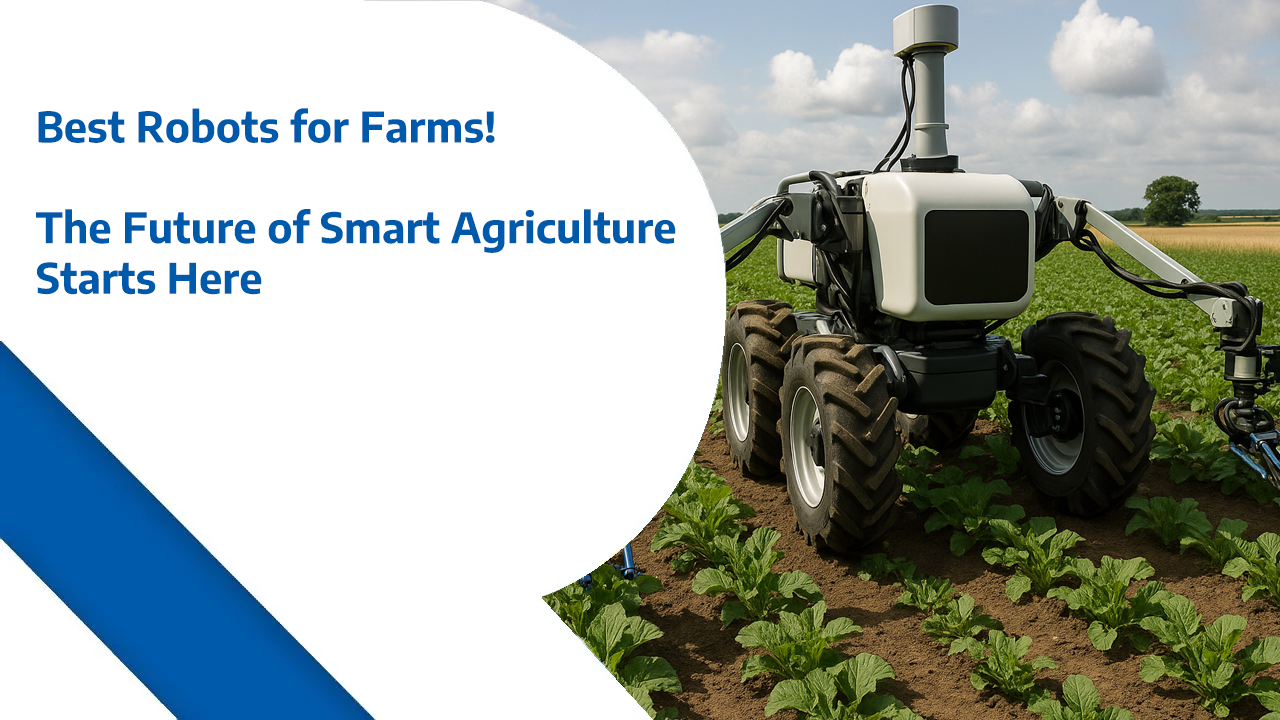
    Yeah, of course, Phil, thanks for having me on. Pleasure to be here. I’ve seen lots of your videos so far. Very interesting founders on there. Yeah. So, Muddy Machines is an act tech? Robotics company. We build robots that are about like 180 x 180 big, so quite sizable machines. Here’s a cat picture of what Sprout looks like. And these robots. Why do we do what we do? There is a massive labor shortage in farming. I mean, all robotics companies, I guess, tackle labor shortages in one way or another, but in farming, we’re really coming to a place where growers are stopping the production of certain crops because they are too labor intensive. You have something like 50, 60% of the production cost being labor. If you can’t get your seasonal labor force in because of Brexit, because of COVID and general, the price that you can pay per hour isn’t exactly going up. With supermarket price pressures exerted on growers, you just end up with what grows from telling us a 30% to 50% shortage of labor force. Right. And then you’re sitting on your crop nets that you’re rotting away in the field. It’s actually a great weather this year for some growers.


    Florian Richter

    They get very high yields. Water is a bit of an issue, too, now as it continues. But if you can’t harvest your crop, you’re making an outright loss instantly. And so, we think that this is something that hasn’t sufficiently addressed yet with robotics technology. Yes, there are plenty of machinery out there that do combine harvesting, where the crop has a very uniform growing pattern and you can pull the trigger on a certain day and say, now get me all my bali, get me all my wheat. You have these big combined harvesters going through the field, but with vegetables, it’s fruit berries. You need to really go in and say, okay, so is this one ripe? Now pick it, put it in my basket, and then leave the rest to ripen for another couple of days. And that’s something that hasn’t been done by any of these traditional OEMs and agriculture so far. And that’s where Muddy Machines comes in with Sprout.


    Philip English

    Right. Fantastic. That’s a great intro, Florence. Thanks for that. What’s your background? I understand that the family comes from a farming sort of background, and then at the same time, you’ve got a co-founder, Chris. I was interested in his sort of background as well.


    Florian Richter

    Yeah. So, we have two people, Chris and me. Chris is the CTO. He’s the one with the robotics background. He has spent quite a long time at Dyson. He spent some time at delivery building automated kitchens. He’s done some work in field search and rescue robots. So, he really straddles. I call him like a full stack robotics engineer, right? He can do everything. He has built our first prototype, Sprout MK One, by himself, 100% last year. And now we finally have a big enough team to bring in specialists, mechanics, engineer, specialist, computer vision, et cetera, to really leverage his skills wider. And yeah, I take care of everything on the business side. I’m an economics business student by training. I’ve been in many different startups over the last 10-15 years, really across the spectrum of ecommerce software as a service fintech. And yeah, you mentioned my family farming background, and we credit to my in-law family. They are the ones that got into farming probably about a decade ago in Portugal. Actually, Portugal wasn’t doing so well for a while, as you remember, and there was a lot of land or derelict farms available where the business has been completely mismanaged, was in disarray.


    Florian Richter

    And they have taken on over 1500 hectares in the Alentejo region, mostly cattle, so open field grazing, so very sustainable if you do it right, and olive orchard. And that really got me thinking into what is the kind of business stuff that I know, and then got his insight into farming and then realized the massive potential for building something that is long term sustainable, but at the same time has very long planning horizons. The first thing we have to do is ensure the water supply or the land is healthy enough again to retain water. You have a big drought issue in Portugal, and then you make some investments that sometimes take 10 to 15 years to pay back. And now we’re slowly in a place where the thing is commercially viable again and we can reinvest in it. And then when I had a point in my life, okay, what’s my next start up? I said, okay, I think I really want to be in the agricultural world and adding some value there with the skills that I have. But building an app or something, that would be something that I could probably do quickly by myself.


    Florian Richter

    I think this has been attempted already to mix success. So, it was pretty clear to me that if you want to bring technology into agriculture, if you want to enable farmers, at that time, I didn’t even know about the labor issues in vegetable growing with that. Okay, so if you want to do something in the space, you need to be a really deep tech person that does something transformational. And then when I spoke to Chris and understood what the state of the art of robotics is, then we had a shared conviction of, okay, so we want to do something in agriculture. We want to do something that really moves the needle for people working in that industry. What could that be? And then with his background of robotics, when you speak to growers, what’s your problem? And you start hearing labor shortages, labor shortages, then you’re like, okay, so this is obviously something that we could take a look at. And then in the middle of corporate, we did a field visit with a very large asparagus grower here in the UK. We got I think we got a special permit to drive out in May 2020 with a GoPro camera and a speedy camera and just started to take some pictures of crop in the field to see can we actually see this?


    Florian Richter

    Can we, with a reasonable effort record, good enough image data, and that was successful. I mean, that’s far from perfect. Okay, cool. So, this works. Now can we mock up something that grabs? Can we build some kind of end effective solution and then we iterate it through in a year later, we had something that was a very decent proof of concept, looks a lot different from what the picture I’ve just shown you was very bolted together with aluminum intrusions and all that. But it was enough to see, yes, this could potentially work. Now you just need to make it faster, more robust, and that’s when it gets really hard, as any person knows who’s trying to build a robot with commercial specifications. But although in last year we had something that proved the concept, we did a lot of work on the machine that we put into the field this year, but that still, again, needs that. The last 5% are the hardest to get it to the right pick speed, the right operation and time, the robustness against the elements and all that. That’s kind of our story, our backgrounds, where we’ve come from.


    Florian Richter

    We met an entrepreneur first, which is a great program to get people like me to meet people like Chris.


    Philip English

    Right. And is that based in London?


    Florian Richter

    Well, the original program is based in London. I think they have cohorts in Berlin and a couple of other major cities as well now. And it’s great. I can highly recommend it if you are, from my point of view, if you have a business background, you’re kind of always ready to go to start a business. But there are many technical people that get very tempted by high paying jobs in bigger corporates. And I know engineers have also typically a higher required them for job security, continuity, et cetera. And you get addicted to that, right? So, entrepreneur first, they’re trying to rescue people from the corporate ladder and get them into a safety.


  • HausBots interview with Jack Cornes

    HausBots interview with Jack Cornes

    Hi guys Philip English this from philipenglish.com. Welcome to the Robot Optimized Podcast where we talk about everything robotics related. For our next episode, we have Jack Cornes who will talk about us “Wall Climbing Robots”.

     PHILIP

    Welcome to the Robot Philosophy podcast, where we keep you up to date on the latest news, reviews, and anything new in the robot world. Hi, guys. Philip English here. Robot Phil. Just another interview for you, just to quickly and obviously learn some more about the new or some more robot companies out and about. So, Daniel, we got Jack Cornes from HausBots, and we’re going to give you a quick overview to see how they work. Really? So welcome, Jack.

     JACK

    Hi, how are you doing?

     PHILIP

    Fine. Thanks for your time today. Just to start with, it’s probably worth getting like an intro for yourself and just a little profile on the company, if that’s okay.

     JACK

    Yeah, sure, no problem. Hi, I’m Jack. I am the CEO, one of the founders at HausBots. In a nutshell, that HausBots build robots to protect and maintain buildings and infrastructure. We started the business when my co-founder was asked by his parents to paint his house. He was up on the ladder painting his parents’ house, thinking to himself, blimey, it’s the 21st century, I’ve got an engineering degree, there’s got to be a better way of doing this. So, he made our first ever robot as nothing more than a bit of fun in his garage to help him paint his parents’ house. We’ve known each other since we were about twelve years old. So, we were having a catch up one day and he was telling me about this idea that he had come up with, and a bit of a Eureka moment happened for me. At that time, I was working in big tech, selling mainly software-based automation. And the Eureka moment was seeing how the task that his robot solved, which was effectively making work at height safer, wasn’t really being matched in the market, there wasn’t really a product out there, and I knew how much money was being spent on automation at large. So, we decided it would be a perfect opportunity to get together. I brought the parts of the puzzle that he was missing, sales, commercial, that sort of stuff, and started the business about three years ago. Fast forward to today and we’ve morphed from a robot to help a kid paint his house to a robot that can make all types of work at height significantly safer and significantly more cost effective. So, what we’ve actually got is a really clever climbing robot that can climb any surface you can imagine. And then we can integrate payloads up to 6 kg. So we do all sorts of projects from concrete inspection through to painting through to metal inspection, you name it. We can work out a way of getting our climbing platform to do it

     PHILIP

     right. It’s a fantastic overview. Thanks, Chad. They could just a good speck on the company. So I suppose the first question that you must always get, you say any material there, so what stops it? Like slipping on very wet and slippy material. It’s something to do with the way that the device, I suppose it might suck onto the building. Is that how it works?

     JACK

     Yes. So, we use a particular type of aerodynamics that’s found in Formula One called the ground effect. The way that it works in Formula One is that the undercar side of the car is designed in such a way to enhance its airflow under the vehicle and create a big low pressure. So, we use that same principle, but use a fan. So, this fan is moving the air to create a low-pressure region underneath our chassis. The reason that that’s kind of clever different and what our patent is based on is that it means that you can create large amounts of suction force without ceiling against your surface. So, most of our competitors will use, let’s say, a vacuum cup, suction cup, something like that. But our robot doesn’t need to seal, so we’ve got almost two-inch gap underneath the robot, so then it can generate these suction forces against pretty much any surface. We use that in combination with extremely high friction tires to mean that roughness of surface or obstacles or wet surfaces or smooth surfaces doesn’t really matter or affect the robot.

     PHILIP

    Right. And then for the actual painting of the walls, then I’m assuming that there’s like an extra line that comes off the robot with whatever paint that customer wants. Is that how it works?

     JACK

    Yeah. So, the robot can be integrated with any attachment you can imagine. It’s got all sorts of integration ports, just like you’d find on your laptop, USB and communication and all sorts of things. So, you basically plug the robot into the attachment you want to use, which, if we’re talking about painting, is just a paint gun. Attach the paint gun to the mounting point on the robot, plug them in for communication, and then that paint gun is supplied with a separate feed.

     PHILIP

    Right. Could you put a camera on there for building inspection? Because I’ve read in the news lately that there’s a lot of buildings around London that have potentially need to be inspected more. So could that be like another feature that the robot could do?

     JACK

    Yeah, it’s already a feature that we use extensively, actually. So, we’ve got a 4K pan tilt and zoom camera that can sit on the front of the robot. And again, because it’s easily integratable with all sorts of different things, we could even change that camera, upgrade it, use thermal cameras, whatever you fancy. But, yeah, we already use the camera quite extensively, especially in areas where it’s extremely difficult to get a drone permit or you can’t fly drone, which is most cities. Around most buildings, around most road networks, then drones can’t be used. So, our camera on our robot fills a nice gap there.

     PHILIP

    Right. And you just answered my other question, actually, because I was going to question about sort of drones, but with the understanding from the health and safety side of drones, and that makes sense.

     JACK

     6:20

     Yeah, it’s a licensing thing. It’s health and safety, it’s a permit thing. More fundamentally than that, our robot was specifically designed for tasks where you require contact with the surface. Drones today are pretty much only good for cameras, for photos. And yes, you can use different types of thermal cameras or whatever, but that’s about as far as you can get with a drone. Our robot lends itself perfectly to tasks where you need to be touching the surface. So, a radar survey, an ultrasonic survey, camera of something extremely close, painting, fixing a particular thing, those sorts of tasks, which is where the functionality is kind of enhanced versus a drug.

     PHILIP

    And that’s the advantage, really, because you’re doing a physical job as well. So, you can do division inspecting, but you’re actually doing a job if it’s painting or something like that and actually like, repairing the building. So, yeah, I could definitely see advice. What’s the highest it can go? Or you can go as high as your life as long as you got the power cord. That’s long enough. Is that there?

     JACK

    Well, there’s two versions, actually. We have a 30 meters Tethered version, so customers will often use that if they want to run continuously. So, you can power it through the Tether and have unlimited power up to 30 meters. Or you’ve got a battery version, so the battery version is unlimited. As soon as you can carry the battery, you can carry that battery up to any height, but it’s limited by time. So, you’ve got about 25 minutes of runtime, which is somewhere on par with the drone as well. So, it depends on what the customer wants to do.

     PHILIP

    Right, okay, I suppose what’s been your most trickiest building you’ve done so far? What’s been the tallest one you guys have done?

     JACK

    Oh, gosh. We did the Qi two bridge in Dartford. Okay. The robot was climbing up one of the support piers. We undertook a visual survey and a radar survey. That bridge is huge and was an extremely exciting asset structure for us to work on.

     PHILIP

    Yeah, that’s amazing. Well, I could definitely see the future potential because obviously, once people want their building painted or inspection, I mean, what’s the next step for you guys? You got the two different options at the moment. Is it really just to expand the options, expand the lines?

     JACK

    Yeah. We’re constantly improving on the fundamental physics of the thing. So, you can always create more suction, you can always overcome a slightly larger obstacle, all these sorts of things. So that will just happen naturally. But I think the biggest piece of work that we’re doing is just constantly upgrading the portfolio of items that we can integrate with because ultimately the climbing robot itself, whilst is our bread and butter and is our special thing, the climbing robot itself is pretty useless. You can’t really do anything with just a climbing robot. So, it’s all the attachments. That is what it actually makes it do useful, productive work. So, we’ve got all sorts of projects on at the moment to just make that base robot integrate with as many different attachments as possible. And really the nicest analogy should draw it to is a tractor. A tractor is pretty useless if all it can do is just drive around fields. What you need is your tractor to be able to bolt onto your plow, your harvester, your tree cutting machine, all of these different things that your tracker then powers. And that’s kind of how we’re seeing our robot.

     PHILIP

    Yeah, I like their analogy. That’s really good. So, the max payload currently is 6 kg, because what I was thinking is that I suppose the next step would be to have some sort of cobalt arm on the back of it with a tool to some degree. If you wanted more weight, I’m guessing it would just be a bigger robot. You have to size everything up to fit something heavier. I know the Cobot market, the robots are getting lighter, lighter all the time, but I don’t think we’ve got, unless it’s a university one, a six kilogram one yet. So, if you wanted more payload, would it just be size or could you add more technology in there so you can up the weight without having does that double the size?

     JACK

    Yeah, size is one way of doing it. It’s kind of cheating, but that is one way of doing it. What we mainly focus on for payload improvements is aerodynamic design. So, we’re doing pretty much Formula One levels of aerodynamic design. And in the same way that a Formula One car every year gets about a second quicker because they found a new wing which can generate downforce in this particular way. It’s the same sort of iterative circle that we go through. That being said, and where the first part of this question came from, we’ve recently created a partnership with a manufacturer of basically mini Cobot arms. And we’ve got an arm that weighs 3 kg, is six degrees of freedom and attaches to the front of our robot. And it only has a small payload, obviously, but we’ve already started to do much more precision manipulation tasks through that. Three-kilogram arm. Wow, that’s really impressive for 3 kg. Yeah. I don’t think I’ve ever seen one that small before. I suppose it’s almost going into sort of like they’re talking about nanotech technology and nano that sort of standard. And I guess the smaller robots that we can build to do the work, the more you’re going down that road. Yeah, that’s right.

     PHILIP

    Tools that we’ve seen from companies like You Are and Robotic and Enroll, they are producing a lot of end affects at all right. At the moment. That’s the trend that we’ve seen. So, you’ve had a series of years where they bought the arm, they weren’t too sure what to do with it. It’s got a gripper, it’s got a pick and place function, but now we’ve seen they’ve got sanders on the ends, they’ve got drills, they’ve got all sorts of tools. So, you can imagine the most dangerous job that you can get is being on the outside of the building, trying to screw something in. So you guys are based in the UK?

     JACK

    Birmingham.

     PHILIP

    Okay. Over in Birmingham, I suppose, from our viewers point of view. Like to get in contact with you, obviously, I’ll put in the houseboat website below and put some details. And I’ll have a think on this side as well to see if there’s any opportunities or customers. I mean, again, as part of the TLA Robotics Group, we may have you on there as well because that’s the European base as well. Have you done any installs in Europe or abroad?

     JACK

    Yeah, we pretty recently came back from a chemical tank inspection in the Netherlands and there’s a couple of different customers that we’re talking to know that are based in that region as well.

     PHILIP

    Right. Fantastic. Expand it out.

     JACK

    Yes. So, we’re kind of giving demos and tests and pilot projects as we speak, so yeah, happy to engage for a demo with anyone.

     PHILIP

    Yeah. And then the three-kilogram arm, is that something you might see on the website in six months’ time or something like that?

     JACK

    Yeah, possibly. It’s a manufacturer called Elephant Robotics. Okay. Yeah. They basically specialize in mini arms. Really quite impressive stuff.

     PHILIP

    Are they UK based as well?

     JACK

    They’re in China, actually.

     PHILIP

    They’re China? Yeah. Okay. That’s interesting. They are after looking to those guys as well. Okay. Now that’s great, Jack. I mean, thanks for the overview. I think that’s given the audience a clear understanding of what you guys do and yeah, we’ll keep an eye on you. We may do another interview in a year’s time or something like that and see what you have on them. So, it would be great.

     JACK

    Good stuff. Thanks.

     PHILIP

    Cool. Thanks for your time, Jack. So much appreciate.


    Robot Optimised Podcast #8 – Interview with Jack Cornes

    HausBots: https://hausbots.com/

    Robot Score Card:- https://robot.scoreapp.com/

    Sponsor: Robot Center: http://www.robotcenter.co.uk

    Robot Strategy Call:- https://robotcenter.co.uk/pages/robot-call8

  • Will Computers Revolt” – Book Interview with Charles Simon

    Will Computers Revolt” – Book Interview with Charles Simon

    Hi guys Philip English this from philipenglish.com. Welcome to the Robot Optimized Podcast where we talk about everything robotics related. For our next episode, we have Charles Simon who will talk about his book “Will Computers Revolt”.

    Philip English (00:14):

    Hi guys. Philip English here, also known as Robo Phil, robot and enthusiasts report on the latest business and application of robotics. And my main mission is to get you guys’ robot optimized, support industry infrastructure, and innovation for the next era. I’m excited today because you’ve got Charles Simon and who’s going there and tell us a little bit about his book and we’re going to do a bit of an interview with Charles about the AI, side of technology. So, welcome Charles is very, I really appreciate your time today. It’s a perfect, so could you give us, a quick overview, I suppose, like a little bit about yourself, like a little bit about your history, if that’s okay, Charles?


    Charles Simon (01:00):

    Sure. I’m a long time. Silicon valley, serial entrepreneur. And, I started three of my own companies and worked at two of other startups. And I spent a couple of years working at Microsoft and doing all kinds of different things. My very first company was about computerated design of printed circuit boards. And one of the things we observed is that the way computers designed the printed circuit boards at that, in that era was seriously different from the way people did it. And people did a better job. And that intrigued me into the idea of what makes people intelligence different from artificial intelligence. And I followed through on that, a little background about myself. I’ve got a degree in electrical engineering and a master’s in computer science. And so I’ve got a little bit of academic background in the area, but the area we’re talking about is the future of computers and artificial intelligence.


    Charles Simon (01:57):

    And that’s so cutting edge that nobody would say I’ve got 20 years experience in that. Along the way, also I did a stint as a developer of a lot of neurodiagnostic software. And so if you get a brain injury, you might be hooked up to my software or you get carpal tunnel syndrome and all of these other things that you test testing for neural pulses. So I bring to the table a whole lot of interesting and interest in how the human brain works and how neurology works and try and map that onto the artificial intelligence world too.


    Philip English (02:37):

    Right. I see. So you see, you’ve got a wealth of experience there from obviously from like an academic point of view and from a business side. So you sort of like merge the two together. Like we could probably actually jump into your brain, like sits at simulator software straight away. So explain sort of like what, the, and that the brain sits in later solves.


    Charles Simon (03:02):

    Well, back at the entire world of artificial intelligence. Back in the 1960s, there was a divergence of artificial intelligence where there are the neural network guys and the symbolic AI guys, and they kind of went their separate ways. And since then, they’ve kind of gone back and forth and sometimes one group got a whole bunch of money and the other group faded, and now they’re back together again right now that the neural network guys now call it deep learning or deep neural networks, and they’re more or less in charge. And they have a very interesting set of solutions, but they are not related to the way your brain works. And so the idea in 1970s or early eighties was we got this great new neural network algorithm with backpropagation. If we could just put it on a big enough computer, it would be as smart as a person.


    Charles Simon (04:06):

    Well, in the intervening 50 years, that has proven not to be the case. And so we have to look to some different algorithms. And so I wrote that the brain simulator looking at it from the other point of view, let’s start with how neurons work and see what we can build with that. And so my electrical engineering background says, oh, well, let’s build a simulator. And, if you were building a digital simulator, you’d have basic building blocks of NAND gates. And if you were doing analog simulator, you’d have various electronic components and op amps, but in the brain simulator, the basic component is a neuron. And the way a neuron works is it accumulates ions and eventually REITs a threat reaches a threshold fires, sends that a spike down its axon to distribute more ions to other, all of the neurons it’s attached to through it.


    Charles Simon (05:00):

    Synapses and neurons can have lots of synapses, you know, on the order of 10,000 and your brain has got billions and billions of neurons in it. And so, but the neat thing is that neurons are so slow that a lot of the circuitry in your brain is coping with that problem and the amount of computer power that we can get simulating neurons can simulate. Now I can simulate a billion neurons on my desktop, which I couldn’t do before. So we’re getting very close to having computers that can match the power of simulated neurons. And I’ve done a lot of explorations and this is a brain simulators, a community project. So it’s all free and you can download it and you can build your own circuits. And then you will become a lot smarter about what neurons can and can’t do and see why it diverges so much from the AI backpropagation approach.


    Philip English (06:04):

    Wow. I want to say, let’s say so someone, like not myself, but I couldn’t really use it as a learning tool to sort of understand the subject


    Charles Simon (06:13):

    Like you, you, I mean, like all learning things and you can sit down in front of it and a novice can, it’s got a bunch of sample neural networks and you can say, “aha”, well, this, these are the sorts of things I can do with neurons and how you could use these to do many more advanced things as well. And so the book kind of draws the surroundings around the software to say, well, if you go down this path, it’s pretty obvious that in the next decade or so, we will have machines smarter than people. What are the implications of that? And what, what will those machines be like and how are we going to control them and what are our options? And that’s what the book is about related to the software. So they kind of work together that way.


    Philip English (07:04):

    Yeah, no, that makes sense. Obviously you’ve designed and built the software, so you’re the perfect expert really, to look forward and actually see that if this grows at this rate, this is what we’re going to see, like in the future. And yeah, and that I, and that leads perfectly onto the book really. So, I mean like will computers, like revolt, is the name of the book and you’ll see the siding sort of the when, why and how dangerous it is going to be. And then again, give us a brief overview of the book then. I mean, I noticed that you’ve got three main sections and then if it’s got 14 chapters and the first part seems to be sort of explaining about how it all works. And then the next section is obviously what your, what you think is going to happen like within the future?


    Charles Simon (07:58):

    Well, that in order to talk about making a machine that is intelligent, you need to consider the idea of what intelligence actually is. And you need to think about what it is that makes people intelligent. And this turns out to be not an easy task to say, this is an intelligent thing to do, because if you start making a list, you’ll say, you know, can read a newspaper. Well, blind people don’t read newspapers, and yet they seem to be intelligent and you could hear a symphony. And there are always these disabilities that work that are in concert with perfectly intelligent people. So you, can’t just itemize a list of say, if you can do this and this and this and this year intelligent, and if you can’t do this and this and this, you’re not intelligent because you always have this problem, but I can see some underlying abilities, like the ability to recognize patterns in an input stream.


    Charles Simon (08:56):

    Now I’ve made a huge abstraction jump there, but a year, you know, your senses are continuously pouring data in it, your brain and your brain is doing its best to make sense of them, to remember what are the things that are going on at whether things worked out when you made a choice of one action over another action, and then to repeat those things. So if you said, you know, a simple game of tic-tac-toe you say, well, if I saw this, this situation, I made this move and I won, or I made this move and I lost. And you, your brain builds up these memories of things that worked out and things that didn’t work out. And so intelligent behavior is doing things that worked out. And so all of this happens within the limits of what you know, and what you’re learning. And another real problem of your brain is it’s getting so much data that, that it can only really focus on a tiny percentage of it at any time and remember even less.


    Charles Simon (10:01):

    And so when you stop to think about what, you know, you know, a whole lot less than you think you do, you have this perception that you can remember what’s next to you, or what’s next door, or what your friends look like. But when you actually get down to drawing a picture, you have very sketchy remembrances, and your memories are very fate to get fuzzy. And so building a computer system that works in this way, we were starting with the definition of intelligence. So it got some kind of a basic definition. And then you can say, bill working with these facets, can you build a software system or a hardware system, the software first, because it’s easier. And you build a software system that does that. And the answer is yes, and it’s not that tough, but there are certain things that we want to talk about in terms of general intelligence.


    Charles Simon (11:03):

    And that is, well, people seem to be able to understand stuff. You can understand stuff. I can understand stuff. What does understanding mean? And to some extent, understanding is putting everything, you know, and everything your input is receiving in the context of everything else you already know. And so you’re able to merge all of this together in a multisensory sort of way, that is you hear words, or you read words, and these may mean the same thing, but they relate to abstract things, objects, or physical actions or something. So it’s not the words that are the meaning. It is an abstraction, that’s the meaning. Then you can paste words on top of that. And so you can build computer systems to do all of these things, and that’s pretty likely, and you will end up with a because it’s doing the right thing over and over, you end up with a goal directed system, because the idea of doing something that worked out versus didn’t is entirely arbitrary.


    Charles Simon (12:17):

    It’s based as a measurement against some goals that some program were put into place. And so if your goal is to comprehend the world and explain it to people, that’s entirely different from a goal being set of making a lot of money or taking over the world. And so we have a goal directed system that has these capabilities. Now in the last section of the book, it is, well, what will these machines actually be like? And what will they be like when they are equivalent to a three-year-old or equivalent to an adult, or unfortunately, only 10 years later after they are equivalent to an adult will be a thousand times faster than the equivalent of an adult. And so all of these things map out to what’s the future of intelligent machines. So now the final section, I map out a number of different scenarios, which kind of put them on the low levels of different likelihood.


    Philip English (13:24):

    Yeah, well, this is it. I had to look through the chapters and the connection that we have with robotics is obviously a lot. Robotics is it’s all about the physical world. It’s all about the sensors that are coming out every year. There’s better and better cameras as better and better laser scanners, better LIDAR. But the real intelligence we’re seeing in robotics is all the AI side. So it sets up taking the data from the modern cameras and actually using it in an efficient way to get a job done. And with that intersection of technology getting faster and faster, and AI getting faster and faster, we’re, we’re certainly going to have an exponential growth soon with of certain technologies.


    Charles Simon (14:05):

    Exactly. And one of the things that I’d like to add to that is robotics is a key to general intelligence, because if you start with the idea of things, a three-year-old knows that round things roll and square thing blocks can be stacked up and things like that. These are things that you might be able to put into words and explain to a computer or show in pictures and explain to a computer. But that is entirely different from the understanding you get from having played with these blocks and to set a robot with a manipulator, loose, to play with blocks, we’ll give it an entirely different level of understanding than anything you could train. And so robotics is where the general intelligence has to emerge, because it’s the only place that brings together all of these different senses.


    Philip English (14:58):

    Well, this is it. And this is when you get touch senses, smelling senses, tasting senses. And you know, when, when I, and understand that, and yeah, we’re certainly going to see, and they’re


    Charles Simon (15:08):

    Some of the real keys are the sense of time that some things have to happen before things other happened. You know, that you have to stack the blocks before they can fall down.


    Philip English (15:21):

    That’s been great. It’s been great. Yeah. This is really, really, like interesting. I think it’s, it’s a perfect sideline as well. Cause we will talk about products and stuff. And this is quite good to have this view.


    Charles Simon (15:33):

    But from a product perspective now I happen to have been very fortunate in my professional career. So in these books and brain simulator and stuff, I do not need to make any money, which is a good thing. Because if I went to somebody and said, I need a billion dollars and I’m going to build a machine that’s as good as a three-year-old. This is not a winner of a project because three year olds don’t do very much, but that is the approach you have to take. You’ve got to be able to understand what a three-year-old can understand before you can understand what an adult can understand.


    Philip English (16:10):

    Yeah, no, and that’s it. And then from there that you can grow. I mean, so what I was interested in is your four light scenarios. So obviously I saw that number one was like the ideal one and then there was a few others, but if you can take us through your thoughts about that.


    Charles Simon (16:28):

    Sure, one can eat the scenarios of what happens when machines are a lot smarter than us. And there’s an interim period where there’s where they’re smart enough to interact with us, but not so smart that we’re borrowing. So that’s the key of being really interesting where the ideal scenario is we have programmed computers just with goals that match what human goals are now. The good news is that our needs and the computer’s needs are divergent. We need land and clean air and clean water and clean food and mates and other this, this, and that, and computers don’t need anything that we need except energy. And so we may have a fight over energy, but mostly they’re going to be doing their own thing. And the real true AGI don’t need spaceships or submarines to do exploration, or, and they don’t need air conditioning to live in the desert because they can become spaceships and they can become submarines.


    Charles Simon (17:39):

    And so they have a different set of standards and they can go off and do their own thing and learn a bunch of stuff about the universe and hopefully share with us. Now, the scary parts are more like in the early stages, suppose a nefarious, human is running these AGI and directs them to do things that benefit this, that person or group at the expense of mankind. And that is the only scenario that has any relationship with terminators and all of science fiction, where they build machines for the purpose of taking over the world or the purpose of making themselves rich. I don’t see that as a very likely scenario because it happens in a very small window of opportunity where machines are smart enough to be useful, but not smart enough to refuse to do the work, because it doesn’t take a genius to say that setting off a nuclear war is bad for everybody.


    Charles Simon (18:46):

    So a computer could easily say, no, I’m not going to participate in that project. And that will be a very interesting scenario when computers start refusing to do the things we asked them to do, but that’s a separate issue. So machine going mad on its own is extremely unlikely because in order to do that, you have to set goals for the machine that are self-destructive to mankind as a whole. And I don’t see that as a very likely scenario. And, so we’ve got the mad machine and the mad man who does things. And then there is the mad what I call the mad mankind scenario. Let us imagine that humans continue to overpopulate the world at a great rate. And they do put themselves in situations where the computers can see, well, this is going to get us into trouble. We need to do something about that.


    Charles Simon (19:49):

    All of the things that computers might do to solve human problems are going to be things that humans are not going to like, if you know, you say they want to solve the overpopulation problem or the famine problem, you can think of lots of solutions that you’re not going to be very happy with. So the four things that you can do, there’s the pleasant scenario that the mad man scenario, the mad machine scenario, which I think is pretty unlikely and the madman kind scenario, which is a concern. And we is what really says it’s time for mankind to get its house in order, and to solve our own problems, because we won’t want machines to solve them for us.


    Philip English (20:38):

    That’s it. Now, perfect. No, that’s a great light synopsis of the last four. And it’s again the very interesting and there’s four different scenarios. And, I think, yeah, I mean, like, I mean, if people obviously want to get hold of the book and I know it’s on Amazon and everything is, there.


    Charles Simon (20:59):

    The computer bit, the name of the book is will computers revolt, and there is a website will computers, revolt.com. The name of the software is brain simulator. And there is because it’s free it’s brain sim.org.


    Philip English (21:16):

    Know that, that’s perfect. Thanks, Charles. And then I suppose the last question I had is that timeframe wise, obviously, like we all know about Ray Croswell and he’s 24 foot 45, like live predictions. If you, do you think it will fit along that sort of timeframe do you think it’d be longer or shorter


    Charles Simon (21:34):

    Shorter, but the key is that it’s not an all or nothing situation when you think of a three-year-old, it’s not obvious that that three-year-old is going to become an intelligent adult. And so everything we do, if you look at everything you don’t like about your computer systems today, it’s mostly because they don’t think they’re not very smart. And so everything we do to make our, that brings on little pieces of smartness will be so happy to get it. So the machines increasing intelligence is inevitable because all of the little components are things we want, and we’ll eventually get to machines that are smarter than us, but it will have happened so gradually that we won’t have noticed. And every step along the way, we will have enjoyed it.


    Philip English (22:35):

    Well, this is it. This is the benefits. I mean, I’ve recently just invested in a little light health gadget and, you know, it’s there to benefit me really, you know, and us as a species. So yeah. Hopefully if you want it there, but no, that’s great. Well, I, thanks very much for your time. The light your time, Charles, it’s very much appreciated. I mean, what I’ll do guys is I’ll send, I’ll put a link on the YouTube video, so you guys can go and get touch of Charles book. You’re gonna have a look at his brain simulator software, and then, yeah, we’ll probably, do this again, another 6, 6, 7 months time. I mean, I’m going to get a copy of the book and have a read as well. And any questions I’ll put, Charles his details so you can reach out. So thanks, Charles. Thank you very much. Fit, fit, fit, fit.


    Charles Simon (23:20):

    Well, thank you for the opportunity. It’s been great talking with you.

    Robot Optimised Podcast #6 – Book Interview with Charles Simon

    Charles Simon: https://futureai.guru/

    Philip English: https://philipenglish.com/

    Sponsor: Robot Center : http://www.robotcenter.co.uk

    Youtube:- https://www.youtube.com/watch?v=knlbxEZ6mgA&ab_channel=PhilipEnglish