Category: Interview

  • Figure AI’s 17-Hour Robot Shift: What 22,000 Sorted Packages Means for the Future of Humanoid Robots

    Figure AI’s 17-Hour Robot Shift: What 22,000 Sorted Packages Means for the Future of Humanoid Robots

    Figure AI’s 17-Hour Robot Shift: What 22,000 Sorted Packages Means for the Future of Humanoid Robots

    Humanoid robots have been promised for decades.

    We have seen robots walk, wave, dance, fall over, stand back up, pour drinks, carry boxes, fold clothes, and occasionally look like they are one software update away from becoming a useful colleague.

    But the real question has always been simple:

    Can humanoid robots actually work?

    Not in a short demo.

    Not in a polished marketing video.

    Not in a laboratory with perfect lighting and a carefully arranged table.

    Can they work for hours, doing repetitive physical tasks, inside the kind of environment where real businesses make money?

    That is why Figure AI’s recent demonstration matters.

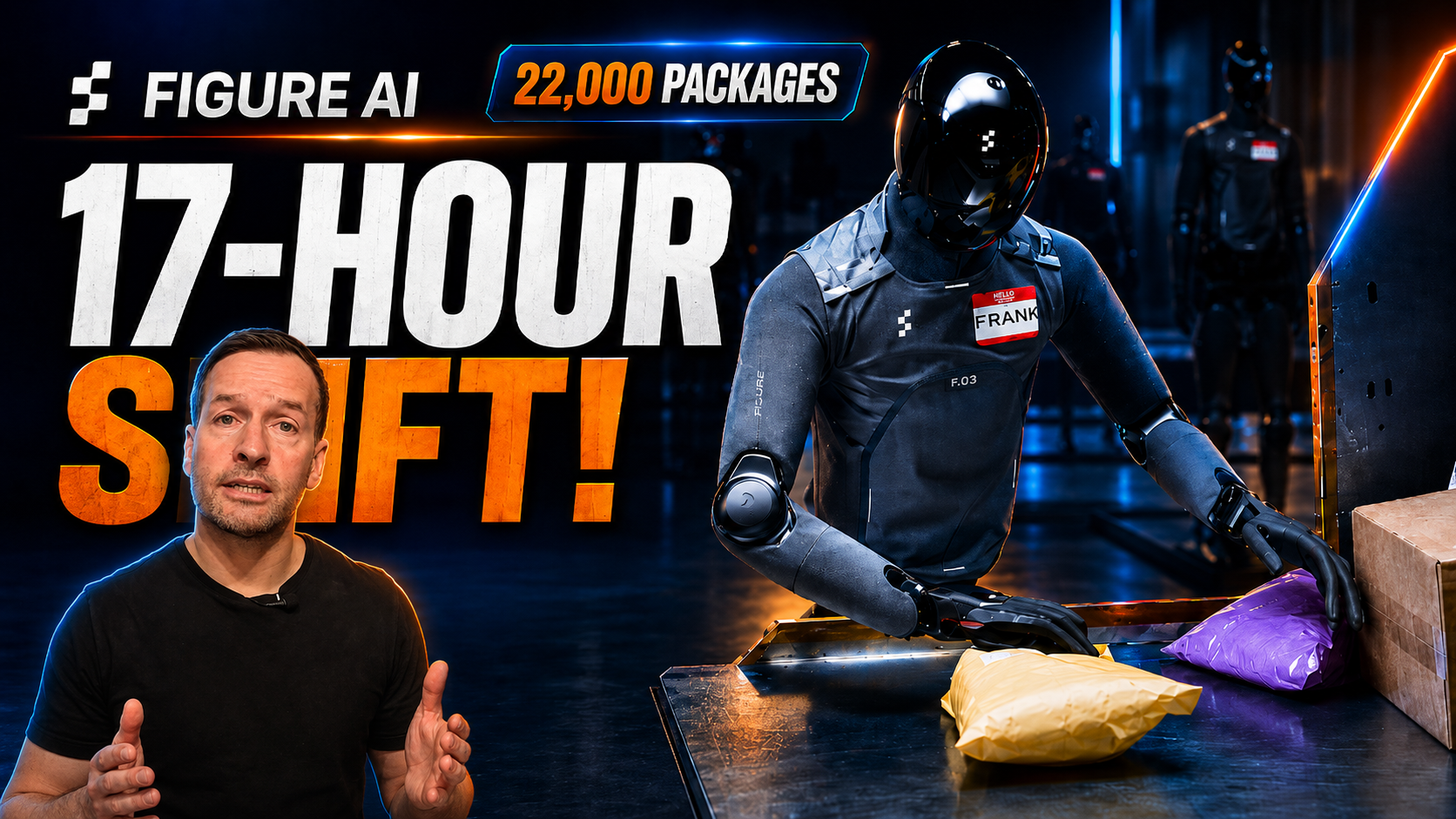
    The company reportedly showed its Helix 02 humanoid robots working for more than 17 hours in a warehouse-style package sorting task, handling over 22,000 packages. The robots scanned barcodes, picked up boxes, turned them into position, moved them through the workflow, and swapped roles when batteries ran low.

    On the surface, that may sound less exciting than a humanoid robot doing a backflip.

    But for the robotics industry, warehouse operators, manufacturers, logistics firms, investors, and business leaders, this is far more important.

    Because the future of humanoid robots will not be built on party tricks.

    It will be built on endurance, reliability, repeatable work, commercial value, and solving real operational problems.

    Why Figure AI’s Package Sorting Demo Matters

    The reason this demonstration is important is not just the number of packages.

    It is the type of task.

    Package sorting is repetitive, physical, structured, measurable, and commercially relevant. It is exactly the sort of job that businesses already spend time, money, and labor trying to optimize.

    In logistics and warehouse operations, small improvements can have a major financial impact. Faster sorting, fewer mistakes, reduced downtime, and better labor allocation can all improve performance across the business.

    For years, automation has been used in warehouses through conveyors, robotic arms, autonomous mobile robots, barcode scanners, sorting machines, and warehouse management systems. These technologies already play a major role in modern logistics.

    But humanoid robots introduce a different possibility.

    Instead of redesigning the entire warehouse around a fixed automation system, a humanoid robot could potentially operate in spaces designed for humans.

    That is the big idea.

    Humanoid robots are not attractive to businesses because they look like people. They are attractive because the world is already built around human movement, human reach, human tools, human workstations, and human workflows.

    If a robot can use the same spaces, handle the same objects, and perform similar physical tasks, then automation could become more flexible.

    That flexibility is one of the biggest opportunities in the future of robotics.

    From Robot Demonstrations to Real Robot Work

    The robotics industry has no shortage of impressive demonstrations.

    We have seen humanoid robots dance in formation, carry boxes, walk across rough terrain, use tools, perform kitchen tasks, and interact with humans.

    These demos are valuable because they show progress.

    But business buyers are not only interested in what a robot can do once.

    They want to know what the robot can do every day.

    A warehouse manager does not need a robot that can pick up one box in perfect conditions. They need a robot that can work through a shift, deal with variation, recover from errors, avoid damaging goods, operate safely around people, and justify its cost.

    That is why long-duration robot demonstrations matter.

    A 17-hour run suggests endurance.

    Sorting 22,000 packages suggests volume.

    Role-swapping when batteries run low suggests workflow continuity.

    These are the details that move humanoid robots from science-fiction entertainment toward commercial robotics.

    Of course, there is still an important distinction to make.

    A company-run demonstration is not the same as an independent real-world deployment inside a customer operation. Businesses should be interested, but they should also remain practical.

    The next stage is proving that humanoid robots can perform reliably outside controlled demonstrations, in real warehouses, with real variation, real pressure, real safety requirements, real return-on-investment expectations, and real operational complexity.

    That is where the true test begins.

    What Is Helix 02 and Why Is It Important?

    Figure AI’s robots are powered by Helix 02, the company’s AI system for controlling humanoid robot behavior.

    At a simple level, Helix 02 is designed to help the robot understand what it sees, control its body, and complete physical tasks.

    The key point is whole-body control.

    A humanoid robot is not just a robotic arm on wheels. It has legs, arms, hands, cameras, sensors, joints, balance systems, and a body that must move together.

    When a humanoid robot reaches for a box, it is not simply moving one hand. It needs to position its body, maintain balance, judge distance, grip the object, lift it, turn it, and place it correctly.

    That requires coordination.

    Humans do this naturally. We rarely think about how much physical intelligence is involved in picking something up and moving it.

    For robots, this is extremely difficult.

    That is why AI robotics and Physical AI are becoming so important.

    Physical AI refers to artificial intelligence operating in the real world through machines that move, sense, interact, and perform useful tasks. It is not just AI on a screen producing text, images, or data. It is AI connected to motors, sensors, grippers, cameras, wheels, arms, and legs.

    Humanoid robots are one of the most visible examples of Physical AI.

    They represent the shift from digital intelligence to embodied intelligence.

    And that shift could transform automation.

    Why Warehouses Are a Natural First Market for Humanoid Robots

    Warehouses are one of the most logical early markets for humanoid robots.

    There are several reasons for this.

    First, warehouses contain repetitive physical tasks.

    Robots are well suited to repetitive work when the environment is structured enough and the task can be clearly measured.

    Second, labor shortages and high staff turnover are common challenges in logistics and warehouse operations.

    Many businesses struggle to recruit and retain workers for physically demanding, repetitive, or shift-based roles.

    Third, the value of automation is easy to calculate.

    If a robot can sort packages, move goods, support picking operations, scan items, or assist with loading and unloading, businesses can compare the cost of the robot against labor costs, productivity gains, error reduction, uptime improvements, and operational flexibility.

    Fourth, warehouses already use technology.

    Many logistics companies are familiar with automation systems, warehouse management software, robotics technology, barcode scanning, automated guided vehicles, and autonomous mobile robots.

    This means the operational mindset is already moving toward automation.

    Humanoid robots could become part of this wider automation ecosystem.

    They may not replace every worker. They may not replace every existing automation system. But they could fill gaps between human labor and fixed automation.

    That is where the opportunity becomes commercially interesting.

    The Commercial Value of Humanoid Robots

    The business case for humanoid robots will not be based on novelty.

    It will be based on value.

    For companies exploring robotics adoption, the key question is not “Is the robot impressive?”

    The key question is “Does the robot solve a problem?”

    In a warehouse or manufacturing environment, a humanoid robot could potentially help with:

    Package sorting
    Goods movement
    Machine tending
    Loading and unloading
    Inspection tasks
    Inventory handling
    Repetitive picking tasks
    Basic assembly support
    Scanning and verification
    Workstation assistance
    Cleaning and maintenance support

    The value comes from using robots where they improve the operation.

    That could mean reducing labor pressure, extending operating hours, improving consistency, reducing injury risk, increasing throughput, or allowing human workers to focus on higher-value activities.

    For small and medium-sized businesses, humanoid robots may eventually offer a more flexible alternative to expensive fixed automation.

    For large companies, they may become part of a broader automation strategy that includes AI, robotics, data systems, and human teams working together.

    The most successful businesses will not simply buy robots because robots are exciting.

    They will redesign workflows around what robots can do well.

    Why Boring Robot Jobs Are the Big Opportunity

    The most commercially valuable robot jobs are often the least glamorous.

    That may sound disappointing, but it is true.

    The future of robotics is not only about humanoid robots walking through homes like science-fiction assistants. It is also about robots doing repetitive, tiring, dull, and physically demanding tasks that businesses need completed every day.

    Package sorting is a perfect example.

    It is not glamorous.

    It is not cinematic.

    But it is useful.

    And useful is where the money is.

    The robotics industry often captures public attention with dramatic demonstrations, but real adoption usually starts with practical applications.

    A robot that can move packages reliably may be more commercially important than a robot that can perform an impressive stunt.

    A robot that can clean floors, deliver goods, inspect equipment, monitor sites, or support warehouse staff may create more value than a robot designed only to impress audiences.

    This is one of the most important lessons for businesses exploring robotics.

    Do not start by asking, “What is the most futuristic robot we can buy?”

    Start by asking, “What repetitive problem do we have that a robot could solve?”

    That is where robotics consulting becomes valuable.

    Humanoid Robots and the Future of Work

    Whenever humanoid robots are discussed, the conversation quickly turns to jobs.

    Will robots replace workers?

    Will humans lose roles to automation?

    Will businesses use robots to reduce labor costs?

    These are reasonable questions.

    The honest answer is that robotics will change work, but the change will not happen evenly across every industry or every job.

    Some tasks will be automated.

    Some roles will be redesigned.

    Some workers will manage, support, train, repair, or supervise robots.

    Some businesses will use robots to fill labor gaps rather than directly replace existing staff.

    The future of work will likely involve more collaboration between humans and robots.

    In warehouses, for example, robots may handle repetitive movement while people manage exceptions, quality control, supervision, maintenance, customer requirements, and decision-making.

    In manufacturing, robots may support assembly, inspection, material handling, and machine tending.

    In healthcare, robots may assist with delivery, logistics, cleaning, and support tasks.

    In retail, robots may help with inventory, customer engagement, stock movement, or security.

    The point is not that every workplace will suddenly be filled with humanoid robots.

    The point is that businesses will increasingly need to understand how robotics fits into their workforce strategy.

    That includes training, safety, job design, change management, and return on investment.

    AI Robots Are Changing the Automation Conversation

    Traditional automation is often rule-based.

    A machine performs a defined task in a controlled environment. It does the same thing repeatedly, very efficiently, as long as the conditions are right.

    AI robots are different.

    They are designed to perceive, adapt, learn, and respond to variation.

    That does not mean they are magic. It does not mean they can do everything. But it does mean they can potentially handle a wider range of tasks than older automation systems.

    This is why AI robotics is attracting so much investment.

    The combination of artificial intelligence, computer vision, sensors, robotics hardware, simulation, and real-world training is accelerating progress.

    Humanoid robots are benefiting from advances in:

    Machine learning
    Computer vision
    Natural language processing
    Motion planning
    Sensor fusion
    Battery technology
    Robotic hands
    Actuators
    Edge computing
    Simulation training
    Cloud robotics
    Autonomous systems

    Together, these technologies are making robots more capable.

    But the challenge is not just making robots smarter.

    It is making them commercially useful.

    That means reliable performance, safe operation, easy deployment, manageable cost, and clear business value.

    The Robotics Startup Race Is Accelerating

    Figure AI is not alone in the humanoid robot race.

    The robotics industry is becoming increasingly competitive, with companies developing humanoid robots, warehouse robots, service robots, delivery robots, inspection robots, cleaning robots, agricultural robots, healthcare robots, and industrial automation systems.

    Humanoid robotics has become one of the most visible areas of robotics investment.

    Investors are interested because the potential market is enormous.

    If humanoid robots can perform useful work across warehouses, factories, retail environments, hospitals, care facilities, hotels, events, and homes, the commercial opportunity could be huge.

    But the path will not be simple.

    Robotics startups face major challenges.

    Hardware is expensive. Deployment is difficult. Safety is critical. Customers need support. Real-world environments are unpredictable. Maintenance matters. Sales cycles can be long. And unlike pure software, physical robots have to operate in the messy, complicated world of people, objects, buildings, weather, floors, doors, and unexpected events.

    This is why the robotics industry requires more than clever technology.

    It requires manufacturing capability, service infrastructure, customer education, deployment expertise, training, support, and strong partnerships.

    The companies that win in robotics will not only build impressive robots.

    They will build useful robot businesses.

    What Businesses Should Learn from Figure AI’s Demo

    The most important lesson for businesses is not that every company should rush to buy humanoid robots tomorrow.

    The lesson is that robotics is moving quickly, and businesses need to start preparing now.

    Preparation does not always mean purchasing a robot immediately.

    It may mean mapping workflows.

    It may mean identifying repetitive tasks.

    It may mean understanding where labor shortages exist.

    It may mean calculating the cost of downtime.

    It may mean exploring robotics as a service.

    It may mean speaking to robotics consultants.

    It may mean running a small pilot.

    It may mean training teams to understand automation.

    It may mean reviewing safety and operational processes.

    Businesses that wait until humanoid robots are fully mainstream may find themselves behind competitors that started learning earlier.

    The companies that benefit most from robotics will be the ones that understand their processes deeply.

    Robots do not fix broken workflows by magic.

    In many cases, robotics adoption works best when businesses first improve the process, then deploy technology.

    A robot placed into a chaotic workflow may simply automate the chaos.

    A robot placed into a well-designed workflow can create real value.

    The Role of Robotics Consulting

    As robots become more capable, businesses will need guidance.

    The robotics industry is complex. There are many types of robots, many vendors, many use cases, and many levels of maturity.

    A business exploring automation may not know whether it needs a humanoid robot, a cobot, an autonomous mobile robot, a fixed industrial robot, a cleaning robot, a delivery robot, an inspection robot, or a custom automation system.

    This is where robotics consulting becomes important.

    A robotics consultant can help businesses understand:

    Which tasks are suitable for robots
    Which robot types fit the business case
    What return on investment may look like
    How to assess suppliers
    How to run a pilot project
    How to prepare staff
    How to manage safety requirements
    How to integrate robots into workflows
    How to avoid expensive mistakes
    How to build a long-term automation strategy

    The aim is not to sell the most futuristic machine.

    The aim is to find the right robot for the right job at the right time.

    For many companies, the first robotics project should be simple, measurable, and practical.

    Success builds confidence.

    Confidence leads to wider adoption.

    Humanoid Robots vs Traditional Automation

    One question businesses will increasingly ask is whether they need humanoid robots or traditional automation.

    The answer depends on the task.

    Traditional automation is often better for high-volume, highly repetitive, structured tasks. Conveyor systems, robotic arms, automated storage systems, and dedicated industrial machinery can be extremely efficient when the process is stable.

    Humanoid robots may be more useful where flexibility is required.

    If the task involves human-designed spaces, varied objects, different workflows, or the need to move between workstations, humanoid robots could eventually provide value.

    However, humanoid robots are not automatically the best solution.

    In many cases, a wheeled robot, robotic arm, or fixed automation system may be cheaper, safer, faster, and easier to deploy.

    This is why businesses should avoid becoming obsessed with the shape of the robot.

    The best robot is the one that solves the problem.

    A humanoid robot may be perfect for some future applications.

    But for other applications, a simpler robot may deliver better return on investment.

    The future of robotics will include many robot forms.

    Humanoid robots will be one part of a much larger robotics ecosystem.

    What This Means for Investors

    For investors, Figure AI’s demonstration highlights the growing seriousness of humanoid robotics.

    The sector is no longer only about research labs and speculative concepts. It is moving toward measurable work demonstrations, commercial pilots, and potential enterprise deployment.

    However, investors should remain careful.

    Robotics companies can generate enormous excitement, but the path to revenue can be difficult.

    Key questions for robotics investment include:

    Can the robot perform reliably in real environments?
    Is the cost low enough for commercial adoption?
    Can the company manufacture at scale?
    Is there a service and maintenance model?
    Does the company have strong customer demand?
    Is the use case clear and repeatable?
    How long is the sales cycle?
    What is the competitive advantage?
    Can the robot improve over time through data?

    The winners in robotics will likely combine strong technology with strong business execution.

    The hype around humanoid robots is understandable, but commercial proof will matter more than public excitement.

    The companies that can move from demonstration to deployment will define the next phase of the robotics industry.

    What This Means for Robotics Manufacturers

    For robotics manufacturers, the message is clear.

    Customers want proof.

    They want to see robots doing useful work.

    They want measurable results, not just impressive videos.

    They want to understand uptime, safety, deployment time, support, maintenance, training, and business value.

    Figure AI’s package sorting demonstration is powerful because it focuses on measurable work. The number of packages, the duration of the shift, and the workflow are all commercially meaningful.

    Robotics manufacturers should take note.

    The most effective marketing in robotics is not just showing that a robot looks advanced.

    It is showing that the robot solves a real problem.

    For robot companies launching products, this means demonstrations should be designed around customer pain points.

    Show the robot doing work that buyers recognize.

    Show how it fits into a process.

    Show how it reduces friction.

    Show why the business case makes sense.

    That is how robotics moves from curiosity to adoption.

    The Event and Media Opportunity for Robotics

    There is also a wider media and marketing lesson.

    Robots attract attention.

    Humanoid robots especially capture public imagination.

    For events, exhibitions, product launches, trade shows, and brand activations, robots can create powerful engagement.

    This is where robotics overlaps with marketing.

    A robot can draw a crowd, start conversations, demonstrate innovation, and create memorable content.

    But the most effective robot marketing is not just about novelty. It is about connecting the robot to a clear business story.

    A humanoid robot sorting packages tells a story about the future of work.

    A service robot at an event tells a story about customer engagement.

    An inspection robot tells a story about safety and efficiency.

    A robot arm serving coffee tells a story about automation becoming visible and accessible.

    As robotics becomes more mainstream, companies will use robots not only for operations but also for communication, branding, education, and public engagement.

    The RoboPhil Perspective

    Philip English, known as RoboPhil, works across the robotics industry through Robot Center, Robots of London, and Robot Philosophy.

    This gives him a practical perspective on robotics adoption.

    Robot Center focuses on robotics consulting, commercial robots, industrial robots, robotics deployment, Physical AI, and helping businesses understand how to buy and use robots effectively.

    Robots of London focuses on robot hire, robot rental, event robotics, exhibition robots, and using robots to create engagement at events and brand experiences.

    Robot Philosophy focuses on robotics insights, robot advice, robotics strategy, robot recruitment, and helping the market understand where robotics is heading.

    From this perspective, Figure AI’s 17-hour package sorting demonstration is important because it reflects a wider shift.

    Robotics is becoming less about isolated machines and more about business transformation.

    Companies are no longer asking only whether robots are possible.

    They are asking how robots fit into their operations, workforce, marketing, investment strategy, and future growth.

    That is the real opportunity.

    Challenges Still Slowing Humanoid Robot Adoption

    Despite the excitement, several challenges remain.

    The first is reliability.

    A robot that works in a demo must prove it can work consistently in real environments.

    The second is cost.

    Humanoid robots need to deliver a return on investment that makes sense for businesses.

    The third is safety.

    Robots operating near humans must be carefully designed, tested, deployed, and monitored.

    The fourth is integration.

    A robot needs to fit into existing workflows, software systems, physical spaces, and staff routines.

    The fifth is maintenance.

    Businesses need to know who repairs the robot, how quickly issues are resolved, and what downtime costs.

    The sixth is trust.

    Workers, managers, customers, and regulators need confidence that robots are safe, useful, and manageable.

    The seventh is task suitability.

    Not every job is ready for automation. Not every environment is suitable for humanoid robots. Not every company needs the same solution.

    These challenges are not reasons to ignore robotics.

    They are reasons to approach robotics intelligently.

    The Future of Humanoid Robots in Business

    The future of humanoid robots will likely unfold in stages.

    The first stage is demonstration.

    This is where companies prove that humanoid robots can perform useful tasks.

    The second stage is pilot deployment.

    This is where businesses test robots in limited real-world environments.

    The third stage is operational integration.

    This is where robots become part of daily workflows in warehouses, factories, logistics centers, retail environments, healthcare facilities, and other commercial settings.

    The fourth stage is scale.

    This is where humanoid robots become common enough that businesses begin redesigning processes around them.

    We are still early.

    But the direction is clear.

    Robots are becoming more capable.

    AI is improving.

    Businesses are under pressure to increase productivity.

    Labor markets remain challenging in many sectors.

    Automation is becoming more flexible.

    And the cost of robotics technology is likely to improve over time.

    Humanoid robots may not arrive everywhere at once, but they are becoming harder to dismiss.

    Why Business Leaders Should Pay Attention Now

    Business leaders do not need to become robotics engineers.

    But they do need to understand the direction of travel.

    Robotics will increasingly affect manufacturing, logistics, retail, healthcare, hospitality, agriculture, construction, security, events, and many other industries.

    The companies that start learning now will be better positioned to make smart decisions later.

    This means asking practical questions.

    Where are we experiencing labor pressure?

    Which tasks are repetitive and measurable?

    Which jobs are physically demanding?

    Where do errors cost us money?

    Where could automation improve safety?

    Where could robots support staff rather than replace them?

    Which suppliers are credible?

    What data do we need before making a decision?

    What would a small robot pilot look like?

    These questions help businesses move from hype to strategy.

    And strategy is what turns robotics from an exciting idea into a business advantage.

    Conclusion: Humanoid Robots Are Moving Toward Real Work

    Figure AI’s reported 17-hour robot shift and 22,000-package sorting demonstration is not the final proof that humanoid robots are ready for every warehouse.

    But it is a strong signal.

    It shows that humanoid robots are moving toward the kind of repetitive, physical, commercially relevant work that businesses actually need.

    That matters.

    The future of robotics will not be defined only by the most dramatic robot demo.

    It will be defined by robots that can work safely, reliably, and profitably in the real world.

    For warehouses, manufacturers, logistics companies, retailers, healthcare providers, event agencies, robotics startups, investors, and business leaders, the message is clear.

    Robotics is becoming more practical.

    AI robots are becoming more capable.

    Automation is becoming more flexible.

    Humanoid robots are moving from science fiction toward business reality.

    The companies that understand this shift early will have an advantage.

    They will be better prepared to adopt robotics, redesign work, support their teams, improve productivity, and compete in a more automated economy.

    The future of robotics is not just coming.

    It is clocking in.

    And this time, it may work longer than a human shift.

    Work With RoboPhil

    If your business is exploring robotics, automation, AI robots, humanoid robots, robot sourcing, robotics consulting, or robotics industry strategy, RoboPhil can help you understand the opportunities and avoid the common mistakes.

    Whether you are looking to deploy robots in a business, source commercial robots, understand the future of robotics, launch a robotics product, or use robots for events and engagement, the right advice can make the difference between a clever demo and a successful deployment.

    Robot Center
    https://robotcenter.co.uk/

    Robots of London
    https://robotsoflondon.co.uk/

    Robot Philosophy
    https://robophil.com/

    Business enquiries
    sales@robotcenter.co.uk


  • Stretch 4 and the Future of Practical Home Robots

    Stretch 4 and the Future of Practical Home Robots

    Stretch 4 and the Future of Practical Home Robots: Why Useful Robots May Beat Humanoids to Market

    Introduction: The Home Robot Dream Is Changing Shape

    For decades, the dream of the home robot has looked roughly the same.

    A humanoid machine walks into the kitchen, tidies the house, makes a cup of coffee, folds the laundry, and perhaps gives a polite little nod on the way out.

    It is a powerful image. It is also one of the reasons humanoid robots attract so much attention. They look familiar. They feel futuristic. They are easy to understand in a video clip.

    But the future of robotics may not arrive in the shape most people expect.

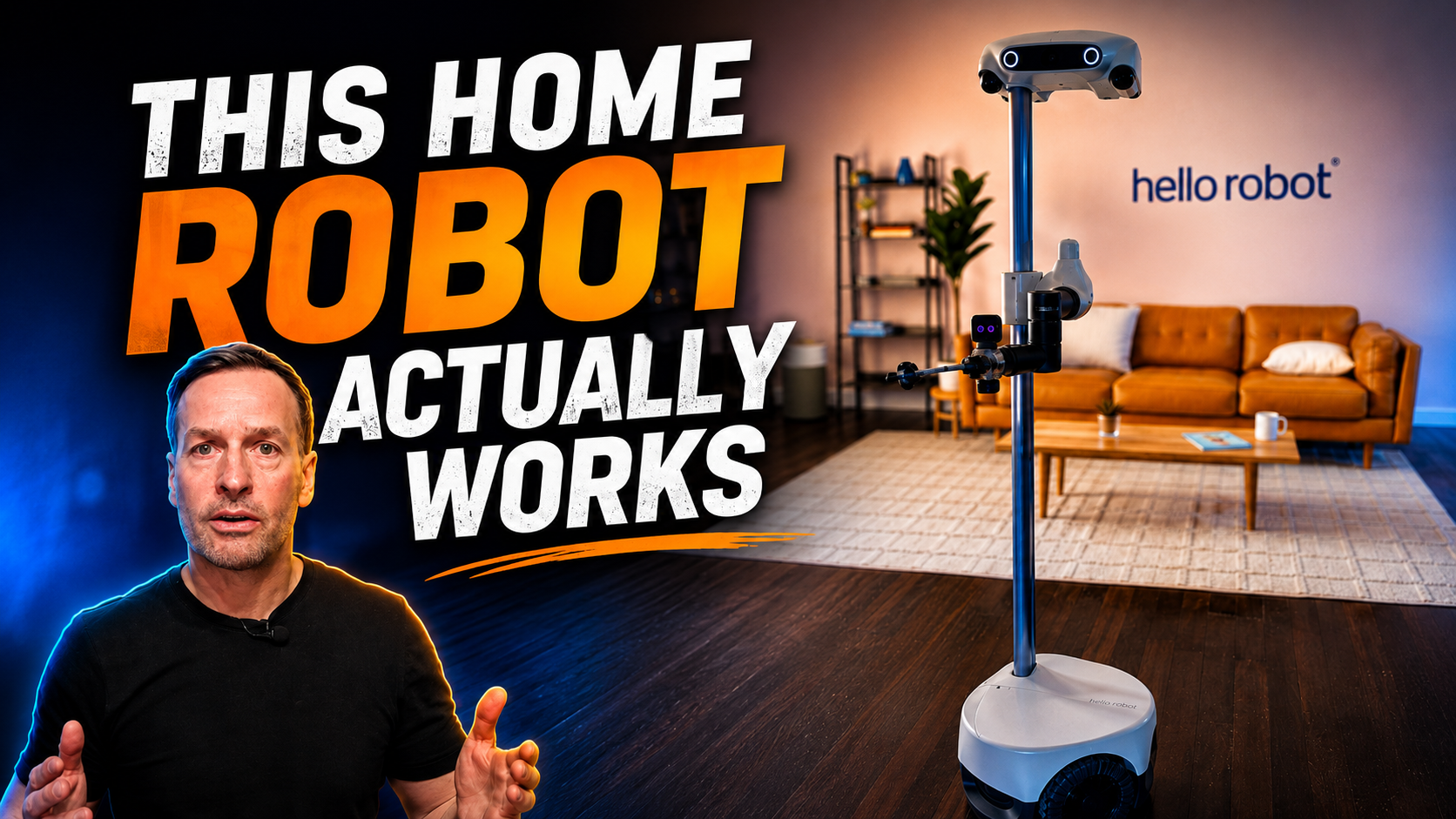
    Hello Robot’s Stretch 4 is a strong example of a different path. Instead of copying the human body, Stretch 4 focuses on what a useful home robot actually needs to do: move safely, navigate indoor spaces, reach objects, assist people, recharge itself, and operate in real environments.

    It does not need legs.

    It does not need a face.

    It does not need to look like a person.

    It needs to be useful.

    That distinction matters enormously for the robotics industry, because the race is not simply about who can build the most impressive-looking robot. The real race is about who can build robots that solve practical problems, create commercial value, and can be deployed safely and reliably in homes, workplaces, healthcare environments, and service industries.

    Stretch 4 is interesting because it challenges one of the biggest assumptions in robotics: that the future of home robotics must be humanoid.

    The real future may be more practical, more focused, and much closer than many people think.

    What Is Stretch 4?

    Stretch 4 is a mobile manipulator robot from Hello Robot. In simple terms, that means it is a wheeled robot with an arm.

    That may sound less glamorous than a humanoid robot, but from a practical robotics perspective, it is extremely important.

    Stretch 4 is designed for real-world indoor use. It uses a wheeled omnidirectional base, allowing it to move around in tight spaces without needing to turn like a traditional vehicle. This is particularly valuable in homes, care environments, apartments, bedrooms, kitchens, and other indoor spaces where every inch of movement matters.

    It also includes an extendable arm that can reach for objects, interact with the environment, and support everyday tasks. This combination of mobility and manipulation is one of the most important areas in robotics technology.

    A robot that can move but cannot manipulate objects is limited.

    A robot arm that can manipulate objects but cannot move is also limited.

    A mobile manipulator brings those two capabilities together.

    Stretch 4 also includes cameras, lidar, mapping, navigation, self-charging, autonomous grasping, and onboard computing for AI and visual processing. In practical language, it is designed to move, see, understand its surroundings, recharge itself, and physically interact with objects.

    That is why it matters.

    Home robots do not need to be theatrical. They need to be useful.

    Why Stretch 4 Matters in the Robotics Industry

    The robotics industry is currently full of excitement around humanoid robots. Companies are demonstrating walking robots, warehouse robots, factory robots, and AI-powered machines that appear increasingly capable.

    This is an exciting time for robotics. There is no question that humanoid robots will play an important role in the future of automation.

    However, Stretch 4 highlights a crucial point: not every robotics problem requires a humanoid solution.

    In fact, many of the most commercially practical robots are not humanoid at all.

    Warehouse robots use wheels.

    Delivery robots use wheels.

    Robot vacuums use wheels.

    Autonomous mobile robots in factories use wheels.

    Inspection robots often use wheels, tracks, or specialized mobility platforms.

    The reason is simple: wheels are stable, efficient, affordable, and proven.

    Legged robots are impressive, but they introduce complexity. They require advanced balance, powerful actuators, sophisticated control systems, and much more engineering work to achieve safe, reliable movement.

    In a home environment, that complexity becomes even more important. Homes are full of furniture, pets, cables, rugs, tight spaces, fragile objects, and unpredictable human behavior.

    A robot falling over in a warehouse is a technical problem.

    A robot falling over in a home next to an elderly or disabled person is a serious safety concern.

    Stretch 4 is important because it prioritizes safety, simplicity, and usefulness over appearance.

    That is a commercial lesson many businesses should understand.

    The best robot is not always the most futuristic-looking robot.

    The best robot is the one that solves the problem.

    The Problem Stretch 4 Is Trying to Solve

    One of the most promising use cases for Stretch 4 is assistive care.

    This includes helping people with severe mobility impairments, supporting independent living, assisting caregivers, and enabling people to interact with their homes more easily.

    For someone with limited mobility, simple daily tasks can become major challenges.

    Picking up a dropped item.

    Fetching a drink.

    Moving something from a table.

    Opening or interacting with objects.

    Reaching across a room.

    These are not science-fiction tasks. They are everyday human needs.

    This is where robotics can create meaningful value.

    A robot like Stretch 4 does not need to replace a human caregiver. Instead, it can support independence, reduce repetitive strain, improve quality of life, and provide assistance between human care visits.

    This is a very different vision from the “robot butler” fantasy.

    The goal is not luxury.

    The goal is practical assistance.

    That makes the business case much more compelling.

    Healthcare systems, senior care providers, disability support organizations, insurers, robotics startups, and assistive technology companies should all be paying attention to this category.

    As populations age and care systems come under pressure, assistive robots may become one of the most important areas of service robotics.

    Why Wheels May Beat Legs in the Home

    The humanoid robot argument is easy to understand.

    Homes are built for humans, so robots should be shaped like humans.

    At first, that sounds logical.

    But it is not always true.

    Many indoor environments have already been adapted for wheels. Wheelchairs, mobility scooters, hospital carts, cleaning machines, delivery trolleys, and domestic appliances all operate successfully without legs.

    A home designed for someone with mobility challenges may already be optimized for wheeled movement. Doorways, ramps, clear pathways, and reachable surfaces are often more relevant than stairs or uneven terrain.

    For many assistive care applications, legs may not provide enough benefit to justify their complexity.

    Wheels are simpler.

    Wheels are stable.

    Wheels are easier to control.

    Wheels are more energy efficient.

    Wheels are less likely to collapse onto a person or object.

    This does not mean humanoid robots have no future. They absolutely do.

    But it does mean that the first wave of useful home robots may not be humanoid.

    They may be wheeled mobile manipulators.

    That is why Stretch 4 is such an interesting signal for the future of robotics.

    It suggests that practical deployment may happen before the humanoid dream fully matures.

    AI Robots Do Not Always Need Human Bodies

    Another important point is the relationship between AI and robot design.

    There is a common assumption that advanced AI robots should look like people. The thinking is that if a robot has artificial intelligence, it should also have a human-like body.

    But intelligence and body shape are separate questions.

    An AI robot can be wheeled.

    An AI robot can be a robotic arm.

    An AI robot can be a warehouse vehicle.

    An AI robot can be an inspection platform.

    An AI robot can be a mobile manipulator like Stretch 4.

    The key question is not whether the robot looks intelligent.

    The key question is whether it can sense, decide, and act usefully in the real world.

    Stretch 4 appears to follow this logic. It provides a physical platform that can move and manipulate objects, while also supporting AI and visual processing.

    This is where the future of robotics becomes especially interesting.

    As AI models improve, the value of practical robot platforms increases. A robot that already has safe mobility, manipulation, sensors, and compute can become a powerful platform for future AI capabilities.

    In other words, the physical robot does not need to do everything on day one.

    It needs to be a reliable foundation.

    The AI can improve over time.

    Commercial Implications for Businesses

    For business leaders, Stretch 4 provides a useful lesson about robotics adoption.

    Do not start with the robot.

    Start with the problem.

    Too many companies look at robotics through the lens of excitement. They see a humanoid robot online and ask, “How can we use that?”

    A better question is: “Where are the expensive, repetitive, unsafe, difficult, or high-friction tasks in our business?”

    That is where robotics consulting becomes valuable.

    Robots can be used in many different commercial environments, including:

    Healthcare and care homes.

    Warehouses and logistics.

    Retail and customer service.

    Events and exhibitions.

    Manufacturing and inspection.

    Food service and hospitality.

    Security and facilities management.

    Education and training.

    But the right robot depends on the task, the environment, the budget, the staff, the operating model, and the expected return on investment.

    Stretch 4 is a reminder that useful robotics does not always look glamorous.

    A robot that quietly solves a real business problem may be far more valuable than a robot that looks amazing in a demo but is difficult to deploy.

    Businesses that understand this will have an advantage.

    The Rise of Practical Service Robots

    Service robots are one of the most important categories in the robotics industry.

    Unlike traditional industrial robots, which are often fixed in factories, service robots are designed to operate in human-facing or semi-structured environments.

    This includes robots for hospitality, healthcare, cleaning, delivery, retail, events, education, and domestic assistance.

    The challenge with service robots is that the real world is messy.

    Factories can be highly structured. Homes and commercial environments are not.

    A service robot may need to deal with people walking around unpredictably, furniture being moved, lighting changes, narrow spaces, clutter, and different floor surfaces.

    This makes service robotics difficult.

    But it also makes the opportunity enormous.

    If robots can become reliable in these environments, they can create huge value across the economy.

    Stretch 4 fits into this wider shift. It is not just a home robot. It is part of a larger movement toward robots that can operate around people in real-world spaces.

    That is where robotics technology is heading.

    Not just robots in cages.

    Not just robots in factories.

    Robots in everyday environments.

    Humanoid Robots vs Practical Robots

    The robotics industry does not need to choose only one path.

    Humanoid robots and practical non-humanoid robots can both succeed.

    The mistake is assuming one form factor will dominate everything.

    Humanoid robots may eventually be extremely valuable in environments where human-like mobility and manipulation are essential. They may be useful in warehouses, manufacturing, disaster response, construction, logistics, and certain service applications.

    But humanoid robots also face major challenges.

    They need to become safer.

    They need to become more affordable.

    They need better battery life.

    They need robust manipulation.

    They need reliable autonomy.

    They need to prove commercial return on investment.

    Practical robots such as Stretch 4 may reach meaningful deployment sooner because they reduce some of that complexity.

    They are not trying to solve every robotics problem at once.

    They are focused on specific capabilities.

    That focus matters.

    In business, the winning solution is often not the most general solution. It is the one that creates measurable value in a specific use case.

    Stretch 4 is a good example of this principle.

    Robotics Investment and Market Opportunity

    Robotics investment is increasing because investors can see that automation is moving from software into the physical world.

    The last decade was dominated by digital transformation, cloud computing, software platforms, and AI tools.

    The next major wave may be physical AI.

    Physical AI means artificial intelligence connected to machines that can act in the real world. Robots are one of the most important expressions of that idea.

    This is why AI robots are attracting attention from investors, manufacturers, startups, and large technology companies.

    However, the investment opportunity is not limited to humanoid robots.

    There will be opportunities in:

    Robot hardware.

    Robot software.

    Autonomy systems.

    Navigation.

    Manipulation.

    Robot safety.

    Fleet management.

    Robotics data.

    Deployment services.

    Maintenance and support.

    Robotics consulting.

    Robot training.

    Robotics recruitment.

    The ecosystem around robots may become just as important as the robots themselves.

    Businesses will need help selecting, testing, deploying, managing, and improving robotic systems.

    That creates opportunities for robotics consultants, integrators, trainers, service providers, and specialist recruitment companies.

    Stretch 4 is a useful case study because it shows how a focused robot platform can become part of a much wider commercial ecosystem.

    Challenges Slowing Home Robot Adoption

    Despite the excitement, home robotics remains difficult.

    There are several reasons why useful home robots have taken so long to arrive.

    First, homes are unstructured. Every home is different. Furniture, layouts, lighting, flooring, clutter, pets, and people vary dramatically.

    Second, safety requirements are extremely high. A robot in the home may operate near children, elderly people, disabled people, pets, and fragile objects.

    Third, manipulation is hard. Picking up random objects in the real world is still one of the biggest challenges in robotics.

    Fourth, cost matters. Consumers are used to buying appliances, not expensive robotic systems. A home robot must justify its price with real value.

    Fifth, reliability is essential. A robot that works well in a demo but fails daily in the home will not succeed commercially.

    This is why assistive care may be one of the strongest early markets.

    The value of assistance is higher.

    The use case is clearer.

    The need is real.

    The buyer may be an organization, healthcare provider, insurer, or support service rather than a general consumer.

    That could make the commercial pathway more realistic.

    Why Businesses Should Pay Attention Now

    Even if your business is not in home robotics, Stretch 4 is still relevant.

    It represents a wider trend: robots are becoming more practical, more specialized, and more commercially focused.

    Business leaders should not wait until robots are perfect.

    They should start learning now.

    This does not mean every company should immediately buy a robot. It means companies should begin understanding where robotics could affect their industry.

    Which tasks are repetitive?

    Where are labor shortages appearing?

    Where could automation improve safety?

    Where could robots support staff?

    Where could robots create customer engagement?

    Where could robotics create a competitive advantage?

    The businesses that ask these questions early will be better prepared.

    Robotics adoption is not just a technology decision. It is an operational, commercial, cultural, and strategic decision.

    The companies that succeed will be the ones that understand how robots fit into the bigger business model.

    RoboPhil Perspective: Practical Robotics Over Hype

    Philip English, known as RoboPhil, works across the robotics industry through Robot Center, Robots of London, and Robot Philosophy.

    This includes helping businesses explore robotics adoption, understand robot deployment, source commercial robots, use robots at events, and develop robotics strategies.

    From a RoboPhil perspective, Stretch 4 is important because it represents a practical side of robotics that is often overlooked.

    The robotics industry can sometimes become distracted by viral videos and futuristic promises. These are useful for generating excitement, but real adoption depends on solving real problems.

    A robot does not need to impress the internet to be commercially valuable.

    It needs to work.

    It needs to be safe.

    It needs to create value.

    It needs to fit the environment.

    It needs to support people rather than simply replace them.

    That is the difference between robotics hype and robotics strategy.

    Stretch 4 is not interesting because it looks like the future imagined in films.

    It is interesting because it looks like a robot that could actually help people.

    The Future of Home Robotics

    The future of home robotics is likely to develop in stages.

    The first stage is not likely to be a fully autonomous humanoid robot doing every household task perfectly.

    Instead, we may see specialized robots solving specific problems.

    Robots for cleaning.

    Robots for mobility support.

    Robots for medication delivery.

    Robots for telepresence.

    Robots for companionship.

    Robots for object retrieval.

    Robots for monitoring and safety.

    Robots for care assistance.

    Over time, these capabilities may combine.

    The home robot of the future may eventually become more general-purpose. But the path to that future will likely be built through practical, focused applications.

    Stretch 4 points toward that pathway.

    It is not trying to be everything.

    It is trying to be useful.

    That may be exactly what the home robotics market needs.

    What This Means for Robotics Startups

    For robotics startups, Stretch 4 offers an important lesson.

    Do not build for science fiction.

    Build for deployment.

    The robotics startups that succeed will likely be the ones that understand their use case deeply. They will know the customer, the environment, the pain point, the budget, the safety requirements, and the business model.

    A technically impressive robot is not enough.

    A commercially successful robot needs a clear reason to exist.

    It must answer the question: why would someone pay for this?

    For Stretch 4, the answer appears to be practical assistance in real homes, especially for people with mobility impairments.

    That is a meaningful problem.

    That is a real market.

    That is a strong foundation.

    The broader robotics startup ecosystem should pay attention to this kind of thinking.

    The Bigger Shift: From Robot Demos to Robot Deployment

    The robotics industry is moving from demonstration to deployment.

    This is a major shift.

    For years, many robots were judged by what they could do in controlled environments. Now the real test is whether they can operate reliably in daily use.

    This requires a different mindset.

    Deployment involves training, support, maintenance, safety, user experience, integration, financing, and long-term value creation.

    It is not just about the robot.

    It is about the whole system around the robot.

    This is where many companies underestimate the challenge.

    Buying a robot is easy compared with deploying it properly.

    Businesses need to think about staff training, workflow design, customer expectations, data, insurance, servicing, and return on investment.

    The future of robotics will not only belong to the companies that build great robots.

    It will also belong to the companies that know how to deploy them.

    Conclusion: The Future May Roll In Before It Walks

    Stretch 4 challenges the assumption that the future of home robotics must be humanoid.

    It shows that practical robots may reach real-world usefulness before more complex humanoid systems become affordable, safe, and reliable at scale.

    This does not mean humanoid robots are unimportant. They are one of the most exciting areas in robotics technology.

    But the first commercially successful home robots may not look like people.

    They may be wheeled.

    They may be simple.

    They may be focused.

    They may be designed around real human needs rather than science-fiction expectations.

    That is why Stretch 4 matters.

    It represents a practical vision of robotics: robots that assist, support, navigate, manipulate, and create value in real environments.

    For businesses, investors, robotics companies, and technology leaders, the message is clear.

    The future of robotics is not just about building robots that look impressive.

    It is about building robots that work.

    And sometimes, the robot that changes the market is not the one that walks into the room.

    It is the one that rolls in quietly and starts solving problems.

    Work With RoboPhil

    If your business is exploring robotics, automation, AI robots, robot sourcing, robot deployment, robotics consulting, or robotics industry strategy, RoboPhil can help you understand the opportunities and make better decisions.

    Robotics services and partners:

    Robot Center
    https://robotcenter.co.uk/

    Robots of London
    https://robotsoflondon.co.uk/

    Robot Philosophy
    https://robophil.com/

    Business enquiries
    sales@robotcenter.co.uk


  • Japan’s Robot Wolves: What Bear-Scaring Robots Reveal About the Future of Robotics

    Japan’s Robot Wolves: What Bear-Scaring Robots Reveal About the Future of Robotics

    Japan’s Robot Wolves: What Bear-Scaring Robots Reveal About the Future of Robotics

    Introduction: When Robotics Starts Looking Like Science Fiction

    Japan is using robot wolves to scare off bears.

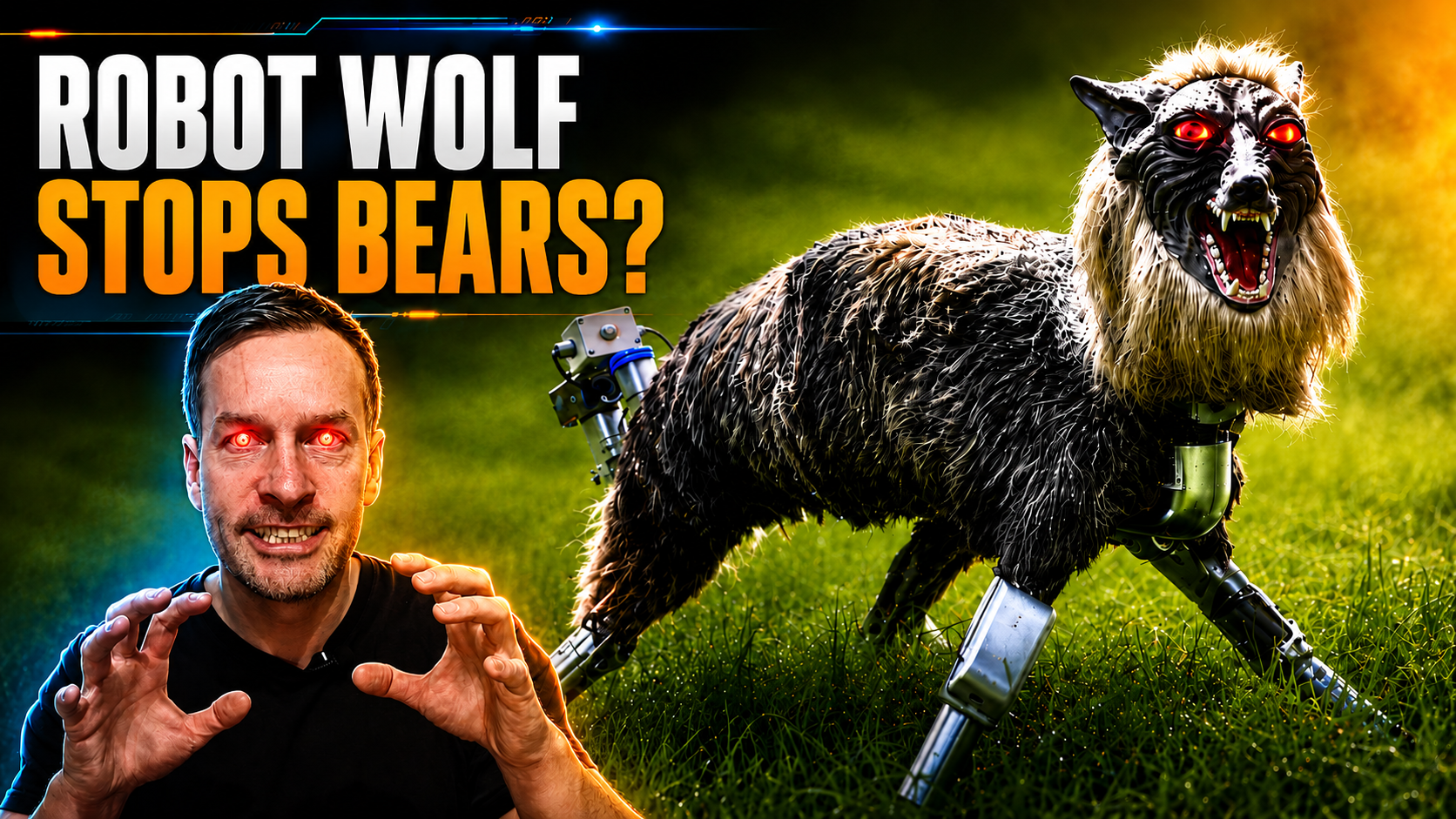
    At first, that sounds like a strange headline from a science fiction film. A mechanical wolf with glowing eyes, frightening sounds, sensors, and a moving head sounds more like something built for a theme park than a serious public safety tool.

    But this is exactly why the story matters.

    The rise of Japan’s “Monster Wolf” robots is not just an odd robotics story. It is a powerful example of where robotics technology is going next. Robots are no longer limited to factory production lines, research labs, or futuristic demonstrations. Increasingly, robots are being designed for very specific real-world problems: keeping people safe, protecting farms, supporting workers, reducing risk, and solving tasks that traditional methods struggle to manage.

    In Japan, bear encounters have become a growing public safety issue, with record numbers of sightings and attacks reported in recent years. In response, farmers, golf courses, construction sites, and rural communities have started turning to animatronic robot wolves as a non-lethal deterrent. The Monster Wolf, made by Hokkaido-based Ohta Seiki, uses flashing red eyes, recorded sounds, sensors, and movement to frighten wild animals away from human spaces. Demand has reportedly increased sharply as awareness of bear safety and wildlife damage has grown.

    This may not be the kind of robot that gets as much attention as a humanoid robot, robot dog, warehouse robot, or AI-powered service robot. But in many ways, it is one of the clearest examples of the future of robotics: practical, targeted, commercial, and built around a specific need.

    The lesson is simple. The future of robotics will not be defined only by robots that look human. It will be defined by robots that solve real problems.

    The Robot Wolf: A Practical Robot With a Strange Appearance

    The Monster Wolf is designed to look intimidating. It has artificial fur, an open-mouthed face, flashing LED eyes, speakers, sensors, and a moving head. When an animal gets close, it can produce howls, growls, human voices, electronic sounds, and other noises intended to scare animals away before they enter farms, villages, or other populated areas. Reports describe the device as an animatronic scarecrow rather than a fully autonomous mobile robot, although newer versions are being explored with wheels and patrol capabilities.

    That description is important because it shows a different kind of robotics opportunity.

    A robot does not need to have advanced arms, hands, legs, facial expressions, or conversational AI to be useful. Sometimes, the most commercially valuable robot is the one that performs a simple task reliably in a difficult environment.

    In this case, the task is deterrence.

    Traditional scarecrows have been used for centuries. Farmers have long relied on visual and sound-based deterrents to protect crops from birds and animals. The robot wolf is essentially a modern, sensor-driven, automated version of that old idea. It adds movement, sound variation, lights, and electronics to increase the psychological impact.

    This is one of the most interesting aspects of modern robotics. Many successful robots are not entirely new ideas. They are old solutions upgraded with sensors, software, motors, batteries, connectivity, and AI.

    The robot wolf does not need to debate philosophy, serve coffee, or walk like a human. It just needs to make a bear think twice.

    Why Japan Is Turning to Robot Wolves

    Japan has faced a serious rise in bear encounters, particularly in rural and northern areas. The Japan Times reported that bears killed 13 people across Japan in the 2025–2026 season, more than twice the previous high, while more than 50,000 bear sightings were recorded nationwide. The same report noted that sightings had increased sharply, with bears entering homes, schools, supermarkets, and hot spring resorts.

    This creates a difficult problem for communities.

    People need protection. Farmers need to protect crops. Outdoor workers need to reduce risk. Local governments need public safety measures. At the same time, there is also pressure to reduce unnecessary killing of wildlife and find more sustainable ways for humans and animals to coexist.

    This is where robotics becomes valuable.

    A robot wolf is not just a gimmick. It sits at the intersection of public safety, agriculture, wildlife management, automation, and environmental technology. It offers a way to reduce animal encounters without requiring a person to be physically present at all times.

    That is a key business lesson for robotics adoption.

    Robots create value when they reduce risk, reduce labour intensity, improve consistency, or make a task possible in places where people cannot be present all the time.

    For rural areas dealing with wildlife, a robotic deterrent can work through the night, react to movement, and operate without needing a person to stand guard. This is exactly the type of job where robotics makes sense.

    The Bigger Trend: Robots Designed for Specific Jobs

    A lot of the media attention in robotics goes to humanoid robots.

    Humanoid robots are exciting because they look like us. They suggest a future where robots may work in warehouses, factories, hospitals, hotels, restaurants, homes, and care environments. Companies developing humanoid robots are attracting major investment because the long-term potential is enormous.

    But the robot wolf story highlights something equally important.

    The future of robotics will also be built around highly specialised robots.

    These robots may not look impressive at first. They may not have human-like bodies. They may not even look like “robots” in the traditional sense. But they will be designed to solve very specific problems in very specific industries.

    Examples include:

    Inspection robots for energy sites and factories.

    Security robots for commercial buildings and public spaces.

    Delivery robots for campuses and urban environments.

    Agricultural robots for weeding, harvesting, spraying, and monitoring.

    Cleaning robots for airports, hospitals, offices, and shopping centres.

    Event robots for engagement, entertainment, and brand activation.

    Warehouse robots for picking, moving, sorting, and inventory.

    Service robots for hospitality, healthcare, and retail.

    Wildlife deterrent robots for farms and rural communities.

    The robotics industry is not moving in one direction. It is expanding in many directions at the same time.

    That is why business leaders need to think more broadly about automation. The question is not, “When will robots replace humans?” The better question is, “Where can a robot solve a problem more safely, consistently, or efficiently than the current method?”

    Robotics Adoption Is Becoming More Practical

    For years, many people thought of robots as futuristic, expensive, and difficult to deploy.

    That perception is changing.

    Robotics adoption is becoming more practical because the components needed to build robots are improving. Sensors are cheaper. Batteries are better. Cameras are more powerful. AI is advancing quickly. Connectivity is more reliable. Software tools are improving. Manufacturing ecosystems are becoming more mature.

    This does not mean every robot is ready for mass adoption. Many robots still struggle with cost, reliability, maintenance, regulation, and real-world complexity. But the direction is clear.

    Robots are moving from demonstration into deployment.

    The robot wolf is a good example because it does not try to solve every problem. It focuses on one problem: keeping wild animals away from human areas. It does not need to be perfect at everything. It only needs to be good enough at one useful task.

    That is often how robotics markets develop.

    The most successful early applications are usually narrow. They have a clear customer, a clear pain point, and a measurable benefit. Once the robot proves value in one area, the technology can expand into other markets.

    This is the pattern we have seen in warehouse robotics, cleaning robots, inspection robots, delivery robots, and service robots. The first versions are often limited, but they create a foundation for future improvement.

    AI Robots and the Next Generation of Deterrent Systems

    The current Monster Wolf is primarily an animatronic deterrent system using sensors, movement, lights, and sound. But the next stage of this type of robotics could involve more advanced AI.

    According to reports, Ohta Seiki is exploring future developments such as AI-powered bear-detection systems and more mobile versions that can patrol or chase animals away.

    This is where the story becomes even more interesting.

    Imagine a future version of the robot wolf connected to cameras, thermal sensors, cloud alerts, mapping systems, and AI image recognition. Instead of simply reacting to motion, it could identify whether the object is a bear, deer, boar, dog, person, or vehicle. It could log incidents, notify authorities, trigger different deterrent responses, and provide data to local councils, farmers, and wildlife management teams.

    That is the difference between a basic robot and an intelligent robotic system.

    The future of AI robots is not just about making robots talk like humans. It is about helping robots perceive, decide, respond, and integrate with wider systems.

    In agriculture, AI robots could monitor crops, identify pests, detect disease, and adjust treatment.

    In security, AI robots could detect unusual behaviour, patrol sites, and alert human teams.

    In logistics, AI robots could optimise routes, track stock, and work alongside warehouse teams.

    In public safety, AI robots could detect hazards, monitor remote environments, and reduce the need for humans to enter dangerous areas.

    The robot wolf is a small but fascinating example of this direction. It shows how robotics technology can start with a simple function and evolve into a more intelligent system over time.

    Humanoid Robots Are Not the Whole Story

    Humanoid robots are one of the most exciting areas in robotics today. They are attracting attention because they could eventually operate in spaces designed for humans. If a robot has arms, legs, hands, cameras, sensors, and AI reasoning, it could theoretically perform many tasks across factories, warehouses, care homes, offices, and public environments.

    However, humanoid robots are also extremely difficult.

    Walking reliably is hard. Manipulating objects is hard. Working safely around people is hard. Battery life is hard. Cost is hard. Maintenance is hard. Training robots to understand messy real-world environments is hard.

    This is why specialised robots will continue to be important.

    In many cases, businesses do not need a humanoid robot. They need a robot that cleans a floor, moves goods, inspects a machine, greets visitors, serves drinks, carries tools, scans inventory, monitors a site, or scares wildlife away from a field.

    A humanoid robot may one day perform many of these tasks. But until then, task-specific robots will continue to offer more immediate commercial value.

    The robot wolf is a reminder that robotics does not have to copy the human body to be useful. In this case, it copies the idea of a predator. In other cases, robots may copy insects, dogs, vehicles, arms, carts, drones, or entirely new machine forms.

    The future of robotics will be diverse.

    Some robots will look like people. Some will look like animals. Some will look like machines. Some will be invisible inside buildings, logistics systems, or industrial processes.

    What matters is not how they look. What matters is what they do.

    Business Lessons From Japan’s Robot Wolves

    There are several important lessons businesses can learn from the robot wolf story.

    The first lesson is that robotics opportunities often begin with a very specific problem. A farmer does not buy a robot because it is futuristic. They buy it because it protects crops, reduces risk, saves time, or solves a costly issue.

    The second lesson is that robots do not need to replace humans to be valuable. The robot wolf is not replacing a human worker in the traditional sense. It is filling a gap where continuous human presence would be difficult, expensive, or unsafe.

    The third lesson is that psychology matters in robotics. The robot wolf works because of how animals respond to movement, light, sound, and perceived threat. In commercial environments, human psychology is also important. Robots used in events, hospitality, retail, and public spaces must be designed around how people react to them.

    The fourth lesson is that adoption often accelerates when the problem becomes urgent. When bear sightings and attacks increase, demand for solutions rises. The same thing happens in business. Labour shortages, rising costs, safety concerns, productivity pressure, and competition all push companies to explore automation.

    The fifth lesson is that niche robotics markets can become valuable. Not every robotics company needs to build a universal humanoid robot. Some of the strongest robotics businesses may come from solving narrow problems extremely well.

    This is especially important for robotics startups.

    A startup with limited resources may struggle to build a general-purpose robot. But it may succeed by focusing on a specific industry, customer, and use case. That could be agriculture, construction, logistics, inspection, healthcare, events, security, hospitality, or public safety.

    Robotics Consulting: Why Businesses Need a Clear Strategy

    Many companies are interested in robotics, but they do not know where to start.

    They see videos of humanoid robots, AI robots, robot dogs, warehouse automation systems, service robots, and delivery robots. They understand that robotics is important, but they are unsure which solutions are realistic, affordable, reliable, or commercially useful.

    This is where robotics consulting becomes valuable.

    A good robotics strategy starts with identifying the right use case. The goal is not to buy a robot because it looks impressive. The goal is to understand the business problem first.

    Where is the business losing time?

    Where are people doing repetitive work?

    Where are safety risks high?

    Where are labour shortages affecting operations?

    Where could automation improve consistency?

    Where could robots create a better customer experience?

    Where could robotics create marketing value or brand differentiation?

    Once the use case is clear, the next step is robot sourcing, testing, integration, training, support, and measurement. Robotics adoption is not only about the robot itself. It is about the full ecosystem around the robot.

    That includes hardware, software, maintenance, staff training, safety processes, customer experience, data, and return on investment.

    The robot wolf works as a useful metaphor. It is not valuable simply because it is a robot. It is valuable because it is matched to a specific problem.

    Businesses should think the same way.

    RoboPhil Perspective: Seeing Robotics From the Real World

    Philip English, known as RoboPhil, works across Robot Center, Robots of London, and Robot Philosophy, helping businesses understand robotics, automation, robot sourcing, events, and commercial robot deployment.

    This real-world perspective matters because robotics looks very different in practice than it does in a promotional video.

    A robot demo can be exciting. But successful adoption depends on asking practical questions.

    Will the robot work in the actual environment?

    Will staff use it properly?

    Will customers respond positively?

    Can it be maintained?

    Does it solve a real problem?

    Is the cost justified?

    Can it be integrated into the business?

    Is it a marketing tool, an operational tool, or both?

    Through Robot Center, the focus is on robotics solutions, automation, and helping businesses explore the right robotic technologies. Through Robots of London, the focus includes robot hire for events, brand activations, and public engagement. Through Robot Philosophy, the focus is on robotics insights, consulting, education, and helping the market understand where robotics is going.

    The robot wolf story is exactly the kind of example businesses should pay attention to. It shows that robotics is not just about the most advanced machine. It is about the right robot for the right job.

    The Future of Robotics: More Robots in More Places

    The next decade of robotics will be defined by expansion.

    Robots will move into more industries, more buildings, more outdoor environments, more public spaces, and more everyday business operations.

    Some of this growth will come from humanoid robots. Some will come from AI robots. Some will come from automation systems that do not look like traditional robots at all. Some will come from niche machines designed for one very specific job.

    The robot wolf is a sign of this future.

    It is unusual, memorable, and slightly strange. But it is also practical. It reflects a broader shift in robotics: away from abstract futurism and towards real-world deployment.

    As robotics technology improves, we will see more machines designed for agriculture, public safety, environmental monitoring, construction, logistics, care, hospitality, education, entertainment, and security.

    This will create opportunities for robotics companies, investors, entrepreneurs, engineers, consultants, and business leaders.

    It will also create challenges.

    Businesses will need to understand which robots are mature and which are still experimental. They will need to train teams, manage safety, calculate ROI, and rethink workflows. Governments and regulators will need to consider how robots operate in public and private spaces. Customers and workers will need to build trust with machines.

    But the direction is clear.

    Robotics is becoming part of the real economy.

    Conclusion: The Future of Robotics Will Be Practical, Specific, and Everywhere

    Japan’s robot wolves may look strange, but they represent something important.

    They show that robotics does not always arrive in the form people expect. Sometimes the future looks like a humanoid robot. Sometimes it looks like a robot dog. Sometimes it looks like a warehouse automation system. And sometimes it looks like a terrifying mechanical wolf standing in a field, using flashing eyes and frightening sounds to keep bears away from people.

    That is the real future of robotics.

    It will not be one single robot that changes everything. It will be thousands of robots, designed for thousands of specific tasks, slowly becoming normal across industries.

    For businesses, the opportunity is to start thinking now.

    Where could robots reduce risk?

    Where could robots save time?

    Where could robots improve customer experience?

    Where could robots support workers?

    Where could robots create a competitive advantage?

    The companies that ask these questions early will be better prepared for the next wave of automation.

    Robotics is no longer just about the future. It is becoming a practical tool for solving real problems today.

    For robotics consulting, robot sourcing, robotics industry insights, automation strategy, or support exploring how robots could work in your business, contact RoboPhil.

    Robot Center
    https://robotcenter.co.uk/

    Robots of London
    https://robotsoflondon.co.uk/

    Robot Philosophy
    https://robophil.com/

    Business enquiries
    sales@robotcenter.co.uk


  • This $650,000 Giant Mecha Robot Could Be the Future of Robotics!

    This $650,000 Giant Mecha Robot Could Be the Future of Robotics!

    The Future of Robotics: The GD01 and Its Impact on Business Operations

    Introduction

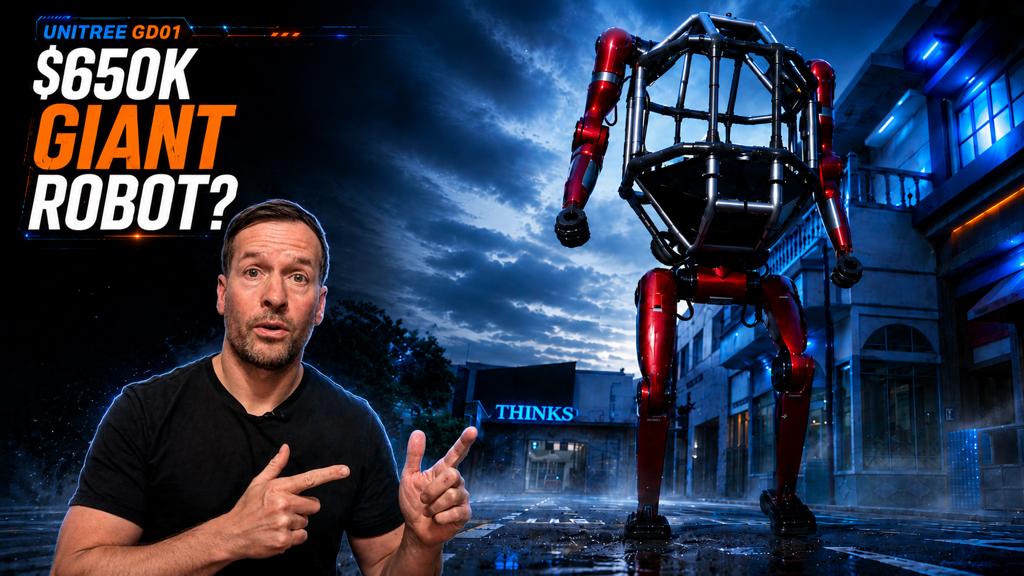
    The future of robotics is upon us, and it’s coming in a big way—quite literally. Enter the Unitree GD01, a massive, wall-smashing, humanoid robot that’s not just a feat of engineering but a glimpse into the next evolution of robotics. With a price tag of $650,000, this is no mere toy; it’s a game-changing robot built to revolutionize industries and business operations. In this article, we will explore the GD01, its capabilities, and why every business, from logistics to entertainment, should be paying attention.

    As automation and robotics become central to business strategy, the GD01 stands out as a prime example of how robots can take on the most physically demanding tasks with precision and power. But what exactly is the GD01, and how is it transforming business operations? Read on to learn why this giant robot matters now.


    What Is the GD01?

    The Unitree GD01 is a giant humanoid robot that has captured the attention of businesses and robotics enthusiasts alike. It’s designed to walk, crawl, and even smash through walls, and it’s set to become a serious contender in industries where strength and agility are key. Unlike smaller, more common robots used in manufacturing or logistics, the GD01 is designed to make a big impact, both literally and figuratively.

    This robot represents a leap forward in robotics, merging the power and size of traditional industrial robots with the precision and agility of AI robots. With its advanced AI, the GD01 can autonomously navigate environments, making it capable of more complex tasks that were once thought to be impossible for robots to perform. Its humanoid design allows it to interact with human environments in ways that are not only functional but also efficient.

    Why Businesses Are Investing in the GD01

    The GD01 isn’t just a marvel of engineering; it’s a potential game-changer for industries facing challenges that traditional machinery or human labor can’t solve efficiently. Businesses, from construction to logistics, are increasingly recognizing the power of robotics technology, and the GD01 is one of the most advanced examples of what’s possible.

    1. Automation of Heavy-Duty Tasks

    In industries like construction and demolition, robots are already being used for repetitive tasks such as lifting heavy materials or assembling large structures. The GD01, with its robust frame and massive strength, can take this automation a step further. The ability to smash through walls, lift large objects, and navigate complex environments with minimal human intervention is invaluable for industries that need to minimize downtime and maximize productivity.

    2. Reducing Labor Costs and Improving Safety

    The introduction of robots like the GD01 helps reduce labor costs by taking on physically demanding tasks, particularly in high-risk environments. For example, the GD01’s ability to perform demolition work eliminates the need for human workers to be exposed to dangerous environments. By deploying such robots, businesses can significantly improve safety and protect workers from hazardous conditions.

    3. Enhancing Operational Efficiency

    The GD01’s advanced AI robotics capabilities enable it to perform complex tasks more efficiently than humans. The robot’s autonomy allows it to work around the clock, making it highly beneficial for businesses looking to optimize their operations. In industries like logistics and manufacturing, the ability to have a robot that works consistently and without breaks could mean higher throughput and fewer errors.

    Key Technologies Behind the GD01

    The GD01 isn’t just a giant walking machine—it’s built on several cutting-edge technologies that make it incredibly capable and adaptable to a wide range of tasks.

    1. AI and Machine Learning

    At the heart of the GD01 is its artificial intelligence, which allows it to navigate its environment, make decisions, and perform tasks autonomously. Its AI system can learn from its surroundings, improving its efficiency over time. For businesses, this means that the GD01 will only get better at its tasks as it accumulates more data and experience.

    2. Advanced Sensors and Actuators

    The GD01 is equipped with a range of sensors that help it perceive its environment in real-time. These sensors allow the robot to adjust its movements based on obstacles, changes in terrain, or new tasks it’s assigned. This ability to sense and react to the environment is crucial for industries that require precise movements and adaptability, such as construction or robotics-assisted surgery.

    3. Autonomous Navigation

    One of the most exciting features of the GD01 is its ability to autonomously navigate complex environments. Whether it’s moving around construction sites or navigating crowded warehouse floors, the GD01 can adapt its movements to avoid obstacles and reach its destination. This level of autonomy opens up new possibilities for businesses that require robots to operate in dynamic, human-populated environments.

    Real-World Applications of the GD01

    While the GD01 is still in its early stages, its potential applications are vast. Below are some examples of how this giant robot could be used in different industries:

    1. Construction and Demolition

    The GD01’s ability to smash through walls and lift heavy objects makes it an ideal candidate for construction and demolition. In these industries, the GD01 could help streamline operations by handling tasks such as material handling, demolition, and even site preparation. By reducing human labor in dangerous environments, the GD01 can enhance safety while increasing efficiency.

    2. Logistics and Warehousing

    In warehouses, the GD01’s autonomous navigation and strength could help it take on tasks such as palletizing, moving heavy goods, and even organizing inventory. With the rise of e-commerce, businesses in the logistics sector are increasingly looking for ways to automate their supply chains. The GD01’s combination of power, precision, and autonomy makes it an ideal fit for this rapidly evolving industry.

    3. Entertainment and Robotics Shows

    The GD01’s impressive movements and dramatic appearance also make it an exciting option for entertainment and robotics demonstrations. With its ability to interact with human environments and perform high-impact tasks, the GD01 could become a popular attraction at robotics shows, theme parks, and even in marketing campaigns. Its theatrical potential also opens up new opportunities for businesses in the entertainment industry.

    Challenges Slowing Adoption

    Despite its potential, the GD01 faces several challenges to widespread adoption. These include:

    1. High Initial Cost

    At a price tag of $650,000, the GD01 is not an affordable option for all businesses. Smaller companies, in particular, may struggle to justify the cost, even with the potential long-term benefits. However, as the technology matures and economies of scale come into play, the cost of robots like the GD01 could decrease, making them more accessible to a broader range of businesses.

    2. Skilled Workforce Requirements

    Deploying robots like the GD01 requires a workforce with the skills to operate, maintain, and program these machines. As robotics adoption increases, the demand for skilled technicians and engineers will also grow. This could be a challenge for businesses that need to upskill their workforce to handle more advanced technologies.

    3. Public Perception and Regulatory Issues

    As robots like the GD01 become more common in public spaces, there may be concerns about job displacement, safety, and ethical considerations. Additionally, businesses will need to navigate regulatory frameworks that govern the use of robotics in certain industries, especially those involving human interaction or safety-sensitive operations.

    The Future of Robotics: A World with GD01 and Beyond

    The future of robotics is incredibly exciting, and the GD01 is a shining example of where things are headed. As technology continues to advance, we can expect robots like the GD01 to become more powerful, more intelligent, and more integrated into various industries. From construction and logistics to entertainment and healthcare, robots will play a vital role in shaping the future of business operations.

    With the GD01 leading the charge, businesses that invest in robotics will not only improve efficiency but also stay ahead of the competition in an increasingly automated world.


    RoboPhil’s Role in the Robotics Industry

    As a robotics consultant, Philip English (RoboPhil) works closely with businesses across industries to help them understand, adopt, and integrate robotics into their operations. RoboPhil provides robot sourcing, consulting, and automation strategy to help companies leverage robotics for improved efficiency and productivity.

    Through his work with Robot Center, Robots of London, and Robot Philosophy, RoboPhil helps businesses make the right decisions in the rapidly evolving robotics industry. Whether you’re looking to implement robots for the first time or refine your existing automation processes, RoboPhil is here to guide you every step of the way.

    For more information, visit Robot Center, Robots of London, and Robot Philosophy.


    Conclusion

    The Unitree GD01 is not just a giant robot; it’s a glimpse into the future of robotics and automation. As industries across the world look to robotics for solutions to labor shortages, inefficiencies, and safety concerns, the GD01 stands out as a perfect example of the potential for robots to transform business operations.

    The future is bright for businesses that embrace robotics, and with the GD01 leading the way, the possibilities are endless. Whether you’re in construction, logistics, or entertainment, integrating robots like the GD01 into your operations can help you stay competitive and future-proof your business.


  • SmartBay’s Automated Tire Change Robot

    SmartBay’s Automated Tire Change Robot

    SmartBay: Revolutionizing Tire Changes with AI Robots

    Introduction

    The automotive service industry is about to undergo a significant transformation, thanks to SmartBay—an AI-powered robotic tire changer that is speeding up tire changes and revolutionizing service centers. SmartBay is not just another robot; it’s a solution to some of the biggest challenges in the automotive industry, such as labor shortages, increasing demand for tire services, and the need for faster, more efficient processes.

    In a world where time is money, SmartBay is cutting service times in half, allowing one technician to manage multiple service bays. This is a game-changer for tire shops and service centers, and it marks the beginning of a new era in tire service automation.

    In this article, we’ll explore how SmartBay is transforming the tire service industry, the technology behind it, its real-world applications, and why it matters for businesses in the automotive sector.

    The Current State of Tire Services

    Tire changes have long been a labor-intensive, time-consuming process. In a typical tire service shop, it can take one technician about an hour to replace and balance four tires. This process involves removing the wheels, replacing the tires, balancing them, and reinstalling the wheels—a complex task that requires significant manual labor.

    With the rise of electric vehicles (EVs), which tend to wear out tires faster, the demand for tire service is only increasing. At the same time, many tire service centers are struggling to find qualified technicians to meet this demand. The solution? Automation.

    SmartBay’s innovation lies in the ability to change two tires at once, without the need to remove the wheels from the vehicle. By reducing labor-intensive steps like removing and reinstalling wheels, SmartBay is not only speeding up the process but also reducing the risk of errors and improving the consistency of tire changes.

    How SmartBay Works

    At its core, SmartBay is designed to automate the most labor-intensive part of the tire-changing process. The robot works by changing two tires simultaneously—without removing the wheels. Here’s how it works:

    • Step 1: A technician places the car in the service bay, and the robot approaches the vehicle.
    • Step 2: The robot utilizes advanced computer vision and robotics to lift the car and replace the tires, working from underneath.
    • Step 3: The technician manually places the new tires onto the machine and connects the air line to inflate them.
    • Step 4: After the tires are inflated, the robot balances them and applies the proper balancing weights.

    By automating the lifting, removal, and replacement of tires, SmartBay eliminates most of the manual labor involved in traditional tire changes. This not only speeds up the process but also allows service centers to handle more customers without the need to hire additional technicians.

    Why SmartBay Matters for Businesses

    The benefits of adopting SmartBay go beyond just speed. The robot also addresses several key challenges facing the tire service industry:

    1. Labor Shortages: The automotive service industry is facing a shortage of skilled technicians, with reports suggesting a gap of over 37,000 new technicians each year. With SmartBay, a single technician can manage three service bays simultaneously, significantly reducing the reliance on a large labor force.
    2. Increased Efficiency: In a traditional tire service shop, it takes one technician about an hour to change and balance four tires. With SmartBay, the same technician can now replace and balance 24 tires in the same time frame, dramatically improving productivity.
    3. Lower Operational Costs: By automating the tire-changing process, SmartBay reduces the need for manual labor, which lowers operating costs. While the initial investment may be high, the long-term savings and return on investment (ROI) make it a worthwhile business decision.
    4. Improved Customer Experience: Faster tire changes mean customers get in and out of the shop more quickly, improving overall customer satisfaction. As tire service centers become more efficient, they can handle more customers, increasing throughput without sacrificing quality.
    5. Scalability: As tire service demand increases, particularly with the rise of EVs, SmartBay’s automated process enables service centers to scale operations without needing to expand their workforce significantly. The robot can handle multiple bays, increasing service capacity and ensuring that tire shops can meet growing demand.

    What the Future of Tire Services Looks Like

    The future of tire service is becoming more automated. As more businesses begin to adopt robotic systems like SmartBay, we can expect to see the following changes in the automotive service industry:

    1. Greater Automation Across Other Services: While SmartBay focuses on tire changes, the same principles of automation can be applied to other parts of the automotive service industry, such as oil changes, inspections, and even vehicle diagnostics. The more tasks robots can perform, the less reliance businesses will have on human labor.
    2. Integration with Smart Technology: As cars and service centers become more connected, we can expect SmartBay to integrate with other smart technologies, such as AI diagnostics and automated vehicle tracking systems. This will create a fully integrated experience where robots and AI work together to deliver faster and more accurate services.
    3. Expansion of Robotics-as-a-Service (RaaS): As more small and medium-sized tire shops explore robotic technology, we may see a rise in robotics-as-a-service (RaaS) models, where businesses can rent robots rather than make a significant upfront investment. This would lower the barrier to entry for smaller businesses, allowing them to compete with larger service centers.
    4. Widespread Industry Adoption: As the technology improves and becomes more affordable, we expect to see SmartBay robots, and similar technology, become commonplace in tire service centers across the world. The automation of tire services will soon be the standard, not the exception.

    RoboPhil’s Perspective

    At RoboPhil, we’ve been working with businesses across various industries to help them navigate the world of robotics adoption. Our work spans from consulting on automation opportunities to helping companies find the right robotic solutions. We’ve seen firsthand how robots like SmartBay are transforming industries by improving efficiency and cutting costs.

    With partners like Robot Center and Robots of London, we’re excited to help more businesses explore how robots can improve their operations and stay ahead in an increasingly automated world. Our consulting services are designed to help companies identify the right robots for their needs and ensure smooth deployment and integration.

    Conclusion

    SmartBay is a prime example of how robotics and automation are reshaping industries in profound ways. By automating the tire-changing process, SmartBay not only improves efficiency but also addresses critical challenges such as labor shortages and increasing demand for tire services.

    As the technology continues to evolve, we can expect even greater automation across the automotive service industry. The future of tire service is bright, and robots like SmartBay will be at the forefront of this revolution.

    Call to Action

    If your business is looking to explore the world of robotics and automation, RoboPhil is here to help. We provide expert consulting, robot sourcing, and industry insights to guide your business through the world of robotics. Let’s work together to integrate robots into your business and help you stay ahead of the competition.


    Robotics services and partners:

    Robot Center
    https://robotcenter.co.uk/

    Robots of London (robot hire for events)
    https://robotsoflondon.co.uk/

    Robot Philosophy – robotics insights and consulting
    https://robophil.com/

    Business enquiries
    sales@robotcenter.co.uk

    #robotics #automation #ai #futureofwork #technology #innovation


  • Lenovo – The Future of AI Robots in the Workplace: Why Physical AI Could Transform Business Forever

    Lenovo – The Future of AI Robots in the Workplace: Why Physical AI Could Transform Business Forever

    The Future of AI Robots in the Workplace: Why Physical AI Could Transform Business Forever

    Artificial intelligence is already transforming the modern workplace. From AI-powered customer service tools to automated scheduling software and predictive analytics platforms, businesses across nearly every industry are exploring how automation can improve productivity, reduce costs, and increase efficiency.

    But now a new trend is beginning to emerge — one that could fundamentally change how humans interact with artificial intelligence at work.

    Physical AI.

    Instead of AI existing purely as invisible software running quietly inside computers and cloud systems, companies are now exploring the idea of AI robots physically sharing workspaces alongside employees.

    One of the latest examples comes from Lenovo, which recently unveiled its AI Workmate Concept — a desktop AI robot featuring cameras, voice controls, a projector, and an animated LCD face designed to act as an office assistant.

    At first glance, it may seem like a futuristic gadget or a novelty concept. However, beneath the unusual design sits a much larger question:

    Could AI robots eventually become normal workplace tools?

    And more importantly…

    Could businesses genuinely benefit from physical AI in the workplace?

    The answer may shape the future of robotics, automation, and office work for decades to come.

    The Rise of Physical AI

    For years, artificial intelligence has largely existed behind screens. Employees interact with AI through chatbots, software assistants, analytics dashboards, and mobile apps.

    But humans naturally respond differently to physical objects than digital interfaces.

    A physical robot creates presence.

    It occupies space.

    It captures attention.

    And psychologically, people tend to engage more naturally with machines they can physically see and interact with.

    This is one reason why robotics companies are investing heavily in humanoid robots, service robotics, and AI-powered machines capable of collaborating directly with humans.

    The concept behind Lenovo’s AI Workmate is relatively simple.

    The robot sits on a desk and acts as a workplace assistant capable of:

    • Responding to voice commands
    • Accessing office files
    • Reading handwritten notes
    • Understanding sketches and diagrams
    • Projecting presentations
    • Summarizing information
    • Assisting with workflows

    In many ways, it is essentially an AI assistant with a physical body.

    That may sound insignificant at first.

    But the implications could be enormous.

    Why Businesses Are Investing in AI Robots

    The robotics industry is no longer focused solely on factories and warehouses.

    Today, businesses are exploring robots for offices, retail stores, hospitals, hotels, restaurants, and customer-facing environments.

    Why?

    Because labor shortages, rising operational costs, and increasing competition are forcing companies to improve efficiency.

    Automation is no longer optional for many businesses.

    It is becoming essential.

    AI robots offer several potential advantages in workplace environments:

    Increased Productivity

    AI assistants can help employees manage repetitive tasks, organize information, schedule meetings, summarize documents, and reduce administrative workload.

    This allows staff to focus on higher-value work.

    Improved Collaboration

    Physical AI systems may eventually become collaboration tools that interact naturally with teams during meetings, brainstorming sessions, and project planning.

    A robot capable of projecting presentations, accessing company knowledge, and responding conversationally could streamline workflows significantly.

    Enhanced Data Access

    Modern businesses generate enormous amounts of data.

    AI robots could act as real-time interfaces for accessing information instantly without employees needing to navigate multiple applications or systems.

    Competitive Advantage

    Companies adopting robotics early often gain operational advantages over competitors.

    This is already happening across manufacturing automation, warehouse robotics, and logistics.

    The same pattern may eventually occur in office environments.

    The Technology Driving Workplace Robots

    Several major technologies are converging to make AI workplace robots possible.

    Large Language Models (LLMs)

    AI models similar to ChatGPT are enabling robots to communicate more naturally with humans.

    These systems allow robots to understand requests, answer questions, summarize information, and generate useful responses conversationally.

    Computer Vision

    Advanced cameras and computer vision systems allow robots to interpret handwritten notes, gestures, diagrams, and physical objects.

    This helps bridge the gap between physical and digital workflows.

    Edge AI and Local Processing

    One of the biggest concerns businesses have regarding AI is security.

    Many organizations are uncomfortable sending sensitive company data to cloud-based AI systems.

    This is why Lenovo’s emphasis on local AI processing is important.

    Running AI models locally could allow businesses to maintain tighter control over sensitive information while still benefiting from automation.

    Robotics Hardware Miniaturization

    Robotics hardware is becoming smaller, cheaper, and more capable.

    Compact sensors, lightweight motors, efficient processors, and improved battery technology are making smaller AI robots commercially viable.

    The Human Side of Robotics

    One of the most fascinating aspects of workplace robotics is human psychology.

    Humans often interact differently with physical systems compared to software.

    People may ignore a chatbot notification on a screen.

    But a physical robot turning toward someone and speaking directly creates a stronger behavioral response.

    This is particularly relevant for industries focused on customer engagement and collaboration.

    Service robots in retail, hospitality, healthcare, and entertainment already demonstrate this effect.

    The physical presence of a robot creates novelty, engagement, and emotional interaction.

    This could eventually become valuable inside office environments as well.

    For example:

    • AI meeting assistants
    • Reception robots
    • Office concierge robots
    • Collaborative brainstorming assistants
    • AI project coordinators

    These concepts may sound futuristic today, but many robotics companies are already developing similar technologies.

    Challenges Slowing Adoption

    Despite the excitement surrounding AI robots, several major barriers still exist.

    Security Concerns

    Businesses remain extremely cautious about granting AI systems access to sensitive information.

    An office robot connected to emails, calendars, files, and internal communications introduces cybersecurity and privacy risks.

    Companies will demand strong safeguards before deploying these systems widely.

    Reliability Issues

    AI systems still make mistakes.

    Hallucinations, inaccurate responses, scheduling errors, and misunderstandings remain common problems.

    Businesses need reliable systems.

    A robot assistant accidentally scheduling meetings incorrectly or presenting inaccurate financial data could create serious operational problems.

    Cost vs ROI

    Robotics adoption ultimately comes down to return on investment.

    Businesses need clear financial justification.

    If workplace robots cost thousands of dollars without delivering measurable productivity improvements, adoption will remain limited.

    IT Management Complexity

    Large organizations already manage enormous technology ecosystems.

    Adding another device category introduces additional maintenance, updates, security requirements, and support challenges.

    This is one reason enterprise robotics adoption can move slowly.

    Humanoid Robots and the Bigger Picture

    The rise of workplace robots is part of a much larger trend within the robotics industry.

    Humanoid robots are attracting massive investment globally.

    Companies including Tesla, Figure AI, Apptronik, Sanctuary AI, and numerous Chinese robotics firms are racing to develop commercially viable humanoid robots.

    The long-term goal is clear:

    Create robots capable of operating in human-designed environments.

    Unlike traditional industrial robots, humanoid robots can theoretically use existing infrastructure, tools, workflows, and spaces designed for humans.

    This could eventually transform industries including:

    • Manufacturing
    • Logistics
    • Healthcare
    • Retail
    • Hospitality
    • Construction
    • Warehousing
    • Customer service
    • Office administration

    While Lenovo’s desktop robot is not a humanoid robot, it reflects the same underlying shift toward physical AI systems integrated into daily human environments.

    Real-World Robotics Adoption Trends

    Businesses are already deploying robots across multiple sectors.

    Manufacturing Automation

    Factories increasingly use industrial robots for assembly, welding, inspection, and material handling.

    Collaborative robots, or cobots, are allowing humans and robots to work together safely.

    Warehouse Robotics

    Warehouse automation has exploded due to e-commerce growth.

    Autonomous mobile robots, robotic picking systems, and AI logistics platforms are becoming standard in modern fulfillment centers.

    Service Robotics

    Hotels, hospitals, airports, and restaurants are experimenting with service robots for delivery, customer interaction, cleaning, and assistance tasks.

    Healthcare Robotics

    Healthcare providers are exploring robotics for surgery, rehabilitation, logistics, telepresence, and patient support.

    AI-Powered Business Automation

    AI software combined with robotics is enabling more intelligent automation systems capable of adapting dynamically to changing environments.

    The future likely involves increasing integration between software AI and physical robotics systems.

    The RoboPhil Perspective

    Philip English, also known as RoboPhil, has spent years working across the robotics industry helping businesses understand how robotics and automation can create commercial value.

    Through Robot Center, Robots of London, and Robot Philosophy, RoboPhil works with organizations exploring robotics deployment, commercial robot sourcing, automation strategy, and robotics consultancy.

    This includes:

    • Industrial robots
    • Service robotics
    • Event robots
    • Humanoid robotics
    • Robotics recruitment
    • AI automation systems
    • Robotics business strategy

    One of the biggest misconceptions businesses have is assuming robotics is only relevant for giant corporations.

    In reality, robotics opportunities increasingly exist for SMEs, retailers, logistics companies, manufacturers, healthcare providers, and service businesses.

    The key challenge is identifying the right robotics applications that deliver genuine ROI.

    As physical AI continues developing, robotics consultants may become increasingly important in helping businesses navigate a rapidly changing automation landscape.

    What the Future of Workplace Robotics Could Look Like

    The future workplace may look dramatically different from today.

    AI robots could eventually become integrated into daily workflows in ways that currently seem futuristic.

    Possible future developments include:

    AI Meeting Assistants

    Robots capable of attending meetings, summarizing discussions, assigning action items, and tracking project progress.

    Autonomous Office Support

    Robots managing deliveries, visitor interaction, workspace organization, and administrative tasks.

    Collaborative AI Workspaces

    Interactive robots assisting brainstorming sessions, presentations, and real-time information retrieval.

    Hybrid Human-Robot Teams

    Humans and robots working collaboratively across operational, creative, and analytical tasks.

    Emotionally Intelligent AI

    Future robots may become more capable of understanding tone, behavior, and emotional context during interactions.

    While widespread adoption may still be years away, the direction of travel is becoming increasingly clear.

    Physical AI is coming.

    The Future of Robotics Is Just Beginning

    The robotics industry is entering one of the most important periods in its history.

    Artificial intelligence is accelerating robotics capabilities at an unprecedented rate.

    What once seemed like science fiction is gradually becoming commercially viable.

    Workplace robots may not immediately appear on every office desk tomorrow morning.

    But the idea itself represents something much bigger.

    The merging of AI and robotics is creating a future where intelligent machines increasingly operate within human environments.

    Businesses that begin understanding robotics now will likely be better positioned for the future.

    The companies experimenting with automation, AI robots, and robotics technology today may become the market leaders of tomorrow.

    For businesses exploring robotics consulting, automation opportunities, commercial robots, or AI deployment strategies, now is the time to start learning.

    Explore Robotics with RoboPhil

    For robotics consulting, robot sourcing, automation strategy, and robotics industry insights, visit:

    Robot Center
    https://robotcenter.co.uk/

    Robots of London
    https://robotsoflondon.co.uk/

    Robot Philosophy
    https://robophil.com/

    Business enquiries:
    sales@robotcenter.co.uk

  • Ukraine’s 25,000 Combat Robots: What This Means for the Future of Robotics, AI Automation, and Business

    Ukraine’s 25,000 Combat Robots: What This Means for the Future of Robotics, AI Automation, and Business

    Ukraine’s 25,000 Combat Robots: What This Means for the Future of Robotics, AI Automation, and Business

    The robotics industry has just received another major signal that the future is arriving much faster than most people expected.

    Ukraine is planning to manufacture and deploy 25,000 ground combat robots in 2026. These are not flying drones or experimental concepts hidden away in laboratories. These are real-world autonomous robotic systems already being used in dangerous frontline operations including logistics, supply transport, evacuations, mine placement, and combat support.

    The implications of this go far beyond military technology.

    For anyone watching the future of robotics, AI robots, automation, and autonomous systems, this is one of the clearest examples yet of how rapidly robotic deployment is accelerating.

    More importantly, history suggests that technologies developed in extreme environments rarely stay there forever.

    The internet was originally military technology.

    GPS was originally military technology.

    Drone systems evolved from military use into commercial tools used in photography, agriculture, logistics, inspections, surveying, and security.

    Now we may be witnessing the next major leap in robotics technology.

    The rise of autonomous ground robots.

    And while many people still think robots are “future technology,” businesses across multiple industries are already beginning to explore what these systems could mean for operations, productivity, safety, and long-term competitiveness.

    Why Ukraine Is Deploying Combat Robots at Scale

    According to reports, Ukraine’s robotic systems are already completing thousands of missions every month.

    These unmanned ground vehicles, often called UGVs, are being used because frontline environments have become extremely dangerous due to drone surveillance and rapid-response attacks. Areas close to the frontline are now described by soldiers as “kill zones,” where any movement can quickly become a target.

    Traditional logistics methods using vehicles and personnel are increasingly vulnerable.

    Robots change that equation.

    Instead of risking human lives, autonomous systems can transport supplies, evacuate wounded soldiers, and carry out dangerous tasks remotely.

    From a robotics perspective, what makes this so significant is not simply the number of robots being deployed. It is the operational dependency being created around them.

    This is no longer robotics as experimentation.

    This is robotics as infrastructure.

    That distinction matters enormously.

    The moment organizations begin relying on robotic systems for mission-critical operations is the moment robotics moves from innovation to necessity.

    The Rise of Autonomous Ground Robots

    For years, most public attention around robotics focused on humanoid robots or aerial drones.

    Ground robots received far less mainstream attention.

    That is now changing rapidly.

    Ground-based autonomous robots have several major advantages:

    • Greater payload capacity
    • Longer operational endurance
    • Reduced aerial vulnerability
    • Easier scalability
    • Lower operational costs
    • More practical use cases for logistics and industrial environments

    In military environments, these robots can carry equipment, transport supplies, and enter dangerous areas.

    In commercial environments, the exact same principles apply.

    Warehouses can use autonomous robots for inventory movement.

    Factories can use robots for hazardous inspections.

    Construction sites can deploy robotic systems in dangerous environments.

    Agriculture businesses can automate repetitive field operations.

    Ports and logistics hubs can automate transportation tasks.

    The crossover between military robotics and commercial robotics is becoming increasingly visible.

    Why Businesses Should Pay Attention

    Many business owners still see robotics as something reserved for massive corporations with huge budgets.

    That perception is rapidly becoming outdated.

    The cost of robotics hardware is decreasing.

    AI systems are becoming more capable.

    Sensors are improving.

    Battery technology is evolving.

    And robotics software is advancing at an incredible pace.

    The result is that robotics adoption is becoming increasingly accessible to small and medium-sized businesses.

    The real business opportunity is not simply replacing labor.

    It is improving operational resilience.

    Businesses around the world continue to face challenges involving:

    • Labor shortages
    • Rising operational costs
    • Health and safety requirements
    • Staffing instability
    • Productivity pressure
    • Supply chain disruption

    Robotics and automation offer solutions to many of these problems.

    A robot does not get tired during a night shift.

    A robot can operate in dangerous environments.

    A robot can perform repetitive tasks consistently.

    A robot can gather operational data continuously.

    And increasingly, AI robots can make decisions in real time based on environmental conditions.

    This is why the robotics industry is attracting such enormous investment globally.

    AI Robots Are Changing the Definition of Automation

    Traditional automation relied heavily on predictable environments.

    Conveyor systems, programmed machinery, and industrial robotics worked well in controlled settings but struggled with dynamic environments.

    Modern AI robots are different.

    Thanks to advances in artificial intelligence, machine vision, sensors, and machine learning, robots are becoming more adaptable.

    Instead of following rigid instructions, AI robots can increasingly:

    • Navigate changing environments
    • Detect obstacles
    • Identify objects
    • Make route decisions
    • Analyze situations
    • Learn from operational data

    This shift is extremely important.

    It means robotics is moving beyond repetitive factory tasks and into environments previously considered too unpredictable for automation.

    That includes:

    • Retail
    • Hospitality
    • Healthcare
    • Agriculture
    • Construction
    • Security
    • Logistics
    • Food production
    • Event management

    The commercial robotics market is expanding because robots are becoming more useful in real-world conditions.

    The Future of Robotics Is Physical AI

    One of the biggest trends shaping the robotics industry right now is the rise of physical AI.

    For years, artificial intelligence was mostly digital.

    Chatbots.
    Software.
    Search algorithms.
    Data analysis.

    Now AI is entering the physical world through robotics.

    Physical AI combines artificial intelligence with robotic systems capable of interacting with real environments.

    This is where things become transformative.

    An AI chatbot can answer questions.

    An AI robot can move objects, transport goods, inspect infrastructure, serve customers, assist workers, or navigate dangerous environments.

    That dramatically increases the commercial potential of AI.

    This is why robotics companies, AI startups, automation firms, and investors are racing to develop next-generation robotic systems.

    The market opportunity is enormous.

    Humanoid Robots and Public Attention

    Although Ukraine’s deployment focuses on ground robots rather than humanoid robots, the broader robotics industry is also seeing huge growth in humanoid robotics development.

    Companies around the world are investing heavily in humanoid robots because human environments are already designed for human movement.

    Factories, offices, warehouses, retail stores, and homes are built around human behavior and physical dimensions.

    Humanoid robots theoretically require less infrastructure adaptation.

    However, humanoid robots still face major challenges involving:

    • Battery life
    • Cost
    • Reliability
    • Speed
    • Dexterity
    • Safety
    • Scalability

    Ground robots currently offer more practical commercial deployment opportunities in many industries because they are simpler and more efficient for specific tasks.

    That said, humanoid robots continue to generate enormous investor interest because of their long-term potential.

    The robotics industry is likely to see both approaches evolve simultaneously.

    Robotics Investment Is Accelerating

    One of the clearest indicators of where technology is heading is investment activity.

    Global investment into robotics startups, AI robots, autonomous systems, and automation technologies continues to increase.

    Investors understand several key realities:

    • Labor shortages are increasing globally
    • Aging populations are affecting workforces
    • Businesses want higher efficiency
    • AI capabilities are improving rapidly
    • Automation demand continues to grow

    The companies developing robotics infrastructure today could become some of the most influential technology companies of the next decade.

    Many experts believe robotics may eventually become larger than the software industry because robotics combines:

    • Hardware
    • AI
    • Sensors
    • Mobility
    • Manufacturing
    • Data
    • Cloud systems
    • Automation
    • Real-world deployment

    It is one of the most complex and commercially significant technology sectors emerging today.

    Challenges Slowing Robotics Adoption

    Despite rapid progress, robotics still faces several major challenges.

    Cost

    Many robotic systems remain expensive for smaller businesses.

    Integration Complexity

    Deploying robots into existing operations can require significant workflow adjustments.

    Technical Support

    Businesses often underestimate the importance of ongoing maintenance and support.

    Public Perception

    Many people still fear robots replacing jobs entirely.

    Regulation

    As robots become more autonomous, regulation and safety standards will become increasingly important.

    However, history suggests that technology adoption often accelerates once systems become affordable, reliable, and commercially proven.

    That tipping point may arrive faster than many people expect.

    What Happens Next?

    The most important takeaway from Ukraine’s robotics deployment may not be military at all.

    It may be what it signals about robotics maturity.

    When robotic systems become trusted enough for critical operations in extreme environments, it suggests the technology is reaching a new level of operational confidence.

    That confidence eventually spreads into commercial industries.

    Over the next decade, we are likely to see major growth in:

    • Warehouse robotics
    • Autonomous logistics
    • Security robots
    • Agricultural robotics
    • Inspection robots
    • Healthcare robotics
    • Service robots
    • Construction robots
    • AI-powered industrial automation

    Robots will not replace every human worker.

    But they will increasingly change how humans work.

    The companies adapting early are likely to gain major advantages in productivity, scalability, efficiency, and operational resilience.

    The RoboPhil Perspective on Robotics Adoption

    Philip English, also known as RoboPhil, works across Robot Center, Robots of London, and Robot Philosophy helping businesses understand the rapidly evolving robotics landscape.

    As robotics adoption accelerates, many companies are trying to answer critical questions:

    • Which robots are commercially viable?
    • Where can robotics create genuine ROI?
    • What industries are ready for automation?
    • How should businesses approach robotics deployment?
    • Which robotics trends actually matter?

    Through Robot Center, businesses can explore commercial robots, industrial robotics, AI robots, and robotics deployment opportunities.

    Through Robots of London, companies and event agencies can experience robots in customer-facing environments including exhibitions, conferences, marketing activations, and live events.

    Through Robot Philosophy, Philip English shares robotics insights, consulting, strategy, and industry analysis focused on helping businesses prepare for the future of automation.

    One thing is becoming increasingly clear:

    The robotics industry is no longer a niche market.

    It is becoming one of the defining industries of the next generation.

    Conclusion

    Ukraine’s deployment of 25,000 combat robots is more than just a military story.

    It is a signal.

    A signal that robotics technology is evolving rapidly.

    A signal that autonomous systems are becoming operationally trusted.

    And a signal that AI robots are moving from experimental technology into real-world deployment at scale.

    History shows that technologies developed in extreme environments often reshape civilian industries later.

    The same may now happen with autonomous robotics.

    Businesses that ignore robotics entirely may eventually find themselves at a significant competitive disadvantage.

    Because robotics is no longer simply about innovation.

    It is becoming about resilience, scalability, efficiency, and long-term operational strategy.

    The future of robotics is arriving much faster than most people expected.

    And the businesses paying attention today may be the ones leading tomorrow.

    Robot Center
    https://robotcenter.co.uk/

    Robots of London
    https://robotsoflondon.co.uk/

    Robot Philosophy
    https://robophil.com/

    Business enquiries
    sales@robotcenter.co.uk
  • The Rise of AI Humanoid Robots: Why Robotics Is Entering a Completely New Era

    The Rise of AI Humanoid Robots: Why Robotics Is Entering a Completely New Era

    The Rise of AI Humanoid Robots: Why Robotics Is Entering a Completely New Era

    For decades, robots have fascinated people with promises of futuristic automation, intelligent machines, and science-fiction-style capabilities. Yet despite enormous progress in industrial automation, most robots have remained limited to repetitive, predictable environments.

    That is now starting to change.

    A new wave of AI robots and humanoid robotics is pushing the industry into entirely new territory. These machines are no longer simply lifting boxes inside fenced-off factories or welding car frames in carefully controlled production lines. They are beginning to interact with the world in ways that look surprisingly human.

    Recent breakthroughs from companies such as Genesis AI demonstrate just how quickly robotics technology is evolving. Robots are now capable of cooking meals, handling delicate laboratory instruments, wiring electronics, solving Rubik’s Cubes, and manipulating objects with a level of dexterity that once seemed impossible.

    The implications for business, industry, and society are enormous.

    The future of robotics is no longer about machines performing one repetitive task. It is increasingly about adaptable AI robots capable of learning, assisting humans, and eventually operating in dynamic environments across multiple industries.

    For businesses, investors, and technology leaders, this shift represents one of the biggest industrial transformations of the coming decade.

    The Current State of Robotics

    The robotics industry has already transformed manufacturing, warehousing, logistics, and industrial automation. Companies across the world use robots for tasks such as palletizing, picking, welding, packaging, sorting, and inspection.

    Industrial robots have become essential tools for improving productivity, reducing operational costs, and addressing labor shortages.

    However, traditional robotics systems have significant limitations.

    Most robots still require highly structured environments. They perform best when every object is in the same place, every movement is predictable, and every process is carefully engineered.

    Humans, on the other hand, excel in unstructured environments.

    We can adapt instantly to new situations, handle fragile or awkward objects, learn new physical tasks quickly, and make subtle adjustments without thinking about them consciously.

    This “human dexterity gap” has been one of the biggest challenges in robotics technology.

    That gap is now starting to close.

    Why AI Robots Are Improving So Quickly

    Several major technology trends are accelerating robotics development at an extraordinary pace.

    Artificial Intelligence

    AI is fundamentally changing robotics.

    Traditional robots relied heavily on fixed programming and predefined instructions. Modern AI robots increasingly use machine learning, computer vision, neural networks, and foundation models to understand environments and adapt in real time.

    This allows robots to learn skills rather than simply execute pre-programmed movements.

    AI enables robots to recognize objects, predict outcomes, improve through repetition, and operate with greater flexibility.

    The result is a new generation of robots that appear far more intelligent and capable.

    Better Data Collection

    One of the biggest bottlenecks in robotics has always been training data.

    Humans learn physical tasks naturally through observation and repetition. Robots require enormous amounts of high-quality data to replicate similar capabilities.

    Companies such as Genesis AI are solving this problem by creating systems that directly transfer human movements into robotic training models.

    Using wearable gloves, tactile sensors, motion tracking, and AI data engines, humans can effectively “teach” robots by performing tasks naturally.

    This dramatically accelerates robotics learning.

    Instead of manually programming every tiny motion, robots can now observe and replicate human behavior at scale.

    Simulation Technology

    Another major breakthrough is simulation.

    Robotics companies are increasingly training AI robots in hyper-realistic virtual environments before deploying them in the real world.

    This reduces development costs, accelerates testing, and improves scalability.

    Simulation allows robots to practice millions of interactions rapidly without damaging equipment or risking safety issues.

    The combination of AI, simulation, and large-scale data collection is transforming robotics development speeds.

    The Rise of Humanoid Robots

    Humanoid robots represent one of the most exciting areas of the robotics industry.

    These machines are designed to operate in environments built for humans. Rather than redesigning workplaces entirely around robots, humanoid systems can theoretically work within existing infrastructure.

    That has enormous implications.

    Factories, warehouses, retail stores, hospitals, restaurants, hotels, airports, and offices are already designed for human workers. A humanoid robot capable of navigating these environments could potentially perform thousands of different tasks.

    This is why companies worldwide are investing billions into humanoid robotics.

    Major technology companies, startups, investors, and robotics manufacturers are racing to develop systems capable of human-like mobility and dexterity.

    The reason is simple.

    The commercial opportunity is massive.

    Why Businesses Are Investing in Robotics

    Businesses are increasingly viewing robotics as a strategic necessity rather than an experimental technology.

    Several factors are driving adoption.

    Labor Shortages

    Many industries are struggling to recruit workers for repetitive, physically demanding, or highly specialized roles.

    Manufacturing, logistics, food production, warehousing, agriculture, and healthcare are all facing workforce pressures.

    Robots offer businesses a way to reduce dependency on difficult hiring markets.

    Productivity

    Robots can operate continuously without fatigue.

    This enables higher throughput, greater consistency, and increased production capacity.

    For businesses operating on tight margins, automation can significantly improve profitability.

    Scalability

    Scaling human labor can be difficult and expensive.

    Scaling robotics systems often becomes easier over time once deployment processes are established.

    This makes robotics highly attractive for companies seeking rapid expansion.

    Consistency and Quality

    Robots deliver highly repeatable results.

    In industries where precision matters, robotics can reduce errors, improve quality control, and minimize waste.

    Competitive Advantage

    Companies adopting robotics early may gain significant long-term advantages.

    Faster production, reduced labor costs, operational resilience, and improved efficiency can create major competitive differentiation.

    Real-World Applications of AI Robots

    The future of robotics is not limited to factories.

    AI robots are beginning to impact a wide range of industries.

    Food Robotics

    Food production is increasingly adopting automation.

    Robots can now assist with food preparation, packaging, cooking, sorting, and quality inspection.

    Advances in dexterous robotic manipulation could dramatically expand food robotics capabilities in the coming years.

    Warehouse Robotics

    Warehouse robotics continues to grow rapidly due to e-commerce demand and supply chain pressures.

    Autonomous mobile robots, robotic picking systems, and AI-powered logistics automation are becoming standard in modern fulfillment operations.

    Healthcare Robotics

    Healthcare robots are assisting with surgery, laboratory automation, rehabilitation, sanitation, and patient support.

    AI-driven dexterity improvements may allow robots to handle more delicate healthcare tasks in the future.

    Service Robotics

    Hotels, restaurants, retail stores, airports, and entertainment venues are increasingly experimenting with service robots.

    These systems improve customer engagement while reducing operational pressures.

    Industrial Automation

    Industrial robotics remains one of the largest segments of the robotics industry.

    Collaborative robots, AI inspection systems, autonomous logistics robots, and robotic assembly systems continue to reshape manufacturing operations worldwide.

    The Business Opportunity Around Robotics Consulting

    As robotics technology becomes more accessible, businesses increasingly require guidance on adoption strategies.

    This creates growing opportunities for robotics consulting.

    Many companies understand that robotics and automation are important but lack internal expertise regarding deployment, ROI analysis, robot sourcing, integration planning, or operational implementation.

    That gap creates significant demand for robotics consultants capable of translating robotics technology into practical business outcomes.

    The robotics ecosystem now includes:

    • Robot manufacturers
    • AI software companies
    • Integrators
    • Automation specialists
    • Robotics consultants
    • Recruitment firms
    • Training providers
    • Event robotics companies
    • Robotics-as-a-Service providers

    Businesses exploring robotics adoption often require support across multiple stages of implementation.

    Challenges Slowing Robotics Adoption

    Despite rapid progress, several challenges remain.

    Cost

    Advanced robotics systems can still require significant investment.

    Although prices are falling, many SMEs remain cautious about large-scale deployment.

    Integration Complexity

    Deploying robots successfully often requires changes to workflows, infrastructure, software systems, and operational processes.

    Robotics adoption is rarely as simple as “plug and play.”

    Technical Limitations

    While AI robots are improving rapidly, many systems still struggle in highly unpredictable environments.

    Human-level dexterity remains extremely difficult to replicate consistently.

    Public Perception

    Concerns regarding job displacement, safety, ethics, and AI continue to shape public discussion around robotics.

    Businesses deploying robots must often manage employee concerns carefully.

    Skills Gaps

    The robotics industry still faces shortages of skilled engineers, integrators, developers, and automation specialists.

    This creates growing opportunities for robotics recruitment and training services.

    Robotics Investment and Startup Growth

    Investment into robotics startups has accelerated dramatically.

    Venture capital firms increasingly view robotics as one of the most important long-term technology sectors.

    The combination of AI, automation, labor shortages, and industrial digitization is creating enormous market opportunities.

    Humanoid robotics alone could become a multi-trillion-dollar industry over the coming decades.

    Investors are particularly interested in:

    • AI robotics
    • Physical AI
    • Autonomous systems
    • Warehouse robotics
    • Logistics automation
    • Humanoid robots
    • Industrial automation
    • Robotics software platforms
    • Robotics data infrastructure

    The next generation of robotics companies could eventually rival the scale of major technology giants.

    Why Dexterity Changes Everything

    One of the most important developments in robotics today is improved dexterity.

    This is where many recent breakthroughs become commercially significant.

    Historically, robots excelled in highly repetitive environments with limited variation.

    However, many real-world jobs require:

    • Fine manipulation
    • Tool use
    • Adaptability
    • Coordination
    • Multi-step reasoning
    • Delicate handling

    If AI robots can reliably perform these tasks, the potential market for robotics expands dramatically.

    This could unlock entirely new categories of automation.

    Industries that previously seemed impossible to automate may become viable targets for robotics deployment.

    The RoboPhil Perspective

    Philip English, also known as RoboPhil, has spent years working across multiple areas of the robotics industry through Robot Center, Robots of London, and Robot Philosophy.

    This includes working with robot manufacturers, businesses exploring robotics adoption, event agencies using robots for engagement, and companies launching robotics products into commercial markets.

    One of the most noticeable shifts in recent years is how business attitudes toward robotics have changed.

    The conversation is no longer:
    “Will robots eventually become important?”

    Instead, businesses increasingly ask:
    “How quickly should we adopt robotics?”

    Companies are beginning to recognize that robotics is not simply about replacing labor. It is about scalability, operational resilience, customer engagement, efficiency, and long-term competitiveness.

    Robot Philosophy focuses heavily on helping businesses understand where robotics creates real commercial value rather than simply following technology trends.

    That practical business-focused approach is becoming increasingly important as the robotics industry evolves.

    What the Future of Robotics Looks Like

    The next decade could fundamentally reshape how humans work alongside machines.

    AI robots are likely to become increasingly common across:

    • Warehouses
    • Factories
    • Hospitals
    • Retail stores
    • Restaurants
    • Hotels
    • Airports
    • Construction sites
    • Laboratories
    • Homes

    Humanoid robots may eventually become general-purpose labor platforms capable of performing a wide variety of physical tasks.

    At the same time, robotics technology will continue becoming cheaper, smarter, and more scalable.

    Businesses that adopt robotics early may gain enormous advantages through:

    • Reduced operational costs
    • Improved productivity
    • Faster scalability
    • Better customer experiences
    • Greater resilience
    • Enhanced efficiency

    Meanwhile, companies that ignore robotics risk falling behind competitors embracing automation and AI.

    The future of robotics is not about machines replacing humans entirely.

    It is about humans and robots working together in increasingly intelligent and productive ways.

    Conclusion

    Robotics is entering a completely new era.

    Advances in AI robots, humanoid robots, dexterous manipulation, simulation technology, and robotics data systems are accelerating the industry faster than ever before.

    What once seemed futuristic is rapidly becoming commercially practical.

    The businesses, investors, and entrepreneurs paying attention today may gain significant advantages tomorrow.

    As robotics technology continues improving, the industries transformed by automation will expand dramatically.

    The future of robotics will impact nearly every sector of the global economy.

    For companies exploring robotics adoption, the time to start learning, experimenting, and planning is now.

    For robotics consulting, automation strategy, robot sourcing, robotics insights, and robotics deployment support, contact:

    Robot Center

    Robots of London

    Robot Philosophy

    Business enquiries
    sales@robotcenter.co.uk

  • The Roomba Founder’s New AI Robot Could Change Human Loneliness Forever

    The Roomba Founder’s New AI Robot Could Change Human Loneliness Forever

    The Roomba Founder’s New AI Robot Could Change Human Loneliness Forever

    The Rise of AI Companion Robots: Why Emotional Robotics Could Become the Next Major Technology Industry

    For decades, robots have mainly been designed to perform tasks.

    Clean the floor.

    Move boxes in a warehouse.

    Assemble products in factories.

    Deliver food in restaurants.

    But a new category of robotics is now beginning to emerge — robots designed not just to work for humans, but to emotionally interact with them.

    This shift could become one of the most important developments in the future of robotics.

    The launch of new AI companion robots by companies such as Familiar Machines & Magic, founded by Roomba creator Colin Angle, signals the beginning of a potentially enormous new robotics industry. These are not traditional industrial robots or service robots focused purely on productivity. Instead, they are emotionally aware AI robots designed to become part of everyday human life.

    The implications go far beyond technology.

    They touch business, healthcare, mental health, retail, hospitality, entertainment, and even the future relationship between humans and machines.

    As robotics technology evolves, emotional intelligence may become just as important as mechanical capability.

    And businesses paying attention to this shift early could gain a major advantage.

    The Evolution of Robotics

    The robotics industry has gone through several major phases.

    The first wave focused heavily on industrial automation. Large robotic arms transformed automotive manufacturing and heavy industry. These robots were powerful, reliable, and highly efficient, but they operated inside controlled environments away from people.

    The second wave introduced service robotics. Autonomous machines began appearing in warehouses, hospitals, hotels, airports, and retail environments. Robots started interacting more directly with humans, although still primarily through task-based functions.

    Today, a third wave is emerging.

    Emotionally intelligent robotics.

    This is where robotics becomes more personal, interactive, and socially integrated.

    Instead of simply asking what a robot can do physically, companies are now asking:

    How should a robot behave?

    How should it interact with people?

    How can robots create emotional engagement?

    This may sound futuristic, but the foundations are already being built.

    Why AI Companion Robots Matter

    At first glance, AI companion robots may appear to be novelty products.

    Cute robots with personalities.

    Digital pets.

    Interesting gadgets.

    But underneath the surface lies something much bigger.

    Companion robots represent the convergence of multiple fast-growing industries:

    • Artificial intelligence
    • Robotics technology
    • Behavioral AI
    • Smart homes
    • Healthcare technology
    • Service robotics
    • Consumer electronics
    • Emotional computing

    This combination creates a potentially massive market opportunity.

    The reason is simple.

    Humans are social creatures.

    Most current technology is screen-based. Smartphones, tablets, laptops, and televisions dominate modern life. Yet despite being more digitally connected than ever before, loneliness and social isolation are becoming major global concerns.

    This creates an opportunity for robotics companies to develop machines that provide interaction, engagement, and companionship in physical space rather than purely through screens.

    That is a completely different technological challenge.

    And potentially a much larger commercial opportunity.

    From Utility Robots to Relationship Robots

    Historically, robots have succeeded when they delivered clear utility.

    The Roomba succeeded because it solved a real problem. It automated floor cleaning in a practical, accessible way.

    Warehouse robots succeed because they increase efficiency and reduce operational costs.

    Delivery robots succeed when they improve logistics.

    Companion robots operate differently.

    Their value is not only based on productivity.

    It is based on interaction.

    Behavior.

    Engagement.

    Consistency.

    Emotional familiarity.

    That changes how robotics companies think about design.

    The goal is no longer simply building a machine that performs a task. The goal becomes building a robot people want to spend time around.

    This requires advancements in several areas simultaneously:

    • Vision systems
    • Behavioral AI
    • Emotional recognition
    • Movement realism
    • Voice interaction
    • Context awareness
    • Personality modeling
    • On-device AI processing

    The challenge is enormous.

    But recent advances in AI are making it increasingly achievable.

    Why This Is Happening Now

    The timing is not accidental.

    Several technologies have matured at the same time.

    AI Has Improved Dramatically

    Modern AI models are far more capable of understanding language, context, and human behavior than previous systems.

    Large language models, multimodal AI systems, and edge AI processing now allow robots to interpret and react to real-world environments in ways that were impossible only a few years ago.

    Sensors Have Become Cheaper

    Robots now have access to high-quality cameras, microphones, lidar systems, and environmental sensors at lower costs.

    This makes sophisticated robotics platforms more commercially viable.

    Battery Technology Has Improved

    Modern batteries allow robots to operate for longer periods while maintaining compact designs.

    Consumers Are More Comfortable With Robots

    Years of exposure to smart devices, AI assistants, and autonomous systems have made consumers far more open to robotics technology.

    People who once viewed robots as science fiction now interact with AI daily.

    That psychological shift matters.

    The Importance of Emotional Intelligence in Robotics

    One of the most important trends in robotics is the move from IQ-focused robots to EQ-focused robots.

    For years, robotics companies concentrated on intelligence.

    Can the robot calculate?

    Can it navigate?

    Can it process information?

    But human interaction depends heavily on emotional intelligence.

    Humans respond strongly to behavior, body language, movement, tone, and timing.

    This is why companion robotics focuses heavily on subtle interaction design.

    A robot that reacts appropriately to a situation may feel far more natural than a robot capable of answering complex trivia questions.

    This is particularly important for home robotics.

    Inside homes, robots are entering deeply personal environments.

    People do not necessarily want machines that feel cold, clinical, or overly mechanical.

    They want robots that feel approachable.

    Predictable.

    Comfortable.

    Familiar.

    This may become critically important as humanoid robots eventually enter mainstream society.

    The Future of Humanoid Robots

    Much of the robotics industry is currently focused on humanoid robots.

    Companies around the world are investing billions into machines designed to operate in human environments.

    Factories.

    Warehouses.

    Retail stores.

    Healthcare facilities.

    Hotels.

    Restaurants.

    Homes.

    The long-term vision is clear.

    Humanoid robots could eventually become a general-purpose labor platform capable of performing many physical tasks currently done by humans.

    However, there is a major challenge.

    Humanoid robots can easily become unsettling if their behavior feels unnatural.

    This is known as the “uncanny valley” problem.

    Companion robotics may help solve this.

    By creating emotionally familiar robotic interactions first, society may gradually become more comfortable with advanced humanoid systems later.

    In many ways, companion robots could become the social bridge toward wider humanoid robot adoption.

    Real-World Business Applications

    Although companion robotics sounds consumer-focused, the business implications are enormous.

    Healthcare and Elder Care

    Aging populations are creating serious workforce pressures globally.

    Healthcare systems face shortages of caregivers, nurses, and support staff.

    Companion robots could assist with:

    • Routine reminders
    • Monitoring behavior
    • Encouraging activity
    • Providing engagement
    • Supporting mental wellbeing

    They are unlikely to replace human care entirely, but they may help supplement overstretched healthcare systems.

    Hospitality and Retail

    Emotionally intelligent robots may eventually become customer-facing service systems in hotels, retail stores, and entertainment venues.

    A robot capable of understanding customer mood and behavior could significantly improve user experience.

    Education

    Companion robots may become educational assistants for children, helping support learning through interactive engagement.

    Mental Health Support

    While robots cannot replace therapists, companion systems may eventually provide additional emotional support and engagement for isolated individuals.

    Challenges Facing the Robotics Industry

    Despite the excitement, major challenges remain.

    Cost

    Advanced robotics systems remain expensive to develop and manufacture.

    Achieving consumer-scale pricing will be critical.

    Reliability

    People expect consumer products to work consistently.

    A robot that frequently fails, crashes, or behaves unpredictably will quickly lose user trust.

    Privacy Concerns

    Home robots equipped with cameras and microphones naturally raise concerns about data privacy and surveillance.

    Companies will need to prioritize trust and transparency.

    Emotional Expectations

    Humans form emotional attachments surprisingly easily.

    This creates ethical questions around emotional dependence on machines.

    Technical Complexity

    Creating emotionally believable robots requires integrating many difficult technologies simultaneously.

    Hardware, AI, movement, sensing, and interaction design must all work together seamlessly.

    That is extremely challenging.

    Why Businesses Should Pay Attention Now

    Many companies still view robotics as something distant or experimental.

    That mindset is becoming increasingly risky.

    Robotics technology is advancing rapidly across multiple sectors simultaneously:

    • AI automation
    • Warehouse robotics
    • Humanoid robots
    • Service robotics
    • Delivery robots
    • Companion robotics
    • Industrial automation

    The businesses exploring robotics early are likely to gain several advantages:

    • Improved efficiency
    • Reduced labor dependency
    • Stronger scalability
    • Better customer engagement
    • Competitive differentiation
    • Enhanced data collection
    • Greater operational consistency

    Companies waiting too long may eventually struggle to compete against more automated rivals.

    The Robotics Startup Explosion

    The robotics industry is entering a major growth phase.

    Investment into robotics startups has accelerated significantly over recent years.

    Investors increasingly recognize robotics as the next major technological platform after software and mobile computing.

    Several factors are driving this:

    • Labor shortages
    • Rising wages
    • AI advancements
    • Manufacturing reshoring
    • E-commerce growth
    • Aging populations
    • Autonomous systems development

    As a result, robotics startups are appearing across nearly every industry sector.

    Some focus on industrial robots.

    Others focus on agriculture, healthcare, logistics, retail, hospitality, or defense.

    Companion robotics may become one of the largest opportunities of all because it targets everyday consumer interaction.

    The RoboPhil Perspective

    At Robot Philosophy, Robot Center, and Robots of London, Philip English (RoboPhil) works closely with businesses exploring the future of robotics and automation.

    This includes:

    • Robot deployment
    • Robotics consulting
    • Robotics strategy
    • Commercial robot sourcing
    • Service robotics
    • Event robotics
    • Automation insights
    • Robotics industry education

    One of the biggest shifts currently happening is that businesses are no longer asking whether robotics matters.

    They are asking how quickly they can adopt it effectively.

    Companies across hospitality, retail, manufacturing, healthcare, logistics, and events are becoming increasingly interested in robotics solutions that improve engagement, efficiency, and customer experience.

    The robotics industry is moving from experimentation into practical commercial deployment.

    And that shift is accelerating.

    What the Future of Robotics Looks Like

    Over the next decade, robotics is likely to become deeply integrated into everyday life.

    Factories will become increasingly autonomous.

    Warehouses will become heavily robotized.

    Humanoid robots may enter commercial environments at scale.

    Service robots will become more common in hospitality and retail.

    Companion robots may eventually become normal household products.

    The most important point is this:

    Robotics is no longer just about machinery.

    It is becoming about interaction.

    Behavior.

    Experience.

    Emotion.

    The companies that understand this shift early may become the defining robotics leaders of the future.

    Conclusion

    The rise of AI companion robots represents a major turning point for the robotics industry.

    For decades, robots were designed mainly for productivity and automation.

    Now, robotics companies are beginning to explore emotional intelligence, companionship, and human interaction.

    This opens the door to entirely new industries and business opportunities.

    Companion robotics may eventually influence healthcare, retail, hospitality, education, customer service, and even the future development of humanoid robots.

    The technology is still early.

    The challenges are significant.

    But the direction is becoming increasingly clear.

    Robotics is moving closer to humans — physically, emotionally, and socially.

    And that could transform society far more than most people currently realize.

    For robotics consulting, robot sourcing, automation strategy, and robotics industry insights, contact RoboPhil and the team:

    Robot Center
    https://robotcenter.co.uk/

    Robots of London
    https://robotsoflondon.co.uk/

    Robot Philosophy
    https://robophil.com/

    Business enquiries
    sales@robotcenter.co.uk
     
     
  • Ambyon Robot – CareBOTS: – Interview at CES 2026

    Ambyon Robot – CareBOTS: – Interview at CES 2026

    Ambyon Robot – CareBOTS: – Interview at CES 2026

    AI Hospital Robots: How CareBOTS Are Transforming Healthcare Automation

    Introduction

    Healthcare is under pressure.

    Staff shortages, rising demand, and increasing operational complexity are forcing hospitals to rethink how they operate. While much of the conversation around robotics focuses on humanoid robots and futuristic assistants, the real transformation is happening behind the scenes.

    AI robots designed for logistics and automation are quietly reshaping healthcare environments.

    One example is CareBOTS by Ambyon — a new generation of AI-powered robots built to handle internal hospital logistics. These robots don’t replace doctors or nurses. Instead, they remove the hidden inefficiencies that consume time, resources, and energy.

    This shift represents a broader trend across the robotics industry: robots are moving from experimental concepts to practical tools that solve real business problems.

    The Current State of Robotics in Healthcare

    The use of robots in healthcare is not new. Surgical robots, automated pharmacy systems, and robotic assistants have been evolving for years.

    However, a new category is emerging — autonomous logistics robots.

    These AI robots are designed to transport medication, lab samples, medical equipment, and supplies across complex environments like hospitals. Unlike traditional automation systems, they operate dynamically, navigating busy corridors, interacting safely with humans, and adapting to changing conditions.

    This marks a significant step forward in robotics technology.

    Hospitals are no longer limited to fixed automation systems. They can now deploy mobile robots that integrate into existing workflows without major infrastructure changes.

    The Hidden Problem: Logistics in Healthcare

    One of the biggest inefficiencies in healthcare is not clinical — it’s logistical.

    Studies suggest that up to 30% of hospital staff time is spent on non-clinical tasks such as transporting items between departments. This includes:

    • Moving medication from pharmacies to wards
    • Delivering lab samples for testing
    • Transporting medical equipment
    • Managing internal supply chains

    These tasks are essential, but they do not require highly trained medical professionals.

    This is where AI robots like CareBOTS create value.

    By automating internal logistics, hospitals can free up staff to focus on patient care, improving both efficiency and outcomes.

    How AI Robots Like CareBOTS Work

    CareBOTS represent a new class of intelligent service robots.

    They are equipped with advanced AI systems inspired by human cognition, allowing them to interpret their environment and make decisions in real time.

    Key capabilities include:

    Autonomous Navigation

    Using 3D stereoscopic vision and sensors, these robots can:

    • Navigate crowded hospital corridors
    • Avoid obstacles and people
    • Adapt to dynamic environments

    This is a major advancement compared to earlier robotics systems that relied on fixed paths.

    Predictive Movement

    AI robots can anticipate human behaviour.

    This allows them to move safely and efficiently in environments where people are constantly in motion, such as hospitals.

    Task Automation

    CareBOTS can be assigned specific tasks, such as:

    • Delivering medication
    • Transporting lab samples
    • Moving equipment between departments

    Once assigned, they can complete these tasks autonomously.

    Integration with Hospital Systems

    Modern robotics technology allows these robots to integrate with hospital workflows and digital systems, enabling seamless coordination.

    Why Businesses Are Investing in Robotics

    Healthcare is just one example of a broader trend.

    Across industries, businesses are investing in robotics and automation for three main reasons:

    1. Efficiency Gains

    Robots can operate continuously without fatigue.

    They reduce the time required for repetitive tasks and improve overall operational efficiency.

    2. Labour Shortages

    Many industries are facing workforce challenges.

    AI robots provide a way to maintain productivity without relying solely on human labour.

    3. Cost Optimisation

    While robots require upfront investment, they can significantly reduce long-term operational costs.

    In healthcare, this translates to better resource allocation and improved patient care.

    The Shift from Humanoid Robots to Practical Automation

    Humanoid robots often capture public attention.

    They represent the idea of robots replacing humans in visible roles.

    However, the real growth in the robotics industry is happening in less visible areas.

    Service robots and logistics robots are being deployed in:

    • Warehouses
    • Hospitals
    • Airports
    • Retail environments

    These robots are not designed to look human.

    They are designed to solve specific problems efficiently.

    This is a critical distinction.

    The future of robotics is not just about humanoid robots. It is about intelligent automation embedded into everyday operations.

    Real-World Applications Beyond Healthcare

    The same principles behind CareBOTS apply to many industries.

    Logistics and Warehousing

    Robots are used to move goods, manage inventory, and optimise supply chains.

    Retail

    Automation is being introduced for stock management, customer assistance, and order fulfilment.

    Hospitality

    Service robots are delivering food, cleaning rooms, and enhancing customer experiences.

    Events and Marketing

    Robots are being used to engage audiences, generate leads, and create memorable experiences.

    This is where businesses can begin to see the broader potential of robotics technology.

    Challenges Slowing Adoption

    Despite the clear benefits, robotics adoption still faces challenges.

    Initial Investment

    The cost of implementing robotics systems can be a barrier for some organisations.

    Integration Complexity

    Integrating robots into existing workflows requires careful planning.

    Cultural Resistance

    Employees may be hesitant to work alongside robots or fear job displacement.

    Technology Maturity

    While robotics technology has advanced significantly, it is still evolving.

    Businesses must choose solutions that are reliable and suited to their specific needs.

    The Robotics Industry Opportunity

    The robotics industry is entering a rapid growth phase.

    Startups are emerging with specialised solutions, from AI robots to humanoid robots and advanced automation systems.

    Investors are increasingly recognising robotics as a major opportunity.

    The combination of AI, sensors, and connectivity is creating a new generation of intelligent machines.

    This is not a distant future.

    It is happening now.

    RoboPhil Perspective: Practical Robotics in Action

    Philip English, known as RoboPhil, works at the intersection of robotics and real-world business applications.

    Through Robot Center, Robots of London, and Robot Philosophy, he helps companies:

    • Identify where robots can create value
    • Source the right robotics technology
    • Deploy robots effectively in real environments

    From events to commercial operations, the focus is always on practical outcomes.

    The key insight from working across industries is simple:

    The most successful robotics deployments are not the most advanced.

    They are the most relevant.

    Businesses that focus on solving specific problems with robotics see the fastest return on investment.

    What the Future of Robotics Looks Like

    The next phase of robotics will be defined by integration.

    Robots will become part of everyday infrastructure, much like computers and the internet.

    In healthcare, logistics robots will operate continuously in the background.

    In warehouses, robots will manage entire supply chains.

    In cities, robots will support transportation, delivery, and maintenance.

    Humanoid robots will play a role, but they will not dominate the landscape.

    Instead, the future of robotics will be shaped by specialised machines designed for specific tasks.

    The companies that embrace this shift early will gain a significant competitive advantage.

    Conclusion

    AI robots like CareBOTS represent a fundamental shift in how industries approach efficiency and automation.

    They demonstrate that the true power of robotics lies not in replacing humans, but in augmenting their capabilities.

    By removing repetitive tasks and optimising workflows, robots enable people to focus on higher-value activities.

    This is the real promise of the robotics industry.

    And it is only just beginning.

    Work with RoboPhil

    If you are exploring how robotics and automation can transform your business, now is the time to act.

    RoboPhil works with companies to:

    • Identify automation opportunities
    • Source and deploy robots
    • Develop robotics strategies
    • Navigate the evolving robotics industry

    Robotics services and partners:

    Robot Center
    https://robotcenter.co.uk/

    Robots of London
    https://robotsoflondon.co.uk/

    Robot Philosophy
    https://robophil.com/

    Business enquiries
    sales@robotcenter.co.uk