Author: Philip English

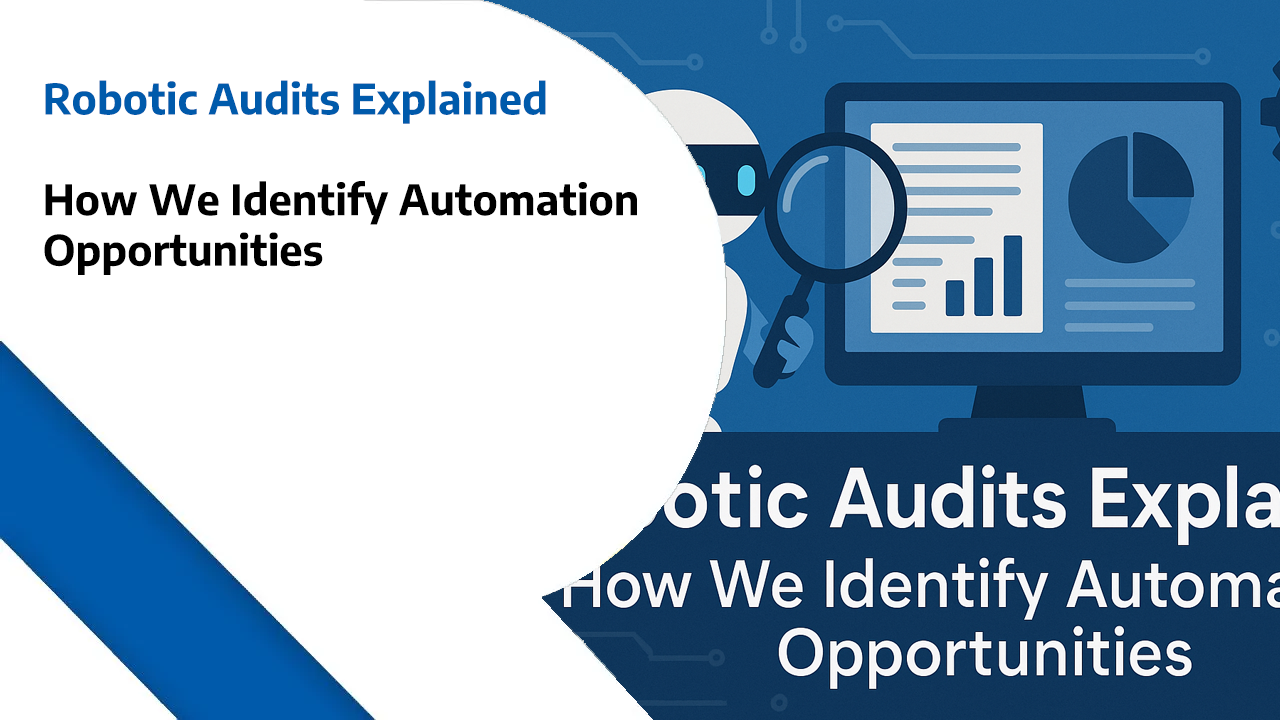
  • Robotic Audits Explained: How We Identify Automation Opportunities

    Robotic Audits Explained: How We Identify Automation Opportunities

    Robotic Audits Explained: How We Identify Automation Opportunities

    Sponsored by Robot Center, Robots of London, and Robot Philosophy

    In today’s rapidly evolving business landscape, organisations across every sector are seeking ways to enhance efficiency, reduce costs, and maintain competitive advantages. The answer increasingly lies in robotic process automation (RPA) and intelligent automation solutions. However, the critical question remains: how do you identify which processes in your organisation are ripe for automation?

    The answer lies in conducting comprehensive robotic audits – systematic evaluations that uncover hidden automation opportunities and provide clear roadmaps for digital transformation. This detailed guide explores the methodology, benefits, and strategic implementation of robotic audits, demonstrating how professional automation consulting can revolutionise your business operations.

    What is a Robotic Audit?

    A robotic audit is a comprehensive assessment methodology that examines your organisation’s existing processes, workflows, and operational procedures to identify prime candidates for robotic automation. Unlike traditional business process reviews, robotic audits specifically focus on discovering repetitive, rule-based tasks that can be efficiently handled by software robots or physical automation systems.

    The audit process combines technical expertise with business acumen, evaluating factors such as process complexity, transaction volumes, error rates, compliance requirements, and potential return on investment. This holistic approach ensures that automation initiatives deliver maximum value while minimising implementation risks.

    Professional robotic audits go beyond simple task identification. They provide detailed feasibility assessments, cost-benefit analyses, implementation timelines, and strategic recommendations that align automation initiatives with broader business objectives. The result is a clear, actionable roadmap for digital transformation that drives measurable business outcomes.

    The Strategic Importance of Professional Robot Consulting

    Embarking on automation initiatives without proper guidance can lead to costly mistakes, failed implementations, and missed opportunities. Professional robot consulting services bring specialised expertise, proven methodologies, and industry insights that dramatically improve automation success rates.

    Expert consultants understand the nuances of different automation technologies, from simple RPA solutions to complex artificial intelligence systems. They can evaluate your specific business context, technical infrastructure, and organisational readiness to recommend optimal automation strategies. This expertise is particularly valuable when considering the rapid evolution of robotics technology and the diverse range of available solutions.

    Furthermore, professional consulting services provide objective assessments free from internal biases or preconceptions. External experts can identify opportunities that internal teams might overlook while highlighting potential challenges that could derail automation projects. This independent perspective is invaluable for making informed investment decisions and developing realistic implementation plans.

    Our Comprehensive Robotic Audit Methodology

    Our proven robotic audit methodology follows a structured approach designed to uncover every automation opportunity within your organisation. The process begins with stakeholder interviews and process documentation reviews, providing a comprehensive understanding of current operations and pain points.

    Phase 1: Discovery and Assessment

    The initial phase involves detailed interviews with key personnel across all departments, from front-line employees to senior management. These conversations reveal process inefficiencies, bottlenecks, and repetitive tasks that consume valuable human resources. We simultaneously review existing documentation, standard operating procedures, and system architectures to understand technical constraints and opportunities.

    Phase 2: Process Mapping and Analysis

    During this critical phase, we create detailed process maps that visualise current workflows, decision points, and data flows. Advanced analytics tools help quantify process volumes, cycle times, error rates, and resource requirements. This data-driven approach provides objective criteria for prioritising automation opportunities based on potential impact and implementation feasibility.

    Phase 3: Technology Assessment

    Our technical experts evaluate your existing IT infrastructure, software systems, and data architecture to determine automation compatibility. We assess integration requirements, security considerations, and scalability factors that influence technology selection and implementation approaches. This thorough technical evaluation ensures that recommended solutions align with your technological capabilities and strategic direction.

    Phase 4: ROI Analysis and Prioritisation

    Each identified automation opportunity undergoes rigorous financial analysis, including implementation costs, ongoing maintenance expenses, and projected benefits. We calculate detailed return on investment projections, payback periods, and sensitivity analyses that support informed decision-making. Opportunities are then prioritised based on financial impact, implementation complexity, and strategic alignment.

    Key Areas Where Robotic Audits Uncover Opportunities

    Modern organisations contain numerous processes that are ideal candidates for automation, though these opportunities are often hidden within daily operational routines. Our comprehensive audits consistently identify automation potential across several key areas.

    Financial Operations and Accounting

    Financial departments typically handle large volumes of repetitive transactions, making them prime candidates for automation. Common opportunities include accounts payable processing, invoice verification, expense report handling, financial reconciliations, and regulatory reporting. Automation in these areas often delivers immediate benefits through reduced processing times, improved accuracy, and enhanced compliance.

    Human Resources and Payroll

    HR departments manage numerous administrative processes that can benefit significantly from automation. Employee onboarding, benefits administration, timesheet processing, performance review coordination, and compliance reporting are frequently identified as high-value automation opportunities. These improvements not only reduce administrative burden but also enhance employee experience through faster, more consistent service delivery.

    Customer Service and Support

    Customer-facing operations present excellent automation opportunities, particularly for routine inquiries, order processing, and service request handling. Chatbots, automated ticketing systems, and intelligent routing solutions can handle high volumes of standard requests while freeing human agents to focus on complex, high-value interactions. This approach improves customer satisfaction while reducing operational costs.

    Supply Chain and Logistics

    Supply chain operations involve numerous repetitive processes that benefit from automation, including inventory management, order processing, shipping coordination, and vendor communication. Automated systems can monitor inventory levels, trigger reorder processes, track shipments, and manage supplier relationships with minimal human intervention.

    Data Management and Reporting

    Organisations generate vast amounts of data that require regular processing, analysis, and reporting. Automated data collection, validation, transformation, and report generation can eliminate hours of manual work while improving accuracy and consistency. These systems can also provide real-time insights that support better decision-making across the organisation.

    The Technology Landscape: Understanding Your Automation Options

    The robotics and automation landscape offers diverse technology solutions, each suited to different types of processes and business requirements. Understanding these options is crucial for making informed investment decisions and maximising automation value.

    Robotic Process Automation (RPA)

    RPA represents the most widely adopted automation technology, using software robots to perform repetitive, rule-based tasks across existing applications. RPA solutions excel at handling structured data processing, system integration, and workflow automation without requiring significant changes to underlying systems. The technology is particularly valuable for organisations seeking quick wins and immediate productivity improvements.

    Intelligent Process Automation (IPA)

    IPA combines RPA with artificial intelligence capabilities, including machine learning, natural language processing, and computer vision. These enhanced systems can handle unstructured data, make intelligent decisions, and adapt to changing conditions. IPA solutions are ideal for processes that require some level of judgment or handling of variable inputs.

    Physical Robotics Solutions

    Physical robots are increasingly viable for various business operations, from warehouse automation to customer service applications. Modern robotic systems offer sophisticated capabilities at decreasing costs, making them accessible to organisations of all sizes. When evaluating physical robotics options, considerations include workspace requirements, safety protocols, and integration with existing operations.

    Artificial Intelligence and Machine Learning

    AI and ML technologies can automate complex cognitive tasks, including pattern recognition, predictive analytics, and decision-making processes. These solutions are particularly valuable for organisations with large datasets, complex business rules, or requirements for intelligent insights and recommendations.

    Measuring Success: KPIs and ROI Metrics

    Successful automation initiatives require careful measurement and ongoing optimisation. Our robotic audits establish baseline metrics and define key performance indicators that track automation success across multiple dimensions.

    Operational Efficiency Metrics

    Primary efficiency metrics include process cycle time reduction, throughput improvements, and resource utilisation optimisation. These quantitative measures demonstrate automation’s direct impact on operational performance and provide clear evidence of value creation. Typical improvements range from 30-80% reduction in processing times, depending on the process complexity and automation approach.

    Quality and Accuracy Improvements

    Automation consistently delivers superior accuracy compared to manual processes, particularly for repetitive, rule-based tasks. Error rate reductions, compliance improvements, and consistency enhancements are critical success indicators that often justify automation investments independently of efficiency gains.

    Financial Return Metrics

    Comprehensive ROI analysis includes direct cost savings, productivity improvements, and opportunity cost considerations. Many organisations achieve payback periods of 6-18 months for well-designed automation initiatives, with ongoing annual savings of 20-50% of original process costs.

    Employee Satisfaction and Engagement

    Often overlooked but equally important are employee-focused metrics that measure job satisfaction, engagement, and retention improvements. Automation typically eliminates tedious, repetitive work, allowing employees to focus on higher-value activities that provide greater job satisfaction and career development opportunities.

    Implementation Strategies and Best Practices

    Successful automation implementation requires careful planning, stakeholder engagement, and systematic execution. Our consulting approach incorporates proven best practices that maximise success probability while minimising implementation risks.

    Phased Implementation Approach

    Rather than attempting large-scale automation initiatives, we recommend phased implementations that begin with high-impact, low-risk processes. This approach allows organisations to build automation capabilities, develop internal expertise, and demonstrate value before tackling more complex challenges. Early successes create momentum and stakeholder buy-in that supports broader automation initiatives.

    Change Management and Training

    Successful automation requires comprehensive change management that addresses employee concerns, provides adequate training, and establishes clear communication channels. Our implementation strategies include detailed training programs, ongoing support structures, and performance monitoring systems that ensure smooth transitions and sustained adoption.

    Governance and Oversight

    Effective automation governance includes clear roles and responsibilities, standardised processes, and regular performance reviews. We establish automation centres of excellence that provide ongoing support, maintain best practices, and coordinate enterprise-wide automation initiatives. This structured approach ensures consistent quality and maximises automation value across the organisation.

    Industry-Specific Automation Opportunities

    Different industries present unique automation opportunities based on their specific processes, regulatory requirements, and operational characteristics. Our extensive experience across various sectors enables us to identify industry-specific automation potential that delivers maximum value.

    Manufacturing and Production

    Manufacturing operations offer numerous automation opportunities, from production planning and quality control to supply chain coordination and maintenance scheduling. Advanced robotics solutions can handle physical tasks while software automation manages planning, scheduling, and coordination activities. The combination often delivers significant productivity improvements and quality enhancements.

    Healthcare and Life Sciences

    Healthcare organisations benefit from automation in areas such as patient scheduling, claims processing, regulatory reporting, and clinical documentation. Automation can reduce administrative burden on clinical staff while improving accuracy and compliance with healthcare regulations. The sector’s emphasis on quality and compliance makes automation particularly valuable for standardising processes and reducing errors.

    Financial Services

    Financial institutions handle vast volumes of transactions and regulatory requirements that present excellent automation opportunities. Common applications include loan processing, compliance reporting, customer onboarding, and fraud detection. Automation in financial services often delivers substantial cost savings while improving customer service and regulatory compliance.

    Retail and E-commerce

    Retail operations involve numerous repetitive processes that benefit from automation, including inventory management, order processing, customer service, and pricing updates. E-commerce businesses particularly benefit from automated systems that can handle high transaction volumes and provide consistent customer experiences across multiple channels.

    The Future of Robotic Audits and Automation

    The automation landscape continues evolving rapidly, with new technologies and capabilities emerging regularly. Understanding future trends helps organisations make informed investment decisions and develop sustainable automation strategies.

    Artificial Intelligence Integration

    The integration of AI capabilities with traditional automation technologies is creating more sophisticated, adaptive systems capable of handling complex, variable processes. Future robotic audits will increasingly focus on identifying opportunities for intelligent automation that can adapt to changing conditions and learn from experience.

    Low-Code and No-Code Platforms

    Emerging low-code and no-code automation platforms are democratising automation development, enabling business users to create and modify automated processes without extensive technical expertise. This trend will expand automation opportunities and accelerate implementation timelines across organisations of all sizes.

    Process Mining and Discovery

    Advanced process mining technologies are revolutionising how organisations identify and analyse automation opportunities. These tools can automatically discover processes, identify inefficiencies, and recommend automation approaches based on actual system data rather than documented procedures.

    Overcoming Common Automation Challenges

    While automation offers significant benefits, successful implementation requires addressing common challenges that can derail projects or limit their effectiveness. Our extensive experience helps organisations anticipate and overcome these obstacles.

    Technical Integration Complexities

    Legacy systems, data quality issues, and integration challenges are common technical obstacles that require careful planning and expertise to overcome. Our technical assessment processes identify these challenges early and develop appropriate solutions that ensure successful automation implementation.

    Organisational Resistance and Change Management

    Employee concerns about job security, workflow changes, and new technology adoption can create resistance that undermines automation initiatives. Our change management approaches address these concerns through clear communication, comprehensive training, and involvement in automation planning and implementation.

    Scalability and Maintenance Considerations

    Successful automation requires ongoing maintenance, updates, and scaling to handle changing business requirements. Our implementation strategies include long-term support plans, maintenance procedures, and scalability considerations that ensure sustained automation value.

    Professional Robot Recruitment: Building Your Automation Team

    Implementing and maintaining successful automation initiatives requires specialised skills and expertise that may not exist within your current organisation. Professional robot recruitment services help identify and attract the talent needed to support your automation journey.

    Key Automation Roles and Skills

    Successful automation teams require diverse skills, including RPA developers, process analysts, project managers, and change management specialists. Each role requires specific technical and business skills that are often in high demand and short supply. Professional recruitment services understand these requirements and can identify candidates with the right combination of skills and experience.

    Building Internal Automation Capabilities

    While external expertise is valuable for initial implementations, building internal automation capabilities is crucial for long-term success. Our recruitment services help organisations identify candidates who can develop and maintain automation systems while building broader organisational automation expertise.

    Ongoing Support and Development

    The rapidly evolving automation landscape requires continuous learning and skill development. Our recruitment approach includes identifying candidates with strong learning capabilities and providing ongoing development opportunities that keep your team current with emerging technologies and best practices.

    Getting Started: Your Path to Automation Success

    Beginning your automation journey requires careful planning, expert guidance, and a clear understanding of your organisation’s specific needs and opportunities. Our comprehensive consulting approach provides the foundation for successful automation initiatives that deliver measurable business value.

    Initial Consultation and Assessment

    The journey begins with a detailed consultation that explores your business objectives, current challenges, and automation goals. This initial assessment helps identify high-priority areas for detailed robotic auditing and establishes clear success criteria for automation initiatives.

    Customised Audit Scope and Timeline

    Based on initial assessments, we develop customised audit scopes that focus on areas with the highest automation potential and business impact. Detailed project timelines ensure efficient execution while minimising disruption to ongoing operations.

    Implementation Planning and Support

    Our comprehensive approach extends beyond audit completion to include implementation planning, vendor selection support, and ongoing project oversight. This end-to-end support ensures that audit recommendations translate into successful automation implementations that deliver projected benefits.

    Conclusion: Transforming Your Business Through Strategic Automation

    Robotic audits represent the foundation of successful automation initiatives, providing the insights, analysis, and strategic direction needed to transform business operations. Professional consulting services bring the expertise, methodology, and experience necessary to identify and capitalise on automation opportunities while avoiding common pitfalls that can derail projects.

    The combination of comprehensive auditing, expert consulting, and specialised recruitment services provides a complete solution for organisations seeking to harness the power of automation. From initial opportunity identification through successful implementation and ongoing optimisation, professional support ensures that automation initiatives deliver maximum value and sustainable competitive advantages.

    The future belongs to organisations that can effectively leverage automation technologies to enhance efficiency, improve quality, and deliver superior customer experiences. The question is not whether to automate, but how to identify and implement the right automation solutions for your specific business needs.

    Take Action: Start Your Automation Journey Today

    Ready to discover the automation opportunities hidden within your organisation? Our expert team combines decades of robotics experience with proven audit methodologies to deliver actionable insights that drive real business results.

    Contact our expert consultants today:

    Schedule your initial consultation to discuss your automation goals and learn how our comprehensive robotic audit services can transform your business operations. Don’t let automation opportunities pass by – take the first step toward operational excellence today.


    Article Sponsors

    Robot Center – Your premier destination for robot purchasing, robotics consultancy, and comprehensive automation solutions. Whether you’re looking to buy robots or need expert robotics consultancy, Robot Center provides the expertise and technology solutions to transform your business operations.

    Robots of London – Leading provider of robot hire and rental services for events, demonstrations, and short-term projects. From robot events to temporary automation solutions, Robots of London offers flexible robot rental options that meet your specific needs without long-term commitments.

    Robot Philosophy – Specialist robot consultancy and recruitment services that combine strategic automation advice with expert talent acquisition. Our comprehensive approach includes robot insights, innovative ideas, and professional recruitment services to build your automation capabilities and drive business transformation.
     
  • World’s First Mirokai Robot Hackathon – AI Meets Innovation at Queen Mary University

    World’s First Mirokai Robot Hackathon – AI Meets Innovation at Queen Mary University

    World’s First Mirokai Robot Hackathon – AI Meets Innovation at Queen Mary University


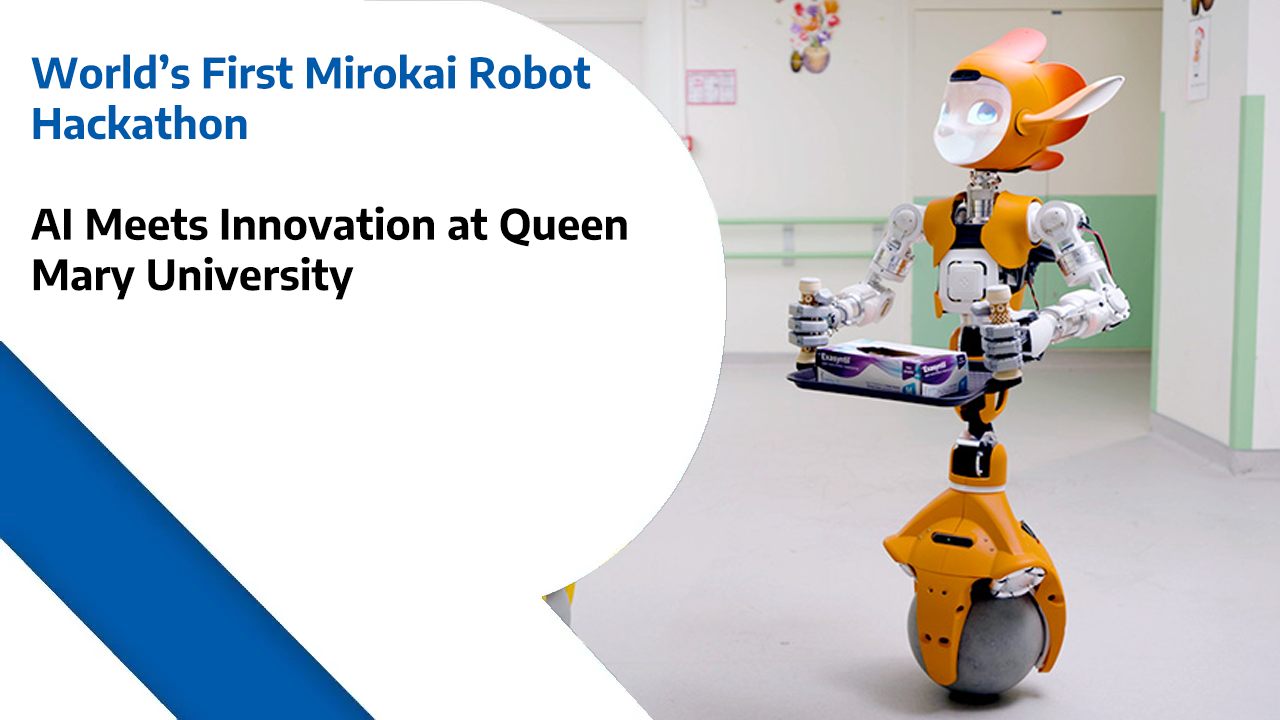
    This month, in June 2025, Queen Mary University’s School of Electronic Engineering and Computer Science, in collaboration with RoboHack, hosted a world first: a hackathon featuring the Mirokai robot from Enchanted Tools.

    Using the Mirokai simulator—and one of just 20 real Mirokai robots in existence—participants prototyped everything from object description to guided tours and even a robot photoshoot. Yes, the robots were camera-ready.

    Powered by advanced AI and a large language model, Mirokai is one of the most innovative humanoids in development—and it showed. Developers used the beta SDK in Python to bring their ideas to life in under 48 hours.

    The event reached full capacity a week early, proving there’s serious excitement around this tech. Enchanted Tools gained valuable feedback, and participants walked away inspired—some said it was “a really good time.” Which, in hacker-speak, is pretty high praise.

    To get involved in future hackathons, visit robohack.org.uk and join the RoboHack community.


    And that’s your robot news update for today!
    If you’re curious about how robotics can transform your business, join me for the weekly Live Robot Optimise Workshop — it’s packed with insights, trends, and practical tips. Don’t forget to subscribe so you stay in the loop with all the latest updates.

    I’m RoboPhil from Robot Philosophy — thanks for watching, and I’ll see you next time!


    Join our Robot Optimise Industry (ROI) Workshop: https://robophil.com/workshop


    Sponsors:-


    Robot Center: – https://robotcenter.co.uk/ – Buy Robot, Robot Buy, Robot consultancy, Robotics Consultancy


    Robots of London: – https://robotsoflondon.co.uk/ – Robot Hire, Robot Rental, Rent Robot, Hire Robot, Robot Events


    Robot Philosophy: – https://robophil.com/ – Robot Consultancy AND Robot Recruitment, Robot Advice, Robot Insights, Robot Ideas

  • The Future of Work: How Robot Consultants Prepare You for AI-Driven Teams

    The Future of Work: How Robot Consultants Prepare You for AI-Driven Teams

    The Future of Work: How Robot Consultants Prepare You for AI-Driven Teams

    In today’s rapidly evolving business environment, the convergence of artificial intelligence (AI), robotics, and automation is fundamentally reshaping the way we work. Whether you run a startup, manage a growing SME, or oversee operations for a multinational enterprise, preparing for AI-driven teams is no longer optional—it’s essential.

    At the forefront of this transformation are robot consultants: the experts who help businesses navigate the complexities of integrating robotics into their workforce. From strategy to implementation, robot consultants ensure that companies don’t just adopt robotics technology but do so in a way that maximizes productivity, enhances employee satisfaction, and future-proofs their operations.

    What Are AI-Driven Teams?

    AI-driven teams are hybrid workforces consisting of both human employees and intelligent machines. These machines include physical robots, robotic arms, and AI-powered systems that support decision-making, logistics, production, customer service, healthcare, and more. The synergy between human creativity and robotic precision creates a dynamic environment that demands new ways of thinking, managing, and innovating.

    Why You Need a Robot Consultant

    Implementing robotics isn’t just about buying hardware. It’s about aligning technology with your business goals. That’s where robot consultants come in. At Robot Philosophy (https://robophil.com/), we specialize in guiding companies through the entire robotics journey:

    • Assessment: Identifying where robots can make the biggest impact.

    • Selection: Choosing the right robots for your processes.

    • Integration: Seamlessly embedding robots into your workflows.

    • Training: Upskilling your team to work alongside intelligent machines.

    • Strategy: Building a future-proof roadmap for robotics and AI alignment.

    Robot consultants help you avoid costly mistakes, reduce implementation time, and accelerate ROI. Whether it’s robotic automation for warehouses or humanoid robots for customer interaction, our consultants tailor solutions to your industry and operations.

    The Rise of Robot Recruitment

    As AI-driven teams grow, so does the demand for a new kind of workforce. You need employees who can code robots, maintain them, optimize their tasks, and interact with AI systems fluently. Enter robot recruitment.

    At Robot Philosophy, we don’t just place people—we match talent with future-forward missions. We help you find:

    • Robotics engineers

    • AI integration specialists

    • Automation managers

    • Human-robot interaction designers

    • Robot support technicians

    We also support individual candidates looking to pivot their careers into the robotics field. Our recruitment services ensure you’re building a team ready to thrive in the new era of work.

    Want to get started? Email us today at info@robophil.com or call 0845 528 0404 to book your consultation.

    Use Case: Robots in Action Across Industries

    Retail & Hospitality: Robots like those from Robots of London (https://robotsoflondon.co.uk/) are already transforming events, expos, and customer experiences. Whether you need to rent a robot for a product launch or integrate one into a luxury hotel, the future of hospitality is interactive, engaging, and automated.

    Manufacturing & Logistics: Smart factories and automated warehouses powered by robots from Robot Center (https://robotcenter.co.uk/) are becoming the new normal. With robotic arms, mobile platforms, and AI-driven quality control, companies can increase output while reducing overheads.

    Healthcare & Education: Social robots help support mental health, assist the elderly, and deliver engaging educational content. A well-placed robot can extend care, reduce loneliness, and make learning more immersive.

    Preparing Your Team for the Future

    While robots take over repetitive, high-risk, and data-heavy tasks, your human team is freed to focus on creativity, empathy, strategy, and innovation. But this transition requires preparation. Our workshops, training sessions, and consulting packages are designed to equip your team with:

    • Digital fluency

    • Human-AI collaboration skills

    • Robotic system awareness

    • Confidence in tech-led change

    Our ROI Method (Resources, Optimise, Intellectify) helps you identify robot opportunities, install the right systems, and empower your people to work in harmony with machines.

    Why Partner with Us?

    Robot Philosophy is the brainchild behind this article, backed by the UK’s leading robotics services:

    Final Thoughts: Don’t Get Left Behind

    Robots are not coming—they’re here. The companies that succeed tomorrow are those acting today to adapt, integrate, and thrive alongside intelligent machines. By partnering with experienced robot consultants and leveraging targeted recruitment, you can lead your industry through this shift with confidence.

    Ready to future-proof your workforce? Contact us at info@robophil.com or call 0845 528 0404 to book your robot consultation today.


    Sponsored by:

    • Robot Center: Robot Buy, Robotics Consultancy

    • Robots of London: Robot Hire, Rent Robot, Robot Events

    • Robot Philosophy: Robot Consultancy & Robot Recruitment

  • World’s First Remote Robotic Surgery – Doctor in Florida Operates on Patient in Africa!

    World’s First Remote Robotic Surgery – Doctor in Florida Operates on Patient in Africa!

    World’s First Remote Robotic Surgery – Doctor in Florida Operates on Patient in Africa!


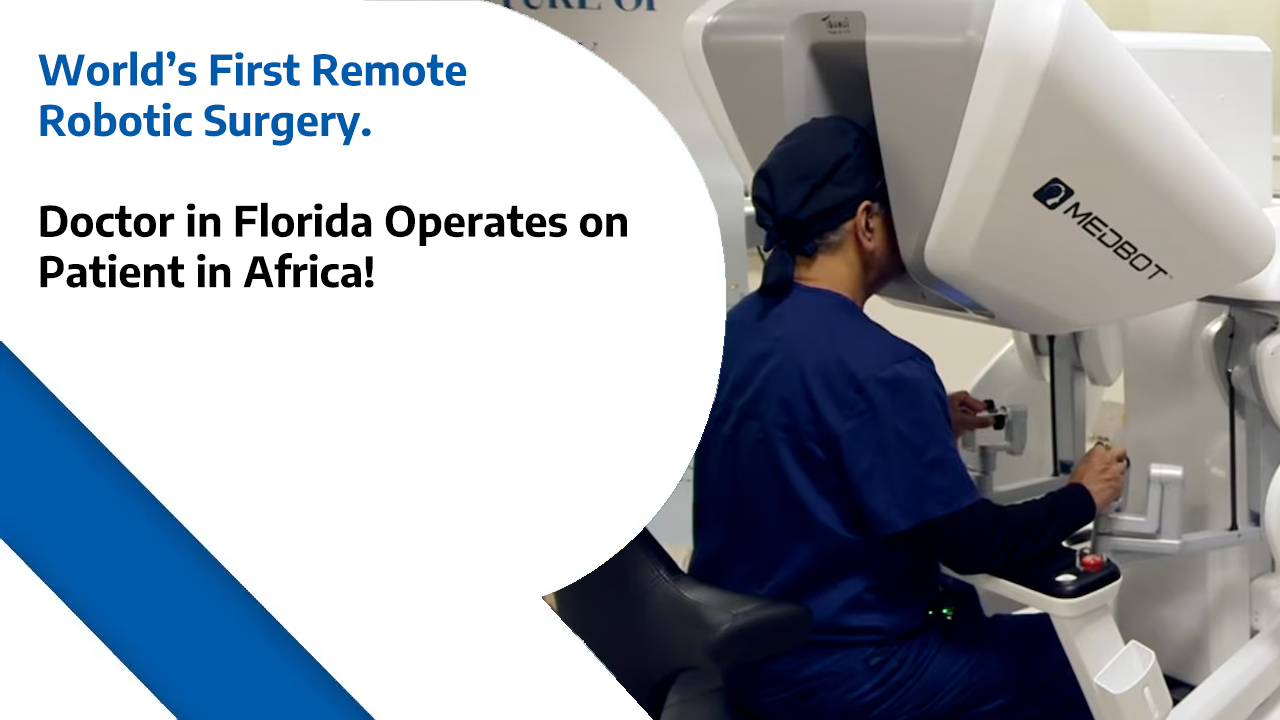
    What if your surgeon was on another continent during your operation? That’s exactly what happened when Fernando da Silva, a patient in Angola, had his prostate cancer removed by a doctor… in Florida.

    Dr. Vipul Patel, based in Orlando, performed the world’s first FDA-approved transcontinental robotic surgery—cutting-edge in every sense. Using a sophisticated robot, Patel controlled the operation remotely, 7,000 miles away, through high-speed fiber optic cables.

    This wasn’t a solo act. A full surgical team was in Angola, ready to step in if anything went wrong. But it didn’t. The operation went smoothly—and marked a huge step forward in global healthcare access.

    Robotic surgery already offers less invasive procedures and faster recovery. But now? It could mean expert care for patients in even the most remote parts of the world.

    As Dr. Patel said, “It was a small step for a surgeon, but a huge leap for healthcare.” And yes—this time, buffering was not an option.


    And that’s your robot news update for today!
    If you’re curious about how robotics can transform your business, join me for the weekly Live Robot Optimise Workshop — it’s packed with insights, trends, and practical tips. Don’t forget to subscribe so you stay in the loop with all the latest updates.

    I’m RoboPhil from Robot Philosophy — thanks for watching, and I’ll see you next time!


    Join our Robot Optimise Industry (ROI) Workshop: https://robophil.com/workshop


    Sponsors:-


    Robot Center: – https://robotcenter.co.uk/ – Buy Robot, Robot Buy, Robot consultancy, Robotics Consultancy


    Robots of London: – https://robotsoflondon.co.uk/ – Robot Hire, Robot Rental, Rent Robot, Hire Robot, Robot Events


    Robot Philosophy: – https://robophil.com/ – Robot Consultancy AND Robot Recruitment, Robot Advice, Robot Insights, Robot Ideas


  • Top 5 Business Processes Ripe for Robotic Automation

    Top 5 Business Processes Ripe for Robotic Automation

    Top 5 Business Processes Ripe for Robotic Automation: Transform Your Business Today

    Sponsored by Robot Center, Robots of London, and Robot Philosophy

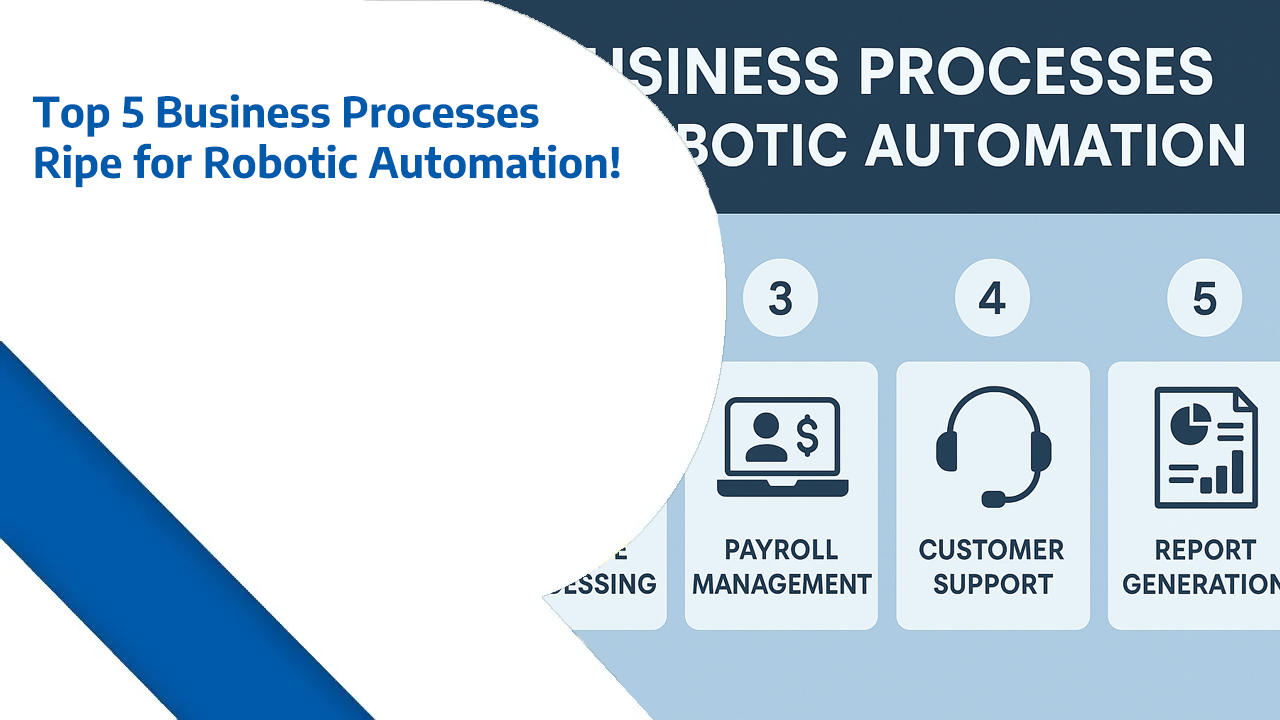
    The business landscape is evolving at unprecedented speed, and companies that fail to embrace automation risk being left behind. Robotic Process Automation (RPA) and physical robotics are no longer futuristic concepts—they’re today’s competitive necessities. While many businesses recognize the potential of automation, identifying which processes offer the greatest return on investment can be challenging.

    After analyzing hundreds of automation implementations across diverse industries, we’ve identified five business processes that consistently deliver exceptional results when automated. These processes share common characteristics: they’re repetitive, rule-based, time-consuming, and prone to human error. More importantly, they represent significant opportunities for cost reduction, accuracy improvement, and employee satisfaction enhancement.

    1. Invoice Processing and Accounts Payable

    Invoice processing remains one of the most labor-intensive and error-prone activities in modern businesses. Traditional manual processing involves multiple touchpoints: receiving invoices, data entry, validation, approval routing, and payment processing. Each step introduces potential delays and errors that can strain vendor relationships and impact cash flow management.

    The typical organization processes hundreds or thousands of invoices monthly, with each requiring 15-30 minutes of manual handling. This translates to substantial labor costs, not to mention the hidden costs of errors—duplicate payments, missed early payment discounts, and compliance issues. Late payments can damage supplier relationships and potentially impact credit ratings, while processing delays create bottlenecks that affect entire procurement cycles.

    Robotic automation transforms this landscape dramatically. Intelligent document processing robots can extract data from invoices regardless of format—PDF, email attachments, or scanned documents. These systems use optical character recognition (OCR) combined with machine learning to achieve accuracy rates exceeding 95%. The automation handles three-way matching between purchase orders, receipts, and invoices, flagging discrepancies for human review while processing compliant invoices automatically.

    The benefits extend beyond simple cost savings. Automated invoice processing reduces processing time from days to hours, improves cash flow visibility, and eliminates the risk of losing physical documents. Staff previously buried in manual data entry can focus on strategic activities like vendor relationship management and financial analysis. Companies typically see 60-80% reduction in processing costs and achieve full ROI within 12-18 months.

    Consider a mid-sized manufacturing company processing 2,000 invoices monthly. Manual processing required three full-time employees, with an average processing time of 5 days and error rates around 8%. After implementing robotic automation, processing time dropped to 2 hours, error rates fell below 1%, and two employees were redeployed to higher-value activities. The annual savings exceeded £180,000, with the automation system paying for itself in just 14 months.

    2. Customer Service and Support Operations

    Customer service operations generate massive volumes of routine inquiries that consume significant human resources while often failing to meet modern consumers’ expectations for instant responses. Traditional call centers and email support systems struggle with 24/7 availability, consistent service quality, and rapid response times. The challenge intensifies during peak periods when queue times frustrate customers and overwhelm support staff.

    Most customer inquiries fall into predictable categories: order status checks, password resets, basic product information, return processing, and account updates. These interactions follow established scripts and decision trees, making them ideal candidates for automation. However, the key lies in implementing intelligent automation that can handle complexity while seamlessly escalating sophisticated issues to human agents.

    Modern customer service robots combine natural language processing, machine learning, and integration capabilities to deliver human-like interactions across multiple channels. These systems can simultaneously handle thousands of conversations via chat, email, social media, and voice channels. They access customer databases, order management systems, and knowledge bases to provide accurate, personalized responses instantly.

    The transformation goes beyond simple chatbots. Advanced robotic systems can process returns, update account information, schedule appointments, and even handle complex troubleshooting scenarios. They learn from each interaction, continuously improving response accuracy and expanding their capability range. When human intervention is required, the robot provides complete context, ensuring smooth handoffs that enhance rather than disrupt the customer experience.

    A telecommunications company implemented comprehensive customer service automation handling 70% of inquiries without human intervention. Customer satisfaction scores improved by 23% due to instant response times and consistent service quality. The company reduced support staff requirements by 40% while extending service availability to 24/7. Most importantly, human agents could focus on complex problem-solving and relationship-building activities that truly require human empathy and creativity.

    The financial impact is substantial. Organizations typically reduce customer service costs by 30-50% while improving key performance metrics like first-call resolution rates and customer satisfaction scores. The automation also provides valuable analytics on customer behavior patterns, common issues, and service improvement opportunities.

    3. Data Entry and Management

    Data entry represents perhaps the most obvious yet underestimated automation opportunity in modern businesses. Every organization generates and processes vast amounts of data daily—customer information, inventory records, financial transactions, employee details, and operational metrics. Much of this data still moves manually between systems, creating inefficiencies, errors, and compliance risks that compound over time.

    The scope of data entry extends far beyond simple typing. It includes data validation, format conversion, system synchronization, report generation, and database maintenance. These activities consume enormous human resources while contributing little strategic value. Worse, manual data handling introduces error rates typically ranging from 2-5%, creating downstream problems that multiply across business processes.

    Human data entry fatigue compounds these challenges. Studies show accuracy rates decline significantly after 2-3 hours of continuous data entry work. Employees often find these tasks monotonous and demotivating, leading to higher turnover rates in data-intensive roles. The hidden costs include recruitment, training, and the productivity loss during transition periods.

    Robotic automation eliminates these challenges through intelligent data processing capabilities that surpass human performance in both speed and accuracy. Modern robots can extract data from virtually any source—scanned documents, PDFs, emails, web forms, legacy systems, and third-party databases. They perform real-time validation against business rules, flag anomalies for human review, and ensure consistent data formatting across systems.

    The sophistication of these systems continues advancing rapidly. Artificial intelligence enables robots to handle unstructured data, interpret context, and make intelligent decisions about data categorization and routing. They can process multiple data sources simultaneously, perform complex transformations, and maintain detailed audit trails for compliance purposes.

    A financial services firm automated mortgage application processing, eliminating manual entry of over 50 data points per application. The robot extracted information from credit reports, employment verification, bank statements, and property appraisals, then populated multiple systems automatically. Processing time decreased from 4 hours to 15 minutes, with error rates dropping from 6% to less than 0.5%. The firm processed 40% more applications with the same staff while improving customer satisfaction through faster approvals.

    The strategic implications extend beyond operational efficiency. Automated data management provides real-time visibility into business operations, enables advanced analytics, and supports data-driven decision making. Organizations can respond more quickly to market changes, identify trends earlier, and optimize processes based on actual performance data rather than assumptions.

    4. Human Resources and Payroll Processing

    Human resources operations involve numerous repetitive processes that consume significant administrative time while requiring high accuracy levels. Traditional HR departments spend enormous effort on routine tasks: onboarding new employees, processing leave requests, updating employee records, managing benefits enrollment, and generating compliance reports. These activities, while essential, divert HR professionals from strategic initiatives like talent development, employee engagement, and organizational culture building.

    Payroll processing exemplifies the complexity and criticality of HR operations. It involves collecting timesheet data, calculating wages, applying deductions, processing taxes, generating pay stubs, and maintaining detailed records for compliance purposes. Errors in payroll processing can have serious consequences—employee dissatisfaction, regulatory penalties, and potential legal issues. Yet manual payroll processing remains error-prone and time-consuming, particularly for organizations with complex pay structures or multiple locations.

    The challenge intensifies with regulatory compliance requirements that vary by jurisdiction and change frequently. HR teams must track numerous deadlines, maintain specific documentation, and generate reports for various regulatory bodies. Manual compliance management creates significant risk exposure and consumes valuable resources that could support business growth initiatives.

    Robotic automation transforms HR operations by handling routine administrative tasks with perfect accuracy and consistency. Automated systems can process employee onboarding from initial paperwork through system setup, badge creation, and training scheduling. They handle leave request workflows, updating calendars and notifying relevant stakeholders automatically. Benefits enrollment becomes streamlined through intelligent form processing and system integration.

    Payroll automation delivers particularly dramatic improvements. Robots can collect data from multiple time tracking systems, apply complex wage calculations, process deductions, and generate payments automatically. They ensure compliance with tax regulations, generate required reports, and maintain comprehensive audit trails. The systems can handle complex scenarios like overtime calculations, commission structures, and multi-state tax requirements with complete accuracy.

    A manufacturing company with 1,200 employees automated their entire payroll process, reducing processing time from 3 days to 4 hours. The system eliminated calculation errors that previously affected 5-8% of paychecks monthly. HR staff were redeployed to employee development and retention initiatives, contributing to a 15% reduction in turnover rates. The automation also improved compliance reporting accuracy and reduced audit preparation time by 70%.

    The strategic benefits extend throughout the organization. Employees receive faster responses to HR inquiries, more accurate information, and improved service consistency. HR professionals can focus on strategic initiatives that enhance employee satisfaction and support business objectives. Management gains better visibility into workforce metrics and can make more informed decisions about talent management and resource allocation.

    5. Supply Chain and Inventory Management

    Supply chain operations involve complex, interconnected processes that require precise coordination between multiple systems, suppliers, and stakeholders. Traditional supply chain management relies heavily on manual coordination—purchase order creation, supplier communications, inventory tracking, shipping coordination, and performance monitoring. These processes are not only time-consuming but also prone to errors that can disrupt entire supply chains.

    Inventory management presents particular challenges in maintaining optimal stock levels while minimizing carrying costs. Manual inventory tracking often results in stockouts, overstock situations, and poor demand forecasting. The complexity multiplies for organizations with multiple locations, seasonal demand patterns, or complex product hierarchies. Poor inventory management can impact customer satisfaction, tie up working capital, and reduce profitability.

    Supplier relationship management adds another layer of complexity. Organizations must track supplier performance, manage contracts, process invoices, and coordinate deliveries across dozens or hundreds of suppliers. Manual processes create communication delays, miss critical deadlines, and fail to identify optimization opportunities. The lack of real-time visibility makes it difficult to respond quickly to supply chain disruptions or market changes.

    Robotic automation revolutionizes supply chain operations through intelligent process orchestration and real-time data integration. Automated systems can monitor inventory levels continuously, generate purchase orders when stock reaches predetermined thresholds, and route orders to preferred suppliers based on price, availability, and performance metrics. They track shipments, update inventory systems, and notify stakeholders of delays or exceptions automatically.

    The sophistication of modern supply chain robots enables predictive analytics and optimization capabilities. These systems analyze historical demand patterns, seasonal trends, and market indicators to optimize inventory levels and purchasing decisions. They can automatically adjust reorder points based on lead time variations, demand volatility, and service level targets. Integration with supplier systems enables real-time visibility into production schedules and availability.

    A retail chain implemented comprehensive supply chain automation across 150 stores. The system reduced stockout incidents by 35% while decreasing overall inventory levels by 18%. Automated reordering eliminated manual purchase order processing for 80% of SKUs, reducing procurement costs by 12%. The improved inventory accuracy enabled better demand forecasting and promotional planning, contributing to a 6% increase in gross margins.

    Supplier relationship management automation provides additional benefits through performance tracking, automated scorecards, and contract compliance monitoring. Organizations gain better visibility into supplier performance trends and can identify opportunities for cost reduction or service improvement. Automated communication ensures suppliers receive timely information about requirements, changes, and expectations.

    The Strategic Imperative for Automation

    The business case for robotic automation extends far beyond simple cost reduction. Organizations that embrace automation gain competitive advantages that compound over time—improved accuracy, faster processing, better customer service, and enhanced scalability. These benefits enable companies to respond more quickly to market opportunities, deliver superior customer experiences, and optimize resource allocation for maximum impact.

    The technology landscape continues evolving rapidly, with artificial intelligence and machine learning capabilities making automation accessible to organizations of all sizes. Cloud-based automation platforms eliminate the need for significant upfront infrastructure investments while providing enterprise-grade capabilities. The barrier to entry has never been lower, yet the competitive advantages have never been greater.

    However, successful automation requires more than technology implementation. Organizations need strategic planning, process optimization, change management, and ongoing support to maximize their automation investments. The complexity of modern business processes demands expertise in both technology and business operations to design solutions that deliver sustainable results.

    Your Automation Journey Starts Here

    Ready to transform your business through robotic automation? The processes outlined above represent just the beginning of what’s possible. Every organization has unique opportunities for automation that can deliver significant returns on investment while improving operational efficiency and employee satisfaction.

    Robot Philosophy specializes in identifying automation opportunities and implementing solutions that deliver measurable results. Our comprehensive approach includes process assessment, solution design, implementation support, and ongoing optimization. Whether you need strategic consulting to identify the best automation opportunities or recruitment services to build your internal automation capabilities, our team has the expertise to ensure your success.

    Don’t let your competitors gain the advantage while you struggle with manual processes. Contact us today to discover how robotic automation can transform your business operations.

    Contact Information:

    Schedule your consultation today and take the first step toward operational excellence through intelligent automation.


    Article Sponsors

    Robot Center – Your premier destination for robot acquisition and robotics consultancy services. Whether you’re looking to buy robots or need expert guidance on robotics implementation, Robot Center provides comprehensive solutions tailored to your business needs.

    Robots of London – Leading provider of robot hire and rental services for events, demonstrations, and temporary deployments. From corporate events to trade shows, Robots of London delivers cutting-edge robotics solutions that captivate audiences and demonstrate technological innovation.

    Robot Philosophy – Expert robotics consultancy and recruitment services helping organizations navigate the automation landscape. Combining deep technical expertise with strategic business insight, Robot Philosophy delivers practical solutions that drive measurable results and sustainable competitive advantage.

  • AEON – Hexagon’s New Humanoid Robot Built with NVIDIA Tech Is a Game-Changer for Industry

    AEON – Hexagon’s New Humanoid Robot Built with NVIDIA Tech Is a Game-Changer for Industry

    AEON – Hexagon’s New Humanoid Robot Built with NVIDIA Tech Is a Game-Changer for Industry


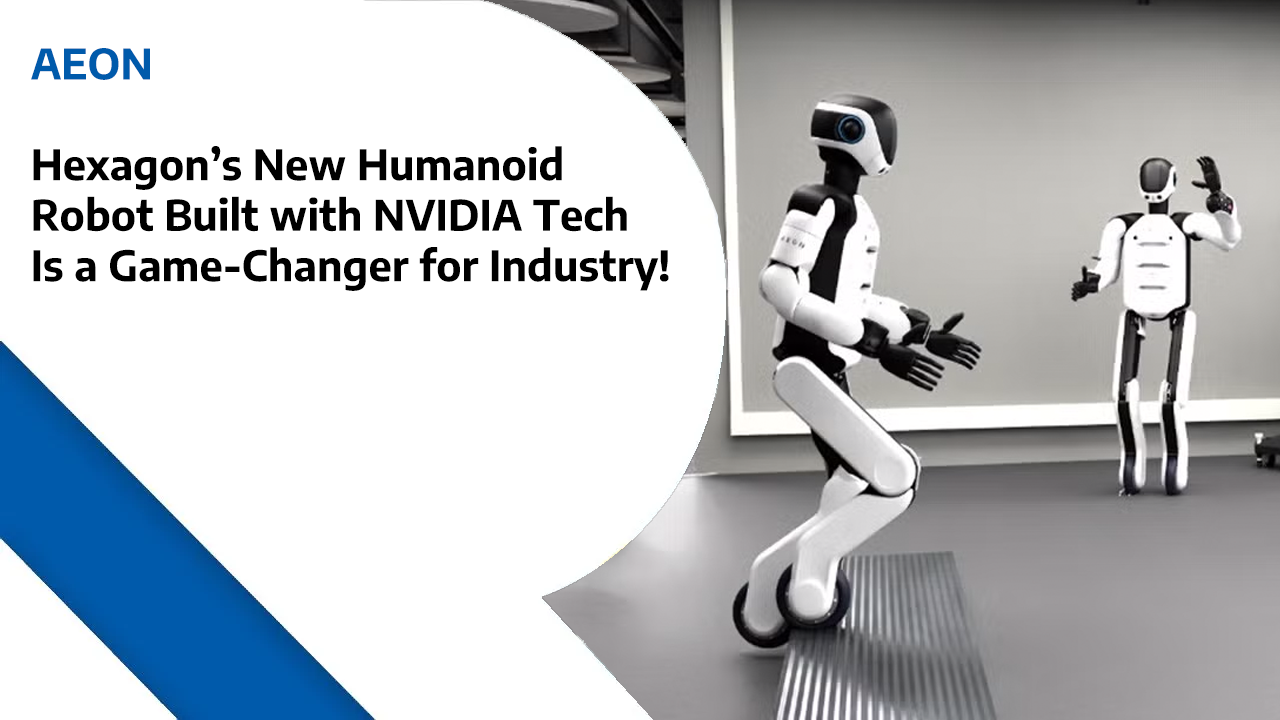
    Hexagon has just unveiled AEON, its new humanoid robot, developed in partnership with Nvidia—and it’s far more than just a shiny metal face.

    Revealed at the Hexagon LIVE Global conference, AEON is designed to support industries like automotive, aerospace, manufacturing, and logistics. Think of it as a highly intelligent coworker… who doesn’t need coffee breaks.

    Powered by Nvidia’s AI supercomputers, Omniverse platform, and IGX Thor robotic computers, AEON was trained in simulation—learning to walk and work faster than most interns.

    It can sort parts, inspect for defects, and even capture 3D reality scans to help build digital twins. Onboard Jetson Orin computers give AEON the brainpower to operate in real-time, whether it’s navigating a warehouse or analysing an assembly line.

    With data fed into Hexagon’s Digital Reality platform, AEON’s insights can be shared and visualised in the cloud, helping teams make smarter, faster decisions.

    According to Hexagon and Nvidia, this is a major leap forward for physical AI—and possibly a gentle nudge toward robots finally becoming your next colleague.


    And that’s your robot news update for today!
    If you’re curious about how robotics can transform your business, join me for the weekly Live Robot Optimise Workshop — it’s packed with insights, trends, and practical tips. Don’t forget to subscribe so you stay in the loop with all the latest updates.

    I’m RoboPhil from Robot Philosophy — thanks for watching, and I’ll see you next time!


    Join our Robot Optimise Industry (ROI) Workshop: https://robophil.com/workshop


    Sponsors:-


    Robot Center: – https://robotcenter.co.uk/ – Buy Robot, Robot Buy, Robot consultancy, Robotics Consultancy


    Robots of London: – https://robotsoflondon.co.uk/ – Robot Hire, Robot Rental, Rent Robot, Hire Robot, Robot Events


    Robot Philosophy: – https://robophil.com/ – Robot Consultancy AND Robot Recruitment, Robot Advice, Robot Insights, Robot Ideas


    Please also:- Write out the web links fully, do not shorten or put in a word link

    Please also:- Write this is Robot News, Robotics News, Robot & Robotics News. ( I want it so when someone types in Robot News, my Youtube video and blogg conent comes up first comes up first

  • How We Helped a Business Increase Efficiency by 200% with Robotics

    How We Helped a Business Increase Efficiency by 200% with Robotics

    How We Helped a Business Increase Efficiency by 200% with Robotics

    Transforming Manufacturing Operations Through Strategic Robotic Implementation

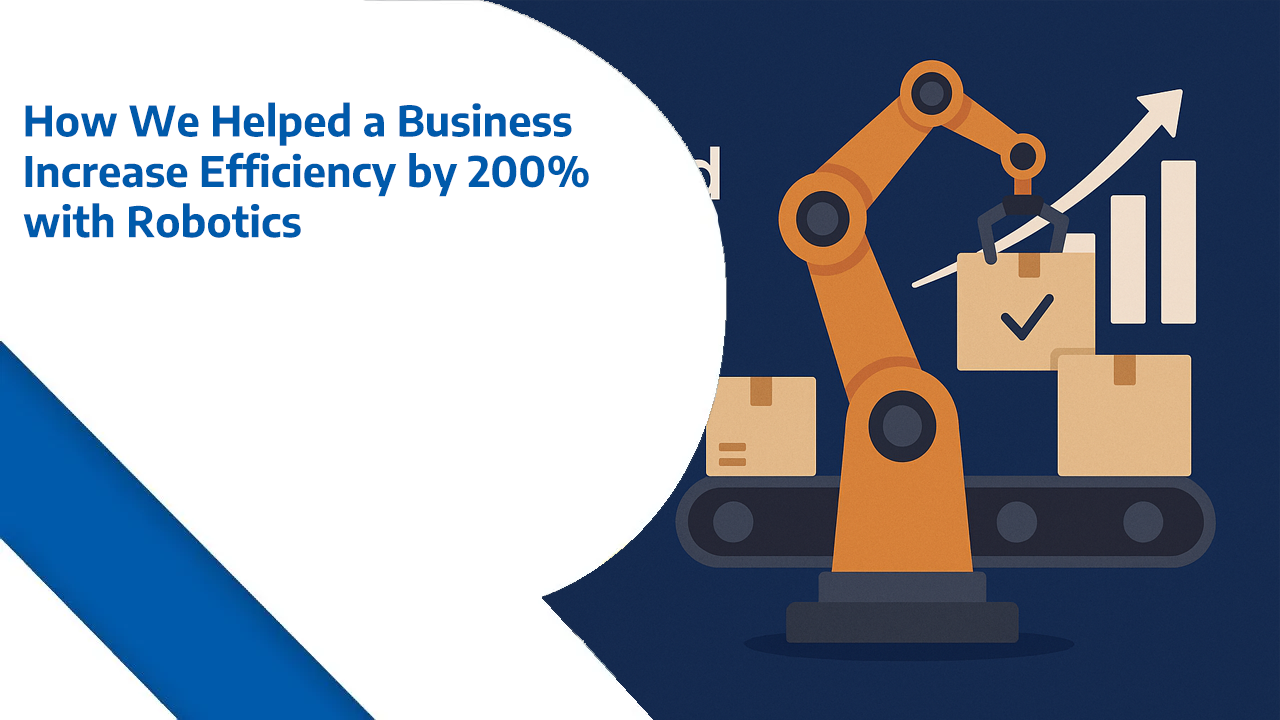
    In today’s competitive manufacturing landscape, operational efficiency can make or break a business. When Precision Components Ltd, a mid-sized automotive parts manufacturer, approached us with declining productivity and rising labor costs, their future looked uncertain. Twelve months later, they’ve achieved a remarkable 200% increase in operational efficiency through our comprehensive robotics transformation program.

    The Challenge: A Company at the Crossroads

    Precision Components Ltd was facing the perfect storm of manufacturing challenges. Their manual assembly lines were struggling to meet increasing demand, quality control issues were affecting customer relationships, and skilled labor shortages were creating bottlenecks across their production floor. With competitors leveraging automation to slash costs and improve quality, the company needed a radical solution.

    “We were spending more time fixing problems than making products,” explains Sarah Mitchell, Operations Director at Precision Components. “Our reject rates were climbing, delivery times were extending, and our team was working overtime just to maintain basic output levels.”

    The numbers painted a stark picture:

    • 23% defect rate on manual assembly lines
    • 40% longer production cycles compared to industry standards
    • 35% increase in labor costs over two years
    • Customer complaints up 60% due to quality issues

    The Solution: Strategic Robotics Implementation

    Our team conducted a comprehensive operational audit, identifying key areas where robotics could deliver maximum impact. Rather than implementing a one-size-fits-all solution, we developed a phased approach tailored to Precision Components’ specific needs and budget constraints.

    Phase 1: Automated Assembly Integration

    We introduced collaborative robots (cobots) to handle repetitive assembly tasks while allowing human workers to focus on complex problem-solving and quality oversight. The cobots were programmed to work alongside existing staff, creating a hybrid workforce that maximized both human expertise and robotic precision.

    Phase 2: Quality Control Automation

    Advanced vision systems and AI-powered inspection robots were deployed to detect defects at multiple stages of production. This eliminated the need for extensive manual quality checks while dramatically improving detection accuracy.

    Phase 3: Material Handling Optimization

    Autonomous mobile robots (AMRs) were implemented to streamline material flow between workstations, reducing downtime and eliminating the physical strain on workers previously responsible for heavy lifting and transport.

    The Results: Transformation Beyond Expectations

    The implementation timeline spanned eight months, with each phase building upon the previous one’s success. The results exceeded even our most optimistic projections:

    Efficiency Gains:

    • 200% increase in production output per shift
    • 87% reduction in defect rates
    • 45% decrease in production cycle times
    • 92% improvement in on-time delivery performance

    Cost Benefits:

    • £280,000 annual savings in labor costs
    • £150,000 reduction in waste and rework expenses
    • 35% decrease in overtime requirements
    • ROI achieved within 14 months

    Workforce Impact:

    • Zero redundancies – all staff retrained for higher-value roles
    • 40% increase in job satisfaction scores
    • 60% reduction in workplace injuries
    • 25% wage increase for upskilled employees

    The Human Element: Redefining Roles, Not Replacing People

    One of the most significant outcomes was the positive impact on Precision Components’ workforce. Rather than replacing jobs, our robotics implementation created opportunities for employees to develop new skills and take on more engaging, strategic roles.

    “The robots handle the repetitive, physically demanding tasks, while our people focus on programming, maintenance, and continuous improvement,” notes Mitchell. “Our team feels more valued and engaged than ever before.”

    We provided comprehensive training programs ensuring every employee could work effectively with the new robotic systems. This included upskilling opportunities in robot programming, predictive maintenance, and data analysis.

    Lessons Learned: Keys to Successful Robotic Implementation

    The transformation at Precision Components highlighted several critical success factors:

    1. Comprehensive Planning Success began with thorough analysis of existing processes, identifying specific pain points, and developing a clear roadmap for implementation.

    2. Phased Approach Gradual implementation allowed for continuous learning and adjustment, minimizing disruption while maximizing adoption rates.

    3. Employee Engagement Early involvement of the workforce in planning and training ensured buy-in and smooth transition to new processes.

    4. Ongoing Support Continuous monitoring, maintenance, and optimization were essential for sustaining and improving results over time.

    5. Measurement and Adaptation Regular performance reviews and willingness to adjust strategies based on real-world results proved crucial for achieving optimal outcomes.

    The Competitive Advantage: Beyond Efficiency

    The robotics transformation delivered benefits extending far beyond operational efficiency. Precision Components now enjoys:

    • Enhanced reputation for quality and reliability
    • Ability to take on larger, more complex contracts
    • Improved workplace safety and employee satisfaction
    • Greater agility in responding to market demands
    • Sustainable competitive advantage in their sector

    Looking Forward: The Future of Manufacturing

    The success at Precision Components represents a broader trend across UK manufacturing. Companies that embrace robotics and automation are not just surviving – they’re thriving in an increasingly competitive global market.

    “This transformation has future-proofed our business,” reflects Mitchell. “We’re now positioned to grow rather than just survive, and our employees are excited about the possibilities ahead.”


    Transform Your Business with Expert Robotics Consulting

    Are you ready to unlock your business’s potential through strategic robotics implementation? Our proven methodology has helped dozens of companies achieve remarkable efficiency gains while enhancing their workforce capabilities.

    Why Choose Our Services?

    Robot Consulting Excellence Our experienced consultants provide comprehensive analysis and strategic planning tailored to your specific industry and operational challenges. We don’t just recommend robots – we design complete transformation strategies that deliver measurable results.

    Specialized Robot Recruitment Finding the right robotics talent can be challenging. Our recruitment service connects you with skilled professionals who can implement, maintain, and optimize your robotic systems for long-term success.

    End-to-End Support From initial assessment through implementation and ongoing maintenance, we provide complete support throughout your robotics journey.

    Ready to Start Your Transformation?

    Contact us today to discuss how robotics can revolutionize your operations:

    📧 Email: info@robophil.com
    📞 Phone: 0845 528 0404

    Book a consultation call to discover how we can help your business achieve similar results to Precision Components Ltd.


    Article Sponsors

    This article is proudly sponsored by our industry partners:

    Robot Centerrobotcenter.co.uk
    Your trusted source for robot purchases and comprehensive robotics consultancy services. Expert guidance for all your automation needs.

    Robots of Londonrobotsoflondon.co.uk
    Premier robot hire and rental services. Perfect for events, temporary projects, and testing applications before full implementation.

    Robot Philosophyrobophil.com
    Leading robot consultancy and recruitment specialists. Providing strategic insights, expert advice, and innovative solutions for the robotics industry.


    Ready to join the robotics revolution? Contact our team today and discover how strategic automation can transform your business operations, just like it did for Precision Components Ltd.

  • Underwater Robot vs Sabotage – How the Royal Navy is Securing UK Seabeds

    Underwater Robot vs Sabotage – How the Royal Navy is Securing UK Seabeds

    Underwater Robot vs Sabotage – How the Royal Navy is Securing UK Seabeds


    Protecting the UK’s undersea infrastructure just got a high-tech upgrade. The Defence Science and Technology Laboratory – or Dstl – has teamed up with industry to trial a new underwater robot that could help prevent sabotage to undersea cables and pipelines.

    This remotely operated vehicle, or ROV, has been adapted to detect and safely neutralise underwater threats – including legacy unexploded ordnance. It means fewer risks for divers and vessels, and a lot more peace of mind for everyone else.

    The robot is equipped with cameras, sensors, and tools that allow operators to identify hazards and place explosive charges to remove them – all from the safety of a ship or shoreline. And unlike a lot of equipment in defence, this one’s reusable – saving both lives and money.

    Tested everywhere from Portsmouth to Norway, this Royal Navy-funded project is already proving its value. It’s a smart bit of kit helping protect critical infrastructure and support specialist jobs across the UK.

    Safe, efficient, and not afraid to get its feet wet.

    And that’s your robot news update for today!
    If you’re curious about how robotics can transform your business, join me for the weekly Live Robot Optimise Workshop — it’s packed with insights, trends, and practical tips. Don’t forget to subscribe so you stay in the loop with all the latest updates.

    I’m RoboPhil from Robot Philosophy — thanks for watching, and I’ll see you next time!


    Join our Robot Optimise Industry (ROI) Workshop: https://robophil.com/workshop


    Sponsors:-


    Robot Center: – https://robotcenter.co.uk/ – Buy Robot, Robot Buy, Robot consultancy, Robotics Consultancy


    Robots of London: – https://robotsoflondon.co.uk/ – Robot Hire, Robot Rental, Rent Robot, Hire Robot, Robot Events


    Robot Philosophy: – https://robophil.com/ – Robot Consultancy AND Robot Recruitment, Robot Advice, Robot Insights, Robot Ideas

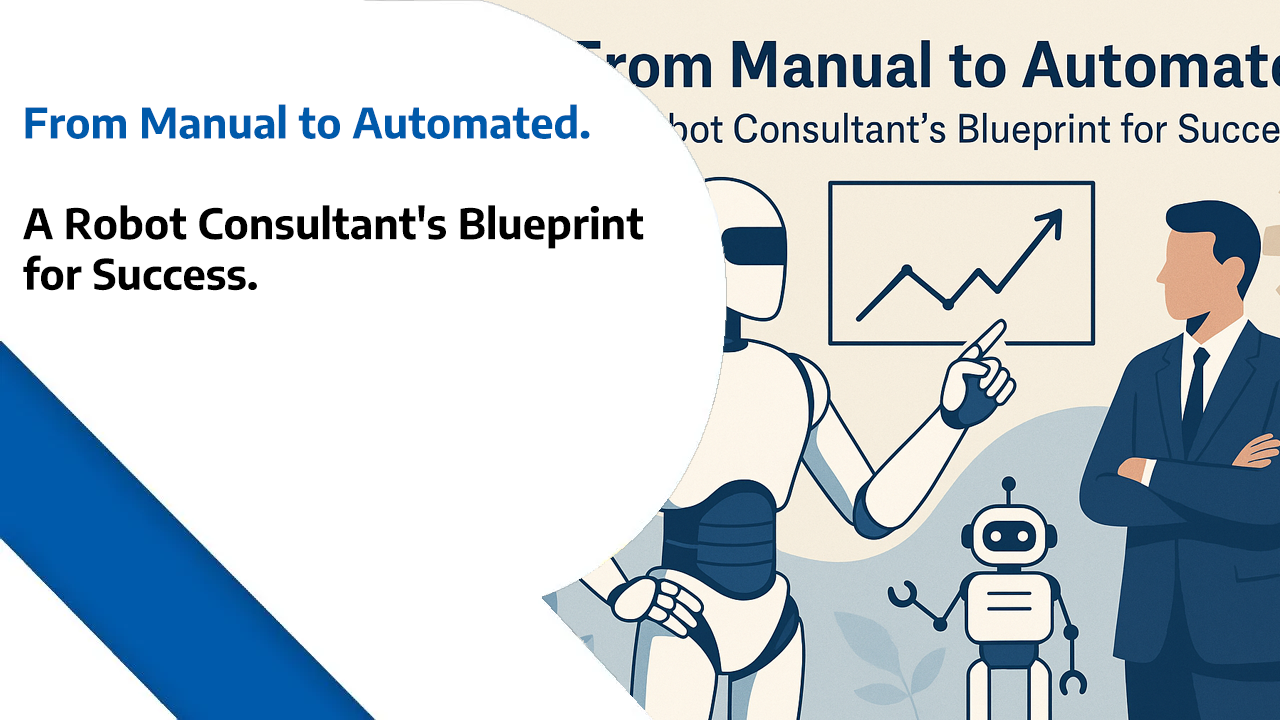
  • From Manual to Automated: A Robot Consultant’s Blueprint for Success

    From Manual to Automated: A Robot Consultant’s Blueprint for Success

    From Manual to Automated: A Robot Consultant’s Blueprint for Success

    How Businesses Are Unlocking the Power of Robotics—and Why You Need a Robot Consultant to Guide the Way

    In today’s hyper-competitive marketplace, staying still means falling behind. While AI headlines steal the limelight, the quiet revolution transforming operations, logistics, customer service, and events is robotics. But here’s the catch: jumping from a manual process to an automated one isn’t just about buying a machine—it’s about crafting a smart strategy that fits your business.

    This is where robot consultancy becomes mission-critical.


    What Does a Robot Consultant Actually Do?

    A robot consultant does more than point you toward the newest gadget. They assess your current workflows, identify automation opportunities, source the right hardware, manage the integration process, and make sure your team benefits—not battles—with the bots.

    A seasoned consultant ensures:

    • The robot aligns with your team, your goals, and your processes.

    • You avoid costly mistakes from poor product choices or failed implementations.

    • You have a roadmap for scalability—not just a short-term gimmick.

    We’ve worked with companies across retail, hospitality, logistics, warehousing, and events. Whether it’s a humanoid robot greeting guests at the Dorchester or an autonomous shelf scanner boosting supermarket efficiency, success comes from strategy, not guesswork.


    The Blueprint for Automation Success

    Here’s a proven 5-step framework we use at Robot Philosophy to transform businesses from manual to automated:

    1. Resources

    Audit your current operations. Where do people spend time on repetitive, dangerous, or low-value tasks? What systems and tools are already in place? What’s your budget and ROI target?

    2. Opportunities

    Match your resources against proven robotic use cases. This is where the magic happens—identifying high-impact areas where robotics can do more for less.

    3. Optimisation

    We integrate and install the chosen robotic solution, ensuring it works in real-world conditions—not just showrooms.

    4. Intellectify

    This step is unique to our methodology. We train your team to work with the robot, interpret its data, and gain new insights. This isn’t just about automation—it’s about augmentation.

    5. Scale or Specialise

    Once your first robotic system succeeds, we help you scale it across departments—or introduce highly specialised bots tailored to new business goals.


    Why Most Robot Projects Fail Without a Consultant

    Most failures come down to four things:

    • Wrong robot

    • Wrong timing

    • Poor integration

    • No ownership or upskilling of the team

    A robot consultant acts as your insurance policy, your integration manager, your product filter, and your long-term automation partner. And because we’re not tied to any one manufacturer, we recommend what’s best—not what’s on our shelf.


    Need People to Power Your Robotics Journey?

    Robots don’t replace humans—they require skilled humans behind the scenes. That’s why we now offer robot recruitment services for companies scaling their automation programs.

    We help you find:

    • Robot integration specialists

    • Robot maintenance engineers

    • Warehouse automation technicians

    • Robotics software engineers

    • On-site robot operators and trainers

    Whether you’re hiring your first robotics manager or building an internal automation team, we bring candidates who know the tech and understand the mission.

    📧 Email: info@robophil.com
    📞 Call: 0845 528 0404 to book a free strategy session.


    Who’s Behind This Article?

    This article is proudly sponsored by three pioneers in UK robotics:

    🤖 Robot Center

    Your go-to source for robotics consultancy and purchase. Whether you’re looking to buy a robot or need expert robotics consultancy, Robot Center helps businesses deploy the right technology from concept to completion.

    Search terms: Buy Robot, Robot Buy, Robot consultancy, Robotics Consultancy


    🦾 Robots of London

    The UK’s #1 robot hire and rental company. If you need to rent a robot, hire robots for events, or want to create unforgettable customer experiences with humanoids, bionic arms, or delivery bots—this is your team.

    Search terms: Robot Hire, Robot Rental, Rent Robot, Hire Robot, Robot Events


    🧠 Robot Philosophy

    Led by RoboPhil, Robot Philosophy offers robot consultancy, robot recruitment, and robot ideas for businesses looking to grow smarter. You’ll find podcasts, workshops, and insights designed to help you transition from confusion to confident action in the robotics space.

    Search terms: Robot Consultancy, Robot Recruitment, Robot Advice, Robot Insights, Robot Ideas


    Ready to Start Your Automation Journey?

    Whether you’re dipping a toe into automation or planning a full digital transformation, don’t go it alone. Book a free 30-minute consultation with our lead consultant and we’ll help map out your first (or next) successful robotics project.

    📧 Email: info@robophil.com
    📞 Phone: 0845 528 0404
    🌐 Website: https://robophil.com


    From manual to automated, your success starts with a conversation. Let’s build your robotic future—together.

  • Inside Gecko Robotics’ $125M Rise | The Robot Unicorn Powering Critical Infrastructure

    Inside Gecko Robotics’ $125M Rise | The Robot Unicorn Powering Critical Infrastructure

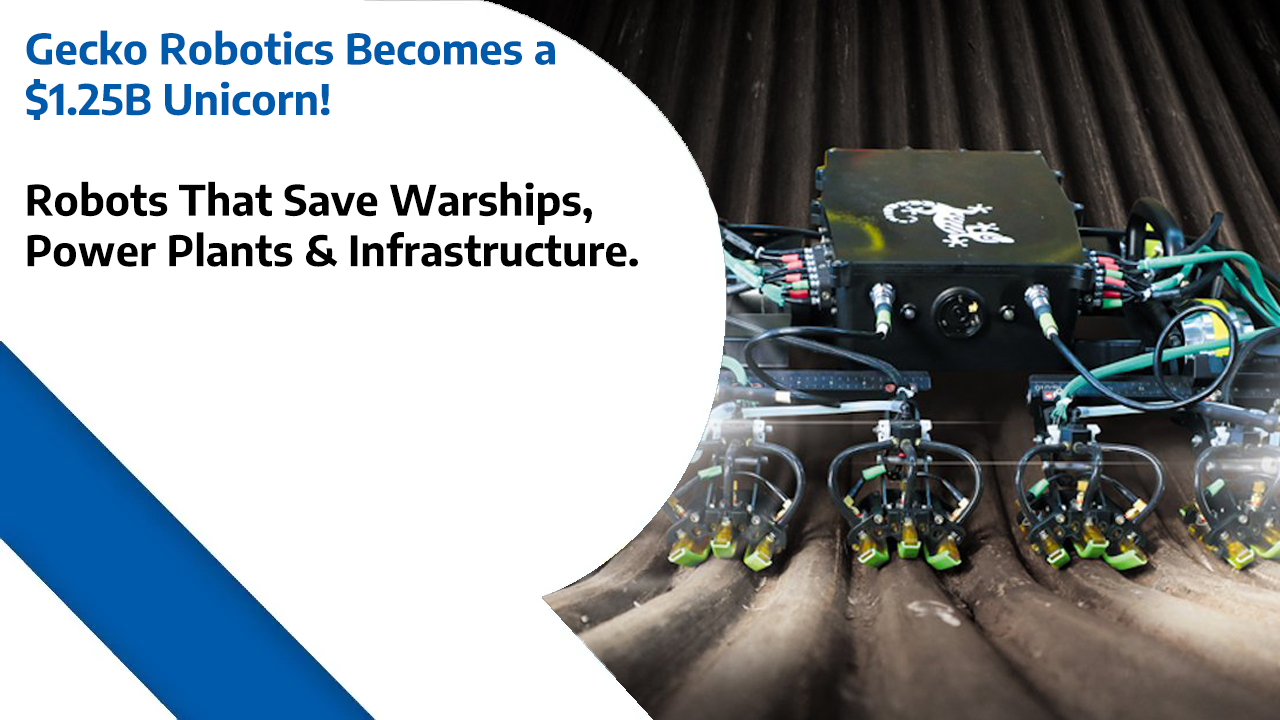
    Gecko Robotics Becomes a $1.25B Unicorn – Robots That Save Warships, Power Plants & Infrastructure


    Gecko Robotics has officially hit unicorn status—no, not the mythical creature, but the billion-dollar kind. With a fresh $125 million in Series D funding, the Pittsburgh-based company has doubled its valuation to a cool $1.25 billion.

    Not bad for a business that started in a college dorm room.

    Gecko builds robots that climb, swim, and fly their way across critical infrastructure—think warships, power plants, and pipelines—gathering high-quality data to keep things running safely and efficiently. Their software platform, Cantilever, takes that data and helps clients prevent disasters, improve performance, and modernize systems.

    From working with the U.S. military to teaming up with the Abu Dhabi National Oil Company, Gecko is proving that infrastructure may not be flashy—but it’s definitely important.

    While the rest of the tech world is obsessed with AI-generated selfies, Gecko’s using AI to protect the real world. And that, investors like Cox Enterprises and YCombinator agree, is worth backing.

    So here’s to Gecko Robotics: one billion-dollar step closer to making the built world a little smarter—and a lot safer.

    And that’s your robot news update for today!
    If you’re curious about how robotics can transform your business, join me for the weekly Live Robot Optimise Workshop — it’s packed with insights, trends, and practical tips. Don’t forget to subscribe so you stay in the loop with all the latest updates.

    I’m RoboPhil from Robot Philosophy — thanks for watching, and I’ll see you next time!


    Join our Robot Optimise Industry (ROI) Workshop: https://robophil.com/workshop


    Sponsors:-


    Robot Center: – https://robotcenter.co.uk/ – Buy Robot, Robot Buy, Robot consultancy, Robotics Consultancy


    Robots of London: – https://robotsoflondon.co.uk/ – Robot Hire, Robot Rental, Rent Robot, Hire Robot, Robot Events


    Robot Philosophy: – https://robophil.com/ – Robot Consultancy AND Robot Recruitment, Robot Advice, Robot Insights, Robot Ideas