Author: Philip English

  • New Robotic Skin Lets Robots Feel Pain — A Major Leap in AI Sensory Tech!

    New Robotic Skin Lets Robots Feel Pain — A Major Leap in AI Sensory Tech!

    New Robotic Skin Lets Robots Feel PainA Major Leap in AI Sensory Tech!


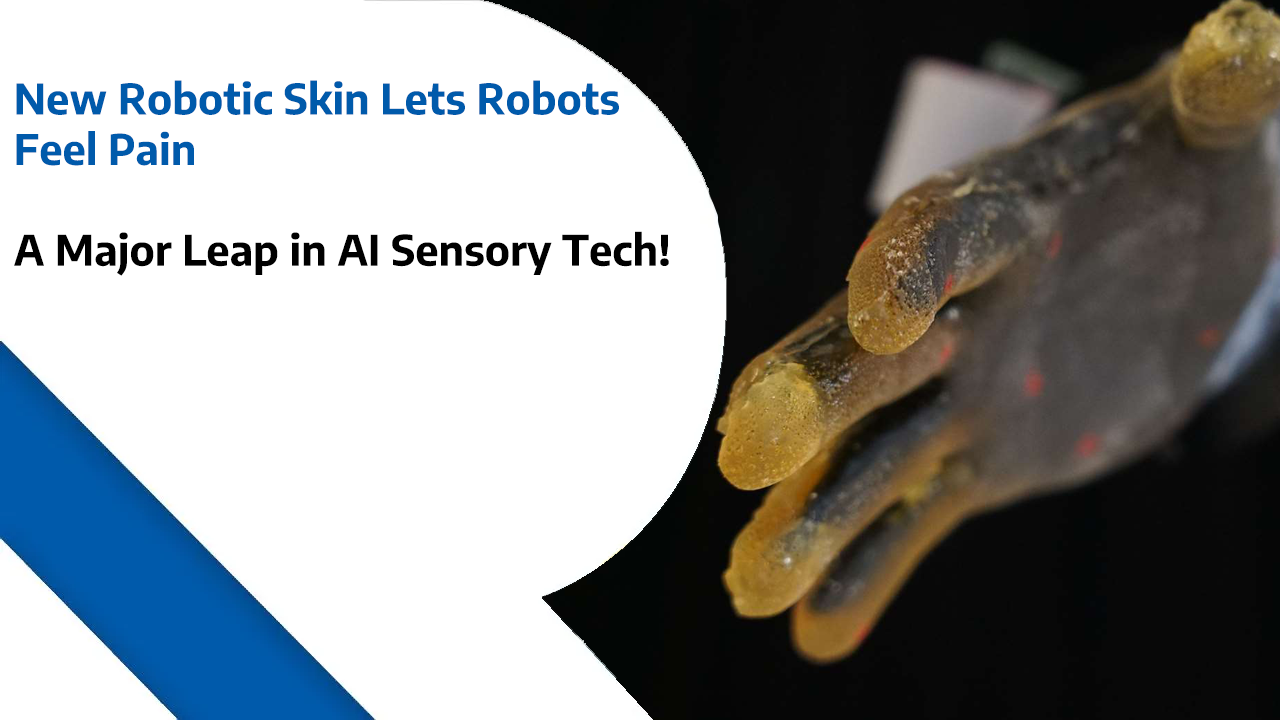
    Scientists have developed a new type of electronic skin that could help robots feel — from a gentle touch to a sharp slice.

    Made from a soft, gelatin-based, electrically conductive material, this skin can be molded into shapes — like a human hand — and equipped with electrodes to detect signals from over 860,000 pathways. That allows it to recognize different sensations like pressure, temperature, and even damage.

    To test it, researchers put the synthetic skin through its paces: heating it, poking it, and yes — cutting it open. All very scientific, but not exactly gentle.

    They collected over 1.7 million pieces of data and used it to train a machine learning model that could help robots identify the type and intensity of touch they’re experiencing.

    Unlike traditional systems, which need different sensors for each sensation, this skin uses a single “multi-modal” sensor — making it simpler, tougher, and more cost-effective. Ideal for humanoid robots, prosthetics, and even disaster response tech.

    As UCL’s Dr. Thomas George Thuruthel puts it: it’s not quite human skin yet, but it’s the most capable robotic skin developed so far — and it’s getting smarter with every poke.


    And that’s your robot news update for today!
    If you’re curious about how robotics can transform your business, join me for the weekly Live Robot Optimise Workshop — it’s packed with insights, trends, and practical tips. Don’t forget to subscribe so you stay in the loop with all the latest updates.

    I’m RoboPhil from Robot Philosophy — thanks for watching, and I’ll see you next time!


    Join our Robot Optimise Industry (ROI) Workshop: https://robophil.com/workshop


    Sponsors:-


    Robot Center: – https://robotcenter.co.uk/ – Buy Robot, Robot Buy, Robot consultancy, Robotics Consultancy


    Robots of London: – https://robotsoflondon.co.uk/ – Robot Hire, Robot Rental, Rent Robot, Hire Robot, Robot Events


    Robot Philosophy: – https://robophil.com/ – Robot Consultancy AND Robot Recruitment, Robot Advice, Robot Insights, Robot Ideas

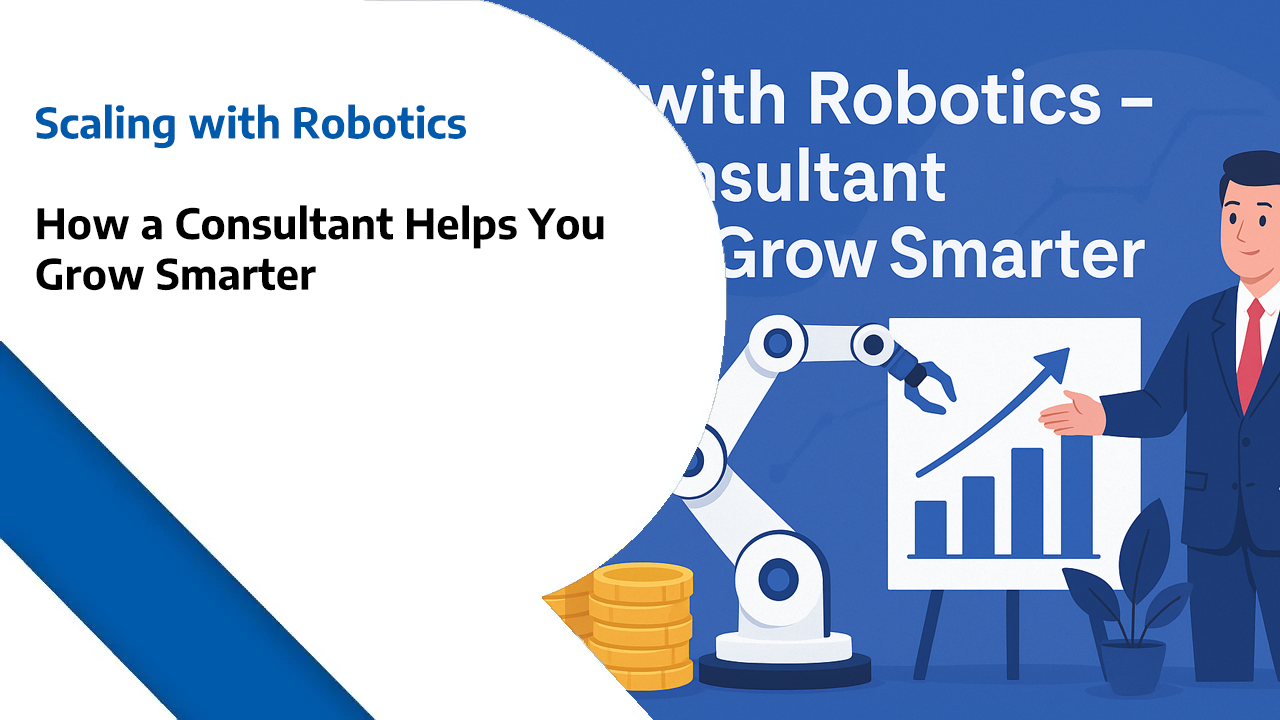
  • Scaling with Robotics – How a Consultant Helps You Grow Smarter

    Scaling with Robotics – How a Consultant Helps You Grow Smarter

    Scaling with Robotics: How a Consultant Helps You Grow Smarter

    In partnership with Robot Center, Robots of London, and Robot Philosophy


    The robotics revolution isn’t coming—it’s here. From manufacturing floors to service counters, from warehouses to hospitals, robots are transforming how businesses operate, compete, and scale. Yet for many organizations, the path to successful robotics integration remains shrouded in complexity, uncertainty, and significant investment risk.

    This is where robotics consulting becomes not just valuable, but essential. The difference between a successful robotics deployment and a costly mistake often lies in having the right expertise guiding your journey from conception to implementation and beyond.

    The Scaling Challenge: Why Robotics Integration Fails

    Before diving into solutions, it’s crucial to understand why so many robotics initiatives fail to deliver their promised returns. Research indicates that up to 70% of robotics projects either fail to meet expectations or are abandoned entirely. The reasons are remarkably consistent across industries and company sizes.

    Misaligned Expectations and Objectives

    Many organizations approach robotics with either unrealistic expectations or poorly defined objectives. They may expect immediate, dramatic improvements without understanding the learning curve, infrastructure requirements, or process adaptations necessary for success. Others may focus on the wrong metrics entirely, measuring success by technology adoption rather than business impact.

    Inadequate Process Analysis

    The most sophisticated robot is only as effective as the process it’s designed to optimize. Companies often attempt to automate existing inefficient processes rather than first optimizing their workflows. This approach compounds inefficiencies rather than eliminating them, leading to expensive automated systems that deliver minimal value.

    Technology Selection Without Strategy

    The robotics market offers an overwhelming array of options, from simple collaborative robots to complex autonomous systems. Without deep technical expertise and strategic vision, organizations frequently select solutions that are either over-engineered for their needs or inadequate for their long-term goals.

    Integration Complexity Underestimation

    Robotics integration extends far beyond installing hardware. It requires careful consideration of existing systems, staff training, safety protocols, maintenance requirements, and scalability planning. Organizations that underestimate these complexities often find themselves with expensive equipment that cannot be effectively deployed.

    The Consultant Advantage: Strategic Robotics Implementation

    This is where experienced robotics consultants become invaluable. A skilled consultant brings not just technical expertise, but strategic insight, industry knowledge, and implementation experience that can mean the difference between transformational success and expensive failure.

    Comprehensive Needs Assessment

    Professional robotics consultants begin with thorough analysis of your current operations, identifying genuine automation opportunities rather than simply applying technology for technology’s sake. This assessment examines workflow efficiency, labor costs, quality control requirements, safety considerations, and scalability potential.

    The best consultants look beyond obvious automation candidates to identify hidden opportunities where robotics can deliver unexpected value. They analyze your entire value chain, considering how robotic solutions might impact upstream and downstream processes, and how integration might unlock new business models or revenue streams.

    Strategic Technology Selection

    With deep knowledge of the robotics landscape, consultants can navigate the complex technology selection process with confidence. They understand not just current capabilities, but emerging trends, vendor reliability, and total cost of ownership considerations that influence long-term success.

    Experienced consultants also bring vendor neutrality to the process, ensuring recommendations align with your specific needs rather than any particular technology relationship. This independence is crucial for organizations seeking optimal solutions rather than vendor-driven recommendations.

    Risk Mitigation and Project Management

    Robotics projects involve significant technical, operational, and financial risks. Professional consultants bring proven methodologies for risk assessment, mitigation strategies, and project management that minimize these risks while maximizing success probability.

    From regulatory compliance to safety protocols, from staff training to change management, consultants provide comprehensive support that addresses the full spectrum of implementation challenges. Their experience with similar projects enables them to anticipate and prevent common pitfalls that could derail your initiative.

    The ROI of Professional Guidance

    The value of robotics consulting extends far beyond risk reduction. Organizations working with experienced consultants typically achieve faster implementation times, higher success rates, and superior return on investment compared to those attempting independent implementation.

    Accelerated Time to Value

    Professional consultants bring established methodologies, proven processes, and vendor relationships that significantly accelerate project timelines. Rather than learning through trial and error, organizations benefit from consultants’ accumulated experience and established best practices.

    This acceleration is particularly valuable in competitive markets where speed to market can determine success or failure. The consultant’s ability to navigate complex technical decisions quickly and confidently can provide significant competitive advantage.

    Optimized Investment Allocation

    Consultants help organizations make more intelligent investment decisions, ensuring resources are allocated to initiatives with the highest potential returns. Their experience across multiple projects and industries provides valuable perspective on which technologies and approaches deliver the best results.

    This optimization often results in lower total project costs, despite the consulting investment, because consultants help avoid expensive mistakes, unnecessary complexity, and over-engineering that plague many independent implementations.

    Enhanced Scalability Planning

    One of the most valuable aspects of professional consulting is strategic scalability planning. Consultants help organizations design robotics implementations that can grow and evolve with business needs, avoiding the common trap of solutions that work for current requirements but cannot adapt to future demands.

    This forward-thinking approach ensures that initial investments contribute to long-term competitive advantage rather than becoming obsolete as requirements change or technology evolves.

    Building Your Robotics Strategy: A Framework for Success

    Successful robotics scaling requires a structured approach that balances technological capability with business strategy. Professional consultants typically employ a framework that addresses five critical dimensions of robotics implementation.

    Strategic Alignment and Objective Setting

    The foundation of successful robotics implementation is clear alignment between automation initiatives and broader business objectives. This requires careful analysis of competitive positioning, market dynamics, and strategic goals to ensure robotics investments support rather than distract from core business priorities.

    Consultants help organizations define success metrics that matter, establishing clear, measurable objectives that guide decision-making throughout the implementation process. These metrics typically extend beyond simple efficiency gains to include quality improvements, risk reduction, and strategic capability development.

    Process Optimization and Workflow Design

    Before introducing robotics, successful implementations typically involve significant process optimization. This may include workflow redesign, quality system improvements, and operational efficiency enhancements that create optimal conditions for robotic integration.

    Consultants bring process engineering expertise that helps organizations identify and eliminate inefficiencies before automation, ensuring that robotics amplifies productivity rather than automating waste. This approach often delivers immediate benefits even before robots are deployed.

    Technology Architecture and Integration Planning

    Modern robotics implementations require careful consideration of technology architecture, including integration with existing systems, data management requirements, and scalability considerations. Professional consultants help organizations design robust technology architectures that support both current needs and future growth.

    This planning extends to cybersecurity considerations, maintenance requirements, and upgrade pathways that ensure long-term viability and security of robotic systems. The consultant’s expertise in these areas helps organizations avoid costly architectural mistakes that might limit future capabilities.

    Change Management and Skills Development

    Successful robotics implementation requires significant organizational change management, including staff training, process adaptation, and culture development. Consultants bring change management expertise that helps organizations navigate these transitions smoothly and effectively.

    This includes developing training programs, establishing new operational procedures, and creating performance metrics that support successful adoption. The consultant’s experience with similar transitions helps organizations avoid common change management pitfalls that can undermine even technically successful implementations.

    Performance Monitoring and Continuous Improvement

    Professional consultants establish performance monitoring systems that provide ongoing visibility into robotics performance, identifying optimization opportunities and ensuring continued value delivery. This includes developing key performance indicators, establishing reporting systems, and creating continuous improvement processes.

    These monitoring systems enable organizations to maximize return on investment over time, identifying additional automation opportunities and optimizing existing implementations for enhanced performance.

    Industry-Specific Considerations

    Different industries present unique challenges and opportunities for robotics implementation. Professional consultants bring industry-specific expertise that helps organizations navigate sector-specific requirements, regulations, and best practices.

    Manufacturing and Production

    In manufacturing environments, robotics consulting often focuses on production optimization, quality enhancement, and flexibility improvement. Consultants help organizations balance automation with adaptability, ensuring that robotic systems can accommodate product variations and changing market demands.

    Safety considerations are paramount in manufacturing robotics, requiring expertise in safety system design, regulatory compliance, and worker protection protocols. Professional consultants bring deep knowledge of safety standards and implementation best practices that ensure compliance while maximizing productivity.

    Healthcare and Medical Services

    Healthcare robotics implementations require specialized expertise in regulatory compliance, patient safety, and clinical workflow integration. Consultants with healthcare experience understand the unique challenges of medical environments and the stringent requirements for patient care continuity.

    From surgical robotics to pharmacy automation, healthcare applications demand particular attention to accuracy, reliability, and failsafe operation. Professional consultants bring the specialized knowledge necessary to navigate these requirements successfully.

    Logistics and Warehousing

    Logistics robotics implementations often involve complex system integrations, requiring coordination between multiple technologies and existing warehouse management systems. Consultants help organizations optimize these integrations while maintaining operational continuity during implementation.

    Scalability is particularly important in logistics applications, where seasonal variations and growth projections must be accommodated. Professional consultants help organizations design flexible systems that can adapt to changing demands without requiring complete reimplementation.

    Service and Hospitality

    Service robotics implementations require particular attention to customer experience, brand alignment, and operational integration. Consultants help organizations balance automation benefits with service quality requirements, ensuring that robotic systems enhance rather than diminish customer relationships.

    These implementations often involve significant staff training and change management requirements, as service robotics can significantly alter traditional customer interaction patterns. Professional consultants bring expertise in managing these transitions while maintaining service excellence.

    The Future of Robotics Consulting

    As robotics technology continues to evolve rapidly, the role of professional consultants becomes increasingly important. Emerging technologies like artificial intelligence integration, advanced sensors, and cloud-based robotics platforms create new opportunities and challenges that require specialized expertise to navigate effectively.

    AI and Machine Learning Integration

    The integration of artificial intelligence and machine learning capabilities with robotics systems creates powerful new possibilities for automation and optimization. However, these technologies also introduce new complexities around data management, algorithm development, and system integration that require specialized expertise.

    Professional consultants help organizations understand these possibilities while navigating the technical and strategic challenges of AI integration. This includes data strategy development, algorithm selection, and implementation planning that ensures successful AI-enhanced robotics deployment.

    Cloud and Edge Computing

    Modern robotics systems increasingly rely on cloud and edge computing capabilities for data processing, system coordination, and remote management. These technologies enable new possibilities for fleet management, predictive maintenance, and performance optimization.

    Consultants help organizations design and implement cloud-integrated robotics systems that take advantage of these capabilities while maintaining security, reliability, and performance requirements. This includes architecture design, vendor selection, and integration planning that ensures optimal system performance.

    Collaborative Robotics and Human-Robot Interaction

    The evolution toward more collaborative robotics systems creates new opportunities for human-robot teamwork and productivity enhancement. However, these systems also require careful consideration of safety, ergonomics, and workflow design to ensure successful implementation.

    Professional consultants bring expertise in collaborative robotics design and implementation, helping organizations optimize human-robot interaction while maintaining safety and productivity standards. This includes workflow design, safety system implementation, and training program development.

    Choosing the Right Consulting Partner

    The success of your robotics scaling initiative depends significantly on selecting the right consulting partner. Not all consultants bring the same level of expertise, experience, or commitment to your success. Understanding how to evaluate and select the optimal consulting partner is crucial for achieving your robotics objectives.

    Technical Expertise and Industry Experience

    Look for consultants with deep technical expertise in robotics systems and proven experience in your industry or similar applications. The consultant should demonstrate understanding of both current technologies and emerging trends that might impact your implementation.

    Industry experience is particularly valuable because it provides insight into sector-specific challenges, regulatory requirements, and best practices that can significantly impact implementation success. Consultants with relevant industry experience can anticipate and address challenges that might surprise those without sector-specific knowledge.

    Vendor Independence and Objectivity

    Ensure your consulting partner maintains independence from specific technology vendors, enabling objective recommendations based on your specific needs rather than vendor relationships. This independence is crucial for ensuring optimal technology selection and avoiding vendor-driven recommendations that may not align with your requirements.

    Independent consultants can also provide valuable vendor negotiation support, leveraging their market knowledge and relationships to secure optimal terms and conditions for your technology investments.

    Proven Methodology and Project Management

    Look for consultants who employ proven methodologies and project management approaches that have delivered successful results in similar implementations. The consultant should be able to demonstrate their approach through case studies, reference clients, and detailed project examples.

    Strong project management capabilities are essential for complex robotics implementations, where coordination between multiple stakeholders, technologies, and timelines is critical for success. The consultant should demonstrate experience managing similar complexity and scope.

    Long-term Partnership Perspective

    Choose consultants who approach your relationship as a long-term partnership rather than a short-term project. Robotics implementations require ongoing support, optimization, and evolution that benefit from sustained consulting relationships.

    The best consulting partners provide ongoing support for performance monitoring, system optimization, and technology evolution that ensures continued value delivery over time. This long-term perspective ensures that your robotics investments continue to deliver value as your business needs evolve.

    Making the Investment: ROI Considerations

    Investing in professional robotics consulting requires careful consideration of costs, benefits, and expected returns. Understanding how to evaluate the ROI of consulting services helps organizations make informed decisions about their robotics scaling investments.

    Direct Cost Savings and Efficiency Gains

    Professional consulting often delivers immediate cost savings through more efficient implementation, better technology selection, and reduced project risk. These direct benefits typically offset consulting costs while delivering superior results compared to independent implementation attempts.

    The efficiency gains from professional guidance extend beyond initial implementation to include ongoing optimization, maintenance efficiency, and scalability planning that continues to deliver value over time.

    Risk Mitigation Value

    The risk mitigation value of professional consulting can be substantial, particularly for organizations undertaking their first robotics implementations. The cost of implementation failures, technology selection mistakes, or integration problems can far exceed consulting investment.

    Professional consultants bring proven risk mitigation strategies and extensive experience that helps organizations avoid costly mistakes while maximizing success probability. This risk reduction often represents the most significant value delivered by consulting services.

    Strategic Value and Competitive Advantage

    Beyond immediate operational benefits, professional consulting can deliver strategic value through better competitive positioning, enhanced capabilities, and improved market responsiveness. These strategic benefits often represent the most significant long-term value from consulting investments.

    The consultant’s ability to help organizations develop robotics capabilities that support broader strategic objectives can create lasting competitive advantages that far exceed the initial consulting investment.

    Taking the Next Step: Your Robotics Scaling Journey

    The decision to scale your operations with robotics represents a significant strategic commitment that can transform your business capabilities and competitive position. However, the complexity of modern robotics implementations makes professional guidance not just valuable, but essential for success.

    Whether you’re considering your first robotics implementation or looking to expand existing capabilities, the expertise, experience, and strategic insight that professional consultants provide can mean the difference between transformational success and expensive failure.

    The robotics revolution is accelerating, and organizations that fail to adapt risk being left behind by more agile competitors. However, those that approach robotics scaling strategically, with professional guidance and proven methodologies, can achieve dramatic competitive advantages that position them for long-term success.

    Your robotics scaling journey begins with a single step: reaching out to experienced professionals who can help you navigate the complexities, avoid the pitfalls, and maximize the potential that robotics technology offers your organization.

    Don’t let the complexity of robotics implementation prevent you from capturing the transformational benefits that automation can provide. With the right consulting partner, you can confidently embark on your robotics scaling journey, knowing that you have the expertise and support necessary to achieve your objectives.

    The future belongs to organizations that can successfully integrate robotics into their operations. The question isn’t whether to embrace robotics, but how to do it most effectively. Professional consulting provides the answer, offering the expertise, experience, and strategic guidance necessary to ensure your robotics scaling initiative delivers the transformational results your organization needs.


    Ready to Transform Your Business with Robotics?

    The robotics revolution is here, and your competitors are already exploring how automation can give them the edge. Don’t wait until you’re playing catch-up—take the lead with expert guidance from industry specialists who understand both the technology and the business strategy needed for success.

    Expert Robotics Consulting Services

    Our comprehensive robotics consulting services provide everything you need to successfully scale your operations with intelligent automation. From initial strategy development through implementation and ongoing optimization, we partner with you to ensure your robotics investments deliver maximum value.

    Specialized Robot Recruitment Services

    Finding the right talent for your robotics initiatives is crucial for long-term success. Our specialized robot recruitment services connect you with the skilled professionals who can design, implement, and maintain your robotic systems, ensuring you have the human expertise to maximize your technology investments.

    Contact Us Today

    Ready to discover how robotics can transform your business? Contact our team of experts to discuss your specific needs and explore the possibilities that await.

    📧 Email: info@robophil.com
    📞 Phone: 0845 528 0404

    Don’t let complexity hold you back from the competitive advantages that robotics can provide. Call today to schedule your consultation and take the first step toward smarter scaling with robotics.


    This article is proudly sponsored by:

    Robot Center – Your trusted partner for robot acquisition and robotics consultancy services. Whether you’re looking to buy robots or need expert robotics consultancy, Robot Center provides comprehensive solutions for businesses ready to embrace automation. Visit: robotcenter.co.uk

    Robots of London – Leading provider of robot hire and rental services for businesses and events. From temporary robot rentals to full-scale robot events, Robots of London makes cutting-edge robotics accessible for any application. Visit: robotsoflondon.co.uk

    Robot Philosophy – Specialized robot consultancy and recruitment services, providing expert robot advice, insights, and innovative ideas for businesses exploring robotics integration. Your strategic partner for intelligent automation solutions. Visit: robophil.com
  • This Robot Prints Building Plans On-Site with Laser Precision – Dusty Robotics FieldPrinter 2

    This Robot Prints Building Plans On-Site with Laser Precision – Dusty Robotics FieldPrinter 2

    This Robot Prints Building Plans On-Site with Laser Precision – Dusty Robotics FieldPrinter 2


    The construction industry is under pressure — rising costs, labour shortages, and the demand for speed and precision. But Dusty Robotics is helping bring building sites into the 21st century.

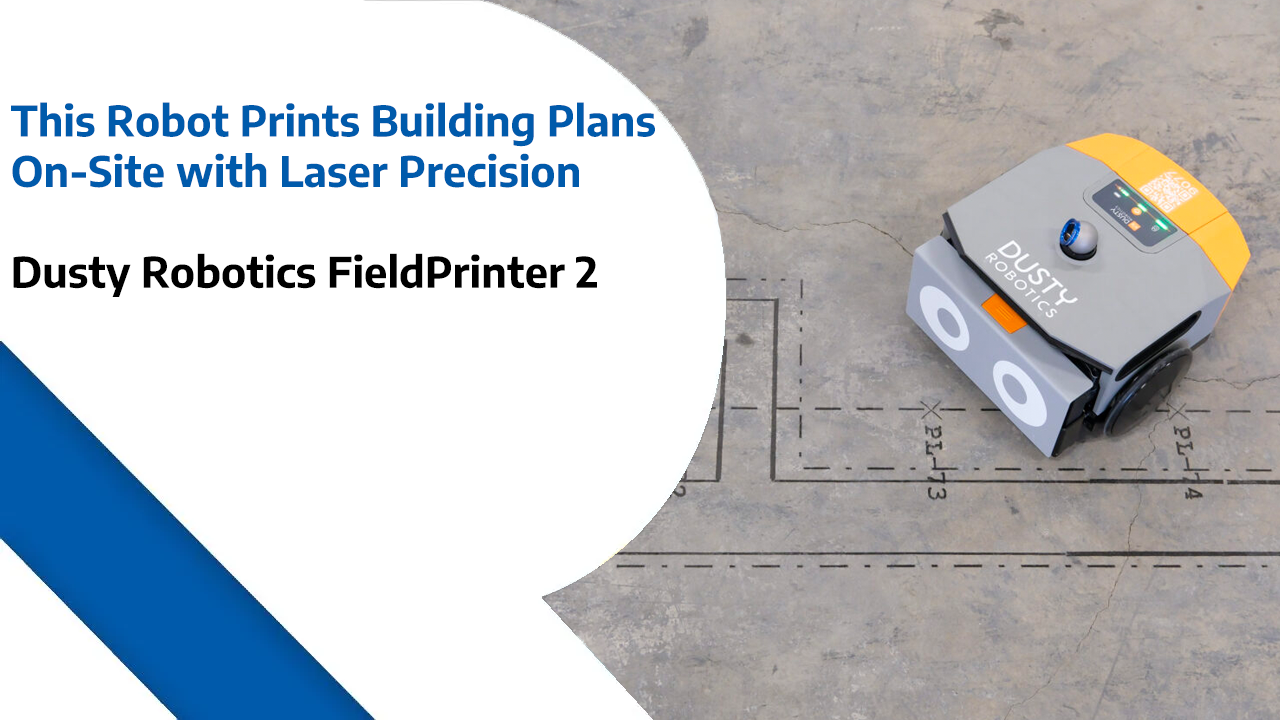
    Introducing the FieldPrinter 2, an autonomous robot that prints digital building plans directly onto construction floors — with an accuracy of just 1/16th of an inch. No more guessing with chalk lines and tape measures.

    At the heart of this robot’s smooth performance? PMD’s motion controllers. Their ION/CME N-series drives power the front wheels, helping FieldPrinter 2 stay on track — even when the laser tracker loses sight. The robot relies on smart sensors, gyros, and encoders to keep printing accurately, even in blind spots.

    The previous motion system had its limits, but PMD’s drives offered better control, faster response, and easier debugging — a big win for Dusty’s engineering team.

    From scorching heat to freezing cold, the FieldPrinter 2 is built to work in the real-world messiness of construction. And thanks to PMD, it keeps moving, printing, and performing — wherever the job takes it.


    And that’s your robot news update for today!
    If you’re curious about how robotics can transform your business, join me for the weekly Live Robot Optimise Workshop — it’s packed with insights, trends, and practical tips. Don’t forget to subscribe so you stay in the loop with all the latest updates.

    I’m RoboPhil from Robot Philosophy — thanks for watching, and I’ll see you next time!


    Join our Robot Optimise Industry (ROI) Workshop: https://robophil.com/workshop


    Sponsors:-


    Robot Center: – https://robotcenter.co.uk/ – Buy Robot, Robot Buy, Robot consultancy, Robotics Consultancy


    Robots of London: – https://robotsoflondon.co.uk/ – Robot Hire, Robot Rental, Rent Robot, Hire Robot, Robot Events


    Robot Philosophy: – https://robophil.com/ – Robot Consultancy AND Robot Recruitment, Robot Advice, Robot Insights, Robot Ideas

  • How to Create a Robot-Ready Business Strategy

    How to Create a Robot-Ready Business Strategy

    How to Create a Robot-Ready Business Strategy: A Comprehensive Guide for Forward-Thinking Businesses

    In partnership with Robot Center, Robots of London, and Robot Philosophy

    The robotics revolution is no longer a distant future concept—it’s happening now, transforming industries from manufacturing and healthcare to hospitality and retail. As businesses worldwide grapple with labor shortages, rising operational costs, and the demand for greater efficiency, those who embrace robotic automation today will dominate tomorrow’s marketplace.

    Creating a robot-ready business strategy isn’t just about purchasing the latest technology; it’s about fundamentally reimagining how your organization operates, delivers value, and scales for the future. This comprehensive guide will walk you through the essential steps to develop a robust robotics strategy that drives growth, enhances competitiveness, and positions your business at the forefront of the automation revolution.

    Understanding the Current Robotics Landscape

    The global robotics market is experiencing unprecedented growth, with projections indicating it will reach $568 billion by 2030. This explosive expansion isn’t limited to traditional industrial applications—service robots, collaborative robots (cobots), and AI-powered autonomous systems are revolutionizing sectors previously untouched by automation.

    Today’s robots are more sophisticated, affordable, and accessible than ever before. They can perform complex tasks requiring precision, work alongside humans safely, and adapt to changing environments through machine learning and artificial intelligence. From robotic process automation (RPA) handling back-office functions to humanoid robots providing customer service, the applications are virtually limitless.

    However, the true power of robotics lies not in replacing human workers entirely, but in augmenting human capabilities and freeing employees to focus on higher-value, creative, and strategic activities. Organizations that understand this collaborative approach will reap the greatest benefits from their robotics investments.

    Phase 1: Strategic Assessment and Planning

    Conducting a Comprehensive Business Audit

    Before implementing any robotic solution, you must thoroughly understand your current operations. This begins with a detailed audit of your processes, identifying bottlenecks, repetitive tasks, and areas where human error commonly occurs. Map out your workflows, document time expenditures, and analyze cost structures across all departments.

    Pay particular attention to tasks that are dangerous, dull, or dirty—these are prime candidates for robotic automation. Consider processes that occur outside normal business hours, as robots can operate 24/7 without fatigue. Also examine customer-facing operations where consistency and accuracy are paramount.

    Defining Your Robotics Vision and Objectives

    Establish clear, measurable objectives for your robotics initiative. These might include reducing operational costs by a specific percentage, improving product quality, increasing production capacity, or enhancing customer satisfaction scores. Your objectives should align with your broader business strategy and support your long-term competitive positioning.

    Consider both short-term gains and long-term transformation. While immediate cost savings are attractive, the strategic advantages of robotics—such as improved data collection, enhanced scalability, and increased agility—often provide greater value over time.

    Stakeholder Alignment and Change Management

    Successful robotics implementation requires buy-in from all organizational levels. Develop a comprehensive change management strategy that addresses employee concerns, communicates benefits clearly, and involves staff in the transformation process. Remember that resistance to change is natural; proactive communication and involvement in planning can transform skeptics into advocates.

    Establish a cross-functional robotics committee including representatives from operations, IT, HR, finance, and executive leadership. This team will drive the initiative forward and ensure alignment across all departments.

    Phase 2: Technology Selection and Integration Planning

    Evaluating Robotic Solutions

    The robotics market offers numerous options, from simple task-specific robots to complex AI-powered systems. Your choice should be driven by your specific needs, budget constraints, and long-term objectives. Consider factors such as payload capacity, precision requirements, speed, safety features, and integration capabilities.

    Collaborative robots (cobots) are often ideal for businesses new to robotics, as they’re designed to work safely alongside humans and typically require less infrastructure modification. For more complex operations, industrial robots or autonomous mobile robots (AMRs) might be more appropriate.

    Don’t overlook software solutions such as robotic process automation (RPA) for digital tasks. These can provide significant returns on investment for businesses with substantial administrative or data processing requirements.

    Infrastructure and Integration Considerations

    Successful robotics implementation requires careful planning of your physical and digital infrastructure. Assess your current facilities, power requirements, network capabilities, and safety systems. Consider how robots will integrate with existing equipment, software systems, and workflows.

    Plan for data integration and analytics capabilities. Modern robots generate vast amounts of operational data that can provide valuable insights into process optimization, predictive maintenance, and performance improvement. Ensure your IT infrastructure can capture, store, and analyze this information effectively.

    Pilot Program Development

    Rather than implementing robotics across your entire operation simultaneously, develop a pilot program focusing on a specific process or department. This approach allows you to test your assumptions, refine your implementation methodology, and build internal expertise before scaling up.

    Choose pilot projects with clear success metrics and manageable scope. Document lessons learned, measure performance improvements, and use these results to build support for broader implementation.

    Phase 3: Implementation and Deployment

    Phased Rollout Strategy

    Develop a phased implementation plan that minimizes operational disruption while maximizing learning opportunities. Start with the most straightforward applications and gradually move to more complex integrations. This approach allows your team to build confidence and expertise progressively.

    Consider running parallel operations during the transition period, maintaining manual processes as backup while robots are being integrated and optimized. This reduces risk and provides fallback options if issues arise.

    Training and Skill Development

    Invest heavily in training your workforce to work effectively with robotic systems. This includes technical training for operators and maintenance staff, as well as broader education about how robotics will change job roles and responsibilities.

    Develop internal robotics expertise through targeted hiring or comprehensive training programs. Having skilled personnel on staff reduces dependence on external support and enables faster problem resolution and optimization.

    Safety and Compliance

    Ensure all robotic implementations meet relevant safety standards and regulatory requirements. Conduct thorough risk assessments, implement appropriate safety measures, and establish clear protocols for human-robot interaction.

    Regular safety audits and compliance checks should be built into your ongoing operations. As regulations evolve, particularly in emerging applications like service robots, staying ahead of compliance requirements is crucial.

    Phase 4: Optimization and Scaling

    Performance Monitoring and Analytics

    Implement comprehensive monitoring systems to track robot performance, identify optimization opportunities, and measure return on investment. Key metrics might include throughput, accuracy, uptime, energy consumption, and cost per operation.

    Use data analytics to identify patterns and trends that can inform process improvements. Machine learning algorithms can help predict maintenance needs, optimize robot programming, and enhance overall system performance.

    Continuous Improvement Process

    Establish a culture of continuous improvement around your robotics implementation. Regular reviews should assess performance against objectives, identify areas for enhancement, and explore new applications for robotic technology.

    Encourage feedback from operators and other staff members who work with robots daily. Their insights can reveal optimization opportunities and inform future robotics investments.

    Scaling Strategies

    As your robotics program matures, develop strategies for scaling successful implementations to other areas of your business. This might involve deploying similar robots to additional facilities, expanding robot capabilities through software updates, or integrating new types of robotic systems.

    Consider the network effects of multiple robots working together. Swarm robotics and multi-robot coordination can provide exponential benefits compared to individual robot deployments.

    Industry-Specific Considerations

    Manufacturing and Production

    In manufacturing environments, robots can handle assembly, welding, painting, packaging, and quality control. Focus on applications that improve product consistency, reduce waste, and enhance worker safety. Consider how robots can enable mass customization and rapid production changes.

    Healthcare and Life Sciences

    Healthcare robots can assist with surgery, medication dispensing, patient care, and laboratory operations. Regulatory compliance is particularly critical in this sector, as is ensuring that robots enhance rather than replace human caregiving relationships.

    Retail and E-commerce

    Retail applications include inventory management, order fulfillment, customer service, and cleaning. Robots can help retailers manage peak demand periods, reduce labor costs, and improve customer experiences through consistent service delivery.

    Hospitality and Service Industries

    Service robots can handle reception duties, room service, cleaning, and entertainment. Focus on applications that enhance customer experience while reducing operational costs. Consider how robots can provide services during off-hours or in situations where human staff might be limited.

    Financial Planning and ROI Considerations

    Investment Analysis

    Develop comprehensive financial models that account for all costs associated with robotics implementation, including hardware, software, installation, training, and ongoing maintenance. Consider both direct costs and indirect expenses such as facility modifications and productivity losses during implementation.

    Calculate return on investment using multiple metrics, including cost savings, productivity improvements, quality enhancements, and strategic benefits. Remember that some benefits, such as improved data collection or enhanced scalability, may not be immediately quantifiable but provide significant long-term value.

    Funding and Financing Options

    Explore various financing options for your robotics investment, including traditional loans, equipment leasing, robotics-as-a-service (RaaS) models, and government incentives. RaaS models, in particular, can reduce upfront costs and include maintenance and support services.

    Consider the tax implications of your robotics investment, including depreciation schedules and potential tax incentives for automation investments. Consult with financial advisors familiar with robotics implementations to optimize your financial structure.

    Risk Management and Mitigation

    Technical Risks

    Identify and plan for potential technical risks, including system failures, integration challenges, and cybersecurity threats. Develop contingency plans for critical processes and ensure adequate backup systems are in place.

    Cybersecurity is particularly important for connected robots that may access sensitive data or control critical systems. Implement robust security measures and regularly update software to protect against emerging threats.

    Operational Risks

    Consider how robotics implementation might affect your workforce, customer relationships, and operational flexibility. Develop strategies to manage these risks, including retraining programs for affected employees and communication plans for customers.

    Plan for the possibility that initial robotics implementations may not meet expectations. Having clear success metrics and adaptation strategies can help you pivot quickly if adjustments are needed.

    Future-Proofing Your Robotics Strategy

    Emerging Technologies

    Stay informed about emerging robotics technologies, including artificial intelligence, machine learning, advanced sensors, and new materials. These developments can significantly enhance robot capabilities and open new application possibilities.

    Consider how technologies like 5G networks, edge computing, and cloud robotics might affect your future robotics strategy. Planning for these developments can help you avoid technological obsolescence.

    Regulatory and Ethical Considerations

    Monitor evolving regulations around robotics, particularly in areas like data privacy, worker safety, and autonomous systems. Proactive compliance can prevent costly retrofits and operational disruptions.

    Consider the ethical implications of your robotics implementation, including impacts on employment, privacy, and social responsibility. Developing ethical guidelines for robotics use can help build stakeholder trust and avoid reputational risks.

    Building Strategic Partnerships

    Selecting the Right Partners

    Choose robotics partners based on their technical expertise, industry experience, and long-term viability. Look for providers who offer comprehensive support, including training, maintenance, and upgrade services.

    Consider partners who can grow with your business, offering scalable solutions and ongoing innovation. Strong partnerships can provide competitive advantages and reduce implementation risks.

    Leveraging External Expertise

    Don’t hesitate to engage external consultants and specialists to support your robotics implementation. Expert guidance can help you avoid common pitfalls, optimize your strategy, and accelerate your timeline.

    Consider engaging with robotics recruitment specialists who can help you find and hire the skilled professionals needed to support your robotics program.

    Measuring Success and Continuous Evolution

    Key Performance Indicators

    Establish clear KPIs for your robotics program, including operational metrics like efficiency and quality improvements, financial metrics like ROI and cost savings, and strategic metrics like market positioning and competitive advantage.

    Regular performance reviews should assess progress against these KPIs and identify areas for improvement. Use this data to refine your robotics strategy and inform future investments.

    Long-term Strategic Evolution

    View your robotics strategy as an evolving capability rather than a one-time implementation. As your organization becomes more robot-ready, you’ll identify new opportunities for automation and optimization.

    Plan for regular strategy reviews and updates to ensure your robotics program continues to align with your business objectives and market conditions.

    Conclusion

    Creating a robot-ready business strategy requires careful planning, strategic thinking, and a commitment to continuous improvement. Organizations that embrace this transformation today will be best positioned to thrive in tomorrow’s automated economy.

    The key to success lies in understanding that robotics is not just about technology—it’s about reimagining how your business operates, delivers value, and competes in the marketplace. By following the comprehensive framework outlined in this guide, you can develop a robotics strategy that drives growth, enhances competitiveness, and positions your organization for long-term success.

    Remember that every business is unique, and your robotics strategy should reflect your specific needs, constraints, and objectives. Don’t hesitate to seek expert guidance to ensure your robotics implementation delivers maximum value and positions your organization at the forefront of the automation revolution.

    The future belongs to businesses that can successfully integrate human creativity and intelligence with robotic precision and efficiency. By starting your robotics journey today, you’re not just adopting new technology—you’re securing your competitive position in the automated economy of tomorrow.


    Ready to Begin Your Robotics Journey?

    Developing a comprehensive robotics strategy can seem daunting, but you don’t have to navigate this transformation alone. Expert guidance can help you avoid common pitfalls, accelerate your implementation timeline, and maximize your return on investment.

    Contact our robotics experts today to discuss your specific needs and develop a customized strategy for your organization:

    📧 Email: info@robophil.com
    📞 Phone: 0845 528 0404

    Book a consultation call to explore how robotics can transform your business and position you for success in the automated economy.


    This article is brought to you in partnership with leading robotics solution providers:

    Robot Center – Your trusted partner for robot procurement and consultancy services. Whether you’re looking to buy robots or need expert robotics consultancy, Robot Center provides comprehensive solutions tailored to your business needs.
    🌐 Visit: https://robotcenter.co.uk/

    Robots of London – Premier robot hire and rental services for businesses across London and the UK. From short-term robot rental for events to long-term hire solutions, Robots of London makes robotics accessible and affordable.
    🌐 Visit: https://robotsoflondon.co.uk/

    Robot Philosophy – Strategic robotics consultancy and recruitment services. Combining deep technical expertise with strategic business insight, Robot Philosophy helps organizations develop winning robotics strategies and find the right talent to execute them.
    🌐 Visit: https://robophil.com/

  • World’s First Commercial Tattoo Robot – Blackdot AERO Tested & Explained!

    World’s First Commercial Tattoo Robot – Blackdot AERO Tested & Explained!

    World’s First Commercial Tattoo Robot – Blackdot AERO Tested & Explained!


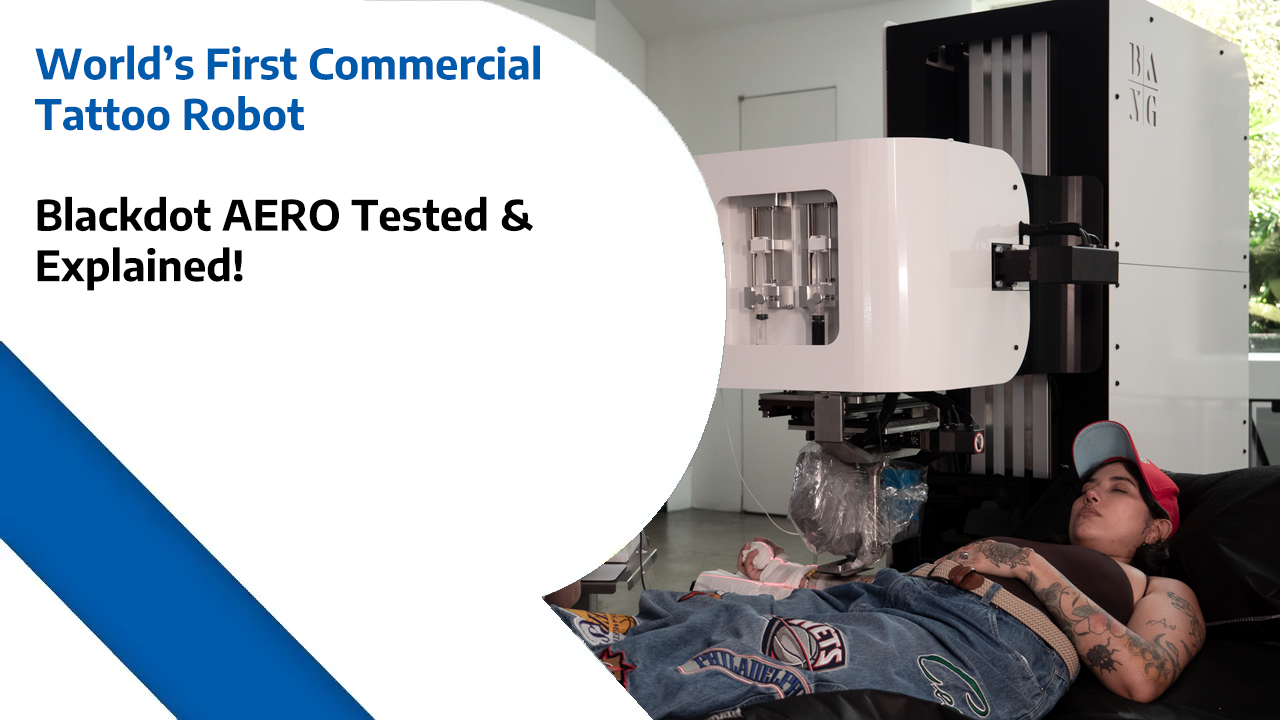
    Say hello to the future of body art—Blackdot’s tattoo robot, known as AERO: Artist Enabled Robotic Operator. It’s currently making waves at Bang Bang Tattoo in New York, and no, it’s not replacing artists—it’s helping them.

    Using advanced computer vision and AI, AERO scans your skin and tattoos with pin-sharp precision, dot by dot, with each dot the width of a human hair. That means super-crisp lines, consistent shading, and less trauma to the skin. Think of it as a super-steady hand that never drinks too much coffee.

    Tattoo artists still design the piece and oversee the work, but the robot handles the application, ensuring smoother, safer, and potentially quicker results—especially for text and fine-line work.

    Cost-wise? Right now, these machines cost around $120,000 to build, though mass production could bring that down to $50,000. Not exactly cheap, but neither is laser removal.

    And while a few experimental tattoo robots have popped up before, Blackdot’s AERO is the first to be used commercially with real customers—and real skin.

    So if you want your ink applied with machine-level precision and human-level creativity, the robot chair might just be your next seat.


    And that’s your robot news update for today!
    If you’re curious about how robotics can transform your business, join me for the weekly Live Robot Optimise Workshop — it’s packed with insights, trends, and practical tips. Don’t forget to subscribe so you stay in the loop with all the latest updates.

    I’m RoboPhil from Robot Philosophy — thanks for watching, and I’ll see you next time!


    Join our Robot Optimise Industry (ROI) Workshop: https://robophil.com/workshop


    Sponsors:-


    Robot Center: – https://robotcenter.co.uk/ – Buy Robot, Robot Buy, Robot consultancy, Robotics Consultancy


    Robots of London: – https://robotsoflondon.co.uk/ – Robot Hire, Robot Rental, Rent Robot, Hire Robot, Robot Events


    Robot Philosophy: – https://robophil.com/ – Robot Consultancy AND Robot Recruitment, Robot Advice, Robot Insights, Robot Ideas

  • 5 Mistakes to Avoid When Deploying Robots without a Consultant

    5 Mistakes to Avoid When Deploying Robots without a Consultant

    5 Mistakes to Avoid When Deploying Robots Without a Consultant
    Sponsored by Robot Center, Robots of London, and Robot Philosophy


    Deploying robots into your business is no longer science fiction—it’s a strategic decision that can radically transform your productivity, profitability, and customer experience. But there’s a catch. As automation becomes more accessible, companies are rushing into robot deployment without the guidance of experienced consultants.

    The result? Wasted investment, misaligned solutions, and frustrated teams.

    If you’re considering implementing robotics in your business, here are 5 critical mistakes to avoid when deploying robots without a consultant, and why working with a robot consultant or recruitment expert is not just helpful—it’s essential.


    1. Assuming Any Robot Will Do the Job

    Too many businesses jump at the first flashy robot they see on YouTube or at a trade show. They think, “This looks cool—let’s buy it!” But robotics isn’t one-size-fits-all. Each business has unique workflows, safety requirements, customer expectations, and integration constraints.

    What Happens Without a Consultant:

    • You risk buying a robot that’s not suited to your industry or environment.

    • You overpay for features you don’t need—or worse, miss critical ones.

    How We Help:
    At Robot Philosophy, our consultants evaluate your operational needs, site conditions, and workforce readiness to recommend the right solution—before you waste a penny.


    2. Skipping a Full Site Audit and Workflow Analysis

    Would you redesign your entire IT system without auditing the current setup? Robotics needs the same diligence.

    What Happens Without a Consultant:

    • Hidden bottlenecks go unnoticed.

    • The robot doesn’t integrate well with your team or infrastructure.

    • You miss opportunities for optimisation that could boost ROI tenfold.

    How We Help:
    Our expert team at Robot Center performs full on-site or virtual audits. We identify process intersections where robots deliver real value—and show you how to improve the workflow before deploying automation.


    3. Underestimating the Human Factor

    Robots don’t replace people—they amplify them. But without clear communication and training, your team may resist change or misuse the technology.

    What Happens Without a Consultant:

    • Staff feel threatened, confused, or untrained.

    • The robot becomes an underused gadget in the corner.

    • Morale and productivity drop instead of rising.

    How We Help:
    Through Robot Philosophy, we provide change management, staff onboarding, and robot training that ensures your team feels empowered—not replaced. We even offer robot recruitment services to help you find skilled professionals who can manage and maintain robotic systems long-term.


    4. Focusing on Short-Term ROI Instead of Long-Term Strategy

    Deploying robots without a long-term vision leads to patchwork solutions that don’t scale.

    What Happens Without a Consultant:

    • You hit a wall when trying to expand.

    • Each new robot requires reinventing the wheel.

    • You lack data integration, compliance support, or futureproofing.

    How We Help:
    Our strategic consultants build scalable roadmaps for your robotics journey. We think 5–10 years ahead, helping you grow from a single deployment to a fully automated enterprise with systems that evolve alongside your business.


    5. Ignoring Event-Based Use Cases and Rental Options

    Not every robotic solution needs to be a purchase. Sometimes, renting or hiring a robot for a short-term event or proof of concept is more cost-effective.

    What Happens Without a Consultant:

    • You spend £50K on a robot you only use twice a year.

    • You miss the chance to test before investing.

    • You overlook marketing and customer experience opportunities.

    How We Help:
    At Robots of London, we offer the UK’s leading robot rental and hire services—perfect for events, expos, brand activations, and short-term testing. Need a robot bartender for a product launch or a humanoid host for a hotel opening? We’ve got you covered.


    Don’t Risk It Alone—Deploy With Confidence

    The robotics industry is booming, but smart businesses know the difference between trendy tech and transformational tools.

    Whether you’re deploying your first warehouse robot, launching a robotic customer experience, or hiring a robotics engineer, we’re here to help.


    Book Your Consultation Today

    📧 Email: info@robophil.com
    📞 Phone: 0845 528 0404
    🌐 Website: https://robophil.com

    From audit to optimisation, from hire to integration—we are your partner in the age of automation.


    Sponsored by:

    🤖 Robot Center
    Buy Robot, Robot Buy, Robot Consultancy, Robotics Consultancy

    🤖 Robots of London
    Robot Hire, Robot Rental, Rent Robot, Hire Robot, Robot Events

    🤖 Robot Philosophy
    Robot Consultancy, Robot Recruitment, Robot Advice, Robot Insights, Robot Ideas

    Let the robots work. Let the consultants lead. Let your business thrive.

  • Meet Nurabot – Kawasaki & Foxconn’s Robot Nurse Set to Revolutionize Hospitals by 2026!

    Meet Nurabot – Kawasaki & Foxconn’s Robot Nurse Set to Revolutionize Hospitals by 2026!

    Meet Nurabot – Kawasaki & Foxconn’s Robot Nurse Set to Revolutionize Hospitals by 2026!


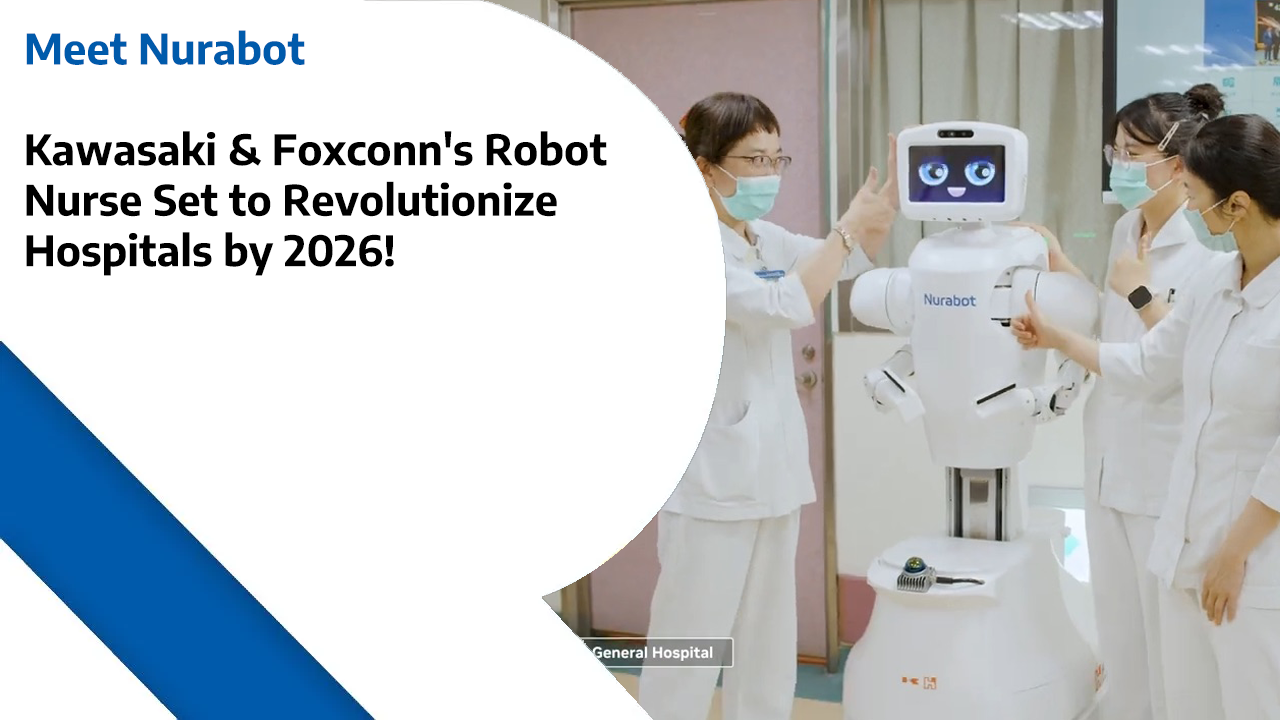
    Kawasaki and Foxconn have teamed up to tackle a big problem in hospitals — not with more staff, but with smarter machines. Introducing Nurabot, a robotic nursing assistant set to roll out in 2026.

    Based on Kawasaki’s existing social robot, Nyokkey, Nurabot comes with two arms for grabbing objects, a luggage compartment, and the ability to navigate hospital hallways on its own — no pushing required.

    It’s designed to support nurses with tasks like transporting blood samples, delivering medications, guiding patients, and even offering hygiene advice. Yes, your next handwashing reminder could come from a robot!

    Foxconn brought its software know-how, while Kawasaki handled the robotics — and early trials have already taken place at Taiwan’s Taichung Veterans General Hospital.

    With nurse shortages becoming a global concern, Foxconn and Kawasaki hope Nurabot can ease the load — and maybe make long shifts a little more manageable for human staff.

    Because sometimes, the best way to support healthcare workers… is to give them a helping hand. Or in this case, two robotic ones.


    And that’s your robot news update for today!
    If you’re curious about how robotics can transform your business, join me for the weekly Live Robot Optimise Workshop — it’s packed with insights, trends, and practical tips. Don’t forget to subscribe so you stay in the loop with all the latest updates.

    I’m RoboPhil from Robot Philosophy — thanks for watching, and I’ll see you next time!


    Join our Robot Optimise Industry (ROI) Workshop: https://robophil.com/workshop


    Sponsors:-


    Robot Center: – https://robotcenter.co.uk/ – Buy Robot, Robot Buy, Robot consultancy, Robotics Consultancy


    Robots of London: – https://robotsoflondon.co.uk/ – Robot Hire, Robot Rental, Rent Robot, Hire Robot, Robot Events


    Robot Philosophy: – https://robophil.com/ – Robot Consultancy AND Robot Recruitment, Robot Advice, Robot Insights, Robot Ideas

  • Step-by-Step: How Our Robot Consultancy Integrates Robotics Into Your Workflow

    Step-by-Step: How Our Robot Consultancy Integrates Robotics Into Your Workflow

    Step-by-Step: How Our Robot Consultancy Integrates Robotics Into Your Workflow

    This is Robot News, Robotics News, Robot & Robotics News bringing you the latest insights into robotic workflow integration.

    The integration of robotics into business workflows has transformed from a futuristic concept to a present-day necessity. As industries across the globe embrace automation, the question is no longer whether to integrate robots, but how to do it effectively. This comprehensive guide walks you through the step-by-step process of how professional robot consultancy services integrate robotics into your existing workflow, ensuring maximum efficiency and minimal disruption.

    Understanding the Foundation of Robotic Integration

    Before diving into the integration process, it’s crucial to understand that successful robotic implementation requires more than simply purchasing robots and placing them in your workspace. The integration of robotics into business workflows demands careful planning, expert analysis, and strategic implementation. This is where specialized robot consultancy services become invaluable.

    Robot consultancy involves a systematic approach to identifying, planning, and implementing robotic solutions that align with your specific business needs. Whether you’re looking to automate manufacturing processes, streamline logistics operations, or enhance customer service capabilities, the right consultancy approach ensures that your robotic investment delivers measurable returns.

    Step 1: Comprehensive Workflow Analysis and Assessment

    The first step in any successful robotic integration begins with a thorough analysis of your existing workflow. Professional robot consultancy services start by conducting a comprehensive assessment of your current operations. This involves mapping out every aspect of your business processes, identifying bottlenecks, and understanding the human resources currently allocated to various tasks.

    During this phase, consultants examine your facility layout, review your operational procedures, and analyze your production data. They also consider factors such as safety requirements, regulatory compliance, and future scalability needs. This detailed assessment forms the foundation for all subsequent integration decisions.

    The workflow analysis also includes an evaluation of your workforce capabilities and training requirements. Understanding how your human employees will interact with robotic systems is crucial for successful integration. This phase helps identify which tasks are best suited for automation and which require human oversight or intervention.

    Step 2: Robotic Solution Design and Selection

    Once the workflow analysis is complete, the next step involves designing custom robotic solutions tailored to your specific needs. This is where the expertise of robot consultancy services becomes particularly valuable. Rather than offering one-size-fits-all solutions, professional consultants design robotic systems that seamlessly integrate with your existing infrastructure.

    The solution design phase involves selecting the appropriate types of robots for your applications. This might include industrial robotic arms for manufacturing, autonomous mobile robots for warehouse operations, or collaborative robots for human-robot interaction scenarios. The selection process considers factors such as payload capacity, precision requirements, operating environment, and safety considerations.

    For businesses requiring temporary or trial implementations, robot hire and robot rental services provide flexible options. Companies like Robots of London at https://robotsoflondon.co.uk/ specialize in robot hire, robot rental, rent robot, and hire robot services, allowing businesses to test robotic solutions before making permanent investments. This approach is particularly beneficial for robot events and temporary applications.

    Step 3: Integration Planning and Timeline Development

    With the robotic solution designed, the next crucial step involves developing a comprehensive integration plan. This plan outlines the timeline for implementation, identifies potential challenges, and establishes milestones for measuring progress. Professional robot consultancy services understand that integration cannot happen overnight and must be carefully phased to minimize disruption to ongoing operations.

    The integration planning phase considers factors such as equipment delivery schedules, installation requirements, and staff training programs. It also addresses potential risks and develops contingency plans to ensure smooth implementation. This systematic approach helps prevent costly delays and ensures that your business operations continue uninterrupted during the integration process.

    Step 4: Infrastructure Preparation and Modification

    Before robots can be deployed, your facility infrastructure may require modifications to accommodate the new systems. This step involves preparing the physical environment, installing necessary power supplies, and setting up communication networks. Professional consultants work closely with your facilities team to ensure that all infrastructure requirements are met before robot deployment.

    Infrastructure preparation also includes safety system implementation. This involves installing safety barriers, emergency stop systems, and sensor networks to ensure safe human-robot interaction. Compliance with relevant safety standards and regulations is paramount during this phase.

    Step 5: Robot Procurement and Installation

    The procurement phase involves acquiring the selected robotic systems and associated equipment. For permanent installations, this typically involves purchasing robots from specialized suppliers. Robot Center at https://robotcenter.co.uk/ offers comprehensive buy robot and robot buy services, providing access to a wide range of robotic solutions for various applications.

    For businesses exploring robotic solutions or requiring temporary implementations, robot consultancy services can arrange robot hire and robot rental options. This approach allows companies to evaluate robotic systems in their actual operating environment before making long-term commitments.

    The installation process involves careful positioning of robotic systems, connection of power and communication lines, and integration with existing control systems. Professional installation ensures that robots are properly calibrated and ready for operation.

    Step 6: System Integration and Programming

    Once robots are physically installed, the next step involves integrating them with your existing systems and programming them for specific tasks. This phase requires extensive technical expertise and is where professional robot consultancy services prove their worth. The integration process involves connecting robotic systems to your enterprise resource planning (ERP) systems, manufacturing execution systems (MES), and other business applications.

    Programming involves developing custom software that enables robots to perform specific tasks within your workflow. This includes creating task sequences, defining safety parameters, and establishing communication protocols with other systems. The programming phase also involves extensive testing to ensure that robots perform accurately and reliably.

    Step 7: Staff Training and Change Management

    Successful robotic integration requires comprehensive staff training and effective change management. This step involves educating your workforce about robotic systems, teaching them how to interact safely with robots, and providing training on new operational procedures. Professional robot consultancy services understand that human acceptance is crucial for successful integration.

    Training programs typically cover robot operation, basic maintenance procedures, and safety protocols. They also address concerns about job displacement and help employees understand how robotics will enhance rather than replace their roles. Effective change management ensures that your workforce embraces robotic integration and contributes to its success.

    Step 8: Testing and Optimization

    Before full deployment, extensive testing is conducted to ensure that robotic systems perform as expected within your workflow. This phase involves running robots through various scenarios, testing safety systems, and verifying that all integration points function correctly. Professional consultants conduct systematic testing to identify and resolve any issues before full production deployment.

    Optimization involves fine-tuning robotic systems for maximum efficiency. This includes adjusting cycle times, optimizing movement patterns, and calibrating sensors for optimal performance. The optimization phase ensures that your robotic investment delivers the expected returns.

    Step 9: Full Deployment and Monitoring

    With testing complete and optimization finished, robotic systems are ready for full deployment. This phase involves transitioning from manual or semi-automated processes to fully integrated robotic operations. Professional robot consultancy services provide ongoing support during this critical phase to ensure smooth transition.

    Deployment also includes implementing monitoring systems that track robot performance, identify potential issues, and provide data for continuous improvement. These monitoring systems help ensure that robotic systems continue to operate efficiently and reliably over time.

    Step 10: Ongoing Support and Maintenance

    The final step in robotic integration involves establishing ongoing support and maintenance programs. This includes regular preventive maintenance, software updates, and performance monitoring. Professional robot consultancy services typically provide comprehensive support packages that ensure your robotic systems continue to operate at peak efficiency.

    Ongoing support also includes continuous optimization opportunities. As your business evolves and grows, robotic systems may need to be reconfigured or expanded. Professional consultants provide guidance on system upgrades and modifications to ensure that your robotic investment continues to deliver value.

    Specialized Robot Consultancy Services

    For businesses seeking comprehensive robotic integration solutions, specialized consultancy services offer valuable expertise and resources. Robot Philosophy at https://robophil.com/ provides robot consultancy and robot recruitment services, offering robot advice, robot insights, and robot ideas for businesses exploring robotic solutions.

    These specialized services combine technical expertise with industry knowledge to deliver customized solutions that address specific business challenges. Whether you need guidance on robot selection, implementation strategy, or workforce development, professional consultancy services provide the expertise needed for successful integration.

    Industry-Specific Considerations

    Different industries have unique requirements for robotic integration. Manufacturing environments may require high-precision industrial robots, while logistics operations might benefit from autonomous mobile robots. Healthcare facilities need robots that comply with strict hygiene and safety standards, while retail environments require robots that can safely interact with customers.

    Professional robot consultancy services understand these industry-specific requirements and tailor their integration approaches accordingly. They bring knowledge of industry best practices, regulatory requirements, and proven solutions that have been successful in similar applications.

    Future-Proofing Your Robotic Investment

    Successful robotic integration involves considering future needs and ensuring that your investment remains valuable as technology evolves. This includes selecting robots with upgrade capabilities, designing flexible systems that can adapt to changing requirements, and planning for scalability.

    Professional consultants help businesses develop long-term robotics strategies that align with their growth plans and technology roadmaps. This forward-thinking approach ensures that your robotic investment continues to provide value as your business evolves.

    Measuring Success and ROI

    The success of robotic integration must be measured against clearly defined metrics and objectives. This includes productivity improvements, cost savings, quality enhancements, and safety improvements. Professional robot consultancy services help establish these metrics and provide ongoing monitoring to ensure that your robotic investment delivers the expected returns.

    Return on investment (ROI) calculations should consider both direct benefits (such as labor cost savings and productivity improvements) and indirect benefits (such as improved quality, reduced waste, and enhanced customer satisfaction). Comprehensive ROI analysis helps justify the investment and guide future robotic initiatives.

    Conclusion

    The integration of robotics into business workflows represents a significant opportunity for organizations to improve efficiency, reduce costs, and enhance competitiveness. However, successful integration requires careful planning, expert guidance, and systematic implementation. Professional robot consultancy services provide the expertise and resources needed to navigate this complex process successfully.

    By following this step-by-step approach, businesses can ensure that their robotic integration projects deliver maximum value while minimizing risks and disruptions. Whether you’re exploring robot hire options, seeking permanent robotic solutions, or need comprehensive consultancy services, the key to success lies in partnering with experienced professionals who understand both the technical and business aspects of robotic integration.

    The future of business operations increasingly involves human-robot collaboration, and those who embrace this transformation early will gain significant competitive advantages. With proper planning, expert guidance, and systematic implementation, robotic integration can transform your workflow and position your business for long-term success in an increasingly automated world.

    This is Robot News, Robotics News, Robot & Robotics News – stay tuned for more insights into the evolving world of robotics and automation.

     
  • How One Robot is Revolutionising Shoe Making in Just 3 Minutes – On’s Lightspray Innovation

    How One Robot is Revolutionising Shoe Making in Just 3 Minutes – On’s Lightspray Innovation

    How One Robot is Revolutionising Shoe Making in Just 3 Minutes – On’s Lightspray Innovation


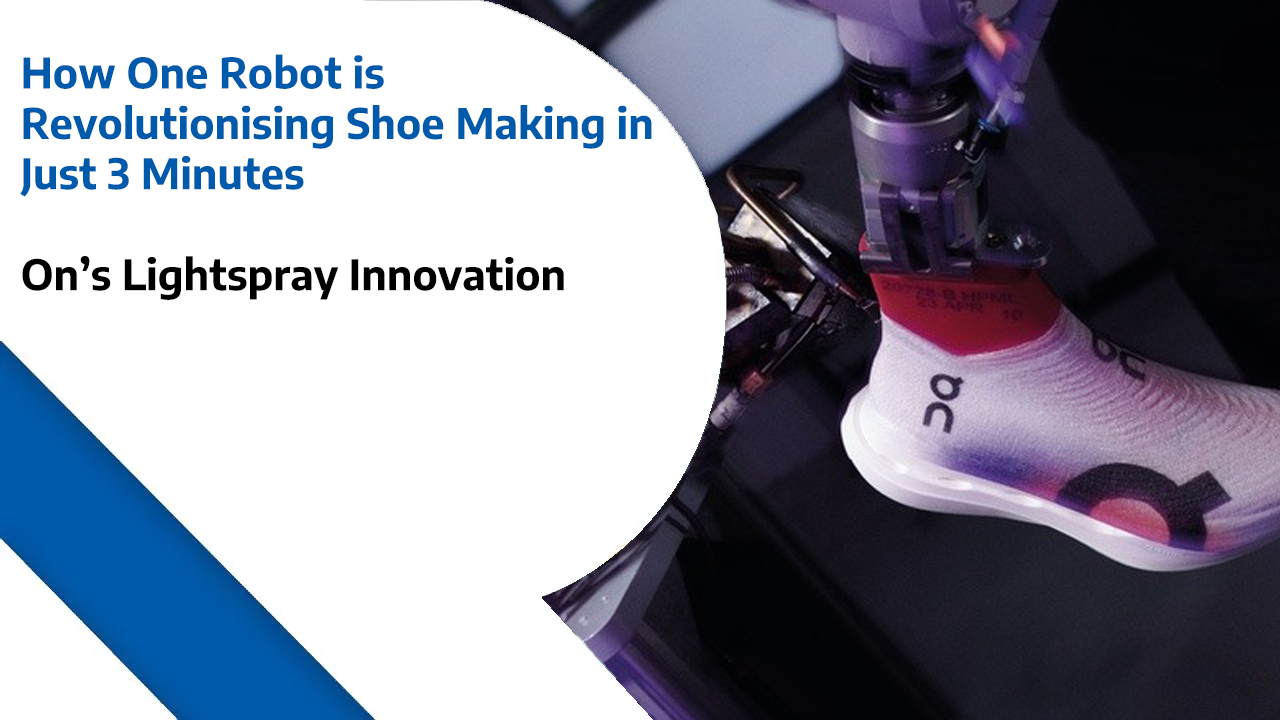
    Swiss running shoe brand On has just taken a giant leap—by using a robot to make their new Lightspray shoe.

    Using cutting-edge tech, a robot from ABB sprays a super-thin, durable plastic thread around a shoe mold to build the upper in just three minutes—no stitching, no glue. It’s a seamless design you simply pull on like a sock.

    The result? A featherlight competition shoe weighing just 170 grams, debuted by On athletes at the 2024 Paris Olympics. And it’s not just fast to make—it’s greener too, cutting CO2 emissions by 75% and simplifying recycling.

    The catch? It currently costs $450, and there’s only one model for now. But On’s founders say local, robot-driven production could be the key to faster, more flexible manufacturing in the future.

    So, is this the future of shoemaking? Time—and possibly your bank balance—will tell.


    And that’s your robot news update for today!
    If you’re curious about how robotics can transform your business, join me for the weekly Live Robot Optimise Workshop — it’s packed with insights, trends, and practical tips. Don’t forget to subscribe so you stay in the loop with all the latest updates.

    I’m RoboPhil from Robot Philosophy — thanks for watching, and I’ll see you next time!


    Join our Robot Optimise Industry (ROI) Workshop: https://robophil.com/workshop


    Sponsors:-


    Robot Center: – https://robotcenter.co.uk/ – Buy Robot, Robot Buy, Robot consultancy, Robotics Consultancy


    Robots of London: – https://robotsoflondon.co.uk/ – Robot Hire, Robot Rental, Rent Robot, Hire Robot, Robot Events


    Robot Philosophy: – https://robophil.com/ – Robot Consultancy AND Robot Recruitment, Robot Advice, Robot Insights, Robot Ideas

  • How to Integrate a Robot Dog or Patrol Bot: Lessons from the Field

    How to Integrate a Robot Dog or Patrol Bot: Lessons from the Field

    How to Integrate a Robot Dog or Patrol Bot: Lessons from the Field

    Sponsored by Robot Center, Robots of London, and Robot Philosophy

    The deployment of robotic patrol systems has evolved from science fiction concept to operational reality across industries ranging from security and manufacturing to logistics and emergency services. As organizations increasingly recognize the value proposition of robot dogs and autonomous patrol bots, the critical question shifts from “should we deploy them?” to “how do we integrate them successfully?”

    Drawing from extensive field experience and real-world deployments, this comprehensive guide examines the practical considerations, challenges, and best practices for integrating robotic patrol systems into existing operations. Whether you’re evaluating your first robotic deployment or scaling an existing program, these insights from the field will help you navigate the complex landscape of robotic integration.

    Understanding the Robotic Patrol Landscape

    The current generation of patrol robots represents a significant leap forward in autonomous capabilities. Modern robot dogs like Boston Dynamics’ Spot, Unitree’s Go series, and emerging patrol bots from companies like Knightscope and Cobalt Robotics offer unprecedented mobility, sensor integration, and operational autonomy. These platforms can navigate complex environments, collect and analyze data in real-time, and operate continuously with minimal human intervention.

    However, successful integration requires more than simply purchasing and deploying these systems. The most successful implementations we’ve observed share common characteristics: thorough pre-deployment planning, comprehensive stakeholder engagement, robust training programs, and ongoing optimization based on operational feedback.

    Pre-Deployment Assessment: Laying the Foundation

    Before any robotic system sets foot—or paw—in your facility, conducting a comprehensive assessment is crucial. This evaluation should encompass several key areas that will determine both the feasibility and success of your deployment.

    The physical environment assessment forms the cornerstone of successful integration. Robot dogs and patrol bots excel in certain environments while facing challenges in others. Factors such as floor surfaces, lighting conditions, obstacle density, and environmental hazards significantly impact performance. We’ve seen deployments fail because organizations underestimated the complexity of their operating environment or overestimated the robot’s ability to navigate specific challenges.

    Equally important is the operational requirements analysis. Different patrol scenarios demand different capabilities. A security patrol robot monitoring a warehouse overnight has vastly different requirements than one conducting safety inspections in a manufacturing facility during active operations. Understanding your specific use case—whether it’s perimeter security, equipment monitoring, environmental sensing, or crowd management—will guide both platform selection and configuration decisions.

    The human factor assessment often receives insufficient attention but proves critical to success. Existing staff reactions, training requirements, and workflow integration challenges can make or break a deployment. We’ve observed that organizations with strong change management processes and comprehensive staff engagement programs achieve significantly higher success rates than those that treat robotic integration as purely a technical challenge.

    Stakeholder Engagement: Building Buy-In Across the Organization

    Successful robotic integration requires support from multiple organizational levels, from executive leadership to front-line operators. Each stakeholder group brings different concerns, expectations, and requirements that must be addressed systematically.

    Executive leadership typically focuses on return on investment, risk mitigation, and strategic alignment. They need clear metrics demonstrating how robotic integration supports broader organizational objectives. We’ve found that presenting ROI calculations alongside risk assessments and implementation timelines helps secure necessary buy-in and resource allocation.

    Operational managers often grapple with workflow integration and performance management concerns. They need assurance that robotic systems will enhance rather than disrupt existing operations. Detailed integration plans, pilot program results, and clear performance metrics help address these concerns while building confidence in the technology.

    Front-line staff frequently express concerns about job security, training requirements, and day-to-day operational changes. Transparent communication about how robots will augment rather than replace human capabilities, combined with comprehensive training programs, helps build acceptance and enthusiasm for the technology.

    Security and safety teams focus on compliance, risk management, and emergency procedures. They require detailed documentation of safety protocols, emergency shutdown procedures, and integration with existing security systems. Early engagement with these teams often identifies critical requirements that might otherwise be overlooked.

    Platform Selection: Matching Technology to Requirements

    The robotic patrol market offers numerous platforms, each with distinct capabilities, limitations, and optimal use cases. Making the right selection requires careful analysis of your specific requirements against available options.

    Robot dogs excel in environments requiring high mobility and versatility. Their four-legged design provides superior stability on uneven surfaces and enables navigation through complex terrain. However, they typically offer limited payload capacity and may struggle with certain climbing or manipulation tasks. Boston Dynamics’ Spot remains the market leader, offering exceptional mobility and a robust ecosystem of sensors and accessories.

    Wheeled patrol bots often provide superior endurance and payload capacity while excelling on smooth, predictable surfaces. They typically offer better integration with existing security systems and may provide more cost-effective solutions for certain applications. However, their mobility limitations can restrict deployment scenarios.

    Hybrid platforms attempt to combine the best of both approaches but often involve compromises in specific capabilities. Emerging technologies like tracked robots or transformable platforms may offer unique advantages for specific use cases but require careful evaluation of maturity and support ecosystems.

    Beyond basic platform selection, sensor integration represents a critical decision point. Modern patrol robots can incorporate numerous sensors including cameras, LIDAR, thermal imaging, gas detection, and acoustic monitoring. The key lies in matching sensor capabilities to operational requirements while managing complexity and cost.

    Integration Planning: From Concept to Operation

    Successful integration requires detailed planning that addresses technical, operational, and organizational factors. The most effective approaches we’ve observed follow a structured methodology that builds capability incrementally while managing risk.

    The technical integration phase focuses on system compatibility, network integration, and operational workflow development. This includes ensuring compatibility with existing security systems, establishing reliable communication networks, and developing standard operating procedures for both routine and emergency situations.

    Pilot program development provides crucial validation of integration plans while building organizational confidence. Effective pilots start with limited scope and gradually expand based on lessons learned. They should include clear success metrics, defined evaluation periods, and mechanisms for capturing and incorporating feedback.

    Training program development must address multiple audiences with different needs and learning styles. Technical staff need deep understanding of system capabilities and maintenance requirements. Operators need practical skills for day-to-day interaction and basic troubleshooting. Management needs sufficient understanding to make informed decisions about deployment and optimization.

    Operational Deployment: Managing the Transition

    The transition from pilot to full operational deployment represents a critical phase that can determine long-term success. Organizations that manage this transition effectively typically follow structured approaches that minimize disruption while maximizing learning opportunities.

    Phased deployment strategies allow organizations to build capability gradually while managing risk. This might involve starting with single-shift operations before expanding to 24/7 coverage, or beginning with simple patrol routes before introducing complex inspection tasks. Each phase should include clear objectives, success metrics, and go/no-go decision points.

    Performance monitoring systems provide crucial visibility into system performance and operational impact. Key metrics typically include uptime, mission completion rates, detection accuracy, and operational cost per unit of coverage. However, the most valuable insights often come from qualitative feedback from operators and other stakeholders.

    Continuous optimization processes ensure that systems improve over time rather than stagnating after initial deployment. This includes regular route optimization, sensor calibration, and procedure refinement based on operational experience. Organizations that establish formal optimization processes typically achieve significantly better long-term results.

    Common Challenges and Solutions

    Despite careful planning, robotic patrol deployments frequently encounter challenges that require adaptive solutions. Understanding these common issues and proven mitigation strategies can significantly improve deployment success rates.

    Technical challenges often center around environmental adaptation and system reliability. Robot dogs may struggle with specific surface types, lighting conditions, or obstacle configurations that weren’t anticipated during planning. Patrol bots might experience navigation difficulties in dynamic environments or communication issues in areas with poor network coverage.

    Operational challenges frequently involve workflow integration and staff acceptance. Existing procedures may need significant modification to accommodate robotic systems. Staff may resist changes to familiar routines or express concerns about technology reliability. Clear communication, comprehensive training, and gradual implementation typically help address these issues.

    Maintenance and support challenges often emerge after initial deployment enthusiasm wanes. Robotic systems require ongoing maintenance, software updates, and occasional repairs that may not align with existing organizational capabilities. Establishing clear maintenance protocols and support relationships before deployment helps prevent operational disruptions.

    Performance Optimization: Maximizing Value

    Achieving optimal performance from robotic patrol systems requires ongoing attention to both technical and operational factors. Organizations that invest in continuous optimization typically achieve significantly better results than those that deploy and forget.

    Route optimization represents one of the most impactful optimization opportunities. Initial patrol routes are often conservative, covering obvious areas with simple patterns. However, operational experience reveals opportunities to improve coverage efficiency, reduce cycle times, and enhance detection effectiveness through route refinement.

    Sensor calibration and data analysis optimization can dramatically improve detection accuracy and reduce false alarms. This includes adjusting detection thresholds, refining alert criteria, and optimizing data processing algorithms based on operational feedback. Organizations that invest in this optimization typically see substantial improvements in operational effectiveness.

    Integration optimization focuses on improving coordination between robotic systems and human operators. This might involve refining alert protocols, improving information sharing mechanisms, or developing more effective response procedures. The goal is creating seamless collaboration that leverages the strengths of both human and robotic capabilities.

    Measuring Success: Key Performance Indicators

    Establishing clear metrics for success provides crucial visibility into deployment effectiveness and helps justify continued investment. The most effective measurement frameworks combine quantitative operational metrics with qualitative stakeholder feedback.

    Operational metrics typically include system uptime, mission completion rates, detection accuracy, and response times. These provide concrete measures of system performance and reliability. However, they should be supplemented with efficiency metrics such as cost per unit of coverage, patrol density, and incident response effectiveness.

    Business impact metrics connect operational performance to broader organizational objectives. This might include security incident reduction, insurance cost savings, operational efficiency improvements, or compliance enhancement. These metrics help demonstrate return on investment and justify continued investment.

    Stakeholder satisfaction metrics provide crucial insight into organizational acceptance and adoption. This includes feedback from operators, security staff, management, and other affected parties. High satisfaction scores typically correlate with better long-term success and easier expansion opportunities.

    Future-Proofing Your Investment

    The robotic patrol market continues evolving rapidly, with new capabilities, platforms, and integration options emerging regularly. Organizations that plan for future evolution typically achieve better long-term value from their investments.

    Scalability planning ensures that initial deployments can grow with organizational needs and technological advancement. This includes selecting platforms and systems that support expansion, establishing processes that can accommodate growth, and maintaining flexibility in operational approaches.

    Technology evolution planning acknowledges that current systems will eventually require updates or replacement. Organizations should establish clear criteria for technology refresh cycles, maintain relationships with multiple vendors, and plan for integration with emerging technologies.

    Capability expansion planning considers how robotic systems might take on additional roles beyond initial patrol functions. This might include inspection tasks, delivery services, or emergency response support. Planning for these possibilities during initial deployment can significantly enhance long-term value.

    Expert Consultation: When to Seek Professional Guidance

    While this guide provides comprehensive insights into robotic patrol integration, many organizations benefit from expert consultation to navigate the complexity of their specific situation. Professional guidance can help avoid common pitfalls, accelerate deployment timelines, and optimize system performance.

    Technical consultation proves valuable for organizations lacking internal robotics expertise. This includes platform selection guidance, integration planning support, and ongoing optimization assistance. Expert consultants bring experience from multiple deployments and can help avoid common mistakes while identifying optimal approaches for specific situations.

    Operational consultation helps organizations navigate the human and process aspects of robotic integration. This includes change management support, training program development, and stakeholder engagement strategies. Organizations that invest in professional consultation for these areas typically achieve higher success rates and faster adoption.

    Strategic consultation provides valuable perspective on long-term planning and technology evolution. This includes market analysis, technology roadmap development, and investment planning guidance. Organizations planning significant robotic investments often benefit from this broader strategic perspective.

    Conclusion: The Path Forward

    Integrating robot dogs and patrol bots into operational environments represents both a significant opportunity and a complex challenge. Success requires careful planning, systematic execution, and ongoing optimization based on real-world experience. Organizations that approach integration with realistic expectations, comprehensive planning, and commitment to continuous improvement typically achieve excellent results.

    The field experience clearly demonstrates that robotic patrol systems can deliver substantial value when properly integrated. They can enhance security coverage, improve operational efficiency, and provide capabilities that human operators cannot match. However, they are not plug-and-play solutions that automatically deliver value without thoughtful integration.

    The key to success lies in understanding that robotic integration is as much about organizational change as it is about technology deployment. Organizations that invest equal attention in technical and human factors, that engage stakeholders throughout the process, and that maintain commitment to continuous improvement will find themselves well-positioned to realize the full potential of robotic patrol systems.

    As the technology continues advancing and costs continue declining, robotic patrol systems will become increasingly accessible to organizations of all sizes. Those that begin building capability and experience now will be best positioned to leverage future advances while avoiding the pitfalls that await unprepared adopters.


    About Our Sponsors

    Robot Center (robotcenter.co.uk) – Your premier destination for robot acquisition and consultancy services. Whether you’re looking to buy robots, seeking expert robotics consultancy, or need guidance on robot selection and implementation, Robot Center provides comprehensive solutions backed by deep industry expertise.

    Robots of London (robotsoflondon.co.uk) – Leading provider of robot hire and rental services for events, demonstrations, and temporary deployments. From corporate events to trade shows, Robots of London offers flexible rental solutions that let you experience robotic capabilities without long-term commitment.

    Robot Philosophy (robophil.com) – Specialized consultancy focusing on strategic robotics planning, implementation guidance, and talent acquisition. Combining deep technical expertise with practical business insight, Robot Philosophy helps organizations navigate the complex landscape of robotic integration and build the capabilities needed for long-term success.


    For expert guidance on robotic patrol integration, including comprehensive consultation and specialized recruitment services, contact Robot Philosophy at info@robophil.com or call 0845 528 0404 to schedule your consultation.