
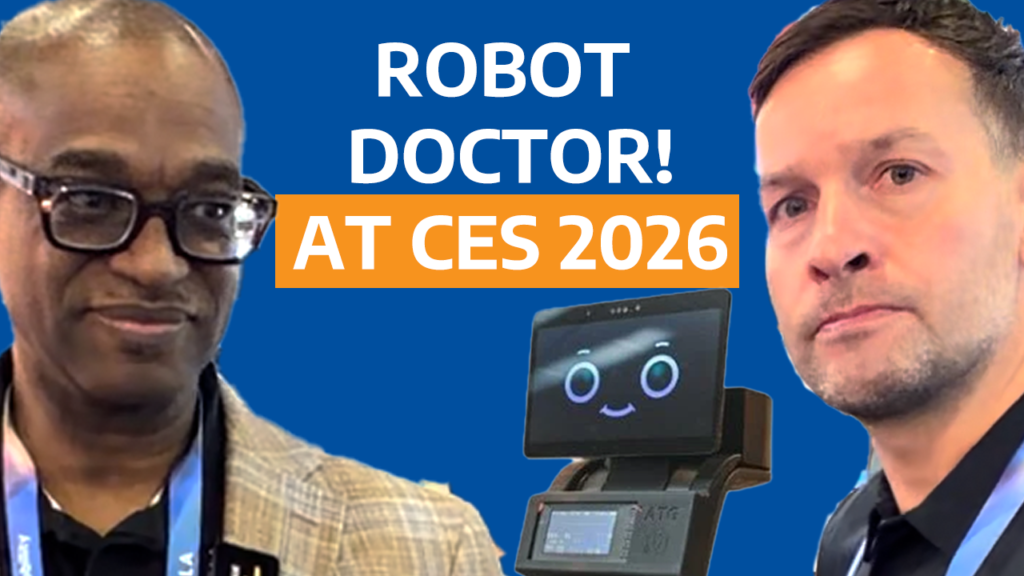
The Rise of AI Healthcare Robots
The Rise of AI Healthcare Robots: How Robotics Is Transforming Hospitals and Patient Care
Introduction
Healthcare is on the edge of a major transformation — and it’s not being led by doctors or hospitals alone.
It’s being driven by robots.
AI robots are no longer experimental tools sitting in labs or being showcased at trade events. They are now operating in real environments, interacting with patients, supporting clinicians, and redefining how care is delivered.
One of the most compelling examples of this shift is the emergence of telemedicine robots — mobile, intelligent systems that can move autonomously through healthcare environments while connecting patients to doctors remotely and capturing real-time medical data.
This isn’t just innovation for the sake of it. It’s a direct response to some of the biggest challenges facing global healthcare systems: staff shortages, rising costs, and increasing demand.
The question is no longer whether robotics will play a role in healthcare.
It’s how fast it will become essential.
The Current State of Robotics in Healthcare
The use of robotics in healthcare has been steadily increasing over the past decade.
Initially, robots were used in highly controlled environments — surgical robotics, logistics within hospitals, and automated pharmacy systems. These applications proved that robotics technology could deliver precision, consistency, and efficiency.
However, what we are seeing now is a shift from backend systems to frontline interaction.
AI robots are moving into patient-facing roles.
These include:
- Telepresence robots enabling remote consultations
- Service robots delivering medication and supplies
- Inspection robots monitoring environments for safety and compliance
- Companion robots supporting patient wellbeing
The most significant development is the integration of artificial intelligence into these systems. AI robots are no longer just machines following programmed routes — they can interpret data, respond to human interaction, and operate with increasing autonomy.
This shift is what turns a robot from a tool into a workforce multiplier.
Why Healthcare Systems Are Turning to Robots
Healthcare systems across the world are under pressure.
There is a growing imbalance between the number of patients and the availability of healthcare professionals. At the same time, expectations for quality care, accessibility, and speed continue to rise.
Robotics and automation offer a scalable solution.
1. Addressing Staff Shortages
One of the biggest drivers of robotics adoption in healthcare is workforce limitation.
Doctors and nurses are stretched across multiple responsibilities, often dealing with administrative tasks, routine monitoring, and repetitive processes.
AI robots can take on many of these functions.
For example, a telemedicine robot can:
- Move between patient rooms
- Initiate video consultations
- Capture vital signs
- Provide real-time data to clinicians
This allows healthcare professionals to focus on higher-value tasks that require human judgment and expertise.
2. Extending the Reach of Doctors
Traditionally, a doctor can only be in one place at a time.
With robotics, that limitation disappears.
A single clinician can consult with multiple patients across different locations through a mobile robot interface. This is particularly valuable in:
- Rural or underserved areas
- Large hospital facilities
- Emergency situations
The robot becomes a physical extension of the doctor.
3. Improving Efficiency and Reducing Costs
Healthcare is expensive — and inefficiencies drive costs even higher.
Robotics can streamline operations by automating routine tasks such as:
- Patient check-ins
- Monitoring and reporting
- Logistics and delivery
This not only reduces operational costs but also improves patient throughput and overall system efficiency.
Key Technologies Driving AI Healthcare Robots
The rapid development of AI robots in healthcare is made possible by several key technologies working together.
Artificial Intelligence and Machine Learning
AI allows robots to interpret data, learn from interactions, and improve over time.
In healthcare, this means:
- Analysing patient data
- Supporting diagnostics
- Enhancing communication with patients
Autonomous Navigation
Modern robots are equipped with sensors and mapping technologies that allow them to move independently through complex environments.
In a hospital setting, this includes:
- Avoiding obstacles
- Navigating corridors
- Reaching specific patient rooms
This capability is critical for reducing the need for human intervention.
Telepresence and Communication Systems
High-definition video, audio, and real-time connectivity enable seamless interaction between doctors and patients.
Telepresence robots act as a bridge, allowing clinicians to engage with patients as if they were physically present.
Integrated Medical Devices
Advanced healthcare robots are equipped with diagnostic tools such as:
- Blood pressure monitors
- Oxygen saturation sensors
- Digital stethoscopes
- Temperature scanners
This transforms the robot into a mobile diagnostic platform.
Real-World Applications of Healthcare Robots
The application of robotics in healthcare is already expanding rapidly.
Hospital Environments
Robots are being deployed to:
- Assist with patient monitoring
- Deliver medication and equipment
- Enable remote consultations
These systems reduce workload on staff and improve response times.
Care Homes and Assisted Living
In care environments, robots can:
- Monitor residents’ health
- Provide reminders for medication
- Offer companionship and interaction
This is particularly important as ageing populations increase demand for care services.
Remote and Home Healthcare
Telemedicine robots are also being used in home settings, allowing patients to receive care without visiting a hospital.
This reduces strain on healthcare facilities and improves accessibility.
Challenges Slowing Adoption
Despite the clear benefits, robotics adoption in healthcare is not without challenges.
Cost and Investment
Initial investment in robotics technology can be significant. While long-term savings are often achievable, upfront costs can be a barrier for many organisations.
Integration with Existing Systems
Healthcare environments are complex, with multiple systems and workflows already in place.
Integrating robotics into these systems requires careful planning and expertise.
Trust and Acceptance
Patients and healthcare professionals need to feel comfortable interacting with robots.
Trust is built over time through reliability, usability, and demonstrated value.
Regulation and Compliance
Healthcare is one of the most regulated industries.
Robotics solutions must meet strict standards for safety, data protection, and clinical effectiveness.
Industry Insight: The Acceleration of Robotics Adoption
The robotics industry is entering a new phase.
What was once experimental is now becoming commercially viable.
Investment in robotics startups is increasing, particularly in sectors such as healthcare, logistics, and service robotics.
AI robots are at the centre of this growth.
We are seeing:
- Increased demand for automation solutions
- Faster development cycles
- Greater collaboration between technology companies and healthcare providers
This is not a slow evolution.
It is a rapid shift driven by necessity.
Business Perspective: What This Means for Companies
For businesses, the rise of robotics presents both opportunity and risk.
Early Adoption Advantage
Companies that adopt robotics early can gain:
- Operational efficiency
- Competitive advantage
- New revenue opportunities
New Business Models
Robotics enables entirely new ways of delivering services.
In healthcare, this includes:
- Remote care models
- Subscription-based monitoring services
- Scalable patient management systems
The Role of Robotics Consulting
One of the biggest gaps in the market is not technology — it’s implementation.
Businesses often struggle with:
- Identifying the right use case
- Selecting the right robot
- Integrating robotics into existing workflows
This is where robotics consulting becomes essential.
The RoboPhil Perspective
From working across Robot Center, Robots of London, and Robot Philosophy, one thing is clear:
The demand for real-world robotics applications is increasing rapidly.
Businesses are no longer asking “what is robotics?”
They are asking “how do we use it?”
Through consultancy, robot sourcing, and deployment, RoboPhil works with companies to:
- Identify where robots can add value
- Select the right robotics solutions
- Support implementation and integration
This includes everything from commercial environments to events and large-scale automation strategies.
The shift is already happening.
The companies that act now will define the next phase of the robotics industry.
What the Future of Robotics in Healthcare Looks Like
The next 5–10 years will see robotics move from optional to essential in healthcare.
We can expect:
- Increased use of AI robots in patient-facing roles
- Greater integration of robotics into hospital infrastructure
- Expansion of telemedicine and remote care solutions
- Continued advancement in humanoid robots and service robotics
Healthcare will become more connected, more efficient, and more scalable.
Robots will not replace doctors.
But they will fundamentally change how doctors work.
Conclusion
The rise of AI healthcare robots represents one of the most significant shifts in the future of robotics.
This is not just about technology.
It is about transforming how care is delivered, improving efficiency, and addressing some of the biggest challenges facing healthcare systems worldwide.
Robotics is moving from concept to reality — and healthcare is one of the first industries to feel its full impact.
The question is no longer whether robots will be used.
It’s how quickly organisations are willing to adapt.
Work With RoboPhil
If you are exploring robotics, automation, or AI robots in your business, now is the time to act.
RoboPhil works with companies across industries to help them understand, adopt, and deploy robotics effectively.
Robotics services and partners:
Robot Center
https://robotcenter.co.uk/
Robots of London
https://robotsoflondon.co.uk/
Robot Philosophy
https://robophil.com/
Business enquiries
sales@robotcenter.co.uk