
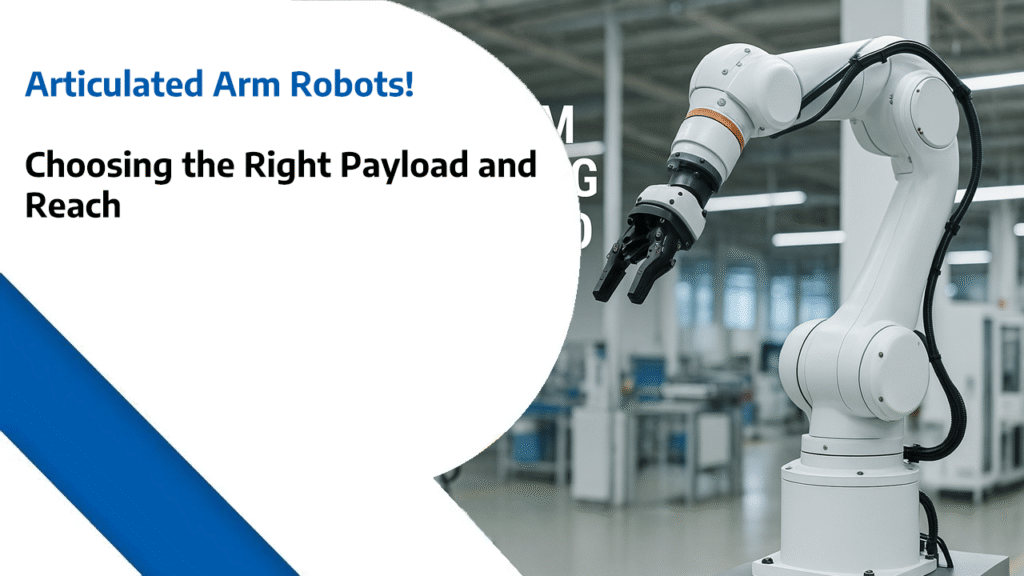
Articulated Arm Robots: Choosing the Right Payload and Reach
Sponsored by Robot Center, Robots of London, and Robot Philosophy
In the rapidly evolving landscape of industrial automation, articulated arm robots have emerged as the backbone of modern manufacturing, assembly, and precision handling operations. These versatile mechanical marvels, with their human-like joint configurations, offer unparalleled flexibility and precision across a vast array of applications. However, selecting the right articulated arm robot for your specific needs requires careful consideration of two critical specifications: payload capacity and reach. Making the wrong choice can result in operational inefficiencies, increased costs, and missed opportunities for optimization.
Understanding Articulated Arm Robot Fundamentals
Articulated arm robots, also known as six-axis robots or anthropomorphic robots, feature multiple rotational joints that mimic the movement of a human arm. This design philosophy provides exceptional dexterity and positioning accuracy, making them ideal for complex manipulation tasks that require precise control in three-dimensional space. The robot’s configuration typically includes a base, shoulder, elbow, and wrist joints, each contributing to the overall workspace envelope and operational capabilities.
The sophistication of modern articulated arm robots lies in their ability to reach virtually any point within their operational sphere while maintaining optimal orientation and approach angles. This capability is particularly valuable in applications such as welding, painting, assembly, material handling, and quality inspection, where both position and orientation are critical to success.
The Critical Importance of Payload Selection
Payload capacity represents the maximum weight an articulated arm robot can safely manipulate while maintaining specified accuracy and repeatability standards. This specification directly impacts not only what objects the robot can handle but also influences its speed, precision, and overall operational envelope. Understanding payload requirements involves analyzing both the weight of the workpiece and any end-effectors, tooling, or fixtures that will be attached to the robot’s wrist.
Calculating Total Payload Requirements
When determining payload needs, engineers must consider the cumulative weight of all components that will be carried by the robot. This includes the primary workpiece, gripping devices, sensors, pneumatic cylinders, electrical connections, and any additional tooling required for the specific application. A common oversight in robot selection is underestimating these auxiliary weights, which can significantly impact performance and longevity.
For example, a seemingly lightweight electronic component weighing 2 kilograms might require a specialized gripper weighing 3 kilograms, plus sensors and cabling adding another kilogram. The actual payload requirement becomes 6 kilograms, not the initially perceived 2 kilograms. This miscalculation can lead to selecting an underpowered robot that struggles with the actual operational demands.
Safety Margins and Performance Considerations
Industry best practices recommend incorporating a safety margin of 20-30% above the calculated maximum payload to ensure optimal performance and longevity. Operating a robot at its maximum payload capacity continuously can lead to increased wear, reduced accuracy, and potential premature failure of critical components. Additionally, payload capacity directly affects the robot’s maximum operational speed, with heavier payloads requiring slower movements to maintain precision and safety standards.
The relationship between payload and performance is particularly evident in applications requiring rapid acceleration and deceleration. High-speed pick-and-place operations, for instance, may require robots with payload capacities significantly exceeding the actual workpiece weight to accommodate the dynamic forces generated during rapid movements.
Mastering Reach and Workspace Optimization
Reach specification defines the maximum distance from the robot’s base to the furthest point it can access with its end-effector. However, reach involves more than simple linear distance; it encompasses the entire three-dimensional workspace envelope that the robot can access while maintaining proper orientation and approach angles.
Workspace Envelope Analysis
The workspace envelope of an articulated arm robot is typically spherical or partially spherical, depending on the specific joint configurations and mechanical constraints. Within this envelope, certain areas may be more easily accessible than others, with some positions requiring the robot to operate near its mechanical limits, potentially reducing precision and speed.
Understanding workspace geometry is crucial for optimal robot placement and cell layout design. The robot’s base position should be strategically located to ensure that all required work points fall within the optimal operating zone, where the robot can maintain high accuracy and speed while avoiding mechanical limitations and potential collision hazards.
Reach vs. Payload Trade-offs
An important consideration in robot selection is the inverse relationship between reach and payload capacity. Robots with extended reach capabilities often sacrifice payload capacity due to the increased mechanical stresses imposed by longer arm segments and the leverage effects of operating at maximum extension. Conversely, robots designed for high payload applications typically feature more robust construction but may have limited reach capabilities.
This trade-off requires careful analysis of application requirements to determine the optimal balance between reach and payload for specific operational needs. Applications requiring both extended reach and high payload capacity may necessitate multiple smaller robots or specialized robot designs optimized for these dual requirements.
Application-Specific Selection Criteria
Different industrial applications place varying demands on payload and reach specifications, requiring tailored selection approaches to ensure optimal performance and return on investment.
Manufacturing and Assembly Operations
In manufacturing environments, articulated arm robots often handle components ranging from delicate electronic assemblies to heavy automotive parts. Assembly operations typically require moderate payload capacities but demand exceptional precision and repeatability. The reach requirements vary significantly based on the size of the assembly area and the need to access multiple stations or fixtures within a single cell.
For automotive assembly applications, robots may need to handle body panels weighing 30-50 kilograms while reaching across large assembly fixtures. These applications demand robust payload capacity combined with extended reach, often requiring larger robot models or specialized automotive-specific designs.
Material Handling and Palletizing
Material handling applications present unique challenges in payload and reach optimization. Palletizing robots must handle varying product weights and sizes while accessing multiple levels of pallets or storage systems. The reach requirement is often driven by the need to access the full height and depth of palletizing areas, while payload capacity must accommodate the heaviest products plus any specialized gripping systems.
High-speed material handling operations may require robots with payload capacities significantly exceeding the actual product weights to accommodate the dynamic forces generated during rapid movements and maintain cycle time objectives.
Precision Operations and Quality Control
Quality control and precision assembly applications typically involve lighter payloads but demand exceptional accuracy and repeatability. These applications may require specialized end-effectors, measurement devices, or vision systems that add complexity to payload calculations. The reach requirements are often determined by the need to access multiple measurement points or assembly locations within tight tolerances.
Advanced Considerations for Robot Selection
Beyond basic payload and reach specifications, several advanced factors significantly impact robot selection and performance optimization.
Dynamic Performance Characteristics
Modern articulated arm robots feature sophisticated control systems that optimize performance based on payload characteristics and operational requirements. Advanced robots can automatically adjust acceleration profiles, path planning, and servo gains based on real-time payload sensing, ensuring optimal performance across varying load conditions.
Understanding these dynamic characteristics is crucial for applications involving variable payload conditions or rapid cycle time requirements. Robots with adaptive payload sensing can maintain consistent cycle times and accuracy even when handling products of varying weights within the same application.
Environmental and Safety Considerations
Operating environment significantly impacts robot selection criteria, particularly in harsh industrial conditions or cleanroom applications. Robots designed for food processing, pharmaceutical, or cleanroom environments may have payload and reach limitations imposed by specialized sealing requirements or material restrictions.
Safety regulations and risk assessments also influence robot selection, with certain applications requiring additional safety systems that may impact payload calculations or workspace accessibility. Collaborative robots designed for human-robot interaction often have inherent speed and force limitations that affect their effective payload and reach capabilities.
Future Scalability and Flexibility
Successful robot implementation requires consideration of future operational requirements and potential application expansion. Selecting robots with moderate over-capacity in both payload and reach provides flexibility for future process changes, additional tooling requirements, or expanded operational scope without requiring complete system replacement.
This forward-thinking approach to robot selection ensures long-term value and adaptability in rapidly changing manufacturing environments.
Expert Consultation and Professional Services
Navigating the complexities of articulated arm robot selection requires extensive expertise in robotics engineering, application analysis, and system integration. The interplay between payload capacity, reach requirements, environmental factors, and operational objectives demands careful analysis by experienced professionals who understand both the technical specifications and practical implications of robot selection decisions.
Professional robotics consultancy services provide invaluable expertise in analyzing specific application requirements, conducting detailed feasibility studies, and recommending optimal robot configurations for unique operational needs. These services extend beyond initial robot selection to encompass complete system design, integration planning, safety analysis, and ongoing optimization support.
The complexity of modern robotics applications often requires specialized knowledge in multiple disciplines, including mechanical engineering, control systems, safety regulations, and industry-specific requirements. Professional consultants bring this multidisciplinary expertise to ensure successful robot implementation and long-term operational success.
For organizations seeking to implement articulated arm robots or optimize existing robotic systems, professional consultation provides access to cutting-edge knowledge, proven methodologies, and extensive experience across diverse applications and industries. This expertise is particularly valuable in complex applications where standard selection criteria may not adequately address unique operational requirements or constraints.
Additionally, specialized recruitment services can help organizations build internal robotics expertise by identifying and placing qualified robotics engineers, technicians, and specialists who understand the nuances of articulated arm robot applications and optimization.
Conclusion and Next Steps
Selecting the appropriate articulated arm robot requires comprehensive analysis of payload and reach requirements within the context of specific application needs, operational constraints, and future scalability requirements. The decision-making process involves balancing multiple competing factors while ensuring optimal performance, safety, and return on investment.
Success in robot selection and implementation often depends on leveraging professional expertise and proven methodologies developed through extensive experience across diverse applications and industries. Whether you’re implementing your first robotic system or optimizing an existing installation, professional guidance ensures optimal outcomes and long-term success.
For expert consultation on articulated arm robot selection, system optimization, or robotics talent acquisition, contact our specialized team at info@robophil.com or call 0845 528 0404 to schedule a comprehensive consultation and discover how professional robotics expertise can transform your operational capabilities.
Article Sponsors
Robot Center – Your premier destination for robot purchasing, robotics consultancy, and comprehensive automation solutions. Specializing in robot buy services and expert robotics consultancy.
Robots of London – Leading provider of robot hire, robot rental, and specialized robot event services. Rent robots for temporary projects or hire robots for demonstrations and events.
Robot Philosophy – Expert robot consultancy and robot recruitment services. RoboPhil, led by Philip English, offers robot advice, insights, and ideas through comprehensive robotics training, consulting, and content creation as a leading robotics YouTuber, influencer, and consultant.
https://www.youtube.com/watch?v=cdKDPded8j0