
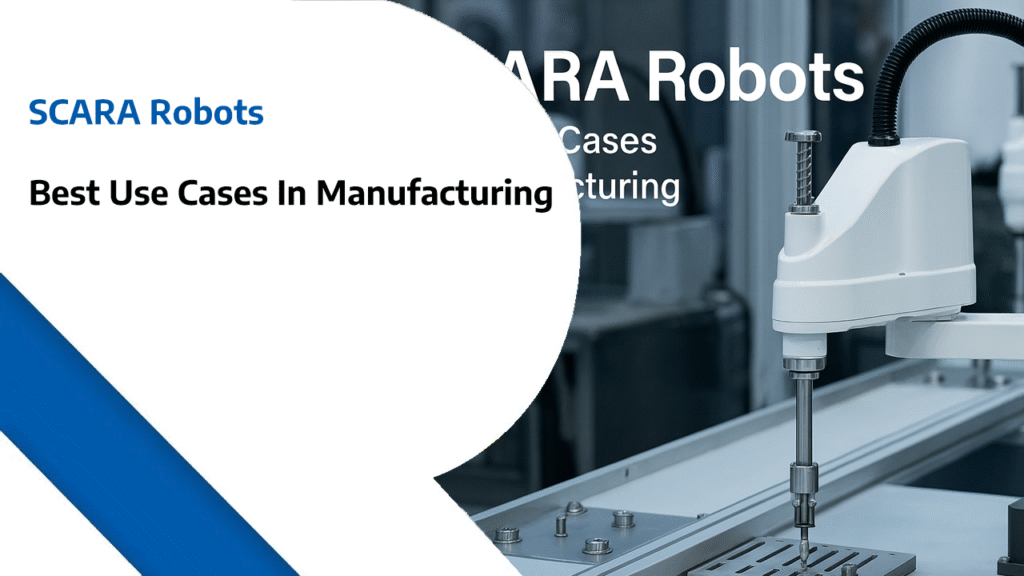
SCARA Robots – Best Use Cases In Manufacturing
Introduction
In the rapidly evolving landscape of modern manufacturing, automation has become the cornerstone of efficiency, precision, and competitive advantage. Among the various robotic solutions available, SCARA (Selective Compliance Assembly Robot Arm) robots have emerged as one of the most versatile and cost-effective options for manufacturers seeking to enhance their production capabilities. These sophisticated machines combine speed, accuracy, and reliability to deliver exceptional performance across a wide range of industrial applications.
SCARA robots represent a unique class of industrial automation equipment that has revolutionized manufacturing processes worldwide. Their distinctive design philosophy centers around providing compliance in the horizontal plane while maintaining rigidity in the vertical direction, making them ideally suited for assembly, pick-and-place, and material handling operations. This selective compliance capability allows SCARA robots to perform delicate operations with remarkable precision while maintaining the structural integrity necessary for demanding industrial environments.
Understanding SCARA Robot Architecture
The fundamental design of SCARA robots sets them apart from other robotic configurations. Unlike traditional six-axis articulated robots or Cartesian coordinate systems, SCARA robots feature a unique four-axis configuration that provides optimal performance for specific manufacturing tasks. The robot’s arm consists of two parallel rotary joints that provide compliance in the horizontal plane, combined with a linear joint for vertical movement and a rotary joint for tool orientation.
This architectural approach delivers several key advantages. The parallel joint configuration eliminates the need for complex counterbalancing mechanisms, resulting in faster acceleration and deceleration cycles. The inherent stiffness in the vertical direction ensures consistent positioning accuracy, while the compliance in the horizontal plane allows for safe interaction with workpieces and tooling. This combination makes SCARA robots particularly well-suited for applications requiring high-speed, repetitive motions with precise positioning requirements.
The workspace envelope of SCARA robots typically resembles a hollow cylinder, with the robot capable of reaching any point within this three-dimensional space. This workspace configuration is ideal for many manufacturing applications where parts need to be manipulated within a defined area, such as assembly stations, packaging lines, and material handling systems. The reach and payload capabilities of modern SCARA robots have expanded significantly, with some models offering reaches exceeding 1,500mm and payloads up to 50kg or more.
Primary Use Cases in Manufacturing
Electronics and Semiconductor Assembly
The electronics manufacturing industry has been one of the earliest and most enthusiastic adopters of SCARA robot technology. The precision requirements for electronic component placement, combined with the need for high-speed operation, make SCARA robots the ideal choice for these applications. In printed circuit board (PCB) assembly, SCARA robots excel at placing surface-mount components with positioning accuracies measured in micrometers.
Modern electronics manufacturing demands ever-increasing levels of miniaturization, with components becoming smaller and placement tolerances tighter with each generation of products. SCARA robots meet these challenges through advanced vision systems, force feedback sensors, and sophisticated control algorithms that ensure precise component placement even in challenging conditions. The speed advantages of SCARA robots become particularly apparent in high-volume electronics production, where cycle times measured in fractions of seconds can significantly impact overall equipment effectiveness.
Beyond component placement, SCARA robots perform various other functions in electronics manufacturing, including dispensing adhesives and sealants, inserting connectors and cables, testing and inspection operations, and packaging finished products. The versatility of SCARA robots allows manufacturers to deploy them across multiple stages of the production process, maximizing return on investment while maintaining consistent quality standards.
Automotive Component Manufacturing
The automotive industry’s stringent quality requirements and high-volume production demands make it another natural fit for SCARA robot applications. These robots excel in numerous automotive manufacturing processes, from small component assembly to final vehicle preparation. In engine manufacturing, SCARA robots handle tasks such as valve installation, sensor mounting, and gasket placement with the precision and repeatability required for modern automotive standards.
Transmission assembly represents another area where SCARA robots demonstrate their value. The complex geometries and tight tolerances required in transmission manufacturing benefit from the selective compliance characteristics of SCARA robots, which can accommodate slight variations in part positioning while maintaining overall assembly accuracy. This capability is particularly valuable when dealing with cast components that may have minor dimensional variations within acceptable tolerance ranges.
Interior component assembly has also benefited significantly from SCARA robot implementation. From instrument cluster assembly to door panel installation, these robots provide the speed and precision necessary to meet automotive production line requirements. The ability to integrate vision systems and force sensors allows SCARA robots to adapt to variations in part presentation and ensure proper component alignment during assembly operations.
Pharmaceutical and Medical Device Production
The pharmaceutical and medical device industries present unique challenges that SCARA robots are well-equipped to address. The stringent regulatory requirements, need for contamination control, and demand for traceability make these sectors ideal candidates for robotic automation. SCARA robots operating in cleanroom environments can maintain the sterile conditions required for pharmaceutical production while delivering the precision necessary for accurate dosing and packaging operations.
In medical device manufacturing, SCARA robots perform critical assembly operations for products ranging from diagnostic equipment to implantable devices. The precision and repeatability of these robots ensure that medical devices meet the exacting standards required for patient safety and regulatory compliance. Advanced SCARA systems can incorporate real-time monitoring and data logging capabilities, providing the documentation and traceability required by regulatory agencies.
The packaging and labeling of pharmaceutical products represent another significant application area for SCARA robots. These systems can handle delicate containers, apply labels with precise positioning, and perform quality inspection operations at speeds that would be impossible to achieve with manual labor. The integration of vision systems allows SCARA robots to verify label placement, check for defects, and ensure that packaging meets regulatory requirements before products proceed to distribution.
Food and Beverage Processing
Food and beverage manufacturing presents unique challenges related to hygiene, product variability, and regulatory compliance. SCARA robots designed for food industry applications feature specialized coatings, sealed enclosures, and washdown capabilities that allow them to operate in harsh processing environments while maintaining food safety standards. These robots excel in applications such as product sorting, packaging, palletizing, and quality inspection.
The speed and precision of SCARA robots make them particularly valuable in high-volume food packaging operations. These systems can handle products with varying sizes, shapes, and weights while maintaining consistent packaging quality and minimizing product damage. Advanced gripper technologies allow SCARA robots to handle delicate food items without compromising product integrity, while vision systems enable quality inspection and sorting based on visual characteristics.
In beverage production, SCARA robots perform functions such as bottle handling, cap placement, labeling, and case packing. The ability to operate at high speeds while maintaining gentle handling characteristics makes these robots ideal for managing fragile containers and ensuring consistent product presentation. Integration with production line control systems allows SCARA robots to adapt to different product types and packaging configurations without requiring extensive reprogramming or setup changes.
Packaging and Material Handling
General packaging operations across various industries have benefited enormously from SCARA robot implementation. These robots excel in applications requiring high-speed pick-and-place operations, such as transferring products from production lines to packaging equipment or arranging items in shipping containers. The speed advantages of SCARA robots become particularly apparent in packaging applications where cycle times directly impact overall production throughput.
Material handling applications represent another significant use case for SCARA robots. These systems can manage a wide variety of materials, from small electronic components to larger mechanical parts, with consistent accuracy and reliability. The workspace characteristics of SCARA robots make them ideal for applications where materials need to be moved between multiple stations or arranged in specific patterns for downstream processing.
The integration of advanced gripper technologies has expanded the range of materials that SCARA robots can handle effectively. Vacuum grippers, mechanical grippers, magnetic grippers, and specialized end-effectors allow these robots to adapt to virtually any material handling requirement. Vision systems and force sensors provide feedback that enables robots to adapt to variations in part presentation and ensure secure handling throughout the operation.
Advanced Features and Capabilities
Vision Integration and Quality Control
Modern SCARA robots increasingly incorporate advanced vision systems that enable them to perform complex inspection and quality control operations. These systems combine high-resolution cameras, sophisticated image processing algorithms, and machine learning capabilities to identify defects, verify assembly quality, and ensure product compliance with specifications. Vision-guided SCARA robots can adapt to variations in part presentation, locate components with sub-pixel accuracy, and make real-time decisions based on visual feedback.
The integration of vision systems with SCARA robots has opened new possibilities for flexible manufacturing operations. These systems can handle parts presented in random orientations, adapt to variations in component appearance, and perform complex inspection tasks that would be difficult or impossible to accomplish with traditional fixed automation. Advanced vision algorithms can detect subtle defects, measure dimensional characteristics, and verify proper assembly completion with accuracy levels that exceed human capabilities.
Quality control applications represent a particularly valuable use of vision-integrated SCARA robots. These systems can perform 100% inspection of manufactured products, identifying defects and sorting products based on quality criteria. The speed and accuracy of robotic inspection systems enable manufacturers to implement comprehensive quality control programs without impacting production throughput, ultimately improving customer satisfaction and reducing warranty costs.
Force and Compliance Control
Advanced SCARA robots incorporate sophisticated force and compliance control systems that enable them to perform delicate assembly operations and adapt to variations in part fit and finish. These systems use force sensors, torque monitoring, and advanced control algorithms to provide real-time feedback about interaction forces between the robot and workpiece. This capability is particularly valuable for applications requiring precise force control, such as press-fitting operations, threaded fastener installation, and delicate component placement.
Force control systems allow SCARA robots to adapt to manufacturing variations while maintaining consistent assembly quality. For example, when installing components that require specific insertion forces, the robot can monitor and adjust its operation to ensure proper installation without damaging parts or compromising assembly integrity. This adaptive capability reduces the need for tight manufacturing tolerances while maintaining high-quality assembly results.
Compliance control extends beyond simple force measurement to include sophisticated algorithms that enable robots to respond appropriately to unexpected conditions. These systems can detect binding or interference during assembly operations, automatically adjust robot motion to accommodate part variations, and provide feedback to operators or control systems when manual intervention may be required. The result is more robust and reliable automated assembly processes that can handle real-world manufacturing conditions.
Collaborative Safety Features
The evolution toward collaborative robotics has influenced SCARA robot design, with many modern systems incorporating safety features that enable human-robot collaboration in manufacturing environments. These safety systems include advanced sensors, safety-rated control systems, and protective features that allow humans to work safely in close proximity to operating robots. Collaborative SCARA robots can automatically reduce speed or stop operation when humans enter the workspace, enabling flexible manufacturing arrangements that combine the efficiency of automation with the adaptability of human operators.
Safety features in modern SCARA robots extend beyond basic collision detection to include predictive safety systems that can anticipate potential hazards and take preventive action. These systems monitor robot trajectory, workspace conditions, and human presence to ensure safe operation in dynamic manufacturing environments. Advanced safety systems can distinguish between different types of contact, responding appropriately to intentional interaction while maintaining protective functions against unintended contact.
The implementation of collaborative safety features has enabled new applications for SCARA robots in environments where traditional industrial robots would not be suitable. These applications include assembly operations requiring human judgment and dexterity combined with robotic precision and repeatability, quality control processes that benefit from both automated inspection and human oversight, and flexible manufacturing systems that need to accommodate varying production requirements and workforce availability.
Implementation Considerations and Best Practices
System Integration and Programming
Successful implementation of SCARA robots requires careful consideration of system integration requirements and programming approaches. Modern SCARA robots typically feature sophisticated control systems that can integrate with existing manufacturing equipment, quality control systems, and production management software. This integration capability enables robots to operate as part of comprehensive manufacturing systems rather than standalone automation islands.
Programming approaches for SCARA robots have evolved significantly, with modern systems offering both traditional teach-pendant programming and advanced offline programming capabilities. Offline programming systems enable engineers to develop and optimize robot programs using simulation software, reducing setup time and enabling more sophisticated motion planning. These systems can model complex manufacturing environments, simulate robot operation, and identify potential issues before implementation.
The integration of SCARA robots with other manufacturing systems requires careful attention to communication protocols, safety systems, and operational coordination. Modern robots typically support multiple communication standards, including Ethernet/IP, DeviceNet, Profibus, and other industrial networking protocols. This flexibility enables seamless integration with existing manufacturing control systems and facilitates coordination between multiple automated systems.
Maintenance and Reliability
SCARA robots are generally recognized for their reliability and relatively low maintenance requirements compared to other robotic configurations. The simplified mechanical design, with fewer moving parts and reduced complexity, contributes to longer operational life and reduced maintenance costs. However, proper maintenance procedures and predictive maintenance strategies are essential for maximizing robot availability and performance.
Regular maintenance activities for SCARA robots typically include lubrication of mechanical components, inspection of electrical connections, calibration verification, and replacement of wear items such as belts and bearings. Advanced SCARA systems often incorporate condition monitoring capabilities that track robot performance and predict maintenance requirements before failures occur. These systems can monitor factors such as motor current, positioning accuracy, and cycle times to identify trends that indicate developing issues.
The design of SCARA robots facilitates maintenance activities, with many components accessible without extensive disassembly. This accessibility reduces maintenance time and costs while enabling predictive maintenance strategies that maximize robot availability. Manufacturers often provide comprehensive maintenance training and support services to ensure that maintenance staff can effectively maintain robot systems throughout their operational life.
Cost-Benefit Analysis and ROI
The economic justification for SCARA robot implementation typically includes multiple factors beyond simple labor cost reduction. While direct labor savings often provide the most obvious return on investment, additional benefits such as improved quality, increased throughput, enhanced flexibility, and reduced material waste contribute significantly to overall economic value. A comprehensive cost-benefit analysis should consider both quantifiable benefits and strategic advantages that may be more difficult to measure directly.
Quality improvements resulting from SCARA robot implementation can provide substantial economic benefits through reduced rework, lower warranty costs, and improved customer satisfaction. The consistent accuracy and repeatability of robotic operations often result in significant reductions in quality-related costs, which can justify automation investment even in applications where direct labor savings are modest.
Throughput improvements represent another significant source of economic benefit from SCARA robot implementation. The high-speed operation of these robots, combined with their ability to operate continuously without breaks, can substantially increase production capacity without proportional increases in facility size or infrastructure requirements. This increased capacity can enable manufacturers to meet growing demand, reduce delivery times, and improve customer service levels.
Industry Trends and Future Developments
Artificial Intelligence and Machine Learning Integration
The integration of artificial intelligence and machine learning technologies with SCARA robots represents one of the most significant trends shaping the future of manufacturing automation. These technologies enable robots to adapt to changing conditions, learn from experience, and optimize their operation over time. Machine learning algorithms can analyze robot performance data to identify optimization opportunities, predict maintenance requirements, and improve overall system efficiency.
AI-enhanced SCARA robots can adapt to variations in part presentation, material properties, and environmental conditions without extensive reprogramming. These systems can learn to recognize quality issues, adjust their operation to accommodate manufacturing variations, and provide valuable feedback to manufacturing engineers about process optimization opportunities. The result is more flexible and intelligent automation systems that can handle the variability inherent in real-world manufacturing environments.
Predictive analytics capabilities enabled by AI and machine learning technologies provide manufacturers with valuable insights into robot performance and manufacturing processes. These systems can identify patterns in robot operation that indicate developing issues, optimize robot motion for improved efficiency, and provide recommendations for process improvements. The integration of these capabilities with existing manufacturing systems creates comprehensive smart manufacturing environments that continuously improve their performance.
Advanced Sensor Technologies
The development of advanced sensor technologies continues to expand the capabilities of SCARA robots and enable new applications. High-resolution force sensors, tactile feedback systems, and multi-modal sensing capabilities provide robots with increasingly sophisticated information about their interaction with the manufacturing environment. These sensors enable robots to perform more complex operations and adapt to challenging conditions that would have required human intervention in the past.
Vision sensor technology continues to advance rapidly, with improvements in resolution, processing speed, and analytical capabilities. Modern vision systems can perform complex inspection tasks, guide robots with sub-millimeter accuracy, and adapt to varying lighting conditions and part presentations. The integration of multiple vision sensors with SCARA robots enables comprehensive monitoring of manufacturing processes and sophisticated quality control operations.
Environmental sensors and condition monitoring systems provide SCARA robots with awareness of their operating environment and enable adaptive responses to changing conditions. These sensors can monitor factors such as temperature, humidity, vibration, and electromagnetic interference, allowing robots to adjust their operation to maintain optimal performance. This environmental awareness contributes to improved reliability and consistent performance across varying operating conditions.
Modular and Flexible System Design
The trend toward modular and flexible system design is influencing SCARA robot development, with manufacturers focusing on creating systems that can be easily reconfigured for different applications and scaled to meet changing production requirements. Modular robot designs enable manufacturers to optimize robot specifications for specific applications while maintaining flexibility for future changes.
Flexible mounting systems and workspace configurations allow SCARA robots to be deployed in various orientations and locations within manufacturing facilities. These systems can be easily relocated or reconfigured to accommodate changing production requirements, new product introductions, or facility layout modifications. The ability to adapt robot installations to changing requirements provides manufacturers with valuable flexibility in an increasingly dynamic business environment.
Standardized interfaces and communication protocols facilitate integration of SCARA robots with other manufacturing equipment and enable more flexible system architectures. These standards reduce integration complexity, improve interoperability between different equipment suppliers, and facilitate future system upgrades or modifications. The adoption of industry-standard protocols also reduces training requirements and simplifies maintenance and support activities.
Expert Consultation and Implementation Support
Professional Robot Consulting Services
The successful implementation of SCARA robots in manufacturing environments requires expertise in robotics, manufacturing processes, and system integration. Professional robot consulting services can provide valuable guidance throughout the entire implementation process, from initial feasibility assessment through system commissioning and optimization. Experienced consultants can help manufacturers identify the most suitable applications for SCARA robots, select appropriate equipment specifications, and develop implementation strategies that maximize return on investment.
Robot consultants bring valuable experience from multiple industries and applications, enabling them to identify opportunities and potential challenges that may not be apparent to manufacturers implementing their first robotic systems. This experience can help avoid common pitfalls, reduce implementation time, and ensure that robotic systems meet performance expectations. Consultants can also provide ongoing support for system optimization, troubleshooting, and expansion planning.
The complexity of modern manufacturing environments and the sophistication of SCARA robot systems make professional consulting services increasingly valuable. Consultants can help manufacturers navigate the various technology options, develop comprehensive implementation plans, and ensure that robotic systems integrate effectively with existing manufacturing processes and quality control systems.
Specialized Robot Recruitment Services
The successful operation and maintenance of SCARA robot systems requires skilled personnel with specialized knowledge of robotics, automation, and manufacturing processes. Finding qualified candidates with the appropriate combination of technical skills and manufacturing experience can be challenging, particularly in today’s competitive job market. Specialized robot recruitment services can help manufacturers identify and attract the talent necessary to support their automation initiatives.
Robot recruitment specialists understand the unique skill requirements for different types of robotic applications and can identify candidates with the appropriate background and experience. These services can help manufacturers build effective automation teams that include robot programmers, maintenance technicians, system integrators, and automation engineers. The ability to recruit skilled personnel is often a critical factor in the success of automation projects.
The growing demand for robotics professionals has created a competitive job market where specialized recruitment services can provide significant advantages in attracting top talent. These services maintain networks of qualified candidates and understand the career motivations and compensation expectations of robotics professionals. This expertise can help manufacturers build strong automation teams that support long-term success.
Training and Skill Development
The implementation of SCARA robots requires appropriate training programs to ensure that manufacturing personnel can effectively operate, program, and maintain these systems. Comprehensive training programs should address both technical skills and safety procedures, providing personnel with the knowledge necessary to work safely and effectively with robotic systems. Training requirements vary depending on job responsibilities, ranging from basic operator training to advanced programming and maintenance instruction.
Robot training programs should include both theoretical knowledge and hands-on experience with actual robot systems. Theoretical components should cover robot operation principles, safety procedures, programming concepts, and troubleshooting techniques. Hands-on training should provide experience with robot programming, system operation, and maintenance procedures using the specific equipment that will be deployed in the manufacturing environment.
Ongoing training and skill development are essential for maintaining effective robot operations as technology evolves and applications expand. Regular training updates ensure that personnel remain current with new features, capabilities, and best practices. Advanced training programs can help personnel develop specialized skills for complex applications and prepare them for leadership roles in automation initiatives.
Conclusion
SCARA robots represent a proven and versatile solution for a wide range of manufacturing applications. Their unique combination of speed, accuracy, and reliability makes them ideal for electronics assembly, automotive component manufacturing, pharmaceutical production, food processing, and packaging operations. The selective compliance characteristics of SCARA robots enable them to perform delicate assembly operations while maintaining the precision necessary for modern manufacturing requirements.
The continued evolution of SCARA robot technology, including advanced vision systems, force control capabilities, and artificial intelligence integration, promises to expand their capabilities and open new application opportunities. These technological advances, combined with improvements in programming tools and system integration capabilities, make SCARA robots increasingly accessible to manufacturers of all sizes.
The successful implementation of SCARA robots requires careful planning, appropriate expertise, and comprehensive support services. Professional consulting services can provide valuable guidance throughout the implementation process, while specialized recruitment services can help manufacturers build the skilled teams necessary to support their automation initiatives. Comprehensive training programs ensure that personnel have the knowledge and skills necessary to operate and maintain robotic systems effectively.
As manufacturing continues to evolve toward increased automation, flexibility, and intelligence, SCARA robots will continue to play a vital role in helping manufacturers meet their production goals while maintaining the quality and efficiency necessary to compete in global markets. The investment in SCARA robot technology represents not just an automation decision, but a strategic commitment to manufacturing excellence and long-term competitiveness.
About the Author
RoboPhil (Philip English) is a renowned Robot YouTuber, Robotics YouTuber, Robot Trainer, Robotics Trainer, Robot Consultant, Robotics Consultant, Robot Influencer, and Robotics Influencer. With extensive experience in industrial automation and robotics implementation, Philip provides expert insights and practical guidance for manufacturers seeking to leverage robotic technologies for competitive advantage.
Professional Services
For expert guidance on SCARA robot implementation and robotics consulting services, contact our team:
📧 Email: info@robophil.com
📞 Phone: 0845 528 0404
Our experienced consultants can help you evaluate SCARA robot applications, develop implementation strategies, and build the skilled teams necessary for successful automation projects.
Article Sponsors
This comprehensive guide to SCARA robots in manufacturing is proudly sponsored by leading robotics service providers:
Robot Center
Website: robotcenter.co.uk
Services: Buy Robot, Robot Buy, Robot Consultancy, Robotics Consultancy
Your trusted partner for robot acquisition and expert consultation services
Robots of London
Website: robotsoflondon.co.uk
Services: Robot Hire, Robot Rental, Rent Robot, Hire Robot, Robot Events
Flexible robot rental solutions for events, demonstrations, and temporary applications
Robot Philosophy
Website: robophil.com
Services: Robot Consultancy, Robot Recruitment, Robot Advice, Robot Insights, Robot Ideas
Comprehensive robotics expertise combining strategic consulting with specialized talent acquisition
For more information about SCARA robot implementation or to schedule a consultation, please contact us using the details provided above.
https://www.youtube.com/watch?v=zbAKYmcaicM