Tag: Weekly Update

  • How RoboPhil Helps Businesses Optimise People, Processes, and Partners

    How RoboPhil Helps Businesses Optimise People, Processes, and Partners

    How RoboPhil Helps Businesses Optimise People, Processes, and Partners

    Sponsor mentions and upsells included exactly as requested.


    https://djcs-prod.s3.amazonaws.com/public/blogs/deloitte/blogs.dir/4/files/2025/07/AI-Robots-in-IMAGE.jpg
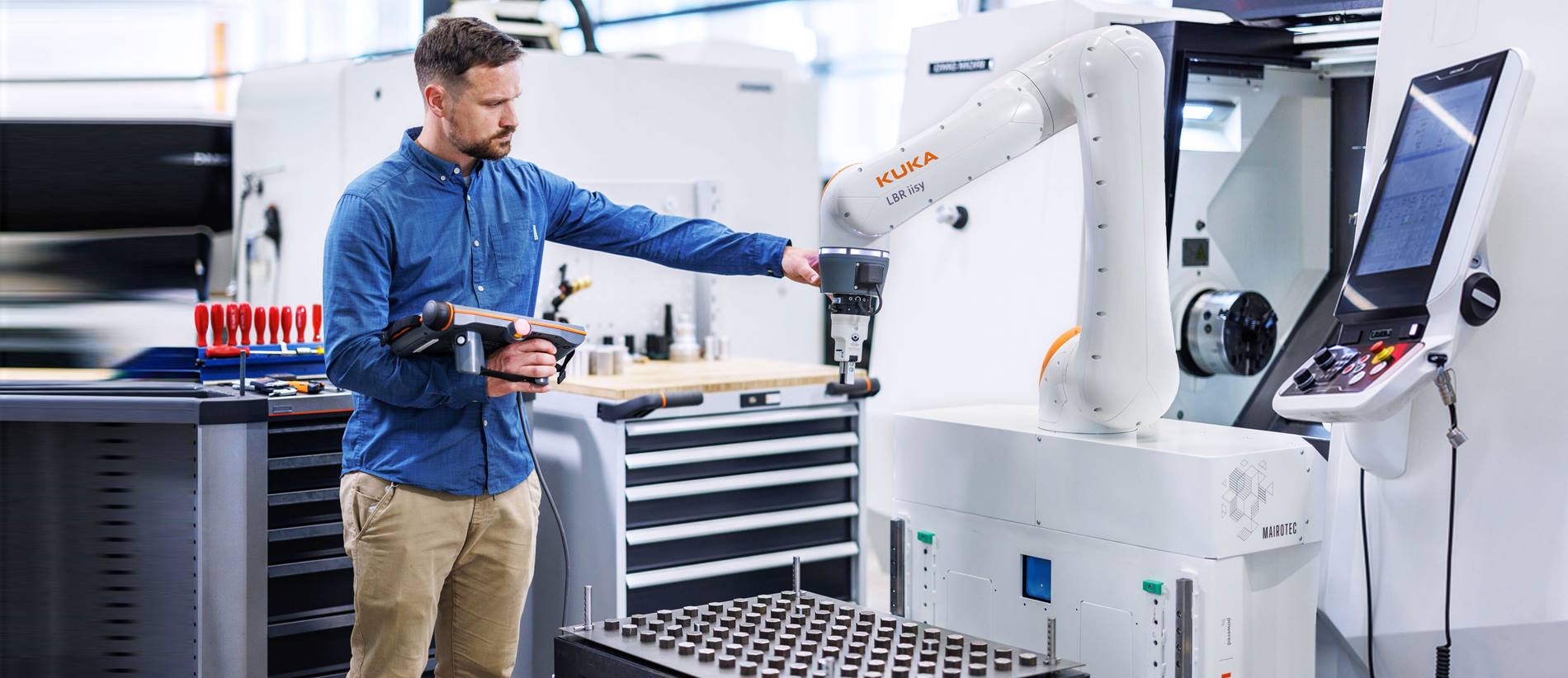
    https://www.kuka.com/-/media/kuka-corporate/images/products/mobility/kmr-iisy-mobile-cobot/lbr-iisy-cobot-easy-use.jpg?hash=0042CAE226AE32771843728B2F7A0BBB&rev=a3ba5f8f0aa5468a8ec8f9429b05eea2&w=1900
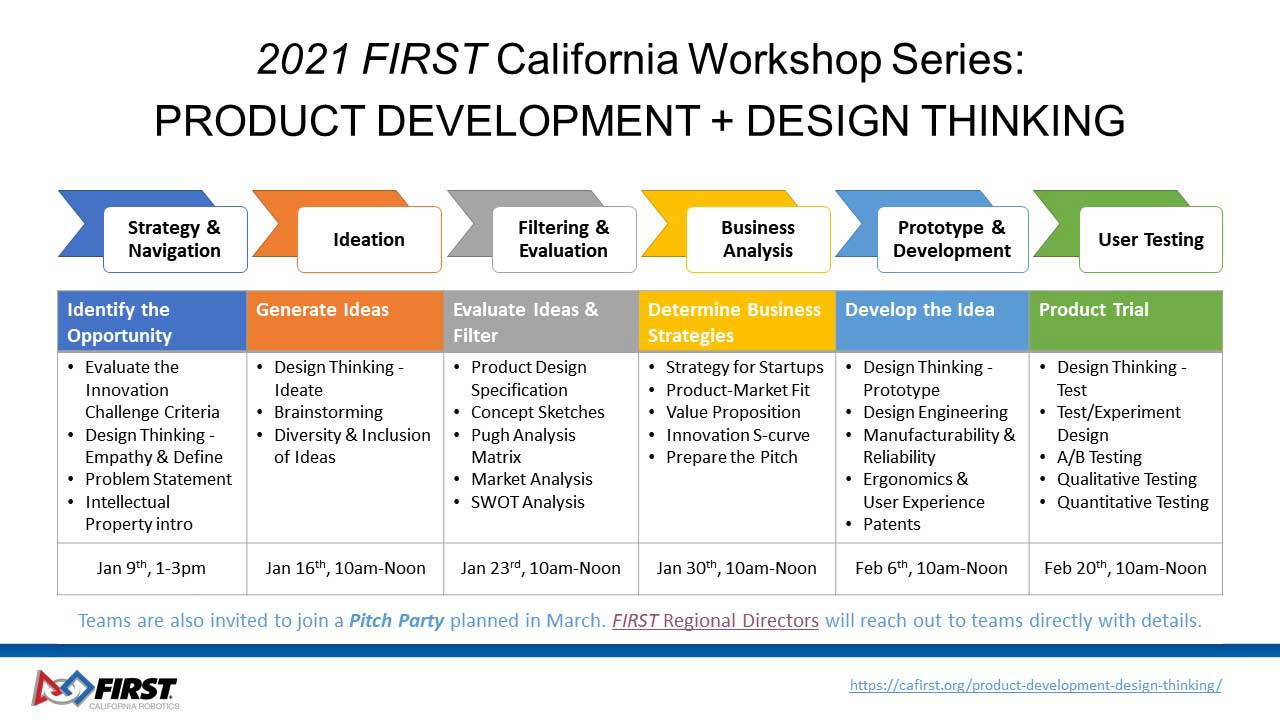
    https://cafirst.org/wp-content/uploads/2021/01/2021-FIRST-California-PDDT-Workshop-Series.jpg

    How RoboPhil Helps Businesses Optimise People, Processes, and Partners

    The robotics revolution is no longer theoretical—it’s commercial, practical, and already reshaping every industry. Yet despite rapid advances in AI, automation, and humanoid robotics, most businesses still struggle with one core challenge:

    How do you actually use robots to improve the people in your organisation, streamline your processes, and build stronger long-term partnerships?

    That is where RoboPhil—also known as Philip English, founder of Robot Philosophy (https://robophil.com/)—comes in. With over a decade in the robotics industry, RoboPhil has become one of the UK’s most recognised robotics specialists: a Robot Consultant, Robot YouTuber, Robot Influencer, Robot Trainer, and Robotics Streamer with deep experience deploying physical robots into real businesses.

    Through his ROI Method—Resources, Optimise, and Intellectify—RoboPhil helps organisations identify where robots can work, integrate them effectively, and amplify the intelligence of their teams through data.

    This article explores exactly how RoboPhil helps businesses optimise the three pillars of long-term success:

    1. People

    2. Processes

    3. Partners

    And how companies can accelerate this journey through dedicated robot consulting and robot recruitment support via info@robophil.com or 0845 528 0404.


    1. Optimising People: Robots That Amplify Human Talent, Not Replace It

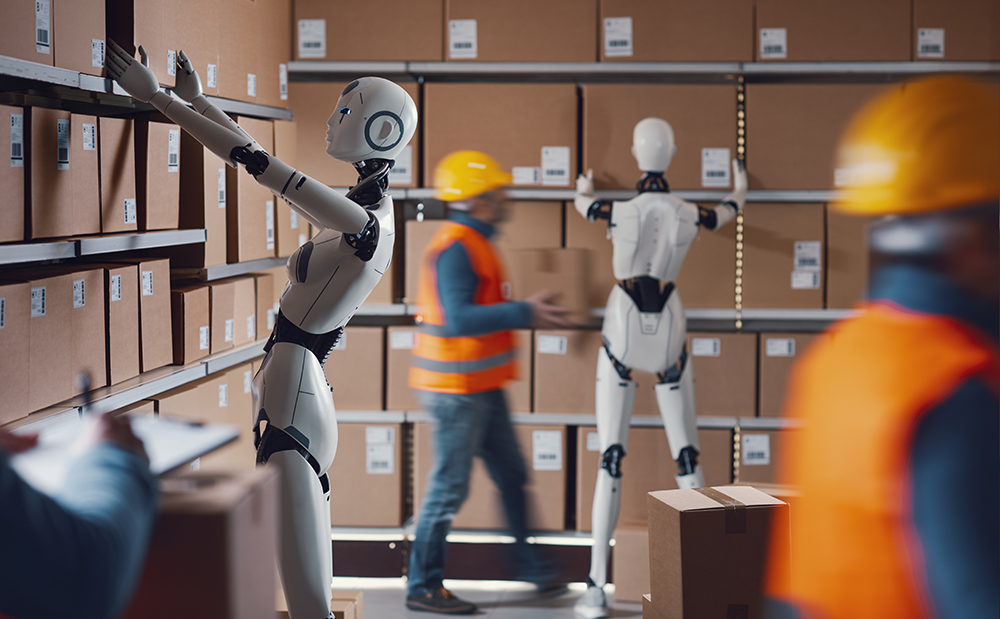
    https://djcs-prod.s3.amazonaws.com/public/blogs/deloitte/blogs.dir/4/files/2025/07/AI-Robots-in-IMAGE.jpg
    https://www.robotics247.com/images/article/GettyImages-1281440158.jpg
    https://www.zdnet.com/a/img/resize/734c5b2f80ffb2c932111a93e9ead6a34b3b0c10/2016/09/12/01414ab1-a619-41fe-a1aa-2629cafa330d/machines-people-work-side-by-side.jpg?auto=webp&fit=crop&height=1200&width=1200

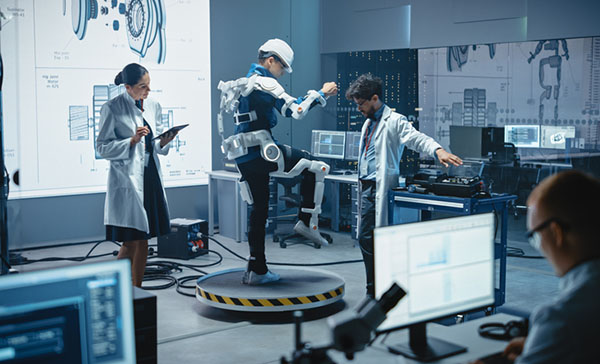
    When most people hear “robots in the workplace,” they think of replacements. In reality, the businesses succeeding with robotics understand something very different:

    Robots don’t replace people—they elevate them.

    RoboPhil’s Human-Centred Robotics Approach

    RoboPhil’s philosophy is simple:

    Robots are tools to help employees focus on higher-value, creative, intelligent work.

    Instead of automating the human out of the process, RoboPhil helps companies:

    A. Identify tasks that drain human productivity

    Tasks that are boring, repetitive, hazardous, or time-consuming are prime areas for automation—for example:

    • Inventory scanning

    • Coffee or tea service

    • Reception and customer greeting

    • Patrol, inspection, or monitoring

    • Delivering goods indoors

    • Moving materials

    • Routine administrative workflows

    By removing these low-value tasks, staff can focus on what humans do best: thinking, solving problems, and interacting meaningfully with customers.

    B. Deploy robots that support employees

    Through Robot Center (https://robotcenter.co.uk/) and Robots of London (https://robotsoflondon.co.uk/), RoboPhil has deployed hundreds of robots—from collaborative arms to humanoids, delivery robots, reception bots, and inspection platforms.

    The goal is always the same:

    Place the right robot with the right person for the right job.

    This ensures:

    • Teams work faster

    • Workflows become safer

    • Staff morale increases

    • Customer experience improves

    • Productivity rises without increasing headcount

    C. Train employees to love working with robots

    One of RoboPhil’s unique advantages is his communication style. As a professional robot educator and trainer, he makes robotics easy for teams to adopt.

    This includes:

    • Hands-on robot training

    • Robot familiarisation sessions

    • Safety and comfort workshops

    • Troubleshooting skills

    • “Fear of robots” removal coaching

    D. Support long-term human development through automation

    With the right robots in place, companies can:

    • Upskill their teams

    • Develop new robotics-related roles

    • Increase staff retention

    • Foster a culture of innovation

    • Build future “robot champions” within the business

    This leads to a workplace where humans and robots collaborate—not compete.


    2. Optimising Processes: Streamlining Workflow with Smart Robotics Integration

    https://terranoha.com/wp-content/uploads/2023/01/rpa-workflow.jpg
    https://www.cmtc.com/hubfs/AdobeStock_205771743.jpg
    https://www.logiwa.com/wp-content/uploads/2022/04/warehouse-robotics-1200-500.jpg.webp

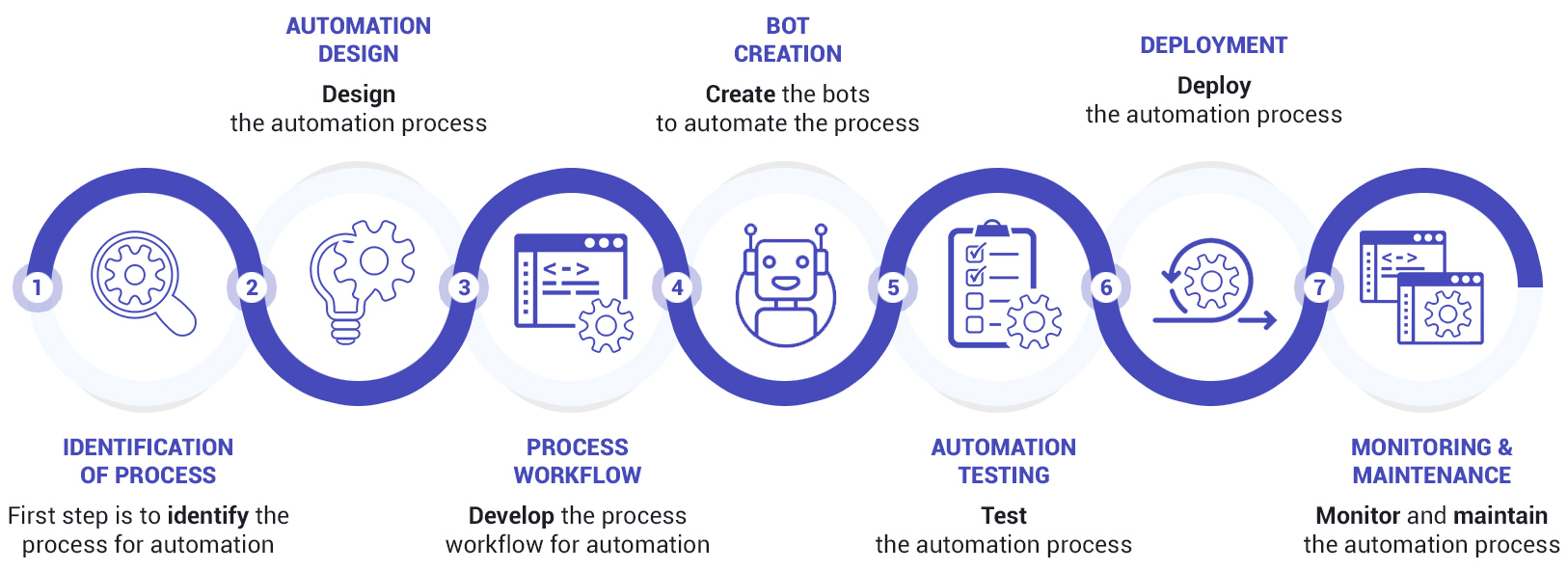
    Robots transform businesses the moment they touch a process—and RoboPhil is an expert in mapping, optimising, and redesigning processes for automation.

    Most companies fall into one of two traps:

    1. They buy a robot before knowing what they need.

    2. They have inefficient processes and try to “slot a robot in.”

    Both approaches lead to poor ROI.

    RoboPhil’s method is different. Using the ROI Method, he ensures robots create measurable impact.


    A. Robotics Audit: Finding the “Intersections of Opportunity”

    Many businesses are shocked to discover they have 10–30 separate robot opportunities hidden in their organisation.

    RoboPhil performs a detailed robotics audit that identifies:

    • Manual bottlenecks

    • Repetitive labour paths

    • Unnecessary human movement

    • Tasks that could be automated in minutes

    • High-cost inefficiencies

    • Hidden time drains

    • High-risk tasks suitable for robots

    This creates a map of your robot potential.


    B. Robot Identification: Selecting the Perfect Solution

    With deep experience from Robot Center, Robot Philosophy, and Robots of London, RoboPhil selects the ideal robots across categories such as:

    • Humanoid robots

    • Delivery robots

    • Service robots

    • Inspection robots

    • Patrol robots

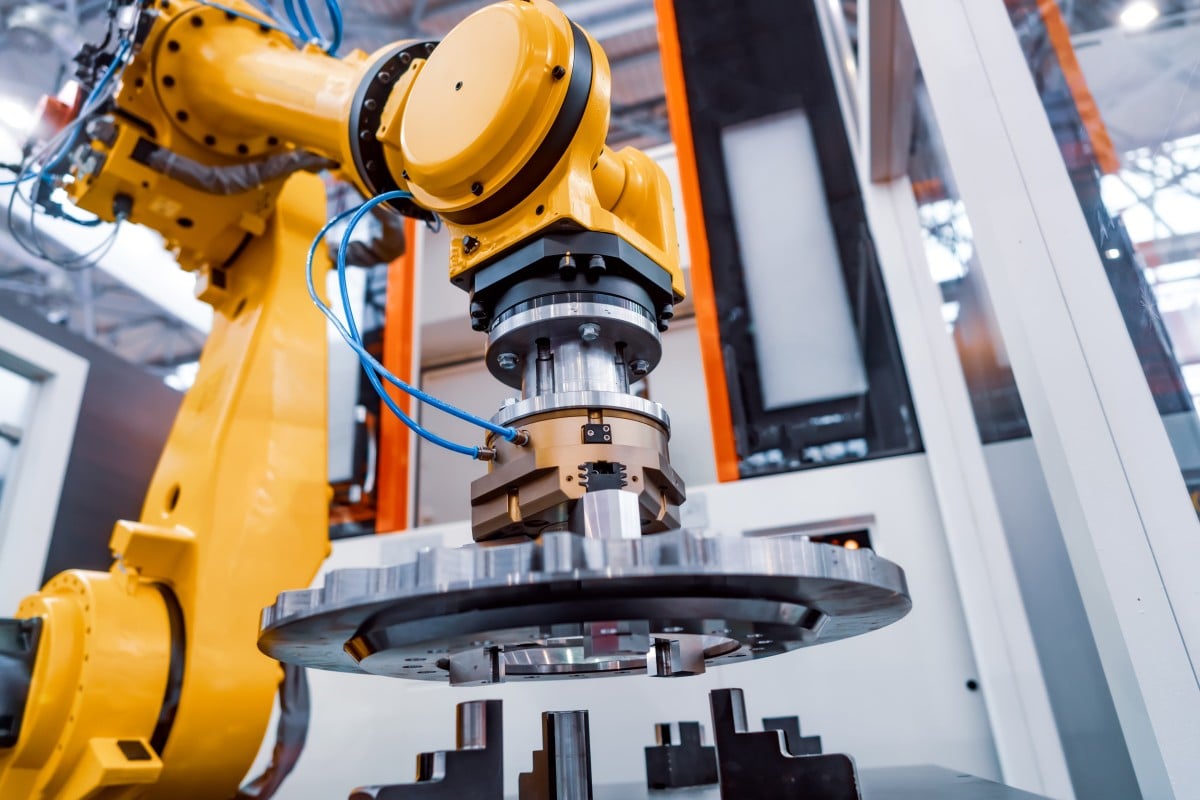
    • Collaborative robot arms

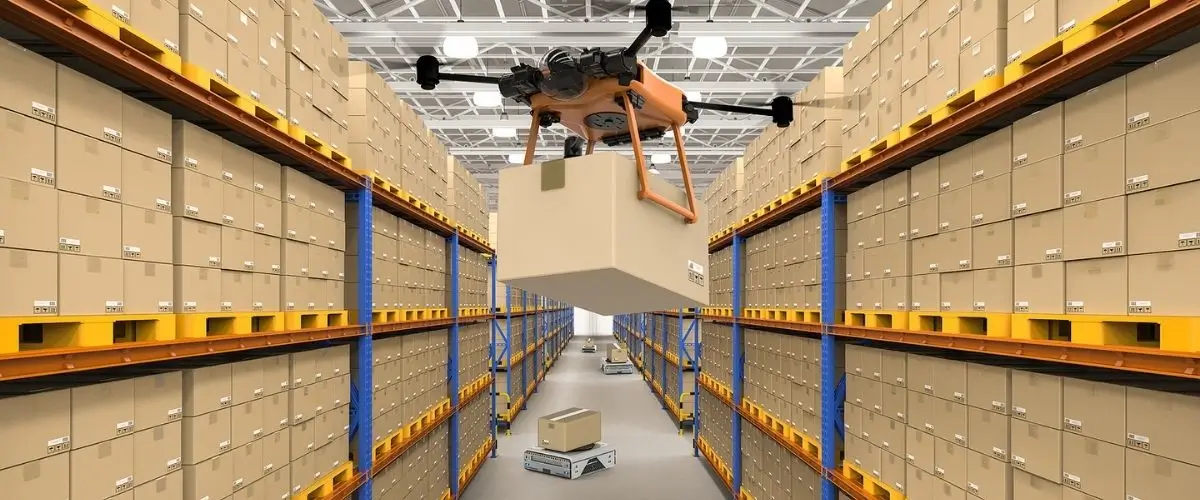
    • Warehouse robotics

    • Digital signage & advertising robots

    • Hospitality robots

    • Medical and care robots

    • Food industry robots

    This step eliminates the guesswork and prevents costly mistakes.


    C. Process Integration: Installing the Robot Properly

    Buying a robot is easy.

    Integrating it into your workflow is the hard part—and where most companies fail.

    RoboPhil handles complete integration, including:

    • Workflow redesign

    • Robot path mapping

    • Site preparation

    • Connectivity and network optimisation

    • Safety zoning

    • Calibration and testing

    • Staff training

    • Contingency planning

    • Performance measurement

    The result is a robot that works from day one.


    D. Automation of “Micro-Processes” for Quick Wins

    RoboPhil identifies small, fast-to-automate processes that give immediate value, for example:

    • Automated check-in at events

    • Coffee/tea service

    • Warehouse inventory checks

    • Hospital delivery rounds

    • Supermarket front-of-house support

    • Retail digital signage and customer engagement

    • Factory tool delivery

    These micro-automations quickly pay for themselves and build internal confidence.


    E. Long-Term Process Optimisation Through AI + Robotics

    RoboPhil combines AI analytics with robotics to help businesses:

    • Predict maintenance

    • Track robot productivity

    • Analyse usage patterns

    • Improve task cycles

    • Reduce downtime

    • Increase customer engagement

    • Measure financial ROI

    • Scale automation across sites

    This data-driven optimisation is part of the Intellectify stage of the ROI Method.


    3. Optimising Partners: Building a Future-Ready Robotics Ecosystem

    https://roboticsai.co.uk/wp-content/uploads/2024/12/logos-business-hand-robot-handshake-artificial-intelligence-digital-transformation-1-1024x682.png
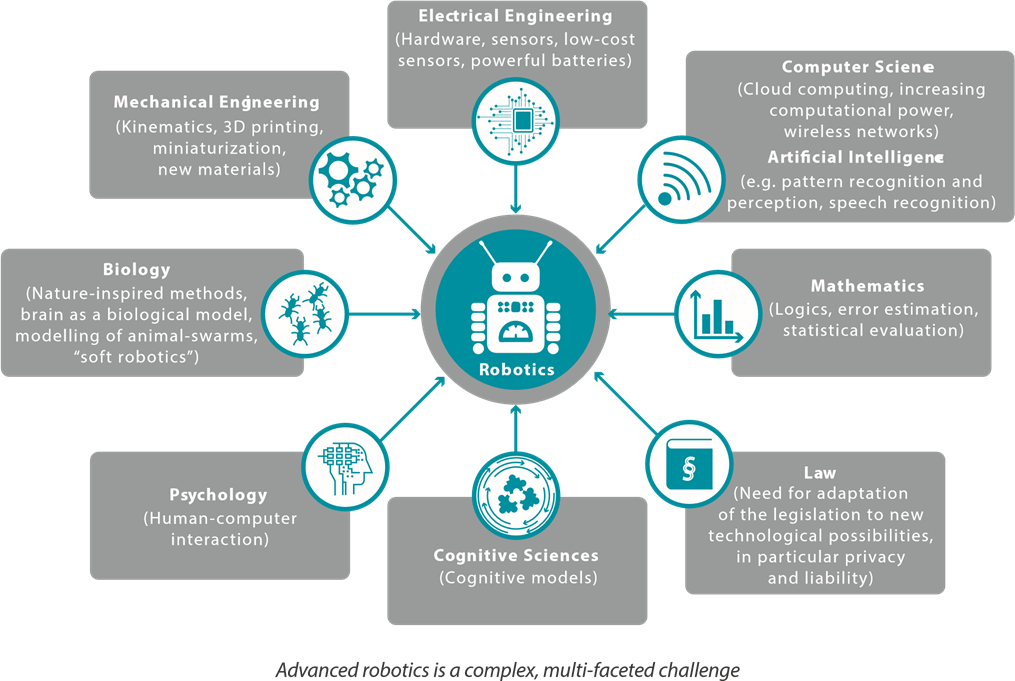
    https://knowhow.distrelec.com/wp-content/uploads/2023/06/image-1.png
    https://cogniac.ai/wp-content/uploads/2021/09/Cogniac-Joins-Rockwell-Automation-Technology-Partner-Program-single-1.png

    The third pillar—Partners—is the most overlooked.

    Robotics is moving too fast for businesses to operate alone. You need:

    • Manufacturers

    • Distributors

    • Integration specialists

    • Data partners

    • Training providers

    • Support teams

    • Future technology scouts

    • Recruitment pipelines

    • Strategic automation advisors

    RoboPhil’s ecosystem gives businesses instant access to these resources.


    A. Strategic Robotics Partnerships Through Robot Center

    Robot Center (https://robotcenter.co.uk/) provides:

    • Robot purchasing

    • Robotics consultancy

    • Automation design

    • Integration services

    • Ongoing robot support

    • Advanced industrial robotics

    Companies gain access to the right technologies, and the right people, at the right time.


    B. Event and Engagement Partnerships Through Robots of London

    Robots of London (https://robotsoflondon.co.uk/) offers:

    • Robot hire

    • Robot events

    • Robot entertainers

    • Robot rental for marketing

    • Brand activations

    • Hospitality robots

    • Pop-up robotics installations

    Events allow companies to test robots before committing to long-term automation.


    C. Robot Philosophy: The Strategy, Insights, and Recruitment Hub

    Robot Philosophy (https://robophil.com/) powers:

    • Robotics strategy

    • Robotics content

    • Robotics training

    • Robot consultancy

    • Robot recruitment

    • Robotics insights and ideas

    This is the core of the RoboPhil brand—where vision meets practical execution.


    D. Robotics Recruitment: Building Tomorrow’s Workforce

    This is one of the fastest-growing parts of RoboPhil’s business.

    Companies need:

    • Robot technicians

    • Automation specialists

    • AI operators

    • Robotics engineers

    • Robot supervisors

    • Robot maintenance staff

    • Robot deployment specialists

    • Full-stack robot strategists

    RoboPhil’s robot recruitment service connects businesses with top talent that understands both physical robots and intelligent automation.

    To hire robotics professionals or build a robotics team:

    📩 info@robophil.com
    📞 0845 528 0404


    E. Creating a Robotics Ecosystem That Scales

    RoboPhil works with clients long-term to build robotics maturity:

    • Year 1: Identify opportunities

    • Year 2: Integrate robots into core workflows

    • Year 3: Add AI and data-driven optimisation

    • Year 4: Scale across sites

    • Year 5: Achieve full hybrid automation

    This is how businesses move from “robot curious” to “robot powered.”


    How Businesses Benefit From RoboPhil’s Support

    1. Higher Productivity

    Robots complete tasks 10x–100x faster than humans without fatigue.

    2. Lower Labour Costs

    Automation replaces low-value activities—freeing staff to do meaningful work.

    3. Faster Customer Service

    Delivery robots, reception robots, and retail robots dramatically speed up service.

    4. Fewer Errors

    Robots perform tasks with precision, regardless of repetition.

    5. Better Employee Morale

    People spend more time doing work they enjoy.

    6. Stronger Competitive Advantage

    Businesses become technology-forward, attracting better clients and talent.

    7. Measurable ROI

    Every robot is tied to savings or revenue generation.


    Real-World Scenarios Where RoboPhil Helps Businesses Win

    Hospitality

    • Robots delivering drinks

    • Robotic receptionists

    • Automated check-in

    • Food industry robotic arms

    Retail

    • Inventory scanning

    • Customer greeting

    • Autonomous advertising robots

    Healthcare

    • Medication delivery

    • Supply movement

    • Hospital logistics robots

    Events and Entertainment

    • Meet-and-greet robots

    • Digital signage robots

    • Theatre and film robots

    Manufacturing

    • Cobots

    • Vision systems

    • Material handling robots

    Warehousing

    • Autonomous mobile robots

    • Stocktaking automation

    • Picking and packing assistance

    Security & Inspection

    • Patrol robots

    • Inspection robotics

    • Perimeter monitoring

    RoboPhil has worked in nearly all of these sectors through his companies.


    Why RoboPhil Is the Go-To Robotics Expert in the UK

    RoboPhil brings a rare combination of:

    • 15+ years industry experience

    • Hundreds of robot deployments

    • Broad multi-industry exposure

    • Leading YouTube presence

    • Trusted consulting reputation

    • Direct access to global robot manufacturers

    • A full robotics ecosystem (buy, rent, hire, train, recruit)

    • A strategic framework for automation (ROI Method)

    Most robotics companies only sell robots.

    RoboPhil builds robotics success.


    How to Work With RoboPhil (Consulting or Recruitment)

    If you want to optimise your people, processes, or partners—or deploy robots into your business—the next step is simple:

    📩 Email: info@robophil.com
    📞 Phone: 0845 528 0404

    RoboPhil offers:

    • 1:1 consulting sessions

    • Full robotics audits

    • Integration support

    • Robot sourcing

    • Robot recruitment

    • Long-term robotics strategy

    • workshops

    • VIP automation planning days

    Whether you’re an SME or a global enterprise, RoboPhil helps you move from “we should use robots” to “robots are transforming our business.”


    ** Sponsors of This Article **

    Robot Center — https://robotcenter.co.uk/

    Buy Robot, Robot Buy, Robot Consultancy, Robotics Consultancy.

    Robots of London — https://robotsoflondon.co.uk/

    Robot Hire, Robot Rental, Rent Robot, Hire Robot, Robot Events.

    Robot Philosophy — https://robophil.com/

    Robot Consultancy, Robot Recruitment, Robot Advice, Robot Insights, Robot Ideas.
    RoboPhil (Philip English) is a leading Robot YouTuber, Robot Influencer, Robot Trainer, Robot Consultant, Robotics Streamer, Robotics YouTuber, Robotics Influencer, Robotics Consultant, Robotics Trainer.


    Final Thoughts

    Robotics is no longer optional. It is becoming the foundation of how modern businesses operate, grow, and compete.

    RoboPhil offers a complete pathway—from strategy to deployment to team development—to help businesses optimise their people, processes, and partners using cutting-edge robotics and automation.

    If you’re thinking about using robots, or ready to scale your automation journey, now is the time to take action.

    📩 info@robophil.com
    📞 0845 528 0404


    https://www.youtube.com/watch?v=8zzWPDmuP_U


    https://www.youtube.com/shorts/UravojCBNQs

  • How to Present a Robotics Proposal to Senior Management

    How to Present a Robotics Proposal to Senior Management

    How to Present a Robotics Proposal to Senior Management

    Presenting a robotics proposal to senior management can be the difference between transforming your operations and watching competitors surge ahead. Yet many brilliant automation initiatives fail not because of flawed technology, but because of ineffective presentations. This comprehensive guide will equip you with the strategies needed to secure buy-in for your robotics projects.

    Understanding the Senior Management Mindset

    Before diving into presentation techniques, it’s crucial to understand what keeps C-suite executives awake at night. Senior leaders aren’t primarily concerned with technical specifications or the latest robotic innovations—they’re focused on business outcomes, risk mitigation, and competitive positioning.

    Your proposal must answer three fundamental questions:

    • How will this impact the bottom line? (ROI, cost savings, revenue generation)
    • What are the risks? (Implementation challenges, disruption, failure scenarios)
    • Why now? (Market conditions, competitive pressure, opportunity cost of delay)

    Preparing Your Robotics Business Case

    1. Conduct Thorough Research and Analysis

    Begin with a comprehensive assessment of your current operations. Document baseline metrics including cycle times, error rates, labour costs, and throughput capacity. This data becomes the foundation for demonstrating measurable improvements.

    Key research elements:

    • Current operational costs and inefficiencies
    • Competitive landscape analysis
    • Technology maturity and vendor stability
    • Industry case studies and benchmarks
    • Regulatory and compliance considerations

    If you’re unsure where to start, expert robot consultancy services can provide objective assessments of your automation opportunities and help quantify potential benefits.

    2. Build a Compelling Financial Model

    Senior management speaks the language of numbers. Your financial model should include:

    Initial Investment Breakdown:

    • Capital expenditure (robot hardware, infrastructure)
    • Integration and installation costs
    • Training and change management
    • Contingency reserves (typically 15-20%)

    Ongoing Operational Costs:

    • Maintenance and support contracts
    • Energy consumption
    • Software licensing and updates
    • Staffing adjustments

    Quantified Benefits:

    • Direct labour cost reduction
    • Productivity improvements (increased throughput)
    • Quality improvements (reduced defect rates)
    • Safety enhancements (reduced workplace incidents)
    • Flexibility gains (faster changeovers, extended operating hours)

    Calculate multiple scenarios: conservative, expected, and optimistic. Show break-even analysis and payback period—most robotics investments achieve payback within 18-36 months.

    3. Address the Human Element

    One of the biggest concerns senior management faces with robotics implementation is workforce impact. Address this proactively:

    • Redeployment strategy: How will affected employees be retrained or reassigned?
    • Upskilling opportunities: What new technical roles will be created?
    • Change management plan: How will you manage the transition culturally?
    • Communication approach: How will you maintain morale and transparency?

    Organizations that handle the people side effectively see 40% higher success rates in automation projects.

    Structuring Your Presentation

    Opening: The Hook (2-3 minutes)

    Start with impact. Use one of these approaches:

    • The competitive threat: “Three of our main competitors have implemented similar automation and reduced costs by 30%”
    • The opportunity cost: “Every month we delay costs us £X in inefficiency”
    • The customer impact: “This technology will reduce delivery times by 40%, directly addressing our top customer complaint”

    The Problem Statement (3-4 minutes)

    Clearly articulate the business challenge you’re addressing. Use specific, quantified pain points:

    • “Our manual packaging line operates at 60% capacity during peak periods”
    • “Quality defects in assembly cost us £500K annually”
    • “We’re losing skilled workers to competitors and struggling to recruit replacements”

    The Solution Overview (5-7 minutes)

    Present your robotics solution focusing on business outcomes rather than technical features. Use visual aids showing the robot in action, preferably in similar applications.

    Key elements:

    • What the robot will do (in business terms)
    • How it integrates with existing operations
    • Timeline from approval to full deployment
    • Why this solution versus alternatives

    For complex technical requirements, consider engaging robot recruitment services to ensure you have the right expertise to implement and maintain your chosen solution.

    Financial Analysis (7-10 minutes)

    This is the heart of your presentation. Present your financial model clearly:

    Use visual dashboards showing:

    • Payback period and ROI over 3-5 years
    • Year-by-year cash flow
    • Sensitivity analysis showing impact of key assumptions
    • Comparison with “do nothing” scenario

    Be prepared for scrutiny. Anticipate questions about your assumptions and have supporting data ready.

    Risk Assessment and Mitigation (4-5 minutes)

    Don’t shy away from risks—addressing them proactively builds credibility. Cover:

    Technical risks:

    • Integration complexity (mitigation: phased rollout, experienced integrator)
    • Vendor reliability (mitigation: established supplier, service agreements)

    Operational risks:

    • Learning curve disruption (mitigation: comprehensive training, parallel operation)
    • Unexpected downtime (mitigation: redundancy, preventive maintenance)

    Strategic risks:

    • Technology obsolescence (mitigation: modular design, upgrade paths)
    • Changing business requirements (mitigation: flexible, reprogrammable systems)

    Implementation Roadmap (3-4 minutes)

    Present a clear, phased implementation plan:

    Phase 1 – Foundation (Months 1-2)

    • Final vendor selection and contracting
    • Site preparation and infrastructure upgrades
    • Team formation and initial training

    Phase 2 – Installation (Months 3-4)

    • Equipment delivery and installation
    • System integration and testing
    • Operator training programs

    Phase 3 – Commissioning (Months 5-6)

    • Parallel operations and refinement
    • Performance validation
    • Process documentation

    Phase 4 – Optimization (Months 7-12)

    • Full production transition
    • Continuous improvement initiatives
    • Expansion planning

    The Call to Action (2 minutes)

    Close with a clear ask and next steps:

    • Specific approval you’re seeking
    • Decision timeline and urgency
    • Next milestone or meeting
    • Resources needed to proceed

    Advanced Presentation Techniques

    Use Storytelling and Case Studies

    Data convinces the mind, but stories convince the heart. Include:

    • Real-world examples from similar companies
    • Site visit opportunities to see robots in action
    • Testimonials from operations managers who’ve implemented similar systems
    • Video demonstrations of the robot handling your specific application

    Leverage Visual Aids Effectively

    Senior executives are time-constrained. Your visuals should communicate instantly:

    • Use infographics over tables where possible
    • Show before/after comparisons visually
    • Include short video clips (30-60 seconds maximum)
    • Use animations to show process flows
    • Provide a one-page executive summary as a takeaway

    Anticipate and Prepare for Objections

    Common objections and how to address them:

    “The upfront cost is too high” Response: “While the initial investment is significant, our analysis shows the total cost of ownership over five years is 40% lower than continuing with our current approach, and the payback period is just 24 months.”

    “What if the technology doesn’t work as expected?” Response: “We’ve built in a phased approach with clear go/no-go decision points. Phase 1 is a low-risk pilot with limited investment that validates performance before full-scale commitment.”

    “We don’t have the internal expertise” Response: “We’ve partnered with robot consulting experts who will guide implementation and train our team. Additionally, we’ll leverage specialist robot recruitment services to bring in targeted expertise where needed.”

    “This will negatively impact our workforce” Response: “We’ve developed a comprehensive transition plan that prioritizes retraining and redeployment. In fact, this creates 12 new higher-skilled positions while eliminating only repetitive, ergonomically challenging tasks.”

    Post-Presentation Follow-Up

    Your work doesn’t end when the presentation concludes:

    Immediate Actions (Within 24 hours)

    • Send a thank-you email with key materials
    • Provide the one-page executive summary
    • Share any additional data requested during Q&A
    • Schedule follow-up discussions with individual stakeholders

    Short-term Follow-up (Within 1 week)

    • Arrange site visits or vendor demonstrations
    • Connect senior management with reference customers
    • Provide supplementary analysis addressing concerns raised
    • Refine financial models based on feedback

    Maintaining Momentum

    • Provide regular updates on project developments
    • Share relevant industry news and competitor moves
    • Be available for ongoing questions and discussions
    • Propose pilot programs or proof-of-concept trials

    Getting Expert Support

    Presenting a robotics proposal successfully requires both business acumen and technical knowledge. If you need support developing your business case, evaluating robot technologies, or building your implementation team, professional guidance can dramatically improve your chances of success.

    For expert robot consultancy and recruitment services, contact:

    Book a consultation call to discuss how we can help you build a compelling robotics proposal and identify the right automation solutions for your operation.

    Common Mistakes to Avoid

    1. Being Too Technical

    Senior management doesn’t need to understand PID controllers or inverse kinematics. Focus on what the robot accomplishes, not how it does it.

    2. Underestimating Integration Complexity

    The robot itself may cost £50K, but integration, programming, safety systems, and training might add another £100K. Be realistic about total costs.

    3. Ignoring Change Management

    Technology implementation is 30% technical and 70% people. Don’t gloss over the organizational change aspects.

    4. Overpromising Results

    Use conservative estimates in your base case. Exceeding expectations is better than falling short of aggressive projections.

    5. Lacking Specific Details

    Vague proposals get vague responses. Be specific about timelines, costs, responsibilities, and success metrics.

    6. Not Addressing Competition

    If you don’t know what competitors are doing with robotics, your senior management will question whether you’ve done your homework.

    Measuring Success Post-Implementation

    Once approved, establish clear metrics to track project success:

    Performance Metrics:

    • Throughput improvements (units per hour)
    • Quality improvements (defect rates)
    • Uptime and reliability (OEE – Overall Equipment Effectiveness)
    • Cycle time reduction

    Financial Metrics:

    • Actual vs. projected ROI
    • Cost per unit produced
    • Labour cost reduction
    • Total cost of ownership

    Strategic Metrics:

    • Customer satisfaction improvements
    • Market share impact
    • New capability development
    • Employee skill enhancement

    Regular reporting on these metrics validates your initial proposal and builds credibility for future automation initiatives.

    Conclusion

    Presenting a robotics proposal to senior management is as much about business strategy as it is about technology. By understanding executive priorities, building a compelling financial case, addressing risks proactively, and presenting with clarity and confidence, you dramatically increase your chances of securing approval.

    Remember: senior leaders are looking for business solutions, not technology for its own sake. Frame your proposal in terms of competitive advantage, customer value, and financial returns, and you’ll be well-positioned for success.

    The robotics revolution is transforming industries globally. Companies that move decisively gain competitive advantages that compound over time, while those that hesitate risk falling permanently behind. With thorough preparation and a well-structured proposal, you can lead your organization into this exciting future.


    About the Article Sponsors

    This article is brought to you by industry-leading robotics specialists:

    Robot Center – Your destination for purchasing cutting-edge robotics solutions and accessing expert robotics consultancy services to guide your automation journey.

    Robots of London – Specialists in robot hire and rental services for events, demonstrations, and short-term projects. Perfect for testing before investing or creating memorable robotic experiences.

    Robot Philosophy (RoboPhil) – Led by Philip English, a leading Robot YouTuber, Influencer, Trainer, and Consultant. RoboPhil provides comprehensive robot consultancy and recruitment services, delivering expert advice, insights, and innovative ideas to businesses navigating their robotics transformation.

    Ready to move forward with your robotics initiative?
    Contact us today to schedule a consultation:
    📧 info@robophil.com | 📞 0845 528 0404


    https://www.youtube.com/watch?v=fHOlwBn2COk


    https://www.youtube.com/shorts/XETJcoDiab4

  • Common Mistakes Companies Make When Buying Robots

    Common Mistakes Companies Make When Buying Robots


    Common Mistakes Companies Make When Buying Robots: A Comprehensive Guide

    Article sponsored by Robot CenterRobots of London, and Robot Philosophy


    The robotics revolution is here, and businesses across every sector are racing to implement automation solutions. From manufacturing floors to warehouses, from hospitality to healthcare, robots are transforming how companies operate. However, the journey from deciding to invest in robotics to successfully deploying these sophisticated machines is fraught with potential pitfalls.

    Many organizations approach robot acquisition with the same mindset they’d use for purchasing traditional equipment—and that’s their first mistake. Robots aren’t just machines; they’re complex systems that require careful planning, integration expertise, and ongoing support. The cost of getting it wrong extends far beyond wasted capital expenditure; it can mean operational disruptions, employee dissatisfaction, and missed competitive advantages.

    This comprehensive guide examines the most common mistakes companies make when buying robots and provides actionable insights to help you navigate the robotics acquisition process successfully.

    Mistake #1: Skipping the Needs Assessment Phase

    Perhaps the most fundamental error companies make is rushing into robot purchases without conducting a thorough needs assessment. The allure of automation can be intoxicating, especially when competitors are implementing robotic solutions. However, buying robots without understanding your specific operational requirements is like prescribing medication without a diagnosis.

    The Problem:

    Organizations often focus on the technology rather than the business problem they’re trying to solve. They might see an impressive demonstration of a collaborative robot (cobot) at a trade show and immediately decide they need one, without considering whether it actually addresses their production bottlenecks or quality issues.

    The Consequences:

    Without a proper needs assessment, companies frequently end up with robots that are either over-specified (wasting money on unnecessary capabilities) or under-specified (failing to deliver the required performance). Worse still, the robot might be completely unsuited to the actual task, sitting idle while costing money in depreciation and maintenance.

    The Solution:

    Before approaching vendors, conduct an internal audit that identifies:

    • Specific tasks or processes causing bottlenecks
    • Current labor costs and efficiency metrics
    • Quality control issues that need addressing
    • Safety concerns in existing operations
    • Volume requirements and cycle time expectations
    • Future scalability needs

    Professional robot consultancy services can be invaluable at this stage, helping you translate operational challenges into technical requirements. Robot Philosophy specializes in conducting comprehensive operational assessments that ensure your robotics investment aligns perfectly with your business objectives.

    Mistake #2: Focusing Solely on Initial Purchase Price

    When budgeting for robotics, many companies make the critical error of focusing exclusively on the upfront acquisition cost. They compare robot prices the way they might compare photocopiers, seeking the lowest initial investment without considering the total cost of ownership (TCO).

    The Problem:

    The sticker price of a robot represents just a fraction of the actual investment required. Integration costs, programming, end-effectors, safety equipment, training, maintenance, and ongoing support can easily double or triple the initial outlay. A seemingly affordable robot can become prohibitively expensive once these additional expenses are factored in.

    The Consequences:

    Budget overruns are common when companies underestimate TCO, leading to project delays or even cancellations mid-implementation. Even worse, some organizations cut corners on essential elements like proper safety equipment or comprehensive training to stay within their original budget, creating dangerous working environments and operational inefficiencies.

    The Solution:

    Develop a comprehensive financial model that includes:

    • Robot hardware costs
    • End-effectors and tooling
    • Safety equipment (guards, sensors, emergency stops)
    • Integration and programming services
    • Facility modifications (electrical, flooring, ventilation)
    • Training for operators and maintenance staff
    • First-year maintenance and spare parts
    • Software licenses and updates
    • Insurance and compliance costs

    Typically, the robot itself represents only 30-40% of the total project cost. Planning for 2.5 to 3 times the robot’s purchase price provides a more realistic budget for successful implementation.

    Consider also the option of robot hire or rental services through providers like Robots of London, which can help you trial technology before committing to purchase, spreading costs more predictably and reducing initial financial risk.

    Mistake #3: Neglecting Integration Complexity

    Many companies purchase robots with the naive assumption that they’ll simply plug them in and start production. This “plug-and-play” fantasy rarely matches reality, especially in existing facilities with legacy equipment and established workflows.

    The Problem:

    Integration involves far more than physical installation. Robots must communicate with existing systems (ERP, MES, quality control), work safely alongside human operators, interface with conveyor systems, coordinate with other machines, and fit within established production flows. Each of these integration points introduces complexity that requires specialized expertise.

    The Consequences:

    Poor integration leads to isolated “islands of automation” that don’t communicate effectively with the broader production system. This creates bottlenecks, requires excessive manual intervention, and prevents you from realizing the full benefits of automation. Projects can stall for months during the integration phase, with costs mounting while the robot sits idle.

    The Solution:

    Engage integration specialists early in the planning process, ideally before finalizing your robot selection. These experts can assess your existing infrastructure, identify potential integration challenges, and recommend robots and peripherals that will work harmoniously with your current systems.

    Key integration considerations include:

    • Communication protocols and compatibility with existing control systems
    • Power supply requirements and electrical infrastructure
    • Physical space and workflow implications
    • Safety system integration
    • Data collection and reporting capabilities
    • Maintenance access and ergonomics

    Robot Center provides comprehensive consultancy services that evaluate your complete operational environment, ensuring that any robotics solution integrates seamlessly into your existing infrastructure rather than creating new complications.

    Mistake #4: Underestimating Training Requirements

    The sophistication of modern robotics often leads companies to underestimate how much training their workforce will need. There’s an assumption that because robots are “automated,” they require minimal human interaction or expertise to operate effectively.

    The Problem:

    While robots can perform tasks autonomously, they require skilled operators to program them, monitor their performance, troubleshoot issues, perform routine maintenance, and optimize their operation over time. Without adequate training, even the most sophisticated robot becomes a liability rather than an asset.

    The Consequences:

    Inadequate training leads to:

    • Underutilization of robot capabilities
    • Frequent breakdowns due to improper operation or maintenance
    • Safety incidents from incorrect interaction with robotic systems
    • Operator frustration and resistance to the technology
    • Extended downtime when problems occur
    • Dependence on expensive external technicians for routine issues

    The Solution:

    Develop a comprehensive training program that addresses multiple levels:

    Operator Training: Teach staff how to start, stop, and monitor the robot during normal operations, recognize warning signs of potential issues, and perform basic troubleshooting.

    Programming Training: Ensure selected team members can modify programs for new tasks, optimize cycle times, and adjust parameters as production requirements change.

    Maintenance Training: Train maintenance personnel on routine servicing, identifying wear components before failure, and performing systematic diagnostics.

    Safety Training: Educate everyone who works near the robot on safety protocols, emergency procedures, and proper interaction methods.

    Don’t rely solely on the vendor’s standard training package. While vendor training is essential, supplementary training from third-party experts often provides broader perspectives and industry best practices. Philip English (RoboPhil), a leading robot trainer and consultant, offers specialized training programs that go beyond basic operation to help organizations maximize their robotics investments.

    Budget at least 5-10% of your project costs for initial training, and plan for ongoing refresher sessions and advanced training as your team’s capabilities develop.

    Mistake #5: Ignoring Workplace Culture and Change Management

    The technical aspects of robot implementation often overshadow the equally important human factors. Companies frequently treat robotics projects as purely technical initiatives, neglecting the profound impact automation has on workplace culture, employee morale, and organizational dynamics.

    The Problem:

    Introducing robots into an established workplace triggers anxiety about job security, disrupts familiar workflows, and challenges established hierarchies and expertise. When employees aren’t brought along on the journey, they can become obstacles to successful implementation rather than champions of the new technology.

    The Consequences:

    Poor change management leads to:

    • Active or passive resistance from employees
    • Sabotage of robotics projects (conscious or unconscious)
    • High turnover among skilled workers who feel threatened
    • Negative attitudes that prevent optimization and continuous improvement
    • Failure to leverage employees’ valuable process knowledge
    • Toxic workplace culture and low morale

    The Solution:

    Treat robotics implementation as an organizational change initiative, not just a technical project. This requires:

    Early Communication: Begin discussing automation plans well before purchasing decisions are made. Be transparent about motivations and expected impacts.

    Employee Involvement: Include operators and floor supervisors in the robot selection and implementation process. Their insights are invaluable, and their involvement creates buy-in.

    Job Security Assurances: If robots aren’t replacing workers but rather addressing capacity constraints or ergonomic issues, communicate this clearly and repeatedly. If workforce changes are necessary, be honest but compassionate, providing retraining opportunities and adequate transition periods.

    Reframing the Narrative: Position robots as tools that eliminate dangerous, repetitive, or ergonomically challenging tasks, allowing humans to focus on more valuable, skilled work.

    Celebrating Success Together: When the robot implementation succeeds, recognize it as a team achievement that involved both technical and human expertise.

    Skills Development: Show employees that robot implementation creates new career opportunities, whether in robot operation, programming, maintenance, or system optimization.

    Professional consultants experienced in robotics implementations understand these human factors and can guide you through change management processes that ensure employee support rather than resistance.

    Mistake #6: Choosing the Wrong Type of Robot

    The robotics landscape has expanded dramatically in recent years, with options ranging from traditional industrial robots to collaborative robots, mobile robots, and specialized solutions for particular industries. Companies often select the wrong category of robot for their application, attracted by novelty or swayed by effective marketing rather than matching capabilities to requirements.

    The Problem:

    Each robot category has distinct strengths and limitations. Traditional industrial robots offer speed and precision but require extensive safety infrastructure. Collaborative robots provide flexibility and easier programming but have payload and speed limitations. Mobile robots excel at transportation tasks but aren’t suited for manipulation. Selecting the wrong category results in a tool that can’t effectively accomplish your objectives.

    The Consequences:

    Mismatched robot selection leads to:

    • Inability to achieve required cycle times or throughput
    • Safety issues when robots lack appropriate safeguards for their environment
    • Excessive costs when over-specified robots are deployed for simple tasks
    • Flexibility limitations when rigid systems can’t adapt to changing needs
    • Integration nightmares when the robot’s capabilities don’t align with process requirements

    The Solution:

    Understand the distinct categories of robots and their ideal applications:

    Traditional Industrial Robots: Best for high-speed, high-precision, repetitive tasks in controlled environments where humans don’t need to work in the same space. Ideal for welding, painting, assembly, and machine tending in fenced cells.

    Collaborative Robots (Cobots): Suited for flexible manufacturing environments where robots and humans share workspace, applications that require frequent reprogramming, and situations where safety fencing is impractical. Best for assembly, quality inspection, packaging, and machine tending in smaller operations.

    Mobile Robots (AMRs/AGVs): Designed for material transport, logistics, and delivery applications within facilities. Excellent for warehouse operations, hospital logistics, and manufacturing facilities with extensive internal transportation needs.

    SCARA Robots: Optimized for high-speed assembly, pick-and-place operations, and applications requiring movement primarily in horizontal planes.

    Delta Robots: Specialized for extremely high-speed picking, sorting, and packaging applications, especially in food and pharmaceutical industries.

    Articulated Robots: Versatile six-axis robots suitable for complex tasks requiring extensive reach and flexibility, such as welding, material removal, and complex assembly.

    Don’t make this decision based on vendor relationships or what competitors are using. Evaluate your specific application requirements against robot capabilities objectively. Robot consultancy services provide unbiased assessments, recommending the optimal robot category and specific models for your unique needs.

    Robot Center offers access to multiple robot brands and types, allowing you to compare options objectively and select the ideal solution rather than being limited to a single manufacturer’s product line.

    Mistake #7: Failing to Plan for Scalability

    Many companies approach their first robotics purchase as an isolated investment rather than the beginning of an automation journey. This short-term thinking results in solutions that work adequately for immediate needs but create obstacles when scaling automation efforts.

    The Problem:

    Without considering future scalability, organizations often implement proprietary systems, custom solutions, or incompatible technologies that work well individually but can’t be expanded or integrated with subsequent automation investments. This creates isolated automation islands that limit flexibility and increase long-term costs.

    The Consequences:

    Poor scalability planning results in:

    • Inability to expand automation without replacing existing systems
    • Incompatible robots and control systems that can’t communicate
    • Necessity of maintaining expertise in multiple, incompatible platforms
    • Higher costs for subsequent automation phases
    • Lost efficiency from automation islands that don’t work together
    • Competitive disadvantage as more strategic competitors scale faster

    The Solution:

    Even if you’re starting with a single robot, plan for scalability:

    Standardize Where Possible: Select robots, control systems, and programming platforms that align with industry standards rather than proprietary alternatives. This facilitates future expansion and reduces dependence on single vendors.

    Consider Ecosystem Compatibility: Evaluate whether your chosen robot brand plays well with others. Some manufacturers use open communication protocols and standard interfaces, while others create walled gardens.

    Plan Infrastructure for Growth: When installing electrical systems, network infrastructure, and safety systems, build capacity for future expansion rather than sizing exactly to current needs.

    Document Everything: Maintain comprehensive documentation of programming, integration details, and customizations. This information is invaluable when expanding automation.

    Develop Internal Expertise: Build a team with transferable skills rather than hyper-specialization in one proprietary system. This allows you to scale automation efforts without constantly relying on external support.

    Think in Systems, Not Units: Consider how multiple robots might eventually work together, even if you’re starting with one. This influences choices about control architecture, programming approaches, and facility layout.

    Professional robot consultants can help you develop a multi-year automation roadmap that ensures your initial investments support rather than hinder future expansion.

    Mistake #8: Overlooking Safety and Compliance Requirements

    Safety regulations for industrial robotics are extensive and vary by region, industry, and application. Companies sometimes treat safety as an afterthought, discovering only after robot purchase that they need expensive additional equipment or facility modifications to operate legally and safely.

    The Problem:

    Robotics safety involves more than preventing the robot from hitting people. It encompasses risk assessment, safeguarding measures, emergency stop systems, safety-rated monitoring, lockout/tagout procedures, proper training, regular inspections, and comprehensive documentation. Many of these requirements aren’t obvious to first-time robot buyers.

    The Consequences:

    Inadequate safety planning leads to:

    • Regulatory compliance issues and potential fines
    • Workplace accidents resulting in injuries
    • Legal liability for the organization
    • Production delays while safety issues are addressed
    • Unexpected costs for safety equipment and modifications
    • Employee fear and resistance to working near robots
    • Damage to company reputation

    The Solution:

    Make safety a priority from the beginning of your robotics project:

    Conduct Formal Risk Assessments: Before purchasing any robot, conduct a thorough risk assessment following relevant standards (ISO 12100, ISO 10218, ISO/TS 15066 for collaborative robots).

    Understand Applicable Regulations: Research which safety standards apply to your industry, location, and specific application. Requirements vary significantly between traditional industrial robots and collaborative robots.

    Budget for Safety Equipment: Include costs for:

    • Safety fencing or light curtains
    • Safety-rated monitoring systems
    • Emergency stop devices
    • Safety mats or scanners
    • Appropriate signage and warnings
    • Personal protective equipment

    Implement Proper Procedures: Develop and document:

    • Standard operating procedures
    • Lockout/tagout protocols
    • Emergency response procedures
    • Maintenance safety protocols
    • Training requirements and records

    Consider Collaborative Robot Requirements: If using cobots, understand that “collaborative” doesn’t mean “completely safe without any precautions.” Risk assessments are still required, and safeguards may be necessary depending on the application.

    Engage Safety Experts: Bring in robotics safety consultants who understand both regulatory requirements and practical implementation. They can ensure compliance while avoiding over-engineering that wastes money.

    Don’t cut corners on safety. Beyond the ethical obligation to protect workers, safety failures can shut down operations, result in costly legal actions, and destroy your organization’s reputation. Proper safety planning protects people, profits, and progress.

    Mistake #9: Inadequate Vendor Due Diligence

    The robotics market has exploded with new vendors, from established industrial giants to innovative startups. While this competition benefits buyers, it also increases the risk of selecting vendors who can’t provide adequate long-term support. Companies sometimes choose vendors based on impressive demos or attractive pricing without thoroughly evaluating their stability, support capabilities, and track record.

    The Problem:

    A robot represents a long-term investment requiring ongoing support, spare parts, software updates, and application expertise. Vendors without established support networks, financial stability, or proven track records may provide excellent products initially but leave you stranded when issues arise.

    The Consequences:

    Inadequate vendor due diligence results in:

    • Unavailable spare parts when components fail
    • Long lead times for repairs
    • Lack of technical support when problems occur
    • Incompatibility with future products or updates
    • Total loss of investment if vendor goes out of business
    • Inability to expand or modify systems
    • Dependence on third-party support providers at premium rates

    The Solution:

    Conduct thorough vendor evaluation covering:

    Company Stability: Research the vendor’s financial health, ownership structure, history, and market position. Startups may offer innovative solutions but carry higher risk than established manufacturers.

    Support Infrastructure: Evaluate:

    • Geographic coverage of service networks
    • Response time commitments
    • Availability of local technicians
    • After-hours support options
    • Spare parts availability and lead times
    • Software update policies

    Application Expertise: Assess whether the vendor has experience in your specific industry and application. Generic robot manufacturers may lack the specialized knowledge that application-specific vendors possess.

    Customer References: Speak with existing customers about their experiences, particularly regarding post-installation support, problem resolution, and vendor responsiveness.

    Total Cost of Support: Understand the vendor’s pricing model for ongoing support, maintenance contracts, software subscriptions, and spare parts. Some vendors offer attractive hardware pricing but generate profits through expensive support.

    Ecosystem and Partnerships: Evaluate whether the vendor has strong partnerships with integrators, end-effector manufacturers, and third-party support providers.

    Technology Roadmap: Understand the vendor’s plans for future product development and ensure their direction aligns with your needs.

    Working with independent robot consultants provides access to unbiased vendor assessments based on extensive industry experience. Unlike working directly with manufacturers or their authorized distributors, independent consultants prioritize your interests rather than sales targets.

    Mistake #10: Neglecting Maintenance and Lifecycle Planning

    Companies often focus intensely on robot acquisition and initial implementation but fail to plan adequately for the ongoing maintenance and eventual replacement or upgrade of their robotics systems. This short-sighted approach leads to unexpected downtime, escalating costs, and premature obsolescence.

    The Problem:

    Like any complex machinery, robots require regular maintenance, periodic component replacement, and eventual upgrades or replacement. Without proactive planning and proper maintenance, performance degrades, breakdowns increase, and what should be a long-term asset becomes an ongoing headache.

    The Consequences:

    Poor lifecycle planning results in:

    • Unexpected breakdowns disrupting production
    • Escalating maintenance costs as robots age
    • Degraded performance reducing productivity
    • Premature robot replacement due to inadequate maintenance
    • Lack of budget for necessary upgrades
    • Obsolete robots that can’t integrate with new systems
    • Excessive downtime impacting delivery commitments

    The Solution:

    Develop a comprehensive lifecycle management approach:

    Preventive Maintenance Schedule: Establish and follow manufacturer-recommended maintenance schedules, covering:

    • Lubrication of joints and moving parts
    • Inspection and replacement of wear components
    • Calibration and accuracy verification
    • Software updates and backups
    • Safety system testing
    • Cable and connector inspection

    Spare Parts Inventory: Maintain appropriate spare parts based on:

    • Component failure rates
    • Lead times for procurement
    • Costs of downtime versus inventory holding costs
    • Criticality of robot to operations

    Performance Monitoring: Implement systems to track robot performance metrics, including:

    • Cycle times and throughput
    • Quality metrics and defect rates
    • Uptime and downtime patterns
    • Energy consumption
    • Error codes and fault frequency

    Planned Upgrades: Budget for periodic upgrades such as:

    • Software updates and new features
    • End-effector improvements
    • Sensor upgrades
    • Control system enhancements

    Replacement Planning: Develop criteria and timeline for robot replacement, considering:

    • Technology evolution (when will current robot become limiting?)
    • Lifecycle costs (when does maintenance cost exceed replacement benefit?)
    • Business changes (will future needs differ from current capabilities?)
    • Tax and accounting implications of replacement timing

    Knowledge Management: Document and maintain:

    • Programming and configuration details
    • Integration specifications
    • Troubleshooting guides
    • Maintenance histories
    • Operator notes and optimization tips

    Consider maintenance and support contracts from vendors or third-party providers, especially during initial years when you’re building internal expertise. These contracts provide predictable costs and guaranteed response times while reducing the burden on your team.

    Mistake #11: Buying Before Renting or Testing

    One of the advantages of the modern robotics market is the availability of robot hire and rental services, allowing companies to test technology before making permanent investments. Despite this opportunity, many organizations skip this valuable step, committing to purchases without hands-on experience with the technology in their actual operating environment.

    The Problem:

    Demonstrations and site visits show robots operating in idealized conditions. Your actual facility presents unique challenges including space constraints, environmental conditions, workflow complexities, and integration requirements that aren’t apparent until you attempt real-world implementation. Purchasing before testing means discovering these challenges only after you’ve made a substantial financial commitment.

    The Consequences:

    Skipping the testing phase leads to:

    • Purchased robots that don’t work effectively in your actual environment
    • Unanticipated integration challenges
    • Workflow disruptions that weren’t evident in planning
    • Employee resistance based on real operational difficulties
    • Costly modifications to make purchased robots work as expected
    • Buyer’s remorse and hesitation to expand automation

    The Solution:

    Leverage rental and trial options before purchasing:

    Short-Term Rentals: Many vendors and specialized rental companies like Robots of London offer short-term robot rentals for evaluation purposes. This allows you to:

    • Test robots in your actual operating environment
    • Evaluate different robot types for the same application
    • Train employees with minimal financial risk
    • Prove concepts before requesting capital approval
    • Identify integration challenges early

    Pilot Programs: Implement robots on a trial basis for specific applications:

    • Validate cycle times and throughput assumptions
    • Test integration with existing systems
    • Assess employee acceptance and workflow impacts
    • Refine programming and optimization approaches
    • Build internal expertise before scaling

    Events and Demonstrations: For customer-facing applications (hospitality, retail, events), rental robots allow you to test concepts without committing to purchase:

    • Evaluate customer reactions and engagement
    • Test different robot types and configurations
    • Gather data on ROI potential
    • Assess operational requirements and staffing needs

    Build vs. Buy Analysis: Sometimes short-term rentals reveal that purchasing doesn’t make sense—perhaps seasonal demand doesn’t justify ownership, or rapid technology evolution means you’re better off with flexible rental arrangements.

    The cost of renting robots for testing is minimal compared to the cost of purchasing wrong robots or implementing solutions that don’t work as expected. Treat rental periods as valuable research investments that dramatically reduce risk in your permanent automation decisions.

    Mistake #12: Ignoring End-of-Arm Tooling (End-Effectors)

    While companies research robots extensively, many overlook the critical importance of end-of-arm tooling (end-effectors)—the devices attached to the robot that actually interact with parts, products, or materials. This oversight can undermine the entire robotics investment, as the end-effector ultimately determines whether the robot can successfully perform its intended tasks.

    The Problem:

    Robots are essentially programmable motion platforms; they move through space with precision and repeatability. However, the actual work—gripping, welding, cutting, dispensing, inspecting—is performed by the end-effector. An excellent robot with a poor end-effector will fail, while a mediocre robot with an excellent end-effector can often succeed.

    The Consequences:

    Inadequate end-effector planning results in:

    • Inability to reliably handle required parts or materials
    • Cycle times that exceed expectations due to slow gripper operation
    • Damage to products from inappropriate gripping forces
    • Frequent changeovers if end-effectors lack flexibility
    • Safety issues from dropped parts or unexpected releases
    • Project delays while custom end-effectors are developed
    • Budget overruns as end-effector costs exceed expectations

    The Solution:

    Give end-effector selection the attention it deserves:

    Understand Options: Research available end-effector technologies:

    • Mechanical grippers: Parallel, angular, three-jaw, or custom configurations
    • Vacuum grippers: Single or multiple suction cups for flat or curved surfaces
    • Magnetic grippers: For ferrous materials
    • Pneumatic grippers: For specific force control requirements
    • Electric grippers: Offering precise force control and position feedback
    • Custom end-effectors: Designed for unique applications

    Consider Part Variation: Evaluate whether one end-effector can handle all part variations or if quick-change systems are needed for flexibility.

    Assess Cycle Time Impact: End-effector operation time significantly impacts overall cycle time. Fast robots become bottlenecked by slow grippers.

    Plan for Integration: End-effectors require:

    • Power supplies (pneumatic, electric, vacuum)
    • Control signals and feedback
    • Physical mounting interfaces
    • Safety considerations

    Budget Appropriately: End-effectors can cost anywhere from a few hundred to tens of thousands of pounds depending on complexity. Quality end-effectors represent sound investments that improve reliability and performance.

    Test Thoroughly: Include end-effector testing in your trial periods, using actual production parts rather than samples or mock-ups that may not represent the full range of variation.

    Consider Future Needs: If you anticipate handling different products or part families, invest in flexible end-effector systems or quick-change mechanisms that allow rapid reconfiguration.

    Leverage Expertise: End-effector design combines mechanical engineering, materials science, and practical manufacturing knowledge. Consultants and integrators bring valuable experience that can prevent costly mistakes and optimize performance.

    Don’t treat end-effectors as afterthoughts or assume that standard options will work for your application. The interface between robot and product deserves careful engineering and testing.

    How Expert Consultation Prevents Costly Mistakes

    Throughout this article, we’ve highlighted numerous pitfalls that can derail robotics projects. While these mistakes are common, they’re also preventable with proper guidance and expertise. This is where professional robot consultancy services deliver extraordinary value.

    Independent consultants like Robot Philosophy bring unbiased expertise that benefits your organization in multiple ways:

    Objective Vendor Selection: Unlike working with manufacturers’ sales representatives or authorized distributors, independent consultants have no financial incentive to steer you toward particular brands or models. Their recommendations prioritize your needs over their commissions.

    Comprehensive Market Knowledge: Consultants work across multiple industries and applications, giving them broad perspective on what works (and what doesn’t) in real-world implementations. This experience base far exceeds what any single company could develop internally.

    Integration Expertise: Most robotics failures occur during integration rather than with the robots themselves. Experienced consultants understand the complexities of integrating robots with existing equipment, control systems, and workflows.

    Risk Mitigation: Consultants identify potential issues before they become expensive problems. Their experience with hundreds of implementations helps them recognize warning signs that first-time buyers miss.

    Realistic Expectations: Vendor demonstrations and case studies naturally highlight successes while downplaying challenges. Consultants provide balanced perspectives on what you can realistically achieve, helping you avoid disappointment and unrealistic promises.

    Change Management Support: Technical expertise alone doesn’t ensure successful robot implementation. Consultants guide you through organizational change processes that build employee support and ensure adoption.

    Long-Term Partnership: The best consultant relationships extend beyond initial implementation, providing ongoing support as you optimize operations, troubleshoot issues, and expand automation.

    Time Savings: Navigating the robotics market, evaluating options, and coordinating implementation requires significant time investment from your team. Consultants accelerate this process dramatically, allowing your personnel to focus on core business activities.

    Why Choose Robot Philosophy for Your Robotics Journey?

    Robot Philosophy, led by Philip English (RoboPhil), represents the gold standard in robot consultancy and recruitment services. As a leading Robot YouTuber, Robot Influencer, Robot Trainer, and Robotics Consultant with extensive real-world experience, Philip brings unparalleled insight to every engagement.

    Comprehensive Services:

    • Robot Consultancy: Strategic guidance on robot selection, implementation planning, and automation roadmap development
    • Robot Recruitment: Connecting companies with talented robotics professionals who can drive your automation initiatives
    • Training and Education: Developing your team’s capabilities through customized training programs
    • Vendor Evaluation: Unbiased assessment of robot options and vendor capabilities
    • Integration Planning: Ensuring your robots work harmoniously with existing systems
    • Ongoing Support: Continued guidance as your automation needs evolve

    Whether you’re making your first robot purchase or expanding an existing automation program, Robot Philosophy provides the expertise to ensure success while avoiding the costly mistakes that plague many implementations.

    Complementary Services From Industry Leaders

    Robot Philosophy works closely with two other industry-leading organizations to provide comprehensive robotics solutions:

    Robot Center (https://robotcenter.co.uk/) offers:

    • Direct robot sales from multiple manufacturers
    • Unbiased robot consultancy services
    • Access to the latest robotics technology
    • Expert guidance on robot selection and purchasing
    • Ongoing technical support

    By working with Robot Center, you gain access to a diverse portfolio of robotic solutions while receiving objective advice that prioritizes your needs over vendor interests.

    Robots of London (https://robotsoflondon.co.uk/) specializes in:

    • Robot hire and rental services
    • Event robots for customer engagement
    • Trial programs allowing you to test before purchasing
    • Short-term robot deployments for seasonal needs
    • Demonstration and education robots

    Robots of London provides the perfect way to experience robotics technology before making permanent investments, reducing risk and ensuring you select the right solutions for your needs.

    Together, these three organizations offer a comprehensive ecosystem supporting every phase of your robotics journey, from initial consultation through implementation, training, and ongoing optimization.

    Taking the Next Step

    Investing in robotics represents a significant opportunity to improve efficiency, quality, safety, and competitiveness. However, realizing these benefits requires avoiding the common mistakes that have derailed countless robotics projects.

    By learning from others’ experiences and engaging expert guidance, you can navigate the robotics acquisition process confidently, selecting appropriate solutions, implementing them successfully, and building capabilities that deliver long-term value.

    Don’t let your robotics investment become another cautionary tale. Whether you’re just beginning to explore automation or looking to expand existing robotics operations, professional guidance dramatically improves your chances of success.

    Get Expert Guidance Today

    Ready to discuss your robotics needs?

    Contact Robot Philosophy:

    Schedule a consultation to discuss:

    • Your automation objectives and challenges
    • Appropriate robot options for your applications
    • Implementation planning and risk mitigation
    • Team training and change management
    • Integration with existing systems
    • Long-term automation strategy

    Explore Robot Purchasing Options: Visit Robot Center at https://robotcenter.co.uk/ for expert consultancy and access to leading robot manufacturers.

    Test Before You Buy: Contact Robots of London at https://robotsoflondon.co.uk/ to arrange robot rentals, demonstrations, and trial programs.

    Your robotics success story begins with the right guidance. Don’t navigate this complex journey alone—leverage the expertise of industry leaders who can help you avoid costly mistakes and achieve exceptional results.


    This article is sponsored by Robot Center, Robots of London, and Robot Philosophy—your partners in robotics success.


     

    https://www.youtube.com/watch?v=MHgug6Mt4s4


    https://www.youtube.com/shorts/cUG1nGcN3ME

  • Xpeng’s IRON Humanoid Robot – Synthetic Skin, Custom Body & The Future Arriving in 2026!

    Xpeng’s IRON Humanoid Robot – Synthetic Skin, Custom Body & The Future Arriving in 2026!

    Xpeng’s IRON Humanoid Robot – Synthetic Skin, Custom Body & The Future Arriving in 2026!

    Alright — here’s something that sounds straight out of a sci-fi movie. Chinese EV maker Xpeng, best known for its electric cars and flying vehicles, just unveiled a humanoid robot called IRON — complete with synthetic skin, customizable body types, and a planned 2026 release date.

    Revealed at the company’s AI Day in Guangzhou, this is the eighth generation of Xpeng’s robot project — and the third to look human. But this time, they’ve gone for a more lifelike design. Instead of the usual robotic look, IRON has full-body synthetic skin to feel “warmer and more intimate,” and users can customize the color, hairstyle, and even the body shape. It’s basically the first robot you can accessorize.

    Under the hood, it’s got 2,250 TOPS of computing power — that’s serious muscle — and it runs on the same smart systems found in Xpeng’s vehicles. It can walk, talk, and even dance… though, let’s be honest, it still looks a bit awkward doing it.

    Now, unlike other humanoid robots aiming for factories or household chores, Xpeng is thinking differently. They see IRON as a receptionist, tour guide, or personal shopping assistant — roles that connect with people. And to top it off, it follows Isaac Asimov’s three laws of robotics, plus a fourth one: it can’t leak your data.

    So how can you benefit? Well, if you’re in retail, hospitality, or events, robots like this could soon handle customer service. Early adopters will have a serious edge as humanoids move from novelty to necessity by 2026.

    The robot revolution isn’t just about replacing workers — it’s about enhancing experiences. And if Xpeng delivers on schedule, the next time you visit a showroom or hotel lobby, your guide might not be human

    And that’s your robot news update for today!. If you’re curious about how robotics can transform your business, head over to Robot Philosophy website to join the waiting list, or to speak with the team about robotics.

    Don’t forget to subscribe so you stay in the loop with all the latest updates.

    I’m RoboPhil from Robot Philosophy — thanks for watching, and I’ll see you next time!


    Join the workshop waiting list or get in touch at: https://robophil.com/


    Sponsors:-


    Robot Center: – https://robotcenter.co.uk/ – Buy Robot, Robot Buy, Robot consultancy, Robotics Consultancy, Inspection Robots, Security Robots,


    Robots of London: – https://robotsoflondon.co.uk/ – Robot Hire, Robot Rental, Rent Robot, Hire Robot, Robot Events, Robotics Hire, Hire Robotics, Rent Robotics, Robotics Rent, for exhibitions, shows, Events, Robot hire in the UK, Robot hire in Europe


    Robot Philosophy: – https://robophil.com/ – Robot Consultancy, Robot Recruitment, Robot Advice, Robot Insights, Robot Ideas. RoboPhil, also known as Philip English, is a leading Robot YouTuber, Robot Influencer, Robot Trainer, Robot Consultant, and Robot Streamer, Robotics Streamer, Robotics YouTuber, Robotics Influencer, Robotics Consultant, Robotics Trainer 

  • The ROI Method Explained: Resources, Optimise, Intellectify

    The ROI Method Explained: Resources, Optimise, Intellectify


    The ROI Method Explained: Resources, Optimise, Intellectify

    In today’s fast-evolving world of automation, robotics has become more than a technological advantage — it’s a business necessity. Yet many companies still hesitate to take the leap, unsure where to begin, how to integrate, or how to scale robotics effectively.

    That’s where The ROI Method comes in — a proven framework developed by RoboPhil (Philip English) to help businesses identify, install, and intelligently integrate robots for measurable success.

    This article will break down each stage of The ROI Method — Resources, Optimise, and Intellectify — explaining how it works, how it transforms businesses, and how you can apply it with expert help from our robot consulting and recruitment teams at info@robophil.com or by calling 0845 528 0404.


    Why The ROI Method Matters

    Most companies approach robotics reactively — they see a competitor introduce automation, and they rush to copy it. But without a plan, robotics can easily turn into an expensive experiment instead of a profitable strategy.

    The ROI Method ensures every automation decision delivers Return On Investment — not just financially, but operationally and strategically. It brings clarity to the complex world of robotics, guiding you from exploration to implementation with confidence.

    This structured, three-step approach — Resources, Optimise, and Intellectify — allows any business, from small SMEs to large enterprises, to unlock the real value of robotics.


    Step 1: Resources – Discover Your Robotic Potential

    Every business has areas where robots can deliver massive value — but most companies don’t know where to look.

    The Resources phase focuses on identifying where robots fit within your organisation. It’s about exploring intersections where humans, processes, and technology can collaborate efficiently.

    1.1. Intersection: Finding the Right Robotic Opportunities

    We start with a detailed Robot Audit, analysing your operations to uncover “intersection points” — the specific tasks or workflows that could be automated with robotics.

    For example:

    • In warehousing, a mobile robot could handle repetitive picking or pallet movement.

    • In hospitality, a service robot could deliver food or greet customers.

    • In manufacturing, a collaborative arm could assist with quality inspection or assembly.

    The goal is to find tasks that drain time, money, and human energy — and match them with the right robotic technology.

    At Robot Center (robotcenter.co.uk), our consultants help businesses explore the full range of solutions available — from delivery and cleaning robots to collaborative arms and autonomous inspection systems.

    1.2. Identification: Selecting the Best Robots for the Job

    Once opportunities are identified, the next step is Identification — choosing the best robot for each application.

    We compare and evaluate hardware and software solutions from leading global manufacturers, including humanoid, service, industrial, and autonomous robots.

    Factors we assess include:

    • Technical capabilities (payload, range, sensors, AI integration)

    • Return on investment (cost vs productivity gain)

    • Ease of integration with existing systems

    • After-sales support and service availability

    Through our Robot Consultancy Service at Robot Philosophy, we guide you to the right choices, saving you from costly mistakes and ensuring your robot investment aligns perfectly with your business goals.

    If you’re ready to start identifying opportunities in your business, book a consultation today via info@robophil.com or call 0845 528 0404.


    Step 2: Optimise – Integrate Robots the Right Way

    Once the right robots are selected, the next step is Optimisation — turning robotic potential into real-world performance.

    The biggest reason automation projects fail is poor integration. Robots are often installed without proper planning, workflow design, or staff training. The result? Frustration, inefficiency, and low ROI.

    Our Optimise phase ensures seamless integration through process design, technical setup, and team adoption.

    2.1. Integration Planning

    Before any robot arrives on-site, we map out exactly how it will fit into your operations. This includes:

    • Site mapping and deployment routes

    • Data integration with existing systems

    • Safety and compliance planning

    • Staff role realignment

    By pre-planning, we minimise downtime and maximise productivity from day one.

    2.2. Installation and Configuration

    At Robots of London (robotsoflondon.co.uk), our engineers specialise in setting up robots for events, rentals, and short-term trials — but we also work with businesses installing permanent systems.

    We ensure every robot is fully configured, tested, and calibrated to meet your specific needs. Whether it’s a delivery robot, digital signage robot, or collaborative arm, we tailor each installation for maximum impact.

    2.3. Training and Team Integration

    Even the smartest robots need smart operators.

    That’s why our training programs — led by RoboPhil and the Robot Philosophy team — focus on helping your staff work alongside robots effectively.

    We teach your team how to operate, monitor, and even reprogram robots safely and efficiently.

    Once optimisation is complete, your business will be running smoother, faster, and more cost-effectively — with robotic systems operating in harmony with human intelligence.


    Step 3: Intellectify – Amplify Your Intelligence

    The final stage of the ROI Method, Intellectify, takes you beyond installation — into the world of data-driven decision-making.

    This is where robotics truly transforms your organisation. Once robots are operating, they start generating valuable data — insights into performance, productivity, efficiency, and even customer engagement.

    We help you use this data to intellectify your operations — amplifying human intelligence with robotic analytics.

    3.1. Data Collection and Performance Metrics

    Every robot collects information:

    • How often tasks are completed

    • Downtime and maintenance logs

    • Efficiency rates

    • Traffic or customer interactions

    We set up dashboards that visualise this data in real-time, turning numbers into insights.

    3.2. Process Optimisation through AI

    By analysing robotic data, businesses can continuously improve operations — from adjusting workflows to predicting maintenance needs.

    AI-driven insights can highlight where additional automation would bring the biggest return, creating a feedback loop of improvement.

    Through Robot Center’s consultancy, we help you interpret these insights and turn them into actionable business strategies.

    3.3. Team Intellectification

    Finally, we focus on intellectifying your team — using robotics data to empower employees, not replace them.

    This could mean:

    • Managers gaining instant visibility of workflow performance.

    • Engineers receiving predictive alerts to prevent downtime.

    • Sales or service staff gaining AI insights from robotic customer interactions.

    With the ROI Method, your team becomes smarter, faster, and more adaptive — a perfect blend of human creativity and robotic intelligence.


    Why Work with Us

    Implementing robotics isn’t just about buying a machine — it’s about building a new kind of workforce where humans and robots collaborate effectively.

    Our network of robotics experts, consultants, and trainers have helped companies across logistics, hospitality, manufacturing, and healthcare transition into the robotic age.

    We offer two key services to help you make the leap:


    1. Robot Consulting Services

    Our consulting division at Robot Philosophy (robophil.com) provides full-spectrum support — from identifying automation opportunities to selecting, installing, and optimising your robots.

    We’ll help you:

    • Understand the best robots for your industry

    • Calculate return on investment before you spend

    • Plan your integration process

    • Train your team

    • Scale automation across departments

    Whether you’re looking to automate a single process or transform your entire operation, our consultants deliver practical, data-driven advice tailored to your goals.

    📧 Email: info@robophil.com
    📞 Call: 0845 528 0404


    2. Robot Recruitment Services

    The rise of robotics has created an urgent need for specialists who can build, manage, and maintain these systems.

    That’s where our Robot Recruitment Service comes in.

    We connect companies with skilled roboticists, engineers, AI specialists, and automation professionals — whether you’re hiring full-time, contract, or project-based staff.

    Our recruitment team understands robotics from the inside out, ensuring every hire brings immediate value to your automation journey.

    From robotics startups to large enterprises, we’ve placed talent that drives innovation across the UK and beyond.

    📧 Contact our recruitment team: info@robophil.com
    📞 Speak directly with a consultant: 0845 528 0404


    Success in Action: Partnering for Robotic Growth

    Many of our clients start small — perhaps renting a robot for an event through Robots of London or running a pilot project with Robot Center.

    But once they see the impact, they scale fast.

    • A logistics client reduced picking times by 35% using collaborative robots identified through our ROI audit.

    • A hospitality group integrated service robots that increased customer satisfaction scores by 20%.

    • A manufacturing firm used robotic data analysis to cut waste by 15% within three months.

    The common thread across all these success stories? The ROI Method. It provides structure, clarity, and confidence at every step of the robotics journey.


    The Future Belongs to the Intellectified Enterprise

    Robots aren’t replacing humans — they’re redefining what humans can achieve.

    Businesses that embrace this change early will dominate their industries. Those that wait will be left behind.

    The ROI Method is your roadmap to becoming an Intellectified Enterprise — one that thrives on robotic efficiency, human intelligence, and continuous innovation.

    If you’re serious about robotics, don’t go it alone. Work with experts who live and breathe this technology every day.


    Ready to Begin Your ROI Journey?

    Whether you want to audit your operations, integrate your first robot, or scale automation across your organisation, the next step is simple.

    📧 Email: info@robophil.com
    📞 Call: 0845 528 0404
    🌐 Visit: https://robophil.com/

    Let’s unlock the power of robotics together.


    Sponsors

    Robot Centerhttps://robotcenter.co.uk/

    Buy Robot | Robot Buy | Robot Consultancy | Robotics Consultancy

    Robots of Londonhttps://robotsoflondon.co.uk/

    Robot Hire | Robot Rental | Rent Robot | Hire Robot | Robot Events

    Robot Philosophyhttps://robophil.com/

    Robot Consultancy | Robot Recruitment | Robot Advice | Robot Insights | Robot Ideas

    RoboPhil, also known as Philip English, is a leading Robot YouTuber, Influencer, Trainer, Consultant, and Streamer, dedicated to helping businesses embrace the robotic revolution.


    https://www.youtube.com/watch?v=OJ4csPiMHyI


    https://www.youtube.com/shorts/45UVX_UwqWQ

  • Toyota’s WALK ME – The Walking Robot Chair That Climbs Stairs and Redefines Mobility!

    Toyota’s WALK ME – The Walking Robot Chair That Climbs Stairs and Redefines Mobility!

    Imagine this — a chair that doesn’t roll, but walks. Toyota’s just unveiled something called Walk Me, and it’s shaking up everything we thought we knew about mobility. This isn’t sci-fi — it’s real, it’s robotic, and it could transform how millions of people move around in the future. Let’s dive into why that matters — and how you could benefit from it.

    At the Japan Mobility Show 2025, Toyota introduced Walk Me — a four-legged autonomous mobility chair that can climb stairs, cross rough ground, and even fold itself into a compact form. It’s designed for people with reduced mobility, but the technology inside hints at much broader possibilities.

    Instead of wheels, Walk Me walks on four robotic limbs, each with sensors and actuators that adjust to the terrain — inspired by how animals like goats or crabs navigate uneven ground. When it encounters stairs, the front legs lift first, the rear legs push, and built-in LiDAR and radar systems map the path in real time.

    The seat is ergonomic, adapting to the user’s posture, with side handles for manual control and voice commands like “kitchen” or “faster” for hands-free movement. There’s even a small display for battery life and distance — because who doesn’t want to know how far their chair has “walked” today?

    It charges overnight from a wall outlet and runs all day on a single charge. And here’s the clever bit — press one button, and it folds itself down into carry-on size within thirty seconds. Perfect for a car trunk or apartment living.

    Now, this isn’t just a cool gadget. It’s a glimpse into the next era of human-robot mobility — and here’s what it could mean for you:

    1. Freedom and accessibility:
      Walk Me breaks the limits of terrain
    2. Business opportunities:
      For US entrepreneurs, consultants, and robotics professionals, devices like this open new markets
    3. Smarter environments:
      As mobility devices become more intelligent, our homes and workplaces will adapt — think “robot-ready architecture.”

    And that’s your robot news update for today!. If you’re curious about how robotics can transform your business, head over to Robot Philosophy website to join the waiting list, or to speak with the team about robotics.

    Don’t forget to subscribe so you stay in the loop with all the latest updates.

    I’m RoboPhil from Robot Philosophy — thanks for watching, and I’ll see you next time!

    Join the workshop waiting list or get in touch at: https://robophil.com/


    Sponsors:-


    Robot Center: – https://robotcenter.co.uk/ – Buy Robot, Robot Buy, Robot consultancy, Robotics Consultancy, Inspection Robots, Security Robots,


    Robots of London: – https://robotsoflondon.co.uk/ – Robot Hire, Robot Rental, Rent Robot, Hire Robot, Robot Events, Robotics Hire, Hire Robotics, Rent Robotics, Robotics Rent, for exhibitions, shows, Events, Robot hire in the UK, Robot hire in Europe


    Robot Philosophy: – https://robophil.com/ – Robot Consultancy, Robot Recruitment, Robot Advice, Robot Insights, Robot Ideas. RoboPhil, also known as Philip English, is a leading Robot YouTuber, Robot Influencer, Robot Trainer, Robot Consultant, and Robot Streamer, Robotics Streamer, Robotics YouTuber, Robotics Influencer, Robotics Consultant, Robotics Trainer 


  • What Does a Robotics Consultant Actually Do?

    What Does a Robotics Consultant Actually Do?

    What Does a Robotics Consultant Actually Do?

    Article Sponsored By:


    In an era where automation is transforming industries at breakneck speed, businesses face a critical question: how do we integrate robotics into our operations effectively? This is where robotics consultants step in—experts who bridge the gap between cutting-edge technology and practical business applications. But what exactly does a robotics consultant do, and how can they help your organization thrive in the age of automation?

    The Multifaceted Role of a Robotics Consultant

    A robotics consultant is far more than just a technical advisor. They are strategic partners who help businesses navigate the complex landscape of robotic automation, from initial feasibility assessments to full-scale implementation and beyond. Their role encompasses technical expertise, business acumen, and strategic vision—all focused on helping organizations harness the power of robotics to achieve their goals.

    Strategic Assessment and Planning

    The journey with a robotics consultant typically begins with a comprehensive assessment of your business needs. This isn’t about pushing the latest robotic technology onto your operations; it’s about understanding your unique challenges, workflows, and objectives.

    A skilled consultant will spend time on your factory floor, in your warehouse, or observing your service operations. They’ll analyze your current processes, identify bottlenecks, and pinpoint opportunities where robotics can deliver genuine value. This might involve improving productivity, enhancing quality control, addressing labor shortages, or reducing operational costs.

    During this phase, consultants develop detailed feasibility studies that outline potential robotic solutions, projected return on investment (ROI), implementation timelines, and potential challenges. This strategic planning ensures that any robotics investment aligns with your broader business objectives rather than being technology for technology’s sake.

    Technology Selection and System Design

    Once the strategy is clear, robotics consultants guide you through the often-overwhelming process of selecting the right technology. With countless robotic platforms, end-effectors, vision systems, and software solutions available, making the optimal choice requires deep industry knowledge and technical expertise.

    Consultants evaluate factors such as:

    • Payload requirements – What weight must the robot handle?
    • Reach and workspace – Does the robot need to operate in confined spaces or across large areas?
    • Speed and precision – What level of accuracy does your application demand?
    • Environmental conditions – Will the robot operate in clean rooms, harsh industrial environments, or public spaces?
    • Integration requirements – How will the robotic system connect with your existing equipment and software?
    • Scalability – Can the solution grow with your business?

    Beyond hardware selection, consultants design the complete robotic system, including safety features, control systems, and human-robot interaction protocols. They create detailed technical specifications and system architecture documents that serve as blueprints for implementation.

    Vendor Management and Procurement

    Navigating the robotics vendor landscape can be challenging. Robotics consultants leverage their industry relationships and expertise to help you identify reputable suppliers, negotiate favorable terms, and ensure you’re getting quality equipment at competitive prices.

    They manage the procurement process, coordinate between multiple vendors if your solution requires components from different suppliers, and ensure all equipment meets the specifications outlined in the design phase. This vendor management extends beyond the initial purchase to include warranty negotiations, service agreements, and spare parts planning.

    Implementation and Integration

    The implementation phase is where strategic planning meets practical reality. Robotics consultants oversee the entire deployment process, ensuring that robotic systems are installed correctly, integrated seamlessly with existing operations, and commissioned to meet performance standards.

    This involves:

    • Project management – Coordinating timelines, resources, and stakeholders
    • Safety compliance – Ensuring all installations meet regulatory requirements and industry standards
    • System integration – Connecting robotic systems with manufacturing execution systems (MES), enterprise resource planning (ERP) software, and other business systems
    • Testing and validation – Rigorous testing to verify that systems perform as designed
    • Documentation – Creating comprehensive operating procedures, maintenance schedules, and troubleshooting guides

    Consultants act as the liaison between your team and technical suppliers, translating technical jargon into business language and ensuring everyone remains aligned throughout the implementation process.

    Training and Change Management

    Technology is only as effective as the people who use it. A critical but often overlooked aspect of robotics consulting is training and change management. Consultants develop and deliver training programs tailored to different user groups—from operators who interact with robots daily to maintenance technicians who keep systems running smoothly.

    Beyond technical training, consultants help organizations navigate the cultural shifts that accompany automation. This includes addressing workforce concerns about job displacement, redefining roles to focus on higher-value activities, and fostering a culture that embraces technological innovation.

    Effective change management ensures that your robotic investment delivers sustainable results rather than encountering resistance that undermines adoption.

    Optimization and Continuous Improvement

    The relationship with a robotics consultant doesn’t end when systems go live. In fact, some of the most valuable work happens during the optimization phase. Consultants monitor system performance, analyze operational data, and identify opportunities for improvement.

    This might involve:

    • Performance tuning – Adjusting parameters to maximize throughput or quality
    • Process refinement – Modifying workflows based on real-world operational insights
    • Predictive maintenance – Implementing monitoring systems that prevent breakdowns before they occur
    • Capacity expansion – Scaling successful implementations to other areas of your operation
    • Technology updates – Keeping systems current with software updates and hardware upgrades

    This continuous improvement approach ensures that your robotic systems evolve alongside your business, delivering increasing value over time.

    Industry-Specific Applications

    Robotics consultants bring specialized knowledge of how automation applies to different industries. Let’s explore how their expertise translates across various sectors:

    Manufacturing and Production

    In manufacturing, consultants help implement robotic solutions for welding, assembly, material handling, machine tending, painting, and quality inspection. They understand production flow optimization, cycle time reduction, and how to balance automation with flexibility to accommodate product variations.

    A manufacturing-focused consultant might help an automotive supplier transition from manual welding to robotic welding cells, delivering improvements in weld quality, production speed, and worker safety while managing the complex integration with existing production lines.

    Logistics and Warehousing

    The logistics sector has seen explosive growth in robotic automation, from autonomous mobile robots (AMRs) to sophisticated picking and sorting systems. Consultants in this space understand warehouse management systems, inventory optimization, and the unique challenges of e-commerce fulfillment.

    They might design automated storage and retrieval systems (AS/RS) that triple storage density while halving retrieval times, or implement collaborative robots that work alongside human pickers during peak seasons.

    Healthcare and Laboratory Automation

    Healthcare robotics requires specialized knowledge of regulatory compliance, sterility requirements, and patient safety. Consultants help hospitals implement surgical robots, pharmacy automation systems, laboratory automation, and telepresence robots for remote consultations.

    In laboratory settings, they might automate repetitive sample processing tasks, improving throughput while reducing human error and freeing scientists to focus on analysis and interpretation.

    Food and Beverage

    The food industry presents unique challenges including stringent hygiene requirements, temperature extremes, and the need to handle delicate products. Robotics consultants with food industry expertise help implement solutions for packaging, palletizing, sorting, and processing while ensuring compliance with food safety regulations.

    Agriculture

    Agricultural robotics is an emerging field where consultants help farms implement precision agriculture technologies, autonomous harvesting systems, and robotic solutions for planting, weeding, and crop monitoring. This requires understanding both robotics and agricultural practices.

    The Business Case: Why Hire a Robotics Consultant?

    You might wonder whether hiring a robotics consultant is worth the investment. After all, couldn’t your engineering team figure out robotics implementation on their own? While internal teams certainly have value, robotics consultants offer distinct advantages:

    Avoid Costly Mistakes

    Robotics projects involve significant capital investment. A consultant’s experience helps you avoid common pitfalls that could derail projects or result in systems that don’t deliver expected results. They’ve seen what works and what doesn’t across multiple implementations, allowing you to benefit from accumulated wisdom rather than learning expensive lessons firsthand.

    Accelerate Time to Value

    Consultants bring proven methodologies that accelerate implementation. Rather than your team spending months researching options and developing expertise from scratch, consultants apply established frameworks that compress timelines and get systems operational faster.

    Access Specialized Expertise

    Robotics is a rapidly evolving field spanning mechanical engineering, software development, artificial intelligence, machine vision, safety engineering, and more. Consultants maintain current knowledge across these domains and bring specialized expertise that would be impractical for most organizations to develop and maintain internally.

    Objective Perspective

    External consultants provide unbiased recommendations focused solely on your best interests. They’re not tied to specific vendors or technologies and can objectively evaluate options based on your unique requirements rather than preconceived preferences.

    Risk Mitigation

    Consultants help identify and mitigate technical, operational, and financial risks before they become problems. Their experience allows them to anticipate challenges and develop contingency plans, reducing the likelihood of project failures.

    Knowledge Transfer

    While consultants bring external expertise, good consultants focus on knowledge transfer, building internal capability within your organization. The goal is to develop your team’s competence so you become increasingly self-sufficient over time.

    Emerging Trends in Robotics Consulting

    The robotics consulting field is evolving alongside technological advances. Forward-thinking consultants are helping organizations prepare for:

    Artificial Intelligence and Machine Learning

    AI-powered robots that learn from experience and adapt to changing conditions are becoming increasingly practical. Consultants help organizations understand where AI adds genuine value versus where traditional programming suffices.

    Collaborative Robots (Cobots)

    Cobots designed to work safely alongside humans are opening new application possibilities. Consultants help businesses identify opportunities for human-robot collaboration and design workflows that leverage the strengths of both.

    Cloud Robotics and Fleet Management

    As robotic fleets grow, cloud-based management platforms enable centralized monitoring, coordinated task allocation, and data analytics across multiple robots. Consultants help implement these systems and extract actionable insights from operational data.

    Digital Twins and Simulation

    Before investing in physical systems, organizations can now test robotic solutions in detailed virtual environments. Consultants use simulation tools to validate designs, optimize layouts, and train operators in risk-free virtual settings.

    Sustainability and Circular Economy

    Robotics plays an increasingly important role in sustainability initiatives, from precision agriculture that reduces resource consumption to automated recycling systems. Consultants help organizations align robotic implementations with environmental goals.

    What to Look for in a Robotics Consultant

    Not all robotics consultants are created equal. When selecting a consultant or consulting firm, consider:

    Relevant Experience

    Look for consultants with proven experience in your industry and with applications similar to your needs. Ask for case studies, references, and examples of previous projects.

    Technical Depth

    Ensure consultants have genuine technical expertise, not just business or sales backgrounds. They should understand the engineering fundamentals and be able to engage in detailed technical discussions.

    Vendor Independence

    The best consultants maintain objectivity by not being tied to specific equipment manufacturers. They should recommend solutions based on your needs, not vendor relationships or commission arrangements.

    Holistic Approach

    Effective consultants look beyond technology to consider organizational, operational, and cultural factors. They should address change management, training, and continuous improvement, not just technical implementation.

    Communication Skills

    Technical expertise means little if consultants can’t communicate effectively with diverse stakeholders. Look for consultants who can explain complex concepts clearly and facilitate productive discussions between technical and business teams.

    Long-Term Partnership Orientation

    The best consulting relationships extend beyond initial implementation to become ongoing partnerships focused on continuous improvement and evolving your automation strategy as your business grows.

    Making the Decision: When to Engage a Robotics Consultant

    Several scenarios strongly indicate it’s time to bring in a robotics consultant:

    • You’re considering robotics but don’t know where to start – Consultants provide the roadmap from initial exploration to successful implementation
    • Previous automation projects have underdelivered – Consultants can diagnose what went wrong and get projects back on track
    • You need to scale existing robotic systems – Consultants help expand successful pilots across broader operations
    • Your industry is facing disruption – Consultants help you stay competitive as automation transforms your sector
    • Labor challenges are impacting operations – Whether facing shortages, high turnover, or safety concerns, consultants identify automation solutions
    • You need to improve quality or consistency – Robotic solutions often excel at delivering repeatable results, and consultants design systems that enhance quality
    • Capital allocation decisions are pending – Before committing significant resources, consultants provide the analysis needed for informed decision-making

    Beyond Implementation: Ongoing Robotics Support

    Many organizations find value in maintaining ongoing relationships with robotics consultants even after successful implementation. Ongoing consulting services might include:

    • Performance monitoring and optimization
    • Technology roadmap development
    • Vendor relationship management
    • Troubleshooting and problem-solving
    • Training for new team members
    • Expansion planning
    • Staying current with emerging technologies

    This ongoing partnership approach ensures your robotic systems continue delivering value and evolving alongside your business needs.


    Ready to Transform Your Operations with Robotics?

    Whether you’re taking your first steps into automation or looking to optimize existing robotic systems, expert guidance makes all the difference between success and expensive false starts.

    Expert Robotics Consulting & Recruitment Services

    At Robot Philosophy, we combine deep technical expertise with practical business insight to help organizations successfully implement and optimize robotic automation. Led by RoboPhil (Philip English), a recognized Robot YouTuber, Robot Influencer, Robot Trainer, and Robotics Consultant, we bring real-world experience across multiple industries and applications.

    Our services include:

    Robot Consultancy:

    • Strategic automation assessment and planning
    • Technology selection and system design
    • Implementation oversight and project management
    • Training and change management
    • Optimization and continuous improvement
    • Industry-specific robotics expertise

    Robot Recruitment:

    • Finding specialized robotics talent for your team
    • Connecting you with experienced robotics engineers, programmers, and technicians
    • Building internal robotics capabilities within your organization

    Take the Next Step

    Don’t navigate the complex world of robotics alone. Let’s discuss how robotic automation can transform your operations and give you a competitive advantage.

    Contact us today:

    Book a consultation call to discuss your specific needs and discover how robotics can deliver measurable results for your business.


    Our Sponsor Partners

    Looking for comprehensive robotics solutions? Our sponsor partners offer complementary services:

    Robot Center Your destination for robot purchasing and consultancy services. Whether you’re looking to buy robots or need expert consultancy on robotics integration, Robot Center provides end-to-end solutions.

    Robots of London Need robots for events or short-term projects? Robots of London specializes in robot hire and rental services, perfect for exhibitions, product launches, events, and pilot projects before making permanent investments.

    Robot Philosophy Expert robot consultancy and recruitment services. We provide strategic advice, practical insights, and innovative ideas to help you succeed with robotics. Led by Philip English (RoboPhil), a leading figure in robotics education and consulting, serving as a Robot YouTuber, Robotics Influencer, Robotics Streamer, and Robotics Trainer.


    Conclusion

    Robotics consultants serve as invaluable guides through the increasingly complex landscape of automation technology. They bring technical expertise, strategic vision, industry knowledge, and practical implementation experience that accelerates success while minimizing risks.

    As robotics continues transforming industries across the economy, the role of consultants becomes ever more critical. They help organizations not just adopt technology, but do so strategically—in ways that deliver measurable business value, enhance competitiveness, and position companies for long-term success in an increasingly automated future.

    Whether you’re a manufacturing operation looking to improve productivity, a logistics company facing capacity constraints, a healthcare facility seeking to enhance patient care, or any organization considering robotics, engaging the right consultant can be the difference between transformative success and costly disappointment.

    The future of your industry likely involves robotics. The question isn’t whether to embrace automation, but how to do so effectively. A skilled robotics consultant ensures you get that “how” right—the first time.

    Ready to start your robotics journey? Contact Robot Philosophy today.

    📧 info@robophil.com | 📞 0845 528 0404

    Transform your operations. Gain competitive advantage. Build the future with robotics.


    https://www.youtube.com/watch?v=ujOAPhQPcHY


    https://www.youtube.com/shorts/FSa12gGyxfc

  • World’s First Robot Butler – Inside the Humanoid Revolution at Shanghai Airport Hotel!

    World’s First Robot Butler – Inside the Humanoid Revolution at Shanghai Airport Hotel!

    World’s First Robot Butler – Inside the Humanoid Revolution at Shanghai Airport Hotel!


    Picture this: you’ve just landed at Shanghai’s Hongqiao Airport, checked into your hotel — and instead of a front desk clerk, a humanoid robot greets you.

    Meet the XMAN-R1 from Keenon Robotics — the world’s first humanoid robot butler officially deployed at the Shangri-La Traders Hotel. This marks a major leap in how artificial intelligence and robotics are blending into everyday hospitality.

    The XMAN-R1 isn’t your average service robot. Developed by Shanghai-based Keenon Robotics, it works alongside a fleet of specialized machines — one handles cleaning, another luggage, another food delivery. Together, they create what Keenon calls a ‘general-purpose plus special-purpose’ service model.

    At the hotel’s front desk, XMAN-R1 can greet guests, answer questions, and even hand out welcome gifts — all while speaking naturally and moving like a human. It’s powered by Keenon’s KOM 2.0 Vision-Language-Action model, which allows the robot to interpret visual cues, understand speech, and react in real time — essentially, it can see, think, and act on its own.
    This technology isn’t just about novelty — it’s about reliability. Hotels face rising guest expectations, staff shortages, and the constant pressure to deliver consistent service. Robots like XMAN-R1 help balance those demands.


    For U.S. hotels, resorts, and even airports, this is a glimpse of what’s coming. Investing in service robots could reduce labor costs, improve efficiency, and deliver that ‘wow factor’ guests love to share online. Imagine a hotel that runs smoother, greets every guest the same way, and never forgets a smile — even if it’s a digital one.


    As AI evolves, humanoid robots like XMAN-R1 could soon be checking in guests.


    And that’s your robot news update for today!. If you’re curious about how robotics can transform your business, head over to Robot Philosophy website to join the waiting list, or to speak with the team about robotics.

    Don’t forget to subscribe so you stay in the loop with all the latest updates.

    I’m RoboPhil from Robot Philosophy — thanks for watching, and I’ll see you next time!


    Join the workshop waiting list or get in touch at: https://robophil.com/


    Sponsors:-


    Robot Center: – https://robotcenter.co.uk/ – Buy Robot, Robot Buy, Robot consultancy, Robotics Consultancy, Inspection Robots, Security Robots,


    Robots of London: – https://robotsoflondon.co.uk/ – Robot Hire, Robot Rental, Rent Robot, Hire Robot, Robot Events, Robotics Hire, Hire Robotics, Rent Robotics, Robotics Rent, for exhibitions, shows, Events, Robot hire in the UK, Robot hire in Europe

  • World’s First War Robot – Phantom MK-1 Is Changing Warfare Forever

    World’s First War Robot – Phantom MK-1 Is Changing Warfare Forever

    World’s First War Robot – Phantom MK-1 Is Changing Warfare Forever


    Meet the Phantom MK-1 — the world’s first bipedal war robot. Yes, an actual humanoid machine built for combat support, not a movie prop.

    Behind the scenes in Silicon Valley, a company called Foundation has quietly unveiled this machine: five foot nine, around 175 pounds, capable of carrying 44 pounds of payload, and moving at nearly four miles per hour. By the end of 2026, they plan to have ten thousand of these units ready for deployment.

    Unlike sci-fi killer bots, the Phantom MK-1 isn’t fully autonomous. It’s controlled by a human operator through virtual-reality telepresence, with AI assisting in navigation and balance. Think of it as the halfway point between a drone and a soldier — a human brain with a robotic body.

    The tech under the hood is impressive: electric actuators instead of hydraulics, 19 degrees of freedom, and torque peaks up to 160 newton-meters. In short, it’s light, efficient, and scalable.

    But here’s where it gets interesting — and relevant to you. The emergence of a privately built, semi-autonomous humanoid robot signals a major shift in the defence and robotics industries. These breakthroughs will eventually filter down into logistics, construction, emergency response, and even consumer robotics.

    So if you’re in tech, business, or investing, this isn’t just another headline — it’s a preview of your next opportunity. The same innovations powering war machines today could build safer workplaces and smarter cities tomorrow.

    Of course, there are big ethical questions — who controls the tech, who sets the rules, and what happens when machines enter the battlefield?

    And that’s your robot news update for today!. If you’re curious about how robotics can transform your business, head over to Robot Philosophy website to join the waiting list, or to speak with the team about robotics.

    Don’t forget to subscribe so you stay in the loop with all the latest updates.

    I’m RoboPhil from Robot Philosophy — thanks for watching, and I’ll see you next time!


    Join the workshop waiting list or get in touch at: https://robophil.com/


    Sponsors:-


    Robot Center: – https://robotcenter.co.uk/ – Buy Robot, Robot Buy, Robot consultancy, Robotics Consultancy, Inspection Robots, Security Robots,


    Robots of London: – https://robotsoflondon.co.uk/ – Robot Hire, Robot Rental, Rent Robot, Hire Robot, Robot Events, Robotics Hire, Hire Robotics, Rent Robotics, Robotics Rent, for exhibitions, shows, Events, Robot hire in the UK, Robot hire in Europe


    Robot Philosophy: – https://robophil.com/ – Robot Consultancy, Robot Recruitment, Robot Advice, Robot Insights, Robot Ideas. RoboPhil, also known as Philip English, is a leading Robot YouTuber, Robot Influencer, Robot Trainer, Robot Consultant, and Robot Streamer, Robotics Streamer, Robotics YouTuber, Robotics Influencer, Robotics Consultant, Robotics Trainer 

  • Mall Guide Robots – Training for Public Interactions

    Mall Guide Robots – Training for Public Interactions


    Mall Guide Robots – Training for Public Interactions

    Introduction: The Rise of Robotic Customer Service in Retail Spaces

    Shopping malls are undergoing a digital transformation, and at the forefront of this revolution are mall guide robots. These autonomous assistants are becoming increasingly common in retail environments worldwide, offering directions, answering questions, and providing an engaging customer experience that bridges the gap between human service and technological efficiency.

    However, deploying a robot in a busy public space isn’t as simple as switching it on and letting it roam. Success depends heavily on proper training for public interactions—both for the robots themselves and for the human teams managing them. In this comprehensive guide, we’ll explore the critical aspects of training mall guide robots, the challenges involved, and how professional consulting services can ensure your robotic deployment delivers maximum value.

    Understanding Mall Guide Robots: More Than Just Moving Screens

    Mall guide robots represent a sophisticated integration of multiple technologies: navigation systems, artificial intelligence, natural language processing, sensors, and user interface design. These machines must operate safely in crowded, unpredictable environments while maintaining engaging, helpful interactions with diverse audiences.

    Common features of modern mall guide robots include:

    • Autonomous Navigation: Using LIDAR, cameras, and ultrasonic sensors to navigate complex indoor environments
    • Interactive Touchscreens: Providing visual maps, store directories, and promotional content
    • Voice Interaction: Responding to spoken questions in multiple languages
    • Facial Recognition: Detecting and responding to human presence and emotions
    • Data Analytics: Collecting valuable insights about foot traffic and customer behavior
    • Advertisement Display: Delivering targeted marketing messages as they move through spaces

    The most successful implementations understand that these robots aren’t replacing human staff—they’re augmenting the customer experience by handling routine inquiries, freeing human employees to address more complex needs.

    The Training Challenge: Preparing Robots for Real-World Complexity

    Training a mall guide robot extends far beyond programming basic responses. Public spaces present unique challenges that require sophisticated preparation:

    Environmental Mapping and Navigation Training

    Before a robot can guide anyone, it needs an intimate understanding of its environment. This involves:

    Initial Mapping: Technicians must create detailed digital maps of the entire mall, including all stores, facilities, emergency exits, and obstacles. This process typically takes several days and requires the robot to traverse every accessible area multiple times.

    Dynamic Obstacle Recognition: Malls constantly change with seasonal decorations, promotional displays, and maintenance work. Robots must be trained to recognize and navigate around unexpected obstacles without disrupting their service.

    Crowd Management: Perhaps the most complex challenge is teaching robots to move safely through dense crowds. This requires sophisticated algorithms that predict human movement patterns, maintain safe distances, and avoid creating bottlenecks in high-traffic areas.

    Conversational AI and Customer Interaction Training

    The quality of a robot’s interactions determines whether customers will embrace or avoid it. Effective training includes:

    Natural Language Understanding: Robots must comprehend questions posed in various ways. “Where’s the bathroom?” “I need to find a restroom,” and “Can you tell me where the toilets are?” should all trigger the same helpful response.

    Context Awareness: Advanced systems learn to understand context from previous exchanges. If a customer asks about children’s clothing stores and then asks “How do I get there?” the robot should know which location is being referenced.

    Personality Development: Successful mall robots have distinct, friendly personalities that match the mall’s brand. Training involves crafting response styles, greeting behaviors, and even humor that resonates with the target demographic.

    Multilingual Capabilities: In diverse urban environments, robots should communicate in multiple languages. This requires extensive training data in each supported language and cultural awareness to avoid inappropriate responses.

    Safety and Emergency Protocol Training

    Public safety is paramount when deploying autonomous robots. Comprehensive training must include:

    Collision Avoidance: Robots need fail-safe systems to prevent bumping into children, elderly visitors, or anyone with mobility limitations. Training involves testing thousands of scenarios in simulation before real-world deployment.

    Emergency Response: In the event of fire alarms, security incidents, or medical emergencies, robots must know how to respond appropriately—whether that means immediately stopping, moving to designated safe zones, or displaying emergency information.

    Breakdown Protocols: When technical issues occur, robots should gracefully communicate their status to nearby customers and alert human operators for assistance.

    Human Training: The Often-Overlooked Critical Component

    While much attention focuses on training the robots themselves, preparing human staff is equally crucial for successful deployment.

    Mall Staff Training Programs

    Retail employees need comprehensive training on:

    Robot Capabilities and Limitations: Staff should understand what the robot can and cannot do, enabling them to seamlessly take over when the robot reaches its limits.

    Technical Troubleshooting: Basic problem-solving skills for common issues like navigation errors, system reboots, or customer interaction problems.

    Collaborative Service Models: How to work alongside robots rather than competing with or ignoring them. For example, staff can direct customers to the robot for directory information while they handle more complex inquiries.

    Customer Reassurance: Some visitors may feel uncomfortable around robots. Staff should be prepared to explain the robot’s purpose, demonstrate its use, and address privacy or safety concerns.

    Management and Oversight Training

    Mall management requires specialized training in:

    Performance Analytics: Understanding the data collected by robots and using it to improve mall operations and customer service.

    Maintenance Scheduling: Recognizing when robots need servicing, updates, or retraining based on performance metrics.

    ROI Measurement: Tracking key performance indicators like customer engagement rates, navigation assistance completions, and advertising effectiveness.

    Real-World Training Scenarios: Preparing for the Unexpected

    Theoretical training only goes so far. Effective robot preparation includes extensive real-world testing:

    Pilot Testing Phases

    Controlled Environment Testing: Initially deploying robots during off-hours to test navigation and basic functions without customer interference.

    Limited Public Exposure: Introducing robots during low-traffic periods with trained observers monitoring all interactions.

    Gradual Integration: Slowly increasing the robot’s operational hours and autonomy as performance data validates reliability.

    Continuous Learning and Adaptation

    Modern AI-powered mall robots continue learning throughout their operational life:

    Interaction Analysis: Recording and analyzing thousands of customer interactions to identify common questions, confusion points, and opportunities for improvement.

    Seasonal Adaptation: Training robots to handle seasonal events, sales periods, and holiday-specific questions.

    Feedback Integration: Implementing systematic collection of customer feedback and incorporating improvements into the robot’s knowledge base.

    Common Pitfalls and How Professional Consulting Prevents Them

    Many organizations underestimate the complexity of deploying mall guide robots, leading to costly mistakes:

    Insufficient Environmental Testing

    Robots trained in one environment often struggle when deployed in different settings. Professional consultants conduct thorough environmental assessments before deployment, identifying potential challenges specific to your facility.

    Inadequate User Experience Design

    Technical functionality doesn’t guarantee customer acceptance. Expert consultants bring human-centered design principles to ensure robots are approachable, understandable, and genuinely helpful.

    Lack of Integration with Existing Systems

    Robots work best when integrated with mall management systems, store directories, event schedules, and security infrastructure. Professional implementation ensures seamless connectivity.

    Neglecting Long-Term Support

    Initial deployment is just the beginning. Robots require ongoing updates, retraining, and maintenance. Consulting services establish sustainable support structures from day one.

    The Business Case: ROI of Properly Trained Mall Guide Robots

    Investing in comprehensive training pays significant dividends:

    Enhanced Customer Experience: Well-trained robots reduce frustration from getting lost or not finding information, increasing visitor satisfaction and return rates.

    Operational Efficiency: Robots handle thousands of routine inquiries, allowing human staff to focus on high-value interactions and sales support.

    Data-Driven Insights: Properly configured robots collect valuable analytics about customer behavior, popular destinations, and traffic patterns that inform business decisions.

    Marketing Opportunities: Robots serve as mobile advertising platforms, delivering targeted promotions while providing navigation services—creating new revenue streams.

    Brand Differentiation: Malls with effective robotic services position themselves as innovative, customer-focused destinations that stand out in competitive retail markets.

    Why Professional Robot Consulting Makes the Difference

    Deploying mall guide robots successfully requires expertise across multiple domains: robotics engineering, AI development, customer service design, facility management, and change management. Few organizations possess all these capabilities in-house.

    Professional robot consulting services provide:

    Comprehensive Needs Assessment

    Expert consultants evaluate your specific environment, customer demographics, operational goals, and budget constraints to recommend optimal solutions rather than one-size-fits-all products.

    Vendor Selection Guidance

    The robot market offers numerous options with varying capabilities, costs, and support structures. Experienced consultants help you navigate these choices to find the best match for your requirements.

    Customized Training Programs

    Generic training rarely addresses site-specific challenges. Professional services develop tailored training protocols for both robots and human staff based on your unique operational context.

    Implementation Project Management

    Deploying robots involves coordinating multiple stakeholders: facility management, IT departments, security teams, retail tenants, and technology vendors. Expert project management ensures smooth implementation on schedule and within budget.

    Ongoing Optimization

    Post-deployment support includes performance monitoring, troubleshooting, software updates, and continuous improvement based on operational data—maximizing your investment’s long-term value.

    Robot Recruitment: Finding the Right Technical Talent

    Beyond the robots themselves, successful programs require skilled human talent to manage, maintain, and optimize these systems. Robot recruitment services address this critical need by:

    Identifying Specialized Skills: Finding candidates with expertise in robotics, AI, computer vision, and customer experience design—a rare combination in the employment market.

    Screening for Customer Service Mindset: Technical skills alone aren’t sufficient. The best robot specialists understand that technology serves human needs and approach problems with customer experience in mind.

    Building Sustainable Teams: Recruitment services help establish internal capabilities for long-term robot management rather than creating dependency on external support.

    Training and Development: Placing candidates who can grow with the technology, adapting to new capabilities as robot systems evolve.

    Future Trends in Mall Guide Robot Training

    The field continues evolving rapidly. Forward-thinking organizations should prepare for:

    Emotional Intelligence: Next-generation robots will better recognize and respond to customer emotions, requiring training in empathy and appropriate emotional responses.

    Predictive Assistance: Rather than waiting for questions, advanced systems will anticipate customer needs based on behavior patterns and proactively offer assistance.

    Augmented Reality Integration: Robots may incorporate AR displays to provide visual wayfinding overlays and immersive shopping experiences.

    Swarm Robotics: Multiple robots working cooperatively to provide comprehensive coverage and handle complex customer service scenarios.

    Sustainability Features: Training robots to promote and support environmental initiatives, from guiding customers to recycling stations to optimizing energy use through intelligent routing.

    Making the Decision: Is Your Mall Ready for Guide Robots?

    Successful robot deployment requires more than budget approval. Consider these readiness factors:

    Infrastructure: Do you have reliable Wi-Fi coverage, adequate charging facilities, and clear, navigable pathways throughout your facility?

    Organizational Buy-In: Have you secured support from retail tenants, security teams, cleaning staff, and other stakeholders who will interact with robots daily?

    Customer Demographics: Does your visitor profile include sufficient tech-comfort levels to embrace robotic assistance, or will extensive customer education be required?

    Competitive Positioning: Will robotic services align with your brand identity and provide meaningful differentiation in your market?

    Resource Commitment: Can you dedicate the time, staff, and budget necessary for proper implementation, training, and ongoing support?

    Professional consultants can help assess these factors and develop realistic implementation roadmaps.

    Getting Started: Your Path to Successful Robot Deployment

    Implementing mall guide robots is a significant undertaking, but the rewards—enhanced customer experience, operational efficiency, and competitive differentiation—make it increasingly essential in modern retail environments.

    The key to success lies in recognizing that robots are sophisticated systems requiring expert guidance. From initial planning through deployment and ongoing optimization, professional consulting and recruitment services transform potential technology investments into proven customer service assets.

    Whether you’re exploring robot possibilities for the first time or looking to optimize existing deployments, expert guidance ensures you avoid costly mistakes and achieve maximum value from your investment.

    Take the Next Step: Expert Robot Consulting and Recruitment

    Ready to explore how mall guide robots can transform your customer experience? Professional guidance makes all the difference between a successful deployment and an expensive experiment.

    Get Expert Advice Today:

    📧 Emailinfo@robophil.com
    📞 Phone: 0845 528 0404

    Book a consultation to discuss your specific needs, explore solution options, and develop a customized implementation plan that delivers results.


    Article Sponsors

    This article is brought to you by leading experts in robotics solutions:

    Robot Center

    Websitehttps://robotcenter.co.uk/

    Your comprehensive source for robot purchases and robotics consultancy. Robot Center provides expert guidance on selecting, purchasing, and implementing robotic solutions for businesses of all sizes. Whether you’re buying your first robot or expanding an existing fleet, their consultancy services ensure you make informed decisions backed by industry expertise.

    Robots of London

    Websitehttps://robotsoflondon.co.uk/

    The premier robot hire and rental service for events and temporary deployments. Robots of London offers flexible rental options perfect for testing robot solutions before purchase, covering special events, or meeting seasonal demand. Their extensive rental fleet includes mall guide robots, event robots, and entertainment robots with full technical support.

    Robot Philosophy (RoboPhil)

    Websitehttps://robophil.com/

    Led by Philip English, a leading Robot YouTuber, Robot Influencer, Robot Trainer, Robot Consultant, Robotics Streamer, and Robotics Specialist, Robot Philosophy delivers comprehensive robot consultancy and robot recruitment services. RoboPhil provides expert robot advice, robot insights, and innovative robot ideas drawn from years of hands-on experience with cutting-edge robotics technology.

    From strategic planning to technical implementation and specialized recruitment, Robot Philosophy connects businesses with both the right robotic solutions and the talented professionals needed to maximize their investment.


    Don’t let your competition gain the advantage of cutting-edge customer service technology. Contact our expert team today at info@robophil.com or call 0845 528 0404 to schedule your consultation and begin your journey toward exceptional robotic customer experiences.

    https://www.youtube.com/watch?v=k86hZOVtzDs


    https://www.youtube.com/shorts/ZKAVnR5bPNc