
Tag: Robotics Training

  • How to Introduce Robotics Training into Your Organisation

    How to Introduce Robotics Training into Your Organisation


    How to Introduce Robotics Training into Your Organisation

    The robotics revolution is no longer a distant vision of the future—it’s happening now. From manufacturing floors to warehouses, healthcare facilities to hospitality venues, robots are transforming how organisations operate. However, the success of any robotics implementation hinges on one critical factor: proper training.

    Introducing robotics training into your organisation doesn’t have to be overwhelming. With the right approach, you can build a workforce that’s confident, competent, and ready to maximise your robotics investment. Here’s your complete guide to making it happen.

    Why Robotics Training Matters

    Before diving into the “how,” let’s address the “why.” Many organisations rush to purchase cutting-edge robotics technology, only to see it underutilised or mishandled due to inadequate training. The consequences can be costly:

    • Reduced ROI: Expensive equipment sitting idle because staff don’t know how to operate it effectively
    • Safety risks: Improperly trained personnel creating hazardous situations
    • Low adoption rates: Employees resisting technology they don’t understand
    • Maintenance issues: Preventable breakdowns due to incorrect operation
    • Lost productivity: Extended downtime while staff struggle with basic functions

    Proper robotics training transforms these potential pitfalls into competitive advantages, creating a workforce that embraces automation rather than fears it.

    Step 1: Assess Your Organisation’s Needs

    Every organisation has unique requirements when it comes to robotics training. Start by conducting a thorough assessment:

    Identify Your Robotics Applications What types of robots will you be deploying? Collaborative robots (cobots), autonomous mobile robots (AMRs), robotic process automation (RPA), or specialised industrial robots? Each requires different training approaches.

    Evaluate Current Skill Levels Understand where your team stands today. Do they have any prior experience with automation? What’s their technical literacy? This baseline helps you design appropriate training programmes.

    Define Success Metrics What does successful training look like for your organisation? Reduced error rates? Faster implementation times? Improved safety records? Clear metrics guide your training strategy.

    Consider Departmental Needs Different teams require different levels of training. Operators need hands-on skills, maintenance staff need troubleshooting capabilities, and managers need strategic understanding of robotics ROI.

    Step 2: Build Your Training Framework

    A successful robotics training programme requires structure. Here’s how to build a comprehensive framework:

    Create Tiered Training Levels

    • Foundation Level: Basic robotics awareness for all staff, covering safety, benefits, and general operation principles
    • Operator Level: Hands-on training for daily users, including startup, operation, basic troubleshooting, and shutdown procedures
    • Advanced Level: In-depth technical training for maintenance teams and supervisors, covering programming, diagnostics, and optimisation
    • Strategic Level: Executive briefings on robotics strategy, ROI analysis, and future planning

    Develop a Training Timeline Phased implementation works best. Start with pilot groups, gather feedback, refine your approach, and then scale across the organisation. This iterative process ensures you’re not overwhelming your workforce while maintaining momentum.

    Choose Training Delivery Methods Modern robotics training should blend multiple approaches:

    • Hands-on practical sessions: Essential for building confidence and competence
    • Online learning modules: Convenient for theoretical knowledge and pre-training
    • Simulation software: Safe environment for practising complex procedures
    • On-the-job mentoring: Pairing experienced users with newcomers
    • Regular refresher courses: Keeping skills sharp and introducing new features

    Step 3: Partner with Robotics Experts

    Unless you have extensive in-house robotics expertise, partnering with specialists accelerates your training programme and ensures quality. Professional robotics consultants bring:

    • Industry best practices from working across multiple sectors
    • Vendor-agnostic advice to help you choose the right solutions
    • Customised training programmes tailored to your specific robots and applications
    • Ongoing support as your robotics capabilities evolve
    • Recruitment expertise to help you find the right talent when needed

    This is where expert guidance makes all the difference. Whether you’re just beginning your robotics journey or expanding existing capabilities, having experienced consultants on your side ensures you avoid common pitfalls and accelerate time-to-value.

    Step 4: Create a Culture of Continuous Learning

    Robotics technology evolves rapidly. Your training programme must evolve with it. Foster a culture where continuous learning is valued:

    Encourage Experimentation Create safe spaces for staff to explore robot capabilities without fear of making mistakes. Innovation often comes from curious employees who discover new applications.

    Establish Knowledge Sharing Set up internal communities of practice where robot operators share tips, troubleshoot together, and celebrate successes. This peer-to-peer learning reinforces formal training.

    Stay Current with Technology Schedule regular training updates when new robot features are released or when you add new robotics capabilities. Stale training leads to underutilised technology.

    Celebrate Training Milestones Recognise and reward employees who complete training, achieve certification, or develop innovative robot applications. This reinforces the value of continuous learning.

    Step 5: Measure and Optimise

    Like any business initiative, robotics training requires measurement and optimisation:

    Track Key Performance Indicators

    • Training completion rates
    • Time to competency for new operators
    • Incident and error rates before and after training
    • Robot utilisation rates
    • Employee satisfaction and confidence scores
    • Return on training investment

    Gather Regular Feedback Survey trainees immediately after courses and several months later to understand what’s working and what needs improvement. Direct feedback from the floor is invaluable.

    Iterate Your Programme Use data and feedback to continuously refine your training approach. What worked for your first robot deployment might need adjustment for your fifth.

    Common Challenges and Solutions

    Challenge: Resistance to Change Solution: Involve employees early in the robotics selection process, clearly communicate the benefits (including how it makes their jobs easier), and share success stories from early adopters.

    Challenge: Time Constraints Solution: Offer flexible training options including microlearning modules, after-hours sessions, and on-demand resources. Make training accessible, not burdensome.

    Challenge: Diverse Learning Styles Solution: Provide multiple training formats—visual, auditory, kinesthetic—so every learning style is accommodated. Not everyone learns best from manuals or lectures.

    Challenge: Budget Limitations Solution: Start with a focused pilot programme, demonstrate ROI, then secure additional funding for broader rollout. Partner with consultants who can maximise your training budget efficiency.

    The ROI of Quality Robotics Training

    Investing in comprehensive robotics training delivers measurable returns:

    • Faster implementation: Well-trained teams get robots operational quickly
    • Higher utilisation: Confident operators use robots to their full potential
    • Reduced downtime: Proper training prevents operator errors and enables faster troubleshooting
    • Improved safety: Trained personnel follow protocols that prevent accidents
    • Better retention: Employees who gain valuable skills are more engaged and loyal
    • Competitive advantage: Organisations with strong robotics capabilities outperform competitors

    Getting Started Today

    Introducing robotics training into your organisation is a journey, not a destination. Start with these immediate action steps:

    1. Conduct your initial assessment to understand current capabilities and future needs
    2. Research robotics solutions that align with your operational goals
    3. Connect with robotics experts who can guide your strategy
    4. Develop a pilot programme to test your training approach with a small group
    5. Build internal champions who will advocate for robotics adoption
    6. Plan for scalability so your programme can grow with your robotics ambitions

    The organisations that thrive in our automated future will be those that invest not just in robotics technology, but in the people who operate it. Quality training is the bridge between robotics potential and robotics performance.

    Your Next Steps

    Ready to transform your organisation with robotics training? Expert guidance makes all the difference. Whether you’re exploring robotics options, planning your implementation, or looking to optimise existing robot operations, professional consultancy and recruitment services can accelerate your success.

    Get Expert Support:

    Book a consultation call to discuss your specific robotics training needs and discover how tailored programmes can maximise your automation investment.


    Article Sponsors

    This article is proudly sponsored by leading robotics organisations committed to advancing automation excellence:

    Robot Center Your destination for robot purchasing, buying guidance, and expert robotics consultancy. Robot Center provides comprehensive support for organisations seeking the right robotics solutions.

    Robots of London Specialists in robot hire and rental services, perfect for events, trials, and short-term projects. Experience robotics capabilities firsthand before making long-term commitments.

    Robot Philosophy (RoboPhil) Led by Philip English, a leading Robot YouTuber, Influencer, Trainer, and Consultant, Robot Philosophy delivers expert robotics consultancy and recruitment services. Access cutting-edge robot advice, insights, and ideas to guide your automation journey.


    The future of work is collaborative—humans and robots working together. With the right training, your organisation can lead that future.


    https://www.youtube.com/watch?v=1cL9stlhu-0
     

    https://www.youtube.com/shorts/Rx-P5gfayaI

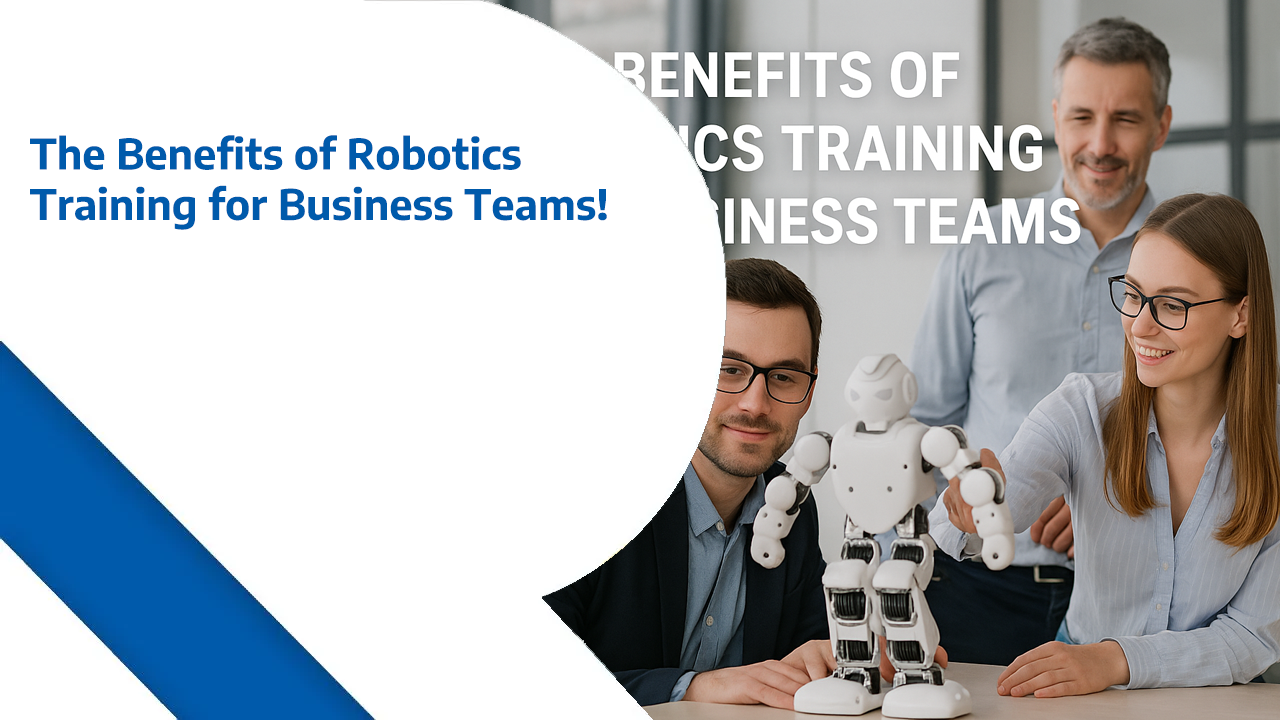
  • The Benefits of Robotics Training for Business Teams

    The Benefits of Robotics Training for Business Teams

    The Benefits of Robotics Training for Business Teams

    Robotics is no longer the future—it is the competitive edge of today. Modern businesses across industries are adopting robots to increase efficiency, reduce operational costs, and unlock new levels of innovation. But one major truth has emerged: the companies that benefit most from robotics aren’t just the ones buying robots—they’re the ones training their teams to use them effectively.

    Whether you operate a warehouse, run a hospitality venue, manage retail locations, or oversee manufacturing, robotics training plays a direct role in productivity, adoption success, staff confidence, customer experience, and return on investment.

    This article breaks down the key benefits of robotics training for business teams—and shows how the right support, consulting, and recruitment can transform your organisation into a robotics-powered success story.


    1. Robotics Training Eliminates Fear and Builds Confidence

    When a robot arrives on-site—whether it’s a service robot, inspection robot, warehouse AMR, or humanoid assistant—the first reaction from staff is often curiosity mixed with uncertainty.
    Questions arise:

    • How does it work?

    • Will it replace my job?

    • What if I break it?

    • Can it really help me?

    A structured robotics training programme removes this fear completely.

    Why this matters:

    Fear and uncertainty slow down adoption. Staff avoid using the robot, misuse it, or rely on managers for every small action. Instead, a confident, well-trained team sees the robot as a tool, not a threat.

    What training gives your team:

    • Hands-on familiarity

    • Clear understanding of robot capabilities

    • Confidence in operating and troubleshooting

    • A sense of ownership and excitement

    • Reduced resistance to new technology

    Once staff feel empowered, the robot becomes a seamless part of the workflow rather than a novelty collecting dust in the corner.


    2. Training Unlocks the Real ROI of Your Robot Investments

    Businesses often spend thousands (and sometimes hundreds of thousands) on robots with the expectation of immediate productivity benefits. But a robot without a trained team underperforms.

    Training ensures you see:

    • Faster adoption cycles

    • Higher utilisation rates

    • Fewer mistakes

    • Reduced downtime

    • Maximised efficiency and output

    Robots don’t deliver ROI by simply being plugged in—they deliver ROI when teams know how to deploy them for maximum value.

    Example:

    A food production business introduces a collaborative robot (cobot) for packaging. Without training, employees operate it at 40% efficiency, triggering stoppages and inaccuracies.
    After a structured training programme?
    The same robot operates at over 90% efficiency—unlocking the ROI the business expected from day one.


    3. Robotics Training Improves Operational Efficiency

    Once teams understand how to work with robots, they can:

    • Assign the right tasks

    • Optimise workflows

    • Reduce cycle times

    • Improve consistency

    • Speed up processes

    • Create smarter task allocations

    • Track performance and make data-driven decisions

    Many companies don’t realise that workflow optimisation is as important as the robot itself. The most successful businesses redesign processes around robotics—not the other way around.

    Robotics training teaches teams where, how, and when robots work best.


    4. Team Morale and Job Satisfaction Increase

    A major misconception is that robots reduce staff motivation because employees fear job loss. The reality—confirmed by hundreds of deployments across logistics, hospitality, retail, and manufacturing—is the opposite.

    Training boosts morale by:

    • Showing staff that robots remove boring, repetitive tasks

    • Giving employees new tech skills

    • Allowing staff to focus on higher-value work

    • Promoting collaboration, not replacement

    • Opening internal career pathways (robot operators, robot supervisors, data analysts, automation champions)

    When employees understand the “why” and “how” of robots, they feel valued—not threatened. Robotics training transforms staff from passive workers into technology-enabled professionals.


    5. Robotics Training Leads to Better Customer Experience

    In customer-facing industries, well-trained staff and well-deployed robots create a noticeable improvement:

    • Faster service

    • Better accuracy

    • Higher consistency

    • Shorter queues

    • Enhanced engagement with customers

    • Improved brand image

    Examples include:

    • Service robots delivering items more efficiently

    • Retail robots guiding customers and answering questions

    • Hospitality robots improving table service time

    • Event robots creating memorable experiences

    When your team knows how to use robots properly, customers feel the impact directly.


    6. Training Reduces Risk and Increases Safety

    Every robot comes with safety protocols—especially collaborative robots and industrial units. Without proper training, staff may:

    • Use the robot incorrectly

    • Stand in unsafe zones

    • Bypass key safety features

    • Misconfigure the robot’s path or load

    • Cause accidental collisions or shutdowns

    Robotics training ensures all staff know:

    • Emergency procedures

    • Operational limitations

    • Safety zones

    • Proper handling and maintenance

    • Ethical and compliant robot use

    This protects staff, customers, and the robot itself.


    7. Training Creates a Culture of Innovation

    When a business invests in robotics training, teams begin to think differently.

    They start asking:

    • What other tasks could be automated?

    • Could a robot help with this workflow?

    • Can we collect data from this process?

    • How could we improve efficiency further?

    Robotics training plants a seed—the idea that innovation is part of the company’s DNA.

    This mindset leads to:

    • Better internal suggestions

    • Process optimisation

    • Stronger cross-team collaboration

    • Faster implementation of new technology

    • A competitive advantage in the long term

    Training doesn’t just improve skills—it transforms company culture.


    8. Robotics Training Future-Proofs Your Business

    Robots are evolving fast:

    • Humanoid robots entering the workforce

    • AI-powered collaborative robots

    • Autonomous mobile robots (AMRs)

    • Service robots for retail, hospitality, healthcare

    • Digital signage robots

    • Patrol and inspection robots

    • Back-of-house automation

    Businesses that train early build internal robotics competence—giving them an edge in adopting future generations of machines.

    Companies without robotics readiness will be left behind as competitors scale faster with automated, efficient, AI-powered operations.


    9. Training Helps Identify Internal Robotics Champions

    Every business has people who naturally excel with technology or show interest in robotics. Training programmes help identify these individuals so you can turn them into:

    • Robotics coordinators

    • Automation managers

    • Robot operators

    • Workflow optimisation specialists

    • Data and process analysts

    • Robot supervisors

    This reduces reliance on external support and builds long-term automation capability inside your organisation.


    10. Robotics Training Helps Bridge the Talent Gap

    As robotics adoption increases globally, the demand for robotics skills has exploded.

    Businesses that offer training:

    • Attract better talent

    • Retain skilled staff

    • Upskill existing workers

    • Strengthen their employer brand

    • Position themselves as innovators

    • Reduce recruitment challenges

    This is essential in industries facing labour shortages.


    Where Robotics Training Works Best

    Robotics training delivers value in almost every sector, including:

    • Warehousing & logistics

    • Manufacturing

    • Food production

    • Retail

    • Hospitality

    • Healthcare

    • Events

    • Security & inspection

    • Education & research

    • Facilities management

    From robotic arms to humanoids, inventory robots to customer service robots—training unlocks the true power of automation.


    Why You Need Professional Robotics Training Providers

    Internal training attempts often fail because:

    • Managers lack robotics expertise

    • Staff only learn the basics

    • Important safety steps are missed

    • Robots are only used at 20–40% capability

    • Teams don’t know best practices

    • Companies overlook workflow redesign

    • There is no ongoing support

    Professional training ensures a deep, practical understanding grounded in real-world deployments—not manuals.


    Upsell Section: How We Help Your Business Win With Robotics

    This article is sponsored by three leading UK robotics brands—each offering proven expertise to help your business adopt, train, and scale robotic solutions.


    🔹 Robot Center

    https://robotcenter.co.uk/
    Buy Robot | Robot Buy | Robot Consultancy | Robotics Consultancy

    Robot Center specialises in commercial robotic solutions—from autonomous mobile robots to collaborative robots and humanoids. If your goal is to purchase the right robot and integrate it effectively, Robot Center provides:

    • Robotics consulting

    • Workflow optimisation

    • Best-in-class robot recommendations

    • Deployment and installation

    • Technical support


    🔹 Robots of London

    https://robotsoflondon.co.uk/
    Robot Hire | Robot Rental | Rent Robot | Hire Robot | Robot Events

    Ideal for short-term use, events, exhibitions, product launches, film productions, and hospitality. Robots of London offers:

    • Service robot hire

    • Humanoid robot rental

    • Event robots

    • Digital signage robots

    • Managed onsite support


    🔹 Robot Philosophy

    https://robophil.com/
    Robot Consultancy · Robot Recruitment · Robot Advice · Robot Insights · Robot Ideas

    Led by RoboPhil (Philip English)—a leading Robot YouTuber, Robot Influencer, Robot Consultant, Robot Trainer, and Robotics Streamer—Robot Philosophy helps businesses:

    • Build robotics strategy

    • Train business teams

    • Recruit robotics talent

    • Understand new robot innovations

    • Identify automation opportunities

    • Develop long-term adoption plans

    If you want robots to transform your business—not complicate it—this is where you start.


    Work With Us: Robotics Consulting & Robotics Recruitment

    If you’re thinking about adopting robotics, scaling automation, training your team, or recruiting robotics professionals, we can support you at every stage.

    Our services include:

    • Full robotics consulting

    • Staff training programmes

    • Workflow optimisation

    • Robot deployment support

    • Hiring robotics engineers & specialists

    • Long-term support agreements

    • Industrial-grade and commercial robot sourcing

    • Robotics strategy development

    BOOK A CALL

    📩 info@robophil.com
    📞 0845 528 0404

    Let’s talk about how robotics training—and the right robots—can give your business the competitive advantage it needs.


    Final Thoughts

    Robotics training is not a luxury—it is a necessity for any business adopting automation. As robots continue to enter mainstream operations across industries, the companies that invest in people as much as in technology will take the lead.

    A trained team:

    • Works confidently

    • Uses robots effectively

    • Optimises workflows

    • Improves customer experience

    • Reduces operational costs

    • Drives efficiency

    • Supports long-term innovation

    Robotics training transforms robots from futuristic machines into practical business tools—and transforms your organisation into a modern, automated, competitive force.

    If you are ready to explore how robotics can elevate your business:

    👉 Email us at info@robophil.com
    👉 Call us on 0845 528 0404
    👉 Visit our sponsors to start your robotics journey

    Let’s build the future of work—together.


    https://www.youtube.com/watch?v=0o_IclvlW_w


    https://www.youtube.com/shorts/KA8oDC7qZw8