Tag: Robotics Consultancy

  • Painting Robots – How to Maintain Quality and Consistency

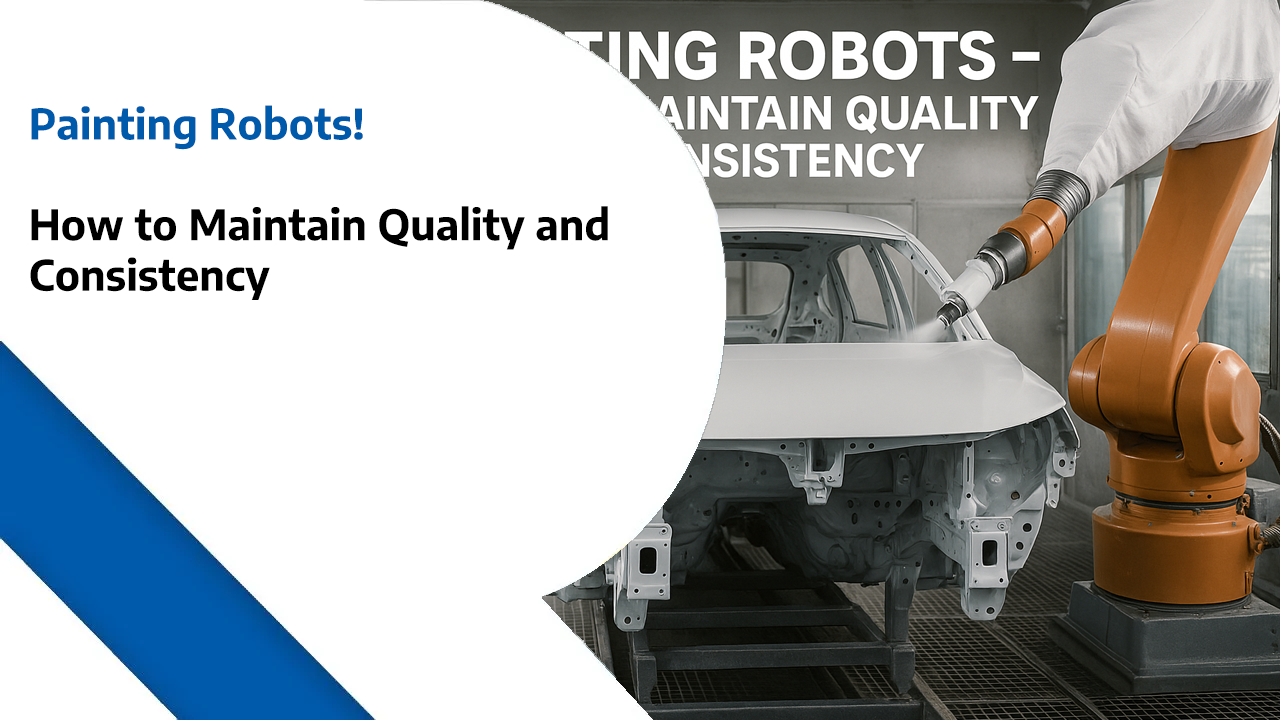
    Painting Robots – How to Maintain Quality and Consistency


    Painting Robots – How to Maintain Quality and Consistency

    In today’s competitive manufacturing landscape, painting robots have become an essential tool for businesses seeking to deliver high-quality finishes, improve efficiency, and ensure a consistent end product. Whether in automotive production, consumer goods, or industrial applications, robotic painting systems are helping brands achieve flawless results at scale.

    However, investing in painting robots is only the first step. To truly maximize their potential, businesses must focus on maintaining quality and consistency across robot operations. This means taking a closer look at setup, calibration, monitoring, and workforce expertise—because even the most advanced robots require proper integration and oversight.


    Why Painting Robots Are Essential

    Painting robots provide several clear advantages over traditional manual processes:

    • Consistency in quality: Robots deliver uniform coatings, reducing risks of streaks, uneven thickness, and human error.

    • Efficiency and cost-effectiveness: Automated systems lower cycle times and reduce material waste.

    • Worker safety: Robots minimize direct exposure to fumes, chemicals, and repetitive-strain risks.

    • Scalability: Robotic painting systems can quickly adapt to large-scale production.

    These benefits highlight why more companies are shifting to automation for high-volume painting needs. But the difference between a robot delivering its promised accuracy versus producing costly mistakes lies in how well it is maintained.


    Key Areas to Ensure Quality and Consistency

    Regular Calibration

    Painting robots must be routinely calibrated to ensure precision. Even slight misalignments can cause defects such as paint drips, patchiness, or uneven layering. Regular calibration ensures the robot continues delivering the correct spray patterns, angles, and pressure.

    Software Updates and Programming

    Robotic painting systems rely heavily on software. Outdated programs can slow down operations or cause incompatibility with new paints and surfaces. Routine updates and optimized programming maintain efficiency while unlocking new features from robot manufacturers.

    Environment and Maintenance

    Painting quality is highly sensitive to factors like airflow, humidity, and booth cleanliness. Consistent environmental monitoring prevents paint contamination and ensures adhesion quality. Moreover, regular maintenance and cleaning of spray nozzles and arms are necessary to avoid clogging and uneven distribution.

    Skilled Oversight

    Even with automation, expert guidance is essential. Trained operators and consultants can spot issues early, fine-tune processes, and train teams on robotic workflows. This is where specialist services become invaluable.


    Where Businesses Go Wrong

    Many companies assume that once they install painting robots, performance will take care of itself. Unfortunately, this approach often leads to:

    • Degradations in quality over time

    • Higher production waste due to inconsistencies

    • Costly downtime due to overlooked maintenance

    • A lack of in-house expertise when issues arise

    The solution is a blend of robot expertise, consultancy, and recruitment of the right talent—ensuring companies can maintain robotic excellence both now and in the future.


    How We Can Help

    At Robot Philosophy (RoboPhil), we specialize in helping businesses get the best possible return from their painting robots. Our services cover:

    • Robot Consultancy: We assess your current robotic painting setup, identify inefficiencies, and tailor strategies to maintain consistent quality.

    • Robot Recruitment: Finding experienced robotics professionals can be challenging. We connect companies with the right talent to manage, maintain, and optimize robotic painting operations.

    If you’re looking to book a consultation or want advice on building a robotics team, contact us today:


    Sponsors of This Article

    • Robot Centerhttps://robotcenter.co.uk/ – Buy Robot, Robot Buy, Robot Consultancy, Robotics Consultancy

    • Robots of Londonhttps://robotsoflondon.co.uk/ – Robot Hire, Robot Rental, Rent Robot, Hire Robot, Robot Events

    • Robot Philosophy (RoboPhil)https://robophil.com/ – Robot Consultancy and Robot Recruitment, Robot Advice, Insights, and Training by Philip English, leading Robotics YouTuber, Influencer, and Consultant


    Would you like me to make this article more formal and business-oriented for executives, or more engaging and approachable for a wider audience?

    https://www.youtube.com/watch?v=j88tNTOTO_Y


    https://www.youtube.com/shorts/12oqhBGlocw

  • Welding Robots – How to Integrate Them into Your Production Line

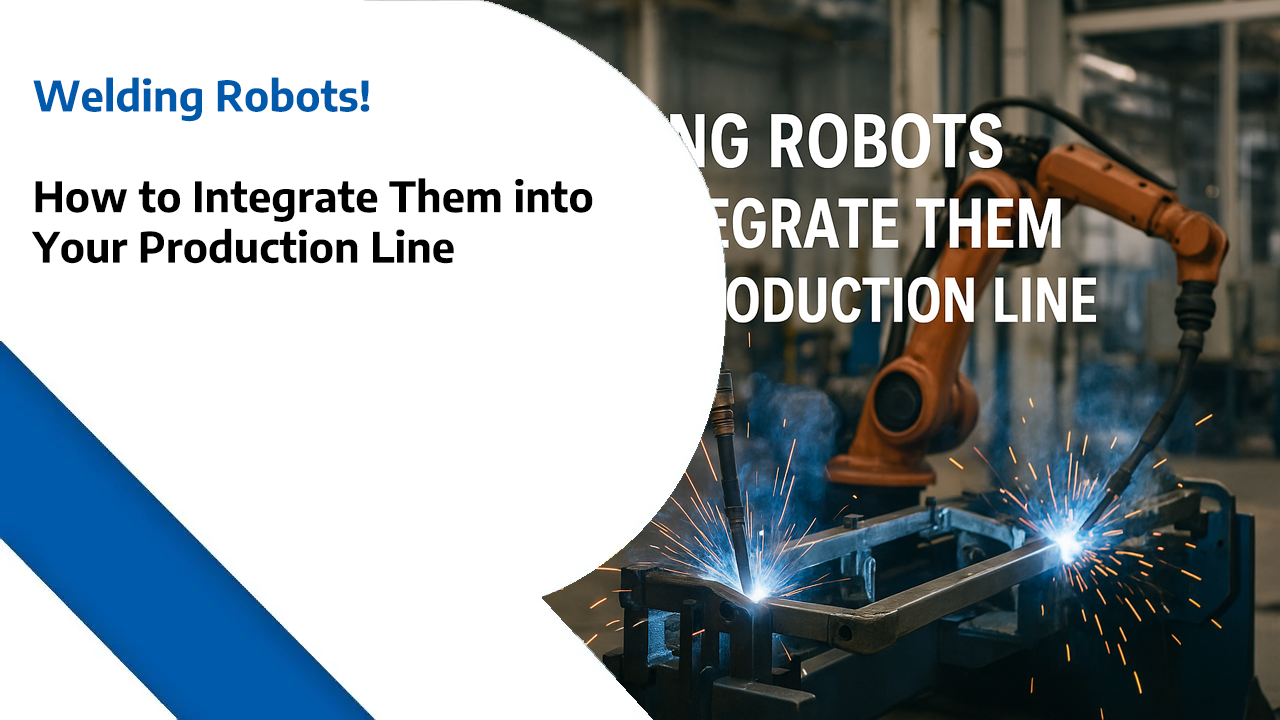
    Welding Robots – How to Integrate Them into Your Production Line

    Welding Robots – How to Integrate Them into Your Production Line

    Sponsored by Robot Center, Robots of London, and Robot Philosophy

    The manufacturing landscape is undergoing a dramatic transformation, and welding robots are at the forefront of this revolution. As companies across industries seek to improve quality, reduce costs, and enhance safety, robotic welding systems have emerged as game-changing solutions that can dramatically enhance production efficiency while delivering consistent, high-quality results.

    The Current State of Industrial Welding

    Traditional manual welding, while requiring exceptional skill, presents numerous challenges for modern manufacturers. Skilled welders are increasingly difficult to find and retain, with many countries facing significant shortages in qualified personnel. Manual welding is also inherently inconsistent, with quality varying based on operator fatigue, experience, and environmental factors. Additionally, human welders face serious health and safety risks from exposure to harmful fumes, intense heat, and UV radiation.

    These challenges have created a perfect storm that’s driving manufacturers toward automated solutions. Welding robots offer a compelling alternative that addresses these pain points while delivering superior performance metrics across multiple dimensions.

    Understanding Welding Robot Technology

    Modern welding robots are sophisticated machines that combine precision mechanical systems with advanced control software. These systems typically consist of a multi-axis robotic arm, welding equipment (such as MIG, TIG, or arc welding systems), and intelligent control systems that can adapt to varying conditions in real-time.

    The latest generation of welding robots incorporates artificial intelligence and machine learning capabilities, allowing them to optimize welding parameters automatically, detect and correct defects during the welding process, and even learn from previous operations to improve future performance. Vision systems enable robots to identify workpieces, locate weld seams, and adjust their approach accordingly.

    Key Benefits of Robotic Welding Integration

    Consistency and Quality

    Robotic welding systems deliver unparalleled consistency in weld quality. Once programmed, a robot will execute the same motion pattern with identical speed, angle, and distance every time, resulting in uniform weld penetration, appearance, and strength. This consistency translates directly into reduced rework, fewer defective parts, and improved customer satisfaction.

    Increased Productivity

    Welding robots can operate continuously without breaks, dramatically increasing throughput compared to manual operations. Many facilities report productivity increases of 200-400% after implementing robotic welding systems. Robots can also work in multiple shifts with minimal supervision, maximizing equipment utilization.

    Enhanced Safety

    By removing human operators from hazardous welding environments, robotic systems significantly reduce workplace injuries and health risks. This not only protects workers but also reduces insurance costs, workers’ compensation claims, and regulatory compliance burdens.

    Cost Reduction

    While the initial investment in robotic welding systems can be substantial, the long-term cost savings are compelling. Reduced labor costs, decreased material waste, lower rework expenses, and improved energy efficiency typically result in payback periods of 18-36 months, depending on the application.

    Planning Your Integration Strategy

    Assessment and Analysis

    Before implementing robotic welding, conduct a comprehensive assessment of your current operations. Analyze your product mix, production volumes, quality requirements, and existing processes. Identify which welding applications are best suited for automation based on factors such as part complexity, batch sizes, and quality standards.

    Consider your facility’s physical constraints, including floor space, ceiling height, and proximity to other equipment. Evaluate your current workforce’s technical capabilities and identify training needs for successful robot operation and maintenance.

    Choosing the Right Robot System

    Selecting the appropriate robotic welding system requires careful consideration of multiple factors. The robot’s reach, payload capacity, and degrees of freedom must match your specific welding requirements. Consider the types of welding processes you need (MIG, TIG, stick welding, etc.) and ensure your chosen system can accommodate these requirements.

    Evaluate different manufacturers based on their track record, support capabilities, and integration expertise. Consider factors such as programming ease, maintenance requirements, and availability of spare parts and technical support.

    Implementation Best Practices

    Site Preparation

    Proper site preparation is crucial for successful integration. Ensure adequate power supply, compressed air, and ventilation systems are in place. Design the robot cell layout to optimize workflow and minimize material handling time. Implement proper safety measures, including light curtains, emergency stops, and restricted access zones.

    Programming and Setup

    Modern welding robots offer various programming methods, from teach pendant programming to offline simulation software. Choose the approach that best matches your team’s capabilities and production requirements. Develop standardized welding procedures and parameters that can be easily replicated across similar applications.

    Create comprehensive backup procedures for all robot programs and parameters. This ensures quick recovery in case of system failures and enables easy replication of successful setups.

    Integration with Existing Systems

    Successfully integrating welding robots requires seamless communication with existing manufacturing systems. This may include ERP systems, quality management systems, and material handling equipment. Ensure your robotic system can communicate production data, quality metrics, and maintenance alerts to your broader manufacturing ecosystem.

    Overcoming Common Integration Challenges

    Workforce Transition

    One of the most significant challenges in robotic integration is managing workforce transitions. Rather than simply replacing workers, successful companies typically retrain existing personnel to become robot operators, programmers, and maintenance technicians. This approach maintains institutional knowledge while building internal robotics expertise.

    Develop comprehensive training programs that cover robot operation, basic programming, troubleshooting, and preventive maintenance. Partner with educational institutions or robotics training providers to ensure your team receives quality instruction.

    Technical Challenges

    Common technical challenges include part positioning inconsistencies, material variations, and complex joint geometries. Address these challenges through proper fixturing design, advanced sensor integration, and adaptive welding programs that can accommodate variations in real-time.

    Implement robust quality control systems that can detect defects immediately and trigger appropriate corrective actions. This may include vision systems, laser scanners, or other sensing technologies.

    Measuring Success and ROI

    Key Performance Indicators

    Track relevant metrics to measure the success of your robotic welding implementation. Important KPIs include weld quality ratings, production throughput, rework rates, operator safety incidents, and overall equipment effectiveness (OEE). Compare these metrics to pre-implementation baselines to quantify improvements.

    Monitor cost metrics such as labor costs per part, material waste rates, and energy consumption. These indicators help demonstrate the financial benefits of robotic implementation and identify opportunities for further optimization.

    Continuous Improvement

    Successful robotic welding implementation is an ongoing process rather than a one-time project. Regularly review performance data to identify improvement opportunities. This may include optimizing welding parameters, upgrading software, or expanding robot capabilities to handle additional applications.

    Stay current with advancing technologies such as collaborative robots, artificial intelligence, and advanced sensors that could enhance your robotic welding capabilities.

    Future Trends in Robotic Welding

    The future of robotic welding is increasingly intelligent and adaptive. Emerging technologies include collaborative robots that can work safely alongside human operators, AI-powered systems that can optimize welding parameters in real-time, and cloud-based platforms that enable remote monitoring and predictive maintenance.

    Advanced vision systems and machine learning algorithms are making robots more capable of handling complex, variable parts without extensive reprogramming. These developments are expanding the range of applications suitable for robotic welding and reducing the expertise required for implementation and operation.

    Getting Started: Your Next Steps

    Successfully integrating welding robots into your production line requires careful planning, expert guidance, and ongoing support. The complexity of modern robotic systems means that partnering with experienced consultants and integrators is often the key to success.

    Ready to explore how welding robots can transform your production line? Our team of robotics experts can help you assess your current operations, identify the best opportunities for automation, and develop a comprehensive integration strategy tailored to your specific needs.

    Whether you’re looking for initial consultation, system selection guidance, or ongoing support, we have the expertise to ensure your robotic welding implementation succeeds. We also provide specialized recruitment services to help you build the skilled workforce needed to operate and maintain your robotic systems effectively.

    Contact us today to schedule a consultation:

    Don’t let your competitors gain the advantage of robotic welding while you’re still relying on traditional methods. The time to act is now, and we’re here to help you every step of the way.


    Article Sponsors

    Robot Center – Your trusted partner for robot acquisition and consultancy services. Whether you’re looking to buy robots or need expert robotics consultancy, Robot Center provides comprehensive solutions for your automation needs.
    Visit: https://robotcenter.co.uk/

    Robots of London – Leading provider of robot hire and rental services. Perfect for testing robotic solutions, special events, or temporary production needs. Get access to cutting-edge robotics technology without the capital investment.
    Visit: https://robotsoflondon.co.uk/

    Robot Philosophy – Expert robot consultancy and recruitment services led by Philip English (RoboPhil), a renowned robotics consultant, trainer, and influencer. Get strategic robotics advice, insights, and access to top robotics talent.
    Visit: https://robophil.com/

    Philip English is a leading figure in the robotics industry, known for his expertise as a Robot YouTuber, Robot Influencer, Robot Trainer, Robot Consultant, and Robot Streamer. His insights help companies navigate the complex world of industrial automation and robotics implementation.


    https://www.youtube.com/watch?v=GbJys1C_rBU


    https://www.youtube.com/shorts/jN8ktWa_wUY

  • LEONARDO – The Caltech Robot That Walks, Flies… and Rides a Skateboard!

    LEONARDO – The Caltech Robot That Walks, Flies… and Rides a Skateboard!

    LEONARDO – The Caltech Robot That Walks, Flies… and Rides a Skateboard!


    Meet LEONARDO—short for “LEgs ONboARD drOne,” or LEO for short. Standing just 2.5 feet tall, this Caltech-built bipedal robot is part walking machine, part flying drone.

    LEO isn’t just good at putting one foot in front of the other. Thanks to four angled propellers on its shoulders and multi-joint legs, it can walk a slackline, hop, and even ride a skateboard. Yes—an actual skateboard.

    The inspiration came from birds. Think about how they hop and flap to balance on telephone wires. LEO uses the same principle, blending walking and flying into one smooth act.

    Why is this important? Walking robots can stumble on rough terrain, while flying robots use lots of energy and can’t carry much. LEO combines both worlds—its legs carry most of the weight while the thrusters keep it balanced, letting it move through tricky environments with agility.

    Beyond the fun tricks, this has real potential. Future versions could help aerial robots land safely on uneven ground, or even assist Mars missions with legged landing gear.

    The project started in 2019 at Caltech’s Center for Autonomous Systems and Technologies, and researchers are already working on sturdier legs, stronger thrusters, and smarter algorithms to make LEO more autonomous.

    So today it’s walking wires and skateboarding—but tomorrow, it could be redefining how robots move through our world, and maybe even beyond it.


    And that’s your robot news update for today!
    If you’re curious about how robotics can transform your business, join me for the weekly Live Robot Optimise Workshop — it’s packed with insights, trends, and practical tips. Don’t forget to subscribe so you stay in the loop with all the latest updates.

    I’m RoboPhil from Robot Philosophy — thanks for watching, and I’ll see you next time!


    Join our Robot Optimise Industry (ROI) Workshop: https://robophil.com/


    Sponsors:-


    Robot Center: – https://robotcenter.co.uk/ – Buy Robot, Robot Buy, Robot consultancy, Robotics Consultancy, Inspection Robots, Security Robots, 


    Robots of London: – https://robotsoflondon.co.uk/ – Robot Hire, Robot Rental, Rent Robot, Hire Robot, Robot Events, Robotics Hire, Hire Robotics, Rent Robotics, Robotics Rent, for exhibitions, shows, Events, Robot hire in the UK, Robot hire in Europe


    Robot Philosophy: – https://robophil.com/ – Robot Consultancy, Robot Recruitment, Robot Advice, Robot Insights, Robot Ideas. RoboPhil, also known as Philip English, is a leading Robot YouTuber, Robot Influencer, Robot Trainer, Robot Consultant, and Robot Streamer, Robotics Streamer, Robotics YouTuber, Robotics Influencer, Robotics Consultant, Robotics Trainer  

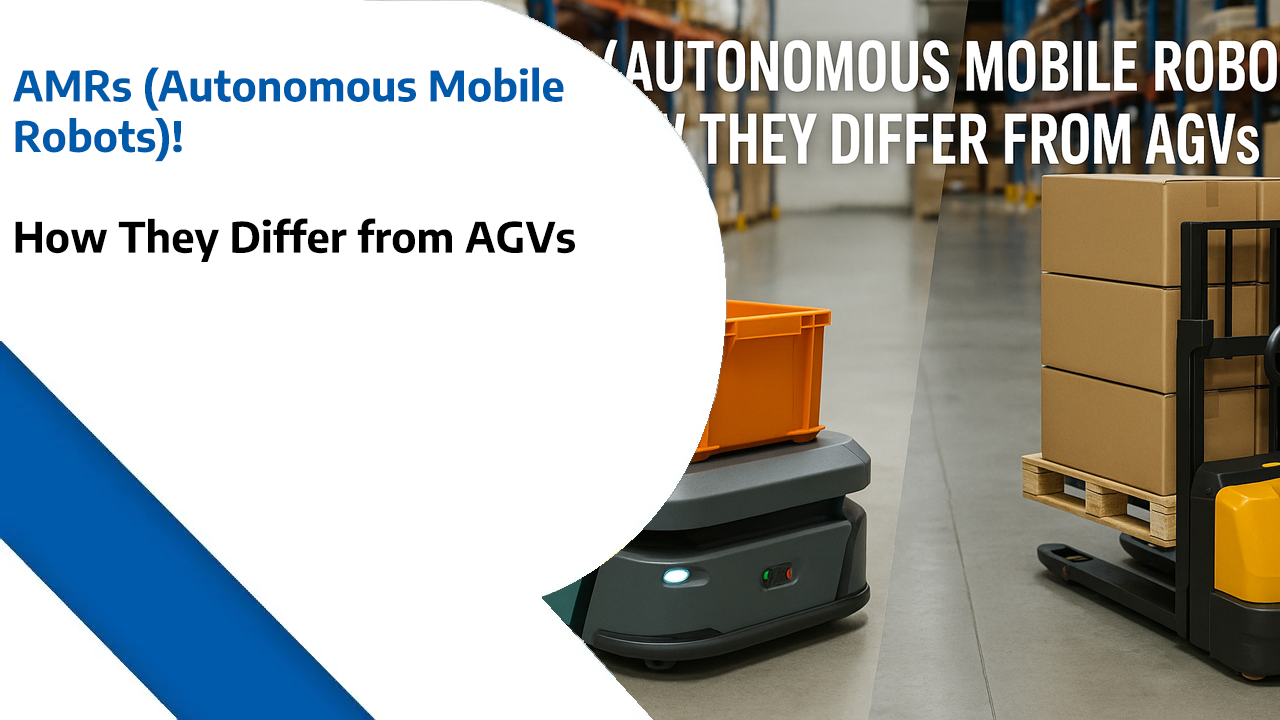
  • AMRs (Autonomous Mobile Robots): How They Differ from AGVs

    AMRs (Autonomous Mobile Robots): How They Differ from AGVs


    AMRs (Autonomous Mobile Robots): How They Differ from AGVs

    In the fast-evolving world of robotics, two technologies are often compared side by side: AMRs (Autonomous Mobile Robots) and AGVs (Automated Guided Vehicles). At first glance, they may appear similar—both move materials from point A to point B, both are widely used in manufacturing, logistics, and warehousing, and both promise efficiency gains. However, the differences between AMRs and AGVs are significant, and understanding those distinctions is critical for any business considering robotic integration.

    In this article, we’ll dive into the key differences between AMRs and AGVs, explain their respective strengths and limitations, and highlight why AMRs are increasingly becoming the technology of choice for forward-thinking companies. Finally, we’ll show you how to take the next step with robot consultancy and recruitment services to future-proof your operations.


    What Are AGVs (Automated Guided Vehicles)?

    AGVs are the veterans of mobile robotics, dating back several decades. They are vehicles that follow predefined paths using guidance systems such as magnetic tape, wires, or laser navigation reflectors.

    AGVs are excellent for structured, repetitive environments where processes rarely change. Think of:

    • Assembly lines

    • Large-scale warehouses with fixed layouts

    • Distribution centers with repetitive goods movement

    Their main advantages include:

    • Reliability: Once programmed, they do the same job consistently.

    • Safety: AGVs follow controlled paths, minimizing unpredictability.

    • Mature technology: Proven track record across industries.

    But their limitations are equally clear:

    • Inflexibility: Any change in layout or workflow requires reprogramming and physical infrastructure updates (e.g., new tape routes).

    • High upfront infrastructure costs: Installation of guiding systems increases project complexity.

    • Limited intelligence: AGVs can stop when encountering an obstacle, but they cannot intelligently navigate around it.


    What Are AMRs (Autonomous Mobile Robots)?

    AMRs are the next generation of mobile robotics, designed for flexibility and intelligence. Unlike AGVs, AMRs don’t rely on fixed paths. Instead, they use a combination of LIDAR, cameras, onboard sensors, and AI algorithms to dynamically understand and interact with their environment.

    AMRs are well-suited for:

    • Warehouses and logistics hubs with variable layouts

    • Manufacturing plants where processes evolve frequently

    • Hospitals and retail spaces requiring safe interaction with people

    Key advantages include:

    • Flexibility: No need for physical guides—AMRs can adapt to new layouts quickly.

    • Obstacle avoidance: AMRs intelligently navigate around people, pallets, and equipment.

    • Scalability: Easy to deploy more AMRs as business needs grow.

    • Data insights: Many AMRs collect and share operational data, helping optimize workflows.

    AMRs represent true autonomy, making them ideal for businesses aiming to stay agile in an unpredictable marketplace.


    AMRs vs. AGVs: A Quick Comparison

    FeatureAGVsAMRs
    NavigationFixed paths (tape, wire, reflectors)Dynamic mapping with sensors & AI
    FlexibilityLow—requires reprogramming for changesHigh—adapts in real time
    Obstacle HandlingStops when blockedNavigates around obstacles
    Setup CostsHigh due to infrastructureLower—no fixed tracks required
    ScalabilityLimitedEasy to expand fleet
    Ideal Use CaseStable, repetitive workflowsDynamic, evolving environments

    Why AMRs Are Gaining Momentum

    The modern business environment is fast-moving and customer-driven. Companies no longer have the luxury of rigid, unchanging operations. AMRs allow businesses to adapt, optimize, and scale faster than AGVs.

    Some examples of AMR adoption:

    • E-commerce warehouses using AMRs for efficient picking and packing.

    • Hospitals deploying AMRs for safe delivery of medication and supplies.

    • Manufacturers adopting AMRs to keep pace with flexible production lines.

    In essence, AMRs are not just tools for automation—they are strategic assets that future-proof businesses.


    Do You Need AGVs or AMRs?

    The choice between AGVs and AMRs depends on your business goals:

    • If you operate in a highly structured environment with repetitive workflows, AGVs may still be the cost-effective choice.

    • If your operations demand flexibility, adaptability, and scalability, AMRs are the clear winner.

    But here’s the challenge: choosing the right solution requires expertise. With hundreds of vendors and technologies on the market, it’s easy to get lost in the hype.

    That’s where robot consultancy and recruitment services come in.


    How We Can Help You Succeed with Robotics

    At Robot Philosophy, we specialize in helping businesses navigate the complex world of robotics. Whether you’re exploring your first AMR deployment, upgrading from AGVs, or scaling across multiple facilities, our consultancy ensures you:

    • Select the right robotic solution for your specific needs.

    • Integrate robots seamlessly into your workflows.

    • Train and support your teams to maximize ROI.

    And with our robot recruitment service, we connect you with the talent and expertise you need to manage and grow your robotic operations.

    📞 Book a call today: 0845 528 0404
    📧 Email us: info@robophil.com


    Sponsors of This Article

    This article is proudly supported by leaders in the UK robotics industry:

    • Robot Center – Buy Robot, Robot Buy, Robot Consultancy, Robotics Consultancy.

    • Robots of London – Robot Hire, Robot Rental, Rent Robot, Hire Robot, Robot Events.

    • Robot Philosophy – Robot Consultancy AND Robot Recruitment, Robot Advice, Robot Insights, Robot Ideas. RoboPhil, also known as Philip English, is a leading Robot YouTuber, Robot Influencer, Robot Trainer, Robot Consultant, and Robot Streamer.


    Final Thoughts

    The difference between AMRs and AGVs boils down to flexibility and intelligence. While AGVs still play an important role in certain industries, AMRs are quickly becoming the go-to solution for businesses seeking agility and future-readiness.

    If you’re ready to explore how robots can transform your operations, now is the time to act. With our robot consulting and recruitment expertise, we’ll help you make the right decision, implement effectively, and stay ahead of the curve.

    📞 Call us today at 0845 528 0404 or
    📧 Email us at info@robophil.com to book a consultation.


    https://www.youtube.com/watch?v=VNCjzBEUN78


    https://www.youtube.com/shorts/1x-tPGfV91k

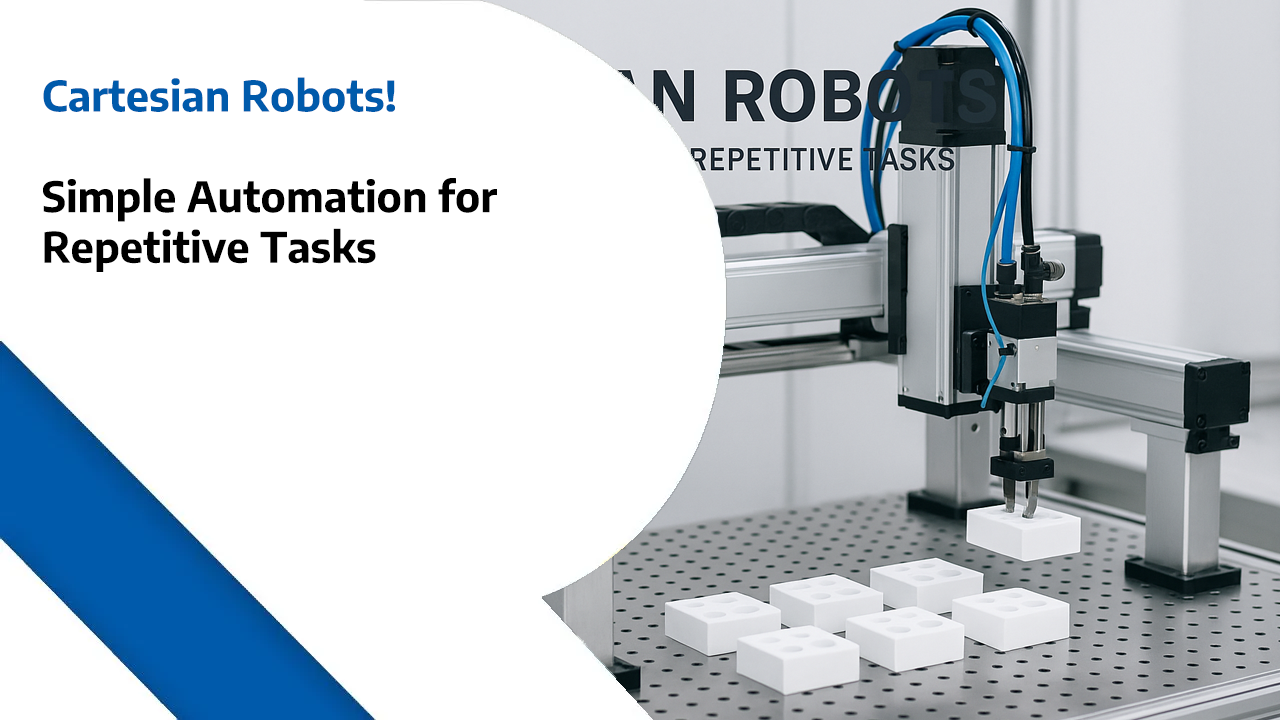
  • Cartesian Robots – Simple Automation for Repetitive Tasks

    Cartesian Robots – Simple Automation for Repetitive Tasks

    Cartesian Robots – Simple Automation for Repetitive Tasks

    Introduction

    In today’s rapidly advancing world of automation, businesses of all sizes are exploring the role of robotics in their operations. While humanoid robots and AI-driven systems grab the headlines, many of the most practical and cost-effective automation solutions are far simpler. Among these, Cartesian robots—sometimes called gantry robots or linear robots—stand out as the unsung heroes of industrial and commercial automation.

    These robots excel at handling repetitive, structured, and precise tasks, making them invaluable across industries such as manufacturing, packaging, electronics, logistics, and even laboratory research.

    This article dives deep into Cartesian robots: what they are, how they work, their advantages, and why they are an ideal entry point into automation for SMEs and large enterprises alike. We’ll also explore how your business can unlock their potential through robot consulting services and robot recruitment expertise provided by Robot Philosophy.

    📞 To book a call and discover how Cartesian robots could streamline your processes, contact info@robophil.com or call 0845 528 0404.


    What Are Cartesian Robots?

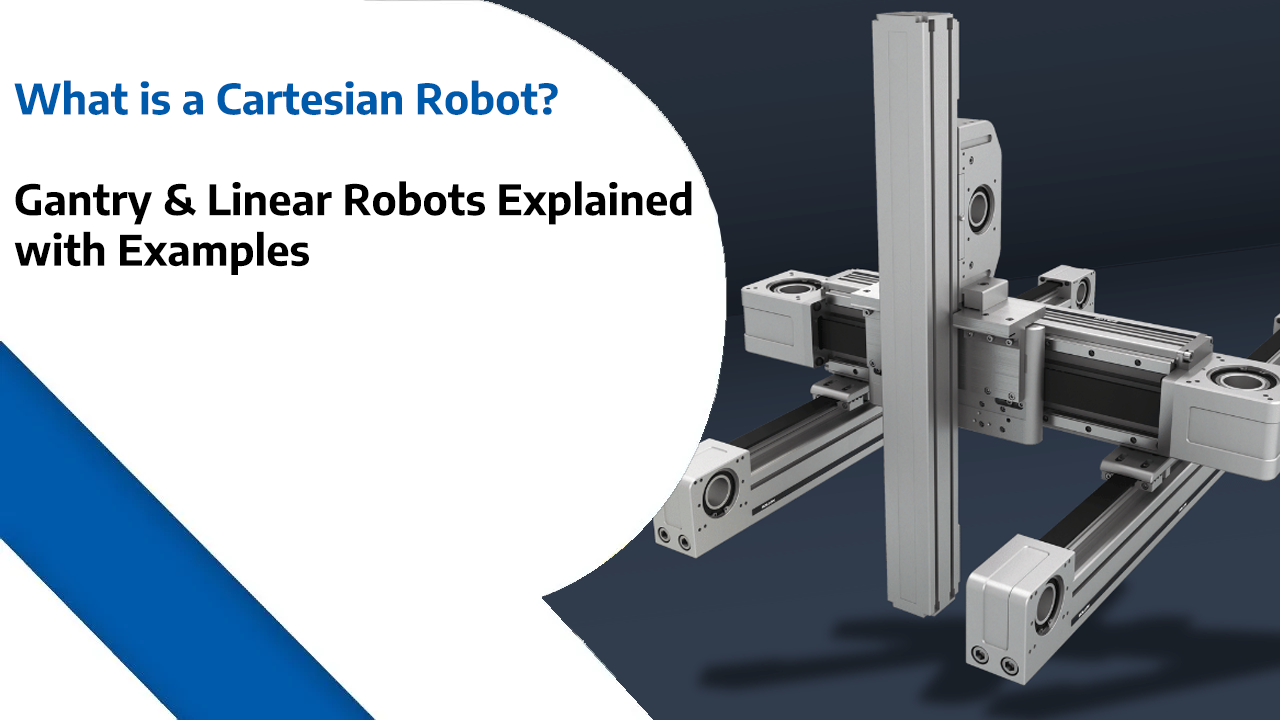
    A Cartesian robot is a robotic system that moves along three orthogonal axes—X, Y, and Z—following the Cartesian coordinate system. Unlike articulated robots with multiple rotary joints, Cartesian robots move in straight lines along linear actuators, allowing them to perform tasks with high precision and repeatability.

    These robots often look like a simple frame or gantry with sliding components and are typically mounted over or around the workspace. They are not flashy, but they are highly reliable workhorses that can carry out repetitive motions for long periods with minimal error.

    Key Features of Cartesian Robots

    • Linear motion: Movement along X, Y, and Z axes.

    • Simple programming: Easy to set up and control compared to complex articulated robots.

    • High precision: Capable of repeatability within fractions of a millimetre.

    • Scalability: Can be built small for delicate tasks or large to span entire production lines.

    • Cost-effectiveness: Generally cheaper to purchase, install, and maintain than articulated or SCARA robots.


    How Cartesian Robots Work

    At their core, Cartesian robots rely on three key components:

    1. Linear actuators (ball screws, belts, or rack-and-pinion drives).

    2. Motors (stepper or servo motors to control movement).

    3. Controllers (software that defines the path, speed, and tasks).

    When integrated into a production environment, a Cartesian robot can:

    • Pick up items from a conveyor belt.

    • Place them into packaging.

    • Stack boxes onto pallets.

    • Perform repetitive assembly steps.

    By repeating these motions thousands or even millions of times with minimal variation, Cartesian robots deliver unmatched consistency and productivity.


    Why Cartesian Robots?

    With so many types of industrial robots—SCARA, articulated, delta, collaborative—why should businesses pay attention to Cartesian robots?

    The answer lies in simplicity and efficiency.

    1. Cost-Effective Automation

    Cartesian robots are generally less expensive to purchase and maintain compared to articulated robots. For businesses dipping their toes into automation, they represent an affordable entry point without sacrificing reliability.

    2. Easy to Integrate

    Their straightforward design makes Cartesian robots easier to install and integrate into existing production lines. They often require less customization and shorter lead times.

    3. Reliability in Repetition

    If your task is repetitive and predictable—such as pick-and-place, packaging, or inspection—Cartesian robots are unmatched. They’re designed for continuous duty cycles without fatigue.

    4. Flexibility in Design

    Cartesian robots can be custom-built to fit specific dimensions or work envelopes. Whether you need a small unit for laboratory pipetting or a large gantry spanning several metres, Cartesian robots can be scaled accordingly.

    5. Low Maintenance

    Because of their simple design and linear movement, maintenance is often limited to lubrication and occasional component replacements.


    Use Cases for Cartesian Robots

    Cartesian robots are everywhere—though they often go unnoticed compared to more humanoid or “sexy” robots. Let’s look at their most common applications:

    1. Pick and Place

    From electronics to food products, Cartesian robots excel in picking up components and placing them into packaging, trays, or onto conveyors.

    2. Assembly

    They can insert parts, fasten screws, or perform repetitive assembly tasks with unwavering accuracy.

    3. Palletizing

    Stacking boxes onto pallets is a dull and repetitive task that Cartesian robots handle effortlessly.

    4. Packaging

    Filling containers, sealing, and moving products into boxes can all be automated.

    5. Machine Tending

    Cartesian robots can load and unload CNC machines, injection moulders, or other equipment, reducing operator fatigue.

    6. Inspection and Testing

    With integrated cameras or sensors, Cartesian robots can perform quality inspections, ensuring every product meets exact specifications.

    7. Laboratory Automation

    In life sciences, Cartesian robots are used for pipetting, sample handling, and repetitive lab processes.


    Cartesian Robots for SMEs

    Many small and medium-sized enterprises (SMEs) wrongly assume robots are “too advanced” or “too expensive.” Cartesian robots prove otherwise.

    Because of their cost-effectiveness, simplicity, and scalability, they are perfectly suited for SMEs that want to:

    • Increase production without hiring more staff.

    • Reduce errors in repetitive tasks.

    • Improve consistency and quality.

    • Free human workers to focus on higher-value tasks.

    This makes Cartesian robots one of the smartest first steps into robotics for growing businesses.


    Case Example: From Manual Packaging to Robotic Precision

    Imagine a small food production company manually packaging hundreds of items per hour. Human workers get tired, errors creep in, and productivity fluctuates.

    By installing a Cartesian pick-and-place robot, the company:

    • Increased output by 40%.

    • Reduced packaging errors to near zero.

    • Freed up staff to handle logistics and quality checks.

    Within 12 months, the robot paid for itself.


    Challenges of Cartesian Robots

    While Cartesian robots are powerful, they’re not a one-size-fits-all solution.

    1. Limited Dexterity

    They can’t handle complex motions like articulated robots. If your task requires rotation, twisting, or fine manipulation, other robot types may be better.

    2. Space Requirements

    Large Cartesian systems can require significant floor space.

    3. Task Specialization

    They are best for structured, repetitive tasks, not jobs that require adaptability or decision-making.

    This is where robot consultancy services become critical—helping businesses evaluate whether Cartesian robots are the right fit.


    Choosing the Right Robot

    The robotics market is vast, with hundreds of models and suppliers. Choosing the wrong robot can be an expensive mistake.

    That’s where Robot Philosophy comes in.

    Our consulting service helps you:

    • Audit your processes to identify where robots add value.

    • Compare solutions (Cartesian, SCARA, collaborative, etc.).

    • Select the right model for your budget and goals.

    • Support integration, training, and scaling.

    📞 To explore whether Cartesian robots—or another solution—are right for your business, contact us at info@robophil.com or call 0845 528 0404.


    The Role of Robot Recruitment

    As robots become central to operations, companies need talent to manage them. From robotics engineers to maintenance technicians, the right people make the difference between smooth automation and frustrating downtime.

    Robot Philosophy also provides robot recruitment services, connecting you with:

    • Skilled robotics engineers.

    • Automation technicians.

    • Integration specialists.

    • Data analysts for robotics.

    We don’t just help you choose the right robot—we help you build the right team around it.


    Sponsors

    This article is proudly supported by:

    • Robot CenterBuy Robot, Robot Buy, Robot Consultancy, Robotics Consultancy.

    • Robots of LondonRobot Hire, Robot Rental, Rent Robot, Hire Robot, Robot Events.

    • Robot PhilosophyRobot Consultancy AND Robot Recruitment, Robot Advice, Robot Insights, Robot Ideas.

    RoboPhil, also known as Philip English, is a leading Robot YouTuber, Influencer, Trainer, Consultant, and Streamer, providing expert guidance and insights into the robotics industry.


    Future of Cartesian Robots

    Though not the newest technology, Cartesian robots are evolving. With improvements in sensors, AI integration, and modular design, they are becoming:

    • Smarter (with vision-based systems).

    • Faster (thanks to lighter materials and better motors).

    • Easier to deploy (through plug-and-play modules).

    In the coming years, Cartesian robots will remain the go-to solution for simple, repetitive automation, especially as SMEs seek affordable entry points into robotics.


    Conclusion

    Cartesian robots may not be glamorous, but they are practical, reliable, and cost-effective. For businesses dealing with repetitive tasks, they provide a clear path to increased productivity, reduced costs, and improved quality.

    The question is no longer “Should we automate?” but “Where do we start?”

    That’s where Robot Philosophy’s consulting and recruitment services come in—guiding you every step of the way, from robot selection to team building.

    📧 Email us at info@robophil.com
    📞 Call us on 0845 528 0404
    🌐 Explore Robot Philosophy

    Whether you’re a small business looking for your first automation solution or a large enterprise seeking to scale, Cartesian robots may be your simplest, smartest step forward.


    https://www.youtube.com/watch?v=eiVYu2l3OqQ


    https://www.youtube.com/shorts/H9vQ0s7AewQ


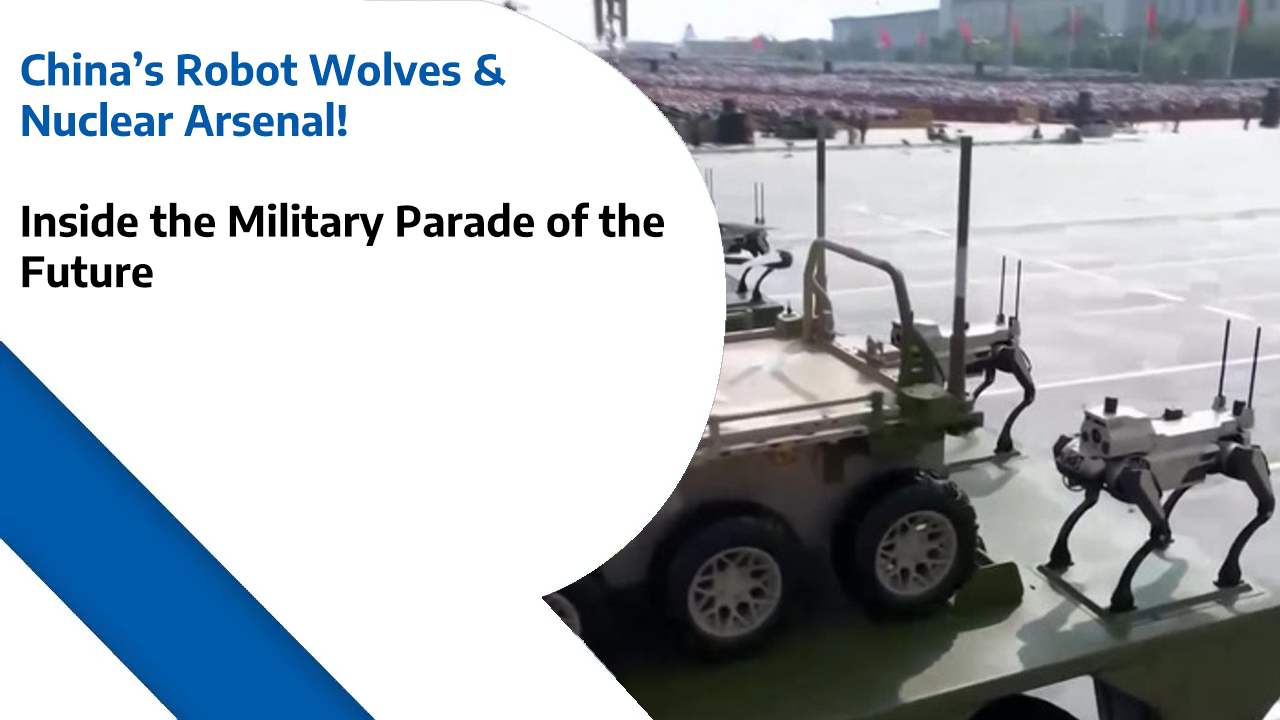
  • China’s Robot Wolves & Nuclear Arsenal – Inside the Military Parade of the Future

    China’s Robot Wolves & Nuclear Arsenal – Inside the Military Parade of the Future

    China’s Robot Wolves & Nuclear Arsenal – Inside the Military Parade of the Future


    At China’s huge military parade, missiles rolled, jets roared… and yes, robot wolves took a stroll through Tiananmen Square. Because nothing says ‘future warfare’ like a robotic pack animal with a rifle on its back. 

    These robot wolves are upgraded robo-dogs—quadruped machines that can march with troops, carry weapons, and climb rough terrain. Think man’s best friend—only with more horsepower and less shedding. 

    They’ve been tested in reconnaissance, precision strikes, and even mine-sweeping, and in CCTV footage they looked almost too well behaved… imagine walking six of those through your local park. 

    The message is clear: China wants to look old-school strong and new-tech sharp at the same time. Robot wolves reduce risk to soldiers, adapt to harsh landscapes, and scare the life out of enemies who suddenly see a mechanical pack running at them. Cute? Not really. Effective? Possibly. 

    Battlefield ready? Still up for debate. Of course, the wolves were just one act. Beijing also rolled out its full nuclear triad—land, sea, and air-based missiles—plus hypersonic weapons, cyber troops, underwater drones, and even a laser cannon. Basically, old tanks met Star Wars tech. So while most armies rely on boots on the ground, China’s bringing paws of steel.


    And that’s your robot news update for today!
    If you’re curious about how robotics can transform your business, join me for the weekly Live Robot Optimise Workshop — it’s packed with insights, trends, and practical tips. Don’t forget to subscribe so you stay in the loop with all the latest updates.

    I’m RoboPhil from Robot Philosophy — thanks for watching, and I’ll see you next time!


    Join our Robot Optimise Industry (ROI) Workshop: https://robophil.com/


    Sponsors:-


    Robot Center: – https://robotcenter.co.uk/ – Buy Robot, Robot Buy, Robot consultancy, Robotics Consultancy, Inspection Robots, Security Robots, 


    Robots of London: – https://robotsoflondon.co.uk/ – Robot Hire, Robot Rental, Rent Robot, Hire Robot, Robot Events, Robotics Hire, Hire Robotics, Rent Robotics, Robotics Rent, for exhibitions, shows, Events, Robot hire in the UK, Robot hire in Europe


    Robot Philosophy: – https://robophil.com/ – Robot Consultancy, Robot Recruitment, Robot Advice, Robot Insights, Robot Ideas. RoboPhil, also known as Philip English, is a leading Robot YouTuber, Robot Influencer, Robot Trainer, Robot Consultant, and Robot Streamer, Robotics Streamer, Robotics YouTuber, Robotics Influencer, Robotics Consultant, Robotics Trainer  


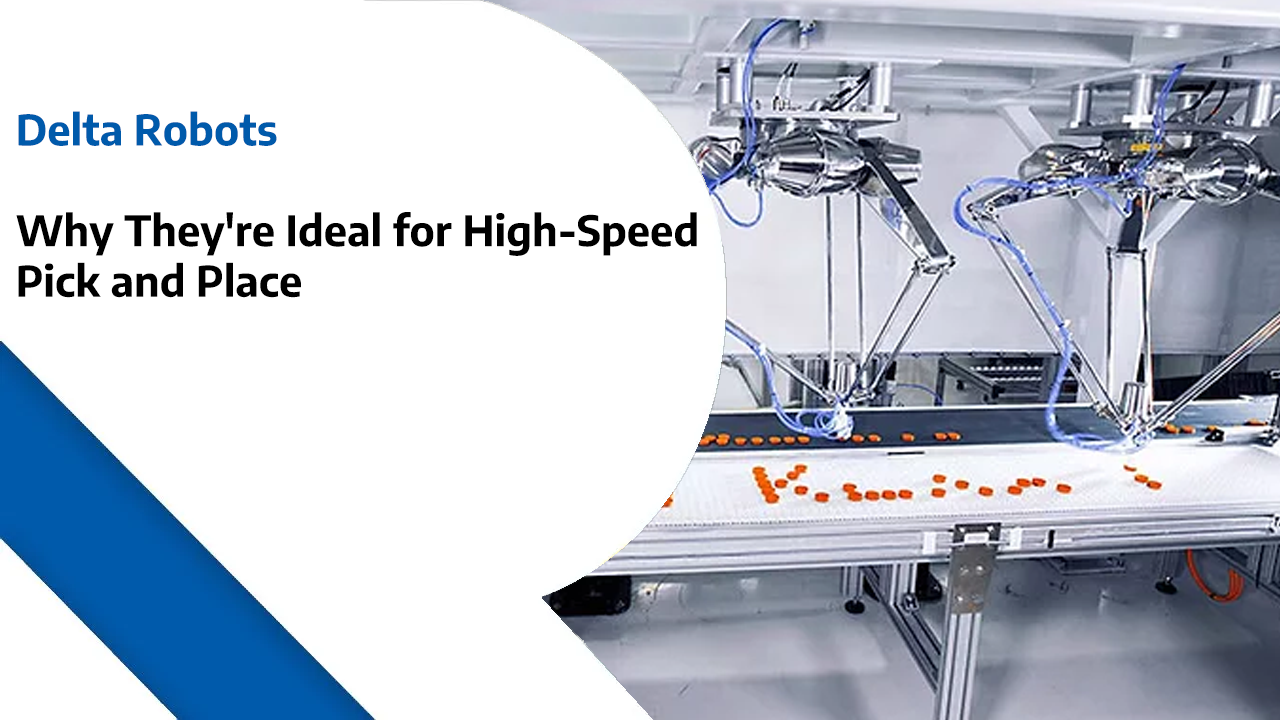
  • Delta Robots – Why They’re Ideal for High-Speed Pick and Place

    Delta Robots – Why They’re Ideal for High-Speed Pick and Place

    Delta Robots: Why They’re Ideal for High-Speed Pick and Place Operations

    Sponsored by: Robot Center, Robots of London, and Robot Philosophy

    In the rapidly evolving landscape of industrial automation, delta robots have emerged as the undisputed champions of high-speed pick and place operations. These remarkable machines, with their distinctive spider-like appearance and lightning-fast movements, are revolutionizing manufacturing processes across industries worldwide. From pharmaceutical packaging to food processing, electronics assembly to logistics operations, delta robots are proving that when speed, precision, and reliability matter most, there’s simply no substitute for their unique design and capabilities.

    Understanding Delta Robot Architecture

    Delta robots, also known as parallel robots or spider robots, feature a unique three-arm parallel kinematic structure that sets them apart from traditional articulated robotic arms. Named after their triangular or delta-shaped platform, these robots consist of three lightweight arms connected to a central moving platform through universal joints. This parallel configuration allows all three motors to work simultaneously, distributing the load and enabling the extraordinary speeds that delta robots are famous for.

    The genius of the delta robot design lies in its mathematical foundation. Developed by Professor Reymond Clavel at the École Polytechnique Fédérale de Lausanne (EPFL) in the 1980s, the delta robot’s parallel kinematic structure eliminates the cumulative positioning errors common in serial kinematic robots. Each arm operates independently while working in perfect harmony with the others, creating a system where precision is maintained even at extreme speeds.

    The lightweight carbon fiber or aluminum arms, combined with the parallel drive system, minimize inertia and allow for rapid acceleration and deceleration. Unlike traditional six-axis robots that must move each joint sequentially, delta robots can achieve complex three-dimensional movements through the coordinated motion of their three arms, making them incredibly efficient for rapid positioning tasks.

    The Speed Advantage: Unmatched Performance Metrics

    When it comes to raw speed, delta robots are in a class of their own. Modern delta robots can achieve cycle times as low as 0.3 seconds per pick and place operation, with some specialized models reaching even faster speeds. These robots can operate at accelerations of up to 15G and achieve tip speeds exceeding 10 meters per second, performance levels that would be impossible with traditional articulated arm robots.

    The speed advantage becomes even more pronounced when considering the robot’s duty cycle. While traditional robots may need cooling periods or suffer from wear-related slowdowns during extended operation, delta robots maintain consistent high-speed performance throughout their operational cycles. This consistency translates directly into higher throughput and improved production efficiency.

    The parallel kinematic structure also provides exceptional dynamic performance. The three-arm configuration distributes mechanical stress evenly, reducing wear on individual components and allowing for sustained high-speed operation. This design inherently provides better dynamic stability, meaning the robot can maintain precision even while operating at maximum speed, a crucial factor in high-volume production environments.

    Precision Engineering: Accuracy at Lightning Speed

    Speed without precision is meaningless in industrial applications, and delta robots excel in both areas simultaneously. The parallel kinematic design provides inherent accuracy advantages, with typical positioning repeatability of ±0.1mm or better. This level of precision is maintained even during high-speed operations, making delta robots ideal for applications requiring both speed and accuracy.

    The mathematical precision of the delta robot’s kinematics ensures that positioning errors don’t accumulate as they would in serial kinematic systems. Each point in the robot’s workspace can be reached through multiple kinematic solutions, allowing the control system to optimize for speed, accuracy, or energy efficiency depending on the application requirements.

    Modern delta robots incorporate advanced sensor feedback systems, including high-resolution encoders and sometimes vision systems, to maintain exceptional accuracy throughout the workspace. The closed-loop control systems continuously monitor and adjust positioning, ensuring that the robot maintains its precision specifications even after millions of operational cycles.

    Workspace Characteristics and Design Optimization

    The delta robot’s workspace is uniquely suited to pick and place operations. The workspace forms an inverted cone or dome shape beneath the robot’s base, with the largest working area at the bottom and tapering toward the top. This configuration is ideal for applications where parts need to be picked from conveyor belts or bins below the robot and placed into packaging or assembly fixtures.

    The workspace design offers several advantages for pick and place applications. The robot can reach every point within its workspace with the same level of speed and precision, unlike articulated arms where performance varies significantly based on arm configuration. This consistency makes process planning more straightforward and ensures uniform cycle times regardless of pick and place locations within the workspace.

    The overhead mounting configuration common with delta robots also maximizes floor space utilization. With the robot mounted above the work area, valuable floor space remains available for conveyors, packaging equipment, and operator access. This three-dimensional approach to workspace utilization is particularly valuable in high-density manufacturing environments where floor space is at a premium.

    Applications Across Industries

    Delta robots have found applications across virtually every industry where high-speed pick and place operations are required. In the pharmaceutical industry, these robots excel at high-speed packaging of tablets, capsules, and medical devices into blister packs or bottles. The combination of speed and precision is crucial for meeting the stringent quality requirements and high volume demands of pharmaceutical manufacturing.

    Food and beverage applications represent another major market for delta robots. From sorting and packaging confectionery to handling delicate baked goods, delta robots provide the gentle yet rapid handling required in food processing. Their ability to work in washdown environments and comply with food safety standards makes them ideal for these applications.

    Electronics manufacturing has embraced delta robots for component placement, PCB handling, and small parts assembly. The precision and speed capabilities align perfectly with the miniaturization trends in electronics, where components continue to get smaller and production volumes continue to increase.

    In the automotive industry, delta robots handle small components and perform rapid assembly operations. From sorting fasteners to placing electrical components, these robots contribute to the lean manufacturing principles that drive modern automotive production.

    Comparing Delta Robots to Traditional Automation Solutions

    When compared to traditional six-axis articulated robots, delta robots offer several distinct advantages for pick and place applications. The speed advantage is perhaps the most obvious, with delta robots typically achieving 3-5 times faster cycle times than comparable articulated arms for similar tasks.

    The parallel kinematic structure also provides better stiffness and accuracy characteristics. While articulated arms can suffer from accumulated positioning errors and compliance issues when fully extended, delta robots maintain consistent performance throughout their workspace. This characteristic makes them particularly suitable for precision applications where dimensional accuracy is critical.

    Energy efficiency represents another significant advantage. The lightweight moving components and efficient parallel drive system result in lower energy consumption compared to traditional robots. This efficiency translates into lower operating costs and reduced environmental impact, important considerations in modern manufacturing operations.

    Maintenance requirements also tend to be lower for delta robots. The simpler mechanical structure with fewer wearing components typically results in longer service intervals and reduced maintenance costs. The parallel configuration also means that partial failures don’t necessarily require complete system shutdown, providing better overall system availability.

    However, delta robots do have limitations compared to traditional robots. The workspace is more constrained, and the robots typically offer only three or four degrees of freedom compared to the six degrees of freedom available with articulated arms. For applications requiring complex part orientations or extensive reach, traditional robots may be more suitable.

    Advanced Control Systems and Integration

    Modern delta robots incorporate sophisticated control systems that maximize their performance capabilities. Advanced trajectory planning algorithms optimize robot movements to minimize cycle time while maintaining precision and reducing mechanical stress. These systems can adapt to changing operational requirements in real-time, optimizing performance based on current production demands.

    Vision integration has become increasingly important in delta robot applications. High-speed cameras and advanced image processing enable robots to identify, locate, and orient parts in real-time, dramatically expanding their application possibilities. Vision-guided delta robots can handle randomly oriented parts, perform quality inspections during handling, and adapt to variations in part presentation.

    Force control capabilities are also being integrated into advanced delta robot systems. These systems can detect and respond to contact forces, enabling gentle handling of delicate parts or adaptive responses to variations in part geometry. Force feedback is particularly valuable in applications involving food products, electronic components, or other fragile items.

    Integration with factory automation systems has become increasingly seamless. Modern delta robots communicate with upstream and downstream equipment, production planning systems, and quality management systems to optimize overall production efficiency. This integration capability makes delta robots valuable components in Industry 4.0 manufacturing environments.

    Future Developments and Emerging Technologies

    The future of delta robotics promises even more impressive capabilities. Advances in materials science are enabling lighter, stronger robot structures that can achieve even higher speeds and accelerations. Carbon fiber components and advanced alloys are pushing the boundaries of what’s possible in terms of speed and precision.

    Artificial intelligence and machine learning are being integrated into delta robot control systems, enabling adaptive learning and continuous performance optimization. These systems can learn from operational data to optimize trajectories, predict maintenance needs, and adapt to changing production requirements automatically.

    Collaborative safety features are being developed to enable delta robots to work more closely with human operators. Advanced sensor systems and safety-rated control architectures are making it possible to deploy delta robots in applications where human-robot collaboration is beneficial.

    Miniaturization trends are also driving the development of smaller, more precise delta robots for applications involving tiny components or limited workspace constraints. These micro-delta robots maintain the speed and precision characteristics of their larger counterparts while operating in workspaces measured in cubic centimeters rather than cubic meters.

    Economic Impact and ROI Considerations

    The economic benefits of delta robots in high-speed pick and place applications are compelling. The dramatic increase in throughput capability directly translates to improved production capacity and reduced labor costs. Many operations see payback periods of less than 18 months, with some high-volume applications achieving payback in under a year.

    The consistency and reliability of delta robots also contribute to improved product quality and reduced waste. The precise positioning and gentle handling capabilities minimize product damage and ensure consistent placement accuracy, reducing defects and rework costs.

    Energy efficiency improvements, while sometimes overlooked, can provide significant cost savings in high-volume operations. The reduced energy consumption of delta robots compared to traditional automation solutions contributes to lower operating costs and improved sustainability metrics.

    Reduced floor space requirements also translate to economic benefits. The overhead mounting configuration of delta robots maximizes utilization of expensive manufacturing floor space, enabling higher production density and improved facility efficiency.

    Implementation Considerations and Best Practices

    Successful delta robot implementation requires careful consideration of application requirements and system design. Workspace analysis is critical to ensure that the robot’s operating envelope aligns with the application needs. The inverted cone workspace must accommodate all required pick and place locations while maintaining optimal speed and precision characteristics.

    End-effector selection is particularly important for delta robot applications. The lightweight, rapid movements of delta robots place unique requirements on gripping systems. Vacuum grippers, magnetic grippers, and specialized mechanical grippers must be designed to handle the high accelerations while maintaining secure part retention.

    Integration planning should consider the entire production system, not just the robot itself. Upstream part presentation systems, conveyor synchronization, and downstream handling equipment must all be coordinated to maximize system performance. The high speed of delta robots can create bottlenecks in surrounding equipment if not properly planned.

    Safety considerations are paramount, particularly given the high speeds involved. Proper guarding, emergency stop systems, and operator training are essential for safe operation. The rapid movements of delta robots require special attention to safety system design to ensure adequate protection for operators and maintenance personnel.

    Expert Consultation and Implementation Services

    Implementing delta robotics successfully requires expertise in multiple domains, from mechanical design and controls engineering to application analysis and system integration. The complexity of modern automated systems demands specialized knowledge to ensure optimal performance and return on investment.

    Professional robotics consulting services can provide valuable guidance throughout the implementation process. From initial feasibility analysis and application assessment to detailed system design and commissioning support, experienced consultants can help navigate the complexities of delta robot implementation.

    Robot recruitment services are equally important for organizations looking to build internal capabilities in robotics and automation. Finding qualified personnel with experience in delta robotics, control systems, and automation integration can be challenging in today’s competitive job market. Specialized recruitment services can help identify and attract the talent needed to support advanced robotics initiatives.

    For organizations considering delta robot implementation, professional consultation can help identify optimal applications, specify appropriate equipment, and develop implementation strategies that maximize return on investment. The rapidly evolving landscape of robotics technology makes expert guidance increasingly valuable for staying current with best practices and emerging capabilities.

    Conclusion: The Future is Fast

    Delta robots represent the pinnacle of high-speed pick and place automation technology. Their unique parallel kinematic design, exceptional speed capabilities, and maintained precision make them indispensable tools for modern manufacturing operations. As production demands continue to increase and product life cycles continue to shorten, the ability to rapidly and accurately handle parts and products becomes increasingly critical to competitive success.

    The versatility of delta robots across industries, from pharmaceuticals and food processing to electronics and automotive manufacturing, demonstrates their broad applicability and robust value proposition. The combination of high speed, precision, reliability, and economic efficiency makes delta robots an compelling choice for organizations seeking to optimize their pick and place operations.

    As technology continues to advance, delta robots will undoubtedly become even more capable, more intelligent, and more integrated into comprehensive manufacturing systems. Organizations that embrace these technologies today will be better positioned to compete in tomorrow’s increasingly automated manufacturing landscape.

    The investment in delta robotics represents more than just equipment acquisition; it represents a commitment to operational excellence, competitive advantage, and future readiness. For organizations ready to take their pick and place operations to the next level, delta robots offer a proven path to achieving world-class performance.


    About Our Sponsors

    Robot Center (robotcenter.co.uk) is your premier destination for robot acquisition and robotics consultancy services. Whether you’re looking to buy robots or seeking expert robotics consultancy, Robot Center provides comprehensive solutions to meet your automation needs.

    Robots of London (robotsoflondon.co.uk) specializes in robot hire and robot rental services. From temporary installations to event demonstrations, their flexible robot rental solutions make advanced robotics accessible for any timeline or budget.

    Robot Philosophy (robophil.com) offers comprehensive robot consultancy and robot recruitment services. Led by Philip English (RoboPhil), a leading robot YouTuber, robot influencer, and robotics consultant, Robot Philosophy provides expert robot advice, insights, and innovative ideas to guide your automation journey.


    Ready to explore delta robotics for your operation?

    Contact our expert team today:

    • Email: info@robophil.com
    • Phone: 0845 528 0404
    • Book a consultation call to discuss your specific requirements and discover how delta robots can transform your pick and place operations.

    Our experienced consultants can help you evaluate applications, specify equipment, and develop implementation strategies that maximize your return on investment. Don’t let your competition gain the speed advantage – contact us today to get started with delta robotics.


    https://www.youtube.com/watch?v=snswFsEFvpU


    https://www.youtube.com/shorts/MY_q4BJiIJs

    Delta Robots: Why They’re Ideal for High-Speed Pick and Place Operations

    Sponsored by: Robot Center, Robots of London, and Robot Philosophy

    In the rapidly evolving landscape of industrial automation, delta robots have emerged as the undisputed champions of high-speed pick and place operations. These remarkable machines, with their distinctive spider-like appearance and lightning-fast movements, are revolutionizing manufacturing processes across industries worldwide. From pharmaceutical packaging to food processing, electronics assembly to logistics operations, delta robots are proving that when speed, precision, and reliability matter most, there’s simply no substitute for their unique design and capabilities.

    Understanding Delta Robot Architecture

    Delta robots, also known as parallel robots or spider robots, feature a unique three-arm parallel kinematic structure that sets them apart from traditional articulated robotic arms. Named after their triangular or delta-shaped platform, these robots consist of three lightweight arms connected to a central moving platform through universal joints. This parallel configuration allows all three motors to work simultaneously, distributing the load and enabling the extraordinary speeds that delta robots are famous for.

    The genius of the delta robot design lies in its mathematical foundation. Developed by Professor Reymond Clavel at the École Polytechnique Fédérale de Lausanne (EPFL) in the 1980s, the delta robot’s parallel kinematic structure eliminates the cumulative positioning errors common in serial kinematic robots. Each arm operates independently while working in perfect harmony with the others, creating a system where precision is maintained even at extreme speeds.

    The lightweight carbon fiber or aluminum arms, combined with the parallel drive system, minimize inertia and allow for rapid acceleration and deceleration. Unlike traditional six-axis robots that must move each joint sequentially, delta robots can achieve complex three-dimensional movements through the coordinated motion of their three arms, making them incredibly efficient for rapid positioning tasks.

    The Speed Advantage: Unmatched Performance Metrics

    When it comes to raw speed, delta robots are in a class of their own. Modern delta robots can achieve cycle times as low as 0.3 seconds per pick and place operation, with some specialized models reaching even faster speeds. These robots can operate at accelerations of up to 15G and achieve tip speeds exceeding 10 meters per second, performance levels that would be impossible with traditional articulated arm robots.

    The speed advantage becomes even more pronounced when considering the robot’s duty cycle. While traditional robots may need cooling periods or suffer from wear-related slowdowns during extended operation, delta robots maintain consistent high-speed performance throughout their operational cycles. This consistency translates directly into higher throughput and improved production efficiency.

    The parallel kinematic structure also provides exceptional dynamic performance. The three-arm configuration distributes mechanical stress evenly, reducing wear on individual components and allowing for sustained high-speed operation. This design inherently provides better dynamic stability, meaning the robot can maintain precision even while operating at maximum speed, a crucial factor in high-volume production environments.

    Precision Engineering: Accuracy at Lightning Speed

    Speed without precision is meaningless in industrial applications, and delta robots excel in both areas simultaneously. The parallel kinematic design provides inherent accuracy advantages, with typical positioning repeatability of ±0.1mm or better. This level of precision is maintained even during high-speed operations, making delta robots ideal for applications requiring both speed and accuracy.

    The mathematical precision of the delta robot’s kinematics ensures that positioning errors don’t accumulate as they would in serial kinematic systems. Each point in the robot’s workspace can be reached through multiple kinematic solutions, allowing the control system to optimize for speed, accuracy, or energy efficiency depending on the application requirements.

    Modern delta robots incorporate advanced sensor feedback systems, including high-resolution encoders and sometimes vision systems, to maintain exceptional accuracy throughout the workspace. The closed-loop control systems continuously monitor and adjust positioning, ensuring that the robot maintains its precision specifications even after millions of operational cycles.

    Workspace Characteristics and Design Optimization

    The delta robot’s workspace is uniquely suited to pick and place operations. The workspace forms an inverted cone or dome shape beneath the robot’s base, with the largest working area at the bottom and tapering toward the top. This configuration is ideal for applications where parts need to be picked from conveyor belts or bins below the robot and placed into packaging or assembly fixtures.

    The workspace design offers several advantages for pick and place applications. The robot can reach every point within its workspace with the same level of speed and precision, unlike articulated arms where performance varies significantly based on arm configuration. This consistency makes process planning more straightforward and ensures uniform cycle times regardless of pick and place locations within the workspace.

    The overhead mounting configuration common with delta robots also maximizes floor space utilization. With the robot mounted above the work area, valuable floor space remains available for conveyors, packaging equipment, and operator access. This three-dimensional approach to workspace utilization is particularly valuable in high-density manufacturing environments where floor space is at a premium.

    Applications Across Industries

    Delta robots have found applications across virtually every industry where high-speed pick and place operations are required. In the pharmaceutical industry, these robots excel at high-speed packaging of tablets, capsules, and medical devices into blister packs or bottles. The combination of speed and precision is crucial for meeting the stringent quality requirements and high volume demands of pharmaceutical manufacturing.

    Food and beverage applications represent another major market for delta robots. From sorting and packaging confectionery to handling delicate baked goods, delta robots provide the gentle yet rapid handling required in food processing. Their ability to work in washdown environments and comply with food safety standards makes them ideal for these applications.

    Electronics manufacturing has embraced delta robots for component placement, PCB handling, and small parts assembly. The precision and speed capabilities align perfectly with the miniaturization trends in electronics, where components continue to get smaller and production volumes continue to increase.

    In the automotive industry, delta robots handle small components and perform rapid assembly operations. From sorting fasteners to placing electrical components, these robots contribute to the lean manufacturing principles that drive modern automotive production.

    Comparing Delta Robots to Traditional Automation Solutions

    When compared to traditional six-axis articulated robots, delta robots offer several distinct advantages for pick and place applications. The speed advantage is perhaps the most obvious, with delta robots typically achieving 3-5 times faster cycle times than comparable articulated arms for similar tasks.

    The parallel kinematic structure also provides better stiffness and accuracy characteristics. While articulated arms can suffer from accumulated positioning errors and compliance issues when fully extended, delta robots maintain consistent performance throughout their workspace. This characteristic makes them particularly suitable for precision applications where dimensional accuracy is critical.

    Energy efficiency represents another significant advantage. The lightweight moving components and efficient parallel drive system result in lower energy consumption compared to traditional robots. This efficiency translates into lower operating costs and reduced environmental impact, important considerations in modern manufacturing operations.

    Maintenance requirements also tend to be lower for delta robots. The simpler mechanical structure with fewer wearing components typically results in longer service intervals and reduced maintenance costs. The parallel configuration also means that partial failures don’t necessarily require complete system shutdown, providing better overall system availability.

    However, delta robots do have limitations compared to traditional robots. The workspace is more constrained, and the robots typically offer only three or four degrees of freedom compared to the six degrees of freedom available with articulated arms. For applications requiring complex part orientations or extensive reach, traditional robots may be more suitable.

    Advanced Control Systems and Integration

    Modern delta robots incorporate sophisticated control systems that maximize their performance capabilities. Advanced trajectory planning algorithms optimize robot movements to minimize cycle time while maintaining precision and reducing mechanical stress. These systems can adapt to changing operational requirements in real-time, optimizing performance based on current production demands.

    Vision integration has become increasingly important in delta robot applications. High-speed cameras and advanced image processing enable robots to identify, locate, and orient parts in real-time, dramatically expanding their application possibilities. Vision-guided delta robots can handle randomly oriented parts, perform quality inspections during handling, and adapt to variations in part presentation.

    Force control capabilities are also being integrated into advanced delta robot systems. These systems can detect and respond to contact forces, enabling gentle handling of delicate parts or adaptive responses to variations in part geometry. Force feedback is particularly valuable in applications involving food products, electronic components, or other fragile items.

    Integration with factory automation systems has become increasingly seamless. Modern delta robots communicate with upstream and downstream equipment, production planning systems, and quality management systems to optimize overall production efficiency. This integration capability makes delta robots valuable components in Industry 4.0 manufacturing environments.

    Future Developments and Emerging Technologies

    The future of delta robotics promises even more impressive capabilities. Advances in materials science are enabling lighter, stronger robot structures that can achieve even higher speeds and accelerations. Carbon fiber components and advanced alloys are pushing the boundaries of what’s possible in terms of speed and precision.

    Artificial intelligence and machine learning are being integrated into delta robot control systems, enabling adaptive learning and continuous performance optimization. These systems can learn from operational data to optimize trajectories, predict maintenance needs, and adapt to changing production requirements automatically.

    Collaborative safety features are being developed to enable delta robots to work more closely with human operators. Advanced sensor systems and safety-rated control architectures are making it possible to deploy delta robots in applications where human-robot collaboration is beneficial.

    Miniaturization trends are also driving the development of smaller, more precise delta robots for applications involving tiny components or limited workspace constraints. These micro-delta robots maintain the speed and precision characteristics of their larger counterparts while operating in workspaces measured in cubic centimeters rather than cubic meters.

    Economic Impact and ROI Considerations

    The economic benefits of delta robots in high-speed pick and place applications are compelling. The dramatic increase in throughput capability directly translates to improved production capacity and reduced labor costs. Many operations see payback periods of less than 18 months, with some high-volume applications achieving payback in under a year.

    The consistency and reliability of delta robots also contribute to improved product quality and reduced waste. The precise positioning and gentle handling capabilities minimize product damage and ensure consistent placement accuracy, reducing defects and rework costs.

    Energy efficiency improvements, while sometimes overlooked, can provide significant cost savings in high-volume operations. The reduced energy consumption of delta robots compared to traditional automation solutions contributes to lower operating costs and improved sustainability metrics.

    Reduced floor space requirements also translate to economic benefits. The overhead mounting configuration of delta robots maximizes utilization of expensive manufacturing floor space, enabling higher production density and improved facility efficiency.

    Implementation Considerations and Best Practices

    Successful delta robot implementation requires careful consideration of application requirements and system design. Workspace analysis is critical to ensure that the robot’s operating envelope aligns with the application needs. The inverted cone workspace must accommodate all required pick and place locations while maintaining optimal speed and precision characteristics.

    End-effector selection is particularly important for delta robot applications. The lightweight, rapid movements of delta robots place unique requirements on gripping systems. Vacuum grippers, magnetic grippers, and specialized mechanical grippers must be designed to handle the high accelerations while maintaining secure part retention.

    Integration planning should consider the entire production system, not just the robot itself. Upstream part presentation systems, conveyor synchronization, and downstream handling equipment must all be coordinated to maximize system performance. The high speed of delta robots can create bottlenecks in surrounding equipment if not properly planned.

    Safety considerations are paramount, particularly given the high speeds involved. Proper guarding, emergency stop systems, and operator training are essential for safe operation. The rapid movements of delta robots require special attention to safety system design to ensure adequate protection for operators and maintenance personnel.

    Expert Consultation and Implementation Services

    Implementing delta robotics successfully requires expertise in multiple domains, from mechanical design and controls engineering to application analysis and system integration. The complexity of modern automated systems demands specialized knowledge to ensure optimal performance and return on investment.

    Professional robotics consulting services can provide valuable guidance throughout the implementation process. From initial feasibility analysis and application assessment to detailed system design and commissioning support, experienced consultants can help navigate the complexities of delta robot implementation.

    Robot recruitment services are equally important for organizations looking to build internal capabilities in robotics and automation. Finding qualified personnel with experience in delta robotics, control systems, and automation integration can be challenging in today’s competitive job market. Specialized recruitment services can help identify and attract the talent needed to support advanced robotics initiatives.

    For organizations considering delta robot implementation, professional consultation can help identify optimal applications, specify appropriate equipment, and develop implementation strategies that maximize return on investment. The rapidly evolving landscape of robotics technology makes expert guidance increasingly valuable for staying current with best practices and emerging capabilities.

    Conclusion: The Future is Fast

    Delta robots represent the pinnacle of high-speed pick and place automation technology. Their unique parallel kinematic design, exceptional speed capabilities, and maintained precision make them indispensable tools for modern manufacturing operations. As production demands continue to increase and product life cycles continue to shorten, the ability to rapidly and accurately handle parts and products becomes increasingly critical to competitive success.

    The versatility of delta robots across industries, from pharmaceuticals and food processing to electronics and automotive manufacturing, demonstrates their broad applicability and robust value proposition. The combination of high speed, precision, reliability, and economic efficiency makes delta robots an compelling choice for organizations seeking to optimize their pick and place operations.

    As technology continues to advance, delta robots will undoubtedly become even more capable, more intelligent, and more integrated into comprehensive manufacturing systems. Organizations that embrace these technologies today will be better positioned to compete in tomorrow’s increasingly automated manufacturing landscape.

    The investment in delta robotics represents more than just equipment acquisition; it represents a commitment to operational excellence, competitive advantage, and future readiness. For organizations ready to take their pick and place operations to the next level, delta robots offer a proven path to achieving world-class performance.


    About Our Sponsors

    Robot Center (robotcenter.co.uk) is your premier destination for robot acquisition and robotics consultancy services. Whether you’re looking to buy robots or seeking expert robotics consultancy, Robot Center provides comprehensive solutions to meet your automation needs.

    Robots of London (robotsoflondon.co.uk) specializes in robot hire and robot rental services. From temporary installations to event demonstrations, their flexible robot rental solutions make advanced robotics accessible for any timeline or budget.

    Robot Philosophy (robophil.com) offers comprehensive robot consultancy and robot recruitment services. Led by Philip English (RoboPhil), a leading robot YouTuber, robot influencer, and robotics consultant, Robot Philosophy provides expert robot advice, insights, and innovative ideas to guide your automation journey.


    Ready to explore delta robotics for your operation?

    Contact our expert team today:

    • Email: info@robophil.com
    • Phone: 0845 528 0404
    • Book a consultation call to discuss your specific requirements and discover how delta robots can transform your pick and place operations.

    Our experienced consultants can help you evaluate applications, specify equipment, and develop implementation strategies that maximize your return on investment. Don’t let your competition gain the speed advantage – contact us today to get started with delta robotics.

     
     
  • Robocore Gets a Foxconn Boost – When Robots Meet Big Money

    Robocore Gets a Foxconn Boost – When Robots Meet Big Money

    Robocore Gets a Foxconn Boost – When Robots Meet Big Money


    Picture this: You’re 85, living in a nursing home, and suddenly your new best friend is… a robot named Temi. Don’t worry – it won’t try to take over the world. It’s too busy taking your blood pressure.

    Hong Kong-based Robocore just struck gold – or should I say, struck Foxconn. The electronics manufacturing giant has committed up to 30 million dollars to help Robocore expand their adorable army of service robots into medical and elderly care markets.

    Now, before you start imagining Terminator-style scenarios, these temi robots are more like helpful digital grandchildren. They’re already working in over 200 nursing homes across New York State, helping doctors complete remote diagnoses in just two minutes. That’s faster than most people can find their reading glasses!

    The secret sauce? These wheeled wonders can roll up to patients equipped with medical sensors, allowing doctors to conduct virtual house calls without the house call. One trip to the hospital from a nursing home can cost 1,200 dollars just for the ambulance ride – but Temi? Well, Temi works for electricity and the occasional software update.

    Robocore isn’t stopping at healthcare. Their robots are already moonlighting as hotel concierges, restaurant assistants, and even teaching aids in over 1,300 schools worldwide. Talk about career diversity!

    With Foxconn’s manufacturing expertise behind them, Robocore expects to achieve five-fold revenue growth by 2028. They’re planning an IPO before 2030, positioning themselves as a major player in the rapidly expanding service robotics market.


    And that’s your robot news update for today!
    If you’re curious about how robotics can transform your business, join me for the weekly Live Robot Optimise Workshop — it’s packed with insights, trends, and practical tips. Don’t forget to subscribe so you stay in the loop with all the latest updates.

    I’m RoboPhil from Robot Philosophy — thanks for watching, and I’ll see you next time!


    Join our Robot Optimise Industry (ROI) Workshop: https://robophil.com/


    Sponsors:-


    Robot Center: – https://robotcenter.co.uk/ – Buy Robot, Robot Buy, Robot consultancy, Robotics Consultancy, Inspection Robots, Security Robots, 


    Robots of London: – https://robotsoflondon.co.uk/ – Robot Hire, Robot Rental, Rent Robot, Hire Robot, Robot Events, Robotics Hire, Hire Robotics, Rent Robotics, Robotics Rent, for exhibitions, shows, Events, Robot hire in the UK, Robot hire in Europe


    Robot Philosophy: – https://robophil.com/ – Robot Consultancy, Robot Recruitment, Robot Advice, Robot Insights, Robot Ideas. RoboPhil, also known as Philip English, is a leading Robot YouTuber, Robot Influencer, Robot Trainer, Robot Consultant, and Robot Streamer, Robotics Streamer, Robotics YouTuber, Robotics Influencer, Robotics Consultant, Robotics Trainer  

  • What is a Cartesian Robot? – Gantry & Linear Robots Explained with Examples

    What is a Cartesian Robot? – Gantry & Linear Robots Explained with Examples

    What is a Cartesian Robot? – Gantry & Linear Robots Explained with Examples


    What exactly is a Cartesian robot? The clue is in the name. These robots move in straight lines along the X, Y, and Z axes—just like the graph paper you used in school. No fancy rotations, no dramatic arm waving, just precise, rigid, straight-line motion.

    Because of this design, Cartesian robots are known for their accuracy and strength. They’re built to be rigid, repeatable, and easy to program, which is why you’ll find them in all kinds of industries.

    In CNC machines, they cut and shape materials with millimetre-perfect precision. In 3D printers, they build layer upon layer with accuracy you can rely on. And in pick-and-place systems, they move products quickly and efficiently from one spot to another.

    Companies like Güdel and Yamaha produce leading Cartesian robots. Güdel’s gantry systems handle heavy loads and large parts with speed and reliability, while Yamaha’s Cartesian robots are designed for compact, high-performance applications.

    The key advantages? Precision. Rigidity. And flexibility in design—you can build them as large or as compact as you need. They’re straightforward, dependable, and often the first choice when you need accuracy in three straight directions.

    So, in short, a Cartesian robot is the workhorse of the automation world. Simple in concept, powerful in practice, and quietly powering the technology all around us.


    And that’s your robot news update for today!
    If you’re curious about how robotics can transform your business, join me for the weekly Live Robot Optimise Workshop — it’s packed with insights, trends, and practical tips. Don’t forget to subscribe so you stay in the loop with all the latest updates.

    I’m RoboPhil from Robot Philosophy — thanks for watching, and I’ll see you next time!


    Join our Robot Optimise Industry (ROI) Workshop: https://robophil.com/


    Sponsors:-


    Robot Center: – https://robotcenter.co.uk/ – Buy Robot, Robot Buy, Robot consultancy, Robotics Consultancy, Inspection Robots, Security Robots, 


    Robots of London: – https://robotsoflondon.co.uk/ – Robot Hire, Robot Rental, Rent Robot, Hire Robot, Robot Events, Robotics Hire, Hire Robotics, Rent Robotics, Robotics Rent, for exhibitions, shows, Events, Robot hire in the UK, Robot hire in Europe


    Robot Philosophy: – https://robophil.com/ – Robot Consultancy, Robot Recruitment, Robot Advice, Robot Insights, Robot Ideas. RoboPhil, also known as Philip English, is a leading Robot YouTuber, Robot Influencer, Robot Trainer, Robot Consultant, and Robot Streamer, Robotics Streamer, Robotics YouTuber, Robotics Influencer, Robotics Consultant, Robotics Trainer  

  • Inside RealMan’s New Beijing Robotics Training Center – 108 Robots, AI Data & Real-World Testing

    Inside RealMan’s New Beijing Robotics Training Center – 108 Robots, AI Data & Real-World Testing

    Inside RealMan’s New Beijing Robotics Training Center – 108 Robots, AI Data & Real-World Testing


    RealMan Robotics has just opened a brand-new Humanoid Robotics Data Training Center in Beijing—and it’s no small step. At 3,000 square meters, the hub brings together research and development, scenario testing, operator training, and collaboration all under one roof.

    On opening day, RealMan introduced the RealBOT Embodied Intelligence Open Platform, built for large-scale data acquisition. The center is split into a training zone and an application zone, and already home to 108 robots of all shapes and sizes—dual-arm manipulators, wheeled semi-humanoids, drone-arms, and even four-legged robots. Quite the roll call.

    To make training realistic, the team has constructed ten real-world environments—eldercare facilities, rehabilitation wards, auto assembly lines, smart catering spaces, and more. These generate over one million high-quality data points each year, the fuel for building more capable AI models.

    Eric Zheng, who heads the center, explained that robotics still faces three big roadblocks: adapting across different scenarios, bridging the gap between simulation and reality, and standardizing data for faster iteration. The new hub tackles these with a full pipeline—from collecting data, to training, to deploying robots in the field.

    Founded in 2018, RealMan has already built robots for retail, food service, healthcare, aerospace, education, and industrial use. With this center, the company is pushing to close the gap between today’s robots—often too costly, slow to deploy, or limited in ability—and the versatile helpers we imagine for everyday life.


    And that’s your robot news update for today!
    If you’re curious about how robotics can transform your business, join me for the weekly Live Robot Optimise Workshop — it’s packed with insights, trends, and practical tips. Don’t forget to subscribe so you stay in the loop with all the latest updates.

    I’m RoboPhil from Robot Philosophy — thanks for watching, and I’ll see you next time!


    Join our Robot Optimise Industry (ROI) Workshop: https://robophil.com/


    Sponsors:-


    Robot Center: – https://robotcenter.co.uk/ – Buy Robot, Robot Buy, Robot consultancy, Robotics Consultancy, Inspection Robots, Security Robots, 


    Robots of London: – https://robotsoflondon.co.uk/ – Robot Hire, Robot Rental, Rent Robot, Hire Robot, Robot Events, Robotics Hire, Hire Robotics, Rent Robotics, Robotics Rent, for exhibitions, shows, Events, Robot hire in the UK, Robot hire in Europe


    Robot Philosophy: – https://robophil.com/ – Robot Consultancy, Robot Recruitment, Robot Advice, Robot Insights, Robot Ideas. RoboPhil, also known as Philip English, is a leading Robot YouTuber, Robot Influencer, Robot Trainer, Robot Consultant, and Robot Streamer, Robotics Streamer, Robotics YouTuber, Robotics Influencer, Robotics Consultant, Robotics Trainer