Tag: Robot Youtuber

  • Einride Raises $100M – The Future of Self-Driving Electric Trucks in the U.S.

    Einride Raises $100M – The Future of Self-Driving Electric Trucks in the U.S.

    Einride Raises $100M – The Future of Self-Driving Electric Trucks in the U.S.


    Einride, a Swedish company developing digital, electric, and autonomous road freight systems, has just raised $100 million in new funding. This investment will help the company expand its autonomous truck deployments in the United States and globally.

    The funding comes after Einride achieved a major milestone: its cabless, electric autonomous truck completed a cross-border journey from Sweden to Norway without a human driver onboard. That’s a world first in freight transport.

    Einride’s platform, called Saga, acts as the digital brain behind its fleet. It manages routes, charging, and assignments, ensuring the trucks run efficiently. The company has also partnered with IonQ to apply quantum computing to solve some of the most complex logistics challenges.

    For everyday consumers and businesses, this matters. Autonomous freight can reduce costs, speed up deliveries, and cut emissions by replacing diesel with clean electric transport. It also opens opportunities for logistics companies, investors, and technology partners to plug into a growing ecosystem.

    Einride already operates with Fortune 500 companies in the U.S. and Europe. This funding is a clear signal that investors believe autonomous freight is moving from concept to commercial reality.

    In short, Einride’s $100 million raise shows that self-driving trucks are no longer experimental. They are becoming part of the global supply chain, and the U.S. is a key market.

    If you want to stay ahead of the curve on how autonomous freight could impact your business and your daily life, subscribe and follow for more updates.


    And that’s your robot news update for today!

    If you’re curious about how robotics can transform your business, head over to RoboPhil.com to join the waiting list for the workshops, or to speak with the team directly about robotics. Don’t forget to subscribe so you stay in the loop with all the latest updates.

    I’m RoboPhil from Robot Philosophy — thanks for watching, and I’ll see you next time!

    Join the workshop waiting list or get in touch at: https://robophil.com/


    Sponsors:-


    Robot Center: – https://robotcenter.co.uk/ – Buy Robot, Robot Buy, Robot consultancy, Robotics Consultancy, Inspection Robots, Security Robots,


    Robots of London: – https://robotsoflondon.co.uk/ – Robot Hire, Robot Rental, Rent Robot, Hire Robot, Robot Events, Robotics Hire, Hire Robotics, Rent Robotics, Robotics Rent, for exhibitions, shows, Events, Robot hire in the UK, Robot hire in Europe


    Robot Philosophy: – https://robophil.com/ – Robot Consultancy, Robot Recruitment, Robot Advice, Robot Insights, Robot Ideas. RoboPhil, also known as Philip English, is a leading Robot YouTuber, Robot Influencer, Robot Trainer, Robot Consultant, and Robot Streamer, Robotics Streamer, Robotics YouTuber, Robotics Influencer, Robotics Consultant, Robotics Trainer 


  • Surgical Robots – How to ensure Successful Implementation

    Surgical Robots – How to ensure Successful Implementation


    Surgical Robots – How to Ensure Successful Implementation

    Robotic surgery has moved from the realm of futuristic speculation into everyday clinical reality. Across the globe, hospitals are adopting surgical robots to improve precision, reduce invasiveness, and enhance patient recovery times. Yet, as with any complex technology, the road from investment to successful implementation can be fraught with challenges. Buying a robot is only one step; integrating it into workflows, training staff, and maximizing its ROI requires foresight, planning, and the right partners.

    In this article, we’ll explore the key strategies for ensuring successful implementation of surgical robots—from planning and training to measuring outcomes. Along the way, we’ll highlight the importance of consulting and recruitment services for robotics, which are essential for bridging the gap between technology and people.

    For hospitals and medical organizations ready to embark on this journey, expert support from Robot Philosophy (https://robophil.com/), Robot Center (https://robotcenter.co.uk/), and Robots of London (https://robotsoflondon.co.uk/) is available to guide the process.

    📞 To book a call and discuss how our robot consulting services and robot recruitment service can support your implementation, email info@robophil.com or call 0845 528 0404.


    Why Surgical Robots Are Transforming Healthcare

    Surgical robots represent a paradigm shift in how complex operations are performed. From minimally invasive laparoscopic surgery to robot-assisted orthopedics and even remote telesurgery, robotics is enabling procedures that were once unimaginable. The benefits are clear:

    • Enhanced precision and dexterity: Robots allow surgeons to perform delicate procedures with a level of steadiness and accuracy beyond human limits.

    • Smaller incisions: Patients recover faster, face fewer complications, and often leave the hospital sooner.

    • Reduced surgeon fatigue: Robotics can alleviate the strain of long procedures, allowing surgeons to maintain optimal performance.

    • Scalable expertise: In the future, expert surgeons may perform operations remotely, bringing world-class care to underserved regions.

    However, these benefits only materialize when surgical robots are integrated correctly. A rushed or poorly planned implementation can lead to underutilization, frustrated staff, and wasted investment.


    Step 1: Define Clear Objectives

    Before purchasing a surgical robot, organizations must establish clear strategic objectives. What problem is the hospital trying to solve? Common goals include:

    • Expanding surgical capabilities.

    • Reducing patient recovery time.

    • Attracting and retaining top surgical talent.

    • Increasing operational efficiency.

    • Enhancing hospital reputation and competitiveness.

    Without defined outcomes, success becomes difficult to measure. Establishing a clear roadmap allows administrators, surgeons, and staff to align expectations and track progress.

    Pro Tip: Partnering with a robotics consultancy ensures that the objectives are realistic, measurable, and aligned with both clinical and financial goals. At Robot Philosophy, our consulting services help hospitals build a step-by-step roadmap to guarantee success.


    Step 2: Build the Right Team

    Surgical robotics isn’t just about the robot—it’s about people. Hospitals must assemble a multidisciplinary team that includes:

    • Surgeons trained in robotic procedures.

    • Nursing staff who can adapt to new workflows.

    • Biomedical engineers to manage equipment.

    • IT specialists to handle data integration.

    • Administrative leaders to ensure alignment with budgets and compliance.

    This is where robot recruitment services play a critical role. Finding staff with prior robotic surgery experience can accelerate adoption dramatically. Recruiting the right combination of technical and medical professionals ensures that the robot doesn’t become an expensive, underutilized tool.

    📞 If your hospital is facing skills shortages, our robot recruitment service can connect you with the right professionals. Email info@robophil.com or call 0845 528 0404 to discuss tailored recruitment support.


    Step 3: Invest in Comprehensive Training

    Even the most advanced robot is only as effective as the team operating it. Training is one of the biggest differentiators between successful and failed implementations.

    • Surgeon training: This includes simulation, hands-on practice, and supervised procedures until proficiency is achieved.

    • Support staff training: Nurses, anesthesiologists, and technicians must understand new workflows and protocols.

    • Continuous learning: Ongoing refresher sessions and new feature updates should be part of the culture.

    One common pitfall is treating training as a one-off exercise. In reality, it’s an ongoing process. Hospitals that embed continuous training into their robotic surgery programs see higher utilization rates and better patient outcomes.

    At Robot Center (https://robotcenter.co.uk/), we provide consultancy packages that include training support and change management, ensuring your team is confident and capable.


    Step 4: Optimize Workflow Integration

    Installing a surgical robot isn’t just about bringing in new hardware. It’s about reshaping operational workflows. Key considerations include:

    • Theatre layout: Robots require specific positioning and space considerations.

    • Scheduling: Procedures may initially take longer until staff become familiar.

    • Sterilization processes: Robots introduce new sterilization and maintenance routines.

    • Data integration: Linking surgical robots with hospital information systems ensures better record-keeping and compliance.

    Poor workflow integration can create bottlenecks that slow down adoption. An expert consultant can map your existing processes and recommend adjustments for seamless integration.

    Robots of London (https://robotsoflondon.co.uk/) provides a unique service where hospitals can trial robots through robot rental before committing to a full purchase. This allows teams to practice real-world integration with minimal risk.


    Step 5: Ensure Regulatory and Safety Compliance

    Surgical robots operate in a highly regulated environment. Hospitals must ensure compliance with:

    • Medical device regulations (FDA, CE marking, MHRA in the UK).

    • Patient safety standards.

    • Data privacy laws for any patient data collected.

    • Liability frameworks for robotic-assisted procedures.

    Failure to comply can result in costly penalties and reputational damage. Partnering with a consultant experienced in healthcare robotics ensures that compliance is built into every stage of implementation.


    Step 6: Measure and Monitor Outcomes

    Once a surgical robot is in use, continuous monitoring is essential. Metrics should include:

    • Procedure times.

    • Complication rates.

    • Patient recovery times.

    • Utilization rates.

    • Financial ROI.

    Hospitals that track these metrics can quickly identify issues and refine their robotic surgery programs. For example, if utilization is low, the cause might be scheduling conflicts, lack of surgeon availability, or insufficient training.

    At Robot Philosophy, we help hospitals set up customized KPI dashboards to monitor robotic performance and ensure long-term success.


    Common Challenges in Surgical Robot Implementation

    Even with the best intentions, hospitals often encounter obstacles:

    • High upfront costs.

    • Resistance from staff accustomed to traditional methods.

    • Underutilization due to poor scheduling or lack of trained personnel.

    • Technical downtime from inadequate maintenance.

    • Patient hesitancy if communication about the benefits is lacking.

    These challenges highlight why hospitals need not just the right technology, but the right people and processes. Expert consulting and recruitment support are critical for overcoming these barriers.


    Case Study Snapshot

    A leading hospital in the UK invested in a state-of-the-art surgical robot but struggled with low utilization. Only a handful of surgeons were trained, and scheduling conflicts left the robot idle for weeks at a time.

    After engaging a robot consulting team, the hospital implemented new training programs, adjusted theatre layouts, and expanded its surgical roster through robot recruitment services. Within 12 months, utilization increased by 65%, procedure times decreased, and patient satisfaction improved significantly.

    This case underscores a critical truth: implementation is as important as the technology itself.


    Why Partner with Expert Consultants and Recruiters?

    Implementing surgical robots is a major investment, but the returns are substantial when done right. Partnering with specialists ensures:

    • Reduced risk of underutilization.

    • Faster time-to-value.

    • Compliance with regulations.

    • Optimized workflows.

    • Access to skilled talent.

    At Robot Philosophy (https://robophil.com/), we specialize in robot consultancy and recruitment services. Whether you need strategic advice, project management, or skilled staff, we provide end-to-end support.

    📞 To discuss your hospital’s needs, email info@robophil.com or call 0845 528 0404.


    Sponsors of This Article

    This article is proudly supported by three leaders in the robotics field:

    • Robot Center (https://robotcenter.co.uk/) – Buy Robot, Robot Buy, Robot Consultancy, Robotics Consultancy.

    • Robots of London (https://robotsoflondon.co.uk/) – Robot Hire, Robot Rental, Rent Robot, Hire Robot, Robot Events.

    • Robot Philosophy (https://robophil.com/) – Robot Consultancy and Robot Recruitment, Robot Advice, Robot Insights, Robot Ideas. RoboPhil, also known as Philip English, is a leading Robot YouTuber, Influencer, Trainer, Consultant, and Streamer.


    Final Thoughts

    The implementation of surgical robots is not a one-time project; it’s a transformation journey. Success depends on clear objectives, the right team, comprehensive training, workflow optimization, and ongoing monitoring. But above all, it requires expert guidance and the right people to bring the technology to life.

    Hospitals that get it right will not only deliver better patient outcomes but also establish themselves as leaders in medical innovation.

    Don’t leave your investment to chance. Ensure your success with dedicated robot consulting and robot recruitment services tailored to your hospital’s needs.

    📞 Book a consultation today: info@robophil.com | 0845 528 0404


    https://www.youtube.com/watch?v=flyw8ghC4bY


    https://www.youtube.com/shorts/x9sZVSbXm_8

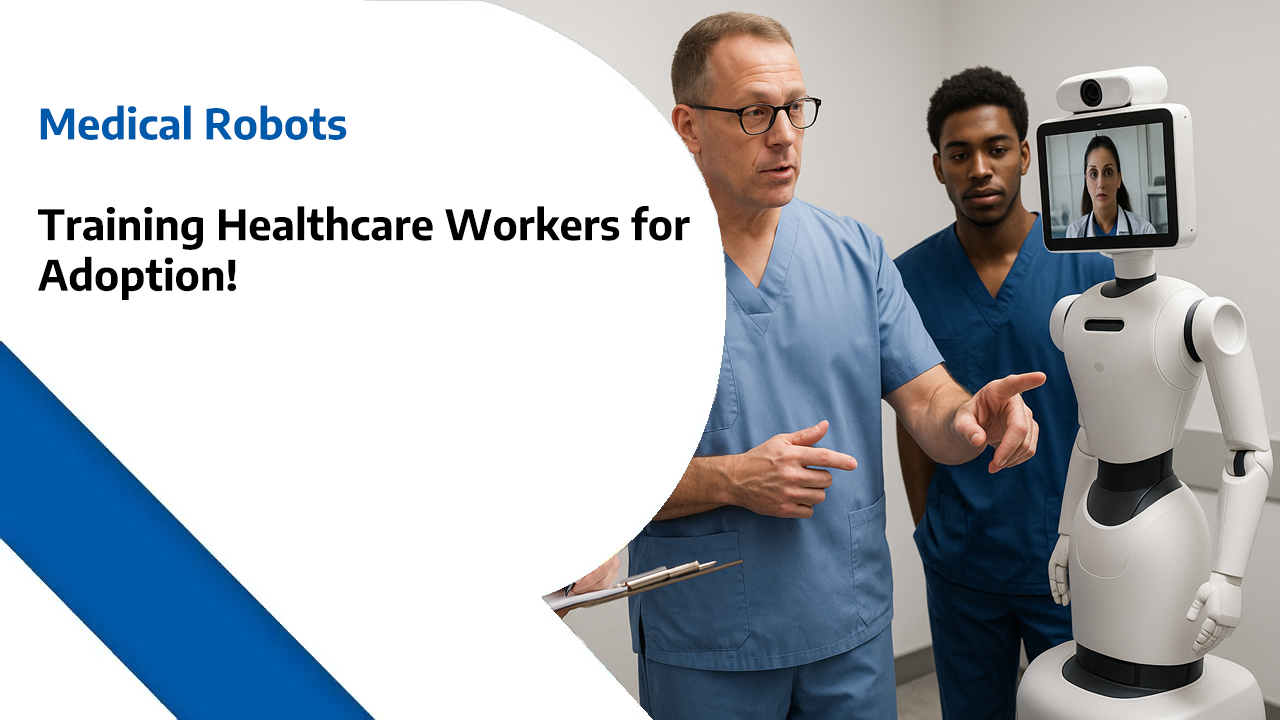
  • Medical Robots – Training Healthcare Workers for Adoption

    Medical Robots – Training Healthcare Workers for Adoption

    Medical Robots – Training Healthcare Workers for Adoption

    Introduction: The Dawn of Robotic Healthcare

    The healthcare industry stands at a pivotal crossroads. Medical robotics technology has evolved from experimental prototypes to sophisticated systems capable of performing complex surgeries, dispensing medications, disinfecting environments, and assisting with patient rehabilitation. Yet, despite these remarkable technological advances, one critical challenge remains: preparing healthcare workers to embrace, understand, and effectively utilize these robotic systems.

    The integration of medical robots into healthcare facilities represents more than just a technological upgrade—it signifies a fundamental transformation in how medical professionals approach patient care. From surgical suites to hospital corridors, from rehabilitation centers to pharmacy departments, robots are becoming indispensable partners in delivering quality healthcare. However, this revolution can only succeed if the human workforce is adequately trained, confident, and prepared to work alongside their robotic counterparts.

    This article explores the essential aspects of training healthcare workers for medical robot adoption, examining the challenges, best practices, and strategies that healthcare institutions must implement to ensure successful integration. Whether you’re a hospital administrator, a clinical manager, or a healthcare professional preparing for this transformation, understanding the training landscape is crucial for maximizing the benefits of medical robotics.

    The Current State of Medical Robotics

    Diverse Applications Across Healthcare

    Medical robots have proliferated across virtually every department of modern healthcare facilities. Surgical robots, such as the da Vinci Surgical System, enable minimally invasive procedures with unprecedented precision. Rehabilitation robots assist patients recovering from strokes or injuries, providing consistent, measurable therapy sessions. Service robots navigate hospital corridors, delivering medications, meals, and supplies while freeing nursing staff for more critical patient care tasks.

    Disinfection robots utilizing ultraviolet light technology have become particularly prominent following the COVID-19 pandemic, autonomously sanitizing patient rooms and operating theaters. Telepresence robots allow remote specialists to consult with patients and local medical teams, breaking down geographical barriers to expert care. Meanwhile, pharmacy robots accurately dispense medications, reducing human error and improving patient safety.

    The Investment Imperative

    Healthcare institutions worldwide are investing billions in robotic technology, recognizing both the competitive advantages and patient outcome improvements these systems deliver. According to industry analysts, the global medical robotics market continues to expand rapidly, with projections suggesting exponential growth over the coming decade. However, technology acquisition represents only the first step—successful implementation demands comprehensive training programs that transform technological potential into practical reality.

    Understanding the Training Challenge

    The Human Factor in Technological Adoption

    The introduction of medical robots into healthcare settings triggers a complex range of human responses. While some healthcare professionals embrace the technology enthusiastically, others experience anxiety, skepticism, or resistance. These reactions stem from various sources: concerns about job security, fear of technological complexity, uncertainty about changing professional roles, and apprehension about potential impacts on patient relationships.

    Effective training programs must address these psychological dimensions alongside technical instruction. Healthcare workers need reassurance that robots serve as collaborative tools enhancing their capabilities rather than replacements threatening their livelihoods. They must understand how robotic assistance can reduce physical strain, minimize repetitive tasks, and allow more time for direct patient interaction—the aspects of healthcare that drew many professionals to the field initially.

    Diverse Learning Needs Across Specialties

    Healthcare encompasses an extraordinarily diverse workforce, from surgeons and physicians to nurses, technicians, therapists, and administrative staff. Each professional group interacts with medical robots differently, requiring specialized training tailored to their specific responsibilities and workflow integration points.

    Surgeons operating robotic surgical systems need extensive hands-on training with haptic feedback, 3D visualization, and instrument manipulation. Nursing staff working with service robots require understanding of navigation systems, emergency protocols, and communication interfaces. Maintenance technicians must learn troubleshooting procedures, routine maintenance schedules, and safety compliance requirements. This diversity demands flexible, modular training approaches adaptable to various professional contexts.

    Generational and Technological Literacy Gaps

    Healthcare workforces span multiple generations, from digital natives comfortable with technology to experienced professionals who trained in pre-digital eras. This generational diversity creates varied comfort levels with technological interfaces, learning preferences, and adaptation rates. Effective training programs recognize these differences, offering multiple instructional modalities and pacing options to accommodate diverse learning styles and technological backgrounds.

    Core Components of Effective Medical Robot Training

    Foundational Knowledge and Conceptual Understanding

    Before healthcare workers can effectively operate medical robots, they must understand fundamental robotics concepts. This foundational training should cover basic robotics terminology, system architectures, sensor technologies, and artificial intelligence principles relevant to medical applications. Workers should understand how robots perceive their environment, process information, make decisions, and execute actions.

    Importantly, this conceptual foundation should emphasize the collaborative nature of human-robot interaction in medical contexts. Healthcare workers must recognize that medical robots augment rather than replace human judgment, combining computational precision with human intuition, ethical reasoning, and empathetic patient care.

    Safety Protocols and Risk Management

    Patient safety represents the paramount concern in healthcare robotics training. Healthcare workers must thoroughly understand safety protocols governing robotic system operation, including emergency stop procedures, system limitations, fail-safe mechanisms, and contingency planning for technological failures.

    Training should cover potential risks associated with each robotic system, from surgical complications to navigation hazards in patient environments. Workers must learn to recognize warning signs indicating system malfunctions, understand when to intervene manually, and know proper escalation procedures for technical issues. Regular safety drills and scenario-based training help internalize these critical protocols, ensuring automatic responses during high-pressure situations.

    Hands-On Technical Skills Development

    Theoretical knowledge provides necessary context, but practical competence develops through hands-on experience. Effective training programs provide extensive opportunities for healthcare workers to interact directly with robotic systems in controlled, supervised environments before encountering real clinical situations.

    Simulation-based training offers particularly valuable learning experiences, allowing workers to practice procedures, make mistakes, and refine techniques without risking patient safety. Virtual reality simulations can replicate complex scenarios, while physical training units enable tactile skill development. Progressive skill-building exercises should advance from basic operations to complex procedures, building confidence and competence incrementally.

    Workflow Integration and Operational Procedures

    Medical robots don’t operate in isolation—they function within complex healthcare workflows involving multiple professionals, coordinated procedures, and time-sensitive protocols. Training must address how robotic systems integrate into existing workflows, identifying potential bottlenecks, communication requirements, and coordination strategies.

    Healthcare workers need to understand their specific roles within robot-assisted procedures, including setup protocols, operational responsibilities, monitoring duties, and post-procedure documentation. Clear standard operating procedures (SOPs) should be developed collaboratively, incorporating input from all relevant stakeholders to ensure practical feasibility and workflow optimization.

    Communication and Team Coordination

    Successful medical robot deployment requires effective communication among team members working alongside robotic systems. Training should emphasize clear verbal communication protocols, particularly during surgical procedures where multiple team members interact with robotic components. Understanding specialized terminology, standardized commands, and efficient information exchange methods prevents misunderstandings that could compromise patient outcomes.

    Team coordination exercises help healthcare workers develop synchronized workflows, anticipate colleagues’ needs, and respond effectively to unexpected situations. These collaborative training activities build cohesion and confidence, preparing teams for the dynamic realities of robot-assisted healthcare delivery.

    Maintenance and Troubleshooting Basics

    While specialized technicians handle complex maintenance and repairs, frontline healthcare workers benefit from understanding basic troubleshooting procedures and routine maintenance requirements. Training should cover common issues, diagnostic approaches, and first-line solutions that workers can implement before escalating to technical specialists.

    This knowledge minimizes downtime, reduces frustration, and empowers healthcare workers to resolve minor issues independently. Understanding maintenance requirements also promotes better care of expensive robotic equipment, extending system lifespans and optimizing performance reliability.

    Training Methodologies and Delivery Approaches

    Blended Learning Models

    Modern medical robot training increasingly employs blended learning approaches combining online theoretical instruction, in-person hands-on practice, simulation exercises, and supervised clinical experience. This multifaceted methodology accommodates diverse learning preferences while optimizing resource utilization.

    Online modules provide flexible access to foundational knowledge, allowing healthcare workers to progress at comfortable paces while managing demanding schedules. Interactive elements, including videos, animations, and knowledge assessments, enhance engagement and retention. In-person sessions then focus on practical skill development, collaborative exercises, and personalized feedback—the aspects of training requiring direct human interaction and expert guidance.

    Progressive Competency Development

    Effective training programs structure learning as progressive competency development rather than one-time orientation sessions. Initial training provides foundational knowledge and basic operational skills, followed by supervised practice periods allowing skill consolidation under expert observation. Advanced training modules then introduce complex procedures, troubleshooting scenarios, and specialized applications relevant to specific roles.

    This progressive approach recognizes that true competency develops through repeated practice, reflection, and gradual complexity escalation. Regular competency assessments identify areas requiring additional focus, ensuring healthcare workers achieve and maintain proficiency standards before independent operation.

    Simulation-Based Learning Environments

    Simulation technology has revolutionized medical training, and medical robotics is no exception. High-fidelity simulators replicate robotic system interfaces and behaviors, providing risk-free environments for skill development. Virtual reality simulations offer immersive experiences replicating surgical scenarios, while augmented reality overlays can guide workers through procedures in real equipment.

    Simulation-based training allows unlimited practice opportunities, immediate feedback on performance metrics, and progressive difficulty adjustments matching learner capabilities. Mistakes become valuable learning opportunities rather than patient safety risks, encouraging experimentation and confidence building essential for skill mastery.

    Mentorship and Peer Learning

    Pairing less experienced healthcare workers with robotic system experts facilitates knowledge transfer beyond formal training programs. Mentorship relationships provide ongoing support, practical tips, and contextual insights that formal training may not fully capture. Experienced users share workflow optimizations, troubleshooting shortcuts, and lessons learned from real-world challenges.

    Peer learning communities, whether in-person or virtual, create supportive environments where healthcare workers share experiences, discuss challenges, and collaboratively problem-solve. These communities foster continuous learning cultures extending far beyond initial training periods, supporting ongoing adaptation as technologies evolve and applications expand.

    Just-in-Time Training Resources

    Even well-trained healthcare workers occasionally need quick reference guidance during clinical operations. Just-in-time training resources—including quick reference guides, video tutorials, and digital assistance systems—provide immediate support without disrupting workflows significantly.

    Augmented reality systems can overlay procedural guidance directly onto robotic equipment, providing contextualized instructions precisely when needed. Mobile applications offer searchable databases of protocols, troubleshooting steps, and frequently asked questions accessible at point of care. These resources bridge the gap between formal training completion and complete independence, supporting confidence during the critical transition period.

    Overcoming Barriers to Adoption

    Addressing Resistance and Building Buy-In

    Resistance to technological change represents one of the most significant barriers to successful medical robot adoption. Healthcare workers may fear job displacement, resent additional learning burdens, or doubt technology’s value relative to traditional methods. Overcoming this resistance requires transparent communication, inclusive decision-making, and demonstrated value proposition.

    Involving healthcare workers in robot selection and implementation planning builds ownership and identifies practical concerns early. Clearly articulating how robots address existing pain points—such as physical strain, repetitive tasks, or resource constraints—frames technology as supportive rather than threatening. Highlighting success stories and peer testimonials from early adopters can shift perceptions and build enthusiasm.

    Allocating Sufficient Training Time and Resources

    Healthcare facilities operate under intense time and resource pressures, making training allocation challenging. However, inadequate training investments inevitably compromise implementation success, leading to underutilization, safety incidents, and staff frustration. Institutional leadership must recognize comprehensive training as essential infrastructure rather than optional enhancement.

    Protected training time should be integrated into staff schedules without compromising patient care coverage. Adequate instructor resources, training equipment access, and ongoing educational support require budgetary commitment reflecting training’s critical importance. These investments generate returns through improved efficiency, reduced errors, and enhanced staff satisfaction—outcomes justifying initial resource allocation.

    Ensuring Ongoing Education and Skill Maintenance

    Medical robot training cannot be treated as one-time events. Technology evolves continuously, with software updates, new features, and emerging best practices requiring ongoing education. Additionally, skills deteriorate without regular practice, particularly for complex procedures performed infrequently.

    Institutions should establish continuing education programs ensuring healthcare workers remain current with technological developments. Regular refresher training, competency reassessments, and update briefings maintain skill levels and reinforce safety protocols. Creating cultures of continuous learning normalizes ongoing education as professional expectation rather than remedial intervention.

    Customizing Training to Institutional Contexts

    Generic, vendor-provided training offers starting points but rarely addresses institution-specific workflows, patient populations, and operational constraints. Customized training programs tailored to particular healthcare settings prove far more effective, addressing local practices, terminology, and integration challenges.

    Collaborating with robotics consultants experienced in healthcare contexts helps develop these customized programs, blending technical expertise with practical implementation insights. These specialists understand diverse institutional needs and can design training approaches optimizing adoption success within specific organizational cultures and operational realities.

    Measuring Training Effectiveness

    Competency Assessment Frameworks

    Robust assessment frameworks measure whether training programs successfully develop required competencies. These frameworks should evaluate multiple dimensions: theoretical knowledge, technical skills, safety protocol adherence, workflow integration, and professional judgment in robot-assisted contexts.

    Assessment methods might include written examinations testing conceptual understanding, practical demonstrations evaluated against standardized rubrics, simulation-based performance metrics, and observed clinical practice assessments. Multiple assessment modalities provide comprehensive competency pictures, identifying strengths and areas requiring additional development.

    Performance Metrics and Outcome Tracking

    Beyond individual competency, training effectiveness should be evaluated through operational metrics tracking actual performance improvements. Relevant metrics might include procedural efficiency, error rates, complication frequencies, equipment utilization rates, and staff confidence surveys.

    Comparing pre-implementation and post-training metrics quantifies training program impact, demonstrating return on investment and identifying optimization opportunities. Longitudinal tracking reveals whether competencies sustain over time or require reinforcement interventions.

    Continuous Improvement Cycles

    Training programs should incorporate feedback mechanisms enabling continuous refinement. Healthcare worker surveys, instructor observations, incident analyses, and performance data all inform program improvements. Regular training program reviews ensure content remains current, methodologies stay effective, and emerging challenges are addressed proactively.

    This continuous improvement approach treats training as evolving process rather than static product, maintaining relevance as technologies advance and organizational needs shift.

    The Role of Specialized Robotics Consultants

    Expert Guidance Through Implementation Journeys

    Healthcare institutions embarking on medical robot adoption face complex decisions spanning technology selection, infrastructure preparation, workflow redesign, and training program development. Specialized robotics consultants bring invaluable expertise navigating these multifaceted challenges, drawing from extensive experience across diverse healthcare settings.

    These consultants assess institutional readiness, identify optimal technologies for specific needs, design implementation roadmaps, and develop customized training strategies. Their external perspective combined with technical depth helps avoid common pitfalls, accelerate adoption timelines, and maximize return on robotics investments.

    Bridging Technical and Clinical Domains

    Effective medical robot implementation requires bridging technical robotics expertise with clinical healthcare knowledge—domains rarely residing within single individuals. Robotics consultants serve as translators between these worlds, explaining technical capabilities in clinical terms and communicating clinical requirements in technical specifications.

    This bridging function proves particularly valuable during training program development, ensuring technical instruction remains grounded in clinical realities while clinical training adequately addresses technological requirements. The resulting programs resonate with healthcare workers, speaking their language while building necessary technical competencies.

    Accessing Specialized Talent Through Robotics Recruitment

    Beyond consulting services, specialized robotics recruitment services help healthcare institutions identify and attract professionals possessing the unique skill combinations medical robotics demands. These specialists understand the evolving talent landscape, maintaining networks of robotics engineers, clinical specialists, and hybrid professionals capable of driving successful implementations.

    Whether seeking robotic surgery coordinators, clinical robotics specialists, or technical implementation managers, specialized recruitment services streamline talent acquisition processes, presenting qualified candidates matching institutional needs and cultures.

    Future Directions in Medical Robotics Training

    Artificial Intelligence and Adaptive Learning

    Emerging artificial intelligence technologies promise to revolutionize medical robotics training through adaptive learning systems that personalize instruction based on individual progress, learning styles, and competency development patterns. These intelligent systems identify knowledge gaps, adjust difficulty levels, and recommend targeted practice exercises optimizing learning efficiency.

    AI-powered training simulators can generate unlimited scenario variations, ensuring diverse practice opportunities while providing sophisticated performance analytics guiding improvement efforts. As these technologies mature, training programs will become increasingly personalized and effective, accelerating competency development while reducing resource requirements.

    Extended Reality Training Environments

    Virtual reality, augmented reality, and mixed reality technologies continue advancing, offering increasingly immersive and realistic training environments. Future medical robotics training may occur primarily in these extended reality spaces, providing unlimited practice opportunities indistinguishable from actual clinical scenarios.

    These technologies overcome geographical barriers, enabling remote training delivery and expert instruction access regardless of physical location. They also permit risk-free exploration of rare complications and emergency scenarios difficult to replicate through traditional training methods.

    Collaborative Human-Robot Learning

    As robots incorporate more sophisticated artificial intelligence, future training may involve mutual learning processes where humans and robots adapt to each other’s working styles and preferences. Rather than humans solely learning robot operation, collaborative systems will learn human preferences, communication patterns, and working rhythms, optimizing interactions bidirectionally.

    This collaborative learning approach recognizes that optimal performance emerges from synergistic human-robot partnerships rather than humans simply mastering technological tools. Training programs will increasingly emphasize partnership development rather than mere operational proficiency.

    Building Your Medical Robotics Training Strategy

    Assessment and Planning

    Healthcare institutions beginning medical robot adoption journeys should start with comprehensive assessments evaluating current capabilities, identifying gaps, and establishing realistic implementation timelines. This assessment should examine technical infrastructure, workforce readiness, financial resources, and organizational culture factors influencing adoption success.

    Based on assessment findings, detailed implementation plans should outline technology selection criteria, infrastructure preparations, training program development, and phased deployment strategies. These plans establish clear milestones, assign responsibilities, and define success metrics guiding implementation efforts.

    Stakeholder Engagement and Change Management

    Successful adoption requires engagement across all organizational levels, from executive leadership providing resources and strategic direction to frontline staff operating systems daily. Comprehensive change management strategies address concerns, build enthusiasm, and maintain momentum throughout implementation processes.

    Regular communication updates, town hall meetings, demonstration events, and early adopter showcases keep stakeholders informed and engaged. Leadership visibility and vocal support signal organizational commitment, encouraging workforce participation and investment in adoption success.

    Partnership with Robotics Experts

    Few healthcare institutions possess internal expertise spanning the full spectrum of medical robotics implementation requirements. Partnering with specialized robotics consultants and leveraging professional recruitment services substantially improves adoption outcomes while reducing implementation timelines and resource burdens.

    These partnerships provide access to proven methodologies, lessons learned from previous implementations, and specialized expertise addressing specific challenges. Rather than learning through costly trial and error, institutions benefit from accumulated wisdom and best practices refined across numerous successful deployments.

    Conclusion: Empowering Healthcare’s Robotic Future

    Medical robots represent transformative technologies reshaping healthcare delivery, offering unprecedented precision, consistency, and capability. However, technology alone cannot realize these benefits—success depends fundamentally on healthcare workers prepared, trained, and confident in leveraging robotic capabilities within their professional practices.

    Comprehensive training programs addressing technical skills, safety protocols, workflow integration, and psychological adaptation prepare healthcare workers for productive human-robot collaboration. These programs must be thoughtfully designed, adequately resourced, continuously improved, and culturally embedded within institutional values and practices.

    The journey toward robotic healthcare adoption presents challenges, certainly, but the destination promises improved patient outcomes, enhanced professional satisfaction, and healthcare delivery models meeting 21st-century demands. Healthcare institutions embarking on this journey need not travel alone—specialized expertise, proven methodologies, and supportive partnerships smooth the path toward successful adoption.

    The future of healthcare increasingly includes robotic partners working alongside human professionals. By investing in comprehensive training preparing workers for this future, healthcare institutions position themselves at the forefront of medical innovation while ensuring their most valuable asset—their people—remain empowered, engaged, and essential to delivering exceptional patient care.


    Ready to Transform Your Healthcare Facility with Medical Robotics?

    Successful medical robot adoption requires expert guidance, comprehensive training, and access to specialized talent. Whether you’re exploring robotic technologies for the first time or optimizing existing implementations, professional robotics consulting and recruitment services accelerate your journey toward successful adoption.

    Contact us today to discuss your medical robotics needs:

    📧 Email: info@robophil.com
    📞 Phone: 0845 528 0404

    Our team provides comprehensive support throughout your robotics journey, from initial assessment and technology selection through training program development and specialized talent recruitment. Let’s work together to build your healthcare facility’s robotic future.


    Article Sponsors

    This article is brought to you by leading robotics specialists dedicated to advancing robotic technology adoption across healthcare and beyond:

    Robot Center

    Website: https://robotcenter.co.uk/

    Your destination for robot purchase, robotics consultancy, and expert guidance. Robot Center provides comprehensive solutions for organizations seeking to acquire robotic technologies and implement them successfully within their operations.

    Robots of London

    Website: https://robotsoflondon.co.uk/

    Specializing in robot hire, robot rental, and robot events. Robots of London makes cutting-edge robotic technology accessible through flexible rental arrangements, perfect for exploring capabilities before permanent acquisition or meeting temporary event needs.

    Robot Philosophy (RoboPhil)

    Website: https://robophil.com/

    Led by Philip English, a leading Robot YouTuber, Robot Influencer, Robot Trainer, Robot Consultant, and Robotics Streamer, Robot Philosophy provides expert robot consultancy, robot recruitment, robot advice, robot insights, and innovative robot ideas. Whether you need strategic guidance, specialized talent, or educational resources, RoboPhil delivers comprehensive robotics expertise helping organizations navigate the robotic revolution successfully.


    The medical robotics revolution is here. Is your healthcare workforce ready? Contact our expert team today to begin your training transformation journey.

     

    https://www.youtube.com/watch?v=9uKL0O9akVs


    https://www.youtube.com/shorts/EUQt2WIRkJw


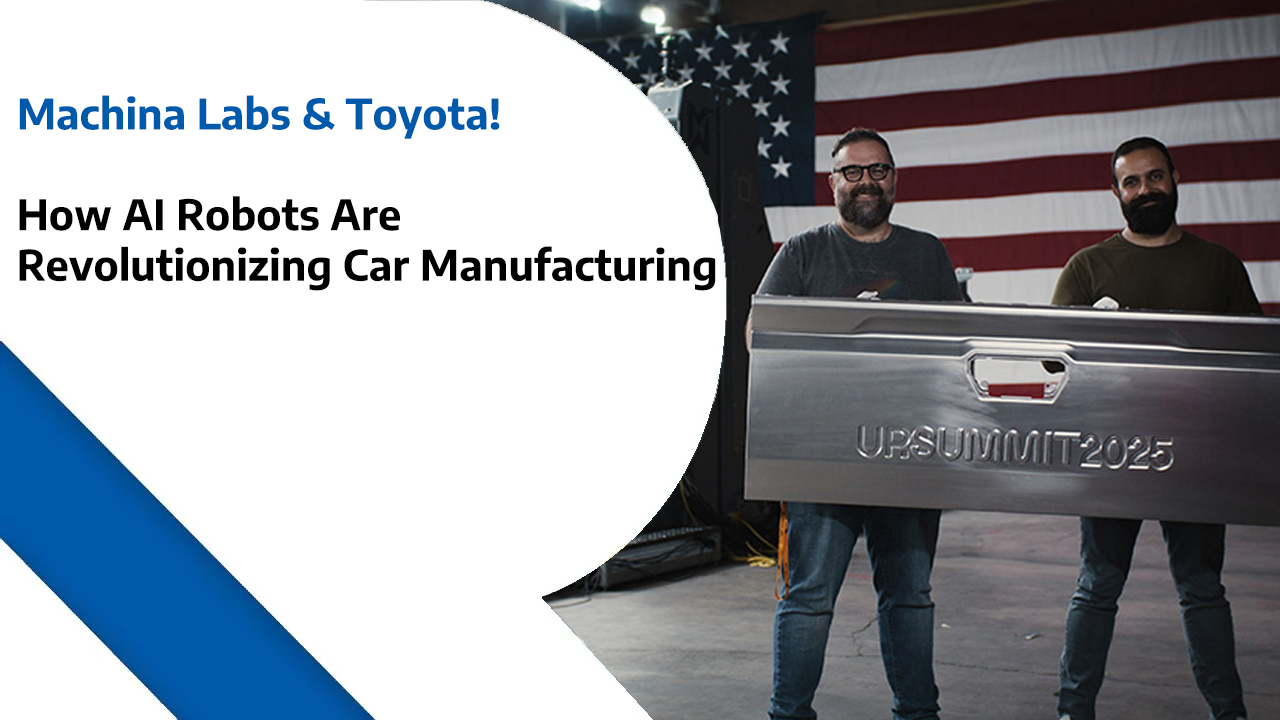
  • Machina Labs & Toyota: How AI Robots Are Revolutionizing Car Manufacturing

    Machina Labs & Toyota: How AI Robots Are Revolutionizing Car Manufacturing

    Machina Labs & Toyota: How AI Robots Are Revolutionizing Car Manufacturing


    Automotive manufacturing is usually about giant stamping presses, twenty-ton dies, and months of waiting before a new car part is ready. Machina Labs, based in Los Angeles, thinks that whole model is outdated. They’ve built a robotic, AI-driven system that can shape sheet metal without dies, which could bring customization to cars at mass-production prices.


    Instead of moving massive molds around on rails and cranes, their system uses robots that form the sheet metal incrementally. The AI checks and adjusts in real time. The result? Parts can be made in hours after a design is finished, instead of waiting three months to a year. That’s fast enough to rethink how cars are built and personalized.


    This matters for you because it means more choice. Machina Labs says you could one day order a car with unique panels, custom designs, even new alloys that were too difficult to stamp before. And because the robots don’t need expensive tooling, manufacturers could cut waste, save money, and pass some of that benefit on to buyers.


    Toyota has already partnered with Machina Labs through a pilot project. Their investment arm, Woven Capital, is backing the technology. The goal is to test custom body panels while keeping automotive-grade quality and speed.


    So, the age of the bespoke car factory may be closer than you think. Mass customization, once only for the wealthy, could soon be an option for every driver in America.

    Don’t forget to like, subscribe, and stay tuned for more on how AI and robotics are reshaping the way we build—and buy—cars.

    And that’s your robot news update for today!

    If you’re curious about how robotics can transform your business, head over to RoboPhil.com to join the waiting list for the workshops we’ll be running, or to speak with the team directly about robotics.Don’t forget to subscribe so you stay in the loop with all the latest updates.

    I’m RoboPhil from Robot Philosophy — thanks for watching, and I’ll see you next time!


    Join the workshop waiting list or get in touch at: https://robophil.com/


    Sponsors:-


    Robot Center: – https://robotcenter.co.uk/ – Buy Robot, Robot Buy, Robot consultancy, Robotics Consultancy, Inspection Robots, Security Robots,


    Robots of London: – https://robotsoflondon.co.uk/ – Robot Hire, Robot Rental, Rent Robot, Hire Robot, Robot Events, Robotics Hire, Hire Robotics, Rent Robotics, Robotics Rent, for exhibitions, shows, Events, Robot hire in the UK, Robot hire in Europe


    Robot Philosophy: – https://robophil.com/ – Robot Consultancy, Robot Recruitment, Robot Advice, Robot Insights, Robot Ideas. RoboPhil, also known as Philip English, is a leading Robot YouTuber, Robot Influencer, Robot Trainer, Robot Consultant, and Robot Streamer, Robotics Streamer, Robotics YouTuber, Robotics Influencer, Robotics Consultant, Robotics Trainer 

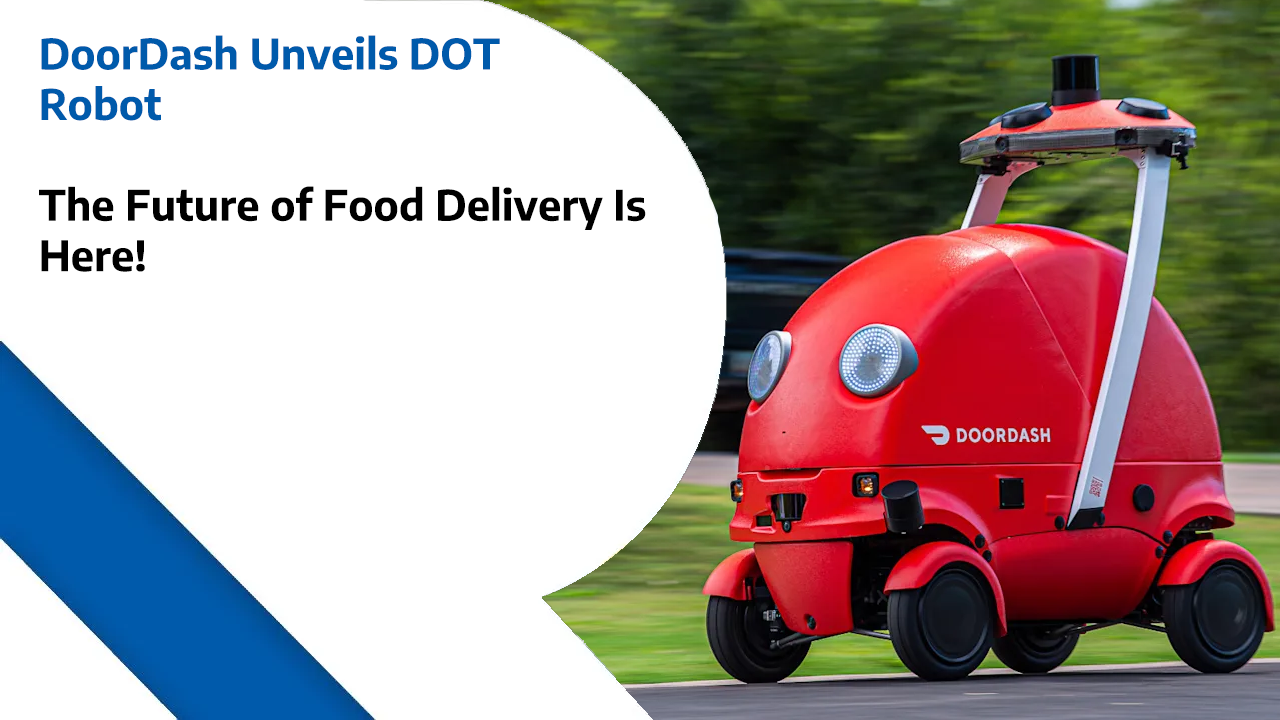
  • DoorDash Unveils DOT Robot – The Future of Food Delivery Is Here

    DoorDash Unveils DOT Robot – The Future of Food Delivery Is Here

    DoorDash Unveils DOT Robot – The Future of Food Delivery Is Here


    DoorDash has just unveiled Dot — its first commercial autonomous delivery robot. At about 4 and a half feet tall and one-tenth the size of a car, Dot is built for quick, local trips, carrying up to 30 pounds — that’s six pizzas or a week’s worth of late-night snacks.

    Unlike many robots that stick to sidewalks, Dot can navigate bike lanes, roads, sidewalks, and even driveways. It can reach 20 miles per hour, meaning your burrito arrives hot instead of lukewarm.

    The idea is simple: you don’t always need a full-sized car to deliver toothpaste, diapers, or dinner. DoorDash designed Dot to be reliable, efficient, and smart enough to choose the best routes, based on billions of deliveries already on its platform.

    So, what does this mean for you? Faster, more reliable deliveries without extra fees, less congestion on local roads, and more opportunities for local restaurants to deliver to your door. And because it’s electric, Dot helps cut emissions too.

    The first deployments are happening in Tempe and Mesa, Arizona, before rolling out to more U.S. cities. With eight cameras, three lidar sensors, four radar units, and a modular design for different cargo types, Dot is engineered to handle real-world challenges like busy parking lots, low-light streets, and even the occasional off-leash dog.

    In short: Dot could be the future of neighborhood delivery — smaller, faster, and built to keep your food fresh. If you’re in Arizona, watch for Dot rolling up your driveway. For everyone else, stay tuned, because this little robot may soon be bringing your next meal.

    And that’s your robot news update for today!

    If you’re curious about how robotics can transform your business, head over to RoboPhil.com to join the waiting list for the workshops we’ll be running, or to speak with the team directly about robotics.Don’t forget to subscribe so you stay in the loop with all the latest updates.

    I’m RoboPhil from Robot Philosophy — thanks for watching, and I’ll see you next time!

    Join the workshop waiting list or get in touch at: https://robophil.com/


    Sponsors:-


    Robot Center: – https://robotcenter.co.uk/ – Buy Robot, Robot Buy, Robot consultancy, Robotics Consultancy, Inspection Robots, Security Robots,


    Robots of London: – https://robotsoflondon.co.uk/ – Robot Hire, Robot Rental, Rent Robot, Hire Robot, Robot Events, Robotics Hire, Hire Robotics, Rent Robotics, Robotics Rent, for exhibitions, shows, Events, Robot hire in the UK, Robot hire in Europe


    Robot Philosophy: – https://robophil.com/ – Robot Consultancy, Robot Recruitment, Robot Advice, Robot Insights, Robot Ideas. RoboPhil, also known as Philip English, is a leading Robot YouTuber, Robot Influencer, Robot Trainer, Robot Consultant, and Robot Streamer, Robotics Streamer, Robotics YouTuber, Robotics Influencer, Robotics Consultant, Robotics Trainer 


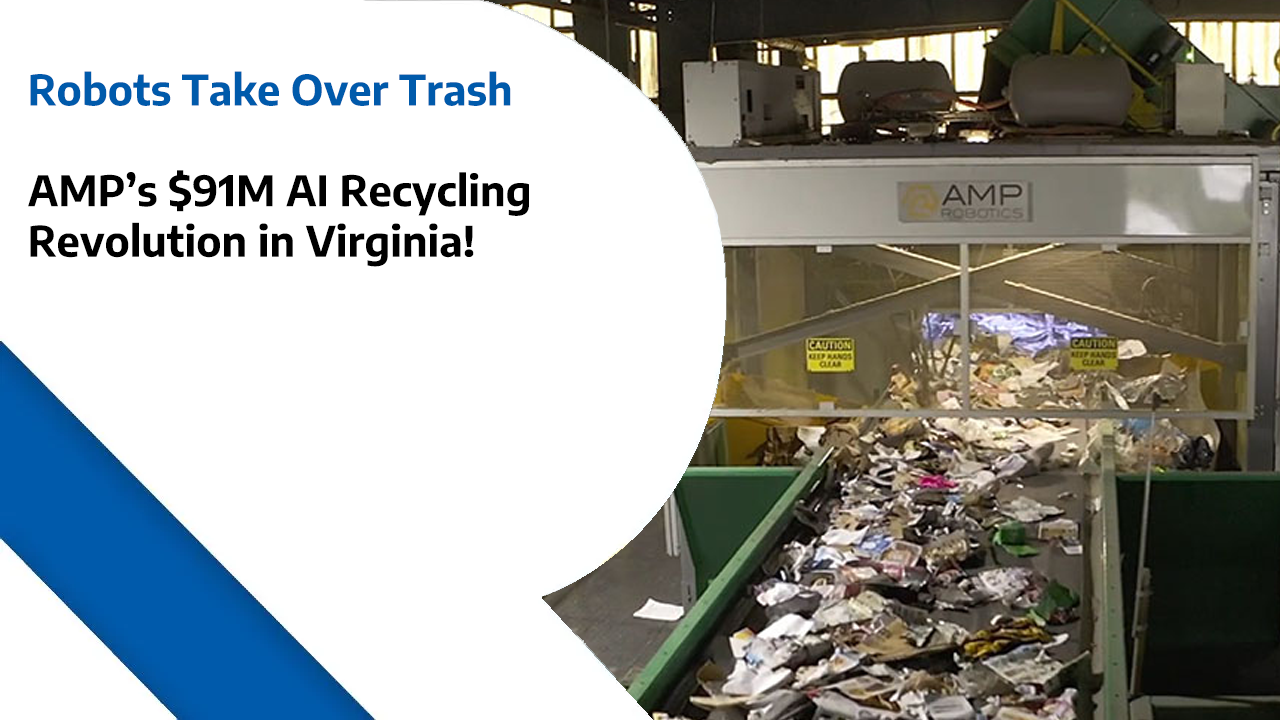
  • Robots Take Over Trash – AMP’s $91M AI Recycling Revolution in Virginia

    Robots Take Over Trash – AMP’s $91M AI Recycling Revolution in Virginia

    Robots Take Over Trash – AMP’s $91M AI Recycling Revolution in Virginia


    Alright, here’s a story you probably didn’t expect to hear today: robots are taking over… your trash.

    AMP, a developer of robotic sorting tech, has just acquired the Portsmouth operations of RDS of Virginia — a company that’s been running recycling services in South Hampton Roads since 2005.

    Now, AMP already had its foot in the door. Since late 2023, they’ve been running their AMP ONE system at the site — an AI-powered machine that can process up to 150 tons of municipal solid waste every single day. With more than 90% uptime, it’s like a tireless robot bouncer, pulling recyclables and organics straight out of bagged trash.

    With this deal, AMP also takes on RDS’s single-stream facility, and they’re eyeing expansion there too. The bigger picture? AMP’s CEO Tim Stuart says Portsmouth is a “blueprint” for how cities across America can extend landfill lifespans and hit tougher recycling targets.

    The numbers are eye-catching: pair AMP’s system with organics and recyclables sorting, and you can divert over 50% of landfill-bound material. That’s not just greener — it’s potentially cheaper too.

    And AMP isn’t stopping at making clever gadgets. This move shows they’re becoming an operator — running facilities alongside municipalities.

    For context, their AI has already identified 200 billion items and processed 2.7 million tons of recyclables. Oh, and they raised $91 million at the end of 2024 to keep scaling up.


    And that’s your robot news update for today!
    If you’re curious about how robotics can transform your business, join me for the weekly Live Robot Optimise Workshop — it’s packed with insights, trends, and practical tips. Don’t forget to subscribe so you stay in the loop with all the latest updates.

    I’m RoboPhil from Robot Philosophy — thanks for watching, and I’ll see you next time!

    Join our Robot Optimise Industry (ROI) Workshop: https://robophil.com/


    Sponsors:-


    Robot Center: – https://robotcenter.co.uk/ – Buy Robot, Robot Buy, Robot consultancy, Robotics Consultancy, Inspection Robots, Security Robots,


    Robots of London: – https://robotsoflondon.co.uk/ – Robot Hire, Robot Rental, Rent Robot, Hire Robot, Robot Events, Robotics Hire, Hire Robotics, Rent Robotics, Robotics Rent, for exhibitions, shows, Events, Robot hire in the UK, Robot hire in Europe


    Robot Philosophy: – https://robophil.com/ – Robot Consultancy, Robot Recruitment, Robot Advice, Robot Insights, Robot Ideas. RoboPhil, also known as Philip English, is a leading Robot YouTuber, Robot Influencer, Robot Trainer, Robot Consultant, and Robot Streamer, Robotics Streamer, Robotics YouTuber, Robotics Influencer, Robotics Consultant, Robotics Trainer 


  • Google DeepMind Gemini Robotics 1.5 – The Future of AI Robots in the Real World

    Google DeepMind Gemini Robotics 1.5 – The Future of AI Robots in the Real World

    Google DeepMind Gemini Robotics 1.5 – The Future of AI Robots in the Real World


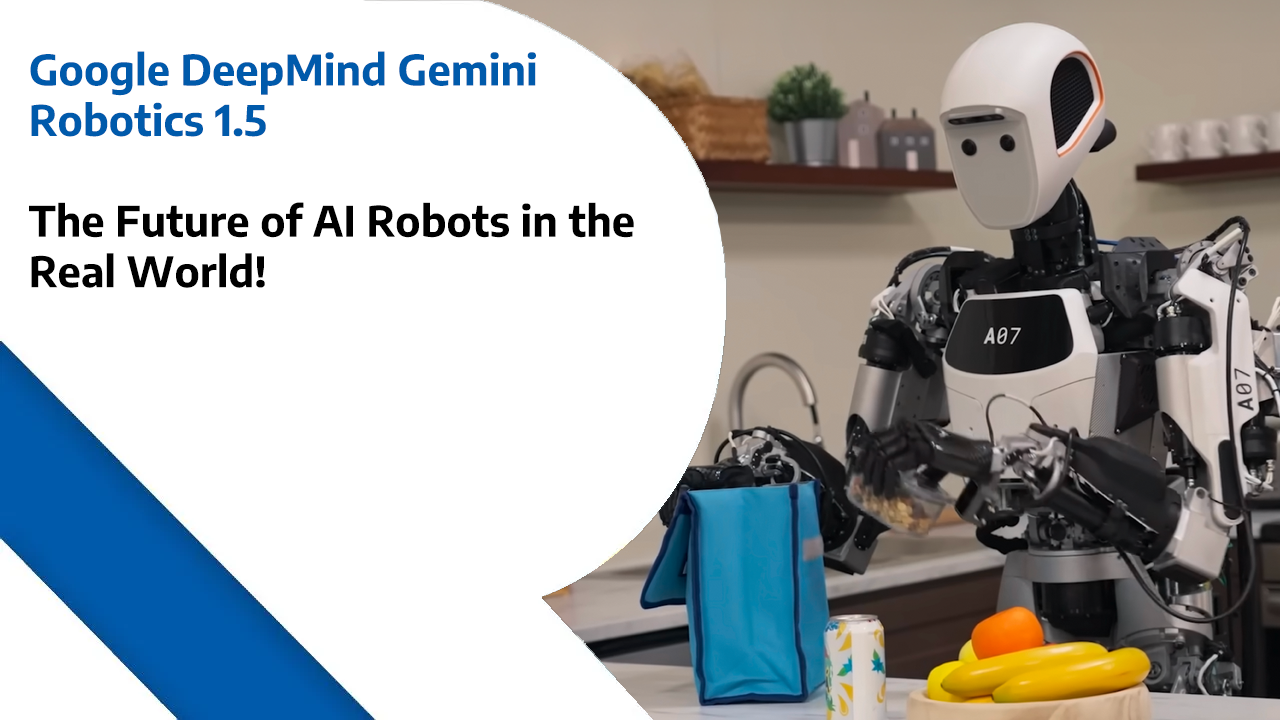
    Gemini Robotics 1.5 is Google DeepMind’s new step in bringing AI out of screens and into the physical world.
    Instead of just answering questions online, it can plan, reason, and act with real robots.

    There are two models working together.
    Gemini Robotics-ER 1.5 is the high-level brain that makes multi-step plans, uses tools, and even checks Google Search if needed.
    Gemini Robotics 1.5 is the doer — it sees, interprets, and manipulates objects while explaining what it is doing.
    For example, if you say “Sort my recycling,” the ER model figures out the rules, and Gemini 1.5 moves each item into the right bin.


    The system can share skills across different types of robots, so what one learns can transfer to another.
    It generates reasoning in plain English before taking difficult actions, essentially thinking out loud.
    DeepMind has also focused on safety, with collision avoidance, semantic checks for appropriate behaviour, and a new benchmark called ASIMOV to test for edge cases.


    This is an important step toward artificial general intelligence in the real world.
    Robots powered by Gemini could support homes, logistics, factories, and even space exploration.
    For now, it’s not science fiction — it’s the start of practical AI agents that move with reason.


    And that’s your robot news update for today!
    If you’re curious about how robotics can transform your business, join me for the weekly Live Robot Optimise Workshop — it’s packed with insights, trends, and practical tips. Don’t forget to subscribe so you stay in the loop with all the latest updates.

    I’m RoboPhil from Robot Philosophy — thanks for watching, and I’ll see you next time!

    Join our Robot Optimise Industry (ROI) Workshop: https://robophil.com/


    Sponsors:-


    Robot Center: – https://robotcenter.co.uk/ – Buy Robot, Robot Buy, Robot consultancy, Robotics Consultancy, Inspection Robots, Security Robots,


    Robots of London: – https://robotsoflondon.co.uk/ – Robot Hire, Robot Rental, Rent Robot, Hire Robot, Robot Events, Robotics Hire, Hire Robotics, Rent Robotics, Robotics Rent, for exhibitions, shows, Events, Robot hire in the UK, Robot hire in Europe


    Robot Philosophy: – https://robophil.com/ – Robot Consultancy, Robot Recruitment, Robot Advice, Robot Insights, Robot Ideas. RoboPhil, also known as Philip English, is a leading Robot YouTuber, Robot Influencer, Robot Trainer, Robot Consultant, and Robot Streamer, Robotics Streamer, Robotics YouTuber, Robotics Influencer, Robotics Consultant, Robotics Trainer 


  • Inspection Robots – How to Choose the Right Type for Your Industry

    Inspection Robots – How to Choose the Right Type for Your Industry

    Inspection Robots – How to Choose the Right Type for Your Industry

    Sponsored by Robot Center, Robots of London, and Robot Philosophy

    The industrial landscape is rapidly evolving, and at the forefront of this transformation are inspection robots. These sophisticated machines are revolutionizing how businesses monitor infrastructure, ensure safety compliance, and maintain operational efficiency across countless industries. From oil and gas pipelines to nuclear facilities, from manufacturing plants to renewable energy installations, inspection robots are becoming indispensable tools for modern enterprises.

    But with the growing variety of inspection robot technologies available, choosing the right solution for your specific industry needs can be overwhelming. This comprehensive guide will help you navigate the complex world of inspection robotics, understand the key technologies, and make informed decisions that will drive your business forward.

    Understanding Inspection Robot Technologies

    Aerial Inspection Robots (Drones)

    Aerial inspection robots, commonly known as drones or UAVs (Unmanned Aerial Vehicles), have transformed how we approach large-scale infrastructure inspection. These versatile platforms excel in scenarios where traditional inspection methods would be dangerous, time-consuming, or cost-prohibitive.

    Key Capabilities:

    • High-resolution visual and thermal imaging
    • LiDAR scanning for precise 3D mapping
    • Multi-spectral analysis for vegetation and corrosion detection
    • GPS-guided autonomous flight patterns
    • Real-time data transmission and analysis

    Ideal Applications:

    • Power line and transmission tower inspection
    • Wind turbine blade analysis
    • Building and bridge structural assessment
    • Solar panel efficiency monitoring
    • Pipeline route surveys
    • Emergency response and disaster assessment

    The versatility of aerial inspection robots makes them particularly valuable for utilities, construction companies, and infrastructure management organizations. Their ability to cover vast areas quickly while capturing detailed imagery and data has made them essential tools for predictive maintenance programs.

    Ground-Based Mobile Inspection Robots

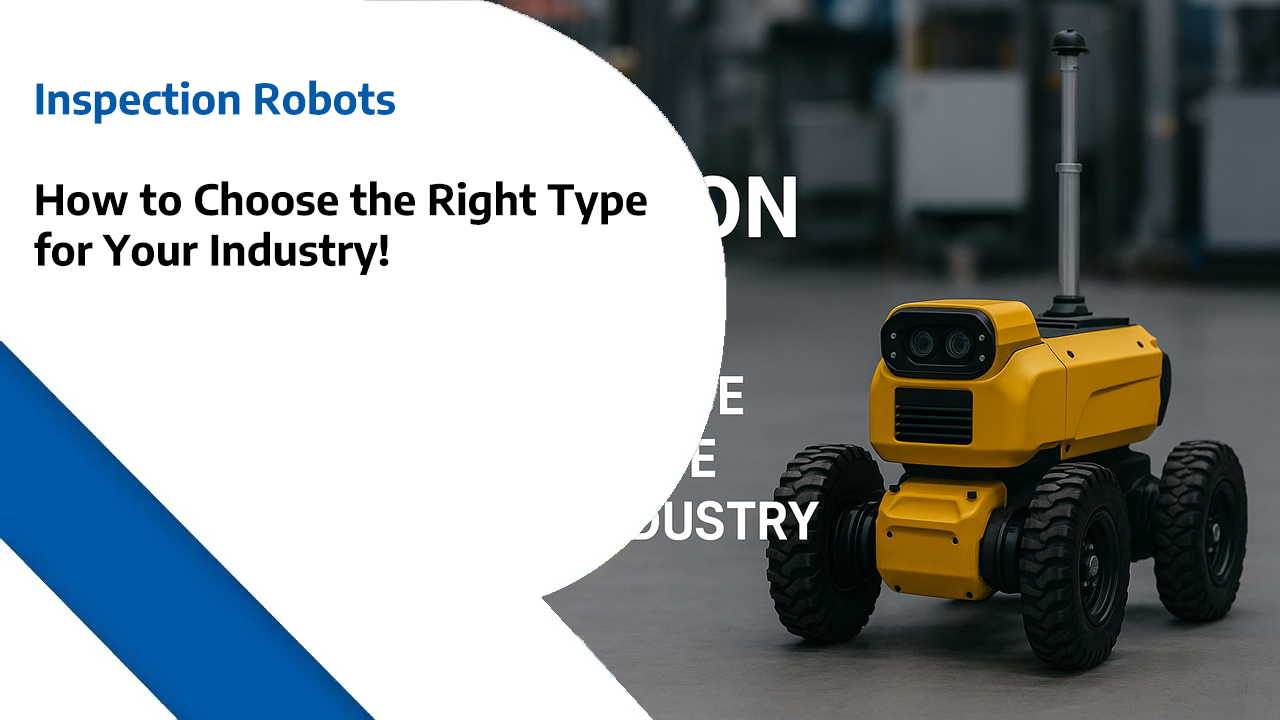
    Ground-based inspection robots are designed to navigate terrestrial environments, from industrial facilities to urban infrastructure. These robots combine mobility with sophisticated sensor packages to perform detailed inspections in environments that may be hazardous or difficult for human inspectors to access.

    Key Features:

    • Tracked or wheeled mobility systems for various terrains
    • Environmental sealing for harsh conditions
    • Advanced sensor integration including cameras, thermal imaging, and gas detection
    • Autonomous navigation and obstacle avoidance
    • Remote operation capabilities with real-time feedback

    Primary Use Cases:

    • Manufacturing facility safety inspections
    • Hazardous material storage area monitoring
    • Construction site progress tracking
    • Security perimeter assessments
    • Environmental monitoring in industrial zones
    • Post-disaster damage evaluation

    These robots are particularly valuable in industries where human safety is paramount, such as chemical processing, nuclear facilities, and heavy manufacturing operations.

    Underwater Inspection Robots (ROVs and AUVs)

    Marine and underwater inspection presents unique challenges that traditional methods struggle to address effectively. Remotely Operated Vehicles (ROVs) and Autonomous Underwater Vehicles (AUVs) have become critical tools for subsea infrastructure inspection and maintenance.

    Technical Specifications:

    • Depth ratings from shallow water to deep ocean capabilities
    • High-definition underwater cameras with powerful lighting systems
    • Sonar and acoustic positioning systems
    • Manipulator arms for sample collection and minor repairs
    • Robust communication tethers or autonomous operation modes

    Industry Applications:

    • Offshore oil and gas platform inspection
    • Ship hull and propeller examination
    • Underwater pipeline integrity assessment
    • Port and harbor infrastructure monitoring
    • Marine renewable energy system maintenance
    • Aquaculture facility inspection

    The offshore energy sector, shipping industry, and marine construction companies rely heavily on underwater inspection robots to maintain operational safety and regulatory compliance while minimizing downtime and operational risks.

    Confined Space Inspection Robots

    Many industrial applications require inspection of confined or restricted spaces where human access is limited, dangerous, or impossible. Specialized confined space robots are engineered to navigate these challenging environments while delivering high-quality inspection data.

    Design Features:

    • Compact, modular designs for tight spaces
    • Flexible or articulated bodies for navigation through complex geometries
    • Powerful LED lighting systems for dark environments
    • High-resolution cameras with pan, tilt, and zoom capabilities
    • Chemical and gas detection sensors for safety monitoring

    Specialized Applications:

    • Tank and vessel internal inspection
    • Pipe and ductwork assessment
    • Sewer and drainage system evaluation
    • Storage silo condition monitoring
    • Boiler and heat exchanger examination
    • Underground utility tunnel inspection

    Industries such as petrochemicals, food processing, water treatment, and HVAC services find these robots invaluable for maintaining system integrity while protecting worker safety.

    Industry-Specific Applications and Considerations

    Oil and Gas Sector

    The oil and gas industry faces unique inspection challenges due to the hazardous nature of operations, remote locations, and critical safety requirements. Inspection robots in this sector must meet stringent explosion-proof standards and operate reliably in extreme conditions.

    Critical Applications:

    • Pipeline integrity monitoring using magnetic flux leakage and ultrasonic testing
    • Offshore platform structural assessments
    • Refinery equipment inspection including distillation columns and heat exchangers
    • Flare stack and elevated equipment examination
    • Environmental monitoring for leak detection and compliance

    The industry’s adoption of inspection robots has significantly reduced operational risks, improved maintenance scheduling, and enhanced regulatory compliance while reducing inspection costs by up to 40% in many applications.

    Power Generation and Utilities

    Power generation facilities, whether traditional fossil fuel plants or renewable energy installations, require continuous monitoring to ensure safe and efficient operation. Inspection robots provide comprehensive coverage while minimizing operational disruptions.

    Key Inspection Areas:

    • Boiler and turbine internal examinations
    • Cooling tower structural and mechanical assessments
    • Electrical substation equipment monitoring
    • Solar panel cleaning verification and defect detection
    • Wind turbine blade crack and erosion analysis
    • Hydroelectric dam structural integrity evaluation

    Utility companies report significant improvements in planned maintenance effectiveness and reductions in unscheduled outages when implementing comprehensive robotic inspection programs.

    Manufacturing and Process Industries

    Modern manufacturing facilities require continuous monitoring to maintain quality standards, ensure worker safety, and optimize production efficiency. Inspection robots provide consistent, objective assessments that human inspectors cannot match in terms of frequency and precision.

    Manufacturing Applications:

    • Quality control inspections on production lines
    • Environmental monitoring for air quality and contamination
    • Equipment condition monitoring for predictive maintenance
    • Safety system verification and testing
    • Inventory management and facility security
    • Clean room contamination assessment

    The integration of inspection robots with Industry 4.0 systems enables real-time decision-making and automated responses to inspection findings, creating more responsive and efficient manufacturing environments.

    Infrastructure and Construction

    Large-scale infrastructure projects and ongoing facility maintenance present logistical challenges that inspection robots are uniquely positioned to address. These applications often require robots capable of operating in dynamic environments with changing conditions.

    Infrastructure Inspection Scope:

    • Bridge deck and structural component assessment
    • Building facade and roof condition evaluation
    • Road and pavement quality monitoring
    • Tunnel and underground facility inspection
    • Airport runway and taxiway examination
    • Rail system track and signal equipment monitoring

    Construction companies and infrastructure management organizations use inspection robots to accelerate project timelines, improve safety records, and provide comprehensive documentation for stakeholders and regulatory bodies.

    Key Selection Criteria for Inspection Robots

    Technical Specifications and Performance Requirements

    Selecting the right inspection robot begins with a thorough understanding of your specific technical requirements. The robot’s capabilities must align with your inspection objectives, environmental conditions, and data quality needs.

    Critical Performance Factors:

    • Sensor resolution and accuracy specifications
    • Operating range and endurance capabilities
    • Environmental tolerance (temperature, humidity, chemical exposure)
    • Payload capacity for additional sensors or tools
    • Data storage and transmission capabilities
    • Maintenance requirements and operational complexity

    Consider not only current needs but also future expansion possibilities. A robot platform that can accommodate additional sensors or upgraded components may provide better long-term value than a more limited system with lower initial costs.

    Environmental and Operational Constraints

    Your operating environment significantly influences robot selection. Factors such as space constraints, environmental hazards, regulatory requirements, and operational schedules must all be considered in the selection process.

    Environmental Considerations:

    • Space limitations and access restrictions
    • Hazardous atmosphere classifications (ATEX, NEC)
    • Temperature extremes and weather exposure
    • Chemical resistance requirements
    • Electromagnetic interference and communication challenges
    • Lighting conditions and visibility requirements

    Understanding these constraints early in the selection process will help narrow your options and ensure the chosen solution can operate effectively in your specific environment.

    Budget and Return on Investment Analysis

    While inspection robots represent significant investments, they typically provide substantial returns through improved safety, reduced operational costs, and enhanced inspection quality. A comprehensive financial analysis should consider both direct and indirect benefits.

    Cost Considerations:

    • Initial robot acquisition and setup costs
    • Training requirements for operators and maintenance staff
    • Ongoing operational expenses including maintenance, calibration, and upgrades
    • Insurance and regulatory compliance costs
    • Potential cost savings from reduced human inspector requirements
    • Improved inspection frequency and quality leading to better maintenance decisions

    Many organizations find that inspection robots pay for themselves within 12-24 months through improved operational efficiency and reduced inspection-related expenses.

    Integration and Compatibility Requirements

    Modern inspection robots must integrate seamlessly with existing systems and workflows to maximize their value. Consider how the robot will fit into your current operational procedures and information systems.

    Integration Factors:

    • Compatibility with existing data management systems
    • Communication protocols and network requirements
    • Workflow integration and operator interface design
    • Reporting and documentation capabilities
    • Maintenance and support infrastructure requirements
    • Scalability for future expansion or additional robot deployment

    Successful integration often requires collaboration between robot suppliers, system integrators, and internal IT and operations teams to ensure smooth implementation and ongoing operation.

    Implementation Strategy and Best Practices

    Planning and Preparation Phase

    Successful inspection robot implementation begins with thorough planning and preparation. This phase sets the foundation for effective deployment and long-term success.

    Key Planning Elements:

    • Comprehensive site assessment and requirements analysis
    • Stakeholder engagement and change management planning
    • Regulatory compliance and safety protocol development
    • Training program design and implementation scheduling
    • Pilot program structure and success metrics definition
    • Risk assessment and mitigation strategy development

    Investing adequate time in planning reduces implementation risks and accelerates the path to operational benefits. Many successful deployments include pilot programs that allow organizations to refine procedures and train personnel before full-scale implementation.

    Training and Skill Development

    The effectiveness of inspection robots depends heavily on the skills and knowledge of the operators and support personnel. Comprehensive training programs ensure safe operation and maximum return on investment.

    Training Components:

    • Robot operation and safety procedures
    • Data collection and analysis techniques
    • Routine maintenance and troubleshooting
    • Emergency procedures and risk management
    • Software operation and data management
    • Regulatory compliance and reporting requirements

    Organizations should consider both initial training for deployment and ongoing education to maintain skills and incorporate new capabilities as they become available.

    Performance Monitoring and Optimization

    Continuous monitoring and optimization ensure that inspection robots deliver maximum value throughout their operational life. Regular assessment of performance metrics and operational procedures identifies opportunities for improvement.

    Monitoring Metrics:

    • Inspection coverage and frequency achievements
    • Data quality and accuracy measurements
    • Operational efficiency and cost performance
    • Safety incident rates and compliance metrics
    • Equipment reliability and maintenance requirements
    • User satisfaction and training effectiveness

    Establishing baseline measurements and tracking improvements over time demonstrates the value of the investment and guides future optimization efforts.

    Future Trends and Emerging Technologies

    Artificial Intelligence and Machine Learning Integration

    The integration of AI and machine learning technologies is transforming inspection robots from data collection tools into intelligent analysis platforms. These capabilities enable automated defect detection, predictive analytics, and real-time decision support.

    AI-Enhanced Capabilities:

    • Automated defect recognition and classification
    • Predictive maintenance recommendations
    • Anomaly detection and trend analysis
    • Natural language reporting and insights
    • Adaptive inspection routing and optimization
    • Real-time safety monitoring and alerting

    As these technologies mature, inspection robots will become increasingly autonomous and capable of making complex decisions based on inspection findings.

    Enhanced Sensor Technologies

    Sensor technology continues to advance rapidly, providing inspection robots with increasingly sophisticated detection and measurement capabilities. New sensor types and improved performance enable more comprehensive and accurate inspections.

    Emerging Sensor Technologies:

    • Advanced thermal imaging with higher resolution and sensitivity
    • Multi-spectral and hyperspectral imaging systems
    • Enhanced acoustic and ultrasonic detection methods
    • Improved chemical and gas detection sensors
    • Advanced radar and LiDAR systems
    • Miniaturized laboratory-quality analytical instruments

    These sensor advances expand the range of defects and conditions that inspection robots can detect and quantify, improving maintenance decision-making and asset management.

    Collaborative Robot Systems

    The future of inspection robotics includes greater collaboration between multiple robot platforms and human operators. Swarm robotics and coordinated multi-robot systems can provide comprehensive coverage of large or complex facilities.

    Collaborative Capabilities:

    • Multi-robot coordination for large-area inspections
    • Human-robot collaboration for complex tasks
    • Shared intelligence and distributed processing
    • Coordinated data collection and analysis
    • Adaptive task allocation and resource optimization
    • Enhanced safety through redundancy and monitoring

    These collaborative approaches promise to further improve inspection efficiency while maintaining the highest safety standards.

    Making the Right Choice: Expert Consultation and Support

    Selecting and implementing inspection robots represents a significant investment in your organization’s future capabilities. The complexity of available technologies, varying application requirements, and rapidly evolving marketplace make expert guidance invaluable for making optimal decisions.

    Professional Robot Consulting Services

    Working with experienced robot consultants provides access to specialized knowledge and objective analysis that internal teams may lack. Professional consultants bring extensive experience across multiple industries and robot platforms, enabling them to provide comprehensive guidance throughout the selection and implementation process.

    Consulting Service Benefits:

    • Objective technology assessment and recommendation
    • Industry-specific expertise and best practices
    • Vendor evaluation and negotiation support
    • Implementation planning and project management
    • Risk assessment and mitigation strategies
    • Long-term strategic planning and optimization

    Professional consulting services help organizations avoid costly mistakes and ensure that their inspection robot investments deliver maximum value from day one.

    Robot Recruitment and Specialized Personnel

    Successful inspection robot programs require skilled personnel who understand both the technology and its application in your specific industry. Specialized recruitment services help organizations find qualified operators, technicians, and program managers.

    Recruitment Specializations:

    • Robot operators with industry-specific experience
    • Maintenance technicians with robotic systems expertise
    • Data analysts specializing in inspection data interpretation
    • Project managers with robotics implementation experience
    • Safety professionals familiar with robotic inspection protocols
    • Training specialists for ongoing education programs

    Access to qualified personnel ensures that organizations can realize the full potential of their inspection robot investments while maintaining the highest safety and operational standards.

    Conclusion: Partnering for Success

    The inspection robot market offers tremendous opportunities for organizations seeking to improve safety, reduce costs, and enhance operational efficiency. However, the complexity of available technologies and the critical importance of making the right choice make professional guidance essential for success.

    Whether you’re exploring your first inspection robot deployment or expanding existing capabilities, the key to success lies in thorough planning, expert guidance, and ongoing support. The investment in professional consultation and specialized personnel will pay dividends throughout the life of your inspection robot program.

    Ready to Transform Your Inspection Operations?

    Take the next step toward implementing inspection robots in your organization. Our team of robot consultancy experts and specialized recruitment professionals are ready to help you navigate the complex world of inspection robotics and find the perfect solution for your specific needs.

    Contact us today to schedule your consultation:

    Don’t let the complexity of robot selection slow down your progress. With expert guidance and comprehensive support, you can implement inspection robot solutions that will transform your operations and deliver lasting value.


    Article Sponsors

    This comprehensive guide is proudly sponsored by leading robotics organizations committed to advancing inspection robot technology and supporting successful implementations:

    Robot Center – Your complete destination for robot acquisition, consulting, and robotics consultancy services. Whether you’re looking to buy robots or need expert robotics consultancy, Robot Center provides comprehensive support for all your automation needs.

    Robots of London – The premier source for robot hire, robot rental, and robot events. When you need to rent robots or hire robot solutions for temporary projects, events, or trial periods, Robots of London delivers professional service and cutting-edge technology.

    Robot Philosophy – Leading provider of robot consultancy and robot recruitment services, offering expert robot advice, insights, and innovative ideas. RoboPhil, also known as Philip English, is a recognized Robot YouTuber, Robot Influencer, Robot Trainer, Robot Consultant, and Robot Streamer, bringing extensive expertise in Robotics Consulting and Training to organizations worldwide.

    These industry leaders share our commitment to helping organizations successfully implement inspection robot technology and realize the full potential of robotic automation in their operations.


    https://www.youtube.com/watch?v=mkKpPAlZ2iQ

    https://www.youtube.com/shorts/DjL0oRuMGNg

  • Hyundai & Kia’s Wearable Robot for Farmers – X-ble Shoulder Revolution in Agriculture

    Hyundai & Kia’s Wearable Robot for Farmers – X-ble Shoulder Revolution in Agriculture

    Hyundai & Kia’s Wearable Robot for Farmers – X-ble Shoulder Revolution in Agriculture

    Hyundai and Kia are taking a step into farming with robotics.
    They have signed a Memorandum of Understanding with Korea’s Rural Development Administration to bring their wearable robot, the X-ble Shoulder, to agriculture.
    The device is designed to reduce shoulder strain for farmers who spend long hours lifting and reaching.
    It is part exoskeleton, part supportive harness, and all about keeping shoulders from giving up halfway through the day.

    In tests earlier this year, the X-ble Shoulder reduced shoulder muscle activity by around twenty-two percent during heavy tasks.
    That means less fatigue, more efficiency, and fewer sore evenings after a full day in the field.
    The collaboration will see the technology demonstrated on real farms, validated under real working conditions, and promoted for wider adoption.

    The Rural Development Administration will lead testing and training in the field.
    Hyundai and Kia will adapt the device to agricultural tasks, share results, and look at ways to scale its use.
    The ultimate aim is to create a safer, healthier, and more sustainable farming environment.

    The X-ble Shoulder has already been tested in industries like construction, shipbuilding, and manufacturing.
    It even found its first commercial use with Korean Air in aircraft maintenance.
    Now, with agriculture added to the list, farmers may find themselves working side by side with wearable robotics sooner than expected.

    It is not a tractor replacement, but it could make the hardest part of farming—repetitive lifting—just that bit easier.


    And that’s your robot news update for today!
    If you’re curious about how robotics can transform your business, join me for the weekly Live Robot Optimise Workshop — it’s packed with insights, trends, and practical tips. Don’t forget to subscribe so you stay in the loop with all the latest updates.

    I’m RoboPhil from Robot Philosophy — thanks for watching, and I’ll see you next time!


    Join our Robot Optimise Industry (ROI) Workshop: https://robophil.com/


    Sponsors:-


    Robot Center: – https://robotcenter.co.uk/ – Buy Robot, Robot Buy, Robot consultancy, Robotics Consultancy, Inspection Robots, Security Robots,


    Robots of London: – https://robotsoflondon.co.uk/ – Robot Hire, Robot Rental, Rent Robot, Hire Robot, Robot Events, Robotics Hire, Hire Robotics, Rent Robotics, Robotics Rent, for exhibitions, shows, Events, Robot hire in the UK, Robot hire in Europe


    Robot Philosophy: – https://robophil.com/ – Robot Consultancy, Robot Recruitment, Robot Advice, Robot Insights, Robot Ideas. RoboPhil, also known as Philip English, is a leading Robot YouTuber, Robot Influencer, Robot Trainer, Robot Consultant, and Robot Streamer, Robotics Streamer, Robotics YouTuber, Robotics Influencer, Robotics Consultant, Robotics Trainer 

  • Special-Purpose Robots

    Special-Purpose Robots


    Special-Purpose Robots: The Future of Tailored Automation

    Introduction

    Robots have become an inseparable part of modern industry, logistics, healthcare, and even our daily lives. But not all robots are created equal. While general-purpose robots—such as collaborative arms or service bots—offer flexibility across multiple tasks, special-purpose robots are designed for a single, highly defined function. This specialization allows them to achieve unmatched performance, efficiency, and reliability in targeted applications.

    From surgical robots saving lives in hospitals to inspection robots protecting energy infrastructure, special-purpose machines are redefining what automation can do. Businesses that embrace this new wave of robotics are often rewarded with increased productivity, cost reductions, and competitive advantage.

    This article dives deep into the world of special-purpose robots—what they are, their history, applications, benefits, limitations, and future trends. Most importantly, we’ll show you how your business can capitalize on this technology with the right strategy, guided by expert consultancy and recruitment services.

    👉 To explore tailored solutions for your organization, book a consultation with our robot specialists today: info@robophil.com | 0845 528 0404


    What Are Special-Purpose Robots?

    A special-purpose robot is a machine designed and optimized to perform one task or a narrow set of tasks exceptionally well. Unlike general-purpose robots that prioritize adaptability, special-purpose robots emphasize precision, speed, and efficiency in a single application.

    Key characteristics include:

    • Dedicated design: Hardware and software engineered for one task.

    • High reliability: Lower failure rates due to reduced complexity.

    • Task optimization: Superior performance compared to generalists.

    • Lower variability: Minimal need for reprogramming or retraining.

    Think of them as the Formula 1 cars of robotics—while they may not carry groceries or sweep floors, they excel at their intended purpose with unmatched capability.


    A Brief History of Special-Purpose Robots

    The concept of designing robots for specific tasks is as old as automation itself. Some key milestones include:

    1. 1960s – The First Industrial Robots
      Early machines like Unimate were built for repetitive welding and assembly line tasks. These were among the first special-purpose robots.

    2. 1980s – Rise of Medical Robotics
      PUMA 560 was used in neurosurgery, setting the stage for surgical robots such as the da Vinci system.

    3. 1990s – Defense and Exploration
      Robots designed for bomb disposal and space exploration emerged as high-stakes special-purpose systems.

    4. 2000s – Logistics and Inspection
      Special-purpose robots entered warehouses, pipelines, and nuclear plants.

    5. 2010s – Consumer-Facing Specialization
      Delivery robots, food-preparation bots, and cleaning robots became mainstream.

    6. 2020s and Beyond – Integration with AI
      Special-purpose robots now incorporate advanced AI, computer vision, and machine learning to adapt within their narrow scope, making them smarter and safer.


    Examples of Special-Purpose Robots

    1. Medical and Surgical Robots

    • da Vinci Surgical System for minimally invasive procedures.

    • Mako Robotics for orthopedic surgeries.

    • CyberKnife for targeted cancer treatment.

    2. Inspection and Maintenance Robots

    • Drones and crawlers for pipeline inspection.

    • Underwater robots for offshore oil rigs.

    • Energy Robotics’ solutions for nuclear and power plants.

    3. Agricultural Robots

    • Automated harvesters for strawberries and apples.

    • Precision drones for pesticide spraying.

    • Weeding robots that reduce chemical usage.

    4. Military and Defense Robots

    • Bomb disposal robots like PackBot.

    • Reconnaissance robots for dangerous terrain.

    • Exoskeletons enhancing soldier mobility.

    5. Logistics and Warehousing Robots

    • Sortation systems in e-commerce warehouses.

    • Automated guided vehicles (AGVs).

    • Cold storage robots designed to function in sub-zero environments.

    6. Hospitality and Events Robots

    • Cocktail-mixing robotic arms.

    • Hotel delivery robots.

    • Event hire robots available through Robots of London for exhibitions, shows, and activations.


    Benefits of Special-Purpose Robots

    1. Unmatched Efficiency – Speed and precision tailored to one job.

    2. Reliability – Fewer breakdowns and longer uptime.

    3. Safety – Protect humans in hazardous tasks like nuclear inspection.

    4. Cost Reduction – Fewer errors, lower labor costs.

    5. Consistency – Uniform quality output every time.

    6. Competitive Edge – Businesses using them often outpace rivals.


    Challenges and Limitations

    1. Lack of Flexibility – Cannot easily switch tasks.

    2. High Initial Costs – Custom development can be expensive.

    3. Maintenance Complexity – Specialized support required.

    4. Technology Obsolescence – Rapid innovation may outdate systems.

    This is why businesses need the right consultancy and recruitment partners to guide them. Without expert insight, companies risk investing in systems that may not deliver expected ROI.

    👉 Get expert advice on whether a special-purpose robot is right for you: info@robophil.com | 0845 528 0404


    The Role of Robot Consultancy

    Many businesses hesitate when it comes to robotics adoption, fearing wasted investment or operational disruption. That’s where robot consultancy comes in.

    At Robot Philosophy, we specialize in:

    • Audit and Assessment: Identifying areas where robots can create impact.

    • Vendor Selection: Choosing the right robot manufacturer or integrator.

    • Implementation Roadmaps: Step-by-step guides to deployment.

    • Change Management: Training teams to work with robots.

    • ROI Optimization: Ensuring long-term returns on investment.

    Special-purpose robots require even more guidance because of their bespoke nature. Our consultancy ensures you invest wisely, avoiding costly missteps.


    Robot Recruitment: Building the Right Team

    Special-purpose robots don’t just run on software—they need skilled humans for integration, operation, and maintenance. Finding these specialists is challenging in today’s competitive job market.

    That’s why we offer robot recruitment services:

    • Specialist Talent Sourcing – Engineers, programmers, and roboticists.

    • Industry-Specific Expertise – From healthcare robotics to logistics automation.

    • Flexible Hiring Models – Permanent staff, contractors, or project-based roles.

    • Global Reach – Access to talent pools across Europe, Asia, and beyond.

    Building the right team ensures your special-purpose robots deliver maximum value.

    👉 Hire the right robotics talent through us today: info@robophil.com | 0845 528 0404


    Future Trends in Special-Purpose Robots

    1. AI-Enhanced Specialization
      Robots that learn and improve within their niche tasks.

    2. Human-Robot Collaboration
      Special-purpose cobots working alongside skilled professionals.

    3. Sustainability-Driven Robots
      Agricultural and recycling robots supporting environmental goals.

    4. Miniaturization
      Tiny robots for surgery, inspection, and biotech.

    5. Cloud Robotics and Digital Twins
      Virtual modeling and real-time data optimizing robot operations.

    6. Events and Marketing Robots
      Businesses using Robots of London hire robots as crowd-pullers, entertainers, and information hubs.


    Why Businesses Can’t Afford to Ignore Special-Purpose Robots

    • Competitors adopting them gain efficiency advantages.

    • Customers expect faster service and higher precision.

    • Skilled staff shortages mean robots fill critical gaps.

    • Cost-pressures demand leaner, more reliable operations.

    Ignoring robotics is no longer an option. With special-purpose robots, the key lies in choosing the right system for your business model—and that’s where consultancy and recruitment become invaluable.


    Sponsors of This Article

    This in-depth guide is proudly sponsored by leading names in the robotics industry:

    • Robot Center: Buy Robot, Robot Buy, Robot Consultancy, Robotics Consultancy.

    • Robots of London: Robot Hire, Robot Rental, Rent Robot, Hire Robot, Robot Events.

    • Robot Philosophy: Robot Consultancy AND Robot Recruitment, Robot Advice, Robot Insights, Robot Ideas.

    RoboPhil (Philip English) is a leading Robot YouTuber, Robot Influencer, Robot Trainer, Robot Consultant, and Robot Streamer—providing the knowledge and expertise to help businesses succeed with robotics.


    Conclusion

    Special-purpose robots represent the pinnacle of automation—machines designed not to do everything, but to do one thing exceptionally well. They are transforming industries from healthcare to logistics, agriculture to events. But like all powerful tools, they require careful planning, strategic investment, and skilled teams.

    That’s where we come in.

    Whether you’re a small business exploring automation for the first time or a global corporation scaling your operations, our robot consultancy and recruitment services ensure you achieve real, measurable impact with robotics.

    📧 info@robophil.com
    📞 0845 528 0404

    Book a call today and start building your competitive advantage with special-purpose robots.


    https://www.youtube.com/watch?v=smoOb-sfmzI


    https://www.youtube.com/shorts/vQ9qPeSF7ZM