Tag: Robot Youtuber

  • World’s First All-Weather Humanoid Robot – Deep Robotics DR02 Can Work in the Rain!

    World’s First All-Weather Humanoid Robot – Deep Robotics DR02 Can Work in the Rain!

    World’s First All-Weather Humanoid Robot – Deep Robotics DR02 Can Work in the Rain!


    Imagine a humanoid robot that doesn’t shut down the moment it rains. Meet the Deep Robotics DR02 — the world’s first all-weather humanoid robot with an IP66 rating.

    That means it’s completely sealed against dust and can handle powerful water jets — yes, it can literally work through a downpour. Deep Robotics, based in Hangzhou, China, has built this thing to thrive where most robots would short-circuit.

    The DR02 is 5 foot 9 (175 cm), the size of an average adult, with a 10 kg arm payload — strong enough to handle tools, parts, and small equipment. Its operating range? From -4°F to 131°F. That’s everything from a freezing warehouse to a scorching workshop.

    It walks at a natural 1.5 m/s, can sprint up to 4 m/s, climb stairs, and manage slopes — perfect for factories, patrol routes, and outdoor work.

    Under the hood, it’s powered by a 275 TOPS computing unit and loaded with LiDAR, depth cameras, and wide-angle vision, giving it real-time awareness of its surroundings. And thanks to its modular design, you can swap an arm or leg in hours, not days — minimizing downtime and maintenance costs.

    So why should you care? Because this marks the next big leap in industrial robotics. Whether you work in security, manufacturing, or logistics, robots like the DR02 mean operations can continue safely and efficiently in conditions that would challenge humans.

    And if you’re just a tech fan, it’s proof that humanoid robots aren’t just lab experiments anymore — they’re stepping out into the real world.

    The Deep Robotics DR02 isn’t just a milestone — it’s a preview of what’s next for industry automation.

    And that’s your robot news update for today!. If you’re curious about how robotics can transform your business, head over to Robot Philosophy website to join the waiting list, or to speak with the team directly about robotics.

    Don’t forget to subscribe so you stay in the loop with all the latest updates.

    I’m RoboPhil from Robot Philosophy — thanks for watching, and I’ll see you next time!


    Join the workshop waiting list or get in touch at: https://robophil.com/


    Sponsors:-


    Robot Center: – https://robotcenter.co.uk/ – Buy Robot, Robot Buy, Robot consultancy, Robotics Consultancy, Inspection Robots, Security Robots,


    Robots of London: – https://robotsoflondon.co.uk/ – Robot Hire, Robot Rental, Rent Robot, Hire Robot, Robot Events, Robotics Hire, Hire Robotics, Rent Robotics, Robotics Rent, for exhibitions, shows, Events, Robot hire in the UK, Robot hire in Europe


    Robot Philosophy: – https://robophil.com/ – Robot Consultancy, Robot Recruitment, Robot Advice, Robot Insights, Robot Ideas. RoboPhil, also known as Philip English, is a leading Robot YouTuber, Robot Influencer, Robot Trainer, Robot Consultant, and Robot Streamer, Robotics Streamer, Robotics YouTuber, Robotics Influencer, Robotics Consultant, Robotics Trainer 

  • Hospital Robot Moxi Joins AARP AgeTech Accelerator — The Future of Senior Care Has Arrived!

    Hospital Robot Moxi Joins AARP AgeTech Accelerator — The Future of Senior Care Has Arrived!

    Hospital Robot Moxi Joins AARP AgeTech Accelerator — The Future of Senior Care Has Arrived!

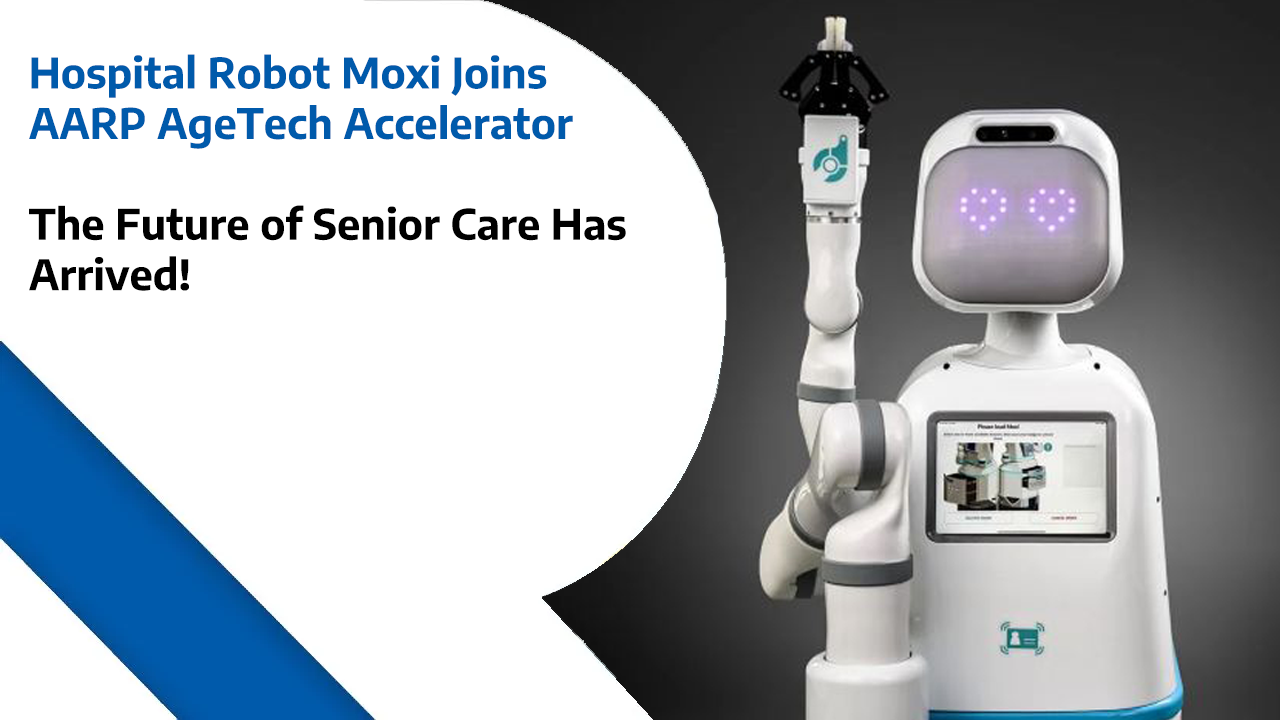
    Right, picture this — you’re in a hospital, and instead of running around fetching supplies, a robot named Moxi does it for you. Well, the clever folks at Diligent Robotics built her, and now they’ve just joined the AARP AgeTech Collaborative Accelerator, which is like a startup bootcamp — but for tech that helps us age better.

    Diligent Robotics, based in Austin, Texas, has been quietly transforming healthcare since 2017. Their robot, Moxi, has already saved hospital staff nearly 600,000 hours and completed over 1.25 million deliveries — everything from lab samples to medications. That’s a lot of fetching, even by robot standards.

    Now they’re taking that experience into senior living and long-term care. Why? Because by 2040, the U.S. will lose around 18 million care workers, just as 2.5 million new jobs open up. You don’t need a calculator — that’s a big problem, and Moxi might just be part of the solution.

    Imagine Moxi delivering medication, running supplies, or helping staff stay focused on what really matters — people. It’s not about replacing humans; it’s about giving them back time. Think of it as adding a dependable, tireless coworker who never complains about coffee breaks.

    Through the AARP AgeTech Accelerator, Diligent gets direct market support, access to care partners, and guidance on how robots like Moxi can make a real difference for older adults.

    And for you? If you work in healthcare, senior living, or tech — this is a glimpse into how physical AI will make care smarter, faster, and more human.

    And that’s your robot news update for today!. If you’re curious about how robotics can transform your business, head over to Robot Philosophy website to join the waiting list, or to speak with the team directly about robotics.

    Don’t forget to subscribe so you stay in the loop with all the latest updates.

    I’m RoboPhil from Robot Philosophy — thanks for watching, and I’ll see you next time!

    Join the workshop waiting list or get in touch at: https://robophil.com/


    Sponsors:-


    Robot Center: – https://robotcenter.co.uk/ – Buy Robot, Robot Buy, Robot consultancy, Robotics Consultancy, Inspection Robots, Security Robots,


    Robots of London: – https://robotsoflondon.co.uk/ – Robot Hire, Robot Rental, Rent Robot, Hire Robot, Robot Events, Robotics Hire, Hire Robotics, Rent Robotics, Robotics Rent, for exhibitions, shows, Events, Robot hire in the UK, Robot hire in Europe


    Robot Philosophy: – https://robophil.com/ – Robot Consultancy, Robot Recruitment, Robot Advice, Robot Insights, Robot Ideas. RoboPhil, also known as Philip English, is a leading Robot YouTuber, Robot Influencer, Robot Trainer, Robot Consultant, and Robot Streamer, Robotics Streamer, Robotics YouTuber, Robotics Influencer, Robotics Consultant, Robotics Trainer 


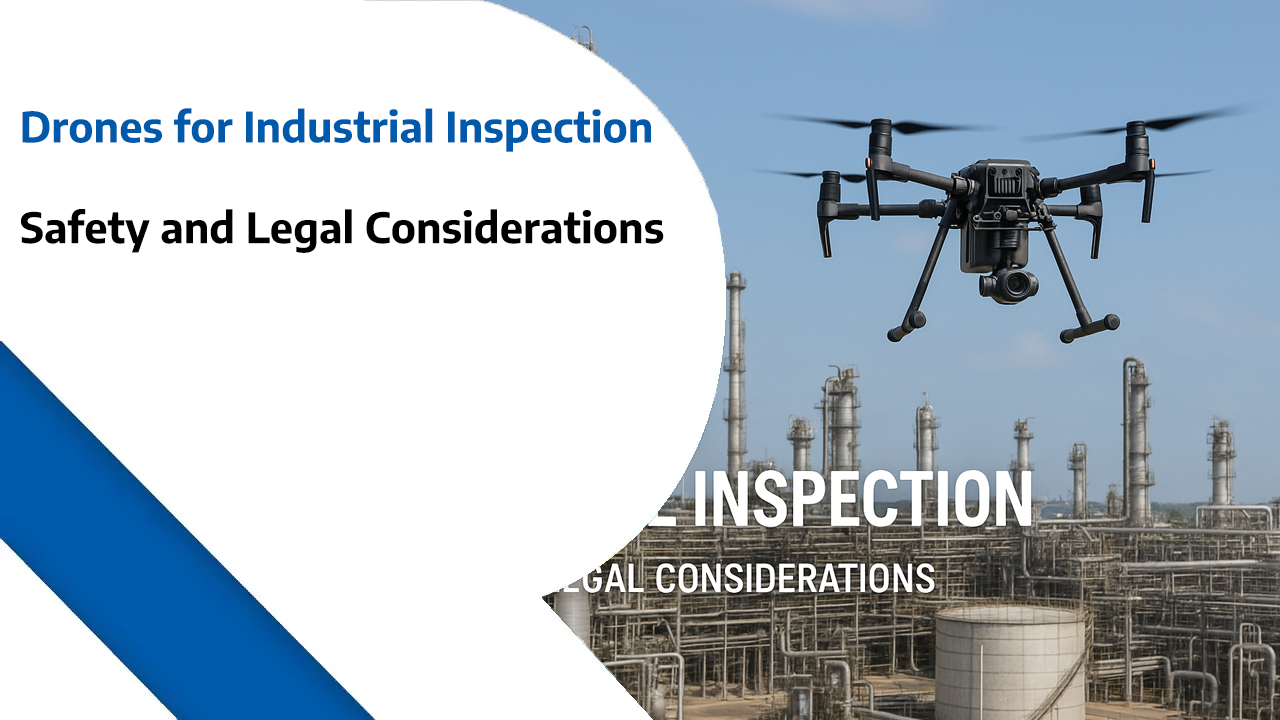
  • Drones for Industrial Inspection – Safety and Legal Considerations

    Drones for Industrial Inspection – Safety and Legal Considerations

    Drones for Industrial Inspection: Safety and Legal Considerations

    A comprehensive guide to deploying drones safely and legally in industrial environments


    Introduction

    The industrial landscape is experiencing a transformative shift as unmanned aerial vehicles (UAVs), commonly known as drones, revolutionize how companies approach inspection, maintenance, and monitoring tasks. From towering wind turbines to sprawling oil refineries, from railway infrastructure to telecommunications masts, drones are enabling safer, faster, and more cost-effective inspections across virtually every industrial sector.

    However, with great technological capability comes significant responsibility. The deployment of drones in industrial settings raises critical questions about safety protocols, regulatory compliance, insurance requirements, and operational best practices. Organizations that fail to address these considerations not only risk regulatory penalties but also jeopardize worker safety and operational integrity.

    This comprehensive article explores the safety and legal landscape surrounding drone-based industrial inspections, providing decision-makers with the knowledge needed to implement successful and compliant UAV programs. Whether you’re considering your first drone deployment or seeking to optimize existing operations, understanding these fundamental considerations is essential.

    The Rise of Industrial Drone Inspections

    Why Industries Are Embracing Drone Technology

    Traditional industrial inspections often require workers to access hazardous environments—climbing towers, navigating confined spaces, or working at dangerous heights. These activities not only expose personnel to significant risks but also require extensive safety equipment, scaffolding, or crane rentals, driving up costs and extending project timelines.

    Drones fundamentally change this equation. Equipped with high-resolution cameras, thermal imaging sensors, LiDAR systems, and specialized payloads, modern industrial drones can capture detailed visual and analytical data from virtually any angle without putting human inspectors in harm’s way. A task that might take days using traditional methods can often be completed in hours with drone technology.

    Key Industrial Applications

    Energy Sector: Power generation facilities use drones to inspect wind turbine blades, solar panel arrays, cooling towers, and transmission lines. These inspections can identify micro-cracks, corrosion, contamination, and structural defects that might compromise efficiency or safety.

    Oil and Gas: Refineries, pipelines, offshore platforms, and storage tanks present particularly challenging inspection environments. Drones equipped with thermal cameras can detect gas leaks, identify insulation failures, and spot corrosion without requiring shutdown or scaffolding.

    Infrastructure: Bridges, dams, buildings, and transportation networks require regular structural assessments. Drones provide detailed imagery of hard-to-reach areas, enabling engineers to identify deterioration, cracking, or other structural concerns.

    Telecommunications: Cell towers and communication infrastructure inspections traditionally required technicians to climb dangerous heights. Drones eliminate this risk while providing superior image quality for antenna alignment verification and structural assessment.

    Manufacturing: Large manufacturing facilities use drones for warehouse inventory management, roof inspections, and monitoring production areas where human access may be limited or dangerous.

    Safety Considerations in Industrial Drone Operations

    Pre-Flight Risk Assessment

    Every industrial drone operation must begin with a comprehensive risk assessment that evaluates potential hazards specific to the operating environment. This assessment should identify:

    • Obstacles and obstructions: Overhead power lines, guy wires, cranes, or other aerial hazards
    • Environmental factors: Weather conditions, electromagnetic interference, GPS signal reliability
    • Ground hazards: Personnel movement areas, vehicle traffic, sensitive equipment
    • Emergency scenarios: Loss of control, battery failure, communication loss
    • Restricted airspace: Proximity to airports, helipads, or other controlled airspace

    Industrial sites present unique challenges compared to open-air operations. Confined spaces, metallic structures, and electromagnetic fields from high-voltage equipment can interfere with drone GPS signals and communications. Operators must have contingency plans for these scenarios.

    Operational Safety Protocols

    Visual Line of Sight (VLOS): In most jurisdictions, drone operations require the pilot to maintain visual line of sight with the aircraft. Industrial environments with large structures may necessitate multiple observers or special operational permissions for beyond visual line of sight (BVLOS) operations.

    Geofencing: Modern drone systems can be programmed with virtual boundaries that prevent the aircraft from entering restricted zones. This technology is particularly valuable in complex industrial sites where certain areas house hazardous materials or critical operations.

    Personnel Exclusion Zones: During drone operations, ground personnel should be kept at safe distances from the flight area. Establishing clearly marked exclusion zones prevents injuries should an emergency landing or equipment failure occur.

    Equipment Maintenance: Regular inspection and maintenance of drone systems, batteries, sensors, and communication equipment is non-negotiable. Pre-flight checklists should verify that all systems are functioning properly before each mission.

    Pilot Competency: Drone pilots conducting industrial inspections require specialized training beyond basic recreational flying skills. They must understand industrial environments, recognize potential hazards, and execute emergency procedures confidently.

    Weather and Environmental Limitations

    Industrial drone operations must account for weather conditions that can compromise safety:

    • Wind: High winds near tall structures create turbulent conditions that challenge drone stability
    • Rain and moisture: Most industrial drones are not waterproof; moisture can damage electronics
    • Temperature extremes: Battery performance degrades in very cold or hot conditions
    • Visibility: Fog, dust, or steam emissions can obscure the pilot’s view and compromise sensor effectiveness
    • Electromagnetic interference: High-voltage equipment may interfere with drone communications and navigation

    Establishing clear weather minimums and environmental limits ensures operations are conducted only when conditions permit safe flight.

    Legal and Regulatory Framework

    Aviation Authority Requirements

    Drone operations in most countries fall under civil aviation authority jurisdiction. Understanding and complying with these regulations is not optional—it’s a legal requirement.

    United Kingdom: The Civil Aviation Authority (CAA) regulates drone operations in the UK. Commercial drone operations for industrial inspection require:

    • Operator Registration: Organizations conducting commercial drone operations must register as a drone operator
    • Flyer ID: Individual pilots must obtain a flyer ID by passing an online theory test
    • Operational Authorization: Specific permissions may be required for operations near congested areas, within controlled airspace, or beyond visual line of sight
    • Insurance: Adequate liability insurance coverage is legally mandated

    The UK operates under the EU drone regulation framework (retained after Brexit), which categorizes operations into Open, Specific, and Certified categories based on risk level. Most industrial inspections fall into the Specific category, requiring operational authorization from the CAA.

    European Union: The European Union Aviation Safety Agency (EASA) establishes drone regulations across member states. The framework emphasizes risk-based categorization and includes requirements for:

    • Remote pilot competency certification
    • Drone registration and marking
    • Operational limitations based on drone weight and capability
    • Specific scenarios requiring authorization

    United States: The Federal Aviation Administration (FAA) requires commercial drone operators to obtain a Remote Pilot Certificate under Part 107 regulations. Key requirements include:

    • Passing the aeronautical knowledge test
    • Operations limited to daylight hours (waivers available)
    • Maximum altitude of 400 feet above ground level
    • Prohibited operations over people (with specific exceptions)
    • Airspace authorization required for controlled airspace

    Other Jurisdictions: Countries worldwide have established drone regulations with varying requirements. Organizations operating internationally must ensure compliance with local regulations in each operating region.

    Site-Specific Permissions

    Beyond aviation regulations, industrial drone operations often require additional permissions:

    Facility Authorization: The site owner or operator must approve drone operations. This typically involves demonstrating safety protocols, insurance coverage, and operational plans.

    Security Clearances: Sensitive facilities such as power plants, refineries, or defense installations may require background checks or security clearances for drone operators.

    Environmental Permits: Some industrial sites operate under environmental permits that may restrict activities, including drone operations, during sensitive periods.

    Neighboring Property Rights: Drone operations must respect adjacent property rights and privacy considerations, particularly when operating near residential areas or other businesses.

    Data Protection and Privacy

    Industrial drone inspections capture extensive visual data, raising important privacy and data protection considerations:

    GDPR Compliance: In the UK and EU, organizations must ensure drone operations comply with General Data Protection Regulation requirements. This includes:

    • Justifying data collection on legitimate grounds
    • Minimizing data capture to what is necessary
    • Protecting captured data against unauthorized access
    • Respecting individual privacy rights

    Intellectual Property: Visual data captured during industrial inspections may reveal proprietary information, trade secrets, or confidential processes. Contracts should clearly define data ownership, usage rights, and confidentiality obligations.

    Data Retention: Organizations should establish clear policies for how long inspection data is retained and when it should be securely deleted.

    Insurance and Liability

    Comprehensive insurance coverage is essential for industrial drone operations:

    Public Liability Insurance: Covers third-party injury or property damage resulting from drone operations. UK law requires minimum coverage of £1 million, though industrial operations typically warrant significantly higher limits.

    Equipment Insurance: Protects against loss or damage to expensive drone equipment, sensors, and payloads.

    Professional Indemnity: Covers claims arising from errors, omissions, or negligent advice in delivering inspection services.

    Cyber Insurance: Protects against data breaches or cyber incidents affecting captured inspection data.

    Insurance providers may require evidence of pilot qualifications, operational procedures, and safety management systems before providing coverage for industrial drone operations.

    Best Practices for Compliant Operations

    Developing Standard Operating Procedures

    Organizations serious about industrial drone inspections should develop comprehensive Standard Operating Procedures (SOPs) that document:

    • Pre-flight planning and risk assessment processes
    • Equipment inspection and maintenance schedules
    • Flight crew roles and responsibilities
    • Emergency procedures and incident reporting
    • Data management and security protocols
    • Training and competency requirements

    SOPs provide consistency across operations, facilitate training, and demonstrate to regulators and clients that operations are conducted professionally and safely.

    Safety Management Systems

    Larger organizations conducting regular drone operations should implement formal Safety Management Systems (SMS) that include:

    • Risk Management Framework: Systematic identification, assessment, and mitigation of operational risks
    • Safety Policy: Clear organizational commitment to safe operations
    • Safety Assurance: Monitoring and measurement of safety performance
    • Safety Promotion: Training, communication, and continuous improvement culture

    An effective SMS demonstrates organizational maturity and commitment to safety—factors that regulators, insurance providers, and clients value highly.

    Record Keeping and Documentation

    Maintaining detailed records is essential for regulatory compliance and operational improvement:

    • Flight logs documenting date, time, location, pilot, purpose, and conditions
    • Equipment maintenance records and inspection schedules
    • Pilot training and qualification records
    • Risk assessments and operational authorizations
    • Incident reports and corrective actions
    • Insurance certificates and policy documentation

    These records demonstrate due diligence and provide valuable evidence should incidents occur or regulatory questions arise.

    Continuous Training and Development

    The drone industry evolves rapidly, with new technologies, regulations, and best practices emerging regularly. Organizations should invest in:

    • Recurring pilot proficiency training
    • Technology updates and familiarization
    • Regulatory updates and compliance training
    • Emergency procedure exercises
    • Industry conference participation and professional networking

    The Future of Industrial Drone Inspection

    Emerging Technologies

    The industrial drone inspection sector continues to evolve with exciting technological advances:

    Artificial Intelligence: AI-powered image analysis can automatically detect defects, anomalies, and maintenance issues, dramatically reducing analysis time and improving detection accuracy.

    Autonomous Operations: Advanced autonomy enables drones to conduct inspections with minimal pilot intervention, flying pre-programmed routes and automatically adjusting to environmental conditions.

    Improved Sensors: New sensor technologies provide unprecedented detail, including high-resolution thermal imaging, gas detection, ultrasonic testing, and LiDAR scanning capabilities.

    5G Connectivity: High-bandwidth, low-latency 5G networks enable real-time data streaming and remote operation over greater distances.

    Digital Twins: Integration with digital twin platforms allows drone inspection data to be incorporated into virtual facility models, enabling predictive maintenance and long-term trend analysis.

    Regulatory Evolution

    Aviation authorities worldwide recognize the growing importance of commercial drone operations and are developing regulatory frameworks to enable more complex operations while maintaining safety:

    • Approval pathways for BVLOS operations
    • Standards for automated and autonomous operations
    • Integration with manned aviation traffic management
    • Remote identification requirements for accountability
    • Type certification for complex drone systems

    Organizations that stay current with regulatory developments will be positioned to leverage these expanded capabilities as they become available.

    Implementing a Successful Industrial Drone Program

    Internal vs. External Resources

    Organizations considering industrial drone inspections face a fundamental decision: develop internal capabilities or engage external service providers?

    Internal Program Advantages:

    • Direct control over scheduling and priorities
    • Institutional knowledge of facilities and processes
    • Potential long-term cost savings
    • Immediate availability for routine inspections

    Internal Program Challenges:

    • Significant upfront investment in equipment and training
    • Ongoing costs for maintenance, insurance, and recurrent training
    • Regulatory compliance responsibilities
    • Staff utilization during periods of low demand

    External Service Provider Advantages:

    • No capital investment required
    • Access to specialized expertise and advanced equipment
    • Regulatory compliance handled by the provider
    • Scalability to match demand
    • Risk transfer through professional service contracts

    Many organizations find that engaging experienced external providers offers the optimal balance of capability, flexibility, and risk management, particularly during the initial phases of drone program development.

    How Robot Consultancy and Recruitment Services Can Help

    Implementing industrial drone inspection programs requires navigating complex technical, regulatory, and operational challenges. Organizations need access to expert guidance, qualified personnel, and proven implementation strategies.

    Expert Robotics Consultancy

    Whether you’re exploring drone inspection feasibility, developing operational procedures, or optimizing existing programs, expert consultancy services provide invaluable support. Consultants with deep industrial robotics and automation experience can:

    • Conduct feasibility studies for drone applications in your specific environment
    • Develop compliant operational frameworks aligned with regulatory requirements
    • Design safety management systems tailored to your operational risks
    • Recommend appropriate technology solutions for your inspection needs
    • Provide training and change management support during implementation
    • Conduct independent audits of existing drone programs

    The right consultancy partner brings cross-industry experience, regulatory knowledge, and technical expertise that accelerates program development while avoiding costly mistakes.

    Specialized Robotics Recruitment

    Finding qualified drone pilots and robotics specialists with industrial inspection experience presents a significant challenge. The best candidates combine:

    • Relevant aviation qualifications and flight experience
    • Understanding of industrial environments and safety culture
    • Technical knowledge of sensors, data analysis, and reporting
    • Strong communication skills for stakeholder engagement
    • Commitment to regulatory compliance and continuous improvement

    Specialized robotics recruitment services understand these unique requirements and maintain networks of qualified professionals. Whether you need permanent staff to build internal capability or contractors for specific projects, recruitment specialists can identify candidates who fit your organizational needs and technical requirements.

    Integrated Support Approach

    The most successful industrial drone programs benefit from integrated support that combines strategic consultancy with access to qualified personnel. This approach ensures that operational frameworks are designed appropriately and that the right people are in place to execute them effectively.

    Take the Next Step

    Industrial drone inspection offers tremendous potential for enhanced safety, improved efficiency, and reduced costs. However, realizing these benefits requires careful attention to safety protocols, regulatory compliance, and operational excellence.

    If you’re considering implementing or optimizing industrial drone inspection capabilities, expert guidance can make the difference between success and costly setbacks.

    Contact our robotics consultancy and recruitment specialists today:

    📧 Emailinfo@robophil.com
    📞 Phone: 0845 528 0404

    Our team brings extensive experience in industrial robotics implementation, drone operations, and regulatory compliance. We’ll work with you to develop solutions tailored to your specific operational needs and organizational goals.

    Book a consultation call to discuss how drone technology can enhance your industrial inspection programs while ensuring safety, compliance, and operational excellence.


    Article Sponsors

    This article is proudly sponsored by leading robotics organizations:

    Robot Center

    Websitehttps://robotcenter.co.uk/

    Your destination for robot acquisition and expert robotics consultancy. Whether you’re looking to buy robots, seeking robotics consultancy, or need strategic guidance on automation implementation, Robot Center provides comprehensive support for organizations embracing robotic technologies.

    Robots of London

    Websitehttps://robotsoflondon.co.uk/

    Premier robot hire and rental services for events, demonstrations, and temporary deployments. Robots of London offers flexible robot rental solutions, enabling organizations to experience robotic capabilities without long-term commitments. Perfect for events, proof-of-concept projects, and temporary automation needs.

    Robot Philosophy (RoboPhil)

    Websitehttps://robophil.com/

    Leading provider of robot consultancy and robot recruitment services, offering expert robot advice, insights, and innovative ideas. Founded by Philip English (RoboPhil), a renowned Robot YouTuber, Robot Influencer, Robot Trainer, Robot Consultant, Robotics Streamer, Robotics YouTuber, Robotics Influencer, Robotics Consultant, and Robotics Trainer. Robot Philosophy delivers cutting-edge expertise in robotics implementation, strategy, and talent acquisition.


    Conclusion

    Industrial drone inspection represents a significant advancement in how organizations approach facility maintenance, safety management, and operational efficiency. The technology delivers clear benefits, but success requires thoughtful attention to safety protocols, regulatory compliance, insurance requirements, and operational best practices.

    Organizations that invest in proper planning, training, and expert guidance position themselves to realize the full potential of drone technology while minimizing risks and ensuring regulatory compliance. Whether developing internal capabilities or engaging external service providers, the foundation of success lies in understanding and addressing the safety and legal considerations outlined in this article.

    The future of industrial inspection is aerial, autonomous, and data-driven. Organizations that embrace this transformation while maintaining unwavering commitment to safety and compliance will gain competitive advantages through reduced costs, enhanced safety, and improved operational insights.

    Ready to explore how industrial drone inspection can benefit your organization?

    Reach out today to discuss your specific needs and discover how expert consultancy and specialized recruitment services can accelerate your success.

    📧 info@robophil.com | 📞 0845 528 0404


    This article provides general guidance on drone industrial inspection safety and legal considerations. Organizations should consult with qualified legal, regulatory, and technical advisors for guidance specific to their circumstances and jurisdictions.

     

    https://www.youtube.com/watch?v=20qHoF62W1I


    https://www.youtube.com/shorts/38Kb8NLVx7E

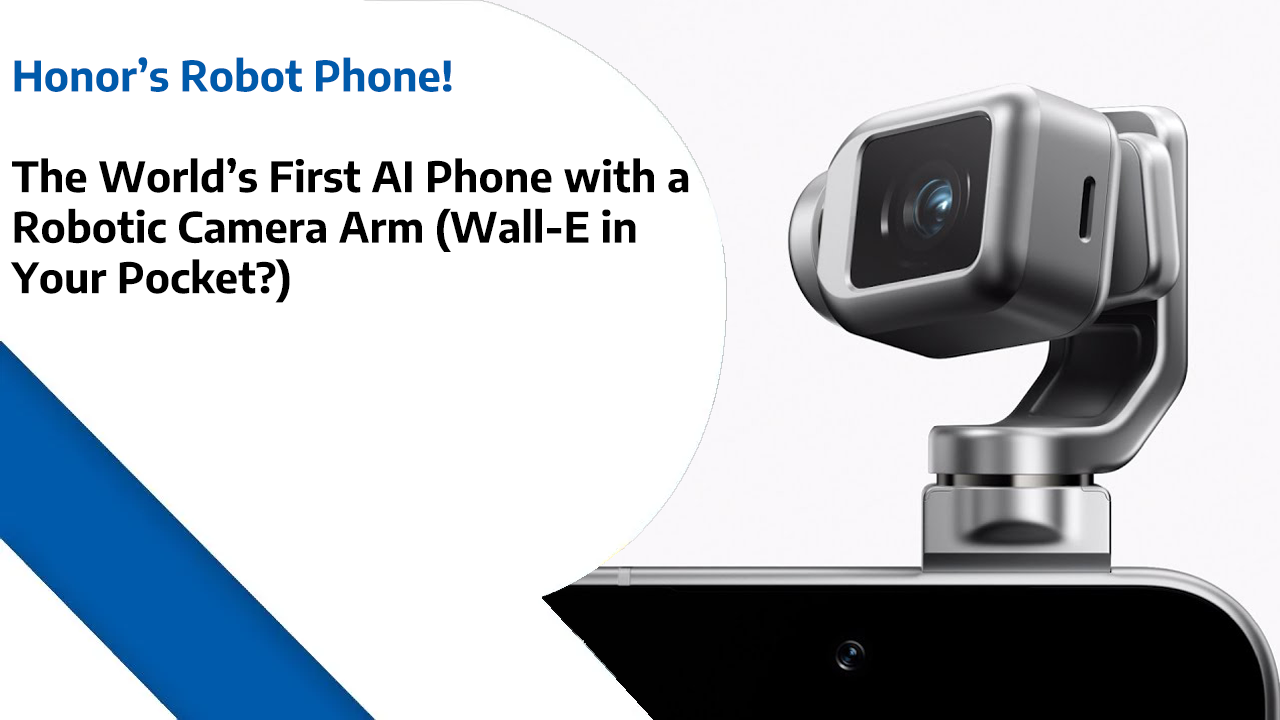
  • Honor’s Robot Phone – The World’s First AI Phone with a Robotic Camera Arm (Wall-E in Your Pocket?)

    Honor’s Robot Phone – The World’s First AI Phone with a Robotic Camera Arm (Wall-E in Your Pocket?)


    Honor’s Robot Phone – The World’s First AI Phone with a Robotic Camera Arm (Wall-E in Your Pocket?)


    Hey everyone, let’s talk about one of the most interesting teases in tech right now — the Honor Robot Phone. Yep, Honor is developing a smartphone with a robotic camera arm that literally pops out and moves like a tiny AI companion.

    During the launch of their Magic 8 series in China, Honor revealed a concept device that’s part phone, part robot. The camera sits on a small mechanical arm that can extend, tilt, and track objects automatically. It’s like having a built-in cameraman that never gets tired.

    It can follow scenes on its own, capture your environment, or even respond to commands — a step beyond what smart glasses like the Meta Ray-Bans can do.

    In the teaser video, we see it helping pick outfits, film a sky dive, soothe a crying baby with peek-a-boo, and even track stars at night. Basically, it’s a smartphone that wants to interact with you, not just sit in your pocket.

    It looks a bit like something straight out of a movie — think Wall-E or Johnny 5 from Short Circuit. Honor says it’s part of their vision for a new era of human-machine coexistence. They want future phones to “sense, adapt, and evolve autonomously.”

    That might sound a bit like The Matrix, but the idea is to create a device that feels more like a helpful companion than a slab of glass and metal.

    We’ll get the full reveal at Mobile World Congress 2026 in Barcelona. Until then, the Robot Phone remains one of the most intriguing signs of where AI and robotics are heading in consumer tech.

    If you want more updates on futuristic devices like this, hit Like, Subscribe, and stay tuned for more tech explained simply.


    And that’s your robot news update for today!. If you’re curious about how robotics can transform your business, head over to Robot Philosophy website to join the waiting list, or to speak with the team directly about robotics.

    Don’t forget to subscribe so you stay in the loop with all the latest updates.

    I’m RoboPhil from Robot Philosophy — thanks for watching, and I’ll see you next time!

    Join the workshop waiting list or get in touch at: https://robophil.com/


    Sponsors:-


    Robot Center: – https://robotcenter.co.uk/ – Buy Robot, Robot Buy, Robot consultancy, Robotics Consultancy, Inspection Robots, Security Robots,


    Robots of London: – https://robotsoflondon.co.uk/ – Robot Hire, Robot Rental, Rent Robot, Hire Robot, Robot Events, Robotics Hire, Hire Robotics, Rent Robotics, Robotics Rent, for exhibitions, shows, Events, Robot hire in the UK, Robot hire in Europe


    Robot Philosophy: – https://robophil.com/ – Robot Consultancy, Robot Recruitment, Robot Advice, Robot Insights, Robot Ideas. RoboPhil, also known as Philip English, is a leading Robot YouTuber, Robot Influencer, Robot Trainer, Robot Consultant, and Robot Streamer, Robotics Streamer, Robotics YouTuber, Robotics Influencer, Robotics Consultant, Robotics Trainer 


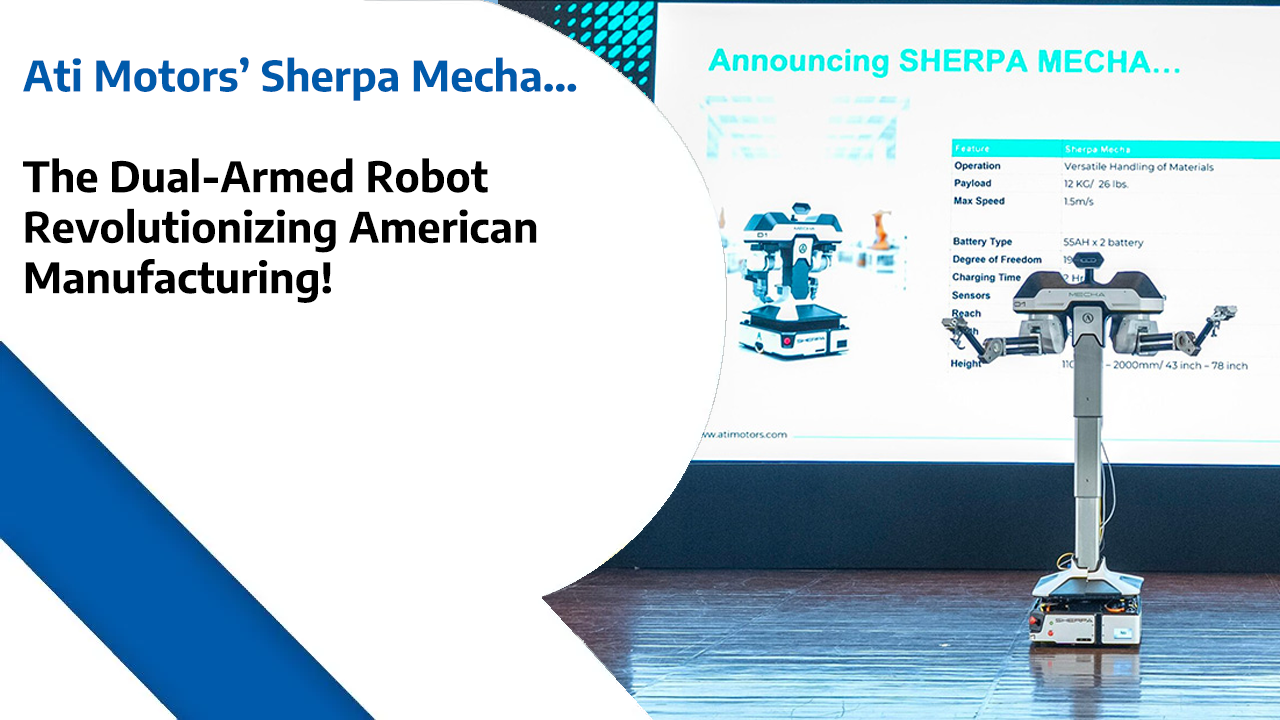
  • Ati Motors’ Sherpa Mecha – The Dual-Armed Robot Revolutionizing American Manufacturing

    Ati Motors’ Sherpa Mecha – The Dual-Armed Robot Revolutionizing American Manufacturing

    Ati Motors’ Sherpa Mecha – The Dual-Armed Robot Revolutionizing American Manufacturing

    Today, we’re talking about a new kind of factory worker that never gets tired, never calls in sick, and doesn’t complain about the coffee. Meet the Sherpa Mecha — the latest dual-armed mobile manipulator from Ati Motors.

    This isn’t your typical humanoid robot trying to walk like a person and fall over like one too. The Sherpa Mecha is built for real industrial work — two powerful arms on a stable wheeled base that can move, lift, and manipulate tools across a manufacturing floor.

    Ati Motors, based in Rochester Hills, Minnesota, says Mecha can tend machines, move heavy bins, and even assist with inspections. Think of it as a tireless factory teammate designed to handle the repetitive, muscle-draining stuff — so your human team can focus on higher-value tasks.

    And because this robot plugs straight into existing automation lines, you don’t have to tear up your entire production setup. It’s compatible, scalable, and designed for easy integration — whether you’re in automotive, aerospace, or electronics.

    Now, how does this actually help you?
    Here’s the breakdown:

    • Increased productivity – it keeps going 24/7 without fatigue.
    • Precision performance – consistent quality for repetitive processes.
    • Faster ROI – lower labor costs and fewer production bottlenecks.
    • Future-ready design – add tools, change workflows, and evolve with your business.

    Ati Motors has built this on years of experience in autonomous mobile robots (AMRs) — their lineup already includes tuggers, pallet movers, and lifters that handle loads from 175 lb to 10,000 lb. The Sherpa Mecha simply adds arms and intelligence to that proven mobility.

    And that’s your robot news update for today!. If you’re curious about how robotics can transform your business, head over to Robot Philosophy website to join the waiting list, or to speak with the team directly about robotics.

    Don’t forget to subscribe so you stay in the loop with all the latest updates.

    I’m RoboPhil from Robot Philosophy — thanks for watching, and I’ll see you next time!

    Join the workshop waiting list or get in touch at: https://robophil.com/


    Sponsors:-


    Robot Center: – https://robotcenter.co.uk/ – Buy Robot, Robot Buy, Robot consultancy, Robotics Consultancy, Inspection Robots, Security Robots,


    Robots of London: – https://robotsoflondon.co.uk/ – Robot Hire, Robot Rental, Rent Robot, Hire Robot, Robot Events, Robotics Hire, Hire Robotics, Rent Robotics, Robotics Rent, for exhibitions, shows, Events, Robot hire in the UK, Robot hire in Europe


    Robot Philosophy: – https://robophil.com/ – Robot Consultancy, Robot Recruitment, Robot Advice, Robot Insights, Robot Ideas. RoboPhil, also known as Philip English, is a leading Robot YouTuber, Robot Influencer, Robot Trainer, Robot Consultant, and Robot Streamer, Robotics Streamer, Robotics YouTuber, Robotics Influencer, Robotics Consultant, Robotics Trainer 


  • America’s New Microwave Robot Can Fry Drone Swarms in Seconds – Meet Leonidas AR!

    America’s New Microwave Robot Can Fry Drone Swarms in Seconds – Meet Leonidas AR!

    America’s New Microwave Robot Can Fry Drone Swarms in Seconds – Meet Leonidas AR!

    Right then — picture this: a 10-ton robot rolling across the battlefield, and instead of shooting missiles… it fries drones with microwaves. Not your kitchen kind, mind you — this is the Leonidas AR, the world’s first high-pulse microwave robot from Epirus and General Dynamics Land Systems.

    Leonidas AR combines Epirus’ Leonidas high-power microwave weapon with GDLS’s TRX unmanned ground vehicle. The TRX is hybrid-electric, AI-enhanced, and can travel over 300 miles on one charge, with a top speed of around 45 mph. Think of it as a self-driving tank that hates drones.

    Now, the Leonidas part fires bursts of high-power microwaves that disable the electronics of enemy drones — literally knocking them out of the sky in seconds.

    Unlike missiles or guns, this system doesn’t shoot anything physical. It uses invisible electromagnetic pulses — kind of like an electronic thunderclap — that overload drone circuits.

    Even better, it’s software-defined, so operators can fine-tune frequencies, create safe zones to protect friendly tech, and even update the system remotely. It’s precise, fast, and surprisingly eco-friendly compared to old-school hardware.

    Here’s where it gets interesting for Americans: this isn’t just a military gadget — it’s a glimpse of the future.

    • Lower cost defense – each “shot” is basically electricity, not a $100,000 missile.
    • Protects infrastructure – airports, stadiums, and borders could all use this tech against rogue drones.
    • Software upgradable – it adapts as threats evolve.
    • Safe and non-explosive – it disables, not destroys.

    And that’s your robot news update for today!. If you’re curious about how robotics can transform your business, head over to Robot Philosophy website to join the waiting list, or to speak with the team directly about robotics.

    Don’t forget to subscribe so you stay in the loop with all the latest updates.

    I’m RoboPhil from Robot Philosophy — thanks for watching, and I’ll see you next time!


    Join the workshop waiting list or get in touch at: https://robophil.com/


    Sponsors:-


    Robot Center: – https://robotcenter.co.uk/ – Buy Robot, Robot Buy, Robot consultancy, Robotics Consultancy, Inspection Robots, Security Robots,


    Robots of London: – https://robotsoflondon.co.uk/ – Robot Hire, Robot Rental, Rent Robot, Hire Robot, Robot Events, Robotics Hire, Hire Robotics, Rent Robotics, Robotics Rent, for exhibitions, shows, Events, Robot hire in the UK, Robot hire in Europe


    Robot Philosophy: – https://robophil.com/ – Robot Consultancy, Robot Recruitment, Robot Advice, Robot Insights, Robot Ideas. RoboPhil, also known as Philip English, is a leading Robot YouTuber, Robot Influencer, Robot Trainer, Robot Consultant, and Robot Streamer, Robotics Streamer, Robotics YouTuber, Robotics Influencer, Robotics Consultant, Robotics Trainer 


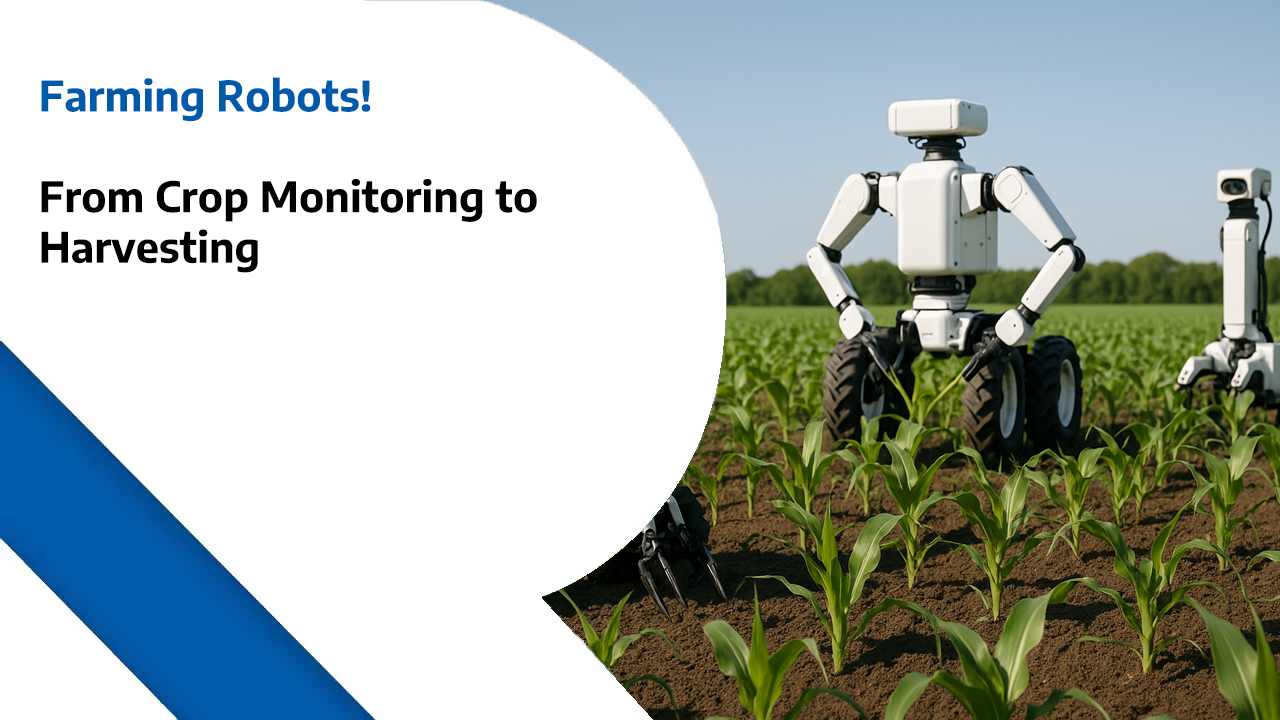
  • Farming Robots – From Crop Monitoring to Harvesting

    Farming Robots – From Crop Monitoring to Harvesting

    Farming Robots: From Crop Monitoring to Harvesting

    In recent years, the agricultural sector has begun a transformation: robots are no longer sci-fi curiosities but real, practical tools helping farmers monitor crops, optimize inputs, and harvest produce. The shift toward automation is driven by labor shortages, rising costs, climate pressures, and demand for more sustainable, data-driven farming. But adoption comes with challenges: which robots to deploy, how to integrate them with existing workflows, and how to recruit the right talent to operate and maintain them.

    In this article, we’ll explore:

    • The spectrum of farming robots from crop monitoring to harvesting

    • Key enabling technologies and real-world examples

    • Benefits, limitations, and adoption challenges

    • How your farm can get started

    • How Robot Philosophy / RoboPhil (robophil.com) can help — from consulting to recruitment

    • A call to action to book a call with us

    We’ll also acknowledge our sponsors: Robot Center (robotcenter.co.uk), Robots of London (robotsoflondon.co.uk), and Robot Philosophy / RoboPhil.


    1. The Robotics Spectrum in Farming

    Robots in agriculture perform a wide range of tasks. At one end are “scouting” or monitoring robots, drones, or autonomous rovers; at the other, harvesting robots doing the hands-on work of picking fruit, root crops or vegetables. In between lie tasks like planting, weeding, spraying, fertilizing, and soil sensing. Let’s look at these in turn.

    1.1 Crop Monitoring & Scouting Robots

    The most widespread early use of robotics in farming is monitoring: capturing data about plant health, soil moisture, pest infestments, disease onset, nutrient stress, and so on.

    • Drones / UAVs: Equipped with multispectral, hyperspectral, or thermal sensors, drones fly above fields to scan for stress signatures invisible to the naked eye. These capture NDVI (Normalized Difference Vegetation Index), detect water stress, disease hotspots, or pest damage. Wikipedia+2Fresh Consulting+2

    • Ground rovers / mobile robots: Wheeled or tracked robots can travel through crop rows closer to the plants. They carry cameras, LiDAR, soil sensors, and environmental sensors. They can detect plant height, leaf color, disease lesions, and more. arXiv+3howtorobot.com+3Fresh Consulting+3

    • Autonomous tractors & sensor platforms: Modified tractors or sensor platforms can carry payloads of sensors, making passes over fields to collect continuous spatial data.

    • Fixed and semi-fixed sensor networks: While not strictly robots, many farms integrate ground sensors (soil moisture, nutrient probes) and connected IoT systems that feed data to the same analytics pipelines.

    By collecting rich datasets, farms can move from blanket treatments (e.g. applying fertilizer or pesticide uniformly) to precision interventions: treat only where needed, in the right dose, at the right time.

    1.2 Planting, Seeding & Soil Preparation

    Robotic systems are increasingly employed in planting and seeding tasks, especially where precision is critical:

    • Seeders and planters can be automated with GPS guidance and sensors to place seeds at exact intervals and depths.

    • Some robots combine seeding with soil sensing (e.g. measuring moisture or compaction before placing the seed) to decide optimal locations.

    • In projects like the Hands Free Hectare (UK), an autonomous tractor was adapted to plant and roll a hectare of barley autonomously, culminating in a full cropping cycle with zero human operation in the field. Wikipedia

    1.3 Weed Control, Pest Management & Fertilization

    One of the biggest opportunities for robotics is “smart weeding” and targeted applications of inputs:

    • Weeding robots: These use vision to distinguish weeds from crops and then mechanically remove weeds (cut, pull, or burn) or apply spot herbicide only where required. This reduces chemical usage and cost. For example, FarmWise provides automated mechanical weeders under a service model. Wikipedia+2Fresh Consulting+2

    • Robotic spraying / spot-spraying: Robots can apply fungicides, pesticides or nutrients precisely, reducing drift, overuse, and environmental impact.

    • Smart fertilization: Robots can analyze soil nutrient levels and only deposit fertilizer where needed, in optimal amounts.

    • Pest and disease robots: Some systems detect pest infestations or early disease onset and apply micro-interventions (e.g. micro-spray, LED light, or biocontrol).

    1.4 Harvesting Robots

    Harvesting is one of the most complex tasks — requiring gentle handling, recognition of ripeness, and adaptability to variation in plant geometry. Yet this is where robotics is making strides.

    • Robotic harvesting systems often combine vision systems, AI/ML models, and robotic arms or grippers. They locate individual fruits or produce, estimate orientation, and execute pick operations. arXiv+4meegle.com+4howtorobot.com+4

    • For example, a recent robot called AHPPEBot (for tomato harvesting) achieved a harvest success rate of ~86.7% in greenhouse trials using phenotyping and pose estimation. arXiv

    • In orchards or vineyards, robots use geometry-aware grasping estimation to deal with occlusions and branch complexity. arXiv

    • Other robots are built for root crops or more robust produce — for instance, systems built to dig and lift root vegetables.

    • Integration is key: harvested produce must be sorted, conveyed, cleaned, and packaged — robots are integrating with those downstream systems.


    2. Enabling Technologies & Technical Foundations

    What makes farming robots possible? Let’s review the core technologies that underpin these systems.

    2.1 Sensing, Vision & Perception

    • RGB / multispectral / hyperspectral cameras: Provide the “eyes” for robots to detect plant health, stress, diseases, pests, and ripeness. For example, Swiss company Gamaya uses hyperspectral drone cameras to “see” plant signals beyond what human eyes detect. Wikipedia

    • LiDAR / depth sensors / stereo vision: Enable 3D mapping of plants and obstacles, enabling path planning and collision avoidance.

    • Proximity / touch sensors: For robotic arms or end effectors to gently contact produce.

    • Environmental sensors: Soil moisture probes, temperature/humidity, nutrient sensors.

    • GPS / RTK / precision localization: Critical for navigation, ensuring robots know where they are in the field with centimeter accuracy.

    • IMUs, wheel encoders, odometry: To support localization and control in real time.

    2.2 Navigation & Control

    • Path planning algorithms: To plan efficient routes through crop rows, minimize overlap, and avoid damaging plants.

    • Row-following / visual servoing: Robots can follow crop rows using camera input without full maps or GPS. E.g. works that exploit crop-row structure to guide navigation using only onboard cameras. arXiv

    • Motion control & actuation: Controlling robot speed, steering, wheel traction especially over uneven terrain.

    • Manipulation / grasp planning: For harvesting robots, determining how to approach, grasp, and detach produce without damaging it — often under occlusion or variable geometry. arXiv+1

    • Machine learning / AI / computer vision models: To classify crops vs weeds, detect ripeness, estimate pose, or classify disease.

    • Sensor fusion & decision logic: Combining data streams (vision, LiDAR, soil) to make real-time decisions about where to act.

    2.3 Connectivity, Data & Analytics

    • Edge computing: Robots must often process data onboard (especially vision) due to latency or connectivity constraints.

    • Cloud & IoT integration: Aggregating data from fleets of robots, running large-scale analytics, generating dashboards, and aggregating historical trends.

    • Agronomic models & decision support systems: To convert sensor data into actionable recommendations (e.g. “spray zone here,” “fertilize patch there”).

    • APIs & integration with farm management software (FMS / ERP): Ensuring that the robot data feeds into the farm’s broader planning and logistics systems.

    2.4 Power, Reliability & Ruggedization

    • Many agricultural robots are battery-powered and require energy-efficient design. Solar assist is being explored.

    • Systems must be weather-resistant, robust to dust, moisture, temperature, and mechanical shocks.

    • Maintenance and modular design are key for uptime, serviceability, and cost control.


    3. Benefits, Challenges & Adoption Barriers

    3.1 Benefits

    • Increased productivity & efficiency: Robots don’t tire, can run overnight, and provide consistent performance. Fresh Consulting+1

    • Labor scarcity mitigation: Many agricultural regions suffer chronic labor shortages — robots can fill in critical gaps. The Robot Report+1

    • Precision & reduced input usage: By targeting only zones that need treatment, robots reduce fertilizer, pesticide, water use — lowering costs and environmental impact. Fresh Consulting+2The Robot Report+2

    • Better crop yield & quality: Continuous monitoring and early detection of disease or stress allow preemptive action to save yield or enhance quality. Fresh Consulting+1

    • Sustainability & environmental stewardship: Reduced chemical runoff, lower energy usage (especially with electric robots), and site-specific management support sustainable farming goals. Fresh Consulting+2Farmonaut®+2

    • Data-driven decision-making: Over time, farms gain predictive insights and can optimize planting, rotations, and resource allocation.

    3.2 Challenges & Risks

    • High capital cost and ROI uncertainty: The up-front cost of robotic systems is still high, and many farmers hesitate on payback timelines.

    • Technology maturity & robustness: Edge cases — occlusions, mixed varieties, weather, unexpected obstacles — can still confound systems.

    • Integration & interoperability: Integrating robotic systems into existing infrastructure, workflows, and management software is nontrivial.

    • Talent gap: Operating, maintaining, programming and troubleshooting robots requires specialized skills often lacking on farms.

    • Regulations & safety: Ensuring robots operate safely around humans, comply with local agricultural regulations or drone laws.

    • Scalability and flexibility: Many robots are tailored to a narrow crop type or environment; generalization remains a challenge.

    • Data management and privacy: Handling large sensor datasets, ensuring cybersecurity, managing connectivity in rural areas.


    4. Real-World Examples & Case Studies

    • The Hands Free Hectare project in the UK successfully completed a full cropping cycle with no human intervention in the field, including planting, tending, and harvesting. Wikipedia

    • FarmWise offers robotic weeding as a service, enabling vegetable growers to outsource weed removal with AI-powered machines. Wikipedia

    • Small Robot Company (UK) employs robots called “Tom” and “Dick”: Tom scans wheat plants for weed presence, then Dick applies micro-treatments (e.g. small doses of herbicide). This approach reduces chemical use drastically. WIRED

    • Solinftec in Brazil launched Solix, an autonomous robot that scouts fields for plant health, weeds, insect damage, and then applies targeted spray or control strategies — potentially reducing herbicide use by up to 95%. Wikipedia

    • Research prototypes like AHPPEBot show the potential for automated tomato harvesting using pose estimation and phenotyping techniques. arXiv

    • Academic works on visual servoing show navigation techniques for robots to traverse row crops using only onboard cameras, without expensive GPS. arXiv

    These examples demonstrate both the promise and the current frontier of agriculture robotics.


    5. Getting Started: Roadmap for Farms & Agribusinesses

    Transitioning to robotic farming is a journey. Here’s a suggested roadmap:

    1. Pilot & proof-of-concept

      • Choose a manageable plot or field to pilot monitoring or weeding robots.

      • Start with lower-risk tasks (monitoring, data collection) before moving to critical functions like harvesting.

    2. Data collection & baseline analytics

      • Use drones, sensors, or data capture systems to collect baseline crop health, yield variability, and site maps.

      • Build analytics that correlate sensor readings with yield outcomes.

    3. Select the right robot or partner

      • Evaluate robotic providers, comparing cost, maturity, support, integration.

      • Decide between CapEx purchase or Robot-as-a-Service models.

    4. Integration & workflow adaptation

      • Map how robot data and outputs feed into planning, irrigation, fertilization, and harvesting workflows.

      • Ensure compatibility with farm management systems.

    5. Staff training & recruitment

      • You will need technical talent: robotics engineers, data scientists, robot operators, maintainers.

      • Upskill existing staff or recruit externally.

    6. Scale & iteration

      • Expand to more fields, more robot types.

      • Iterate based on feedback, failure modes, and ROI tracking.

    7. Continuous learning & improvement

      • Keep AI models updated, retrain on new data, and improve reliability.

      • Monitor and benchmark performance gains over time.


    6. Why Use a Consulting & Recruitment Partner?

    This is where Robot Philosophy / RoboPhil (robophil.com) comes in. Many farms and agribusinesses know they need robots — but struggle with:

    • Selecting the right robotic systems

    • Designing integration and workflows

    • Recruiting the right talent

    • Project management and risk mitigation

    At Robot Philosophy, we offer:

    • Robot Consulting: We audit your farm operations, identify robotic use cases, run feasibility assessments, project costing models, and integration plans.

    • Robot Recruitment: We help you hire the right staff — robotics engineers, operators, data scientists — whether permanent or contract.

    • Robot Advice, Insights & Ideas: Through thought leadership, trend scanning, and our network, we help you stay ahead of the curve.

    • Hands-on support: We can co-manage pilots, proof-of-concepts, or large-scale deployment projects.

    If you’re considering robotics but don’t know where to begin, or want help scaling your current operations, we can assist.


    7. Call to Action & Contact

    Are you ready to explore robotics for your farm or agribusiness? Book a call with Robot Philosophy / RoboPhil:

    Let’s assess your operation, run a pilot plan, and help you recruit the right team to succeed.


    8. Sponsor Acknowledgments

    We gratefully acknowledge our sponsors:

    • Robot Center (robotcenter.co.uk) — experts in buying robots, robot consultancy, and robotics integration.

    • Robots of London (robotsoflondon.co.uk) — specialists in robot hire, robot rental, robot events and robot deployment.

    • Robot Philosophy / RoboPhil (robophil.com) — your partner in robot consulting, robot recruitment, and robotic insight.


    9. Concluding Thoughts

    Agricultural robotics is no longer a distant vision — it’s happening now. From crop monitoring to robotic harvesting, the tools exist today, though successful adoption requires planning, expertise, and integration.

    If you want to move from “thinking about robotics” to effective deployment, you don’t have to go it alone. Robot Philosophy is here to help with consulting, recruitment, and strategic guidance. Reach out via info@robophil.com or call 0845 528 0404 and let’s get your robotics journey underway.


    https://www.youtube.com/watch?v=iVQB6Kb92Io


    https://www.youtube.com/shorts/rZG-SDYzgVw

  • Meet Charlotte – The Spider Robot That 3D Prints a House in 24 Hours

    Meet Charlotte – The Spider Robot That 3D Prints a House in 24 Hours

    Meet Charlotte – The Spider Robot That 3D Prints a House in 24 Hours


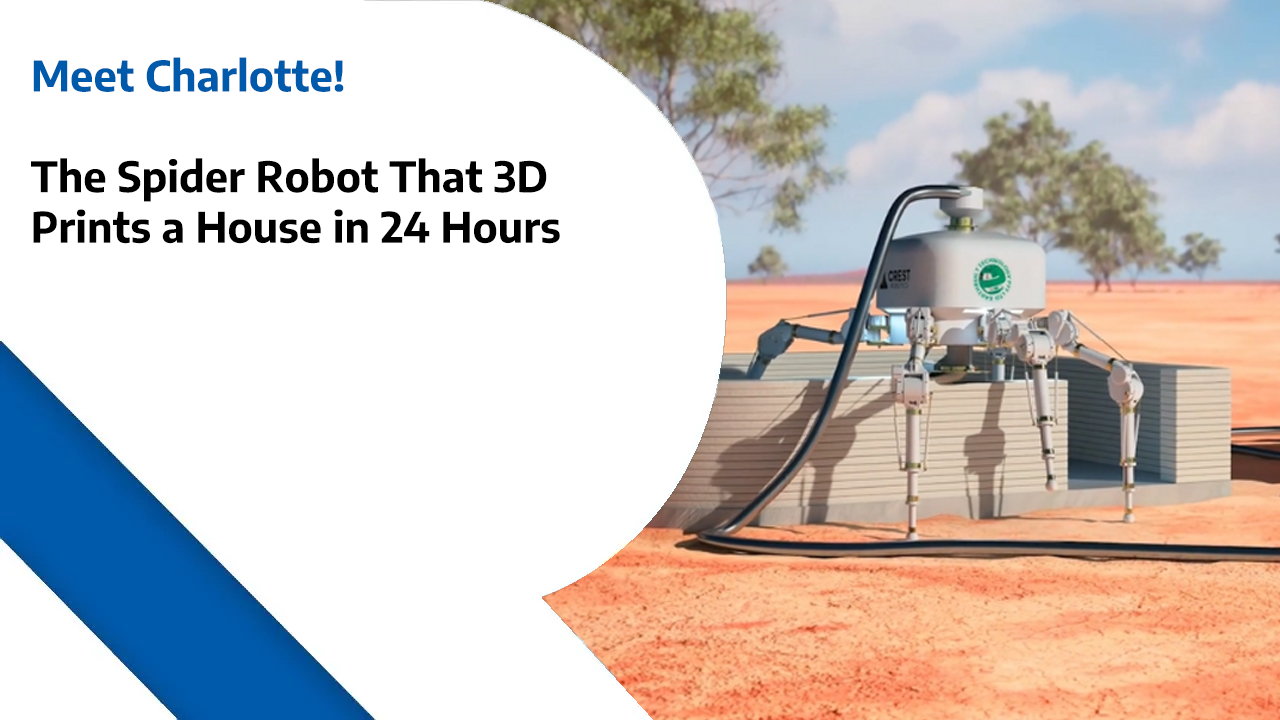
    “Imagine ordering a brand-new house — and having it built before your morning coffee goes cold. Meet Charlotte, a spider-like robot that can 3D print a full-sized home in just 24 hours. Yes, really.”

    “Charlotte comes from Crest Robotics and Earthbuilt Technology — two Australian companies pushing the boundaries of construction tech. They’ve created a semi-autonomous robot that combines 3D printing and robotics to build houses directly from raw materials.
    It was unveiled at the International Astronautical Congress in Sydney — because apparently, building on Earth just isn’t ambitious enough anymore.”

    “Charlotte moves across a construction site on spider-like legs, positioning itself over the build area and printing each wall layer by layer.
    Instead of using traditional bricks or concrete trucks, it compresses local materials — sand, soil, even crushed rubble — into strong, layered walls. No scaffolding, no heavy machinery, no wasted trips to Home Depot.”

    “Here’s where this matters for all of us — especially in the U.S., where housing costs keep climbing.
    Charlotte can work around the clock, cutting labor needs, build times, and costs.
    It also slashes carbon emissions and material waste, making construction faster, cleaner, and far more sustainable.
    The team says it can work as fast as a hundred bricklayers — and that could transform how we build homes, schools, and even disaster recovery housing.”

    “And it doesn’t stop here. Charlotte’s creators are already eyeing space construction — building lunar habitats for NASA’s Artemis missions.
    If it can print homes on the Moon, it can certainly handle your backyard.

    And that’s your robot news update for today!. If you’re curious about how robotics can transform your business, head over to Robot Philosophy website to join the waiting list for the workshops, or to speak with the team directly about robotics.

    Don’t forget to subscribe so you stay in the loop with all the latest updates.

    I’m RoboPhil from Robot Philosophy — thanks for watching, and I’ll see you next time!


    Join the workshop waiting list or get in touch at: https://robophil.com/


    Sponsors:-


    Robot Center: – https://robotcenter.co.uk/ – Buy Robot, Robot Buy, Robot consultancy, Robotics Consultancy, Inspection Robots, Security Robots,


    Robots of London: – https://robotsoflondon.co.uk/ – Robot Hire, Robot Rental, Rent Robot, Hire Robot, Robot Events, Robotics Hire, Hire Robotics, Rent Robotics, Robotics Rent, for exhibitions, shows, Events, Robot hire in the UK, Robot hire in Europe


    Robot Philosophy: – https://robophil.com/ – Robot Consultancy, Robot Recruitment, Robot Advice, Robot Insights, Robot Ideas. RoboPhil, also known as Philip English, is a leading Robot YouTuber, Robot Influencer, Robot Trainer, Robot Consultant, and Robot Streamer, Robotics Streamer, Robotics YouTuber, Robotics Influencer, Robotics Consultant, Robotics Trainer 

  • Exoskeletons – How They Can Reduce Workplace Injuries

    Exoskeletons – How They Can Reduce Workplace Injuries

    Exoskeletons – How They Can Reduce Workplace Injuries

    The Silent Epidemic of Workplace Injuries

    Every year, millions of workers worldwide suffer from musculoskeletal disorders (MSDs) caused by repetitive strain, heavy lifting, and awkward postures. In the UK alone, work-related MSDs account for over 470,000 cases annually, costing businesses billions in lost productivity, compensation claims, and employee turnover. The manufacturing, construction, logistics, and healthcare sectors are particularly vulnerable, with workers frequently performing physically demanding tasks that push the human body beyond its natural limits.

    But what if technology could augment human capability, transforming the way we approach workplace safety? Enter exoskeletons—wearable robotic devices that are revolutionizing occupational health and safety by reducing physical strain, preventing injuries, and empowering workers to perform their duties more efficiently and comfortably.

    What Are Workplace Exoskeletons?

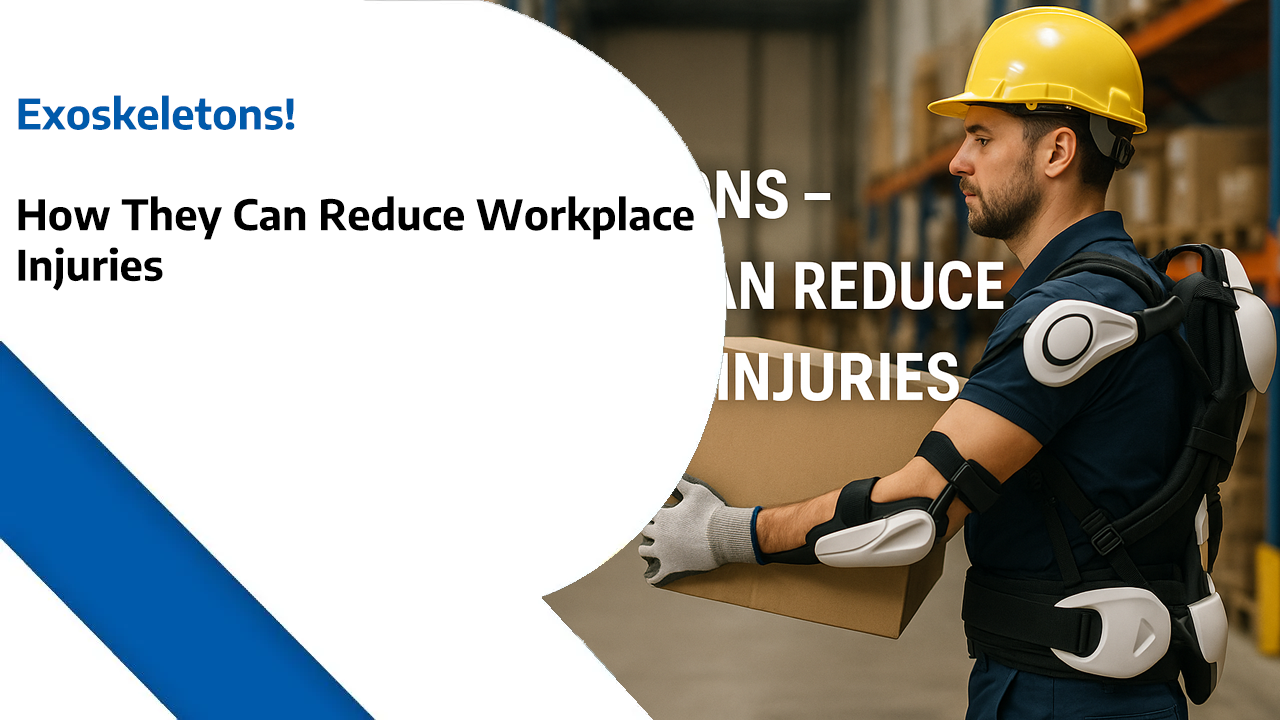
    Exoskeletons, also known as exosuits or wearable robots, are mechanical structures worn by workers to enhance their physical capabilities. Unlike the powered suits of science fiction, today’s industrial exoskeletons are practical, purpose-built devices designed to support specific body parts and movements commonly associated with workplace injuries.

    These devices fall into two main categories:

    Passive Exoskeletons: These use springs, dampeners, and mechanical components to redistribute weight and reduce muscle strain without requiring power sources. They’re lightweight, cost-effective, and ideal for tasks involving sustained postures or repetitive movements.

    Active (Powered) Exoskeletons: Equipped with motors, batteries, and sensors, active exoskeletons provide powered assistance to amplify human strength and endurance. They’re particularly valuable for heavy lifting tasks and can adapt in real-time to the wearer’s movements.

    How Exoskeletons Prevent Workplace Injuries

    1. Reducing Musculoskeletal Strain

    The primary benefit of exoskeletons is their ability to reduce the physical load on vulnerable body parts. Back-support exoskeletons, for example, can reduce spinal compression by up to 60% during lifting tasks, significantly lowering the risk of herniated discs and chronic back pain. Shoulder-support exoskeletons take the strain off deltoid muscles and rotator cuffs during overhead work, reducing fatigue by as much as 80% in studies.

    By redistributing forces away from joints and muscles, exoskeletons enable workers to maintain proper posture and technique throughout their shifts, even during physically demanding tasks.

    2. Preventing Acute Injuries

    Beyond chronic conditions, exoskeletons help prevent acute injuries such as muscle tears, sprains, and joint dislocations. When a worker lifts a heavy object incorrectly or loses balance, an exoskeleton provides additional support and stability, reducing the likelihood of sudden injury. This protective element is particularly valuable in unpredictable environments where workers face varying loads and working conditions.

    3. Extending Working Capacity

    Fatigue is a major contributor to workplace accidents. As workers tire throughout their shift, their form deteriorates, reaction times slow, and risk-taking behavior increases. Exoskeletons combat fatigue by reducing the metabolic cost of physical work—some studies show energy expenditure reductions of 20-40% for assisted tasks. This means workers remain alert and capable for longer periods, reducing the accident rate typically seen toward the end of shifts.

    4. Enabling Older Workers and Those with Disabilities

    The aging workforce presents challenges for physically demanding industries. Exoskeletons can help experienced workers remain productive despite age-related physical decline, preserving valuable expertise while protecting health. Similarly, these devices can enable workers with disabilities or previous injuries to participate in roles that might otherwise be inaccessible, promoting workplace inclusivity.

    Industry Applications and Success Stories

    Manufacturing and Assembly

    Automotive manufacturers were among the first to embrace exoskeleton technology. Ford, BMW, and General Motors have deployed hundreds of exoskeletons across their facilities, particularly for overhead assembly work. Workers report significant reductions in shoulder and neck pain, with some facilities seeing injury rates drop by over 80% in exoskeleton-wearing departments.

    Logistics and Warehousing

    With the explosion of e-commerce, warehouse workers face unprecedented physical demands. Companies in the logistics sector are increasingly turning to exoskeletons to protect workers handling thousands of packages daily. Back-support exoskeletons have proven particularly effective, with workers reporting they can lift comfortably throughout their entire shift rather than experiencing progressive fatigue and pain.

    Construction

    Construction workers face some of the highest injury rates across all industries. Exoskeletons designed for construction applications support workers during prolonged tool use, overhead drilling, and material handling. Early adopters report not only fewer injuries but also improved work quality, as workers can maintain precision and control even during extended tasks.

    Healthcare

    Surprisingly, healthcare is emerging as a major beneficiary of exoskeleton technology. Nurses and care workers frequently suffer back injuries from patient handling. Patient-transfer exoskeletons are now being deployed in hospitals and care facilities, dramatically reducing the risk of injury during this high-risk activity while simultaneously improving patient comfort and dignity.

    The Business Case for Exoskeletons

    While exoskeletons require upfront investment—ranging from £4,000 for basic passive units to £50,000+ for advanced powered systems—the return on investment can be compelling:

    Reduced Injury Costs: A single serious back injury can cost a business £30,000-£100,000 in direct and indirect costs. Preventing just a few injuries per year can justify the technology investment.

    Decreased Absenteeism: MSDs are a leading cause of sick leave. Exoskeletons can reduce MSD-related absences by 40-70% according to early studies.

    Improved Productivity: Workers using exoskeletons often complete tasks 10-25% faster while maintaining or improving quality standards.

    Enhanced Recruitment and Retention: Offering cutting-edge safety technology makes companies more attractive to potential employees and demonstrates commitment to worker wellbeing, improving retention rates.

    Lower Insurance Premiums: Some insurers now offer reduced premiums for companies implementing comprehensive exoskeleton programs as part of their safety protocols.

    Challenges and Considerations

    Despite their promise, exoskeletons aren’t a universal solution. Successful implementation requires careful consideration of several factors:

    Individual Fit and Comfort: Exoskeletons must be properly fitted to each worker. Poorly fitted devices can cause discomfort or even create new injury risks.

    Task Specificity: Different tasks require different exoskeleton designs. A device optimized for overhead work won’t help with ground-level lifting tasks.

    Training Requirements: Workers need proper training to use exoskeletons effectively and safely. Organizations must invest in comprehensive training programs.

    Cultural Acceptance: Some workers may resist wearing exoskeletons due to concerns about appearance, stigma, or belief that they suggest weakness. Change management is crucial.

    Maintenance and Support: Like any mechanical system, exoskeletons require regular maintenance, cleaning, and occasional repairs. Organizations need support infrastructure in place.

    The Future of Workplace Exoskeletons

    The exoskeleton market is projected to reach £7 billion globally by 2030, driven by technological advances and growing awareness of their benefits. Future developments we can expect include:

    • Smarter Systems: AI-powered exoskeletons that learn individual movement patterns and provide personalized support
    • Lighter Materials: Advanced composites making devices more comfortable for all-day wear
    • Integrated Sensors: Health monitoring capabilities that track worker vitality and alert supervisors to fatigue or stress
    • Modular Designs: Customizable systems that can be adapted for different tasks throughout the workday
    • Extended Reality Integration: Exoskeletons combined with AR/VR systems for enhanced training and performance

    Implementing Exoskeletons in Your Workplace

    Successfully deploying exoskeleton technology requires a strategic approach:

    1. Conduct a Comprehensive Assessment: Identify high-risk tasks and roles where exoskeletons could provide the greatest benefit.
    2. Engage Your Workforce: Involve workers in the selection and testing process to ensure buy-in and gather practical insights.
    3. Start with Pilot Programs: Begin with a small group of workers and specific tasks to refine your approach before full deployment.
    4. Measure and Optimize: Track injury rates, productivity metrics, and worker satisfaction to quantify benefits and identify areas for improvement.
    5. Ensure Ongoing Support: Provide continuous training, maintenance, and opportunities for feedback as the technology and your understanding evolves.

    Expert Guidance for Your Robotics Journey

    Navigating the rapidly evolving world of exoskeletons and workplace robotics can be overwhelming. Whether you’re considering your first exoskeleton deployment or looking to expand an existing program, expert guidance can make the difference between success and costly mistakes.

    Need specialist robotics consulting or looking to recruit robotics talent for your organization? Our team brings decades of combined experience in robotics implementation, safety optimization, and workforce development. We help businesses across the UK identify the right solutions, implement them effectively, and build teams capable of maximizing their robotics investments.

    Contact us today:

    Book a consultation call to discover how exoskeletons and other robotics solutions can transform your workplace safety, productivity, and competitive advantage.


    Article Sponsors

    This article is brought to you by three leading robotics organizations helping UK businesses navigate the future of work:

    Robot Center

    Websitehttps://robotcenter.co.uk/

    Your comprehensive resource for robot purchasing, sales, and expert robotics consultancy. Robot Center helps businesses find, acquire, and implement the perfect robotic solutions for their unique needs. Whether you’re looking to buy your first robot or expand an existing fleet, their team provides the expertise and support you need.

    Robots of London

    Websitehttps://robotsoflondon.co.uk/

    The UK’s premier robot hire and rental service. Need robots for a specific project, event, or trial period? Robots of London offers flexible rental options across a wide range of robotic systems, from exoskeletons to collaborative robots and event robots. Perfect for testing solutions before commitment or meeting temporary capacity needs.

    Robot Philosophy (RoboPhil)

    Websitehttps://robophil.com/

    Led by Philip English, one of the UK’s leading robot influencers and consultants, Robot Philosophy provides cutting-edge robot consultancy and recruitment services. RoboPhil combines technical expertise with real-world implementation experience, helping organizations not just choose the right technology but build the teams and processes to maximize its impact. As a respected Robot YouTuber, Trainer, and Robotics Streamer, Philip brings unparalleled insights from across the global robotics industry to UK businesses.

    Services include:

    • Strategic robotics consulting
    • Robotics recruitment and talent acquisition
    • Robot implementation advice
    • Industry insights and thought leadership
    • Training and skills development

    Get in touch:


    Conclusion

    Exoskeletons represent a paradigm shift in workplace safety—moving from reactive injury management to proactive human augmentation. As these technologies become more sophisticated, affordable, and widely adopted, they have the potential to dramatically reduce the human and economic costs of workplace injuries while simultaneously enhancing productivity and job satisfaction.

    The question is no longer whether exoskeletons will transform workplace safety, but how quickly your organization will embrace this transformation. Companies that move early will not only protect their workforce more effectively but also gain competitive advantages in productivity, recruitment, and innovation.

    The future of work is here—and it’s wearing an exoskeleton.

    Ready to explore how exoskeletons and robotics can transform your workplace?
    Contact us at info@robophil.com or call 0845 528 0404 to schedule your consultation today.#


    https://www.youtube.com/watch?v=NSwNndNjw7Y


    https://www.youtube.com/shorts/vek7RsD-RyQ

  • SoftBank Just Bought ABB’s Robotics Business for $5.4 Billion — Here’s Why It Matters

    SoftBank Just Bought ABB’s Robotics Business for $5.4 Billion — Here’s Why It Matters

     SoftBank Just Bought ABB’s Robotics Business for $5.4 Billion — Here’s Why It Matters


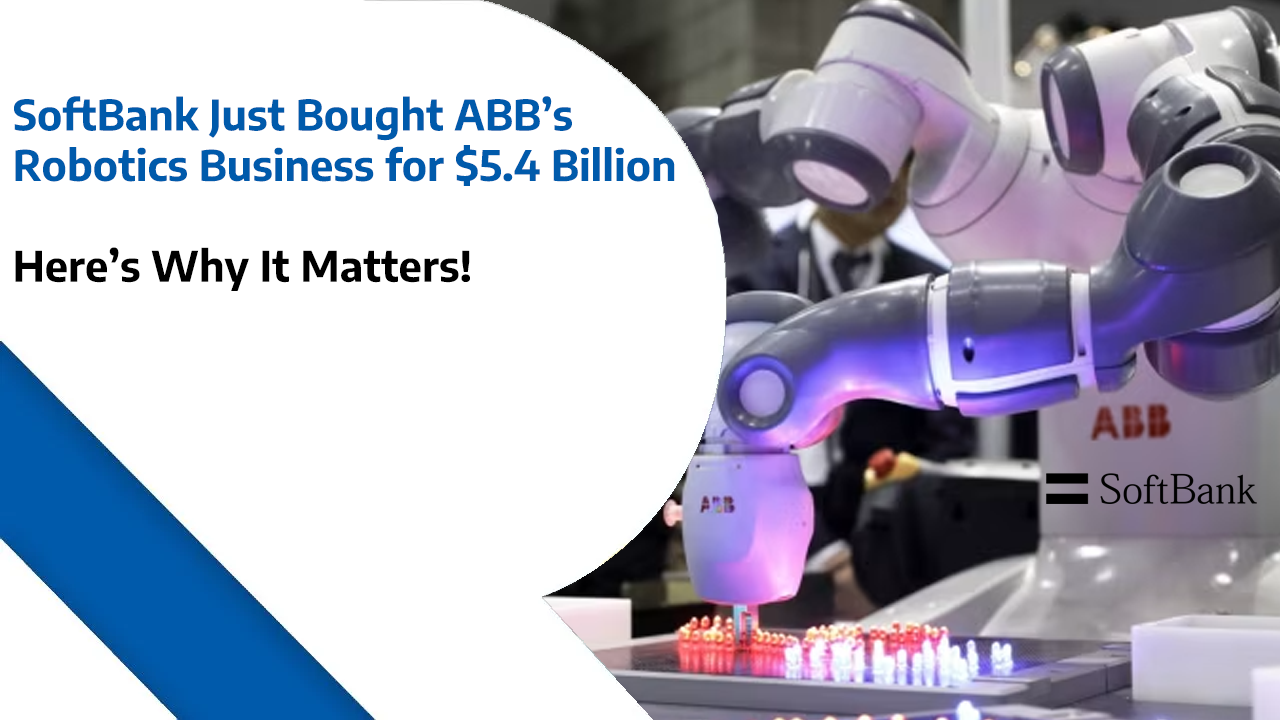
    ABB, the Swiss engineering powerhouse, is selling its entire robotics division to SoftBank for a staggering $5.4 billion. It’s one of the biggest moves in industrial automation this year — and it could reshape the future of AI-powered manufacturing.

    ABB, known for its automation systems and factory tech, decided not to spin off its robotics arm as originally planned. Instead, it’s making a clean exit — handing the division over to SoftBank for around $5.375 billion in cash.
    The deal is expected to close in mid-to-late 2026, pending regulatory approval in the U.S., Europe, and China. ABB says it will record a $2.4 billion pre-tax gain, with net cash proceeds of about $5.3 billion after costs.

    For SoftBank, this acquisition strengthens its vision of “Physical AI” — combining artificial intelligence with robotics. It already owns stakes in several tech and AI firms, and ABB’s industrial robots will give it a serious edge in the physical automation space.
    For ABB, this sale means focus. Robotics made up only about 7% of its 2024 revenue, with margins near 12%, so the company plans to reinvest in higher-growth areas and return more money to shareholders through dividends and buybacks.

    If you’re an investor, this could be a positive sign — ABB becomes leaner and potentially more profitable, while SoftBank doubles down on the AI-driven robotics revolution.
    If you work in manufacturing or tech, expect faster robot innovation and possibly more accessible automation.

    And that’s your robot news update for today!. If you’re curious about how robotics can transform your business, head over to Robot Philosophy website to join the waiting list for the workshops, or to speak with the team directly about robotics.

    Don’t forget to subscribe so you stay in the loop with all the latest updates.

    I’m RoboPhil from Robot Philosophy — thanks for watching, and I’ll see you next time!

    Join the workshop waiting list or get in touch at: https://robophil.com/


    Sponsors:-


    Robot Center: – https://robotcenter.co.uk/ – Buy Robot, Robot Buy, Robot consultancy, Robotics Consultancy, Inspection Robots, Security Robots,


    Robots of London: – https://robotsoflondon.co.uk/ – Robot Hire, Robot Rental, Rent Robot, Hire Robot, Robot Events, Robotics Hire, Hire Robotics, Rent Robotics, Robotics Rent, for exhibitions, shows, Events, Robot hire in the UK, Robot hire in Europe


    Robot Philosophy: – https://robophil.com/ – Robot Consultancy, Robot Recruitment, Robot Advice, Robot Insights, Robot Ideas. RoboPhil, also known as Philip English, is a leading Robot YouTuber, Robot Influencer, Robot Trainer, Robot Consultant, and Robot Streamer, Robotics Streamer, Robotics YouTuber, Robotics Influencer, Robotics Consultant, Robotics Trainer