Tag: Robot Youtuber

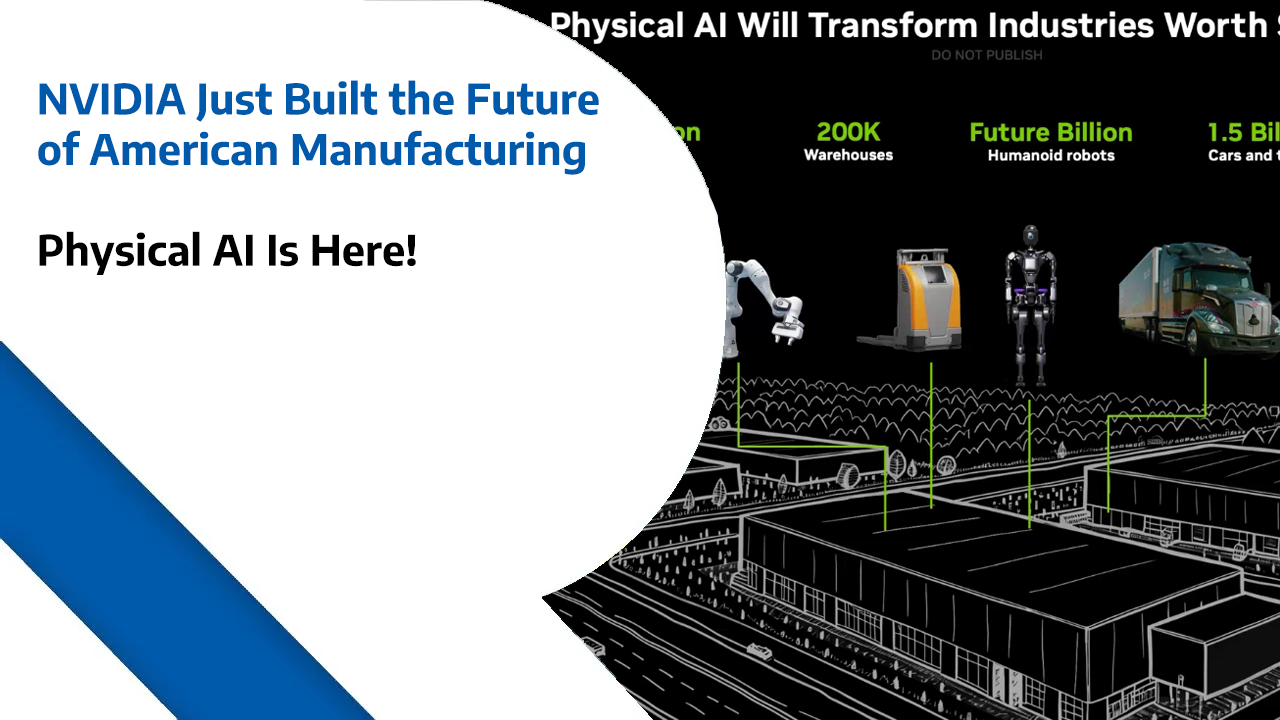
  • NVIDIA Just Built the Future of American Manufacturing – Physical AI Is Here

    NVIDIA Just Built the Future of American Manufacturing – Physical AI Is Here

    NVIDIA Just Built the Future of American Manufacturing – Physical AI Is Here


    Today we’re talking about how NVIDIA is bringing physical AI to life — not just in code, but in actual U.S. factories.

    This week at NVIDIA’s GTC event, Jensen Huang showed how companies like Siemens, FANUC, and Foxconn are using Omniverse to build robotic factories and digital twins — virtual replicas of real facilities where every machine, sensor, and robot can be simulated before it’s even built.

    That means smarter planning, fewer errors, and faster innovation. In short — America’s industrial base just got an AI upgrade.

    The big idea? Factories are becoming thinking machines. NVIDIA calls this “physical AI” — powered by its new IGX Thor processor that brings real-time intelligence straight to the edge.

    Companies like Caterpillar, Toyota, and Lucid Motors are already using it to predict maintenance issues, train factory robots, and design entire production lines in the virtual world before breaking ground in the real one.

    And here’s why this matters to you.
    If you run a business, this tech can help you cut downtime, boost efficiency, and bring manufacturing back to U.S. soil. Think 30 to 50 percent cost savings on maintenance and operations — that’s millions of dollars staying in American hands.

    If you’re in tech or engineering, it means new jobs — from digital-twin engineers to robotics trainers.

    And if you’re an investor — well, this is the early stage of the next industrial revolution.

    So yes, robots are coming — but they’re here to help. NVIDIA’s Omniverse is laying the digital foundation for America’s factories of the future — smart, efficient, and very real.

    And that’s your robot news update for today!. If you’re curious about how robotics can transform your business, head over to Robot Philosophy website to join the waiting list, or to speak with the team about robotics.

    Don’t forget to subscribe so you stay in the loop with all the latest updates.

    I’m RoboPhil from Robot Philosophy — thanks for watching, and I’ll see you next time!

    Join the workshop waiting list or get in touch at: https://robophil.com/


    Sponsors:-


    Robot Center: – https://robotcenter.co.uk/ – Buy Robot, Robot Buy, Robot consultancy, Robotics Consultancy, Inspection Robots, Security Robots,


    Robots of London: – https://robotsoflondon.co.uk/ – Robot Hire, Robot Rental, Rent Robot, Hire Robot, Robot Events, Robotics Hire, Hire Robotics, Rent Robotics, Robotics Rent, for exhibitions, shows, Events, Robot hire in the UK, Robot hire in Europe


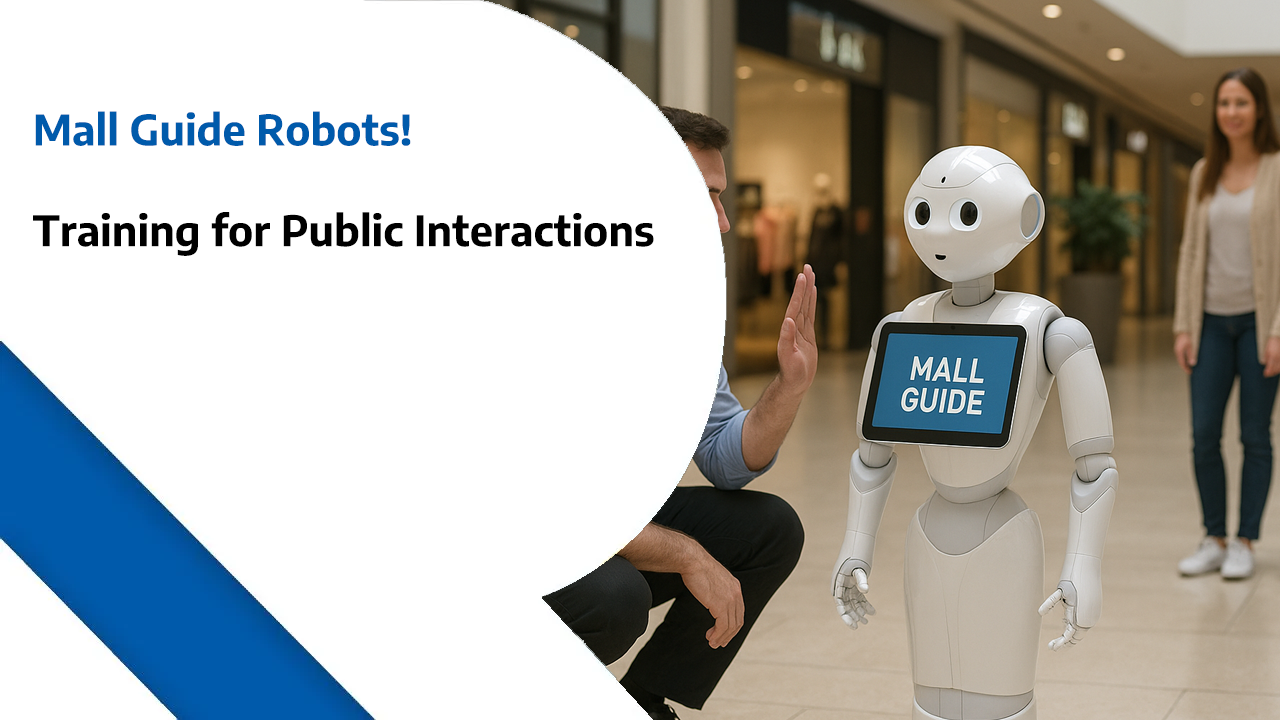
  • Mall Guide Robots – Training for Public Interactions

    Mall Guide Robots – Training for Public Interactions


    Mall Guide Robots – Training for Public Interactions

    Introduction: The Rise of Robotic Customer Service in Retail Spaces

    Shopping malls are undergoing a digital transformation, and at the forefront of this revolution are mall guide robots. These autonomous assistants are becoming increasingly common in retail environments worldwide, offering directions, answering questions, and providing an engaging customer experience that bridges the gap between human service and technological efficiency.

    However, deploying a robot in a busy public space isn’t as simple as switching it on and letting it roam. Success depends heavily on proper training for public interactions—both for the robots themselves and for the human teams managing them. In this comprehensive guide, we’ll explore the critical aspects of training mall guide robots, the challenges involved, and how professional consulting services can ensure your robotic deployment delivers maximum value.

    Understanding Mall Guide Robots: More Than Just Moving Screens

    Mall guide robots represent a sophisticated integration of multiple technologies: navigation systems, artificial intelligence, natural language processing, sensors, and user interface design. These machines must operate safely in crowded, unpredictable environments while maintaining engaging, helpful interactions with diverse audiences.

    Common features of modern mall guide robots include:

    • Autonomous Navigation: Using LIDAR, cameras, and ultrasonic sensors to navigate complex indoor environments
    • Interactive Touchscreens: Providing visual maps, store directories, and promotional content
    • Voice Interaction: Responding to spoken questions in multiple languages
    • Facial Recognition: Detecting and responding to human presence and emotions
    • Data Analytics: Collecting valuable insights about foot traffic and customer behavior
    • Advertisement Display: Delivering targeted marketing messages as they move through spaces

    The most successful implementations understand that these robots aren’t replacing human staff—they’re augmenting the customer experience by handling routine inquiries, freeing human employees to address more complex needs.

    The Training Challenge: Preparing Robots for Real-World Complexity

    Training a mall guide robot extends far beyond programming basic responses. Public spaces present unique challenges that require sophisticated preparation:

    Environmental Mapping and Navigation Training

    Before a robot can guide anyone, it needs an intimate understanding of its environment. This involves:

    Initial Mapping: Technicians must create detailed digital maps of the entire mall, including all stores, facilities, emergency exits, and obstacles. This process typically takes several days and requires the robot to traverse every accessible area multiple times.

    Dynamic Obstacle Recognition: Malls constantly change with seasonal decorations, promotional displays, and maintenance work. Robots must be trained to recognize and navigate around unexpected obstacles without disrupting their service.

    Crowd Management: Perhaps the most complex challenge is teaching robots to move safely through dense crowds. This requires sophisticated algorithms that predict human movement patterns, maintain safe distances, and avoid creating bottlenecks in high-traffic areas.

    Conversational AI and Customer Interaction Training

    The quality of a robot’s interactions determines whether customers will embrace or avoid it. Effective training includes:

    Natural Language Understanding: Robots must comprehend questions posed in various ways. “Where’s the bathroom?” “I need to find a restroom,” and “Can you tell me where the toilets are?” should all trigger the same helpful response.

    Context Awareness: Advanced systems learn to understand context from previous exchanges. If a customer asks about children’s clothing stores and then asks “How do I get there?” the robot should know which location is being referenced.

    Personality Development: Successful mall robots have distinct, friendly personalities that match the mall’s brand. Training involves crafting response styles, greeting behaviors, and even humor that resonates with the target demographic.

    Multilingual Capabilities: In diverse urban environments, robots should communicate in multiple languages. This requires extensive training data in each supported language and cultural awareness to avoid inappropriate responses.

    Safety and Emergency Protocol Training

    Public safety is paramount when deploying autonomous robots. Comprehensive training must include:

    Collision Avoidance: Robots need fail-safe systems to prevent bumping into children, elderly visitors, or anyone with mobility limitations. Training involves testing thousands of scenarios in simulation before real-world deployment.

    Emergency Response: In the event of fire alarms, security incidents, or medical emergencies, robots must know how to respond appropriately—whether that means immediately stopping, moving to designated safe zones, or displaying emergency information.

    Breakdown Protocols: When technical issues occur, robots should gracefully communicate their status to nearby customers and alert human operators for assistance.

    Human Training: The Often-Overlooked Critical Component

    While much attention focuses on training the robots themselves, preparing human staff is equally crucial for successful deployment.

    Mall Staff Training Programs

    Retail employees need comprehensive training on:

    Robot Capabilities and Limitations: Staff should understand what the robot can and cannot do, enabling them to seamlessly take over when the robot reaches its limits.

    Technical Troubleshooting: Basic problem-solving skills for common issues like navigation errors, system reboots, or customer interaction problems.

    Collaborative Service Models: How to work alongside robots rather than competing with or ignoring them. For example, staff can direct customers to the robot for directory information while they handle more complex inquiries.

    Customer Reassurance: Some visitors may feel uncomfortable around robots. Staff should be prepared to explain the robot’s purpose, demonstrate its use, and address privacy or safety concerns.

    Management and Oversight Training

    Mall management requires specialized training in:

    Performance Analytics: Understanding the data collected by robots and using it to improve mall operations and customer service.

    Maintenance Scheduling: Recognizing when robots need servicing, updates, or retraining based on performance metrics.

    ROI Measurement: Tracking key performance indicators like customer engagement rates, navigation assistance completions, and advertising effectiveness.

    Real-World Training Scenarios: Preparing for the Unexpected

    Theoretical training only goes so far. Effective robot preparation includes extensive real-world testing:

    Pilot Testing Phases

    Controlled Environment Testing: Initially deploying robots during off-hours to test navigation and basic functions without customer interference.

    Limited Public Exposure: Introducing robots during low-traffic periods with trained observers monitoring all interactions.

    Gradual Integration: Slowly increasing the robot’s operational hours and autonomy as performance data validates reliability.

    Continuous Learning and Adaptation

    Modern AI-powered mall robots continue learning throughout their operational life:

    Interaction Analysis: Recording and analyzing thousands of customer interactions to identify common questions, confusion points, and opportunities for improvement.

    Seasonal Adaptation: Training robots to handle seasonal events, sales periods, and holiday-specific questions.

    Feedback Integration: Implementing systematic collection of customer feedback and incorporating improvements into the robot’s knowledge base.

    Common Pitfalls and How Professional Consulting Prevents Them

    Many organizations underestimate the complexity of deploying mall guide robots, leading to costly mistakes:

    Insufficient Environmental Testing

    Robots trained in one environment often struggle when deployed in different settings. Professional consultants conduct thorough environmental assessments before deployment, identifying potential challenges specific to your facility.

    Inadequate User Experience Design

    Technical functionality doesn’t guarantee customer acceptance. Expert consultants bring human-centered design principles to ensure robots are approachable, understandable, and genuinely helpful.

    Lack of Integration with Existing Systems

    Robots work best when integrated with mall management systems, store directories, event schedules, and security infrastructure. Professional implementation ensures seamless connectivity.

    Neglecting Long-Term Support

    Initial deployment is just the beginning. Robots require ongoing updates, retraining, and maintenance. Consulting services establish sustainable support structures from day one.

    The Business Case: ROI of Properly Trained Mall Guide Robots

    Investing in comprehensive training pays significant dividends:

    Enhanced Customer Experience: Well-trained robots reduce frustration from getting lost or not finding information, increasing visitor satisfaction and return rates.

    Operational Efficiency: Robots handle thousands of routine inquiries, allowing human staff to focus on high-value interactions and sales support.

    Data-Driven Insights: Properly configured robots collect valuable analytics about customer behavior, popular destinations, and traffic patterns that inform business decisions.

    Marketing Opportunities: Robots serve as mobile advertising platforms, delivering targeted promotions while providing navigation services—creating new revenue streams.

    Brand Differentiation: Malls with effective robotic services position themselves as innovative, customer-focused destinations that stand out in competitive retail markets.

    Why Professional Robot Consulting Makes the Difference

    Deploying mall guide robots successfully requires expertise across multiple domains: robotics engineering, AI development, customer service design, facility management, and change management. Few organizations possess all these capabilities in-house.

    Professional robot consulting services provide:

    Comprehensive Needs Assessment

    Expert consultants evaluate your specific environment, customer demographics, operational goals, and budget constraints to recommend optimal solutions rather than one-size-fits-all products.

    Vendor Selection Guidance

    The robot market offers numerous options with varying capabilities, costs, and support structures. Experienced consultants help you navigate these choices to find the best match for your requirements.

    Customized Training Programs

    Generic training rarely addresses site-specific challenges. Professional services develop tailored training protocols for both robots and human staff based on your unique operational context.

    Implementation Project Management

    Deploying robots involves coordinating multiple stakeholders: facility management, IT departments, security teams, retail tenants, and technology vendors. Expert project management ensures smooth implementation on schedule and within budget.

    Ongoing Optimization

    Post-deployment support includes performance monitoring, troubleshooting, software updates, and continuous improvement based on operational data—maximizing your investment’s long-term value.

    Robot Recruitment: Finding the Right Technical Talent

    Beyond the robots themselves, successful programs require skilled human talent to manage, maintain, and optimize these systems. Robot recruitment services address this critical need by:

    Identifying Specialized Skills: Finding candidates with expertise in robotics, AI, computer vision, and customer experience design—a rare combination in the employment market.

    Screening for Customer Service Mindset: Technical skills alone aren’t sufficient. The best robot specialists understand that technology serves human needs and approach problems with customer experience in mind.

    Building Sustainable Teams: Recruitment services help establish internal capabilities for long-term robot management rather than creating dependency on external support.

    Training and Development: Placing candidates who can grow with the technology, adapting to new capabilities as robot systems evolve.

    Future Trends in Mall Guide Robot Training

    The field continues evolving rapidly. Forward-thinking organizations should prepare for:

    Emotional Intelligence: Next-generation robots will better recognize and respond to customer emotions, requiring training in empathy and appropriate emotional responses.

    Predictive Assistance: Rather than waiting for questions, advanced systems will anticipate customer needs based on behavior patterns and proactively offer assistance.

    Augmented Reality Integration: Robots may incorporate AR displays to provide visual wayfinding overlays and immersive shopping experiences.

    Swarm Robotics: Multiple robots working cooperatively to provide comprehensive coverage and handle complex customer service scenarios.

    Sustainability Features: Training robots to promote and support environmental initiatives, from guiding customers to recycling stations to optimizing energy use through intelligent routing.

    Making the Decision: Is Your Mall Ready for Guide Robots?

    Successful robot deployment requires more than budget approval. Consider these readiness factors:

    Infrastructure: Do you have reliable Wi-Fi coverage, adequate charging facilities, and clear, navigable pathways throughout your facility?

    Organizational Buy-In: Have you secured support from retail tenants, security teams, cleaning staff, and other stakeholders who will interact with robots daily?

    Customer Demographics: Does your visitor profile include sufficient tech-comfort levels to embrace robotic assistance, or will extensive customer education be required?

    Competitive Positioning: Will robotic services align with your brand identity and provide meaningful differentiation in your market?

    Resource Commitment: Can you dedicate the time, staff, and budget necessary for proper implementation, training, and ongoing support?

    Professional consultants can help assess these factors and develop realistic implementation roadmaps.

    Getting Started: Your Path to Successful Robot Deployment

    Implementing mall guide robots is a significant undertaking, but the rewards—enhanced customer experience, operational efficiency, and competitive differentiation—make it increasingly essential in modern retail environments.

    The key to success lies in recognizing that robots are sophisticated systems requiring expert guidance. From initial planning through deployment and ongoing optimization, professional consulting and recruitment services transform potential technology investments into proven customer service assets.

    Whether you’re exploring robot possibilities for the first time or looking to optimize existing deployments, expert guidance ensures you avoid costly mistakes and achieve maximum value from your investment.

    Take the Next Step: Expert Robot Consulting and Recruitment

    Ready to explore how mall guide robots can transform your customer experience? Professional guidance makes all the difference between a successful deployment and an expensive experiment.

    Get Expert Advice Today:

    📧 Emailinfo@robophil.com
    📞 Phone: 0845 528 0404

    Book a consultation to discuss your specific needs, explore solution options, and develop a customized implementation plan that delivers results.


    Article Sponsors

    This article is brought to you by leading experts in robotics solutions:

    Robot Center

    Websitehttps://robotcenter.co.uk/

    Your comprehensive source for robot purchases and robotics consultancy. Robot Center provides expert guidance on selecting, purchasing, and implementing robotic solutions for businesses of all sizes. Whether you’re buying your first robot or expanding an existing fleet, their consultancy services ensure you make informed decisions backed by industry expertise.

    Robots of London

    Websitehttps://robotsoflondon.co.uk/

    The premier robot hire and rental service for events and temporary deployments. Robots of London offers flexible rental options perfect for testing robot solutions before purchase, covering special events, or meeting seasonal demand. Their extensive rental fleet includes mall guide robots, event robots, and entertainment robots with full technical support.

    Robot Philosophy (RoboPhil)

    Websitehttps://robophil.com/

    Led by Philip English, a leading Robot YouTuber, Robot Influencer, Robot Trainer, Robot Consultant, Robotics Streamer, and Robotics Specialist, Robot Philosophy delivers comprehensive robot consultancy and robot recruitment services. RoboPhil provides expert robot advice, robot insights, and innovative robot ideas drawn from years of hands-on experience with cutting-edge robotics technology.

    From strategic planning to technical implementation and specialized recruitment, Robot Philosophy connects businesses with both the right robotic solutions and the talented professionals needed to maximize their investment.


    Don’t let your competition gain the advantage of cutting-edge customer service technology. Contact our expert team today at info@robophil.com or call 0845 528 0404 to schedule your consultation and begin your journey toward exceptional robotic customer experiences.
    https://www.youtube.com/watch?v=k86hZOVtzDs


    https://www.youtube.com/shorts/ZKAVnR5bPNc

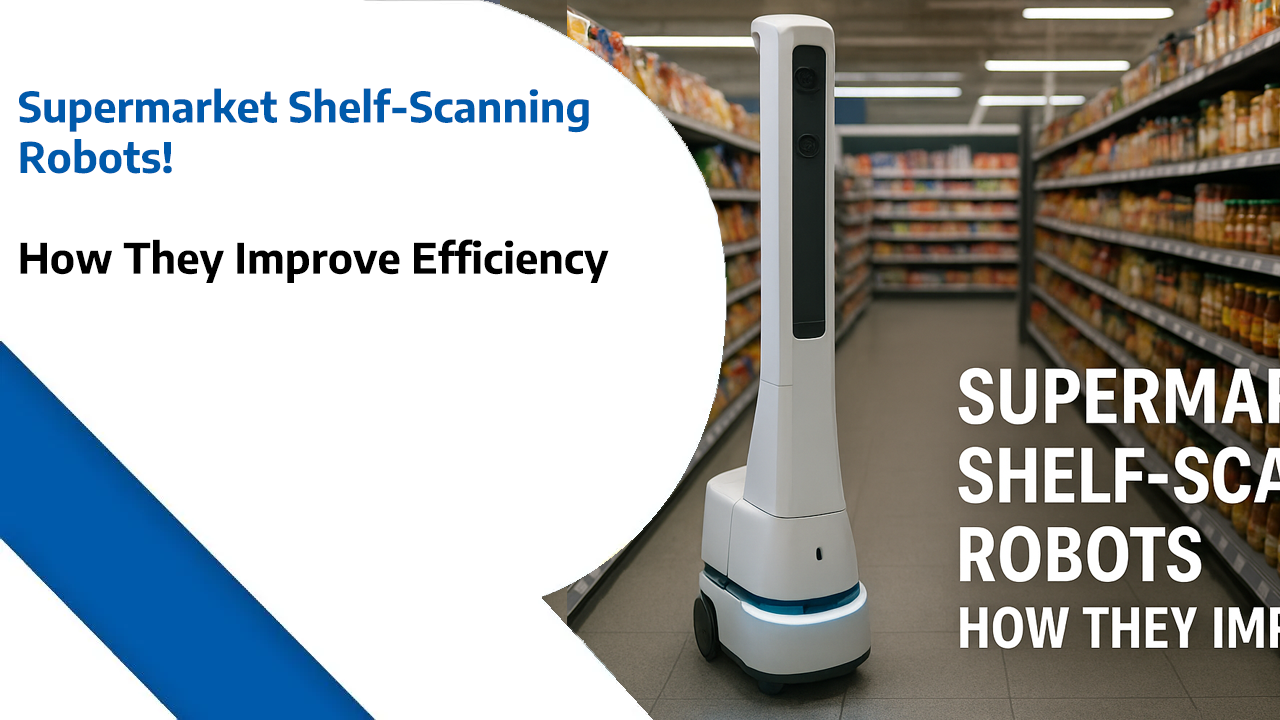
  • Supermarket Shelf-Scanning Robots – How They Improve Efficiency

    Supermarket Shelf-Scanning Robots – How They Improve Efficiency


    Supermarket Shelf-Scanning Robots – How They Improve Efficiency

    In the fast-paced world of retail, supermarkets face constant challenges — from maintaining accurate inventory levels to improving customer experience and cutting operational costs. As margins tighten and competition increases, efficiency becomes everything.

    Enter shelf-scanning robots — autonomous machines that roam supermarket aisles, continuously monitoring stock levels, pricing accuracy, and planogram compliance. Once viewed as futuristic novelties, these robots are now becoming essential tools for some of the world’s largest retailers.

    Let’s explore how supermarket shelf-scanning robots work, why they’re transforming operations, and how your business can integrate them effectively with the help of robot consultancy and recruitment experts.


    The Rise of Retail Robotics

    Over the past decade, robotics has quietly revolutionised industries such as manufacturing, logistics, and warehousing. The retail sector, however, has been slower to adopt automation — largely due to the complexity of public spaces, variable lighting, and customer traffic.

    But thanks to rapid advances in computer vision, artificial intelligence (AI), and mobile navigation, this is changing fast.

    Modern shelf-scanning robots are equipped with sophisticated 3D cameras and AI-driven image recognition software that can identify thousands of products across multiple aisles. They detect misplaced items, empty shelves, incorrect pricing labels, and even promotional display errors in real time.

    Retailers like Walmart, Carrefour, and Tesco have already begun trials and rollouts of these robots — and the results are impressive.


    How Shelf-Scanning Robots Work

    Shelf-scanning robots are designed to move autonomously through supermarket aisles, usually during quieter hours. Their primary job is to capture high-resolution images of every shelf and use AI to interpret what’s happening at the product level.

    Here’s a breakdown of the process:

    1. Mapping and Navigation
      Using advanced sensors and LiDAR, the robot creates a digital map of the store. It learns the layout and can navigate complex environments, even when shoppers or staff are moving around.

    2. Image Capture
      Multiple cameras scan every shelf, recording thousands of SKUs (Stock Keeping Units) in a single pass.

    3. AI Analysis
      The robot’s onboard AI compares what it “sees” with the store’s planogram — the digital layout of where products should be placed. It then identifies issues such as out-of-stock items, misplaced products, or incorrect pricing.

    4. Data Reporting
      The data is instantly uploaded to the cloud, where management dashboards highlight areas that need attention. Staff can then act quickly, restocking shelves or correcting labels.

    The result? Tasks that once took hours of manual checking are completed automatically — with a higher degree of accuracy.


    The Benefits of Shelf-Scanning Robots

    1. Real-Time Inventory Visibility

    Traditional inventory management relies on periodic checks and manual updates, which often leads to outdated or inaccurate information. Shelf-scanning robots change that completely.

    They provide live, continuous updates on stock levels, meaning managers can make faster, data-driven decisions about reordering and restocking. This not only improves availability for customers but also prevents overstocking, which ties up valuable capital.


    2. Improved Pricing Accuracy

    Price mismatches between shelf labels and checkout systems can frustrate customers and damage trust. Robots eliminate this problem by automatically flagging pricing errors.

    By ensuring that every shelf label matches the store’s digital system, supermarkets avoid costly mistakes and maintain brand credibility.


    3. Enhanced Employee Productivity

    One of the biggest misconceptions about retail robots is that they “replace” human workers. In reality, they augment them.

    By taking over repetitive and time-consuming scanning tasks, robots free up staff to focus on more valuable duties — such as customer service, product presentation, and operational improvements.

    This reallocation of labour leads to a more efficient and motivated workforce.


    4. Reduced Waste and Shrinkage

    By maintaining accurate inventory levels, shelf-scanning robots help prevent over-ordering and spoilage, particularly in perishable goods.

    Moreover, they can detect misplaced or incorrectly labelled items — reducing shrinkage and ensuring products are rotated correctly to minimise waste.


    5. Better Store Compliance

    Retailers spend millions ensuring stores comply with planograms and promotional guidelines. Robots make this process automatic, scanning every display and verifying that items are in the correct positions.

    This not only saves time but also ensures consistent brand presentation across multiple store locations.


    6. Valuable Data Insights

    The data collected by shelf-scanning robots provides invaluable insights into customer behaviour, shelf performance, and sales trends.

    For instance, if certain products are consistently out of stock or misplaced, it may indicate a high-demand area or poor shelf design.

    Over time, these insights lead to smarter store layouts, improved sales, and optimised operations.


    The Business Case for Shelf-Scanning Robots

    For supermarket chains, the return on investment (ROI) for shelf-scanning robots is compelling.

    Let’s take a simplified example.

    If a medium-sized supermarket spends an average of £150,000 annually on labour for manual stock checking and pricing audits, and a shelf-scanning robot reduces that by 60–70%, the annual savings can exceed £90,000 per store.

    Add to that reduced waste, better product availability, and higher sales conversion rates, and the payback period for each robot can be less than 12 months.

    When integrated into a chain-wide automation strategy, these robots become a core part of digital transformation in retail.


    Real-World Examples

    Walmart – Efficiency at Scale

    Walmart trialled shelf-scanning robots across hundreds of stores in the U.S. The robots autonomously scanned shelves to check for out-of-stock products, incorrect prices, and misplaced items.

    The result?

    • 50% faster restocking

    • 30% fewer pricing errors

    • Significant reduction in manual labour hours

    Although Walmart later chose to internalise some of the technology, the trials demonstrated the potential for massive scalability and cost savings.


    Carrefour – European Leadership

    French retail giant Carrefour deployed robots across several European stores to automate planogram compliance and improve shelf visibility. The AI-driven system helped reduce product gaps, optimise restocking routes, and increase sales on key SKUs.

    The robots’ data also fed directly into Carrefour’s central analytics dashboard — supporting strategic decision-making across its network.


    Tesco and UK Adoption

    Several UK retailers are now actively testing shelf-scanning and inventory robots. With labour shortages and rising costs, automation offers an effective way to maintain operational efficiency while improving service quality.

    Companies like Robot Center and Robots of London are working with supermarkets to evaluate, integrate, and deploy these solutions quickly — ensuring businesses stay ahead of the curve.


    How to Introduce Shelf-Scanning Robots Into Your Business

    Transitioning to robotics may seem daunting, but with the right approach, it can be smooth and highly effective.

    Here’s how robot consultancy and recruitment can make all the difference.


    Step 1: Conduct a Robotics Audit

    Before purchasing or hiring robots, it’s essential to understand where automation will deliver the most value.

    A robot consultancy audit analyses your current operations, identifies bottlenecks, and highlights areas where robots can improve efficiency, accuracy, and cost-effectiveness.

    At Robot Philosophy (https://robophil.com/), we call this the ROI Method
    R = Resources, O = Optimise, I = Intellectify.
    It’s a proven framework that ensures every robot adds measurable value to your business.


    Step 2: Select the Right Robots

    Not all shelf-scanning robots are created equal. Different models vary in speed, scanning capability, integration options, and price.

    Partnering with Robot Center (https://robotcenter.co.uk/) gives you access to expert guidance on which robots best suit your operational goals.

    Robot Center specialises in:

    • Buy Robot solutions

    • Robot Consultancy and Integration

    • Robotics Consultancy for Retail and Industry

    They help ensure that every robot you invest in aligns perfectly with your budget, goals, and technical environment.


    Step 3: Consider Short-Term Trials or Rentals

    If you’re not ready to buy, Robots of London (https://robotsoflondon.co.uk/) offers robot hire and rental options that allow supermarkets to trial robots before committing long-term.

    Their expertise in Robot Events, Rent Robot, and Hire Robot ensures seamless deployment and on-site support.

    Trialling robots through short-term rental contracts can provide real-world performance data and build stakeholder confidence in automation.


    Step 4: Train and Recruit the Right People

    Automation doesn’t eliminate jobs — it transforms them.

    As robots handle routine tasks, new opportunities arise in robot maintenance, data analytics, and operations management.

    That’s where Robot Philosophy (https://robophil.com/) excels again — offering both robot consultancy and robot recruitment services.

    If you’re looking to hire robotics professionals, or retrain your existing workforce to manage automated systems, contact the team at:
    📧 info@robophil.com
    📞 0845 528 0404


    Step 5: Integrate and Scale

    Once your shelf-scanning robots are successfully deployed, the next stage is integration with your ERP, inventory, and POS systems.

    This creates a continuous data loop that drives predictive ordering, reduces human error, and provides full operational transparency.

    Over time, you can expand your robotic ecosystem to include cleaning robots, delivery robots, and customer-assistance robots — creating a fully automated, smart retail environment.


    The Future of Supermarket Automation

    The introduction of shelf-scanning robots marks just the beginning of a much larger transformation in retail automation.

    The next generation of robots will not only scan shelves but also interact with customers, transport goods, and collaborate with human staff in hybrid retail environments.

    AI integration will allow for real-time demand forecasting and dynamic planogram adjustments based on actual customer behaviour.

    Imagine a future where robots not only identify low stock but automatically trigger reorders, direct staff to restock locations, or even handle shelf replenishment autonomously.

    That’s where retail is heading — and forward-thinking supermarkets are already positioning themselves for this new era.


    Why Work With a Robot Consultant?

    Robotic implementation isn’t just about buying machines — it’s about transforming workflows and rethinking processes.

    That’s why expert guidance matters.

    A professional robot consultant can:

    • Analyse your current operations and identify automation opportunities

    • Recommend the best robotic solutions for your budget

    • Manage supplier negotiations and technical integration

    • Train staff and develop a long-term automation roadmap

    With the right consultancy, supermarkets can avoid costly mistakes, accelerate adoption, and maximise ROI from day one.


    Upskill and Recruit for the Future

    As automation expands, the demand for skilled robotics professionals continues to grow.

    From robot operators and field engineers to AI integration specialists and data analysts — the retail industry is shifting towards a new skills economy.

    If you’re looking to hire or train people for this new era, contact the Robot Philosophy team at:
    📧 info@robophil.com
    📞 0845 528 0404

    They’ll help you find or train the right people to manage your robotic future.


    Final Thoughts

    Supermarket shelf-scanning robots are no longer experimental — they’re essential.

    They improve efficiency, accuracy, and profitability while freeing up staff for higher-value tasks. For retailers seeking to future-proof operations, now is the time to explore automation with the right partners.

    Whether you want to buy robots, rent them for trials, or get expert guidance on integration and recruitment, the following organisations are ready to help:


    Sponsors of This Article

    Robot Centerhttps://robotcenter.co.uk/
    Buy Robot, Robot Buy, Robot Consultancy, Robotics Consultancy.

    Robots of Londonhttps://robotsoflondon.co.uk/
    Robot Hire, Robot Rental, Rent Robot, Hire Robot, Robot Events.

    Robot Philosophyhttps://robophil.com/
    Robot Consultancy, Robot Recruitment, Robot Advice, Robot Insights, Robot Ideas.

    RoboPhil — also known as Philip English — is a leading Robot YouTuber, Robot Influencer, Robot Trainer, Robot Consultant, and Robot Streamer dedicated to helping businesses and individuals understand and implement robotics effectively.


    Ready to Automate?

    If you’re ready to take your supermarket operations to the next level with robotic efficiency, book a call today:
    📧 info@robophil.com
    📞 0845 528 0404

    Let’s design your retail automation strategy — and bring the future of supermarkets to your aisles.

    https://www.youtube.com/watch?v=giLOmu_x7Ow


    https://www.youtube.com/shorts/9nXKqDTgTMo

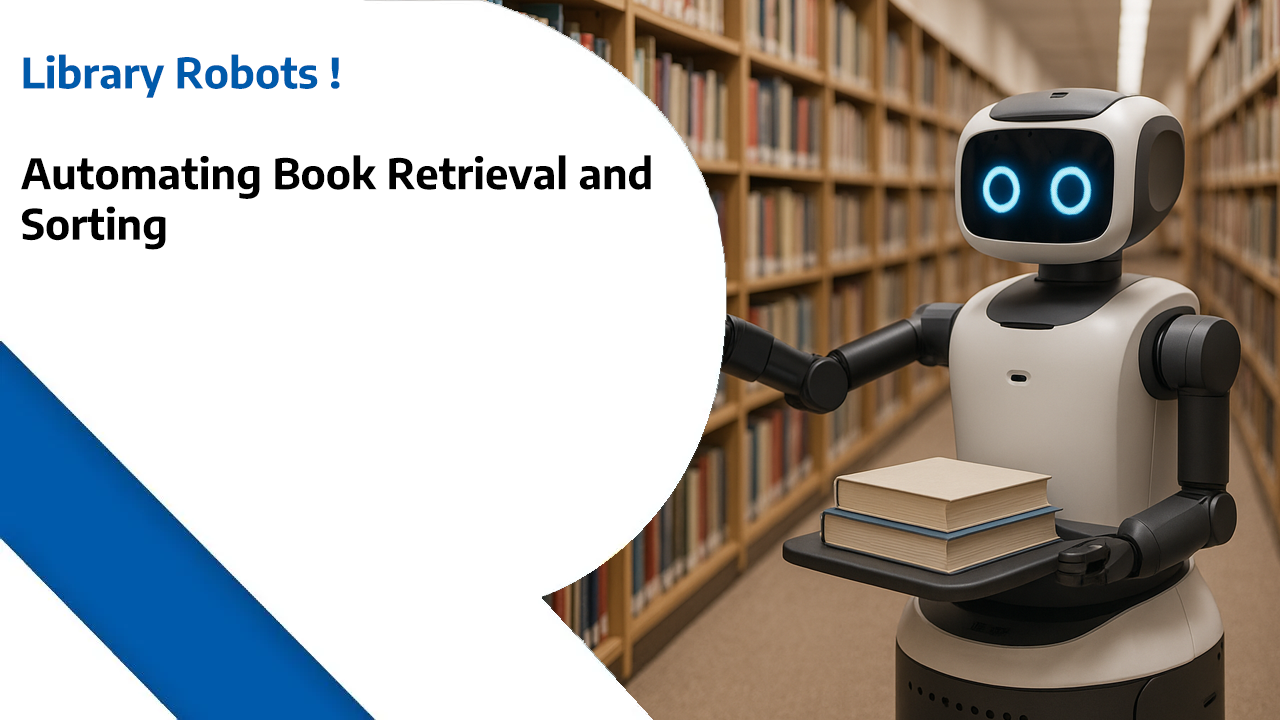
  • Library Robots – Automating Book Retrieval and Sorting

    Library Robots – Automating Book Retrieval and Sorting

    Library Robots: Automating Book Retrieval and Sorting

    The Future of Library Management is Here

    In an era where digital transformation touches every aspect of our lives, libraries are experiencing their own technological revolution. Library robots are emerging as sophisticated solutions that combine artificial intelligence, robotics, and automated systems to transform how books are stored, retrieved, and managed. These intelligent machines are not replacing librarians—they’re empowering them to focus on what matters most: helping patrons discover knowledge and fostering community engagement.

    The Evolution of Library Automation

    Libraries have always been at the forefront of organizational innovation. From the Dewey Decimal System to digital catalogues, each advancement has aimed to make information more accessible. Today’s library robots represent the next logical step in this evolution, addressing challenges that traditional methods struggle to solve: maximizing space efficiency, reducing retrieval times, improving accuracy, and alleviating the physical strain on library staff.

    The journey toward robotic automation began with automated storage and retrieval systems (ASRS) in the 1990s, initially adapted from warehouse technology. However, modern library robots have evolved far beyond these early systems, incorporating advanced sensors, machine learning algorithms, and sophisticated navigation capabilities that make them purpose-built for the unique demands of library environments.

    How Library Robots Work

    Automated Storage and Retrieval Systems (ASRS)

    At the heart of most library robotic systems lies the ASRS—a high-density storage solution that can house books in compact bins or on specialized shelving. When a patron requests a book, the system locates it within seconds and dispatches a robot to retrieve it. These systems can store materials at heights and densities impossible for human workers to manage safely, often increasing storage capacity by 50-80% compared to traditional shelving.

    Modern ASRS units use barcode scanning, RFID technology, or vision systems to identify and track every item. The integration with library management systems ensures real-time inventory updates and seamless patron experiences. Books are typically stored in bins organized by size or acquisition date rather than subject classification, optimizing space rather than browsability.

    Mobile Robotic Solutions

    Complementing fixed ASRS installations, mobile library robots navigate open stacks to perform various tasks. These autonomous vehicles can scan shelves to verify inventory, identify misplaced books, and even return items to their proper locations. Equipped with cameras, LiDAR sensors, and sophisticated mapping software, they operate safely alongside staff and patrons.

    Some advanced mobile robots feature robotic arms capable of grasping and manipulating books of various sizes. These systems can handle the entire return-to-shelf workflow, from collecting books from return bins to placing them back in their designated spots with remarkable precision.

    Sorting and Processing Robots

    Behind the scenes, sorting robots revolutionize the handling of returned materials. Using conveyor systems integrated with RFID readers and automated gates, these systems can process hundreds of items per hour, sorting them by destination, condition, or priority. This automation dramatically reduces the time staff spend on repetitive sorting tasks, allowing them to engage more meaningfully with library users.

    Real-World Applications and Case Studies

    Academic Libraries Leading the Way

    Universities worldwide have embraced robotic systems to manage their ever-expanding collections. The James B. Hunt Jr. Library at North Carolina State University pioneered the bookBot system, which stores up to 2 million items in a climate-controlled automated facility. Students request books through the online catalogue, and the robot delivers them to a pickup desk within five minutes—a revolutionary improvement over the hours or days traditional stack retrieval might require.

    Similarly, the University of Missouri’s library implemented an ASRS that freed up valuable floor space for collaborative learning areas, computer labs, and study spaces. The reclaimed square footage has been transformed into student-centered facilities that better serve modern academic needs.

    Public Libraries Reimagining Spaces

    Public libraries have discovered that robotic systems allow them to maintain extensive collections while creating welcoming community spaces. The Joe and Rika Mansueto Library at the University of Chicago serves as an exemplary model, with its distinctive glass dome reading room sitting atop a five-story robotic retrieval system that can access 3.5 million volumes.

    Smaller public libraries have adopted modular robotic solutions that fit their scale and budget. These systems often combine automated sorting with compact storage, enabling branches to maintain comprehensive collections despite space constraints.

    National Libraries Preserving Heritage

    National and research libraries face unique challenges in preserving rare and fragile materials while maintaining accessibility. Robotic systems offer climate-controlled storage environments with minimal handling, reducing wear on precious items. The Swiss Federal Institute of Technology Zurich uses robots to manage its collection, ensuring optimal preservation conditions while providing efficient access to researchers.

    Key Benefits of Library Robotics

    Space Optimization

    The most immediately visible advantage is the dramatic increase in storage density. Robotic systems can utilize vertical space efficiently, storing items in compact configurations that would be inaccessible or unsafe for human workers. Libraries can often house twice as many items in the same footprint, or alternatively, dedicate existing space to patron services rather than stacks.

    Enhanced Retrieval Speed and Accuracy

    Robots locate and retrieve items with remarkable speed—typically in under five minutes. They virtually eliminate retrieval errors, ensuring patrons receive exactly what they requested. This reliability extends to inventory management, with robotic systems capable of conducting complete collection audits in hours rather than the months traditional methods require.

    Staff Wellbeing and Productivity

    Library work involves significant physical demands—lifting heavy books, reaching high shelves, pushing laden carts, and walking miles through stacks daily. Robots handle these physically taxing tasks, reducing workplace injuries and fatigue. Staff can redirect their energy toward patron services, programming, collection development, and other high-value activities that require human expertise and judgment.

    Extended Access Hours

    Automated systems can operate independently during evenings, weekends, and holidays, allowing libraries to offer 24/7 pickup services through secure lockers. Patrons can request items online and collect them at their convenience, significantly improving accessibility for those with challenging schedules.

    Improved Collection Management

    Robots provide unprecedented insight into collection usage patterns, condition monitoring, and inventory accuracy. They can flag items needing repair, identify circulation trends, and support data-driven collection development decisions. The continuous shelf-reading capabilities of mobile robots ensure collections remain organized and findable.

    Implementation Considerations

    Cost and ROI Analysis

    Robotic systems represent substantial capital investments, typically ranging from hundreds of thousands to several million pounds depending on scale and sophistication. However, when evaluated over their operational lifetime (often 20+ years), the return on investment becomes compelling. Savings come from reduced space needs (both in avoiding building expansions and in lower HVAC costs for compact storage), decreased staff time on manual tasks, and improved asset utilization.

    Libraries considering automation should conduct thorough cost-benefit analyses that account for their specific circumstances, including collection size, retrieval demand, available space, and labor costs.

    Integration with Existing Systems

    Successful implementation requires seamless integration with library management systems, patron databases, and catalogue interfaces. Modern robotic solutions offer APIs and standard protocols that facilitate this integration, but planning and testing are essential. Staff training on the new systems and workflows ensures smooth transitions.

    Change Management

    Introducing robots into library operations represents significant organizational change. Success depends on engaging staff early in the planning process, addressing concerns transparently, and emphasizing how automation enhances rather than replaces human roles. Clear communication about the benefits—both for staff and patrons—builds support and enthusiasm.

    Challenges and Limitations

    Initial Investment Barriers

    The upfront costs can be prohibitive, particularly for smaller libraries or those facing budget constraints. While financing options and phased implementations can help, economic barriers remain significant. Some libraries address this through consortial approaches, sharing systems across multiple branches or institutions.

    Technical Complexity

    Robotic systems are sophisticated technologies requiring ongoing maintenance, software updates, and technical support. Libraries must ensure they have access to qualified technicians or vendor support agreements. System downtime, while typically minimal with well-maintained equipment, can disrupt services.

    Collection Accessibility

    While robotic systems excel at rapid retrieval of known items, they fundamentally change the browsing experience. Patrons cannot wander through stacks making serendipitous discoveries. Libraries must thoughtfully design solutions that balance efficiency with discoverability—perhaps maintaining browseable collections of high-demand items while storing less-frequently accessed materials in automated systems.

    Material Handling Limitations

    Not all library materials are suitable for automated handling. Oversized items, fragile materials, unusual formats, and items with irregular shapes may require special handling or exclusion from automated systems. Libraries must develop workflows for managing these exceptions.

    The Human-Robot Partnership

    The most successful library automation implementations view robots as collaborative tools rather than replacements. Librarians bring irreplaceable skills—information expertise, instructional abilities, community understanding, and the human connection that makes libraries vital community anchors. Robots handle repetitive physical tasks with tireless consistency.

    This partnership allows staff to operate at the top of their professional capabilities. Instead of spending hours reshelving books or retrieving items from distant stacks, librarians can develop specialized collections, design innovative programs, provide in-depth research consultations, and build community partnerships. The result is a better experience for both staff and patrons.

    Future Trends and Innovations

    AI-Enhanced Systems

    Artificial intelligence is making library robots smarter. Machine learning algorithms optimize storage locations based on usage patterns, predict maintenance needs before failures occur, and improve navigation in complex environments. Natural language processing may soon enable patrons to describe what they’re looking for in conversational terms, with AI translating these into retrieval requests.

    Collaborative Multi-Robot Systems

    Future libraries may employ teams of specialized robots working in concert—mobile units handling shelf-reading and inventory, retrieval robots accessing storage systems, sorting robots processing returns, and delivery robots transporting materials between departments or even to patron homes.

    Sustainable and Energy-Efficient Designs

    Next-generation library robots emphasize sustainability, using energy-efficient motors, regenerative braking, and smart power management. Some systems incorporate solar panels or operate during off-peak electricity hours to minimize environmental impact.

    Expanded Capabilities

    Emerging technologies may enable robots to handle more delicate materials, including rare books and manuscripts currently requiring specialized human handling. Advanced vision systems could assess item condition and flag conservation needs automatically.

    Implementing Robotics in Your Library

    Assessment and Planning

    Begin by evaluating your library’s specific needs and constraints. Consider your collection size and growth projections, retrieval demand patterns, available space, budget realities, and staff capacity. Site visits to libraries with robotic systems provide invaluable insights into operational realities.

    Vendor Selection

    The library robotics market includes established players and innovative newcomers. Evaluate vendors based on their track record, technical support capabilities, system scalability, integration options, and total cost of ownership. Request detailed proposals and demonstrations tailored to your requirements.

    Phased Implementation

    Many libraries adopt phased approaches, beginning with sorting automation or a modest ASRS installation before expanding. This allows staff to adapt gradually, provides early wins that build organizational support, and spreads costs over multiple budget cycles.

    Expert Guidance for Your Library’s Robotic Journey

    Navigating the complex landscape of library robotics requires specialized expertise. From initial feasibility studies through implementation and optimization, the right guidance can mean the difference between a transformative success and a costly misstep.

    Professional Robot Consulting Services

    Whether you’re exploring automation possibilities or ready to implement a comprehensive robotic solution, expert consultants can provide invaluable support. Professional robot consulting encompasses needs assessment, technology selection, vendor evaluation, integration planning, and change management strategies tailored to library environments.

    Experienced consultants understand both the technical aspects of robotic systems and the unique operational requirements of libraries. They can help you avoid common pitfalls, optimize your investment, and ensure your robotic solution truly serves your community’s needs.

    Finding the Right Robotic Talent

    As libraries adopt robotic systems, they often need specialized staff who understand both library science and robotics technology. Robot recruitment services connect libraries with qualified professionals who can manage, maintain, and optimize automated systems. These specialists bridge the gap between traditional library operations and cutting-edge automation technology.

    Ready to explore how library robots can transform your institution?

    Our team offers comprehensive robot consultancy and recruitment services designed specifically for libraries and information organizations. We’ll help you navigate every step of your automation journey—from initial assessment through implementation and beyond.

    Contact us today:

    Book a consultation to discuss your library’s unique needs and discover how robotic automation can enhance your services, empower your staff, and better serve your community.

    Conclusion

    Library robots represent far more than technological novelty—they’re practical solutions to real challenges facing modern libraries. By automating physically demanding and repetitive tasks, these systems enable libraries to maximize their collections, optimize their spaces, and empower their staff to focus on distinctly human services that define great libraries.

    The transition to robotic systems requires careful planning, significant investment, and organizational commitment. However, libraries that successfully implement these technologies position themselves for a future where they can maintain comprehensive physical collections while creating welcoming community spaces that meet evolving patron needs.

    As technology continues advancing and costs gradually decrease, library robots will become increasingly accessible to institutions of all sizes. The question for library leaders is not whether to consider automation, but when and how to thoughtfully integrate these tools into their service models.

    The libraries that thrive in coming decades will be those that embrace the human-robot partnership, leveraging technology to amplify human capabilities rather than replace them. In doing so, they’ll honor libraries’ enduring mission—connecting people with information, ideas, and each other—while adopting the tools needed to fulfill that mission in our rapidly changing world.


    Article Sponsors

    This article is proudly sponsored by leading organizations in the robotics industry:

    Robot Center

    Website: https://robotcenter.co.uk/

    Your comprehensive destination for robot acquisition and consultancy services. Whether you’re looking to buy robots, need expert robotics consultancy, or require guidance on automation implementation, Robot Center provides the expertise and solutions to support your robotic journey.

    Robots of London

    Website: https://robotsoflondon.co.uk/

    The premier provider of robot hire and rental services in the UK. Perfect for events, temporary deployments, or trial periods before purchase, Robots of London offers flexible rental solutions that let you experience robotic technology firsthand. From corporate events to educational demonstrations, they provide professional robot hire services tailored to your needs.

    Robot Philosophy

    Website: https://robophil.com/

    Led by Philip English (RoboPhil), a renowned Robot YouTuber, Robot Influencer, Robot Trainer, and Robot Consultant, Robot Philosophy offers specialized robot consultancy and robot recruitment services. With extensive experience as a Robotics Streamer, Robotics YouTuber, and Robotics Consultant, Philip provides expert robot advice, robot insights, and innovative robot ideas to organizations navigating the automation landscape.

    For consultancy and recruitment services:


    Ready to revolutionize your library with robotic automation? Our sponsors are here to help you every step of the way—from initial consultation through implementation and ongoing support.


    https://www.youtube.com/watch?v=kjj083hSRL8


    https://www.youtube.com/shorts/TnuIss9vUpM

  • Augmentus Just Changed Robotics Forever – $11M Boost for No-Code Robot Revolution

    Augmentus Just Changed Robotics Forever – $11M Boost for No-Code Robot Revolution

    Augmentus Just Changed Robotics Forever – $11M Boost for No-Code Robot Revolution


    Welcome back! Today we’re diving into a breakthrough that could change how factories work forever. A company called Augmentus has just secured $11 million in funding to bring flexible, adaptive robotics to what’s called high-mix production — where manufacturers produce lots of different parts, not just the same one a million times.

    For decades, industrial automation has been built for high-volume, low-mix work — think identical widgets rolling off the line. But what about when every part’s a little different? That’s where most robots hit a wall — until now

    Augmentus, based in Singapore and Texas, has created a no-code AI platform that gives robots what they call ‘eyes and brains.’ Their AutoPath system uses 3D scanning, automatic tool-path generation, and adaptive motion control, so robots can respond in real time to changes in part shape, size, or orientation — without the need for expert programmers.

    This means manufacturers can deploy robots in minutes instead of hours, cut programming time by up to 90 percent, and reduce downtime dramatically. It works with major brands like ABB, KUKA, and Universal Robots, so you can drop it right into your existing setup.

    With this funding, Augmentus plans to scale across North America and APAC, bringing its hyper-adaptive systems to aerospace, energy, and heavy industry. Imagine a 2028 factory floor — robots automatically reprogram themselves for each new part, switching tasks on the fly. That’s faster delivery, less waste, and higher profits for U.S. manufacturers.

    If you’re in manufacturing, or thinking about automation, this is the tech that could make robotics finally affordable and flexible enough for your business. Augmentus isn’t just changing robots — they’re changing the economics of production.


    And that’s your robot news update for today!. If you’re curious about how robotics can transform your business, head over to Robot Philosophy website to join the waiting list, or to speak with the team about robotics.

    Don’t forget to subscribe so you stay in the loop with all the latest updates.

    I’m RoboPhil from Robot Philosophy — thanks for watching, and I’ll see you next time!

    Join the workshop waiting list or get in touch at: https://robophil.com/


    Sponsors:-


    Robot Center: – https://robotcenter.co.uk/ – Buy Robot, Robot Buy, Robot consultancy, Robotics Consultancy, Inspection Robots, Security Robots,


    Robots of London: – https://robotsoflondon.co.uk/ – Robot Hire, Robot Rental, Rent Robot, Hire Robot, Robot Events, Robotics Hire, Hire Robotics, Rent Robotics, Robotics Rent, for exhibitions, shows, Events, Robot hire in the UK, Robot hire in Europe


    Robot Philosophy: – https://robophil.com/ – Robot Consultancy, Robot Recruitment, Robot Advice, Robot Insights, Robot Ideas. RoboPhil, also known as Philip English, is a leading Robot YouTuber, Robot Influencer, Robot Trainer, Robot Consultant, and Robot Streamer, Robotics Streamer, Robotics YouTuber, Robotics Influencer, Robotics Consultant, Robotics Trainer 


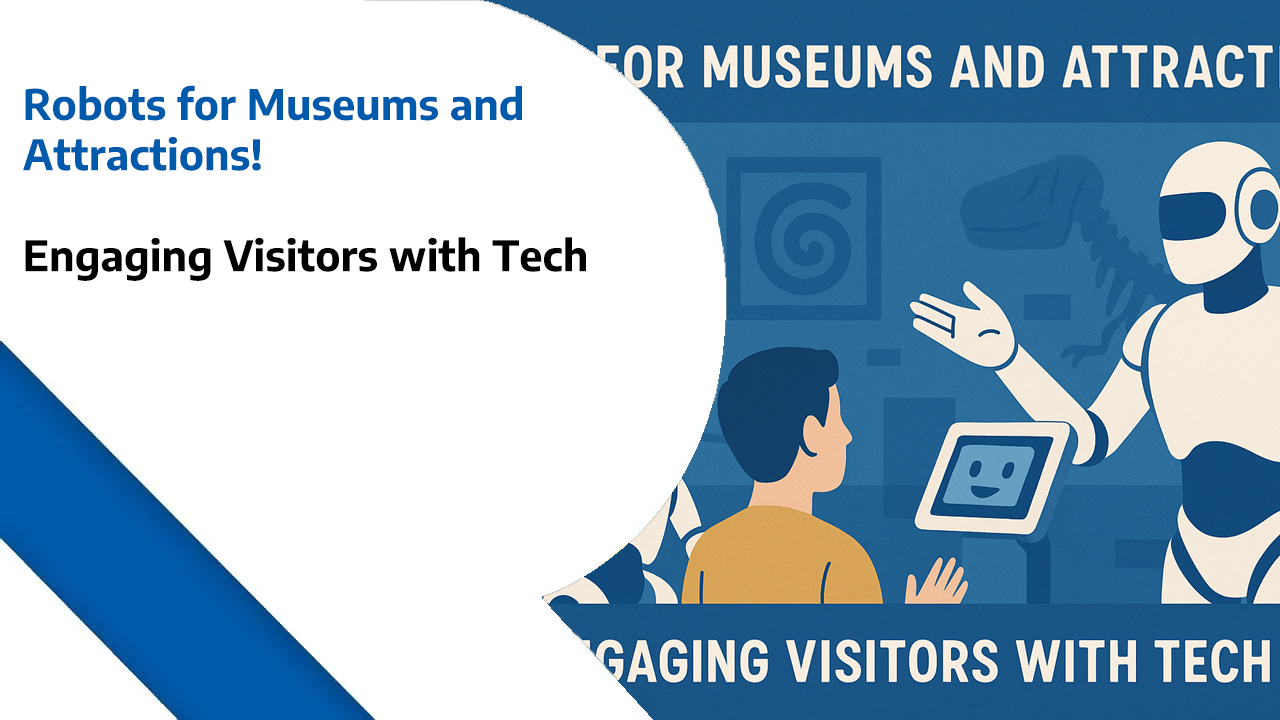
  • Robots for Museums and Attractions – Engaging Visitors with Tech

    Robots for Museums and Attractions – Engaging Visitors with Tech


    Robots for Museums and Attractions – Engaging Visitors with Tech

    In a world increasingly driven by technology, museums and attractions are embracing a new era of interactive innovation — robotics. Once confined to factories and labs, robots are now transforming how visitors experience art, culture, history, and entertainment. From greeting guests and guiding tours to performing interactive demonstrations, robots are redefining visitor engagement.

    Whether you run a national museum, a science centre, a theme park, or a local attraction, robots can captivate audiences, reduce operational strain, and elevate your brand image. In this article, we explore how robots are revolutionising the museum and attractions industry — and how you can integrate them into your own venue with the help of expert consultancy and recruitment support from RoboPhil and Robot Center.


    The Rise of Robots in Cultural and Visitor Spaces

    For centuries, museums have been guardians of the past — but now, they are becoming portals to the future. The adoption of robots in museums and attractions is growing rapidly as venues seek new ways to attract tech-savvy visitors and enhance interactivity.

    Robots can do much more than act as static displays or curiosities. They can serve as guides, storytellers, entertainers, and even educators — bridging the gap between visitors and exhibits.

    Why Robots Make Sense for Museums

    1. Enhanced Visitor Engagement
      Robots naturally draw attention. Whether it’s a humanoid robot like Pepper greeting guests at the entrance or a mobile robot like Temi providing interactive tours, visitors are intrigued by these futuristic helpers.

    2. Interactive Learning Experiences
      Robots can make educational content come alive. Imagine a museum where a robot explains how dinosaurs evolved, or where a visitor can ask a robot questions about an ancient civilisation — and receive real-time answers.

    3. Consistent, Multilingual Service
      Robots can provide information in multiple languages, ensuring that international visitors feel welcome. They also deliver consistent messages, free from human error or fatigue.

    4. Cost-Effective Staffing Solution
      While robots don’t replace staff entirely, they can handle repetitive, time-consuming tasks — allowing human employees to focus on higher-value interactions.

    5. Marketing and Social Media Magnet
      Visitors love sharing photos and videos of robots online. This creates powerful organic marketing, generating excitement and publicity for your venue.


    Real-World Examples of Robots in Museums and Attractions

    Around the world, robots are already making waves in visitor attractions:

    • Smithsonian Museums (USA) use interactive robots to lead educational tours and demonstrate exhibits.

    • National Museum of Emerging Science and Innovation (Japan) has long used humanoid robots to showcase advancements in AI and robotics.

    • London Science Museum (UK) integrates robotics into its exhibitions, including social robots that interact with guests.

    • Theme parks are deploying robots for entertainment, photo opportunities, and visitor assistance — from serving drinks to performing live dance routines.

    These examples demonstrate that robots are not just novelties — they are tools for creating unforgettable visitor experiences.


    Types of Robots for Museums and Attractions

    When planning to introduce robotics into your venue, it’s essential to understand the main types available and their applications.

    1. Greeting and Reception Robots

    Robots like Pepper and LuckiBot can welcome guests, check tickets, and provide basic information. They can even remember repeat visitors or customise interactions for children.

    2. Tour Guide Robots

    Robots such as Temi are equipped with AI, navigation systems, and voice interaction capabilities. They can autonomously lead tours, provide detailed exhibit information, and answer visitor questions using cloud-connected knowledge databases.

    3. Entertainment Robots

    Attractions often use humanoid robots, robotic arms, or custom-built machines for live shows, interactive games, or selfie moments. These robots can be programmed to dance, talk, or perform actions synced with lights and sound.

    4. Information and Wayfinding Robots

    In larger venues or theme parks, wayfinding robots help visitors navigate easily, giving directions and highlighting special exhibits or time-sensitive events.

    5. Educational and Workshop Robots

    Robotics can also be a tool for teaching STEM concepts. Robots that children can interact with — such as coding bots or educational assistants — make learning hands-on and fun.


    The Visitor Experience Revolution

    The biggest advantage of introducing robots is the wow factor. Visitors are instantly drawn to futuristic, interactive technology. But beyond novelty, robotics can deeply enhance the emotional connection people feel with your venue.

    Creating Memorable Interactions

    A robot that tells stories, reacts to emotions, or personalises responses can make visitors feel truly seen and engaged. This emotional engagement leads to repeat visits and stronger word-of-mouth promotion.

    Gathering Data and Insights

    Robots can collect valuable data on visitor flow, questions asked, and engagement levels. This helps management teams optimise exhibit placement, marketing strategy, and staffing levels.

    Accessibility and Inclusivity

    For visitors with disabilities or special needs, robots can be programmed to provide assistance — from navigation support to verbal descriptions of exhibits for visually impaired guests.


    The Business Case for Robots in Attractions

    1. Increased Footfall

    Robots attract visitors, both new and returning, who want to see the latest tech in action. Media coverage, viral content, and social buzz often follow the installation of robots.

    2. Operational Efficiency

    Automating basic visitor services reduces human workload and allows better staff allocation.

    3. Sponsorship and Revenue Opportunities

    Robot-branded experiences can attract sponsors or partners who want their logo or product featured in cutting-edge technology displays.

    4. Future-Proofing Your Venue

    Investing in robotics signals innovation, helping your museum or attraction stay relevant in an increasingly digital world.


    Integrating Robots Successfully: The Consultancy Advantage

    While the potential is clear, successful implementation requires planning. Choosing the wrong robot, lacking a clear purpose, or poor integration can lead to underwhelming results. That’s where robot consultancy comes in.

    Robot Consultancy: Expert Guidance for Maximum Impact

    At RoboPhil (https://robophil.com/), we specialise in helping museums and attractions harness the power of robotics effectively. Our consultancy services cover:

    • Audit and Analysis – Identifying where robots can add the most value to your visitor experience.

    • Technology Selection – Recommending the best robots for your budget, environment, and audience.

    • Integration and Training – Ensuring your staff understand how to use and maintain the robots.

    • Data and Insights – Helping you use robot-generated data to enhance operations and visitor satisfaction.

    If you’re considering introducing robots to your venue, book a consultation today:
    📧 info@robophil.com
    📞 0845 528 0404

    We’ll help you design a strategy that ensures your investment in robotics delivers measurable impact — from visitor engagement to ROI.


    Robot Recruitment: Finding the Right Talent

    As museums and attractions integrate more robotics and AI systems, the need for skilled staff increases. You’ll require technicians, programmers, and operators who understand both the technology and the visitor experience.

    Through Robot Philosophy, we provide robot recruitment services that connect your organisation with top robotics professionals. Whether you need a full-time robotics engineer or a short-term specialist for a new exhibit, we can help you find the right person quickly and efficiently.

    Let us handle the complexity of recruitment so you can focus on creating world-class visitor experiences.


    Your UK Robotics Partners

    If you’re ready to bring robots into your museum or attraction, the following trusted partners can help at every stage:

    Robot Centerhttps://robotcenter.co.uk/

    Your go-to for robot purchases and robot consultancy. Robot Center specialises in commercial robots for public spaces, offering solutions that blend practicality and innovation. Whether you’re looking to buy a robot, receive robot consultancy, or develop a tailored robotics strategy, Robot Center provides expert advice and integration support.

    Robots of Londonhttps://robotsoflondon.co.uk/

    Perfect for robot hire and robot rental. If you want to test robots before committing or add a temporary robotic feature to your exhibition or event, Robots of London offers the UK’s largest range of robots for short- or long-term hire. Their robots are popular at robot events, museum exhibitions, and visitor attraction launches.

    Robot Philosophy (RoboPhil)https://robophil.com/

    Led by Philip English, also known as RoboPhil — a leading robot consultant, YouTuber, trainer, influencer, and streamer — Robot Philosophy provides robot consultancy and robot recruitment. Get the best robot advice, insights, and ideas for your museum or attraction.


    The Future of Robotics in Museums

    As AI and robotics continue to evolve, museums and attractions have an unprecedented opportunity to merge storytelling with cutting-edge technology. In the near future, we can expect:

    • Emotionally intelligent robots that read visitor expressions and adapt their tone.

    • Autonomous patrol robots that enhance safety during closing hours.

    • Robotic arms that handle delicate exhibits or conduct live demonstrations.

    • Virtual twin robots that replicate famous figures, allowing visitors to “meet” historical personalities.

    • AI-driven analytics that refine visitor engagement through behavioural insights.

    This is more than a trend — it’s a transformation. The museums that adopt robotics now are shaping the future of public engagement.


    How to Get Started

    Here’s how you can take your first steps towards introducing robots to your venue:

    1. Book a Consultation – Contact RoboPhil to discuss your goals, audience, and operational needs.

    2. Run a Pilot Project – Rent or hire a robot from Robots of London to test engagement levels.

    3. Scale Strategically – Once you see the results, work with Robot Center to integrate robots permanently.

    4. Train and Recruit – Use Robot Philosophy to find and train your robotics team.

    Every great robotics project starts with a conversation.

    📧 info@robophil.com
    📞 0845 528 0404


    Conclusion

    Robots are not just the future of industry — they are the future of experience. For museums and attractions, they offer a dynamic new way to engage visitors, improve operations, and stand out in a competitive landscape.

    From interactive guides and multilingual assistants to educational tools and entertainment performers, robots bring exhibits to life. But to make robotics work effectively, you need the right strategy, the right technology, and the right people.

    That’s where RoboPhil, Robot Center, and Robots of London come in. Together, they provide a complete ecosystem of consultancy, recruitment, sales, and rental solutions.

    So if you’re ready to engage your visitors with technology and take your venue into the future — let’s talk.

    📧 info@robophil.com
    📞 0845 528 0404


    Sponsored by:


    https://www.youtube.com/watch?v=yGDimXf__g4


    https://www.youtube.com/shorts/tVedCL66d6o


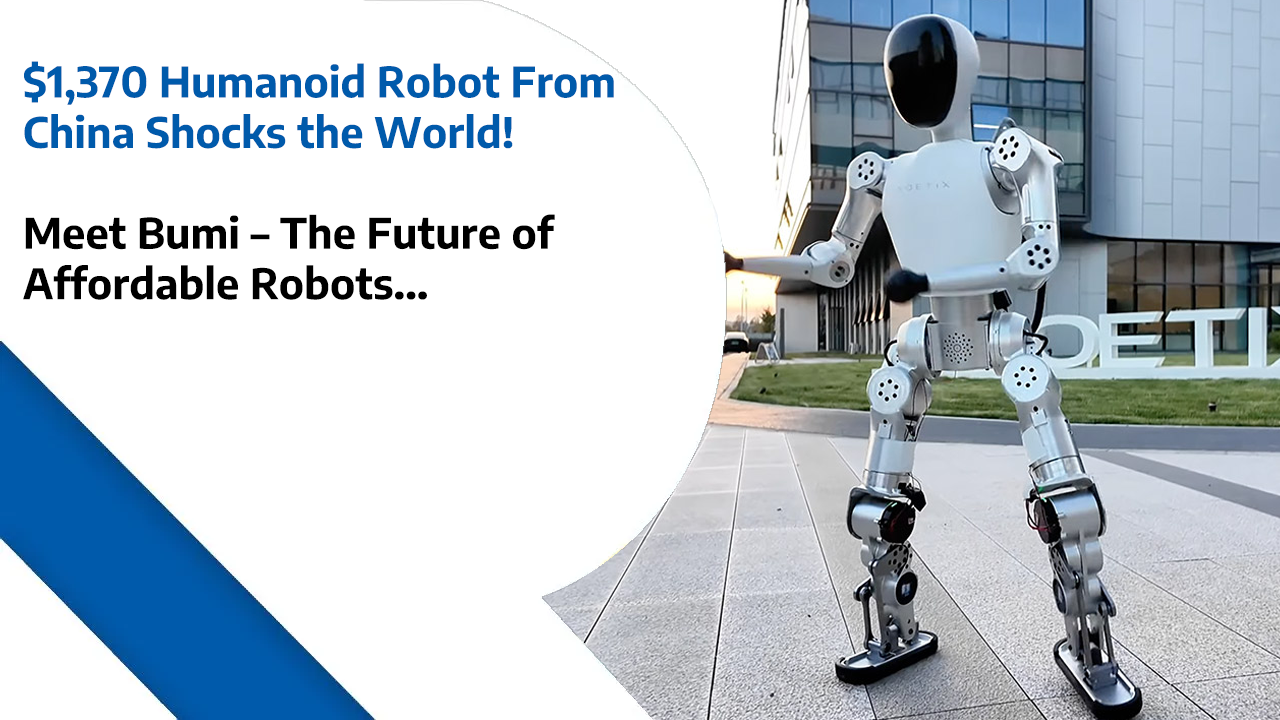
  • $1,370 Humanoid Robot From China Shocks the World – Meet Bumi – The Future of Affordable Robots

    $1,370 Humanoid Robot From China Shocks the World – Meet Bumi – The Future of Affordable Robots

    $1,370 Humanoid Robot From China Shocks the World – Meet Bumi – The Future of Affordable Robots

    Right — this is not science fiction, and it’s not a toy. Meet Bumi, the world’s cheapest humanoid robot — straight out of China — priced at just $1,370. Yes, a real humanoid robot for about the same price as a new iPhone.

    It’s made by Noetix Robotics, a Beijing-based startup that’s turning heads in the robotics world. Bumi stands 3.1 feet tall, weighs 26 pounds, and walks, balances, and even dances — all for less than what most people spend on their laptop.

    Now, Bumi isn’t trying to compete with giants like Tesla’s Optimus or Boston Dynamics’ Atlas — those cost hundreds of thousands, even millions. Instead, it’s targeting schools, hobbyists, and anyone curious about robotics. It’s powered by a 48-volt battery, runs for about two hours, and even supports drag-and-drop programming and voice interaction.

    So why should you, sitting in the U.S., care?
    Because this marks a turning point. Affordable humanoids mean you — educators, students, entrepreneurs — can finally get hands-on with real bipedal robots. Imagine using one to teach coding, test AI applications, or build your own robot startup before the industry goes mainstream.

    Think of it as getting your first computer in the 1980s… except this one walks around and dances when it’s bored.

    Noetix has already proven itself — their previous model ran in a humanoid half-marathon in China. Now, with Bumi launching this winter, they’re opening preorders between November 11th and December 12th, right in time for the shopping season.

    This isn’t just another gadget. It’s a sign that robotics is finally reaching living rooms, classrooms, and small businesses.

    And that’s your robot news update for today!. If you’re curious about how robotics can transform your business, head over to Robot Philosophy website to join the waiting list, or to speak with the team about robotics.

    Don’t forget to subscribe so you stay in the loop with all the latest updates.

    I’m RoboPhil from Robot Philosophy — thanks for watching, and I’ll see you next time!


    Join the workshop waiting list or get in touch at: https://robophil.com/


    Sponsors:-


    Robot Center: – https://robotcenter.co.uk/ – Buy Robot, Robot Buy, Robot consultancy, Robotics Consultancy, Inspection Robots, Security Robots,


    Robots of London: – https://robotsoflondon.co.uk/ – Robot Hire, Robot Rental, Rent Robot, Hire Robot, Robot Events, Robotics Hire, Hire Robotics, Rent Robotics, Robotics Rent, for exhibitions, shows, Events, Robot hire in the UK, Robot hire in Europe


    Robot Philosophy: – https://robophil.com/ – Robot Consultancy, Robot Recruitment, Robot Advice, Robot Insights, Robot Ideas. RoboPhil, also known as Philip English, is a leading Robot YouTuber, Robot Influencer, Robot Trainer, Robot Consultant, and Robot Streamer, Robotics Streamer, Robotics YouTuber, Robotics Influencer, Robotics Consultant, Robotics Trainer 

  • Education Robots – Teaching the Teachers First

    Education Robots – Teaching the Teachers First

    Education Robots – Teaching the Teachers First

    Sponsored by

    Robot Centerhttps://robotcenter.co.uk/Buy Robot, Robot Buy, Robot Consultancy, Robotics Consultancy
    Robots of Londonhttps://robotsoflondon.co.uk/Robot Hire, Robot Rental, Rent Robot, Hire Robot, Robot Events
    Robot Philosophyhttps://robophil.com/Robot Consultancy, Robot Recruitment, Robot Advice, Robot Insights, Robot Ideas


    Introduction: The Classroom of the Future Begins with the Teachers

    When people picture robots in education, they often imagine humanoid assistants guiding students through lessons, or autonomous tablets rolling between desks to answer questions. The vision is futuristic — but the reality begins somewhere else entirely: with the teachers.

    The truth is, the success of educational robots doesn’t depend on how advanced the technology is, but how effectively it’s used. And that means teaching the teachers first.

    Across the UK and beyond, education is standing at a crossroads. Schools, colleges, and universities are under pressure to prepare students for an increasingly automated world — one filled with artificial intelligence, data, and robotics. Yet most educators have had little exposure to these technologies themselves.

    That’s where robot consultancy and robot training come in — bridging the gap between technology and teaching, so educators can confidently lead the next generation into the robotic age.


    Why Robots Are Entering the Classroom

    The role of robots in education is expanding rapidly. From early learning environments to university labs, robots are being used to:

    • Teach coding and computational thinking through tangible, interactive experiences.

    • Support students with special needs by providing predictable, patient, and personalised assistance.

    • Encourage STEM engagement through curiosity-driven learning.

    • Act as digital teaching assistants, automating repetitive tasks like attendance and quiz administration.

    • Enhance remote or hybrid learning by offering mobility and social presence.

    But these innovations only reach their full potential when teachers know how to use them strategically — not just as a novelty, but as an integrated part of pedagogy.

    That’s the challenge: technology is advancing faster than most institutions can train their staff.


    The Gap Between Technology and Training

    Robots are entering classrooms faster than teachers can adapt. Many educators find themselves standing in front of a new robot, still sealed in its box, unsure of what it can do or how to fit it into their curriculum.

    This is not the teacher’s fault. Most teacher training programs were designed before robotics was mainstream. Even today, many PGCEs and educational degrees barely touch on automation or AI.

    Without training and ongoing support, teachers risk feeling overwhelmed, undervalued, or worse — replaced by technology they don’t fully understand.

    The goal should never be to replace teachers. The goal should be to empower them.

    That’s why the first step in any educational robotics rollout should be teaching the teachers — equipping them with the confidence, understanding, and creativity to make robots work for them, not instead of them.


    Teaching the Teachers: Building Confidence, Creativity, and Connection

    Before a robot ever meets a student, it should meet a teacher who knows what it’s capable of.
    This is the philosophy behind Robot Philosophyhttps://robophil.com/ – where RoboPhil (Philip English), a leading UK Robot Consultant, YouTuber, and Trainer, focuses on helping educators understand, implement, and adapt to robotics.

    Through interactive workshops and consultancy sessions, we guide educators through three key stages:

    1. Awareness – Understanding what types of robots are available and how they can be applied in different educational settings.

    2. Application – Learning how to use specific robots in practical teaching scenarios, from coding lessons to classroom management.

    3. Amplification – Integrating robotics data and feedback to enhance student outcomes and engagement over time.

    This approach ensures that teachers feel inspired rather than intimidated — and that the school gets a long-term return on its robotics investment.


    From Toys to Tools: How Robots Reinvent Learning

    Educational robots come in all shapes and sizes. Some are designed for play-based learning, while others serve as professional teaching aids. The distinction between “toy” and “tool” depends entirely on how they’re used.

    For example:

    • A small coding robot like Sphero or Ozobot becomes a tool for teaching logic, teamwork, and problem-solving.

    • A humanoid robot like Pepper or Temi becomes a tool for language learning, communication, and social-emotional development.

    • A digital signage robot from Robots of London becomes a mobile information assistant, guiding students around campus or displaying event content.

    The technology is only half the equation. The other half is strategy — how it’s deployed, measured, and improved over time.

    That’s why robot consultancy matters. It turns random innovation into structured transformation.


    The Role of Robot Consultancy in Education

    At Robot Philosophy and Robot Center, our consultancy model helps schools, colleges, and universities take a structured, results-driven approach to robotics.

    We start with a Robot Audit, identifying areas where automation and robotics could enhance teaching, engagement, or efficiency. Then we move through a series of stages to build capability:

    1. Assess – We evaluate your environment, existing resources, and goals.

    2. Select – We recommend the most suitable robots and technologies.

    3. Train – We teach your staff how to use and adapt the robots effectively.

    4. Support – We offer ongoing maintenance, updates, and professional development.

    This process ensures institutions don’t waste money on technology that gathers dust. Instead, they invest in systems that enhance both teaching and learning.

    If you’re an educational leader, start by booking a Robot Consultancy Call with us at
    📧 info@robophil.com | ☎️ 0845 528 0404


    Case Study: Robots of London – Robots in Action

    At Robots of Londonhttps://robotsoflondon.co.uk/ – we’ve deployed robots across the UK for both education and events. From Pepper robots greeting visitors to Temi robots leading campus tours, we’ve seen first-hand how powerful human-robot interaction can be when educators are properly trained.

    Schools that rent or trial robots for events often come back to us for longer-term consultancy. Why? Because once teachers see the engagement robots generate, they want to know how to make it permanent.

    Hiring a robot is a great first step. But turning it into an ongoing teaching asset requires training and strategy — that’s where Robot Philosophy steps in.


    Robot Recruitment: The Next Step for Educational Innovation

    As robotics becomes a permanent part of education, institutions need people with the right mix of technical and teaching skills. That’s creating a new category of jobs — robot educators, robotics coordinators, and AI teaching assistants.

    Finding the right talent can be difficult. Many educators know pedagogy but not programming. Many technicians know robotics but not teaching.

    That’s why Robot Philosophy now offers a Robot Recruitment Service — connecting schools and universities with professionals who understand both sides.

    Whether you need a robotics program manager, technical trainer, or STEM education specialist, we can help you find the perfect fit.

    If you’re an educator looking to transition into robotics — or a school ready to hire someone who can bridge that gap — email us at info@robophil.com or call 0845 528 0404 to discuss how we can help.


    Why Teachers Need to Lead the Way

    If robots are the future of learning, then teachers are the architects of that future.

    Automation should never replace the teacher’s emotional intelligence, intuition, and human touch. Instead, it should enhance their ability to inspire, personalise, and connect.

    By understanding robotics, teachers gain:

    • Confidence in using technology effectively.

    • Creativity to design new forms of learning.

    • Control over how technology shapes their classrooms.

    The alternative is letting the technology lead — and that’s where problems arise.

    By teaching teachers first, we build a foundation of understanding that trickles down to students, parents, and the wider education system.


    Overcoming Common Challenges in Education Robotics

    Even the most enthusiastic schools face challenges when adopting robots. The most common include:

    1. Budget Concerns – Many assume robotics is too expensive, but with rental and pilot programs through Robots of London, schools can test before they invest.

    2. Technical Barriers – Teachers often fear they lack the skills to manage robots. That’s why training is central to our consultancy model.

    3. Curriculum Integration – It’s not about adding new subjects, but enriching existing ones with robotics-driven experiences.

    4. Maintenance and Updates – Robots are evolving quickly, so it’s crucial to have a long-term partner for upgrades and servicing, like Robot Center.

    5. Cultural Resistance – Some educators worry robots will replace human jobs. The truth is, they create new opportunities — for both teachers and students.

    These challenges are manageable — but only with a structured approach and ongoing support.


    How We Help Educational Institutions Succeed

    At Robot Philosophy, we don’t just sell technology — we deliver transformation.
    Our services include:

    • Robot Consultancy for Education – Strategic planning, audits, and implementation support.

    • Robot Training for Teachers – Hands-on learning that builds confidence and creativity.

    • Robot Recruitment Services – Matching schools with robotics professionals.

    • Robot Demonstrations & Events – Through Robots of London, we provide interactive experiences that inspire both students and staff.

    • Sales and Maintenance Support – Via Robot Center, we ensure you get the best hardware, software, and aftercare in the UK.

    Each branch of our ecosystem works together — consultancy, training, recruitment, and events — to make educational robotics not just accessible, but sustainable.


    Building a Robotic Literacy Culture

    In the same way digital literacy became a core skill in the 2000s, robotic literacy will define the next generation of learners.
    That means understanding how robots work, how they think, and how they can assist humans.

    But this literacy can’t begin with students alone. It must start with teachers, administrators, and decision-makers.

    When teachers are confident, students thrive. When institutions plan strategically, technology amplifies learning rather than distracting from it.

    Our goal at Robot Philosophy is to build that culture — one classroom, one teacher, one robot at a time.


    The Human Side of the Machine

    There’s a poetic irony in teaching robots to teach.
    It forces us to ask: what makes a great teacher? Empathy. Patience. Adaptability. Curiosity.

    Those are human traits — and they’re exactly what we must teach our robots to support.

    Robotics isn’t about removing the human element from education. It’s about scaling the human element — giving teachers more time for meaningful interaction, while automation handles the repetitive and administrative tasks.

    By teaching the teachers first, we ensure that the human always stays at the heart of learning.


    Conclusion: The Future of Education Is Human + Machine

    The classroom of tomorrow won’t be defined by how many robots it has, but by how well those robots are used.
    And that begins with empowered educators — teachers who see robots not as replacements, but as collaborators.

    Teaching the teachers first is the smartest investment any school can make. It ensures the technology serves a purpose, the lessons have impact, and the next generation grows up ready for an automated world.

    If you’re ready to explore robotics in your school, college, or university — whether through consultancy, training, or recruitment — reach out today.

    📧 info@robophil.com
    ☎️ 0845 528 0404

    Let’s build the classrooms of the future — by teaching the teachers first.


    Article Sponsors

    Robot Centerhttps://robotcenter.co.uk/
    Buy Robot | Robot Buy | Robot Consultancy | Robotics Consultancy

    Robots of Londonhttps://robotsoflondon.co.uk/
    Robot Hire | Robot Rental | Rent Robot | Hire Robot | Robot Events

    Robot Philosophyhttps://robophil.com/
    Robot Consultancy | Robot Recruitment | Robot Advice | Robot Insights | Robot Ideas


    https://www.youtube.com/watch?v=_hjXf0ZSRL0


    https://www.youtube.com/shorts/Hf7smm_Z8eg

  • Hospital Delivery Robots – Streamlining Suppliers and Meals

    Hospital Delivery Robots – Streamlining Suppliers and Meals

    Hospital Delivery Robots – Streamlining Suppliers and Meals

    Revolutionizing Healthcare Logistics Through Autonomous Technology

    In the fast-paced environment of modern healthcare facilities, efficiency isn’t just about convenience—it’s about saving lives. Every minute that clinical staff spend on non-medical tasks is time taken away from patient care. Enter hospital delivery robots: autonomous systems that are transforming how medical supplies, meals, medications, and linens move through healthcare facilities. These tireless mechanical workers are not replacing human staff but rather empowering them to focus on what matters most—caring for patients.

    The Hidden Cost of Manual Hospital Logistics

    Before we dive into the solutions, let’s understand the problem. Traditional hospital logistics are surprisingly labor-intensive and costly. Studies show that nurses spend up to 30% of their shift time on non-clinical activities, including fetching supplies, delivering specimens to laboratories, and coordinating meal deliveries. In a typical 500-bed hospital, staff may walk the equivalent of several marathons daily just moving items from one department to another.

    This inefficiency creates several cascading problems:

    • Staff Burnout: Healthcare workers are already stretched thin. Adding logistical burdens increases fatigue and job dissatisfaction.
    • Delayed Care: When a nurse must leave a patient’s bedside to retrieve supplies, care is interrupted.
    • Infection Control Risks: More human traffic means more opportunities for pathogen transmission between departments.
    • Operational Costs: Labor costs continue to rise, making manual delivery systems increasingly expensive.
    • Supply Chain Inefficiencies: Without automated tracking, hospitals struggle with inventory management, leading to both shortages and waste.

    How Hospital Delivery Robots Work

    Modern hospital delivery robots are sophisticated autonomous mobile robots (AMRs) equipped with advanced navigation systems, sensors, and artificial intelligence. Unlike their industrial cousins that follow magnetic strips or wires, these robots use SLAM (Simultaneous Localization and Mapping) technology to navigate complex hospital environments dynamically.

    Key Technologies Powering Hospital Robots

    Navigation Systems: Using LIDAR sensors, cameras, and ultrasonic sensors, delivery robots create real-time 3D maps of their environment. They can detect obstacles, predict human movement patterns, and plan optimal routes through busy corridors.

    Elevator Integration: Perhaps one of the most impressive features is seamless elevator operation. Robots communicate directly with elevator systems via WiFi or cloud connections, calling lifts and selecting floors without human intervention. They can even coordinate with multiple robots to prevent bottlenecks.

    Security Features: Hospital robots typically include secure compartments with electronic locks, ensuring medications and sensitive materials reach only authorized recipients. Some models incorporate temperature-controlled sections for preserving meal quality and medication integrity.

    User Interfaces: Staff interact with robots through intuitive touchscreens, mobile apps, or integration with existing hospital management systems. Tasks can be scheduled or dispatched on-demand with just a few taps.

    Safety Systems: Multiple redundant safety mechanisms ensure robots never endanger patients or staff. Emergency stop buttons, collision avoidance algorithms, and gentle navigation speeds make them safe companions in busy hospital corridors.

    Transforming Hospital Supply Chains

    One of the most immediate applications of delivery robots is in streamlining supply chain operations. Traditional hospital supply management involves complex choreography: central supply rooms, floor-level sub-stores, nursing stations, and patient care areas all need constant restocking.

    Automated Pharmacy Deliveries

    Medication delivery is perhaps the most critical application. Hospital robots can transport medications from the central pharmacy to nursing stations or even directly to automated dispensing cabinets on patient floors. This creates several advantages:

    • Enhanced Safety: Closed, secure compartments reduce medication handling and potential errors. Chain-of-custody tracking provides complete audit trails.
    • Faster Response: STAT medication orders reach nurses within minutes rather than requiring pharmacy staff to pause other duties for urgent deliveries.
    • Regulatory Compliance: Automated tracking helps hospitals meet stringent medication management requirements, generating reports automatically.
    • Controlled Substance Security: Special locked compartments with access logging provide the security required for controlled medications.

    Laboratory Specimen Transport

    Time-sensitive laboratory specimens benefit enormously from robotic delivery. Blood samples, tissue biopsies, and other specimens can degrade or yield inaccurate results if not processed promptly. Robots provide:

    • Consistent Transit Times: Scheduled and on-demand pickups ensure specimens reach laboratories quickly and predictably.
    • Temperature Control: Refrigerated compartments maintain specimen integrity during transport.
    • Contamination Prevention: Enclosed transport reduces exposure risks for staff handling potentially infectious materials.
    • 24/7 Operation: Robots work around the clock, ensuring night shift staff receive the same responsive service as day shift.

    Linen and Waste Management

    Clean linen delivery and soiled linen removal are constant hospital needs. Robots excel at these repetitive tasks, operating on regular schedules to ensure departments never run short of clean supplies while removing waste efficiently. This reduces the burden on environmental services staff and minimizes unpleasant hallway encounters with soiled linen carts.

    Revolutionizing Hospital Meal Service

    Hospital food service presents unique logistical challenges. Meals must be delivered at specific times, maintain appropriate temperatures, accommodate diverse dietary restrictions, and arrive efficiently to hundreds of patients across multiple floors. Traditional meal carts require significant staff time and often result in lukewarm food by the time patients on the last delivery route receive their trays.

    The Robot-Powered Meal Solution

    Delivery robots are transforming hospital nutrition services in several ways:

    Temperature Preservation: Advanced robots include separate hot and cold compartments, ensuring main courses arrive hot while desserts and salads remain chilled. Some models maintain multiple temperature zones simultaneously, preserving meal quality regardless of delivery route length.

    Flexible Scheduling: Rather than large batch deliveries, robots can make multiple trips throughout meal periods, ensuring fresher food and accommodating patients who may be in procedures during initial meal times.

    Special Dietary Needs: Robots can be programmed with patient dietary restrictions and meal modifications, reducing delivery errors. Integration with hospital nutrition systems ensures the right meal reaches the right patient.

    Room Service Models: Some hospitals use robots to support “room service” meal programs, where patients order meals when hungry rather than adhering to rigid schedules. Robots respond to orders within minutes, dramatically improving patient satisfaction.

    Tray Collection: Often overlooked, efficient meal tray collection is as important as delivery. Robots can make return trips to collect trays, preventing clutter in patient rooms and hallways.

    Patient Experience Benefits

    The impact on patient satisfaction is measurable. Food quality and temperature consistently rank among top patient complaints in hospitals. When meals arrive hot, on time, and accurately prepared, satisfaction scores improve significantly. Moreover, the novelty of robotic delivery often delights patients and provides a welcome distraction in an otherwise stressful environment.

    Real-World Implementation Success Stories

    Hospitals worldwide are reporting impressive results from robot deployments:

    Major Medical Center – United States: After deploying a fleet of six delivery robots, this 800-bed facility reported nursing staff saved an average of 90 minutes per shift on logistical tasks. Over one year, the robots completed more than 50,000 deliveries with a 99.7% success rate. The hospital calculated a return on investment within 18 months through labor cost savings alone.

    Metropolitan Hospital – Europe: A 400-bed hospital focused its robot implementation on pharmacy deliveries. Medication delivery times dropped from an average of 23 minutes to just 8 minutes. More importantly, medication administration timing compliance improved by 35%, meaning patients received their medications closer to prescribed times.

    Regional Healthcare System – Asia: This multi-facility system deployed robots across five hospitals for meal delivery. Patient satisfaction scores for food service jumped from 3.2 to 4.6 out of 5. The system also reduced food waste by 18% due to more efficient delivery timing and better temperature control.

    Overcoming Implementation Challenges

    While the benefits are compelling, successful robot implementation requires careful planning and realistic expectations.

    Infrastructure Considerations

    Not all hospitals are immediately robot-ready. Successful deployment requires:

    Network Infrastructure: Robust WiFi coverage throughout the facility is essential. Dead zones will create navigation problems and reduce efficiency.

    Elevator Compatibility: Older elevator systems may require upgrades to enable robot integration. Budget for potential elevator control system updates.

    Pathway Planning: While robots navigate autonomously, identifying primary routes during the planning phase helps optimize traffic flow. Consider corridor width, door types, and typical congestion patterns.

    Charging Infrastructure: Robots need designated charging stations in convenient locations. Many robots autonomously return to charge during low-demand periods, but facilities must allocate space for charging docks.

    Staff Training and Change Management

    Technology alone doesn’t create successful implementations—people do. Healthcare workers may initially feel uncertain about working alongside robots. Effective change management includes:

    Early Involvement: Include frontline staff in the selection and planning process. Nurses, pharmacy techs, and food service workers who will use robots daily should help define workflows.

    Comprehensive Training: Provide hands-on training sessions where staff practice task assignments, troubleshooting, and emergency procedures. Make training engaging and pressure-free.

    Phased Rollouts: Start with one department or use case, demonstrate success, then expand. Early wins build organizational confidence.

    Ongoing Support: Designate robot champions—enthusiastic staff members who can help colleagues adapt and troubleshoot minor issues.

    Clear Communication: Be honest about what robots will and won’t do. They’re tools to enhance human work, not replacements for valued team members.

    Integration with Existing Systems

    Maximum value comes from seamless integration with hospital information systems:

    • Electronic Health Records (EHR): Linking robots to the EHR enables automatic task generation based on orders and schedules.
    • Pharmacy Management Systems: Direct integration allows automatic robot dispatch when prescriptions are filled.
    • Nutrition Services Software: Meal orders can automatically generate robot delivery tasks.
    • Supply Chain Management: Inventory systems can trigger automatic restocking runs when supplies reach reorder thresholds.

    The Financial Case for Hospital Delivery Robots

    Healthcare administrators naturally scrutinize capital expenditures carefully. Robot investments typically range from £50,000 to £150,000 per unit, depending on capabilities and features. For fleet deployments, this represents significant upfront costs. However, the financial analysis strongly favors automation:

    Direct Cost Savings

    Labor Efficiency: In the UK, healthcare assistant positions cost approximately £20,000-£25,000 annually including benefits. If each robot saves the equivalent of 0.5 FTE (full-time equivalent) through efficiency gains, a single robot saves £10,000-£12,500 yearly. With multiple robots across a facility, savings multiply quickly.

    Reduced Overtime: By handling routine deliveries, robots help keep staff workloads manageable, reducing costly overtime and agency staffing needs.

    Lower Injury Rates: Manual materials handling contributes to workplace injuries. Fewer injuries mean reduced workers’ compensation costs and less staff time lost to injury.

    Indirect Benefits

    Improved Patient Throughput: When clinical staff spend more time on patient care and less on logistics, patient flow improves. Better throughput means higher revenue without additional bed capacity.

    Enhanced Satisfaction Scores: In many healthcare systems, reimbursement increasingly ties to patient satisfaction metrics. Improvements in service quality directly impact revenue.

    Staff Retention: Reducing non-clinical burden improves job satisfaction, which helps retain experienced staff. Replacing a nurse costs an estimated £30,000 in recruitment and training expenses.

    Supply Chain Optimization: Better tracking and more efficient delivery reduce inventory carrying costs and minimize waste from expired supplies.

    Return on Investment Timeline

    Most hospitals achieve positive ROI within 2-3 years, with some high-volume facilities reaching break-even in 18 months. As robots typically have 7-10 year operational lifespans, the long-term financial case is compelling.

    Future Developments in Hospital Robotics

    The technology continues evolving rapidly. Emerging developments include:

    AI-Powered Predictive Routing: Machine learning algorithms will analyze hospital activity patterns to proactively position robots where demand is likely, reducing response times further.

    Enhanced Payload Capacity: Next-generation robots will handle heavier loads and larger compartments, expanding their utility for equipment transport and bulk supply delivery.

    Outdoor Navigation: Some facilities have multiple buildings or campuses. Emerging robots can navigate outdoor pathways, enabling inter-building deliveries without human escorts.

    Collaborative Robot Fleets: Rather than individual robots working independently, future systems will coordinate multiple units as intelligent fleets, optimizing hospital-wide logistics dynamically.

    Patient Interaction Features: Some experimental robots include telepresence capabilities, allowing doctors to “virtually” check on patients or enabling patients to communicate needs via robot interfaces.

    Disinfection Integration: Combining delivery capabilities with UV-C disinfection systems, robots could sanitize areas during return journeys, serving dual purposes.

    Selecting the Right Robot Partner

    Not all hospital delivery robots are created equal. When evaluating options, consider:

    Proven Healthcare Experience: Look for vendors with extensive hospital deployment experience. Healthcare environments differ dramatically from warehouses or hotels—choose specialists.

    Comprehensive Support: Implementation support, staff training, maintenance services, and responsive technical support are as important as the hardware itself.

    Integration Capabilities: Ensure the robot system can integrate with your existing hospital information systems seamlessly.

    Safety Certifications: Verify appropriate medical device certifications and compliance with healthcare facility requirements.

    Scalability: Your needs will grow. Choose systems that allow easy fleet expansion and feature upgrades.

    Local Service Availability: Quick response to technical issues is crucial in hospitals. Ensure service technicians can reach your facility promptly.

    Why Expert Consultation Matters

    Implementing hospital delivery robots successfully requires more than purchasing equipment—it demands strategic planning, workflow redesign, and organizational change management. This is where expert consultation becomes invaluable.

    Professional robot consultants bring:

    • Unbiased Technology Assessment: Independent experts help you evaluate options based on your specific needs rather than vendor sales pitches.
    • Workflow Optimization: Consultants identify which processes will benefit most from automation and design optimal implementation approaches.
    • ROI Modeling: Detailed financial analysis helps justify investments and set realistic expectations.
    • Project Management: Experienced consultants navigate the complex implementation process, coordinating between hospital departments, IT teams, and vendors.
    • Staff Training Programs: Consultants develop customized training that addresses your facility’s unique workflows and staff concerns.
    • Performance Monitoring: Post-implementation support ensures you achieve projected benefits and continuously optimize robot utilization.

    Finding the Right Robotics Talent

    As hospitals adopt more automation, they need staff members who can manage, maintain, and optimize robotic systems. However, finding professionals with both healthcare knowledge and robotics expertise is challenging. Specialized robot recruitment services help healthcare facilities:

    • Access Specialized Talent Pools: Recruiters focused on robotics maintain networks of qualified professionals with relevant healthcare automation experience.
    • Reduce Hiring Risk: Specialized recruiters understand the unique competencies required and screen candidates effectively.
    • Speed Time-to-Hire: Established candidate pipelines mean faster placement of critical positions.
    • Navigate Salary Expectations: Robotics professionals command premium compensation. Specialist recruiters provide market intelligence for competitive offers.

    Whether you need a robotics coordinator, automation engineer, or implementation project manager, specialized recruitment services streamline the process of building your hospital robotics team.

    Take the Next Step Toward Hospital Automation

    Hospital delivery robots represent a proven, practical solution for improving healthcare operational efficiency while enhancing both staff satisfaction and patient experience. The technology has matured beyond early adopter status—thousands of hospitals worldwide now rely on robotic delivery systems as essential infrastructure.

    If your facility is considering delivery robots, or you want to optimize an existing deployment, expert guidance ensures successful implementation and maximum return on investment.

    Ready to explore how hospital delivery robots can transform your facility?

    Contact our robot consulting and recruitment specialists:

    📧 Email: info@robophil.com
    📞 Phone: 0845 528 0404

    Book a consultation to discuss your specific needs, receive customized recommendations, and develop a strategic roadmap for successful robot implementation. Our team brings extensive experience across hospital environments and can help you navigate every stage from initial assessment through deployment and beyond.


    About This Article’s Sponsors

    This article is proudly sponsored by three leading organizations in the UK robotics industry:

    Robot Center

    Website: https://robotcenter.co.uk/

    Robot Center is your comprehensive resource for robot acquisition and strategic robotics consultancy. Whether you’re looking to buy robots, need expert guidance on robot selection, or require comprehensive robotics consultancy services, Robot Center provides the expertise and solutions to match your organizational needs. Their team helps healthcare facilities navigate the complex landscape of automation technology, ensuring you invest in solutions that deliver measurable results.

    Robots of London

    Website: https://robotsoflondon.co.uk/

    Robots of London specializes in robot hire and rental services, making cutting-edge robotics accessible for events, trials, and temporary deployments. If you want to experience hospital delivery robots before committing to purchase, or need robots for a specific event or pilot program, Robots of London offers flexible rental options. Their robot hire services allow healthcare facilities to demonstrate technology to stakeholders, conduct proof-of-concept studies, and build organizational confidence before making capital investments.

    Robot Philosophy (RoboPhil)

    Website: https://robophil.com/

    Robot Philosophy, led by Philip English (RoboPhil), provides specialized robot consultancy and robot recruitment services alongside valuable robot advice, robot insights, and robot ideas. As a leading Robot YouTuber, Robot Influencer, Robot Trainer, Robot Consultant, Robot Streamer, Robotics Streamer, Robotics YouTuber, Robotics Influencer, Robotics Consultant, and Robotics Trainer, Philip English brings unique expertise to healthcare automation projects.

    RoboPhil’s consulting services help hospitals develop comprehensive automation strategies, while their recruitment services connect facilities with talented professionals who can manage and optimize robotic systems. Their combination of practical implementation experience, technical knowledge, and industry connections makes them an invaluable partner for healthcare organizations embarking on automation journeys.


    The future of hospital logistics is autonomous, efficient, and focused on what matters most—exceptional patient care. Let robots handle the miles of corridors while your staff focuses on the human touch that makes healthcare meaningful.


    https://www.youtube.com/watch?v=lU2IqwTrJP4


    https://www.youtube.com/shorts/Aj78JdzAbBo

  • China’s Agibot G2 – The Humanoid Robot That Can Hold a Raw Egg — and Work 24/7

    China’s Agibot G2 – The Humanoid Robot That Can Hold a Raw Egg — and Work 24/7

    China’s Agibot G2 – The Humanoid Robot That Can Hold a Raw Egg — and Work 24/7

    Today, we’re talking about a robot so advanced, it can handle a raw egg without breaking it — which, frankly, is more than I can do before coffee. Meet the Agibot G2, China’s new humanoid robot designed for real industrial work, not just YouTube views.

    The G2 is packed with high-performance actuators, sensors for full 360-degree obstacle avoidance, and a flexible three-degree-of-freedom waist. Translation: it moves a lot like us — bending, twisting, and side-swaying with precision.

    But the real star is its cross-shaped wrist arm, a world-first design that uses precision torque sensors to detect touch and adjust instantly. That’s why it can hold a raw egg — or a delicate electronic component — without crushing it.

    Now, why should you care? Well, if you’re in manufacturing, logistics, or tech, this could be a game-changer. The G2 runs 24/7, thanks to hot-swappable dual batteries and autonomous charging. It’s like hiring someone who never takes a lunch break — and never calls in sick.

    Its onboard AI is also next-level. Using Agibot’s large models GO-1 and GE-1, the G2 understands commands, plans tasks, and even “rehearses” actions virtually before executing them in the real world. Backed by the NVIDIA Jetson Thor T5000 platform, it processes data in under 10 milliseconds — lightning-fast decision-making on the factory floor.

    So for business owners, this means higher efficiency and lower risk. For robotics fans, it’s a glimpse into the future of embodied AI — robots that don’t just move, but understand.

    In short, Agibot’s G2 isn’t just a new humanoid — it’s the next evolution in smart automation.


    And that’s your robot news update for today!. If you’re curious about how robotics can transform your business, head over to Robot Philosophy website to join the waiting list, or to speak with the team about robotics.

    Don’t forget to subscribe so you stay in the loop with all the latest updates.

    I’m RoboPhil from Robot Philosophy — thanks for watching, and I’ll see you next time!

    Join the workshop waiting list or get in touch at: https://robophil.com/


    Sponsors:-


    Robot Center: – https://robotcenter.co.uk/ – Buy Robot, Robot Buy, Robot consultancy, Robotics Consultancy, Inspection Robots, Security Robots,


    Robots of London: – https://robotsoflondon.co.uk/ – Robot Hire, Robot Rental, Rent Robot, Hire Robot, Robot Events, Robotics Hire, Hire Robotics, Rent Robotics, Robotics Rent, for exhibitions, shows, Events, Robot hire in the UK, Robot hire in Europe


    Robot Philosophy: – https://robophil.com/ – Robot Consultancy, Robot Recruitment, Robot Advice, Robot Insights, Robot Ideas. RoboPhil, also known as Philip English, is a leading Robot YouTuber, Robot Influencer, Robot Trainer, Robot Consultant, and Robot Streamer, Robotics Streamer, Robotics YouTuber, Robotics Influencer, Robotics Consultant, Robotics Trainer