Tag: Robot Consultant

  • Meet HARR-E – The Robot That Takes Out Your Trash Like Uber for Garbage!

    Meet HARR-E – The Robot That Takes Out Your Trash Like Uber for Garbage!

    Meet HARR-E – The Robot That Takes Out Your Trash Like Uber for Garbage!


    Imagine this: you’re sipping your morning coffee, scrolling your phone, and you realize you forgot to set out the trash. Normally, that means dragging bins to the curb or missing the truck altogether. But now, there’s a robot that wants to change all that.

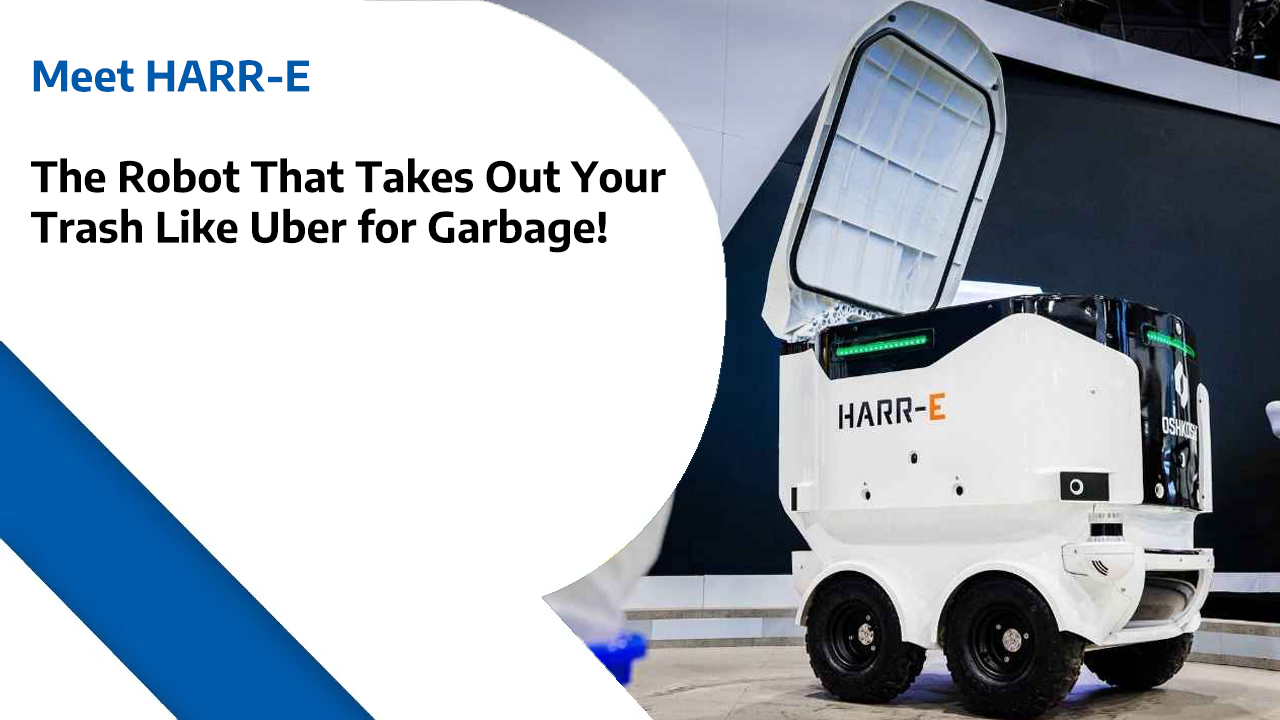
    It’s called HARR-E, built by Oshkosh Corp., the same company known for heavy-duty vehicles. Think of it as Uber for your garbage. Using an app—or even Alexa or Google Assistant—you can summon HARR-E to your door. It rolls up, opens itself, takes your trash, and then heads back to a hub to drop everything off and recharge.

    This system is aimed at planned communities and business parks with shared trash hubs, so instead of rigid collection schedules, you get on-demand pickup. The benefits? Cleaner streets, fewer missed bins, lower emissions since it runs on electricity, and less of that panic when you hear the garbage truck and realize it’s too late.

    The developers are even working on AI that can scan recycling to spot contamination, which could make the whole process more efficient.

    So the next time you forget trash day, don’t sweat it. With HARR-E around, the robot will literally take out the garbage for you.


    And that’s your robot news update for today!
    If you’re curious about how robotics can transform your business, join me for the weekly Live Robot Optimise Workshop — it’s packed with insights, trends, and practical tips. Don’t forget to subscribe so you stay in the loop with all the latest updates.

    I’m RoboPhil from Robot Philosophy — thanks for watching, and I’ll see you next time!


    Join our Robot Optimise Industry (ROI) Workshop: https://robophil.com/


    Sponsors:-


    Robot Center: – https://robotcenter.co.uk/ – Buy Robot, Robot Buy, Robot consultancy, Robotics Consultancy, Inspection Robots, Security Robots, 


    Robots of London: – https://robotsoflondon.co.uk/ – Robot Hire, Robot Rental, Rent Robot, Hire Robot, Robot Events, Robotics Hire, Hire Robotics, Rent Robotics, Robotics Rent, for exhibitions, shows, Events, Robot hire in the UK, Robot hire in Europe


    Robot Philosophy: – https://robophil.com/ – Robot Consultancy, Robot Recruitment, Robot Advice, Robot Insights, Robot Ideas. RoboPhil, also known as Philip English, is a leading Robot YouTuber, Robot Influencer, Robot Trainer, Robot Consultant, and Robot Streamer, Robotics Streamer, Robotics YouTuber, Robotics Influencer, Robotics Consultant, Robotics Trainer  

  • Jack Ma’s Ant Group Unveils R1 Humanoid Robot – China’s Answer to Tesla Optimus?

    Jack Ma’s Ant Group Unveils R1 Humanoid Robot – China’s Answer to Tesla Optimus?

    Jack Ma’s Ant Group Unveils R1 Humanoid Robot – China’s Answer to Tesla Optimus?


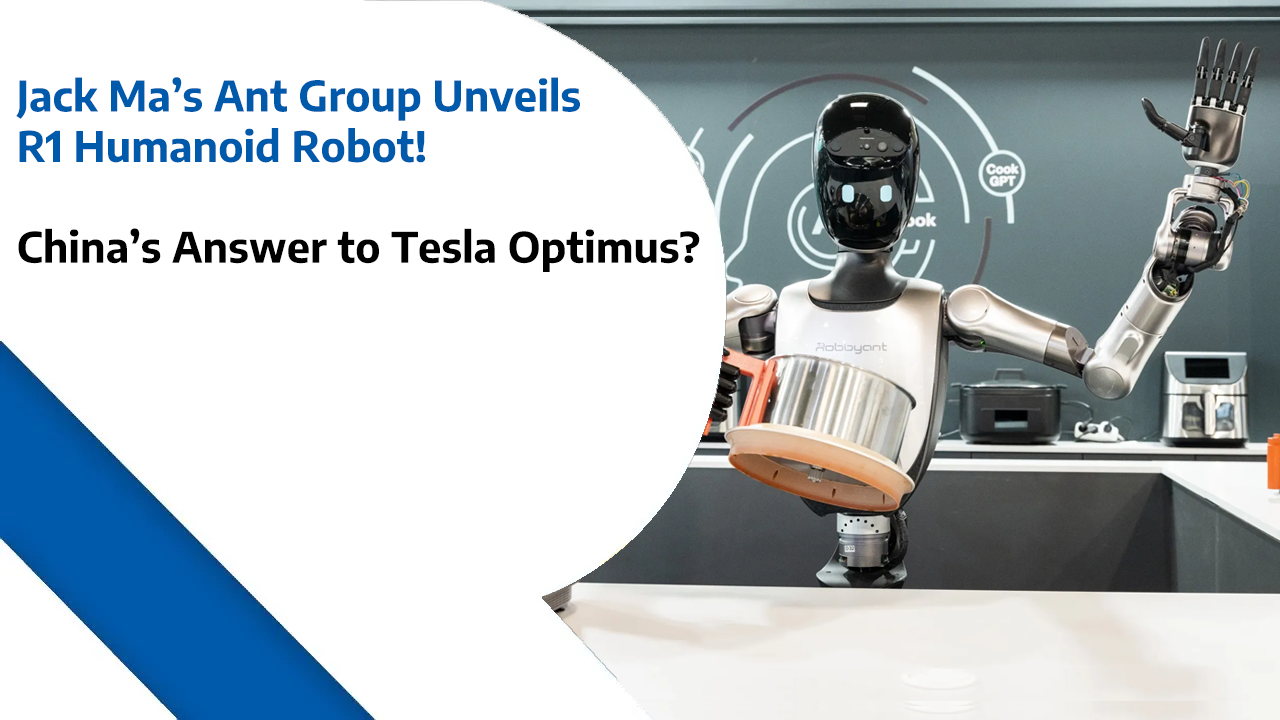
    Ant Group, the company backed by Jack Ma and best known for Alipay, has unveiled its first humanoid robot, the R1. The announcement highlights China’s growing ambitions to compete with the United States in advanced robotics and artificial intelligence.

    The R1 humanoid robot was demonstrated at the 2025 Inclusion Conference in Shanghai. The robot can serve as a tour guide, sort medicine in pharmacies, provide medical consultations, and perform basic kitchen tasks. At the IFA tech show in Berlin, R1 even cooked shrimp for the audience. These demonstrations showcase its versatility in both healthcare and hospitality.


    Ant’s approach emphasizes artificial intelligence as much as mechanical design. The company is developing large AI models, including one called BaiLing, to give R1 the ability to recognize objects, plan tasks, and adapt to new situations. The goal is to move beyond robots that simply follow instructions, toward robots that can make decisions in complex real-world environments.


    However, the robot is still at an early stage. Ant has not announced a price or a launch date, and current trials are limited to community centers and restaurants. Videos from demonstrations show that R1 is still slow and cautious, and it remains to be seen how it will perform outside controlled environments. The project puts Ant in direct competition with Tesla’s Optimus and other humanoid robots being developed in the United States


    And that’s your robot news update for today!
    If you’re curious about how robotics can transform your business, join me for the weekly Live Robot Optimise Workshop — it’s packed with insights, trends, and practical tips. Don’t forget to subscribe so you stay in the loop with all the latest updates.

    I’m RoboPhil from Robot Philosophy — thanks for watching, and I’ll see you next time!


    Join our Robot Optimise Industry (ROI) Workshop: https://robophil.com/


    Sponsors:-


    Robot Center: – https://robotcenter.co.uk/ – Buy Robot, Robot Buy, Robot consultancy, Robotics Consultancy, Inspection Robots, Security Robots, 


    Robots of London: – https://robotsoflondon.co.uk/ – Robot Hire, Robot Rental, Rent Robot, Hire Robot, Robot Events, Robotics Hire, Hire Robotics, Rent Robotics, Robotics Rent, for exhibitions, shows, Events, Robot hire in the UK, Robot hire in Europe


    Robot Philosophy: – https://robophil.com/ – Robot Consultancy, Robot Recruitment, Robot Advice, Robot Insights, Robot Ideas. RoboPhil, also known as Philip English, is a leading Robot YouTuber, Robot Influencer, Robot Trainer, Robot Consultant, and Robot Streamer, Robotics Streamer, Robotics YouTuber, Robotics Influencer, Robotics Consultant, Robotics Trainer  

  • Painting Robots – How to Maintain Quality and Consistency

    Painting Robots – How to Maintain Quality and Consistency


    Painting Robots – How to Maintain Quality and Consistency

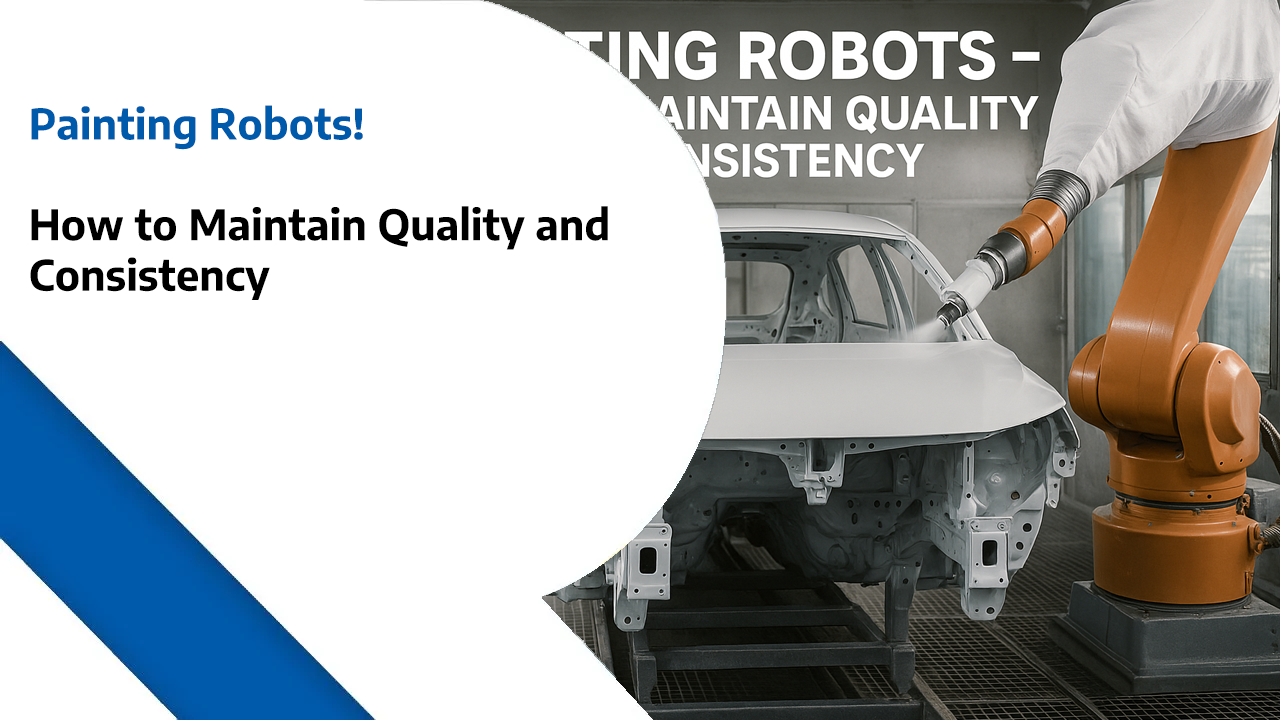
    In today’s competitive manufacturing landscape, painting robots have become an essential tool for businesses seeking to deliver high-quality finishes, improve efficiency, and ensure a consistent end product. Whether in automotive production, consumer goods, or industrial applications, robotic painting systems are helping brands achieve flawless results at scale.

    However, investing in painting robots is only the first step. To truly maximize their potential, businesses must focus on maintaining quality and consistency across robot operations. This means taking a closer look at setup, calibration, monitoring, and workforce expertise—because even the most advanced robots require proper integration and oversight.


    Why Painting Robots Are Essential

    Painting robots provide several clear advantages over traditional manual processes:

    • Consistency in quality: Robots deliver uniform coatings, reducing risks of streaks, uneven thickness, and human error.

    • Efficiency and cost-effectiveness: Automated systems lower cycle times and reduce material waste.

    • Worker safety: Robots minimize direct exposure to fumes, chemicals, and repetitive-strain risks.

    • Scalability: Robotic painting systems can quickly adapt to large-scale production.

    These benefits highlight why more companies are shifting to automation for high-volume painting needs. But the difference between a robot delivering its promised accuracy versus producing costly mistakes lies in how well it is maintained.


    Key Areas to Ensure Quality and Consistency

    Regular Calibration

    Painting robots must be routinely calibrated to ensure precision. Even slight misalignments can cause defects such as paint drips, patchiness, or uneven layering. Regular calibration ensures the robot continues delivering the correct spray patterns, angles, and pressure.

    Software Updates and Programming

    Robotic painting systems rely heavily on software. Outdated programs can slow down operations or cause incompatibility with new paints and surfaces. Routine updates and optimized programming maintain efficiency while unlocking new features from robot manufacturers.

    Environment and Maintenance

    Painting quality is highly sensitive to factors like airflow, humidity, and booth cleanliness. Consistent environmental monitoring prevents paint contamination and ensures adhesion quality. Moreover, regular maintenance and cleaning of spray nozzles and arms are necessary to avoid clogging and uneven distribution.

    Skilled Oversight

    Even with automation, expert guidance is essential. Trained operators and consultants can spot issues early, fine-tune processes, and train teams on robotic workflows. This is where specialist services become invaluable.


    Where Businesses Go Wrong

    Many companies assume that once they install painting robots, performance will take care of itself. Unfortunately, this approach often leads to:

    • Degradations in quality over time

    • Higher production waste due to inconsistencies

    • Costly downtime due to overlooked maintenance

    • A lack of in-house expertise when issues arise

    The solution is a blend of robot expertise, consultancy, and recruitment of the right talent—ensuring companies can maintain robotic excellence both now and in the future.


    How We Can Help

    At Robot Philosophy (RoboPhil), we specialize in helping businesses get the best possible return from their painting robots. Our services cover:

    • Robot Consultancy: We assess your current robotic painting setup, identify inefficiencies, and tailor strategies to maintain consistent quality.

    • Robot Recruitment: Finding experienced robotics professionals can be challenging. We connect companies with the right talent to manage, maintain, and optimize robotic painting operations.

    If you’re looking to book a consultation or want advice on building a robotics team, contact us today:


    Sponsors of This Article

    • Robot Centerhttps://robotcenter.co.uk/ – Buy Robot, Robot Buy, Robot Consultancy, Robotics Consultancy

    • Robots of Londonhttps://robotsoflondon.co.uk/ – Robot Hire, Robot Rental, Rent Robot, Hire Robot, Robot Events

    • Robot Philosophy (RoboPhil)https://robophil.com/ – Robot Consultancy and Robot Recruitment, Robot Advice, Insights, and Training by Philip English, leading Robotics YouTuber, Influencer, and Consultant


    Would you like me to make this article more formal and business-oriented for executives, or more engaging and approachable for a wider audience?

    https://www.youtube.com/watch?v=j88tNTOTO_Y


    https://www.youtube.com/shorts/12oqhBGlocw

  • Alibaba Bets $140M on Humanoid Robots – X Square’s $280M Rise in Embodied AI

    Alibaba Bets $140M on Humanoid Robots – X Square’s $280M Rise in Embodied AI

    Alibaba Bets $140M on Humanoid Robots – X Square’s $280M Rise in Embodied AI


    Shenzhen-based startup X Square Robot has just landed a massive Series A+ funding round, pulling in between $100 million and $140 million. The round was led by Alibaba Cloud, marking their first direct investment in embodied intelligence, alongside big-name backers like Meituan, Legend Capital, HongShan Capital, and CAS Investment. Depending on who you ask, the deal is either $100 million or $140 million—but let’s be honest, both numbers are impressive.

    Founded in late 2023 by Wang Qian, who holds a robotics PhD from USC and once ran a U.S. quantitative fund, X Square has quickly become one of China’s most closely watched robotics companies. In less than two years, it has raised nearly $280 million, showing strong investor confidence in humanoid robots.

    The company is pursuing a dual strategy: advancing both software and hardware. On the software side, they’ve open-sourced WALL-OSS-4.2B, a robotics foundation model designed to speed up development in embodied AI. On the hardware side, their headline product is the Qunta X2, a wheeled humanoid robot with dual arms, pressure-sensitive hands, and even a mop attachment for 360-degree cleaning.

    Already, the robots are being piloted in schools, hotels, and elder care facilities, and the company is eyeing expansion into Japan and Singapore.  


    And that’s your robot news update for today!
    If you’re curious about how robotics can transform your business, join me for the weekly Live Robot Optimise Workshop — it’s packed with insights, trends, and practical tips. Don’t forget to subscribe so you stay in the loop with all the latest updates.

    I’m RoboPhil from Robot Philosophy — thanks for watching, and I’ll see you next time!


    Join our Robot Optimise Industry (ROI) Workshop: https://robophil.com/


    Sponsors:-


    Robot Center: – https://robotcenter.co.uk/ – Buy Robot, Robot Buy, Robot consultancy, Robotics Consultancy, Inspection Robots, Security Robots, 


    Robots of London: – https://robotsoflondon.co.uk/ – Robot Hire, Robot Rental, Rent Robot, Hire Robot, Robot Events, Robotics Hire, Hire Robotics, Rent Robotics, Robotics Rent, for exhibitions, shows, Events, Robot hire in the UK, Robot hire in Europe


    Robot Philosophy: – https://robophil.com/ – Robot Consultancy, Robot Recruitment, Robot Advice, Robot Insights, Robot Ideas. RoboPhil, also known as Philip English, is a leading Robot YouTuber, Robot Influencer, Robot Trainer, Robot Consultant, and Robot Streamer, Robotics Streamer, Robotics YouTuber, Robotics Influencer, Robotics Consultant, Robotics Trainer  

  • LEONARDO – The Caltech Robot That Walks, Flies… and Rides a Skateboard!

    LEONARDO – The Caltech Robot That Walks, Flies… and Rides a Skateboard!

    LEONARDO – The Caltech Robot That Walks, Flies… and Rides a Skateboard!


    Meet LEONARDO—short for “LEgs ONboARD drOne,” or LEO for short. Standing just 2.5 feet tall, this Caltech-built bipedal robot is part walking machine, part flying drone.

    LEO isn’t just good at putting one foot in front of the other. Thanks to four angled propellers on its shoulders and multi-joint legs, it can walk a slackline, hop, and even ride a skateboard. Yes—an actual skateboard.

    The inspiration came from birds. Think about how they hop and flap to balance on telephone wires. LEO uses the same principle, blending walking and flying into one smooth act.

    Why is this important? Walking robots can stumble on rough terrain, while flying robots use lots of energy and can’t carry much. LEO combines both worlds—its legs carry most of the weight while the thrusters keep it balanced, letting it move through tricky environments with agility.

    Beyond the fun tricks, this has real potential. Future versions could help aerial robots land safely on uneven ground, or even assist Mars missions with legged landing gear.

    The project started in 2019 at Caltech’s Center for Autonomous Systems and Technologies, and researchers are already working on sturdier legs, stronger thrusters, and smarter algorithms to make LEO more autonomous.

    So today it’s walking wires and skateboarding—but tomorrow, it could be redefining how robots move through our world, and maybe even beyond it.


    And that’s your robot news update for today!
    If you’re curious about how robotics can transform your business, join me for the weekly Live Robot Optimise Workshop — it’s packed with insights, trends, and practical tips. Don’t forget to subscribe so you stay in the loop with all the latest updates.

    I’m RoboPhil from Robot Philosophy — thanks for watching, and I’ll see you next time!


    Join our Robot Optimise Industry (ROI) Workshop: https://robophil.com/


    Sponsors:-


    Robot Center: – https://robotcenter.co.uk/ – Buy Robot, Robot Buy, Robot consultancy, Robotics Consultancy, Inspection Robots, Security Robots, 


    Robots of London: – https://robotsoflondon.co.uk/ – Robot Hire, Robot Rental, Rent Robot, Hire Robot, Robot Events, Robotics Hire, Hire Robotics, Rent Robotics, Robotics Rent, for exhibitions, shows, Events, Robot hire in the UK, Robot hire in Europe


    Robot Philosophy: – https://robophil.com/ – Robot Consultancy, Robot Recruitment, Robot Advice, Robot Insights, Robot Ideas. RoboPhil, also known as Philip English, is a leading Robot YouTuber, Robot Influencer, Robot Trainer, Robot Consultant, and Robot Streamer, Robotics Streamer, Robotics YouTuber, Robotics Influencer, Robotics Consultant, Robotics Trainer  

  • Tentacle Robot Revolutionises Offshore Inspections – Safer, Smarter & Sustainable Subsea Tech

    Tentacle Robot Revolutionises Offshore Inspections – Safer, Smarter & Sustainable Subsea Tech

    Tentacle Robot Revolutionises Offshore Inspections – Safer, Smarter & Sustainable Subsea Tech


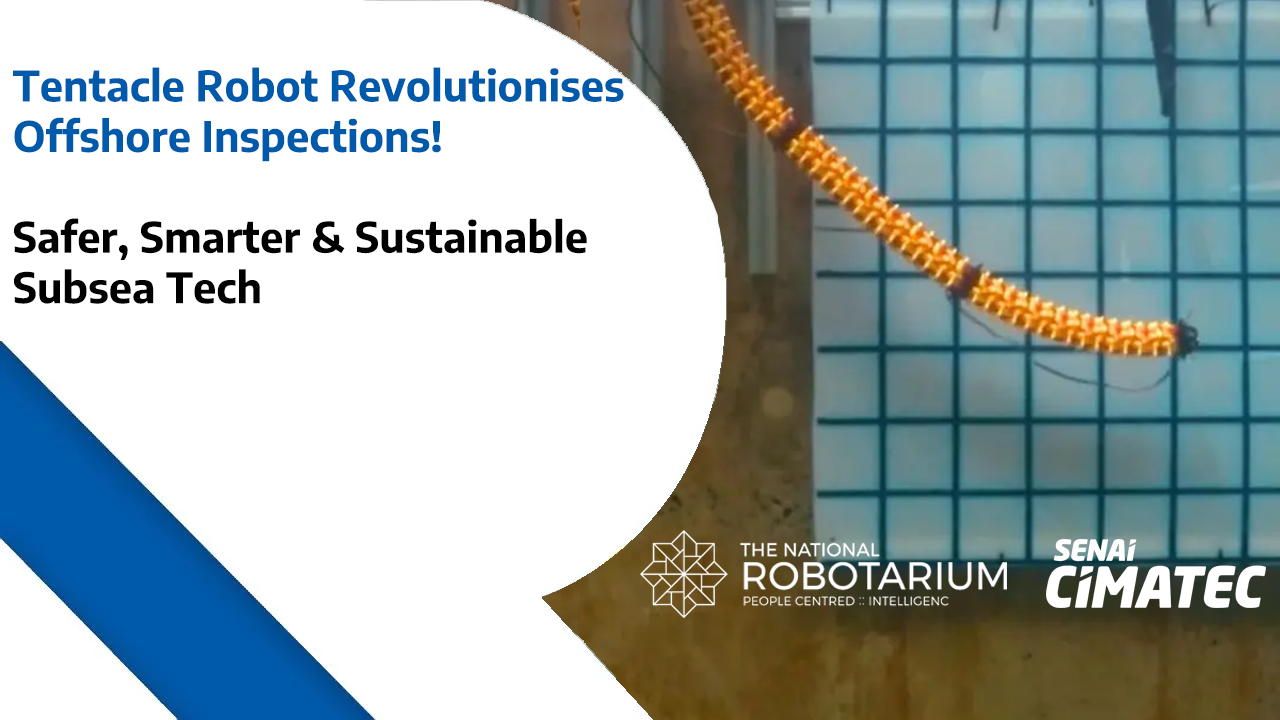
    Meet the ocean’s newest inspector: a tentacle-like robot developed by the UK’s National Robotarium and Brazil’s Senai Cimatec, designed to make offshore subsea inspections safer and more efficient.

    Unlike rigid robotic arms, this one-metre-long soft manipulator bends and conforms to delicate structures, reducing the risk of damage when working near complex subsea equipment.

    It moves using a flexible backbone with tendon-like cables, while sensors allow it to understand its shape and position even in turbulent water.

    In tests, the robot held steady against external forces of up to 300g and could correct its position within seconds when disturbed, showing impressive stability and precision.

    With subsea infrastructure at depths of nearly 3,000 metres requiring constant checks—and decommissioning costs projected to exceed $100 billion by 2030—this technology could extend the safe life of offshore assets while cutting costs and environmental impact.

    Rowanne Miller, project manager at the National Robotarium, said this innovation doesn’t just improve current tools, but fundamentally changes how underwater inspections can be carried out.

    By enabling smaller underwater vehicles to take on inspection work without large vessels or divers, the technology offers a safer, more sustainable, and more economical way to maintain vital offshore energy and marine infrastructure.


    And that’s your robot news update for today!
    If you’re curious about how robotics can transform your business, join me for the weekly Live Robot Optimise Workshop — it’s packed with insights, trends, and practical tips. Don’t forget to subscribe so you stay in the loop with all the latest updates.

    I’m RoboPhil from Robot Philosophy — thanks for watching, and I’ll see you next time!

    Join our Robot Optimise Industry (ROI) Workshop: https://robophil.com/


    Sponsors:-


    Robot Center: – https://robotcenter.co.uk/ – Buy Robot, Robot Buy, Robot consultancy, Robotics Consultancy, Inspection Robots, Security Robots, 


    Robots of London: – https://robotsoflondon.co.uk/ – Robot Hire, Robot Rental, Rent Robot, Hire Robot, Robot Events, Robotics Hire, Hire Robotics, Rent Robotics, Robotics Rent, for exhibitions, shows, Events, Robot hire in the UK, Robot hire in Europe


    Robot Philosophy: – https://robophil.com/ – Robot Consultancy, Robot Recruitment, Robot Advice, Robot Insights, Robot Ideas. RoboPhil, also known as Philip English, is a leading Robot YouTuber, Robot Influencer, Robot Trainer, Robot Consultant, and Robot Streamer, Robotics Streamer, Robotics YouTuber, Robotics Influencer, Robotics Consultant, Robotics Trainer  


  • Google DeepMind’s RoboBallet – How AI Teaches Robots to Work Together Without Crashing

    Google DeepMind’s RoboBallet – How AI Teaches Robots to Work Together Without Crashing

    Google DeepMind’s RoboBallet – How AI Teaches Robots to Work Together Without Crashing


    Picture a group of robots working side by side, moving smoothly without bumping into each other. No crashes, no awkward pauses—just well-coordinated teamwork. That’s the idea behind RoboBallet.

    Programming a single industrial robot is already complex—relying on teach pendants, offline tools, and plenty of trial and error. Now try synchronizing several robots in one shared space. With over 4.3 million industrial robots worldwide, the time and effort required for programming is a real barrier to scaling automation.

    Researchers from Google DeepMind Robotics, Intrinsic, and UCL have developed RoboBallet, an AI system that uses graph neural networks and reinforcement learning to generate collision-free plans for multiple robots. Instead of painstaking coding, it just needs CAD files and a task list.

    In tests, the system coordinated up to eight robots within seconds, producing plans that were about 25% more efficient than traditional methods. And interestingly, as the number of robots increased, task execution times actually dropped by around 60%.

    The name comes from its choreography-like approach. The AI finds harmony between robots—timing, space, and flow—turning what used to be a complex scheduling puzzle into a smooth routine.

    Looking forward, this kind of planning could let factories adapt on the fly to design changes or unexpected events, reducing downtime and increasing flexibility.

    RoboBallet shows that when robots learn to work together gracefully, automation becomes faster, safer, and far easier to scale.


    And that’s your robot news update for today!
    If you’re curious about how robotics can transform your business, join me for the weekly Live Robot Optimise Workshop — it’s packed with insights, trends, and practical tips. Don’t forget to subscribe so you stay in the loop with all the latest updates.

    I’m RoboPhil from Robot Philosophy — thanks for watching, and I’ll see you next time!


    Join our Robot Optimise Industry (ROI) Workshop: https://robophil.com/


    Sponsors:-


    Robot Center: – https://robotcenter.co.uk/ – Buy Robot, Robot Buy, Robot consultancy, Robotics Consultancy, Inspection Robots, Security Robots, 


    Robots of London: – https://robotsoflondon.co.uk/ – Robot Hire, Robot Rental, Rent Robot, Hire Robot, Robot Events, Robotics Hire, Hire Robotics, Rent Robotics, Robotics Rent, for exhibitions, shows, Events, Robot hire in the UK, Robot hire in Europe


    Robot Philosophy: – https://robophil.com/ – Robot Consultancy, Robot Recruitment, Robot Advice, Robot Insights, Robot Ideas. RoboPhil, also known as Philip English, is a leading Robot YouTuber, Robot Influencer, Robot Trainer, Robot Consultant, and Robot Streamer, Robotics Streamer, Robotics YouTuber, Robotics Influencer, Robotics Consultant, Robotics Trainer  

  • Cartesian Robots – Simple Automation for Repetitive Tasks

    Cartesian Robots – Simple Automation for Repetitive Tasks

    Cartesian Robots – Simple Automation for Repetitive Tasks

    Introduction

    In today’s rapidly advancing world of automation, businesses of all sizes are exploring the role of robotics in their operations. While humanoid robots and AI-driven systems grab the headlines, many of the most practical and cost-effective automation solutions are far simpler. Among these, Cartesian robots—sometimes called gantry robots or linear robots—stand out as the unsung heroes of industrial and commercial automation.

    These robots excel at handling repetitive, structured, and precise tasks, making them invaluable across industries such as manufacturing, packaging, electronics, logistics, and even laboratory research.

    This article dives deep into Cartesian robots: what they are, how they work, their advantages, and why they are an ideal entry point into automation for SMEs and large enterprises alike. We’ll also explore how your business can unlock their potential through robot consulting services and robot recruitment expertise provided by Robot Philosophy.

    📞 To book a call and discover how Cartesian robots could streamline your processes, contact info@robophil.com or call 0845 528 0404.


    What Are Cartesian Robots?

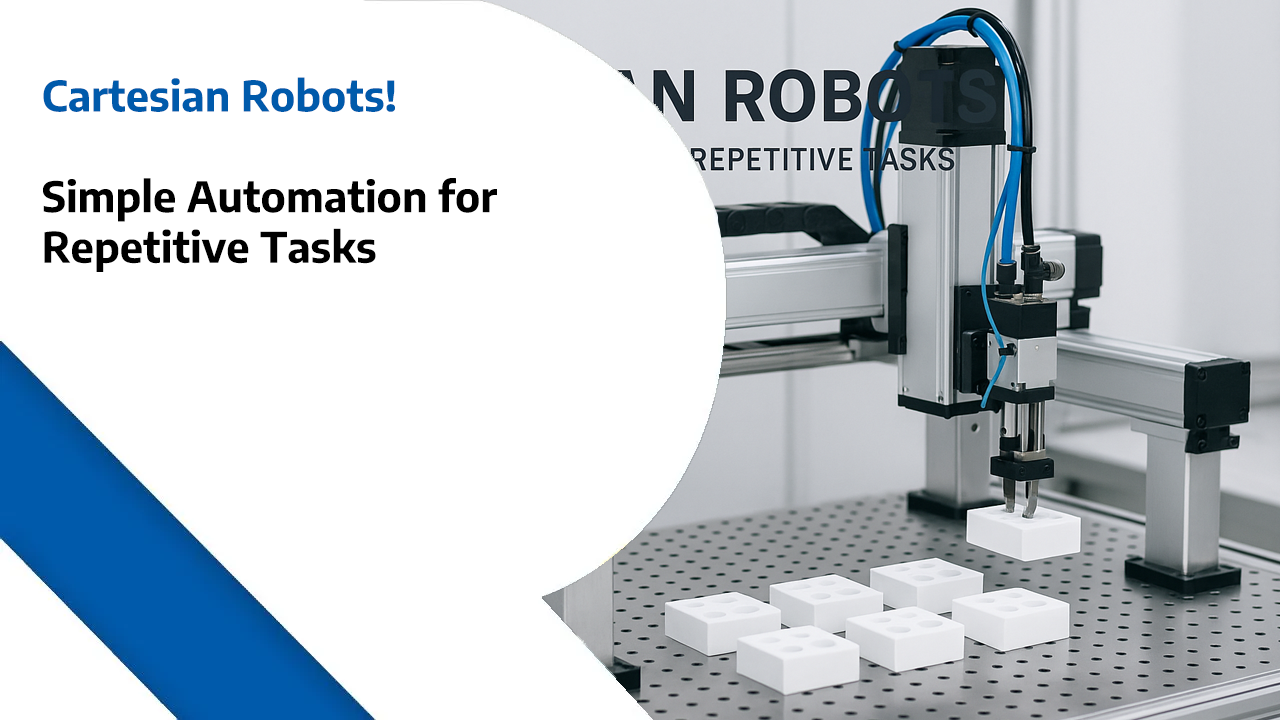
    A Cartesian robot is a robotic system that moves along three orthogonal axes—X, Y, and Z—following the Cartesian coordinate system. Unlike articulated robots with multiple rotary joints, Cartesian robots move in straight lines along linear actuators, allowing them to perform tasks with high precision and repeatability.

    These robots often look like a simple frame or gantry with sliding components and are typically mounted over or around the workspace. They are not flashy, but they are highly reliable workhorses that can carry out repetitive motions for long periods with minimal error.

    Key Features of Cartesian Robots

    • Linear motion: Movement along X, Y, and Z axes.

    • Simple programming: Easy to set up and control compared to complex articulated robots.

    • High precision: Capable of repeatability within fractions of a millimetre.

    • Scalability: Can be built small for delicate tasks or large to span entire production lines.

    • Cost-effectiveness: Generally cheaper to purchase, install, and maintain than articulated or SCARA robots.


    How Cartesian Robots Work

    At their core, Cartesian robots rely on three key components:

    1. Linear actuators (ball screws, belts, or rack-and-pinion drives).

    2. Motors (stepper or servo motors to control movement).

    3. Controllers (software that defines the path, speed, and tasks).

    When integrated into a production environment, a Cartesian robot can:

    • Pick up items from a conveyor belt.

    • Place them into packaging.

    • Stack boxes onto pallets.

    • Perform repetitive assembly steps.

    By repeating these motions thousands or even millions of times with minimal variation, Cartesian robots deliver unmatched consistency and productivity.


    Why Cartesian Robots?

    With so many types of industrial robots—SCARA, articulated, delta, collaborative—why should businesses pay attention to Cartesian robots?

    The answer lies in simplicity and efficiency.

    1. Cost-Effective Automation

    Cartesian robots are generally less expensive to purchase and maintain compared to articulated robots. For businesses dipping their toes into automation, they represent an affordable entry point without sacrificing reliability.

    2. Easy to Integrate

    Their straightforward design makes Cartesian robots easier to install and integrate into existing production lines. They often require less customization and shorter lead times.

    3. Reliability in Repetition

    If your task is repetitive and predictable—such as pick-and-place, packaging, or inspection—Cartesian robots are unmatched. They’re designed for continuous duty cycles without fatigue.

    4. Flexibility in Design

    Cartesian robots can be custom-built to fit specific dimensions or work envelopes. Whether you need a small unit for laboratory pipetting or a large gantry spanning several metres, Cartesian robots can be scaled accordingly.

    5. Low Maintenance

    Because of their simple design and linear movement, maintenance is often limited to lubrication and occasional component replacements.


    Use Cases for Cartesian Robots

    Cartesian robots are everywhere—though they often go unnoticed compared to more humanoid or “sexy” robots. Let’s look at their most common applications:

    1. Pick and Place

    From electronics to food products, Cartesian robots excel in picking up components and placing them into packaging, trays, or onto conveyors.

    2. Assembly

    They can insert parts, fasten screws, or perform repetitive assembly tasks with unwavering accuracy.

    3. Palletizing

    Stacking boxes onto pallets is a dull and repetitive task that Cartesian robots handle effortlessly.

    4. Packaging

    Filling containers, sealing, and moving products into boxes can all be automated.

    5. Machine Tending

    Cartesian robots can load and unload CNC machines, injection moulders, or other equipment, reducing operator fatigue.

    6. Inspection and Testing

    With integrated cameras or sensors, Cartesian robots can perform quality inspections, ensuring every product meets exact specifications.

    7. Laboratory Automation

    In life sciences, Cartesian robots are used for pipetting, sample handling, and repetitive lab processes.


    Cartesian Robots for SMEs

    Many small and medium-sized enterprises (SMEs) wrongly assume robots are “too advanced” or “too expensive.” Cartesian robots prove otherwise.

    Because of their cost-effectiveness, simplicity, and scalability, they are perfectly suited for SMEs that want to:

    • Increase production without hiring more staff.

    • Reduce errors in repetitive tasks.

    • Improve consistency and quality.

    • Free human workers to focus on higher-value tasks.

    This makes Cartesian robots one of the smartest first steps into robotics for growing businesses.


    Case Example: From Manual Packaging to Robotic Precision

    Imagine a small food production company manually packaging hundreds of items per hour. Human workers get tired, errors creep in, and productivity fluctuates.

    By installing a Cartesian pick-and-place robot, the company:

    • Increased output by 40%.

    • Reduced packaging errors to near zero.

    • Freed up staff to handle logistics and quality checks.

    Within 12 months, the robot paid for itself.


    Challenges of Cartesian Robots

    While Cartesian robots are powerful, they’re not a one-size-fits-all solution.

    1. Limited Dexterity

    They can’t handle complex motions like articulated robots. If your task requires rotation, twisting, or fine manipulation, other robot types may be better.

    2. Space Requirements

    Large Cartesian systems can require significant floor space.

    3. Task Specialization

    They are best for structured, repetitive tasks, not jobs that require adaptability or decision-making.

    This is where robot consultancy services become critical—helping businesses evaluate whether Cartesian robots are the right fit.


    Choosing the Right Robot

    The robotics market is vast, with hundreds of models and suppliers. Choosing the wrong robot can be an expensive mistake.

    That’s where Robot Philosophy comes in.

    Our consulting service helps you:

    • Audit your processes to identify where robots add value.

    • Compare solutions (Cartesian, SCARA, collaborative, etc.).

    • Select the right model for your budget and goals.

    • Support integration, training, and scaling.

    📞 To explore whether Cartesian robots—or another solution—are right for your business, contact us at info@robophil.com or call 0845 528 0404.


    The Role of Robot Recruitment

    As robots become central to operations, companies need talent to manage them. From robotics engineers to maintenance technicians, the right people make the difference between smooth automation and frustrating downtime.

    Robot Philosophy also provides robot recruitment services, connecting you with:

    • Skilled robotics engineers.

    • Automation technicians.

    • Integration specialists.

    • Data analysts for robotics.

    We don’t just help you choose the right robot—we help you build the right team around it.


    Sponsors

    This article is proudly supported by:

    • Robot CenterBuy Robot, Robot Buy, Robot Consultancy, Robotics Consultancy.

    • Robots of LondonRobot Hire, Robot Rental, Rent Robot, Hire Robot, Robot Events.

    • Robot PhilosophyRobot Consultancy AND Robot Recruitment, Robot Advice, Robot Insights, Robot Ideas.

    RoboPhil, also known as Philip English, is a leading Robot YouTuber, Influencer, Trainer, Consultant, and Streamer, providing expert guidance and insights into the robotics industry.


    Future of Cartesian Robots

    Though not the newest technology, Cartesian robots are evolving. With improvements in sensors, AI integration, and modular design, they are becoming:

    • Smarter (with vision-based systems).

    • Faster (thanks to lighter materials and better motors).

    • Easier to deploy (through plug-and-play modules).

    In the coming years, Cartesian robots will remain the go-to solution for simple, repetitive automation, especially as SMEs seek affordable entry points into robotics.


    Conclusion

    Cartesian robots may not be glamorous, but they are practical, reliable, and cost-effective. For businesses dealing with repetitive tasks, they provide a clear path to increased productivity, reduced costs, and improved quality.

    The question is no longer “Should we automate?” but “Where do we start?”

    That’s where Robot Philosophy’s consulting and recruitment services come in—guiding you every step of the way, from robot selection to team building.

    📧 Email us at info@robophil.com
    📞 Call us on 0845 528 0404
    🌐 Explore Robot Philosophy

    Whether you’re a small business looking for your first automation solution or a large enterprise seeking to scale, Cartesian robots may be your simplest, smartest step forward.


    https://www.youtube.com/watch?v=eiVYu2l3OqQ


    https://www.youtube.com/shorts/H9vQ0s7AewQ


  • China’s Robot Wolves & Nuclear Arsenal – Inside the Military Parade of the Future

    China’s Robot Wolves & Nuclear Arsenal – Inside the Military Parade of the Future

    China’s Robot Wolves & Nuclear Arsenal – Inside the Military Parade of the Future


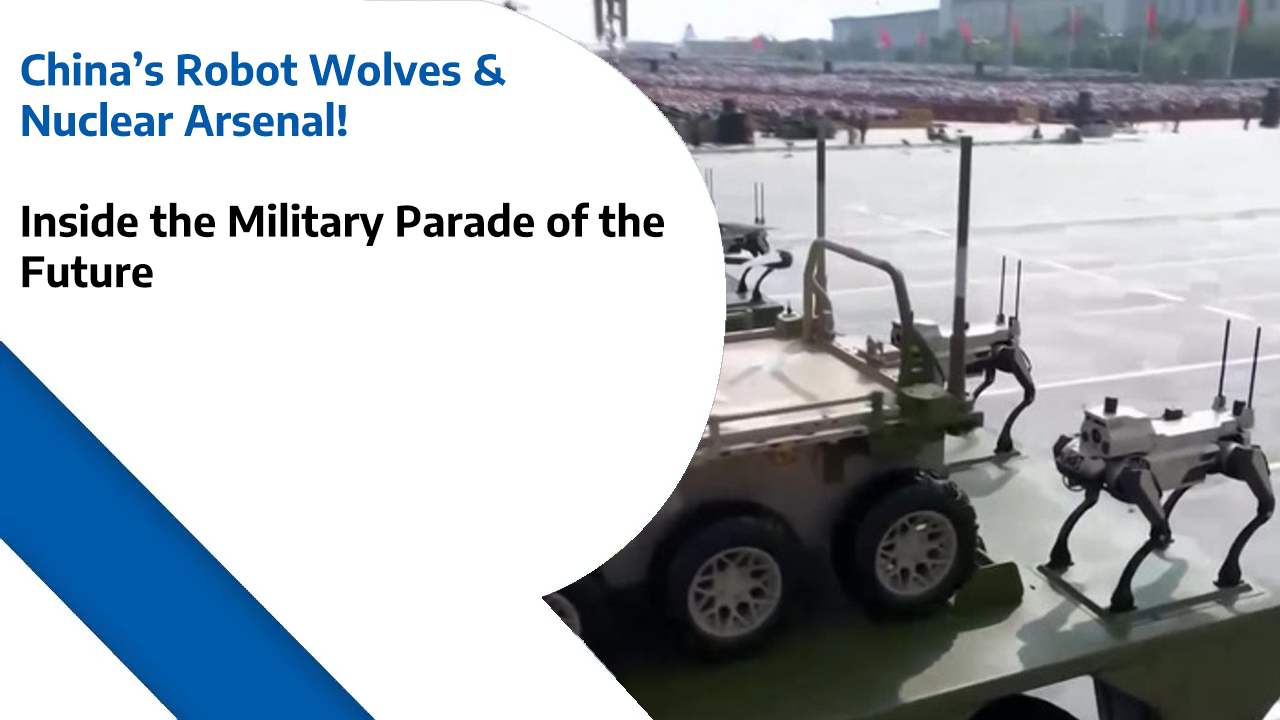
    At China’s huge military parade, missiles rolled, jets roared… and yes, robot wolves took a stroll through Tiananmen Square. Because nothing says ‘future warfare’ like a robotic pack animal with a rifle on its back. 

    These robot wolves are upgraded robo-dogs—quadruped machines that can march with troops, carry weapons, and climb rough terrain. Think man’s best friend—only with more horsepower and less shedding. 

    They’ve been tested in reconnaissance, precision strikes, and even mine-sweeping, and in CCTV footage they looked almost too well behaved… imagine walking six of those through your local park. 

    The message is clear: China wants to look old-school strong and new-tech sharp at the same time. Robot wolves reduce risk to soldiers, adapt to harsh landscapes, and scare the life out of enemies who suddenly see a mechanical pack running at them. Cute? Not really. Effective? Possibly. 

    Battlefield ready? Still up for debate. Of course, the wolves were just one act. Beijing also rolled out its full nuclear triad—land, sea, and air-based missiles—plus hypersonic weapons, cyber troops, underwater drones, and even a laser cannon. Basically, old tanks met Star Wars tech. So while most armies rely on boots on the ground, China’s bringing paws of steel.


    And that’s your robot news update for today!
    If you’re curious about how robotics can transform your business, join me for the weekly Live Robot Optimise Workshop — it’s packed with insights, trends, and practical tips. Don’t forget to subscribe so you stay in the loop with all the latest updates.

    I’m RoboPhil from Robot Philosophy — thanks for watching, and I’ll see you next time!


    Join our Robot Optimise Industry (ROI) Workshop: https://robophil.com/


    Sponsors:-


    Robot Center: – https://robotcenter.co.uk/ – Buy Robot, Robot Buy, Robot consultancy, Robotics Consultancy, Inspection Robots, Security Robots, 


    Robots of London: – https://robotsoflondon.co.uk/ – Robot Hire, Robot Rental, Rent Robot, Hire Robot, Robot Events, Robotics Hire, Hire Robotics, Rent Robotics, Robotics Rent, for exhibitions, shows, Events, Robot hire in the UK, Robot hire in Europe


    Robot Philosophy: – https://robophil.com/ – Robot Consultancy, Robot Recruitment, Robot Advice, Robot Insights, Robot Ideas. RoboPhil, also known as Philip English, is a leading Robot YouTuber, Robot Influencer, Robot Trainer, Robot Consultant, and Robot Streamer, Robotics Streamer, Robotics YouTuber, Robotics Influencer, Robotics Consultant, Robotics Trainer  


  • Delta Robots – Why They’re Ideal for High-Speed Pick and Place

    Delta Robots – Why They’re Ideal for High-Speed Pick and Place

    Delta Robots: Why They’re Ideal for High-Speed Pick and Place Operations

    Sponsored by: Robot Center, Robots of London, and Robot Philosophy

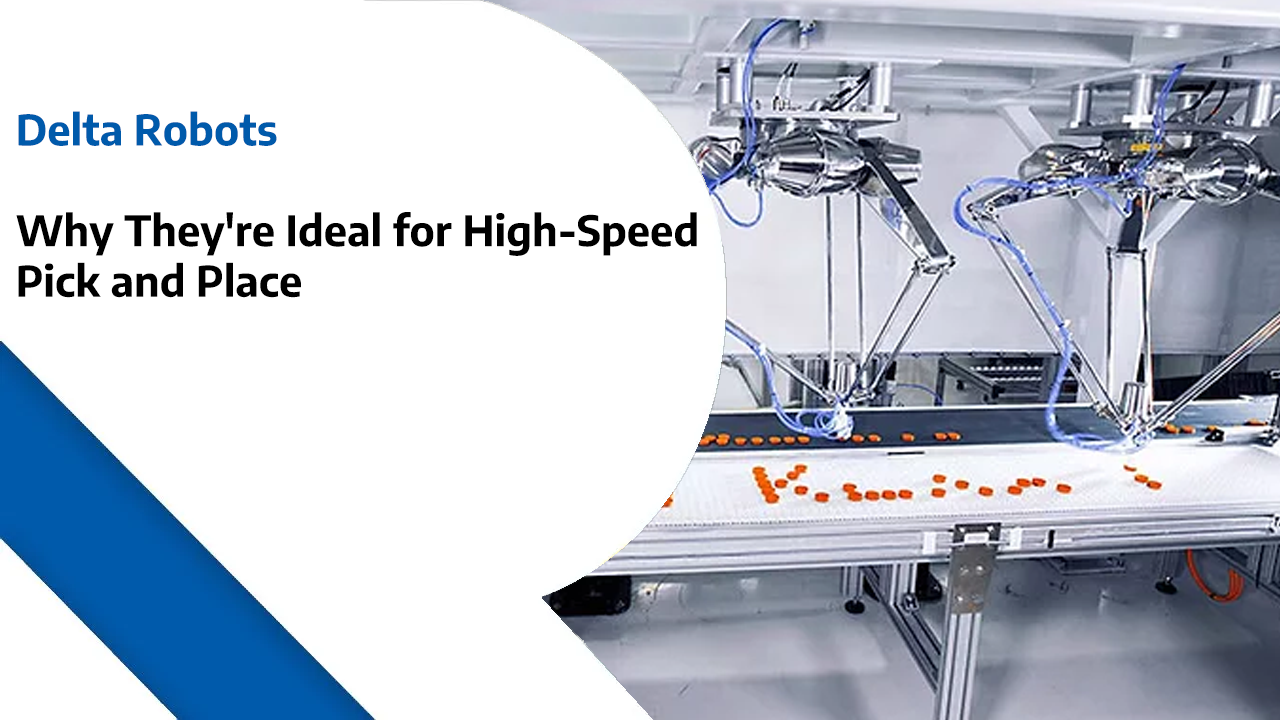
    In the rapidly evolving landscape of industrial automation, delta robots have emerged as the undisputed champions of high-speed pick and place operations. These remarkable machines, with their distinctive spider-like appearance and lightning-fast movements, are revolutionizing manufacturing processes across industries worldwide. From pharmaceutical packaging to food processing, electronics assembly to logistics operations, delta robots are proving that when speed, precision, and reliability matter most, there’s simply no substitute for their unique design and capabilities.

    Understanding Delta Robot Architecture

    Delta robots, also known as parallel robots or spider robots, feature a unique three-arm parallel kinematic structure that sets them apart from traditional articulated robotic arms. Named after their triangular or delta-shaped platform, these robots consist of three lightweight arms connected to a central moving platform through universal joints. This parallel configuration allows all three motors to work simultaneously, distributing the load and enabling the extraordinary speeds that delta robots are famous for.

    The genius of the delta robot design lies in its mathematical foundation. Developed by Professor Reymond Clavel at the École Polytechnique Fédérale de Lausanne (EPFL) in the 1980s, the delta robot’s parallel kinematic structure eliminates the cumulative positioning errors common in serial kinematic robots. Each arm operates independently while working in perfect harmony with the others, creating a system where precision is maintained even at extreme speeds.

    The lightweight carbon fiber or aluminum arms, combined with the parallel drive system, minimize inertia and allow for rapid acceleration and deceleration. Unlike traditional six-axis robots that must move each joint sequentially, delta robots can achieve complex three-dimensional movements through the coordinated motion of their three arms, making them incredibly efficient for rapid positioning tasks.

    The Speed Advantage: Unmatched Performance Metrics

    When it comes to raw speed, delta robots are in a class of their own. Modern delta robots can achieve cycle times as low as 0.3 seconds per pick and place operation, with some specialized models reaching even faster speeds. These robots can operate at accelerations of up to 15G and achieve tip speeds exceeding 10 meters per second, performance levels that would be impossible with traditional articulated arm robots.

    The speed advantage becomes even more pronounced when considering the robot’s duty cycle. While traditional robots may need cooling periods or suffer from wear-related slowdowns during extended operation, delta robots maintain consistent high-speed performance throughout their operational cycles. This consistency translates directly into higher throughput and improved production efficiency.

    The parallel kinematic structure also provides exceptional dynamic performance. The three-arm configuration distributes mechanical stress evenly, reducing wear on individual components and allowing for sustained high-speed operation. This design inherently provides better dynamic stability, meaning the robot can maintain precision even while operating at maximum speed, a crucial factor in high-volume production environments.

    Precision Engineering: Accuracy at Lightning Speed

    Speed without precision is meaningless in industrial applications, and delta robots excel in both areas simultaneously. The parallel kinematic design provides inherent accuracy advantages, with typical positioning repeatability of ±0.1mm or better. This level of precision is maintained even during high-speed operations, making delta robots ideal for applications requiring both speed and accuracy.

    The mathematical precision of the delta robot’s kinematics ensures that positioning errors don’t accumulate as they would in serial kinematic systems. Each point in the robot’s workspace can be reached through multiple kinematic solutions, allowing the control system to optimize for speed, accuracy, or energy efficiency depending on the application requirements.

    Modern delta robots incorporate advanced sensor feedback systems, including high-resolution encoders and sometimes vision systems, to maintain exceptional accuracy throughout the workspace. The closed-loop control systems continuously monitor and adjust positioning, ensuring that the robot maintains its precision specifications even after millions of operational cycles.

    Workspace Characteristics and Design Optimization

    The delta robot’s workspace is uniquely suited to pick and place operations. The workspace forms an inverted cone or dome shape beneath the robot’s base, with the largest working area at the bottom and tapering toward the top. This configuration is ideal for applications where parts need to be picked from conveyor belts or bins below the robot and placed into packaging or assembly fixtures.

    The workspace design offers several advantages for pick and place applications. The robot can reach every point within its workspace with the same level of speed and precision, unlike articulated arms where performance varies significantly based on arm configuration. This consistency makes process planning more straightforward and ensures uniform cycle times regardless of pick and place locations within the workspace.

    The overhead mounting configuration common with delta robots also maximizes floor space utilization. With the robot mounted above the work area, valuable floor space remains available for conveyors, packaging equipment, and operator access. This three-dimensional approach to workspace utilization is particularly valuable in high-density manufacturing environments where floor space is at a premium.

    Applications Across Industries

    Delta robots have found applications across virtually every industry where high-speed pick and place operations are required. In the pharmaceutical industry, these robots excel at high-speed packaging of tablets, capsules, and medical devices into blister packs or bottles. The combination of speed and precision is crucial for meeting the stringent quality requirements and high volume demands of pharmaceutical manufacturing.

    Food and beverage applications represent another major market for delta robots. From sorting and packaging confectionery to handling delicate baked goods, delta robots provide the gentle yet rapid handling required in food processing. Their ability to work in washdown environments and comply with food safety standards makes them ideal for these applications.

    Electronics manufacturing has embraced delta robots for component placement, PCB handling, and small parts assembly. The precision and speed capabilities align perfectly with the miniaturization trends in electronics, where components continue to get smaller and production volumes continue to increase.

    In the automotive industry, delta robots handle small components and perform rapid assembly operations. From sorting fasteners to placing electrical components, these robots contribute to the lean manufacturing principles that drive modern automotive production.

    Comparing Delta Robots to Traditional Automation Solutions

    When compared to traditional six-axis articulated robots, delta robots offer several distinct advantages for pick and place applications. The speed advantage is perhaps the most obvious, with delta robots typically achieving 3-5 times faster cycle times than comparable articulated arms for similar tasks.

    The parallel kinematic structure also provides better stiffness and accuracy characteristics. While articulated arms can suffer from accumulated positioning errors and compliance issues when fully extended, delta robots maintain consistent performance throughout their workspace. This characteristic makes them particularly suitable for precision applications where dimensional accuracy is critical.

    Energy efficiency represents another significant advantage. The lightweight moving components and efficient parallel drive system result in lower energy consumption compared to traditional robots. This efficiency translates into lower operating costs and reduced environmental impact, important considerations in modern manufacturing operations.

    Maintenance requirements also tend to be lower for delta robots. The simpler mechanical structure with fewer wearing components typically results in longer service intervals and reduced maintenance costs. The parallel configuration also means that partial failures don’t necessarily require complete system shutdown, providing better overall system availability.

    However, delta robots do have limitations compared to traditional robots. The workspace is more constrained, and the robots typically offer only three or four degrees of freedom compared to the six degrees of freedom available with articulated arms. For applications requiring complex part orientations or extensive reach, traditional robots may be more suitable.

    Advanced Control Systems and Integration

    Modern delta robots incorporate sophisticated control systems that maximize their performance capabilities. Advanced trajectory planning algorithms optimize robot movements to minimize cycle time while maintaining precision and reducing mechanical stress. These systems can adapt to changing operational requirements in real-time, optimizing performance based on current production demands.

    Vision integration has become increasingly important in delta robot applications. High-speed cameras and advanced image processing enable robots to identify, locate, and orient parts in real-time, dramatically expanding their application possibilities. Vision-guided delta robots can handle randomly oriented parts, perform quality inspections during handling, and adapt to variations in part presentation.

    Force control capabilities are also being integrated into advanced delta robot systems. These systems can detect and respond to contact forces, enabling gentle handling of delicate parts or adaptive responses to variations in part geometry. Force feedback is particularly valuable in applications involving food products, electronic components, or other fragile items.

    Integration with factory automation systems has become increasingly seamless. Modern delta robots communicate with upstream and downstream equipment, production planning systems, and quality management systems to optimize overall production efficiency. This integration capability makes delta robots valuable components in Industry 4.0 manufacturing environments.

    Future Developments and Emerging Technologies

    The future of delta robotics promises even more impressive capabilities. Advances in materials science are enabling lighter, stronger robot structures that can achieve even higher speeds and accelerations. Carbon fiber components and advanced alloys are pushing the boundaries of what’s possible in terms of speed and precision.

    Artificial intelligence and machine learning are being integrated into delta robot control systems, enabling adaptive learning and continuous performance optimization. These systems can learn from operational data to optimize trajectories, predict maintenance needs, and adapt to changing production requirements automatically.

    Collaborative safety features are being developed to enable delta robots to work more closely with human operators. Advanced sensor systems and safety-rated control architectures are making it possible to deploy delta robots in applications where human-robot collaboration is beneficial.

    Miniaturization trends are also driving the development of smaller, more precise delta robots for applications involving tiny components or limited workspace constraints. These micro-delta robots maintain the speed and precision characteristics of their larger counterparts while operating in workspaces measured in cubic centimeters rather than cubic meters.

    Economic Impact and ROI Considerations

    The economic benefits of delta robots in high-speed pick and place applications are compelling. The dramatic increase in throughput capability directly translates to improved production capacity and reduced labor costs. Many operations see payback periods of less than 18 months, with some high-volume applications achieving payback in under a year.

    The consistency and reliability of delta robots also contribute to improved product quality and reduced waste. The precise positioning and gentle handling capabilities minimize product damage and ensure consistent placement accuracy, reducing defects and rework costs.

    Energy efficiency improvements, while sometimes overlooked, can provide significant cost savings in high-volume operations. The reduced energy consumption of delta robots compared to traditional automation solutions contributes to lower operating costs and improved sustainability metrics.

    Reduced floor space requirements also translate to economic benefits. The overhead mounting configuration of delta robots maximizes utilization of expensive manufacturing floor space, enabling higher production density and improved facility efficiency.

    Implementation Considerations and Best Practices

    Successful delta robot implementation requires careful consideration of application requirements and system design. Workspace analysis is critical to ensure that the robot’s operating envelope aligns with the application needs. The inverted cone workspace must accommodate all required pick and place locations while maintaining optimal speed and precision characteristics.

    End-effector selection is particularly important for delta robot applications. The lightweight, rapid movements of delta robots place unique requirements on gripping systems. Vacuum grippers, magnetic grippers, and specialized mechanical grippers must be designed to handle the high accelerations while maintaining secure part retention.

    Integration planning should consider the entire production system, not just the robot itself. Upstream part presentation systems, conveyor synchronization, and downstream handling equipment must all be coordinated to maximize system performance. The high speed of delta robots can create bottlenecks in surrounding equipment if not properly planned.

    Safety considerations are paramount, particularly given the high speeds involved. Proper guarding, emergency stop systems, and operator training are essential for safe operation. The rapid movements of delta robots require special attention to safety system design to ensure adequate protection for operators and maintenance personnel.

    Expert Consultation and Implementation Services

    Implementing delta robotics successfully requires expertise in multiple domains, from mechanical design and controls engineering to application analysis and system integration. The complexity of modern automated systems demands specialized knowledge to ensure optimal performance and return on investment.

    Professional robotics consulting services can provide valuable guidance throughout the implementation process. From initial feasibility analysis and application assessment to detailed system design and commissioning support, experienced consultants can help navigate the complexities of delta robot implementation.

    Robot recruitment services are equally important for organizations looking to build internal capabilities in robotics and automation. Finding qualified personnel with experience in delta robotics, control systems, and automation integration can be challenging in today’s competitive job market. Specialized recruitment services can help identify and attract the talent needed to support advanced robotics initiatives.

    For organizations considering delta robot implementation, professional consultation can help identify optimal applications, specify appropriate equipment, and develop implementation strategies that maximize return on investment. The rapidly evolving landscape of robotics technology makes expert guidance increasingly valuable for staying current with best practices and emerging capabilities.

    Conclusion: The Future is Fast

    Delta robots represent the pinnacle of high-speed pick and place automation technology. Their unique parallel kinematic design, exceptional speed capabilities, and maintained precision make them indispensable tools for modern manufacturing operations. As production demands continue to increase and product life cycles continue to shorten, the ability to rapidly and accurately handle parts and products becomes increasingly critical to competitive success.

    The versatility of delta robots across industries, from pharmaceuticals and food processing to electronics and automotive manufacturing, demonstrates their broad applicability and robust value proposition. The combination of high speed, precision, reliability, and economic efficiency makes delta robots an compelling choice for organizations seeking to optimize their pick and place operations.

    As technology continues to advance, delta robots will undoubtedly become even more capable, more intelligent, and more integrated into comprehensive manufacturing systems. Organizations that embrace these technologies today will be better positioned to compete in tomorrow’s increasingly automated manufacturing landscape.

    The investment in delta robotics represents more than just equipment acquisition; it represents a commitment to operational excellence, competitive advantage, and future readiness. For organizations ready to take their pick and place operations to the next level, delta robots offer a proven path to achieving world-class performance.


    About Our Sponsors

    Robot Center (robotcenter.co.uk) is your premier destination for robot acquisition and robotics consultancy services. Whether you’re looking to buy robots or seeking expert robotics consultancy, Robot Center provides comprehensive solutions to meet your automation needs.

    Robots of London (robotsoflondon.co.uk) specializes in robot hire and robot rental services. From temporary installations to event demonstrations, their flexible robot rental solutions make advanced robotics accessible for any timeline or budget.

    Robot Philosophy (robophil.com) offers comprehensive robot consultancy and robot recruitment services. Led by Philip English (RoboPhil), a leading robot YouTuber, robot influencer, and robotics consultant, Robot Philosophy provides expert robot advice, insights, and innovative ideas to guide your automation journey.


    Ready to explore delta robotics for your operation?

    Contact our expert team today:

    • Email: info@robophil.com
    • Phone: 0845 528 0404
    • Book a consultation call to discuss your specific requirements and discover how delta robots can transform your pick and place operations.

    Our experienced consultants can help you evaluate applications, specify equipment, and develop implementation strategies that maximize your return on investment. Don’t let your competition gain the speed advantage – contact us today to get started with delta robotics.


    https://www.youtube.com/watch?v=snswFsEFvpU


    https://www.youtube.com/shorts/MY_q4BJiIJs

    Delta Robots: Why They’re Ideal for High-Speed Pick and Place Operations

    Sponsored by: Robot Center, Robots of London, and Robot Philosophy

    In the rapidly evolving landscape of industrial automation, delta robots have emerged as the undisputed champions of high-speed pick and place operations. These remarkable machines, with their distinctive spider-like appearance and lightning-fast movements, are revolutionizing manufacturing processes across industries worldwide. From pharmaceutical packaging to food processing, electronics assembly to logistics operations, delta robots are proving that when speed, precision, and reliability matter most, there’s simply no substitute for their unique design and capabilities.

    Understanding Delta Robot Architecture

    Delta robots, also known as parallel robots or spider robots, feature a unique three-arm parallel kinematic structure that sets them apart from traditional articulated robotic arms. Named after their triangular or delta-shaped platform, these robots consist of three lightweight arms connected to a central moving platform through universal joints. This parallel configuration allows all three motors to work simultaneously, distributing the load and enabling the extraordinary speeds that delta robots are famous for.

    The genius of the delta robot design lies in its mathematical foundation. Developed by Professor Reymond Clavel at the École Polytechnique Fédérale de Lausanne (EPFL) in the 1980s, the delta robot’s parallel kinematic structure eliminates the cumulative positioning errors common in serial kinematic robots. Each arm operates independently while working in perfect harmony with the others, creating a system where precision is maintained even at extreme speeds.

    The lightweight carbon fiber or aluminum arms, combined with the parallel drive system, minimize inertia and allow for rapid acceleration and deceleration. Unlike traditional six-axis robots that must move each joint sequentially, delta robots can achieve complex three-dimensional movements through the coordinated motion of their three arms, making them incredibly efficient for rapid positioning tasks.

    The Speed Advantage: Unmatched Performance Metrics

    When it comes to raw speed, delta robots are in a class of their own. Modern delta robots can achieve cycle times as low as 0.3 seconds per pick and place operation, with some specialized models reaching even faster speeds. These robots can operate at accelerations of up to 15G and achieve tip speeds exceeding 10 meters per second, performance levels that would be impossible with traditional articulated arm robots.

    The speed advantage becomes even more pronounced when considering the robot’s duty cycle. While traditional robots may need cooling periods or suffer from wear-related slowdowns during extended operation, delta robots maintain consistent high-speed performance throughout their operational cycles. This consistency translates directly into higher throughput and improved production efficiency.

    The parallel kinematic structure also provides exceptional dynamic performance. The three-arm configuration distributes mechanical stress evenly, reducing wear on individual components and allowing for sustained high-speed operation. This design inherently provides better dynamic stability, meaning the robot can maintain precision even while operating at maximum speed, a crucial factor in high-volume production environments.

    Precision Engineering: Accuracy at Lightning Speed

    Speed without precision is meaningless in industrial applications, and delta robots excel in both areas simultaneously. The parallel kinematic design provides inherent accuracy advantages, with typical positioning repeatability of ±0.1mm or better. This level of precision is maintained even during high-speed operations, making delta robots ideal for applications requiring both speed and accuracy.

    The mathematical precision of the delta robot’s kinematics ensures that positioning errors don’t accumulate as they would in serial kinematic systems. Each point in the robot’s workspace can be reached through multiple kinematic solutions, allowing the control system to optimize for speed, accuracy, or energy efficiency depending on the application requirements.

    Modern delta robots incorporate advanced sensor feedback systems, including high-resolution encoders and sometimes vision systems, to maintain exceptional accuracy throughout the workspace. The closed-loop control systems continuously monitor and adjust positioning, ensuring that the robot maintains its precision specifications even after millions of operational cycles.

    Workspace Characteristics and Design Optimization

    The delta robot’s workspace is uniquely suited to pick and place operations. The workspace forms an inverted cone or dome shape beneath the robot’s base, with the largest working area at the bottom and tapering toward the top. This configuration is ideal for applications where parts need to be picked from conveyor belts or bins below the robot and placed into packaging or assembly fixtures.

    The workspace design offers several advantages for pick and place applications. The robot can reach every point within its workspace with the same level of speed and precision, unlike articulated arms where performance varies significantly based on arm configuration. This consistency makes process planning more straightforward and ensures uniform cycle times regardless of pick and place locations within the workspace.

    The overhead mounting configuration common with delta robots also maximizes floor space utilization. With the robot mounted above the work area, valuable floor space remains available for conveyors, packaging equipment, and operator access. This three-dimensional approach to workspace utilization is particularly valuable in high-density manufacturing environments where floor space is at a premium.

    Applications Across Industries

    Delta robots have found applications across virtually every industry where high-speed pick and place operations are required. In the pharmaceutical industry, these robots excel at high-speed packaging of tablets, capsules, and medical devices into blister packs or bottles. The combination of speed and precision is crucial for meeting the stringent quality requirements and high volume demands of pharmaceutical manufacturing.

    Food and beverage applications represent another major market for delta robots. From sorting and packaging confectionery to handling delicate baked goods, delta robots provide the gentle yet rapid handling required in food processing. Their ability to work in washdown environments and comply with food safety standards makes them ideal for these applications.

    Electronics manufacturing has embraced delta robots for component placement, PCB handling, and small parts assembly. The precision and speed capabilities align perfectly with the miniaturization trends in electronics, where components continue to get smaller and production volumes continue to increase.

    In the automotive industry, delta robots handle small components and perform rapid assembly operations. From sorting fasteners to placing electrical components, these robots contribute to the lean manufacturing principles that drive modern automotive production.

    Comparing Delta Robots to Traditional Automation Solutions

    When compared to traditional six-axis articulated robots, delta robots offer several distinct advantages for pick and place applications. The speed advantage is perhaps the most obvious, with delta robots typically achieving 3-5 times faster cycle times than comparable articulated arms for similar tasks.

    The parallel kinematic structure also provides better stiffness and accuracy characteristics. While articulated arms can suffer from accumulated positioning errors and compliance issues when fully extended, delta robots maintain consistent performance throughout their workspace. This characteristic makes them particularly suitable for precision applications where dimensional accuracy is critical.

    Energy efficiency represents another significant advantage. The lightweight moving components and efficient parallel drive system result in lower energy consumption compared to traditional robots. This efficiency translates into lower operating costs and reduced environmental impact, important considerations in modern manufacturing operations.

    Maintenance requirements also tend to be lower for delta robots. The simpler mechanical structure with fewer wearing components typically results in longer service intervals and reduced maintenance costs. The parallel configuration also means that partial failures don’t necessarily require complete system shutdown, providing better overall system availability.

    However, delta robots do have limitations compared to traditional robots. The workspace is more constrained, and the robots typically offer only three or four degrees of freedom compared to the six degrees of freedom available with articulated arms. For applications requiring complex part orientations or extensive reach, traditional robots may be more suitable.

    Advanced Control Systems and Integration

    Modern delta robots incorporate sophisticated control systems that maximize their performance capabilities. Advanced trajectory planning algorithms optimize robot movements to minimize cycle time while maintaining precision and reducing mechanical stress. These systems can adapt to changing operational requirements in real-time, optimizing performance based on current production demands.

    Vision integration has become increasingly important in delta robot applications. High-speed cameras and advanced image processing enable robots to identify, locate, and orient parts in real-time, dramatically expanding their application possibilities. Vision-guided delta robots can handle randomly oriented parts, perform quality inspections during handling, and adapt to variations in part presentation.

    Force control capabilities are also being integrated into advanced delta robot systems. These systems can detect and respond to contact forces, enabling gentle handling of delicate parts or adaptive responses to variations in part geometry. Force feedback is particularly valuable in applications involving food products, electronic components, or other fragile items.

    Integration with factory automation systems has become increasingly seamless. Modern delta robots communicate with upstream and downstream equipment, production planning systems, and quality management systems to optimize overall production efficiency. This integration capability makes delta robots valuable components in Industry 4.0 manufacturing environments.

    Future Developments and Emerging Technologies

    The future of delta robotics promises even more impressive capabilities. Advances in materials science are enabling lighter, stronger robot structures that can achieve even higher speeds and accelerations. Carbon fiber components and advanced alloys are pushing the boundaries of what’s possible in terms of speed and precision.

    Artificial intelligence and machine learning are being integrated into delta robot control systems, enabling adaptive learning and continuous performance optimization. These systems can learn from operational data to optimize trajectories, predict maintenance needs, and adapt to changing production requirements automatically.

    Collaborative safety features are being developed to enable delta robots to work more closely with human operators. Advanced sensor systems and safety-rated control architectures are making it possible to deploy delta robots in applications where human-robot collaboration is beneficial.

    Miniaturization trends are also driving the development of smaller, more precise delta robots for applications involving tiny components or limited workspace constraints. These micro-delta robots maintain the speed and precision characteristics of their larger counterparts while operating in workspaces measured in cubic centimeters rather than cubic meters.

    Economic Impact and ROI Considerations

    The economic benefits of delta robots in high-speed pick and place applications are compelling. The dramatic increase in throughput capability directly translates to improved production capacity and reduced labor costs. Many operations see payback periods of less than 18 months, with some high-volume applications achieving payback in under a year.

    The consistency and reliability of delta robots also contribute to improved product quality and reduced waste. The precise positioning and gentle handling capabilities minimize product damage and ensure consistent placement accuracy, reducing defects and rework costs.

    Energy efficiency improvements, while sometimes overlooked, can provide significant cost savings in high-volume operations. The reduced energy consumption of delta robots compared to traditional automation solutions contributes to lower operating costs and improved sustainability metrics.

    Reduced floor space requirements also translate to economic benefits. The overhead mounting configuration of delta robots maximizes utilization of expensive manufacturing floor space, enabling higher production density and improved facility efficiency.

    Implementation Considerations and Best Practices

    Successful delta robot implementation requires careful consideration of application requirements and system design. Workspace analysis is critical to ensure that the robot’s operating envelope aligns with the application needs. The inverted cone workspace must accommodate all required pick and place locations while maintaining optimal speed and precision characteristics.

    End-effector selection is particularly important for delta robot applications. The lightweight, rapid movements of delta robots place unique requirements on gripping systems. Vacuum grippers, magnetic grippers, and specialized mechanical grippers must be designed to handle the high accelerations while maintaining secure part retention.

    Integration planning should consider the entire production system, not just the robot itself. Upstream part presentation systems, conveyor synchronization, and downstream handling equipment must all be coordinated to maximize system performance. The high speed of delta robots can create bottlenecks in surrounding equipment if not properly planned.

    Safety considerations are paramount, particularly given the high speeds involved. Proper guarding, emergency stop systems, and operator training are essential for safe operation. The rapid movements of delta robots require special attention to safety system design to ensure adequate protection for operators and maintenance personnel.

    Expert Consultation and Implementation Services

    Implementing delta robotics successfully requires expertise in multiple domains, from mechanical design and controls engineering to application analysis and system integration. The complexity of modern automated systems demands specialized knowledge to ensure optimal performance and return on investment.

    Professional robotics consulting services can provide valuable guidance throughout the implementation process. From initial feasibility analysis and application assessment to detailed system design and commissioning support, experienced consultants can help navigate the complexities of delta robot implementation.

    Robot recruitment services are equally important for organizations looking to build internal capabilities in robotics and automation. Finding qualified personnel with experience in delta robotics, control systems, and automation integration can be challenging in today’s competitive job market. Specialized recruitment services can help identify and attract the talent needed to support advanced robotics initiatives.

    For organizations considering delta robot implementation, professional consultation can help identify optimal applications, specify appropriate equipment, and develop implementation strategies that maximize return on investment. The rapidly evolving landscape of robotics technology makes expert guidance increasingly valuable for staying current with best practices and emerging capabilities.

    Conclusion: The Future is Fast

    Delta robots represent the pinnacle of high-speed pick and place automation technology. Their unique parallel kinematic design, exceptional speed capabilities, and maintained precision make them indispensable tools for modern manufacturing operations. As production demands continue to increase and product life cycles continue to shorten, the ability to rapidly and accurately handle parts and products becomes increasingly critical to competitive success.

    The versatility of delta robots across industries, from pharmaceuticals and food processing to electronics and automotive manufacturing, demonstrates their broad applicability and robust value proposition. The combination of high speed, precision, reliability, and economic efficiency makes delta robots an compelling choice for organizations seeking to optimize their pick and place operations.

    As technology continues to advance, delta robots will undoubtedly become even more capable, more intelligent, and more integrated into comprehensive manufacturing systems. Organizations that embrace these technologies today will be better positioned to compete in tomorrow’s increasingly automated manufacturing landscape.

    The investment in delta robotics represents more than just equipment acquisition; it represents a commitment to operational excellence, competitive advantage, and future readiness. For organizations ready to take their pick and place operations to the next level, delta robots offer a proven path to achieving world-class performance.


    About Our Sponsors

    Robot Center (robotcenter.co.uk) is your premier destination for robot acquisition and robotics consultancy services. Whether you’re looking to buy robots or seeking expert robotics consultancy, Robot Center provides comprehensive solutions to meet your automation needs.

    Robots of London (robotsoflondon.co.uk) specializes in robot hire and robot rental services. From temporary installations to event demonstrations, their flexible robot rental solutions make advanced robotics accessible for any timeline or budget.

    Robot Philosophy (robophil.com) offers comprehensive robot consultancy and robot recruitment services. Led by Philip English (RoboPhil), a leading robot YouTuber, robot influencer, and robotics consultant, Robot Philosophy provides expert robot advice, insights, and innovative ideas to guide your automation journey.


    Ready to explore delta robotics for your operation?

    Contact our expert team today:

    • Email: info@robophil.com
    • Phone: 0845 528 0404
    • Book a consultation call to discuss your specific requirements and discover how delta robots can transform your pick and place operations.

    Our experienced consultants can help you evaluate applications, specify equipment, and develop implementation strategies that maximize your return on investment. Don’t let your competition gain the speed advantage – contact us today to get started with delta robotics.