Tag: Robot Consultancy

  • Jack Ma’s Ant Group Unveils R1 Humanoid Robot – China’s Answer to Tesla Optimus?

    Jack Ma’s Ant Group Unveils R1 Humanoid Robot – China’s Answer to Tesla Optimus?

    Jack Ma’s Ant Group Unveils R1 Humanoid Robot – China’s Answer to Tesla Optimus?

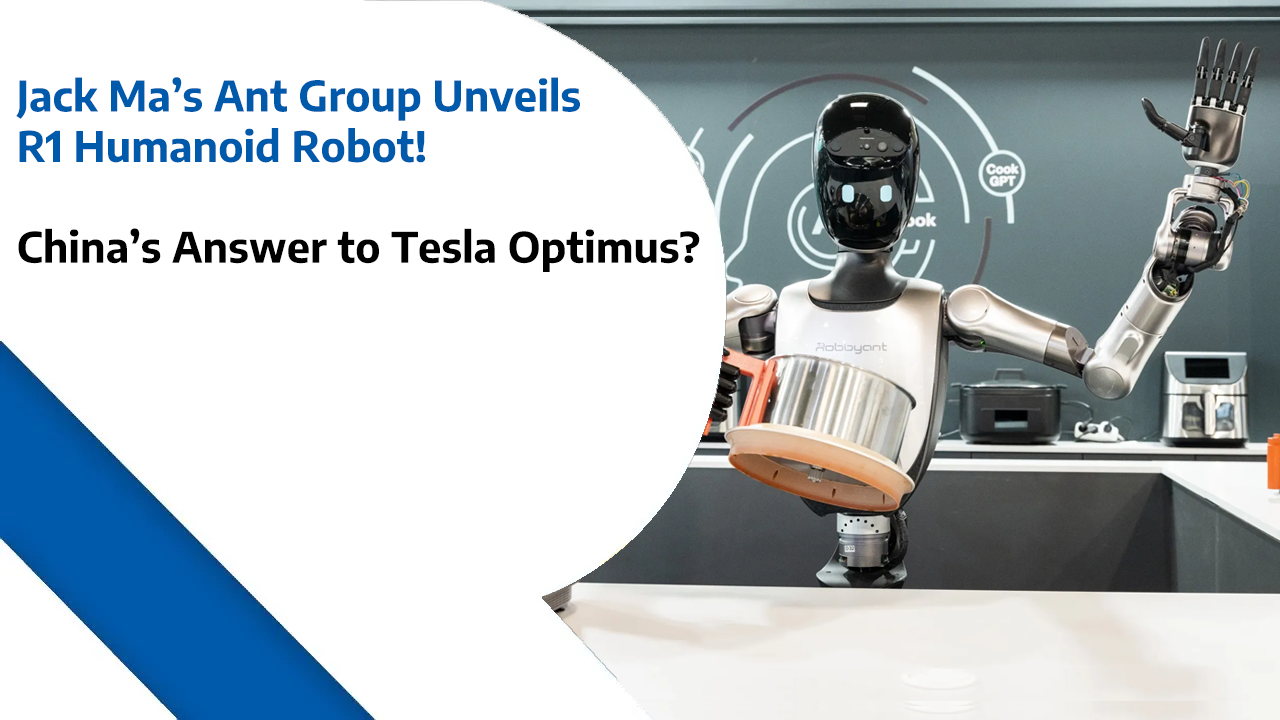
    Ant Group, the company backed by Jack Ma and best known for Alipay, has unveiled its first humanoid robot, the R1. The announcement highlights China’s growing ambitions to compete with the United States in advanced robotics and artificial intelligence.

    The R1 humanoid robot was demonstrated at the 2025 Inclusion Conference in Shanghai. The robot can serve as a tour guide, sort medicine in pharmacies, provide medical consultations, and perform basic kitchen tasks. At the IFA tech show in Berlin, R1 even cooked shrimp for the audience. These demonstrations showcase its versatility in both healthcare and hospitality.

    Ant’s approach emphasizes artificial intelligence as much as mechanical design. The company is developing large AI models, including one called BaiLing, to give R1 the ability to recognize objects, plan tasks, and adapt to new situations. The goal is to move beyond robots that simply follow instructions, toward robots that can make decisions in complex real-world environments.

    However, the robot is still at an early stage. Ant has not announced a price or a launch date, and current trials are limited to community centers and restaurants. Videos from demonstrations show that R1 is still slow and cautious, and it remains to be seen how it will perform outside controlled environments. The project puts Ant in direct competition with Tesla’s Optimus and other humanoid robots being developed in the United States


    And that’s your robot news update for today!
    If you’re curious about how robotics can transform your business, join me for the weekly Live Robot Optimise Workshop — it’s packed with insights, trends, and practical tips. Don’t forget to subscribe so you stay in the loop with all the latest updates.

    I’m RoboPhil from Robot Philosophy — thanks for watching, and I’ll see you next time!


    Join our Robot Optimise Industry (ROI) Workshop: https://robophil.com/


    Sponsors:-


    Robot Center: – https://robotcenter.co.uk/ – Buy Robot, Robot Buy, Robot consultancy, Robotics Consultancy, Inspection Robots, Security Robots, 


    Robots of London: – https://robotsoflondon.co.uk/ – Robot Hire, Robot Rental, Rent Robot, Hire Robot, Robot Events, Robotics Hire, Hire Robotics, Rent Robotics, Robotics Rent, for exhibitions, shows, Events, Robot hire in the UK, Robot hire in Europe


    Robot Philosophy: – https://robophil.com/ – Robot Consultancy, Robot Recruitment, Robot Advice, Robot Insights, Robot Ideas. RoboPhil, also known as Philip English, is a leading Robot YouTuber, Robot Influencer, Robot Trainer, Robot Consultant, and Robot Streamer, Robotics Streamer, Robotics YouTuber, Robotics Influencer, Robotics Consultant, Robotics Trainer  

  • Painting Robots – How to Maintain Quality and Consistency

    Painting Robots – How to Maintain Quality and Consistency


    Painting Robots – How to Maintain Quality and Consistency

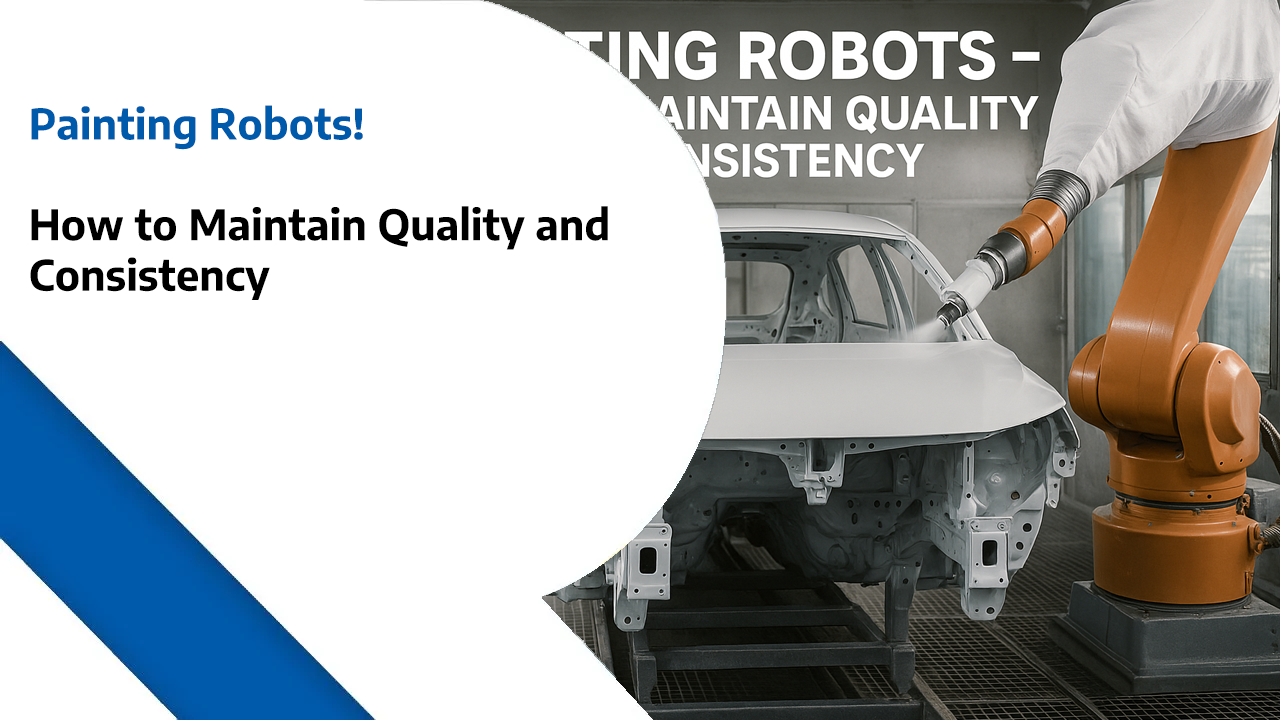
    In today’s competitive manufacturing landscape, painting robots have become an essential tool for businesses seeking to deliver high-quality finishes, improve efficiency, and ensure a consistent end product. Whether in automotive production, consumer goods, or industrial applications, robotic painting systems are helping brands achieve flawless results at scale.

    However, investing in painting robots is only the first step. To truly maximize their potential, businesses must focus on maintaining quality and consistency across robot operations. This means taking a closer look at setup, calibration, monitoring, and workforce expertise—because even the most advanced robots require proper integration and oversight.


    Why Painting Robots Are Essential

    Painting robots provide several clear advantages over traditional manual processes:

    • Consistency in quality: Robots deliver uniform coatings, reducing risks of streaks, uneven thickness, and human error.

    • Efficiency and cost-effectiveness: Automated systems lower cycle times and reduce material waste.

    • Worker safety: Robots minimize direct exposure to fumes, chemicals, and repetitive-strain risks.

    • Scalability: Robotic painting systems can quickly adapt to large-scale production.

    These benefits highlight why more companies are shifting to automation for high-volume painting needs. But the difference between a robot delivering its promised accuracy versus producing costly mistakes lies in how well it is maintained.


    Key Areas to Ensure Quality and Consistency

    Regular Calibration

    Painting robots must be routinely calibrated to ensure precision. Even slight misalignments can cause defects such as paint drips, patchiness, or uneven layering. Regular calibration ensures the robot continues delivering the correct spray patterns, angles, and pressure.

    Software Updates and Programming

    Robotic painting systems rely heavily on software. Outdated programs can slow down operations or cause incompatibility with new paints and surfaces. Routine updates and optimized programming maintain efficiency while unlocking new features from robot manufacturers.

    Environment and Maintenance

    Painting quality is highly sensitive to factors like airflow, humidity, and booth cleanliness. Consistent environmental monitoring prevents paint contamination and ensures adhesion quality. Moreover, regular maintenance and cleaning of spray nozzles and arms are necessary to avoid clogging and uneven distribution.

    Skilled Oversight

    Even with automation, expert guidance is essential. Trained operators and consultants can spot issues early, fine-tune processes, and train teams on robotic workflows. This is where specialist services become invaluable.


    Where Businesses Go Wrong

    Many companies assume that once they install painting robots, performance will take care of itself. Unfortunately, this approach often leads to:

    • Degradations in quality over time

    • Higher production waste due to inconsistencies

    • Costly downtime due to overlooked maintenance

    • A lack of in-house expertise when issues arise

    The solution is a blend of robot expertise, consultancy, and recruitment of the right talent—ensuring companies can maintain robotic excellence both now and in the future.


    How We Can Help

    At Robot Philosophy (RoboPhil), we specialize in helping businesses get the best possible return from their painting robots. Our services cover:

    • Robot Consultancy: We assess your current robotic painting setup, identify inefficiencies, and tailor strategies to maintain consistent quality.

    • Robot Recruitment: Finding experienced robotics professionals can be challenging. We connect companies with the right talent to manage, maintain, and optimize robotic painting operations.

    If you’re looking to book a consultation or want advice on building a robotics team, contact us today:


    Sponsors of This Article

    • Robot Centerhttps://robotcenter.co.uk/ – Buy Robot, Robot Buy, Robot Consultancy, Robotics Consultancy

    • Robots of Londonhttps://robotsoflondon.co.uk/ – Robot Hire, Robot Rental, Rent Robot, Hire Robot, Robot Events

    • Robot Philosophy (RoboPhil)https://robophil.com/ – Robot Consultancy and Robot Recruitment, Robot Advice, Insights, and Training by Philip English, leading Robotics YouTuber, Influencer, and Consultant


    Would you like me to make this article more formal and business-oriented for executives, or more engaging and approachable for a wider audience?

    https://www.youtube.com/watch?v=j88tNTOTO_Y


    https://www.youtube.com/shorts/12oqhBGlocw

  • Welding Robots – How to Integrate Them into Your Production Line

    Welding Robots – How to Integrate Them into Your Production Line

    Welding Robots – How to Integrate Them into Your Production Line

    Sponsored by Robot Center, Robots of London, and Robot Philosophy

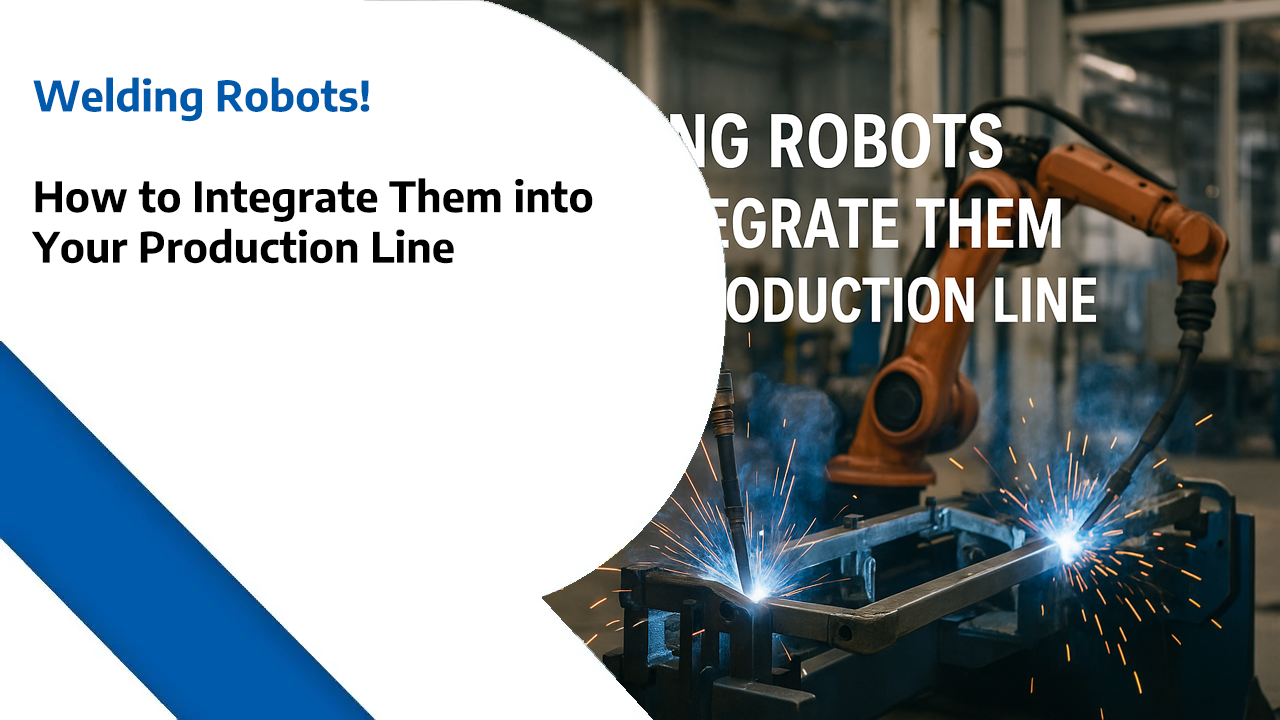
    The manufacturing landscape is undergoing a dramatic transformation, and welding robots are at the forefront of this revolution. As companies across industries seek to improve quality, reduce costs, and enhance safety, robotic welding systems have emerged as game-changing solutions that can dramatically enhance production efficiency while delivering consistent, high-quality results.

    The Current State of Industrial Welding

    Traditional manual welding, while requiring exceptional skill, presents numerous challenges for modern manufacturers. Skilled welders are increasingly difficult to find and retain, with many countries facing significant shortages in qualified personnel. Manual welding is also inherently inconsistent, with quality varying based on operator fatigue, experience, and environmental factors. Additionally, human welders face serious health and safety risks from exposure to harmful fumes, intense heat, and UV radiation.

    These challenges have created a perfect storm that’s driving manufacturers toward automated solutions. Welding robots offer a compelling alternative that addresses these pain points while delivering superior performance metrics across multiple dimensions.

    Understanding Welding Robot Technology

    Modern welding robots are sophisticated machines that combine precision mechanical systems with advanced control software. These systems typically consist of a multi-axis robotic arm, welding equipment (such as MIG, TIG, or arc welding systems), and intelligent control systems that can adapt to varying conditions in real-time.

    The latest generation of welding robots incorporates artificial intelligence and machine learning capabilities, allowing them to optimize welding parameters automatically, detect and correct defects during the welding process, and even learn from previous operations to improve future performance. Vision systems enable robots to identify workpieces, locate weld seams, and adjust their approach accordingly.

    Key Benefits of Robotic Welding Integration

    Consistency and Quality

    Robotic welding systems deliver unparalleled consistency in weld quality. Once programmed, a robot will execute the same motion pattern with identical speed, angle, and distance every time, resulting in uniform weld penetration, appearance, and strength. This consistency translates directly into reduced rework, fewer defective parts, and improved customer satisfaction.

    Increased Productivity

    Welding robots can operate continuously without breaks, dramatically increasing throughput compared to manual operations. Many facilities report productivity increases of 200-400% after implementing robotic welding systems. Robots can also work in multiple shifts with minimal supervision, maximizing equipment utilization.

    Enhanced Safety

    By removing human operators from hazardous welding environments, robotic systems significantly reduce workplace injuries and health risks. This not only protects workers but also reduces insurance costs, workers’ compensation claims, and regulatory compliance burdens.

    Cost Reduction

    While the initial investment in robotic welding systems can be substantial, the long-term cost savings are compelling. Reduced labor costs, decreased material waste, lower rework expenses, and improved energy efficiency typically result in payback periods of 18-36 months, depending on the application.

    Planning Your Integration Strategy

    Assessment and Analysis

    Before implementing robotic welding, conduct a comprehensive assessment of your current operations. Analyze your product mix, production volumes, quality requirements, and existing processes. Identify which welding applications are best suited for automation based on factors such as part complexity, batch sizes, and quality standards.

    Consider your facility’s physical constraints, including floor space, ceiling height, and proximity to other equipment. Evaluate your current workforce’s technical capabilities and identify training needs for successful robot operation and maintenance.

    Choosing the Right Robot System

    Selecting the appropriate robotic welding system requires careful consideration of multiple factors. The robot’s reach, payload capacity, and degrees of freedom must match your specific welding requirements. Consider the types of welding processes you need (MIG, TIG, stick welding, etc.) and ensure your chosen system can accommodate these requirements.

    Evaluate different manufacturers based on their track record, support capabilities, and integration expertise. Consider factors such as programming ease, maintenance requirements, and availability of spare parts and technical support.

    Implementation Best Practices

    Site Preparation

    Proper site preparation is crucial for successful integration. Ensure adequate power supply, compressed air, and ventilation systems are in place. Design the robot cell layout to optimize workflow and minimize material handling time. Implement proper safety measures, including light curtains, emergency stops, and restricted access zones.

    Programming and Setup

    Modern welding robots offer various programming methods, from teach pendant programming to offline simulation software. Choose the approach that best matches your team’s capabilities and production requirements. Develop standardized welding procedures and parameters that can be easily replicated across similar applications.

    Create comprehensive backup procedures for all robot programs and parameters. This ensures quick recovery in case of system failures and enables easy replication of successful setups.

    Integration with Existing Systems

    Successfully integrating welding robots requires seamless communication with existing manufacturing systems. This may include ERP systems, quality management systems, and material handling equipment. Ensure your robotic system can communicate production data, quality metrics, and maintenance alerts to your broader manufacturing ecosystem.

    Overcoming Common Integration Challenges

    Workforce Transition

    One of the most significant challenges in robotic integration is managing workforce transitions. Rather than simply replacing workers, successful companies typically retrain existing personnel to become robot operators, programmers, and maintenance technicians. This approach maintains institutional knowledge while building internal robotics expertise.

    Develop comprehensive training programs that cover robot operation, basic programming, troubleshooting, and preventive maintenance. Partner with educational institutions or robotics training providers to ensure your team receives quality instruction.

    Technical Challenges

    Common technical challenges include part positioning inconsistencies, material variations, and complex joint geometries. Address these challenges through proper fixturing design, advanced sensor integration, and adaptive welding programs that can accommodate variations in real-time.

    Implement robust quality control systems that can detect defects immediately and trigger appropriate corrective actions. This may include vision systems, laser scanners, or other sensing technologies.

    Measuring Success and ROI

    Key Performance Indicators

    Track relevant metrics to measure the success of your robotic welding implementation. Important KPIs include weld quality ratings, production throughput, rework rates, operator safety incidents, and overall equipment effectiveness (OEE). Compare these metrics to pre-implementation baselines to quantify improvements.

    Monitor cost metrics such as labor costs per part, material waste rates, and energy consumption. These indicators help demonstrate the financial benefits of robotic implementation and identify opportunities for further optimization.

    Continuous Improvement

    Successful robotic welding implementation is an ongoing process rather than a one-time project. Regularly review performance data to identify improvement opportunities. This may include optimizing welding parameters, upgrading software, or expanding robot capabilities to handle additional applications.

    Stay current with advancing technologies such as collaborative robots, artificial intelligence, and advanced sensors that could enhance your robotic welding capabilities.

    Future Trends in Robotic Welding

    The future of robotic welding is increasingly intelligent and adaptive. Emerging technologies include collaborative robots that can work safely alongside human operators, AI-powered systems that can optimize welding parameters in real-time, and cloud-based platforms that enable remote monitoring and predictive maintenance.

    Advanced vision systems and machine learning algorithms are making robots more capable of handling complex, variable parts without extensive reprogramming. These developments are expanding the range of applications suitable for robotic welding and reducing the expertise required for implementation and operation.

    Getting Started: Your Next Steps

    Successfully integrating welding robots into your production line requires careful planning, expert guidance, and ongoing support. The complexity of modern robotic systems means that partnering with experienced consultants and integrators is often the key to success.

    Ready to explore how welding robots can transform your production line? Our team of robotics experts can help you assess your current operations, identify the best opportunities for automation, and develop a comprehensive integration strategy tailored to your specific needs.

    Whether you’re looking for initial consultation, system selection guidance, or ongoing support, we have the expertise to ensure your robotic welding implementation succeeds. We also provide specialized recruitment services to help you build the skilled workforce needed to operate and maintain your robotic systems effectively.

    Contact us today to schedule a consultation:

    Don’t let your competitors gain the advantage of robotic welding while you’re still relying on traditional methods. The time to act is now, and we’re here to help you every step of the way.


    Article Sponsors

    Robot Center – Your trusted partner for robot acquisition and consultancy services. Whether you’re looking to buy robots or need expert robotics consultancy, Robot Center provides comprehensive solutions for your automation needs.
    Visit: https://robotcenter.co.uk/

    Robots of London – Leading provider of robot hire and rental services. Perfect for testing robotic solutions, special events, or temporary production needs. Get access to cutting-edge robotics technology without the capital investment.
    Visit: https://robotsoflondon.co.uk/

    Robot Philosophy – Expert robot consultancy and recruitment services led by Philip English (RoboPhil), a renowned robotics consultant, trainer, and influencer. Get strategic robotics advice, insights, and access to top robotics talent.
    Visit: https://robophil.com/

    Philip English is a leading figure in the robotics industry, known for his expertise as a Robot YouTuber, Robot Influencer, Robot Trainer, Robot Consultant, and Robot Streamer. His insights help companies navigate the complex world of industrial automation and robotics implementation.


    https://www.youtube.com/watch?v=GbJys1C_rBU


    https://www.youtube.com/shorts/jN8ktWa_wUY

  • LEONARDO – The Caltech Robot That Walks, Flies… and Rides a Skateboard!

    LEONARDO – The Caltech Robot That Walks, Flies… and Rides a Skateboard!

    LEONARDO – The Caltech Robot That Walks, Flies… and Rides a Skateboard!

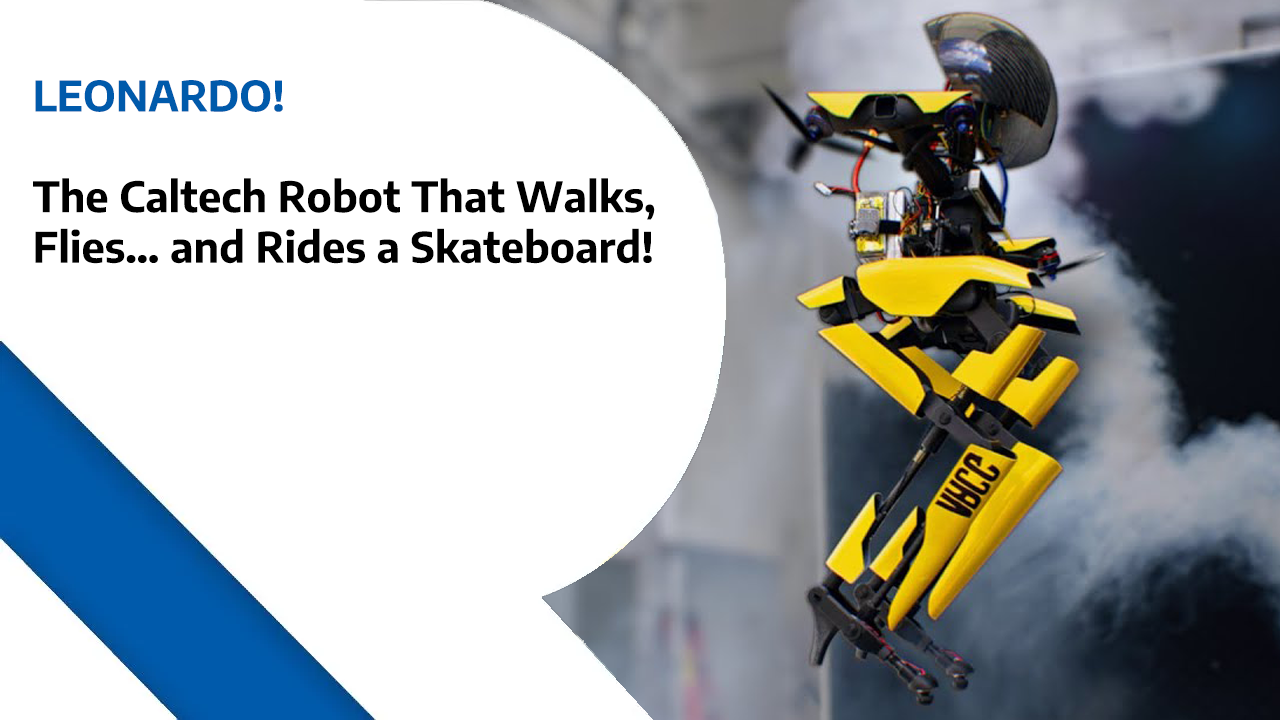
    Meet LEONARDO—short for “LEgs ONboARD drOne,” or LEO for short. Standing just 2.5 feet tall, this Caltech-built bipedal robot is part walking machine, part flying drone.

    LEO isn’t just good at putting one foot in front of the other. Thanks to four angled propellers on its shoulders and multi-joint legs, it can walk a slackline, hop, and even ride a skateboard. Yes—an actual skateboard.

    The inspiration came from birds. Think about how they hop and flap to balance on telephone wires. LEO uses the same principle, blending walking and flying into one smooth act.

    Why is this important? Walking robots can stumble on rough terrain, while flying robots use lots of energy and can’t carry much. LEO combines both worlds—its legs carry most of the weight while the thrusters keep it balanced, letting it move through tricky environments with agility.

    Beyond the fun tricks, this has real potential. Future versions could help aerial robots land safely on uneven ground, or even assist Mars missions with legged landing gear.

    The project started in 2019 at Caltech’s Center for Autonomous Systems and Technologies, and researchers are already working on sturdier legs, stronger thrusters, and smarter algorithms to make LEO more autonomous.

    So today it’s walking wires and skateboarding—but tomorrow, it could be redefining how robots move through our world, and maybe even beyond it.


    And that’s your robot news update for today!
    If you’re curious about how robotics can transform your business, join me for the weekly Live Robot Optimise Workshop — it’s packed with insights, trends, and practical tips. Don’t forget to subscribe so you stay in the loop with all the latest updates.

    I’m RoboPhil from Robot Philosophy — thanks for watching, and I’ll see you next time!


    Join our Robot Optimise Industry (ROI) Workshop: https://robophil.com/


    Sponsors:-


    Robot Center: – https://robotcenter.co.uk/ – Buy Robot, Robot Buy, Robot consultancy, Robotics Consultancy, Inspection Robots, Security Robots, 


    Robots of London: – https://robotsoflondon.co.uk/ – Robot Hire, Robot Rental, Rent Robot, Hire Robot, Robot Events, Robotics Hire, Hire Robotics, Rent Robotics, Robotics Rent, for exhibitions, shows, Events, Robot hire in the UK, Robot hire in Europe


    Robot Philosophy: – https://robophil.com/ – Robot Consultancy, Robot Recruitment, Robot Advice, Robot Insights, Robot Ideas. RoboPhil, also known as Philip English, is a leading Robot YouTuber, Robot Influencer, Robot Trainer, Robot Consultant, and Robot Streamer, Robotics Streamer, Robotics YouTuber, Robotics Influencer, Robotics Consultant, Robotics Trainer  

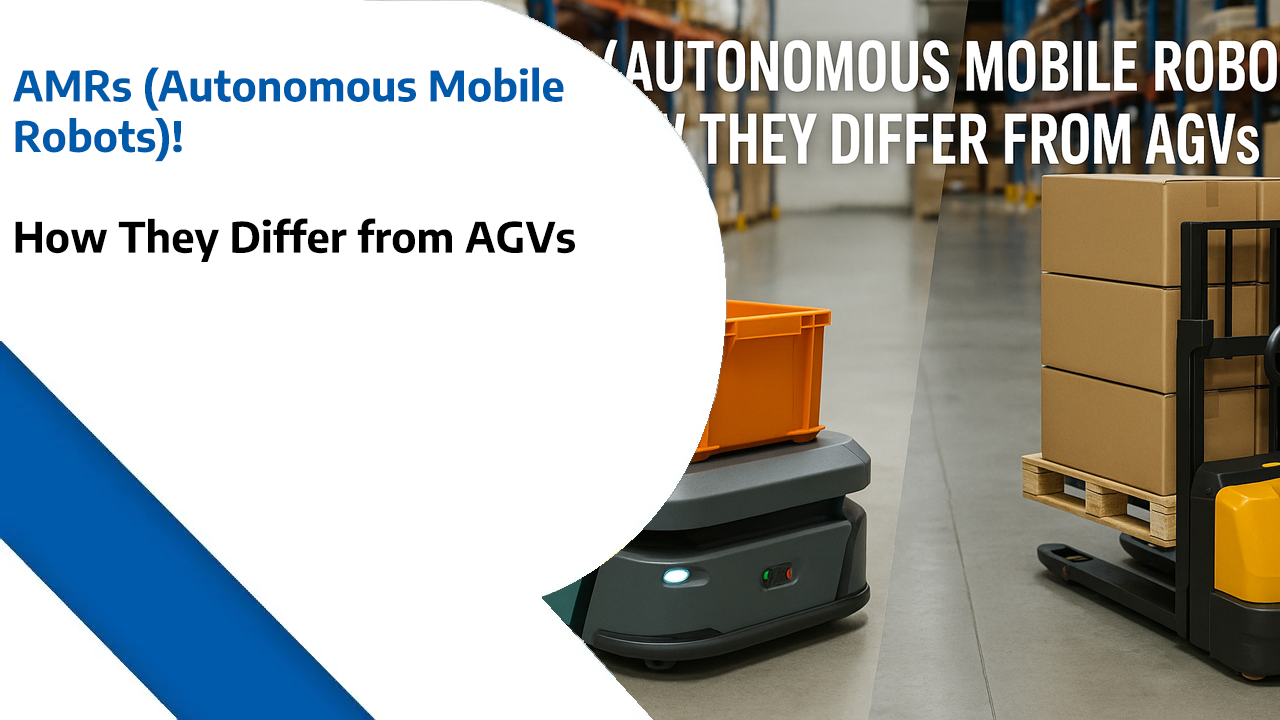
  • AMRs (Autonomous Mobile Robots): How They Differ from AGVs

    AMRs (Autonomous Mobile Robots): How They Differ from AGVs


    AMRs (Autonomous Mobile Robots): How They Differ from AGVs

    In the fast-evolving world of robotics, two technologies are often compared side by side: AMRs (Autonomous Mobile Robots) and AGVs (Automated Guided Vehicles). At first glance, they may appear similar—both move materials from point A to point B, both are widely used in manufacturing, logistics, and warehousing, and both promise efficiency gains. However, the differences between AMRs and AGVs are significant, and understanding those distinctions is critical for any business considering robotic integration.

    In this article, we’ll dive into the key differences between AMRs and AGVs, explain their respective strengths and limitations, and highlight why AMRs are increasingly becoming the technology of choice for forward-thinking companies. Finally, we’ll show you how to take the next step with robot consultancy and recruitment services to future-proof your operations.


    What Are AGVs (Automated Guided Vehicles)?

    AGVs are the veterans of mobile robotics, dating back several decades. They are vehicles that follow predefined paths using guidance systems such as magnetic tape, wires, or laser navigation reflectors.

    AGVs are excellent for structured, repetitive environments where processes rarely change. Think of:

    • Assembly lines

    • Large-scale warehouses with fixed layouts

    • Distribution centers with repetitive goods movement

    Their main advantages include:

    • Reliability: Once programmed, they do the same job consistently.

    • Safety: AGVs follow controlled paths, minimizing unpredictability.

    • Mature technology: Proven track record across industries.

    But their limitations are equally clear:

    • Inflexibility: Any change in layout or workflow requires reprogramming and physical infrastructure updates (e.g., new tape routes).

    • High upfront infrastructure costs: Installation of guiding systems increases project complexity.

    • Limited intelligence: AGVs can stop when encountering an obstacle, but they cannot intelligently navigate around it.


    What Are AMRs (Autonomous Mobile Robots)?

    AMRs are the next generation of mobile robotics, designed for flexibility and intelligence. Unlike AGVs, AMRs don’t rely on fixed paths. Instead, they use a combination of LIDAR, cameras, onboard sensors, and AI algorithms to dynamically understand and interact with their environment.

    AMRs are well-suited for:

    • Warehouses and logistics hubs with variable layouts

    • Manufacturing plants where processes evolve frequently

    • Hospitals and retail spaces requiring safe interaction with people

    Key advantages include:

    • Flexibility: No need for physical guides—AMRs can adapt to new layouts quickly.

    • Obstacle avoidance: AMRs intelligently navigate around people, pallets, and equipment.

    • Scalability: Easy to deploy more AMRs as business needs grow.

    • Data insights: Many AMRs collect and share operational data, helping optimize workflows.

    AMRs represent true autonomy, making them ideal for businesses aiming to stay agile in an unpredictable marketplace.


    AMRs vs. AGVs: A Quick Comparison

    Feature AGVs AMRs
    Navigation Fixed paths (tape, wire, reflectors) Dynamic mapping with sensors & AI
    Flexibility Low—requires reprogramming for changes High—adapts in real time
    Obstacle Handling Stops when blocked Navigates around obstacles
    Setup Costs High due to infrastructure Lower—no fixed tracks required
    Scalability Limited Easy to expand fleet
    Ideal Use Case Stable, repetitive workflows Dynamic, evolving environments

    Why AMRs Are Gaining Momentum

    The modern business environment is fast-moving and customer-driven. Companies no longer have the luxury of rigid, unchanging operations. AMRs allow businesses to adapt, optimize, and scale faster than AGVs.

    Some examples of AMR adoption:

    • E-commerce warehouses using AMRs for efficient picking and packing.

    • Hospitals deploying AMRs for safe delivery of medication and supplies.

    • Manufacturers adopting AMRs to keep pace with flexible production lines.

    In essence, AMRs are not just tools for automation—they are strategic assets that future-proof businesses.


    Do You Need AGVs or AMRs?

    The choice between AGVs and AMRs depends on your business goals:

    • If you operate in a highly structured environment with repetitive workflows, AGVs may still be the cost-effective choice.

    • If your operations demand flexibility, adaptability, and scalability, AMRs are the clear winner.

    But here’s the challenge: choosing the right solution requires expertise. With hundreds of vendors and technologies on the market, it’s easy to get lost in the hype.

    That’s where robot consultancy and recruitment services come in.


    How We Can Help You Succeed with Robotics

    At Robot Philosophy, we specialize in helping businesses navigate the complex world of robotics. Whether you’re exploring your first AMR deployment, upgrading from AGVs, or scaling across multiple facilities, our consultancy ensures you:

    • Select the right robotic solution for your specific needs.

    • Integrate robots seamlessly into your workflows.

    • Train and support your teams to maximize ROI.

    And with our robot recruitment service, we connect you with the talent and expertise you need to manage and grow your robotic operations.

    📞 Book a call today: 0845 528 0404
    📧 Email us: info@robophil.com


    Sponsors of This Article

    This article is proudly supported by leaders in the UK robotics industry:

    • Robot Center – Buy Robot, Robot Buy, Robot Consultancy, Robotics Consultancy.

    • Robots of London – Robot Hire, Robot Rental, Rent Robot, Hire Robot, Robot Events.

    • Robot Philosophy – Robot Consultancy AND Robot Recruitment, Robot Advice, Robot Insights, Robot Ideas. RoboPhil, also known as Philip English, is a leading Robot YouTuber, Robot Influencer, Robot Trainer, Robot Consultant, and Robot Streamer.


    Final Thoughts

    The difference between AMRs and AGVs boils down to flexibility and intelligence. While AGVs still play an important role in certain industries, AMRs are quickly becoming the go-to solution for businesses seeking agility and future-readiness.

    If you’re ready to explore how robots can transform your operations, now is the time to act. With our robot consulting and recruitment expertise, we’ll help you make the right decision, implement effectively, and stay ahead of the curve.

    📞 Call us today at 0845 528 0404 or
    📧 Email us at info@robophil.com to book a consultation.


    https://www.youtube.com/watch?v=VNCjzBEUN78


    https://www.youtube.com/shorts/1x-tPGfV91k

  • Tentacle Robot Revolutionises Offshore Inspections – Safer, Smarter & Sustainable Subsea Tech

    Tentacle Robot Revolutionises Offshore Inspections – Safer, Smarter & Sustainable Subsea Tech

    Tentacle Robot Revolutionises Offshore Inspections – Safer, Smarter & Sustainable Subsea Tech

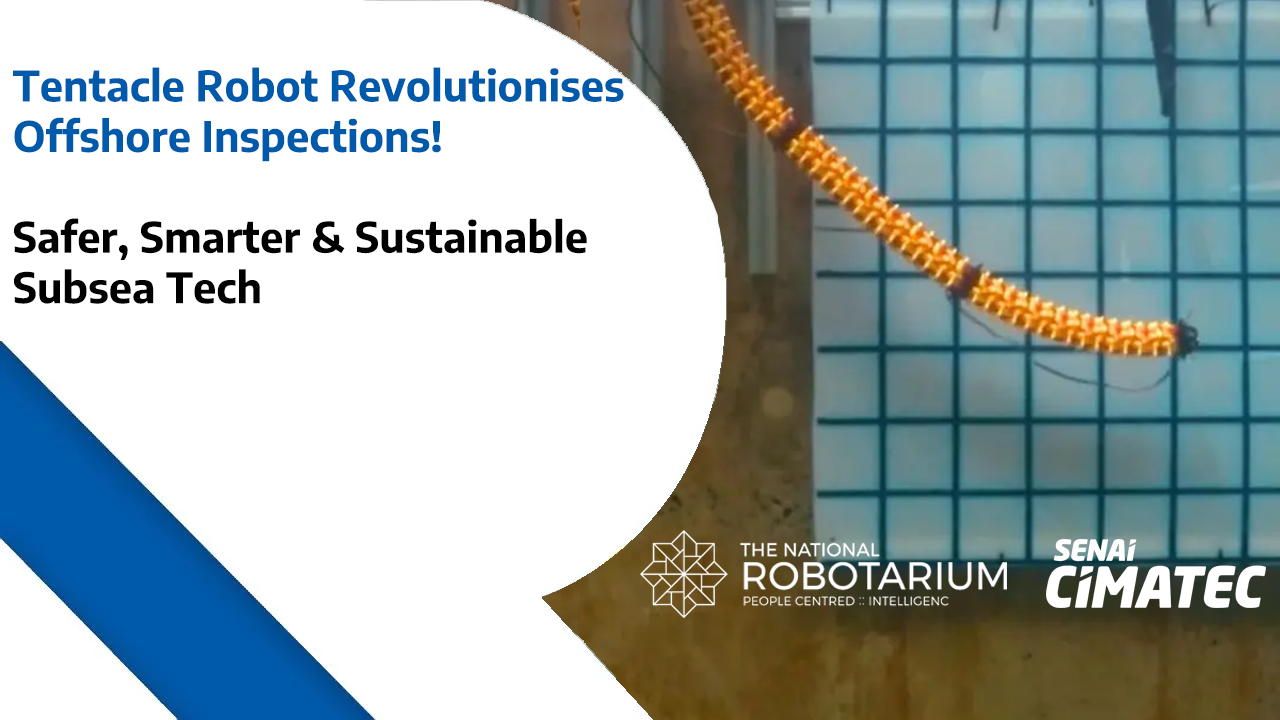
    Meet the ocean’s newest inspector: a tentacle-like robot developed by the UK’s National Robotarium and Brazil’s Senai Cimatec, designed to make offshore subsea inspections safer and more efficient.

    Unlike rigid robotic arms, this one-metre-long soft manipulator bends and conforms to delicate structures, reducing the risk of damage when working near complex subsea equipment.

    It moves using a flexible backbone with tendon-like cables, while sensors allow it to understand its shape and position even in turbulent water.

    In tests, the robot held steady against external forces of up to 300g and could correct its position within seconds when disturbed, showing impressive stability and precision.

    With subsea infrastructure at depths of nearly 3,000 metres requiring constant checks—and decommissioning costs projected to exceed $100 billion by 2030—this technology could extend the safe life of offshore assets while cutting costs and environmental impact.

    Rowanne Miller, project manager at the National Robotarium, said this innovation doesn’t just improve current tools, but fundamentally changes how underwater inspections can be carried out.

    By enabling smaller underwater vehicles to take on inspection work without large vessels or divers, the technology offers a safer, more sustainable, and more economical way to maintain vital offshore energy and marine infrastructure.


    And that’s your robot news update for today!
    If you’re curious about how robotics can transform your business, join me for the weekly Live Robot Optimise Workshop — it’s packed with insights, trends, and practical tips. Don’t forget to subscribe so you stay in the loop with all the latest updates.

    I’m RoboPhil from Robot Philosophy — thanks for watching, and I’ll see you next time!

    Join our Robot Optimise Industry (ROI) Workshop: https://robophil.com/


    Sponsors:-


    Robot Center: – https://robotcenter.co.uk/ – Buy Robot, Robot Buy, Robot consultancy, Robotics Consultancy, Inspection Robots, Security Robots, 


    Robots of London: – https://robotsoflondon.co.uk/ – Robot Hire, Robot Rental, Rent Robot, Hire Robot, Robot Events, Robotics Hire, Hire Robotics, Rent Robotics, Robotics Rent, for exhibitions, shows, Events, Robot hire in the UK, Robot hire in Europe


    Robot Philosophy: – https://robophil.com/ – Robot Consultancy, Robot Recruitment, Robot Advice, Robot Insights, Robot Ideas. RoboPhil, also known as Philip English, is a leading Robot YouTuber, Robot Influencer, Robot Trainer, Robot Consultant, and Robot Streamer, Robotics Streamer, Robotics YouTuber, Robotics Influencer, Robotics Consultant, Robotics Trainer  


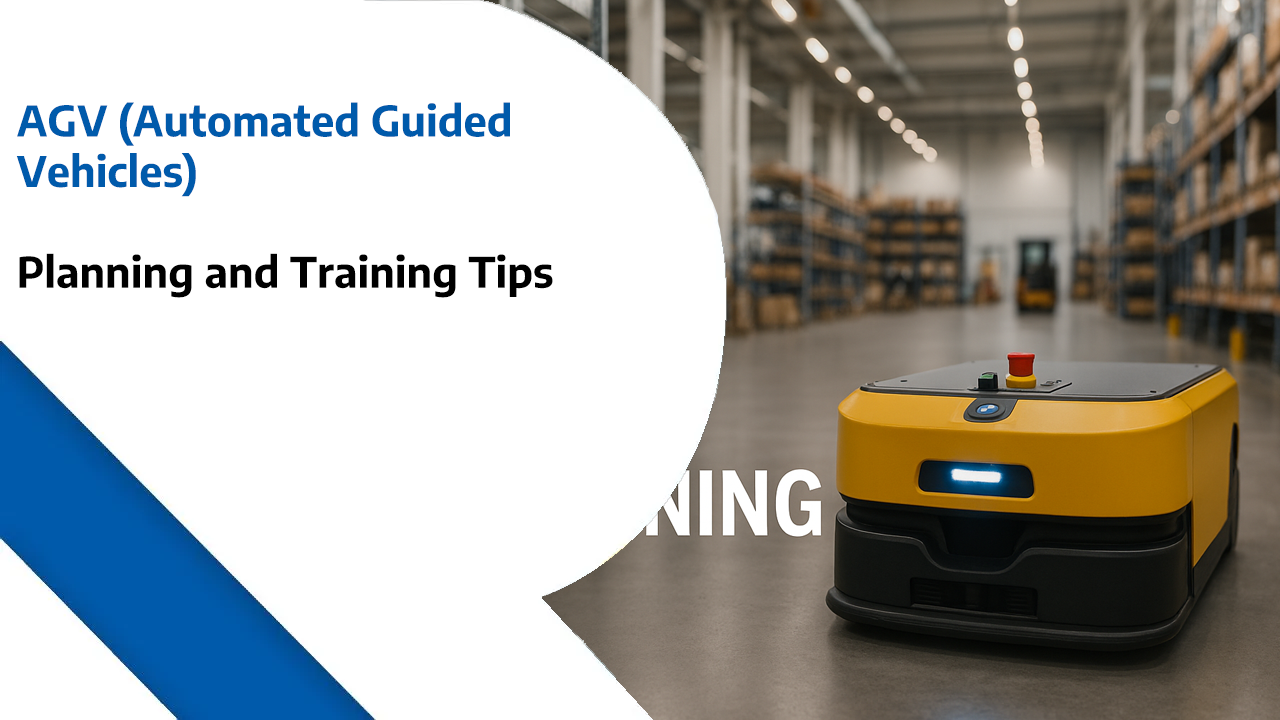
  • AGV (Automated Guided Vehicles) – Planning and Training Tips

    AGV (Automated Guided Vehicles) – Planning and Training Tips


    AGV (Automated Guided Vehicles) – Planning and Training Tips: A Comprehensive Guide to Implementation Success

    Sponsored by Robot CenterRobots of London, and Robot Philosophy

    The industrial landscape is rapidly transforming, and Automated Guided Vehicles (AGVs) are at the forefront of this revolution. These intelligent mobile robots are reshaping warehouse operations, manufacturing processes, and logistics chains across the globe. However, successful AGV implementation requires careful planning, strategic thinking, and comprehensive training programs. This guide will walk you through everything you need to know to make your AGV deployment a resounding success.

    Understanding AGVs: The Foundation of Modern Automation

    Automated Guided Vehicles represent a significant leap forward in industrial automation. These self-navigating robots can transport materials, products, and equipment throughout facilities with minimal human intervention. Unlike traditional material handling equipment, AGVs operate using sophisticated navigation systems, including laser guidance, magnetic strips, vision systems, and increasingly, advanced AI-powered navigation.

    The technology has evolved dramatically from simple wire-guided systems to today’s intelligent autonomous mobile robots (AMRs) that can adapt to changing environments in real-time. This evolution has opened up possibilities that were previously unimaginable, allowing businesses to achieve levels of efficiency, accuracy, and flexibility that traditional methods simply cannot match.

    The Strategic Planning Phase: Setting the Foundation for Success

    Comprehensive Needs Assessment

    Before diving into AGV implementation, conducting a thorough needs assessment is crucial. This process involves analyzing your current material handling processes, identifying bottlenecks, and determining specific areas where AGVs can provide the most value. Consider factors such as transport volumes, frequency of movements, payload requirements, and the physical characteristics of your facility.

    Start by mapping your current material flow patterns. Document every movement of goods, materials, and products throughout your facility. This mapping exercise will reveal inefficiencies and help identify the most impactful areas for AGV deployment. Pay particular attention to repetitive, high-frequency transport tasks that consume significant labor resources.

    Infrastructure Evaluation and Preparation

    Your facility’s infrastructure plays a critical role in AGV success. Evaluate floor conditions, ensuring surfaces are level and appropriate for AGV operation. Consider ceiling height requirements, especially for vehicles with lifting mechanisms. Assess lighting conditions, as many navigation systems rely on visual sensors that require adequate illumination.

    Wi-Fi coverage and network infrastructure are equally important. Modern AGVs rely on robust communication systems for fleet management, real-time monitoring, and coordination. Ensure your network can handle the additional traffic and provide reliable connectivity throughout the operational area.

    Technology Selection and Vendor Evaluation

    The AGV market offers numerous technologies and vendors, each with unique strengths and specializations. Navigation technologies range from traditional wire-guided systems to cutting-edge SLAM (Simultaneous Localization and Mapping) solutions. Consider your specific requirements: Do you need the flexibility of free-range navigation, or will a fixed-route system suffice?

    Evaluate vendors based on their track record, technical support capabilities, and long-term viability. Consider factors such as software capabilities, integration possibilities, scalability, and total cost of ownership. The cheapest option is rarely the best choice when considering long-term reliability and support requirements.

    Implementation Strategy: Turning Plans into Reality

    Phased Deployment Approach

    Successful AGV implementations typically follow a phased approach rather than attempting a complete overhaul overnight. Start with a pilot project in a controlled area where you can test the technology, refine processes, and build confidence among your team. This approach allows you to identify and resolve issues before scaling up the deployment.

    Choose your pilot area carefully. Select a location with clear benefits potential but manageable complexity. This might be a simple point-to-point transport task with predictable volumes and minimal interference from other operations. Success in this initial phase will build momentum and support for broader implementation.

    Integration Considerations

    AGVs don’t operate in isolation. They must integrate seamlessly with existing systems including Warehouse Management Systems (WMS), Enterprise Resource Planning (ERP) systems, and Manufacturing Execution Systems (MES). Plan these integrations carefully, considering data flow requirements, system compatibility, and potential impact on existing operations.

    Consider the human-robot interaction aspects as well. AGVs will share space with human workers, and this coexistence must be carefully managed. Implement clear protocols for human-AGV interactions, including right-of-way rules, emergency procedures, and communication methods.

    Comprehensive Training Programs: The Key to Operational Excellence

    Stakeholder-Specific Training Approaches

    Different stakeholders require different types of training. Operators need hands-on experience with day-to-day AGV operations, while maintenance teams require technical training on troubleshooting and repair procedures. Management teams need strategic training focused on performance monitoring and optimization opportunities.

    Develop customized training programs for each group. Operations staff training should focus on practical skills: how to interact with AGVs, what to do when problems occur, and how to optimize AGV utilization. Include safety training as a critical component, covering emergency procedures and proper behavior around operating AGVs.

    Hands-On Training Methodologies

    Theoretical knowledge alone is insufficient for successful AGV operations. Implement hands-on training programs that allow staff to interact with the systems in controlled environments. Start with simulation-based training where possible, allowing trainees to make mistakes without impacting operations.

    Create realistic training scenarios that reflect actual operating conditions. Include normal operations as well as exception handling. Train staff on what to do when AGVs encounter obstacles, when systems go offline, or when manual intervention is required. This comprehensive approach builds confidence and competence.

    Continuous Learning and Adaptation

    AGV technology continues to evolve rapidly. Establish ongoing training programs that keep your team current with new capabilities and best practices. Regular refresher training ensures that skills remain sharp and that new team members receive consistent, high-quality training.

    Consider establishing internal AGV champions who can serve as knowledge repositories and training resources. These individuals should receive advanced training and serve as liaisons between your organization and AGV vendors for technical support and optimization opportunities.

    Safety Protocols and Risk Management

    Comprehensive Safety Framework

    Safety must be the top priority in any AGV implementation. Develop comprehensive safety protocols that cover all aspects of AGV operations. This includes pedestrian safety, equipment protection, and emergency response procedures. AGVs should be equipped with appropriate safety systems including collision avoidance sensors, emergency stop capabilities, and audible/visual warning systems.

    Conduct thorough risk assessments for all areas where AGVs will operate. Identify potential hazards and implement appropriate mitigation measures. This might include physical barriers, warning systems, or procedural controls. Regular safety audits should be conducted to ensure protocols remain effective as operations evolve.

    Emergency Response Planning

    Despite best efforts, emergencies can occur. Develop comprehensive emergency response plans that cover various scenarios including AGV malfunctions, accidents, and system failures. Train all personnel on these procedures and conduct regular emergency drills to ensure readiness.

    Ensure that emergency procedures are clearly posted and easily accessible. Consider what happens if the AGV fleet management system fails or if individual vehicles encounter problems. Have clear escalation procedures and maintain emergency contact information for technical support.

    Performance Monitoring and Optimization

    Key Performance Indicators (KPIs)

    Successful AGV operations require continuous monitoring and optimization. Establish clear KPIs that align with your business objectives. These might include throughput metrics, utilization rates, error frequencies, and cost-per-operation measures. Regular performance reviews help identify optimization opportunities and justify continued investment.

    Implement real-time monitoring systems that provide visibility into AGV performance. Modern fleet management systems offer comprehensive dashboards that track vehicle status, task completion rates, and system performance. Use this data to identify trends and proactively address issues before they impact operations.

    Continuous Improvement Programs

    AGV operations should continuously improve over time. Establish regular review processes that examine performance data, gather feedback from operators, and identify optimization opportunities. This might involve route optimization, task prioritization adjustments, or workflow modifications.

    Encourage input from all stakeholders. Operators often have valuable insights into operational inefficiencies or improvement opportunities. Create channels for this feedback and ensure that good suggestions are implemented and recognized.

    Common Pitfalls and How to Avoid Them

    Insufficient Planning and Preparation

    One of the most common causes of AGV implementation failure is insufficient upfront planning. Organizations sometimes rush into implementation without adequately assessing their needs, preparing their infrastructure, or planning for integration challenges. Take the time necessary for proper planning – it will pay dividends in the long run.

    Inadequate Training Programs

    Another frequent pitfall is inadequate training. Organizations sometimes underestimate the training required for successful AGV operations. Comprehensive training is essential not just for operators but for all stakeholders who will interact with the system. Invest in quality training programs and allow sufficient time for skill development.

    Unrealistic Expectations

    AGVs are powerful tools, but they’re not magic solutions. Set realistic expectations about what AGVs can and cannot accomplish. They excel at repetitive, predictable tasks but may struggle in highly dynamic environments with frequent exceptions. Understand these limitations and plan accordingly.

    Future Trends and Considerations

    Technological Evolution

    AGV technology continues to evolve rapidly. Artificial intelligence and machine learning are enabling more sophisticated decision-making capabilities. 5G connectivity is enabling more responsive fleet management. Consider how these trends might impact your operations and plan for future upgrades.

    Integration with Broader Automation Initiatives

    AGVs are often part of broader automation initiatives that might include robotic process automation, automated storage and retrieval systems, and IoT sensors. Consider how your AGV implementation fits into your overall automation strategy and plan for future integrations.

    Making the Business Case for AGVs

    Return on Investment Calculations

    Developing a compelling business case requires careful ROI analysis. Consider both direct benefits (labor cost reduction, increased throughput) and indirect benefits (improved safety, reduced errors, enhanced flexibility). Factor in implementation costs, ongoing maintenance, and training expenses to develop realistic payback projections.

    Risk Mitigation Benefits

    AGVs can provide significant risk mitigation benefits that are sometimes overlooked in ROI calculations. These might include reduced workplace injuries, lower product damage rates, and improved compliance with safety regulations. Quantify these benefits where possible to strengthen your business case.

    Expert Consulting and Support Services

    Implementing AGVs successfully requires specialized expertise that many organizations lack internally. Professional consulting services can provide valuable guidance throughout the planning, implementation, and optimization phases. Experienced consultants bring knowledge of best practices, common pitfalls, and proven methodologies that can significantly improve your chances of success.

    Ready to transform your operations with AGV technology? Our expert consulting team at Robot Philosophy has extensive experience helping organizations successfully implement AGV solutions. From initial planning through ongoing optimization, we provide the expertise you need to maximize your investment.

    Contact us today to discuss your AGV implementation needs:

    Our comprehensive consulting services include needs assessment, vendor selection, implementation planning, training program development, and ongoing optimization support. We also offer specialized recruitment services to help you find qualified robotics professionals for your team.

    Conclusion

    AGV implementation represents a significant opportunity to transform your operations, but success requires careful planning, comprehensive training, and ongoing optimization. By following the guidelines outlined in this article, you can maximize your chances of achieving a successful implementation that delivers lasting value to your organization.

    Remember that AGV implementation is a journey, not a destination. Continuous improvement, ongoing training, and adaptation to new technologies will ensure that your AGV investment continues to deliver value over time. With proper planning and expert guidance, AGVs can become a cornerstone of your operational excellence strategy.


    This article is proudly sponsored by:

    Robot Center – Your premier destination for robot procurement, robotics consultancy, and comprehensive automation solutions. Whether you’re looking to buy robots or need expert robotics consultancy, Robot Center provides the expertise and products you need.

    Robots of London – Leading provider of robot hire and rental services. From robot events to temporary automation solutions, Robots of London offers flexible robot rental options to meet your short-term and event-based needs.

    Robot Philosophy – Expert robot consultancy and recruitment services led by Philip English (RoboPhil), a renowned Robot YouTuber, Influencer, Trainer, and Consultant. Providing cutting-edge robot advice, insights, and ideas to help organizations navigate the robotics landscape successfully.


    https://www.youtube.com/watch?v=IvTCVXsgGb0


    https://www.youtube.com/shorts/4vqniEWegic

  • Google DeepMind’s RoboBallet – How AI Teaches Robots to Work Together Without Crashing

    Google DeepMind’s RoboBallet – How AI Teaches Robots to Work Together Without Crashing

    Google DeepMind’s RoboBallet – How AI Teaches Robots to Work Together Without Crashing

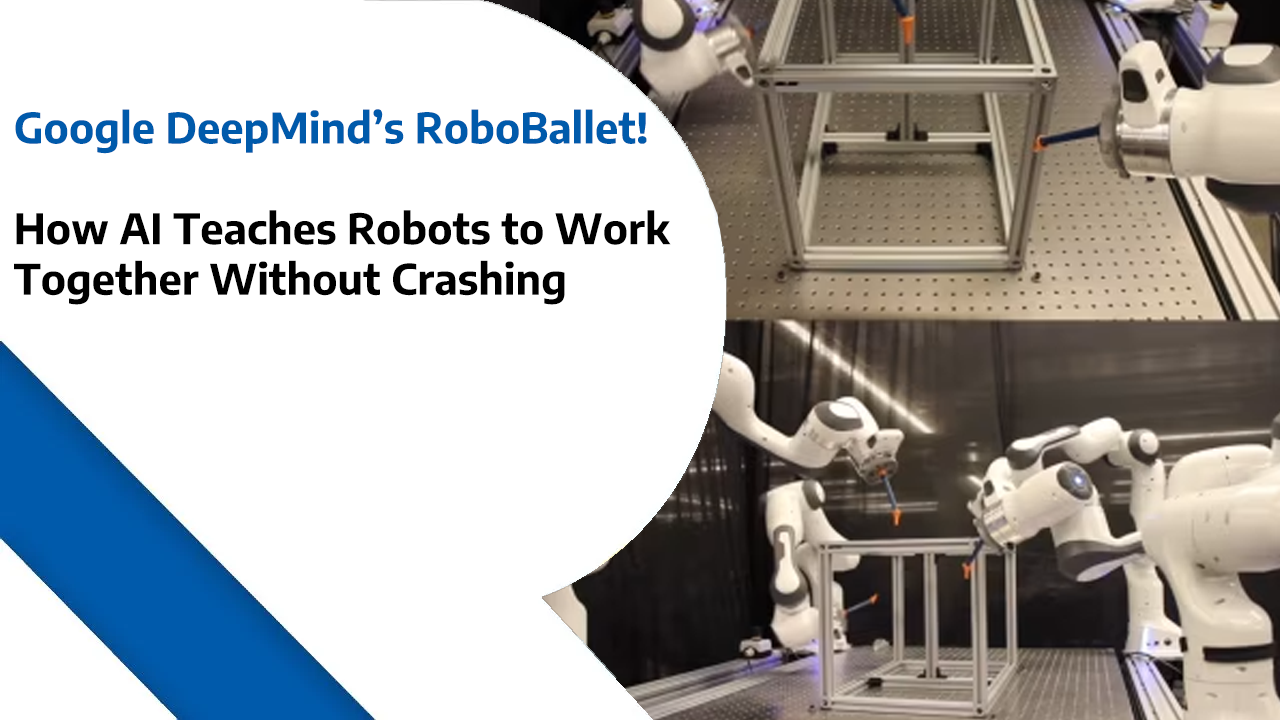
    Picture a group of robots working side by side, moving smoothly without bumping into each other. No crashes, no awkward pauses—just well-coordinated teamwork. That’s the idea behind RoboBallet.

    Programming a single industrial robot is already complex—relying on teach pendants, offline tools, and plenty of trial and error. Now try synchronizing several robots in one shared space. With over 4.3 million industrial robots worldwide, the time and effort required for programming is a real barrier to scaling automation.

    Researchers from Google DeepMind Robotics, Intrinsic, and UCL have developed RoboBallet, an AI system that uses graph neural networks and reinforcement learning to generate collision-free plans for multiple robots. Instead of painstaking coding, it just needs CAD files and a task list.

    In tests, the system coordinated up to eight robots within seconds, producing plans that were about 25% more efficient than traditional methods. And interestingly, as the number of robots increased, task execution times actually dropped by around 60%.

    The name comes from its choreography-like approach. The AI finds harmony between robots—timing, space, and flow—turning what used to be a complex scheduling puzzle into a smooth routine.

    Looking forward, this kind of planning could let factories adapt on the fly to design changes or unexpected events, reducing downtime and increasing flexibility.

    RoboBallet shows that when robots learn to work together gracefully, automation becomes faster, safer, and far easier to scale.


    And that’s your robot news update for today!
    If you’re curious about how robotics can transform your business, join me for the weekly Live Robot Optimise Workshop — it’s packed with insights, trends, and practical tips. Don’t forget to subscribe so you stay in the loop with all the latest updates.

    I’m RoboPhil from Robot Philosophy — thanks for watching, and I’ll see you next time!


    Join our Robot Optimise Industry (ROI) Workshop: https://robophil.com/


    Sponsors:-


    Robot Center: – https://robotcenter.co.uk/ – Buy Robot, Robot Buy, Robot consultancy, Robotics Consultancy, Inspection Robots, Security Robots, 


    Robots of London: – https://robotsoflondon.co.uk/ – Robot Hire, Robot Rental, Rent Robot, Hire Robot, Robot Events, Robotics Hire, Hire Robotics, Rent Robotics, Robotics Rent, for exhibitions, shows, Events, Robot hire in the UK, Robot hire in Europe


    Robot Philosophy: – https://robophil.com/ – Robot Consultancy, Robot Recruitment, Robot Advice, Robot Insights, Robot Ideas. RoboPhil, also known as Philip English, is a leading Robot YouTuber, Robot Influencer, Robot Trainer, Robot Consultant, and Robot Streamer, Robotics Streamer, Robotics YouTuber, Robotics Influencer, Robotics Consultant, Robotics Trainer  

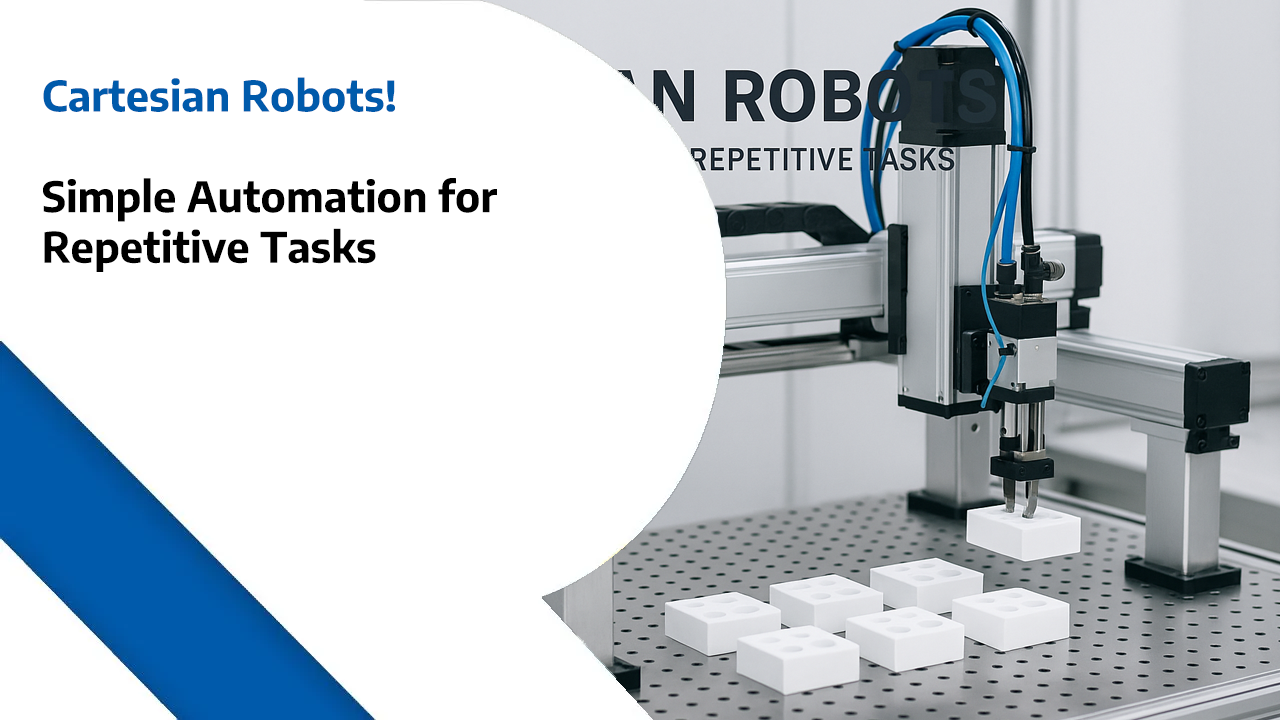
  • Cartesian Robots – Simple Automation for Repetitive Tasks

    Cartesian Robots – Simple Automation for Repetitive Tasks

    Cartesian Robots – Simple Automation for Repetitive Tasks

    Introduction

    In today’s rapidly advancing world of automation, businesses of all sizes are exploring the role of robotics in their operations. While humanoid robots and AI-driven systems grab the headlines, many of the most practical and cost-effective automation solutions are far simpler. Among these, Cartesian robots—sometimes called gantry robots or linear robots—stand out as the unsung heroes of industrial and commercial automation.

    These robots excel at handling repetitive, structured, and precise tasks, making them invaluable across industries such as manufacturing, packaging, electronics, logistics, and even laboratory research.

    This article dives deep into Cartesian robots: what they are, how they work, their advantages, and why they are an ideal entry point into automation for SMEs and large enterprises alike. We’ll also explore how your business can unlock their potential through robot consulting services and robot recruitment expertise provided by Robot Philosophy.

    📞 To book a call and discover how Cartesian robots could streamline your processes, contact info@robophil.com or call 0845 528 0404.


    What Are Cartesian Robots?

    A Cartesian robot is a robotic system that moves along three orthogonal axes—X, Y, and Z—following the Cartesian coordinate system. Unlike articulated robots with multiple rotary joints, Cartesian robots move in straight lines along linear actuators, allowing them to perform tasks with high precision and repeatability.

    These robots often look like a simple frame or gantry with sliding components and are typically mounted over or around the workspace. They are not flashy, but they are highly reliable workhorses that can carry out repetitive motions for long periods with minimal error.

    Key Features of Cartesian Robots

    • Linear motion: Movement along X, Y, and Z axes.

    • Simple programming: Easy to set up and control compared to complex articulated robots.

    • High precision: Capable of repeatability within fractions of a millimetre.

    • Scalability: Can be built small for delicate tasks or large to span entire production lines.

    • Cost-effectiveness: Generally cheaper to purchase, install, and maintain than articulated or SCARA robots.


    How Cartesian Robots Work

    At their core, Cartesian robots rely on three key components:

    1. Linear actuators (ball screws, belts, or rack-and-pinion drives).

    2. Motors (stepper or servo motors to control movement).

    3. Controllers (software that defines the path, speed, and tasks).

    When integrated into a production environment, a Cartesian robot can:

    • Pick up items from a conveyor belt.

    • Place them into packaging.

    • Stack boxes onto pallets.

    • Perform repetitive assembly steps.

    By repeating these motions thousands or even millions of times with minimal variation, Cartesian robots deliver unmatched consistency and productivity.


    Why Cartesian Robots?

    With so many types of industrial robots—SCARA, articulated, delta, collaborative—why should businesses pay attention to Cartesian robots?

    The answer lies in simplicity and efficiency.

    1. Cost-Effective Automation

    Cartesian robots are generally less expensive to purchase and maintain compared to articulated robots. For businesses dipping their toes into automation, they represent an affordable entry point without sacrificing reliability.

    2. Easy to Integrate

    Their straightforward design makes Cartesian robots easier to install and integrate into existing production lines. They often require less customization and shorter lead times.

    3. Reliability in Repetition

    If your task is repetitive and predictable—such as pick-and-place, packaging, or inspection—Cartesian robots are unmatched. They’re designed for continuous duty cycles without fatigue.

    4. Flexibility in Design

    Cartesian robots can be custom-built to fit specific dimensions or work envelopes. Whether you need a small unit for laboratory pipetting or a large gantry spanning several metres, Cartesian robots can be scaled accordingly.

    5. Low Maintenance

    Because of their simple design and linear movement, maintenance is often limited to lubrication and occasional component replacements.


    Use Cases for Cartesian Robots

    Cartesian robots are everywhere—though they often go unnoticed compared to more humanoid or “sexy” robots. Let’s look at their most common applications:

    1. Pick and Place

    From electronics to food products, Cartesian robots excel in picking up components and placing them into packaging, trays, or onto conveyors.

    2. Assembly

    They can insert parts, fasten screws, or perform repetitive assembly tasks with unwavering accuracy.

    3. Palletizing

    Stacking boxes onto pallets is a dull and repetitive task that Cartesian robots handle effortlessly.

    4. Packaging

    Filling containers, sealing, and moving products into boxes can all be automated.

    5. Machine Tending

    Cartesian robots can load and unload CNC machines, injection moulders, or other equipment, reducing operator fatigue.

    6. Inspection and Testing

    With integrated cameras or sensors, Cartesian robots can perform quality inspections, ensuring every product meets exact specifications.

    7. Laboratory Automation

    In life sciences, Cartesian robots are used for pipetting, sample handling, and repetitive lab processes.


    Cartesian Robots for SMEs

    Many small and medium-sized enterprises (SMEs) wrongly assume robots are “too advanced” or “too expensive.” Cartesian robots prove otherwise.

    Because of their cost-effectiveness, simplicity, and scalability, they are perfectly suited for SMEs that want to:

    • Increase production without hiring more staff.

    • Reduce errors in repetitive tasks.

    • Improve consistency and quality.

    • Free human workers to focus on higher-value tasks.

    This makes Cartesian robots one of the smartest first steps into robotics for growing businesses.


    Case Example: From Manual Packaging to Robotic Precision

    Imagine a small food production company manually packaging hundreds of items per hour. Human workers get tired, errors creep in, and productivity fluctuates.

    By installing a Cartesian pick-and-place robot, the company:

    • Increased output by 40%.

    • Reduced packaging errors to near zero.

    • Freed up staff to handle logistics and quality checks.

    Within 12 months, the robot paid for itself.


    Challenges of Cartesian Robots

    While Cartesian robots are powerful, they’re not a one-size-fits-all solution.

    1. Limited Dexterity

    They can’t handle complex motions like articulated robots. If your task requires rotation, twisting, or fine manipulation, other robot types may be better.

    2. Space Requirements

    Large Cartesian systems can require significant floor space.

    3. Task Specialization

    They are best for structured, repetitive tasks, not jobs that require adaptability or decision-making.

    This is where robot consultancy services become critical—helping businesses evaluate whether Cartesian robots are the right fit.


    Choosing the Right Robot

    The robotics market is vast, with hundreds of models and suppliers. Choosing the wrong robot can be an expensive mistake.

    That’s where Robot Philosophy comes in.

    Our consulting service helps you:

    • Audit your processes to identify where robots add value.

    • Compare solutions (Cartesian, SCARA, collaborative, etc.).

    • Select the right model for your budget and goals.

    • Support integration, training, and scaling.

    📞 To explore whether Cartesian robots—or another solution—are right for your business, contact us at info@robophil.com or call 0845 528 0404.


    The Role of Robot Recruitment

    As robots become central to operations, companies need talent to manage them. From robotics engineers to maintenance technicians, the right people make the difference between smooth automation and frustrating downtime.

    Robot Philosophy also provides robot recruitment services, connecting you with:

    • Skilled robotics engineers.

    • Automation technicians.

    • Integration specialists.

    • Data analysts for robotics.

    We don’t just help you choose the right robot—we help you build the right team around it.


    Sponsors

    This article is proudly supported by:

    • Robot CenterBuy Robot, Robot Buy, Robot Consultancy, Robotics Consultancy.

    • Robots of LondonRobot Hire, Robot Rental, Rent Robot, Hire Robot, Robot Events.

    • Robot PhilosophyRobot Consultancy AND Robot Recruitment, Robot Advice, Robot Insights, Robot Ideas.

    RoboPhil, also known as Philip English, is a leading Robot YouTuber, Influencer, Trainer, Consultant, and Streamer, providing expert guidance and insights into the robotics industry.


    Future of Cartesian Robots

    Though not the newest technology, Cartesian robots are evolving. With improvements in sensors, AI integration, and modular design, they are becoming:

    • Smarter (with vision-based systems).

    • Faster (thanks to lighter materials and better motors).

    • Easier to deploy (through plug-and-play modules).

    In the coming years, Cartesian robots will remain the go-to solution for simple, repetitive automation, especially as SMEs seek affordable entry points into robotics.


    Conclusion

    Cartesian robots may not be glamorous, but they are practical, reliable, and cost-effective. For businesses dealing with repetitive tasks, they provide a clear path to increased productivity, reduced costs, and improved quality.

    The question is no longer “Should we automate?” but “Where do we start?”

    That’s where Robot Philosophy’s consulting and recruitment services come in—guiding you every step of the way, from robot selection to team building.

    📧 Email us at info@robophil.com
    📞 Call us on 0845 528 0404
    🌐 Explore Robot Philosophy

    Whether you’re a small business looking for your first automation solution or a large enterprise seeking to scale, Cartesian robots may be your simplest, smartest step forward.


    https://www.youtube.com/watch?v=eiVYu2l3OqQ


    https://www.youtube.com/shorts/H9vQ0s7AewQ


  • China’s Robot Wolves & Nuclear Arsenal – Inside the Military Parade of the Future

    China’s Robot Wolves & Nuclear Arsenal – Inside the Military Parade of the Future

    China’s Robot Wolves & Nuclear Arsenal – Inside the Military Parade of the Future

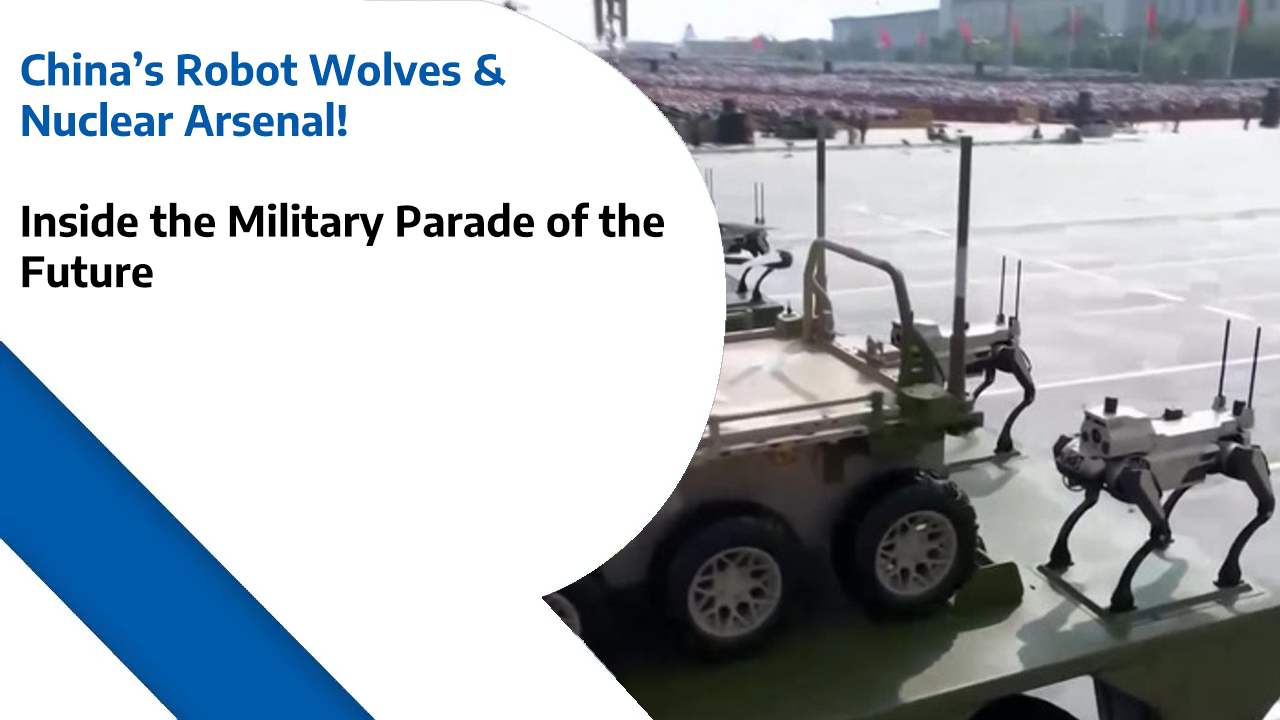
    At China’s huge military parade, missiles rolled, jets roared… and yes, robot wolves took a stroll through Tiananmen Square. Because nothing says ‘future warfare’ like a robotic pack animal with a rifle on its back. 

    These robot wolves are upgraded robo-dogs—quadruped machines that can march with troops, carry weapons, and climb rough terrain. Think man’s best friend—only with more horsepower and less shedding. 

    They’ve been tested in reconnaissance, precision strikes, and even mine-sweeping, and in CCTV footage they looked almost too well behaved… imagine walking six of those through your local park. 

    The message is clear: China wants to look old-school strong and new-tech sharp at the same time. Robot wolves reduce risk to soldiers, adapt to harsh landscapes, and scare the life out of enemies who suddenly see a mechanical pack running at them. Cute? Not really. Effective? Possibly. 

    Battlefield ready? Still up for debate. Of course, the wolves were just one act. Beijing also rolled out its full nuclear triad—land, sea, and air-based missiles—plus hypersonic weapons, cyber troops, underwater drones, and even a laser cannon. Basically, old tanks met Star Wars tech. So while most armies rely on boots on the ground, China’s bringing paws of steel.


    And that’s your robot news update for today!
    If you’re curious about how robotics can transform your business, join me for the weekly Live Robot Optimise Workshop — it’s packed with insights, trends, and practical tips. Don’t forget to subscribe so you stay in the loop with all the latest updates.

    I’m RoboPhil from Robot Philosophy — thanks for watching, and I’ll see you next time!


    Join our Robot Optimise Industry (ROI) Workshop: https://robophil.com/


    Sponsors:-


    Robot Center: – https://robotcenter.co.uk/ – Buy Robot, Robot Buy, Robot consultancy, Robotics Consultancy, Inspection Robots, Security Robots, 


    Robots of London: – https://robotsoflondon.co.uk/ – Robot Hire, Robot Rental, Rent Robot, Hire Robot, Robot Events, Robotics Hire, Hire Robotics, Rent Robotics, Robotics Rent, for exhibitions, shows, Events, Robot hire in the UK, Robot hire in Europe


    Robot Philosophy: – https://robophil.com/ – Robot Consultancy, Robot Recruitment, Robot Advice, Robot Insights, Robot Ideas. RoboPhil, also known as Philip English, is a leading Robot YouTuber, Robot Influencer, Robot Trainer, Robot Consultant, and Robot Streamer, Robotics Streamer, Robotics YouTuber, Robotics Influencer, Robotics Consultant, Robotics Trainer