Tag: Robot Consultancy

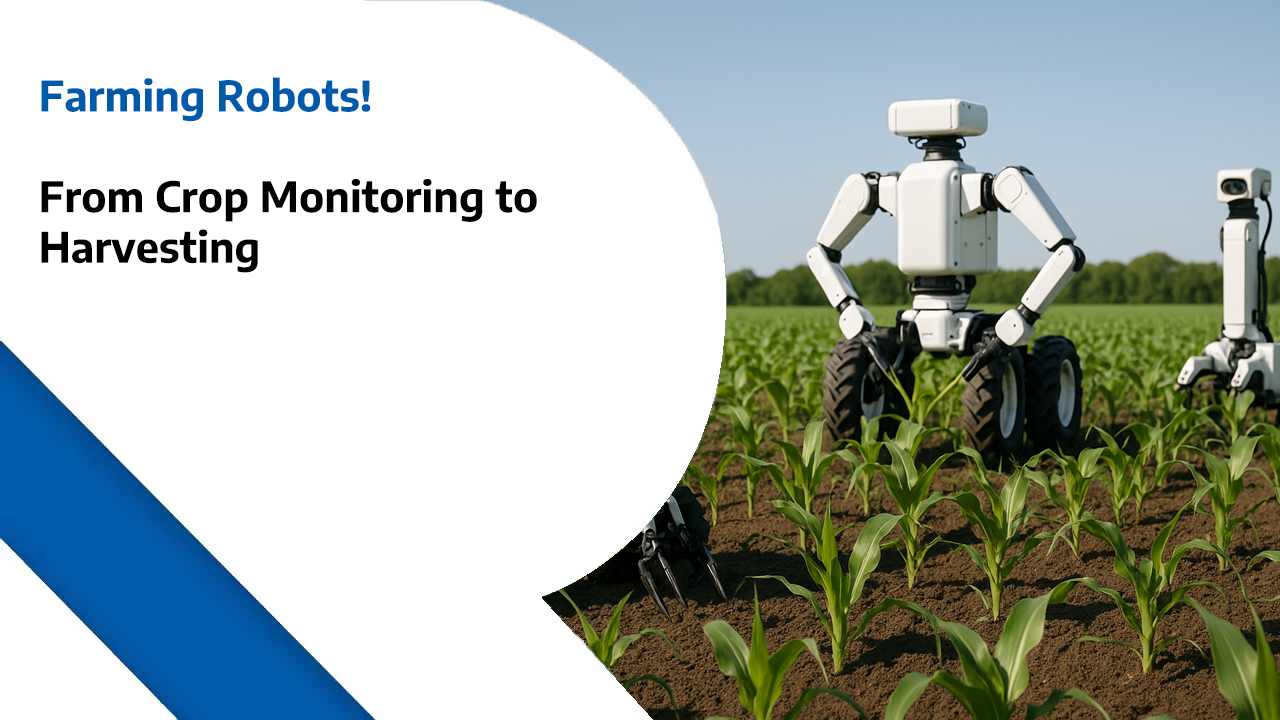
  • Farming Robots – From Crop Monitoring to Harvesting

    Farming Robots – From Crop Monitoring to Harvesting

    Farming Robots: From Crop Monitoring to Harvesting

    In recent years, the agricultural sector has begun a transformation: robots are no longer sci-fi curiosities but real, practical tools helping farmers monitor crops, optimize inputs, and harvest produce. The shift toward automation is driven by labor shortages, rising costs, climate pressures, and demand for more sustainable, data-driven farming. But adoption comes with challenges: which robots to deploy, how to integrate them with existing workflows, and how to recruit the right talent to operate and maintain them.

    In this article, we’ll explore:

    • The spectrum of farming robots from crop monitoring to harvesting

    • Key enabling technologies and real-world examples

    • Benefits, limitations, and adoption challenges

    • How your farm can get started

    • How Robot Philosophy / RoboPhil (robophil.com) can help — from consulting to recruitment

    • A call to action to book a call with us

    We’ll also acknowledge our sponsors: Robot Center (robotcenter.co.uk), Robots of London (robotsoflondon.co.uk), and Robot Philosophy / RoboPhil.


    1. The Robotics Spectrum in Farming

    Robots in agriculture perform a wide range of tasks. At one end are “scouting” or monitoring robots, drones, or autonomous rovers; at the other, harvesting robots doing the hands-on work of picking fruit, root crops or vegetables. In between lie tasks like planting, weeding, spraying, fertilizing, and soil sensing. Let’s look at these in turn.

    1.1 Crop Monitoring & Scouting Robots

    The most widespread early use of robotics in farming is monitoring: capturing data about plant health, soil moisture, pest infestments, disease onset, nutrient stress, and so on.

    • Drones / UAVs: Equipped with multispectral, hyperspectral, or thermal sensors, drones fly above fields to scan for stress signatures invisible to the naked eye. These capture NDVI (Normalized Difference Vegetation Index), detect water stress, disease hotspots, or pest damage. Wikipedia+2Fresh Consulting+2

    • Ground rovers / mobile robots: Wheeled or tracked robots can travel through crop rows closer to the plants. They carry cameras, LiDAR, soil sensors, and environmental sensors. They can detect plant height, leaf color, disease lesions, and more. arXiv+3howtorobot.com+3Fresh Consulting+3

    • Autonomous tractors & sensor platforms: Modified tractors or sensor platforms can carry payloads of sensors, making passes over fields to collect continuous spatial data.

    • Fixed and semi-fixed sensor networks: While not strictly robots, many farms integrate ground sensors (soil moisture, nutrient probes) and connected IoT systems that feed data to the same analytics pipelines.

    By collecting rich datasets, farms can move from blanket treatments (e.g. applying fertilizer or pesticide uniformly) to precision interventions: treat only where needed, in the right dose, at the right time.

    1.2 Planting, Seeding & Soil Preparation

    Robotic systems are increasingly employed in planting and seeding tasks, especially where precision is critical:

    • Seeders and planters can be automated with GPS guidance and sensors to place seeds at exact intervals and depths.

    • Some robots combine seeding with soil sensing (e.g. measuring moisture or compaction before placing the seed) to decide optimal locations.

    • In projects like the Hands Free Hectare (UK), an autonomous tractor was adapted to plant and roll a hectare of barley autonomously, culminating in a full cropping cycle with zero human operation in the field. Wikipedia

    1.3 Weed Control, Pest Management & Fertilization

    One of the biggest opportunities for robotics is “smart weeding” and targeted applications of inputs:

    • Weeding robots: These use vision to distinguish weeds from crops and then mechanically remove weeds (cut, pull, or burn) or apply spot herbicide only where required. This reduces chemical usage and cost. For example, FarmWise provides automated mechanical weeders under a service model. Wikipedia+2Fresh Consulting+2

    • Robotic spraying / spot-spraying: Robots can apply fungicides, pesticides or nutrients precisely, reducing drift, overuse, and environmental impact.

    • Smart fertilization: Robots can analyze soil nutrient levels and only deposit fertilizer where needed, in optimal amounts.

    • Pest and disease robots: Some systems detect pest infestations or early disease onset and apply micro-interventions (e.g. micro-spray, LED light, or biocontrol).

    1.4 Harvesting Robots

    Harvesting is one of the most complex tasks — requiring gentle handling, recognition of ripeness, and adaptability to variation in plant geometry. Yet this is where robotics is making strides.

    • Robotic harvesting systems often combine vision systems, AI/ML models, and robotic arms or grippers. They locate individual fruits or produce, estimate orientation, and execute pick operations. arXiv+4meegle.com+4howtorobot.com+4

    • For example, a recent robot called AHPPEBot (for tomato harvesting) achieved a harvest success rate of ~86.7% in greenhouse trials using phenotyping and pose estimation. arXiv

    • In orchards or vineyards, robots use geometry-aware grasping estimation to deal with occlusions and branch complexity. arXiv

    • Other robots are built for root crops or more robust produce — for instance, systems built to dig and lift root vegetables.

    • Integration is key: harvested produce must be sorted, conveyed, cleaned, and packaged — robots are integrating with those downstream systems.


    2. Enabling Technologies & Technical Foundations

    What makes farming robots possible? Let’s review the core technologies that underpin these systems.

    2.1 Sensing, Vision & Perception

    • RGB / multispectral / hyperspectral cameras: Provide the “eyes” for robots to detect plant health, stress, diseases, pests, and ripeness. For example, Swiss company Gamaya uses hyperspectral drone cameras to “see” plant signals beyond what human eyes detect. Wikipedia

    • LiDAR / depth sensors / stereo vision: Enable 3D mapping of plants and obstacles, enabling path planning and collision avoidance.

    • Proximity / touch sensors: For robotic arms or end effectors to gently contact produce.

    • Environmental sensors: Soil moisture probes, temperature/humidity, nutrient sensors.

    • GPS / RTK / precision localization: Critical for navigation, ensuring robots know where they are in the field with centimeter accuracy.

    • IMUs, wheel encoders, odometry: To support localization and control in real time.

    2.2 Navigation & Control

    • Path planning algorithms: To plan efficient routes through crop rows, minimize overlap, and avoid damaging plants.

    • Row-following / visual servoing: Robots can follow crop rows using camera input without full maps or GPS. E.g. works that exploit crop-row structure to guide navigation using only onboard cameras. arXiv

    • Motion control & actuation: Controlling robot speed, steering, wheel traction especially over uneven terrain.

    • Manipulation / grasp planning: For harvesting robots, determining how to approach, grasp, and detach produce without damaging it — often under occlusion or variable geometry. arXiv+1

    • Machine learning / AI / computer vision models: To classify crops vs weeds, detect ripeness, estimate pose, or classify disease.

    • Sensor fusion & decision logic: Combining data streams (vision, LiDAR, soil) to make real-time decisions about where to act.

    2.3 Connectivity, Data & Analytics

    • Edge computing: Robots must often process data onboard (especially vision) due to latency or connectivity constraints.

    • Cloud & IoT integration: Aggregating data from fleets of robots, running large-scale analytics, generating dashboards, and aggregating historical trends.

    • Agronomic models & decision support systems: To convert sensor data into actionable recommendations (e.g. “spray zone here,” “fertilize patch there”).

    • APIs & integration with farm management software (FMS / ERP): Ensuring that the robot data feeds into the farm’s broader planning and logistics systems.

    2.4 Power, Reliability & Ruggedization

    • Many agricultural robots are battery-powered and require energy-efficient design. Solar assist is being explored.

    • Systems must be weather-resistant, robust to dust, moisture, temperature, and mechanical shocks.

    • Maintenance and modular design are key for uptime, serviceability, and cost control.


    3. Benefits, Challenges & Adoption Barriers

    3.1 Benefits

    • Increased productivity & efficiency: Robots don’t tire, can run overnight, and provide consistent performance. Fresh Consulting+1

    • Labor scarcity mitigation: Many agricultural regions suffer chronic labor shortages — robots can fill in critical gaps. The Robot Report+1

    • Precision & reduced input usage: By targeting only zones that need treatment, robots reduce fertilizer, pesticide, water use — lowering costs and environmental impact. Fresh Consulting+2The Robot Report+2

    • Better crop yield & quality: Continuous monitoring and early detection of disease or stress allow preemptive action to save yield or enhance quality. Fresh Consulting+1

    • Sustainability & environmental stewardship: Reduced chemical runoff, lower energy usage (especially with electric robots), and site-specific management support sustainable farming goals. Fresh Consulting+2Farmonaut®+2

    • Data-driven decision-making: Over time, farms gain predictive insights and can optimize planting, rotations, and resource allocation.

    3.2 Challenges & Risks

    • High capital cost and ROI uncertainty: The up-front cost of robotic systems is still high, and many farmers hesitate on payback timelines.

    • Technology maturity & robustness: Edge cases — occlusions, mixed varieties, weather, unexpected obstacles — can still confound systems.

    • Integration & interoperability: Integrating robotic systems into existing infrastructure, workflows, and management software is nontrivial.

    • Talent gap: Operating, maintaining, programming and troubleshooting robots requires specialized skills often lacking on farms.

    • Regulations & safety: Ensuring robots operate safely around humans, comply with local agricultural regulations or drone laws.

    • Scalability and flexibility: Many robots are tailored to a narrow crop type or environment; generalization remains a challenge.

    • Data management and privacy: Handling large sensor datasets, ensuring cybersecurity, managing connectivity in rural areas.


    4. Real-World Examples & Case Studies

    • The Hands Free Hectare project in the UK successfully completed a full cropping cycle with no human intervention in the field, including planting, tending, and harvesting. Wikipedia

    • FarmWise offers robotic weeding as a service, enabling vegetable growers to outsource weed removal with AI-powered machines. Wikipedia

    • Small Robot Company (UK) employs robots called “Tom” and “Dick”: Tom scans wheat plants for weed presence, then Dick applies micro-treatments (e.g. small doses of herbicide). This approach reduces chemical use drastically. WIRED

    • Solinftec in Brazil launched Solix, an autonomous robot that scouts fields for plant health, weeds, insect damage, and then applies targeted spray or control strategies — potentially reducing herbicide use by up to 95%. Wikipedia

    • Research prototypes like AHPPEBot show the potential for automated tomato harvesting using pose estimation and phenotyping techniques. arXiv

    • Academic works on visual servoing show navigation techniques for robots to traverse row crops using only onboard cameras, without expensive GPS. arXiv

    These examples demonstrate both the promise and the current frontier of agriculture robotics.


    5. Getting Started: Roadmap for Farms & Agribusinesses

    Transitioning to robotic farming is a journey. Here’s a suggested roadmap:

    1. Pilot & proof-of-concept

      • Choose a manageable plot or field to pilot monitoring or weeding robots.

      • Start with lower-risk tasks (monitoring, data collection) before moving to critical functions like harvesting.

    2. Data collection & baseline analytics

      • Use drones, sensors, or data capture systems to collect baseline crop health, yield variability, and site maps.

      • Build analytics that correlate sensor readings with yield outcomes.

    3. Select the right robot or partner

      • Evaluate robotic providers, comparing cost, maturity, support, integration.

      • Decide between CapEx purchase or Robot-as-a-Service models.

    4. Integration & workflow adaptation

      • Map how robot data and outputs feed into planning, irrigation, fertilization, and harvesting workflows.

      • Ensure compatibility with farm management systems.

    5. Staff training & recruitment

      • You will need technical talent: robotics engineers, data scientists, robot operators, maintainers.

      • Upskill existing staff or recruit externally.

    6. Scale & iteration

      • Expand to more fields, more robot types.

      • Iterate based on feedback, failure modes, and ROI tracking.

    7. Continuous learning & improvement

      • Keep AI models updated, retrain on new data, and improve reliability.

      • Monitor and benchmark performance gains over time.


    6. Why Use a Consulting & Recruitment Partner?

    This is where Robot Philosophy / RoboPhil (robophil.com) comes in. Many farms and agribusinesses know they need robots — but struggle with:

    • Selecting the right robotic systems

    • Designing integration and workflows

    • Recruiting the right talent

    • Project management and risk mitigation

    At Robot Philosophy, we offer:

    • Robot Consulting: We audit your farm operations, identify robotic use cases, run feasibility assessments, project costing models, and integration plans.

    • Robot Recruitment: We help you hire the right staff — robotics engineers, operators, data scientists — whether permanent or contract.

    • Robot Advice, Insights & Ideas: Through thought leadership, trend scanning, and our network, we help you stay ahead of the curve.

    • Hands-on support: We can co-manage pilots, proof-of-concepts, or large-scale deployment projects.

    If you’re considering robotics but don’t know where to begin, or want help scaling your current operations, we can assist.


    7. Call to Action & Contact

    Are you ready to explore robotics for your farm or agribusiness? Book a call with Robot Philosophy / RoboPhil:

    Let’s assess your operation, run a pilot plan, and help you recruit the right team to succeed.


    8. Sponsor Acknowledgments

    We gratefully acknowledge our sponsors:

    • Robot Center (robotcenter.co.uk) — experts in buying robots, robot consultancy, and robotics integration.

    • Robots of London (robotsoflondon.co.uk) — specialists in robot hire, robot rental, robot events and robot deployment.

    • Robot Philosophy / RoboPhil (robophil.com) — your partner in robot consulting, robot recruitment, and robotic insight.


    9. Concluding Thoughts

    Agricultural robotics is no longer a distant vision — it’s happening now. From crop monitoring to robotic harvesting, the tools exist today, though successful adoption requires planning, expertise, and integration.

    If you want to move from “thinking about robotics” to effective deployment, you don’t have to go it alone. Robot Philosophy is here to help with consulting, recruitment, and strategic guidance. Reach out via info@robophil.com or call 0845 528 0404 and let’s get your robotics journey underway.


    https://www.youtube.com/watch?v=iVQB6Kb92Io
     

    https://www.youtube.com/shorts/rZG-SDYzgVw

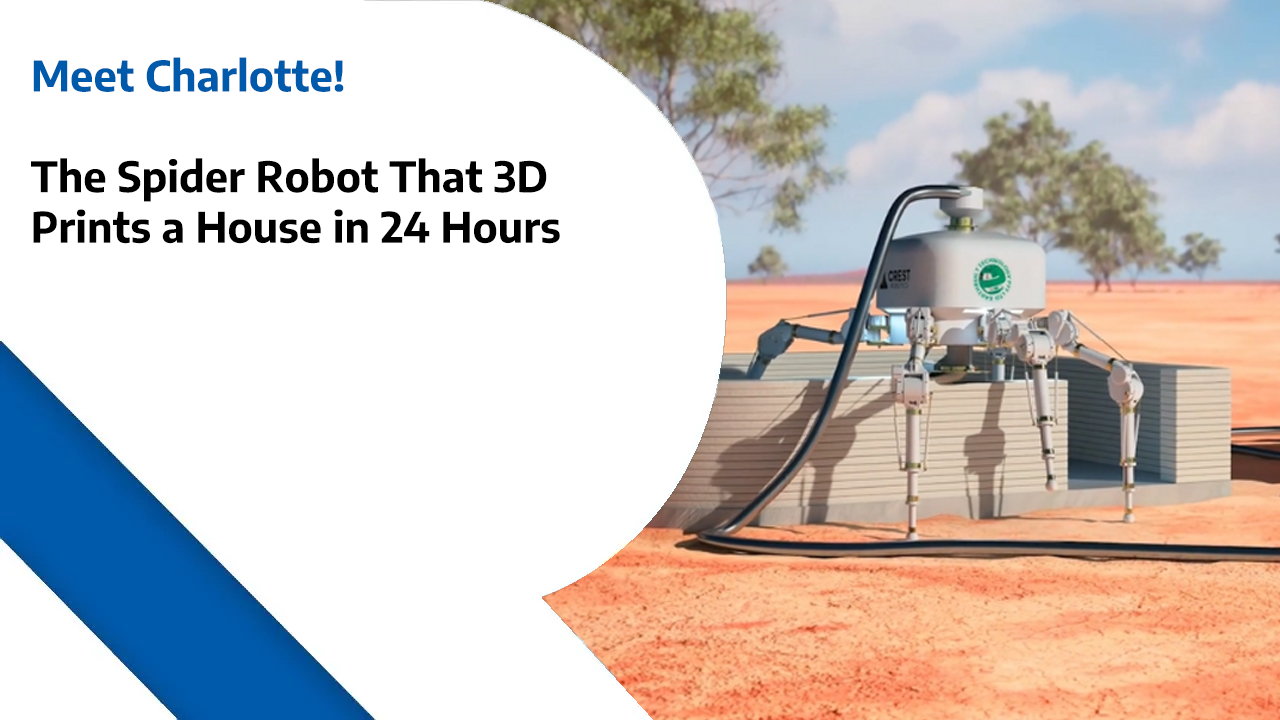
  • Meet Charlotte – The Spider Robot That 3D Prints a House in 24 Hours

    Meet Charlotte – The Spider Robot That 3D Prints a House in 24 Hours

    Meet Charlotte – The Spider Robot That 3D Prints a House in 24 Hours

    “Imagine ordering a brand-new house — and having it built before your morning coffee goes cold. Meet Charlotte, a spider-like robot that can 3D print a full-sized home in just 24 hours. Yes, really.”

    “Charlotte comes from Crest Robotics and Earthbuilt Technology — two Australian companies pushing the boundaries of construction tech. They’ve created a semi-autonomous robot that combines 3D printing and robotics to build houses directly from raw materials.
    It was unveiled at the International Astronautical Congress in Sydney — because apparently, building on Earth just isn’t ambitious enough anymore.”

    “Charlotte moves across a construction site on spider-like legs, positioning itself over the build area and printing each wall layer by layer.
    Instead of using traditional bricks or concrete trucks, it compresses local materials — sand, soil, even crushed rubble — into strong, layered walls. No scaffolding, no heavy machinery, no wasted trips to Home Depot.”

    “Here’s where this matters for all of us — especially in the U.S., where housing costs keep climbing.
    Charlotte can work around the clock, cutting labor needs, build times, and costs.
    It also slashes carbon emissions and material waste, making construction faster, cleaner, and far more sustainable.
    The team says it can work as fast as a hundred bricklayers — and that could transform how we build homes, schools, and even disaster recovery housing.”

    “And it doesn’t stop here. Charlotte’s creators are already eyeing space construction — building lunar habitats for NASA’s Artemis missions.
    If it can print homes on the Moon, it can certainly handle your backyard.

    And that’s your robot news update for today!. If you’re curious about how robotics can transform your business, head over to Robot Philosophy website to join the waiting list for the workshops, or to speak with the team directly about robotics.

    Don’t forget to subscribe so you stay in the loop with all the latest updates.

    I’m RoboPhil from Robot Philosophy — thanks for watching, and I’ll see you next time!


    Join the workshop waiting list or get in touch at: https://robophil.com/


    Sponsors:-


    Robot Center: – https://robotcenter.co.uk/ – Buy Robot, Robot Buy, Robot consultancy, Robotics Consultancy, Inspection Robots, Security Robots,


    Robots of London: – https://robotsoflondon.co.uk/ – Robot Hire, Robot Rental, Rent Robot, Hire Robot, Robot Events, Robotics Hire, Hire Robotics, Rent Robotics, Robotics Rent, for exhibitions, shows, Events, Robot hire in the UK, Robot hire in Europe


    Robot Philosophy: – https://robophil.com/ – Robot Consultancy, Robot Recruitment, Robot Advice, Robot Insights, Robot Ideas. RoboPhil, also known as Philip English, is a leading Robot YouTuber, Robot Influencer, Robot Trainer, Robot Consultant, and Robot Streamer, Robotics Streamer, Robotics YouTuber, Robotics Influencer, Robotics Consultant, Robotics Trainer 

    https://www.youtube.com/watch?v=iVQB6Kb92Iohttps://www.youtube.com/shorts/rZG-SDYzgVw

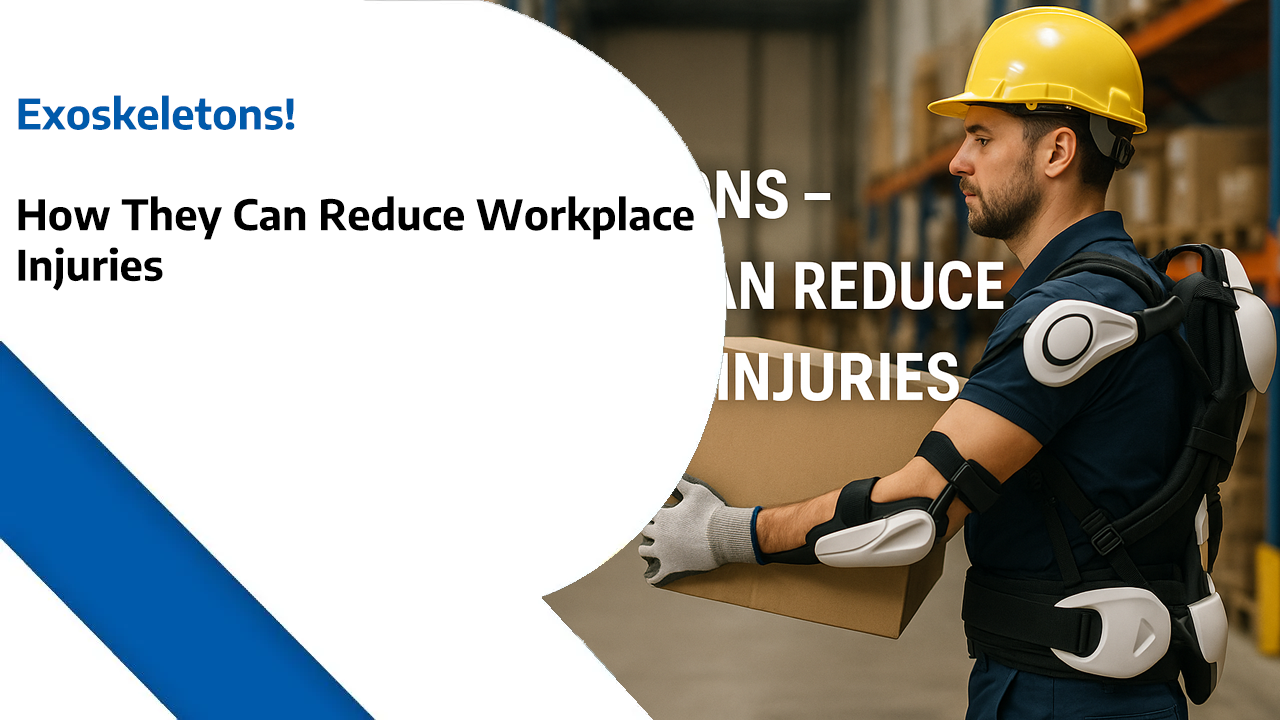
  • Exoskeletons – How They Can Reduce Workplace Injuries

    Exoskeletons – How They Can Reduce Workplace Injuries

    Exoskeletons – How They Can Reduce Workplace Injuries

    The Silent Epidemic of Workplace Injuries

    Every year, millions of workers worldwide suffer from musculoskeletal disorders (MSDs) caused by repetitive strain, heavy lifting, and awkward postures. In the UK alone, work-related MSDs account for over 470,000 cases annually, costing businesses billions in lost productivity, compensation claims, and employee turnover. The manufacturing, construction, logistics, and healthcare sectors are particularly vulnerable, with workers frequently performing physically demanding tasks that push the human body beyond its natural limits.

    But what if technology could augment human capability, transforming the way we approach workplace safety? Enter exoskeletons—wearable robotic devices that are revolutionizing occupational health and safety by reducing physical strain, preventing injuries, and empowering workers to perform their duties more efficiently and comfortably.

    What Are Workplace Exoskeletons?

    Exoskeletons, also known as exosuits or wearable robots, are mechanical structures worn by workers to enhance their physical capabilities. Unlike the powered suits of science fiction, today’s industrial exoskeletons are practical, purpose-built devices designed to support specific body parts and movements commonly associated with workplace injuries.

    These devices fall into two main categories:

    Passive Exoskeletons: These use springs, dampeners, and mechanical components to redistribute weight and reduce muscle strain without requiring power sources. They’re lightweight, cost-effective, and ideal for tasks involving sustained postures or repetitive movements.

    Active (Powered) Exoskeletons: Equipped with motors, batteries, and sensors, active exoskeletons provide powered assistance to amplify human strength and endurance. They’re particularly valuable for heavy lifting tasks and can adapt in real-time to the wearer’s movements.

    How Exoskeletons Prevent Workplace Injuries

    1. Reducing Musculoskeletal Strain

    The primary benefit of exoskeletons is their ability to reduce the physical load on vulnerable body parts. Back-support exoskeletons, for example, can reduce spinal compression by up to 60% during lifting tasks, significantly lowering the risk of herniated discs and chronic back pain. Shoulder-support exoskeletons take the strain off deltoid muscles and rotator cuffs during overhead work, reducing fatigue by as much as 80% in studies.

    By redistributing forces away from joints and muscles, exoskeletons enable workers to maintain proper posture and technique throughout their shifts, even during physically demanding tasks.

    2. Preventing Acute Injuries

    Beyond chronic conditions, exoskeletons help prevent acute injuries such as muscle tears, sprains, and joint dislocations. When a worker lifts a heavy object incorrectly or loses balance, an exoskeleton provides additional support and stability, reducing the likelihood of sudden injury. This protective element is particularly valuable in unpredictable environments where workers face varying loads and working conditions.

    3. Extending Working Capacity

    Fatigue is a major contributor to workplace accidents. As workers tire throughout their shift, their form deteriorates, reaction times slow, and risk-taking behavior increases. Exoskeletons combat fatigue by reducing the metabolic cost of physical work—some studies show energy expenditure reductions of 20-40% for assisted tasks. This means workers remain alert and capable for longer periods, reducing the accident rate typically seen toward the end of shifts.

    4. Enabling Older Workers and Those with Disabilities

    The aging workforce presents challenges for physically demanding industries. Exoskeletons can help experienced workers remain productive despite age-related physical decline, preserving valuable expertise while protecting health. Similarly, these devices can enable workers with disabilities or previous injuries to participate in roles that might otherwise be inaccessible, promoting workplace inclusivity.

    Industry Applications and Success Stories

    Manufacturing and Assembly

    Automotive manufacturers were among the first to embrace exoskeleton technology. Ford, BMW, and General Motors have deployed hundreds of exoskeletons across their facilities, particularly for overhead assembly work. Workers report significant reductions in shoulder and neck pain, with some facilities seeing injury rates drop by over 80% in exoskeleton-wearing departments.

    Logistics and Warehousing

    With the explosion of e-commerce, warehouse workers face unprecedented physical demands. Companies in the logistics sector are increasingly turning to exoskeletons to protect workers handling thousands of packages daily. Back-support exoskeletons have proven particularly effective, with workers reporting they can lift comfortably throughout their entire shift rather than experiencing progressive fatigue and pain.

    Construction

    Construction workers face some of the highest injury rates across all industries. Exoskeletons designed for construction applications support workers during prolonged tool use, overhead drilling, and material handling. Early adopters report not only fewer injuries but also improved work quality, as workers can maintain precision and control even during extended tasks.

    Healthcare

    Surprisingly, healthcare is emerging as a major beneficiary of exoskeleton technology. Nurses and care workers frequently suffer back injuries from patient handling. Patient-transfer exoskeletons are now being deployed in hospitals and care facilities, dramatically reducing the risk of injury during this high-risk activity while simultaneously improving patient comfort and dignity.

    The Business Case for Exoskeletons

    While exoskeletons require upfront investment—ranging from £4,000 for basic passive units to £50,000+ for advanced powered systems—the return on investment can be compelling:

    Reduced Injury Costs: A single serious back injury can cost a business £30,000-£100,000 in direct and indirect costs. Preventing just a few injuries per year can justify the technology investment.

    Decreased Absenteeism: MSDs are a leading cause of sick leave. Exoskeletons can reduce MSD-related absences by 40-70% according to early studies.

    Improved Productivity: Workers using exoskeletons often complete tasks 10-25% faster while maintaining or improving quality standards.

    Enhanced Recruitment and Retention: Offering cutting-edge safety technology makes companies more attractive to potential employees and demonstrates commitment to worker wellbeing, improving retention rates.

    Lower Insurance Premiums: Some insurers now offer reduced premiums for companies implementing comprehensive exoskeleton programs as part of their safety protocols.

    Challenges and Considerations

    Despite their promise, exoskeletons aren’t a universal solution. Successful implementation requires careful consideration of several factors:

    Individual Fit and Comfort: Exoskeletons must be properly fitted to each worker. Poorly fitted devices can cause discomfort or even create new injury risks.

    Task Specificity: Different tasks require different exoskeleton designs. A device optimized for overhead work won’t help with ground-level lifting tasks.

    Training Requirements: Workers need proper training to use exoskeletons effectively and safely. Organizations must invest in comprehensive training programs.

    Cultural Acceptance: Some workers may resist wearing exoskeletons due to concerns about appearance, stigma, or belief that they suggest weakness. Change management is crucial.

    Maintenance and Support: Like any mechanical system, exoskeletons require regular maintenance, cleaning, and occasional repairs. Organizations need support infrastructure in place.

    The Future of Workplace Exoskeletons

    The exoskeleton market is projected to reach £7 billion globally by 2030, driven by technological advances and growing awareness of their benefits. Future developments we can expect include:

    • Smarter Systems: AI-powered exoskeletons that learn individual movement patterns and provide personalized support
    • Lighter Materials: Advanced composites making devices more comfortable for all-day wear
    • Integrated Sensors: Health monitoring capabilities that track worker vitality and alert supervisors to fatigue or stress
    • Modular Designs: Customizable systems that can be adapted for different tasks throughout the workday
    • Extended Reality Integration: Exoskeletons combined with AR/VR systems for enhanced training and performance

    Implementing Exoskeletons in Your Workplace

    Successfully deploying exoskeleton technology requires a strategic approach:

    1. Conduct a Comprehensive Assessment: Identify high-risk tasks and roles where exoskeletons could provide the greatest benefit.
    2. Engage Your Workforce: Involve workers in the selection and testing process to ensure buy-in and gather practical insights.
    3. Start with Pilot Programs: Begin with a small group of workers and specific tasks to refine your approach before full deployment.
    4. Measure and Optimize: Track injury rates, productivity metrics, and worker satisfaction to quantify benefits and identify areas for improvement.
    5. Ensure Ongoing Support: Provide continuous training, maintenance, and opportunities for feedback as the technology and your understanding evolves.

    Expert Guidance for Your Robotics Journey

    Navigating the rapidly evolving world of exoskeletons and workplace robotics can be overwhelming. Whether you’re considering your first exoskeleton deployment or looking to expand an existing program, expert guidance can make the difference between success and costly mistakes.

    Need specialist robotics consulting or looking to recruit robotics talent for your organization? Our team brings decades of combined experience in robotics implementation, safety optimization, and workforce development. We help businesses across the UK identify the right solutions, implement them effectively, and build teams capable of maximizing their robotics investments.

    Contact us today:

    Book a consultation call to discover how exoskeletons and other robotics solutions can transform your workplace safety, productivity, and competitive advantage.


    Article Sponsors

    This article is brought to you by three leading robotics organizations helping UK businesses navigate the future of work:

    Robot Center

    Websitehttps://robotcenter.co.uk/

    Your comprehensive resource for robot purchasing, sales, and expert robotics consultancy. Robot Center helps businesses find, acquire, and implement the perfect robotic solutions for their unique needs. Whether you’re looking to buy your first robot or expand an existing fleet, their team provides the expertise and support you need.

    Robots of London

    Websitehttps://robotsoflondon.co.uk/

    The UK’s premier robot hire and rental service. Need robots for a specific project, event, or trial period? Robots of London offers flexible rental options across a wide range of robotic systems, from exoskeletons to collaborative robots and event robots. Perfect for testing solutions before commitment or meeting temporary capacity needs.

    Robot Philosophy (RoboPhil)

    Websitehttps://robophil.com/

    Led by Philip English, one of the UK’s leading robot influencers and consultants, Robot Philosophy provides cutting-edge robot consultancy and recruitment services. RoboPhil combines technical expertise with real-world implementation experience, helping organizations not just choose the right technology but build the teams and processes to maximize its impact. As a respected Robot YouTuber, Trainer, and Robotics Streamer, Philip brings unparalleled insights from across the global robotics industry to UK businesses.

    Services include:

    • Strategic robotics consulting
    • Robotics recruitment and talent acquisition
    • Robot implementation advice
    • Industry insights and thought leadership
    • Training and skills development

    Get in touch:


    Conclusion

    Exoskeletons represent a paradigm shift in workplace safety—moving from reactive injury management to proactive human augmentation. As these technologies become more sophisticated, affordable, and widely adopted, they have the potential to dramatically reduce the human and economic costs of workplace injuries while simultaneously enhancing productivity and job satisfaction.

    The question is no longer whether exoskeletons will transform workplace safety, but how quickly your organization will embrace this transformation. Companies that move early will not only protect their workforce more effectively but also gain competitive advantages in productivity, recruitment, and innovation.

    The future of work is here—and it’s wearing an exoskeleton.

    Ready to explore how exoskeletons and robotics can transform your workplace?
    Contact us at info@robophil.com or call 0845 528 0404 to schedule your consultation today.#


    https://www.youtube.com/watch?v=NSwNndNjw7Y


    https://www.youtube.com/shorts/vek7RsD-RyQ

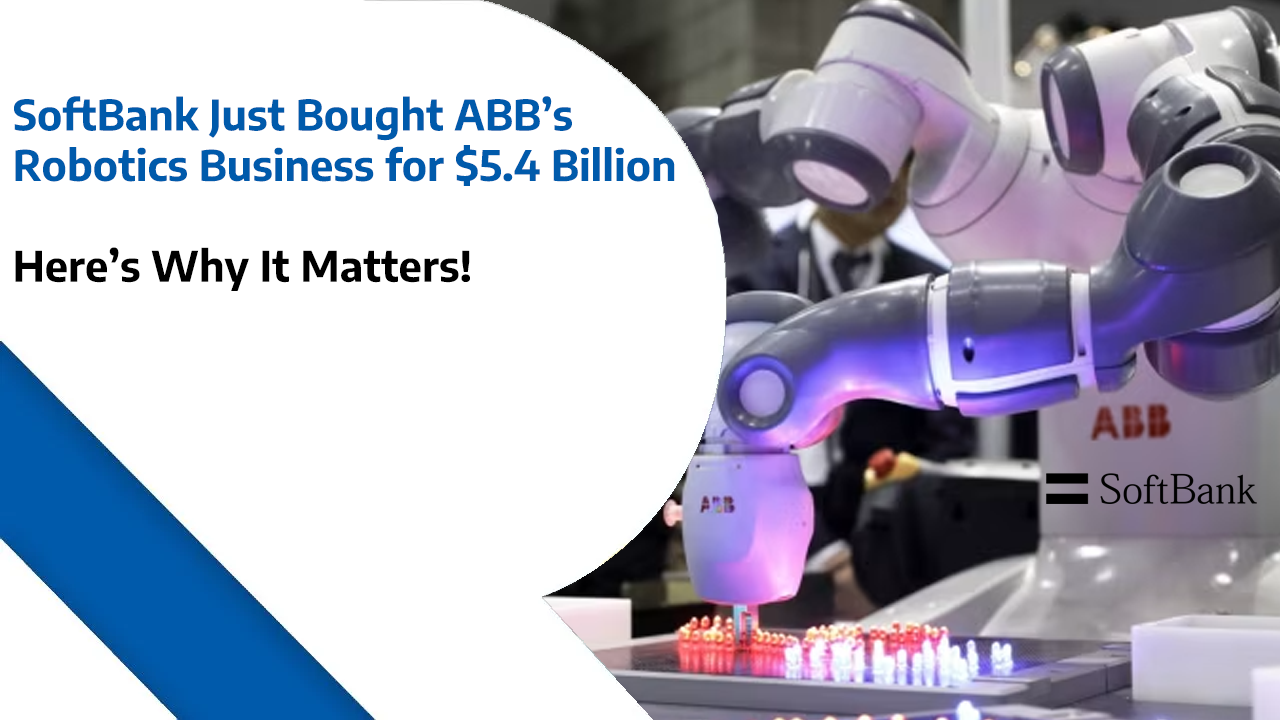
  • SoftBank Just Bought ABB’s Robotics Business for $5.4 Billion — Here’s Why It Matters

    SoftBank Just Bought ABB’s Robotics Business for $5.4 Billion — Here’s Why It Matters

     SoftBank Just Bought ABB’s Robotics Business for $5.4 Billion — Here’s Why It Matters

    ABB, the Swiss engineering powerhouse, is selling its entire robotics division to SoftBank for a staggering $5.4 billion. It’s one of the biggest moves in industrial automation this year — and it could reshape the future of AI-powered manufacturing.

    ABB, known for its automation systems and factory tech, decided not to spin off its robotics arm as originally planned. Instead, it’s making a clean exit — handing the division over to SoftBank for around $5.375 billion in cash.
    The deal is expected to close in mid-to-late 2026, pending regulatory approval in the U.S., Europe, and China. ABB says it will record a $2.4 billion pre-tax gain, with net cash proceeds of about $5.3 billion after costs.

    For SoftBank, this acquisition strengthens its vision of “Physical AI” — combining artificial intelligence with robotics. It already owns stakes in several tech and AI firms, and ABB’s industrial robots will give it a serious edge in the physical automation space.
    For ABB, this sale means focus. Robotics made up only about 7% of its 2024 revenue, with margins near 12%, so the company plans to reinvest in higher-growth areas and return more money to shareholders through dividends and buybacks.

    If you’re an investor, this could be a positive sign — ABB becomes leaner and potentially more profitable, while SoftBank doubles down on the AI-driven robotics revolution.
    If you work in manufacturing or tech, expect faster robot innovation and possibly more accessible automation.

    And that’s your robot news update for today!. If you’re curious about how robotics can transform your business, head over to Robot Philosophy website to join the waiting list for the workshops, or to speak with the team directly about robotics.

    Don’t forget to subscribe so you stay in the loop with all the latest updates.

    I’m RoboPhil from Robot Philosophy — thanks for watching, and I’ll see you next time!

    Join the workshop waiting list or get in touch at: https://robophil.com/


    Sponsors:-


    Robot Center: – https://robotcenter.co.uk/ – Buy Robot, Robot Buy, Robot consultancy, Robotics Consultancy, Inspection Robots, Security Robots,


    Robots of London: – https://robotsoflondon.co.uk/ – Robot Hire, Robot Rental, Rent Robot, Hire Robot, Robot Events, Robotics Hire, Hire Robotics, Rent Robotics, Robotics Rent, for exhibitions, shows, Events, Robot hire in the UK, Robot hire in Europe


    Robot Philosophy: – https://robophil.com/ – Robot Consultancy, Robot Recruitment, Robot Advice, Robot Insights, Robot Ideas. RoboPhil, also known as Philip English, is a leading Robot YouTuber, Robot Influencer, Robot Trainer, Robot Consultant, and Robot Streamer, Robotics Streamer, Robotics YouTuber, Robotics Influencer, Robotics Consultant, Robotics Trainer 


    https://www.youtube.com/watch?v=NSwNndNjw7Yhttps://www.youtube.com/shorts/vek7RsD-RyQ

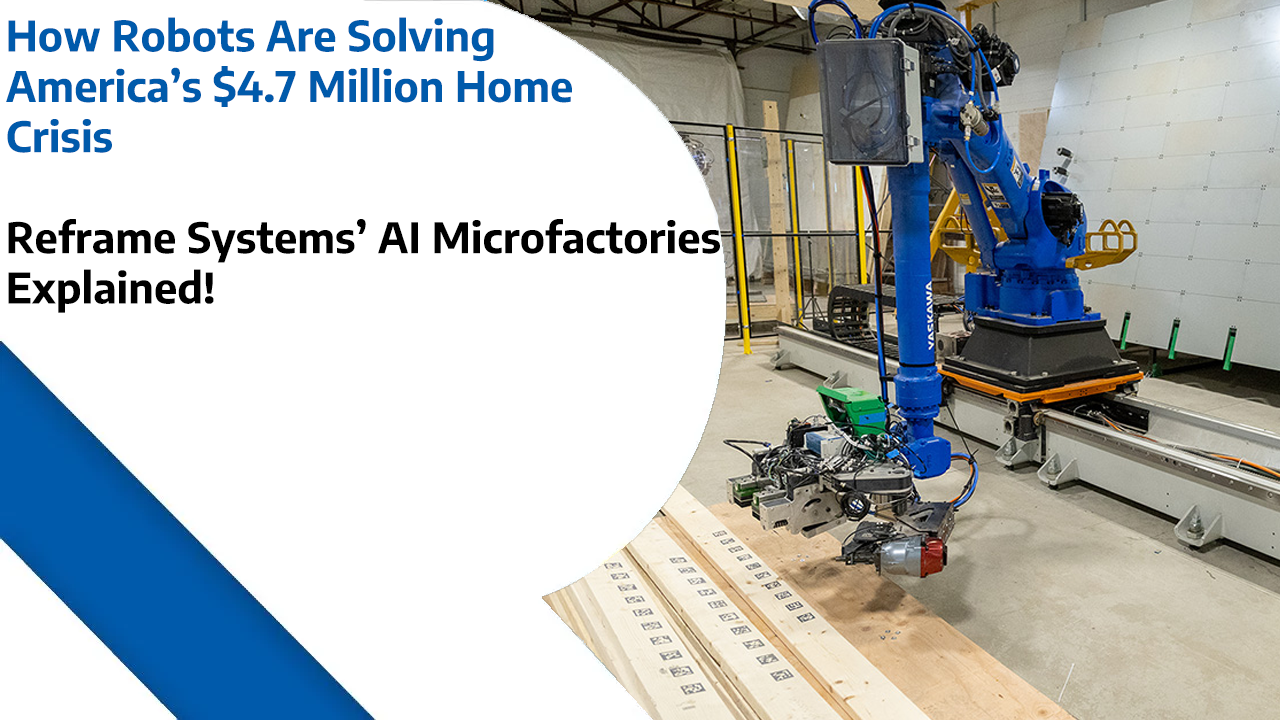
  • How Robots Are Solving America’s $4.7 Million Home Crisis – Reframe Systems’ AI Microfactories Explained

    How Robots Are Solving America’s $4.7 Million Home Crisis – Reframe Systems’ AI Microfactories Explained


    How Robots Are Solving America’s $4.7 Million Home Crisis – Reframe Systems’ AI Microfactories Explained

    The United States is short of around 4.7 million homes, and many existing houses can’t handle the growing challenges of climate change. A startup called Reframe Systems, based in Andover, Massachusetts, believes robots could help fix that.

    Founded in 2022 by Vikas Enti and Aaron Small, Reframe Systems is taking lessons from Amazon’s warehouse robots and applying them to construction. Enti helped deploy more than half a million robots at Amazon before deciding to focus on reducing carbon emissions. He saw that building better homes faster could make a real impact.

    Construction is one of the hardest industries to automate. Every house needs around 25 different subcontractors, each working independently. This fragmentation makes the process slow, expensive, and difficult to innovate. As Enti puts it, “automating a bad process is one of the worst things you can do.”

    Reframe Systems’ answer is the robotic microfactory — compact, highly automated facilities that build major parts of a house before shipping them to the site. This approach removes much of the chaos that happens during traditional on-site construction. The company aims to automate 60–80% of the building process.

    Inside these microfactories, standard industrial robot arms assemble walls, ceilings, and insulation. Their secret is custom software that connects design files directly to the robots, allowing the machines to adapt quickly to new layouts.

    Reframe Systems isn’t just rethinking how we build houses. It’s rethinking how we build the future.


    And that’s your robot news update for today!. If you’re curious about how robotics can transform your business, head over to Robot Philosophy website to join the waiting list for the workshops, or to speak with the team directly about robotics.

    Don’t forget to subscribe so you stay in the loop with all the latest updates.

    I’m RoboPhil from Robot Philosophy — thanks for watching, and I’ll see you next time!

    Join the workshop waiting list or get in touch at: https://robophil.com/


    Sponsors:-


    Robot Center: – https://robotcenter.co.uk/ – Buy Robot, Robot Buy, Robot consultancy, Robotics Consultancy, Inspection Robots, Security Robots,


    Robots of London: – https://robotsoflondon.co.uk/ – Robot Hire, Robot Rental, Rent Robot, Hire Robot, Robot Events, Robotics Hire, Hire Robotics, Rent Robotics, Robotics Rent, for exhibitions, shows, Events, Robot hire in the UK, Robot hire in Europe


    Robot Philosophy: – https://robophil.com/ – Robot Consultancy, Robot Recruitment, Robot Advice, Robot Insights, Robot Ideas. RoboPhil, also known as Philip English, is a leading Robot YouTuber, Robot Influencer, Robot Trainer, Robot Consultant, and Robot Streamer, Robotics Streamer, Robotics YouTuber, Robotics Influencer, Robotics Consultant, Robotics Trainer 


    https://www.youtube.com/watch?v=OA9kNS1bwEQhttps://www.youtube.com/shorts/8RFnIXS7Ukw

  • Einride Raises $100M – The Future of Self-Driving Electric Trucks in the U.S.

    Einride Raises $100M – The Future of Self-Driving Electric Trucks in the U.S.

    Einride Raises $100M – The Future of Self-Driving Electric Trucks in the U.S.

    Einride, a Swedish company developing digital, electric, and autonomous road freight systems, has just raised $100 million in new funding. This investment will help the company expand its autonomous truck deployments in the United States and globally.

    The funding comes after Einride achieved a major milestone: its cabless, electric autonomous truck completed a cross-border journey from Sweden to Norway without a human driver onboard. That’s a world first in freight transport.

    Einride’s platform, called Saga, acts as the digital brain behind its fleet. It manages routes, charging, and assignments, ensuring the trucks run efficiently. The company has also partnered with IonQ to apply quantum computing to solve some of the most complex logistics challenges.

    For everyday consumers and businesses, this matters. Autonomous freight can reduce costs, speed up deliveries, and cut emissions by replacing diesel with clean electric transport. It also opens opportunities for logistics companies, investors, and technology partners to plug into a growing ecosystem.

    Einride already operates with Fortune 500 companies in the U.S. and Europe. This funding is a clear signal that investors believe autonomous freight is moving from concept to commercial reality.

    In short, Einride’s $100 million raise shows that self-driving trucks are no longer experimental. They are becoming part of the global supply chain, and the U.S. is a key market.

    If you want to stay ahead of the curve on how autonomous freight could impact your business and your daily life, subscribe and follow for more updates.


    And that’s your robot news update for today!

    If you’re curious about how robotics can transform your business, head over to RoboPhil.com to join the waiting list for the workshops, or to speak with the team directly about robotics. Don’t forget to subscribe so you stay in the loop with all the latest updates.

    I’m RoboPhil from Robot Philosophy — thanks for watching, and I’ll see you next time!

    Join the workshop waiting list or get in touch at: https://robophil.com/


    Sponsors:-


    Robot Center: – https://robotcenter.co.uk/ – Buy Robot, Robot Buy, Robot consultancy, Robotics Consultancy, Inspection Robots, Security Robots,


    Robots of London: – https://robotsoflondon.co.uk/ – Robot Hire, Robot Rental, Rent Robot, Hire Robot, Robot Events, Robotics Hire, Hire Robotics, Rent Robotics, Robotics Rent, for exhibitions, shows, Events, Robot hire in the UK, Robot hire in Europe


    Robot Philosophy: – https://robophil.com/ – Robot Consultancy, Robot Recruitment, Robot Advice, Robot Insights, Robot Ideas. RoboPhil, also known as Philip English, is a leading Robot YouTuber, Robot Influencer, Robot Trainer, Robot Consultant, and Robot Streamer, Robotics Streamer, Robotics YouTuber, Robotics Influencer, Robotics Consultant, Robotics Trainer 


    https://www.youtube.com/watch?v=3535YxT9BB0https://www.youtube.com/shorts/YcWqnF0tPuc

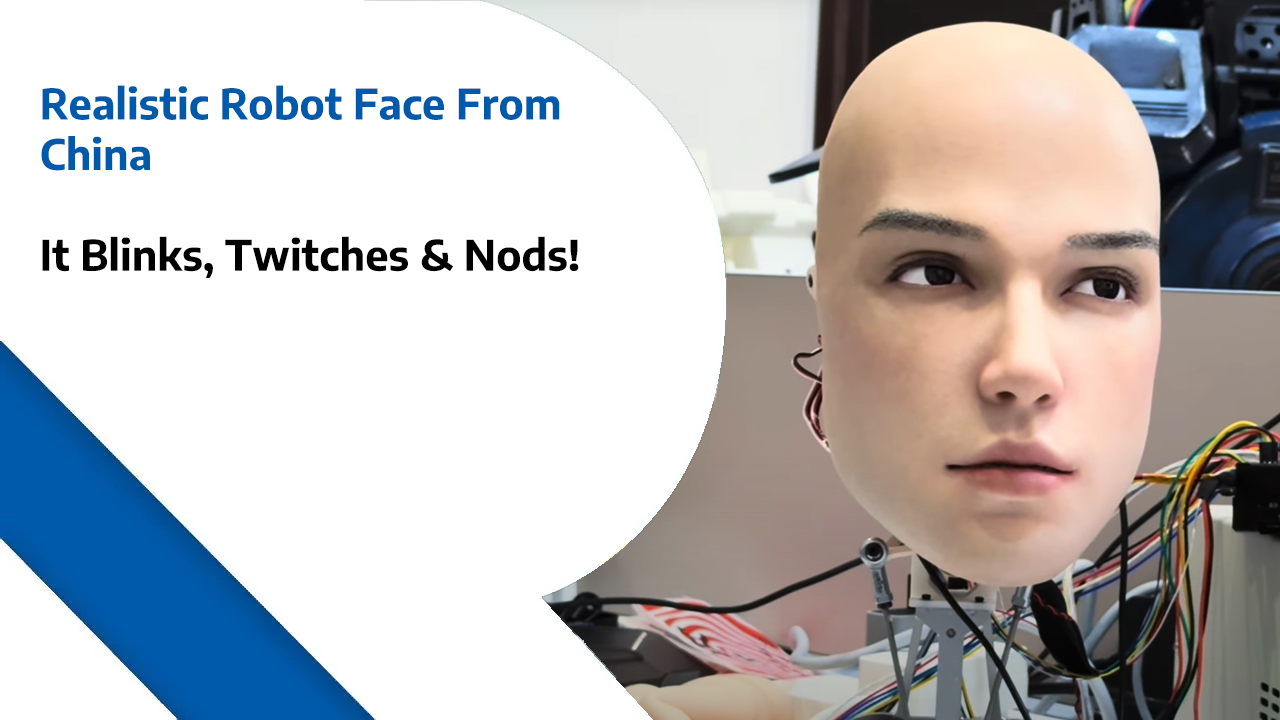
  • Realistic Robot Face From China – It Blinks, Twitches & Nods!

    Realistic Robot Face From China – It Blinks, Twitches & Nods!

    Realistic Robot Face From China – It Blinks, Twitches & Nods!

    A Chinese robotics company called AheadForm has developed a robot head so lifelike it can blink, twitch, and nod almost exactly like a human.

    The model is called the Origin M1. It uses up to 25 brushless motors hidden under the skin to create subtle movements. The robot’s eyes contain cameras so it can see its surroundings, and there are microphones and speakers built in so it can listen and respond in real time.

    AheadForm was founded in 2024 with the aim of making robots more approachable and relatable. The company is working on integrating artificial intelligence, including large language models, so the robot doesn’t just move like a person, but also understands and reacts naturally in conversation.

    They’ve developed several product lines: the “Elf Series” with fantasy-style designs, and the “Lan Series” focused on cost-efficient humanoid heads. But the big picture is clear — robots that can express emotions will be better at building trust in industries like customer service, education, and healthcare.

    For you, this means a future where the robot answering your questions doesn’t feel cold and mechanical, but relatable and even reassuring. It could make interacting with technology smoother, friendlier, and more natural. The robot heads are not yet on sale, but research like this is shaping how we may work, learn, and receive care in the years ahead.


    And that’s your robot news update for today!

    If you’re curious about how robotics can transform your business, head over to RoboPhil.com to join the waiting list for the workshops we’ll be running, or to speak with the team directly about robotics.Don’t forget to subscribe so you stay in the loop with all the latest updates.

    I’m RoboPhil from Robot Philosophy — thanks for watching, and I’ll see you next time!

    Robot Center: – https://robotcenter.co.uk/ – Buy Robot, Robot Buy, Robot consultancy, Robotics Consultancy, Inspection Robots, Security Robots,


    Robots of London: – https://robotsoflondon.co.uk/ – Robot Hire, Robot Rental, Rent Robot, Hire Robot, Robot Events, Robotics Hire, Hire Robotics, Rent Robotics, Robotics Rent, for exhibitions, shows, Events, Robot hire in the UK, Robot hire in Europe


    Robot Philosophy: – https://robophil.com/ – Robot Consultancy, Robot Recruitment, Robot Advice, Robot Insights, Robot Ideas. RoboPhil, also known as Philip English, is a leading Robot YouTuber, Robot Influencer, Robot Trainer, Robot Consultant, and Robot Streamer, Robotics Streamer, Robotics YouTuber, Robotics Influencer, Robotics Consultant, Robotics Trainer 


    https://www.youtube.com/watch?v=flyw8ghC4bYhttps://www.youtube.com/shorts/x9sZVSbXm_8

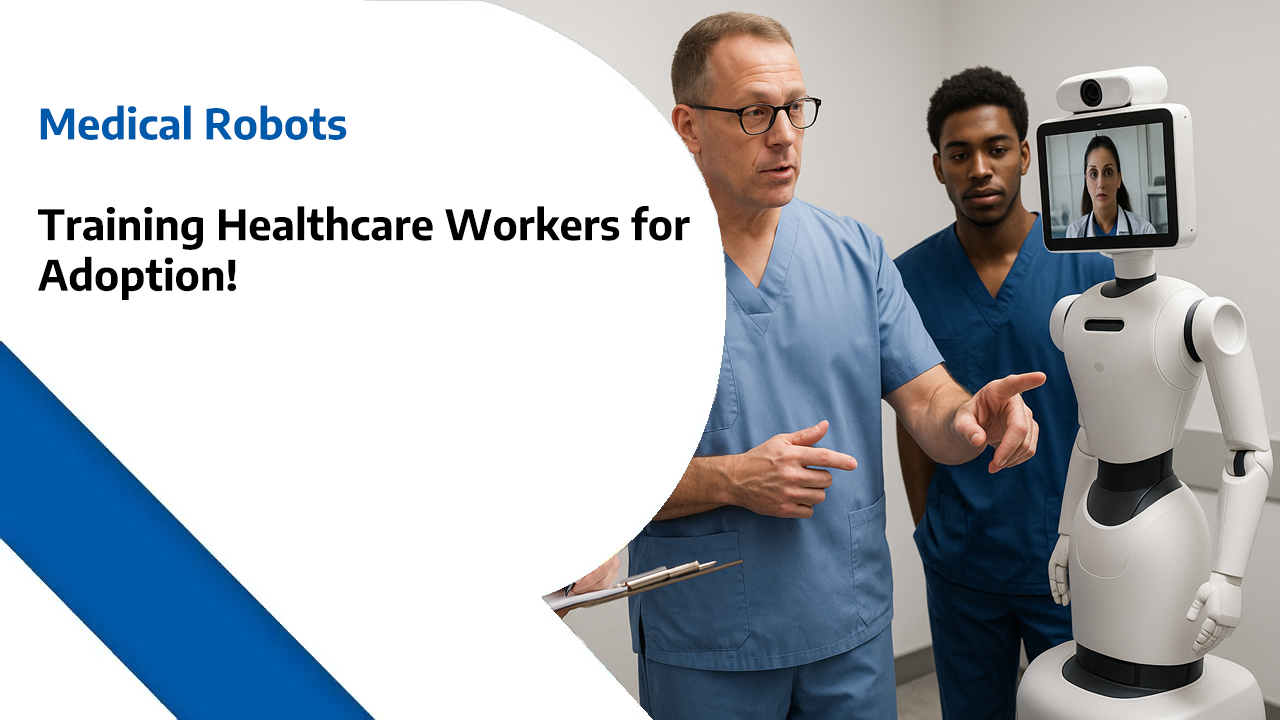
  • Medical Robots – Training Healthcare Workers for Adoption

    Medical Robots – Training Healthcare Workers for Adoption

    Medical Robots – Training Healthcare Workers for Adoption

    Introduction: The Dawn of Robotic Healthcare

    The healthcare industry stands at a pivotal crossroads. Medical robotics technology has evolved from experimental prototypes to sophisticated systems capable of performing complex surgeries, dispensing medications, disinfecting environments, and assisting with patient rehabilitation. Yet, despite these remarkable technological advances, one critical challenge remains: preparing healthcare workers to embrace, understand, and effectively utilize these robotic systems.

    The integration of medical robots into healthcare facilities represents more than just a technological upgrade—it signifies a fundamental transformation in how medical professionals approach patient care. From surgical suites to hospital corridors, from rehabilitation centers to pharmacy departments, robots are becoming indispensable partners in delivering quality healthcare. However, this revolution can only succeed if the human workforce is adequately trained, confident, and prepared to work alongside their robotic counterparts.

    This article explores the essential aspects of training healthcare workers for medical robot adoption, examining the challenges, best practices, and strategies that healthcare institutions must implement to ensure successful integration. Whether you’re a hospital administrator, a clinical manager, or a healthcare professional preparing for this transformation, understanding the training landscape is crucial for maximizing the benefits of medical robotics.

    The Current State of Medical Robotics

    Diverse Applications Across Healthcare

    Medical robots have proliferated across virtually every department of modern healthcare facilities. Surgical robots, such as the da Vinci Surgical System, enable minimally invasive procedures with unprecedented precision. Rehabilitation robots assist patients recovering from strokes or injuries, providing consistent, measurable therapy sessions. Service robots navigate hospital corridors, delivering medications, meals, and supplies while freeing nursing staff for more critical patient care tasks.

    Disinfection robots utilizing ultraviolet light technology have become particularly prominent following the COVID-19 pandemic, autonomously sanitizing patient rooms and operating theaters. Telepresence robots allow remote specialists to consult with patients and local medical teams, breaking down geographical barriers to expert care. Meanwhile, pharmacy robots accurately dispense medications, reducing human error and improving patient safety.

    The Investment Imperative

    Healthcare institutions worldwide are investing billions in robotic technology, recognizing both the competitive advantages and patient outcome improvements these systems deliver. According to industry analysts, the global medical robotics market continues to expand rapidly, with projections suggesting exponential growth over the coming decade. However, technology acquisition represents only the first step—successful implementation demands comprehensive training programs that transform technological potential into practical reality.

    Understanding the Training Challenge

    The Human Factor in Technological Adoption

    The introduction of medical robots into healthcare settings triggers a complex range of human responses. While some healthcare professionals embrace the technology enthusiastically, others experience anxiety, skepticism, or resistance. These reactions stem from various sources: concerns about job security, fear of technological complexity, uncertainty about changing professional roles, and apprehension about potential impacts on patient relationships.

    Effective training programs must address these psychological dimensions alongside technical instruction. Healthcare workers need reassurance that robots serve as collaborative tools enhancing their capabilities rather than replacements threatening their livelihoods. They must understand how robotic assistance can reduce physical strain, minimize repetitive tasks, and allow more time for direct patient interaction—the aspects of healthcare that drew many professionals to the field initially.

    Diverse Learning Needs Across Specialties

    Healthcare encompasses an extraordinarily diverse workforce, from surgeons and physicians to nurses, technicians, therapists, and administrative staff. Each professional group interacts with medical robots differently, requiring specialized training tailored to their specific responsibilities and workflow integration points.

    Surgeons operating robotic surgical systems need extensive hands-on training with haptic feedback, 3D visualization, and instrument manipulation. Nursing staff working with service robots require understanding of navigation systems, emergency protocols, and communication interfaces. Maintenance technicians must learn troubleshooting procedures, routine maintenance schedules, and safety compliance requirements. This diversity demands flexible, modular training approaches adaptable to various professional contexts.

    Generational and Technological Literacy Gaps

    Healthcare workforces span multiple generations, from digital natives comfortable with technology to experienced professionals who trained in pre-digital eras. This generational diversity creates varied comfort levels with technological interfaces, learning preferences, and adaptation rates. Effective training programs recognize these differences, offering multiple instructional modalities and pacing options to accommodate diverse learning styles and technological backgrounds.

    Core Components of Effective Medical Robot Training

    Foundational Knowledge and Conceptual Understanding

    Before healthcare workers can effectively operate medical robots, they must understand fundamental robotics concepts. This foundational training should cover basic robotics terminology, system architectures, sensor technologies, and artificial intelligence principles relevant to medical applications. Workers should understand how robots perceive their environment, process information, make decisions, and execute actions.

    Importantly, this conceptual foundation should emphasize the collaborative nature of human-robot interaction in medical contexts. Healthcare workers must recognize that medical robots augment rather than replace human judgment, combining computational precision with human intuition, ethical reasoning, and empathetic patient care.

    Safety Protocols and Risk Management

    Patient safety represents the paramount concern in healthcare robotics training. Healthcare workers must thoroughly understand safety protocols governing robotic system operation, including emergency stop procedures, system limitations, fail-safe mechanisms, and contingency planning for technological failures.

    Training should cover potential risks associated with each robotic system, from surgical complications to navigation hazards in patient environments. Workers must learn to recognize warning signs indicating system malfunctions, understand when to intervene manually, and know proper escalation procedures for technical issues. Regular safety drills and scenario-based training help internalize these critical protocols, ensuring automatic responses during high-pressure situations.

    Hands-On Technical Skills Development

    Theoretical knowledge provides necessary context, but practical competence develops through hands-on experience. Effective training programs provide extensive opportunities for healthcare workers to interact directly with robotic systems in controlled, supervised environments before encountering real clinical situations.

    Simulation-based training offers particularly valuable learning experiences, allowing workers to practice procedures, make mistakes, and refine techniques without risking patient safety. Virtual reality simulations can replicate complex scenarios, while physical training units enable tactile skill development. Progressive skill-building exercises should advance from basic operations to complex procedures, building confidence and competence incrementally.

    Workflow Integration and Operational Procedures

    Medical robots don’t operate in isolation—they function within complex healthcare workflows involving multiple professionals, coordinated procedures, and time-sensitive protocols. Training must address how robotic systems integrate into existing workflows, identifying potential bottlenecks, communication requirements, and coordination strategies.

    Healthcare workers need to understand their specific roles within robot-assisted procedures, including setup protocols, operational responsibilities, monitoring duties, and post-procedure documentation. Clear standard operating procedures (SOPs) should be developed collaboratively, incorporating input from all relevant stakeholders to ensure practical feasibility and workflow optimization.

    Communication and Team Coordination

    Successful medical robot deployment requires effective communication among team members working alongside robotic systems. Training should emphasize clear verbal communication protocols, particularly during surgical procedures where multiple team members interact with robotic components. Understanding specialized terminology, standardized commands, and efficient information exchange methods prevents misunderstandings that could compromise patient outcomes.

    Team coordination exercises help healthcare workers develop synchronized workflows, anticipate colleagues’ needs, and respond effectively to unexpected situations. These collaborative training activities build cohesion and confidence, preparing teams for the dynamic realities of robot-assisted healthcare delivery.

    Maintenance and Troubleshooting Basics

    While specialized technicians handle complex maintenance and repairs, frontline healthcare workers benefit from understanding basic troubleshooting procedures and routine maintenance requirements. Training should cover common issues, diagnostic approaches, and first-line solutions that workers can implement before escalating to technical specialists.

    This knowledge minimizes downtime, reduces frustration, and empowers healthcare workers to resolve minor issues independently. Understanding maintenance requirements also promotes better care of expensive robotic equipment, extending system lifespans and optimizing performance reliability.

    Training Methodologies and Delivery Approaches

    Blended Learning Models

    Modern medical robot training increasingly employs blended learning approaches combining online theoretical instruction, in-person hands-on practice, simulation exercises, and supervised clinical experience. This multifaceted methodology accommodates diverse learning preferences while optimizing resource utilization.

    Online modules provide flexible access to foundational knowledge, allowing healthcare workers to progress at comfortable paces while managing demanding schedules. Interactive elements, including videos, animations, and knowledge assessments, enhance engagement and retention. In-person sessions then focus on practical skill development, collaborative exercises, and personalized feedback—the aspects of training requiring direct human interaction and expert guidance.

    Progressive Competency Development

    Effective training programs structure learning as progressive competency development rather than one-time orientation sessions. Initial training provides foundational knowledge and basic operational skills, followed by supervised practice periods allowing skill consolidation under expert observation. Advanced training modules then introduce complex procedures, troubleshooting scenarios, and specialized applications relevant to specific roles.

    This progressive approach recognizes that true competency develops through repeated practice, reflection, and gradual complexity escalation. Regular competency assessments identify areas requiring additional focus, ensuring healthcare workers achieve and maintain proficiency standards before independent operation.

    Simulation-Based Learning Environments

    Simulation technology has revolutionized medical training, and medical robotics is no exception. High-fidelity simulators replicate robotic system interfaces and behaviors, providing risk-free environments for skill development. Virtual reality simulations offer immersive experiences replicating surgical scenarios, while augmented reality overlays can guide workers through procedures in real equipment.

    Simulation-based training allows unlimited practice opportunities, immediate feedback on performance metrics, and progressive difficulty adjustments matching learner capabilities. Mistakes become valuable learning opportunities rather than patient safety risks, encouraging experimentation and confidence building essential for skill mastery.

    Mentorship and Peer Learning

    Pairing less experienced healthcare workers with robotic system experts facilitates knowledge transfer beyond formal training programs. Mentorship relationships provide ongoing support, practical tips, and contextual insights that formal training may not fully capture. Experienced users share workflow optimizations, troubleshooting shortcuts, and lessons learned from real-world challenges.

    Peer learning communities, whether in-person or virtual, create supportive environments where healthcare workers share experiences, discuss challenges, and collaboratively problem-solve. These communities foster continuous learning cultures extending far beyond initial training periods, supporting ongoing adaptation as technologies evolve and applications expand.

    Just-in-Time Training Resources

    Even well-trained healthcare workers occasionally need quick reference guidance during clinical operations. Just-in-time training resources—including quick reference guides, video tutorials, and digital assistance systems—provide immediate support without disrupting workflows significantly.

    Augmented reality systems can overlay procedural guidance directly onto robotic equipment, providing contextualized instructions precisely when needed. Mobile applications offer searchable databases of protocols, troubleshooting steps, and frequently asked questions accessible at point of care. These resources bridge the gap between formal training completion and complete independence, supporting confidence during the critical transition period.

    Overcoming Barriers to Adoption

    Addressing Resistance and Building Buy-In

    Resistance to technological change represents one of the most significant barriers to successful medical robot adoption. Healthcare workers may fear job displacement, resent additional learning burdens, or doubt technology’s value relative to traditional methods. Overcoming this resistance requires transparent communication, inclusive decision-making, and demonstrated value proposition.

    Involving healthcare workers in robot selection and implementation planning builds ownership and identifies practical concerns early. Clearly articulating how robots address existing pain points—such as physical strain, repetitive tasks, or resource constraints—frames technology as supportive rather than threatening. Highlighting success stories and peer testimonials from early adopters can shift perceptions and build enthusiasm.

    Allocating Sufficient Training Time and Resources

    Healthcare facilities operate under intense time and resource pressures, making training allocation challenging. However, inadequate training investments inevitably compromise implementation success, leading to underutilization, safety incidents, and staff frustration. Institutional leadership must recognize comprehensive training as essential infrastructure rather than optional enhancement.

    Protected training time should be integrated into staff schedules without compromising patient care coverage. Adequate instructor resources, training equipment access, and ongoing educational support require budgetary commitment reflecting training’s critical importance. These investments generate returns through improved efficiency, reduced errors, and enhanced staff satisfaction—outcomes justifying initial resource allocation.

    Ensuring Ongoing Education and Skill Maintenance

    Medical robot training cannot be treated as one-time events. Technology evolves continuously, with software updates, new features, and emerging best practices requiring ongoing education. Additionally, skills deteriorate without regular practice, particularly for complex procedures performed infrequently.

    Institutions should establish continuing education programs ensuring healthcare workers remain current with technological developments. Regular refresher training, competency reassessments, and update briefings maintain skill levels and reinforce safety protocols. Creating cultures of continuous learning normalizes ongoing education as professional expectation rather than remedial intervention.

    Customizing Training to Institutional Contexts

    Generic, vendor-provided training offers starting points but rarely addresses institution-specific workflows, patient populations, and operational constraints. Customized training programs tailored to particular healthcare settings prove far more effective, addressing local practices, terminology, and integration challenges.

    Collaborating with robotics consultants experienced in healthcare contexts helps develop these customized programs, blending technical expertise with practical implementation insights. These specialists understand diverse institutional needs and can design training approaches optimizing adoption success within specific organizational cultures and operational realities.

    Measuring Training Effectiveness

    Competency Assessment Frameworks

    Robust assessment frameworks measure whether training programs successfully develop required competencies. These frameworks should evaluate multiple dimensions: theoretical knowledge, technical skills, safety protocol adherence, workflow integration, and professional judgment in robot-assisted contexts.

    Assessment methods might include written examinations testing conceptual understanding, practical demonstrations evaluated against standardized rubrics, simulation-based performance metrics, and observed clinical practice assessments. Multiple assessment modalities provide comprehensive competency pictures, identifying strengths and areas requiring additional development.

    Performance Metrics and Outcome Tracking

    Beyond individual competency, training effectiveness should be evaluated through operational metrics tracking actual performance improvements. Relevant metrics might include procedural efficiency, error rates, complication frequencies, equipment utilization rates, and staff confidence surveys.

    Comparing pre-implementation and post-training metrics quantifies training program impact, demonstrating return on investment and identifying optimization opportunities. Longitudinal tracking reveals whether competencies sustain over time or require reinforcement interventions.

    Continuous Improvement Cycles

    Training programs should incorporate feedback mechanisms enabling continuous refinement. Healthcare worker surveys, instructor observations, incident analyses, and performance data all inform program improvements. Regular training program reviews ensure content remains current, methodologies stay effective, and emerging challenges are addressed proactively.

    This continuous improvement approach treats training as evolving process rather than static product, maintaining relevance as technologies advance and organizational needs shift.

    The Role of Specialized Robotics Consultants

    Expert Guidance Through Implementation Journeys

    Healthcare institutions embarking on medical robot adoption face complex decisions spanning technology selection, infrastructure preparation, workflow redesign, and training program development. Specialized robotics consultants bring invaluable expertise navigating these multifaceted challenges, drawing from extensive experience across diverse healthcare settings.

    These consultants assess institutional readiness, identify optimal technologies for specific needs, design implementation roadmaps, and develop customized training strategies. Their external perspective combined with technical depth helps avoid common pitfalls, accelerate adoption timelines, and maximize return on robotics investments.

    Bridging Technical and Clinical Domains

    Effective medical robot implementation requires bridging technical robotics expertise with clinical healthcare knowledge—domains rarely residing within single individuals. Robotics consultants serve as translators between these worlds, explaining technical capabilities in clinical terms and communicating clinical requirements in technical specifications.

    This bridging function proves particularly valuable during training program development, ensuring technical instruction remains grounded in clinical realities while clinical training adequately addresses technological requirements. The resulting programs resonate with healthcare workers, speaking their language while building necessary technical competencies.

    Accessing Specialized Talent Through Robotics Recruitment

    Beyond consulting services, specialized robotics recruitment services help healthcare institutions identify and attract professionals possessing the unique skill combinations medical robotics demands. These specialists understand the evolving talent landscape, maintaining networks of robotics engineers, clinical specialists, and hybrid professionals capable of driving successful implementations.

    Whether seeking robotic surgery coordinators, clinical robotics specialists, or technical implementation managers, specialized recruitment services streamline talent acquisition processes, presenting qualified candidates matching institutional needs and cultures.

    Future Directions in Medical Robotics Training

    Artificial Intelligence and Adaptive Learning

    Emerging artificial intelligence technologies promise to revolutionize medical robotics training through adaptive learning systems that personalize instruction based on individual progress, learning styles, and competency development patterns. These intelligent systems identify knowledge gaps, adjust difficulty levels, and recommend targeted practice exercises optimizing learning efficiency.

    AI-powered training simulators can generate unlimited scenario variations, ensuring diverse practice opportunities while providing sophisticated performance analytics guiding improvement efforts. As these technologies mature, training programs will become increasingly personalized and effective, accelerating competency development while reducing resource requirements.

    Extended Reality Training Environments

    Virtual reality, augmented reality, and mixed reality technologies continue advancing, offering increasingly immersive and realistic training environments. Future medical robotics training may occur primarily in these extended reality spaces, providing unlimited practice opportunities indistinguishable from actual clinical scenarios.

    These technologies overcome geographical barriers, enabling remote training delivery and expert instruction access regardless of physical location. They also permit risk-free exploration of rare complications and emergency scenarios difficult to replicate through traditional training methods.

    Collaborative Human-Robot Learning

    As robots incorporate more sophisticated artificial intelligence, future training may involve mutual learning processes where humans and robots adapt to each other’s working styles and preferences. Rather than humans solely learning robot operation, collaborative systems will learn human preferences, communication patterns, and working rhythms, optimizing interactions bidirectionally.

    This collaborative learning approach recognizes that optimal performance emerges from synergistic human-robot partnerships rather than humans simply mastering technological tools. Training programs will increasingly emphasize partnership development rather than mere operational proficiency.

    Building Your Medical Robotics Training Strategy

    Assessment and Planning

    Healthcare institutions beginning medical robot adoption journeys should start with comprehensive assessments evaluating current capabilities, identifying gaps, and establishing realistic implementation timelines. This assessment should examine technical infrastructure, workforce readiness, financial resources, and organizational culture factors influencing adoption success.

    Based on assessment findings, detailed implementation plans should outline technology selection criteria, infrastructure preparations, training program development, and phased deployment strategies. These plans establish clear milestones, assign responsibilities, and define success metrics guiding implementation efforts.

    Stakeholder Engagement and Change Management

    Successful adoption requires engagement across all organizational levels, from executive leadership providing resources and strategic direction to frontline staff operating systems daily. Comprehensive change management strategies address concerns, build enthusiasm, and maintain momentum throughout implementation processes.

    Regular communication updates, town hall meetings, demonstration events, and early adopter showcases keep stakeholders informed and engaged. Leadership visibility and vocal support signal organizational commitment, encouraging workforce participation and investment in adoption success.

    Partnership with Robotics Experts

    Few healthcare institutions possess internal expertise spanning the full spectrum of medical robotics implementation requirements. Partnering with specialized robotics consultants and leveraging professional recruitment services substantially improves adoption outcomes while reducing implementation timelines and resource burdens.

    These partnerships provide access to proven methodologies, lessons learned from previous implementations, and specialized expertise addressing specific challenges. Rather than learning through costly trial and error, institutions benefit from accumulated wisdom and best practices refined across numerous successful deployments.

    Conclusion: Empowering Healthcare’s Robotic Future

    Medical robots represent transformative technologies reshaping healthcare delivery, offering unprecedented precision, consistency, and capability. However, technology alone cannot realize these benefits—success depends fundamentally on healthcare workers prepared, trained, and confident in leveraging robotic capabilities within their professional practices.

    Comprehensive training programs addressing technical skills, safety protocols, workflow integration, and psychological adaptation prepare healthcare workers for productive human-robot collaboration. These programs must be thoughtfully designed, adequately resourced, continuously improved, and culturally embedded within institutional values and practices.

    The journey toward robotic healthcare adoption presents challenges, certainly, but the destination promises improved patient outcomes, enhanced professional satisfaction, and healthcare delivery models meeting 21st-century demands. Healthcare institutions embarking on this journey need not travel alone—specialized expertise, proven methodologies, and supportive partnerships smooth the path toward successful adoption.

    The future of healthcare increasingly includes robotic partners working alongside human professionals. By investing in comprehensive training preparing workers for this future, healthcare institutions position themselves at the forefront of medical innovation while ensuring their most valuable asset—their people—remain empowered, engaged, and essential to delivering exceptional patient care.


    Ready to Transform Your Healthcare Facility with Medical Robotics?

    Successful medical robot adoption requires expert guidance, comprehensive training, and access to specialized talent. Whether you’re exploring robotic technologies for the first time or optimizing existing implementations, professional robotics consulting and recruitment services accelerate your journey toward successful adoption.

    Contact us today to discuss your medical robotics needs:

    📧 Email: info@robophil.com
    📞 Phone: 0845 528 0404

    Our team provides comprehensive support throughout your robotics journey, from initial assessment and technology selection through training program development and specialized talent recruitment. Let’s work together to build your healthcare facility’s robotic future.


    Article Sponsors

    This article is brought to you by leading robotics specialists dedicated to advancing robotic technology adoption across healthcare and beyond:

    Robot Center

    Website: https://robotcenter.co.uk/

    Your destination for robot purchase, robotics consultancy, and expert guidance. Robot Center provides comprehensive solutions for organizations seeking to acquire robotic technologies and implement them successfully within their operations.

    Robots of London

    Website: https://robotsoflondon.co.uk/

    Specializing in robot hire, robot rental, and robot events. Robots of London makes cutting-edge robotic technology accessible through flexible rental arrangements, perfect for exploring capabilities before permanent acquisition or meeting temporary event needs.

    Robot Philosophy (RoboPhil)

    Website: https://robophil.com/

    Led by Philip English, a leading Robot YouTuber, Robot Influencer, Robot Trainer, Robot Consultant, and Robotics Streamer, Robot Philosophy provides expert robot consultancy, robot recruitment, robot advice, robot insights, and innovative robot ideas. Whether you need strategic guidance, specialized talent, or educational resources, RoboPhil delivers comprehensive robotics expertise helping organizations navigate the robotic revolution successfully.


    The medical robotics revolution is here. Is your healthcare workforce ready? Contact our expert team today to begin your training transformation journey.


    https://www.youtube.com/watch?v=9uKL0O9akVs


    https://www.youtube.com/shorts/EUQt2WIRkJw


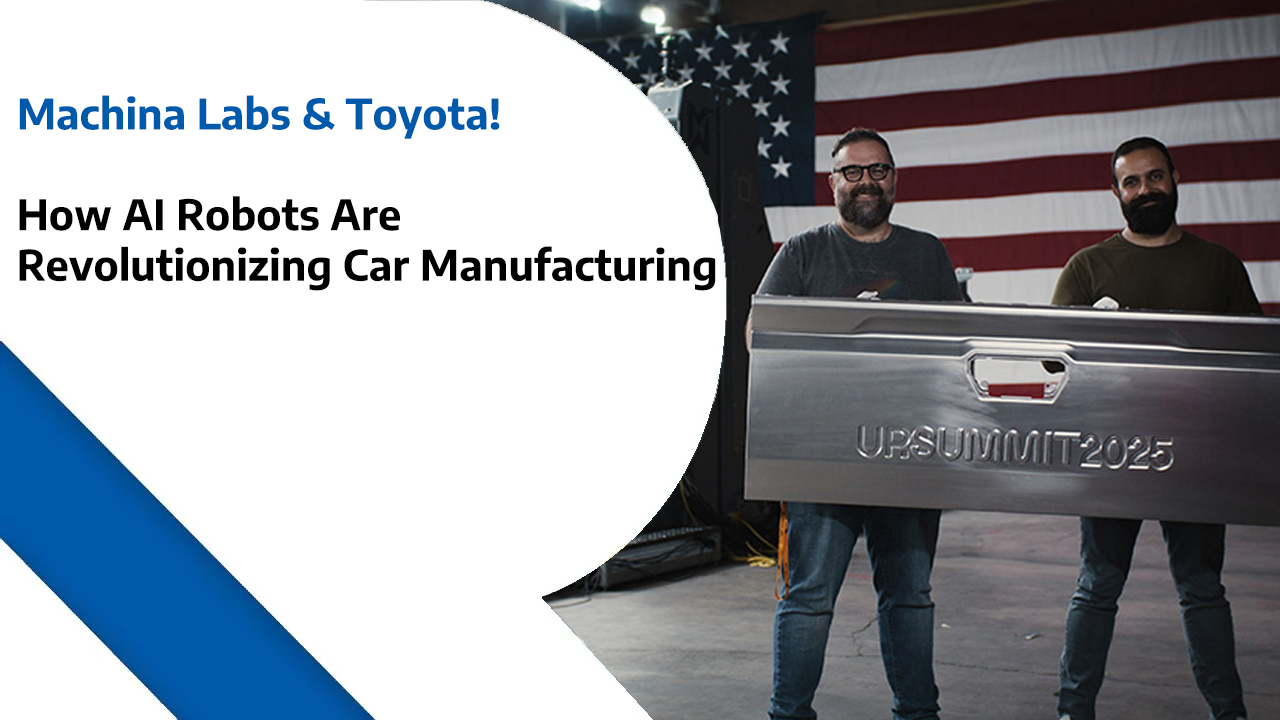
  • Machina Labs & Toyota: How AI Robots Are Revolutionizing Car Manufacturing

    Machina Labs & Toyota: How AI Robots Are Revolutionizing Car Manufacturing

    Machina Labs & Toyota: How AI Robots Are Revolutionizing Car Manufacturing

    Automotive manufacturing is usually about giant stamping presses, twenty-ton dies, and months of waiting before a new car part is ready. Machina Labs, based in Los Angeles, thinks that whole model is outdated. They’ve built a robotic, AI-driven system that can shape sheet metal without dies, which could bring customization to cars at mass-production prices.

    Instead of moving massive molds around on rails and cranes, their system uses robots that form the sheet metal incrementally. The AI checks and adjusts in real time. The result? Parts can be made in hours after a design is finished, instead of waiting three months to a year. That’s fast enough to rethink how cars are built and personalized.

    This matters for you because it means more choice. Machina Labs says you could one day order a car with unique panels, custom designs, even new alloys that were too difficult to stamp before. And because the robots don’t need expensive tooling, manufacturers could cut waste, save money, and pass some of that benefit on to buyers.

    Toyota has already partnered with Machina Labs through a pilot project. Their investment arm, Woven Capital, is backing the technology. The goal is to test custom body panels while keeping automotive-grade quality and speed.

    So, the age of the bespoke car factory may be closer than you think. Mass customization, once only for the wealthy, could soon be an option for every driver in America.

    Don’t forget to like, subscribe, and stay tuned for more on how AI and robotics are reshaping the way we build—and buy—cars.

    And that’s your robot news update for today!

    If you’re curious about how robotics can transform your business, head over to RoboPhil.com to join the waiting list for the workshops we’ll be running, or to speak with the team directly about robotics.Don’t forget to subscribe so you stay in the loop with all the latest updates.

    I’m RoboPhil from Robot Philosophy — thanks for watching, and I’ll see you next time!


    Join the workshop waiting list or get in touch at: https://robophil.com/


    Sponsors:-


    Robot Center: – https://robotcenter.co.uk/ – Buy Robot, Robot Buy, Robot consultancy, Robotics Consultancy, Inspection Robots, Security Robots,


    Robots of London: – https://robotsoflondon.co.uk/ – Robot Hire, Robot Rental, Rent Robot, Hire Robot, Robot Events, Robotics Hire, Hire Robotics, Rent Robotics, Robotics Rent, for exhibitions, shows, Events, Robot hire in the UK, Robot hire in Europe


    Robot Philosophy: – https://robophil.com/ – Robot Consultancy, Robot Recruitment, Robot Advice, Robot Insights, Robot Ideas. RoboPhil, also known as Philip English, is a leading Robot YouTuber, Robot Influencer, Robot Trainer, Robot Consultant, and Robot Streamer, Robotics Streamer, Robotics YouTuber, Robotics Influencer, Robotics Consultant, Robotics Trainer 

    https://www.youtube.com/watch?v=9uKL0O9akVshttps://www.youtube.com/shorts/EUQt2WIRkJw

  • CreateMe MeRA & Pixel – Robotic Apparel Manufacturing in the U.S.

    CreateMe MeRA & Pixel – Robotic Apparel Manufacturing in the U.S.

    CreateMe MeRA & Pixel – Robotic Apparel Manufacturing in the U.S.

    Picture this. Clothing made in America, not with sewing machines, but with robots and glue. That’s exactly what CreateMe Technologies in Newark, California is doing.

    They’ve launched two big innovations. MeRA, which stands for Modular-engineering Robotic Assembly, and Pixel, a proprietary micro-adhesive that replaces thread. Instead of stitching, MeRA robots bond fabric together with Pixel, creating seams thinner than a millimeter.

    The numbers are impressive. CreateMe says MeRA can produce up to 250 garments per hour. That’s 20 times faster and twice as precise as manual sewing. And Pixel isn’t just strong — it’s recyclable, stretchable, moisture-wicking, and even helps with thermal regulation.

    The first commercial product is women’s intimates. That makes it the world’s first fully autonomous bonded intimates line. After that, the focus shifts to T-shirts and everyday clothing.

    So why should you care? If you’re a brand, this means faster turnaround, less waste, and lower shipping costs. If you’re a consumer, it means more sustainable, locally made clothes at competitive prices. And for the U.S. economy, it means manufacturing jobs and innovation staying closer to home.

    CreateMe isn’t just speeding up production. They’re setting a new standard for how clothes are made — on demand, sustainable, and ready for the 21st century.

    Would you wear robot-bonded clothing? Subscribe, leave a comment, and let’s hear what you think.


    And that’s your robot news update for today!

    If you’re curious about how robotics can transform your business, head over to RoboPhil.com to join the waiting list for the workshops we’ll be running, or to speak with the team directly about robotics.

    Don’t forget to subscribe so you stay in the loop with all the latest updates. I’m RoboPhil from Robot Philosophy — thanks for watching, and I’ll see you next time!

    Join the workshop waiting list or get in touch at: https://robophil.com/


    Sponsors:-


    Robot Center: – https://robotcenter.co.uk/ – Buy Robot, Robot Buy, Robot consultancy, Robotics Consultancy, Inspection Robots, Security Robots,


    Robots of London: – https://robotsoflondon.co.uk/ – Robot Hire, Robot Rental, Rent Robot, Hire Robot, Robot Events, Robotics Hire, Hire Robotics, Rent Robotics, Robotics Rent, for exhibitions, shows, Events, Robot hire in the UK, Robot hire in Europe


    Robot Philosophy: – https://robophil.com/ – Robot Consultancy, Robot Recruitment, Robot Advice, Robot Insights, Robot Ideas. RoboPhil, also known as Philip English, is a leading Robot YouTuber, Robot Influencer, Robot Trainer, Robot Consultant, and Robot Streamer, Robotics Streamer, Robotics YouTuber, Robotics Influencer, Robotics Consultant, Robotics Trainer 


    https://www.youtube.com/watch?v=qTVfT31Ey4Uhttps://www.youtube.com/shorts/w-pWpBwu85I