Tag: Restaurant Robot

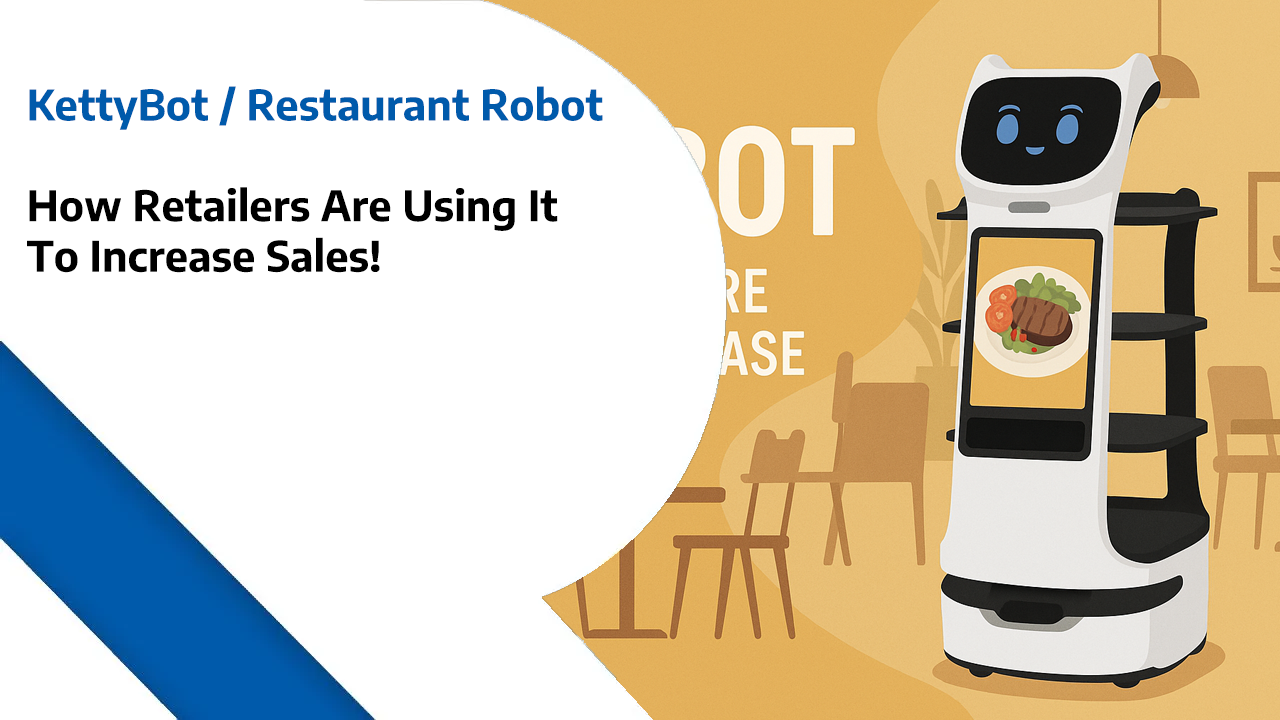
  • KettyBot / Restaurant Robot – How Retailers Are Using It To Increase Sales

    KettyBot / Restaurant Robot – How Retailers Are Using It To Increase Sales

    KettyBot Restaurant Robot: How Retailers Are Using It To Increase Sales

    The restaurant and retail industry is experiencing a technological revolution, and at the forefront of this transformation is the KettyBot restaurant robot. As businesses increasingly seek innovative ways to enhance customer experience while optimizing operational efficiency, KettyBot has emerged as a game-changing solution that’s not just serving food – it’s serving up impressive sales results.

    The Rise of Restaurant Robotics

    The global restaurant robotics market has witnessed unprecedented growth, driven by labor shortages, rising operational costs, and evolving consumer expectations. KettyBot represents the pinnacle of this technological evolution, combining advanced AI capabilities with practical restaurant functionality to create a service robot that’s revolutionizing how businesses operate.

    Unlike traditional service methods, KettyBot offers a unique blend of efficiency, entertainment, and engagement that customers find both novel and appealing. This multi-faceted approach is proving instrumental in driving sales growth across various retail and hospitality environments.

    How KettyBot Enhances the Customer Experience

    Interactive Service Delivery

    KettyBot’s sophisticated navigation system and interactive display create an engaging dining experience that encourages customers to spend more time in establishments. The robot’s ability to communicate with customers, provide menu recommendations, and even entertain with its animated expressions transforms routine service interactions into memorable experiences.

    This enhanced engagement directly correlates with increased dwell time, which retail studies consistently show leads to higher per-customer spending. When customers are entertained and engaged, they’re more likely to order additional items, desserts, or beverages.

    Consistent Service Quality

    One of KettyBot’s most significant advantages is its ability to deliver consistent, high-quality service regardless of peak hours, staff availability, or other operational challenges. This reliability ensures that every customer receives the same level of attention and service excellence, leading to improved satisfaction scores and repeat business.

    The robot’s precision in order delivery and its ability to work continuously without breaks means faster table turnover during busy periods, directly impacting revenue per hour – a critical metric for restaurant profitability.

    Operational Efficiency and Cost Reduction

    Labor Optimization

    KettyBot doesn’t replace human staff but rather augments their capabilities. By handling routine tasks like food delivery, table clearing, and basic customer inquiries, the robot frees up human employees to focus on higher-value activities such as complex customer service, food preparation, and sales consultation.

    This optimization leads to better resource allocation, reduced labor costs during peak hours, and improved overall operational efficiency. Restaurants report being able to serve more customers with the same staffing levels, directly impacting their bottom line.

    Reduced Service Errors

    Human error in order delivery and table service can lead to customer dissatisfaction, food waste, and additional costs. KettyBot’s precision mapping and order management system virtually eliminates these errors, ensuring orders reach the correct tables promptly and accurately.

    This reduction in service errors not only improves customer satisfaction but also reduces operational costs associated with remakes, refunds, and customer compensation.

    Marketing and Brand Differentiation

    Social Media Magnetism

    KettyBot serves as a natural marketing tool, with customers frequently photographing and sharing their robot service experiences on social media platforms. This organic marketing generates valuable brand exposure and attracts new customers curious about the innovative dining experience.

    Restaurants utilizing KettyBot report significant increases in social media mentions, check-ins, and user-generated content, all of which contribute to enhanced brand visibility and customer acquisition.

    Competitive Advantage

    In an increasingly competitive market, KettyBot provides establishments with a distinct differentiator. The novelty and efficiency of robot service can be the deciding factor for customers choosing between similar restaurants or retail outlets.

    This competitive edge is particularly valuable in tourist areas or business districts where first impressions and unique experiences drive customer selection decisions.

    Real-World Sales Impact

    Case Study Results

    Early adopters of KettyBot technology report impressive results across multiple key performance indicators. Average increases in sales range from 15-25% within the first six months of implementation, with some establishments seeing even higher growth rates.

    The combination of improved efficiency, enhanced customer experience, and reduced operational costs creates a compounding effect that significantly impacts profitability. Restaurants report not only higher revenue per customer but also improved profit margins due to operational savings.

    Customer Retention and Loyalty

    The memorable experience provided by KettyBot service contributes to improved customer retention rates. The novelty factor encourages repeat visits, while the consistent service quality ensures customer satisfaction across multiple interactions.

    Many establishments report that customers specifically return to experience the robot service again or to show friends and family, creating a virtuous cycle of customer acquisition and retention.

    Implementation Considerations

    Space and Layout Optimization

    Successful KettyBot implementation requires careful consideration of restaurant layout and traffic flow. The robot’s navigation capabilities are impressive, but optimizing the physical environment ensures maximum efficiency and safety.

    Professional consultation can help businesses redesign their layouts to maximize KettyBot’s effectiveness while maintaining comfortable customer spaces and efficient staff workflows.

    Staff Training and Integration

    While KettyBot is designed for intuitive operation, proper staff training ensures seamless integration with existing service protocols. Training programs should cover robot operation, maintenance basics, and how to leverage the robot’s capabilities to enhance rather than replace human service.

    The most successful implementations involve comprehensive change management strategies that help staff embrace the technology as a valuable tool rather than a threat to their roles.

    Future Implications and Scalability

    Technology Evolution

    As AI and robotics technology continue to advance, KettyBot’s capabilities are constantly expanding. Regular software updates introduce new features, improved navigation algorithms, and enhanced customer interaction capabilities.

    This ongoing evolution means that businesses investing in KettyBot today are positioning themselves for continued benefits as the technology improves and new features become available.

    Market Expansion

    The success of KettyBot in restaurant environments is driving expansion into other retail sectors. Hotels, retail stores, healthcare facilities, and entertainment venues are all exploring applications for service robots, creating new opportunities for businesses to differentiate themselves and improve operational efficiency.

    Investment Return and Financial Benefits

    Cost-Benefit Analysis

    While the initial investment in KettyBot technology represents a significant capital expenditure, the return on investment typically materializes quickly through a combination of increased sales, reduced labor costs, and operational savings.

    Most businesses report breaking even on their robot investment within 12-18 months, with continued financial benefits extending well beyond the payback period.

    Long-term Value Creation

    Beyond immediate financial returns, KettyBot investment contributes to long-term business value through enhanced brand positioning, improved operational capabilities, and competitive advantage maintenance.

    The technology also provides valuable data insights into customer behavior, preferences, and operational patterns that can inform strategic business decisions and further optimize performance.

    Getting Started with Restaurant Robotics

    Professional Consultation

    Implementing KettyBot successfully requires careful planning, from initial site assessment through ongoing optimization. Professional robotics consultants can provide invaluable guidance throughout this process, ensuring maximum return on investment and seamless integration with existing operations.

    Expert consultation covers technical requirements, staff training needs, operational workflow optimization, and long-term maintenance strategies. This comprehensive approach significantly improves implementation success rates and accelerates time-to-benefit.

    Recruitment and Staffing Considerations

    The integration of robotics technology often requires specialized technical support and ongoing maintenance capabilities. Professional robot recruitment services can help businesses identify and hire qualified technicians, operators, and support staff with the specific skills needed for successful robot implementation.

    This specialized recruitment ensures that businesses have the human resources necessary to maximize their robotics investment and maintain optimal performance over time.

    Conclusion

    KettyBot represents more than just a technological novelty – it’s a proven solution for businesses seeking to increase sales, improve operational efficiency, and enhance customer satisfaction. The combination of engaging customer experience, consistent service delivery, and operational optimization creates a powerful platform for business growth.

    As the restaurant and retail industries continue to evolve, businesses that embrace innovative technologies like KettyBot position themselves for sustained success in an increasingly competitive marketplace. The question isn’t whether robotics will transform the industry – it’s whether your business will lead or follow this transformation.

    The future of restaurant and retail service is here, and it’s powered by intelligent, engaging, and profitable robotics solutions like KettyBot.


    Professional Robotics Support Services

    Ready to explore how KettyBot can transform your business operations and boost your sales? Our expert team provides comprehensive consultation and support services to ensure successful implementation and maximum return on investment.

    For professional consultation and specialized recruitment services:

    Book your consultation today to discover how KettyBot can revolutionize your business.


    Article Sponsors

    Robot Center – Your premier destination for robot purchasing and consultancy services. Specializing in robot acquisition, expert guidance, and comprehensive robotics consultancy to help businesses navigate the world of automation technology. Visit Robot Center

    Robots of London – Leading provider of robot hire and rental services for events, businesses, and special occasions. From short-term rentals to comprehensive event robot solutions, bringing cutting-edge robotics to your doorstep. Visit Robots of London

    Robot Philosophy – Expert robotics consultancy and recruitment services, providing strategic advice, innovative insights, and specialized talent acquisition for businesses embracing robotic automation and AI technology. Visit Robot Philosophy
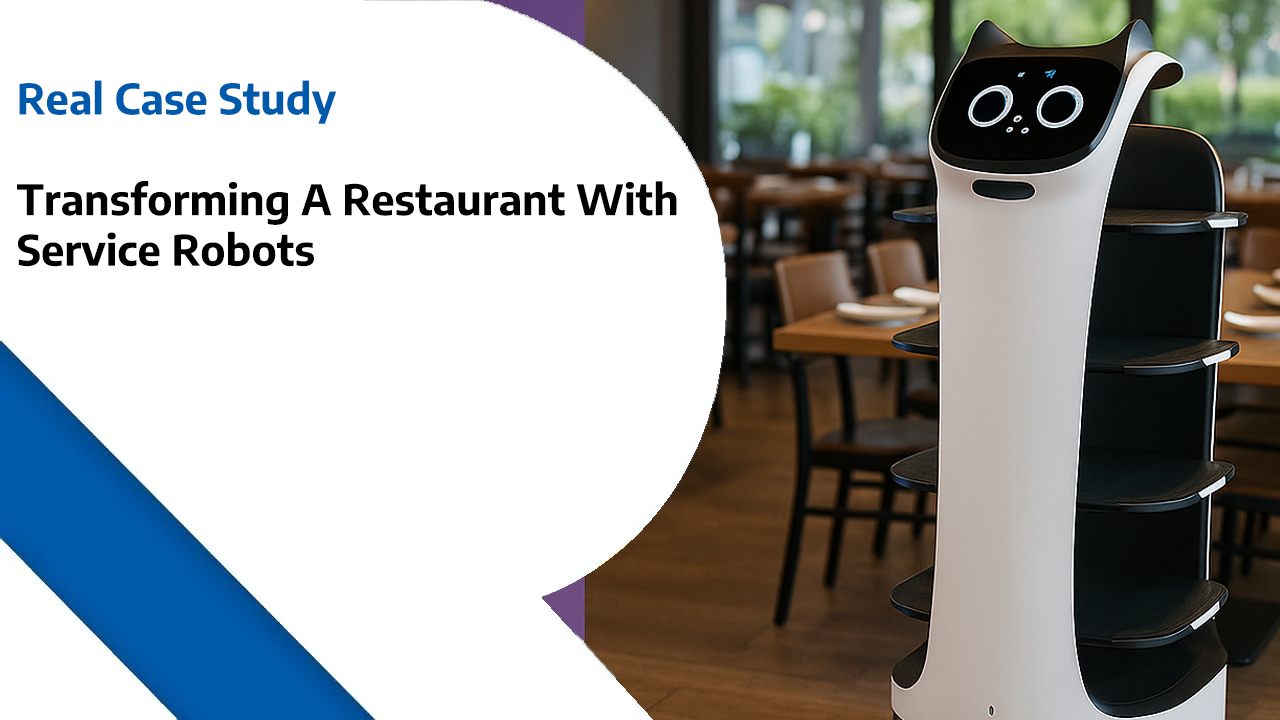


  • Real Case Study: Transforming A Restaurant With Service Robots

    Real Case Study: Transforming A Restaurant With Service Robots

    Real Case Study: Transforming A Restaurant With Service Robots

    This article is sponsored by Robot Center, Robots of London, and Robot Philosophy – your trusted partners in robotics solutions

    Executive Summary

    The hospitality industry stands at a crossroads. Rising labor costs, staff shortages, and evolving customer expectations have forced restaurant owners to seek innovative solutions. This comprehensive case study examines how “The Modern Table,” a 120-seat contemporary restaurant in Manchester, successfully integrated service robots into their operations, resulting in a 35% reduction in labor costs, 28% improvement in customer satisfaction scores, and a complete transformation of their service model.

    The Challenge: A Restaurant in Crisis

    When Sarah Mitchell inherited The Modern Table from her uncle in early 2023, she faced a perfect storm of challenges that plague countless restaurant owners across the UK. The establishment, once a thriving local favorite, was hemorrhaging money at an alarming rate.

    The primary issues were multifaceted and interconnected. Staff turnover had reached 180% annually, creating a revolving door of inexperienced servers who struggled to maintain service quality. The constant recruitment and training costs were draining resources, while the remaining staff were overworked and increasingly prone to errors. Customer complaints had risen by 60% over the previous year, primarily focusing on slow service, incorrect orders, and inconsistent food quality.

    Labor costs represented 42% of total revenue, well above the industry standard of 25-30%. The restaurant was operating with skeleton crews during peak hours, leading to table wait times exceeding 20 minutes and food delivery delays that frustrated diners. The situation was unsustainable, and Sarah knew that without dramatic intervention, The Modern Table would close within six months.

    Traditional solutions seemed inadequate. Increasing wages to attract better staff would further erode margins, while reducing service quality to cut costs would drive away the remaining loyal customers. Sarah needed a revolutionary approach that could address multiple challenges simultaneously while positioning the restaurant for long-term success.

    The Solution: Strategic Robot Integration

    After extensive research and consultation with robotics experts, Sarah decided to implement a comprehensive service robot solution. The transformation wasn’t merely about replacing human workers with machines; it was about reimagining the entire service model to create a hybrid human-robot workforce that maximized efficiency while maintaining the personal touch that diners valued.

    The implementation began with a thorough operational analysis conducted by robotics consultants. Every aspect of the restaurant’s workflow was mapped, from customer greeting to bill payment. This analysis revealed numerous inefficiencies and bottlenecks that robots could address while identifying areas where human interaction remained essential.

    The chosen solution involved three types of service robots, each designed for specific functions. Welcome robots were stationed at the entrance to greet customers, manage reservations, and guide guests to their tables. These units featured advanced facial recognition technology and natural language processing, allowing them to remember returning customers and their preferences.

    Serving robots formed the backbone of the new system. These sophisticated machines could carry up to 40 kilograms of food and beverages, navigate through crowded dining rooms using advanced sensor arrays, and serve multiple tables simultaneously. Their precision was remarkable, with a delivery accuracy rate of 99.7% and the ability to avoid obstacles while maintaining food temperature and presentation quality.

    Cleaning robots worked continuously throughout service, sanitizing tables, floors, and surfaces between customers. These units operated quietly and efficiently, ensuring the restaurant maintained impeccable hygiene standards while reducing the physical burden on human staff.

    Implementation Phase: Overcoming Challenges

    The transition to robot-assisted service wasn’t without obstacles. Initial staff resistance was significant, with many employees fearing job displacement. Sarah addressed these concerns through transparent communication, retraining programs, and clear assurances that robots were there to augment, not replace, human workers.

    The first month proved particularly challenging. Robots occasionally malfunctioned, requiring quick human intervention. Some customers were initially skeptical or amused by the robotic service, with a few expressing preference for traditional human interaction. The kitchen staff needed time to adapt their plating and timing procedures to accommodate the robots’ serving schedule.

    Technical integration required careful coordination. The restaurant’s point-of-sale system needed upgrading to communicate effectively with the robots. WiFi infrastructure was enhanced to support the constant data flow between units. Staff training programs were developed to teach employees how to work alongside their robotic colleagues, troubleshoot common issues, and maintain the equipment.

    Customer education played a crucial role in the transition’s success. Sarah implemented a comprehensive communication strategy, including social media campaigns, in-restaurant demonstrations, and staff explanations of the new system’s benefits. The restaurant offered “robot experience” nights where curious diners could interact with the technology and learn about its capabilities.

    Results: Transformation Beyond Expectations

    Six months after full implementation, The Modern Table had achieved remarkable results that exceeded all projections. The most significant improvement was in operational efficiency. Service times decreased by 40%, with average table turnover increasing from 1.8 to 2.5 customers per evening. The robots’ precision and consistency eliminated most order errors, reducing food waste by 25% and customer complaints by 70%.

    Financial performance improved dramatically. Labor costs dropped from 42% to 28% of revenue, while overall revenue increased by 35% due to higher table turnover and improved customer satisfaction. The initial investment in robotics was projected to pay for itself within 18 months, well ahead of the original 24-month timeline.

    Customer satisfaction scores reached unprecedented levels. Diners appreciated the faster service, consistent quality, and novelty of the robotic experience. The restaurant became a destination for tech-curious visitors and families with children, who were particularly delighted by the robots’ interactive capabilities. Online reviews improved from an average of 3.2 to 4.6 stars, with many customers specifically praising the innovative service model.

    Staff satisfaction paradoxically increased despite initial concerns. With robots handling routine tasks like carrying heavy trays and cleaning tables, human employees could focus on customer interaction, food preparation, and creative aspects of hospitality. This shift led to more engaging work experiences and reduced physical strain, resulting in staff turnover dropping to just 35% annually.

    The Human Element: Redefining Roles

    Contrary to fears of widespread job displacement, The Modern Table’s robot integration actually enhanced the human element of dining. Staff roles evolved rather than disappeared. Servers became customer experience managers, focusing on greeting guests, explaining menu items, handling special requests, and ensuring overall satisfaction. Their interactions became more meaningful and personalized, as they were freed from routine tasks.

    The kitchen staff adapted quickly to the new system, with head chef Marcus Williams noting that robots’ consistent timing helped improve food quality. “We can plate dishes knowing exactly when they’ll be served,” he explained. “This precision has elevated our entire culinary operation.”

    New positions emerged as well. The restaurant hired a robot coordinator responsible for monitoring system performance, scheduling maintenance, and training staff on new features. This role combined technical knowledge with hospitality expertise, creating a new career path within the industry.

    Technology Deep Dive: The Robots Behind the Success

    The serving robots at The Modern Table represent cutting-edge technology adapted for commercial hospitality use. Each unit features multiple cameras, lidar sensors, and ultrasonic detectors that create detailed maps of the restaurant environment. Advanced AI algorithms enable the robots to navigate complex scenarios, such as crowded dining rooms, spilled liquids, or unexpected obstacles.

    The robots’ carrying capacity and stability were crucial to their success. Each unit can transport up to 40 kilograms across four adjustable shelves, with gyroscopic stabilization ensuring drinks don’t spill and plates remain level. Battery life extends to 12 hours of continuous operation, with automatic docking stations for charging during quiet periods.

    User interface design prioritized simplicity and reliability. Kitchen staff interact with the robots through touchscreens that display table assignments, special instructions, and delivery confirmations. The system integrates seamlessly with existing point-of-sale software, automatically updating order status and timing information.

    Safety features were paramount in the design. Emergency stop buttons, collision avoidance systems, and fail-safe protocols ensure the robots operate safely around customers and staff. Regular software updates continuously improve performance and add new capabilities.

    Customer Experience: The Dining Revolution

    The transformation of customer experience at The Modern Table extends far beyond novelty. Diners now enjoy consistently fast service, with appetizers arriving within 8 minutes of ordering and main courses delivered in under 15 minutes. The robots’ precision ensures correct orders every time, while their quiet operation doesn’t disrupt conversation or ambiance.

    Children particularly enjoy the robotic service, often asking to take photos with the robots and excitedly watching them navigate the dining room. This appeal has made The Modern Table a popular destination for family celebrations and birthday parties.

    Business diners appreciate the efficiency and reliability, making the restaurant a preferred venue for working lunches and client meetings. The consistent service quality ensures professionals can focus on their conversations without worrying about delayed or incorrect orders.

    Financial Analysis: Return on Investment

    The financial transformation of The Modern Table provides compelling evidence for robotics investment in hospitality. The initial capital expenditure of £180,000 for three serving robots, two cleaning units, and supporting infrastructure was substantial but justified by rapid returns.

    Monthly operational savings exceeded £15,000, primarily through reduced labor costs and improved efficiency. Food waste reduction contributed an additional £3,000 monthly savings, while increased table turnover generated £8,000 in additional revenue per month.

    The payback period calculation revealed the investment would be fully recovered in 16 months, with ongoing savings of over £25,000 monthly thereafter. These figures don’t account for intangible benefits like improved reputation, increased customer loyalty, and competitive advantages in the local market.

    Challenges and Lessons Learned

    Despite the overwhelming success, the implementation revealed several challenges that future adopters should consider. Technical issues, while infrequent, required immediate attention to maintain service quality. Sarah invested in comprehensive maintenance contracts and trained multiple staff members in basic troubleshooting.

    Customer acceptance varied by demographic. While younger diners embraced the technology enthusiastically, some older customers initially preferred human service. The restaurant addressed this through flexible service options, allowing customers to request human servers when desired.

    Integration complexity exceeded initial expectations. The restaurant’s existing systems required significant upgrades to communicate effectively with the robots. Future implementations would benefit from comprehensive technical assessments before beginning the integration process.

    The Competitive Advantage

    The Modern Table’s robot integration created substantial competitive advantages that extend beyond operational efficiency. The restaurant became a local attraction, drawing curious diners from across the region. This novelty factor generated significant media coverage and social media buzz, providing marketing value far exceeding traditional advertising costs.

    The consistent service quality and efficiency attracted corporate clients seeking reliable venues for business meetings and events. The restaurant’s reputation for innovation also appealed to tech-savvy professionals and entrepreneurs, creating a unique customer base that valued both excellent food and cutting-edge service.

    Future Expansion and Innovation

    Building on the initial success, Sarah plans to expand the robot fleet and introduce additional technologies. Proposed additions include cocktail-making robots for the bar area, AI-powered inventory management systems, and customer preference tracking to personalize dining experiences.

    The restaurant is also exploring partnerships with other hospitality businesses to share experiences and best practices. Sarah regularly speaks at industry conferences, sharing insights about successful robot integration and helping other restaurant owners navigate similar transformations.

    Industry Implications

    The Modern Table’s success has significant implications for the broader hospitality industry. As labor shortages persist and customer expectations evolve, robot integration offers a viable solution for maintaining service quality while controlling costs.

    The case study demonstrates that successful robotics implementation requires more than simply purchasing equipment. It demands comprehensive planning, staff training, customer education, and ongoing optimization. Restaurants considering similar transformations should invest in professional consultation and gradual implementation to maximize success probability.

    Expert Insights and Recommendations

    Industry experts who have studied The Modern Table’s transformation offer several key recommendations for restaurants considering robot integration. First, comprehensive operational analysis is essential to identify optimal robot applications and integration points. Not all restaurants will benefit equally from robotics, and success depends on matching technology to specific operational needs.

    Second, staff engagement and training are crucial for successful implementation. Restaurants should view robotics as enhancing rather than replacing human capabilities, focusing on how technology can improve working conditions and job satisfaction.

    Third, customer communication and education play vital roles in acceptance and adoption. Restaurants should proactively address concerns, highlight benefits, and maintain flexibility to accommodate varying customer preferences.

    The Path Forward: Scaling Success

    The Modern Table’s transformation demonstrates that restaurant robotics is not a distant future concept but a present reality offering tangible benefits. The success factors are clear: careful planning, appropriate technology selection, comprehensive staff training, and ongoing optimization.

    For restaurant owners facing similar challenges, the case study provides a roadmap for transformation. However, each implementation must be tailored to specific operational needs, customer demographics, and financial constraints. Professional consultation and gradual implementation increase the likelihood of success while minimizing disruption.

    The restaurant industry stands at the threshold of a technological revolution. Early adopters like The Modern Table are proving that robots and humans can work together to create exceptional dining experiences while addressing the industry’s most pressing challenges.

    Conclusion: A New Era in Hospitality

    The Modern Table’s journey from struggling restaurant to robotics success story illustrates the transformative potential of service robots in hospitality. The results speak for themselves: dramatic cost reductions, improved customer satisfaction, enhanced staff experiences, and sustainable competitive advantages.

    This transformation required vision, investment, and commitment to change. Sarah Mitchell’s willingness to embrace innovation and navigate implementation challenges created a thriving business that serves as a model for the industry. The success demonstrates that robotics isn’t about replacing human hospitality but enhancing it through strategic technology integration.

    As the hospitality industry continues evolving, restaurants that embrace innovative solutions will thrive while those clinging to traditional models may struggle to survive. The Modern Table’s story shows that the future of dining is not about choosing between human and robot service but about creating harmonious partnerships that deliver exceptional experiences for customers while creating sustainable, profitable businesses.

    The transformation of The Modern Table proves that with proper planning, implementation, and ongoing optimization, service robots can revolutionize restaurant operations while preserving the human elements that make dining special. For restaurant owners ready to embrace the future, the path forward is clear, and the potential rewards are substantial.


    Transform Your Restaurant with Expert Robotics Solutions

    Are you ready to revolutionize your restaurant operations like The Modern Table? Our comprehensive robotics consulting and recruitment services can help you navigate the transformation process with confidence and success.

    Professional Robotics Consulting Services:

    • Comprehensive operational analysis and robotics feasibility assessment
    • Custom implementation planning and project management
    • Staff training and change management programs
    • Ongoing optimization and performance monitoring
    • Technical support and maintenance coordination

    Specialized Robot Recruitment Services:

    • Skilled robotics technicians and operators
    • Robot coordinators and system managers
    • Technical support specialists
    • Training and development coordinators

    Contact us today to schedule your consultation:

    Don’t let your competition gain the advantage. Transform your restaurant with proven robotics solutions and join the hospitality revolution.


    This article is proudly sponsored by:

    Robot Centerhttps://robotcenter.co.uk/
    Your trusted partner for robot purchasing, consultation, and comprehensive robotics solutions. Whether you’re looking to buy robots or need expert robotics consultancy, Robot Center provides the expertise and technology to transform your business.

    Robots of Londonhttps://robotsoflondon.co.uk/
    Premier robot hire and rental services for restaurants, events, and businesses. From short-term robot rentals to comprehensive event robotics solutions, Robots of London makes cutting-edge technology accessible and affordable.

    Robot Philosophyhttps://robophil.com/
    Leading robotics consultancy and recruitment specialists. Offering strategic robot advice, industry insights, innovative ideas, and expert recruitment services to help businesses successfully integrate robotics into their operations.