Tag: Consultant robot

  • How to Present a Robotics Proposal to Senior Management

    How to Present a Robotics Proposal to Senior Management

    How to Present a Robotics Proposal to Senior Management

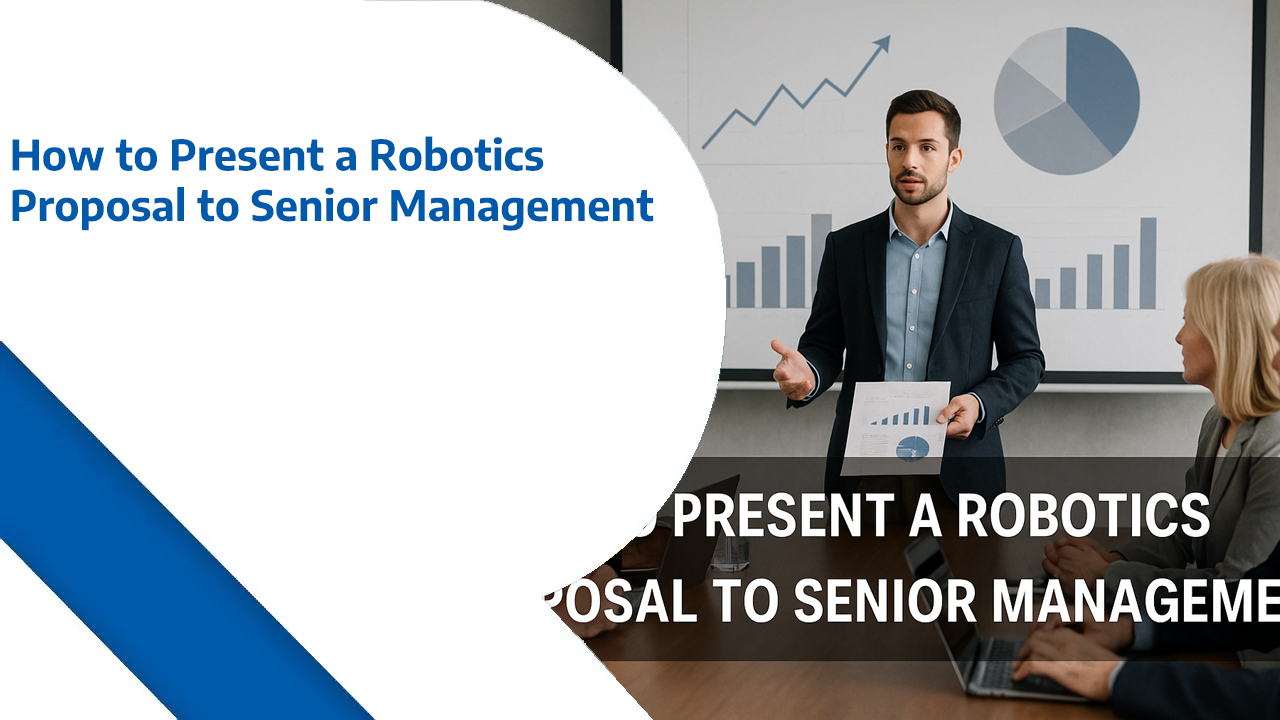
    Presenting a robotics proposal to senior management can be the difference between transforming your operations and watching competitors surge ahead. Yet many brilliant automation initiatives fail not because of flawed technology, but because of ineffective presentations. This comprehensive guide will equip you with the strategies needed to secure buy-in for your robotics projects.

    Understanding the Senior Management Mindset

    Before diving into presentation techniques, it’s crucial to understand what keeps C-suite executives awake at night. Senior leaders aren’t primarily concerned with technical specifications or the latest robotic innovations—they’re focused on business outcomes, risk mitigation, and competitive positioning.

    Your proposal must answer three fundamental questions:

    • How will this impact the bottom line? (ROI, cost savings, revenue generation)
    • What are the risks? (Implementation challenges, disruption, failure scenarios)
    • Why now? (Market conditions, competitive pressure, opportunity cost of delay)

    Preparing Your Robotics Business Case

    1. Conduct Thorough Research and Analysis

    Begin with a comprehensive assessment of your current operations. Document baseline metrics including cycle times, error rates, labour costs, and throughput capacity. This data becomes the foundation for demonstrating measurable improvements.

    Key research elements:

    • Current operational costs and inefficiencies
    • Competitive landscape analysis
    • Technology maturity and vendor stability
    • Industry case studies and benchmarks
    • Regulatory and compliance considerations

    If you’re unsure where to start, expert robot consultancy services can provide objective assessments of your automation opportunities and help quantify potential benefits.

    2. Build a Compelling Financial Model

    Senior management speaks the language of numbers. Your financial model should include:

    Initial Investment Breakdown:

    • Capital expenditure (robot hardware, infrastructure)
    • Integration and installation costs
    • Training and change management
    • Contingency reserves (typically 15-20%)

    Ongoing Operational Costs:

    • Maintenance and support contracts
    • Energy consumption
    • Software licensing and updates
    • Staffing adjustments

    Quantified Benefits:

    • Direct labour cost reduction
    • Productivity improvements (increased throughput)
    • Quality improvements (reduced defect rates)
    • Safety enhancements (reduced workplace incidents)
    • Flexibility gains (faster changeovers, extended operating hours)

    Calculate multiple scenarios: conservative, expected, and optimistic. Show break-even analysis and payback period—most robotics investments achieve payback within 18-36 months.

    3. Address the Human Element

    One of the biggest concerns senior management faces with robotics implementation is workforce impact. Address this proactively:

    • Redeployment strategy: How will affected employees be retrained or reassigned?
    • Upskilling opportunities: What new technical roles will be created?
    • Change management plan: How will you manage the transition culturally?
    • Communication approach: How will you maintain morale and transparency?

    Organizations that handle the people side effectively see 40% higher success rates in automation projects.

    Structuring Your Presentation

    Opening: The Hook (2-3 minutes)

    Start with impact. Use one of these approaches:

    • The competitive threat: “Three of our main competitors have implemented similar automation and reduced costs by 30%”
    • The opportunity cost: “Every month we delay costs us £X in inefficiency”
    • The customer impact: “This technology will reduce delivery times by 40%, directly addressing our top customer complaint”

    The Problem Statement (3-4 minutes)

    Clearly articulate the business challenge you’re addressing. Use specific, quantified pain points:

    • “Our manual packaging line operates at 60% capacity during peak periods”
    • “Quality defects in assembly cost us £500K annually”
    • “We’re losing skilled workers to competitors and struggling to recruit replacements”

    The Solution Overview (5-7 minutes)

    Present your robotics solution focusing on business outcomes rather than technical features. Use visual aids showing the robot in action, preferably in similar applications.

    Key elements:

    • What the robot will do (in business terms)
    • How it integrates with existing operations
    • Timeline from approval to full deployment
    • Why this solution versus alternatives

    For complex technical requirements, consider engaging robot recruitment services to ensure you have the right expertise to implement and maintain your chosen solution.

    Financial Analysis (7-10 minutes)

    This is the heart of your presentation. Present your financial model clearly:

    Use visual dashboards showing:

    • Payback period and ROI over 3-5 years
    • Year-by-year cash flow
    • Sensitivity analysis showing impact of key assumptions
    • Comparison with “do nothing” scenario

    Be prepared for scrutiny. Anticipate questions about your assumptions and have supporting data ready.

    Risk Assessment and Mitigation (4-5 minutes)

    Don’t shy away from risks—addressing them proactively builds credibility. Cover:

    Technical risks:

    • Integration complexity (mitigation: phased rollout, experienced integrator)
    • Vendor reliability (mitigation: established supplier, service agreements)

    Operational risks:

    • Learning curve disruption (mitigation: comprehensive training, parallel operation)
    • Unexpected downtime (mitigation: redundancy, preventive maintenance)

    Strategic risks:

    • Technology obsolescence (mitigation: modular design, upgrade paths)
    • Changing business requirements (mitigation: flexible, reprogrammable systems)

    Implementation Roadmap (3-4 minutes)

    Present a clear, phased implementation plan:

    Phase 1 – Foundation (Months 1-2)

    • Final vendor selection and contracting
    • Site preparation and infrastructure upgrades
    • Team formation and initial training

    Phase 2 – Installation (Months 3-4)

    • Equipment delivery and installation
    • System integration and testing
    • Operator training programs

    Phase 3 – Commissioning (Months 5-6)

    • Parallel operations and refinement
    • Performance validation
    • Process documentation

    Phase 4 – Optimization (Months 7-12)

    • Full production transition
    • Continuous improvement initiatives
    • Expansion planning

    The Call to Action (2 minutes)

    Close with a clear ask and next steps:

    • Specific approval you’re seeking
    • Decision timeline and urgency
    • Next milestone or meeting
    • Resources needed to proceed

    Advanced Presentation Techniques

    Use Storytelling and Case Studies

    Data convinces the mind, but stories convince the heart. Include:

    • Real-world examples from similar companies
    • Site visit opportunities to see robots in action
    • Testimonials from operations managers who’ve implemented similar systems
    • Video demonstrations of the robot handling your specific application

    Leverage Visual Aids Effectively

    Senior executives are time-constrained. Your visuals should communicate instantly:

    • Use infographics over tables where possible
    • Show before/after comparisons visually
    • Include short video clips (30-60 seconds maximum)
    • Use animations to show process flows
    • Provide a one-page executive summary as a takeaway

    Anticipate and Prepare for Objections

    Common objections and how to address them:

    “The upfront cost is too high” Response: “While the initial investment is significant, our analysis shows the total cost of ownership over five years is 40% lower than continuing with our current approach, and the payback period is just 24 months.”

    “What if the technology doesn’t work as expected?” Response: “We’ve built in a phased approach with clear go/no-go decision points. Phase 1 is a low-risk pilot with limited investment that validates performance before full-scale commitment.”

    “We don’t have the internal expertise” Response: “We’ve partnered with robot consulting experts who will guide implementation and train our team. Additionally, we’ll leverage specialist robot recruitment services to bring in targeted expertise where needed.”

    “This will negatively impact our workforce” Response: “We’ve developed a comprehensive transition plan that prioritizes retraining and redeployment. In fact, this creates 12 new higher-skilled positions while eliminating only repetitive, ergonomically challenging tasks.”

    Post-Presentation Follow-Up

    Your work doesn’t end when the presentation concludes:

    Immediate Actions (Within 24 hours)

    • Send a thank-you email with key materials
    • Provide the one-page executive summary
    • Share any additional data requested during Q&A
    • Schedule follow-up discussions with individual stakeholders

    Short-term Follow-up (Within 1 week)

    • Arrange site visits or vendor demonstrations
    • Connect senior management with reference customers
    • Provide supplementary analysis addressing concerns raised
    • Refine financial models based on feedback

    Maintaining Momentum

    • Provide regular updates on project developments
    • Share relevant industry news and competitor moves
    • Be available for ongoing questions and discussions
    • Propose pilot programs or proof-of-concept trials

    Getting Expert Support

    Presenting a robotics proposal successfully requires both business acumen and technical knowledge. If you need support developing your business case, evaluating robot technologies, or building your implementation team, professional guidance can dramatically improve your chances of success.

    For expert robot consultancy and recruitment services, contact:

    Book a consultation call to discuss how we can help you build a compelling robotics proposal and identify the right automation solutions for your operation.

    Common Mistakes to Avoid

    1. Being Too Technical

    Senior management doesn’t need to understand PID controllers or inverse kinematics. Focus on what the robot accomplishes, not how it does it.

    2. Underestimating Integration Complexity

    The robot itself may cost £50K, but integration, programming, safety systems, and training might add another £100K. Be realistic about total costs.

    3. Ignoring Change Management

    Technology implementation is 30% technical and 70% people. Don’t gloss over the organizational change aspects.

    4. Overpromising Results

    Use conservative estimates in your base case. Exceeding expectations is better than falling short of aggressive projections.

    5. Lacking Specific Details

    Vague proposals get vague responses. Be specific about timelines, costs, responsibilities, and success metrics.

    6. Not Addressing Competition

    If you don’t know what competitors are doing with robotics, your senior management will question whether you’ve done your homework.

    Measuring Success Post-Implementation

    Once approved, establish clear metrics to track project success:

    Performance Metrics:

    • Throughput improvements (units per hour)
    • Quality improvements (defect rates)
    • Uptime and reliability (OEE – Overall Equipment Effectiveness)
    • Cycle time reduction

    Financial Metrics:

    • Actual vs. projected ROI
    • Cost per unit produced
    • Labour cost reduction
    • Total cost of ownership

    Strategic Metrics:

    • Customer satisfaction improvements
    • Market share impact
    • New capability development
    • Employee skill enhancement

    Regular reporting on these metrics validates your initial proposal and builds credibility for future automation initiatives.

    Conclusion

    Presenting a robotics proposal to senior management is as much about business strategy as it is about technology. By understanding executive priorities, building a compelling financial case, addressing risks proactively, and presenting with clarity and confidence, you dramatically increase your chances of securing approval.

    Remember: senior leaders are looking for business solutions, not technology for its own sake. Frame your proposal in terms of competitive advantage, customer value, and financial returns, and you’ll be well-positioned for success.

    The robotics revolution is transforming industries globally. Companies that move decisively gain competitive advantages that compound over time, while those that hesitate risk falling permanently behind. With thorough preparation and a well-structured proposal, you can lead your organization into this exciting future.


    About the Article Sponsors

    This article is brought to you by industry-leading robotics specialists:

    Robot Center – Your destination for purchasing cutting-edge robotics solutions and accessing expert robotics consultancy services to guide your automation journey.

    Robots of London – Specialists in robot hire and rental services for events, demonstrations, and short-term projects. Perfect for testing before investing or creating memorable robotic experiences.

    Robot Philosophy (RoboPhil) – Led by Philip English, a leading Robot YouTuber, Influencer, Trainer, and Consultant. RoboPhil provides comprehensive robot consultancy and recruitment services, delivering expert advice, insights, and innovative ideas to businesses navigating their robotics transformation.

    Ready to move forward with your robotics initiative?
    Contact us today to schedule a consultation:
    📧 info@robophil.com | 📞 0845 528 0404


    https://www.youtube.com/watch?v=fHOlwBn2COk
     

    https://www.youtube.com/shorts/XETJcoDiab4

  • Mall Guide Robots – Training for Public Interactions

    Mall Guide Robots – Training for Public Interactions


    Mall Guide Robots – Training for Public Interactions

    Introduction: The Rise of Robotic Customer Service in Retail Spaces

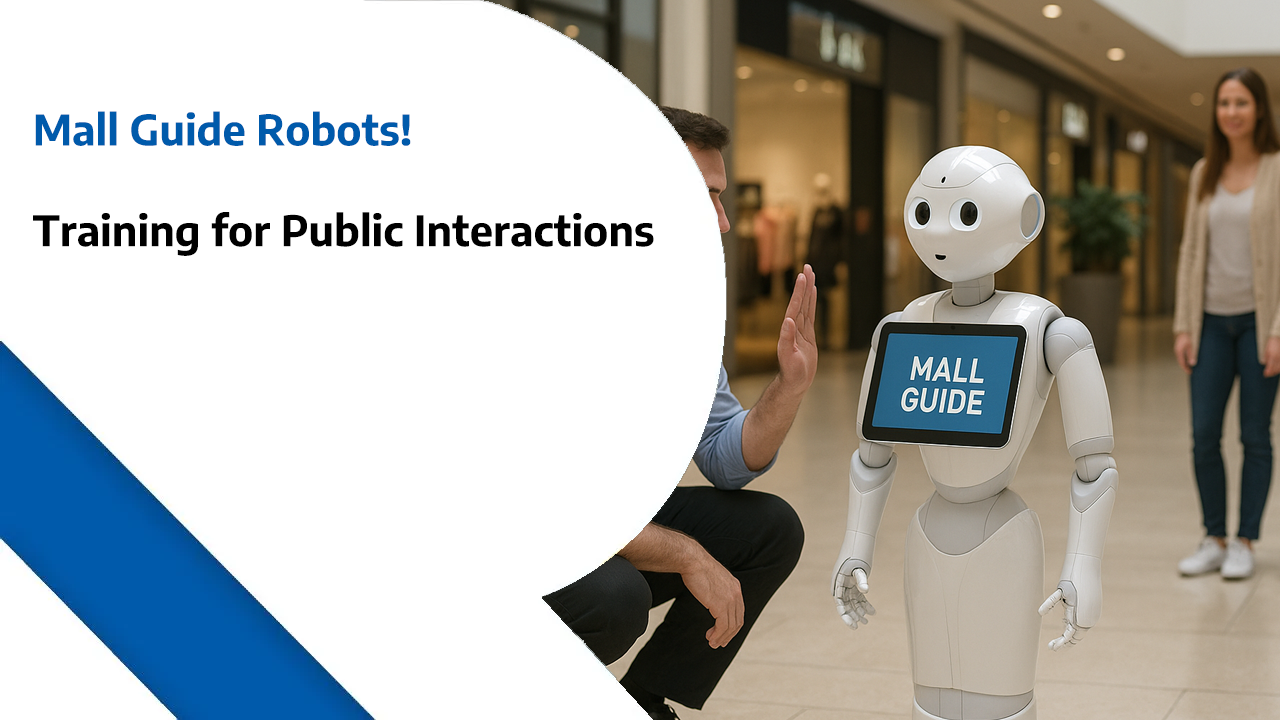
    Shopping malls are undergoing a digital transformation, and at the forefront of this revolution are mall guide robots. These autonomous assistants are becoming increasingly common in retail environments worldwide, offering directions, answering questions, and providing an engaging customer experience that bridges the gap between human service and technological efficiency.

    However, deploying a robot in a busy public space isn’t as simple as switching it on and letting it roam. Success depends heavily on proper training for public interactions—both for the robots themselves and for the human teams managing them. In this comprehensive guide, we’ll explore the critical aspects of training mall guide robots, the challenges involved, and how professional consulting services can ensure your robotic deployment delivers maximum value.

    Understanding Mall Guide Robots: More Than Just Moving Screens

    Mall guide robots represent a sophisticated integration of multiple technologies: navigation systems, artificial intelligence, natural language processing, sensors, and user interface design. These machines must operate safely in crowded, unpredictable environments while maintaining engaging, helpful interactions with diverse audiences.

    Common features of modern mall guide robots include:

    • Autonomous Navigation: Using LIDAR, cameras, and ultrasonic sensors to navigate complex indoor environments
    • Interactive Touchscreens: Providing visual maps, store directories, and promotional content
    • Voice Interaction: Responding to spoken questions in multiple languages
    • Facial Recognition: Detecting and responding to human presence and emotions
    • Data Analytics: Collecting valuable insights about foot traffic and customer behavior
    • Advertisement Display: Delivering targeted marketing messages as they move through spaces

    The most successful implementations understand that these robots aren’t replacing human staff—they’re augmenting the customer experience by handling routine inquiries, freeing human employees to address more complex needs.

    The Training Challenge: Preparing Robots for Real-World Complexity

    Training a mall guide robot extends far beyond programming basic responses. Public spaces present unique challenges that require sophisticated preparation:

    Environmental Mapping and Navigation Training

    Before a robot can guide anyone, it needs an intimate understanding of its environment. This involves:

    Initial Mapping: Technicians must create detailed digital maps of the entire mall, including all stores, facilities, emergency exits, and obstacles. This process typically takes several days and requires the robot to traverse every accessible area multiple times.

    Dynamic Obstacle Recognition: Malls constantly change with seasonal decorations, promotional displays, and maintenance work. Robots must be trained to recognize and navigate around unexpected obstacles without disrupting their service.

    Crowd Management: Perhaps the most complex challenge is teaching robots to move safely through dense crowds. This requires sophisticated algorithms that predict human movement patterns, maintain safe distances, and avoid creating bottlenecks in high-traffic areas.

    Conversational AI and Customer Interaction Training

    The quality of a robot’s interactions determines whether customers will embrace or avoid it. Effective training includes:

    Natural Language Understanding: Robots must comprehend questions posed in various ways. “Where’s the bathroom?” “I need to find a restroom,” and “Can you tell me where the toilets are?” should all trigger the same helpful response.

    Context Awareness: Advanced systems learn to understand context from previous exchanges. If a customer asks about children’s clothing stores and then asks “How do I get there?” the robot should know which location is being referenced.

    Personality Development: Successful mall robots have distinct, friendly personalities that match the mall’s brand. Training involves crafting response styles, greeting behaviors, and even humor that resonates with the target demographic.

    Multilingual Capabilities: In diverse urban environments, robots should communicate in multiple languages. This requires extensive training data in each supported language and cultural awareness to avoid inappropriate responses.

    Safety and Emergency Protocol Training

    Public safety is paramount when deploying autonomous robots. Comprehensive training must include:

    Collision Avoidance: Robots need fail-safe systems to prevent bumping into children, elderly visitors, or anyone with mobility limitations. Training involves testing thousands of scenarios in simulation before real-world deployment.

    Emergency Response: In the event of fire alarms, security incidents, or medical emergencies, robots must know how to respond appropriately—whether that means immediately stopping, moving to designated safe zones, or displaying emergency information.

    Breakdown Protocols: When technical issues occur, robots should gracefully communicate their status to nearby customers and alert human operators for assistance.

    Human Training: The Often-Overlooked Critical Component

    While much attention focuses on training the robots themselves, preparing human staff is equally crucial for successful deployment.

    Mall Staff Training Programs

    Retail employees need comprehensive training on:

    Robot Capabilities and Limitations: Staff should understand what the robot can and cannot do, enabling them to seamlessly take over when the robot reaches its limits.

    Technical Troubleshooting: Basic problem-solving skills for common issues like navigation errors, system reboots, or customer interaction problems.

    Collaborative Service Models: How to work alongside robots rather than competing with or ignoring them. For example, staff can direct customers to the robot for directory information while they handle more complex inquiries.

    Customer Reassurance: Some visitors may feel uncomfortable around robots. Staff should be prepared to explain the robot’s purpose, demonstrate its use, and address privacy or safety concerns.

    Management and Oversight Training

    Mall management requires specialized training in:

    Performance Analytics: Understanding the data collected by robots and using it to improve mall operations and customer service.

    Maintenance Scheduling: Recognizing when robots need servicing, updates, or retraining based on performance metrics.

    ROI Measurement: Tracking key performance indicators like customer engagement rates, navigation assistance completions, and advertising effectiveness.

    Real-World Training Scenarios: Preparing for the Unexpected

    Theoretical training only goes so far. Effective robot preparation includes extensive real-world testing:

    Pilot Testing Phases

    Controlled Environment Testing: Initially deploying robots during off-hours to test navigation and basic functions without customer interference.

    Limited Public Exposure: Introducing robots during low-traffic periods with trained observers monitoring all interactions.

    Gradual Integration: Slowly increasing the robot’s operational hours and autonomy as performance data validates reliability.

    Continuous Learning and Adaptation

    Modern AI-powered mall robots continue learning throughout their operational life:

    Interaction Analysis: Recording and analyzing thousands of customer interactions to identify common questions, confusion points, and opportunities for improvement.

    Seasonal Adaptation: Training robots to handle seasonal events, sales periods, and holiday-specific questions.

    Feedback Integration: Implementing systematic collection of customer feedback and incorporating improvements into the robot’s knowledge base.

    Common Pitfalls and How Professional Consulting Prevents Them

    Many organizations underestimate the complexity of deploying mall guide robots, leading to costly mistakes:

    Insufficient Environmental Testing

    Robots trained in one environment often struggle when deployed in different settings. Professional consultants conduct thorough environmental assessments before deployment, identifying potential challenges specific to your facility.

    Inadequate User Experience Design

    Technical functionality doesn’t guarantee customer acceptance. Expert consultants bring human-centered design principles to ensure robots are approachable, understandable, and genuinely helpful.

    Lack of Integration with Existing Systems

    Robots work best when integrated with mall management systems, store directories, event schedules, and security infrastructure. Professional implementation ensures seamless connectivity.

    Neglecting Long-Term Support

    Initial deployment is just the beginning. Robots require ongoing updates, retraining, and maintenance. Consulting services establish sustainable support structures from day one.

    The Business Case: ROI of Properly Trained Mall Guide Robots

    Investing in comprehensive training pays significant dividends:

    Enhanced Customer Experience: Well-trained robots reduce frustration from getting lost or not finding information, increasing visitor satisfaction and return rates.

    Operational Efficiency: Robots handle thousands of routine inquiries, allowing human staff to focus on high-value interactions and sales support.

    Data-Driven Insights: Properly configured robots collect valuable analytics about customer behavior, popular destinations, and traffic patterns that inform business decisions.

    Marketing Opportunities: Robots serve as mobile advertising platforms, delivering targeted promotions while providing navigation services—creating new revenue streams.

    Brand Differentiation: Malls with effective robotic services position themselves as innovative, customer-focused destinations that stand out in competitive retail markets.

    Why Professional Robot Consulting Makes the Difference

    Deploying mall guide robots successfully requires expertise across multiple domains: robotics engineering, AI development, customer service design, facility management, and change management. Few organizations possess all these capabilities in-house.

    Professional robot consulting services provide:

    Comprehensive Needs Assessment

    Expert consultants evaluate your specific environment, customer demographics, operational goals, and budget constraints to recommend optimal solutions rather than one-size-fits-all products.

    Vendor Selection Guidance

    The robot market offers numerous options with varying capabilities, costs, and support structures. Experienced consultants help you navigate these choices to find the best match for your requirements.

    Customized Training Programs

    Generic training rarely addresses site-specific challenges. Professional services develop tailored training protocols for both robots and human staff based on your unique operational context.

    Implementation Project Management

    Deploying robots involves coordinating multiple stakeholders: facility management, IT departments, security teams, retail tenants, and technology vendors. Expert project management ensures smooth implementation on schedule and within budget.

    Ongoing Optimization

    Post-deployment support includes performance monitoring, troubleshooting, software updates, and continuous improvement based on operational data—maximizing your investment’s long-term value.

    Robot Recruitment: Finding the Right Technical Talent

    Beyond the robots themselves, successful programs require skilled human talent to manage, maintain, and optimize these systems. Robot recruitment services address this critical need by:

    Identifying Specialized Skills: Finding candidates with expertise in robotics, AI, computer vision, and customer experience design—a rare combination in the employment market.

    Screening for Customer Service Mindset: Technical skills alone aren’t sufficient. The best robot specialists understand that technology serves human needs and approach problems with customer experience in mind.

    Building Sustainable Teams: Recruitment services help establish internal capabilities for long-term robot management rather than creating dependency on external support.

    Training and Development: Placing candidates who can grow with the technology, adapting to new capabilities as robot systems evolve.

    Future Trends in Mall Guide Robot Training

    The field continues evolving rapidly. Forward-thinking organizations should prepare for:

    Emotional Intelligence: Next-generation robots will better recognize and respond to customer emotions, requiring training in empathy and appropriate emotional responses.

    Predictive Assistance: Rather than waiting for questions, advanced systems will anticipate customer needs based on behavior patterns and proactively offer assistance.

    Augmented Reality Integration: Robots may incorporate AR displays to provide visual wayfinding overlays and immersive shopping experiences.

    Swarm Robotics: Multiple robots working cooperatively to provide comprehensive coverage and handle complex customer service scenarios.

    Sustainability Features: Training robots to promote and support environmental initiatives, from guiding customers to recycling stations to optimizing energy use through intelligent routing.

    Making the Decision: Is Your Mall Ready for Guide Robots?

    Successful robot deployment requires more than budget approval. Consider these readiness factors:

    Infrastructure: Do you have reliable Wi-Fi coverage, adequate charging facilities, and clear, navigable pathways throughout your facility?

    Organizational Buy-In: Have you secured support from retail tenants, security teams, cleaning staff, and other stakeholders who will interact with robots daily?

    Customer Demographics: Does your visitor profile include sufficient tech-comfort levels to embrace robotic assistance, or will extensive customer education be required?

    Competitive Positioning: Will robotic services align with your brand identity and provide meaningful differentiation in your market?

    Resource Commitment: Can you dedicate the time, staff, and budget necessary for proper implementation, training, and ongoing support?

    Professional consultants can help assess these factors and develop realistic implementation roadmaps.

    Getting Started: Your Path to Successful Robot Deployment

    Implementing mall guide robots is a significant undertaking, but the rewards—enhanced customer experience, operational efficiency, and competitive differentiation—make it increasingly essential in modern retail environments.

    The key to success lies in recognizing that robots are sophisticated systems requiring expert guidance. From initial planning through deployment and ongoing optimization, professional consulting and recruitment services transform potential technology investments into proven customer service assets.

    Whether you’re exploring robot possibilities for the first time or looking to optimize existing deployments, expert guidance ensures you avoid costly mistakes and achieve maximum value from your investment.

    Take the Next Step: Expert Robot Consulting and Recruitment

    Ready to explore how mall guide robots can transform your customer experience? Professional guidance makes all the difference between a successful deployment and an expensive experiment.

    Get Expert Advice Today:

    📧 Emailinfo@robophil.com
    📞 Phone: 0845 528 0404

    Book a consultation to discuss your specific needs, explore solution options, and develop a customized implementation plan that delivers results.


    Article Sponsors

    This article is brought to you by leading experts in robotics solutions:

    Robot Center

    Websitehttps://robotcenter.co.uk/

    Your comprehensive source for robot purchases and robotics consultancy. Robot Center provides expert guidance on selecting, purchasing, and implementing robotic solutions for businesses of all sizes. Whether you’re buying your first robot or expanding an existing fleet, their consultancy services ensure you make informed decisions backed by industry expertise.

    Robots of London

    Websitehttps://robotsoflondon.co.uk/

    The premier robot hire and rental service for events and temporary deployments. Robots of London offers flexible rental options perfect for testing robot solutions before purchase, covering special events, or meeting seasonal demand. Their extensive rental fleet includes mall guide robots, event robots, and entertainment robots with full technical support.

    Robot Philosophy (RoboPhil)

    Websitehttps://robophil.com/

    Led by Philip English, a leading Robot YouTuber, Robot Influencer, Robot Trainer, Robot Consultant, Robotics Streamer, and Robotics Specialist, Robot Philosophy delivers comprehensive robot consultancy and robot recruitment services. RoboPhil provides expert robot advice, robot insights, and innovative robot ideas drawn from years of hands-on experience with cutting-edge robotics technology.

    From strategic planning to technical implementation and specialized recruitment, Robot Philosophy connects businesses with both the right robotic solutions and the talented professionals needed to maximize their investment.


    Don’t let your competition gain the advantage of cutting-edge customer service technology. Contact our expert team today at info@robophil.com or call 0845 528 0404 to schedule your consultation and begin your journey toward exceptional robotic customer experiences.

    https://www.youtube.com/watch?v=k86hZOVtzDs


    https://www.youtube.com/shorts/ZKAVnR5bPNc

  • Is Your Business Ready for Robots? Take the Audit Checklist

    Is Your Business Ready for Robots? Take the Audit Checklist

    Is Your Business Ready for Robots? Take the Audit Checklist

    The robotic revolution isn’t coming—it’s here. From manufacturing floors to retail environments, restaurants to healthcare facilities, robots are transforming how businesses operate, compete, and thrive. But here’s the critical question every business leader must ask: Is your organization truly ready to embrace this technological transformation?

    The answer isn’t as straightforward as you might think. While the benefits of robotic integration are undeniable—increased efficiency, reduced operational costs, enhanced precision, and improved workplace safety—the path to successful implementation requires careful planning, strategic thinking, and honest assessment of your current capabilities.

    This comprehensive audit checklist will help you determine exactly where your business stands on the robotics readiness spectrum and provide actionable insights to guide your automation journey.

    Understanding the Robotics Landscape

    The modern robotics ecosystem has evolved far beyond the traditional industrial arms of manufacturing plants. Today’s robots come in various forms: collaborative robots (cobots) that work alongside humans, autonomous mobile robots (AMRs) for logistics and delivery, service robots for customer interaction, and specialized robots for cleaning, security, and maintenance tasks.

    The global robotics market continues its explosive growth trajectory, with businesses across industries recognizing that automation isn’t just about replacing human labor—it’s about augmenting human capabilities, improving quality, and creating new opportunities for innovation and growth.

    However, successful robotic integration requires more than simply purchasing the latest technology. It demands a holistic approach that considers your organizational culture, existing infrastructure, workforce capabilities, and long-term strategic objectives.

    The Complete Robotics Readiness Audit Checklist

    Strategic Foundation Assessment

    Leadership Commitment and Vision

    • Has senior leadership clearly articulated the strategic vision for robotics integration?
    • Is there dedicated budget allocated for robotic initiatives over the next 3-5 years?
    • Have you identified specific business problems that robotics could solve?
    • Is there a designated robotics champion or project leader within your organization?
    • Have you established clear success metrics and ROI expectations?

    Market and Competitive Analysis

    • Have you researched how competitors are using robotics in your industry?
    • Do you understand the regulatory requirements affecting robotic implementation in your sector?
    • Have you identified potential customer benefits from robotic integration?
    • Is your business model adaptable to incorporate robotic capabilities?
    • Have you assessed the long-term market trends affecting your industry?

    Operational Readiness Evaluation

    Process Analysis and Documentation

    • Are your current business processes clearly documented and standardized?
    • Have you identified repetitive, dangerous, or precision-critical tasks suitable for automation?
    • Do you have accurate data on task completion times, error rates, and quality metrics?
    • Have you mapped workflow dependencies and interaction points?
    • Are there seasonal or cyclical variations in your operational demands?

    Infrastructure Assessment

    • Is your physical workspace suitable for robotic equipment (floor load capacity, ceiling height, accessibility)?
    • Do you have adequate power supply and electrical infrastructure?
    • Is your network infrastructure capable of supporting connected robotic systems?
    • Are safety systems and protocols in place for human-robot collaboration?
    • Do you have appropriate storage and maintenance facilities for robotic equipment?

    Data and Systems Integration

    • Are your existing software systems compatible with robotic control platforms?
    • Do you have reliable data collection and management systems?
    • Can your ERP or MRP systems integrate with robotic workflows?
    • Is your cybersecurity framework robust enough for connected robotics?
    • Do you have backup systems and disaster recovery procedures?

    Human Resources and Cultural Readiness

    Workforce Capability Assessment

    • Do you have employees with technical aptitude for robotic system operation?
    • Is your workforce open to learning new technologies and adapting to change?
    • Have you identified training needs and development programs?
    • Do you have partnerships with educational institutions or training providers?
    • Are there succession planning considerations for roles that may be automated?

    Change Management Preparedness

    • Have you developed a communication strategy for robotics initiatives?
    • Is there a plan for addressing employee concerns about job displacement?
    • Do you have change management expertise within your organization?
    • Are there opportunities to redeploy affected employees to higher-value roles?
    • Have you considered the timeline and phasing for robotic implementation?

    Financial and Risk Assessment

    Investment Analysis

    • Have you calculated the total cost of ownership for robotic systems?
    • Do you understand ongoing maintenance, support, and upgrade costs?
    • Have you developed realistic ROI projections with sensitivity analysis?
    • Is financing available for the initial investment and implementation?
    • Have you considered leasing or rental options for testing robotics solutions?

    Risk Management

    • Have you identified potential risks associated with robotic implementation?
    • Do you have contingency plans for system failures or malfunctions?
    • Are appropriate insurance policies in place or planned?
    • Have you assessed the impact of technology obsolescence?
    • Is there a plan for managing vendor relationships and dependencies?

    Interpreting Your Audit Results

    Score Calculation

    Count your “yes” responses and calculate your readiness percentage:

    • 80-100%: Your organization demonstrates strong robotics readiness
    • 60-79%: You have good foundations but need targeted improvements
    • 40-59%: Significant preparation work is required before implementation
    • Below 40%: Consider postponing robotics initiatives until fundamental gaps are addressed

    Readiness Categories Explained

    Highly Ready Organizations (80-100%) These businesses have strong strategic alignment, robust infrastructure, prepared workforces, and clear implementation pathways. They’re positioned to move quickly on robotics initiatives and likely to achieve successful outcomes with proper execution.

    Moderately Ready Organizations (60-79%) These companies have solid foundations but specific areas requiring attention. Common gaps include workforce training needs, infrastructure upgrades, or process standardization requirements. With targeted improvements, they can achieve readiness within 6-12 months.

    Developing Readiness Organizations (40-59%) These businesses recognize the importance of robotics but need substantial preparation work. Success requires systematic addressing of multiple readiness factors, typically requiring 12-24 months of preparation before major implementations.

    Early-Stage Organizations (Below 40%) These companies should focus on building fundamental capabilities before pursuing robotics initiatives. This often involves process improvement, infrastructure development, and cultural change management over 2-3 years.

    Common Robotics Implementation Challenges

    Understanding potential obstacles helps you prepare more effectively. The most frequent challenges include:

    Technical Integration Complexities Many organizations underestimate the complexity of integrating robotic systems with existing workflows, software platforms, and quality control processes. Success requires thorough planning and often custom integration work.

    Workforce Resistance and Skills Gaps Employee concerns about job security can create resistance, while skills gaps may limit your ability to operate and maintain robotic systems effectively. Proactive communication and comprehensive training programs are essential.

    Unrealistic Expectations and Timeline Pressures Robotics projects often take longer and cost more than initial estimates. Setting realistic expectations and allowing adequate time for testing, training, and optimization is crucial for success.

    Vendor Selection and Management The robotics market includes numerous vendors with varying capabilities, support levels, and long-term viability. Thorough vendor evaluation and strong relationship management are critical success factors.

    Next Steps: From Assessment to Implementation

    Based on your audit results, consider these strategic next steps:

    For Highly Ready Organizations:

    • Develop detailed implementation timelines and project plans
    • Begin vendor evaluation and solution selection processes
    • Create pilot program proposals for testing and validation
    • Establish governance structures and success metrics

    For Moderately Ready Organizations:

    • Address identified gaps through targeted improvement initiatives
    • Invest in workforce training and development programs
    • Upgrade infrastructure and systems as needed
    • Develop partnerships with robotics experts and consultants

    For Developing and Early-Stage Organizations:

    • Focus on foundational improvements in processes and systems
    • Build organizational capabilities and expertise
    • Consider starting with simpler automation solutions
    • Develop long-term robotics strategies and roadmaps

    The Strategic Advantage of Professional Guidance

    Navigating the robotics landscape successfully requires expertise that extends beyond technology selection. The most successful implementations combine strategic thinking, technical knowledge, operational understanding, and change management expertise.

    Professional robotics consultants bring valuable perspectives including industry benchmarking, vendor-neutral advice, implementation best practices, and risk mitigation strategies. They can help you avoid common pitfalls, accelerate your timeline, and maximize your return on investment.

    Similarly, finding the right talent for robotics initiatives often requires specialized recruitment expertise. The robotics field demands unique combinations of technical skills, operational experience, and adaptability that can be challenging to identify and evaluate through traditional hiring processes.

    Industry-Specific Considerations

    Different industries face unique robotics opportunities and challenges:

    Manufacturing: Focus on production efficiency, quality improvement, and workplace safety Logistics and Warehousing: Emphasis on inventory management, order fulfillment, and material handling Healthcare: Priority on patient care enhancement, medication management, and facility sanitation Retail: Attention to customer service, inventory management, and operational efficiency Food Service: Concentration on food preparation, service delivery, and hygiene standards

    Understanding your industry’s specific robotics landscape helps you make more informed decisions about timing, technology selection, and implementation strategies.

    Building Long-Term Robotics Capabilities

    Successful robotics integration isn’t a one-time project—it’s an ongoing capability development process. Organizations that thrive in the robotic age continuously evaluate new technologies, optimize existing systems, expand applications, and develop internal expertise.

    Consider establishing a robotics center of excellence within your organization, creating ongoing relationships with technology partners, and developing systematic approaches to innovation and continuous improvement.

    Conclusion: Your Robotics Journey Starts Now

    The question isn’t whether robotics will impact your industry—it’s whether you’ll be a leader or follower in the transformation. This audit checklist provides the framework for honest assessment and strategic planning, but success ultimately depends on taking action.

    Whether you scored high on readiness or identified significant gaps, the key is starting your journey with clear vision, realistic expectations, and expert guidance. The businesses that begin preparing today will be best positioned to capitalize on the enormous opportunities that robotics technology offers.

    Remember, robotics isn’t about replacing humans—it’s about creating more efficient, safer, and more innovative ways of working that benefit businesses, employees, and customers alike. Your robotics readiness assessment is the first step toward that future.

    Ready to Take the Next Step?

    If this audit has revealed opportunities for robotics integration in your business, or if you’ve identified areas where expert guidance could accelerate your progress, we’re here to help.

    Professional Robotics Consulting Services Our experienced team provides comprehensive robotics consulting services including strategic planning, vendor selection, implementation support, and change management guidance. We work with businesses across industries to develop customized robotics solutions that deliver measurable results.

    Specialized Robotics Recruitment Finding the right talent for robotics initiatives requires specialized expertise. Our robotics recruitment services help you identify, evaluate, and hire the technical and operational professionals who can drive your automation success.

    Contact Information:

    Book a consultation call today to discuss how robotics can transform your business operations and competitive position.


    This article is sponsored by:

    Robot Centerhttps://robotcenter.co.uk/
    Your comprehensive destination for robot purchasing, robotics consultancy, and expert guidance on automation solutions. From initial consultation to implementation support, Robot Center provides the expertise and technology you need to succeed.

    Robots of Londonhttps://robotsoflondon.co.uk/
    Premier robot hire and rental services for businesses exploring automation opportunities. Whether you need short-term robot rental for events, proof-of-concept testing, or flexible deployment options, Robots of London offers comprehensive solutions.

    Robot Philosophyhttps://robophil.com/
    Leading provider of robotics consultancy and recruitment services, delivering strategic insights, implementation guidance, and specialized talent acquisition for businesses embracing automation technology.

     
  • A Behind-the-Scenes Look at a Robot Consultancy Project

    A Behind-the-Scenes Look at a Robot Consultancy Project

    A Behind-the-Scenes Look at a Robot Consultancy Project: Transforming Manufacturing Through Intelligent Automation

    This article is proudly sponsored by:

    • Robot Center – Your premier destination for robot purchasing and robotics consultancy services
    • Robots of London – Leading robot hire, rental, and event services across the UK
    • Robot Philosophy – Expert robot consultancy, recruitment, and strategic insights

    The factory floor hummed with a different energy that Tuesday morning in March. Where once stood three manual assembly stations manned by increasingly fatigued workers, now gleamed a sophisticated robotic cell, its articulated arms moving with ballet-like precision. This transformation didn’t happen overnight—it was the culmination of an intensive six-month robot consultancy project that would revolutionize productivity, safety, and job satisfaction at MidTech Manufacturing.

    Chapter 1: The Initial Challenge

    When Sarah Mitchell, Operations Director at MidTech Manufacturing, first contacted our consultancy team, her frustration was palpable. “We’re losing ground to competitors who’ve automated,” she explained during our initial video call. “Our workers are developing repetitive strain injuries, quality inconsistencies are costing us contracts, and we can’t scale production to meet demand.”

    MidTech, a mid-sized automotive parts manufacturer based in Birmingham, was facing the classic modern manufacturing dilemma: maintain status quo and risk obsolescence, or embrace automation and transform their entire operational philosophy. The stakes couldn’t have been higher—150 jobs, multi-million-pound contracts, and the company’s 40-year legacy hung in the balance.

    Our consultancy approach began with what we call the “Reality Audit”—a comprehensive assessment that goes far beyond technical specifications. Over three intensive days, our multidisciplinary team of robotics engineers, industrial psychologists, and business analysts embedded themselves within MidTech’s operations.

    Day One: The Human Factor

    Contrary to popular belief, successful robot implementation isn’t primarily about technology—it’s about people. We interviewed every stakeholder, from C-suite executives to shop floor operators. The insights were revealing: while management saw automation as an existential necessity, workers expressed deep anxiety about job displacement. This human element would prove crucial to our strategy.

    “I’ve been doing this job for fifteen years,” shared Tony, a veteran assembly worker. “These hands know every component, every imperfection. Can a robot really understand what I understand?” This wasn’t resistance—it was legitimate expertise that needed integration, not replacement.

    Day Two: Process Archaeology

    We conducted what we term “process archaeology”—meticulously documenting every movement, decision point, and quality check in the existing workflow. Using advanced motion capture technology and time-study methodologies, we mapped 847 individual actions across the three assembly stations.

    The data revealed fascinating insights: workers were performing 23% more movements than theoretically necessary, but many of these “inefficiencies” were actually intelligent adaptations to component variations and quality inconsistencies upstream in the supply chain. Any robotic solution would need to replicate not just the intended process, but this adaptive intelligence.

    Day Three: Technology Capability Assessment

    Finally, we evaluated the physical environment, existing infrastructure, and technological readiness. MidTech’s facility presented typical challenges: inconsistent power supply, temperature variations, and limited floor space. These constraints would significantly influence our robotic solution design.

    Chapter 2: Designing the Solution

    Armed with comprehensive data, our team retreated to design a solution that would satisfy multiple, sometimes competing objectives: increase productivity, improve quality consistency, enhance worker safety, and—crucially—create rather than eliminate meaningful employment.

    The Technology Architecture

    We recommended a hybrid cell design featuring two collaborative robots (cobots) working in tandem with human operators. The primary cobot, a six-axis articulated arm with advanced vision systems, would handle the precision assembly tasks that were causing repetitive strain injuries. The secondary cobot would manage quality inspection and packaging, roles requiring consistent accuracy but not creative problem-solving.

    Vision System Integration

    The most sophisticated component was the vision system—a combination of 3D cameras, laser scanners, and AI-powered defect recognition algorithms. This system needed to identify component variations, detect defects smaller than 0.1mm, and adapt robot behavior in real-time. We partnered with a specialist computer vision company to develop custom algorithms trained on over 50,000 component images from MidTech’s production history.

    Safety System Design

    Safety wasn’t an afterthought—it was fundamental to our design philosophy. The cell featured multiple redundant safety systems: light curtains, pressure-sensitive floor mats, emergency stops within arm’s reach of every position, and most importantly, force-limiting technology that would immediately halt robot movement upon unexpected contact.

    The Human Integration Strategy

    Rather than displacing workers, our solution elevated their roles. Tony and his colleagues would transition from repetitive manual assembly to becoming “Robot Coordinators”—roles requiring higher skills, offering better compensation, and providing more job satisfaction. They would monitor multiple robotic cells, handle complex problem-solving, manage quality exceptions, and train new operators.

    This wasn’t corporate spin—it was strategic necessity. The robotic system’s success depended on human expertise for setup, maintenance, quality judgment, and continuous improvement. Workers like Tony possessed irreplaceable institutional knowledge about product variations, customer requirements, and process optimization.

    Chapter 3: Implementation Challenges and Solutions

    Implementation began in July, and within days, we encountered our first major challenge: the robots couldn’t handle the component variations that human workers managed intuitively. Parts from different suppliers had subtle dimensional differences—variations well within specification but enough to confuse the initial programming.

    Challenge 1: Component Variation Management

    The Problem: Despite theoretical standardization, components varied by up to 2mm in critical dimensions. The robots’ initial programming assumed perfect consistency, leading to assembly failures and potential damage.

    The Solution: We developed what we called “Adaptive Grip Intelligence”—a system that uses tactile feedback sensors and machine learning algorithms to adjust grip pressure, approach angles, and assembly force based on real-time component assessment. The system learned from human operator interventions, gradually building a database of variation patterns and appropriate responses.

    The Outcome: After six weeks of continuous learning, the system achieved 99.3% success rate with component variations—actually outperforming human operators who sometimes forced ill-fitting components rather than flagging potential upstream issues.

    Challenge 2: Integration Resistance

    The Problem: Despite our extensive consultation process, some workers remained skeptical about the technology. Productivity actually decreased during the first month as operators were hesitant to trust the robots with critical tasks.

    The Solution: We implemented a “Trust Building Protocol”—a gradual responsibility transfer system where human operators maintained override control while slowly expanding the robots’ autonomous operation scope. Tony became our “Robot Whisperer,” working closely with our engineers to translate worker concerns into technical requirements.

    The Outcome: By month three, operators were actively suggesting improvements and had developed genuine pride in “their” robotic systems. Tony later commented, “It’s like training a really smart apprentice—one that never gets tired and always remembers what you teach it.”

    Challenge 3: Unexpected Maintenance Requirements

    The Problem: The harsh manufacturing environment was more demanding than our laboratory testing predicted. Dust accumulation on sensors, vibration-induced calibration drift, and temperature fluctuations all impacted performance.

    The Solution: We developed a predictive maintenance system using IoT sensors throughout the robotic cell. The system monitors 47 different parameters in real-time, predicting maintenance needs before failures occur. We also implemented a “Self-Diagnostic Protocol” where robots perform automated health checks at the start of each shift.

    The Outcome: Unplanned downtime decreased to less than 0.3% of operating time—significantly better than the 2.1% downtime experienced with the previous manual systems due to worker fatigue and minor injuries.

    Chapter 4: Results and Transformation

    Six months post-implementation, the results exceeded even our optimistic projections. But more importantly, they demonstrated the transformative power of thoughtful robot consultancy that prioritizes human-robot collaboration over simple automation.

    Quantitative Outcomes

    Productivity Metrics:

    • Production output increased 234% without increasing labor hours
    • Defect rates decreased from 3.2% to 0.1%
    • Assembly time per unit decreased from 14 minutes to 6 minutes
    • Worker overtime reduced by 67%

    Quality Improvements:

    • Customer complaints decreased by 89%
    • Rework requirements reduced from 12% to 0.3%
    • First-pass quality rate improved from 94% to 99.7%

    Safety Enhancements:

    • Zero repetitive strain injuries since implementation
    • Workplace accidents decreased by 78%
    • Worker satisfaction scores increased from 6.2/10 to 8.9/10

    Qualitative Transformations

    The numbers tell only part of the story. The real transformation was cultural and strategic. MidTech evolved from a traditional manufacturer struggling to compete into an innovative company that other manufacturers now visit to understand best practices in human-robot collaboration.

    Worker Evolution: Rather than job displacement, we achieved job enhancement. Tony was promoted to Lead Robot Coordinator with a 35% salary increase. His new role involves training operators at other MidTech facilities and contributing to continuous improvement initiatives. “I never thought I’d be programming robots at my age,” he laughed during our six-month review, “but now I can’t imagine going back to the old way.”

    Management Perspective: Sarah Mitchell’s initial anxiety has transformed into confident optimism. “We’re not just more efficient—we’re more agile. When customer requirements change, we can reprogram the robots instead of retraining entire teams. It’s given us a competitive advantage we never anticipated.”

    Cultural Impact: Perhaps most significantly, the success has shifted MidTech’s entire organizational mindset. They’re now planning robotic implementations in packaging, inventory management, and quality control. The company that once feared automation now sees it as their competitive advantage.

    Chapter 5: Lessons Learned and Best Practices

    Every robot consultancy project teaches valuable lessons. The MidTech transformation revealed principles that apply across industries and implementation scales.

    Principle 1: Humans First, Technology Second

    The most sophisticated robotic technology fails without human buy-in. Our success at MidTech stemmed from treating workers as partners in the automation journey rather than obstacles to overcome. Every technical decision considered human impact, and every human concern influenced technical specifications.

    Implementation Tip: Invest at least 30% of project time in change management and human factors engineering. Technical complexity pales compared to organizational complexity.

    Principle 2: Iterative Implementation Over Big Bang

    Rather than attempting complete transformation simultaneously, we implemented changes incrementally. This approach allowed for real-time learning, adjustment, and confidence building.

    Implementation Tip: Plan for three phases—proof of concept (20% of target scope), partial implementation (60% scope), and full deployment (100% scope). Each phase should demonstrate clear value before proceeding.

    Principle 3: Flexibility Over Optimization

    Our initial instinct was to optimize for peak efficiency, but we learned that flexibility and adaptability provide greater long-term value than marginal efficiency gains.

    Implementation Tip: Design systems for adaptation rather than perfection. Build in 20% excess capacity and multiple operational modes. The ability to handle unexpected requirements often proves more valuable than optimal performance under ideal conditions.

    Principle 4: Data-Driven Continuous Improvement

    The robotic system’s intelligence improves continuously through data collection and analysis. However, this requires systematic approaches to data capture, analysis, and implementation of insights.

    Implementation Tip: Establish data governance protocols from day one. Define what data to collect, how to analyze it, and who has authority to implement changes based on insights.

    Chapter 6: The Broader Implications

    The MidTech project represents a microcosm of manufacturing’s broader transformation. Success requires more than technical expertise—it demands understanding of business strategy, organizational psychology, change management, and industry dynamics.

    Industry Transformation Trends

    Collaborative Intelligence: The future isn’t about robots replacing humans but about human-robot teams that combine human creativity and adaptability with robotic precision and consistency.

    Customization at Scale: Robotic systems enable mass customization—the ability to produce varied products efficiently without traditional batch production limitations.

    Predictive Operations: AI-powered robots don’t just perform tasks—they predict problems, optimize processes, and suggest improvements based on pattern recognition across vast datasets.

    Sustainable Manufacturing: Robots enable more efficient resource utilization, reduced waste, and better energy management—critical factors as environmental regulations tighten.

    Skills Evolution

    The MidTech project illuminated the evolving skill requirements in automated manufacturing environments. Workers need different competencies, not fewer competencies.

    Technical Skills: Basic understanding of robotic systems, sensors, and data interpretation becomes essential for all operators.

    Problem-Solving Skills: Robots handle routine tasks efficiently, but humans must manage exceptions, troubleshoot complex issues, and optimize systems continuously.

    Collaboration Skills: Human-robot collaboration requires new forms of communication, coordination, and trust-building.

    Learning Agility: In rapidly evolving technological environments, the ability to acquire new skills quickly becomes more valuable than existing skill depth.

    Chapter 7: Planning Your Own Robot Consultancy Journey

    Drawing from the MidTech experience and dozens of similar projects, we’ve developed a framework for organizations considering robotic implementation.

    Phase 1: Strategic Assessment (Weeks 1-4)

    Business Case Development: Clearly articulate the business problem robots will solve. Productivity improvement alone rarely justifies investment—look for combinations of productivity, quality, safety, and competitive advantage benefits.

    Stakeholder Alignment: Ensure leadership commitment extends beyond initial enthusiasm. Robotic implementation requires sustained support through inevitable challenges and learning curves.

    Cultural Readiness Evaluation: Assess organizational capacity for change. Companies with strong continuous improvement cultures typically achieve better robotic implementation outcomes.

    Technical Infrastructure Assessment: Evaluate existing systems, power requirements, network capabilities, and physical constraints that might influence robotic solution design.

    Phase 2: Solution Design (Weeks 5-12)

    Process Analysis: Document current state operations in detail. Focus on identifying value-added versus non-value-added activities, quality control points, and safety risks.

    Technology Selection: Choose robotic solutions based on requirements analysis rather than technological fascination. Consider factors like flexibility, maintenance requirements, integration complexity, and vendor support quality.

    Human Factors Integration: Design roles and responsibilities for the human-robot collaborative environment. Plan career paths and skill development programs for affected workers.

    Pilot Program Definition: Design a limited-scope pilot that demonstrates key capabilities while minimizing risk. Success criteria should include both technical and organizational metrics.

    Phase 3: Implementation and Optimization (Weeks 13-52)

    Staged Rollout: Implement changes incrementally to allow learning and adjustment. Each stage should build confidence and demonstrate value before proceeding.

    Training and Development: Invest heavily in human development. Technical training alone isn’t sufficient—include change management, problem-solving, and human-robot collaboration skills.

    Performance Monitoring: Establish comprehensive metrics covering productivity, quality, safety, and employee satisfaction. Review regularly and adjust operations based on insights.

    Continuous Improvement: Robotics implementation isn’t a destination—it’s the beginning of a continuous improvement journey. Plan for ongoing optimization, capability expansion, and adaptation to changing requirements.

    Why Professional Robot Consultancy Matters

    The MidTech case study illustrates why professional robot consultancy is essential for successful automation initiatives. The complexity extends far beyond selecting and installing robotic equipment.

    Technical Expertise

    Modern robotic solutions integrate mechanical engineering, electrical systems, computer science, artificial intelligence, and industrial psychology. Few organizations possess this multidisciplinary expertise internally, particularly for what might be their first significant automation initiative.

    Systems Integration Challenges: Robots must integrate with existing manufacturing systems, enterprise software, quality management systems, and safety protocols. This integration requires deep understanding of both robotic capabilities and existing infrastructure.

    Customization Requirements: Off-the-shelf robotic solutions rarely meet specific operational requirements without significant customization. This customization requires expertise in programming, sensor integration, and system optimization.

    Safety and Compliance: Robotic systems must comply with complex safety regulations that vary by industry, application, and geography. Non-compliance can result in costly shutdowns, legal liability, and worker injuries.

    Organizational Change Management

    Technical implementation represents only 40% of robotic project success factors. The remaining 60% involves managing organizational change, developing human capabilities, and creating sustainable operational models.

    Stakeholder Engagement: Successful projects require buy-in from workers, management, unions, customers, and suppliers. Building this consensus requires skilled change management and communication.

    Skill Development: Workers need new competencies to operate effectively in human-robot collaborative environments. This training goes far beyond basic robot operation to include problem-solving, system optimization, and quality management.

    Process Redesign: Robotic implementation often reveals opportunities for broader process improvements. Capturing these opportunities requires expertise in lean manufacturing, quality systems, and operational optimization.

    Strategic Business Integration

    Robot consultancy must align with broader business strategy, competitive positioning, and long-term growth plans. This strategic integration distinguishes successful implementations from technical experiments.

    ROI Optimization: Professional consultants help optimize return on investment by identifying the most impactful applications, designing scalable solutions, and planning for future expansion.

    Risk Management: Experienced consultants anticipate common implementation challenges and design mitigation strategies. This foresight prevents costly delays and performance shortfalls.

    Competitive Advantage Development: The most successful robotic implementations create sustainable competitive advantages rather than simply matching competitor capabilities.

    Your Next Steps: Partnering for Success

    The MidTech transformation demonstrates the profound impact of thoughtful robot consultancy. But success requires the right partnership with consultants who understand both technology and business realities.

    What to Look for in Robot Consultancy Partners

    Multidisciplinary Expertise: Look for teams combining technical engineering capabilities with business strategy, change management, and industry-specific experience.

    Proven Track Record: Evaluate consultants based on similar project success stories, client references, and measurable outcomes achieved.

    Collaborative Approach: The best consultants work as partners rather than vendors, investing in your long-term success rather than simply delivering contracted scope.

    Ongoing Support: Robot implementation is the beginning, not the end, of the automation journey. Choose partners committed to long-term relationship development.

    Our Robot Consultancy and Recruitment Services

    Our team brings together decades of experience in robotic implementation, organizational change management, and strategic business development. We don’t just install robots—we transform organizations for sustainable competitive advantage.

    Comprehensive Consultancy Services:

    • Strategic automation assessment and planning
    • Technology selection and system design
    • Implementation project management
    • Change management and training
    • Performance optimization and continuous improvement
    • Regulatory compliance and safety assurance

    Specialized Robot Recruitment:

    • Robotics engineer recruitment and placement
    • Automation specialist sourcing
    • Technical leadership search
    • Skills assessment and development planning
    • Contractor and permanent placement services

    Industry Expertise:

    • Manufacturing and assembly automation
    • Warehouse and logistics robotics
    • Quality control and inspection systems
    • Collaborative robot (cobot) implementation
    • AI and machine learning integration
    • Safety system design and compliance

    Ready to Begin Your Transformation?

    The MidTech story could be your story. Every day of delay in automation implementation represents lost competitive advantage, continued safety risks, and missed opportunities for organizational growth.

    Schedule Your Strategic Consultation

    Contact our team to discuss your automation objectives, current challenges, and transformation vision. Our initial consultation includes:

    • Preliminary automation opportunity assessment
    • Technology options overview
    • Implementation approach discussion
    • Investment and timeline estimation
    • Risk assessment and mitigation strategies

    Contact Information:

    Don’t wait for competitors to gain automation advantages. Contact us today to begin your own robot consultancy journey and discover how human-robot collaboration can transform your organization’s productivity, quality, safety, and competitive positioning.

    The future of manufacturing isn’t about choosing between humans and robots—it’s about creating intelligent partnerships that combine the best of both. Let us help you build that future.


    This comprehensive case study demonstrates the transformative power of professional robot consultancy. Ready to write your own success story? Contact our expert team today to begin your automation journey.

    Sponsored by:

    • Robot Center – Your trusted partner for robot purchasing and robotics consultancy
    • Robots of London – Premier robot hire, rental, and event services
    • Robot Philosophy – Leading robot consultancy, recruitment, and strategic insights