Category: Insights

  • Inspection Robots – How to Choose the Right Type for Your Industry

    Inspection Robots – How to Choose the Right Type for Your Industry

    Inspection Robots – How to Choose the Right Type for Your Industry

    Sponsored by Robot Center, Robots of London, and Robot Philosophy

    The industrial landscape is rapidly evolving, and at the forefront of this transformation are inspection robots. These sophisticated machines are revolutionizing how businesses monitor infrastructure, ensure safety compliance, and maintain operational efficiency across countless industries. From oil and gas pipelines to nuclear facilities, from manufacturing plants to renewable energy installations, inspection robots are becoming indispensable tools for modern enterprises.

    But with the growing variety of inspection robot technologies available, choosing the right solution for your specific industry needs can be overwhelming. This comprehensive guide will help you navigate the complex world of inspection robotics, understand the key technologies, and make informed decisions that will drive your business forward.

    Understanding Inspection Robot Technologies

    Aerial Inspection Robots (Drones)

    Aerial inspection robots, commonly known as drones or UAVs (Unmanned Aerial Vehicles), have transformed how we approach large-scale infrastructure inspection. These versatile platforms excel in scenarios where traditional inspection methods would be dangerous, time-consuming, or cost-prohibitive.

    Key Capabilities:

    • High-resolution visual and thermal imaging
    • LiDAR scanning for precise 3D mapping
    • Multi-spectral analysis for vegetation and corrosion detection
    • GPS-guided autonomous flight patterns
    • Real-time data transmission and analysis

    Ideal Applications:

    • Power line and transmission tower inspection
    • Wind turbine blade analysis
    • Building and bridge structural assessment
    • Solar panel efficiency monitoring
    • Pipeline route surveys
    • Emergency response and disaster assessment

    The versatility of aerial inspection robots makes them particularly valuable for utilities, construction companies, and infrastructure management organizations. Their ability to cover vast areas quickly while capturing detailed imagery and data has made them essential tools for predictive maintenance programs.

    Ground-Based Mobile Inspection Robots

    Ground-based inspection robots are designed to navigate terrestrial environments, from industrial facilities to urban infrastructure. These robots combine mobility with sophisticated sensor packages to perform detailed inspections in environments that may be hazardous or difficult for human inspectors to access.

    Key Features:

    • Tracked or wheeled mobility systems for various terrains
    • Environmental sealing for harsh conditions
    • Advanced sensor integration including cameras, thermal imaging, and gas detection
    • Autonomous navigation and obstacle avoidance
    • Remote operation capabilities with real-time feedback

    Primary Use Cases:

    • Manufacturing facility safety inspections
    • Hazardous material storage area monitoring
    • Construction site progress tracking
    • Security perimeter assessments
    • Environmental monitoring in industrial zones
    • Post-disaster damage evaluation

    These robots are particularly valuable in industries where human safety is paramount, such as chemical processing, nuclear facilities, and heavy manufacturing operations.

    Underwater Inspection Robots (ROVs and AUVs)

    Marine and underwater inspection presents unique challenges that traditional methods struggle to address effectively. Remotely Operated Vehicles (ROVs) and Autonomous Underwater Vehicles (AUVs) have become critical tools for subsea infrastructure inspection and maintenance.

    Technical Specifications:

    • Depth ratings from shallow water to deep ocean capabilities
    • High-definition underwater cameras with powerful lighting systems
    • Sonar and acoustic positioning systems
    • Manipulator arms for sample collection and minor repairs
    • Robust communication tethers or autonomous operation modes

    Industry Applications:

    • Offshore oil and gas platform inspection
    • Ship hull and propeller examination
    • Underwater pipeline integrity assessment
    • Port and harbor infrastructure monitoring
    • Marine renewable energy system maintenance
    • Aquaculture facility inspection

    The offshore energy sector, shipping industry, and marine construction companies rely heavily on underwater inspection robots to maintain operational safety and regulatory compliance while minimizing downtime and operational risks.

    Confined Space Inspection Robots

    Many industrial applications require inspection of confined or restricted spaces where human access is limited, dangerous, or impossible. Specialized confined space robots are engineered to navigate these challenging environments while delivering high-quality inspection data.

    Design Features:

    • Compact, modular designs for tight spaces
    • Flexible or articulated bodies for navigation through complex geometries
    • Powerful LED lighting systems for dark environments
    • High-resolution cameras with pan, tilt, and zoom capabilities
    • Chemical and gas detection sensors for safety monitoring

    Specialized Applications:

    • Tank and vessel internal inspection
    • Pipe and ductwork assessment
    • Sewer and drainage system evaluation
    • Storage silo condition monitoring
    • Boiler and heat exchanger examination
    • Underground utility tunnel inspection

    Industries such as petrochemicals, food processing, water treatment, and HVAC services find these robots invaluable for maintaining system integrity while protecting worker safety.

    Industry-Specific Applications and Considerations

    Oil and Gas Sector

    The oil and gas industry faces unique inspection challenges due to the hazardous nature of operations, remote locations, and critical safety requirements. Inspection robots in this sector must meet stringent explosion-proof standards and operate reliably in extreme conditions.

    Critical Applications:

    • Pipeline integrity monitoring using magnetic flux leakage and ultrasonic testing
    • Offshore platform structural assessments
    • Refinery equipment inspection including distillation columns and heat exchangers
    • Flare stack and elevated equipment examination
    • Environmental monitoring for leak detection and compliance

    The industry’s adoption of inspection robots has significantly reduced operational risks, improved maintenance scheduling, and enhanced regulatory compliance while reducing inspection costs by up to 40% in many applications.

    Power Generation and Utilities

    Power generation facilities, whether traditional fossil fuel plants or renewable energy installations, require continuous monitoring to ensure safe and efficient operation. Inspection robots provide comprehensive coverage while minimizing operational disruptions.

    Key Inspection Areas:

    • Boiler and turbine internal examinations
    • Cooling tower structural and mechanical assessments
    • Electrical substation equipment monitoring
    • Solar panel cleaning verification and defect detection
    • Wind turbine blade crack and erosion analysis
    • Hydroelectric dam structural integrity evaluation

    Utility companies report significant improvements in planned maintenance effectiveness and reductions in unscheduled outages when implementing comprehensive robotic inspection programs.

    Manufacturing and Process Industries

    Modern manufacturing facilities require continuous monitoring to maintain quality standards, ensure worker safety, and optimize production efficiency. Inspection robots provide consistent, objective assessments that human inspectors cannot match in terms of frequency and precision.

    Manufacturing Applications:

    • Quality control inspections on production lines
    • Environmental monitoring for air quality and contamination
    • Equipment condition monitoring for predictive maintenance
    • Safety system verification and testing
    • Inventory management and facility security
    • Clean room contamination assessment

    The integration of inspection robots with Industry 4.0 systems enables real-time decision-making and automated responses to inspection findings, creating more responsive and efficient manufacturing environments.

    Infrastructure and Construction

    Large-scale infrastructure projects and ongoing facility maintenance present logistical challenges that inspection robots are uniquely positioned to address. These applications often require robots capable of operating in dynamic environments with changing conditions.

    Infrastructure Inspection Scope:

    • Bridge deck and structural component assessment
    • Building facade and roof condition evaluation
    • Road and pavement quality monitoring
    • Tunnel and underground facility inspection
    • Airport runway and taxiway examination
    • Rail system track and signal equipment monitoring

    Construction companies and infrastructure management organizations use inspection robots to accelerate project timelines, improve safety records, and provide comprehensive documentation for stakeholders and regulatory bodies.

    Key Selection Criteria for Inspection Robots

    Technical Specifications and Performance Requirements

    Selecting the right inspection robot begins with a thorough understanding of your specific technical requirements. The robot’s capabilities must align with your inspection objectives, environmental conditions, and data quality needs.

    Critical Performance Factors:

    • Sensor resolution and accuracy specifications
    • Operating range and endurance capabilities
    • Environmental tolerance (temperature, humidity, chemical exposure)
    • Payload capacity for additional sensors or tools
    • Data storage and transmission capabilities
    • Maintenance requirements and operational complexity

    Consider not only current needs but also future expansion possibilities. A robot platform that can accommodate additional sensors or upgraded components may provide better long-term value than a more limited system with lower initial costs.

    Environmental and Operational Constraints

    Your operating environment significantly influences robot selection. Factors such as space constraints, environmental hazards, regulatory requirements, and operational schedules must all be considered in the selection process.

    Environmental Considerations:

    • Space limitations and access restrictions
    • Hazardous atmosphere classifications (ATEX, NEC)
    • Temperature extremes and weather exposure
    • Chemical resistance requirements
    • Electromagnetic interference and communication challenges
    • Lighting conditions and visibility requirements

    Understanding these constraints early in the selection process will help narrow your options and ensure the chosen solution can operate effectively in your specific environment.

    Budget and Return on Investment Analysis

    While inspection robots represent significant investments, they typically provide substantial returns through improved safety, reduced operational costs, and enhanced inspection quality. A comprehensive financial analysis should consider both direct and indirect benefits.

    Cost Considerations:

    • Initial robot acquisition and setup costs
    • Training requirements for operators and maintenance staff
    • Ongoing operational expenses including maintenance, calibration, and upgrades
    • Insurance and regulatory compliance costs
    • Potential cost savings from reduced human inspector requirements
    • Improved inspection frequency and quality leading to better maintenance decisions

    Many organizations find that inspection robots pay for themselves within 12-24 months through improved operational efficiency and reduced inspection-related expenses.

    Integration and Compatibility Requirements

    Modern inspection robots must integrate seamlessly with existing systems and workflows to maximize their value. Consider how the robot will fit into your current operational procedures and information systems.

    Integration Factors:

    • Compatibility with existing data management systems
    • Communication protocols and network requirements
    • Workflow integration and operator interface design
    • Reporting and documentation capabilities
    • Maintenance and support infrastructure requirements
    • Scalability for future expansion or additional robot deployment

    Successful integration often requires collaboration between robot suppliers, system integrators, and internal IT and operations teams to ensure smooth implementation and ongoing operation.

    Implementation Strategy and Best Practices

    Planning and Preparation Phase

    Successful inspection robot implementation begins with thorough planning and preparation. This phase sets the foundation for effective deployment and long-term success.

    Key Planning Elements:

    • Comprehensive site assessment and requirements analysis
    • Stakeholder engagement and change management planning
    • Regulatory compliance and safety protocol development
    • Training program design and implementation scheduling
    • Pilot program structure and success metrics definition
    • Risk assessment and mitigation strategy development

    Investing adequate time in planning reduces implementation risks and accelerates the path to operational benefits. Many successful deployments include pilot programs that allow organizations to refine procedures and train personnel before full-scale implementation.

    Training and Skill Development

    The effectiveness of inspection robots depends heavily on the skills and knowledge of the operators and support personnel. Comprehensive training programs ensure safe operation and maximum return on investment.

    Training Components:

    • Robot operation and safety procedures
    • Data collection and analysis techniques
    • Routine maintenance and troubleshooting
    • Emergency procedures and risk management
    • Software operation and data management
    • Regulatory compliance and reporting requirements

    Organizations should consider both initial training for deployment and ongoing education to maintain skills and incorporate new capabilities as they become available.

    Performance Monitoring and Optimization

    Continuous monitoring and optimization ensure that inspection robots deliver maximum value throughout their operational life. Regular assessment of performance metrics and operational procedures identifies opportunities for improvement.

    Monitoring Metrics:

    • Inspection coverage and frequency achievements
    • Data quality and accuracy measurements
    • Operational efficiency and cost performance
    • Safety incident rates and compliance metrics
    • Equipment reliability and maintenance requirements
    • User satisfaction and training effectiveness

    Establishing baseline measurements and tracking improvements over time demonstrates the value of the investment and guides future optimization efforts.

    Future Trends and Emerging Technologies

    Artificial Intelligence and Machine Learning Integration

    The integration of AI and machine learning technologies is transforming inspection robots from data collection tools into intelligent analysis platforms. These capabilities enable automated defect detection, predictive analytics, and real-time decision support.

    AI-Enhanced Capabilities:

    • Automated defect recognition and classification
    • Predictive maintenance recommendations
    • Anomaly detection and trend analysis
    • Natural language reporting and insights
    • Adaptive inspection routing and optimization
    • Real-time safety monitoring and alerting

    As these technologies mature, inspection robots will become increasingly autonomous and capable of making complex decisions based on inspection findings.

    Enhanced Sensor Technologies

    Sensor technology continues to advance rapidly, providing inspection robots with increasingly sophisticated detection and measurement capabilities. New sensor types and improved performance enable more comprehensive and accurate inspections.

    Emerging Sensor Technologies:

    • Advanced thermal imaging with higher resolution and sensitivity
    • Multi-spectral and hyperspectral imaging systems
    • Enhanced acoustic and ultrasonic detection methods
    • Improved chemical and gas detection sensors
    • Advanced radar and LiDAR systems
    • Miniaturized laboratory-quality analytical instruments

    These sensor advances expand the range of defects and conditions that inspection robots can detect and quantify, improving maintenance decision-making and asset management.

    Collaborative Robot Systems

    The future of inspection robotics includes greater collaboration between multiple robot platforms and human operators. Swarm robotics and coordinated multi-robot systems can provide comprehensive coverage of large or complex facilities.

    Collaborative Capabilities:

    • Multi-robot coordination for large-area inspections
    • Human-robot collaboration for complex tasks
    • Shared intelligence and distributed processing
    • Coordinated data collection and analysis
    • Adaptive task allocation and resource optimization
    • Enhanced safety through redundancy and monitoring

    These collaborative approaches promise to further improve inspection efficiency while maintaining the highest safety standards.

    Making the Right Choice: Expert Consultation and Support

    Selecting and implementing inspection robots represents a significant investment in your organization’s future capabilities. The complexity of available technologies, varying application requirements, and rapidly evolving marketplace make expert guidance invaluable for making optimal decisions.

    Professional Robot Consulting Services

    Working with experienced robot consultants provides access to specialized knowledge and objective analysis that internal teams may lack. Professional consultants bring extensive experience across multiple industries and robot platforms, enabling them to provide comprehensive guidance throughout the selection and implementation process.

    Consulting Service Benefits:

    • Objective technology assessment and recommendation
    • Industry-specific expertise and best practices
    • Vendor evaluation and negotiation support
    • Implementation planning and project management
    • Risk assessment and mitigation strategies
    • Long-term strategic planning and optimization

    Professional consulting services help organizations avoid costly mistakes and ensure that their inspection robot investments deliver maximum value from day one.

    Robot Recruitment and Specialized Personnel

    Successful inspection robot programs require skilled personnel who understand both the technology and its application in your specific industry. Specialized recruitment services help organizations find qualified operators, technicians, and program managers.

    Recruitment Specializations:

    • Robot operators with industry-specific experience
    • Maintenance technicians with robotic systems expertise
    • Data analysts specializing in inspection data interpretation
    • Project managers with robotics implementation experience
    • Safety professionals familiar with robotic inspection protocols
    • Training specialists for ongoing education programs

    Access to qualified personnel ensures that organizations can realize the full potential of their inspection robot investments while maintaining the highest safety and operational standards.

    Conclusion: Partnering for Success

    The inspection robot market offers tremendous opportunities for organizations seeking to improve safety, reduce costs, and enhance operational efficiency. However, the complexity of available technologies and the critical importance of making the right choice make professional guidance essential for success.

    Whether you’re exploring your first inspection robot deployment or expanding existing capabilities, the key to success lies in thorough planning, expert guidance, and ongoing support. The investment in professional consultation and specialized personnel will pay dividends throughout the life of your inspection robot program.

    Ready to Transform Your Inspection Operations?

    Take the next step toward implementing inspection robots in your organization. Our team of robot consultancy experts and specialized recruitment professionals are ready to help you navigate the complex world of inspection robotics and find the perfect solution for your specific needs.

    Contact us today to schedule your consultation:

    Don’t let the complexity of robot selection slow down your progress. With expert guidance and comprehensive support, you can implement inspection robot solutions that will transform your operations and deliver lasting value.


    Article Sponsors

    This comprehensive guide is proudly sponsored by leading robotics organizations committed to advancing inspection robot technology and supporting successful implementations:

    Robot Center – Your complete destination for robot acquisition, consulting, and robotics consultancy services. Whether you’re looking to buy robots or need expert robotics consultancy, Robot Center provides comprehensive support for all your automation needs.

    Robots of London – The premier source for robot hire, robot rental, and robot events. When you need to rent robots or hire robot solutions for temporary projects, events, or trial periods, Robots of London delivers professional service and cutting-edge technology.

    Robot Philosophy – Leading provider of robot consultancy and robot recruitment services, offering expert robot advice, insights, and innovative ideas. RoboPhil, also known as Philip English, is a recognized Robot YouTuber, Robot Influencer, Robot Trainer, Robot Consultant, and Robot Streamer, bringing extensive expertise in Robotics Consulting and Training to organizations worldwide.

    These industry leaders share our commitment to helping organizations successfully implement inspection robot technology and realize the full potential of robotic automation in their operations.


    https://www.youtube.com/watch?v=mkKpPAlZ2iQ

    https://www.youtube.com/shorts/DjL0oRuMGNg

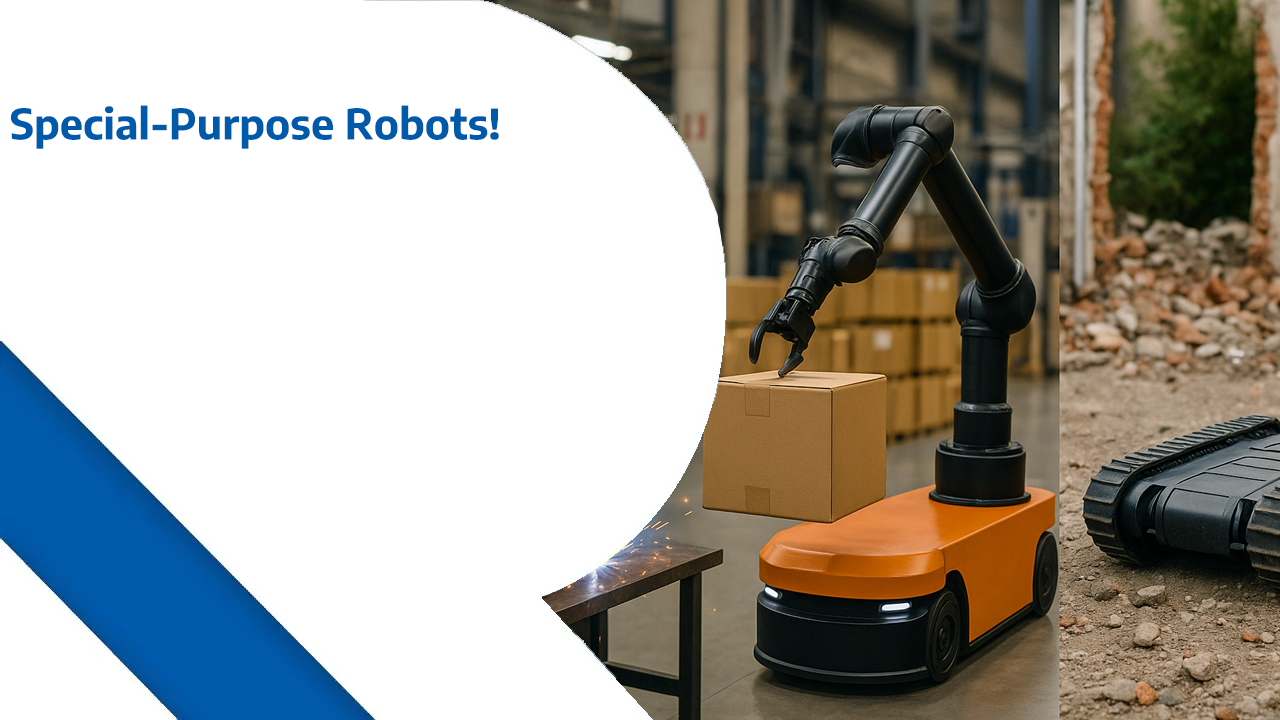
  • Special-Purpose Robots

    Special-Purpose Robots


    Special-Purpose Robots: The Future of Tailored Automation

    Introduction

    Robots have become an inseparable part of modern industry, logistics, healthcare, and even our daily lives. But not all robots are created equal. While general-purpose robots—such as collaborative arms or service bots—offer flexibility across multiple tasks, special-purpose robots are designed for a single, highly defined function. This specialization allows them to achieve unmatched performance, efficiency, and reliability in targeted applications.

    From surgical robots saving lives in hospitals to inspection robots protecting energy infrastructure, special-purpose machines are redefining what automation can do. Businesses that embrace this new wave of robotics are often rewarded with increased productivity, cost reductions, and competitive advantage.

    This article dives deep into the world of special-purpose robots—what they are, their history, applications, benefits, limitations, and future trends. Most importantly, we’ll show you how your business can capitalize on this technology with the right strategy, guided by expert consultancy and recruitment services.

    👉 To explore tailored solutions for your organization, book a consultation with our robot specialists today: info@robophil.com | 0845 528 0404


    What Are Special-Purpose Robots?

    A special-purpose robot is a machine designed and optimized to perform one task or a narrow set of tasks exceptionally well. Unlike general-purpose robots that prioritize adaptability, special-purpose robots emphasize precision, speed, and efficiency in a single application.

    Key characteristics include:

    • Dedicated design: Hardware and software engineered for one task.

    • High reliability: Lower failure rates due to reduced complexity.

    • Task optimization: Superior performance compared to generalists.

    • Lower variability: Minimal need for reprogramming or retraining.

    Think of them as the Formula 1 cars of robotics—while they may not carry groceries or sweep floors, they excel at their intended purpose with unmatched capability.


    A Brief History of Special-Purpose Robots

    The concept of designing robots for specific tasks is as old as automation itself. Some key milestones include:

    1. 1960s – The First Industrial Robots
      Early machines like Unimate were built for repetitive welding and assembly line tasks. These were among the first special-purpose robots.

    2. 1980s – Rise of Medical Robotics
      PUMA 560 was used in neurosurgery, setting the stage for surgical robots such as the da Vinci system.

    3. 1990s – Defense and Exploration
      Robots designed for bomb disposal and space exploration emerged as high-stakes special-purpose systems.

    4. 2000s – Logistics and Inspection
      Special-purpose robots entered warehouses, pipelines, and nuclear plants.

    5. 2010s – Consumer-Facing Specialization
      Delivery robots, food-preparation bots, and cleaning robots became mainstream.

    6. 2020s and Beyond – Integration with AI
      Special-purpose robots now incorporate advanced AI, computer vision, and machine learning to adapt within their narrow scope, making them smarter and safer.


    Examples of Special-Purpose Robots

    1. Medical and Surgical Robots

    • da Vinci Surgical System for minimally invasive procedures.

    • Mako Robotics for orthopedic surgeries.

    • CyberKnife for targeted cancer treatment.

    2. Inspection and Maintenance Robots

    • Drones and crawlers for pipeline inspection.

    • Underwater robots for offshore oil rigs.

    • Energy Robotics’ solutions for nuclear and power plants.

    3. Agricultural Robots

    • Automated harvesters for strawberries and apples.

    • Precision drones for pesticide spraying.

    • Weeding robots that reduce chemical usage.

    4. Military and Defense Robots

    • Bomb disposal robots like PackBot.

    • Reconnaissance robots for dangerous terrain.

    • Exoskeletons enhancing soldier mobility.

    5. Logistics and Warehousing Robots

    • Sortation systems in e-commerce warehouses.

    • Automated guided vehicles (AGVs).

    • Cold storage robots designed to function in sub-zero environments.

    6. Hospitality and Events Robots

    • Cocktail-mixing robotic arms.

    • Hotel delivery robots.

    • Event hire robots available through Robots of London for exhibitions, shows, and activations.


    Benefits of Special-Purpose Robots

    1. Unmatched Efficiency – Speed and precision tailored to one job.

    2. Reliability – Fewer breakdowns and longer uptime.

    3. Safety – Protect humans in hazardous tasks like nuclear inspection.

    4. Cost Reduction – Fewer errors, lower labor costs.

    5. Consistency – Uniform quality output every time.

    6. Competitive Edge – Businesses using them often outpace rivals.


    Challenges and Limitations

    1. Lack of Flexibility – Cannot easily switch tasks.

    2. High Initial Costs – Custom development can be expensive.

    3. Maintenance Complexity – Specialized support required.

    4. Technology Obsolescence – Rapid innovation may outdate systems.

    This is why businesses need the right consultancy and recruitment partners to guide them. Without expert insight, companies risk investing in systems that may not deliver expected ROI.

    👉 Get expert advice on whether a special-purpose robot is right for you: info@robophil.com | 0845 528 0404


    The Role of Robot Consultancy

    Many businesses hesitate when it comes to robotics adoption, fearing wasted investment or operational disruption. That’s where robot consultancy comes in.

    At Robot Philosophy, we specialize in:

    • Audit and Assessment: Identifying areas where robots can create impact.

    • Vendor Selection: Choosing the right robot manufacturer or integrator.

    • Implementation Roadmaps: Step-by-step guides to deployment.

    • Change Management: Training teams to work with robots.

    • ROI Optimization: Ensuring long-term returns on investment.

    Special-purpose robots require even more guidance because of their bespoke nature. Our consultancy ensures you invest wisely, avoiding costly missteps.


    Robot Recruitment: Building the Right Team

    Special-purpose robots don’t just run on software—they need skilled humans for integration, operation, and maintenance. Finding these specialists is challenging in today’s competitive job market.

    That’s why we offer robot recruitment services:

    • Specialist Talent Sourcing – Engineers, programmers, and roboticists.

    • Industry-Specific Expertise – From healthcare robotics to logistics automation.

    • Flexible Hiring Models – Permanent staff, contractors, or project-based roles.

    • Global Reach – Access to talent pools across Europe, Asia, and beyond.

    Building the right team ensures your special-purpose robots deliver maximum value.

    👉 Hire the right robotics talent through us today: info@robophil.com | 0845 528 0404


    Future Trends in Special-Purpose Robots

    1. AI-Enhanced Specialization
      Robots that learn and improve within their niche tasks.

    2. Human-Robot Collaboration
      Special-purpose cobots working alongside skilled professionals.

    3. Sustainability-Driven Robots
      Agricultural and recycling robots supporting environmental goals.

    4. Miniaturization
      Tiny robots for surgery, inspection, and biotech.

    5. Cloud Robotics and Digital Twins
      Virtual modeling and real-time data optimizing robot operations.

    6. Events and Marketing Robots
      Businesses using Robots of London hire robots as crowd-pullers, entertainers, and information hubs.


    Why Businesses Can’t Afford to Ignore Special-Purpose Robots

    • Competitors adopting them gain efficiency advantages.

    • Customers expect faster service and higher precision.

    • Skilled staff shortages mean robots fill critical gaps.

    • Cost-pressures demand leaner, more reliable operations.

    Ignoring robotics is no longer an option. With special-purpose robots, the key lies in choosing the right system for your business model—and that’s where consultancy and recruitment become invaluable.


    Sponsors of This Article

    This in-depth guide is proudly sponsored by leading names in the robotics industry:

    • Robot Center: Buy Robot, Robot Buy, Robot Consultancy, Robotics Consultancy.

    • Robots of London: Robot Hire, Robot Rental, Rent Robot, Hire Robot, Robot Events.

    • Robot Philosophy: Robot Consultancy AND Robot Recruitment, Robot Advice, Robot Insights, Robot Ideas.

    RoboPhil (Philip English) is a leading Robot YouTuber, Robot Influencer, Robot Trainer, Robot Consultant, and Robot Streamer—providing the knowledge and expertise to help businesses succeed with robotics.


    Conclusion

    Special-purpose robots represent the pinnacle of automation—machines designed not to do everything, but to do one thing exceptionally well. They are transforming industries from healthcare to logistics, agriculture to events. But like all powerful tools, they require careful planning, strategic investment, and skilled teams.

    That’s where we come in.

    Whether you’re a small business exploring automation for the first time or a global corporation scaling your operations, our robot consultancy and recruitment services ensure you achieve real, measurable impact with robotics.

    📧 info@robophil.com
    📞 0845 528 0404

    Book a call today and start building your competitive advantage with special-purpose robots.


    https://www.youtube.com/watch?v=smoOb-sfmzI


    https://www.youtube.com/shorts/vQ9qPeSF7ZM

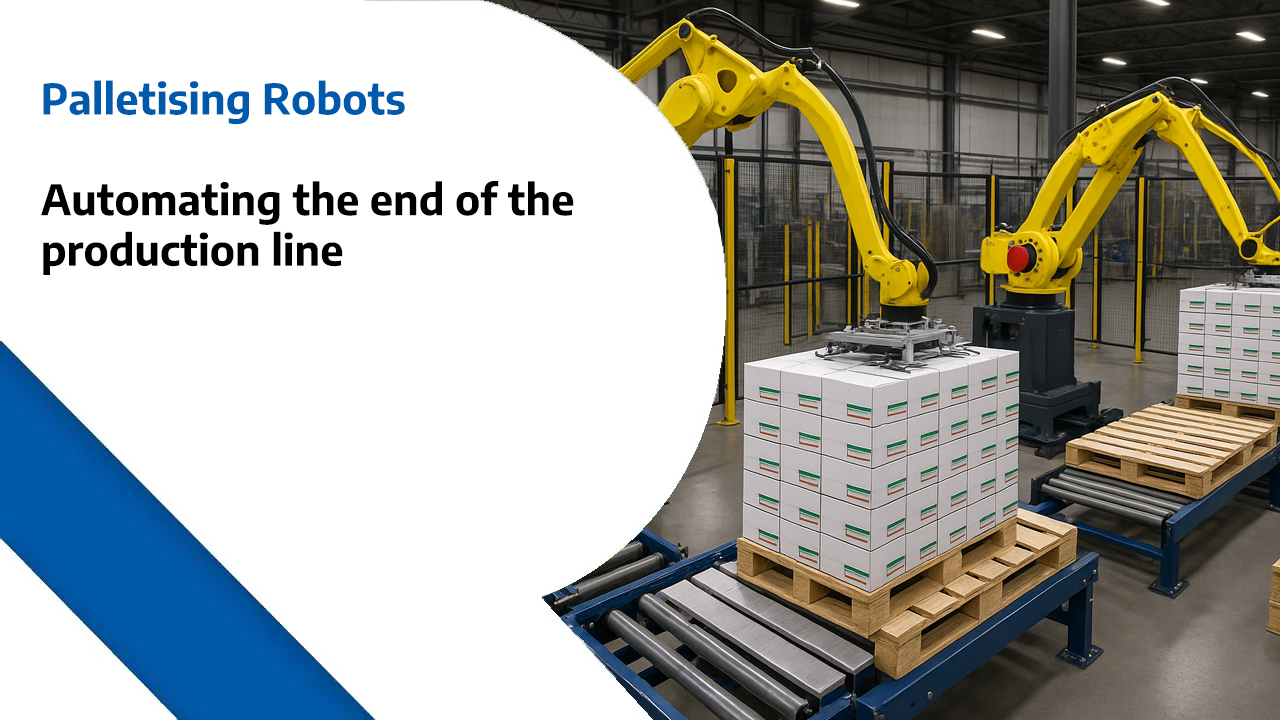
  • Palletising Robots – Automating the end of the production line

    Palletising Robots – Automating the end of the production line


    Palletising Robots: Automating the End of the Production Line

    Sponsored by Robot CenterRobots of London, and Robot Philosophy


    Introduction: The Final Frontier of Manufacturing Automation

    In today’s rapidly evolving manufacturing landscape, efficiency and precision have become the cornerstones of competitive advantage. While automation has revolutionized many aspects of production, one critical area that has traditionally remained labour-intensive is palletising – the process of loading finished products onto pallets for storage and distribution. However, the emergence of sophisticated palletising robots is transforming this final stage of the production line, delivering unprecedented levels of efficiency, consistency, and cost-effectiveness.

    Palletising represents far more than simply stacking boxes. It’s the crucial bridge between manufacturing and distribution, where products must be organized, secured, and prepared for their journey to customers. The quality of palletising directly impacts storage efficiency, transportation costs, product integrity during shipping, and ultimately, customer satisfaction. As such, automating this process has become a strategic imperative for manufacturers seeking to optimize their entire supply chain.

    The integration of robotic palletising systems marks a paradigm shift from traditional manual or semi-automated approaches. These advanced systems combine cutting-edge robotics technology with sophisticated software algorithms to create solutions that not only match human performance but often exceed it in terms of speed, accuracy, and consistency. Moreover, they operate continuously without fatigue, breaks, or the variability inherent in human performance, making them invaluable assets for modern manufacturing operations.

    The Evolution of Palletising Technology

    The journey from manual palletising to today’s sophisticated robotic systems reflects the broader evolution of manufacturing technology. In the early days of industrial production, palletising was entirely manual, requiring teams of workers to carefully stack products according to predetermined patterns. While this approach offered flexibility in handling various product types and sizes, it was labour-intensive, prone to inconsistencies, and limited by human physical capabilities and endurance.

    The first wave of automation introduced mechanical palletising systems, which used conveyor belts, pushers, and basic mechanical devices to assist in the stacking process. These systems improved speed and reduced the physical demands on workers but remained relatively inflexible and required significant manual oversight. The patterns were fixed, and any deviation from standard product dimensions or packaging often required manual intervention.

    The advent of industrial robotics in the 1970s and 1980s opened new possibilities for palletising automation. Early robotic palletisers were primarily articulated arm robots that could be programmed to follow specific pick-and-place patterns. While these systems offered greater flexibility than their mechanical predecessors, they were expensive, complex to program, and required extensive safety infrastructure due to their size and power.

    The true revolution in palletising robotics has occurred in recent decades with advances in sensor technology, artificial intelligence, machine vision, and collaborative robotics. Modern palletising robots can adapt to different product types, sizes, and packaging configurations in real-time. They incorporate advanced vision systems that can identify products, assess their orientation, and determine optimal placement strategies on the fly. Machine learning algorithms enable these systems to continuously improve their performance, learning from each palletising operation to optimize future tasks.

    Understanding Modern Palletising Robot Technology

    Contemporary palletising robots represent a convergence of multiple advanced technologies working in harmony to achieve unprecedented levels of performance and flexibility. At their core, these systems typically consist of several key components: the robotic manipulator, end-of-arm tooling, vision and sensing systems, control software, and safety systems.

    The robotic manipulator serves as the physical foundation of the system. Modern palletising robots come in various configurations, including articulated arm robots, delta robots, and gantry systems. Articulated arm robots, with their multiple joints and degrees of freedom, offer exceptional flexibility in reaching different positions and orientations, making them ideal for complex palletising patterns and confined spaces. Delta robots excel in high-speed applications where rapid, precise movements are required, particularly for lighter products. Gantry systems provide excellent reach and payload capacity, making them suitable for heavy-duty applications and large palletising areas.

    End-of-arm tooling represents another critical component that directly impacts the robot’s ability to handle different products effectively. Modern palletising robots employ sophisticated grippers and suction systems that can adapt to various package shapes, sizes, and materials. Vacuum grippers are particularly effective for smooth, flat surfaces like cardboard boxes, while mechanical grippers can handle irregularly shaped items or products with limited surface area for vacuum attachment. Advanced systems may incorporate multiple gripper types or adaptive grippers that can automatically adjust to different product characteristics.

    Vision and sensing systems have become increasingly sophisticated, enabling robots to operate with minimal pre-programming and adapt to varying conditions. High-resolution cameras, combined with advanced image processing algorithms, allow robots to identify products, assess their condition, and determine optimal handling strategies. These systems can detect damaged packages, verify proper labeling, and even read barcodes or QR codes for inventory tracking purposes.

    The control software represents the brain of the palletising system, coordinating all components and making real-time decisions based on input from various sensors and systems. Modern palletising software incorporates artificial intelligence and machine learning capabilities, allowing systems to optimize palletising patterns for stability, space utilization, and handling efficiency. These systems can automatically generate palletising patterns based on product dimensions, weight distribution requirements, and pallet specifications.

    Key Benefits of Robotic Palletising

    The adoption of robotic palletising systems delivers a comprehensive range of benefits that extend far beyond simple labour replacement. Understanding these advantages is crucial for manufacturers considering automation investments and helps explain why robotic palletising has become increasingly prevalent across diverse industries.

    Enhanced Productivity and Throughput

    Robotic palletising systems operate continuously without fatigue, breaks, or performance degradation over time. While human workers may experience decreased efficiency during long shifts or repetitive tasks, robots maintain consistent performance throughout their operating cycles. Many modern palletising robots can handle 800-1,200 cases per hour, significantly exceeding typical manual palletising rates of 200-400 cases per hour. This increased throughput directly translates to enhanced overall production capacity and the ability to meet growing demand without proportional increases in labour costs.

    Improved Consistency and Quality

    Consistency represents one of the most significant advantages of robotic palletising. Human workers, despite their best efforts, introduce variability in placement accuracy, stacking patterns, and handling care. Robots execute each palletising operation with identical precision, ensuring that every pallet meets the same high standards. This consistency extends to packaging integrity, with robots applying consistent pressure and handling techniques that minimize product damage during the palletising process.

    Cost Reduction and ROI

    While the initial investment in robotic palletising systems can be substantial, the long-term cost benefits are compelling. Labour cost reduction represents the most obvious benefit, but the total cost savings extend to reduced product damage, improved space utilization, decreased insurance costs due to fewer workplace injuries, and reduced overtime expenses. Many organizations report return on investment periods of 18-36 months for robotic palletising systems, making them attractive investments from a financial perspective.

    Enhanced Safety

    Palletising operations involve repetitive heavy lifting, awkward postures, and potential exposure to falling objects – all factors that contribute to workplace injuries. Robotic palletising systems eliminate these risks for human workers, significantly reducing the likelihood of musculoskeletal injuries, back problems, and accident-related injuries. This improved safety profile not only protects employees but also reduces workers’ compensation costs, insurance premiums, and productivity losses associated with workplace injuries.

    Flexibility and Adaptability

    Modern palletising robots offer remarkable flexibility in handling different product types, sizes, and palletising patterns. Unlike fixed mechanical systems, robotic palletisers can be quickly reprogrammed to accommodate new products or changed palletising requirements. This adaptability is particularly valuable for manufacturers producing diverse product lines or those operating in dynamic markets where product specifications change frequently.

    Data Collection and Analytics

    Robotic palletising systems generate valuable data about production processes, including cycle times, throughput rates, error frequencies, and maintenance requirements. This data enables manufacturers to identify optimization opportunities, predict maintenance needs, and make data-driven decisions about production planning and resource allocation. The integration with manufacturing execution systems and enterprise resource planning software provides comprehensive visibility into end-of-line operations.

    Types of Palletising Robots and Applications

    The diversity of products, packaging formats, and operational requirements across different industries has driven the development of various palletising robot configurations, each optimized for specific applications and performance requirements. Understanding these different types and their optimal applications is essential for selecting the most appropriate solution for specific manufacturing environments.

    Articulated Arm Palletising Robots

    Articulated arm robots represent the most versatile category of palletising robots, featuring multiple rotary joints that provide exceptional flexibility in movement and positioning. These systems typically offer six degrees of freedom, enabling them to reach virtually any position within their work envelope and orient products in any desired angle. This flexibility makes articulated arm palletisers ideal for complex palletising patterns, mixed product lines, and applications where space constraints require creative approaches to pallet building.

    The payload capacity of articulated arm palletising robots varies significantly, with models available for handling everything from lightweight consumer goods to heavy industrial products weighing hundreds of pounds. Advanced models incorporate force sensing capabilities that enable them to handle fragile products with appropriate care while maintaining the strength necessary for heavy-duty applications.

    These robots excel in applications requiring frequent changeovers between different product types or palletising patterns. Their programmability allows for quick adaptation to new requirements without mechanical modifications, making them particularly valuable for contract manufacturers or facilities producing diverse product portfolios.

    Delta Palletising Robots

    Delta robots, characterized by their parallel kinematic structure with three arms connected to a common base, are engineered for high-speed applications where rapid cycle times are paramount. Their unique design provides exceptional speed and acceleration capabilities while maintaining high precision, making them ideal for palletising lightweight to medium-weight products in high-volume production environments.

    The parallel structure of delta robots offers inherent advantages in terms of structural rigidity and dynamic performance. The distributed load across multiple arms enables high-speed movements without the oscillations or deflections that might occur with serial kinematic structures like articulated arms. This translates to faster cycle times and the ability to maintain precision even at maximum operating speeds.

    Delta palletising robots are particularly well-suited for food and beverage applications, pharmaceutical packaging, and consumer goods manufacturing where high throughput and precise placement are critical requirements. Their compact footprint and overhead mounting capability make them excellent choices for facilities with limited floor space.

    Gantry Palletising Systems

    Gantry palletising systems employ a Cartesian coordinate system with linear actuators providing movement along X, Y, and Z axes. This configuration offers several distinct advantages, including exceptional reach, high payload capacity, and precise positioning accuracy. Gantry systems can cover large work areas and handle multiple pallets simultaneously, making them ideal for high-volume operations or facilities requiring palletising of multiple product lines.

    The linear motion characteristics of gantry systems provide predictable and repeatable positioning, which is particularly beneficial for applications requiring precise layer formation or complex interlocking patterns. The overhead structure maximizes floor space utilization while providing excellent access to the entire palletising area.

    Gantry palletising systems are commonly employed in heavy industry applications, including automotive parts, building materials, and industrial chemicals, where their high payload capacity and robust construction are essential. They also excel in applications requiring palletising of multiple SKUs simultaneously or operations where the palletising area must accommodate various pallet sizes and configurations.

    Collaborative Palletising Robots

    The emergence of collaborative robots (cobots) has introduced new possibilities for palletising automation, particularly in smaller-scale operations or environments where human-robot collaboration is desired. Collaborative palletising robots are designed with inherent safety features that enable them to operate alongside human workers without traditional safety caging, providing flexibility in layout and operation.

    While cobots typically offer lower payload capacities and speeds compared to traditional industrial robots, they excel in applications requiring flexibility, easy programming, and integration into existing manual operations. Their user-friendly programming interfaces enable non-expert operators to quickly teach new palletising patterns or modify existing ones, reducing the dependence on specialized programming expertise.

    Collaborative palletising robots are particularly well-suited for small to medium-sized operations, specialty packaging applications, and environments where frequent product changeovers require rapid reprogramming. Their ability to work safely alongside humans also makes them valuable for hybrid operations where some tasks remain manual while others are automated.

    Integration Challenges and Solutions

    While the benefits of robotic palletising are substantial, successful implementation requires careful attention to various integration challenges that can impact system performance, reliability, and return on investment. Understanding these challenges and their solutions is crucial for organizations considering palletising automation.

    System Integration Complexity

    Modern manufacturing facilities typically employ multiple systems that must work together seamlessly, including conveyor systems, warehouse management systems, manufacturing execution systems, and quality control equipment. Integrating palletising robots into this complex ecosystem requires careful planning and coordination to ensure proper communication and data flow between all components.

    Successful integration typically involves standardizing communication protocols, implementing robust data management systems, and ensuring that the palletising system can adapt to variations in upstream processes. This may require custom software development, modification of existing systems, or implementation of middleware solutions that facilitate communication between disparate systems.

    Product Handling Variability

    Real-world manufacturing environments often involve significant variability in product characteristics, including size tolerances, packaging quality, and surface conditions. Palletising robots must be capable of handling this variability while maintaining performance and avoiding damage to products or equipment.

    Advanced vision systems and adaptive control algorithms help address these challenges by enabling robots to assess each product individually and adjust handling strategies accordingly. Machine learning capabilities allow systems to continuously improve their handling techniques based on experience with different product variations.

    Layout and Space Constraints

    Existing manufacturing facilities often have space constraints that complicate robot installation. Palletising systems must be designed to fit within available space while maintaining adequate access for maintenance, product flow, and safety considerations. This may require creative approaches to robot placement, custom end-effector design, or modification of existing facility infrastructure.

    Three-dimensional modeling and simulation tools are invaluable for optimizing layout design and identifying potential interference issues before installation. These tools enable engineers to test different configurations and ensure that the selected solution will operate effectively within the constraints of the existing facility.

    Maintenance and Support Requirements

    Robotic palletising systems require ongoing maintenance and support to ensure continued reliable operation. Organizations must develop maintenance capabilities, either internally or through service agreements with suppliers. This includes training maintenance personnel, establishing spare parts inventory, and implementing preventive maintenance programs.

    Predictive maintenance technologies, including vibration monitoring, thermal imaging, and performance analytics, can help identify potential issues before they result in equipment failures. Remote diagnostic capabilities enable suppliers to provide support and troubleshooting assistance without requiring on-site visits, reducing downtime and support costs.

    Industry Applications and Case Studies

    The versatility of palletising robots has enabled their adoption across a diverse range of industries, each with unique requirements and challenges. Examining specific applications and case studies provides valuable insights into how different organizations have successfully implemented palletising automation.

    Food and Beverage Industry

    The food and beverage industry represents one of the largest markets for palletising robots, driven by high-volume production requirements, stringent hygiene standards, and the need for gentle product handling. Palletising robots in this sector must meet food-grade requirements, including stainless steel construction, washdown capabilities, and compliance with relevant food safety regulations.

    A major beverage manufacturer implemented articulated arm palletising robots to handle multiple bottle and can formats across several production lines. The system includes adaptive grippers that automatically adjust to different package sizes and vision systems that verify proper case orientation and labeling. The implementation resulted in a 40% increase in palletising throughput while reducing product damage by 60% compared to the previous manual operation.

    In frozen food applications, palletising robots must operate in low-temperature environments while handling products that may have frost buildup or irregular surfaces. Specialized gripping systems and cold-weather lubricants ensure reliable operation in these challenging conditions.

    Pharmaceutical and Healthcare

    The pharmaceutical industry demands exceptional precision, traceability, and contamination control in palletising operations. Robotic palletising systems in this sector often incorporate advanced vision systems for 100% case verification, serialization tracking, and contamination detection. Clean room compatibility and validation documentation requirements add complexity to pharmaceutical palletising installations.

    A pharmaceutical manufacturer specializing in sterile injectable products implemented a gantry-style palletising system with integrated vision inspection and serialization tracking. The system verifies that each case contains the correct products, proper labeling, and intact tamper-evident seals before placement on the pallet. Full traceability documentation is generated for each pallet, supporting regulatory compliance and product recall capabilities.

    Consumer Packaged Goods

    Consumer packaged goods manufacturers often deal with diverse product portfolios, frequent promotional packaging changes, and seasonal demand variations. Palletising robots in this sector must provide exceptional flexibility while maintaining high throughput rates. Quick changeover capabilities and intuitive programming interfaces are essential for adapting to frequent product and pattern changes.

    A personal care products manufacturer implemented delta-style palletising robots to handle over 200 different SKUs across multiple production lines. The system includes an automated pattern generation algorithm that creates optimal palletising patterns based on product dimensions and stability requirements. Changeover times between different products average less than five minutes, enabling efficient short-run production.

    Building Materials and Construction

    The building materials industry presents unique challenges for palletising automation, including heavy products, abrasive materials, and harsh operating environments. Palletising robots in this sector require robust construction, high payload capacity, and protection against dust and debris.

    A roofing materials manufacturer implemented a heavy-duty gantry palletising system to handle bundles of asphalt shingles weighing up to 80 pounds each. The system includes specialized gripping technology designed to handle the flexible packaging without damage and pattern generation software that ensures stable pallet configuration for transportation and storage.

    Future Trends and Technological Advances

    The field of palletising robotics continues to evolve rapidly, driven by advances in artificial intelligence, sensor technology, and collaborative robotics. Understanding these emerging trends is crucial for organizations planning long-term automation strategies and investment decisions.

    Artificial Intelligence and Machine Learning Integration

    The integration of AI and machine learning technologies is transforming palletising robots from programmed systems into intelligent, adaptive solutions. Modern systems can learn from experience, optimizing palletising patterns for stability, efficiency, and space utilization. Machine learning algorithms analyze successful palletising operations and failure modes to continuously improve system performance.

    Predictive analytics capabilities enable systems to anticipate potential issues and adjust operations proactively. For example, if vision systems detect variations in incoming product quality, the robot can automatically adjust its handling technique to accommodate these variations without manual intervention.

    Future developments in AI will likely include more sophisticated decision-making capabilities, enabling robots to handle complex scenarios that currently require human judgment. This includes optimizing palletising strategies for mixed-product pallets, adapting to temporary equipment limitations, and coordinating with other automated systems to optimize overall facility performance.

    Advanced Vision and Sensing Technologies

    Vision system capabilities continue to advance, with higher resolution cameras, improved lighting systems, and more sophisticated image processing algorithms. Future vision systems will likely incorporate multispectral imaging, enabling robots to assess product characteristics beyond what is visible to the human eye. This could include detecting internal defects, verifying contents, or assessing structural integrity.

    Three-dimensional vision systems are becoming more common, providing robots with detailed spatial information about products and enabling more sophisticated handling strategies. LiDAR and other depth-sensing technologies may also find applications in palletising robots, particularly for handling irregularly shaped or deformable products.

    Tactile sensing technologies are emerging that could provide robots with the ability to assess product characteristics through touch, similar to how human workers can detect damaged packaging or improperly sealed cases. This capability could significantly enhance quality control capabilities integrated into the palletising process.

    Collaborative and Flexible Robotics

    The collaborative robotics trend is likely to continue expanding into palletising applications, with systems designed to work alongside human operators in shared workspaces. These systems will incorporate advanced safety technologies, including proximity sensors, force limiting, and predictive collision avoidance.

    Modular robot designs may become more prevalent, enabling organizations to quickly reconfigure systems for different applications or scale capacity up or down based on demand. This flexibility could be particularly valuable for facilities with seasonal variations or those serving multiple customers with different requirements.

    Sustainability and Energy Efficiency

    Environmental considerations are becoming increasingly important in manufacturing equipment selection, and palletising robots are no exception. Future systems will likely incorporate more energy-efficient actuators, regenerative braking systems, and optimized motion planning algorithms that minimize energy consumption.

    Lightweight materials and design optimization may reduce the overall environmental footprint of palletising systems while maintaining or improving performance. Integration with renewable energy systems and smart grid technologies could further enhance the sustainability profile of automated palletising operations.

    Implementation Best Practices

    Successful implementation of robotic palletising systems requires careful planning, stakeholder engagement, and attention to both technical and operational considerations. Organizations that follow proven best practices are more likely to achieve their automation objectives while minimizing risks and implementation challenges.

    Comprehensive Needs Assessment

    The foundation of successful palletising automation lies in conducting a thorough assessment of current operations, future requirements, and organizational capabilities. This assessment should examine current palletising volumes, product characteristics, quality requirements, and operational constraints. Understanding seasonal variations, growth projections, and potential changes in product portfolio is essential for selecting systems that will remain effective over their operational lifetime.

    Stakeholder engagement throughout the assessment process ensures that all relevant perspectives are considered and helps build organizational support for the automation initiative. This includes input from operations personnel, maintenance teams, safety managers, and financial decision-makers.

    System Specification and Vendor Selection

    Developing detailed system specifications based on the needs assessment provides a foundation for vendor evaluation and selection. Specifications should address performance requirements, integration needs, safety requirements, and support expectations. Clear specifications help ensure that all potential vendors are evaluating the same requirements and enable meaningful comparison of proposed solutions.

    Vendor evaluation should consider not only the technical capabilities and cost of proposed systems but also the vendor’s experience, support capabilities, and financial stability. Site visits to existing installations and discussions with reference customers provide valuable insights into vendor performance and system reliability.

    Pilot Testing and Phased Implementation

    For organizations new to robotic palletising, pilot testing or phased implementation approaches can reduce risks and provide valuable learning opportunities. Starting with a single production line or product type allows organizations to gain experience with the technology while limiting potential disruption to overall operations.

    Pilot implementations provide opportunities to refine operational procedures, train personnel, and identify optimization opportunities before expanding to additional applications. This approach also enables organizations to demonstrate success and build confidence in the technology throughout the organization.

    Training and Change Management

    Successful automation implementation requires comprehensive training programs for all personnel who will interact with the new systems. This includes operators, maintenance technicians, supervisors, and support staff. Training should cover system operation, troubleshooting, maintenance procedures, and safety requirements.

    Change management considerations are equally important, as automation implementation often involves significant changes to established work patterns and responsibilities. Clear communication about the reasons for automation, expected benefits, and impact on personnel helps build acceptance and support for the new systems.

    Continuous Improvement and Optimization

    The implementation of palletising robots should be viewed as the beginning of a continuous improvement process rather than a one-time project. Regular performance monitoring, data analysis, and system optimization help ensure that systems continue to meet performance expectations and identify opportunities for further improvement.

    Establishing key performance indicators and regular review processes provides a framework for measuring success and identifying areas for enhancement. This includes monitoring throughput rates, quality metrics, maintenance requirements, and overall equipment effectiveness.

    Cost Considerations and ROI Analysis

    Understanding the complete cost structure and return on investment potential of robotic palletising systems is crucial for making informed investment decisions. While the initial capital investment may be substantial, the comprehensive financial benefits often justify the investment within reasonable timeframes.

    Capital Investment Components

    The total capital investment for robotic palletising systems includes several components beyond the robot itself. The robot and associated control systems typically represent 40-60% of the total investment, with the remainder comprising end-effector tooling, vision systems, safety equipment, installation costs, and facility modifications.

    Integration costs can vary significantly depending on the complexity of the existing facility and the level of customization required. Simple installations with minimal integration requirements may have integration costs equal to 20-30% of the equipment cost, while complex installations requiring significant custom engineering may see integration costs equal to or exceeding equipment costs.

    Training costs, spare parts inventory, and commissioning expenses should also be factored into the total investment calculation. While these costs may seem minor compared to the equipment investment, adequate budgeting for these items is essential for successful implementation.

    Operational Cost Benefits

    Labour cost reduction typically represents the most significant operational benefit of robotic palletising systems. While direct labour elimination is the most obvious benefit, indirect labour savings may also be substantial. This includes reduced supervision requirements, decreased need for temporary labour during peak periods, and elimination of overtime costs associated with manual palletising operations.

    Product damage reduction can provide significant cost savings, particularly for high-value products or operations with historically high damage rates. Robotic systems typically reduce product damage by 50-80% compared to manual operations, translating directly to improved margins and reduced waste disposal costs.

    Improved palletising consistency can reduce transportation costs through better space utilization and reduced load shifting during transit. More consistent pallet configuration also reduces storage space requirements and improves warehouse efficiency.

    Productivity and Capacity Benefits

    Increased throughput capability provided by robotic palletising systems can enable organizations to meet growing demand without proportional increases in labour costs or facility space. This capacity expansion capability may defer or eliminate the need for additional production facilities or third-party logistics services.

    Improved operational flexibility enables more efficient production scheduling and reduced changeover times between different products. This flexibility can translate to improved customer service levels and the ability to respond more quickly to market demands.

    Return on Investment Calculation

    Typical return on investment periods for robotic palletising systems range from 18 to 48 months, depending on the specific application, labour rates, and operational characteristics. Organizations with high labour costs, multiple shifts, or high product damage rates typically see shorter payback periods.

    The ROI calculation should consider both quantifiable benefits, such as labour cost reduction and damage prevention, and qualitative benefits, such as improved safety and operational flexibility. While qualitative benefits may be difficult to quantify precisely, they often provide substantial long-term value to the organization.

    Selecting the Right Partner for Your Palletising Automation Journey

    The complexity of modern palletising robot systems and the critical importance of successful implementation make partner selection one of the most crucial decisions in the automation process. The right partner brings not only technical expertise but also industry knowledge, project management capabilities, and ongoing support commitment that ensures long-term success.

    Technical Expertise and Experience

    Successful palletising automation requires deep understanding of both robotics technology and specific industry requirements. Look for partners with proven experience in your industry and with similar applications. This experience translates to better system design, more accurate performance predictions, and fewer implementation challenges.

    Technical expertise should encompass not only robot programming and integration but also vision systems, safety systems, and integration with existing manufacturing systems. Partners should demonstrate capability in all aspects of system design, from initial concept through commissioning and ongoing support.

    Comprehensive Service Offerings

    The most valuable partners offer comprehensive services that span the entire project lifecycle, from initial assessment and system design through installation, commissioning, training, and ongoing support. This integrated approach ensures consistency and accountability throughout the project while simplifying vendor management.

    Look for partners who can provide system simulation and validation services that verify system performance before installation. This capability reduces implementation risks and helps ensure that systems will meet performance expectations from day one.

    Industry Knowledge and Application Expertise

    Generic robotics knowledge, while valuable, is not sufficient for successful palletising automation. Partners should demonstrate deep understanding of your specific industry requirements, including regulatory compliance, quality standards, and operational challenges unique to your sector.

    Application-specific expertise is equally important. Palletising applications vary significantly even within the same industry, and partners should understand the nuances of your specific products, packaging formats, and operational requirements.

    Support and Service Capabilities

    Ongoing support and service capabilities are crucial for maintaining system performance and minimizing downtime. Evaluate potential partners’ service organization, including geographic coverage, response times, spare parts availability, and remote support capabilities.

    Consider the partner’s ability to provide training and knowledge transfer that enables your organization to maximize the value of the investment. This includes not only initial operator training but also ongoing support for optimization and continuous improvement activities.

    Getting Started: Your Path to Palletising Automation Success

    Embarking on a palletising automation journey can seem daunting, but with the right approach and expert guidance, organizations can successfully implement systems that deliver substantial benefits for years to come. The key is taking a systematic approach that thoroughly evaluates requirements, carefully selects appropriate technology, and ensures proper implementation and support.

    Initial Assessment and Planning

    The first step in any palletising automation project is conducting a comprehensive assessment of current operations and future requirements. This assessment should examine current palletising volumes, product characteristics, quality requirements, space constraints, and integration needs. Understanding the total cost of current operations, including direct and indirect labour costs, product damage expenses, and safety-related costs, provides a baseline for evaluating automation benefits.

    Future requirements planning is equally important, as palletising systems typically have operational lives of 10-15 years. Consider anticipated volume growth, new product introductions, changes in packaging formats, and evolving regulatory requirements that might impact system requirements.

    Technology Selection and System Design

    Based on the assessment results, appropriate technology selection involves evaluating different robot types, vision systems, end-effector options, and integration approaches. This evaluation should consider not only current requirements but also future flexibility needs and expansion possibilities.

    System design should optimize performance while maintaining appropriate safety margins and provision for future modifications. Simulation and modeling tools help validate design decisions and identify potential issues before implementation begins.

    Implementation Planning and Execution

    Successful implementation requires detailed project planning that addresses all aspects of system installation, integration, testing, and commissioning. This planning should include contingencies for potential delays or complications and ensure minimal disruption to ongoing operations.

    Training programs should begin early in the implementation process and continue through commissioning and initial operation. Comprehensive training ensures that personnel are prepared to operate and maintain the new systems effectively from the start of operations.

    Continuous Improvement and Optimization

    System implementation represents the beginning of a continuous improvement journey rather than an endpoint. Regular performance monitoring, data analysis, and optimization activities help ensure that systems continue to meet performance expectations and identify opportunities for further improvement.

    Establishing relationships with technology partners who can provide ongoing support, system updates, and expansion assistance ensures that palletising systems continue to provide value throughout their operational life.

    Expert Consultation and Support Services

    At Robot Philosophy, we understand that successful palletising automation requires more than just selecting the right technology – it demands comprehensive expertise in system design, integration, implementation, and ongoing optimization. Our team of robotics experts brings decades of combined experience in palletising automation across diverse industries, providing the knowledge and support necessary for successful automation projects.

    Comprehensive Consulting Services

    Our consulting services begin with thorough operational assessments that examine every aspect of your current palletising operations. We analyze throughput requirements, product characteristics, quality standards, space constraints, and integration needs to develop comprehensive system specifications that align with both current requirements and future growth plans.

    Our industry expertise spans food and beverage, pharmaceutical, consumer goods, building materials, and numerous other sectors. This broad experience enables us to apply best practices from across industries while addressing the specific requirements and challenges unique to your application.

    System selection and vendor evaluation services help ensure that you select the optimal technology solution for your specific requirements. Our vendor-neutral approach provides objective analysis of different options, helping you make informed decisions based on technical capability, cost-effectiveness, and long-term value.

    Implementation Support and Project Management

    Our implementation support services help ensure successful project execution from initial planning through final commissioning. We provide project management expertise that coordinates all aspects of system installation, integration, and testing while minimizing disruption to ongoing operations.

    Integration planning services address the critical challenge of connecting new palletising systems with existing manufacturing infrastructure. Our experts work with your team to develop integration strategies that ensure seamless communication between systems while maintaining operational flexibility.

    Commissioning support ensures that new systems meet performance specifications and operate reliably from the start of production. Our systematic approach to system validation and performance verification provides confidence that your investment will deliver expected returns.

    Training and Knowledge Transfer

    Comprehensive training programs ensure that your personnel have the knowledge and skills necessary to operate, maintain, and optimize palletising systems effectively. Our training services cover system operation, troubleshooting, routine maintenance, and performance optimization techniques.

    We believe in knowledge transfer that builds internal capabilities rather than creating dependency on external support. Our training programs are designed to develop internal expertise that enables continuous improvement and system optimization over the long term.

    Ongoing Support and Optimization Services

    Our relationship with clients extends well beyond system implementation through ongoing support services that help maximize system performance and return on investment. Performance monitoring and optimization services identify opportunities for throughput improvement, efficiency enhancement, and cost reduction.

    Predictive maintenance programs help prevent unexpected downtime while optimizing maintenance costs. Our data analysis services identify trends and patterns that enable proactive maintenance planning and system optimization.

    Recruitment and Staffing Services

    Successful automation implementation often requires specialized personnel with robotics and automation expertise. Our recruitment services help organizations identify and hire qualified candidates with the technical skills necessary for supporting automated palletising operations.

    We maintain an extensive network of qualified robotics professionals, including system integrators, maintenance technicians, programmers, and project managers. Our recruitment services match candidates with specific skill sets to your organization’s needs and culture.

    Our temporary staffing services provide access to specialized expertise for specific projects or during peak periods. This flexible approach enables organizations to access required skills without long-term commitments or the challenges of permanent hiring in specialized technical areas.

    Take the Next Step Toward Automation Success

    The transformation of palletising operations through robotic automation represents one of the most impactful investments manufacturing organizations can make. The benefits – increased productivity, improved consistency, enhanced safety, and substantial cost savings – are well-documented across numerous industries and applications.

    However, success in palletising automation depends on making informed decisions throughout the evaluation, selection, and implementation process. The complexity of modern manufacturing environments and the critical importance of end-of-line operations demand expertise and experience that extends beyond basic robotics knowledge.

    Robot Philosophy stands ready to guide your organization through every step of the palletising automation journey. Our comprehensive services, from initial assessment through ongoing optimization, provide the expertise and support necessary for successful implementation and long-term value realization.

    Whether you’re just beginning to explore palletising automation possibilities or are ready to move forward with system implementation, our team of experts can provide the guidance and support you need. We invite you to contact us to discuss your specific requirements and learn how palletising automation can transform your operations.

    Contact Robot Philosophy today to schedule your consultation:

    📧 Email: info@robophil.com 📞 Phone: 0845 528 0404

    Don’t let manual palletising operations limit your manufacturing potential. Take the first step toward automation success and discover how robotic palletising can revolutionize your end-of-line operations.


    About Our Sponsors

    Robot Center

    Robot Center is your premier destination for comprehensive robotics solutions. Whether you’re looking to buy robots, seeking expert robot consultancy, or need specialized robotics consultancy services, Robot Center provides the expertise and technology solutions to meet your automation needs. Their extensive experience across diverse industries ensures that you receive the most appropriate robotics solutions for your specific applications.

    Robots of London

    Robots of London specializes in flexible robotics solutions through their comprehensive robot hire and robot rental services. Whether you need to rent robots for short-term projects, hire robots for events, or require robotic solutions for temporary applications, Robots of London provides access to cutting-edge robotics technology without the capital investment of permanent purchases.

    Robot Philosophy
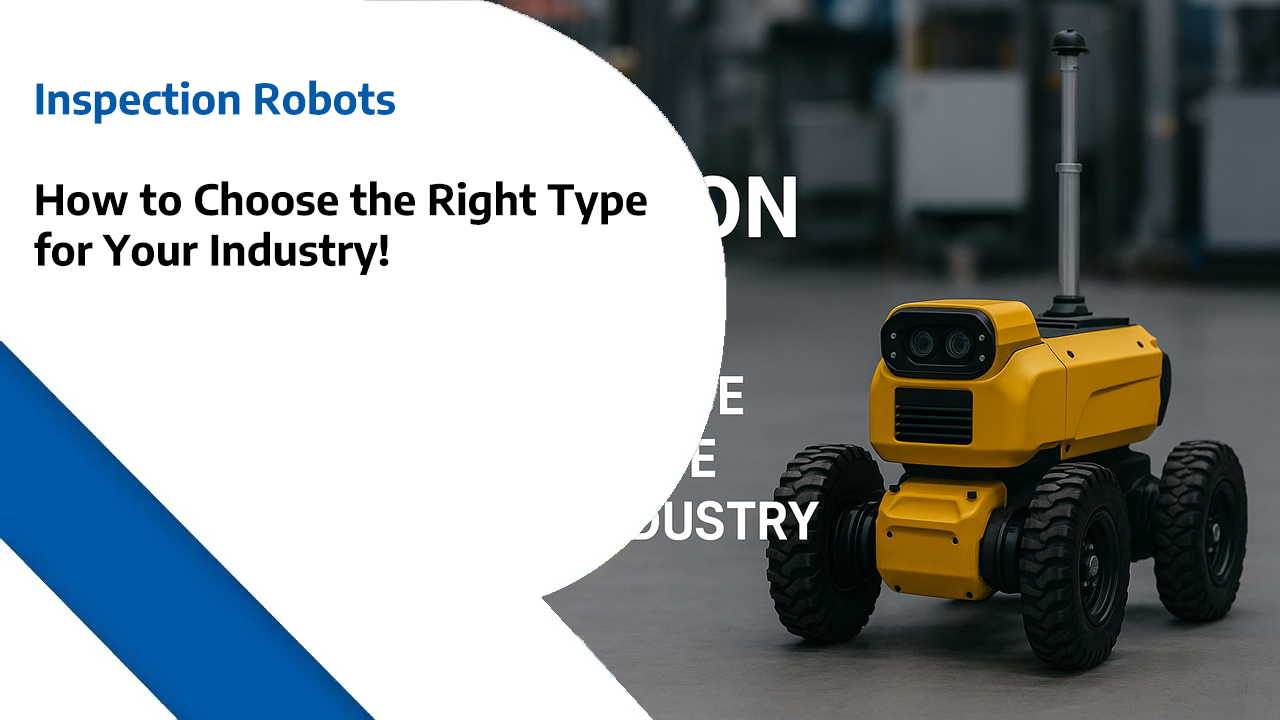
     

    https://www.youtube.com/watch?v=OCfTeY2zFrs


    https://www.youtube.com/shorts/OOi_gMWyjbg

  • Inside the Robot Mouth That Works Like a Typewriter – Selectramatronics Explained

    Inside the Robot Mouth That Works Like a Typewriter – Selectramatronics Explained

    Inside the Robot Mouth That Works Like a Typewriter – Selectramatronics Explained


    Imagine if your mouth worked like a typewriter. Not the loud “click clack” part, but the precision mechanics. That’s the idea behind Selectramatronics, a robot mouth inspired by the IBM Selectric typewriter. Instead of swinging arms and keys, the Selectric used a rotating “typeball” covered in letters. Press an “A,” and the ball spun so the “A” faced forward, then smacked it onto the page with satisfying speed.

    This robot works the same way, but instead of letters, the ball is bristling with lip shapes. Each position represents a different phonetic sound. Motors spin the ball at high speed, snapping between shapes in sync with audio, which is driven by a Raspberry Pi. The result is a mouth that lip-syncs in real time, almost like watching a puppet with an unusually high IQ.

    The build is a feat of mechanical planning. The video showing its creation doesn’t bother with narration — it simply demonstrates the concept from sketch, to 3D-printed parts, to final lip-syncing. It’s a hypnotic watch, especially when you see how quickly those mouth positions flip.

    It may not be Hollywood CGI, and yes, fast speech can throw it off, but it’s still convincing. Your brain fills in the gaps, just like it does with animation. In the end, Selectramatronics is part art, part engineering, and a reminder that sometimes old ideas — like a typewriter ball from the 1960s — can inspire futuristic robots today.


    And that’s your robot news update for today!
    If you’re curious about how robotics can transform your business, join me for the weekly Live Robot Optimise Workshop — it’s packed with insights, trends, and practical tips. Don’t forget to subscribe so you stay in the loop with all the latest updates.

    I’m RoboPhil from Robot Philosophy — thanks for watching, and I’ll see you next time!


    Join our Robot Optimise Industry (ROI) Workshop: https://robophil.com/


    Sponsors:-


    Robot Center: – https://robotcenter.co.uk/ – Buy Robot, Robot Buy, Robot consultancy, Robotics Consultancy, Inspection Robots, Security Robots, 


    Robots of London: – https://robotsoflondon.co.uk/ – Robot Hire, Robot Rental, Rent Robot, Hire Robot, Robot Events, Robotics Hire, Hire Robotics, Rent Robotics, Robotics Rent, for exhibitions, shows, Events, Robot hire in the UK, Robot hire in Europe


    Robot Philosophy: – https://robophil.com/ – Robot Consultancy, Robot Recruitment, Robot Advice, Robot Insights, Robot Ideas. RoboPhil, also known as Philip English, is a leading Robot YouTuber, Robot Influencer, Robot Trainer, Robot Consultant, and Robot Streamer, Robotics Streamer, Robotics YouTuber, Robotics Influencer, Robotics Consultant, Robotics Trainer  

  • Zoox Robotaxi Launches on the Las Vegas Strip – Free Rides & Future of Self-Driving Cars

    Zoox Robotaxi Launches on the Las Vegas Strip – Free Rides & Future of Self-Driving Cars

    Zoox Robotaxi Launches on the Las Vegas Strip – Free Rides & Future of Self-Driving Cars


    Zoox, an Amazon-owned startup, has launched its fully driverless robotaxi service to the public on the Las Vegas Strip. These vehicles aren’t regular Ubers or Lyfts — they were built from scratch with no steering wheel, no pedals, and no driver’s seat. Instead, riders sit on benches facing each other, making the experience feel a little more like a social lounge on wheels.

    Each robotaxi is loaded with cameras, radar, and LiDAR, giving it a full 360-degree view of its surroundings so it can safely navigate one of the busiest streets in America. To ride, people simply download the Zoox app on iOS or Android, choose from pickup points like Resorts World, AREA15, or Topgolf, and wait for their ride to arrive. At launch, rides are free — a smart move by Zoox while it waits on regulatory approval to start charging fares.

    The company has invested heavily in this project and can produce up to 10,000 vehicles a year at its California facility. It’s also testing in San Francisco and Foster City, with plans to expand to cities like Austin and Miami. Competition in the robotaxi space is heating up, with Waymo already logging millions of autonomous miles and Tesla recently entering the market with its own robotaxi service.

    Challenges remain, from regulations to passenger comfort, but Zoox is betting that Las Vegas is the perfect place to prove itself. With over 40 million visitors a year, the Strip offers the company a high-profile stage.


    And that’s your robot news update for today!
    If you’re curious about how robotics can transform your business, join me for the weekly Live Robot Optimise Workshop — it’s packed with insights, trends, and practical tips. Don’t forget to subscribe so you stay in the loop with all the latest updates.

    I’m RoboPhil from Robot Philosophy — thanks for watching, and I’ll see you next time!


    Join our Robot Optimise Industry (ROI) Workshop: https://robophil.com/


    Sponsors:-


    Robot Center: – https://robotcenter.co.uk/ – Buy Robot, Robot Buy, Robot consultancy, Robotics Consultancy, Inspection Robots, Security Robots, 


    Robots of London: – https://robotsoflondon.co.uk/ – Robot Hire, Robot Rental, Rent Robot, Hire Robot, Robot Events, Robotics Hire, Hire Robotics, Rent Robotics, Robotics Rent, for exhibitions, shows, Events, Robot hire in the UK, Robot hire in Europe


    Robot Philosophy: – https://robophil.com/ – Robot Consultancy, Robot Recruitment, Robot Advice, Robot Insights, Robot Ideas. RoboPhil, also known as Philip English, is a leading Robot YouTuber, Robot Influencer, Robot Trainer, Robot Consultant, and Robot Streamer, Robotics Streamer, Robotics YouTuber, Robotics Influencer, Robotics Consultant, Robotics Trainer  

  • Robot Chef Revolution – Circus SE’s CA-1 Robot Begins High-Volume Production in 2025

    Robot Chef Revolution – Circus SE’s CA-1 Robot Begins High-Volume Production in 2025

    Robot Chef Revolution – Circus SE’s CA-1 Robot Begins High-Volume Production in 2025


    Circus SE, a robotics and AI company based in Munich, has just completed the first production run of its fourth-generation CA-1 robots in a new high-volume facility. This milestone comes only six months after the factory was set up, and several more robots are already in production.

    The CA-1 is a highly complex system with more than 29,000 individual parts — about the same as a small car. It is designed to automate food preparation at scale. The robot uses smart food silos to manage ingredients, induction pots for fast and energy-efficient cooking, and robotic arms to handle dispensing, cooking, and plating. A built-in self-cleaning system and heated silos ensure low maintenance and meals that stay warm until pickup.

    Each robot goes through more than 150 precision tests, following quality standards similar to the automotive industry. Circus has partnered with Celestica, a global production specialist, to help scale up manufacturing and meet international demand.

    With the new factory, Circus SE says it can produce up to 6,000 units per year. The company is also exploring production options in the U.S. as part of its global expansion.

    This achievement moves Circus beyond development and into industrial-scale delivery. It marks the beginning of what the company calls the era of autonomous nutrition — where your next meal may be cooked, plated, and served entirely by a robot.


    And that’s your robot news update for today!
    If you’re curious about how robotics can transform your business, join me for the weekly Live Robot Optimise Workshop — it’s packed with insights, trends, and practical tips. Don’t forget to subscribe so you stay in the loop with all the latest updates.

    I’m RoboPhil from Robot Philosophy — thanks for watching, and I’ll see you next time!

    Join our Robot Optimise Industry (ROI) Workshop: https://robophil.com/


    Sponsors:-


    Robot Center: – https://robotcenter.co.uk/ – Buy Robot, Robot Buy, Robot consultancy, Robotics Consultancy, Inspection Robots, Security Robots, 


    Robots of London: – https://robotsoflondon.co.uk/ – Robot Hire, Robot Rental, Rent Robot, Hire Robot, Robot Events, Robotics Hire, Hire Robotics, Rent Robotics, Robotics Rent, for exhibitions, shows, Events, Robot hire in the UK, Robot hire in Europe


    Robot Philosophy: – https://robophil.com/ – Robot Consultancy, Robot Recruitment, Robot Advice, Robot Insights, Robot Ideas. RoboPhil, also known as Philip English, is a leading Robot YouTuber, Robot Influencer, Robot Trainer, Robot Consultant, and Robot Streamer, Robotics Streamer, Robotics YouTuber, Robotics Influencer, Robotics Consultant, Robotics Trainer  


  • Painting Robots – How to Maintain Quality and Consistency

    Painting Robots – How to Maintain Quality and Consistency


    Painting Robots – How to Maintain Quality and Consistency

    In today’s competitive manufacturing landscape, painting robots have become an essential tool for businesses seeking to deliver high-quality finishes, improve efficiency, and ensure a consistent end product. Whether in automotive production, consumer goods, or industrial applications, robotic painting systems are helping brands achieve flawless results at scale.

    However, investing in painting robots is only the first step. To truly maximize their potential, businesses must focus on maintaining quality and consistency across robot operations. This means taking a closer look at setup, calibration, monitoring, and workforce expertise—because even the most advanced robots require proper integration and oversight.


    Why Painting Robots Are Essential

    Painting robots provide several clear advantages over traditional manual processes:

    • Consistency in quality: Robots deliver uniform coatings, reducing risks of streaks, uneven thickness, and human error.

    • Efficiency and cost-effectiveness: Automated systems lower cycle times and reduce material waste.

    • Worker safety: Robots minimize direct exposure to fumes, chemicals, and repetitive-strain risks.

    • Scalability: Robotic painting systems can quickly adapt to large-scale production.

    These benefits highlight why more companies are shifting to automation for high-volume painting needs. But the difference between a robot delivering its promised accuracy versus producing costly mistakes lies in how well it is maintained.


    Key Areas to Ensure Quality and Consistency

    Regular Calibration

    Painting robots must be routinely calibrated to ensure precision. Even slight misalignments can cause defects such as paint drips, patchiness, or uneven layering. Regular calibration ensures the robot continues delivering the correct spray patterns, angles, and pressure.

    Software Updates and Programming

    Robotic painting systems rely heavily on software. Outdated programs can slow down operations or cause incompatibility with new paints and surfaces. Routine updates and optimized programming maintain efficiency while unlocking new features from robot manufacturers.

    Environment and Maintenance

    Painting quality is highly sensitive to factors like airflow, humidity, and booth cleanliness. Consistent environmental monitoring prevents paint contamination and ensures adhesion quality. Moreover, regular maintenance and cleaning of spray nozzles and arms are necessary to avoid clogging and uneven distribution.

    Skilled Oversight

    Even with automation, expert guidance is essential. Trained operators and consultants can spot issues early, fine-tune processes, and train teams on robotic workflows. This is where specialist services become invaluable.


    Where Businesses Go Wrong

    Many companies assume that once they install painting robots, performance will take care of itself. Unfortunately, this approach often leads to:

    • Degradations in quality over time

    • Higher production waste due to inconsistencies

    • Costly downtime due to overlooked maintenance

    • A lack of in-house expertise when issues arise

    The solution is a blend of robot expertise, consultancy, and recruitment of the right talent—ensuring companies can maintain robotic excellence both now and in the future.


    How We Can Help

    At Robot Philosophy (RoboPhil), we specialize in helping businesses get the best possible return from their painting robots. Our services cover:

    • Robot Consultancy: We assess your current robotic painting setup, identify inefficiencies, and tailor strategies to maintain consistent quality.

    • Robot Recruitment: Finding experienced robotics professionals can be challenging. We connect companies with the right talent to manage, maintain, and optimize robotic painting operations.

    If you’re looking to book a consultation or want advice on building a robotics team, contact us today:


    Sponsors of This Article

    • Robot Centerhttps://robotcenter.co.uk/ – Buy Robot, Robot Buy, Robot Consultancy, Robotics Consultancy

    • Robots of Londonhttps://robotsoflondon.co.uk/ – Robot Hire, Robot Rental, Rent Robot, Hire Robot, Robot Events

    • Robot Philosophy (RoboPhil)https://robophil.com/ – Robot Consultancy and Robot Recruitment, Robot Advice, Insights, and Training by Philip English, leading Robotics YouTuber, Influencer, and Consultant


    Would you like me to make this article more formal and business-oriented for executives, or more engaging and approachable for a wider audience?

    https://www.youtube.com/watch?v=j88tNTOTO_Y


    https://www.youtube.com/shorts/12oqhBGlocw

  • Welding Robots – How to Integrate Them into Your Production Line

    Welding Robots – How to Integrate Them into Your Production Line

    Welding Robots – How to Integrate Them into Your Production Line

    Sponsored by Robot Center, Robots of London, and Robot Philosophy

    The manufacturing landscape is undergoing a dramatic transformation, and welding robots are at the forefront of this revolution. As companies across industries seek to improve quality, reduce costs, and enhance safety, robotic welding systems have emerged as game-changing solutions that can dramatically enhance production efficiency while delivering consistent, high-quality results.

    The Current State of Industrial Welding

    Traditional manual welding, while requiring exceptional skill, presents numerous challenges for modern manufacturers. Skilled welders are increasingly difficult to find and retain, with many countries facing significant shortages in qualified personnel. Manual welding is also inherently inconsistent, with quality varying based on operator fatigue, experience, and environmental factors. Additionally, human welders face serious health and safety risks from exposure to harmful fumes, intense heat, and UV radiation.

    These challenges have created a perfect storm that’s driving manufacturers toward automated solutions. Welding robots offer a compelling alternative that addresses these pain points while delivering superior performance metrics across multiple dimensions.

    Understanding Welding Robot Technology

    Modern welding robots are sophisticated machines that combine precision mechanical systems with advanced control software. These systems typically consist of a multi-axis robotic arm, welding equipment (such as MIG, TIG, or arc welding systems), and intelligent control systems that can adapt to varying conditions in real-time.

    The latest generation of welding robots incorporates artificial intelligence and machine learning capabilities, allowing them to optimize welding parameters automatically, detect and correct defects during the welding process, and even learn from previous operations to improve future performance. Vision systems enable robots to identify workpieces, locate weld seams, and adjust their approach accordingly.

    Key Benefits of Robotic Welding Integration

    Consistency and Quality

    Robotic welding systems deliver unparalleled consistency in weld quality. Once programmed, a robot will execute the same motion pattern with identical speed, angle, and distance every time, resulting in uniform weld penetration, appearance, and strength. This consistency translates directly into reduced rework, fewer defective parts, and improved customer satisfaction.

    Increased Productivity

    Welding robots can operate continuously without breaks, dramatically increasing throughput compared to manual operations. Many facilities report productivity increases of 200-400% after implementing robotic welding systems. Robots can also work in multiple shifts with minimal supervision, maximizing equipment utilization.

    Enhanced Safety

    By removing human operators from hazardous welding environments, robotic systems significantly reduce workplace injuries and health risks. This not only protects workers but also reduces insurance costs, workers’ compensation claims, and regulatory compliance burdens.

    Cost Reduction

    While the initial investment in robotic welding systems can be substantial, the long-term cost savings are compelling. Reduced labor costs, decreased material waste, lower rework expenses, and improved energy efficiency typically result in payback periods of 18-36 months, depending on the application.

    Planning Your Integration Strategy

    Assessment and Analysis

    Before implementing robotic welding, conduct a comprehensive assessment of your current operations. Analyze your product mix, production volumes, quality requirements, and existing processes. Identify which welding applications are best suited for automation based on factors such as part complexity, batch sizes, and quality standards.

    Consider your facility’s physical constraints, including floor space, ceiling height, and proximity to other equipment. Evaluate your current workforce’s technical capabilities and identify training needs for successful robot operation and maintenance.

    Choosing the Right Robot System

    Selecting the appropriate robotic welding system requires careful consideration of multiple factors. The robot’s reach, payload capacity, and degrees of freedom must match your specific welding requirements. Consider the types of welding processes you need (MIG, TIG, stick welding, etc.) and ensure your chosen system can accommodate these requirements.

    Evaluate different manufacturers based on their track record, support capabilities, and integration expertise. Consider factors such as programming ease, maintenance requirements, and availability of spare parts and technical support.

    Implementation Best Practices

    Site Preparation

    Proper site preparation is crucial for successful integration. Ensure adequate power supply, compressed air, and ventilation systems are in place. Design the robot cell layout to optimize workflow and minimize material handling time. Implement proper safety measures, including light curtains, emergency stops, and restricted access zones.

    Programming and Setup

    Modern welding robots offer various programming methods, from teach pendant programming to offline simulation software. Choose the approach that best matches your team’s capabilities and production requirements. Develop standardized welding procedures and parameters that can be easily replicated across similar applications.

    Create comprehensive backup procedures for all robot programs and parameters. This ensures quick recovery in case of system failures and enables easy replication of successful setups.

    Integration with Existing Systems

    Successfully integrating welding robots requires seamless communication with existing manufacturing systems. This may include ERP systems, quality management systems, and material handling equipment. Ensure your robotic system can communicate production data, quality metrics, and maintenance alerts to your broader manufacturing ecosystem.

    Overcoming Common Integration Challenges

    Workforce Transition

    One of the most significant challenges in robotic integration is managing workforce transitions. Rather than simply replacing workers, successful companies typically retrain existing personnel to become robot operators, programmers, and maintenance technicians. This approach maintains institutional knowledge while building internal robotics expertise.

    Develop comprehensive training programs that cover robot operation, basic programming, troubleshooting, and preventive maintenance. Partner with educational institutions or robotics training providers to ensure your team receives quality instruction.

    Technical Challenges

    Common technical challenges include part positioning inconsistencies, material variations, and complex joint geometries. Address these challenges through proper fixturing design, advanced sensor integration, and adaptive welding programs that can accommodate variations in real-time.

    Implement robust quality control systems that can detect defects immediately and trigger appropriate corrective actions. This may include vision systems, laser scanners, or other sensing technologies.

    Measuring Success and ROI

    Key Performance Indicators

    Track relevant metrics to measure the success of your robotic welding implementation. Important KPIs include weld quality ratings, production throughput, rework rates, operator safety incidents, and overall equipment effectiveness (OEE). Compare these metrics to pre-implementation baselines to quantify improvements.

    Monitor cost metrics such as labor costs per part, material waste rates, and energy consumption. These indicators help demonstrate the financial benefits of robotic implementation and identify opportunities for further optimization.

    Continuous Improvement

    Successful robotic welding implementation is an ongoing process rather than a one-time project. Regularly review performance data to identify improvement opportunities. This may include optimizing welding parameters, upgrading software, or expanding robot capabilities to handle additional applications.

    Stay current with advancing technologies such as collaborative robots, artificial intelligence, and advanced sensors that could enhance your robotic welding capabilities.

    Future Trends in Robotic Welding

    The future of robotic welding is increasingly intelligent and adaptive. Emerging technologies include collaborative robots that can work safely alongside human operators, AI-powered systems that can optimize welding parameters in real-time, and cloud-based platforms that enable remote monitoring and predictive maintenance.

    Advanced vision systems and machine learning algorithms are making robots more capable of handling complex, variable parts without extensive reprogramming. These developments are expanding the range of applications suitable for robotic welding and reducing the expertise required for implementation and operation.

    Getting Started: Your Next Steps

    Successfully integrating welding robots into your production line requires careful planning, expert guidance, and ongoing support. The complexity of modern robotic systems means that partnering with experienced consultants and integrators is often the key to success.

    Ready to explore how welding robots can transform your production line? Our team of robotics experts can help you assess your current operations, identify the best opportunities for automation, and develop a comprehensive integration strategy tailored to your specific needs.

    Whether you’re looking for initial consultation, system selection guidance, or ongoing support, we have the expertise to ensure your robotic welding implementation succeeds. We also provide specialized recruitment services to help you build the skilled workforce needed to operate and maintain your robotic systems effectively.

    Contact us today to schedule a consultation:

    Don’t let your competitors gain the advantage of robotic welding while you’re still relying on traditional methods. The time to act is now, and we’re here to help you every step of the way.


    Article Sponsors

    Robot Center – Your trusted partner for robot acquisition and consultancy services. Whether you’re looking to buy robots or need expert robotics consultancy, Robot Center provides comprehensive solutions for your automation needs.
    Visit: https://robotcenter.co.uk/

    Robots of London – Leading provider of robot hire and rental services. Perfect for testing robotic solutions, special events, or temporary production needs. Get access to cutting-edge robotics technology without the capital investment.
    Visit: https://robotsoflondon.co.uk/

    Robot Philosophy – Expert robot consultancy and recruitment services led by Philip English (RoboPhil), a renowned robotics consultant, trainer, and influencer. Get strategic robotics advice, insights, and access to top robotics talent.
    Visit: https://robophil.com/

    Philip English is a leading figure in the robotics industry, known for his expertise as a Robot YouTuber, Robot Influencer, Robot Trainer, Robot Consultant, and Robot Streamer. His insights help companies navigate the complex world of industrial automation and robotics implementation.


    https://www.youtube.com/watch?v=GbJys1C_rBU


    https://www.youtube.com/shorts/jN8ktWa_wUY

  • AMRs (Autonomous Mobile Robots): How They Differ from AGVs

    AMRs (Autonomous Mobile Robots): How They Differ from AGVs


    AMRs (Autonomous Mobile Robots): How They Differ from AGVs

    In the fast-evolving world of robotics, two technologies are often compared side by side: AMRs (Autonomous Mobile Robots) and AGVs (Automated Guided Vehicles). At first glance, they may appear similar—both move materials from point A to point B, both are widely used in manufacturing, logistics, and warehousing, and both promise efficiency gains. However, the differences between AMRs and AGVs are significant, and understanding those distinctions is critical for any business considering robotic integration.

    In this article, we’ll dive into the key differences between AMRs and AGVs, explain their respective strengths and limitations, and highlight why AMRs are increasingly becoming the technology of choice for forward-thinking companies. Finally, we’ll show you how to take the next step with robot consultancy and recruitment services to future-proof your operations.


    What Are AGVs (Automated Guided Vehicles)?

    AGVs are the veterans of mobile robotics, dating back several decades. They are vehicles that follow predefined paths using guidance systems such as magnetic tape, wires, or laser navigation reflectors.

    AGVs are excellent for structured, repetitive environments where processes rarely change. Think of:

    • Assembly lines

    • Large-scale warehouses with fixed layouts

    • Distribution centers with repetitive goods movement

    Their main advantages include:

    • Reliability: Once programmed, they do the same job consistently.

    • Safety: AGVs follow controlled paths, minimizing unpredictability.

    • Mature technology: Proven track record across industries.

    But their limitations are equally clear:

    • Inflexibility: Any change in layout or workflow requires reprogramming and physical infrastructure updates (e.g., new tape routes).

    • High upfront infrastructure costs: Installation of guiding systems increases project complexity.

    • Limited intelligence: AGVs can stop when encountering an obstacle, but they cannot intelligently navigate around it.


    What Are AMRs (Autonomous Mobile Robots)?

    AMRs are the next generation of mobile robotics, designed for flexibility and intelligence. Unlike AGVs, AMRs don’t rely on fixed paths. Instead, they use a combination of LIDAR, cameras, onboard sensors, and AI algorithms to dynamically understand and interact with their environment.

    AMRs are well-suited for:

    • Warehouses and logistics hubs with variable layouts

    • Manufacturing plants where processes evolve frequently

    • Hospitals and retail spaces requiring safe interaction with people

    Key advantages include:

    • Flexibility: No need for physical guides—AMRs can adapt to new layouts quickly.

    • Obstacle avoidance: AMRs intelligently navigate around people, pallets, and equipment.

    • Scalability: Easy to deploy more AMRs as business needs grow.

    • Data insights: Many AMRs collect and share operational data, helping optimize workflows.

    AMRs represent true autonomy, making them ideal for businesses aiming to stay agile in an unpredictable marketplace.


    AMRs vs. AGVs: A Quick Comparison

    FeatureAGVsAMRs
    NavigationFixed paths (tape, wire, reflectors)Dynamic mapping with sensors & AI
    FlexibilityLow—requires reprogramming for changesHigh—adapts in real time
    Obstacle HandlingStops when blockedNavigates around obstacles
    Setup CostsHigh due to infrastructureLower—no fixed tracks required
    ScalabilityLimitedEasy to expand fleet
    Ideal Use CaseStable, repetitive workflowsDynamic, evolving environments

    Why AMRs Are Gaining Momentum

    The modern business environment is fast-moving and customer-driven. Companies no longer have the luxury of rigid, unchanging operations. AMRs allow businesses to adapt, optimize, and scale faster than AGVs.

    Some examples of AMR adoption:

    • E-commerce warehouses using AMRs for efficient picking and packing.

    • Hospitals deploying AMRs for safe delivery of medication and supplies.

    • Manufacturers adopting AMRs to keep pace with flexible production lines.

    In essence, AMRs are not just tools for automation—they are strategic assets that future-proof businesses.


    Do You Need AGVs or AMRs?

    The choice between AGVs and AMRs depends on your business goals:

    • If you operate in a highly structured environment with repetitive workflows, AGVs may still be the cost-effective choice.

    • If your operations demand flexibility, adaptability, and scalability, AMRs are the clear winner.

    But here’s the challenge: choosing the right solution requires expertise. With hundreds of vendors and technologies on the market, it’s easy to get lost in the hype.

    That’s where robot consultancy and recruitment services come in.


    How We Can Help You Succeed with Robotics

    At Robot Philosophy, we specialize in helping businesses navigate the complex world of robotics. Whether you’re exploring your first AMR deployment, upgrading from AGVs, or scaling across multiple facilities, our consultancy ensures you:

    • Select the right robotic solution for your specific needs.

    • Integrate robots seamlessly into your workflows.

    • Train and support your teams to maximize ROI.

    And with our robot recruitment service, we connect you with the talent and expertise you need to manage and grow your robotic operations.

    📞 Book a call today: 0845 528 0404
    📧 Email us: info@robophil.com


    Sponsors of This Article

    This article is proudly supported by leaders in the UK robotics industry:

    • Robot Center – Buy Robot, Robot Buy, Robot Consultancy, Robotics Consultancy.

    • Robots of London – Robot Hire, Robot Rental, Rent Robot, Hire Robot, Robot Events.

    • Robot Philosophy – Robot Consultancy AND Robot Recruitment, Robot Advice, Robot Insights, Robot Ideas. RoboPhil, also known as Philip English, is a leading Robot YouTuber, Robot Influencer, Robot Trainer, Robot Consultant, and Robot Streamer.


    Final Thoughts

    The difference between AMRs and AGVs boils down to flexibility and intelligence. While AGVs still play an important role in certain industries, AMRs are quickly becoming the go-to solution for businesses seeking agility and future-readiness.

    If you’re ready to explore how robots can transform your operations, now is the time to act. With our robot consulting and recruitment expertise, we’ll help you make the right decision, implement effectively, and stay ahead of the curve.

    📞 Call us today at 0845 528 0404 or
    📧 Email us at info@robophil.com to book a consultation.


    https://www.youtube.com/watch?v=VNCjzBEUN78


    https://www.youtube.com/shorts/1x-tPGfV91k

  • AGV (Automated Guided Vehicles) – Planning and Training Tips

    AGV (Automated Guided Vehicles) – Planning and Training Tips


    AGV (Automated Guided Vehicles) – Planning and Training Tips: A Comprehensive Guide to Implementation Success

    Sponsored by Robot CenterRobots of London, and Robot Philosophy

    The industrial landscape is rapidly transforming, and Automated Guided Vehicles (AGVs) are at the forefront of this revolution. These intelligent mobile robots are reshaping warehouse operations, manufacturing processes, and logistics chains across the globe. However, successful AGV implementation requires careful planning, strategic thinking, and comprehensive training programs. This guide will walk you through everything you need to know to make your AGV deployment a resounding success.

    Understanding AGVs: The Foundation of Modern Automation

    Automated Guided Vehicles represent a significant leap forward in industrial automation. These self-navigating robots can transport materials, products, and equipment throughout facilities with minimal human intervention. Unlike traditional material handling equipment, AGVs operate using sophisticated navigation systems, including laser guidance, magnetic strips, vision systems, and increasingly, advanced AI-powered navigation.

    The technology has evolved dramatically from simple wire-guided systems to today’s intelligent autonomous mobile robots (AMRs) that can adapt to changing environments in real-time. This evolution has opened up possibilities that were previously unimaginable, allowing businesses to achieve levels of efficiency, accuracy, and flexibility that traditional methods simply cannot match.

    The Strategic Planning Phase: Setting the Foundation for Success

    Comprehensive Needs Assessment

    Before diving into AGV implementation, conducting a thorough needs assessment is crucial. This process involves analyzing your current material handling processes, identifying bottlenecks, and determining specific areas where AGVs can provide the most value. Consider factors such as transport volumes, frequency of movements, payload requirements, and the physical characteristics of your facility.

    Start by mapping your current material flow patterns. Document every movement of goods, materials, and products throughout your facility. This mapping exercise will reveal inefficiencies and help identify the most impactful areas for AGV deployment. Pay particular attention to repetitive, high-frequency transport tasks that consume significant labor resources.

    Infrastructure Evaluation and Preparation

    Your facility’s infrastructure plays a critical role in AGV success. Evaluate floor conditions, ensuring surfaces are level and appropriate for AGV operation. Consider ceiling height requirements, especially for vehicles with lifting mechanisms. Assess lighting conditions, as many navigation systems rely on visual sensors that require adequate illumination.

    Wi-Fi coverage and network infrastructure are equally important. Modern AGVs rely on robust communication systems for fleet management, real-time monitoring, and coordination. Ensure your network can handle the additional traffic and provide reliable connectivity throughout the operational area.

    Technology Selection and Vendor Evaluation

    The AGV market offers numerous technologies and vendors, each with unique strengths and specializations. Navigation technologies range from traditional wire-guided systems to cutting-edge SLAM (Simultaneous Localization and Mapping) solutions. Consider your specific requirements: Do you need the flexibility of free-range navigation, or will a fixed-route system suffice?

    Evaluate vendors based on their track record, technical support capabilities, and long-term viability. Consider factors such as software capabilities, integration possibilities, scalability, and total cost of ownership. The cheapest option is rarely the best choice when considering long-term reliability and support requirements.

    Implementation Strategy: Turning Plans into Reality

    Phased Deployment Approach

    Successful AGV implementations typically follow a phased approach rather than attempting a complete overhaul overnight. Start with a pilot project in a controlled area where you can test the technology, refine processes, and build confidence among your team. This approach allows you to identify and resolve issues before scaling up the deployment.

    Choose your pilot area carefully. Select a location with clear benefits potential but manageable complexity. This might be a simple point-to-point transport task with predictable volumes and minimal interference from other operations. Success in this initial phase will build momentum and support for broader implementation.

    Integration Considerations

    AGVs don’t operate in isolation. They must integrate seamlessly with existing systems including Warehouse Management Systems (WMS), Enterprise Resource Planning (ERP) systems, and Manufacturing Execution Systems (MES). Plan these integrations carefully, considering data flow requirements, system compatibility, and potential impact on existing operations.

    Consider the human-robot interaction aspects as well. AGVs will share space with human workers, and this coexistence must be carefully managed. Implement clear protocols for human-AGV interactions, including right-of-way rules, emergency procedures, and communication methods.

    Comprehensive Training Programs: The Key to Operational Excellence

    Stakeholder-Specific Training Approaches

    Different stakeholders require different types of training. Operators need hands-on experience with day-to-day AGV operations, while maintenance teams require technical training on troubleshooting and repair procedures. Management teams need strategic training focused on performance monitoring and optimization opportunities.

    Develop customized training programs for each group. Operations staff training should focus on practical skills: how to interact with AGVs, what to do when problems occur, and how to optimize AGV utilization. Include safety training as a critical component, covering emergency procedures and proper behavior around operating AGVs.

    Hands-On Training Methodologies

    Theoretical knowledge alone is insufficient for successful AGV operations. Implement hands-on training programs that allow staff to interact with the systems in controlled environments. Start with simulation-based training where possible, allowing trainees to make mistakes without impacting operations.

    Create realistic training scenarios that reflect actual operating conditions. Include normal operations as well as exception handling. Train staff on what to do when AGVs encounter obstacles, when systems go offline, or when manual intervention is required. This comprehensive approach builds confidence and competence.

    Continuous Learning and Adaptation

    AGV technology continues to evolve rapidly. Establish ongoing training programs that keep your team current with new capabilities and best practices. Regular refresher training ensures that skills remain sharp and that new team members receive consistent, high-quality training.

    Consider establishing internal AGV champions who can serve as knowledge repositories and training resources. These individuals should receive advanced training and serve as liaisons between your organization and AGV vendors for technical support and optimization opportunities.

    Safety Protocols and Risk Management

    Comprehensive Safety Framework

    Safety must be the top priority in any AGV implementation. Develop comprehensive safety protocols that cover all aspects of AGV operations. This includes pedestrian safety, equipment protection, and emergency response procedures. AGVs should be equipped with appropriate safety systems including collision avoidance sensors, emergency stop capabilities, and audible/visual warning systems.

    Conduct thorough risk assessments for all areas where AGVs will operate. Identify potential hazards and implement appropriate mitigation measures. This might include physical barriers, warning systems, or procedural controls. Regular safety audits should be conducted to ensure protocols remain effective as operations evolve.

    Emergency Response Planning

    Despite best efforts, emergencies can occur. Develop comprehensive emergency response plans that cover various scenarios including AGV malfunctions, accidents, and system failures. Train all personnel on these procedures and conduct regular emergency drills to ensure readiness.

    Ensure that emergency procedures are clearly posted and easily accessible. Consider what happens if the AGV fleet management system fails or if individual vehicles encounter problems. Have clear escalation procedures and maintain emergency contact information for technical support.

    Performance Monitoring and Optimization

    Key Performance Indicators (KPIs)

    Successful AGV operations require continuous monitoring and optimization. Establish clear KPIs that align with your business objectives. These might include throughput metrics, utilization rates, error frequencies, and cost-per-operation measures. Regular performance reviews help identify optimization opportunities and justify continued investment.

    Implement real-time monitoring systems that provide visibility into AGV performance. Modern fleet management systems offer comprehensive dashboards that track vehicle status, task completion rates, and system performance. Use this data to identify trends and proactively address issues before they impact operations.

    Continuous Improvement Programs

    AGV operations should continuously improve over time. Establish regular review processes that examine performance data, gather feedback from operators, and identify optimization opportunities. This might involve route optimization, task prioritization adjustments, or workflow modifications.

    Encourage input from all stakeholders. Operators often have valuable insights into operational inefficiencies or improvement opportunities. Create channels for this feedback and ensure that good suggestions are implemented and recognized.

    Common Pitfalls and How to Avoid Them

    Insufficient Planning and Preparation

    One of the most common causes of AGV implementation failure is insufficient upfront planning. Organizations sometimes rush into implementation without adequately assessing their needs, preparing their infrastructure, or planning for integration challenges. Take the time necessary for proper planning – it will pay dividends in the long run.

    Inadequate Training Programs

    Another frequent pitfall is inadequate training. Organizations sometimes underestimate the training required for successful AGV operations. Comprehensive training is essential not just for operators but for all stakeholders who will interact with the system. Invest in quality training programs and allow sufficient time for skill development.

    Unrealistic Expectations

    AGVs are powerful tools, but they’re not magic solutions. Set realistic expectations about what AGVs can and cannot accomplish. They excel at repetitive, predictable tasks but may struggle in highly dynamic environments with frequent exceptions. Understand these limitations and plan accordingly.

    Future Trends and Considerations

    Technological Evolution

    AGV technology continues to evolve rapidly. Artificial intelligence and machine learning are enabling more sophisticated decision-making capabilities. 5G connectivity is enabling more responsive fleet management. Consider how these trends might impact your operations and plan for future upgrades.

    Integration with Broader Automation Initiatives

    AGVs are often part of broader automation initiatives that might include robotic process automation, automated storage and retrieval systems, and IoT sensors. Consider how your AGV implementation fits into your overall automation strategy and plan for future integrations.

    Making the Business Case for AGVs

    Return on Investment Calculations

    Developing a compelling business case requires careful ROI analysis. Consider both direct benefits (labor cost reduction, increased throughput) and indirect benefits (improved safety, reduced errors, enhanced flexibility). Factor in implementation costs, ongoing maintenance, and training expenses to develop realistic payback projections.

    Risk Mitigation Benefits

    AGVs can provide significant risk mitigation benefits that are sometimes overlooked in ROI calculations. These might include reduced workplace injuries, lower product damage rates, and improved compliance with safety regulations. Quantify these benefits where possible to strengthen your business case.

    Expert Consulting and Support Services

    Implementing AGVs successfully requires specialized expertise that many organizations lack internally. Professional consulting services can provide valuable guidance throughout the planning, implementation, and optimization phases. Experienced consultants bring knowledge of best practices, common pitfalls, and proven methodologies that can significantly improve your chances of success.

    Ready to transform your operations with AGV technology? Our expert consulting team at Robot Philosophy has extensive experience helping organizations successfully implement AGV solutions. From initial planning through ongoing optimization, we provide the expertise you need to maximize your investment.

    Contact us today to discuss your AGV implementation needs:

    Our comprehensive consulting services include needs assessment, vendor selection, implementation planning, training program development, and ongoing optimization support. We also offer specialized recruitment services to help you find qualified robotics professionals for your team.

    Conclusion

    AGV implementation represents a significant opportunity to transform your operations, but success requires careful planning, comprehensive training, and ongoing optimization. By following the guidelines outlined in this article, you can maximize your chances of achieving a successful implementation that delivers lasting value to your organization.

    Remember that AGV implementation is a journey, not a destination. Continuous improvement, ongoing training, and adaptation to new technologies will ensure that your AGV investment continues to deliver value over time. With proper planning and expert guidance, AGVs can become a cornerstone of your operational excellence strategy.


    This article is proudly sponsored by:

    Robot Center – Your premier destination for robot procurement, robotics consultancy, and comprehensive automation solutions. Whether you’re looking to buy robots or need expert robotics consultancy, Robot Center provides the expertise and products you need.

    Robots of London – Leading provider of robot hire and rental services. From robot events to temporary automation solutions, Robots of London offers flexible robot rental options to meet your short-term and event-based needs.

    Robot Philosophy – Expert robot consultancy and recruitment services led by Philip English (RoboPhil), a renowned Robot YouTuber, Influencer, Trainer, and Consultant. Providing cutting-edge robot advice, insights, and ideas to help organizations navigate the robotics landscape successfully.


    https://www.youtube.com/watch?v=IvTCVXsgGb0


    https://www.youtube.com/shorts/4vqniEWegic