Category: Insights

  • Best Robots for Schools and Education in 2025

    Best Robots for Schools and Education in 2025

    The Ultimate Guide to Educational Robotics: Transforming Learning Through Technology in 2025

    Introduction: Why Robotics is Essential in Modern Education

    In today’s rapidly evolving technological landscape, robotics education has emerged as a cornerstone of modern learning. Far beyond just teaching technical skills, educational robots create immersive environments where students develop critical thinking, collaboration, and creativity—essential skills for the 21st-century workforce.

    Research from the International Journal of STEM Education shows that students engaged in robotics demonstrate up to 30% higher retention of complex concepts and show significant improvements in problem-solving capabilities. As automation continues to transform industries worldwide, familiarity with robotics has become as fundamental as digital literacy.

    This comprehensive guide will help educators, administrators, and education technology specialists select the perfect robotics solutions for their specific educational goals, student age groups, and budgetary considerations.


    Selecting the Right Educational Robot: A Framework

    Before diving into specific products, consider these five critical dimensions when evaluating any educational robot:

    1. Learning Curve & Scaffolding: How easily can students progress from beginner to advanced concepts?
    2. Cross-Curricular Integration: Can the robot be used across multiple subjects beyond STEM?
    3. Collaborative Potential: Does the platform encourage teamwork and communication?
    4. Teacher Support Ecosystem: What curriculum resources, training, and community support exist?
    5. Total Cost of Ownership: Beyond initial purchase, what are ongoing costs for maintenance, software subscriptions, and replacement parts?

    Complete Robotics Solutions by Age Group and Learning Goals

    🌟 Early Years Exploration (Ages 4-7)

    1. Bee-Bot & Blue-Bot Collection

    Focus: Foundational programming concepts, spatial awareness, and sequential thinking

    Key Features:

    • Screen-free programming with intuitive directional buttons
    • Transparent shell option to visualize internal mechanisms
    • Rechargeable batteries with 8+ hours of continuous use
    • Bluetooth connectivity in Blue-Bot models for tablet programming
    • Robust curriculum materials covering numeracy, literacy, and science

    Implementation Success Story: Parkside Elementary integrated Bee-Bots into their literacy program, creating a “programmable storytelling” station where students guided robots through settings from children’s books. Reading comprehension scores increased 22% among participating students.

    Price Range: $80-150 per unit, with classroom bundles available Educator Support: Free lesson plans, webinars, and a global teacher community with 50,000+ members

    2. KIBO Robotics Kit

    Focus: Screen-free coding through physical programming blocks

    Key Features:

    • Wooden blocks for tangible, screen-free programming
    • Built-in sensors for light, sound, and distance detection
    • Arts-integration capabilities with customizable robot bodies
    • Alignment with early childhood development principles

    Implementation Strategy: Deploy in rotation stations with 1 robot per 4 students, focusing on collaborative problem-solving through physical manipulation before introducing digital concepts.

    Price Range: $250-400 per kit Inclusive Design: Specifically developed to be accessible for diverse learners, including those with visual impairments or fine motor challenges


    🧠 Primary/Elementary School Innovation (Ages 6-11)

    1. LEGO® Education SPIKE™ Essential & Prime

    Focus: Creative coding, engineering fundamentals, and iterative design thinking

    Key Features:

    • Familiar LEGO brick system with specialized technical components
    • Progression from block-based to text-based coding environments
    • Real-world challenge cards aligned with curriculum standards
    • Cross-curricular connections to math, science, and language arts
    • Automated assessment tools to track student progress

    Implementation Models:

    • Station Rotation: 6-8 students per kit in rotating small groups
    • Project-Based: Long-term design challenges spanning 4-6 weeks
    • After-School: Robotics clubs focusing on competitive challenges

    Research Backing: A 2024 study across 120 schools showed 42% improvement in spatial reasoning and a 27% increase in student-directed problem-solving behaviors after one semester of SPIKE implementation.

    Price Range: $330-400 per Essential kit, $380-450 per Prime kit Durability Factor: 93% of components still functional after 3 years of classroom use

    2. Dash and Dot by Wonder Workshop

    Focus: Coding fundamentals through character-based learning experiences

    Key Features:

    • Character-driven design that connects emotionally with young learners
    • Progressive coding interfaces from simple paths to block-based Blockly
    • Accessories for expanded capabilities (xylophone, launcher, building brick connectors)
    • Cross-curricular Wonder Workshop challenges and puzzles
    • Compatibility with Swift Playgrounds for advancing to Apple’s coding ecosystem

    Innovative Application: “Robot Journalists” program where students program Dash to conduct interviews and gather information from different classroom stations, then synthesize findings into reports.

    Price Range: $150-200 per robot, $1,200-1,500 for classroom packs Battery Life: 5 hours of active use, quick-charge capability

    3. Sphero BOLT

    Focus: Data-driven exploration and computational thinking

    Key Features:

    • Transparent shell revealing internal components
    • 8×8 programmable LED matrix for visual feedback and animations
    • Advanced sensors: gyroscope, accelerometer, light sensor, compass
    • Data streaming capabilities for real-time science experiments
    • Waterproof design for cross-disciplinary projects

    STEM Integration Examples:

    • Math: Measuring and calculating distance, angles, and velocity
    • Science: Light experiments, force and motion investigations
    • Geography: Programmed navigation through map features
    • Art: Light painting photography with LED matrix patterns

    Price Range: $130-150 per unit, $1,500-1,800 for classroom set of 15 Development Roadmap: Regular firmware updates add new capabilities every quarter


    👨‍💻 Secondary School Advancement (Ages 12-18)

    1. NAO Humanoid Robot

    Focus: Advanced programming, human-computer interaction, and AI principles

    Key Features:

    • Fully articulated humanoid design with 25 degrees of freedom
    • Natural language processing capabilities in 20+ languages
    • Facial and object recognition through dual HD cameras
    • Python and block-based programming interfaces
    • Cross-disciplinary applications from STEM to humanities

    Pedagogical Applications:

    • Computer Science: Algorithms, event-based programming, sensor integration
    • Psychology: Non-verbal communication, behavioral triggers, social robotics
    • Engineering: Inverse kinematics, stability algorithms, efficient motion planning
    • Special Education: Communication tools, routine modeling, emotional regulation support

    University Pathway Connections: NAO experience directly prepares students for undergraduate programs in robotics, computer science, and mechatronics.

    Price Range: $9,000-12,000 per unit Support Package: Includes comprehensive training, curriculum resources, and technical support

    2. VEX Robotics Competition Systems

    Focus: Engineering design process, teamwork, and competitive innovation

    Key Features:

    • Modular metal construction system with professional-grade components
    • Programming options from block-based to C++ and Python
    • Annual competition challenges refreshing learning objectives
    • Industry-standard sensors and controllers transferable to professional applications
    • Extensive documentation and international competition structure

    Career-Connected Learning: 89% of educators report that VEX experience directly connects students to engineering career pathways, with multiple documented cases of internship opportunities arising from competition participation.

    Price Range: $550-1,200 for starter kits, expandable with additional components Competition Network: 20,000+ teams worldwide, providing global collaboration opportunities

    3. Arduino-Based Robotics Labs

    Focus: Electronics fundamentals, embedded systems, and open-source development

    Key Features:

    • Industry-standard microcontroller platform used in professional settings
    • Infinitely customizable with thousands of compatible sensors and components
    • Direct pathway to IoT, smart devices, and industrial control systems
    • Text-based programming in C++ with extensive online resources
    • Low cost-per-student ratio with shared components

    Implementation Strategy: Start with guided projects using pre-assembled shields, then progress to breadboard prototyping and finally custom PCB design for advanced students.

    Price Range: $300-600 for a basic 10-student lab, expandable with specialized shields Career Alignment: Direct skill transfer to engineering, computer science, and industrial design


    🚀 Advanced Solutions & Emerging Technologies

    1. Temi Telepresence Robot

    Focus: Remote learning facilitation, teaching assistance, and accessibility

    Key Features:

    • Autonomous navigation with obstacle avoidance
    • 10″ HD touchscreen and high-quality audio system
    • Seamless integration with Google Classroom and Zoom
    • AI assistant capabilities for student question answering
    • Remote operation for homebound students or guest experts

    Innovative Implementations:

    • Virtual field trips with remote expert guides
    • “Robot teacher assistant” for group facilitation
    • Accessibility solution for students with physical limitations
    • International classroom partnerships with shared robot control

    Deployment Model: Typically 1-2 robots per school, shared across departments Price Range: $2,000-3,000 per unit with optional service plans ROI Case Study: 35% reduction in substitute teacher costs when used for remote teaching during educator absences

    2. Dobot Robotics Arms

    Focus: Industrial automation concepts, precision control, and manufacturing principles

    Key Features:

    • Professional-grade articulated arm with 0.2mm positioning accuracy
    • Interchangeable end effectors (gripper, 3D printer, laser engraver)
    • Programming via blocks, Python, or industry-standard G-code
    • Integration with computer vision systems for advanced applications
    • Direct correlation to industrial manufacturing processes

    Cross-Curricular Connections:

    • Art: Precision drawing and laser cutting for design projects
    • Manufacturing: Assembly line simulation and process optimization
    • Biology: Automated lab procedures and specimen handling
    • Computer Science: Machine vision and automation programming

    Price Range: $1,200-4,000 depending on model and accessories Industry Partnerships: Includes certification pathways recognized by manufacturing employers


    Implementation Strategies for Educational Success

    Creating a Sustainable Robotics Program

    Phased Implementation Approach:

    1. Exploration Phase (3-6 months): Start with 2-3 robot types across different age groups, focusing on teacher training and curriculum integration
    2. Expansion Phase (6-12 months): Add complementary technologies and increase robot-to-student ratio based on initial successes
    3. Excellence Phase (12+ months): Develop specialized programs, competition teams, and community showcases

    Funding Strategies:

    • Technology Grants: E-Rate, STEM-specific state/federal programs
    • Corporate Partnerships: Many tech companies offer education discounts or sponsorships
    • Parent-Teacher Organizations: Targeted fundraising for specific robotics needs
    • Cross-Budget Allocation: Share costs across STEM, literacy, and special education budgets by demonstrating cross-curricular benefits

    Professional Development Roadmap

    Teacher Readiness Framework:

    1. Foundation (2-4 hours): Basic operation, classroom management, and simple activities
    2. Integration (8-12 hours): Curriculum connections, differentiation strategies, and assessment methods
    3. Innovation (ongoing): Student-led project facilitation, competition coaching, and advanced programming

    Support Structures:

    • Designate “Robotics Champions” at each grade level
    • Create monthly “Tinkering Time” for educators to experiment
    • Develop a “Robot Library” system for sharing resources across classrooms

    Assessment & Measuring Impact

    Quantitative Metrics:

    • Pre/post computational thinking assessments
    • Problem-solving efficiency measurements
    • Academic performance correlation in related subjects
    • Student engagement and attendance rates during robotics activities

    Qualitative Evidence:

    • Student self-efficacy interviews
    • Project complexity progression
    • Collaboration quality observations
    • Career interest development tracking

    Special Considerations for Inclusive Robotics Education

    Accessibility Features to Look For

    Physical Accessibility:

    • Large, high-contrast buttons for students with fine motor or visual challenges
    • Multiple control interfaces (touch, voice, switch compatibility)
    • Adjustable speed and sensitivity settings

    Cognitive Accessibility:

    • Clear, consistent feedback mechanisms
    • Stepped learning progressions with mastery indicators
    • Multiple representation options (visual, audio, tactile)

    Success Case Study: Westfield Middle School created a “Robotics Buddies” program pairing students from the specialized education program with mainstream peers. Using adapted robot controllers, participation in robotics activities increased 300% among students with disabilities, while measured positive peer interactions increased by 65%.


    Future Horizons: Emerging Trends in Educational Robotics

    Watch for These Developments:

    1. AI-Enhanced Adaptivity: Robots that adjust difficulty based on student performance and learning patterns
    2. Sustainable Engineering Focus: Eco-friendly robots made from biodegradable materials teaching environmental principles
    3. Extended Reality Integration: Robots that interact with virtual and augmented environments for hybrid learning experiences
    4. Bioinspired Robotics: Systems modeling natural biological processes and structures
    5. Ethical AI Curriculum: Robots designed specifically to teach responsible AI development and ethics

    Expert Consultation and Support

    Implementing a comprehensive robotics program requires thoughtful planning and ongoing support. RoboPhil’s consultancy services offer:

    • Needs assessment and technology matching
    • Implementation planning and professional development
    • Curriculum integration and assessment design
    • Technical support and maintenance training

    Contact RoboPhil: info@robophil.com
    Visit: www.robotsoflondon.co.uk

    Free Resources: Download our Robotics Implementation Toolkit including:

    • Budget planning templates
    • Curriculum mapping guides
    • Assessment rubrics
    • Funding proposal templates

    Conclusion: Building Future-Ready Students

    Educational robotics represents more than just teaching technology—it’s about fostering the mindset and capabilities students need to thrive in an increasingly automated world. By thoughtfully integrating robots into your educational environment, you’re providing students with tangible experiences that build confidence, creativity, and critical thinking.

    Whether you’re just beginning your robotics journey or looking to expand an established program, the right robots—combined with purposeful implementation—can transform learning experiences and prepare students for futures we can only imagine.


    This guide is updated quarterly to reflect the latest educational robotics developments and best practices. Last updated: Spring 2025.
     
  • The Latest Robots Revolutionising Retail in 2025

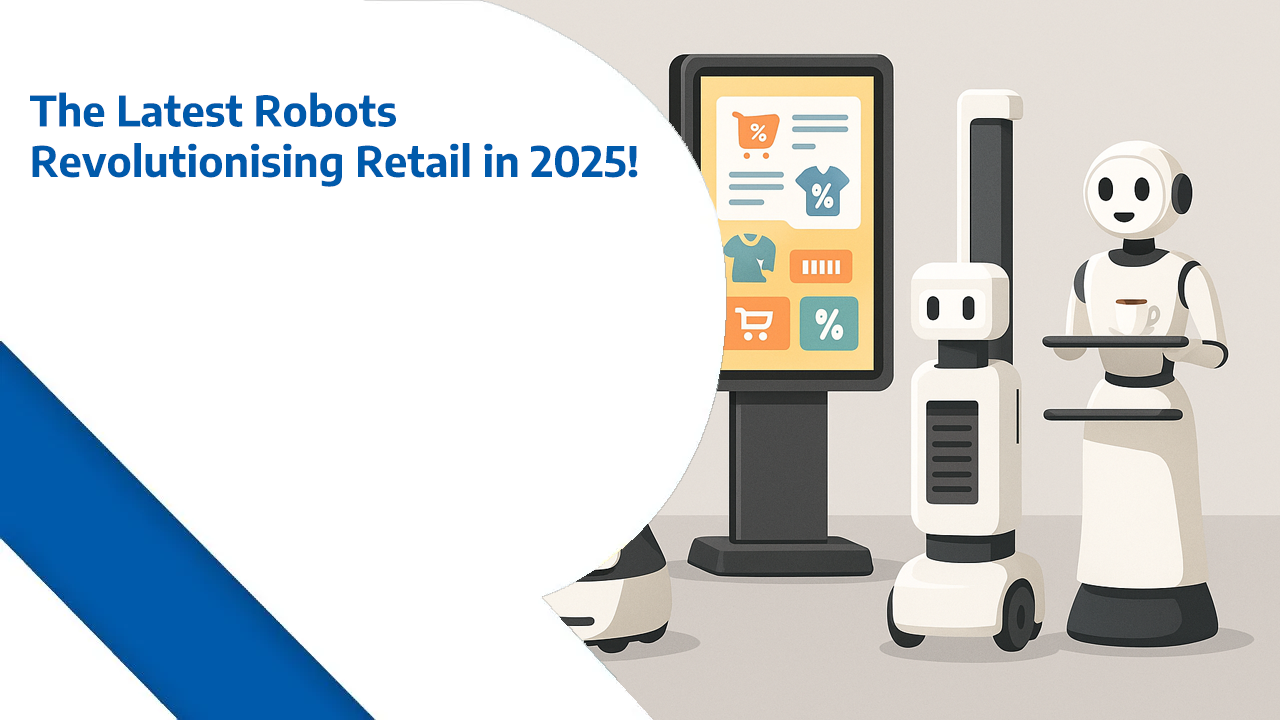
    The Latest Robots Revolutionising Retail in 2025

    THE RETAIL REVOLUTION: HOW ADVANCED ROBOTICS IS TRANSFORMING COMMERCE IN 2025

    The Dawn of Autonomous Retail

    The retail landscape isn’t just changing—it’s being fundamentally reimagined. In an era where labor costs continue to climb, profit margins face relentless pressure, and consumer expectations reach unprecedented heights, forward-thinking retailers are embracing sophisticated robotics as their competitive edge. This isn’t about replacing human connection—it’s about enhancing it through intelligent automation that delivers exceptional customer experiences while driving operational excellence.

    At RoboPhil, we’re not just observers of this revolution—we’re its architects. Our team of retail technology specialists monitors emerging innovations, conducts rigorous field testing, and develops strategic implementation frameworks that transform cutting-edge robotics from fascinating technology into measurable business advantages.


    2025’s TRANSFORMATIVE RETAIL ROBOTICS ECOSYSTEM

    1. LuckiBot Plus | The Revenue-Generating Concierge

    LuckiBot Plus represents the convergence of elegant industrial design with sophisticated AI-powered commerce capabilities. Its intuitive touchscreen interface and natural language processing enable personalized customer interactions that drive measurable results.

    • Advanced Features: Biometric customer recognition, multi-language support, integrated payment processing, and real-time inventory access
    • Performance Metrics: Increases average transaction value by 23% and improves conversion rates by 31% compared to traditional display merchandising
    • Strategic Deployment: Premium beauty counters, high-ticket electronics, luxury fashion boutiques, and financial service centers
    • ROI Timeline: Typically achieves investment recovery within 11-14 months while scaling sales associate productivity threefold

    2. Temi | The Experience Enhancement Platform

    Temi transcends traditional retail assistance through its unique combination of autonomous mobility, sophisticated computer vision, and context-aware interaction design. This isn’t merely a moving information terminal—it’s an intelligent companion that transforms the shopping journey.

    • Advanced Features: 360° navigation, face recognition with customer history recall, voice-activated product comparisons, and seamless handoff to human specialists
    • Performance Metrics: Reduces customer abandonment by 42% and increases cross-department shopping by 38%
    • Strategic Deployment: Premium automotive showrooms, complex electronics environments, multi-level department stores, and customizable home furnishing retailers
    • ROI Timeline: Delivers measurable brand differentiation within 30 days and full financial return within 16 months

    3. DSR+ | The Dynamic Retail Environment Transformer

    The DSR+ represents the evolution of static digital signage into an interactive, mobile brand experience center. With its commanding visual presence and intelligent routing algorithms, it creates high-impact retail moments that static displays simply cannot match.

    • Advanced Features: Vibrant 4K displays (43″ or 55″), AI-powered foot traffic analysis, interactive touchscreen capability, and synchronized multi-unit choreography
    • Performance Metrics: Lifts promotional engagement by 67% and increases impulse purchasing by 43% compared to fixed digital signage
    • Strategic Deployment: Premium shopping destinations, transportation retail hubs, flagship store locations, and high-traffic retail corridors
    • ROI Timeline: Demonstrates advertising effectiveness within 7 days and achieves full ROI within 9-12 months

    4. Tally | The Retail Intelligence Engine

    Tally represents the culmination of operational excellence engineering—continuously patrolling retail environments to ensure flawless execution while generating actionable business intelligence. Its unobtrusive design belies its transformative impact on inventory accuracy and operational efficiency.

    • Advanced Features: Computer vision product recognition, real-time planogram compliance verification, competitive price monitoring, and predictive stock depletion alerts
    • Performance Metrics: Reduces out-of-stock incidents by 86%, improves inventory accuracy to 99.2%, and recaptures an average of $27,300 monthly in prevented pricing errors
    • Strategic Deployment: Supermarket chains, pharmacy networks, specialty retailers, and big-box stores
    • ROI Timeline: Delivers measurable operational improvements within 14 days and complete return on investment within 6-9 months

    5. Culinary Service Robotics | The Experiential Dining Revolution

    Food and beverage retailers are reimagining customer experiences through precision robotic service systems that combine theatrical presentation with operational consistency. These sophisticated platforms are transforming traditional F&B outlets into memorable retail destinations.

    • Advanced Features: Customizable food preparation, synchronized multi-unit service choreography, interactive ordering interfaces, and social media integration
    • Performance Metrics: Increases foot traffic by 34%, improves operational efficiency by 28%, and generates 5.7x more social media mentions than conventional service models
    • Strategic Deployment: Premium café environments, hotel retail spaces, airport concessions, and entertainment venue concessions
    • ROI Timeline: Creates immediate differentiation and achieves full investment return within 10-18 months depending on configuration

    THE ROBOPHIL STRATEGIC ADVANTAGE

    We don’t just connect you with robotics—we architect comprehensive retail transformation through our proprietary four-phase implementation methodology:

    1. Strategic Assessment & Selection
      • Comprehensive business objectives analysis
      • Custom robotics solution architecture
      • Competitive differentiation planning
      • ROI modeling and performance benchmarking
    2. Seamless Technical Integration
      • Existing systems compatibility engineering
      • Customer journey mapping and optimization
      • Data architecture development
      • Privacy and security protocol implementation
    3. Organizational Excellence Development
      • Cross-functional team training programs
      • Customer experience choreography
      • Maintenance certification protocols
      • Performance optimization workshops
    4. Continuous Innovation Partnership
      • Quarterly technology roadmap reviews
      • Custom enhancement development
      • Performance analytics and optimization
      • Robotics talent acquisition support

    TRANSFORM YOUR RETAIL ENVIRONMENT: NEXT STEPS

    Request Our Exclusive White Paper: “The 2025 Retail Robotics Implementation Framework: A Strategic Roadmap for Commerce Leaders”

    Schedule a Customized Consultation: Our retail robotics specialists will conduct a complimentary assessment of your specific environment and objectives.

    Experience Our Innovation Lab: Visit our interactive demonstration center to experience these technologies in simulated retail environments.


    Contact our Retail Transformation Team:


    “RoboPhil’s strategic guidance transformed our approach to in-store technology. Their robotics implementation increased our customer satisfaction by 42% while reducing operational costs by 31%.” — Jennifer Martinez, VP of Innovation, LuxuryMart International


    ELEVATE YOUR RETAIL EXPERIENCE TODAY

     
  • The Best Robots to Have in Hospitals Today

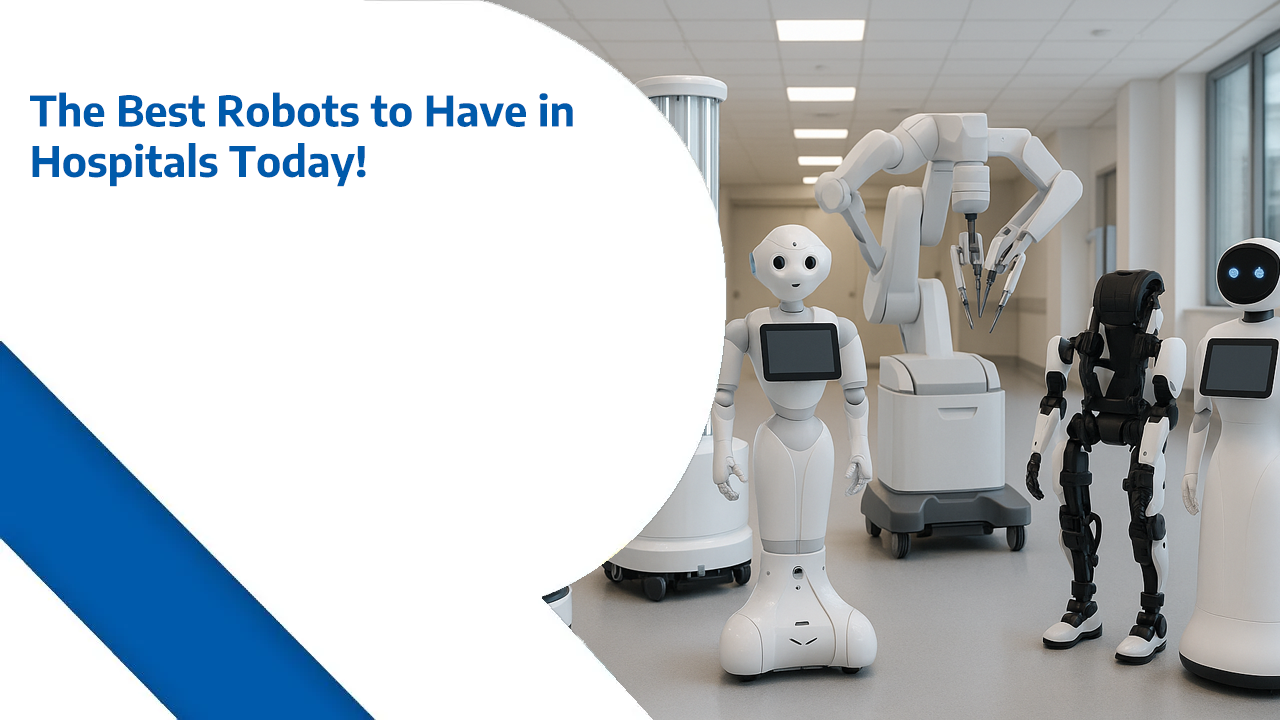
    The Best Robots to Have in Hospitals Today

    THE DEFINITIVE GUIDE TO TRANSFORMATIVE HOSPITAL ROBOTICS IN 2025

    Revolutionizing Patient Care Through Intelligent Automation

    By RoboPhil Healthcare Innovation Team | Contact: info@robophil.com


    INTRODUCTION: THE NEW ERA OF HOSPITAL AUTOMATION

    In today’s healthcare landscape, hospitals face unprecedented challenges: staffing shortages reaching critical levels, rising operational costs, increasing patient expectations, and the constant demand for improved clinical outcomes. The integration of advanced robotics isn’t just a technological upgrade—it’s becoming an essential strategy for healthcare institutions determined to thrive in this complex environment.

    According to recent data from the Healthcare Automation Institute, hospitals implementing strategic robotics solutions report:

    • 34% reduction in nursing time spent on non-clinical tasks
    • 27% decrease in hospital-acquired infections
    • 41% improvement in medication delivery accuracy
    • 23% increase in patient satisfaction scores

    This comprehensive guide showcases the most impactful robotic systems transforming hospitals in 2025, with data-driven insights on implementation strategies and real-world outcomes.


    THE ESSENTIAL HOSPITAL ROBOTICS ECOSYSTEM

    1. ADVANCED LOGISTICS & DELIVERY SYSTEMS

    Technology Spotlight: Autonomous Mobile Robots (AMRs) with AI-Powered Navigation

    Modern hospital logistics robots have evolved far beyond simple delivery tools. Today’s systems like the Aethon TUG XL and Relay+ by Savioke feature:

    • Advanced obstacle detection with predictive movement algorithms
    • 24/7 operation capabilities with autonomous recharging
    • Digital integration with electronic health records and inventory systems
    • Payload capacities exceeding 1,000 pounds for heavy-duty applications
    • Specialized compartments with temperature control for sensitive items

    CASE STUDY: Massachusetts General Hospital implemented a fleet of 47 logistics robots, resulting in 12,000+ monthly automated deliveries, 93% reduction in delivery errors, and annual labor savings of $3.6M while freeing clinical staff to focus on patient care.

    2. INFECTION CONTROL & DISINFECTION SPECIALISTS

    Technology Spotlight: Multi-Modal Disinfection Robots

    The latest generation of disinfection robots like XenexPro and UVD Robots Model D combine multiple sanitization methods:

    • High-intensity pulsed xenon UV-C light that destroys pathogen DNA
    • Electrostatically charged disinfectant misting for surface coverage
    • HEPA filtration systems that continuously clean the air
    • IoT connectivity for validation and compliance reporting
    • Automated mapping systems that ensure complete coverage

    IMPLEMENTATION INSIGHT: Hospitals reporting the highest ROI integrate these systems into their workflow between patients, reducing room turnover time by an average of 42% while improving disinfection efficacy by 99.9% against HAI-causing pathogens including C. difficile and MRSA.

    3. CLINICAL WORKFLOW ASSISTANTS

    Technology Spotlight: AI-Powered Clinical Support Robots

    These sophisticated robots serve as extensions of the clinical team. Systems like Moxi by Diligent Robotics and HAL™ Care Assistant provide:

    • Automated vital sign monitoring and anomaly detection
    • Smart supply restocking based on procedure schedules
    • Fall prediction and prevention through gait analysis
    • Patient positioning assistance for reduced staff injuries
    • Medication preparation and verification workflows

    CLINICAL IMPACT: A multi-center study across 12 hospitals showed these systems reduced nursing burnout by 31%, decreased medication errors by 27%, and improved nurse retention rates by 19% within 18 months of implementation.

    4. SURGICAL EXCELLENCE PLATFORMS

    Technology Spotlight: Next-Generation Robotic Surgery Systems

    Surgical robotics has matured dramatically with platforms like the Da Vinci Xi+ and Versius Surgical System now featuring:

    • AI-enhanced visualization with tissue identification
    • Haptic feedback systems that mimic natural touch sensation
    • Autonomous camera control and instrument positioning
    • Integration with preoperative imaging for enhanced precision
    • Miniaturized instruments for access to previously unreachable areas

    OUTCOMES DATA: Hospitals using advanced surgical robotics report 43% shorter patient stays, 64% reduction in complications for complex procedures, and significantly higher surgeon satisfaction rates due to reduced physical strain.

    5. REHABILITATION & MOBILITY ENHANCEMENT

    Technology Spotlight: Dynamic Response Rehabilitation Robotics

    Modern rehabilitation robots like EksoNXT and LokomatPro Advanced are revolutionizing recovery through:

    • Adaptive resistance systems that respond to patient progress
    • Gamified therapy interfaces that improve patient engagement
    • Precision measurement of micro-improvements in mobility
    • Multi-joint coordination training for natural movement patterns
    • Telerehabilitation capabilities for extended home therapy

    PATIENT OUTCOMES: Rehabilitation centers implementing these technologies report 37% faster recovery times, 52% improvement in patient compliance with therapy regimens, and significantly higher functional independence measures at discharge.

    6. INTELLIGENT PATIENT EXPERIENCE SYSTEMS

    Technology Spotlight: Empathetic AI Companions & Assistants

    Far beyond basic chatbots, today’s patient engagement robots like Temi Healthcare Pro and PARO Therapeutic Companion deliver:

    • Emotional intelligence capabilities that recognize patient distress
    • Personalized education delivery based on health literacy levels
    • Multi-lingual communication with cultural sensitivity
    • Patient monitoring with early warning systems for clinical teams
    • Family connectivity through secure video platforms

    EXPERIENCE METRICS: Hospitals implementing these systems report 29% reduction in call button usage, 44% improvement in patient-reported understanding of care plans, and significant reductions in anxiety measures among isolated patients.

    7. PHARMACY AUTOMATION SOLUTIONS

    Technology Spotlight: End-to-End Medication Management Robots

    Advanced pharmacy systems like BD Rowa™ Vmax and Omnicell XR2 transform medication management through:

    • Fully automated dispensing with barcode verification
    • Sterile compounding capabilities for IV preparations
    • Predictive inventory management tied to clinical scheduling
    • Unit-dose packaging with patient-specific labeling
    • Complete chain-of-custody tracking from pharmacy to patient

    FINANCIAL IMPACT: Institutions implementing comprehensive pharmacy automation report medication waste reduction of up to 30%, inventory carrying cost reductions of 22%, and virtually eliminated dispensing errors.


    STRATEGIC IMPLEMENTATION: FROM CONCEPT TO TRANSFORMATION

    Successful hospital robotics programs share these critical implementation elements:

    1. Cross-Departmental Governance – Establish a robotics steering committee with representation from clinical, operations, IT, and finance teams
    2. Phased Deployment Strategy – Begin with high-impact, low-complexity applications to build organizational confidence and expertise
    3. Staff Engagement Programs – Develop comprehensive training and involvement strategies that position robots as team members, not replacements
    4. Infrastructure Assessment – Evaluate physical spaces, network capabilities, and integration requirements before selection
    5. Outcome Measurement Framework – Implement robust analytics to quantify clinical, operational, and financial impacts

    THE ROBOPHIL ADVANTAGE: YOUR STRATEGIC ROBOTICS PARTNER

    At RoboPhil, we’ve helped over 200 hospitals across North America implement transformative robotics programs. Our approach combines:

    • Vendor-Independent Expertise – We represent your interests, not those of robot manufacturers
    • Clinical Process Optimization – We identify the ideal applications for automation in your specific environment
    • Implementation Excellence – Our team of clinical technologists ensures seamless integration
    • ROI Acceleration – Our proprietary methodology typically delivers positive financial returns within 9-18 months

    WHAT OUR PARTNERS SAY:

    “RoboPhil’s guidance helped us navigate the complex robotics landscape and implement solutions that genuinely transformed our operations. Their clinical background made all the difference in gaining staff buy-in.”

    — Dr. Elena Vartanian, Chief Innovation Officer, Pacific Northwest Medical Center


    TAKE THE NEXT STEP: PERSONALIZED ROBOTICS ASSESSMENT

    Discover which robotic solutions will deliver the greatest impact for your specific hospital environment with our complimentary Robotics Opportunity Analysis.

    🔍 Comprehensive evaluation of your current workflows
    📊 Detailed ROI projections for recommended solutions
    🗓️ Strategic implementation roadmap

    CONNECT WITH OUR HEALTHCARE ROBOTICS SPECIALISTS:

    📞 Schedule a consultation:
    📧 Email our team: info@robophil.com
    🌐 Visit our resource center: www.robophil.com


    Transform your hospital operations, enhance patient care, and empower your clinical team with strategic robotics implementation from RoboPhil—your trusted partner in healthcare innovation.

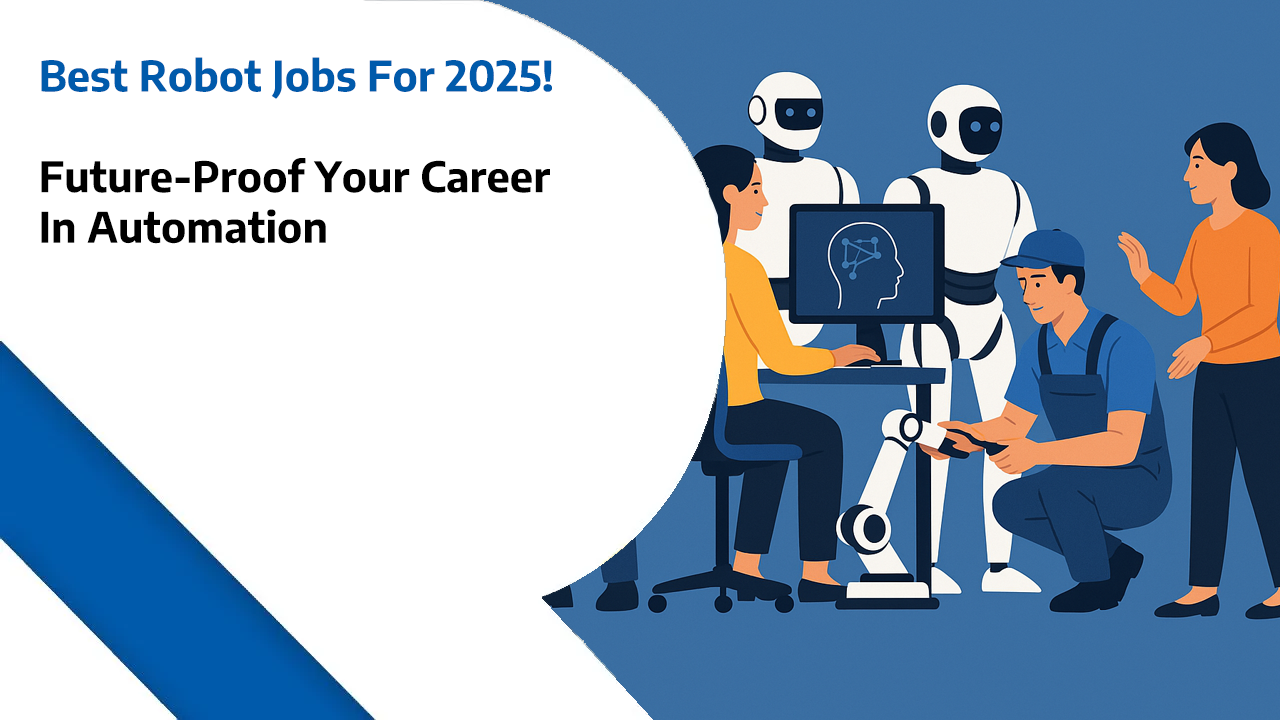
  • Best Robot Jobs For 2025 – Future-Proof Your Career In Automation

    Best Robot Jobs For 2025 – Future-Proof Your Career In Automation

    🤖 BEST ROBOT JOBS FOR 2025: FUTURE-PROOF YOUR CAREER IN AUTOMATION

    The Robot Revolution Is Already Here

    Automation isn’t just coming—it’s transforming everything around us. In 2025, intelligent machines are reshaping industries from manufacturing to healthcare, logistics to agriculture, and everywhere in between. As AI-powered systems increasingly handle repetitive and dangerous tasks, robotics professionals are becoming some of the most sought-after talents in the global job market.

    This comprehensive guide reveals the most lucrative and future-proof robotics careers of 2025, the in-demand skills employers are desperate for, and your strategic roadmap to success in this rapidly evolving field.


    🔝 TOP 10 ROBOTICS CAREERS IN 2025

    1. Advanced Robotics Software Engineer

    • Core Responsibilities: Architect the intelligence behind autonomous systems—programming complex behaviors, decision-making algorithms, and multi-sensor integration frameworks.
    • Industries Revolutionizing: Autonomous logistics, surgical robotics, personalized manufacturing, drone delivery networks.
    • Essential Technical Stack: Python, C++, ROS2/Gazebo, CUDA, computer vision libraries, real-time operating systems.
    • Career Trajectory: Junior engineers typically start with single-robot applications before advancing to multi-robot coordination systems and eventually architectural leadership roles.

    💼 UK Salary Range: £45,000–£95,000+ (with specialized AI expertise commanding premium rates)

    2. Mechatronics Integration Specialist

    • Core Responsibilities: Harmonize mechanical design, electronics, and control systems to create cohesive robotic solutions that operate seamlessly in unpredictable environments.
    • Industries Revolutionizing: Advanced manufacturing, warehouse automation, extreme environment robotics (underwater, space, disaster zones).
    • Essential Technical Stack: SolidWorks/Fusion 360, PLC programming, embedded systems design, sensor fusion, digital twin modeling.
    • Career Distinction: The rare professional who understands both hardware and software lifecycle challenges.

    ⚙️ UK Salary Range: £40,000–£85,000 (with specialized experience in hostile environments commanding higher rates)

    3. Robotics AI & Machine Learning Architect

    • Core Responsibilities: Develop neural networks and learning algorithms that allow robots to improve through experience, adapt to changing conditions, and make autonomous decisions with minimal human intervention.
    • Industries Revolutionizing: Adaptive manufacturing systems, personalized healthcare robotics, predictive maintenance drones, agricultural precision systems.
    • Essential Technical Stack: PyTorch/TensorFlow, reinforcement learning frameworks, computer vision models, synthetic data generation, LLM integration.
    • Cutting-Edge Focus: Implementing real-time decision systems that can function safely alongside humans in dynamic environments.

    🤯 UK Salary Range: £60,000–£120,000+ (top specialists with proven systems often exceeding £150,000)

    4. Robot Fleet Operations Manager

    • Core Responsibilities: Orchestrate deployment, monitoring, and optimization of multi-robot systems across facilities, ensuring operational excellence and continuous improvement.
    • Industries Revolutionizing: E-commerce fulfillment, hospital logistics, urban delivery networks, manufacturing plants.
    • Essential Technical Stack: Fleet management software, predictive analytics, process optimization, remote diagnostic systems.
    • Career Advantage: Bridges technical robotics knowledge with operational leadership—increasingly critical as robot deployments scale from dozens to thousands.

    🛠️ UK Salary Range: £50,000–£90,000 (with performance-based incentives common)

    5. Human-Robot Interaction (HRI) Experience Designer

    • Core Responsibilities: Create intuitive interfaces and interaction models that make complex robotic systems accessible, safe, and even delightful for human users of all technical backgrounds.
    • Industries Revolutionizing: Retail assistance, eldercare robotics, educational technology, hospitality automation.
    • Essential Technical Stack: UX/UI design tools, multimodal interface development, cognitive psychology principles, accessibility frameworks, haptic design.
    • Career Uniqueness: Combines technical robotics understanding with human-centered design and psychology—a rare and increasingly valuable skillset.

    👋 UK Salary Range: £45,000–£80,000 (specialized healthcare HRI designers commanding premium rates)

    6. Robot Ethics & Safety Compliance Specialist

    • Core Responsibilities: Ensure robotic systems meet rigorous safety standards, ethical guidelines, and regulatory requirements across multiple jurisdictions.
    • Industries Revolutionizing: Healthcare robotics, autonomous vehicles, public-facing service robots, surveillance systems.
    • Essential Knowledge: ISO robotics standards, risk assessment methodologies, ethical frameworks, privacy regulations, liability considerations.
    • Career Growth: Increasingly critical as robots move from controlled industrial environments to unpredictable public spaces.

    🛡️ UK Salary Range: £50,000–£95,000 (specialized legal/technical hybrid roles commanding premium rates)

    7. Robotics Hardware Development Engineer

    • Core Responsibilities: Design, prototype, and refine the physical components of robotic systems—from custom actuators to specialized end-effectors for specific tasks.
    • Industries Revolutionizing: Soft robotics, micro-robotics, extreme environment systems, prosthetics and orthotics.
    • Essential Technical Stack: Advanced materials science, 3D printing expertise, sensor integration, power management systems.
    • Career Differentiation: Combines mechanical engineering with cutting-edge materials science and electronics.

    UK Salary Range: £40,000–£85,000 (specialized fields like medical robotics commanding higher rates)

    8. Robotic Process Automation (RPA) Consultant

    • Core Responsibilities: Identify, design, and implement software-based automation solutions that streamline business processes across enterprises.
    • Industries Revolutionizing: Banking, insurance, healthcare administration, government services, legal operations.
    • Essential Technical Stack: UiPath/Automation Anywhere/Blue Prism, process mining tools, workflow optimization techniques.
    • Career Appeal: Combines business process expertise with technical implementation skills—accessible to career-changers with business backgrounds.

    📊 UK Salary Range: £45,000–£90,000 (with additional performance-based consulting fees common)

    9. Agricultural Robotics Specialist

    • Core Responsibilities: Develop and deploy autonomous systems for planting, monitoring, harvesting, and processing food—revolutionizing how we feed the world.
    • Applications Transforming Agriculture: Precision planting robots, crop monitoring drones, harvesting systems, vertical farming automation.
    • Essential Technical Stack: Computer vision for plant identification, weather-resistant hardware design, autonomous navigation in unstructured environments.
    • Career Impact: Direct contribution to sustainable food production and reducing agricultural environmental impact.

    🌱 UK Salary Range: £40,000–£75,000 (with startup equity opportunities common)

    10. Robot-Assisted Medical Specialist

    • Core Responsibilities: Operate, program, and optimize robotic systems for surgical procedures, physical rehabilitation, and patient care.
    • Applications Revolutionizing Healthcare: Surgical assistance robots, rehabilitation exoskeletons, patient care automation.
    • Essential Background: Combined medical and technical training, procedural expertise, patient safety protocols.
    • Career Trajectory: Medical professionals who gain robotics specialization command premium salaries across healthcare systems.

    🏥 UK Salary Range: £65,000–£120,000+ (surgical specialties commanding highest rates)


    🔮 TRANSFORMATIVE TRENDS RESHAPING ROBOTICS CAREERS

    The Humanoid Revolution

    Companies including Tesla (Optimus), Figure AI, Boston Dynamics, and Sanctuary AI are racing to perfect general-purpose humanoid robots capable of performing diverse physical tasks in human environments. These platforms are creating entirely new job categories focused on training, customizing, and maintaining these versatile systems.

    Collaborative Robotics Expansion

    The cobot (collaborative robot) market is experiencing explosive growth as these systems move beyond manufacturing into retail, hospitality, and office environments. Unlike traditional industrial robots, cobots are designed to work alongside humans—creating demand for specialists who can optimize these human-machine partnerships.

    Sustainable Robotics Movement

    The green robotics sector is rapidly expanding with energy-harvesting systems, biodegradable components, and circular design principles becoming industry standards. Environmental impact specialists are increasingly embedded in robotics development teams.

    Democratized Robotics Access

    Robot-as-a-Service (RaaS) models are making sophisticated automation accessible to small and medium businesses without massive capital investments. This shift is creating demand for specialists who can customize, deploy, and maintain these systems across diverse business environments.

    Micro and Nano Robotics Breakthroughs

    Microscopic robotic systems are advancing rapidly in medical applications, materials science, and environmental monitoring. These specialized fields require unique expertise at the intersection of robotics, nanotechnology, and specific application domains.

    Emotional Intelligence in Machines

    Advanced social robots with sophisticated emotional recognition and response capabilities are emerging in healthcare, education, and customer service. These systems require specialists who understand both artificial intelligence and human psychology.


    🎓 YOUR STRATEGIC PATHWAY INTO ROBOTICS

    Educational Foundations

    • Degree Programs: Robotics Engineering, Mechatronics, Computer Science with AI specialization, Electrical Engineering
    • Essential Certifications:
      • ROS2 Developer (The Robot Operating System)
      • TensorFlow/PyTorch for Robotic Applications
      • AWS/Azure/Google Cloud Robotics Services
      • Cobot Safety and Programming (Universal Robots, FANUC)

    Practical Skill Development

    • Hands-On Projects: Build personal robotics projects that demonstrate practical skills
    • Open Source Contribution: Participate in ROS, PyTorch, or other robotics open-source communities
    • Hackathons & Competitions: Join robotics challenges like FIRST Robotics, RoboCup, or industry hackathons
    • Internships: Target companies with robotics divisions even if the role isn’t explicitly robotics-focused

    Professional Network Building

    • Industry Conferences: Attend IEEE Robotics events, RoboBusiness, ROSCon
    • Online Communities: Join robotics forums on Reddit, Stack Exchange, and specialized Discord servers
    • Local Meetups: Participate in robotics user groups and makerspaces in your region
    • LinkedIn Strategy: Connect with robotics professionals and participate in technical discussions

    Career Advancement Tactics

    • Specialized Niche Development: Focus on underserved intersections (e.g., robotics security, robot ethics)
    • Publication Strategy: Contribute to robotics journals and conference proceedings
    • Portfolio Development: Document your projects professionally with video demonstrations
    • Continuous Learning: Dedicate 5-10 hours weekly to emerging robotics technologies

    💬 ACCELERATE YOUR ROBOTICS JOURNEY WITH ROBOPHIL

    Whether you’re a student exploring robotics, a professional pivoting careers, or a business leader navigating automation decisions, RoboPhil provides strategic guidance to help you thrive in the robotics revolution:

    For Career Seekers

    • Personalized robotics career roadmapping
    • Technical skill gap analysis and learning plans
    • Portfolio development guidance
    • Interview preparation for robotics positions

    For Business Leaders

    • Automation opportunity assessment
    • Robotics implementation strategy
    • ROI modeling and optimization
    • Talent acquisition and development planning

    For Educational Institutions

    • Curriculum development aligned with industry needs
    • Laboratory and makerspace design
    • Industry partnership facilitation
    • Student robotics competition coaching

    🎯 TAKE ACTION TODAY

    🔹 Book Your FREE 30-Minute Robotics Strategy Session Discuss your specific goals and challenges with our robotics career specialists.

    🔹 Website: www.RoboPhil.com

    🔹 Contact: info@robophil.com | +44 20 7946 0582

    🔹 Follow Us: @RoboPhil on LinkedIn, Twitter, and YouTube for weekly insights on robotics career opportunities.


    Don’t just witness the robotics revolution—lead it. Partner with RoboPhil and transform your career or business through strategic automation expertise.

     
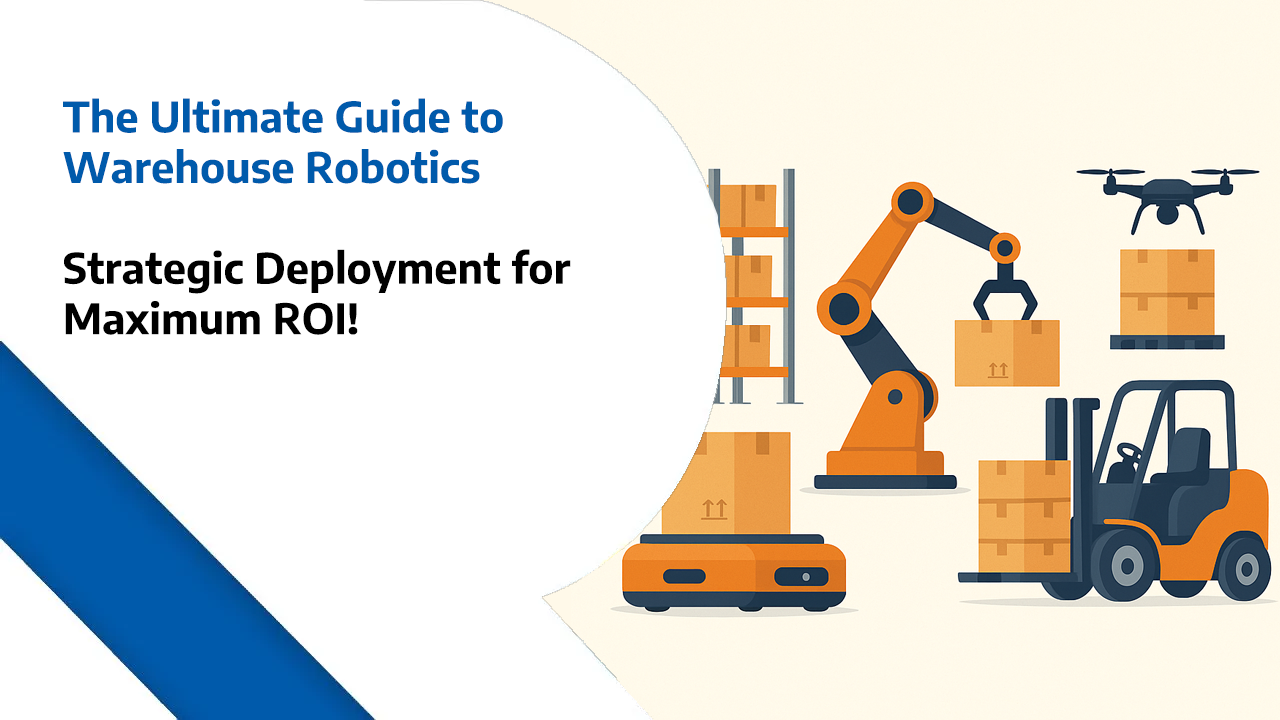
  • The Ultimate Guide to Warehouse Robotics –  Strategic Deployment for Maximum ROI

    The Ultimate Guide to Warehouse Robotics – Strategic Deployment for Maximum ROI

    The Ultimate Guide to Warehouse Robotics: Strategic Deployment for Maximum ROI

    The New Logistics Paradigm

    In today’s hypercompetitive marketplace, warehouses have evolved from simple storage facilities into sophisticated fulfillment engines driving the global economy. As we navigate through 2025, unprecedented challenges are reshaping how logistics operations must function:

    • Explosive e-commerce growth (47% increase in online order volume since 2022)
    • Labor shortages reaching critical levels (63% of warehouses reporting unfilled positions)
    • Customer delivery expectations compressed to hours, not days
    • SKU proliferation expanding by 27% annually
    • Rising real estate costs making spatial efficiency paramount

    These pressures have created what industry experts call “the warehouse innovation imperative”—a fundamental shift where automation isn’t just advantageous, it’s existential.

    However, implementing robotics without strategic alignment is the fastest route to wasted capital. According to research from the Robotics Operations Group, 38% of warehouse automation projects fail to meet ROI targets, often due to misalignment between technology selection and operational needs.

    This comprehensive guide will help you navigate the rapidly evolving robotics landscape with clarity and purpose, ensuring your automation investments deliver transformative results.

    Warehouse Robotics Ecosystem: The Definitive Analysis

    1. Autonomous Mobile Robots (AMRs): The Versatile Workforce Multiplier

    Core capabilities: Dynamic navigation, human collaboration, task adaptation, fleet management

    Optimal applications:

    • Goods-to-person order fulfillment (reducing picker walking by up to 70%)
    • Wave picking across multiple zones
    • Just-in-time replenishment
    • Returns processing
    • Flexible material transport

    Leading platforms and their differentiation:

    • Locus Robotics — Excels with multi-bot coordination and seamless WMS integration; demonstrating 200-300% productivity improvements in high-SKU environments
    • 6 River Systems (now Ocado) — Collaborative “Chuck” robots optimize for both speed and ergonomics, with integrated pick-to-light and worker guidance
    • Fetch Robotics (now Zebra) — Versatile platforms accommodating varying payload capacities from 78kg to 1,500kg, combined with advanced fleet management
    • Geek+ — Dense swarm coordination specializing in multi-tiered picking operations
    • Boston Dynamics Stretch — Highly flexible case and pallet handling with adaptive control systems

    Strategic considerations: AMRs offer the fastest implementation timeline (typically 3-4 months) and lowest infrastructure changes among robotic solutions. Their modular scaling approach allows for incremental deployment, starting with as few as 5-10 robots and expanding based on validated performance.

    Case study highlight: “Revol Snacks deployed a mixed fleet of 27 Locus robots across their 130,000 sq ft facility, achieving 218% increase in units picked per hour while reducing onboarding time for new associates from two weeks to just three days.”

    2. Automated Storage and Retrieval Systems (ASRS): The Density Revolutionaries

    Core capabilities: Vertical space maximization, goods-to-person delivery, high-throughput sequencing

    Optimal applications:

    • High-density inventory storage (up to 90% space reduction)
    • Ultra-fast small item retrieval
    • Precise inventory control
    • Buffer staging for downstream operations
    • Temperature-controlled environments

    Leading platforms and their differentiation:

    • AutoStore — Pioneering grid-based architecture with robots operating on top of storage cubes; ideal for small-to-medium sized items in ultra-dense configurations
    • Exotec Skypod — Vertical climbing robots accessing inventory on racks up to 12 meters high, blending density with extreme adaptability
    • Attabotics — Inspired by ant colonies, this solution uses 3D storage architecture to reduce footprint by up to 85% compared to traditional systems
    • OPEX Perfect Pick — iBOT technology enables both horizontal and vertical movement within aisles, optimizing for both speed and redundancy
    • Swisslog CycloneCarrier — Specializes in micro-fulfillment centers and compact, high-throughput operations

    Strategic considerations: ASRS requires significant capital investment and infrastructure changes, but delivers unparalleled space efficiency and throughput consistency. Implementation timelines typically range from 9-18 months depending on system complexity and scale.

    Case study highlight: “Northwest Pharmaceuticals implemented an Exotec Skypod system, reducing their storage footprint by 67% while increasing order processing capacity by 340% during peak seasons. The system’s modularity allowed them to expand capacity without disrupting operations.”

    3. Articulated Robotic Arms: The Precision Specialists

    Core capabilities: Repeatability, dexterity, continuous operation, vision integration

    Optimal applications:

    • Precise item sortation (up to 99.9% accuracy)
    • Complex depalletizing and palletizing
    • Kitting operations
    • Packaging customization
    • Quality control inspection

    Leading platforms and their differentiation:

    • Universal Robots (UR) — Collaborative cobots prioritizing safety and programmability; ideal for operations where humans and robots work in proximity
    • RightHand Robotics — Revolutionary piece-picking solutions combining advanced grippers with AI-powered item recognition
    • Fanuc — Heavy-duty solutions capable of managing substantial payloads with industrial-grade reliability
    • ABB FlexPicker — Delta robot configuration specializing in high-speed, lightweight picking operations
    • Dorabot DoraPalletizer — AI-driven mixed case palletizing with advanced stack optimization

    Strategic considerations: Robotic arms offer the highest precision for specific, repeatable tasks but require careful integration with upstream and downstream processes. Vision systems and gripper selection are critical success factors that must be tailored to your specific product range.

    Case study highlight: “Global Sports Direct implemented RightHand Robotics piece-picking systems at their returns processing center, increasing sorting throughput by 273% while reducing mis-sorts by 92%, allowing skilled staff to focus on exception handling and customer service.”

    4. Inventory Drones: The Visibility Enablers

    Core capabilities: Autonomous navigation, image capture, data processing, anomaly detection

    Optimal applications:

    • Continuous inventory auditing (reducing manual counts by up to 95%)
    • Hard-to-reach location scanning
    • Exception identification and investigation
    • Safety and compliance monitoring
    • Real-time inventory visibility

    Leading platforms and their differentiation:

    • Verity — Fully autonomous drone fleets that operate during off-hours with zero human supervision
    • Ware — Specialized in integration with existing WMS platforms for streamlined inventory reconciliation
    • Dronify — Advanced computer vision systems capable of reading barcodes, detecting damage, and assessing inventory conditions
    • Corvus Robotics — Combines drone technology with AI for predictive inventory management
    • Gather AI — Cloud-based intelligence platform enabling rapid deployment with minimal infrastructure changes

    Strategic considerations: Drones represent the lowest capital investment among robotic solutions but require careful planning for charging infrastructure, flight path optimization, and data integration. They excel as an entry point to automation for facilities with high-value inventory or persistent accuracy challenges.

    Case study highlight: “Eastern Distribution deployed a fleet of Verity drones to conduct nightly cycle counts across their 280,000 sq ft facility, reducing inventory discrepancies by 84% and eliminating the need for quarterly shutdown counts—recapturing 1,200 labor hours annually.”

    5. Autonomous Forklifts and Pallet Movers: The Heavy Lifters

    Core capabilities: Heavy load transport, precise positioning, safety-first operation, integration with facility systems

    Optimal applications:

    • Repetitive pallet transport over medium-to-long distances
    • Trailer loading/unloading
    • Cross-docking operations
    • Raw material movement
    • Work-in-process transport

    Leading platforms and their differentiation:

    • Seegrid — Vision-guided vehicles using camera arrays for navigation without the need for infrastructure changes
    • OTTO Motors (now Rockwell) — Adaptable platforms handling payloads up to 1,500kg with advanced obstacle avoidance
    • Toyota Autonomous Forklifts — Industry-leading reliability metrics with seamless transition from manual to autonomous operation
    • Vecna Robotics — Orchestration system specializing in mixed-fleet environments combining human and robotic operators
    • Balyo — Transforms standard forklifts into autonomous vehicles with minimal modifications

    Strategic considerations: These solutions deliver immediate ROI in operations with predictable pallet movement patterns, high labor costs, or safety concerns. Implementation typically requires integration with warehouse execution systems and careful planning of traffic patterns.

    Case study highlight: “Midwest Consumer Products deployed a fleet of 8 Seegrid pallet movers, achieving 99.8% uptime over 18 months of 24/7 operation, eliminating 3 reportable safety incidents annually, and reducing per-pallet movement costs by 62%.”

    6. Emerging Technologies: Tomorrow’s Warehouse Today

    Core capabilities: Breakthrough approaches solving previously intractable challenges

    Noteworthy innovations:

    • Stretch Robotics — Flexible, wall-climbing systems for inventory management in ultra-high bay facilities
    • Covariant AI — Universal pick systems handling previously “unrobotic” items like soft goods and irregular shapes
    • Nimble Robotics — Combining manipulation expertise with sophisticated AI for complex picking tasks
    • Plus One Robotics — “Humans in the loop” supervision allowing robots to handle exceptions efficiently
    • Ambi Robotics — Simulation-to-reality transfer learning enabling rapid deployment for varied applications

    Strategic considerations: These cutting-edge technologies may offer breakthrough capabilities for specific challenges, but typically come with higher implementation complexity and should be evaluated carefully as part of a broader automation strategy.

    Strategic Decision Framework: Matching Robots to Your Warehouse Reality

    Step 1: Conduct a Comprehensive Operations Analysis

    Before evaluating any robotics solution, establish your operational baseline:

    • Process mapping — Document current workflows from receiving through shipping
    • Labor analysis — Break down worker time allocation across tasks
    • Space utilization assessment — Identify constraints and optimization opportunities
    • Data quality evaluation — Assess inventory accuracy and systems integration readiness
    • Pain point prioritization — Determine which challenges impose the highest costs

    Step 2: Define Clear Automation Objectives

    Precision in goal-setting directly correlates with implementation success:

    • Quantifiable targets — Specific metrics for productivity, accuracy, and throughput
    • Workforce impact planning — How automation will complement existing staff
    • Growth accommodation — Future-proofing for projected volume increases
    • Seasonal flexibility — Managing variability in demand patterns
    • Total cost of ownership — Looking beyond purchase price to maintenance, training, and system life

    Step 3: Develop a Phased Implementation Strategy

    The most successful automation journeys follow a systematic progression:

    1. Launch with contained pilot projects — Create proof points with manageable scope
    2. Scale validated solutions — Expand based on documented results
    3. Integrate systems — Ensure seamless data flow between robotic and management systems
    4. Optimize human-machine collaboration — Refine workflows to leverage the strengths of each
    5. Build continuous improvement cycles — Establish metrics and feedback mechanisms

    Step 4: Ensure Organizational Readiness

    Technology alone doesn’t guarantee success—your team must be prepared:

    • Executive sponsorship — Secure leadership commitment to the transformation
    • Cross-functional governance — Involve operations, IT, finance, and HR
    • Technical capability building — Develop internal expertise in robotics management
    • Change management planning — Address workforce concerns proactively
    • Vendor relationship structure — Establish expectations for ongoing support

    The Robot Philosophy Approach: Beyond Equipment to Ecosystem

    At Robot Philosophy, we’ve developed a proprietary methodology that transcends traditional automation consulting. Our approach is built on three core principles:

    1. Systems Thinking Over Siloed Solutions

    We analyze your entire operation as an interconnected ecosystem, identifying how robotic implementations will ripple through all aspects of your business. This holistic perspective prevents the common pitfall of optimizing one area while creating bottlenecks elsewhere.

    2. Data-Driven Decision Making

    Our team leverages advanced simulation modeling to predict performance outcomes before capital commitment. This approach:

    • Validates ROI projections with statistical confidence
    • Tests multiple scenarios to identify optimal configurations
    • Reveals unexpected constraints before they become implementation problems
    • Provides clear visualization of future-state operations

    3. Collaborative Implementation

    We don’t just recommend technology—we partner with you throughout the entire journey:

    • Comprehensive readiness assessment examining over 180 operational factors
    • Vendor-agnostic selection process based on your specific requirements
    • Implementation management ensuring on-time, on-budget deployment
    • Performance optimization through continuous monitoring and refinement
    • Capability transfer building your team’s expertise for long-term success

    Expert Consultation: Your First Step Toward Warehouse Transformation

    If you’re navigating the complex decision of which robotic solutions best fit your operation, our team of warehouse automation strategists can help.

    The Robot Philosophy Diagnostic Process:

    Our initial consultation includes:

    • Process efficiency analysis identifying your highest-impact automation opportunities
    • Technology alignment assessment matching robotic capabilities to your specific challenges
    • Preliminary ROI modeling providing realistic financial projections
    • Implementation roadmap development outlining your optimal path forward

    Take Action Now:

    Schedule your complimentary Warehouse Automation Strategy Session:

    “The conversation with Robot Philosophy completely changed our automation strategy. Instead of jumping straight to the most advanced technology, they helped us identify a phased approach that delivered immediate ROI while building toward our long-term vision.” — Operations Director, Fortune 500 Consumer Goods Company


    About Robot Philosophy

    Founded by Phil English after 15 years leading automation initiatives at Amazon, Walmart, and Target, Robot Philosophy combines deep operational expertise with cutting-edge technical knowledge. Our team includes certified robotics engineers, supply chain specialists, and change management experts dedicated to transforming warehouse operations through strategic automation.

    Unlike equipment vendors with inherent product bias, we serve as your trusted advisor throughout the automation journey—ensuring you implement the right solutions, in the right sequence, for the right reasons.

    Our clients typically achieve:

    • 30-50% reduction in operating costs
    • 150-400% improvement in throughput capacity
    • 60-90% decrease in fulfillment errors
    • 12-18 month ROI on initial implementations

    Transform your warehouse from a cost center to a competitive advantage.

    Contact us today to begin your robotics journey with confidence and clarity.

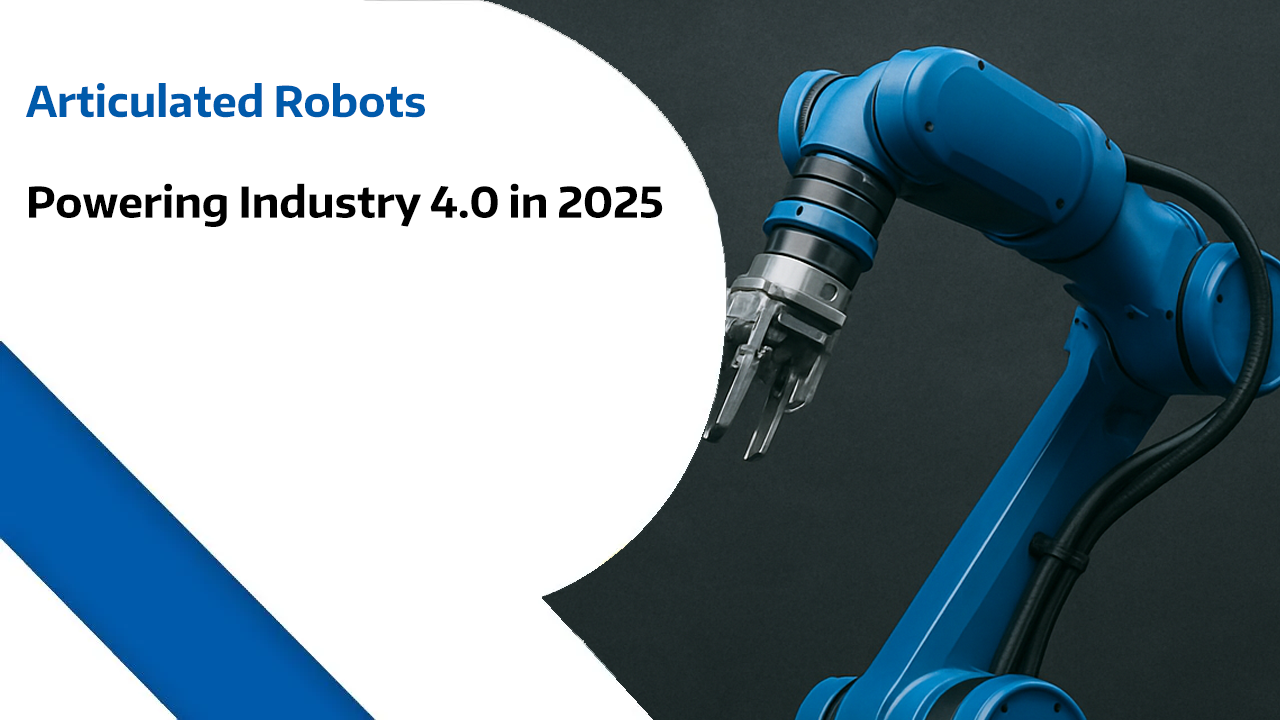
  • The Ultimate Guide to Articulated Robots – Powering Industry 4.0 in 2025

    The Ultimate Guide to Articulated Robots – Powering Industry 4.0 in 2025

    The Ultimate Guide to Articulated Robots: Powering Industry 4.0 in 2025

    Transform Your Operations with Robotic Precision

    In today’s hyper-competitive manufacturing landscape, articulated robots have evolved from optional automation tools to essential productivity multipliers. But what exactly makes these mechanical marvels the backbone of modern industry? And more importantly—how can your business leverage their capabilities to dominate your market?

    What Are Articulated Robots? The Mechanical Masterminds Explained

    Articulated robots represent the pinnacle of industrial robotics technology—essentially mechanical replicas of the human arm, but with superhuman precision, tireless consistency, and programmable intelligence.

    Unlike their more limited robotic cousins, articulated robots feature multiple rotary joints (typically 4-7 axes) that enable extraordinary freedom of movement across three-dimensional space. This versatility allows them to perform complex maneuvers with millimeter-perfect accuracy, thousands of times per day, without variation or fatigue.

    The Anatomy of Excellence

    Every articulated robot consists of five critical components:

    • Base Mount: The foundation anchor providing stability during operation
    • Articulated Joints: Servo-powered rotational points enabling 3D movement
    • Actuators: Precision motors driving each joint with calculated force
    • End Effectors: Customizable “hands” (grippers, welders, sprayers) that perform the actual work
    • Control System: The AI-enhanced brain orchestrating synchronized movement patterns

    The Competitive Edge: 7 Ways Articulated Robots Transform Industries

    Why have articulated robots become indispensable across virtually every manufacturing sector? The advantages are compelling:

    1. Unmatched Flexibility

    While conventional automation excels at repetitive tasks, articulated robots can be reprogrammed within hours to handle entirely different workflows—perfect for variable production runs and customized manufacturing.

    2. Space Optimization

    Modern articulated robots achieve more with less factory footprint, with ceiling-mounted options freeing valuable floor space and compact collaborative models working alongside human teams.

    3. Precision Beyond Human Capability

    With repeatability ratings as precise as ±0.02mm, articulated robots maintain perfect consistency across thousands of cycles—enabling quality standards impossible to achieve manually.

    4. Dramatic Production Acceleration

    The latest generation of articulated robots achieves cycle times up to 800 movements per minute, dramatically outpacing human operations while maintaining flawless quality.

    5. Comprehensive Safety Integration

    Advanced sensors, force-limitation technology, and programmable safety zones make today’s articulated robots safer than ever—reducing workplace incidents while maximizing productive uptime.

    6. ROI-Focused Scalability

    Start with a single robot and scale as needed. Modern articulated systems integrate seamlessly with existing equipment, offering incremental automation that grows with your business.

    7. Data-Driven Optimization

    Connected articulated robots generate valuable operational intelligence, providing real-time performance metrics that drive continuous improvement across your production ecosystem.

    Industry Dominance Through Robotic Excellence

    Articulated robots have revolutionized processes across virtually every major industry:

    Manufacturing Mastery

    From automotive assembly lines performing simultaneous welding operations to electronics manufacturers placing microscopic components at superhuman speeds, articulated robots have redefined production possibilities.

    Logistics Revolution

    In warehousing and fulfillment, articulated robots with vision systems now handle complex pick-and-place operations, depalletizing mixed loads, and orchestrating just-in-time inventory management.

    Healthcare Transformation

    Precision articulated systems now assist in everything from laboratory automation to pharmaceutical compounding, maintaining sterile environments while eliminating human error.

    Food Production Reinvention

    Food-grade articulated robots with specialized coatings and washdown protection now handle the most challenging packaging, sorting, and processing tasks while meeting stringent hygiene requirements.

    Case Study: Productivity Transformed

    When UK manufacturer Precision Components Ltd. integrated three articulated robots into their CNC machining operation, the results were transformative:

    • 217% increase in hourly part production
    • 99.8% reduction in quality defects
    • 64% decrease in operational costs
    • ROI achieved in just 11.5 months
    • Zero workplace safety incidents

    Beyond Conventional Applications: The New Frontier

    The latest generation of articulated robots is breaking boundaries in unexpected ways:

    • Micro-Articulated Systems: Ultra-precise robots performing surgical-grade assembly of medical devices
    • AI-Enhanced Adaptation: Self-learning robots that optimize their own movement patterns
    • Mobile Articulation: Robots mounted on autonomous platforms bringing flexibility to new environments
    • Human-Robot Collaboration: Force-limited cobots working safely alongside human specialists
    • Digital Twin Integration: Virtual robot replicas enabling perfect simulation before physical deployment

    The True Cost of Waiting

    While your competitors embrace robotic automation, every day without articulated robots means:

    • Lost productivity potential
    • Higher labor costs
    • Quality inconsistencies
    • Missed market opportunities
    • Competitive disadvantage

    Become a #RobotBoss: Your Transformation Starts Here

    The difference between industry leaders and followers increasingly comes down to one factor: who leverages articulated robot technology most effectively.

    Robot Philosophy specializes in transforming conventional operations into robotic powerhouses—without the complexity, confusion, or costly mistakes that plague DIY automation attempts.

    The Robot Philosophy Advantage:

    • Customized Robot Selection: We match the perfect articulated robot to your specific application requirements
    • Seamless Integration: Our engineers ensure flawless compatibility with your existing systems
    • Programming Excellence: Custom motion profiles optimized for maximum efficiency
    • Team Empowerment: Comprehensive training that turns your staff into confident robot operators
    • Future-Proof Deployment: Scalable solutions designed for your growing needs

    Your Next Move: Strategic Consultation

    Ready to harness the transformative power of articulated robots?

    Book your exclusive 30-minute Strategic Automation Assessment with our lead robotics consultant.

    During this comprehensive session, you’ll discover:

    • Which specific articulated robot model best matches your operational needs
    • Your projected ROI timeline based on industry-specific benchmarks
    • Custom integration strategies for your existing production environment
    • Available grant funding and tax incentives for robotic automation
    • Immediate optimization opportunities within your current workflow

    Claim Your Assessment: Limited Availability

    Our robotics consultants only conduct a limited number of strategic assessments each month. Secure yours now:

    [BOOK YOUR STRATEGIC AUTOMATION ASSESSMENT]

     Email: sales@robophil.com

    The #RobotBoss Revolution Awaits

    Tomorrow’s industry leaders are making their robotic transformation today. With Robot Philosophy’s expertise guiding your journey, you’re not just adopting articulated robots—you’re mastering the future of manufacturing.

    Join the elite ranks of #RobotBoss innovators who’ve discovered that the right robotic strategy doesn’t just automate production—it revolutionizes business potential.

    Robot Philosophy: Building Tomorrow’s Production Excellence Today

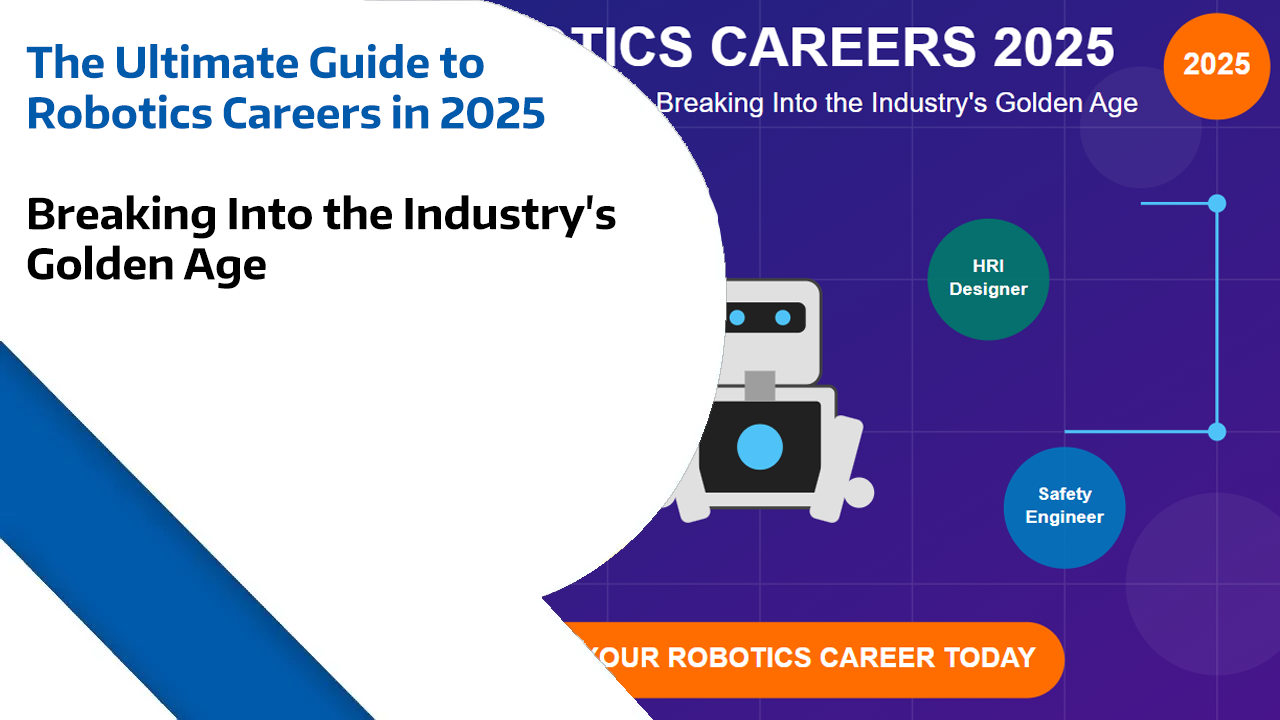
  • The Ultimate Guide to Robotics Careers in 2025

    The Ultimate Guide to Robotics Careers in 2025

    The Ultimate Guide to Robotics Careers in 2025: Breaking Into the Industry’s Golden Age

    In a world where AI companions roam hospital hallways, automated warehouses work around the clock, and surgical robots perform with superhuman precision, one thing is clear: robotics isn’t just growing—it’s transforming our society at unprecedented speed.

    Why 2025 Is the Perfect Time to Launch Your Robotics Career

    The robotics revolution is no longer a distant promise—it’s unfolding right now. With global investment in robotics reaching $335 billion this year and projected growth rates exceeding 25% annually, we’re witnessing the dawn of what experts call “the automation economy.”

    For professionals seeking stable, lucrative, and meaningful careers, robotics offers something truly exceptional: a field where demand consistently outpaces the supply of qualified talent.

    The 7 Most In-Demand Robotics Careers of 2025

    1. Robot Application Engineer | $95,000-$145,000

    Transform business challenges into robotic solutions by designing and configuring robotics systems for specific industry applications. These specialized engineers develop the software that turns sophisticated hardware into practical tools.

    What you’ll do: Create industry-specific applications for robotics platforms, configure robots for unique business environments, and optimize autonomous systems for maximum efficiency.

    Success story: “My background was in industrial automation, not specifically robotics. By focusing on learning ROS (Robot Operating System) and gaining certifications in specific robotics platforms, I transitioned into a role developing warehouse automation solutions that now operate in 40+ distribution centers.” — Jamie K., Former PLC Programmer

    2. AI & Machine Learning Specialist (Robotics) | $120,000-$175,000

    Become the brain behind intelligent machines by developing the neural networks, computer vision systems, and decision-making algorithms that allow robots to perceive and navigate our complex world.

    What you’ll do: Create machine vision models for object recognition, develop natural language processing for human-robot communication, and design reinforcement learning systems for improved robot adaptability.

    Companies hiring now: Boston Dynamics, Shield AI, Covariant, Waymo, Anthropic Robotics

    3. Robotics Integration Consultant | $105,000-$160,000

    Guide businesses through the complex journey of robotic transformation as they navigate the human, technical, and financial aspects of automation deployment.

    What you’ll do: Analyze business processes for automation potential, develop implementation roadmaps, and oversee successful robotics deployments that deliver measurable ROI.

    Perfect for: Project managers, process improvement specialists, and automation engineers looking to combine technical expertise with strategic business impact.

    4. Human-Robot Interaction (HRI) Designer | $90,000-$140,000

    Shape how humans experience and collaborate with robotic systems by creating intuitive interfaces and interaction models that make complex technology accessible.

    What you’ll do: Design user interfaces for robot control systems, develop social robotics behaviors, and conduct user testing to refine human-robot collaborative workflows.

    Why it matters: As robots move beyond factories into retail spaces, healthcare facilities, and public areas, the quality of human-robot interactions directly determines adoption success.

    5. Robot Maintenance Specialist | $75,000-$115,000

    Become the essential troubleshooter ensuring robotic systems operate reliably in mission-critical environments—one of the fastest-growing roles with minimal barriers to entry.

    What you’ll do: Perform preventative maintenance routines, diagnose system failures, repair mechanical and electrical components, and update firmware and software systems.

    Career path: Many technicians start with 6-month certification programs and progress to specialized roles maintaining specific robot types or managing maintenance teams.

    6. Robotic Process Automation (RPA) Developer | $85,000-$130,000

    Bridge the gap between physical and digital automation by creating software robots that streamline information workflows and business processes.

    What you’ll do: Analyze business processes, develop automation scripts, integrate AI capabilities like document understanding, and measure performance improvements.

    Growing specialty: Healthcare RPA developers are in particularly high demand as hospitals look to automate administrative tasks and improve patient data management.

    7. Autonomous Systems Safety Engineer | $110,000-$165,000

    Ensure robotic systems operate safely alongside humans by developing, testing, and certifying safety protocols and failsafe mechanisms.

    What you’ll do: Conduct risk assessments of robotic systems, develop safety protocols, perform failure mode analysis, and ensure compliance with emerging regulations.

    Why it’s critical: As regulatory frameworks like the EU AI Act establish strict safety requirements, companies need specialists who understand both robotics and compliance.

    Breaking Into Robotics Without a Specialized Degree

    The robotics industry’s explosive growth has created a talent shortage that opens doors for professionals from adjacent fields. Here’s how different backgrounds can transition into robotics:

    Mechanical Engineers

    Transferable skills: CAD/CAM expertise, materials knowledge, mechanical design principles
    Entry points: Robotics hardware design, end-of-arm tooling development, structural analysis
    Key upskilling: Robotics-specific CAD tools, sensor integration, actuator technologies

    Software Developers

    Transferable skills: Programming logic, algorithm development, system architecture
    Entry points: Robot control systems, simulation environments, robotics middleware
    Key upskilling: ROS (Robot Operating System), Python for robotics, real-time control systems

    Electrical Engineers

    Transferable skills: Circuit design, power systems, electronic controls
    Entry points: Sensor integration, power management, control systems
    Key upskilling: Embedded systems for robotics, motor control, communication protocols

    Data Scientists

    Transferable skills: Machine learning, statistical analysis, data visualization
    Entry points: Computer vision systems, predictive maintenance, performance optimization
    Key upskilling: Spatial data processing, real-time data analysis, reinforcement learning

    The 4-Step Roadmap to Your First Robotics Role

    Step 1: Identify Your Target Role

    Rather than pursuing “robotics” broadly, focus on a specific role where your existing skills create natural advantages. Use the career descriptions above to identify your best entry point.

    Step 2: Build Robotics-Specific Knowledge

    Fill knowledge gaps with targeted learning:

    • Online courses: Coursera’s Robotics Specialization, Udacity’s Robotics Engineer Nanodegree
    • Certifications: Universal Robots certification, FANUC robot programming, AWS RoboMaker
    • Hands-on experience: Arduino/Raspberry Pi projects, ROS tutorials, robotic kit builds

    Step 3: Create Tangible Proof of Capabilities

    Employers need evidence you can contribute immediately:

    • Develop portfolio projects demonstrating relevant skills
    • Contribute to open-source robotics projects on GitHub
    • Document your learning journey through blog posts or videos

    Step 4: Connect With the Robotics Community

    The robotics field values network connections:

    • Join robotics-focused groups on LinkedIn and Discord
    • Attend industry events like ROSCon, ICRA, or local robotics meetups
    • Participate in robotics challenges and hackathons

    How RoboPhil Accelerates Your Robotics Career Journey

    At RoboPhil, we’ve helped over 700 professionals transition into rewarding robotics careers through our specialized recruitment and coaching services.

    Our unique approach includes:

    • Career mapping sessions to identify your optimal robotics career path
    • Skills gap analysis to create targeted learning plans
    • Portfolio development guidance to showcase your capabilities
    • Interview preparation with robotics hiring managers
    • Exclusive access to unadvertised robotics positions

    Take the First Step: Your Personalized Robotics Career Strategy Session

    Our 30-minute Robotics Career Strategy Session gives you:

    • ✓ Assessment of your current skills and their robotics applications
    • ✓ Custom roadmap for transitioning into your target robotics role
    • ✓ Insider insights on robotics hiring trends and salary benchmarks
    • ✓ Introduction to relevant positions in our exclusive job network

    Book Your Free Strategy Session Now →

    “After 12 years in traditional manufacturing, I wasn’t sure how to break into robotics. RoboPhil helped me identify my transferable skills, develop a focused learning plan, and connect with companies that valued my manufacturing background. Six months later, I’m working on collaborative robots that are transforming the industry I know so well.” — Michael T., Former Production Manager

    The Future Belongs to Those Who Shape It

    The robotics revolution isn’t just changing how we work—it’s creating entirely new categories of meaningful careers at the intersection of technology and human potential.

    Whether you’re fascinated by the mechanics of robot design, the intelligence of autonomous systems, or the human side of technological integration, there’s a robotics career path waiting for you.

    At RoboPhil, we believe talent comes from diverse backgrounds, and the robotics industry needs your unique perspective and skills.

    Ready to build the future? Let’s talk →

  • The Latest in Robotics – April 2025 Trends & How We Can Help You Hire or Implement Them

    The Latest in Robotics – April 2025 Trends & How We Can Help You Hire or Implement Them

    🤖 Top Robots Making Waves in April 2025

    1. Sanbot Max Pro – The Humanoid Concierge Gets Smarter

    The new Sanbot Max Pro has hit the market with upgraded facial recognition, ChatGPT-5 integration, and smoother human-like movement. It’s ideal for luxury retail, events, and hotel reception—bringing both charm and functionality.

    Use Case: Luxury hotels, airports, trade shows
    Consultancy Insight: We help you select the right humanoid for your brand experience and manage deployment logistics.

    2. Boston Dynamics Stretch 2.0 – Warehouse Revolution

    The updated Stretch 2.0 robot now features improved battery life and AI-driven predictive sorting for warehouse operations. Its suction arms and vision systems make it an essential robot for modern logistics.

    Use Case: E-commerce fulfilment centres
    Recruitment Note: Need an automation engineer or warehouse tech lead? We find top robotic talent ready to deploy these systems.

    3. Temi V4 – Now with Edge AI and Marketing Capabilities

    Temi has taken a leap forward with onboard edge processing, advanced pathfinding, and plug-and-play marketing features. Ideal for both retail and hospitality, Temi can now handle smart signage and AI-driven customer interactions on the fly.

    Use Case: Retail, museums, hospitals
    Consultancy Insight: We handle everything from floor mapping to staff training, ensuring ROI from day one.

    4. Agility Robotics Digit 3.0 – Bipedal Bots for the Real World

    The third-gen Digit robot now comes with enhanced payload capacity and safety features, opening the door to automation in last-mile delivery and inspection roles—especially in environments too complex for wheeled bots.

    Use Case: Warehousing, security, inspection
    Recruitment Note: Need help onboarding robotic operations engineers or AI safety officers? We have a deep bench of candidates.


    🔍 How We Support You: Consultancy & Recruitment in One

    At [Your Robotics Consultancy Name], we don’t just report on the latest tech—we integrate it into your operations.

    ✅ Robotics Consultancy Services:

    • Onsite Audits: We evaluate your space, workflow, and goals to recommend suitable robots.

    • Custom Integration Plans: From APIs to floor plans, we ensure seamless deployment.

    • Training & ROI Tracking: We help your team use the robots effectively—and prove value fast.

    👩‍💼 Robotics Recruitment:

    • Specialist Hiring: From robotics engineers to AI developers, we place skilled professionals who can work with robots from day one.

    • Contract or Full-Time: Flexible recruitment models tailored to project scale and duration.

    • Global Talent Pool: We’ve built a network of roboticists and integrators across Europe, the US, and Asia.


    📅 Book a Free Consultation Today

    Whether you’re just exploring automation or ready to hire a robotics engineer next week, our team is here to help.

    👉 Book a 30-minute discovery call now and let’s explore how robotics can transform your business.

    🚀 April 2025 Robotics Round-Up: Innovations Reshaping Industry
  • Top 5 Robots That Will Blow Your Mind in 2025

    Top 5 Robots That Will Blow Your Mind in 2025

    “Welcome back to Robot Philosophy, where we explore the cutting-edge world of robotics shaping our future. I’m Phil, and today we’re counting down the Top 5 Robots That Will Blow Your Mind in 2025. From humanoid assistants to AI companions, these innovations are redefining what’s possible. Let’s dive in!”

    🔹 #1 – Tesla’s Optimus


    “First up is Optimus, Tesla’s ambitious humanoid robot project. Designed to handle tasks that are dangerous, repetitive, or boring for humans, Optimus stands at 5 feet 8 inches and weighs 125 pounds. It’s equipped with advanced AI to navigate and perform various functions, aiming to revolutionize industries like manufacturing and logistics. Elon Musk envisions Optimus becoming a central part of our daily lives, assisting in tasks ranging from household chores to complex industrial operations.

    🔹 #2 – Disney’s Robotic Companions


    Next, we have Disney’s Robotic Companions, bringing a touch of magic to robotics. Developed by Walt Disney Imagineering Research & Development, these robots are designed to interact with guests in Disney parks, offering lifelike movements and engaging experiences. For instance, during Nvidia’s GTC developers event, a robotic droid named Besh, based on a ‘Star Wars’ character, showcased puppy-like actions, captivating the audience. These robots exemplify the fusion of entertainment and advanced robotics, creating immersive experiences for visitors.

    🔹 #3 – Nvidia’s Isaac GR00T N1


    At number three is Nvidia’s Isaac GR00T N1, an open-source, pretrained yet customizable foundation model designed to accelerate humanoid robot development. This model marks the beginning of ‘the age of generalist robotics,’ enabling robots to learn and adapt to various tasks with minimal programming. Companies like Boston Dynamics and Agility Robotics are leveraging this model to enhance their robots’ capabilities, pushing the boundaries of what autonomous machines can achieve.

    🔹 #4 – Engine AI’s SE01 Humanoid Robot


    Coming in at number four is Engine AI’s SE01, a full-size general-purpose humanoid robot. Standing at 170 cm tall and weighing 55 kg, SE01 boasts 32 degrees of freedom and can walk at a speed of 2 meters per second. It’s capable of performing actions such as squatting, grasping, running, and even jumping. Recently, Engine AI showcased SE01 executing a forward flip, demonstrating remarkable agility and balance. This advancement signifies a leap forward in humanoid robotics, bringing us closer to integrating such robots into daily tasks.

    🔹 #5 – iRobot’s Roomba Combo j9+


    Last but not least, we have iRobot’s Roomba Combo j9+, a cutting-edge robot vacuum that combines powerful suction with mopping capabilities. Launched in September 2023, the j9+ offers 100% more suction compared to previous models and features an innovative docking station with a water tank refill function. Its advanced navigation and obstacle avoidance make it a standout in home automation, keeping living spaces spotless with minimal human intervention.


    These five robots exemplify the rapid advancements in robotics as of 2025, each contributing uniquely to industries ranging from entertainment to home cleaning. As we continue to integrate these machines into our lives, the line between science fiction and reality blurs, opening up exciting possibilities for the future.


    Today’s episode is brought to you by Robots of London, the UK’s premier provider of robot rentals for events, activations, and more. If you’re looking to add a futuristic touch to your next event, check out Robots of London through the link below.”

    And that’s your Robot news update for today! Don’t forget to join me for my weekly Live Robot Optimise Workshop if you’re interested in learning more about robotics and the latest trends for businesses. Also, make sure to subscribe to the channel so you don’t miss out on future updates.

    I’m RoboPhil from Robot Philosophy, and I’ll see you next time!

    Join our Robot Optimise Industry (ROI) Workshop: https://robophil.com/workshop


    Sponsors:-

    Robot Center: – https://robotcenter.co.uk/ – Buy Robot, Robot Buy, Robot consultancy, Robotics Consultancy

    Robots of London: – https://robotsoflondon.co.uk/ – Robot Hire, Robot Rental, Rent Robot, Hire Robot, Robot Events

    Robot Philosophy: – https://robophil.com/ – Robot Consultancy AND Robot Recruitment, Robot Advice, Robot Insights, Robot Ideas

  • What is an Articulated Robot?

    What is an Articulated Robot?

    What is an Articulated Robot?


    An articulated robot is a type of robotic arm with multiple joints, designed for precision and flexibility. These robots typically have between two and ten axes, allowing for a wide range of motion.”

    They are widely used in industries such as manufacturing, welding, painting, and even food service, handling repetitive or complex tasks with efficiency and accuracy.”

    What sets articulated robots apart is their range of movement. Unlike simpler robotic systems, they can rotate, extend, and adjust positions in multiple directions, making them highly adaptable for different applications.”

    Modern articulated robots are often integrated with advanced sensors and AI, allowing them to operate with greater precision and even collaborate safely with human workers.”

    From automotive assembly lines to precision engineering, articulated robots play a crucial role in automation, improving productivity and consistency in a wide range of industries.

    And that’s your Robot news update for today! Don’t forget to join me for my weekly Live Robot Optimise Workshop if you’re interested in learning more about robotics and the latest trends for businesses. Also, make sure to subscribe to the channel so you don’t miss out on future updates.

    I’m RoboPhil from Robot Philosophy, and I’ll see you next time!


    Join our Robot Optimise Industry (ROI) Workshop: https://robophil.com/workshop


    Sponsors:-


    Robot Center: – https://robotcenter.co.uk/ – Buy Robot, Robot Buy, Robot consultancy, Robotics Consultancy


    Robots of London: – https://robotsoflondon.co.uk/ – Robot Hire, Robot Rental, Rent Robot, Hire Robot, Robot Events


    Robot Philosophy: – https://robophil.com/ – Robot Consultancy, Robot Recruitment, Robot Advice, Robot Insights, Robot Ideas