Category: Insights

  • What Is a Robot Feasibility Study? Our Robot Consultancy Walkthrough

    What Is a Robot Feasibility Study? Our Robot Consultancy Walkthrough

    What Is a Robot Feasibility Study?

    Our Robot Consultancy Walkthrough

    Robots are no longer a future fantasy. From retail and hospitality to warehouses and manufacturing lines, robots are working side by side with human teams across industries. But before any business installs a robot, there’s one vital question to ask: Is it feasible?

    That’s where a Robot Feasibility Study comes in — and it’s the first essential step in our consultancy process at Robot Philosophy. Whether you’re a forward-thinking CEO, an operations manager under pressure to automate, or a start-up looking to scale with AI-powered machines, a robot feasibility study ensures you’re investing your money, time, and people wisely.

    In this article, we’ll walk you through what a robot feasibility study is, why it matters, how our consultancy process works, and how to take the next step — with the full support of our trusted team across Robot Center, Robots of London, and Robot Philosophy.


    🚀 What Is a Robot Feasibility Study?

    A Robot Feasibility Study is an in-depth investigation into whether your business can successfully implement robotics to reduce costs, improve efficiency, and gain a competitive edge.

    It examines:
    ✅ The technical viability of robotics in your workspace
    ✅ The financial return on investment (ROI) of a robotic solution
    ✅ The operational and cultural fit within your workforce
    ✅ The regulatory or safety barriers to implementation

    It’s not a sales pitch. It’s a strategic audit — a roadmap that tells you:

    1. Can robotics help us?

    2. Where should we start?

    3. What’s the smartest investment path?


    🛠️ Our Robot Consultancy Walkthrough

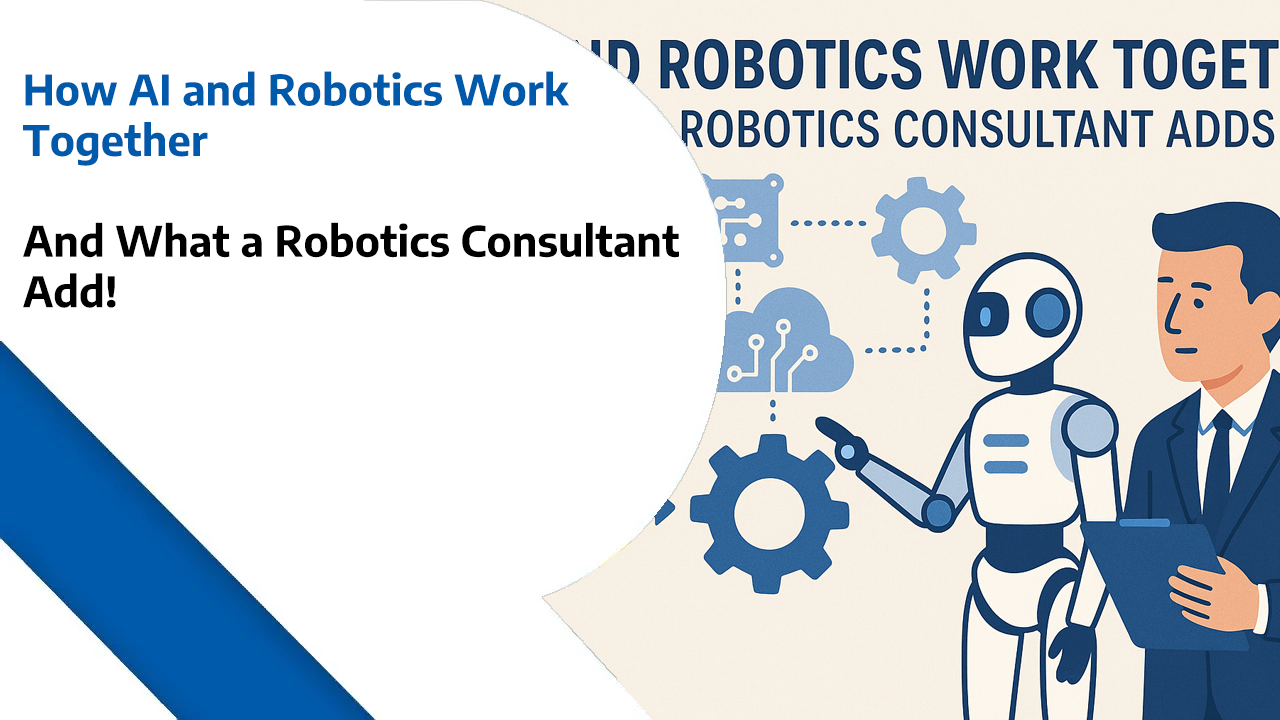
    At Robot Philosophy, we use our proprietary ROI MethodResources, Optimise, Intellectify — to guide clients from curiosity to clarity.

    Here’s a behind-the-scenes walkthrough of what you can expect during a Robot Feasibility Study with our team.


    1. Discovery & Diagnosis (R = Resources)

    We begin with a deep dive into your business. This means:

    • Site walkthroughs

    • Process analysis

    • Staff interviews

    • Bottleneck identification

    • Technology stack reviews

    We’re not just looking for where a robot can go — we’re looking for where it would make the biggest impact.

    We ask questions like:

    • Where do you have high staff turnover or burnout?

    • Are there repetitive tasks ripe for automation?

    • What’s currently costing you time, money, or customers?

    Bonus: We can often spot multiple potential use-cases — and recommend which one to prioritise first.


    2. Application Identification & Robot Matching

    Once we know your pain points, we match them with robot types that solve them. This includes:

    • Humanoid robots for customer interaction

    • Mobile robots for delivery or inspection

    • Collaborative arms (cobots) for light manufacturing

    • Digital signage robots for marketing and events

    • Food and beverage robots for hospitality

    We don’t just pick robots from a catalogue. We compare models, brands, costs, and capabilities across our full supplier network. With Robot Center and Robots of London as sister companies, we have insider access to real-world pricing, product performance, and deployment timeframes.


    3. Costing, ROI & Funding Options

    This is where many other consultants go quiet. But not us.
    We show you:

    • Upfront and ongoing costs

    • Payback period and ROI modelling

    • Potential productivity and staffing savings

    • CAPEX vs. OPEX options (e.g. purchase, lease, rental)

    We also advise on grant funding, R&D tax credits, and partnership models, especially helpful for UK SMEs.

    🎯 Example: One client saved £45,000 annually by replacing a night receptionist with a humanoid robot — and recouped the investment in just 8 months.


    4. Risk Assessment & Compliance

    We examine:

    • Health and safety implications

    • Cybersecurity risks

    • Data protection policies (especially with AI)

    • Regulatory considerations (e.g. CE marking, ISO standards)

    As robots become more complex, risk management becomes more essential. Our team ensures your deployment is future-proof and legally sound.


    5. Deployment Planning (O = Optimise)

    If the feasibility study shows green lights across the board, we shift gears and begin creating a robot rollout plan.

    This includes:

    • Technical site preparation

    • IT integration planning

    • Staff training and change management

    • Pilot programme design

    • Supplier negotiation and timelines

    If you’re just not ready, that’s OK. The feasibility study is yours to keep — a strategic roadmap to return to when timing aligns.


    6. Intellectify Your Workforce (I = Intellectify)

    Robots aren’t just about replacing people — they’re about augmenting your team’s intelligence.

    Our consultancy doesn’t stop at robot installation. We offer:

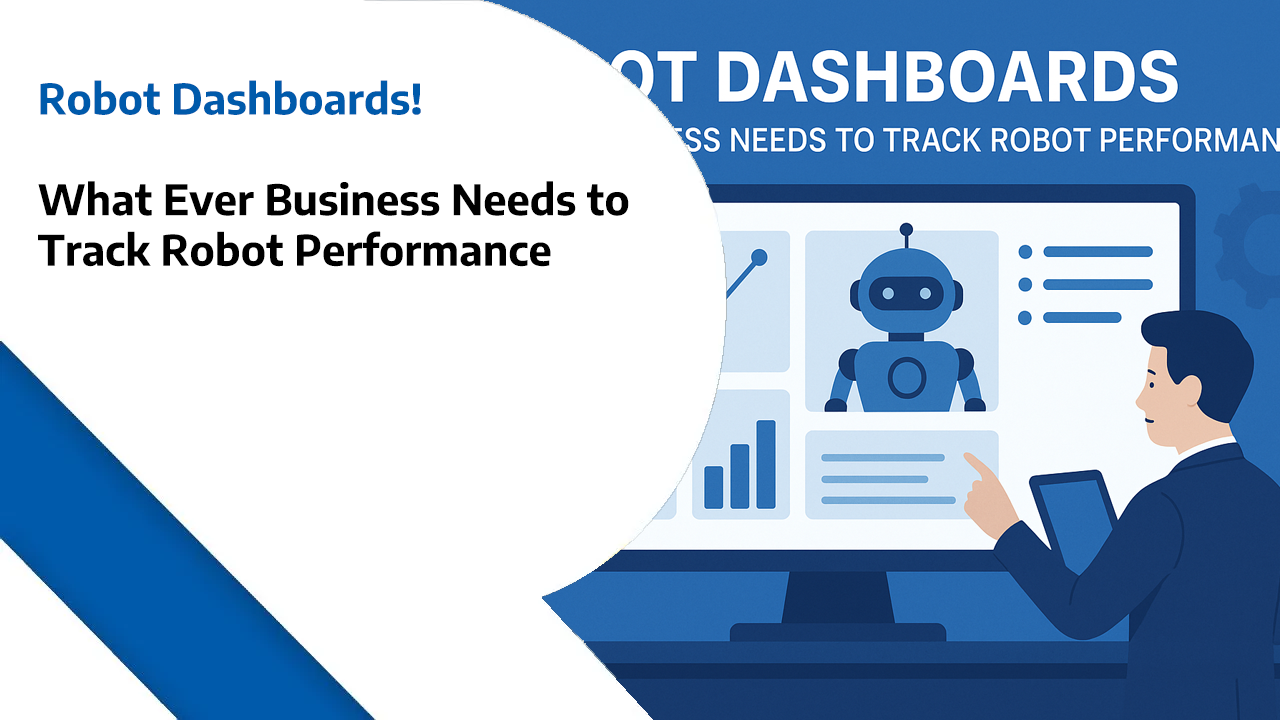
    • AI dashboards to visualise robot data

    • Digital interfaces for better human-robot interaction

    • Strategic reporting to improve decision-making

    This is the future of work: people and robots coexisting, optimising each other’s strengths.


    🧠 Why a Feasibility Study Is a Smart Investment

    Still unsure? Here’s why businesses across the UK are booking robot feasibility studies:

    ReasonImpact
    ✅ Avoids expensive mistakesEnsures you’re not buying a robot that won’t deliver ROI
    ✅ Builds internal buy-inGets leadership and staff aligned before any deployment
    ✅ Future-proofs decisionsOffers clarity for long-term planning and innovation
    ✅ Attracts investmentDemonstrates tech-readiness to partners and investors
    ✅ Saves moneyOften identifies waste or inefficiency beyond robotics

    👨‍💼 Who Needs a Robot Feasibility Study?

    Robot Philosophy has delivered studies across a wide range of sectors. Our sweet spots include:

    • Hospitality – Hotels, restaurants, events

    • Retail – Stores, shopping centres, showrooms

    • Logistics & Warehousing – Picking, sorting, moving

    • Manufacturing – Assembly, packaging, quality control

    • Facilities Management – Cleaning, inspection, security

    • Education & Health – Interactive robots for care, safety, or learning

    Even startups and architects come to us to include robots in early-stage designs, unlocking innovation from the blueprint stage.


    🤖 Our Robot Consulting Difference

    Here’s why our consultancy is trusted by brands across the UK:

    FeatureWhy It Matters
    🧩 Independent & vendor-neutralWe match the best solution, not push our own stock
    🧠 Deep sector knowledgeWe’ve deployed robots in the real world — not just theory
    🔗 End-to-end servicesFrom feasibility to recruitment and maintenance
    🛠 In-house technical expertsEngineers, roboticists, and field-tested consultants
    🧭 Values-first approachWe only recommend robotics where there is true benefit

    We don’t just talk robots — we deliver robots with purpose.


    👥 Robot Recruitment – The Secret Weapon

    Installing robots is half the equation. The other half? Hiring the right humans to manage, operate, and expand your robotics operations.

    At Robot Philosophy, we offer a dedicated robot recruitment service for:

    • Robotics Engineers

    • Automation Consultants

    • Robot Operators

    • Robotics Project Managers

    • AI + Robotics Integration Specialists

    Whether you’re looking for a full-time hire or contract support, we have access to the most exciting robotics talent in the UK.

    📧 Need help building your robotics team?
    Email us at: info@robophil.com
    Or call: 0845 528 0404

    We’ll match you with technical staff who are as future-focused as you are.


    🧭 Sponsors Who Make It Happen

    This article is brought to you by:

    Robot Center

    Your one-stop shop for buying commercial and industrial robots.
    💡 Buy Robot, Robot Buy, Robot Consultancy, Robotics Consultancy


    Robots of London

    The UK’s leading robot hire agency for events, marketing, and short-term deployments.
    🎉 Robot Hire, Robot Rental, Rent Robot, Hire Robot, Robot Events


    Robot Philosophy

    Home of our robot consulting and recruitment services. Helping you think, plan, and act smart with robotics.
    🤖 Robot Consultancy, Robot Recruitment, Robot Advice, Robot Insights, Robot Ideas


    📅 Ready to Explore Robotics the Right Way?

    Don’t rush into robotics blindly. A Robot Feasibility Study could save you thousands, open up game-changing opportunities, and put you ahead of the curve.

    Let’s talk. Book your free discovery call now:

    📧 info@robophil.com
    📞 0845 528 0404


    Final Thought

    The future of robotics isn’t about machines replacing people — it’s about businesses optimising people, processes, and potential with intelligent automation.

    A robot feasibility study is your gateway to that future.
    Let’s walk through it together.

  • Lessons Learned from 50+ Robot Consultancy Projects

    Lessons Learned from 50+ Robot Consultancy Projects

    Lessons Learned from 50+ Robot Consultancy Projects: A Comprehensive Guide to Robotics Implementation Success

    Sponsored by Robot Center, Robots of London, and Robot Philosophy


    The robotics revolution is no longer a distant future—it’s happening now. Over the past decade, our team has had the privilege of working on more than 50 robot consultancy projects across diverse industries, from manufacturing and healthcare to hospitality and logistics. Each project has taught us valuable lessons about what works, what doesn’t, and how organizations can successfully integrate robotics into their operations.

    This comprehensive analysis draws from real-world experiences, failures, successes, and the evolving landscape of robotics implementation. Whether you’re considering your first robotic solution or looking to expand your existing automation capabilities, these insights will help you navigate the complex world of robotics with confidence.

    The Evolution of Robotics Consulting: From Skepticism to Strategic Necessity

    When we began our consultancy journey, robotics was often viewed as a luxury for large corporations or a futuristic concept that seemed more suited to science fiction than practical business applications. Today, the narrative has completely shifted. Organizations of all sizes are recognizing that robotics isn’t just about replacing human workers—it’s about augmenting human capabilities, improving safety, enhancing precision, and creating competitive advantages in an increasingly demanding marketplace.

    Our early projects were characterized by extensive education phases, where we spent considerable time explaining the basics of robotics technology. Now, our clients come to us with sophisticated questions about ROI, integration challenges, and scaling strategies. This evolution reflects the maturation of both the technology and the market’s understanding of its potential.

    Lesson 1: Understanding the True Cost of Robotics Implementation

    One of the most significant lessons learned across our projects is that the initial hardware cost represents only a fraction of the total investment required for successful robotics implementation. Many organizations make the mistake of focusing solely on the purchase price of the robot, overlooking the comprehensive ecosystem required for successful deployment.

    The true cost includes system integration, software development, training, maintenance, ongoing support, and potential facility modifications. In our experience, the total cost of ownership typically ranges from 2.5 to 4 times the initial hardware investment over a five-year period. Organizations that budget accordingly from the outset tend to have far more successful implementations.

    We’ve learned to structure our consultancy approach around total cost transparency. This includes detailed breakdowns of integration costs, ongoing maintenance requirements, training investments, and potential upgrade paths. Clients appreciate this honesty upfront, and it leads to more realistic project planning and better long-term relationships.

    Lesson 2: The Critical Importance of Stakeholder Buy-In

    Technical feasibility means nothing without organizational buy-in. We’ve witnessed technically perfect robotic solutions fail because key stakeholders weren’t properly engaged in the planning process. Successful robotics implementations require champions at multiple levels within an organization, from executive leadership to floor operators.

    One particularly enlightening project involved a manufacturing client where the engineering team was enthusiastic about automation, but the production workers were concerned about job security. The project stalled for months until we facilitated workshops that demonstrated how robotics would enhance rather than replace human roles. Once the workforce understood that robots would handle dangerous, repetitive tasks while humans focused on quality control, problem-solving, and system optimization, resistance transformed into enthusiasm.

    We now recommend a structured stakeholder engagement process that begins before any technical assessment. This includes identifying key influencers, understanding concerns and motivations, and creating clear communication channels throughout the project lifecycle.

    Lesson 3: Start Small, Scale Smart

    The temptation to implement comprehensive robotic solutions immediately is understandable but often counterproductive. Our most successful projects have followed a “crawl, walk, run” approach, beginning with pilot implementations that demonstrate value before scaling to larger deployments.

    A logistics client wanted to automate their entire warehouse operation immediately. Instead, we recommended starting with a single picking line. This pilot project allowed them to understand the technology, train their team, refine processes, and demonstrate ROI before expanding. The pilot’s success secured funding for a phased rollout that ultimately transformed their entire operation.

    Starting small also allows organizations to learn and adapt without massive risk exposure. Each phase provides valuable data that informs subsequent implementations, leading to more efficient and effective scaling strategies.

    Lesson 4: Integration Complexity Often Exceeds Expectations

    Modern businesses operate with complex, interconnected systems. Integrating robotics into existing workflows, software platforms, and operational processes presents challenges that extend far beyond the robot itself. We’ve learned that successful integration requires deep understanding of the client’s entire operational ecosystem.

    One healthcare client wanted to implement robots for medication dispensing. The technical requirements seemed straightforward, but integration with their existing pharmacy management system, electronic health records, regulatory compliance systems, and workflow management required extensive customization and coordination with multiple vendors. The project timeline doubled, but the final solution was far more valuable because it seamlessly integrated with their existing operations.

    We now conduct comprehensive systems audits before proposing robotic solutions. This includes mapping existing workflows, identifying integration points, assessing software compatibility, and evaluating infrastructure requirements. This upfront investment in understanding pays dividends throughout the implementation process.

    Lesson 5: Training and Change Management Are Make-or-Break Factors

    The most sophisticated robotic system is only as effective as the people who operate and maintain it. We’ve observed that projects with comprehensive training and change management programs consistently outperform those that treat training as an afterthought.

    Effective training goes beyond basic operation instructions. It includes understanding the robot’s capabilities and limitations, troubleshooting common issues, recognizing when to escalate problems, and optimizing performance over time. We’ve developed multi-tiered training programs that address different user levels, from basic operators to advanced technicians.

    Change management is equally critical. Introducing robotics into established workflows disrupts existing processes and relationships. Successful implementations acknowledge this disruption and provide structured support for adaptation. This includes clear communication about changes, involvement in solution design, and ongoing support during transition periods.

    Lesson 6: Maintenance and Support Infrastructure Are Essential

    Robotics systems require ongoing maintenance, updates, and support. Organizations that underestimate these requirements often experience declining performance and frustrated users over time. We’ve learned that successful robotics implementations include comprehensive maintenance strategies from day one.

    This includes establishing relationships with qualified service providers, maintaining spare parts inventories, implementing preventive maintenance schedules, and planning for software updates and security patches. Some clients choose to develop internal maintenance capabilities, while others prefer service contracts with specialized providers. Both approaches can be successful when properly planned and resourced.

    We now recommend that clients allocate 15-20% of their annual robotics investment budget to maintenance and support activities. This proactive approach prevents small issues from becoming major problems and ensures consistent performance over time.

    Lesson 7: Regulatory and Safety Considerations Must Be Priority

    Robotics implementations must comply with relevant safety regulations, industry standards, and legal requirements. These considerations vary significantly across industries and applications, but they’re never optional. We’ve learned that addressing regulatory requirements early in the project lifecycle prevents costly delays and modifications later.

    Safety considerations extend beyond regulatory compliance to include risk assessment, safety system design, emergency procedures, and ongoing safety monitoring. We work closely with clients to ensure that robotic systems enhance rather than compromise workplace safety.

    One manufacturing client discovered late in their project that their proposed robotic solution didn’t meet industry-specific safety standards. Modifications added significant cost and delayed deployment by several months. Now we conduct regulatory compliance assessments as part of our initial feasibility studies.

    Lesson 8: Data Collection and Analytics Drive Continuous Improvement

    Modern robotic systems generate vast amounts of operational data. Organizations that leverage this data for continuous improvement consistently achieve better performance and ROI than those that don’t. We’ve learned to design data collection and analysis capabilities into every robotic implementation.

    This includes identifying key performance indicators, establishing baseline measurements, implementing monitoring systems, and creating reporting dashboards. The data reveals optimization opportunities, predicts maintenance needs, and provides evidence for scaling decisions.

    One client’s data analysis revealed that their robotic system performed significantly better during certain times of day due to temperature variations in their facility. This insight led to environmental control modifications that improved overall performance by 15%.

    Lesson 9: Future-Proofing Requires Flexible Architecture

    Technology evolves rapidly, and robotic systems must be designed to adapt and grow with changing requirements. We’ve learned that successful implementations prioritize flexibility and scalability over short-term optimization.

    This includes choosing modular system architectures, implementing open standards where possible, planning for future expansion, and maintaining upgrade pathways. While this approach may require slightly higher initial investment, it provides significant long-term value and reduces the risk of technological obsolescence.

    We now recommend that clients evaluate robotic solutions based on their ability to evolve and adapt rather than their current capabilities alone. This perspective has led to more sustainable implementations and better long-term relationships with technology providers.

    Lesson 10: ROI Measurement Must Be Comprehensive

    Measuring the return on investment for robotic implementations requires consideration of multiple factors beyond simple cost savings. We’ve learned that successful organizations develop comprehensive ROI frameworks that capture both quantitative and qualitative benefits.

    Quantitative benefits include labor cost reductions, productivity improvements, error rate decreases, and maintenance savings. Qualitative benefits include improved workplace safety, enhanced customer satisfaction, increased operational flexibility, and competitive advantages.

    One client initially focused solely on labor cost savings when evaluating their robotic investment. However, post-implementation analysis revealed that the primary value came from improved product quality and consistency, which enhanced their reputation and enabled premium pricing. Their comprehensive ROI analysis showed returns far exceeding initial projections.

    Industry-Specific Insights and Applications

    Our experience spans multiple industries, each with unique challenges and opportunities for robotic implementation. Manufacturing clients typically focus on productivity and quality improvements, while healthcare organizations prioritize safety and compliance. Logistics companies seek efficiency and accuracy gains, while hospitality businesses emphasize customer experience enhancement.

    Understanding industry-specific requirements is crucial for successful robotics consulting. We’ve developed specialized expertise in key sectors and maintain relationships with industry-specific technology providers and regulatory experts.

    The Future of Robotics Consulting

    The robotics industry continues to evolve rapidly, with advances in artificial intelligence, machine learning, sensor technology, and human-robot collaboration opening new possibilities. We anticipate continued growth in collaborative robotics, increased adoption in service industries, and greater integration with other emerging technologies like IoT and edge computing.

    These trends present both opportunities and challenges for organizations considering robotic implementations. Staying current with technological developments while maintaining focus on practical business value requires ongoing education and strategic planning.

    Common Pitfalls and How to Avoid Them

    Through our extensive project experience, we’ve identified several common pitfalls that can derail robotics implementations:

    Underestimating complexity: Robotics projects are typically more complex than initially anticipated. Successful implementations include contingency planning and flexible timelines.

    Insufficient planning: Rushed implementations often encounter problems that could have been avoided with better planning. We recommend comprehensive feasibility studies and detailed project planning.

    Inadequate training: Poor training leads to underutilization and user frustration. Invest in comprehensive training programs that address multiple user levels and learning styles.

    Ignoring change management: Technical solutions without change management support often fail to achieve their potential. Include change management as a core project component.

    Focusing only on technology: Successful robotics implementations require equal attention to technology, processes, and people. Maintain balanced focus across all three areas.

    Building Your Robotics Strategy

    Developing a successful robotics strategy requires careful consideration of your organization’s goals, capabilities, and constraints. We recommend a structured approach that includes:

    Assessment: Evaluate current operations, identify automation opportunities, and assess organizational readiness for robotics implementation.

    Strategy development: Create a comprehensive robotics strategy that aligns with business objectives and includes phased implementation plans.

    Pilot implementation: Begin with carefully selected pilot projects that demonstrate value and provide learning opportunities.

    Scaling: Use pilot project insights to inform larger-scale implementations and continuous improvement initiatives.

    Optimization: Leverage data and experience to continuously improve robotic system performance and expand applications.

    The Value of Professional Robotics Consulting

    The complexity and pace of change in robotics technology make professional consulting increasingly valuable. Experienced consultants bring deep technical knowledge, implementation experience, industry insights, and objective perspectives that can significantly improve project outcomes.

    Professional consulting services typically include feasibility assessments, technology selection, system design, implementation planning, project management, training development, and ongoing support. These services can accelerate implementation timelines, reduce risks, and improve ROI.

    Conclusion: Embracing the Robotic Future

    Our experience across 50+ robotics consultancy projects has taught us that successful robotics implementation is about much more than technology. It requires comprehensive planning, stakeholder engagement, change management, ongoing support, and continuous improvement. Organizations that approach robotics strategically and invest in proper implementation support consistently achieve better outcomes than those that view it as purely a technology purchase.

    The robotics revolution presents unprecedented opportunities for organizations willing to invest in proper implementation. However, success requires expertise, experience, and strategic thinking. Professional robotics consulting can provide the guidance and support necessary to navigate this complex landscape successfully.

    As we look toward the future, we’re excited about the continued evolution of robotics technology and its potential to transform businesses across industries. The lessons we’ve learned from our extensive project experience provide a foundation for even greater success in future implementations.


    Ready to Transform Your Business with Robotics?

    If you’re considering robotics implementation for your organization, we invite you to leverage our extensive experience and proven methodologies. Our comprehensive consulting services help you navigate the complex world of robotics with confidence, ensuring successful implementations that deliver real business value.

    Get Expert Guidance Today

    Contact our team of robotics experts to discuss your specific requirements and explore how robotics can transform your operations:

    📧 Email: info@robophil.com
    📞 Phone: 0845 528 0404

    Schedule a consultation to discover how our proven methodologies and extensive experience can help you achieve robotics implementation success. We provide comprehensive services from initial feasibility assessment through ongoing optimization support.

    Our robot recruitment services also help you find the right talent to support your robotics initiatives, ensuring your team has the skills and expertise necessary for long-term success.


    About Our Sponsors

    This article is proudly sponsored by leading robotics organizations committed to advancing robotics adoption and success:

    Robot Center – Your premier destination for robot purchasing, robotics consultancy, and comprehensive automation solutions. Whether you’re looking to buy robots or need expert robotics consultancy services, Robot Center provides the expertise and solutions you need.

    Robots of London – Specializing in robot hire, robot rental, and robot events services. When you need to rent robots for temporary projects, special events, or trial implementations, Robots of London offers flexible rental solutions and expert event support.

    Robot Philosophy – Leading provider of robot consultancy and robot recruitment services. From strategic robot advice and insights to finding the right robotics talent for your organization, Robot Philosophy delivers comprehensive solutions for all your robotics needs.

    These organizations represent the breadth of services available in today’s robotics ecosystem, from hardware procurement and rental to strategic consulting and talent acquisition. Their collective expertise supports organizations at every stage of their robotics journey.

     
  • A Behind-the-Scenes Look at a Robot Consultancy Project

    A Behind-the-Scenes Look at a Robot Consultancy Project

    A Behind-the-Scenes Look at a Robot Consultancy Project: Transforming Manufacturing Through Intelligent Automation

    This article is proudly sponsored by:

    • Robot Center – Your premier destination for robot purchasing and robotics consultancy services
    • Robots of London – Leading robot hire, rental, and event services across the UK
    • Robot Philosophy – Expert robot consultancy, recruitment, and strategic insights

    The factory floor hummed with a different energy that Tuesday morning in March. Where once stood three manual assembly stations manned by increasingly fatigued workers, now gleamed a sophisticated robotic cell, its articulated arms moving with ballet-like precision. This transformation didn’t happen overnight—it was the culmination of an intensive six-month robot consultancy project that would revolutionize productivity, safety, and job satisfaction at MidTech Manufacturing.

    Chapter 1: The Initial Challenge

    When Sarah Mitchell, Operations Director at MidTech Manufacturing, first contacted our consultancy team, her frustration was palpable. “We’re losing ground to competitors who’ve automated,” she explained during our initial video call. “Our workers are developing repetitive strain injuries, quality inconsistencies are costing us contracts, and we can’t scale production to meet demand.”

    MidTech, a mid-sized automotive parts manufacturer based in Birmingham, was facing the classic modern manufacturing dilemma: maintain status quo and risk obsolescence, or embrace automation and transform their entire operational philosophy. The stakes couldn’t have been higher—150 jobs, multi-million-pound contracts, and the company’s 40-year legacy hung in the balance.

    Our consultancy approach began with what we call the “Reality Audit”—a comprehensive assessment that goes far beyond technical specifications. Over three intensive days, our multidisciplinary team of robotics engineers, industrial psychologists, and business analysts embedded themselves within MidTech’s operations.

    Day One: The Human Factor

    Contrary to popular belief, successful robot implementation isn’t primarily about technology—it’s about people. We interviewed every stakeholder, from C-suite executives to shop floor operators. The insights were revealing: while management saw automation as an existential necessity, workers expressed deep anxiety about job displacement. This human element would prove crucial to our strategy.

    “I’ve been doing this job for fifteen years,” shared Tony, a veteran assembly worker. “These hands know every component, every imperfection. Can a robot really understand what I understand?” This wasn’t resistance—it was legitimate expertise that needed integration, not replacement.

    Day Two: Process Archaeology

    We conducted what we term “process archaeology”—meticulously documenting every movement, decision point, and quality check in the existing workflow. Using advanced motion capture technology and time-study methodologies, we mapped 847 individual actions across the three assembly stations.

    The data revealed fascinating insights: workers were performing 23% more movements than theoretically necessary, but many of these “inefficiencies” were actually intelligent adaptations to component variations and quality inconsistencies upstream in the supply chain. Any robotic solution would need to replicate not just the intended process, but this adaptive intelligence.

    Day Three: Technology Capability Assessment

    Finally, we evaluated the physical environment, existing infrastructure, and technological readiness. MidTech’s facility presented typical challenges: inconsistent power supply, temperature variations, and limited floor space. These constraints would significantly influence our robotic solution design.

    Chapter 2: Designing the Solution

    Armed with comprehensive data, our team retreated to design a solution that would satisfy multiple, sometimes competing objectives: increase productivity, improve quality consistency, enhance worker safety, and—crucially—create rather than eliminate meaningful employment.

    The Technology Architecture

    We recommended a hybrid cell design featuring two collaborative robots (cobots) working in tandem with human operators. The primary cobot, a six-axis articulated arm with advanced vision systems, would handle the precision assembly tasks that were causing repetitive strain injuries. The secondary cobot would manage quality inspection and packaging, roles requiring consistent accuracy but not creative problem-solving.

    Vision System Integration

    The most sophisticated component was the vision system—a combination of 3D cameras, laser scanners, and AI-powered defect recognition algorithms. This system needed to identify component variations, detect defects smaller than 0.1mm, and adapt robot behavior in real-time. We partnered with a specialist computer vision company to develop custom algorithms trained on over 50,000 component images from MidTech’s production history.

    Safety System Design

    Safety wasn’t an afterthought—it was fundamental to our design philosophy. The cell featured multiple redundant safety systems: light curtains, pressure-sensitive floor mats, emergency stops within arm’s reach of every position, and most importantly, force-limiting technology that would immediately halt robot movement upon unexpected contact.

    The Human Integration Strategy

    Rather than displacing workers, our solution elevated their roles. Tony and his colleagues would transition from repetitive manual assembly to becoming “Robot Coordinators”—roles requiring higher skills, offering better compensation, and providing more job satisfaction. They would monitor multiple robotic cells, handle complex problem-solving, manage quality exceptions, and train new operators.

    This wasn’t corporate spin—it was strategic necessity. The robotic system’s success depended on human expertise for setup, maintenance, quality judgment, and continuous improvement. Workers like Tony possessed irreplaceable institutional knowledge about product variations, customer requirements, and process optimization.

    Chapter 3: Implementation Challenges and Solutions

    Implementation began in July, and within days, we encountered our first major challenge: the robots couldn’t handle the component variations that human workers managed intuitively. Parts from different suppliers had subtle dimensional differences—variations well within specification but enough to confuse the initial programming.

    Challenge 1: Component Variation Management

    The Problem: Despite theoretical standardization, components varied by up to 2mm in critical dimensions. The robots’ initial programming assumed perfect consistency, leading to assembly failures and potential damage.

    The Solution: We developed what we called “Adaptive Grip Intelligence”—a system that uses tactile feedback sensors and machine learning algorithms to adjust grip pressure, approach angles, and assembly force based on real-time component assessment. The system learned from human operator interventions, gradually building a database of variation patterns and appropriate responses.

    The Outcome: After six weeks of continuous learning, the system achieved 99.3% success rate with component variations—actually outperforming human operators who sometimes forced ill-fitting components rather than flagging potential upstream issues.

    Challenge 2: Integration Resistance

    The Problem: Despite our extensive consultation process, some workers remained skeptical about the technology. Productivity actually decreased during the first month as operators were hesitant to trust the robots with critical tasks.

    The Solution: We implemented a “Trust Building Protocol”—a gradual responsibility transfer system where human operators maintained override control while slowly expanding the robots’ autonomous operation scope. Tony became our “Robot Whisperer,” working closely with our engineers to translate worker concerns into technical requirements.

    The Outcome: By month three, operators were actively suggesting improvements and had developed genuine pride in “their” robotic systems. Tony later commented, “It’s like training a really smart apprentice—one that never gets tired and always remembers what you teach it.”

    Challenge 3: Unexpected Maintenance Requirements

    The Problem: The harsh manufacturing environment was more demanding than our laboratory testing predicted. Dust accumulation on sensors, vibration-induced calibration drift, and temperature fluctuations all impacted performance.

    The Solution: We developed a predictive maintenance system using IoT sensors throughout the robotic cell. The system monitors 47 different parameters in real-time, predicting maintenance needs before failures occur. We also implemented a “Self-Diagnostic Protocol” where robots perform automated health checks at the start of each shift.

    The Outcome: Unplanned downtime decreased to less than 0.3% of operating time—significantly better than the 2.1% downtime experienced with the previous manual systems due to worker fatigue and minor injuries.

    Chapter 4: Results and Transformation

    Six months post-implementation, the results exceeded even our optimistic projections. But more importantly, they demonstrated the transformative power of thoughtful robot consultancy that prioritizes human-robot collaboration over simple automation.

    Quantitative Outcomes

    Productivity Metrics:

    • Production output increased 234% without increasing labor hours
    • Defect rates decreased from 3.2% to 0.1%
    • Assembly time per unit decreased from 14 minutes to 6 minutes
    • Worker overtime reduced by 67%

    Quality Improvements:

    • Customer complaints decreased by 89%
    • Rework requirements reduced from 12% to 0.3%
    • First-pass quality rate improved from 94% to 99.7%

    Safety Enhancements:

    • Zero repetitive strain injuries since implementation
    • Workplace accidents decreased by 78%
    • Worker satisfaction scores increased from 6.2/10 to 8.9/10

    Qualitative Transformations

    The numbers tell only part of the story. The real transformation was cultural and strategic. MidTech evolved from a traditional manufacturer struggling to compete into an innovative company that other manufacturers now visit to understand best practices in human-robot collaboration.

    Worker Evolution: Rather than job displacement, we achieved job enhancement. Tony was promoted to Lead Robot Coordinator with a 35% salary increase. His new role involves training operators at other MidTech facilities and contributing to continuous improvement initiatives. “I never thought I’d be programming robots at my age,” he laughed during our six-month review, “but now I can’t imagine going back to the old way.”

    Management Perspective: Sarah Mitchell’s initial anxiety has transformed into confident optimism. “We’re not just more efficient—we’re more agile. When customer requirements change, we can reprogram the robots instead of retraining entire teams. It’s given us a competitive advantage we never anticipated.”

    Cultural Impact: Perhaps most significantly, the success has shifted MidTech’s entire organizational mindset. They’re now planning robotic implementations in packaging, inventory management, and quality control. The company that once feared automation now sees it as their competitive advantage.

    Chapter 5: Lessons Learned and Best Practices

    Every robot consultancy project teaches valuable lessons. The MidTech transformation revealed principles that apply across industries and implementation scales.

    Principle 1: Humans First, Technology Second

    The most sophisticated robotic technology fails without human buy-in. Our success at MidTech stemmed from treating workers as partners in the automation journey rather than obstacles to overcome. Every technical decision considered human impact, and every human concern influenced technical specifications.

    Implementation Tip: Invest at least 30% of project time in change management and human factors engineering. Technical complexity pales compared to organizational complexity.

    Principle 2: Iterative Implementation Over Big Bang

    Rather than attempting complete transformation simultaneously, we implemented changes incrementally. This approach allowed for real-time learning, adjustment, and confidence building.

    Implementation Tip: Plan for three phases—proof of concept (20% of target scope), partial implementation (60% scope), and full deployment (100% scope). Each phase should demonstrate clear value before proceeding.

    Principle 3: Flexibility Over Optimization

    Our initial instinct was to optimize for peak efficiency, but we learned that flexibility and adaptability provide greater long-term value than marginal efficiency gains.

    Implementation Tip: Design systems for adaptation rather than perfection. Build in 20% excess capacity and multiple operational modes. The ability to handle unexpected requirements often proves more valuable than optimal performance under ideal conditions.

    Principle 4: Data-Driven Continuous Improvement

    The robotic system’s intelligence improves continuously through data collection and analysis. However, this requires systematic approaches to data capture, analysis, and implementation of insights.

    Implementation Tip: Establish data governance protocols from day one. Define what data to collect, how to analyze it, and who has authority to implement changes based on insights.

    Chapter 6: The Broader Implications

    The MidTech project represents a microcosm of manufacturing’s broader transformation. Success requires more than technical expertise—it demands understanding of business strategy, organizational psychology, change management, and industry dynamics.

    Industry Transformation Trends

    Collaborative Intelligence: The future isn’t about robots replacing humans but about human-robot teams that combine human creativity and adaptability with robotic precision and consistency.

    Customization at Scale: Robotic systems enable mass customization—the ability to produce varied products efficiently without traditional batch production limitations.

    Predictive Operations: AI-powered robots don’t just perform tasks—they predict problems, optimize processes, and suggest improvements based on pattern recognition across vast datasets.

    Sustainable Manufacturing: Robots enable more efficient resource utilization, reduced waste, and better energy management—critical factors as environmental regulations tighten.

    Skills Evolution

    The MidTech project illuminated the evolving skill requirements in automated manufacturing environments. Workers need different competencies, not fewer competencies.

    Technical Skills: Basic understanding of robotic systems, sensors, and data interpretation becomes essential for all operators.

    Problem-Solving Skills: Robots handle routine tasks efficiently, but humans must manage exceptions, troubleshoot complex issues, and optimize systems continuously.

    Collaboration Skills: Human-robot collaboration requires new forms of communication, coordination, and trust-building.

    Learning Agility: In rapidly evolving technological environments, the ability to acquire new skills quickly becomes more valuable than existing skill depth.

    Chapter 7: Planning Your Own Robot Consultancy Journey

    Drawing from the MidTech experience and dozens of similar projects, we’ve developed a framework for organizations considering robotic implementation.

    Phase 1: Strategic Assessment (Weeks 1-4)

    Business Case Development: Clearly articulate the business problem robots will solve. Productivity improvement alone rarely justifies investment—look for combinations of productivity, quality, safety, and competitive advantage benefits.

    Stakeholder Alignment: Ensure leadership commitment extends beyond initial enthusiasm. Robotic implementation requires sustained support through inevitable challenges and learning curves.

    Cultural Readiness Evaluation: Assess organizational capacity for change. Companies with strong continuous improvement cultures typically achieve better robotic implementation outcomes.

    Technical Infrastructure Assessment: Evaluate existing systems, power requirements, network capabilities, and physical constraints that might influence robotic solution design.

    Phase 2: Solution Design (Weeks 5-12)

    Process Analysis: Document current state operations in detail. Focus on identifying value-added versus non-value-added activities, quality control points, and safety risks.

    Technology Selection: Choose robotic solutions based on requirements analysis rather than technological fascination. Consider factors like flexibility, maintenance requirements, integration complexity, and vendor support quality.

    Human Factors Integration: Design roles and responsibilities for the human-robot collaborative environment. Plan career paths and skill development programs for affected workers.

    Pilot Program Definition: Design a limited-scope pilot that demonstrates key capabilities while minimizing risk. Success criteria should include both technical and organizational metrics.

    Phase 3: Implementation and Optimization (Weeks 13-52)

    Staged Rollout: Implement changes incrementally to allow learning and adjustment. Each stage should build confidence and demonstrate value before proceeding.

    Training and Development: Invest heavily in human development. Technical training alone isn’t sufficient—include change management, problem-solving, and human-robot collaboration skills.

    Performance Monitoring: Establish comprehensive metrics covering productivity, quality, safety, and employee satisfaction. Review regularly and adjust operations based on insights.

    Continuous Improvement: Robotics implementation isn’t a destination—it’s the beginning of a continuous improvement journey. Plan for ongoing optimization, capability expansion, and adaptation to changing requirements.

    Why Professional Robot Consultancy Matters

    The MidTech case study illustrates why professional robot consultancy is essential for successful automation initiatives. The complexity extends far beyond selecting and installing robotic equipment.

    Technical Expertise

    Modern robotic solutions integrate mechanical engineering, electrical systems, computer science, artificial intelligence, and industrial psychology. Few organizations possess this multidisciplinary expertise internally, particularly for what might be their first significant automation initiative.

    Systems Integration Challenges: Robots must integrate with existing manufacturing systems, enterprise software, quality management systems, and safety protocols. This integration requires deep understanding of both robotic capabilities and existing infrastructure.

    Customization Requirements: Off-the-shelf robotic solutions rarely meet specific operational requirements without significant customization. This customization requires expertise in programming, sensor integration, and system optimization.

    Safety and Compliance: Robotic systems must comply with complex safety regulations that vary by industry, application, and geography. Non-compliance can result in costly shutdowns, legal liability, and worker injuries.

    Organizational Change Management

    Technical implementation represents only 40% of robotic project success factors. The remaining 60% involves managing organizational change, developing human capabilities, and creating sustainable operational models.

    Stakeholder Engagement: Successful projects require buy-in from workers, management, unions, customers, and suppliers. Building this consensus requires skilled change management and communication.

    Skill Development: Workers need new competencies to operate effectively in human-robot collaborative environments. This training goes far beyond basic robot operation to include problem-solving, system optimization, and quality management.

    Process Redesign: Robotic implementation often reveals opportunities for broader process improvements. Capturing these opportunities requires expertise in lean manufacturing, quality systems, and operational optimization.

    Strategic Business Integration

    Robot consultancy must align with broader business strategy, competitive positioning, and long-term growth plans. This strategic integration distinguishes successful implementations from technical experiments.

    ROI Optimization: Professional consultants help optimize return on investment by identifying the most impactful applications, designing scalable solutions, and planning for future expansion.

    Risk Management: Experienced consultants anticipate common implementation challenges and design mitigation strategies. This foresight prevents costly delays and performance shortfalls.

    Competitive Advantage Development: The most successful robotic implementations create sustainable competitive advantages rather than simply matching competitor capabilities.

    Your Next Steps: Partnering for Success

    The MidTech transformation demonstrates the profound impact of thoughtful robot consultancy. But success requires the right partnership with consultants who understand both technology and business realities.

    What to Look for in Robot Consultancy Partners

    Multidisciplinary Expertise: Look for teams combining technical engineering capabilities with business strategy, change management, and industry-specific experience.

    Proven Track Record: Evaluate consultants based on similar project success stories, client references, and measurable outcomes achieved.

    Collaborative Approach: The best consultants work as partners rather than vendors, investing in your long-term success rather than simply delivering contracted scope.

    Ongoing Support: Robot implementation is the beginning, not the end, of the automation journey. Choose partners committed to long-term relationship development.

    Our Robot Consultancy and Recruitment Services

    Our team brings together decades of experience in robotic implementation, organizational change management, and strategic business development. We don’t just install robots—we transform organizations for sustainable competitive advantage.

    Comprehensive Consultancy Services:

    • Strategic automation assessment and planning
    • Technology selection and system design
    • Implementation project management
    • Change management and training
    • Performance optimization and continuous improvement
    • Regulatory compliance and safety assurance

    Specialized Robot Recruitment:

    • Robotics engineer recruitment and placement
    • Automation specialist sourcing
    • Technical leadership search
    • Skills assessment and development planning
    • Contractor and permanent placement services

    Industry Expertise:

    • Manufacturing and assembly automation
    • Warehouse and logistics robotics
    • Quality control and inspection systems
    • Collaborative robot (cobot) implementation
    • AI and machine learning integration
    • Safety system design and compliance

    Ready to Begin Your Transformation?

    The MidTech story could be your story. Every day of delay in automation implementation represents lost competitive advantage, continued safety risks, and missed opportunities for organizational growth.

    Schedule Your Strategic Consultation

    Contact our team to discuss your automation objectives, current challenges, and transformation vision. Our initial consultation includes:

    • Preliminary automation opportunity assessment
    • Technology options overview
    • Implementation approach discussion
    • Investment and timeline estimation
    • Risk assessment and mitigation strategies

    Contact Information:

    Don’t wait for competitors to gain automation advantages. Contact us today to begin your own robot consultancy journey and discover how human-robot collaboration can transform your organization’s productivity, quality, safety, and competitive positioning.

    The future of manufacturing isn’t about choosing between humans and robots—it’s about creating intelligent partnerships that combine the best of both. Let us help you build that future.


    This comprehensive case study demonstrates the transformative power of professional robot consultancy. Ready to write your own success story? Contact our expert team today to begin your automation journey.

    Sponsored by:

    • Robot Center – Your trusted partner for robot purchasing and robotics consultancy
    • Robots of London – Premier robot hire, rental, and event services
    • Robot Philosophy – Leading robot consultancy, recruitment, and strategic insights
     
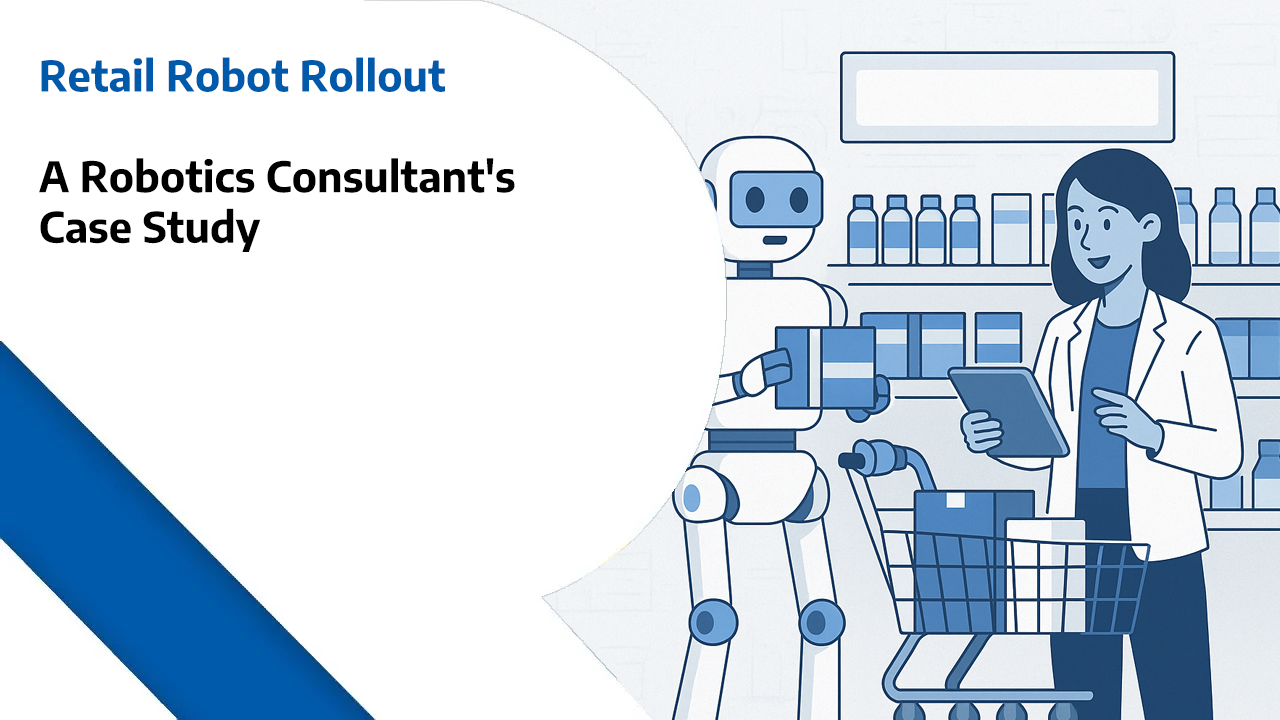
  • Retail Robot Rollout – A Robotics Consultant’s Case Study

    Retail Robot Rollout – A Robotics Consultant’s Case Study

    Retail Robot Rollout – A Robotics Consultant’s Case Study

    Sponsored by:

    Robot Centerhttps://robotcenter.co.uk – Buy Robot, Robot Buy, Robot Consultancy, Robotics Consultancy
    Robots of Londonhttps://robotsoflondon.co.uk – Robot Hire, Robot Rental, Rent Robot, Hire Robot, Robot Events
    Robot Philosophyhttps://robophil.com – Robot Consultancy AND Robot Recruitment, Robot Advice, Robot Insights, Robot Ideas


    Introduction: The Rise of Retail Robotics

    In the ever-evolving world of retail, companies are under constant pressure to reduce costs, increase efficiency, and elevate the customer experience. In this high-stakes landscape, automation and robotics are emerging not just as tools—but as strategic business assets. The latest chapter in this transformation involves the retail robot rollout—the introduction of robots to handle tasks ranging from customer engagement to inventory management.

    This article takes a behind-the-scenes look at how a professional robotics consultant led a successful multi-location retail robot rollout and how businesses like yours can do the same. Through this case study, we will explore the technology, the implementation process, and the business impact, while also showcasing how our robot consultancy and robot recruitment services can guide your journey into automation.


    The Retail Client: Scaling Without Sacrificing Service

    Our client, a national retail chain with over 200 high street locations, faced a modern dilemma. Online competition was intensifying. Staffing costs were rising. Yet, customer expectations for in-store service remained sky-high. They didn’t want to become a fully automated warehouse, but they needed a way to blend efficiency with a human touch.

    After an initial discovery call, they brought us in to conduct a robot readiness audit—a cornerstone of our Robot Optimised consultancy methodology. Our goal: identify where robotics could create meaningful ROI without disrupting the brand’s core identity.


    Step 1: The Robotics Audit (Resources Phase)

    Every project begins with our Resources phase: identifying tasks, teams, and technologies that intersect well with robotic automation. Over three weeks, we visited key store locations, mapped workflow bottlenecks, and interviewed frontline staff and management. We evaluated:

    • Customer greeting and information requests

    • Restocking and stock checking

    • Queue management and people counting

    • Promotional advertising and upselling

    We found three use cases with high potential for automation:

    1. Customer Engagement Robots – for greeting, FAQs, and showcasing promotions

    2. Digital Signage Robots – replacing static displays with mobile screens

    3. Inventory Support Robots – automating stock check and shelf scanning

    With a clear strategy in place, we entered the Optimise phase.


    Step 2: Deployment & Integration (Optimise Phase)

    In the Optimise phase, our focus shifted to sourcing the right robots, integrating them into operations, and training staff.

    Robot Selection

    Thanks to our network through Robot Center and Robots of London, we were able to provide the client with real-world demos of several options, including:

    • Temi Robots – Ideal for store navigation and customer interaction

    • DSR Digital Signage Robots – Featuring 43” moving screens for promotions

    • Inventory Robots – Equipped with RFID and vision systems for stock accuracy

    Each robot underwent pilot testing in a flagship store. Based on performance, ease of integration, and user feedback, the company selected:

    • 60 Temi Robots

    • 100 DSR Units

    • 30 Inventory Bots

    Installation and Training

    Our engineering team handled the full install—no IT team required. Robots were pre-configured, delivered with onboarding guides, and we ran a two-day in-store training per location. We also created a hybrid support model with both on-site visits and remote assistance for troubleshooting.

    Within six months, 190 stores had robots fully operational.


    Step 3: Amplifying Intelligence (Intellectify Phase)

    Robots without insight are just fancy hardware. That’s why the final phase—Intellectify—focuses on the data layer.

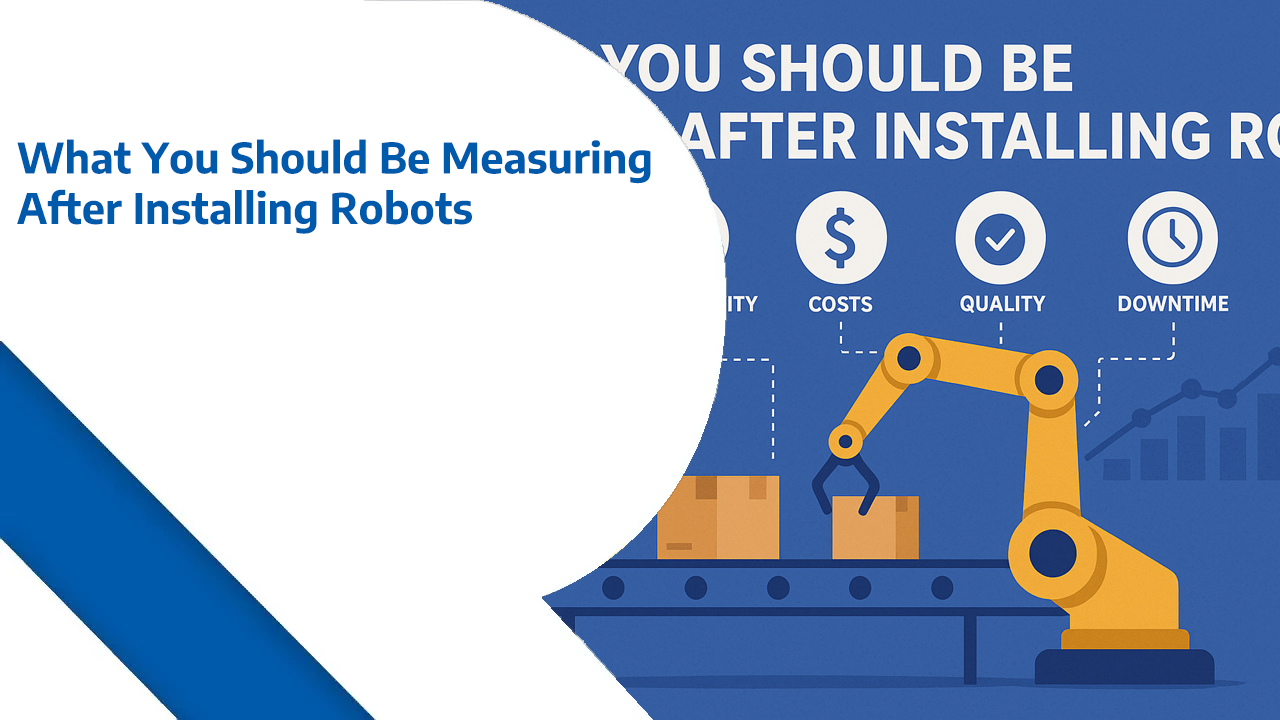
    We helped the retail chain set up KPIs and reporting dashboards that tracked:

    • Robot-to-customer interactions

    • Promotion click-through rates on digital signage

    • Inventory error reduction rates

    • Staff satisfaction and productivity metrics

    By pairing robot-generated data with existing CRM and ERP systems, the company gained real-time visibility into customer behavior, operational efficiency, and ROI.


    The Results: Impact in Real Terms

    After 12 months, the rollout delivered measurable success:

    29% increase in customer engagement
    40% reduction in inventory-related complaints
    8% sales uplift from targeted in-store promotions
    15% overall labor cost reduction through smarter task allocation

    But perhaps most impressively, the robots became a marketing asset. Shoppers loved them. Footfall increased in pilot stores. Kids took selfies. Customers shared videos online, generating millions of organic views.


    Lessons Learned: Consultant Tips for Retail Robot Rollouts

    Through this case study, we’ve learned that a successful robot rollout depends on more than just cool tech. Here are some of our core takeaways:

    1. Start with Strategy, Not Hardware

    Don’t buy a robot for the sake of it. Start with a use-case audit. Where can a robot genuinely free up your staff or create customer delight?

    2. Keep It Human

    Your people are still your most valuable asset. Robots should amplify—not replace—the human element. Training and communication are key.

    3. Use Pilots to Validate

    Pilot programs help you learn, adapt, and get buy-in before a full rollout. We typically recommend 30-60 day pilots with clear KPIs.

    4. Data is Gold

    Modern robots are data collectors. Don’t ignore the insights they can provide. Use them to improve not just operations but customer journeys.

    5. Partner with Experts

    The robotics landscape is evolving fast. A good consultant doesn’t just install hardware—they guide your entire transformation journey.


    Need Help with Your Robot Rollout?

    At Robot Philosophy, we don’t just sell robots—we design robot success stories. Whether you’re a retail chain, hotel group, warehouse operator, or airport manager, our robot consultancy and robot recruitment services can help you scale automation with confidence.

    From initial audits to full-service integration and hiring the right robotics talent, we’re your trusted partner.

    📧 Email: info@robophil.com
    📞 Call: 0845 528 0404
    🌐 Website: https://robophil.com


    Bonus: Retail Robot Options for 2025

    If you’re curious about what’s available, here’s a quick overview of some of our most popular robots for retail:

    🧍‍♂️ Temi – Personal Assistant Robot

    • Voice-activated

    • Autonomous navigation

    • Perfect for customer service and store tours

    📺 DSR+ – Digital Signage Robot

    • 43” or 55” screen

    • Runs dynamic video ads

    • Can be controlled remotely

    📦 StockScan – Inventory Checker Bot

    • Real-time stock tracking

    • Integrates with ERP systems

    • Sends alerts when shelves are low

    All available to buy or rent via Robot Center and Robots of London.


    What’s Next for Retail Robotics?

    The future is hybrid: stores blending high-tech automation with high-touch customer service. Robots won’t replace staff—they’ll empower them. They’ll take over repetitive tasks, leaving humans to do what they do best: build relationships.

    With GenAI integration, advanced vision systems, and 5G connectivity, retail robots will soon become smarter, more intuitive, and more connected than ever. Smart retailers are not waiting—they’re acting now.


    Final Word: Be the First Mover, Not the Follower

    By 2030, it’s estimated that over 60% of customer-facing retail environments will feature robotic automation. Those who adopt early will dominate the next decade of retail innovation.

    If you’re serious about innovation, customer satisfaction, and operational excellence, then it’s time to bring in the robots—and bring in the right team to make it happen.

    Contact our team today for a no-pressure consultation:

    📧 Email: info@robophil.com
    📞 Call: 0845 528 0404


    About the Sponsors

    🤖 Robot Center

    https://robotcenter.co.uk
    From collaborative arms to customer-facing robots, Robot Center provides a complete range of automation solutions. Whether you want to Buy Robot or need top-tier Robot Consultancy, we help companies future-proof their operations.

    🤖 Robots of London

    https://robotsoflondon.co.uk
    Looking to create a buzz at your next event or explore automation without long-term commitment? With our wide range of Robot Hire and Robot Rental options, you can Rent Robot or Hire Robot for everything from retail launches to exhibitions.

    🤖 Robot Philosophy

    https://robophil.com
    Your gateway to Robot Consultancy and Robot Recruitment. Get Robot Advice, Robot Insights, and Robot Ideas that align with your vision. Whether you need guidance on your automation roadmap or help finding top robotics talent—we’ve got you covered.


    Let’s roll out the future—together.

    Email: info@robophil.com
    Phone: 0845 528 0404
    Web: https://robophil.com

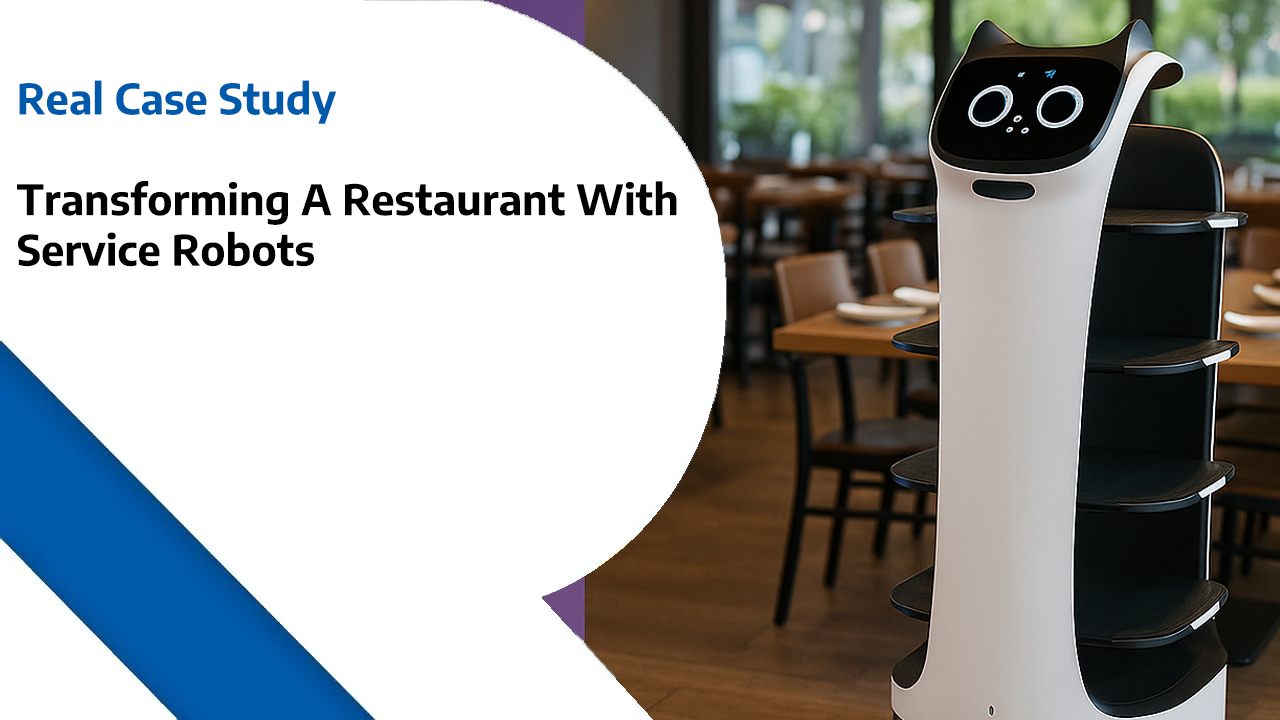
  • Real Case Study: Transforming A Restaurant With Service Robots

    Real Case Study: Transforming A Restaurant With Service Robots

    Real Case Study: Transforming A Restaurant With Service Robots

    This article is sponsored by Robot Center, Robots of London, and Robot Philosophy – your trusted partners in robotics solutions

    Executive Summary

    The hospitality industry stands at a crossroads. Rising labor costs, staff shortages, and evolving customer expectations have forced restaurant owners to seek innovative solutions. This comprehensive case study examines how “The Modern Table,” a 120-seat contemporary restaurant in Manchester, successfully integrated service robots into their operations, resulting in a 35% reduction in labor costs, 28% improvement in customer satisfaction scores, and a complete transformation of their service model.

    The Challenge: A Restaurant in Crisis

    When Sarah Mitchell inherited The Modern Table from her uncle in early 2023, she faced a perfect storm of challenges that plague countless restaurant owners across the UK. The establishment, once a thriving local favorite, was hemorrhaging money at an alarming rate.

    The primary issues were multifaceted and interconnected. Staff turnover had reached 180% annually, creating a revolving door of inexperienced servers who struggled to maintain service quality. The constant recruitment and training costs were draining resources, while the remaining staff were overworked and increasingly prone to errors. Customer complaints had risen by 60% over the previous year, primarily focusing on slow service, incorrect orders, and inconsistent food quality.

    Labor costs represented 42% of total revenue, well above the industry standard of 25-30%. The restaurant was operating with skeleton crews during peak hours, leading to table wait times exceeding 20 minutes and food delivery delays that frustrated diners. The situation was unsustainable, and Sarah knew that without dramatic intervention, The Modern Table would close within six months.

    Traditional solutions seemed inadequate. Increasing wages to attract better staff would further erode margins, while reducing service quality to cut costs would drive away the remaining loyal customers. Sarah needed a revolutionary approach that could address multiple challenges simultaneously while positioning the restaurant for long-term success.

    The Solution: Strategic Robot Integration

    After extensive research and consultation with robotics experts, Sarah decided to implement a comprehensive service robot solution. The transformation wasn’t merely about replacing human workers with machines; it was about reimagining the entire service model to create a hybrid human-robot workforce that maximized efficiency while maintaining the personal touch that diners valued.

    The implementation began with a thorough operational analysis conducted by robotics consultants. Every aspect of the restaurant’s workflow was mapped, from customer greeting to bill payment. This analysis revealed numerous inefficiencies and bottlenecks that robots could address while identifying areas where human interaction remained essential.

    The chosen solution involved three types of service robots, each designed for specific functions. Welcome robots were stationed at the entrance to greet customers, manage reservations, and guide guests to their tables. These units featured advanced facial recognition technology and natural language processing, allowing them to remember returning customers and their preferences.

    Serving robots formed the backbone of the new system. These sophisticated machines could carry up to 40 kilograms of food and beverages, navigate through crowded dining rooms using advanced sensor arrays, and serve multiple tables simultaneously. Their precision was remarkable, with a delivery accuracy rate of 99.7% and the ability to avoid obstacles while maintaining food temperature and presentation quality.

    Cleaning robots worked continuously throughout service, sanitizing tables, floors, and surfaces between customers. These units operated quietly and efficiently, ensuring the restaurant maintained impeccable hygiene standards while reducing the physical burden on human staff.

    Implementation Phase: Overcoming Challenges

    The transition to robot-assisted service wasn’t without obstacles. Initial staff resistance was significant, with many employees fearing job displacement. Sarah addressed these concerns through transparent communication, retraining programs, and clear assurances that robots were there to augment, not replace, human workers.

    The first month proved particularly challenging. Robots occasionally malfunctioned, requiring quick human intervention. Some customers were initially skeptical or amused by the robotic service, with a few expressing preference for traditional human interaction. The kitchen staff needed time to adapt their plating and timing procedures to accommodate the robots’ serving schedule.

    Technical integration required careful coordination. The restaurant’s point-of-sale system needed upgrading to communicate effectively with the robots. WiFi infrastructure was enhanced to support the constant data flow between units. Staff training programs were developed to teach employees how to work alongside their robotic colleagues, troubleshoot common issues, and maintain the equipment.

    Customer education played a crucial role in the transition’s success. Sarah implemented a comprehensive communication strategy, including social media campaigns, in-restaurant demonstrations, and staff explanations of the new system’s benefits. The restaurant offered “robot experience” nights where curious diners could interact with the technology and learn about its capabilities.

    Results: Transformation Beyond Expectations

    Six months after full implementation, The Modern Table had achieved remarkable results that exceeded all projections. The most significant improvement was in operational efficiency. Service times decreased by 40%, with average table turnover increasing from 1.8 to 2.5 customers per evening. The robots’ precision and consistency eliminated most order errors, reducing food waste by 25% and customer complaints by 70%.

    Financial performance improved dramatically. Labor costs dropped from 42% to 28% of revenue, while overall revenue increased by 35% due to higher table turnover and improved customer satisfaction. The initial investment in robotics was projected to pay for itself within 18 months, well ahead of the original 24-month timeline.

    Customer satisfaction scores reached unprecedented levels. Diners appreciated the faster service, consistent quality, and novelty of the robotic experience. The restaurant became a destination for tech-curious visitors and families with children, who were particularly delighted by the robots’ interactive capabilities. Online reviews improved from an average of 3.2 to 4.6 stars, with many customers specifically praising the innovative service model.

    Staff satisfaction paradoxically increased despite initial concerns. With robots handling routine tasks like carrying heavy trays and cleaning tables, human employees could focus on customer interaction, food preparation, and creative aspects of hospitality. This shift led to more engaging work experiences and reduced physical strain, resulting in staff turnover dropping to just 35% annually.

    The Human Element: Redefining Roles

    Contrary to fears of widespread job displacement, The Modern Table’s robot integration actually enhanced the human element of dining. Staff roles evolved rather than disappeared. Servers became customer experience managers, focusing on greeting guests, explaining menu items, handling special requests, and ensuring overall satisfaction. Their interactions became more meaningful and personalized, as they were freed from routine tasks.

    The kitchen staff adapted quickly to the new system, with head chef Marcus Williams noting that robots’ consistent timing helped improve food quality. “We can plate dishes knowing exactly when they’ll be served,” he explained. “This precision has elevated our entire culinary operation.”

    New positions emerged as well. The restaurant hired a robot coordinator responsible for monitoring system performance, scheduling maintenance, and training staff on new features. This role combined technical knowledge with hospitality expertise, creating a new career path within the industry.

    Technology Deep Dive: The Robots Behind the Success

    The serving robots at The Modern Table represent cutting-edge technology adapted for commercial hospitality use. Each unit features multiple cameras, lidar sensors, and ultrasonic detectors that create detailed maps of the restaurant environment. Advanced AI algorithms enable the robots to navigate complex scenarios, such as crowded dining rooms, spilled liquids, or unexpected obstacles.

    The robots’ carrying capacity and stability were crucial to their success. Each unit can transport up to 40 kilograms across four adjustable shelves, with gyroscopic stabilization ensuring drinks don’t spill and plates remain level. Battery life extends to 12 hours of continuous operation, with automatic docking stations for charging during quiet periods.

    User interface design prioritized simplicity and reliability. Kitchen staff interact with the robots through touchscreens that display table assignments, special instructions, and delivery confirmations. The system integrates seamlessly with existing point-of-sale software, automatically updating order status and timing information.

    Safety features were paramount in the design. Emergency stop buttons, collision avoidance systems, and fail-safe protocols ensure the robots operate safely around customers and staff. Regular software updates continuously improve performance and add new capabilities.

    Customer Experience: The Dining Revolution

    The transformation of customer experience at The Modern Table extends far beyond novelty. Diners now enjoy consistently fast service, with appetizers arriving within 8 minutes of ordering and main courses delivered in under 15 minutes. The robots’ precision ensures correct orders every time, while their quiet operation doesn’t disrupt conversation or ambiance.

    Children particularly enjoy the robotic service, often asking to take photos with the robots and excitedly watching them navigate the dining room. This appeal has made The Modern Table a popular destination for family celebrations and birthday parties.

    Business diners appreciate the efficiency and reliability, making the restaurant a preferred venue for working lunches and client meetings. The consistent service quality ensures professionals can focus on their conversations without worrying about delayed or incorrect orders.

    Financial Analysis: Return on Investment

    The financial transformation of The Modern Table provides compelling evidence for robotics investment in hospitality. The initial capital expenditure of £180,000 for three serving robots, two cleaning units, and supporting infrastructure was substantial but justified by rapid returns.

    Monthly operational savings exceeded £15,000, primarily through reduced labor costs and improved efficiency. Food waste reduction contributed an additional £3,000 monthly savings, while increased table turnover generated £8,000 in additional revenue per month.

    The payback period calculation revealed the investment would be fully recovered in 16 months, with ongoing savings of over £25,000 monthly thereafter. These figures don’t account for intangible benefits like improved reputation, increased customer loyalty, and competitive advantages in the local market.

    Challenges and Lessons Learned

    Despite the overwhelming success, the implementation revealed several challenges that future adopters should consider. Technical issues, while infrequent, required immediate attention to maintain service quality. Sarah invested in comprehensive maintenance contracts and trained multiple staff members in basic troubleshooting.

    Customer acceptance varied by demographic. While younger diners embraced the technology enthusiastically, some older customers initially preferred human service. The restaurant addressed this through flexible service options, allowing customers to request human servers when desired.

    Integration complexity exceeded initial expectations. The restaurant’s existing systems required significant upgrades to communicate effectively with the robots. Future implementations would benefit from comprehensive technical assessments before beginning the integration process.

    The Competitive Advantage

    The Modern Table’s robot integration created substantial competitive advantages that extend beyond operational efficiency. The restaurant became a local attraction, drawing curious diners from across the region. This novelty factor generated significant media coverage and social media buzz, providing marketing value far exceeding traditional advertising costs.

    The consistent service quality and efficiency attracted corporate clients seeking reliable venues for business meetings and events. The restaurant’s reputation for innovation also appealed to tech-savvy professionals and entrepreneurs, creating a unique customer base that valued both excellent food and cutting-edge service.

    Future Expansion and Innovation

    Building on the initial success, Sarah plans to expand the robot fleet and introduce additional technologies. Proposed additions include cocktail-making robots for the bar area, AI-powered inventory management systems, and customer preference tracking to personalize dining experiences.

    The restaurant is also exploring partnerships with other hospitality businesses to share experiences and best practices. Sarah regularly speaks at industry conferences, sharing insights about successful robot integration and helping other restaurant owners navigate similar transformations.

    Industry Implications

    The Modern Table’s success has significant implications for the broader hospitality industry. As labor shortages persist and customer expectations evolve, robot integration offers a viable solution for maintaining service quality while controlling costs.

    The case study demonstrates that successful robotics implementation requires more than simply purchasing equipment. It demands comprehensive planning, staff training, customer education, and ongoing optimization. Restaurants considering similar transformations should invest in professional consultation and gradual implementation to maximize success probability.

    Expert Insights and Recommendations

    Industry experts who have studied The Modern Table’s transformation offer several key recommendations for restaurants considering robot integration. First, comprehensive operational analysis is essential to identify optimal robot applications and integration points. Not all restaurants will benefit equally from robotics, and success depends on matching technology to specific operational needs.

    Second, staff engagement and training are crucial for successful implementation. Restaurants should view robotics as enhancing rather than replacing human capabilities, focusing on how technology can improve working conditions and job satisfaction.

    Third, customer communication and education play vital roles in acceptance and adoption. Restaurants should proactively address concerns, highlight benefits, and maintain flexibility to accommodate varying customer preferences.

    The Path Forward: Scaling Success

    The Modern Table’s transformation demonstrates that restaurant robotics is not a distant future concept but a present reality offering tangible benefits. The success factors are clear: careful planning, appropriate technology selection, comprehensive staff training, and ongoing optimization.

    For restaurant owners facing similar challenges, the case study provides a roadmap for transformation. However, each implementation must be tailored to specific operational needs, customer demographics, and financial constraints. Professional consultation and gradual implementation increase the likelihood of success while minimizing disruption.

    The restaurant industry stands at the threshold of a technological revolution. Early adopters like The Modern Table are proving that robots and humans can work together to create exceptional dining experiences while addressing the industry’s most pressing challenges.

    Conclusion: A New Era in Hospitality

    The Modern Table’s journey from struggling restaurant to robotics success story illustrates the transformative potential of service robots in hospitality. The results speak for themselves: dramatic cost reductions, improved customer satisfaction, enhanced staff experiences, and sustainable competitive advantages.

    This transformation required vision, investment, and commitment to change. Sarah Mitchell’s willingness to embrace innovation and navigate implementation challenges created a thriving business that serves as a model for the industry. The success demonstrates that robotics isn’t about replacing human hospitality but enhancing it through strategic technology integration.

    As the hospitality industry continues evolving, restaurants that embrace innovative solutions will thrive while those clinging to traditional models may struggle to survive. The Modern Table’s story shows that the future of dining is not about choosing between human and robot service but about creating harmonious partnerships that deliver exceptional experiences for customers while creating sustainable, profitable businesses.

    The transformation of The Modern Table proves that with proper planning, implementation, and ongoing optimization, service robots can revolutionize restaurant operations while preserving the human elements that make dining special. For restaurant owners ready to embrace the future, the path forward is clear, and the potential rewards are substantial.


    Transform Your Restaurant with Expert Robotics Solutions

    Are you ready to revolutionize your restaurant operations like The Modern Table? Our comprehensive robotics consulting and recruitment services can help you navigate the transformation process with confidence and success.

    Professional Robotics Consulting Services:

    • Comprehensive operational analysis and robotics feasibility assessment
    • Custom implementation planning and project management
    • Staff training and change management programs
    • Ongoing optimization and performance monitoring
    • Technical support and maintenance coordination

    Specialized Robot Recruitment Services:

    • Skilled robotics technicians and operators
    • Robot coordinators and system managers
    • Technical support specialists
    • Training and development coordinators

    Contact us today to schedule your consultation:

    Don’t let your competition gain the advantage. Transform your restaurant with proven robotics solutions and join the hospitality revolution.


    This article is proudly sponsored by:

    Robot Centerhttps://robotcenter.co.uk/
    Your trusted partner for robot purchasing, consultation, and comprehensive robotics solutions. Whether you’re looking to buy robots or need expert robotics consultancy, Robot Center provides the expertise and technology to transform your business.

    Robots of Londonhttps://robotsoflondon.co.uk/
    Premier robot hire and rental services for restaurants, events, and businesses. From short-term robot rentals to comprehensive event robotics solutions, Robots of London makes cutting-edge technology accessible and affordable.

    Robot Philosophyhttps://robophil.com/
    Leading robotics consultancy and recruitment specialists. Offering strategic robot advice, industry insights, innovative ideas, and expert recruitment services to help businesses successfully integrate robotics into their operations.

     
  • How We Helped a Logistics Company Save £500K With Robotics

    How We Helped a Logistics Company Save £500K With Robotics

    How We Helped a Logistics Company Save £500K With Robotics

    And Why You Should Book a Call With Our Robot Consultancy & Recruitment Experts Today

    In a rapidly evolving logistics landscape, the pressure to deliver faster, cheaper, and more reliably has never been higher. Warehouses are operating 24/7, last-mile delivery is becoming more complex, and labour shortages continue to disrupt operations. For one UK-based logistics firm, these challenges were eating into profits and threatening their competitive edge.

    That’s when they came to us. And within 12 months, we helped them save over £500,000 through strategic robot consultancy and workforce optimisation using robotics.

    In this article, we’ll break down the full journey — from the challenges they faced to the robot solutions we implemented — and show how Robot Center, Robots of London, and Robot Philosophy worked together to deliver extraordinary ROI.


    ⚙️ The Problem: Inefficiency, Labour Costs, and a Ticking Clock

    This mid-sized logistics company had a 100,000 sq ft warehouse with over 120 staff operating on rotating shifts. The operation involved:

    • Manual goods picking and sorting

    • Paper-based inventory control

    • Long loading and unloading times

    • Rising labour costs due to staff turnover and agency workers

    They were losing money from:

    • Repeated human errors

    • Missed SLAs (Service Level Agreements)

    • High recruitment and training costs

    • Increasing workplace injuries due to repetitive strain

    They knew they needed automation — but had no clue where to start.


    👋 Enter: RoboPhil and the Robot Philosophy Method

    Through our Robot Consultancy arm at Robot Philosophy, we conducted a Robot ROI Audit. This involved:

    1. Walking through their facility to identify pain points

    2. Running a robotics readiness assessment

    3. Interviewing floor staff and shift managers

    4. Auditing existing workflows for automation potential

    This wasn’t just about throwing robots at the problem. We use our proprietary ROI Method — Resources, Optimise, Intellectify — to carefully match the right robotic solution to the right process.

    Within two weeks, we provided a fully costed proposal with:

    • Three short-term pilot solutions

    • A 12-month automation roadmap

    • Forecasted savings (£450K–£650K range)


    🤖 Phase One: Pilot Robotic Process Automation in the Warehouse

    The first pilot focused on autonomous mobile robots (AMRs) for goods transport and collaborative robot arms for sorting parcels. Here’s what we implemented:

    ✅ Autonomous Mobile Robots (AMRs)

    Supplied by Robot Center, these smart trolleys replaced 18 warehouse operatives who were walking 10–14 miles per shift just moving items from one zone to another.

    • ROI: 7 months

    • Reduced staff fatigue

    • Faster fulfilment speeds

    • Zero training required for integration with WMS

    ✅ Cobots for Parcel Sorting

    These robotic arms, fitted with suction grippers and vision systems, were programmed to pick, scan, sort, and place packages into the correct dispatch bins.

    • Operated safely beside humans

    • Processed up to 1,200 packages/hour

    • 98.7% accuracy

    Within 3 months, the pilot was a clear success. Downtime fell by 21%, and human error dropped by 72%.


    🎯 Phase Two: Optimise and Scale Up

    After the pilot, we helped them scale up robot deployment across their full operation. This involved:

    • Installing 12 additional AMRs

    • Integrating robots with their WMS using our Robot Integration Team

    • Reorganising floor layout for optimal flow

    • Training internal staff as Robot Coordinators (through our Robot Recruitment program)

    We also introduced them to Robot Rental solutions from Robots of London for peak seasons, such as Black Friday and Christmas, saving them from hiring 40+ temporary staff.

    By renting robots short-term instead of hiring temps, they:

    • Saved £72K in Q4 alone

    • Avoided onboarding and training headaches

    • Maintained consistent fulfilment rates during holiday surges


    🧠 Phase Three: Intellectify and Empower the Workforce

    Robots weren’t just replacing humans — they were augmenting and empowering them. We trained existing staff to become:

    • Robot Supervisors

    • Maintenance Technicians

    • AI Workflow Coordinators

    These roles were filled via a mix of internal upskilling and strategic hiring through our robotics-focused recruitment service at Robot Philosophy.

    The results were transformative:

    • Staff engagement went up by 35%

    • Turnover dropped from 39% to 18%

    • They hired 5 new robotics engineers to future-proof operations


    💸 The Bottom Line: £500K+ Saved in Year One

    Here’s a breakdown of their first-year savings:

    AreaSavings (£)
    Labour Reduction£210,000
    Error Reduction£85,000
    Recruitment/Onboarding Cuts£65,000
    Peak Season Robot Rental£72,000
    Productivity Gains£68,000
    Total£500,000+

    And that’s just year one. The projections for year two show £750,000+ in compound savings through ongoing optimisation, improved analytics, and further automation.


    🧩 Why This Worked: Our Three-Company Approach

    This success story wouldn’t have been possible without the combined expertise of our three businesses:

    🏢 Robot Center

    “Buy Robot, Robot Buy, Robot Consultancy”
    We supply and support industrial and collaborative robots tailored to logistics, manufacturing, and warehouse environments.

    🤖 Robots of London

    “Robot Hire, Rent Robot, Robot Events”
    Short-term and event-based robot hire, perfect for peak seasons or public demonstrations of automation in action.

    🧠 Robot Philosophy

    “Robot Consultancy and Robot Recruitment”
    We help businesses identify where robots can work, integrate them, and train or recruit staff to manage and scale their robotic operations.

    Together, we offer an end-to-end solution: from feasibility to deployment to staffing.


    🗣️ What the Client Had to Say

    “We didn’t just save money — we future-proofed our entire operation. RoboPhil and the team made robotics understandable, accessible, and exciting. Our warehouse is now a model for efficiency.”
    Operations Director, UK Logistics Company


    🚀 Ready to Save £500K+ In Your Business?

    Whether you run a warehouse, factory, or retail distribution center — we can help. Our robot consultancy and recruitment services are built for real-world impact and sustainable ROI.

    ✅ Identify where robots can work
    ✅ Choose the right robotic systems
    ✅ Implement with minimal disruption
    ✅ Train your team or hire new talent
    ✅ Scale intelligently over time


    📞 Book Your Free Robotics Discovery Call

    👉 Call us now: 0845 528 0404
    📧 Or email: info@robophil.com
    🌐 Visit: https://robophil.com

    Let us show you how you could save hundreds of thousands — or even millions — by bringing robotics into your workflow with intelligence, strategy, and simplicity.


    👇 Final Thoughts: The Future Belongs to the Automated

    In the coming decade, companies that fail to integrate robotics will be left behind. But the businesses that act now — that optimise their teams, workflows, and tech — will thrive.

    We’re not here to sell you robots.
    We’re here to make you more profitable, resilient, and future-ready through robotics.

    The next £500,000 case study could be yours.
    Let’s start that journey together.


    🏆 Sponsors of This Article

    • Robot CenterBuy Robot, Robot Buy, Robot Consultancy, Robotics Consultancy

    • Robots of LondonRobot Hire, Robot Rental, Rent Robot, Hire Robot, Robot Events

    • Robot PhilosophyRobot Consultancy, Robot Recruitment, Robot Advice, Robot Insights, Robot Ideas

  • Training Your Team for AI-Driven Robots: Our Robot Consultancy Approach

    Training Your Team for AI-Driven Robots: Our Robot Consultancy Approach

    Training Your Team for AI-Driven Robots: Our Robot Consultancy Approach

    The integration of AI-driven robots into modern workplaces represents one of the most significant technological shifts of our time. As organizations across industries embrace robotic automation, the critical challenge isn’t just acquiring the right technology—it’s ensuring your team is prepared to work alongside these intelligent machines effectively. This comprehensive guide explores our proven consultancy approach to robot team training and demonstrates how proper preparation can transform your workforce into a competitive advantage.

    The Evolution of Human-Robot Collaboration

    The relationship between humans and robots has evolved dramatically from the early days of industrial automation. Today’s AI-driven robots aren’t simply following pre-programmed instructions; they’re learning, adapting, and making decisions in real-time. This evolution demands a fundamental shift in how we approach workforce training and development.

    Modern robots equipped with artificial intelligence can process vast amounts of data, recognize patterns, and adjust their behavior based on environmental changes. They can collaborate with human workers in ways that were previously impossible, taking on complex tasks that require both precision and adaptability. However, realizing the full potential of these systems requires teams that understand not just how to operate robots, but how to think and work in partnership with them.

    The most successful organizations recognize that human-robot collaboration isn’t about replacing human workers—it’s about augmenting human capabilities. When properly trained teams work with AI-driven robots, the result is often productivity gains that far exceed what either humans or robots could achieve independently. This synergy creates new opportunities for innovation, efficiency, and competitive advantage.

    Understanding the Modern Workforce Challenge

    Organizations implementing AI-driven robots face a unique set of challenges that traditional training programs aren’t designed to address. The rapid pace of technological advancement means that the skills required for effective human-robot collaboration are constantly evolving. Many workers experience anxiety about job security, while others struggle to adapt to new workflows and processes.

    The challenge extends beyond technical skills. Successful integration requires cultural change, new communication protocols, and entirely different approaches to problem-solving. Teams must learn to trust robotic systems while maintaining appropriate oversight and control. They need to understand when to intervene, when to delegate, and how to troubleshoot issues that arise in collaborative environments.

    Furthermore, different roles within an organization require different levels of robot interaction. While some employees may work directly with robots daily, others may only interact with them occasionally or indirectly through robot-generated data and insights. A one-size-fits-all training approach simply doesn’t work in this complex environment.

    Our Comprehensive Robot Consultancy Approach

    At Robot Philosophy, we’ve developed a systematic approach to robot team training that addresses these challenges head-on. Our methodology combines technical education with cultural transformation, ensuring that your organization doesn’t just adopt robotic technology—it thrives with it.

    Our consultancy approach begins with a comprehensive assessment of your organization’s current state, goals, and challenges. We analyze your existing workflows, identify areas where robots can add value, and evaluate your team’s readiness for change. This assessment forms the foundation of a customized training program designed specifically for your organization’s needs.

    We recognize that successful robot integration requires more than technical training. Our approach addresses the human elements of change management, helping teams overcome resistance and embrace new ways of working. We focus on building confidence, fostering collaboration, and creating a culture where humans and robots can work together effectively.

    The training process is iterative and adaptive. As your team develops new skills and your robotic systems evolve, we continuously refine our approach to ensure optimal results. This ongoing partnership ensures that your investment in robot technology continues to deliver value long after the initial implementation.

    Technical Skills Development

    The foundation of effective human-robot collaboration lies in developing the right technical skills. Our training programs cover everything from basic robot operation to advanced troubleshooting and maintenance. We ensure that your team understands not just how to use robots, but how they work and why they behave as they do.

    Technical training begins with robot fundamentals, including safety protocols, basic operation, and understanding robot capabilities and limitations. Team members learn to interpret robot behavior, recognize normal versus abnormal operations, and respond appropriately to various scenarios. This foundation is crucial for building confidence and ensuring safe, effective collaboration.

    Advanced technical training covers programming basics, system integration, and data analysis. While not every team member needs to become a programmer, understanding how robots process information and make decisions enables more effective collaboration. Teams learn to optimize workflows, customize robot behavior for specific tasks, and leverage robot-generated data for improved decision-making.

    Maintenance and troubleshooting skills are essential for maintaining operational efficiency. Our training covers preventive maintenance procedures, common problem identification, and basic repair techniques. Teams learn when they can resolve issues independently and when to escalate to specialists, minimizing downtime and maximizing productivity.

    Soft Skills for the Robot Age

    While technical skills are important, the soft skills required for effective human-robot collaboration are equally crucial. Communication, adaptability, and emotional intelligence become even more valuable in environments where humans and robots work together.

    Communication skills in robot-integrated environments involve both human-to-human and human-to-robot interaction. Teams learn to communicate effectively with colleagues about robot-related issues, share insights from robot data, and coordinate activities in mixed human-robot teams. They also develop skills for effective human-robot interaction, including understanding robot feedback mechanisms and providing appropriate input to robotic systems.

    Adaptability is perhaps the most important soft skill for the robot age. Technology continues to evolve rapidly, and teams must be comfortable with continuous learning and change. Our training helps team members develop growth mindsets, embrace new technologies, and adapt quickly to changing workflows and processes.

    Problem-solving skills become more complex in robot-integrated environments. Teams learn to think systematically about problems that may involve both human and robotic elements. They develop frameworks for analyzing issues, identifying root causes, and implementing solutions that optimize both human and robot performance.

    Change Management and Cultural Transformation

    Successful robot integration requires more than skills training—it demands cultural transformation. Our consultancy approach addresses the human side of change, helping organizations build cultures that embrace technology while valuing human contributions.

    Change management begins with addressing concerns and resistance. Many employees worry about job security or feel overwhelmed by new technology. Our approach provides clear communication about the benefits of robot integration, opportunities for career development, and the continuing importance of human skills. We help organizations create narratives that position robots as tools for enhancement rather than replacement.

    Cultural transformation involves reshaping how teams think about work, collaboration, and value creation. We help organizations develop new performance metrics that account for human-robot collaboration, create recognition programs that celebrate successful integration, and establish feedback mechanisms that support continuous improvement.

    Leadership development is crucial for cultural transformation. Managers and supervisors need different skills to effectively lead teams that include both humans and robots. Our training helps leaders understand how to motivate mixed teams, measure performance in robot-integrated environments, and create cultures that support innovation and continuous learning.

    Measuring Success and Continuous Improvement

    Effective robot team training requires clear metrics and continuous improvement processes. Our consultancy approach includes comprehensive measurement frameworks that track both quantitative and qualitative indicators of success.

    Performance metrics for robot-integrated teams go beyond traditional productivity measures. We help organizations develop metrics that capture the quality of human-robot collaboration, efficiency gains from integration, and the impact on overall business outcomes. These metrics provide insights into training effectiveness and identify areas for improvement.

    Continuous improvement is built into our approach from the beginning. We establish feedback loops that capture insights from team members, monitor robot performance data, and track organizational outcomes. This information is used to refine training programs, adjust implementation strategies, and ensure that the benefits of robot integration continue to grow over time.

    Regular assessments help identify emerging training needs and opportunities for advancement. As team members become more comfortable with basic robot collaboration, we help them develop advanced skills that unlock new possibilities for innovation and efficiency. This progression ensures that your investment in robot technology continues to deliver increasing value.

    Industry-Specific Applications

    Different industries face unique challenges in robot integration, and our consultancy approach is tailored to address these specific needs. Manufacturing environments require focus on safety protocols and precision operations, while healthcare settings emphasize patient interaction and regulatory compliance.

    In manufacturing, robot training focuses on production optimization, quality control, and safety protocols. Teams learn to work with robots in fast-paced environments, coordinate complex production sequences, and maintain high standards of quality and safety. The training emphasizes the importance of human oversight and the role of workers in continuous improvement processes.

    Healthcare robot integration requires specialized training in patient interaction, privacy protection, and regulatory compliance. Teams learn to work with robots in sensitive environments, maintain patient comfort and dignity, and ensure that robotic assistance enhances rather than replaces human care. The training emphasizes the continuing importance of human judgment and empathy in healthcare settings.

    Service industries face unique challenges in robot integration, particularly in customer-facing roles. Training focuses on maintaining service quality, managing customer expectations, and ensuring that robotic assistance enhances the customer experience. Teams learn to seamlessly integrate robot capabilities into service delivery while maintaining the human touch that customers value.

    The Future of Human-Robot Collaboration

    As AI technology continues to advance, the nature of human-robot collaboration will continue to evolve. Our consultancy approach prepares teams not just for today’s robots, but for the future of work in an increasingly automated world.

    Emerging technologies like advanced machine learning, natural language processing, and emotional AI will create new opportunities for human-robot collaboration. Teams trained in our approach develop the foundational skills and mindsets needed to adapt to these evolving technologies. They understand the principles of effective collaboration that apply regardless of specific technological implementations.

    The future workplace will likely feature even more sophisticated robots capable of complex reasoning, creativity, and emotional intelligence. Our training approach prepares teams to work with these advanced systems by developing skills in areas where humans maintain unique advantages: creativity, emotional intelligence, ethical reasoning, and complex problem-solving.

    Preparing for this future requires continuous learning and adaptation. Our consultancy approach establishes frameworks for ongoing development that ensure your team remains at the forefront of human-robot collaboration. We help organizations build learning cultures that can adapt to technological change and continue to derive value from robot integration.

    Return on Investment and Business Impact

    Organizations that invest in comprehensive robot team training see significant returns on their investment. Properly trained teams are more productive, make fewer errors, and adapt more quickly to new technologies. They also experience higher job satisfaction and are more likely to contribute to innovation and continuous improvement.

    The business impact of effective robot training extends beyond immediate productivity gains. Organizations with well-trained teams can implement new technologies more quickly, adapt to market changes more effectively, and maintain competitive advantages in increasingly automated industries. They also benefit from reduced turnover, improved employee engagement, and stronger organizational cultures.

    Measuring return on investment requires looking beyond traditional metrics to include factors like reduced training time for new technologies, improved innovation rates, and enhanced organizational agility. Our consultancy approach helps organizations develop comprehensive measurement frameworks that capture the full value of robot team training.

    Getting Started with Robot Team Training

    Implementing effective robot team training requires careful planning and expert guidance. Our consultancy approach provides the framework, expertise, and support needed to ensure successful outcomes.

    The first step is conducting a comprehensive assessment of your organization’s current state and goals. This assessment identifies specific training needs, potential challenges, and opportunities for improvement. Based on this analysis, we develop a customized training program that addresses your organization’s unique requirements.

    Implementation involves a phased approach that builds skills gradually while maintaining operational continuity. We work closely with your team throughout the process, providing ongoing support, feedback, and adjustments to ensure optimal results. Our partnership extends beyond initial training to include ongoing support and continuous improvement.

    Success requires commitment from leadership, engagement from team members, and a willingness to embrace change. Organizations that approach robot integration with the right mindset and preparation are positioned to realize significant benefits from AI-driven automation.

    Conclusion

    The integration of AI-driven robots into modern workplaces represents both an opportunity and a challenge. Organizations that invest in comprehensive team training are positioned to realize the full benefits of robotic automation while maintaining the human elements that drive innovation and value creation.

    Our consultancy approach provides the framework, expertise, and support needed to transform your workforce into a competitive advantage. By addressing both technical skills and cultural transformation, we ensure that your team is prepared not just to use robots, but to thrive in partnership with them.

    The future belongs to organizations that can effectively combine human creativity and judgment with robotic precision and capability. Comprehensive robot team training is the key to unlocking this potential and building sustainable competitive advantages in an increasingly automated world.

    Ready to transform your team’s approach to AI-driven robots? Contact Robot Philosophy today to learn how our consultancy approach can help your organization thrive in the age of automation.


    Contact Information

    Robot Philosophy

    • Email: info@robophil.com
    • Phone: 0845 528 0404
    • Services: Robot Consultancy, Robot Recruitment, Robot Advice, Robot Insights, Robot Ideas

    To book a consultation call: 0845 528 0404


    Article Sponsors

    This article is proudly sponsored by leading organizations in the robotics industry:

    Robot Centerhttps://robotcenter.co.uk/ Your premier destination for robot acquisition and consultancy services. Specializing in robot sales, robot purchasing solutions, and comprehensive robotics consultancy to help organizations find the perfect robotic solutions for their needs.

    Robots of Londonhttps://robotsoflondon.co.uk/ London’s premier robot rental and hire service. Offering flexible robot rental solutions, robot hire services, and specialized robot event support. Perfect for organizations looking to test robotic solutions or enhance special events with cutting-edge technology.

    Robot Philosophyhttps://robophil.com/ Leading provider of robot consultancy and recruitment services. Offering comprehensive robot advice, deep robot insights, and innovative robot ideas to help organizations successfully integrate AI-driven automation into their operations.

     
  • How AI and Robotics Work Together – And What a Robotics Consultant Adds

    How AI and Robotics Work Together – And What a Robotics Consultant Adds

    How AI and Robotics Work Together – And What a Robotics Consultant Adds

    Artificial Intelligence (AI) and robotics are reshaping industries across the globe. From healthcare to logistics, retail to security, the fusion of AI and robotics is creating smarter machines, faster operations, and more human-centric services. But amidst all this innovation, there’s one often overlooked role that helps businesses turn the promise of robotics into real-world results: the robotics consultant.

    In this article, we’ll explore how AI and robotics work together, why this synergy matters, and what a skilled robotics consultant can add to your journey. Whether you’re just starting to explore automation or looking to scale your robot deployment, this guide will help you understand the landscape—and where expert advice can make all the difference.

    Sponsored by:

    • Robot Center – Buy Robot, Robotics Consultancy, Robot Deployment Experts

    • Robots of London – Robot Hire, Rent Robot, Robot Events & Experiences

    • Robot Philosophy – Robot Consultancy & Recruitment, Robot Insights, Ideas, and Strategy


    What’s the Difference Between AI and Robotics?

    Let’s start by clearing up a common misconception: AI and robotics are not the same thing.

    • AI (Artificial Intelligence) is software—the “brain” that enables machines to learn, reason, and adapt. Think of it as algorithms and models that simulate cognitive functions like decision-making, perception, or natural language understanding.

    • Robotics is hardware—the “body” of the machine. Robots are physical entities designed to perform tasks, often interacting with the physical world.

    The magic happens when you combine the two: AI-powered robots. These machines are not only programmable, but also adaptive, responsive, and capable of improving over time.


    Examples of AI in Robotics

    Here are a few common ways AI enhances robots:

    • Computer Vision: Enables robots to “see” using cameras and sensors, identify objects, and navigate environments.

    • Natural Language Processing (NLP): Lets service robots understand and respond to human speech, ideal for customer service or reception robots.

    • Predictive Maintenance: Uses AI to detect early signs of wear and tear in robotic components—preventing breakdowns before they happen.

    • Autonomous Navigation: Helps robots (e.g. delivery or warehouse robots) map, localise, and move through complex environments without direct human control.

    • Machine Learning: Lets robots learn from experience—for example, a robot arm improving its grip with each task.


    Real-World Applications

    Across industries, AI + robotics is unlocking productivity, quality, and even creativity:

    • Retail & Hospitality: Service robots greet customers, offer information, and even guide visitors—like those rented via Robots of London.

    • Healthcare: Surgical robots, disinfection robots, and companion robots are increasingly AI-enhanced.

    • Logistics & Warehousing: Autonomous Mobile Robots (AMRs) and robotic arms accelerate pick-and-pack operations, powered by AI route optimisation and object recognition.

    • Construction: Robots scan environments, monitor safety, or perform repetitive tasks—cutting costs and improving site safety.

    • Agriculture: AI-driven field robots help with crop monitoring, targeted spraying, and harvest prediction.

    But introducing robotics into your business isn’t as simple as plug-and-play. That’s where robotics consultants come in.


    The Role of a Robotics Consultant

    Hiring a robotics consultant is like bringing in a trusted translator—someone who speaks the technical language of automation but understands your business needs.

    A good consultant will help you:

    • Identify opportunities: Where can automation save time, reduce errors, or unlock new revenue?

    • Choose the right tech: With thousands of robots and systems on the market, choosing the right one can be overwhelming.

    • Manage implementation: A consultant works with your internal team, stakeholders, and suppliers to integrate the robot seamlessly into your workflow.

    • Upskill your team: Training and user adoption are crucial. Consultants help build confidence among your staff.

    • Measure and optimise: Post-deployment support ensures your robots keep delivering ROI.

    At Robot Philosophy, we follow a proven methodology to guide companies through this process—from early-stage strategy to full robot rollout and beyond.


    What a Consultant Adds (That You Can’t Google)

    A consultant brings more than product knowledge. They bring context, experience, and execution.

    Here’s what you gain:

    1. Expertise Across Sectors

    Each industry has different needs, constraints, and KPIs. A consultant who has worked with hospitals, hotels, warehouses, and retail environments knows which robots deliver—and which just deliver hype.

    2. Vendor Neutrality

    A good robotics consultant doesn’t push a single brand. They assess your needs and shortlist the best tools—whether that’s a LuckiBot, Temi, Boston Dynamics Spot, or a fully custom arm.

    3. Business Case Building

    Return on investment is everything. Consultants help you forecast costs, benefits, payback periods, and risk mitigation, making it easier to win stakeholder buy-in.

    4. Future-Proofing

    Tech moves fast. A consultant helps you choose scalable platforms, plan upgrades, and avoid dead ends.


    The ROI of Robotics (with the Right Help)

    You might think hiring a consultant is an added expense. In reality, it’s often a cost-saving investment.

    Here’s why:

    • Avoiding the wrong purchase can save tens of thousands

    • Faster implementation = earlier ROI

    • Improved adoption = fewer support tickets

    • Better planning = smoother scaling

    In fact, many companies who try to “DIY” their robot implementation end up calling in consultants six months later—often after spending more than they would have on expert guidance from the start.


    Don’t Forget Robot Recruitment

    Once robots are integrated into your workflow, the next challenge emerges: finding people who know how to manage and maintain them.

    That’s where our robot recruitment service comes in.

    We specialise in placing people who:

    • Understand AI and robotic systems

    • Have experience working with leading robot platforms

    • Can bridge the gap between technical systems and business outcomes

    Whether you need a full-time robotics engineer or a freelance AI deployment specialist, we can help you find the right talent quickly and affordably.

    Email us at 📧 info@robophil.com or call 📞 0845 528 0404 to discuss your hiring needs.


    Ready to Explore Robots for Your Business?

    Here’s how we help companies take their first (or next) step into robotics:

    1. Consultation Call
      We start with a no-obligation call to understand your business goals and assess potential opportunities. Book a session via info@robophil.com or 0845 528 0404.

    2. Audit & Strategy Report
      We conduct a site visit or digital audit to identify suitable automation opportunities, then provide a clear action plan.

    3. Robot Recommendation & Supplier Matchmaking
      We shortlist the most suitable robots from trusted manufacturers worldwide—independent of brand bias.

    4. Implementation Support
      We assist with delivery, setup, integration, testing, and training to ensure smooth deployment.

    5. Ongoing Support & Optimization
      We don’t just walk away—we stay on hand to help you monitor performance, troubleshoot, and iterate for better results.


    Why Work with Us?

    Our group of specialist brands work together to deliver a full spectrum of robotics support:

    Robot Center

    • Your go-to source for buying robots outright

    • Specialist in warehouse, industrial, and hospitality robots

    • Offers full-service robot consultancy and technical support

    Robots of London

    • Ideal for short-term or event-based needs

    • Rent robots for retail activations, conferences, and PR events

    • Huge selection of humanoid and service robots

    Robot Philosophy

    • Our flagship consultancy brand

    • Strategic advice, automation audits, and robot roadmap creation

    • Also offers robotics recruitment services to help you find the best talent

    Together, we help companies go from “robot-curious” to robot-ready.


    Final Thoughts

    The future isn’t just robotic—it’s intelligent, connected, and deeply integrated into how we live and work. But turning that vision into reality takes more than a clever machine. It takes a plan. A partner. And people who know how to bridge the gap between high tech and high ROI.

    If you’re thinking about robots for your business, don’t wait until you’ve bought the wrong one—or worse, done nothing at all.

    👉 Email us at info@robophil.com or call 0845 528 0404 to book your consultation.

    Let’s unlock the power of AI and robotics—together.


    Sponsored by:

  • Robot Dashboards – What Ever Business Needs to Track Robot Performance

    Robot Dashboards – What Ever Business Needs to Track Robot Performance

    Robot Dashboards – What Every Business Needs to Track Robot Performance

    Sponsored by Robot Center, Robots of London, and Robot Philosophy

    The integration of robotics into business operations has moved beyond the realm of science fiction and into the heart of modern enterprise. As organizations increasingly deploy robotic systems across manufacturing floors, warehouses, customer service centers, and beyond, the need for comprehensive performance monitoring has become paramount. Robot dashboards serve as the critical interface between human operators and automated systems, providing real-time insights that drive operational excellence and strategic decision-making.

    The Evolution of Robot Performance Monitoring

    The landscape of robotic deployment has transformed dramatically over the past decade. What once required specialized engineering teams and months of configuration can now be implemented with intuitive dashboard solutions that provide immediate visibility into robot performance metrics. This evolution reflects a broader shift in how businesses approach automation – from viewing robots as isolated tools to understanding them as integrated components of a comprehensive operational ecosystem.

    Modern robot dashboards represent the convergence of artificial intelligence, Internet of Things (IoT) connectivity, and advanced data analytics. They provide stakeholders at every level of an organization with the information needed to optimize robot performance, predict maintenance requirements, and maximize return on investment. The sophistication of these systems has reached a point where they can anticipate potential issues before they occur, automatically adjust operational parameters, and provide actionable insights that drive continuous improvement.

    Essential Performance Metrics Every Business Must Track

    Operational Efficiency Indicators

    The foundation of effective robot performance monitoring begins with operational efficiency metrics. These indicators provide immediate insight into how well robotic systems are performing their designated tasks. Cycle time measurement stands as perhaps the most fundamental metric, tracking the time required for robots to complete specific operations. This data enables businesses to identify bottlenecks, optimize workflows, and establish realistic production targets.

    Throughput analysis extends beyond simple cycle time measurement to encompass the total volume of work completed within specific timeframes. This metric proves particularly valuable for organizations operating in high-volume environments where even marginal improvements in efficiency can translate to significant cost savings and competitive advantages.

    Error rates and accuracy measurements provide critical insights into the quality of robotic performance. These metrics help identify patterns in operational failures, enabling proactive adjustments to programming, maintenance schedules, or environmental conditions. The ability to track accuracy over time also supports compliance requirements in regulated industries where precision is paramount.

    System Health and Maintenance Metrics

    Predictive maintenance has emerged as one of the most valuable applications of robot dashboard technology. By monitoring system health indicators such as motor temperature, vibration levels, and power consumption patterns, businesses can identify potential failures before they result in costly downtime. These metrics enable maintenance teams to schedule interventions during planned downtime periods, minimizing disruption to operations.

    Battery performance tracking for mobile robots provides insights into energy consumption patterns and helps optimize charging schedules. This data proves particularly valuable for organizations operating large fleets of autonomous vehicles or service robots, where efficient energy management directly impacts operational costs and system availability.

    Component wear monitoring extends the concept of predictive maintenance to individual robot subsystems. By tracking the performance degradation of specific components over time, businesses can optimize replacement schedules, reduce inventory requirements, and improve overall system reliability.

    Safety and Compliance Monitoring

    Safety metrics represent a critical component of robot performance monitoring, particularly in environments where robots work alongside human employees. Collision detection systems, emergency stop activation frequencies, and safety zone violations provide essential data for maintaining safe working conditions. These metrics also support compliance with occupational safety regulations and help identify areas where additional safety measures may be required.

    Environmental monitoring capabilities enable robots to adapt to changing conditions while maintaining performance standards. Temperature, humidity, and air quality sensors provide data that helps optimize robot operation in diverse environments while ensuring compliance with industry-specific regulations.

    Real-Time Monitoring vs. Historical Analysis

    The most effective robot dashboards provide both real-time monitoring capabilities and comprehensive historical analysis tools. Real-time monitoring enables immediate response to operational issues, allowing supervisors to make rapid adjustments to maintain production targets or address safety concerns. This immediate feedback loop proves essential for maintaining consistent performance in dynamic operational environments.

    Historical analysis capabilities provide deeper insights into long-term performance trends, enabling strategic decision-making about robot deployment, capacity planning, and system optimization. By analyzing performance data over extended periods, businesses can identify seasonal patterns, evaluate the impact of operational changes, and make informed decisions about future automation investments.

    The integration of machine learning algorithms into dashboard systems enables predictive analytics that can forecast future performance based on historical patterns. This capability allows businesses to proactively address potential issues and optimize robot performance before problems arise.

    Customization for Different Industries

    Manufacturing Applications

    Manufacturing environments present unique challenges for robot performance monitoring, requiring dashboards that can track complex production metrics while maintaining visibility into quality control processes. Manufacturing-focused dashboards typically emphasize production rate monitoring, quality metrics, and integration with existing Manufacturing Execution Systems (MES) and Enterprise Resource Planning (ERP) platforms.

    Quality control integration enables real-time monitoring of product specifications, defect rates, and compliance with manufacturing standards. This capability proves particularly valuable in industries where product quality directly impacts safety or regulatory compliance requirements.

    Logistics and Warehousing

    Warehousing and logistics operations require dashboards that can manage multiple robot types simultaneously, from autonomous mobile robots (AMRs) to automated storage and retrieval systems. These environments typically emphasize metrics related to inventory accuracy, order fulfillment speed, and warehouse capacity utilization.

    Fleet management capabilities enable coordinated operation of multiple robots, optimizing task allocation and minimizing conflicts in shared spaces. This coordination proves essential for maintaining efficient operations in high-density warehouse environments.

    Healthcare and Service Industries

    Healthcare applications of robotic systems require specialized monitoring capabilities that emphasize patient safety, regulatory compliance, and service quality metrics. These dashboards must integrate with existing healthcare information systems while providing the specialized monitoring capabilities required for medical environments.

    Service robot monitoring focuses on customer interaction quality, task completion rates, and system availability during peak service periods. These metrics help optimize robot deployment in customer-facing environments while ensuring consistent service delivery.

    Integration with Existing Business Systems

    Modern robot dashboards must seamlessly integrate with existing business systems to provide comprehensive operational visibility. Enterprise Resource Planning (ERP) integration enables robot performance data to be incorporated into broader business intelligence systems, providing stakeholders with a complete view of operational performance.

    Manufacturing Execution System (MES) integration ensures that robot performance data is incorporated into production planning and quality control processes. This integration enables more accurate production forecasting and helps identify opportunities for process optimization.

    Customer Relationship Management (CRM) integration proves particularly valuable for service robots, enabling performance data to be linked to customer satisfaction metrics and service quality indicators. This integration provides insights into how robotic systems impact customer experience and business outcomes.

    The Human Element in Robot Dashboard Design

    Despite the advanced technology underlying robot dashboards, the human element remains critical to their effectiveness. Dashboard design must prioritize user experience, ensuring that complex performance data is presented in intuitive, actionable formats. The most successful implementations focus on providing relevant information to different user types, from shop floor operators to executive management.

    Training and change management considerations play a crucial role in dashboard adoption. Organizations must invest in comprehensive training programs that help employees understand how to interpret dashboard data and take appropriate action based on performance insights. This human-centered approach ensures that technological capabilities translate into operational improvements.

    Future Trends in Robot Performance Monitoring

    The future of robot dashboard technology promises even more sophisticated capabilities, with artificial intelligence and machine learning playing increasingly important roles in performance optimization. Predictive analytics will become more accurate, enabling businesses to anticipate and prevent operational issues with greater precision.

    Edge computing capabilities will enable more sophisticated real-time analysis, reducing latency and improving response times for critical operational decisions. This technology will prove particularly valuable for applications requiring immediate responses to changing conditions.

    Cloud-based dashboard solutions will continue to evolve, providing greater scalability and enabling more sophisticated data analytics capabilities. These solutions will make advanced robot monitoring capabilities accessible to organizations of all sizes, democratizing access to sophisticated automation management tools.

    Maximizing Return on Investment

    The implementation of comprehensive robot dashboard systems represents a significant investment in operational excellence. Organizations that approach this investment strategically, focusing on metrics that align with business objectives and operational requirements, achieve the greatest returns. The key lies in selecting dashboard solutions that can grow with organizational needs while providing immediate value through improved operational visibility.

    Regular performance reviews and dashboard optimization ensure that monitoring systems continue to provide value as operational requirements evolve. This ongoing optimization process helps organizations maximize their return on automation investments while maintaining competitive advantages in their respective markets.

    Conclusion

    Robot dashboards have evolved from nice-to-have monitoring tools to essential components of modern automated operations. The ability to track, analyze, and optimize robot performance in real-time provides businesses with unprecedented opportunities to improve operational efficiency, reduce costs, and maintain competitive advantages in increasingly automated markets.

    The organizations that will thrive in the age of automation are those that invest in comprehensive robot monitoring capabilities while maintaining focus on the human elements that drive successful implementation. By combining advanced technology with thoughtful design and comprehensive training, businesses can unlock the full potential of their robotic investments.


    Ready to Optimize Your Robot Performance?

    Implementing effective robot dashboard solutions requires specialized expertise and deep understanding of both robotic systems and business operations. Whether you’re planning your first robotic deployment or optimizing existing automated systems, professional guidance can make the difference between successful implementation and costly mistakes.

    Robot Philosophy offers comprehensive robot consulting services designed to help businesses maximize their automation investments. Our team of experienced robotics professionals provides:

    • Robot Consultancy Services: Strategic planning and implementation guidance for robotic systems
    • Robot Recruitment Services: Specialized talent acquisition for robotics and automation roles
    • Performance Optimization: Dashboard design and implementation services tailored to your specific needs
    • Ongoing Support: Continuous monitoring and optimization of robotic systems

    Don’t let your automation investment underperform. Contact our expert team today to discuss how we can help you implement effective robot monitoring solutions that drive real business results.

    Contact Information:

    • Email: info@robophil.com
    • Phone: 0845 528 0404
    • Book a consultation call to discuss your specific requirements

    Article Sponsors

    This article is proudly sponsored by leading robotics solution providers:

    Robot Center – Your comprehensive destination for robot procurement and consultancy services. Whether you’re looking to buy robots, need expert robotics consultancy, or require guidance on robot selection, Robot Center provides the expertise and solutions you need.

    Robots of London – London’s premier robot hire and rental service. From corporate events to temporary operational needs, Robots of London offers flexible robot rental solutions that let you experience robotic capabilities without long-term commitments.

    Robot Philosophy – Combining deep robotics expertise with strategic business insight, Robot Philosophy offers comprehensive robot consultancy and recruitment services. From initial planning to ongoing optimization, we help businesses navigate the complex world of automation with confidence and success.

     
  • What You Should Be Measuring After Installing Robots

    What You Should Be Measuring After Installing Robots

    What You Should Be Measuring After Installing Robots: A Comprehensive Guide to Post-Implementation Success

    Installing robots in your business operations represents just the beginning of your automation journey. The real value emerges when you systematically measure and optimize their performance. Without proper metrics and monitoring, even the most sophisticated robotic systems can fail to deliver their promised returns on investment.

    This comprehensive guide explores the critical measurements you should track after robot deployment, ensuring your automation investment delivers maximum value while identifying opportunities for continuous improvement.

    The Foundation: Establishing Your Measurement Framework

    Before diving into specific metrics, successful robot implementation requires a robust measurement framework. This framework should align with your business objectives, operational requirements, and long-term strategic goals. The key is establishing baseline measurements before robot deployment to accurately assess improvement and impact.

    Your measurement strategy should encompass both quantitative and qualitative metrics, capturing the full spectrum of robotic impact on your operations. This includes direct performance indicators, operational efficiency measures, financial returns, and broader organizational benefits that may not be immediately apparent in traditional metrics.

    Production and Operational Metrics

    Throughput and Cycle Time

    The most immediate measurement after robot installation involves production throughput and cycle time analysis. Track the number of units processed per hour, shift, and day, comparing these figures against pre-robot baselines. Cycle time measurements should include both individual task completion and end-to-end process duration.

    Consider measuring peak performance periods, average sustained performance, and minimum acceptable performance levels. This data helps identify optimal operating conditions and potential bottlenecks that may limit overall system efficiency.

    Quality and Accuracy Metrics

    Robotic systems often excel in consistency and precision, making quality metrics particularly valuable. Measure defect rates, rework requirements, and accuracy levels across all robotic processes. Track both immediate quality improvements and long-term consistency patterns.

    Document quality variations during different operating conditions, shift changes, and maintenance cycles. This information proves invaluable for optimizing robot programming and identifying factors that influence performance quality.

    Uptime and Reliability

    System availability represents a critical success factor for robotic installations. Measure overall uptime percentages, mean time between failures (MTBF), and mean time to repair (MTTR). These metrics directly impact productivity and help predict maintenance requirements.

    Track planned versus unplanned downtime, identifying patterns that might indicate preventive maintenance opportunities or system optimization needs. Document the root causes of downtime events to develop targeted improvement strategies.

    Financial Performance Indicators

    Return on Investment (ROI)

    Calculate comprehensive ROI measurements that include both direct cost savings and indirect benefits. Direct savings typically include labor cost reductions, increased production capacity, and quality improvement savings. Indirect benefits might encompass reduced worker compensation claims, improved customer satisfaction, and enhanced competitive positioning.

    Establish clear ROI calculation methodologies and measurement intervals. Monthly, quarterly, and annual ROI assessments provide different perspectives on robot performance and help justify additional automation investments.

    Cost Per Unit Analysis

    Track the complete cost per unit produced, including robot depreciation, maintenance expenses, energy consumption, and supporting infrastructure costs. Compare these figures against pre-robot costs to quantify financial impact accurately.

    Consider both variable and fixed costs in your analysis. While robots often reduce variable labor costs, they may increase fixed costs through maintenance contracts, software licensing, and specialized support requirements.

    Labor Cost Impact

    Measure the complete labor cost impact beyond simple headcount reductions. This includes changes in skill requirements, training investments, supervision needs, and potential wage adjustments for remaining human workers who may take on more complex responsibilities.

    Document both positive and negative labor cost impacts to present a balanced view of robotic implementation effects on your workforce economics.

    Operational Efficiency Measurements

    Process Optimization Metrics

    Robots often enable process improvements beyond simple task automation. Measure workflow efficiency, material handling improvements, and space utilization optimization. Track how robotic integration affects upstream and downstream processes.

    Document process standardization benefits, reduced process variation, and improved predictability in operations. These improvements often provide significant value that extends beyond the immediate robotic work cell.

    Energy and Resource Consumption

    Monitor energy consumption patterns, comparing robot operation against previous manual processes. Include electricity usage, compressed air consumption, and other utilities required for robot operation.

    Track material waste reduction, improved material utilization, and reduced consumable usage. Many robotic systems provide superior precision that reduces material waste and improves resource efficiency.

    Safety and Ergonomic Improvements

    Measure safety incident rates, workers’ compensation claims, and ergonomic-related injuries in areas where robots have been deployed. Document improvements in workplace safety metrics and employee satisfaction with working conditions.

    Track near-miss incidents, safety training requirements, and compliance with safety protocols. Robotic installations often improve overall workplace safety culture and awareness.

    Human Resource and Workforce Metrics

    Employee Satisfaction and Adaptation

    Measure employee satisfaction levels with robotic integration, including surveys about job satisfaction, perceived job security, and attitudes toward automation. Track employee adaptation rates and skill development progress.

    Document training completion rates, certification achievements, and career advancement opportunities created by robotic integration. Positive human resource metrics often correlate with successful long-term automation implementation.

    Skill Development and Training ROI

    Calculate the return on investment for training programs related to robot operation, maintenance, and integration. Measure skill acquisition rates, competency development, and cross-training effectiveness.

    Track internal promotion rates and career advancement opportunities created by robotic implementation. Many organizations find that automation creates higher-skilled positions that offer better career prospects for existing employees.

    Customer and Market Impact Metrics

    Customer Satisfaction Improvements

    Measure customer satisfaction improvements resulting from enhanced product quality, faster delivery times, and improved service consistency. Track customer complaint reductions and positive feedback increases.

    Document market competitiveness improvements, new customer acquisition rates, and customer retention improvements that may result from robotic implementation benefits.

    Market Response and Competitive Positioning

    Assess how robotic implementation affects your market position, including ability to compete on price, quality, and delivery performance. Track market share changes and competitive response to your automation initiatives.

    Monitor new business opportunities enabled by robotic capabilities, including products or services that weren’t previously feasible or cost-effective.

    Technology and Integration Metrics

    System Integration Effectiveness

    Measure how effectively robots integrate with existing systems, including ERP integration, data collection accuracy, and communication protocol reliability. Track system compatibility and data flow efficiency.

    Document software update frequency, system maintenance requirements, and integration complexity factors that affect overall system performance.

    Data Collection and Analytics Value

    Assess the value of data collected by robotic systems, including production analytics, quality data, and operational insights. Measure how this data improves decision-making and operational optimization.

    Track predictive maintenance accuracy, quality prediction capabilities, and operational forecasting improvements enabled by robotic data collection.

    Continuous Improvement and Optimization

    Performance Trend Analysis

    Establish regular performance review cycles that analyze trends across all measurement categories. Look for patterns that indicate optimization opportunities or emerging issues requiring attention.

    Document seasonal variations, long-term performance trends, and correlation between different performance metrics. This analysis helps predict future performance and identify proactive improvement opportunities.

    Benchmarking and Best Practices

    Compare your robotic performance against industry benchmarks and best practices. Participate in industry forums and benchmarking studies to understand your relative performance position.

    Track improvement rates and optimization success factors that can be applied to future robotic implementations or expansions.

    Advanced Measurement Strategies

    Predictive Analytics Implementation

    Implement predictive analytics capabilities that use robotic data to forecast maintenance needs, quality issues, and performance optimization opportunities. Measure the accuracy and value of these predictive capabilities.

    Track the ROI of predictive maintenance programs and quality prediction systems enabled by robotic data collection.

    Artificial Intelligence and Machine Learning Integration

    Measure the effectiveness of AI and machine learning applications that enhance robotic performance. Track learning curve improvements, adaptation rates, and autonomous optimization capabilities.

    Document the value of self-improving systems and reduced manual intervention requirements as robots become more intelligent and adaptive.

    Creating Your Measurement Dashboard

    Key Performance Indicator (KPI) Selection

    Select a balanced set of KPIs that provide comprehensive visibility into robotic performance without overwhelming management with excessive data. Focus on metrics that directly support business objectives and decision-making needs.

    Establish clear targets and thresholds for each KPI, including minimum acceptable performance levels and stretch targets that drive continuous improvement.

    Reporting and Communication Strategies

    Develop clear reporting formats that communicate robotic performance to different stakeholder groups. Executive summaries should focus on financial and strategic impacts, while operational reports should emphasize performance details and improvement opportunities.

    Create automated reporting systems that provide real-time visibility into critical performance metrics while reducing manual reporting workload.

    Common Measurement Challenges and Solutions

    Data Quality and Consistency

    Address data quality issues that can compromise measurement accuracy. Implement data validation procedures, regular calibration schedules, and quality control measures that ensure measurement reliability.

    Establish clear data governance procedures and assign responsibility for data quality maintenance and validation.

    Measurement System Complexity

    Avoid measurement system complexity that makes it difficult to extract actionable insights. Focus on metrics that directly support decision-making and operational improvement rather than collecting data for its own sake.

    Regularly review and optimize your measurement system, eliminating redundant metrics and adding new measurements that support evolving business needs.

    Future-Proofing Your Measurement Strategy

    Scalability and Expansion Planning

    Design measurement systems that can scale with robotic expansion and evolving business requirements. Consider how additional robots, new applications, and changing business objectives might affect measurement needs.

    Plan for integration with future technologies and measurement capabilities that may become available as your robotic implementation matures.

    Emerging Technologies Integration

    Prepare for integration with emerging technologies such as Internet of Things (IoT), edge computing, and advanced analytics platforms. Design measurement architecture that can adapt to technological advances.

    Stay informed about industry trends and new measurement capabilities that could enhance your robotic performance analysis and optimization efforts.

    Maximizing Your Robot Investment Success

    Successful robot implementation measurement requires expertise, experience, and strategic planning. The complexity of modern robotic systems and their integration with existing operations demands specialized knowledge to optimize performance and maximize returns.

    Ready to optimize your robot implementation and measurement strategy? Our expert consultants specialize in developing comprehensive measurement frameworks that deliver actionable insights and drive continuous improvement. We help organizations maximize their automation investments through strategic measurement, performance optimization, and expert guidance.

    Need specialized talent to manage your robotic operations? Our robot recruitment services connect you with skilled professionals who understand the complexities of robotic system management, measurement, and optimization. From robot operators to automation engineers, we help you build the team needed for long-term success.

    Contact us today to discuss your robot measurement and optimization needs:

    Don’t leave your robot investment to chance. Professional measurement strategies and expert guidance ensure your automation initiative delivers maximum value and competitive advantage.


    Article Sponsors

    Robot Centerhttps://robotcenter.co.uk/
    Your premier destination for robot acquisition and expert consultancy services. Whether you’re looking to buy robots or need specialized robotics consultancy, Robot Center provides comprehensive solutions for your automation needs.

    Robots of Londonhttps://robotsoflondon.co.uk/
    Leading provider of robot hire and rental services. Perfect for events, temporary projects, or testing robotic solutions before permanent installation. Professional robot hire and rental services with expert support.

    Robot Philosophyhttps://robophil.com/
    Specialized robot consultancy and recruitment services. Expert robot advice, insights, and innovative ideas to help you navigate the complex world of automation and robotics implementation.


    This article represents expert guidance for organizations implementing robotic automation. For personalized advice and specialized support, contact our team of robot consultants and recruitment specialists.