

By RoboPhil (Philip English) — Robot YouTuber, Robotics Influencer and Robot Consultant
This company says it’s building America’s robot army. Unfortunately, it couldn’t pay its humans. According to a CNBC report published on November 14, San Francisco humanoid startup Foundation Future Industries missed its October 30 payroll, and two weeks later its staff still hadn’t been paid.
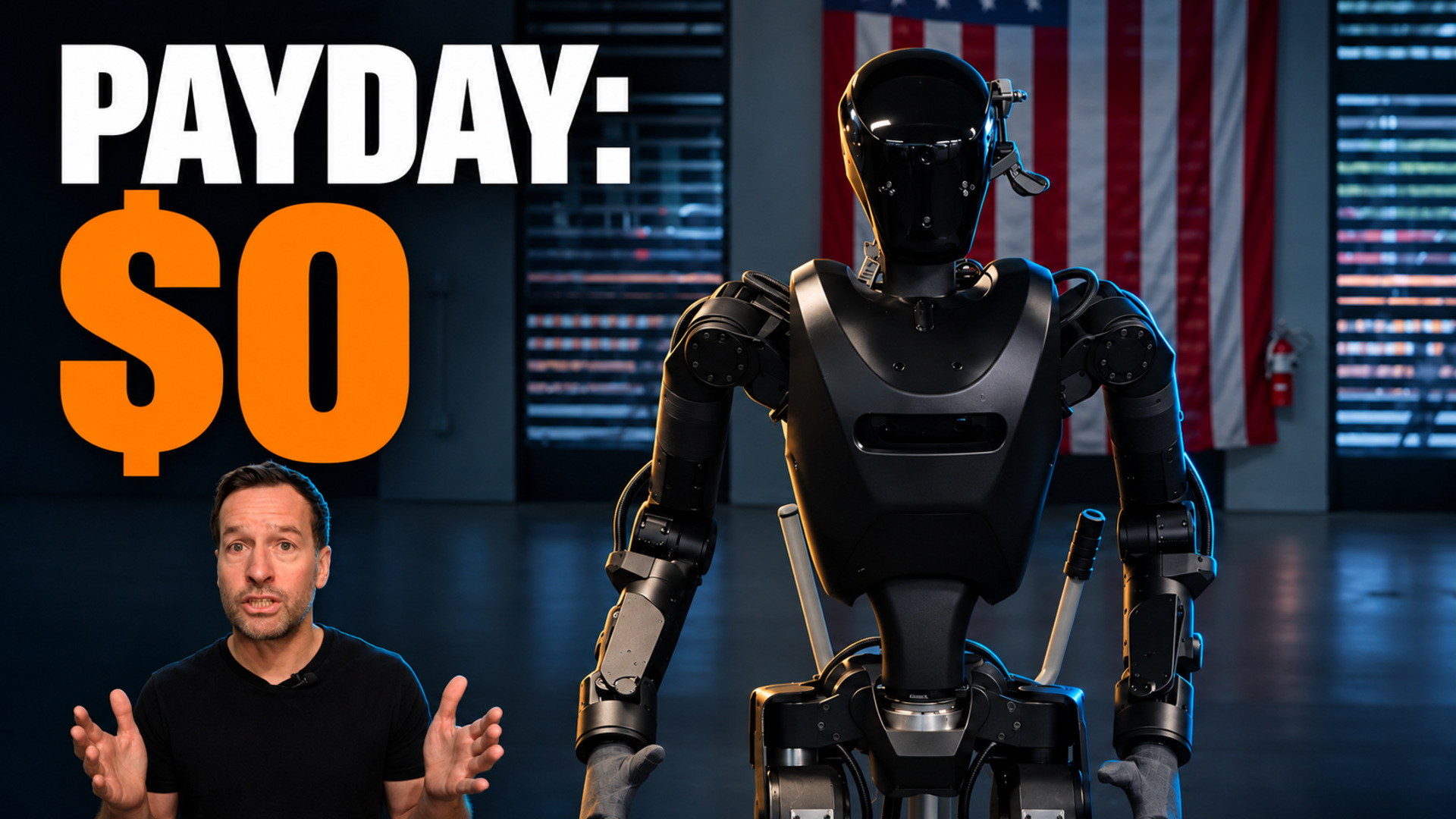
Foundation Future Industries: Key Facts
- Company: Foundation Future Industries, San Francisco, founded April 2024
- Robots: the Phantom MK-1 humanoid, with the bigger Phantom MK-2 just unveiled
- Pitch: humanoids for factories and the battlefield
- Contracts: about $24 million in research contracts with the US Army, Navy and Air Force
- Missed payroll: October 30, 2026, with staff still unpaid as of November 14 (CNBC)
- The twist: CEO Sankaet Pathak borrowed $4.6 million from the company to buy a California home
The Robot Soldier Company That Ran Out of Money
On paper, Foundation Future Industries looks like one of the hottest names in humanoid robotics. It builds the Phantom, a full-size humanoid it markets for heavy industrial work and military missions. It has landed Pentagon research contracts to test robots for breaching enemy positions. It also has well-known backers. Plus, it has been trying to raise hundreds of millions of dollars at a valuation of around $3 billion.
But then October 30 came around. Payday. And nobody got paid.
It wasn’t the first wobble, either. CNBC’s sources say the company also ran short of payroll cash back in August, when staff waited a couple of days for a bridge loan from an existing investor to land. Two payroll scares in three months is not what you want from the company promising to build the strongest humanoid in the world.
Foundation Future Industries’ $4.6 Million Twist
Here’s where it gets awkward. Last year, CEO Sankaet Pathak took a $4.6 million loan from the company, and the money went toward buying a home in California. CNBC also reports that Pathak is the company’s only board member and owns most of its shares, which means there’s nobody else in the boardroom to ask questions.
Pathak didn’t respond to CNBC’s requests for comment. The robots, of course, haven’t noticed a thing. They’ve never been paid in their lives.
What This Means for You
The humanoid gold rush is very real. Money is pouring into robotics startups, makers launch new robots almost weekly, and every startup claims theirs is the one. But a robot is only ever as good as the company standing behind it. So if that company runs out of cash, your shiny new humanoid can quickly become a very expensive coat stand.
The lesson from Foundation Future Industries? Before you buy, lease or sign up for any robot, ask three simple questions:
- Who services it? Is there a real support team, ideally near you?
- Who has the spare parts? And how fast can they get them to you?
- Will that company still be answering the phone next year? Check who’s funding them and how long they’ve been trading.
That’s exactly what our sponsor, Robot Center, does. They help businesses choose robots from makers that are built to last, then certify, install and support them properly. Check them out at robotcenter.co.uk.
Watch the Video: Foundation Future Industries Explained
Frequently Asked Questions
What is Foundation Future Industries?
Foundation Future Industries is a San Francisco robotics startup, founded in 2024, that builds the Phantom humanoid robot for industrial work and military applications.
Did Foundation Future Industries miss payroll?
Yes. CNBC reported on November 14, 2026 that Foundation missed its October 30 payroll and that employees still hadn’t received their pay two weeks later. In addition, the company ran short of payroll cash in August.
What is the Phantom robot?
Phantom is Foundation’s humanoid robot. Foundation has shown the Phantom MK-1 in testing and demonstrations, and it has now unveiled a larger Phantom MK-2 aimed at factories and defense.
How do I choose a reliable robot supplier?
Look beyond the demo video. Check who services the robot, where the spare parts come from, how the company is funded, and whether it has a track record of supporting customers. For example, a specialist integrator such as Robot Center can help you compare suppliers.
Source: CNBC, November 14, 2026. I’m Phil, and this has been RoboPhil Daily.