

Argus and the Future of Robotics: Why a 20-Legged Robot Could Change How We Build Machines
Robotics is entering a fascinating new phase.
For decades, many of the most recognizable robots have been inspired by nature. Humanoid robots copy the human body. Quadruped robots copy dogs and other four-legged animals. Snake robots copy snakes. Drone designs often borrow ideas from birds, insects, or aircraft.
That approach makes sense. Nature has had millions of years to test movement, balance, survival, and adaptation.
But what if the next major leap in robotics does not come from copying biology?
What if the future of robotics comes from mathematics?
That is what makes Argus so interesting.
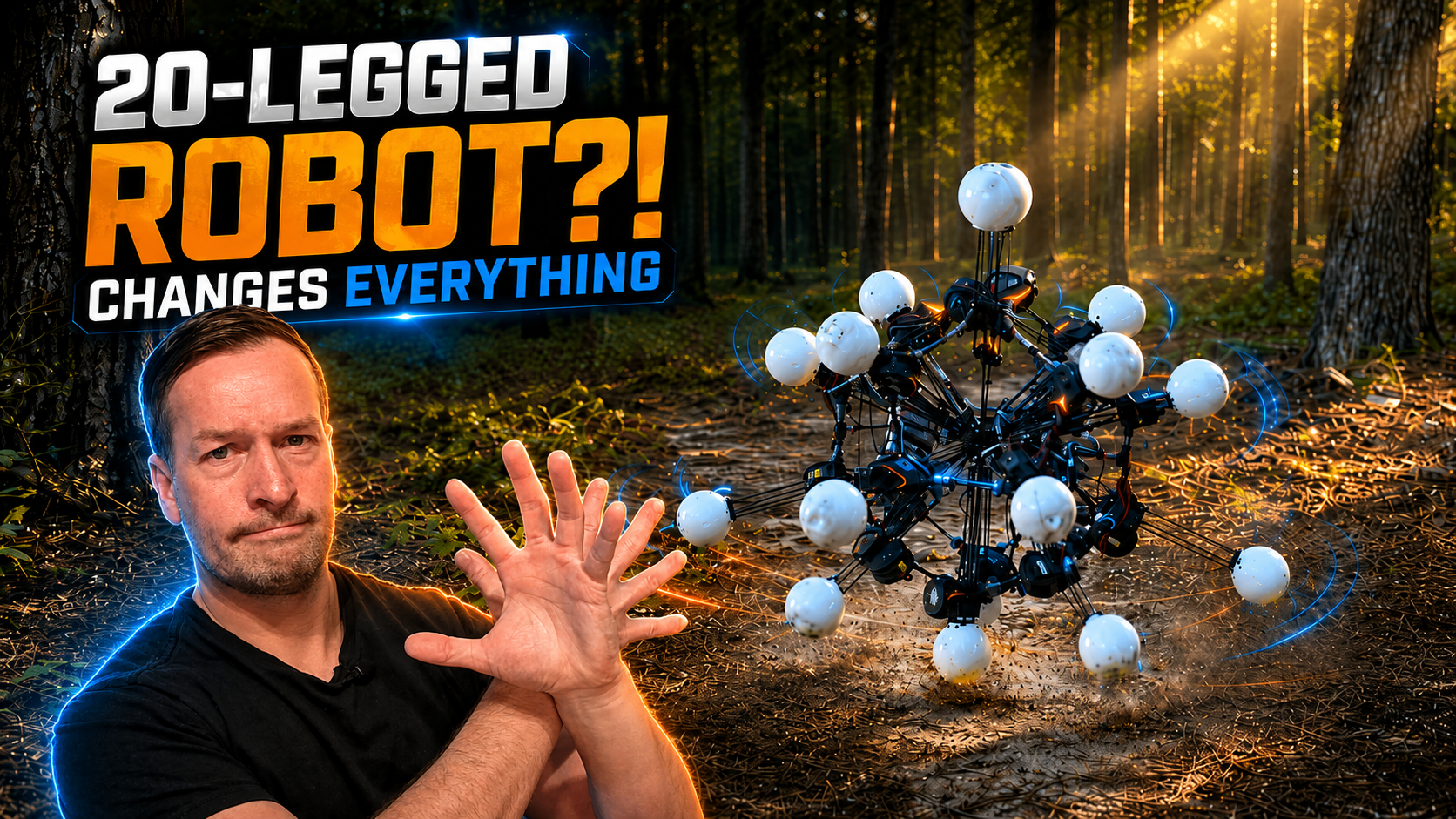
Argus is a strange 20-legged robot developed by researchers at Duke University. It does not look like a human. It does not look like a dog. It does not even look like a typical machine. It looks more like a rolling mechanical sea urchin, or a piece of geometry that woke up and decided to go for a walk.
At first glance, it looks unusual.
But the real story is not that Argus is weird.
The real story is that Argus represents a different way of thinking about robotics technology. Instead of designing a robot around a familiar body shape, the researchers designed it around mathematical symmetry, movement capability, and resilience.
That matters because the real world is not tidy.
Factories are complex. Warehouses are unpredictable. Construction sites are chaotic. Disaster zones are dangerous. Industrial facilities are full of obstacles, edges, gaps, stairs, equipment, surfaces, and awkward spaces.
The robots that succeed in those environments may not be the ones that look the most human.
They may be the ones that move the best.
What Is Argus?
Argus is a 20-legged robot built to move and sense its environment in many directions at once.
The robot was developed by Duke University researchers exploring a design idea called dynamic symmetry. Rather than copying a biological creature, the team asked a more fundamental question: what robot shape can move effectively in every direction?
That is a powerful question.
Most robots have a clear front and back. A humanoid robot faces forward. A quadruped robot usually walks in a preferred direction. A wheeled robot generally drives forward, reverses, and turns. Even many drones have movement preferences based on their shape, motors, and control systems.
Argus challenges that assumption.
Its 20 telescoping legs are arranged around a central body. Each leg can extend and retract, allowing the robot to push, balance, move, recover, and adapt. The robot also uses distributed sensing, including depth-sensing cameras, to understand its surroundings from multiple directions.
In simple terms, Argus does not need to face the world in one fixed way.
It can respond from almost any orientation.
That is why it feels so different from many other robots. It is not just another walking machine. It is a robot designed to be less dependent on direction, posture, and traditional body layout.
Why the Name Argus Matters
The name Argus comes from Greek mythology. Argus Panoptes was a many-eyed giant, often described as an all-seeing figure.
That name is appropriate because this robot is designed around multi-directional perception and movement. It is not simply trying to walk forward like a person or trot like a dog. It is designed to see, move, and react from many angles.
That concept is important for the future of robotics.
A robot operating in the real world cannot always rely on clean paths, predictable surfaces, or perfect positioning. It may be pushed, blocked, tilted, damaged, or forced into unusual positions.
In those situations, traditional robots can struggle.
Argus suggests a different direction: build robots that are less fragile in the face of uncertainty.
The Big Idea: Dynamic Symmetry
The most important concept behind Argus is dynamic symmetry.
In normal language, this means designing a robot so it can move and accelerate its body evenly in many directions.
This is different from simply making something symmetrical in appearance.
A robot can look symmetrical and still move poorly. What matters is whether its motors, legs, sensors, and body structure allow it to act with similar strength and control no matter which direction it needs to move.
That is where Argus becomes interesting.
The researchers use a measure called dynamic isotropy. This measures how evenly a robot can accelerate its center of mass in different directions. A higher score means the robot can move more uniformly in all directions.
Argus reportedly achieved a dynamic isotropy score of 0.91, close to the theoretical maximum of 1. That is significant because many conventional robots, including humanoids, quadrupeds, and drones, score much lower.
For business leaders, the technical detail matters less than the practical implication.
A robot with high dynamic symmetry may be more adaptable, more resilient, and better suited to unpredictable environments.
That is where the commercial opportunity begins.
Why Argus Is Different From Humanoid Robots
Humanoid robots are currently receiving enormous attention.
Companies are developing robots that can walk on two legs, carry objects, interact with humans, and potentially work in factories, warehouses, homes, hospitals, and retail spaces. Humanoid robots are compelling because the world was built for human bodies.
Doors, tools, shelves, handles, stairs, vehicles, and workstations all assume human proportions.
That is why humanoid robots make sense in some environments.
But humanoid robots are not the only future.
Argus reminds us that copying the human body is not always the best answer.
A humanoid robot has advantages when it needs to use human tools or operate in human-designed spaces. But it also has disadvantages. Bipedal movement is difficult. Balance is hard. Falls can be damaging. Legs, arms, hands, sensors, batteries, and control systems all need to work together in a very complex way.
For many applications, a human-shaped robot may be unnecessary.
If the goal is inspection, exploration, rescue, mapping, monitoring, or movement through rough terrain, a robot does not need to look like a person.
It needs to survive the job.
That is why Argus is commercially important. It broadens the conversation beyond humanoid robots and asks a more practical question:
What is the best robot body for the task?
Why Businesses Should Pay Attention
At first, Argus may look like a research project with limited commercial relevance.
But that would be a mistake.
Many major robotics trends begin as unusual prototypes. Early drones looked experimental. Early warehouse robots looked simple. Early collaborative robots were treated with skepticism. Early humanoid robots looked awkward and impractical.
Over time, useful ideas mature.
The commercial value of Argus is not necessarily that every business will soon buy a 20-legged robot. The value is in the design principle.
Argus points toward robots that are:
- More adaptable
- More resilient
- Less dependent on perfect orientation
- Better at navigating complex environments
- More capable in unpredictable situations
- Designed around function rather than appearance
That has direct implications for industries where reliability and mobility matter.
Search and Rescue Robotics
One of the clearest potential applications for Argus-style robots is search and rescue.
Disaster environments are chaotic. Buildings collapse. Roads break. Surfaces become unstable. Debris blocks normal movement. Visibility can be poor. Robots may need to climb, crawl, roll, push, squeeze, or recover after impacts.
Traditional wheeled robots may struggle with debris.
Drones may struggle indoors, underground, or in tight spaces.
Legged robots may struggle if they fall, get stuck, or encounter awkward terrain.
A robot based on dynamic symmetry could be useful because it does not rely on a single preferred orientation. If it rolls, tips, or gets knocked over, it may still be able to move.
That could make future rescue robots more useful in dangerous conditions where sending people is risky.
Inspection Robots and Industrial Environments
Inspection robotics is another area where Argus-style thinking could become commercially valuable.
Industrial sites often include hard-to-reach spaces. Energy facilities, factories, chemical plants, mines, tunnels, pipelines, ships, rail infrastructure, and construction sites all require regular inspection.
The challenge is not just sensing.
It is access.
A robot may need to move across uneven surfaces, climb through awkward areas, work around machinery, avoid obstacles, and continue operating if conditions are poor.
Today, many inspection robots are designed for specific environments. Some are wheeled. Some are tracked. Some are drones. Some are quadrupeds.
But many remain limited by terrain and orientation.
A future robot using the principles behind Argus could potentially inspect environments that are too complex for conventional machines. It could move in many directions, recover from impacts, and use distributed sensing to understand its surroundings.
For businesses, that could reduce inspection costs, improve safety, and increase the frequency of monitoring.
Construction and Infrastructure
Construction sites are some of the hardest environments for robots.
They are constantly changing. Materials move. Surfaces are uneven. Obstacles appear. Dust, vibration, weather, and human activity create difficult operating conditions.
This is one reason robotics adoption in construction has been slower than in more structured environments like factories and warehouses.
A robot that is highly adaptable could be useful for site monitoring, surveying, mapping, material movement, safety inspection, or progress tracking.
The same applies to infrastructure.
Bridges, tunnels, railways, industrial buildings, power stations, ports, and remote facilities all need inspection and maintenance. Robots that can survive unusual terrain could create major value.
Argus does not solve every problem today, but it points toward a future where robots are designed less like showroom machines and more like rugged tools.
Warehouse and Logistics Automation
Warehouses are often seen as structured environments, but anyone who has worked in logistics knows they can be messy.
Boxes move. Pallets shift. Floors become crowded. Human workers, forklifts, conveyors, shelves, and autonomous mobile robots all operate in shared space.
Most warehouse robots today are designed for controlled tasks. They move goods, transport shelves, pick items, scan inventory, or support packing operations.
Argus-style robots may not replace those systems directly. However, the design principles could influence future warehouse robots that need to navigate clutter, recover from physical contact, and operate in less structured spaces.
The commercial lesson is clear: as automation expands beyond clean, predictable tasks, robot mobility will become more important.
The next stage of warehouse automation may require robots that can handle exceptions, not just ideal workflows.
Defense, Security, and Hazardous Environments
Robots are increasingly being considered for dangerous work.
This includes defense, security, nuclear inspection, chemical facilities, firefighting, disaster response, mining, offshore energy, and contaminated environments.
In these settings, the commercial and social value of robots is simple: keep humans away from danger.
But dangerous environments are rarely tidy.
A robot may need to move through smoke, rubble, uneven ground, narrow spaces, broken infrastructure, or hazardous materials. It may be pushed, damaged, or forced to operate with partial failure.
Argus is interesting because it demonstrates resilience as a design goal.
A robot that can continue working after losing some function is commercially valuable. It reduces mission failure. It improves safety. It increases trust.
For robotics companies, this is an important strategic point. Buyers do not just want impressive demos. They want machines that keep working when conditions are difficult.
Space Exploration and Extreme Terrain
Another potential application for Argus-style robots is space exploration.
Planetary surfaces are rough, uncertain, and remote. Robots sent to the Moon, Mars, or other environments cannot rely on human rescue if they get stuck.
Traditional rovers have been extremely successful, but they still face limits. Terrain, slopes, rocks, sand, and mechanical failure can restrict mobility.
A robot that can move in multiple directions, recover from unusual positions, and continue operating after partial damage could be valuable for extraterrestrial exploration.
Even if Argus itself is not destined for space, the principle matters.
Future robotics technology for extreme environments may need to be designed around resilience and adaptability rather than familiar movement patterns.
The Shift From Biological Inspiration to Mathematical Design
One of the most interesting parts of the Argus story is the shift from biological inspiration to mathematical design.
Biomimicry has played a major role in robotics. Engineers study animals because animals are good at moving through the world. Birds fly. Fish swim. Insects crawl. Humans manipulate tools. Dogs and horses move efficiently over terrain.
But biology is not the only source of design intelligence.
Mathematics can reveal structures and movement patterns that nature did not produce, or that are not obvious from looking at animals.
Argus shows that robotics can be guided by performance objectives rather than appearance.
Instead of asking, “What animal should this robot copy?”
Engineers can ask:
- What movement capability do we need?
- What environment will the robot operate in?
- What failure modes must it survive?
- What body shape gives the best control?
- What sensing layout gives the best awareness?
- What design is most commercially useful?
That is a more mature way to think about robotics.
The Future of Robotics May Not Look Human
The robotics industry is currently fascinated by humanoid robots.
That fascination is understandable. Humanoids are easy to understand, easy to market, and potentially powerful if they can work in human environments.
But the future of robotics will not be one shape.
It will be many shapes.
Humanoid robots may work well in human spaces. Quadrupeds may work well for inspection and mobility. Drones may work well for aerial data capture. Autonomous mobile robots may work well in warehouses. Robotic arms may dominate manufacturing. Specialist service robots may operate in hospitality, healthcare, cleaning, security, and events.
Argus adds another idea to the mix.
Some future robots may be designed around extreme movement symmetry, resilience, and omnidirectional capability.
They may look strange.
But strange can be useful.
In business, usefulness wins.
Robotics Adoption: What Companies Should Learn From Argus
The biggest mistake companies make with robotics is starting with the robot.
They see a robot, get excited, and ask, “Can we use this?”
The better approach is to start with the problem.
What task needs to be automated?
What environment does it happen in?
How often does it happen?
How much does it cost?
How dangerous is it?
How predictable is it?
How much variation does the robot need to handle?
Argus is a reminder that robot design should follow the task.
If a business needs a robot for a clean production line, a traditional industrial robot arm may be the best solution.
If a business needs a robot for internal transport, an autonomous mobile robot may make sense.
If a company needs customer engagement, an event robot or service robot may be appropriate.
If a site needs inspection in rough environments, a rugged mobile robot may be better.
If the task requires operating in unpredictable, multi-directional, hazardous spaces, Argus-style design principles could become relevant.
The future of robotics consulting will increasingly be about matching the right robot body, intelligence, sensing, and deployment model to the right business problem.
AI Robots Need Better Bodies
Much of the public conversation around robotics focuses on artificial intelligence.
AI is important. Robots need perception, planning, reasoning, and decision-making. AI robots can understand environments, identify objects, interact with people, and adapt to changing conditions.
But AI alone is not enough.
A robot also needs a body that can perform the task.
This is one of the most important lessons in physical AI. Intelligence in software must connect to capability in hardware.
A robot may have excellent AI, but if it cannot move through the environment, manipulate objects, recover from mistakes, or survive real-world conditions, it will not be commercially useful.
Argus shows why morphology matters.
The shape of the robot affects what the AI can actually do.
In the future, robotics technology will not just be about smarter models. It will be about the integration of AI, sensors, actuators, materials, batteries, control systems, and body design.
That is where the next generation of AI robots will emerge.
Robotics Investment: Why Components and Design Principles Matter
Investors often focus on the most visible robotics companies.
Humanoid robot startups attract attention. Warehouse automation companies attract capital. AI robotics platforms generate headlines.
But the robotics industry is also shaped by less obvious breakthroughs.
Movement systems, sensor layouts, grippers, actuators, batteries, simulation tools, control software, safety systems, and deployment services can all become commercially valuable.
Argus is important because it highlights a design principle that could influence future robot platforms.
The immediate product may not be the investment opportunity. The underlying concept may be.
If dynamic symmetry improves mobility, robustness, energy efficiency, and task success, it could influence multiple categories of robotics.
That includes inspection robots, rescue robots, exploration robots, industrial robots, and future service robots.
For investors, the lesson is to look beyond the most human-looking machines.
The next major robotics company may not build a robot that looks like us.
It may build a robot that solves a painful operational problem better than anything else.
Challenges Slowing Adoption
Despite the promise, robots like Argus also highlight the challenges facing the robotics industry.
First, prototypes are not products.
A research robot can demonstrate a powerful concept, but commercial deployment requires reliability, manufacturability, support, safety, maintenance, integration, and cost control.
Second, unusual robots may face adoption barriers.
Businesses need to understand what the robot does, how it fits into their workflow, and why it is better than existing solutions. If a robot looks strange, it may need an even clearer business case.
Third, autonomy remains difficult.
Moving through rough environments is one challenge. Understanding tasks, making decisions, avoiding people, handling edge cases, and integrating with business systems are additional challenges.
Fourth, companies need deployment expertise.
Buying a robot is not the same as successfully using a robot. Businesses need process analysis, site assessment, staff training, safety planning, maintenance support, and long-term robotics strategy.
That is why robotics consulting is becoming more important as the industry grows.
The Role of Robotics Consulting
As robotics becomes more diverse, businesses need help understanding the options.
There is no single robot that solves every problem.
A manufacturing company may need industrial automation. A warehouse may need mobile robots. A retailer may need customer-facing service robots. An event agency may need robots for engagement. A facilities company may need inspection robots. A healthcare provider may need service or support robots.
The challenge is choosing the right solution.
Robotics consulting helps businesses identify where robots can create real value, avoid expensive mistakes, and build a practical adoption roadmap.
This includes:
- Identifying suitable use cases
- Comparing robot platforms
- Assessing return on investment
- Planning deployment
- Understanding staff impact
- Managing risk
- Supporting training and adoption
- Creating a long-term automation strategy
Argus is a useful example because it shows why companies should not judge robots only by appearance.
The right robot may look unusual.
What matters is whether it solves the problem.
RoboPhil Perspective: Robotics Is Becoming More Practical and More Diverse
Philip English, known as RoboPhil, works across the robotics industry through Robot Center, Robots of London, and Robot Philosophy.
That experience covers commercial robots, robot hire, robot deployment, robotics consulting, robot events, automation strategy, robotics insights, and support for businesses exploring how robots can be used in the real world.
From a RoboPhil perspective, Argus represents an important shift.
The robotics industry is moving beyond simple demonstrations and into practical deployment questions. Businesses are no longer just asking whether robots are impressive. They are asking whether robots can reduce costs, improve safety, increase productivity, attract attention, generate leads, support staff, and create new business models.
That is the key transition.
Robotics is no longer only about the technology.
It is about the application.
A robot like Argus may not be appearing in every warehouse or factory tomorrow. But it challenges business leaders to think differently about what a robot can be.
The future may include humanoid robots, but it will also include robots designed specifically for inspection, events, logistics, healthcare, manufacturing, retail, construction, agriculture, defense, and exploration.
The winners will be the companies that understand the difference between novelty and utility.
What Happens Next in Robotics?
The next decade of robotics will be defined by several major trends.
AI robots will become more capable as artificial intelligence improves perception, planning, and interaction.
Humanoid robots will continue to attract investment as companies try to build general-purpose machines for human environments.
Industrial robotics will expand beyond traditional manufacturing into new sectors.
Service robots will become more common in hospitality, healthcare, retail, cleaning, security, and events.
Robotics startups will continue developing specialist machines for specific problems.
Robotics consulting will become more important as businesses try to separate hype from practical opportunity.
And robot design will become more diverse.
Argus fits into that final trend.
It suggests that the future of robotics may include machines that look nothing like the robots people expect.
Some will be human-shaped.
Some will be animal-inspired.
Some will be simple, practical, and highly specialized.
And some may be guided by mathematics rather than biology.
That is exciting because it means robotics is still wide open.
We are not simply waiting for one universal robot to arrive.
We are building an ecosystem of machines designed for different jobs, different environments, and different business models.
Why Argus Matters Commercially
The commercial importance of Argus is not that every business needs a 20-legged robot.
The commercial importance is that it expands the design space.
It shows that robots can be built around resilience, symmetry, and omnidirectional capability.
That could influence how future robots are designed for environments where traditional movement systems are limited.
For companies, this matters because automation is moving into harder spaces.
The first wave of automation focused on repetitive, structured tasks. Factory robot arms could work in fixed cells. Warehouse robots could move goods through controlled spaces. Software automation could handle digital processes.
The next wave is harder.
Robots are being asked to operate in messy physical environments.
That requires better bodies, better sensing, better AI, and better deployment strategy.
Argus is part of that bigger story.
It is a signal that the robotics industry is still discovering new ways to build machines.
Conclusion: The Future of Robotics May Be Stranger Than We Think
Argus is one of those robots that looks unusual at first, but becomes more important the longer you think about it.
It challenges the assumption that robots should copy humans or animals. It shows that mathematical symmetry can be a powerful design principle. It reminds us that robot bodies matter just as much as robot brains.
For businesses, the lesson is practical.
Do not focus only on the robot that looks impressive.
Focus on the robot that solves the problem.
As robotics technology advances, the most valuable machines may not be the ones that look familiar. They may be the ones that move through difficult environments, recover from failure, reduce risk, support workers, and create measurable business value.
The future of robotics will include humanoid robots, AI robots, industrial robots, service robots, inspection robots, event robots, and many machines that do not fit neatly into today’s categories.
Some will look elegant.
Some will look strange.
Some may have 20 legs.
What matters is whether they work.
Work With RoboPhil
If your business is exploring robotics, automation, AI robots, robot deployment, robot sourcing, robotics consulting, or future technology strategy, RoboPhil can help you understand the market and identify practical opportunities.
Robot Center
https://robotcenter.co.uk/
Robots of London
https://robotsoflondon.co.uk/
Robot Philosophy
https://robophil.com/
Business enquiries
sales@robotcenter.co.uk