

Robot Monks in Seoul: How AI Robots Are Moving From Factories Into Culture, Events, and Everyday Life
Robots are no longer only found behind factory fences, inside warehouses, or on carefully controlled production lines. They are walking into public spaces, joining events, interacting with crowds, and becoming part of cultural moments that would once have seemed impossible.
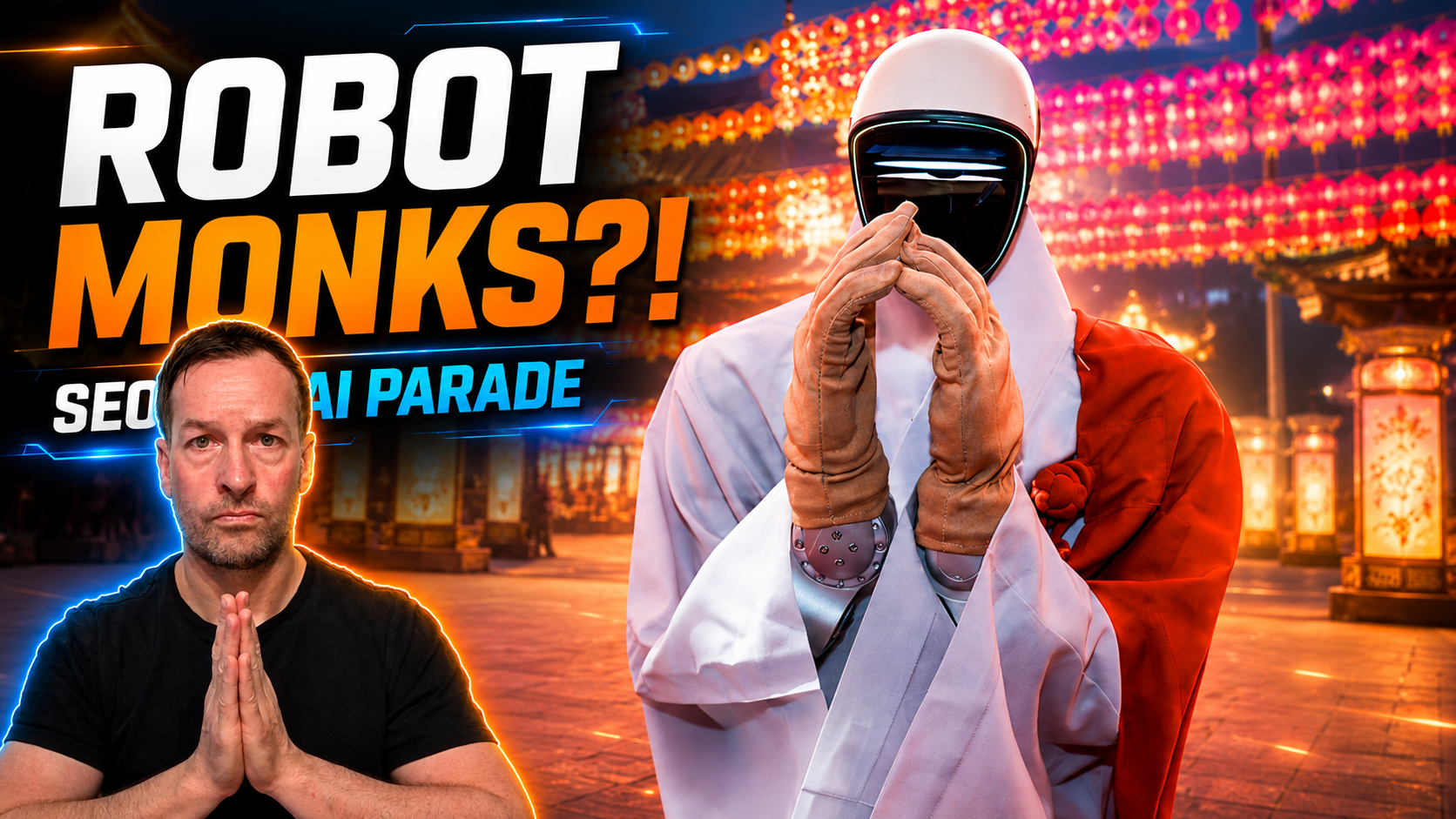
One of the most fascinating recent examples came from South Korea, where thousands of people watched robot monks march through the historic streets of Seoul during a major Buddhist lantern procession.
The robots, named Gabi, Seokga, Mohee, and Nisa, walked through the Jongno district alongside performers, dancers, monks, and long lines of illuminated lotus lanterns. The event was connected to the Jogye Order, the largest Buddhist sect in South Korea, and formed part of a wider celebration involving around 50,000 participants and nearly 100,000 handmade lanterns.
At first glance, the story sounds like something from a science fiction film.
Robot monks. Ancient streets. Traditional robes. Glowing lanterns. Artificial intelligence meeting Buddhist ritual.
But beneath the novelty is a serious robotics industry signal.
This is not just a quirky headline. It is a glimpse into the next phase of robotics adoption: robots becoming part of culture, public engagement, education, tourism, events, religion, customer experience, and brand storytelling.
For businesses, this matters.
Because the future of robotics is not only about replacing repetitive tasks. It is also about creating attention, building experiences, starting conversations, and helping organizations connect with people in new ways.
Why Robot Monks Matter
The idea of robot monks walking through Seoul is unusual enough to capture attention immediately. But the reason this story matters is not simply because robots were dressed in robes.
It matters because it shows how robotics technology is entering spaces that are deeply human.
Religion, culture, tradition, ceremony, and public gathering are not areas people usually associate with automation. When most people think about robots, they imagine industrial robots welding car parts, warehouse robots moving boxes, or humanoid robots demonstrating impressive but carefully rehearsed movements.
The robot monks in Seoul tell a different story.
They show that robots can be used not only as tools, but as symbols. They can become part of a public conversation about technology, tradition, ethics, and the future of society.
One of the robots, Gabi, reportedly underwent a symbolic ordination ceremony at Jogyesa Temple in downtown Seoul. During this ceremony, the robot pledged to follow adapted Buddhist principles, including respect for life and responsible use of technology.
That is a powerful idea.
It suggests that robotics is not just a technical industry. It is becoming a cultural industry. It is becoming a social industry. It is becoming part of how communities express identity, modernity, and change.
For business leaders, this is important because it widens the definition of what robots can do.
A robot does not always need to lift, sort, carry, weld, clean, deliver, or inspect.
Sometimes a robot’s job is to attract attention.
Sometimes it is to explain an idea.
Sometimes it is to create a memorable experience.
Sometimes it is to make people stop, look, think, and talk.
That is commercially valuable.
The Current State of Robotics
The robotics industry has changed dramatically over the last decade. Robots were once mostly associated with heavy industry, especially automotive manufacturing, electronics, and large-scale production.
That world still exists, and industrial robots remain a vital part of automation. Robot arms, collaborative robots, automated guided vehicles, autonomous mobile robots, machine vision systems, and inspection robots continue to transform factories, warehouses, and logistics operations.
But robotics is now expanding far beyond traditional industrial automation.
We are seeing growth in service robots, delivery robots, cleaning robots, healthcare robots, hospitality robots, agricultural robots, security robots, educational robots, entertainment robots, humanoid robots, and AI-powered customer engagement robots.
This expansion is being driven by several forces.
Artificial intelligence has improved dramatically. Sensors are becoming cheaper and more powerful. Batteries are improving. Computer vision is more capable. Cloud systems allow robots to connect to wider business platforms. Businesses are under pressure to improve productivity, reduce labor shortages, and create better customer experiences.
At the same time, the public is becoming more familiar with robots.
A decade ago, seeing a robot in a hotel, shopping center, exhibition, or public event felt highly unusual. Today, it still creates attention, but it is no longer impossible to imagine. People are increasingly used to seeing robotics technology in videos, news stories, trade shows, warehouses, airports, hospitals, restaurants, and public demonstrations.
The Seoul robot monks are part of this wider shift.
They show that robots are moving from isolated technical environments into open human environments.
That is where the robotics industry becomes much more interesting.
From Automation to Experience
Most companies still think about robotics through the lens of automation.
That is understandable. Automation is one of the most obvious business cases for robots. If a robot can reduce labor costs, improve productivity, increase consistency, operate for long hours, reduce injuries, or handle repetitive tasks, then the commercial argument can be very strong.
However, the future of robotics is not only about automation.
It is also about experience.
A robot in a retail store might not only move products. It might greet customers, answer questions, promote offers, collect feedback, and create a memorable brand interaction.
A robot at an exhibition might not only display information. It might attract visitors to a stand, start conversations, deliver marketing messages, generate social media content, and increase dwell time.
A robot in a hotel might not only deliver towels. It might become part of the guest experience, making the hotel feel modern and memorable.
A robot in a museum might not only guide visitors. It might make education more interactive, especially for younger audiences.
A robot at a public festival might not only move through a crowd. It might become the story that everyone photographs, films, shares, and discusses.
That is what the robot monks in Seoul achieved.
They became the focal point of attention. They created curiosity. They helped modernize the image of a traditional institution. They connected an ancient celebration with a future-facing technology story.
In business terms, this is powerful.
Attention is valuable. Engagement is valuable. Differentiation is valuable.
Robots can deliver all three.
Why Businesses Are Investing in Robots
Businesses are investing in robotics for many different reasons. Some are looking for efficiency. Some are trying to solve labor shortages. Some want to improve safety. Some want to gather better data. Some want to improve customer experience. Some want to stand out from competitors.
The most successful robotics projects usually start with a clear problem.
In warehouses, the problem may be slow picking, rising labor costs, or difficulty recruiting staff for repetitive roles.
In manufacturing, the problem may be quality control, production speed, worker safety, or the need to increase output.
In healthcare, the problem may be staff pressure, patient logistics, cleaning, delivery, or remote monitoring.
In hospitality, the problem may be service consistency, novelty, guest engagement, or staff shortages.
In events, the problem may be attention. How does a brand stand out in a crowded exhibition hall? How does an agency create something memorable? How does a product launch generate social media content?
Robotics can help answer these questions.
But businesses need to think carefully.
A robot should not be purchased simply because it looks impressive. That is where many robotics projects go wrong. Companies buy the robot first and only later try to work out the business case.
A better approach is to start with the objective.
What problem are we solving?
What outcome do we want?
What environment will the robot operate in?
Who will interact with it?
What data will it collect?
What process will it improve?
What return on investment are we expecting?
What happens if the robot fails, gets stuck, confuses people, or needs support?
This is where robotics consulting becomes valuable. The robot itself is only one part of the project. The strategy, deployment, integration, training, maintenance, content, workflow, and commercial model matter just as much.
The Rise of AI Robots
Artificial intelligence is changing what robots can do.
Traditional robots followed programmed instructions. They were excellent at repeatable tasks in controlled environments. If the environment changed, the robot often struggled.
AI robots are different.
They can use machine learning, computer vision, natural language processing, sensor fusion, and decision-making systems to interact with more complex environments. This does not mean robots are suddenly human-level intelligent, but it does mean they are becoming more adaptable, more interactive, and more useful in real-world settings.
AI robots can recognize objects, understand speech, navigate spaces, identify people, respond to questions, learn from data, and perform tasks with increasing autonomy.
This is especially important for service robots and humanoid robots.
A humanoid robot in a public space does not just need motors and a plastic face. It needs to understand people. It needs to communicate. It needs to respond appropriately. It needs to operate safely. It needs to create trust.
That is difficult.
But progress is happening quickly.
The robot monks in Seoul are part of a broader trend where robotics technology is used to create interaction and meaning, not just mechanical output.
As AI improves, robots will become more capable of participating in human environments. They will not simply move through spaces. They will communicate, guide, entertain, assist, explain, and represent organizations.
That creates huge opportunities for businesses, but also important questions.
How should robots behave in public?
What should they say?
How transparent should they be about being machines?
How do we make sure they are useful rather than gimmicky?
How do we design robotic experiences that feel helpful, ethical, and commercially effective?
These questions will become increasingly important as AI robots move into everyday life.
Humanoid Robots and Public Acceptance
Humanoid robots are one of the most talked-about areas in robotics today. They attract huge attention because they resemble people and suggest a future where robots might work alongside humans in a wide range of environments.
However, public acceptance is one of the biggest challenges.
A robot arm in a factory does not need to be emotionally accepted by the general public. It simply needs to work safely and effectively.
A humanoid robot in a shopping center, hospital, school, temple, hotel, airport, or office has a different challenge. It must operate in a social environment. People will judge it not only by what it does, but by how it feels.
Does it seem helpful?
Does it seem strange?
Does it make people comfortable?
Does it create trust?
Does it create excitement?
Does it feel like a useful assistant or an unnecessary gimmick?
This is why public demonstrations like the robot monks in Seoul are important. They give people a chance to see robots in social and cultural settings. They normalize the presence of robots. They create discussion. They allow society to test its emotional response to machines in public life.
The reaction may not always be positive. Some people will be excited. Some will be amused. Some will be skeptical. Some may feel uncomfortable.
That is normal.
Every major technology goes through a social adjustment phase.
Cars, airplanes, computers, smartphones, and the internet all changed how people lived and worked. Robotics will do the same, but because robots occupy physical space, the emotional reaction can be stronger.
This is why businesses need to approach robotics adoption carefully.
A robot deployment is not only a technical project. It is a human project.
Robotics in Events and Public Engagement
One of the clearest commercial lessons from the Seoul robot monks story is the power of robots in events.
Events are crowded, noisy, competitive environments. Every brand is trying to attract attention. Every stand wants visitors. Every product launch wants visibility. Every exhibition wants memorable moments.
Robots are naturally attention-grabbing.
People stop to look. They film. They ask questions. They share content. They bring other people over. They remember the experience.
This makes robots highly useful for exhibitions, conferences, product launches, festivals, shopping centers, corporate events, and public campaigns.
But successful event robotics requires more than simply placing a robot in a room.
The robot needs a purpose.
It might welcome guests, deliver a message, guide visitors, promote a product, serve drinks, take photos, start conversations, entertain an audience, or create social media moments.
The content matters. The scripting matters. The environment matters. The support team matters. The safety plan matters. The backup plan matters.
A robot at an event should feel smooth, professional, and intentional. If it feels badly prepared, it can damage the brand rather than strengthen it.
The robot monks worked because they were connected to a powerful visual and cultural story.
Traditional robes. Historic streets. Lanterns. A major procession. A wider conversation about technology and modern society.
That is why the story spread.
For companies planning robotics events, the lesson is clear: the robot is not the whole story. The story around the robot is what makes it powerful.
Robotics, Culture, and the Modernization of Traditional Institutions
The Seoul robot monks also highlight another important trend: robotics as a tool for modernization.
Many traditional institutions face the same challenge. They need to stay relevant to younger generations without losing their identity.
This applies to religious organizations, museums, universities, cultural venues, charities, public institutions, historic sites, and even long-established companies.
Robots can help bridge the gap between tradition and innovation.
A robot can attract younger audiences who might not normally engage. It can create media attention. It can make an old institution appear more open to the future. It can generate discussion around important themes such as ethics, technology, responsibility, and social change.
But this must be done carefully.
Technology should not be used as a gimmick that weakens the meaning of a tradition. It should support the message, not replace it.
In the case of the robot monks, the symbolism is important. The robots were not simply wandering through a parade as a marketing stunt. They were connected to a broader effort to modernize the image of South Korean Buddhism and reflect on the growing role of artificial intelligence in daily life.
That is what makes the story meaningful.
The best robotics deployments are not just technically impressive. They are contextually intelligent.
They fit the environment.
They support the objective.
They create value for the audience.
They make people think.
Robotics Startups and the Business Ecosystem
The growth of robotics is also creating opportunities across the wider business ecosystem.
It is not only robot manufacturers that will benefit. The future of robotics will require integrators, consultants, trainers, recruiters, maintenance providers, software developers, AI specialists, event companies, marketing teams, safety experts, hardware suppliers, investors, and industry-specific deployment partners.
Robotics startups are emerging across many sectors, including logistics, healthcare, agriculture, construction, hospitality, retail, security, cleaning, education, and entertainment.
Investors are paying attention because robotics sits at the intersection of several major trends: artificial intelligence, labor shortages, automation, data collection, physical infrastructure, and productivity.
However, robotics is harder than software.
A software product can often scale quickly once it works. Robotics has to deal with hardware, manufacturing, safety, shipping, repair, installation, training, support, and real-world unpredictability.
That means robotics startups need more than clever technology. They need strong commercial strategy. They need clear use cases. They need reliable deployment models. They need customer education. They need partnerships.
This is where the robotics industry is still maturing.
Many businesses are interested in robots, but they do not yet know how to buy them, deploy them, manage them, or calculate return on investment.
Many robot manufacturers have impressive products, but they need help entering new markets, explaining their value, finding customers, and supporting deployments.
The gap between robot technology and business adoption is one of the biggest opportunities in the industry.
Challenges Slowing Robotics Adoption
Despite the excitement around robots, adoption is not always easy.
There are several common challenges.
The first is cost. Robots can require significant upfront investment, especially when hardware, software, training, integration, maintenance, and support are included.
The second is uncertainty. Many businesses are interested in robotics but unsure where to begin. They may not know which robot is suitable, whether the technology is mature enough, or how to build a business case.
The third is integration. A robot rarely operates in isolation. It may need to connect with existing workflows, staff, software systems, safety procedures, and physical environments.
The fourth is reliability. Real-world environments are messy. Floors are uneven. Lighting changes. People behave unpredictably. Objects move. Wi-Fi fails. Batteries run low. Doors get closed. Customers ask unexpected questions.
The fifth is staff acceptance. Employees may worry that robots are being introduced to replace them. Businesses need to communicate clearly and involve staff early in the process.
The sixth is overhype. Some companies expect robots to perform like science fiction machines. When reality is more limited, disappointment follows.
Good robotics strategy helps manage these challenges.
The goal is not to pretend robots can do everything. The goal is to identify where robots can create real value now, while preparing for where the technology is heading next.
The Business Case for Robots Beyond Automation
One of the biggest mistakes businesses make is assuming the only business case for robots is labor replacement.
Labor savings can be important, but they are not the only metric.
Robots can also deliver value through marketing impact, customer engagement, brand differentiation, data collection, safety improvement, consistency, staff support, operational visibility, and public relations.
For example, a robot at an event might not replace a human employee, but it could attract hundreds of visitors to a stand, generate leads, create social media content, and make the brand more memorable.
A robot in a hotel might not fully replace staff, but it could improve guest experience, handle simple deliveries, and create a premium technology image.
A robot in a museum might not replace educators, but it could help engage children and make learning more interactive.
A robot in a retail environment might not replace sales assistants, but it could guide customers, promote offers, and collect useful interaction data.
A robot in a public institution might not replace people, but it could make the organization appear modern, accessible, and innovative.
This is why the robot monks story is so important.
Their value was not based on productivity in the traditional sense. Their value was based on meaning, attention, symbolism, and engagement.
Businesses should pay attention to that.
Physical AI: Why the Next Stage of AI Is Robotic
Artificial intelligence has mostly been experienced through screens: chatbots, search tools, recommendation engines, image generators, software assistants, and digital platforms.
Robotics changes that.
Robots bring AI into the physical world.
This is sometimes described as physical AI: intelligent systems that can sense, move, interact, and act in real environments.
Physical AI is powerful because the real world is where most business activity actually happens. Goods move through warehouses. Patients move through hospitals. Customers enter stores. Visitors attend events. Products are manufactured, inspected, delivered, cleaned, and maintained.
AI on a screen can help with information.
AI in a robot can help with action.
That is why the combination of AI and robotics is so important.
As AI robots improve, businesses will be able to automate more complex tasks, create more interactive experiences, and connect digital intelligence with physical operations.
The robot monks are a symbolic example, but the same principle applies across industries.
Robots will increasingly appear in real spaces, not just digital systems.
They will become part of the visible business environment.
RoboPhil Perspective: Helping Businesses Understand Robotics
Philip English, known as RoboPhil, works across the robotics industry through Robot Center, Robots of London, and Robot Philosophy.
This work sits at the intersection of robot technology, business strategy, events, consultancy, and real-world deployment.
Through Robot Center, the focus includes robot consultancy, robotics consultancy, commercial robots, industrial robots, robot deployment, Robotics as a Service, and physical AI.
Through Robots of London, the focus includes robot hire, robot rental, exhibition robots, event robotics, and helping brands use robots for engagement.
Through Robot Philosophy, the focus includes robotics insights, robot advice, robotics strategy, robot recruitment, and helping businesses understand where robotics is heading.
From this perspective, the robot monks in Seoul are not just an amusing news story. They are a sign of the changing role of robots in society and business.
Robots are becoming tools for productivity, but also tools for communication.
They are becoming part of operations, but also part of brand identity.
They are becoming useful behind the scenes, but also powerful in front of audiences.
For businesses exploring robotics, the key question is not simply, “Which robot should we buy?”
The better question is, “What role could robotics play in our business, our customer experience, our operations, and our future strategy?”
That is where the real value begins.
What Happens Next in Robotics?
The future of robotics will be shaped by both practical adoption and public imagination.
In the short term, we will see more robots in warehouses, factories, logistics centers, hospitals, hotels, restaurants, retail spaces, airports, exhibitions, and events.
We will see more AI robots capable of conversation, navigation, object recognition, and customer interaction.
We will see more humanoid robots being tested for real business use cases, although widespread adoption will take time.
We will see more robotics startups targeting specific industry problems rather than trying to build general-purpose robots too early.
We will see more companies exploring robotics as a service, allowing businesses to access robots without large upfront purchases.
We will also see more public debate.
People will ask whether robots are taking jobs, improving safety, reducing pressure on workers, creating new roles, or changing human relationships with technology.
That debate is necessary.
Robotics is too important to be treated as a novelty. It will affect work, business, culture, education, healthcare, logistics, and daily life.
The companies that succeed will be those that approach robotics with both excitement and realism.
They will not adopt robots simply because they are fashionable. They will adopt robots because they understand where robots create value.
Conclusion: Robots Are Moving Into the Real World
The sight of robot monks marching through Seoul may seem unusual, but it points toward a much larger shift.
Robots are leaving the narrow spaces where they were once expected to stay.
They are moving into streets, ceremonies, events, workplaces, customer environments, and cultural institutions.
They are becoming part of how organizations communicate with the public.
They are becoming part of how businesses create experiences.
They are becoming part of how society imagines the future.
For business leaders, entrepreneurs, robotics companies, investors, and innovation teams, the message is clear.
Robotics is no longer just a manufacturing story.
It is a business strategy story.
It is a customer experience story.
It is a workforce story.
It is a brand story.
It is a future technology story.
And in some cases, it is even a robot monk walking peacefully through Seoul under thousands of glowing lanterns.
The future of robotics will be practical, commercial, cultural, and occasionally surprising.
Businesses that understand this early will have an advantage.
Work With RoboPhil
If your business is exploring robotics, automation, AI robots, humanoid robots, robot deployment, robot sourcing, robotics consulting, robotics industry insights, or automation strategy, RoboPhil can help you understand the opportunities and avoid the common mistakes.
Robot Center
https://robotcenter.co.uk/
Robots of London
https://robotsoflondon.co.uk/
Robot Philosophy
https://robophil.com/
Business enquiries
sales@robotcenter.co.uk