

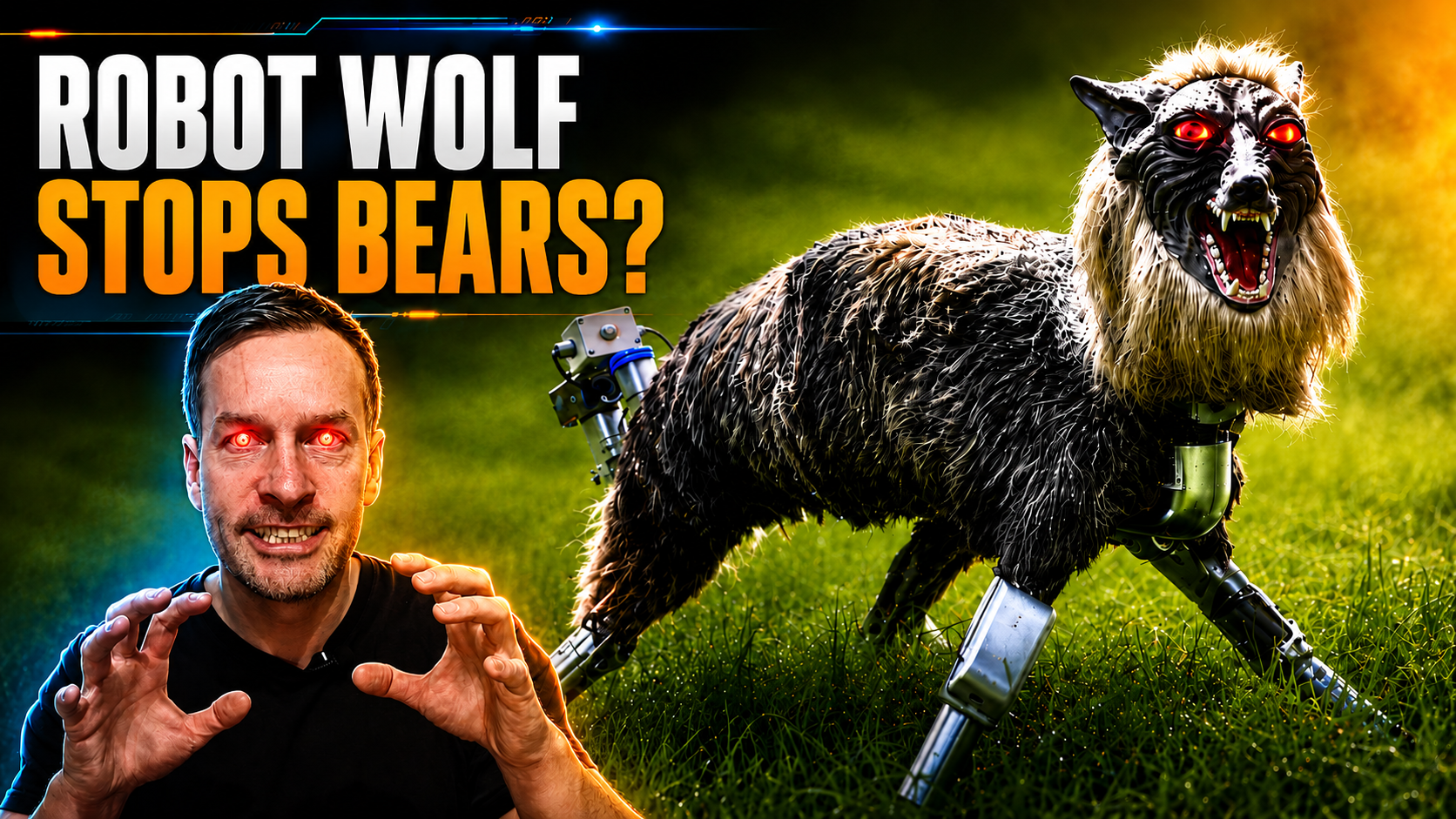
Japan’s Robot Wolves: What Bear-Scaring Robots Reveal About the Future of Robotics
Introduction: When Robotics Starts Looking Like Science Fiction
Japan is using robot wolves to scare off bears.
At first, that sounds like a strange headline from a science fiction film. A mechanical wolf with glowing eyes, frightening sounds, sensors, and a moving head sounds more like something built for a theme park than a serious public safety tool.
But this is exactly why the story matters.
The rise of Japan’s “Monster Wolf” robots is not just an odd robotics story. It is a powerful example of where robotics technology is going next. Robots are no longer limited to factory production lines, research labs, or futuristic demonstrations. Increasingly, robots are being designed for very specific real-world problems: keeping people safe, protecting farms, supporting workers, reducing risk, and solving tasks that traditional methods struggle to manage.
In Japan, bear encounters have become a growing public safety issue, with record numbers of sightings and attacks reported in recent years. In response, farmers, golf courses, construction sites, and rural communities have started turning to animatronic robot wolves as a non-lethal deterrent. The Monster Wolf, made by Hokkaido-based Ohta Seiki, uses flashing red eyes, recorded sounds, sensors, and movement to frighten wild animals away from human spaces. Demand has reportedly increased sharply as awareness of bear safety and wildlife damage has grown.
This may not be the kind of robot that gets as much attention as a humanoid robot, robot dog, warehouse robot, or AI-powered service robot. But in many ways, it is one of the clearest examples of the future of robotics: practical, targeted, commercial, and built around a specific need.
The lesson is simple. The future of robotics will not be defined only by robots that look human. It will be defined by robots that solve real problems.
The Robot Wolf: A Practical Robot With a Strange Appearance
The Monster Wolf is designed to look intimidating. It has artificial fur, an open-mouthed face, flashing LED eyes, speakers, sensors, and a moving head. When an animal gets close, it can produce howls, growls, human voices, electronic sounds, and other noises intended to scare animals away before they enter farms, villages, or other populated areas. Reports describe the device as an animatronic scarecrow rather than a fully autonomous mobile robot, although newer versions are being explored with wheels and patrol capabilities.
That description is important because it shows a different kind of robotics opportunity.
A robot does not need to have advanced arms, hands, legs, facial expressions, or conversational AI to be useful. Sometimes, the most commercially valuable robot is the one that performs a simple task reliably in a difficult environment.
In this case, the task is deterrence.
Traditional scarecrows have been used for centuries. Farmers have long relied on visual and sound-based deterrents to protect crops from birds and animals. The robot wolf is essentially a modern, sensor-driven, automated version of that old idea. It adds movement, sound variation, lights, and electronics to increase the psychological impact.
This is one of the most interesting aspects of modern robotics. Many successful robots are not entirely new ideas. They are old solutions upgraded with sensors, software, motors, batteries, connectivity, and AI.
The robot wolf does not need to debate philosophy, serve coffee, or walk like a human. It just needs to make a bear think twice.
Why Japan Is Turning to Robot Wolves
Japan has faced a serious rise in bear encounters, particularly in rural and northern areas. The Japan Times reported that bears killed 13 people across Japan in the 2025–2026 season, more than twice the previous high, while more than 50,000 bear sightings were recorded nationwide. The same report noted that sightings had increased sharply, with bears entering homes, schools, supermarkets, and hot spring resorts.
This creates a difficult problem for communities.
People need protection. Farmers need to protect crops. Outdoor workers need to reduce risk. Local governments need public safety measures. At the same time, there is also pressure to reduce unnecessary killing of wildlife and find more sustainable ways for humans and animals to coexist.
This is where robotics becomes valuable.
A robot wolf is not just a gimmick. It sits at the intersection of public safety, agriculture, wildlife management, automation, and environmental technology. It offers a way to reduce animal encounters without requiring a person to be physically present at all times.
That is a key business lesson for robotics adoption.
Robots create value when they reduce risk, reduce labour intensity, improve consistency, or make a task possible in places where people cannot be present all the time.
For rural areas dealing with wildlife, a robotic deterrent can work through the night, react to movement, and operate without needing a person to stand guard. This is exactly the type of job where robotics makes sense.
The Bigger Trend: Robots Designed for Specific Jobs
A lot of the media attention in robotics goes to humanoid robots.
Humanoid robots are exciting because they look like us. They suggest a future where robots may work in warehouses, factories, hospitals, hotels, restaurants, homes, and care environments. Companies developing humanoid robots are attracting major investment because the long-term potential is enormous.
But the robot wolf story highlights something equally important.
The future of robotics will also be built around highly specialised robots.
These robots may not look impressive at first. They may not have human-like bodies. They may not even look like “robots” in the traditional sense. But they will be designed to solve very specific problems in very specific industries.
Examples include:
Inspection robots for energy sites and factories.
Security robots for commercial buildings and public spaces.
Delivery robots for campuses and urban environments.
Agricultural robots for weeding, harvesting, spraying, and monitoring.
Cleaning robots for airports, hospitals, offices, and shopping centres.
Event robots for engagement, entertainment, and brand activation.
Warehouse robots for picking, moving, sorting, and inventory.
Service robots for hospitality, healthcare, and retail.
Wildlife deterrent robots for farms and rural communities.
The robotics industry is not moving in one direction. It is expanding in many directions at the same time.
That is why business leaders need to think more broadly about automation. The question is not, “When will robots replace humans?” The better question is, “Where can a robot solve a problem more safely, consistently, or efficiently than the current method?”
Robotics Adoption Is Becoming More Practical
For years, many people thought of robots as futuristic, expensive, and difficult to deploy.
That perception is changing.
Robotics adoption is becoming more practical because the components needed to build robots are improving. Sensors are cheaper. Batteries are better. Cameras are more powerful. AI is advancing quickly. Connectivity is more reliable. Software tools are improving. Manufacturing ecosystems are becoming more mature.
This does not mean every robot is ready for mass adoption. Many robots still struggle with cost, reliability, maintenance, regulation, and real-world complexity. But the direction is clear.
Robots are moving from demonstration into deployment.
The robot wolf is a good example because it does not try to solve every problem. It focuses on one problem: keeping wild animals away from human areas. It does not need to be perfect at everything. It only needs to be good enough at one useful task.
That is often how robotics markets develop.
The most successful early applications are usually narrow. They have a clear customer, a clear pain point, and a measurable benefit. Once the robot proves value in one area, the technology can expand into other markets.
This is the pattern we have seen in warehouse robotics, cleaning robots, inspection robots, delivery robots, and service robots. The first versions are often limited, but they create a foundation for future improvement.
AI Robots and the Next Generation of Deterrent Systems
The current Monster Wolf is primarily an animatronic deterrent system using sensors, movement, lights, and sound. But the next stage of this type of robotics could involve more advanced AI.
According to reports, Ohta Seiki is exploring future developments such as AI-powered bear-detection systems and more mobile versions that can patrol or chase animals away.
This is where the story becomes even more interesting.
Imagine a future version of the robot wolf connected to cameras, thermal sensors, cloud alerts, mapping systems, and AI image recognition. Instead of simply reacting to motion, it could identify whether the object is a bear, deer, boar, dog, person, or vehicle. It could log incidents, notify authorities, trigger different deterrent responses, and provide data to local councils, farmers, and wildlife management teams.
That is the difference between a basic robot and an intelligent robotic system.
The future of AI robots is not just about making robots talk like humans. It is about helping robots perceive, decide, respond, and integrate with wider systems.
In agriculture, AI robots could monitor crops, identify pests, detect disease, and adjust treatment.
In security, AI robots could detect unusual behaviour, patrol sites, and alert human teams.
In logistics, AI robots could optimise routes, track stock, and work alongside warehouse teams.
In public safety, AI robots could detect hazards, monitor remote environments, and reduce the need for humans to enter dangerous areas.
The robot wolf is a small but fascinating example of this direction. It shows how robotics technology can start with a simple function and evolve into a more intelligent system over time.
Humanoid Robots Are Not the Whole Story
Humanoid robots are one of the most exciting areas in robotics today. They are attracting attention because they could eventually operate in spaces designed for humans. If a robot has arms, legs, hands, cameras, sensors, and AI reasoning, it could theoretically perform many tasks across factories, warehouses, care homes, offices, and public environments.
However, humanoid robots are also extremely difficult.
Walking reliably is hard. Manipulating objects is hard. Working safely around people is hard. Battery life is hard. Cost is hard. Maintenance is hard. Training robots to understand messy real-world environments is hard.
This is why specialised robots will continue to be important.
In many cases, businesses do not need a humanoid robot. They need a robot that cleans a floor, moves goods, inspects a machine, greets visitors, serves drinks, carries tools, scans inventory, monitors a site, or scares wildlife away from a field.
A humanoid robot may one day perform many of these tasks. But until then, task-specific robots will continue to offer more immediate commercial value.
The robot wolf is a reminder that robotics does not have to copy the human body to be useful. In this case, it copies the idea of a predator. In other cases, robots may copy insects, dogs, vehicles, arms, carts, drones, or entirely new machine forms.
The future of robotics will be diverse.
Some robots will look like people. Some will look like animals. Some will look like machines. Some will be invisible inside buildings, logistics systems, or industrial processes.
What matters is not how they look. What matters is what they do.
Business Lessons From Japan’s Robot Wolves
There are several important lessons businesses can learn from the robot wolf story.
The first lesson is that robotics opportunities often begin with a very specific problem. A farmer does not buy a robot because it is futuristic. They buy it because it protects crops, reduces risk, saves time, or solves a costly issue.
The second lesson is that robots do not need to replace humans to be valuable. The robot wolf is not replacing a human worker in the traditional sense. It is filling a gap where continuous human presence would be difficult, expensive, or unsafe.
The third lesson is that psychology matters in robotics. The robot wolf works because of how animals respond to movement, light, sound, and perceived threat. In commercial environments, human psychology is also important. Robots used in events, hospitality, retail, and public spaces must be designed around how people react to them.
The fourth lesson is that adoption often accelerates when the problem becomes urgent. When bear sightings and attacks increase, demand for solutions rises. The same thing happens in business. Labour shortages, rising costs, safety concerns, productivity pressure, and competition all push companies to explore automation.
The fifth lesson is that niche robotics markets can become valuable. Not every robotics company needs to build a universal humanoid robot. Some of the strongest robotics businesses may come from solving narrow problems extremely well.
This is especially important for robotics startups.
A startup with limited resources may struggle to build a general-purpose robot. But it may succeed by focusing on a specific industry, customer, and use case. That could be agriculture, construction, logistics, inspection, healthcare, events, security, hospitality, or public safety.
Robotics Consulting: Why Businesses Need a Clear Strategy
Many companies are interested in robotics, but they do not know where to start.
They see videos of humanoid robots, AI robots, robot dogs, warehouse automation systems, service robots, and delivery robots. They understand that robotics is important, but they are unsure which solutions are realistic, affordable, reliable, or commercially useful.
This is where robotics consulting becomes valuable.
A good robotics strategy starts with identifying the right use case. The goal is not to buy a robot because it looks impressive. The goal is to understand the business problem first.
Where is the business losing time?
Where are people doing repetitive work?
Where are safety risks high?
Where are labour shortages affecting operations?
Where could automation improve consistency?
Where could robots create a better customer experience?
Where could robotics create marketing value or brand differentiation?
Once the use case is clear, the next step is robot sourcing, testing, integration, training, support, and measurement. Robotics adoption is not only about the robot itself. It is about the full ecosystem around the robot.
That includes hardware, software, maintenance, staff training, safety processes, customer experience, data, and return on investment.
The robot wolf works as a useful metaphor. It is not valuable simply because it is a robot. It is valuable because it is matched to a specific problem.
Businesses should think the same way.
RoboPhil Perspective: Seeing Robotics From the Real World
Philip English, known as RoboPhil, works across Robot Center, Robots of London, and Robot Philosophy, helping businesses understand robotics, automation, robot sourcing, events, and commercial robot deployment.
This real-world perspective matters because robotics looks very different in practice than it does in a promotional video.
A robot demo can be exciting. But successful adoption depends on asking practical questions.
Will the robot work in the actual environment?
Will staff use it properly?
Will customers respond positively?
Can it be maintained?
Does it solve a real problem?
Is the cost justified?
Can it be integrated into the business?
Is it a marketing tool, an operational tool, or both?
Through Robot Center, the focus is on robotics solutions, automation, and helping businesses explore the right robotic technologies. Through Robots of London, the focus includes robot hire for events, brand activations, and public engagement. Through Robot Philosophy, the focus is on robotics insights, consulting, education, and helping the market understand where robotics is going.
The robot wolf story is exactly the kind of example businesses should pay attention to. It shows that robotics is not just about the most advanced machine. It is about the right robot for the right job.
The Future of Robotics: More Robots in More Places
The next decade of robotics will be defined by expansion.
Robots will move into more industries, more buildings, more outdoor environments, more public spaces, and more everyday business operations.
Some of this growth will come from humanoid robots. Some will come from AI robots. Some will come from automation systems that do not look like traditional robots at all. Some will come from niche machines designed for one very specific job.
The robot wolf is a sign of this future.
It is unusual, memorable, and slightly strange. But it is also practical. It reflects a broader shift in robotics: away from abstract futurism and towards real-world deployment.
As robotics technology improves, we will see more machines designed for agriculture, public safety, environmental monitoring, construction, logistics, care, hospitality, education, entertainment, and security.
This will create opportunities for robotics companies, investors, entrepreneurs, engineers, consultants, and business leaders.
It will also create challenges.
Businesses will need to understand which robots are mature and which are still experimental. They will need to train teams, manage safety, calculate ROI, and rethink workflows. Governments and regulators will need to consider how robots operate in public and private spaces. Customers and workers will need to build trust with machines.
But the direction is clear.
Robotics is becoming part of the real economy.
Conclusion: The Future of Robotics Will Be Practical, Specific, and Everywhere
Japan’s robot wolves may look strange, but they represent something important.
They show that robotics does not always arrive in the form people expect. Sometimes the future looks like a humanoid robot. Sometimes it looks like a robot dog. Sometimes it looks like a warehouse automation system. And sometimes it looks like a terrifying mechanical wolf standing in a field, using flashing eyes and frightening sounds to keep bears away from people.
That is the real future of robotics.
It will not be one single robot that changes everything. It will be thousands of robots, designed for thousands of specific tasks, slowly becoming normal across industries.
For businesses, the opportunity is to start thinking now.
Where could robots reduce risk?
Where could robots save time?
Where could robots improve customer experience?
Where could robots support workers?
Where could robots create a competitive advantage?
The companies that ask these questions early will be better prepared for the next wave of automation.
Robotics is no longer just about the future. It is becoming a practical tool for solving real problems today.
For robotics consulting, robot sourcing, robotics industry insights, automation strategy, or support exploring how robots could work in your business, contact RoboPhil.
Robot Center
https://robotcenter.co.uk/
Robots of London
https://robotsoflondon.co.uk/
Robot Philosophy
https://robophil.com/
Business enquiries
sales@robotcenter.co.uk