

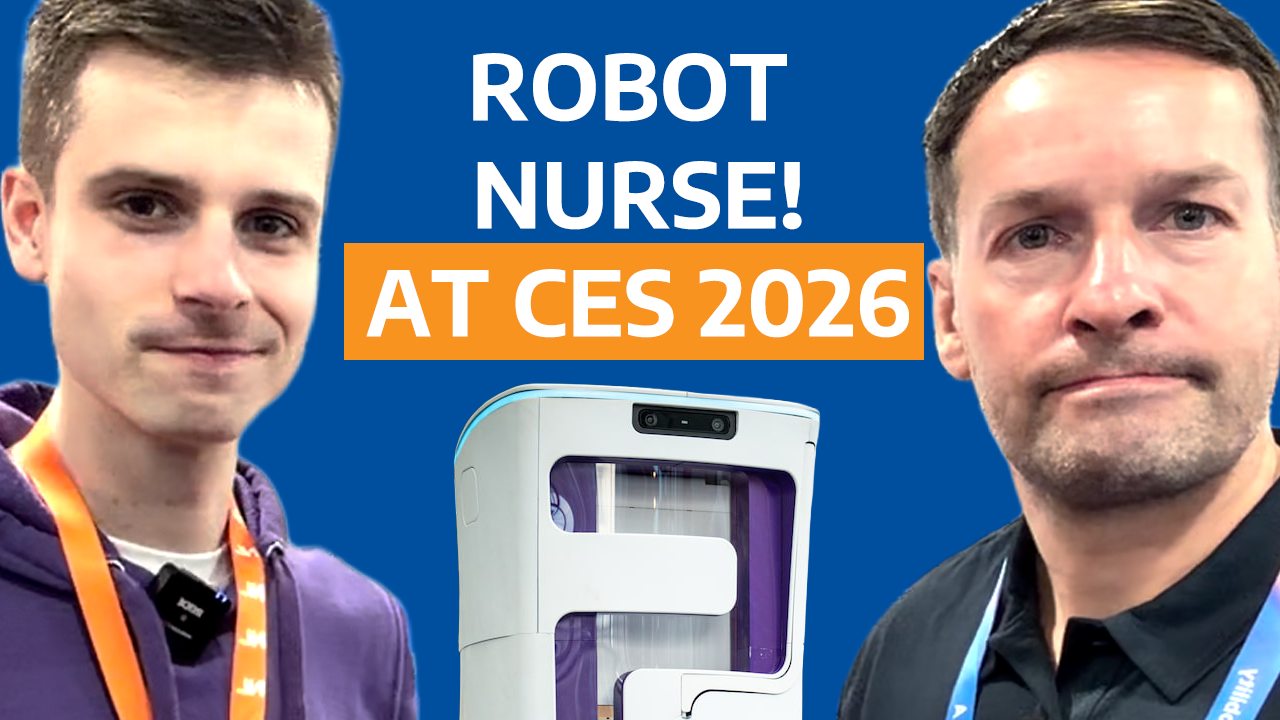
Ambyon Robot – CareBOTS: – Interview at CES 2026
AI Hospital Robots: How CareBOTS Are Transforming Healthcare Automation
Introduction
Healthcare is under pressure.
Staff shortages, rising demand, and increasing operational complexity are forcing hospitals to rethink how they operate. While much of the conversation around robotics focuses on humanoid robots and futuristic assistants, the real transformation is happening behind the scenes.
AI robots designed for logistics and automation are quietly reshaping healthcare environments.
One example is CareBOTS by Ambyon — a new generation of AI-powered robots built to handle internal hospital logistics. These robots don’t replace doctors or nurses. Instead, they remove the hidden inefficiencies that consume time, resources, and energy.
This shift represents a broader trend across the robotics industry: robots are moving from experimental concepts to practical tools that solve real business problems.
The Current State of Robotics in Healthcare
The use of robots in healthcare is not new. Surgical robots, automated pharmacy systems, and robotic assistants have been evolving for years.
However, a new category is emerging — autonomous logistics robots.
These AI robots are designed to transport medication, lab samples, medical equipment, and supplies across complex environments like hospitals. Unlike traditional automation systems, they operate dynamically, navigating busy corridors, interacting safely with humans, and adapting to changing conditions.
This marks a significant step forward in robotics technology.
Hospitals are no longer limited to fixed automation systems. They can now deploy mobile robots that integrate into existing workflows without major infrastructure changes.
The Hidden Problem: Logistics in Healthcare
One of the biggest inefficiencies in healthcare is not clinical — it’s logistical.
Studies suggest that up to 30% of hospital staff time is spent on non-clinical tasks such as transporting items between departments. This includes:
- Moving medication from pharmacies to wards
- Delivering lab samples for testing
- Transporting medical equipment
- Managing internal supply chains
These tasks are essential, but they do not require highly trained medical professionals.
This is where AI robots like CareBOTS create value.
By automating internal logistics, hospitals can free up staff to focus on patient care, improving both efficiency and outcomes.
How AI Robots Like CareBOTS Work
CareBOTS represent a new class of intelligent service robots.
They are equipped with advanced AI systems inspired by human cognition, allowing them to interpret their environment and make decisions in real time.
Key capabilities include:
Autonomous Navigation
Using 3D stereoscopic vision and sensors, these robots can:
- Navigate crowded hospital corridors
- Avoid obstacles and people
- Adapt to dynamic environments
This is a major advancement compared to earlier robotics systems that relied on fixed paths.
Predictive Movement
AI robots can anticipate human behaviour.
This allows them to move safely and efficiently in environments where people are constantly in motion, such as hospitals.
Task Automation
CareBOTS can be assigned specific tasks, such as:
- Delivering medication
- Transporting lab samples
- Moving equipment between departments
Once assigned, they can complete these tasks autonomously.
Integration with Hospital Systems
Modern robotics technology allows these robots to integrate with hospital workflows and digital systems, enabling seamless coordination.
Why Businesses Are Investing in Robotics
Healthcare is just one example of a broader trend.
Across industries, businesses are investing in robotics and automation for three main reasons:
1. Efficiency Gains
Robots can operate continuously without fatigue.
They reduce the time required for repetitive tasks and improve overall operational efficiency.
2. Labour Shortages
Many industries are facing workforce challenges.
AI robots provide a way to maintain productivity without relying solely on human labour.
3. Cost Optimisation
While robots require upfront investment, they can significantly reduce long-term operational costs.
In healthcare, this translates to better resource allocation and improved patient care.
The Shift from Humanoid Robots to Practical Automation
Humanoid robots often capture public attention.
They represent the idea of robots replacing humans in visible roles.
However, the real growth in the robotics industry is happening in less visible areas.
Service robots and logistics robots are being deployed in:
- Warehouses
- Hospitals
- Airports
- Retail environments
These robots are not designed to look human.
They are designed to solve specific problems efficiently.
This is a critical distinction.
The future of robotics is not just about humanoid robots. It is about intelligent automation embedded into everyday operations.
Real-World Applications Beyond Healthcare
The same principles behind CareBOTS apply to many industries.
Logistics and Warehousing
Robots are used to move goods, manage inventory, and optimise supply chains.
Retail
Automation is being introduced for stock management, customer assistance, and order fulfilment.
Hospitality
Service robots are delivering food, cleaning rooms, and enhancing customer experiences.
Events and Marketing
Robots are being used to engage audiences, generate leads, and create memorable experiences.
This is where businesses can begin to see the broader potential of robotics technology.
Challenges Slowing Adoption
Despite the clear benefits, robotics adoption still faces challenges.
Initial Investment
The cost of implementing robotics systems can be a barrier for some organisations.
Integration Complexity
Integrating robots into existing workflows requires careful planning.
Cultural Resistance
Employees may be hesitant to work alongside robots or fear job displacement.
Technology Maturity
While robotics technology has advanced significantly, it is still evolving.
Businesses must choose solutions that are reliable and suited to their specific needs.
The Robotics Industry Opportunity
The robotics industry is entering a rapid growth phase.
Startups are emerging with specialised solutions, from AI robots to humanoid robots and advanced automation systems.
Investors are increasingly recognising robotics as a major opportunity.
The combination of AI, sensors, and connectivity is creating a new generation of intelligent machines.
This is not a distant future.
It is happening now.
RoboPhil Perspective: Practical Robotics in Action
Philip English, known as RoboPhil, works at the intersection of robotics and real-world business applications.
Through Robot Center, Robots of London, and Robot Philosophy, he helps companies:
- Identify where robots can create value
- Source the right robotics technology
- Deploy robots effectively in real environments
From events to commercial operations, the focus is always on practical outcomes.
The key insight from working across industries is simple:
The most successful robotics deployments are not the most advanced.
They are the most relevant.
Businesses that focus on solving specific problems with robotics see the fastest return on investment.
What the Future of Robotics Looks Like
The next phase of robotics will be defined by integration.
Robots will become part of everyday infrastructure, much like computers and the internet.
In healthcare, logistics robots will operate continuously in the background.
In warehouses, robots will manage entire supply chains.
In cities, robots will support transportation, delivery, and maintenance.
Humanoid robots will play a role, but they will not dominate the landscape.
Instead, the future of robotics will be shaped by specialised machines designed for specific tasks.
The companies that embrace this shift early will gain a significant competitive advantage.
Conclusion
AI robots like CareBOTS represent a fundamental shift in how industries approach efficiency and automation.
They demonstrate that the true power of robotics lies not in replacing humans, but in augmenting their capabilities.
By removing repetitive tasks and optimising workflows, robots enable people to focus on higher-value activities.
This is the real promise of the robotics industry.
And it is only just beginning.
Work with RoboPhil
If you are exploring how robotics and automation can transform your business, now is the time to act.
RoboPhil works with companies to:
- Identify automation opportunities
- Source and deploy robots
- Develop robotics strategies
- Navigate the evolving robotics industry
Robotics services and partners:
Robot Center
https://robotcenter.co.uk/
Robots of London
https://robotsoflondon.co.uk/
Robot Philosophy
https://robophil.com/
Business enquiries
sales@robotcenter.co.uk