

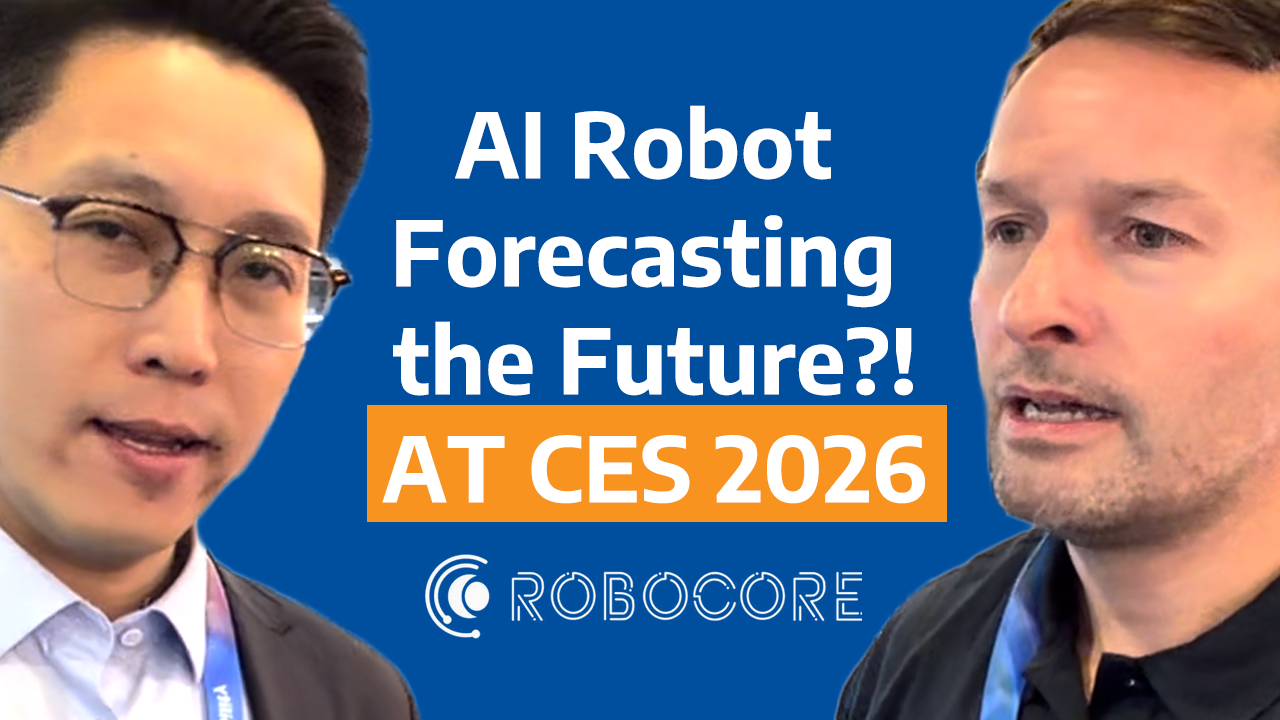
Robocore Temi Fourcast – Interview at CES 2026
The Rise of Predictive AI Robots: How Temi Fourcast Signals the Next Shift in Automation
Introduction
For years, the conversation around robotics has focused on one core idea: automation. Robots replacing repetitive tasks. Robots improving efficiency. Robots reducing costs.
But something fundamental is changing.
At CES 2026, a new category of AI robots began to emerge — machines that don’t just perform tasks, but help predict what happens next. One of the clearest examples of this shift is the Temi Fourcast by Robocore, built on the widely adopted Temi robot platform.
This signals a major turning point in the robotics industry.
We are moving from automation… to anticipation.
And for businesses, this changes everything.
The Current State of Robotics
The global robotics industry has seen rapid growth over the past decade. From warehouses and manufacturing lines to hotels, hospitals, and retail stores, robots are now actively working alongside humans in real-world environments.
Service robots, in particular, have become more visible. Platforms like Temi have gained traction due to their ability to navigate autonomously, interact with people, and integrate into business workflows.
At the same time, AI robots have evolved significantly. Machine learning, computer vision, and natural language processing have allowed robots to become more adaptable and intelligent.
However, despite these advancements, most robots today are still reactive.
They respond to commands.
They follow programmed workflows.
They execute predefined tasks.
What they don’t typically do is think ahead.
That’s where the next wave begins.
From Automation to Prediction
The introduction of predictive AI robots represents a shift from task execution to decision support.
Instead of simply performing actions, these robots analyse data, identify patterns, and forecast potential outcomes.
The Temi Fourcast is a clear example of this evolution.
Built on the Temi robot platform, which is already widely used across industries, the Fourcast adds a new layer of intelligence — the ability to process real-time data and generate predictive insights.
This means a robot could:
Anticipate customer behaviour in a retail environment
Predict demand trends in hospitality
Identify operational inefficiencies before they escalate
Support business decisions with real-time insights
This is not just automation.
This is augmentation.
And it represents a significant leap forward in robotics technology.
Why Businesses Are Investing in AI Robots
Businesses have traditionally invested in robotics for three main reasons:
Cost reduction
Efficiency improvement
Consistency and reliability
But predictive AI robots introduce a fourth dimension: intelligence.
Companies are no longer just looking for tools that can do work.
They are looking for systems that can improve decision-making.
In a competitive market, the ability to anticipate trends and act early is a powerful advantage.
This is why interest in AI robots is accelerating across industries.
Retailers want to understand customer behaviour in real time.
Hospitality businesses want to optimise guest experiences.
Corporate environments want better data-driven insights.
Predictive robots like the Temi Fourcast offer a way to bridge the gap between physical robotics and digital intelligence.
Key Technologies Driving Predictive Robotics
Several key technologies are enabling this new generation of AI robots.
Artificial Intelligence and Machine Learning
AI and machine learning allow robots to analyse large volumes of data, identify patterns, and continuously improve over time.
This is what enables predictive capabilities.
Real-Time Data Processing
Modern robots can process data in real time, allowing them to respond to changing environments and generate insights instantly.
Cloud Connectivity
Cloud-based systems allow robots to access external data sources, integrate with business systems, and scale their capabilities.
Human-Robot Interaction
Advances in voice recognition and conversational AI allow robots to communicate insights in a way that is accessible and actionable.
Together, these technologies are transforming robots from tools into intelligent systems.
Real-World Applications of Predictive AI Robots
The potential applications for predictive AI robots are vast.
Retail
In retail environments, robots could analyse customer movement, purchasing patterns, and foot traffic to predict demand and optimise store layouts.
Hospitality
Hotels and restaurants could use predictive robots to anticipate guest needs, personalise experiences, and improve service efficiency.
Events and Experiential Marketing
At events, robots are already used for engagement and interaction. Adding predictive capabilities allows them to adapt in real time based on audience behaviour.
Corporate and Office Environments
In corporate settings, predictive robots could assist with scheduling, resource allocation, and operational insights.
Healthcare
In healthcare, predictive robots could support patient monitoring, identify trends, and assist with proactive care.
These use cases highlight a key shift: robots are no longer just operational tools — they are becoming strategic assets.
Challenges Slowing Adoption
Despite the potential, there are still challenges to overcome.
Trust and Acceptance
Businesses must be willing to trust AI robots with decision-support roles. This is a significant psychological and cultural shift.
Data Quality
Predictive systems are only as good as the data they receive. Poor data can lead to inaccurate insights.
Integration
Integrating robotics into existing business systems and workflows can be complex.
Cost and ROI
While costs are decreasing, businesses still need to clearly understand the return on investment.
Regulation and Ethics
As robots become more intelligent, questions around data privacy, ethics, and accountability become increasingly important.
These challenges will shape how quickly predictive robotics is adopted.
Industry Insight: The Next Phase of the Robotics Industry
The robotics industry is entering a new phase.
The first wave was industrial robotics — focused on manufacturing.
The second wave was service robotics — focused on interaction and mobility.
The third wave is predictive robotics — focused on intelligence and insight.
This shift is driving increased investment in robotics startups, particularly those combining AI with physical systems.
Investors are recognising that the future of robotics is not just hardware, but intelligent platforms.
At the same time, companies are beginning to realise that robotics is not a standalone solution. It is part of a broader ecosystem that includes AI, data, and automation.
This is where the real opportunity lies.
Business Perspective: What This Means for Companies
For businesses, the rise of predictive AI robots presents both an opportunity and a challenge.
The opportunity is clear:
Better decision-making
Improved efficiency
Enhanced customer experiences
Competitive advantage
But the challenge is equally important:
Understanding where robots fit within the business
Identifying the right use cases
Selecting the right technology
Integrating robotics effectively
This is why robotics consulting is becoming increasingly important.
Companies need guidance to navigate this rapidly evolving landscape.
The RoboPhil Perspective
Philip English, known as RoboPhil, works at the intersection of robotics, business, and real-world deployment.
Through Robot Center, Robots of London, and Robot Philosophy, he works with robot manufacturers, automation companies, and businesses exploring robotics adoption.
This includes:
Sourcing and supplying robots for commercial use
Deploying robots in events and customer-facing environments
Advising companies on robotics strategy and implementation
From this perspective, one trend is becoming clear:
Businesses are no longer asking if they should use robots.
They are asking how to use them effectively.
And increasingly, they are looking beyond basic automation toward intelligent systems that can provide real value.
What the Future of Robotics Looks Like
The future of robotics will be defined by intelligence.
We will see more robots that:
Understand context
Learn from data
Adapt to changing environments
Support human decision-making
Humanoid robots will continue to develop, particularly in roles that require interaction and flexibility.
Service robots will become more common in everyday environments.
And predictive AI robots will become a key part of business operations.
The line between physical robots and digital AI systems will continue to blur.
This will create new opportunities, new business models, and new challenges.
Conclusion
The rise of predictive AI robots marks a significant turning point in the robotics industry.
Technologies like the Temi Fourcast are not just incremental improvements.
They represent a shift in how robots are used — from executing tasks to supporting decisions.
For businesses, this is a moment of opportunity.
Those who understand and adopt these technologies early will gain a competitive advantage.
Those who wait may find themselves playing catch-up.
The future of robotics is not just about automation.
It is about intelligence.
And that future is already beginning.
Call to Action
If you are exploring robotics for your business, now is the time to understand what is possible.
Whether you are looking for robotics consulting, robot sourcing, or insights into the robotics industry, RoboPhil can help you navigate the next phase of automation.
Robot Center
https://robotcenter.co.uk/
Robots of London
https://robotsoflondon.co.uk/
Robot Philosophy
https://robophil.com/
Business enquiries
sales@robotcenter.co.uk