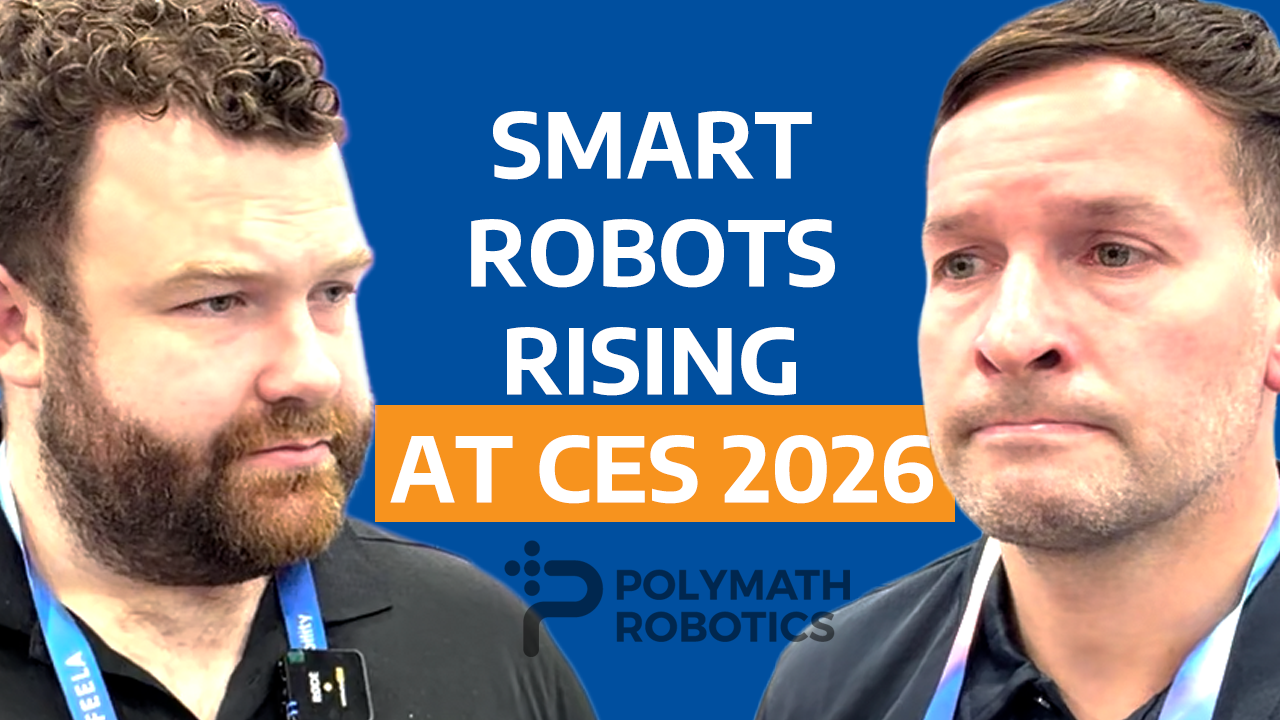
Polymath Robotics at CES 2026: The Software Powering the Future of Robotics
At CES 2026, the spotlight was once again on robots.
From humanoid robots walking the show floor to AI-powered machines performing complex tasks, the event made one thing clear: robotics is accelerating faster than ever.
But beneath the surface of impressive hardware demos, a more important shift is taking place.
It’s no longer just about building better robots.
It’s about building smarter ones.
In an interview at CES 2026, Polymath Robotics revealed a critical piece of the puzzle that many businesses and even robotics companies are still overlooking — the intelligence layer that enables robots to operate effectively in the real world.
This is where the future of robotics is being shaped.
The Current State of Robotics in 2026
The robotics industry has reached a pivotal moment.
Over the past decade, advances in hardware, sensors, and mechanical design have made robots more capable, durable, and affordable. Robots can now navigate warehouses, assist in hospitality, perform inspections, and even interact with humans in controlled environments.
However, despite this progress, widespread adoption of robotics across industries remains slower than expected.
Why?
Because most robots still struggle outside of structured environments.
Factories and warehouses have been the natural home for automation because they are predictable. But the real world — construction sites, farms, public spaces — is far more chaotic.
This is where traditional robotics systems begin to break down.
And this is exactly the challenge companies like Polymath Robotics are solving.
Polymath Robotics: A Different Approach
Polymath Robotics is not a typical robotics company.
They are not focused on manufacturing robot hardware.
Instead, they are focused on something arguably more important — the software that allows robots to function intelligently in complex, unpredictable environments.
During the CES 2026 interview, one thing became clear:
Polymath is building the “brain” for robots.
Their platform enables robots to interpret their surroundings, make decisions, and execute tasks in real-world conditions — not just controlled demos.
This distinction is critical.
Because the future of robotics will not be defined solely by the machines themselves, but by the intelligence that powers them.
Why the Intelligence Layer Matters
The biggest misconception in the robotics industry is that hardware is the main barrier to adoption.
It isn’t.
The real challenge is autonomy.
For a robot to be useful in a business setting, it must be able to:
- Navigate dynamic environments
- Handle unexpected obstacles
- Adapt to changing conditions
- Perform tasks without constant human intervention
This is incredibly difficult.
And this is where AI robots come into play.
Polymath Robotics is developing systems that allow robots to operate more like humans — interpreting situations and making decisions on the fly.
This is the difference between a robot that works in a lab… and a robot that works in the real world.
From Demo to Deployment: The Missing Link in Automation
One of the most striking insights from CES 2026 is how many robotics companies are still focused on demonstration rather than deployment.
It’s relatively easy to build a robot that performs well in a controlled environment.
It’s much harder to deploy that robot in a real business setting.
Businesses don’t need robots that impress.
They need robots that deliver.
This is where Polymath Robotics is positioning itself.
By focusing on real-world usability, they are addressing the biggest gap in the robotics industry — the transition from prototype to practical application.
And this is what will ultimately unlock large-scale automation.
Real-World Applications of Polymath Robotics
The implications of this technology are significant across multiple industries.
Construction
Construction sites are unpredictable and constantly changing.
Robots operating in this environment must adapt in real time.
Polymath’s software could enable robots to navigate these challenges, perform tasks, and improve efficiency without requiring constant reprogramming.
Agriculture
Farming environments vary daily based on weather, terrain, and crop conditions.
AI robots powered by intelligent software could automate tasks such as harvesting, monitoring, and maintenance.
Logistics and Warehousing
While warehouses are already automated to some extent, there is still a need for more flexible systems that can adapt to changing layouts and demands.
Polymath’s approach could make robotics more scalable and easier to deploy across different facilities.
Industrial and Inspection Robotics
Inspection robots often operate in complex environments where conditions are unpredictable.
Smarter AI systems allow these robots to function more reliably, improving safety and reducing human risk.
The Rise of AI Robots and Software-Defined Robotics
A major theme at CES 2026 is the shift toward software-defined robotics.
This means the value is increasingly moving away from hardware and toward software platforms.
Similar to how smartphones evolved, the hardware becomes standardised, while the software becomes the differentiator.
This has several implications:
- Faster innovation cycles
- Lower barriers to entry
- More scalable solutions
- Greater interoperability between systems
Polymath Robotics is positioning itself at the centre of this shift.
By creating a flexible intelligence layer, they enable multiple robot platforms to benefit from advanced AI capabilities.
This could fundamentally reshape the robotics industry.
Challenges Slowing Robotics Adoption
Despite the progress, several challenges still exist.
Integration Complexity
Businesses often struggle to integrate robots into existing workflows.
High Initial Costs
While costs are decreasing, robotics investment still requires careful planning.
Skills Gap
There is a lack of expertise in deploying and managing robotic systems.
Reliability Concerns
Businesses need assurance that robots will perform consistently in real-world conditions.
Polymath Robotics is addressing one of the most critical issues — reliability in unpredictable environments.
And solving this could unlock the next wave of adoption.
The Business Opportunity in Robotics
For businesses, the opportunity is clear.
Robotics is no longer a future concept — it is a competitive advantage.
Companies that successfully integrate robots into their operations can:
- Increase efficiency
- Reduce costs
- Improve safety
- Scale operations more effectively
However, the key is not just adopting robots.
It’s adopting the right robotics strategy.
This includes selecting the right technology, integrating it effectively, and ensuring it delivers measurable value.
This is where robotics consulting becomes essential.
The RoboPhil Perspective
From working across Robot Center, Robots of London, and Robot Philosophy, I’ve seen firsthand how businesses approach robotics.
Most companies are interested in robots.
Very few know where to start.
The common mistake is focusing too much on the robot itself.
Instead, the focus should be on the outcome.
What problem are you solving?
What task are you automating?
What value are you creating?
Polymath Robotics highlights an important shift — the success of robotics is increasingly dependent on software and intelligence.
For businesses exploring automation, this is a critical insight.
The future is not just about buying robots.
It’s about deploying systems that actually work.
What the Future of Robotics Looks Like
Looking ahead, the robotics industry is entering a new phase.
We are moving from hardware-driven innovation to intelligence-driven innovation.
In the next 5–10 years, we can expect:
- More adaptable AI robots
- Faster deployment of automation systems
- Increased use of robotics across industries
- Growth in robotics startups focused on software
- Greater demand for robotics consulting and integration
Humanoid robots will continue to evolve, but the real transformation will happen behind the scenes — in the intelligence that powers all robots.
Companies like Polymath Robotics are leading this transition.
Conclusion
CES 2026 made one thing clear.
The future of robotics is not just about machines.
It’s about intelligence.
Polymath Robotics represents a new wave of companies focused on solving the hardest problem in robotics — making robots work in the real world.
As AI robots become more capable, and automation becomes more accessible, the businesses that understand this shift will be the ones that succeed.
The robotics industry is evolving rapidly.
And the next phase will be defined by those who control the intelligence layer.
Work With RoboPhil
If you are exploring robotics, automation, or AI robots in your business, now is the time to act.
Whether you are looking for robotics consulting, robot sourcing, or strategic guidance, RoboPhil can help you navigate the rapidly evolving robotics industry.
Robot Center
https://robotcenter.co.uk/
Robots of London
https://robotsoflondon.co.uk/
Robot Philosophy
https://robophil.com/
Business enquiries
sales@robotcenter.co.uk