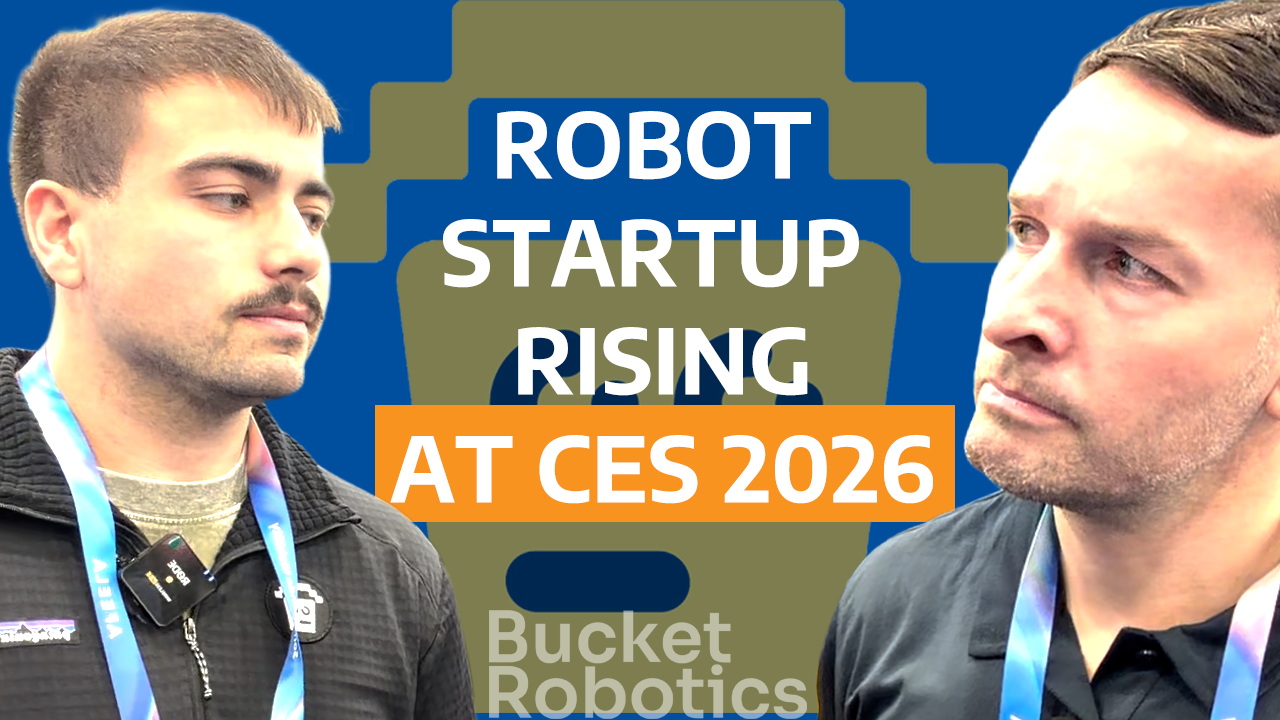
Bucket Robotics – Is Changing Automation Fast! – CES 2026
The Rise of Robotics Startups: How AI Robots Are Reshaping Automation
Introduction
The robotics industry is entering a new phase — and it’s being driven by startups.
For years, robotics was dominated by large industrial players building complex systems for manufacturing and logistics. But today, a new wave of robotics startups is emerging, focused on AI robots, real-world automation, and rapid deployment.
These companies are not just building impressive machines. They are solving specific problems, faster than ever before.
And that shift is changing everything.
From service robots to AI-driven automation systems, startups are redefining what robots can do, how quickly they can be deployed, and how accessible they are to businesses of all sizes.
For business leaders, entrepreneurs, and investors, this moment represents both a challenge and a major opportunity.
The Current State of Robotics
The global robotics industry has grown significantly over the past decade, driven by advances in artificial intelligence, machine learning, sensors, and computing power.
Industrial robots have long been used in manufacturing, particularly in automotive production. However, the landscape is expanding rapidly beyond factories.
Today, we are seeing:
- Service robots in hospitality and retail
- Autonomous robots in logistics and warehousing
- Inspection robots in energy and infrastructure
- AI robots in customer service and engagement
What’s different now is the speed of innovation.
Robotics technology is no longer confined to large, slow-moving organisations. Startups are entering the market with focused solutions, shorter development cycles, and a clear understanding of real-world applications.
This has created a more dynamic and competitive robotics ecosystem.
Why Businesses Are Investing in Robots
Businesses are no longer asking if they should adopt robotics — they are asking where robots fit into their operations.
Several key factors are driving this shift.
Labour Challenges
Across multiple industries, there is increasing pressure due to labour shortages, rising costs, and high staff turnover.
Robots offer a consistent, scalable alternative for repetitive or physically demanding tasks.
Efficiency and Productivity
Automation allows businesses to operate more efficiently, reduce errors, and increase output.
AI robots, in particular, can learn, adapt, and improve over time, making them valuable assets rather than static tools.
Customer Experience
In sectors such as retail, hospitality, and events, robots are being used to enhance customer engagement.
They attract attention, create memorable experiences, and provide a modern, innovative brand image.
Competitive Advantage
Companies that adopt robotics early often gain a significant edge.
They can operate faster, reduce operational costs, and position themselves as leaders in innovation.
The Startup Advantage in Robotics
One of the most significant changes in the robotics industry is the rise of startups.
Unlike traditional robotics companies, startups tend to focus on solving a single problem exceptionally well.
This focus gives them several advantages.
Speed
Startups move quickly.
They can develop, test, and deploy robotics solutions in a fraction of the time it takes larger organisations.
Flexibility
They are not tied to legacy systems or processes.
This allows them to adapt to market needs and pivot when necessary.
Innovation
Startups often experiment with new technologies, business models, and applications.
They are more willing to take risks, which leads to breakthrough innovations.
Real-World Focus
Many robotics startups are built around practical use cases.
Instead of building general-purpose robots, they focus on specific tasks such as delivery, inspection, or customer interaction.
This makes their solutions more relevant and easier to adopt.
Key Technologies Driving Robotics Forward
The rapid growth of robotics startups is being enabled by several key technologies.
Artificial Intelligence
AI is at the core of modern robotics.
AI robots can process data, make decisions, and improve performance over time.
This allows robots to operate in more complex and dynamic environments.
Computer Vision
Robots can now “see” and interpret their surroundings using cameras and advanced algorithms.
This is critical for navigation, object recognition, and interaction with humans.
Sensors and Hardware
Advances in sensors, motors, and materials have made robots more capable and more affordable.
This has lowered the barrier to entry for startups.
Cloud Computing and Connectivity
Robots can now connect to cloud systems, enabling real-time data processing, updates, and remote management.
This creates opportunities for scalable robotics solutions.
Real-World Applications of AI Robots
Robotics is no longer theoretical. It is being deployed across multiple industries today.
Retail and Hospitality
Service robots are being used to greet customers, deliver items, and provide information.
They enhance the customer experience while reducing the workload on staff.
Events and Marketing
Robots are becoming a powerful tool for engagement at events.
They attract attention, interact with attendees, and create memorable brand experiences.
Logistics and Warehousing
Autonomous robots are transforming how goods are stored, picked, and transported.
They increase efficiency and reduce reliance on manual labour.
Inspection and Security
Robots are being used to monitor environments, inspect infrastructure, and enhance security operations.
They can operate in dangerous or hard-to-reach areas.
Challenges Slowing Robotics Adoption
Despite the rapid progress, there are still challenges that businesses must consider.
Cost and ROI
While robotics is becoming more affordable, the initial investment can still be significant.
Businesses need to clearly understand the return on investment.
Integration
Integrating robots into existing systems and processes can be complex.
It requires planning, expertise, and ongoing support.
Perception and Trust
There is still hesitation around robots replacing jobs or interacting with customers.
Businesses must manage this transition carefully.
Skills and Knowledge
Many organisations lack the internal expertise to implement robotics effectively.
This is where robotics consulting becomes increasingly important.
The Role of Robotics Consulting
As the robotics industry grows, so does the need for guidance.
Robotics consulting helps businesses:
- Identify where robots can be used effectively
- Select the right robotics technology
- Integrate robots into existing operations
- Train teams and optimise performance
Without this expertise, companies risk investing in the wrong solutions or failing to achieve the desired outcomes.
This is a critical part of the robotics ecosystem.
The RoboPhil Perspective
Philip English, known as RoboPhil, works at the intersection of robotics technology and real-world business application.
Through Robot Center, Robots of London, and Robot Philosophy, he works directly with companies exploring robotics adoption.
This includes:
- Helping businesses identify opportunities for automation
- Sourcing and deploying robots for commercial use
- Supporting events with interactive and engaging robots
- Advising robotics companies on market entry and growth
From working with startups to large organisations, one clear trend is emerging:
The companies that succeed with robotics are the ones that move from curiosity to action.
They do not wait for perfect solutions. They start, learn, and scale.
What the Future of Robotics Looks Like
The future of robotics will be defined by accessibility, scalability, and intelligence.
We can expect to see:
- More specialised robots solving specific business problems
- Increased use of AI robots in everyday environments
- Growth in humanoid robots designed to interact with people
- Faster adoption across industries beyond manufacturing
- A surge in robotics startups competing and innovating
The gap between science fiction and reality is closing rapidly.
Robots are no longer a distant concept. They are becoming a normal part of how businesses operate.
Conclusion
The rise of robotics startups marks a significant shift in the industry.
Innovation is accelerating. Barriers are falling. And the opportunities are expanding.
For businesses, the question is no longer whether robotics will have an impact — it is how quickly they can adapt.
Those who understand the potential of AI robots, automation, and robotics technology will be in a strong position to lead.
Those who wait may find themselves trying to catch up.
The future of robotics is not coming.
It is already here.
Work with RoboPhil
If you are exploring robotics for your business, looking to source robots, or want expert insight into the robotics industry, now is the time to act.
Robotics services and partners:
Robot Center
https://robotcenter.co.uk/
Robots of London
https://robotsoflondon.co.uk/
Robot Philosophy
https://robophil.com/
Business enquiries
sales@robotcenter.co.uk