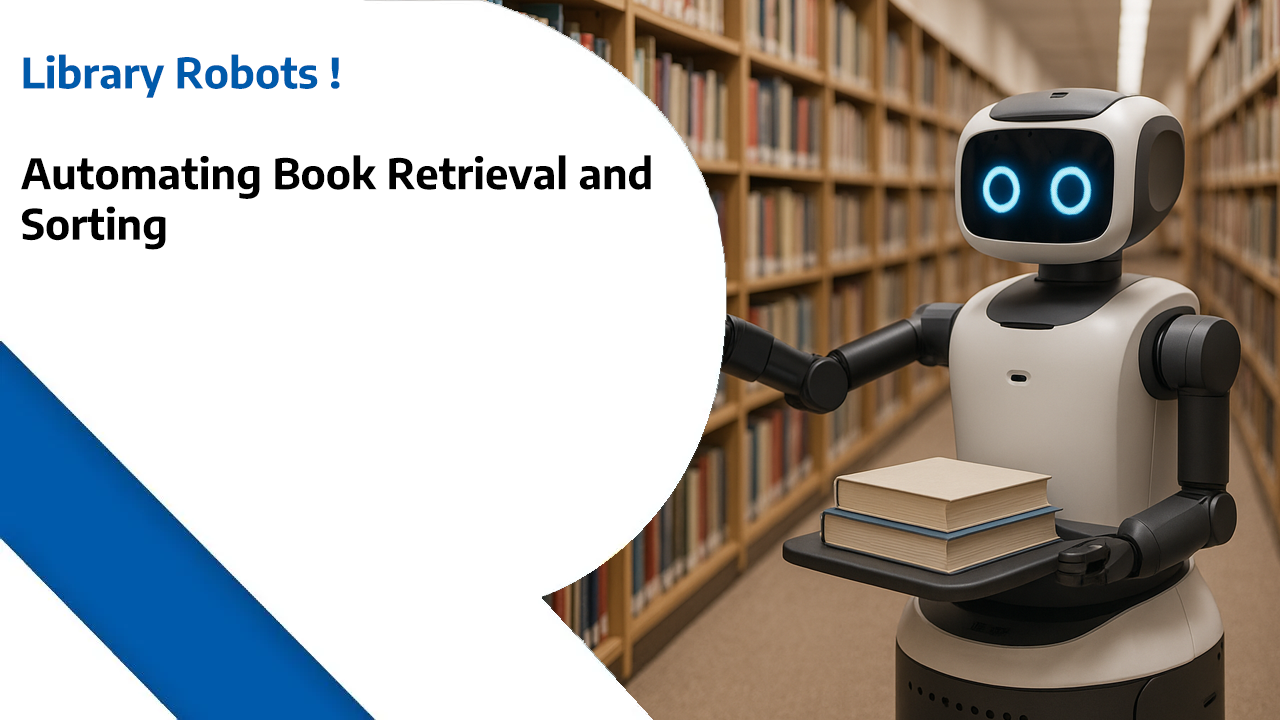
Library Robots: Automating Book Retrieval and Sorting
The Future of Library Management is Here
In an era where digital transformation touches every aspect of our lives, libraries are experiencing their own technological revolution. Library robots are emerging as sophisticated solutions that combine artificial intelligence, robotics, and automated systems to transform how books are stored, retrieved, and managed. These intelligent machines are not replacing librarians—they’re empowering them to focus on what matters most: helping patrons discover knowledge and fostering community engagement.
The Evolution of Library Automation
Libraries have always been at the forefront of organizational innovation. From the Dewey Decimal System to digital catalogues, each advancement has aimed to make information more accessible. Today’s library robots represent the next logical step in this evolution, addressing challenges that traditional methods struggle to solve: maximizing space efficiency, reducing retrieval times, improving accuracy, and alleviating the physical strain on library staff.
The journey toward robotic automation began with automated storage and retrieval systems (ASRS) in the 1990s, initially adapted from warehouse technology. However, modern library robots have evolved far beyond these early systems, incorporating advanced sensors, machine learning algorithms, and sophisticated navigation capabilities that make them purpose-built for the unique demands of library environments.
How Library Robots Work
Automated Storage and Retrieval Systems (ASRS)
At the heart of most library robotic systems lies the ASRS—a high-density storage solution that can house books in compact bins or on specialized shelving. When a patron requests a book, the system locates it within seconds and dispatches a robot to retrieve it. These systems can store materials at heights and densities impossible for human workers to manage safely, often increasing storage capacity by 50-80% compared to traditional shelving.
Modern ASRS units use barcode scanning, RFID technology, or vision systems to identify and track every item. The integration with library management systems ensures real-time inventory updates and seamless patron experiences. Books are typically stored in bins organized by size or acquisition date rather than subject classification, optimizing space rather than browsability.
Mobile Robotic Solutions
Complementing fixed ASRS installations, mobile library robots navigate open stacks to perform various tasks. These autonomous vehicles can scan shelves to verify inventory, identify misplaced books, and even return items to their proper locations. Equipped with cameras, LiDAR sensors, and sophisticated mapping software, they operate safely alongside staff and patrons.
Some advanced mobile robots feature robotic arms capable of grasping and manipulating books of various sizes. These systems can handle the entire return-to-shelf workflow, from collecting books from return bins to placing them back in their designated spots with remarkable precision.
Sorting and Processing Robots
Behind the scenes, sorting robots revolutionize the handling of returned materials. Using conveyor systems integrated with RFID readers and automated gates, these systems can process hundreds of items per hour, sorting them by destination, condition, or priority. This automation dramatically reduces the time staff spend on repetitive sorting tasks, allowing them to engage more meaningfully with library users.
Real-World Applications and Case Studies
Academic Libraries Leading the Way
Universities worldwide have embraced robotic systems to manage their ever-expanding collections. The James B. Hunt Jr. Library at North Carolina State University pioneered the bookBot system, which stores up to 2 million items in a climate-controlled automated facility. Students request books through the online catalogue, and the robot delivers them to a pickup desk within five minutes—a revolutionary improvement over the hours or days traditional stack retrieval might require.
Similarly, the University of Missouri’s library implemented an ASRS that freed up valuable floor space for collaborative learning areas, computer labs, and study spaces. The reclaimed square footage has been transformed into student-centered facilities that better serve modern academic needs.
Public Libraries Reimagining Spaces
Public libraries have discovered that robotic systems allow them to maintain extensive collections while creating welcoming community spaces. The Joe and Rika Mansueto Library at the University of Chicago serves as an exemplary model, with its distinctive glass dome reading room sitting atop a five-story robotic retrieval system that can access 3.5 million volumes.
Smaller public libraries have adopted modular robotic solutions that fit their scale and budget. These systems often combine automated sorting with compact storage, enabling branches to maintain comprehensive collections despite space constraints.
National Libraries Preserving Heritage
National and research libraries face unique challenges in preserving rare and fragile materials while maintaining accessibility. Robotic systems offer climate-controlled storage environments with minimal handling, reducing wear on precious items. The Swiss Federal Institute of Technology Zurich uses robots to manage its collection, ensuring optimal preservation conditions while providing efficient access to researchers.
Key Benefits of Library Robotics
Space Optimization
The most immediately visible advantage is the dramatic increase in storage density. Robotic systems can utilize vertical space efficiently, storing items in compact configurations that would be inaccessible or unsafe for human workers. Libraries can often house twice as many items in the same footprint, or alternatively, dedicate existing space to patron services rather than stacks.
Enhanced Retrieval Speed and Accuracy
Robots locate and retrieve items with remarkable speed—typically in under five minutes. They virtually eliminate retrieval errors, ensuring patrons receive exactly what they requested. This reliability extends to inventory management, with robotic systems capable of conducting complete collection audits in hours rather than the months traditional methods require.
Staff Wellbeing and Productivity
Library work involves significant physical demands—lifting heavy books, reaching high shelves, pushing laden carts, and walking miles through stacks daily. Robots handle these physically taxing tasks, reducing workplace injuries and fatigue. Staff can redirect their energy toward patron services, programming, collection development, and other high-value activities that require human expertise and judgment.
Extended Access Hours
Automated systems can operate independently during evenings, weekends, and holidays, allowing libraries to offer 24/7 pickup services through secure lockers. Patrons can request items online and collect them at their convenience, significantly improving accessibility for those with challenging schedules.
Improved Collection Management
Robots provide unprecedented insight into collection usage patterns, condition monitoring, and inventory accuracy. They can flag items needing repair, identify circulation trends, and support data-driven collection development decisions. The continuous shelf-reading capabilities of mobile robots ensure collections remain organized and findable.
Implementation Considerations
Cost and ROI Analysis
Robotic systems represent substantial capital investments, typically ranging from hundreds of thousands to several million pounds depending on scale and sophistication. However, when evaluated over their operational lifetime (often 20+ years), the return on investment becomes compelling. Savings come from reduced space needs (both in avoiding building expansions and in lower HVAC costs for compact storage), decreased staff time on manual tasks, and improved asset utilization.
Libraries considering automation should conduct thorough cost-benefit analyses that account for their specific circumstances, including collection size, retrieval demand, available space, and labor costs.
Integration with Existing Systems
Successful implementation requires seamless integration with library management systems, patron databases, and catalogue interfaces. Modern robotic solutions offer APIs and standard protocols that facilitate this integration, but planning and testing are essential. Staff training on the new systems and workflows ensures smooth transitions.
Change Management
Introducing robots into library operations represents significant organizational change. Success depends on engaging staff early in the planning process, addressing concerns transparently, and emphasizing how automation enhances rather than replaces human roles. Clear communication about the benefits—both for staff and patrons—builds support and enthusiasm.
Challenges and Limitations
Initial Investment Barriers
The upfront costs can be prohibitive, particularly for smaller libraries or those facing budget constraints. While financing options and phased implementations can help, economic barriers remain significant. Some libraries address this through consortial approaches, sharing systems across multiple branches or institutions.
Technical Complexity
Robotic systems are sophisticated technologies requiring ongoing maintenance, software updates, and technical support. Libraries must ensure they have access to qualified technicians or vendor support agreements. System downtime, while typically minimal with well-maintained equipment, can disrupt services.
Collection Accessibility
While robotic systems excel at rapid retrieval of known items, they fundamentally change the browsing experience. Patrons cannot wander through stacks making serendipitous discoveries. Libraries must thoughtfully design solutions that balance efficiency with discoverability—perhaps maintaining browseable collections of high-demand items while storing less-frequently accessed materials in automated systems.
Material Handling Limitations
Not all library materials are suitable for automated handling. Oversized items, fragile materials, unusual formats, and items with irregular shapes may require special handling or exclusion from automated systems. Libraries must develop workflows for managing these exceptions.
The Human-Robot Partnership
The most successful library automation implementations view robots as collaborative tools rather than replacements. Librarians bring irreplaceable skills—information expertise, instructional abilities, community understanding, and the human connection that makes libraries vital community anchors. Robots handle repetitive physical tasks with tireless consistency.
This partnership allows staff to operate at the top of their professional capabilities. Instead of spending hours reshelving books or retrieving items from distant stacks, librarians can develop specialized collections, design innovative programs, provide in-depth research consultations, and build community partnerships. The result is a better experience for both staff and patrons.
Future Trends and Innovations
AI-Enhanced Systems
Artificial intelligence is making library robots smarter. Machine learning algorithms optimize storage locations based on usage patterns, predict maintenance needs before failures occur, and improve navigation in complex environments. Natural language processing may soon enable patrons to describe what they’re looking for in conversational terms, with AI translating these into retrieval requests.
Collaborative Multi-Robot Systems
Future libraries may employ teams of specialized robots working in concert—mobile units handling shelf-reading and inventory, retrieval robots accessing storage systems, sorting robots processing returns, and delivery robots transporting materials between departments or even to patron homes.
Sustainable and Energy-Efficient Designs
Next-generation library robots emphasize sustainability, using energy-efficient motors, regenerative braking, and smart power management. Some systems incorporate solar panels or operate during off-peak electricity hours to minimize environmental impact.
Expanded Capabilities
Emerging technologies may enable robots to handle more delicate materials, including rare books and manuscripts currently requiring specialized human handling. Advanced vision systems could assess item condition and flag conservation needs automatically.
Implementing Robotics in Your Library
Assessment and Planning
Begin by evaluating your library’s specific needs and constraints. Consider your collection size and growth projections, retrieval demand patterns, available space, budget realities, and staff capacity. Site visits to libraries with robotic systems provide invaluable insights into operational realities.
Vendor Selection
The library robotics market includes established players and innovative newcomers. Evaluate vendors based on their track record, technical support capabilities, system scalability, integration options, and total cost of ownership. Request detailed proposals and demonstrations tailored to your requirements.
Phased Implementation
Many libraries adopt phased approaches, beginning with sorting automation or a modest ASRS installation before expanding. This allows staff to adapt gradually, provides early wins that build organizational support, and spreads costs over multiple budget cycles.
Expert Guidance for Your Library’s Robotic Journey
Navigating the complex landscape of library robotics requires specialized expertise. From initial feasibility studies through implementation and optimization, the right guidance can mean the difference between a transformative success and a costly misstep.
Professional Robot Consulting Services
Whether you’re exploring automation possibilities or ready to implement a comprehensive robotic solution, expert consultants can provide invaluable support. Professional robot consulting encompasses needs assessment, technology selection, vendor evaluation, integration planning, and change management strategies tailored to library environments.
Experienced consultants understand both the technical aspects of robotic systems and the unique operational requirements of libraries. They can help you avoid common pitfalls, optimize your investment, and ensure your robotic solution truly serves your community’s needs.
Finding the Right Robotic Talent
As libraries adopt robotic systems, they often need specialized staff who understand both library science and robotics technology. Robot recruitment services connect libraries with qualified professionals who can manage, maintain, and optimize automated systems. These specialists bridge the gap between traditional library operations and cutting-edge automation technology.
Ready to explore how library robots can transform your institution?
Our team offers comprehensive robot consultancy and recruitment services designed specifically for libraries and information organizations. We’ll help you navigate every step of your automation journey—from initial assessment through implementation and beyond.
Contact us today:
- Email: info@robophil.com
- Phone: 0845 528 0404
Book a consultation to discuss your library’s unique needs and discover how robotic automation can enhance your services, empower your staff, and better serve your community.
Conclusion
Library robots represent far more than technological novelty—they’re practical solutions to real challenges facing modern libraries. By automating physically demanding and repetitive tasks, these systems enable libraries to maximize their collections, optimize their spaces, and empower their staff to focus on distinctly human services that define great libraries.
The transition to robotic systems requires careful planning, significant investment, and organizational commitment. However, libraries that successfully implement these technologies position themselves for a future where they can maintain comprehensive physical collections while creating welcoming community spaces that meet evolving patron needs.
As technology continues advancing and costs gradually decrease, library robots will become increasingly accessible to institutions of all sizes. The question for library leaders is not whether to consider automation, but when and how to thoughtfully integrate these tools into their service models.
The libraries that thrive in coming decades will be those that embrace the human-robot partnership, leveraging technology to amplify human capabilities rather than replace them. In doing so, they’ll honor libraries’ enduring mission—connecting people with information, ideas, and each other—while adopting the tools needed to fulfill that mission in our rapidly changing world.
Article Sponsors
This article is proudly sponsored by leading organizations in the robotics industry:
Robot Center
Website: https://robotcenter.co.uk/
Your comprehensive destination for robot acquisition and consultancy services. Whether you’re looking to buy robots, need expert robotics consultancy, or require guidance on automation implementation, Robot Center provides the expertise and solutions to support your robotic journey.
Robots of London
Website: https://robotsoflondon.co.uk/
The premier provider of robot hire and rental services in the UK. Perfect for events, temporary deployments, or trial periods before purchase, Robots of London offers flexible rental solutions that let you experience robotic technology firsthand. From corporate events to educational demonstrations, they provide professional robot hire services tailored to your needs.
Robot Philosophy
Website: https://robophil.com/
Led by Philip English (RoboPhil), a renowned Robot YouTuber, Robot Influencer, Robot Trainer, and Robot Consultant, Robot Philosophy offers specialized robot consultancy and robot recruitment services. With extensive experience as a Robotics Streamer, Robotics YouTuber, and Robotics Consultant, Philip provides expert robot advice, robot insights, and innovative robot ideas to organizations navigating the automation landscape.
For consultancy and recruitment services:
- Email: info@robophil.com
- Phone: 0845 528 0404
Ready to revolutionize your library with robotic automation? Our sponsors are here to help you every step of the way—from initial consultation through implementation and ongoing support.
https://www.youtube.com/watch?v=kjj083hSRL8
