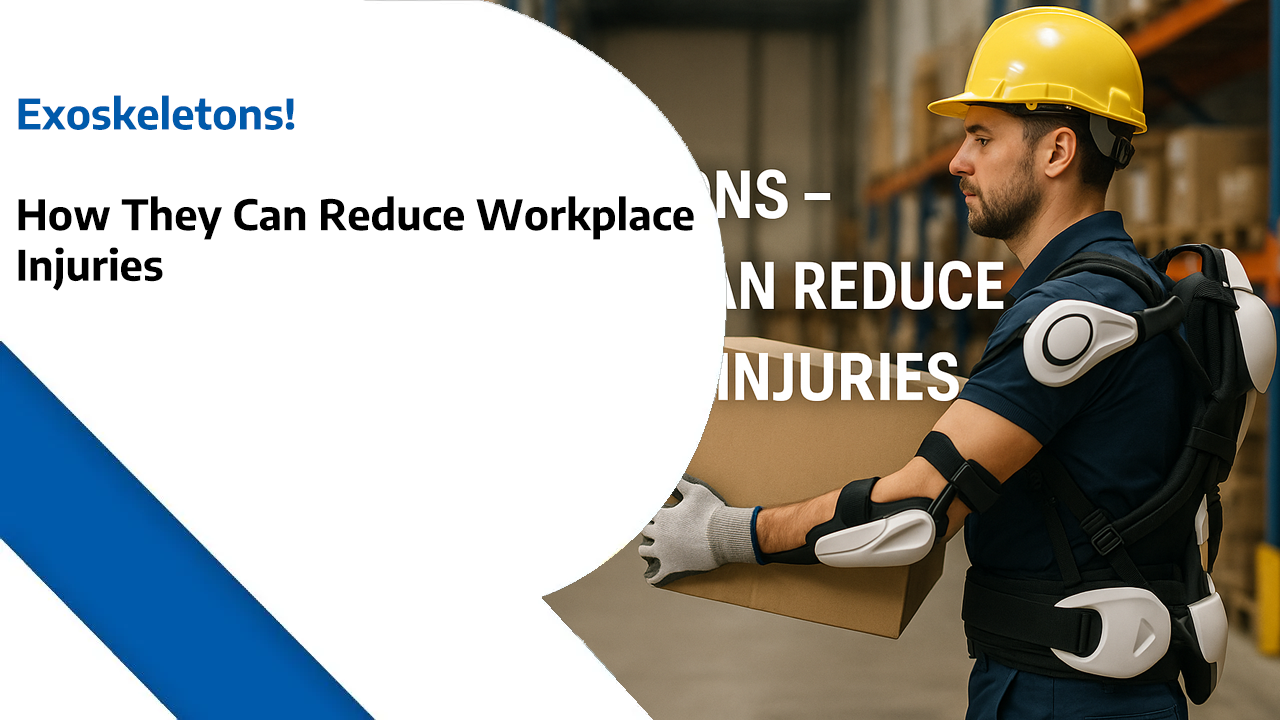
Exoskeletons – How They Can Reduce Workplace Injuries
The Silent Epidemic of Workplace Injuries
Every year, millions of workers worldwide suffer from musculoskeletal disorders (MSDs) caused by repetitive strain, heavy lifting, and awkward postures. In the UK alone, work-related MSDs account for over 470,000 cases annually, costing businesses billions in lost productivity, compensation claims, and employee turnover. The manufacturing, construction, logistics, and healthcare sectors are particularly vulnerable, with workers frequently performing physically demanding tasks that push the human body beyond its natural limits.
But what if technology could augment human capability, transforming the way we approach workplace safety? Enter exoskeletons—wearable robotic devices that are revolutionizing occupational health and safety by reducing physical strain, preventing injuries, and empowering workers to perform their duties more efficiently and comfortably.
What Are Workplace Exoskeletons?
Exoskeletons, also known as exosuits or wearable robots, are mechanical structures worn by workers to enhance their physical capabilities. Unlike the powered suits of science fiction, today’s industrial exoskeletons are practical, purpose-built devices designed to support specific body parts and movements commonly associated with workplace injuries.
These devices fall into two main categories:
Passive Exoskeletons: These use springs, dampeners, and mechanical components to redistribute weight and reduce muscle strain without requiring power sources. They’re lightweight, cost-effective, and ideal for tasks involving sustained postures or repetitive movements.
Active (Powered) Exoskeletons: Equipped with motors, batteries, and sensors, active exoskeletons provide powered assistance to amplify human strength and endurance. They’re particularly valuable for heavy lifting tasks and can adapt in real-time to the wearer’s movements.
How Exoskeletons Prevent Workplace Injuries
1. Reducing Musculoskeletal Strain
The primary benefit of exoskeletons is their ability to reduce the physical load on vulnerable body parts. Back-support exoskeletons, for example, can reduce spinal compression by up to 60% during lifting tasks, significantly lowering the risk of herniated discs and chronic back pain. Shoulder-support exoskeletons take the strain off deltoid muscles and rotator cuffs during overhead work, reducing fatigue by as much as 80% in studies.
By redistributing forces away from joints and muscles, exoskeletons enable workers to maintain proper posture and technique throughout their shifts, even during physically demanding tasks.
2. Preventing Acute Injuries
Beyond chronic conditions, exoskeletons help prevent acute injuries such as muscle tears, sprains, and joint dislocations. When a worker lifts a heavy object incorrectly or loses balance, an exoskeleton provides additional support and stability, reducing the likelihood of sudden injury. This protective element is particularly valuable in unpredictable environments where workers face varying loads and working conditions.
3. Extending Working Capacity
Fatigue is a major contributor to workplace accidents. As workers tire throughout their shift, their form deteriorates, reaction times slow, and risk-taking behavior increases. Exoskeletons combat fatigue by reducing the metabolic cost of physical work—some studies show energy expenditure reductions of 20-40% for assisted tasks. This means workers remain alert and capable for longer periods, reducing the accident rate typically seen toward the end of shifts.
4. Enabling Older Workers and Those with Disabilities
The aging workforce presents challenges for physically demanding industries. Exoskeletons can help experienced workers remain productive despite age-related physical decline, preserving valuable expertise while protecting health. Similarly, these devices can enable workers with disabilities or previous injuries to participate in roles that might otherwise be inaccessible, promoting workplace inclusivity.
Industry Applications and Success Stories
Manufacturing and Assembly
Automotive manufacturers were among the first to embrace exoskeleton technology. Ford, BMW, and General Motors have deployed hundreds of exoskeletons across their facilities, particularly for overhead assembly work. Workers report significant reductions in shoulder and neck pain, with some facilities seeing injury rates drop by over 80% in exoskeleton-wearing departments.
Logistics and Warehousing
With the explosion of e-commerce, warehouse workers face unprecedented physical demands. Companies in the logistics sector are increasingly turning to exoskeletons to protect workers handling thousands of packages daily. Back-support exoskeletons have proven particularly effective, with workers reporting they can lift comfortably throughout their entire shift rather than experiencing progressive fatigue and pain.
Construction
Construction workers face some of the highest injury rates across all industries. Exoskeletons designed for construction applications support workers during prolonged tool use, overhead drilling, and material handling. Early adopters report not only fewer injuries but also improved work quality, as workers can maintain precision and control even during extended tasks.
Healthcare
Surprisingly, healthcare is emerging as a major beneficiary of exoskeleton technology. Nurses and care workers frequently suffer back injuries from patient handling. Patient-transfer exoskeletons are now being deployed in hospitals and care facilities, dramatically reducing the risk of injury during this high-risk activity while simultaneously improving patient comfort and dignity.
The Business Case for Exoskeletons
While exoskeletons require upfront investment—ranging from £4,000 for basic passive units to £50,000+ for advanced powered systems—the return on investment can be compelling:
Reduced Injury Costs: A single serious back injury can cost a business £30,000-£100,000 in direct and indirect costs. Preventing just a few injuries per year can justify the technology investment.
Decreased Absenteeism: MSDs are a leading cause of sick leave. Exoskeletons can reduce MSD-related absences by 40-70% according to early studies.
Improved Productivity: Workers using exoskeletons often complete tasks 10-25% faster while maintaining or improving quality standards.
Enhanced Recruitment and Retention: Offering cutting-edge safety technology makes companies more attractive to potential employees and demonstrates commitment to worker wellbeing, improving retention rates.
Lower Insurance Premiums: Some insurers now offer reduced premiums for companies implementing comprehensive exoskeleton programs as part of their safety protocols.
Challenges and Considerations
Despite their promise, exoskeletons aren’t a universal solution. Successful implementation requires careful consideration of several factors:
Individual Fit and Comfort: Exoskeletons must be properly fitted to each worker. Poorly fitted devices can cause discomfort or even create new injury risks.
Task Specificity: Different tasks require different exoskeleton designs. A device optimized for overhead work won’t help with ground-level lifting tasks.
Training Requirements: Workers need proper training to use exoskeletons effectively and safely. Organizations must invest in comprehensive training programs.
Cultural Acceptance: Some workers may resist wearing exoskeletons due to concerns about appearance, stigma, or belief that they suggest weakness. Change management is crucial.
Maintenance and Support: Like any mechanical system, exoskeletons require regular maintenance, cleaning, and occasional repairs. Organizations need support infrastructure in place.
The Future of Workplace Exoskeletons
The exoskeleton market is projected to reach £7 billion globally by 2030, driven by technological advances and growing awareness of their benefits. Future developments we can expect include:
- Smarter Systems: AI-powered exoskeletons that learn individual movement patterns and provide personalized support
- Lighter Materials: Advanced composites making devices more comfortable for all-day wear
- Integrated Sensors: Health monitoring capabilities that track worker vitality and alert supervisors to fatigue or stress
- Modular Designs: Customizable systems that can be adapted for different tasks throughout the workday
- Extended Reality Integration: Exoskeletons combined with AR/VR systems for enhanced training and performance
Implementing Exoskeletons in Your Workplace
Successfully deploying exoskeleton technology requires a strategic approach:
- Conduct a Comprehensive Assessment: Identify high-risk tasks and roles where exoskeletons could provide the greatest benefit.
- Engage Your Workforce: Involve workers in the selection and testing process to ensure buy-in and gather practical insights.
- Start with Pilot Programs: Begin with a small group of workers and specific tasks to refine your approach before full deployment.
- Measure and Optimize: Track injury rates, productivity metrics, and worker satisfaction to quantify benefits and identify areas for improvement.
- Ensure Ongoing Support: Provide continuous training, maintenance, and opportunities for feedback as the technology and your understanding evolves.
Expert Guidance for Your Robotics Journey
Navigating the rapidly evolving world of exoskeletons and workplace robotics can be overwhelming. Whether you’re considering your first exoskeleton deployment or looking to expand an existing program, expert guidance can make the difference between success and costly mistakes.
Need specialist robotics consulting or looking to recruit robotics talent for your organization? Our team brings decades of combined experience in robotics implementation, safety optimization, and workforce development. We help businesses across the UK identify the right solutions, implement them effectively, and build teams capable of maximizing their robotics investments.
Contact us today:
- Email: info@robophil.com
- Phone: 0845 528 0404
Book a consultation call to discover how exoskeletons and other robotics solutions can transform your workplace safety, productivity, and competitive advantage.
Article Sponsors
This article is brought to you by three leading robotics organizations helping UK businesses navigate the future of work:
Robot Center
Website: https://robotcenter.co.uk/
Your comprehensive resource for robot purchasing, sales, and expert robotics consultancy. Robot Center helps businesses find, acquire, and implement the perfect robotic solutions for their unique needs. Whether you’re looking to buy your first robot or expand an existing fleet, their team provides the expertise and support you need.
Robots of London
Website: https://robotsoflondon.co.uk/
The UK’s premier robot hire and rental service. Need robots for a specific project, event, or trial period? Robots of London offers flexible rental options across a wide range of robotic systems, from exoskeletons to collaborative robots and event robots. Perfect for testing solutions before commitment or meeting temporary capacity needs.
Robot Philosophy (RoboPhil)
Website: https://robophil.com/
Led by Philip English, one of the UK’s leading robot influencers and consultants, Robot Philosophy provides cutting-edge robot consultancy and recruitment services. RoboPhil combines technical expertise with real-world implementation experience, helping organizations not just choose the right technology but build the teams and processes to maximize its impact. As a respected Robot YouTuber, Trainer, and Robotics Streamer, Philip brings unparalleled insights from across the global robotics industry to UK businesses.
Services include:
- Strategic robotics consulting
- Robotics recruitment and talent acquisition
- Robot implementation advice
- Industry insights and thought leadership
- Training and skills development
Get in touch:
- Email: info@robophil.com
- Phone: 0845 528 0404
Conclusion
Exoskeletons represent a paradigm shift in workplace safety—moving from reactive injury management to proactive human augmentation. As these technologies become more sophisticated, affordable, and widely adopted, they have the potential to dramatically reduce the human and economic costs of workplace injuries while simultaneously enhancing productivity and job satisfaction.
The question is no longer whether exoskeletons will transform workplace safety, but how quickly your organization will embrace this transformation. Companies that move early will not only protect their workforce more effectively but also gain competitive advantages in productivity, recruitment, and innovation.
The future of work is here—and it’s wearing an exoskeleton.
Ready to explore how exoskeletons and robotics can transform your workplace?
Contact us at info@robophil.com or call 0845 528 0404 to schedule your consultation today.#
https://www.youtube.com/watch?v=NSwNndNjw7Y