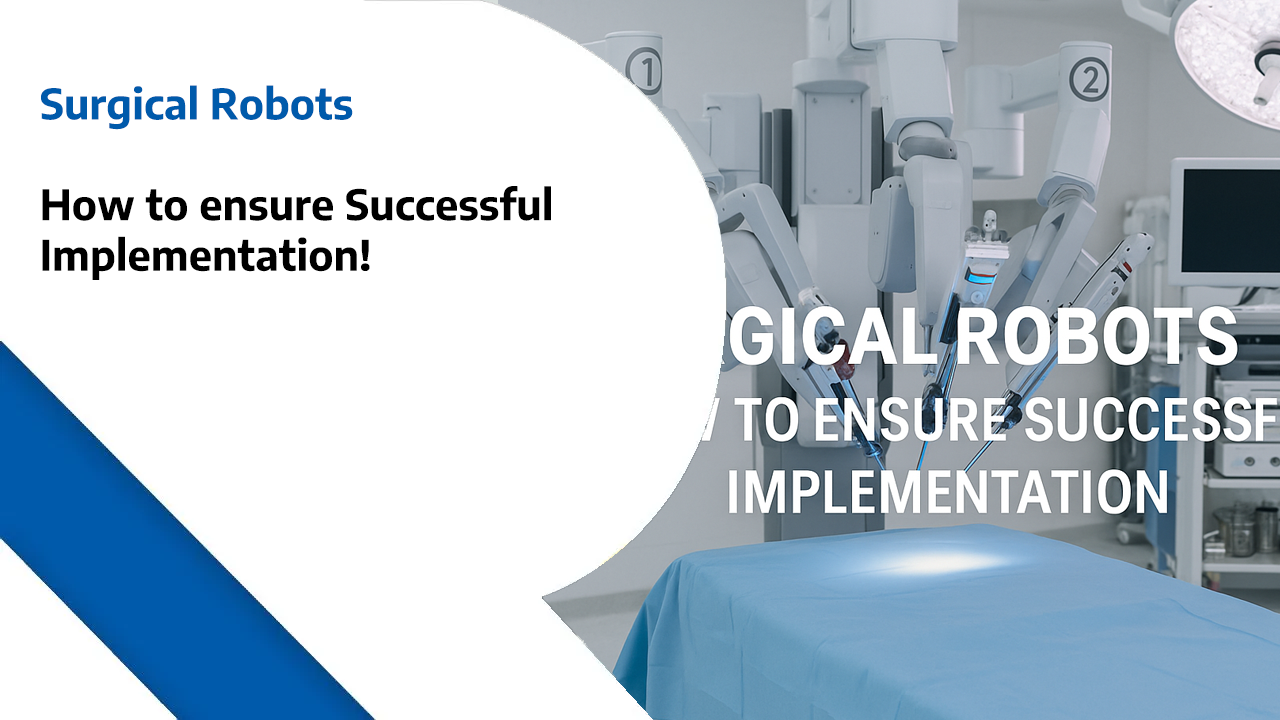
Surgical Robots – How to Ensure Successful Implementation
Robotic surgery has moved from the realm of futuristic speculation into everyday clinical reality. Across the globe, hospitals are adopting surgical robots to improve precision, reduce invasiveness, and enhance patient recovery times. Yet, as with any complex technology, the road from investment to successful implementation can be fraught with challenges. Buying a robot is only one step; integrating it into workflows, training staff, and maximizing its ROI requires foresight, planning, and the right partners.
In this article, we’ll explore the key strategies for ensuring successful implementation of surgical robots—from planning and training to measuring outcomes. Along the way, we’ll highlight the importance of consulting and recruitment services for robotics, which are essential for bridging the gap between technology and people.
For hospitals and medical organizations ready to embark on this journey, expert support from Robot Philosophy (https://robophil.com/), Robot Center (https://robotcenter.co.uk/), and Robots of London (https://robotsoflondon.co.uk/) is available to guide the process.
📞 To book a call and discuss how our robot consulting services and robot recruitment service can support your implementation, email info@robophil.com or call 0845 528 0404.
Why Surgical Robots Are Transforming Healthcare
Surgical robots represent a paradigm shift in how complex operations are performed. From minimally invasive laparoscopic surgery to robot-assisted orthopedics and even remote telesurgery, robotics is enabling procedures that were once unimaginable. The benefits are clear:
Enhanced precision and dexterity: Robots allow surgeons to perform delicate procedures with a level of steadiness and accuracy beyond human limits.
Smaller incisions: Patients recover faster, face fewer complications, and often leave the hospital sooner.
Reduced surgeon fatigue: Robotics can alleviate the strain of long procedures, allowing surgeons to maintain optimal performance.
Scalable expertise: In the future, expert surgeons may perform operations remotely, bringing world-class care to underserved regions.
However, these benefits only materialize when surgical robots are integrated correctly. A rushed or poorly planned implementation can lead to underutilization, frustrated staff, and wasted investment.
Step 1: Define Clear Objectives
Before purchasing a surgical robot, organizations must establish clear strategic objectives. What problem is the hospital trying to solve? Common goals include:
Expanding surgical capabilities.
Reducing patient recovery time.
Attracting and retaining top surgical talent.
Increasing operational efficiency.
Enhancing hospital reputation and competitiveness.
Without defined outcomes, success becomes difficult to measure. Establishing a clear roadmap allows administrators, surgeons, and staff to align expectations and track progress.
Pro Tip: Partnering with a robotics consultancy ensures that the objectives are realistic, measurable, and aligned with both clinical and financial goals. At Robot Philosophy, our consulting services help hospitals build a step-by-step roadmap to guarantee success.
Step 2: Build the Right Team
Surgical robotics isn’t just about the robot—it’s about people. Hospitals must assemble a multidisciplinary team that includes:
Surgeons trained in robotic procedures.
Nursing staff who can adapt to new workflows.
Biomedical engineers to manage equipment.
IT specialists to handle data integration.
Administrative leaders to ensure alignment with budgets and compliance.
This is where robot recruitment services play a critical role. Finding staff with prior robotic surgery experience can accelerate adoption dramatically. Recruiting the right combination of technical and medical professionals ensures that the robot doesn’t become an expensive, underutilized tool.
📞 If your hospital is facing skills shortages, our robot recruitment service can connect you with the right professionals. Email info@robophil.com or call 0845 528 0404 to discuss tailored recruitment support.
Step 3: Invest in Comprehensive Training
Even the most advanced robot is only as effective as the team operating it. Training is one of the biggest differentiators between successful and failed implementations.
Surgeon training: This includes simulation, hands-on practice, and supervised procedures until proficiency is achieved.
Support staff training: Nurses, anesthesiologists, and technicians must understand new workflows and protocols.
Continuous learning: Ongoing refresher sessions and new feature updates should be part of the culture.
One common pitfall is treating training as a one-off exercise. In reality, it’s an ongoing process. Hospitals that embed continuous training into their robotic surgery programs see higher utilization rates and better patient outcomes.
At Robot Center (https://robotcenter.co.uk/), we provide consultancy packages that include training support and change management, ensuring your team is confident and capable.
Step 4: Optimize Workflow Integration
Installing a surgical robot isn’t just about bringing in new hardware. It’s about reshaping operational workflows. Key considerations include:
Theatre layout: Robots require specific positioning and space considerations.
Scheduling: Procedures may initially take longer until staff become familiar.
Sterilization processes: Robots introduce new sterilization and maintenance routines.
Data integration: Linking surgical robots with hospital information systems ensures better record-keeping and compliance.
Poor workflow integration can create bottlenecks that slow down adoption. An expert consultant can map your existing processes and recommend adjustments for seamless integration.
Robots of London (https://robotsoflondon.co.uk/) provides a unique service where hospitals can trial robots through robot rental before committing to a full purchase. This allows teams to practice real-world integration with minimal risk.
Step 5: Ensure Regulatory and Safety Compliance
Surgical robots operate in a highly regulated environment. Hospitals must ensure compliance with:
Medical device regulations (FDA, CE marking, MHRA in the UK).
Patient safety standards.
Data privacy laws for any patient data collected.
Liability frameworks for robotic-assisted procedures.
Failure to comply can result in costly penalties and reputational damage. Partnering with a consultant experienced in healthcare robotics ensures that compliance is built into every stage of implementation.
Step 6: Measure and Monitor Outcomes
Once a surgical robot is in use, continuous monitoring is essential. Metrics should include:
Procedure times.
Complication rates.
Patient recovery times.
Utilization rates.
Financial ROI.
Hospitals that track these metrics can quickly identify issues and refine their robotic surgery programs. For example, if utilization is low, the cause might be scheduling conflicts, lack of surgeon availability, or insufficient training.
At Robot Philosophy, we help hospitals set up customized KPI dashboards to monitor robotic performance and ensure long-term success.
Common Challenges in Surgical Robot Implementation
Even with the best intentions, hospitals often encounter obstacles:
High upfront costs.
Resistance from staff accustomed to traditional methods.
Underutilization due to poor scheduling or lack of trained personnel.
Technical downtime from inadequate maintenance.
Patient hesitancy if communication about the benefits is lacking.
These challenges highlight why hospitals need not just the right technology, but the right people and processes. Expert consulting and recruitment support are critical for overcoming these barriers.
Case Study Snapshot
A leading hospital in the UK invested in a state-of-the-art surgical robot but struggled with low utilization. Only a handful of surgeons were trained, and scheduling conflicts left the robot idle for weeks at a time.
After engaging a robot consulting team, the hospital implemented new training programs, adjusted theatre layouts, and expanded its surgical roster through robot recruitment services. Within 12 months, utilization increased by 65%, procedure times decreased, and patient satisfaction improved significantly.
This case underscores a critical truth: implementation is as important as the technology itself.
Why Partner with Expert Consultants and Recruiters?
Implementing surgical robots is a major investment, but the returns are substantial when done right. Partnering with specialists ensures:
Reduced risk of underutilization.
Faster time-to-value.
Compliance with regulations.
Optimized workflows.
Access to skilled talent.
At Robot Philosophy (https://robophil.com/), we specialize in robot consultancy and recruitment services. Whether you need strategic advice, project management, or skilled staff, we provide end-to-end support.
📞 To discuss your hospital’s needs, email info@robophil.com or call 0845 528 0404.
Sponsors of This Article
This article is proudly supported by three leaders in the robotics field:
Robot Center (https://robotcenter.co.uk/) – Buy Robot, Robot Buy, Robot Consultancy, Robotics Consultancy.
Robots of London (https://robotsoflondon.co.uk/) – Robot Hire, Robot Rental, Rent Robot, Hire Robot, Robot Events.
Robot Philosophy (https://robophil.com/) – Robot Consultancy and Robot Recruitment, Robot Advice, Robot Insights, Robot Ideas. RoboPhil, also known as Philip English, is a leading Robot YouTuber, Influencer, Trainer, Consultant, and Streamer.
Final Thoughts
The implementation of surgical robots is not a one-time project; it’s a transformation journey. Success depends on clear objectives, the right team, comprehensive training, workflow optimization, and ongoing monitoring. But above all, it requires expert guidance and the right people to bring the technology to life.
Hospitals that get it right will not only deliver better patient outcomes but also establish themselves as leaders in medical innovation.
Don’t leave your investment to chance. Ensure your success with dedicated robot consulting and robot recruitment services tailored to your hospital’s needs.
📞 Book a consultation today: info@robophil.com | 0845 528 0404
https://www.youtube.com/watch?v=flyw8ghC4bY