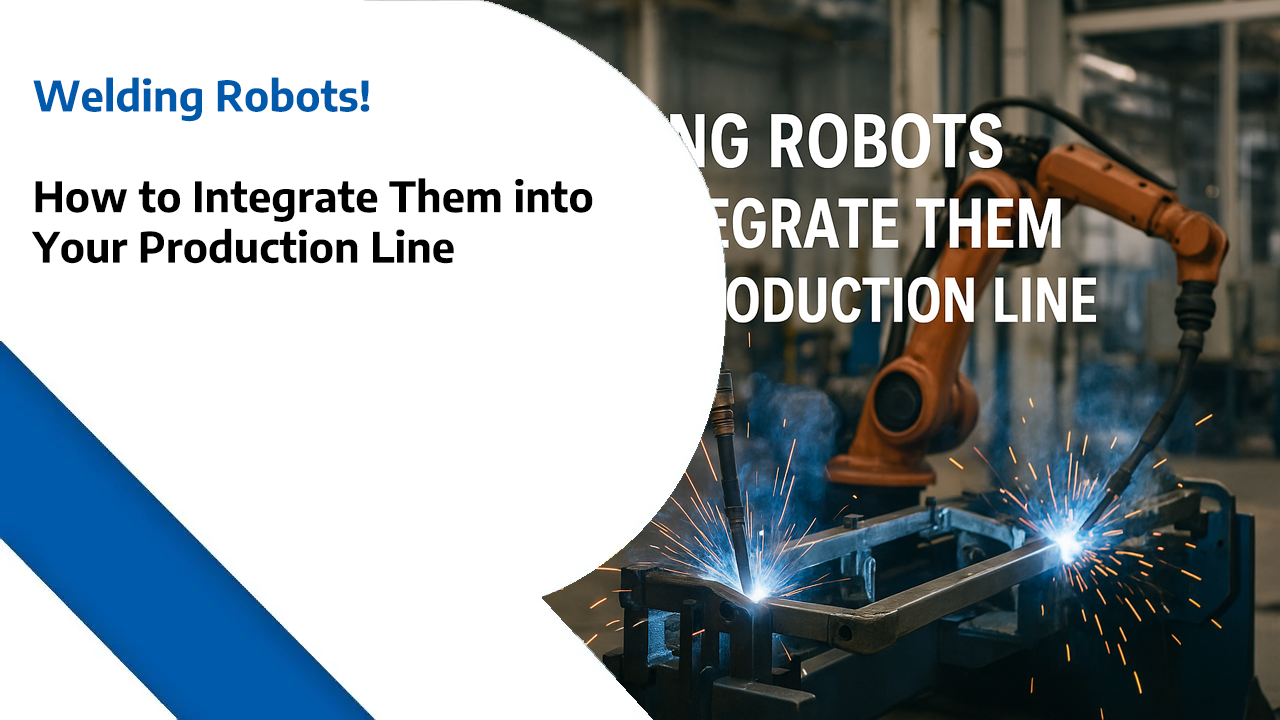
Welding Robots – How to Integrate Them into Your Production Line
Sponsored by Robot Center, Robots of London, and Robot Philosophy
The manufacturing landscape is undergoing a dramatic transformation, and welding robots are at the forefront of this revolution. As companies across industries seek to improve quality, reduce costs, and enhance safety, robotic welding systems have emerged as game-changing solutions that can dramatically enhance production efficiency while delivering consistent, high-quality results.
The Current State of Industrial Welding
Traditional manual welding, while requiring exceptional skill, presents numerous challenges for modern manufacturers. Skilled welders are increasingly difficult to find and retain, with many countries facing significant shortages in qualified personnel. Manual welding is also inherently inconsistent, with quality varying based on operator fatigue, experience, and environmental factors. Additionally, human welders face serious health and safety risks from exposure to harmful fumes, intense heat, and UV radiation.
These challenges have created a perfect storm that’s driving manufacturers toward automated solutions. Welding robots offer a compelling alternative that addresses these pain points while delivering superior performance metrics across multiple dimensions.
Understanding Welding Robot Technology
Modern welding robots are sophisticated machines that combine precision mechanical systems with advanced control software. These systems typically consist of a multi-axis robotic arm, welding equipment (such as MIG, TIG, or arc welding systems), and intelligent control systems that can adapt to varying conditions in real-time.
The latest generation of welding robots incorporates artificial intelligence and machine learning capabilities, allowing them to optimize welding parameters automatically, detect and correct defects during the welding process, and even learn from previous operations to improve future performance. Vision systems enable robots to identify workpieces, locate weld seams, and adjust their approach accordingly.
Key Benefits of Robotic Welding Integration
Consistency and Quality
Robotic welding systems deliver unparalleled consistency in weld quality. Once programmed, a robot will execute the same motion pattern with identical speed, angle, and distance every time, resulting in uniform weld penetration, appearance, and strength. This consistency translates directly into reduced rework, fewer defective parts, and improved customer satisfaction.
Increased Productivity
Welding robots can operate continuously without breaks, dramatically increasing throughput compared to manual operations. Many facilities report productivity increases of 200-400% after implementing robotic welding systems. Robots can also work in multiple shifts with minimal supervision, maximizing equipment utilization.
Enhanced Safety
By removing human operators from hazardous welding environments, robotic systems significantly reduce workplace injuries and health risks. This not only protects workers but also reduces insurance costs, workers’ compensation claims, and regulatory compliance burdens.
Cost Reduction
While the initial investment in robotic welding systems can be substantial, the long-term cost savings are compelling. Reduced labor costs, decreased material waste, lower rework expenses, and improved energy efficiency typically result in payback periods of 18-36 months, depending on the application.
Planning Your Integration Strategy
Assessment and Analysis
Before implementing robotic welding, conduct a comprehensive assessment of your current operations. Analyze your product mix, production volumes, quality requirements, and existing processes. Identify which welding applications are best suited for automation based on factors such as part complexity, batch sizes, and quality standards.
Consider your facility’s physical constraints, including floor space, ceiling height, and proximity to other equipment. Evaluate your current workforce’s technical capabilities and identify training needs for successful robot operation and maintenance.
Choosing the Right Robot System
Selecting the appropriate robotic welding system requires careful consideration of multiple factors. The robot’s reach, payload capacity, and degrees of freedom must match your specific welding requirements. Consider the types of welding processes you need (MIG, TIG, stick welding, etc.) and ensure your chosen system can accommodate these requirements.
Evaluate different manufacturers based on their track record, support capabilities, and integration expertise. Consider factors such as programming ease, maintenance requirements, and availability of spare parts and technical support.
Implementation Best Practices
Site Preparation
Proper site preparation is crucial for successful integration. Ensure adequate power supply, compressed air, and ventilation systems are in place. Design the robot cell layout to optimize workflow and minimize material handling time. Implement proper safety measures, including light curtains, emergency stops, and restricted access zones.
Programming and Setup
Modern welding robots offer various programming methods, from teach pendant programming to offline simulation software. Choose the approach that best matches your team’s capabilities and production requirements. Develop standardized welding procedures and parameters that can be easily replicated across similar applications.
Create comprehensive backup procedures for all robot programs and parameters. This ensures quick recovery in case of system failures and enables easy replication of successful setups.
Integration with Existing Systems
Successfully integrating welding robots requires seamless communication with existing manufacturing systems. This may include ERP systems, quality management systems, and material handling equipment. Ensure your robotic system can communicate production data, quality metrics, and maintenance alerts to your broader manufacturing ecosystem.
Overcoming Common Integration Challenges
Workforce Transition
One of the most significant challenges in robotic integration is managing workforce transitions. Rather than simply replacing workers, successful companies typically retrain existing personnel to become robot operators, programmers, and maintenance technicians. This approach maintains institutional knowledge while building internal robotics expertise.
Develop comprehensive training programs that cover robot operation, basic programming, troubleshooting, and preventive maintenance. Partner with educational institutions or robotics training providers to ensure your team receives quality instruction.
Technical Challenges
Common technical challenges include part positioning inconsistencies, material variations, and complex joint geometries. Address these challenges through proper fixturing design, advanced sensor integration, and adaptive welding programs that can accommodate variations in real-time.
Implement robust quality control systems that can detect defects immediately and trigger appropriate corrective actions. This may include vision systems, laser scanners, or other sensing technologies.
Measuring Success and ROI
Key Performance Indicators
Track relevant metrics to measure the success of your robotic welding implementation. Important KPIs include weld quality ratings, production throughput, rework rates, operator safety incidents, and overall equipment effectiveness (OEE). Compare these metrics to pre-implementation baselines to quantify improvements.
Monitor cost metrics such as labor costs per part, material waste rates, and energy consumption. These indicators help demonstrate the financial benefits of robotic implementation and identify opportunities for further optimization.
Continuous Improvement
Successful robotic welding implementation is an ongoing process rather than a one-time project. Regularly review performance data to identify improvement opportunities. This may include optimizing welding parameters, upgrading software, or expanding robot capabilities to handle additional applications.
Stay current with advancing technologies such as collaborative robots, artificial intelligence, and advanced sensors that could enhance your robotic welding capabilities.
Future Trends in Robotic Welding
The future of robotic welding is increasingly intelligent and adaptive. Emerging technologies include collaborative robots that can work safely alongside human operators, AI-powered systems that can optimize welding parameters in real-time, and cloud-based platforms that enable remote monitoring and predictive maintenance.
Advanced vision systems and machine learning algorithms are making robots more capable of handling complex, variable parts without extensive reprogramming. These developments are expanding the range of applications suitable for robotic welding and reducing the expertise required for implementation and operation.
Getting Started: Your Next Steps
Successfully integrating welding robots into your production line requires careful planning, expert guidance, and ongoing support. The complexity of modern robotic systems means that partnering with experienced consultants and integrators is often the key to success.
Ready to explore how welding robots can transform your production line? Our team of robotics experts can help you assess your current operations, identify the best opportunities for automation, and develop a comprehensive integration strategy tailored to your specific needs.
Whether you’re looking for initial consultation, system selection guidance, or ongoing support, we have the expertise to ensure your robotic welding implementation succeeds. We also provide specialized recruitment services to help you build the skilled workforce needed to operate and maintain your robotic systems effectively.
Contact us today to schedule a consultation:
- Email: info@robophil.com
- Phone: 0845 528 0404
Don’t let your competitors gain the advantage of robotic welding while you’re still relying on traditional methods. The time to act is now, and we’re here to help you every step of the way.
Article Sponsors
Robot Center – Your trusted partner for robot acquisition and consultancy services. Whether you’re looking to buy robots or need expert robotics consultancy, Robot Center provides comprehensive solutions for your automation needs.
Visit: https://robotcenter.co.uk/
Robots of London – Leading provider of robot hire and rental services. Perfect for testing robotic solutions, special events, or temporary production needs. Get access to cutting-edge robotics technology without the capital investment.
Visit: https://robotsoflondon.co.uk/
Robot Philosophy – Expert robot consultancy and recruitment services led by Philip English (RoboPhil), a renowned robotics consultant, trainer, and influencer. Get strategic robotics advice, insights, and access to top robotics talent.
Visit: https://robophil.com/
Philip English is a leading figure in the robotics industry, known for his expertise as a Robot YouTuber, Robot Influencer, Robot Trainer, Robot Consultant, and Robot Streamer. His insights help companies navigate the complex world of industrial automation and robotics implementation.
https://www.youtube.com/watch?v=GbJys1C_rBU