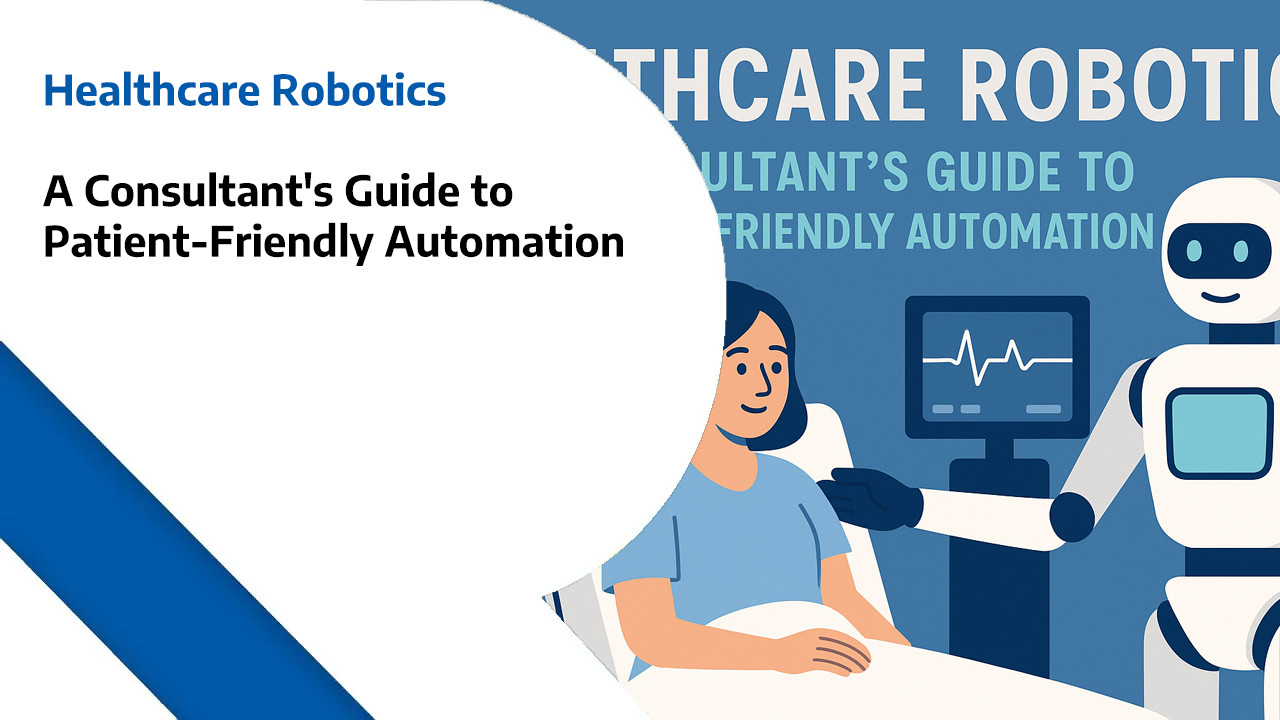
Healthcare Robotics: A Consultant’s Guide to Patient-Friendly Automation
Sponsored by Robot Center, Robots of London, and Robot Philosophy
The healthcare industry stands at a pivotal moment. With aging populations, staff shortages, and increasing patient expectations, healthcare providers are turning to robotics as a solution that promises both operational efficiency and enhanced patient care. However, successful implementation requires more than simply purchasing the latest technology—it demands a strategic, patient-centric approach that balances automation with the human touch that remains essential to healthcare.
The Current Landscape of Healthcare Robotics
Healthcare robotics has evolved far beyond the surgical robots that first captured public attention. Today’s healthcare robots span multiple categories, each addressing specific operational challenges while maintaining focus on patient outcomes. Surgical robots continue to advance with greater precision and minimally invasive capabilities, while service robots handle logistics, medication delivery, and routine tasks that free up clinical staff for direct patient care.
The most successful implementations share a common characteristic: they enhance rather than replace human interaction. When patients encounter robots in healthcare settings, their acceptance hinges largely on how these technologies complement their care experience rather than creating barriers to human connection.
Understanding Patient-Friendly Automation
Patient-friendly automation prioritizes the patient experience while delivering operational benefits. This approach recognizes that healthcare remains fundamentally about human care, with technology serving as an enabler rather than a replacement. Effective healthcare robots are designed with intuitive interfaces, clear communication capabilities, and the ability to seamlessly integrate into existing care workflows.
The key lies in transparency and education. Patients who understand what robots are doing and why they’re being used tend to have significantly higher acceptance rates. This understanding comes through proper introduction, clear explanations of benefits, and ensuring that human caregivers remain accessible and involved in the care process.
Strategic Implementation Framework
Successful healthcare robotics implementation follows a structured approach that begins with comprehensive needs assessment. Healthcare organizations must first identify specific pain points and operational challenges before selecting appropriate robotic solutions. This assessment should include workflow analysis, staff capability evaluation, and patient demographic considerations.
The implementation process requires careful change management, with particular attention to staff training and patient communication strategies. Healthcare workers need comprehensive training not just on operating the robots, but on how to integrate them effectively into patient care routines. Similarly, patients benefit from educational initiatives that explain the role of robots in their care and how these technologies enhance their treatment experience.
Financial planning must extend beyond initial capital expenditure to include ongoing maintenance, training, and upgrade costs. Many organizations underestimate the total cost of ownership, leading to budget constraints that can compromise implementation success.
Overcoming Common Implementation Challenges
Healthcare robotics implementation faces several predictable challenges that experienced consultants can help navigate. Resistance to change from both staff and patients often tops the list of concerns, typically stemming from fear of job displacement or concerns about impersonal care. Addressing these concerns requires transparent communication about the robot’s role in augmenting rather than replacing human capabilities.
Technical integration challenges often arise when new robotic systems must interface with existing healthcare IT infrastructure. Interoperability issues can create workflow disruptions if not properly planned and tested before full deployment. Data security and privacy concerns require robust cybersecurity measures and clear protocols for handling patient information.
Regulatory compliance adds another layer of complexity, as healthcare robots must meet stringent safety and efficacy standards. Understanding regulatory requirements early in the planning process prevents costly delays and redesigns later in implementation.
Measuring Success and ROI
Healthcare robotics investments require clear metrics to demonstrate value and guide ongoing optimization. Patient satisfaction scores provide crucial insight into whether robotic integration enhances or detracts from the care experience. Clinical outcome measurements help establish whether robots contribute to improved care quality and patient safety.
Operational metrics such as staff productivity, error reduction rates, and cost per procedure offer quantifiable evidence of efficiency gains. However, these operational improvements must be balanced against patient experience metrics to ensure that efficiency gains don’t come at the expense of care quality.
Long-term ROI calculations should factor in reduced liability exposure, improved staff retention through reduced workload stress, and enhanced institutional reputation as an innovative care provider. These less tangible benefits often provide significant value that justifies the initial investment.
Future Trends and Emerging Technologies
Artificial intelligence integration is transforming healthcare robots from programmed task performers into adaptive learning systems. These AI-enhanced robots can adjust their behavior based on patient responses and clinical outcomes, potentially improving their effectiveness over time.
Collaborative robots designed specifically for healthcare environments represent another significant trend. These systems work alongside healthcare professionals rather than independently, maintaining the human element while providing technological augmentation.
Telemedicine integration is creating new opportunities for robotic systems to extend specialist care into remote or underserved areas. These telepresence robots enable expert consultation and monitoring capabilities that wouldn’t otherwise be available to certain patient populations.
The Consultant’s Role in Healthcare Robotics
Professional robotics consulting becomes invaluable when navigating the complex landscape of healthcare automation. Experienced consultants bring industry knowledge, technical expertise, and implementation experience that can significantly reduce risks and improve outcomes. They provide objective assessment of organizational readiness, technology selection guidance, and structured implementation planning.
The consulting process typically begins with comprehensive organizational assessment, examining current workflows, staff capabilities, patient demographics, and infrastructure readiness. This assessment informs technology selection recommendations that align with specific organizational needs and constraints.
Implementation support extends beyond technology deployment to include change management, training program development, and ongoing optimization strategies. Consultants can also provide valuable guidance on regulatory compliance requirements and help organizations prepare for inspections and audits.
Building Your Healthcare Robotics Strategy
Developing an effective healthcare robotics strategy requires careful consideration of organizational goals, patient needs, and available resources. The strategy should align with broader institutional objectives while addressing specific operational challenges that robots can help solve.
Stakeholder engagement throughout the strategic planning process ensures buy-in from key constituencies including clinical staff, administration, and patient representatives. This engagement helps identify potential resistance points early and develops strategies to address concerns proactively.
Phased implementation approaches often prove more successful than organization-wide deployments, allowing for learning and adjustment before full-scale rollout. Starting with less complex applications builds organizational confidence and expertise before tackling more challenging implementations.
Ready to Transform Your Healthcare Operations?
Healthcare robotics implementation success depends on expert guidance and strategic planning. Whether you’re exploring robotic solutions for the first time or looking to expand existing automation initiatives, professional consulting services can accelerate your success while minimizing risks.
Contact Robot Philosophy today for expert robotics consulting and recruitment services:
📧 Email: info@robophil.com
📞 Phone: 0845 528 0404
Our experienced consultants provide comprehensive support from initial assessment through successful implementation and beyond. We also offer specialized recruitment services to help you find the right talent to support your robotics initiatives.
Article Sponsors
Robot Center – Your premier destination for robot purchasing, robotics consultancy, and comprehensive automation solutions. Whether you’re looking to buy robots or need expert robotics consultancy services, Robot Center provides the expertise and technology solutions to drive your automation success.
Robots of London – Leading provider of robot hire and rental services for events, demonstrations, and short-term deployments. From robot events to temporary installations, Robots of London offers flexible rental solutions that let you experience robotic technology before making long-term commitments.
Robot Philosophy – Specialized robotics consultancy and recruitment services combining strategic advice with talent acquisition. Our team provides robot insights, innovative ideas, and comprehensive consulting services to guide your robotics journey from concept to implementation.